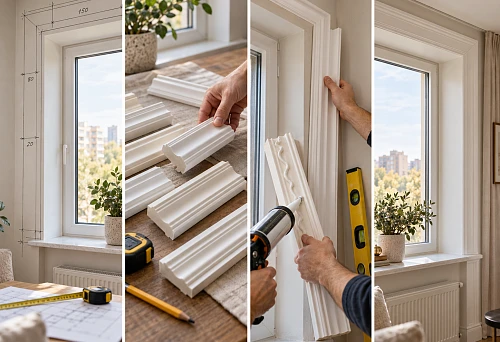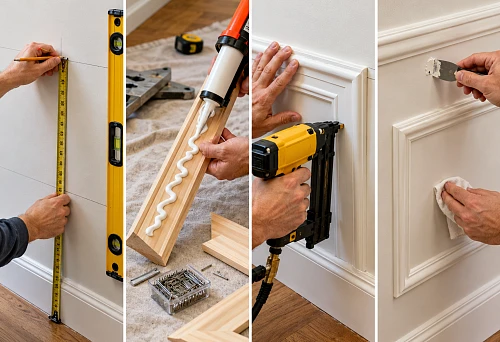

























Article Contents:
- Baguette line without a workshop: how to choose wooden baguette by the meter for mirrors, paintings, and interior panels
- What is a wooden baguette and how is it different from molding
- Why buy baguette by the meter instead of a ready-made frame
- Where to use wooden baguette: application scenarios
- Mirror in the interior
- Painting and fine art
- Interior panel and decorative frame on the wall
- Furniture facades and decorative overlays
- Commercial interior
- STAVROS wooden baguette catalog: what's available and how to navigate
- How to choose the width of a wooden baguette
- Style and ornament: how to choose a wooden baguette for your interior
- Classical and Empire
- Art Deco
- Modern
- Russian style
- Modern style
- STAVROS collections: grape, gothic, ionic, braid, beads
- Unpainted wooden baguette: when the absence of color is an advantage
- How to correctly calculate the length of a wooden baguette
- Basic formula for a rectangular frame
- Example calculation
- For a series of frames
- For a panel without an object inside
- How to miter corners of a wooden baguette without a frame workshop
- Compatibility of wooden baguette with other decorative elements
- Material of wooden baguette: oak, beech and their features
- Oak
- Oak
- 10 mistakes when choosing and buying wooden baguette by the meter
- What to buy together with a wooden baguette: the logic of a complete order
- Wooden baguette in commercial projects: the logic of a large-scale order
- About the Company STAVROS
- Frequently Asked Questions
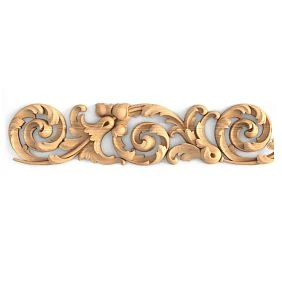
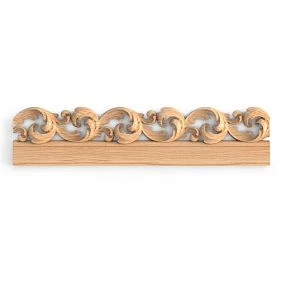
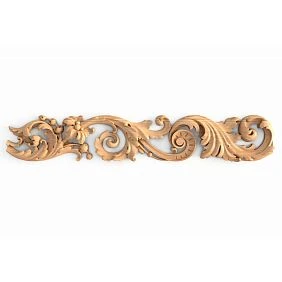
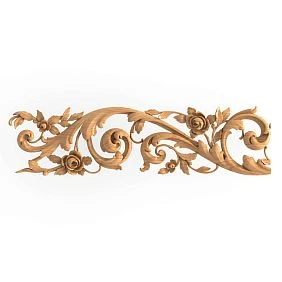
Baguette line without a workshop: how to choose a wooden baguette by the meter for a mirror, painting, and interior panel
Imagine a scene familiar to many. You brought back a canvas with a painting from a trip — a non-standard size, atypical proportions. Or you ordered a large mirror for the hallway — and found that ready-made frames simply do not exist in the required size. Or you planned a frame composition on the wall in the living room — a series of panels in identical framing, strictly to the size of the niche.
A ready-made frame won't help here. It exists for standard sizes. Your task is non-standard.
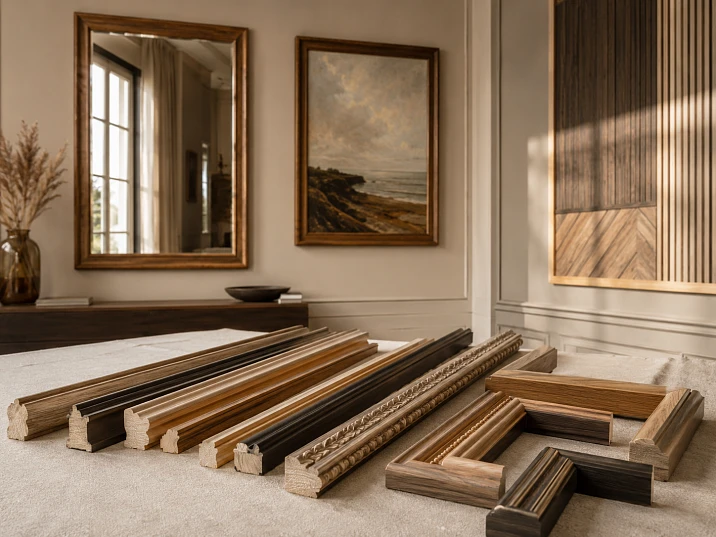
It is for such cases that the approach exists, which professional interior designers and experienced restorers have been using for a long time: buy wooden molding by the meter and assemble a frame for a specific project. Not to go to a baguette workshop, where they will make what they can, but to independently choose the profile, ornament, width, style — and get exactly the framing you envisioned.
In this article — everything you need to know for this. From choosing a profile and calculating the footage to mistakes that ruin even an expensive wooden baguette.
What is a wooden baguette and how is it different from molding
Before talking about the choice, it is worth understanding the concept. This is not boring theory — it is a practical guide that will save time when searching for the right product.
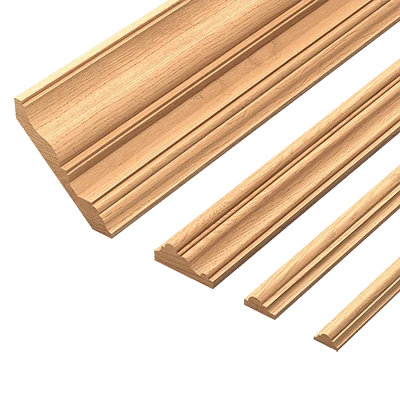
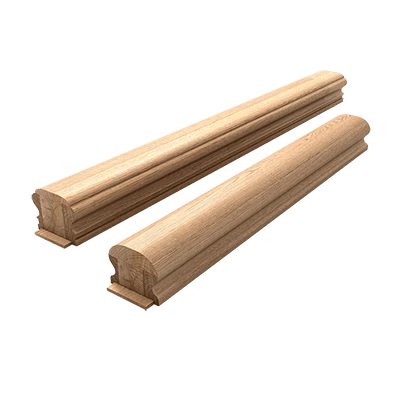
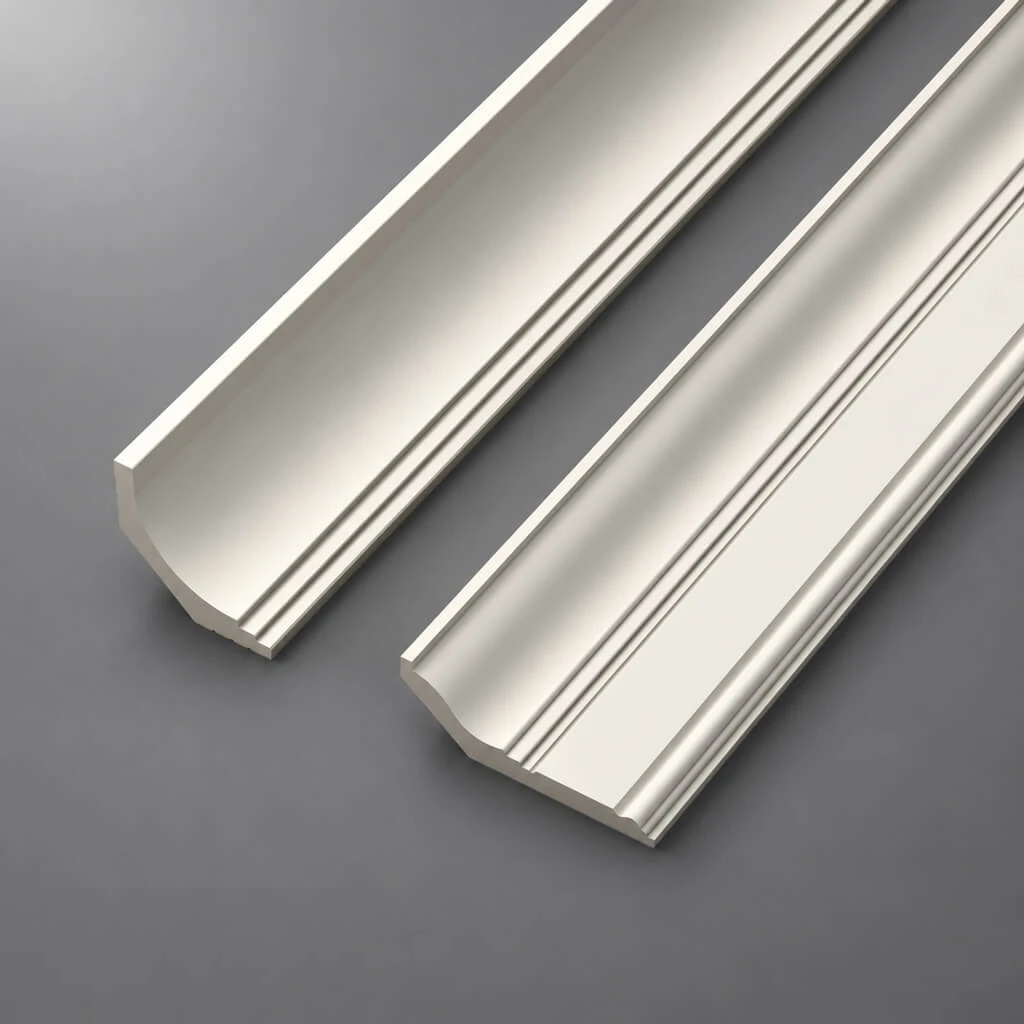
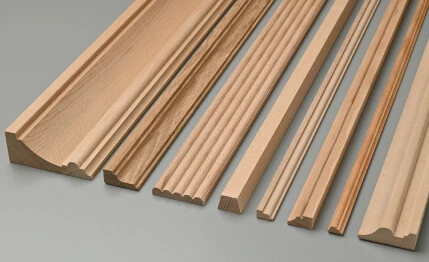
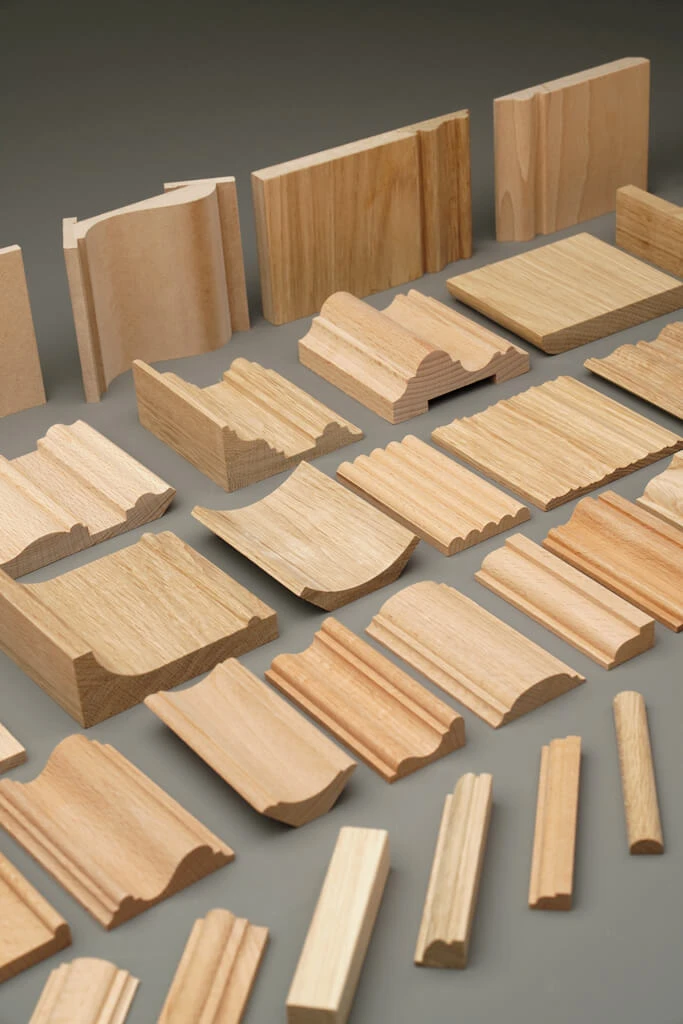
A wooden baguette is a profiled element made of solid wood, used for framing paintings, mirrors, panels, and decorative objects. Its main feature is the presence of a rabbet (falt{sa}): a special groove or ledge into which the framed object fits. It is the rabbet that distinguishes a baguette from ordinary molding.
Molding is a wall or furniture profile. It decorates a surface, creates a line, rhythm, or decorative band. But molding does not hold a picture. It has no rabbet.
The difference seems technical. But it has direct consequences for your purchase: if you are looking for a profile to frame a mirror — you need a baguette with a rabbet. If you are looking for a decorative line on the wall — molding. Their purposes should not be mixed.
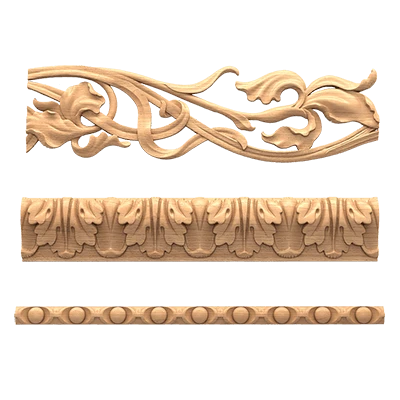
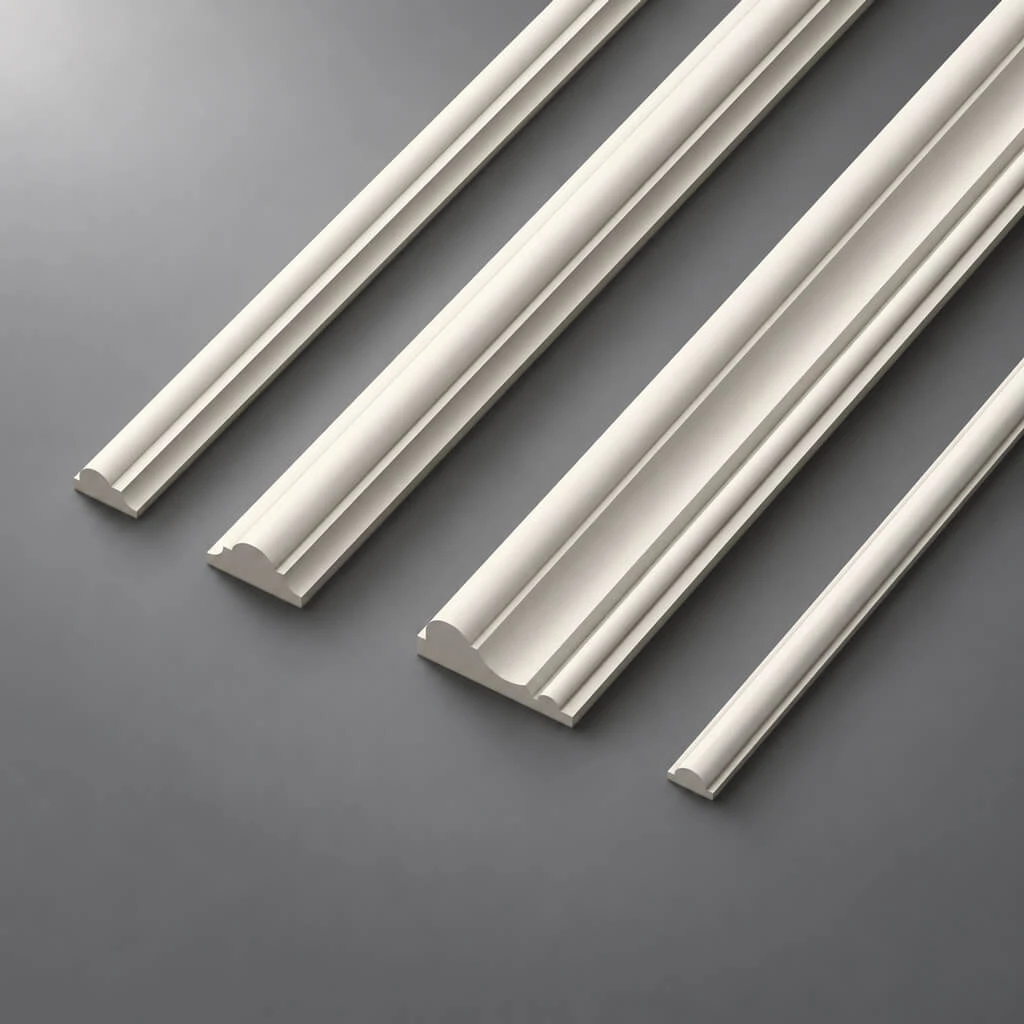
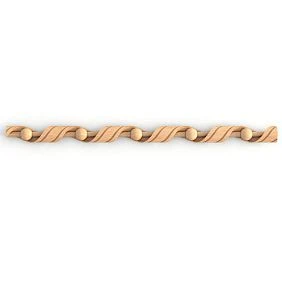
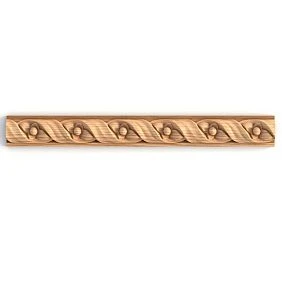
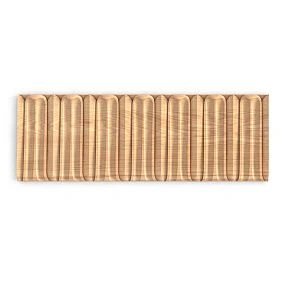
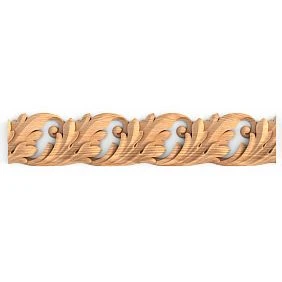
Buy wooden picture frame molding STAVROS can be found in a wide catalog featuring over 78 items: from laconic smooth profiles to richly carved ones with ornaments in the spirit of Empire, Classic, Modern, Art Deco, and Russian style.
Our factory also produces:
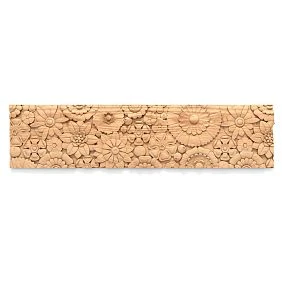
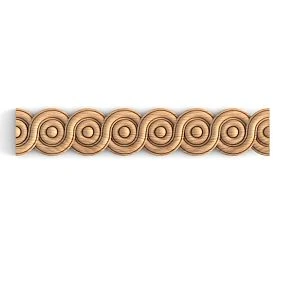
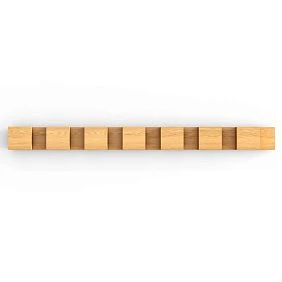
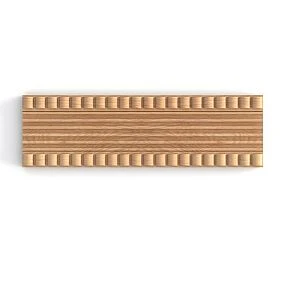
Why buy baguette by the meter rather than a ready-made frame
This is a key question that determines the entire logic of the purchase. And the answer here is not "meter is better," but "each approach has its own task."
A ready-made frame is suitable when:
-
The format is standard: A4, A3, 30×40, 40×60, 50×70 — and a frame of exactly that size is already available for sale.
-
No special requirements for ornament, color, or profile width.
-
Need it fast — without self-cutting corners and assembly.
Wooden baguette by the meter is needed when:
-
Non-standard format: large mirror, original canvas, square panel, elongated horizontal.
-
Need to repeat the same profile in several frames of one project.
-
It's important to match a specific interior: wood color, ornament, style must match already installed moldings, handles, baseboards.
-
The frame will be painted or tinted in a specific color — so an unpainted wooden baguette for further finishing is needed.
-
Large-scale project: a series of frames for a gallery, hotel, restaurant, showroom — and a large meterage of one profile is needed.
Buy wooden molding by the meter at STAVROS — it's buying a professional tool that turns you into a frame creator, not a consumer of standard solutions. The difference is fundamental.
Get Consultation
Where to use wooden baguette: application scenarios
Mirror in the interior
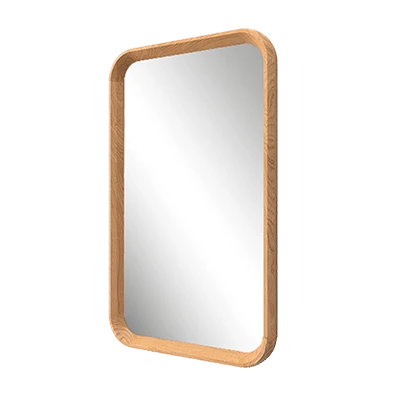
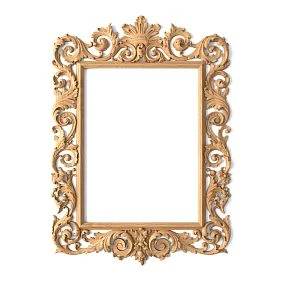
A mirror is one of the main scenarios for using a wooden baguette. Hallway, bedroom, living room, foyer, dressing room, console area — everywhere a mirror needs a frame that matches the interior.
For a mirror, it is important to choose the right profile width, rabbet depth (it must securely hold the mirror panel), and ornament style. A mirror in a classic hallway with wooden doors is one requirement. A mirror in a minimalist bedroom with white walls is completely different. STAVROS has profiles for both.
For large-format mirrors — floor-length, full-height, for foyers and formal areas — use a wide STAVROS wooden baguette with a pronounced profile. A wide baguette gives visual weight to the frame and holds the mirror more securely than a narrow profile.
Painting and artwork
For artwork, choosing a baguette is a separate art form. The profile should serve as a transition between the painting and the wall, without overwhelming the work or getting lost against its background.
Classic gilding, patinated bronze, dark walnut, white enamel, natural beech — these are all finishing options applied to an unfinished wooden baguette after purchase. That is why choosing a neutral profile is so important for artistic framing: buy an unfinished wooden baguette — and apply the desired finish already considering the specific work.
For watercolor and graphics — lighter, narrower profiles. For oil painting on canvas — a profile with a deeper rabbet and greater weight. For posters and photographs — a strict geometric profile or a smooth one with minimal ornament.
Interior panel and decorative frame on the wall
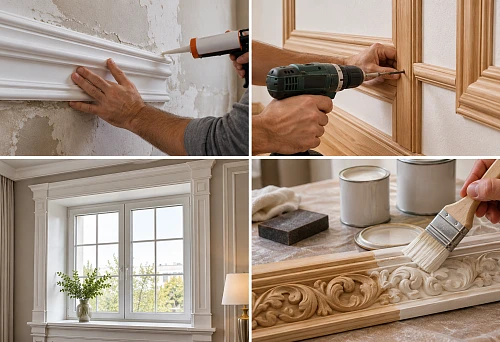
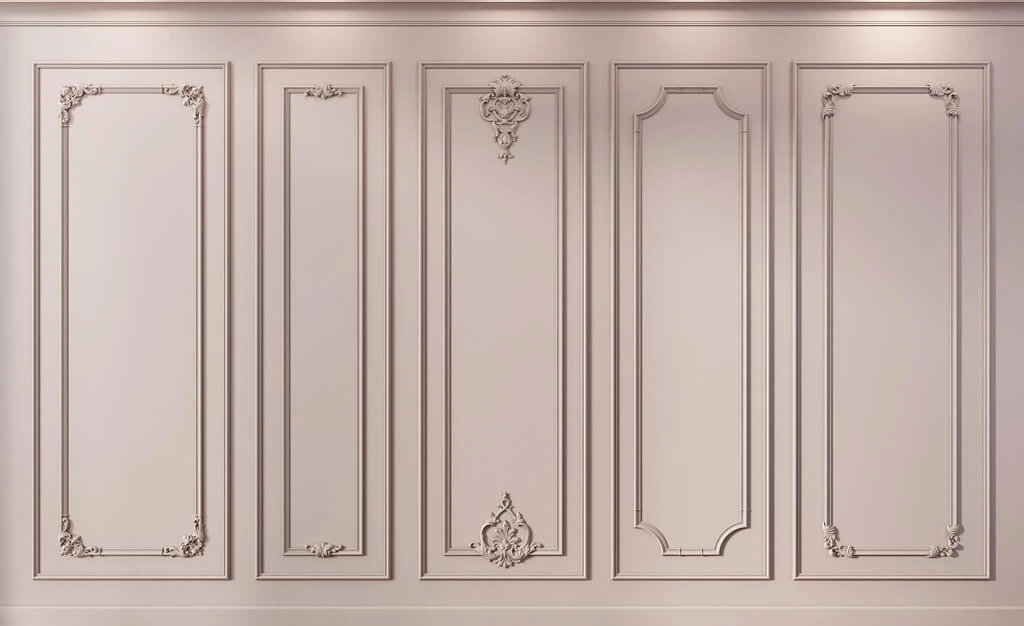
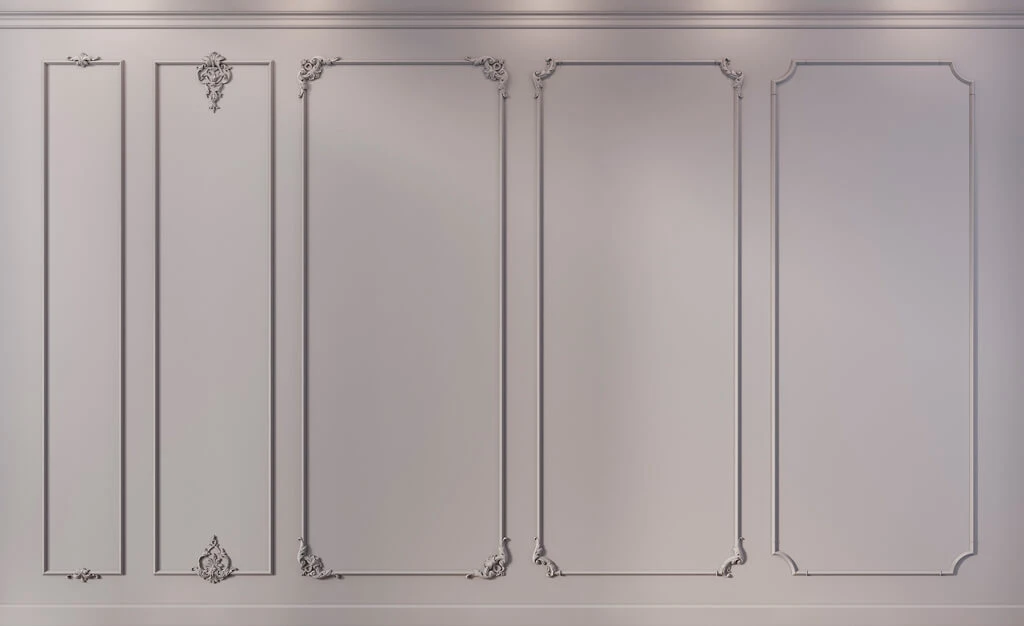
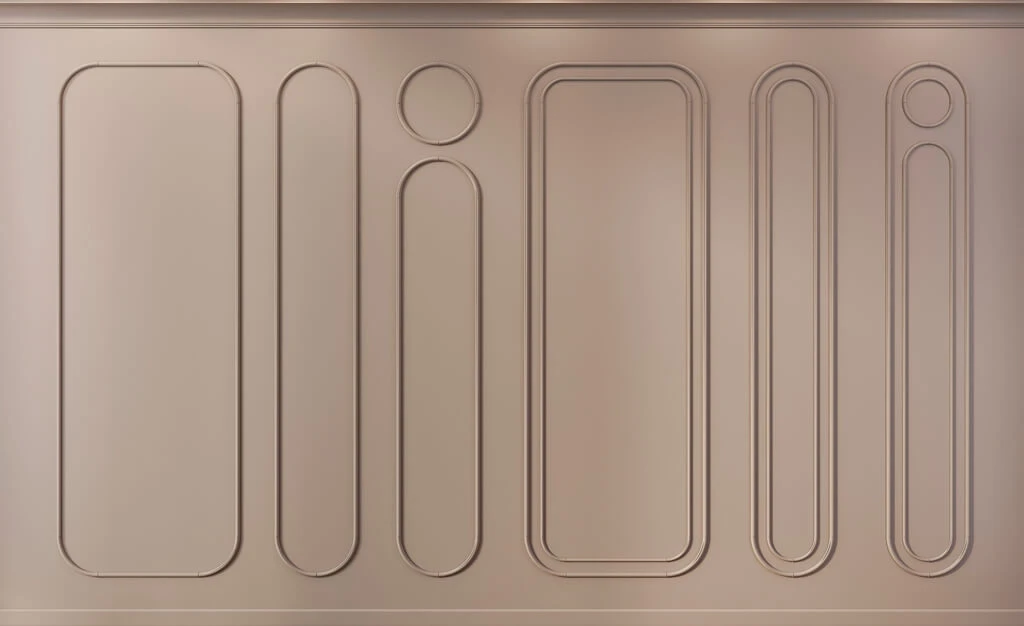
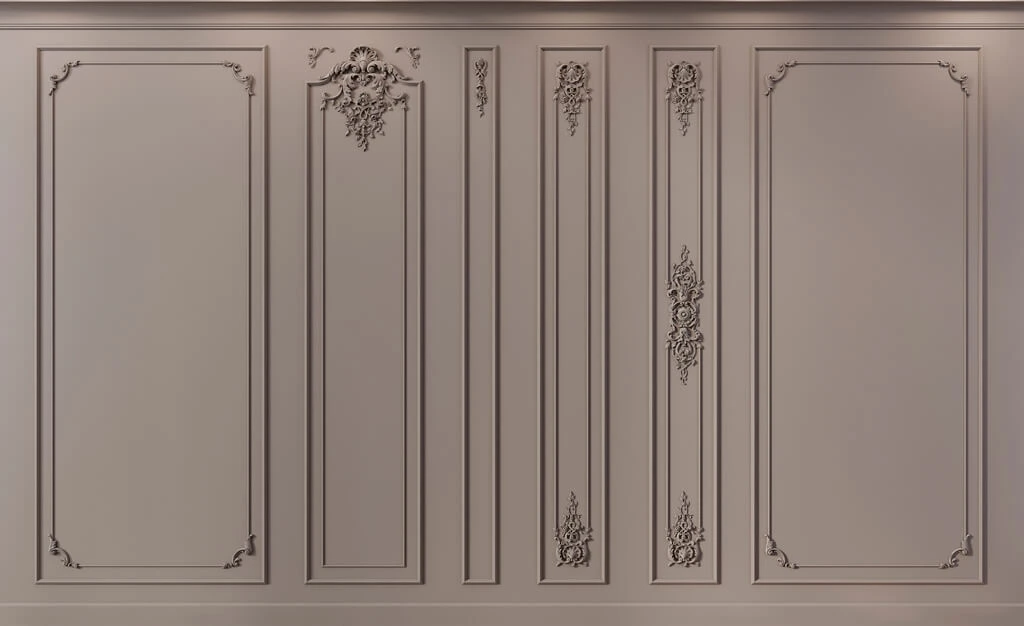
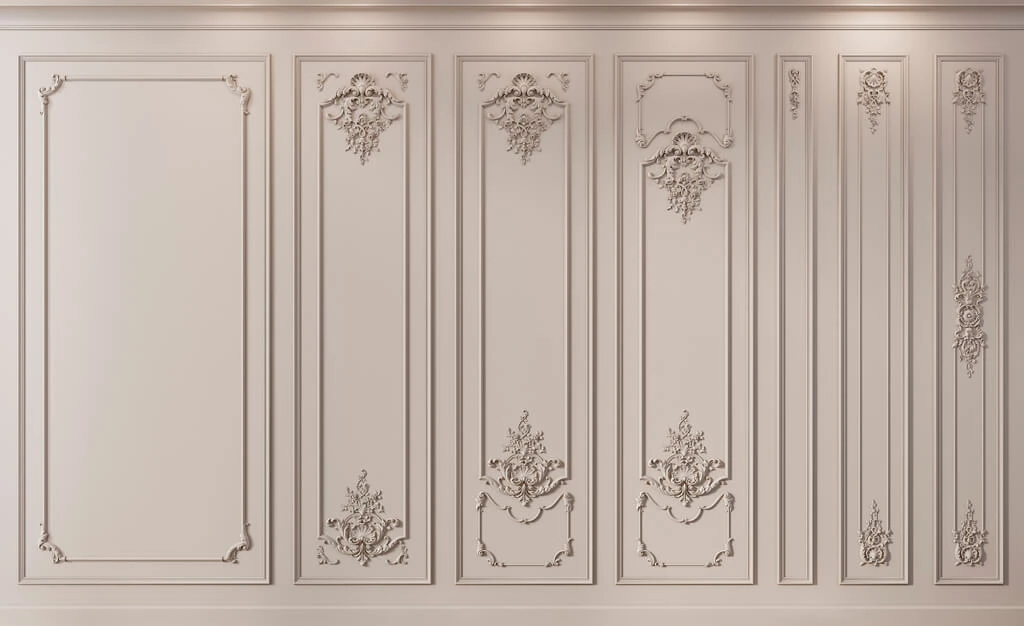
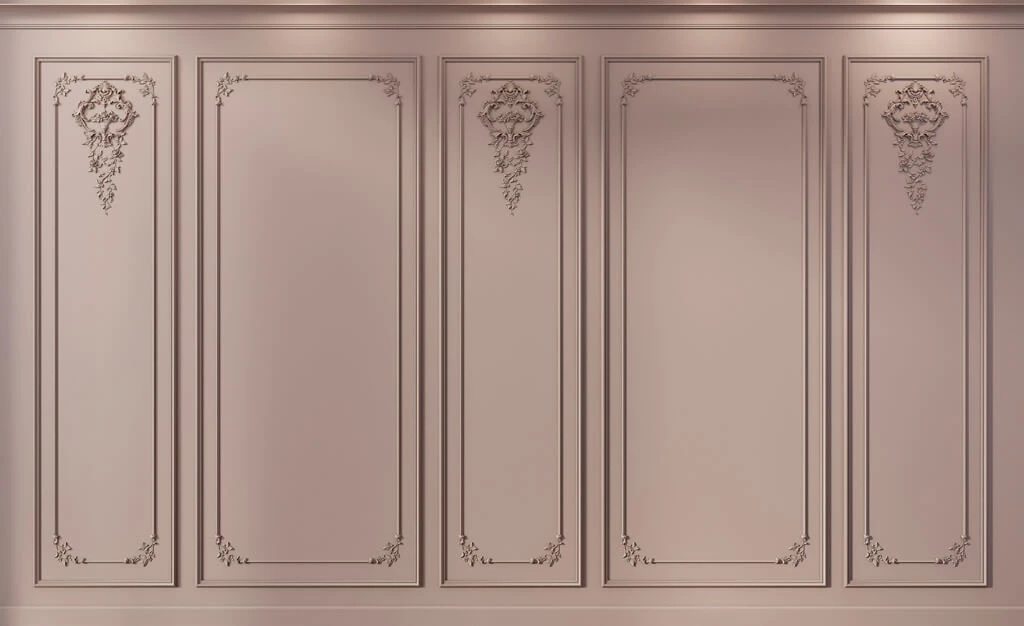
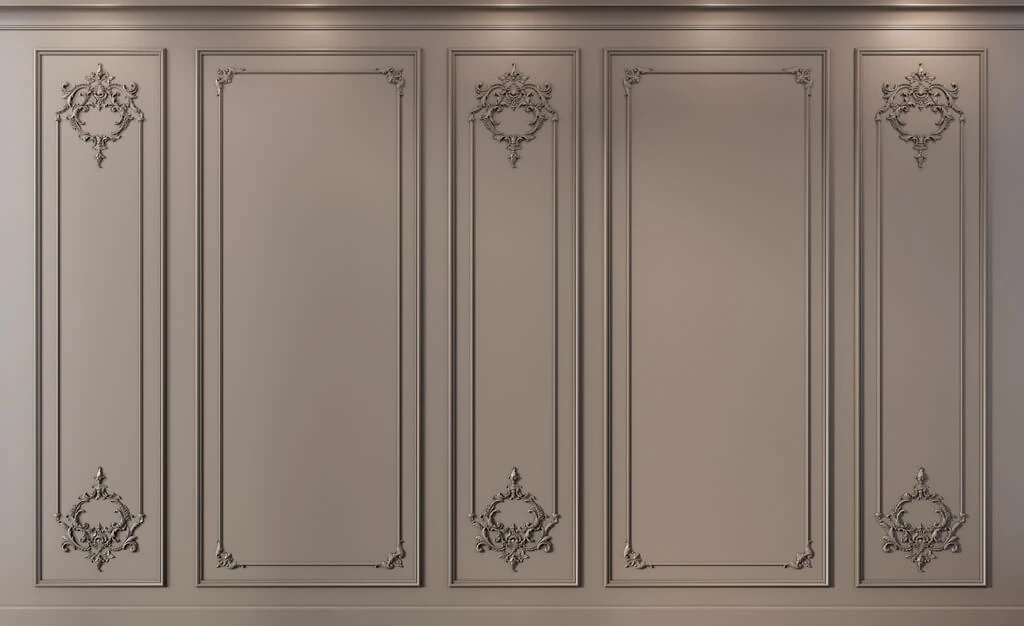
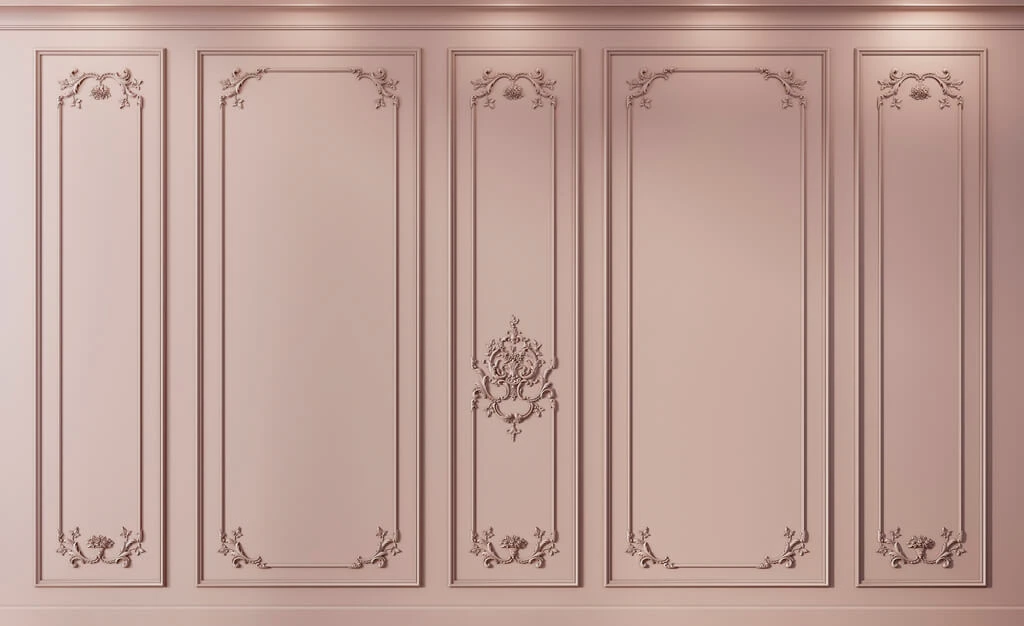
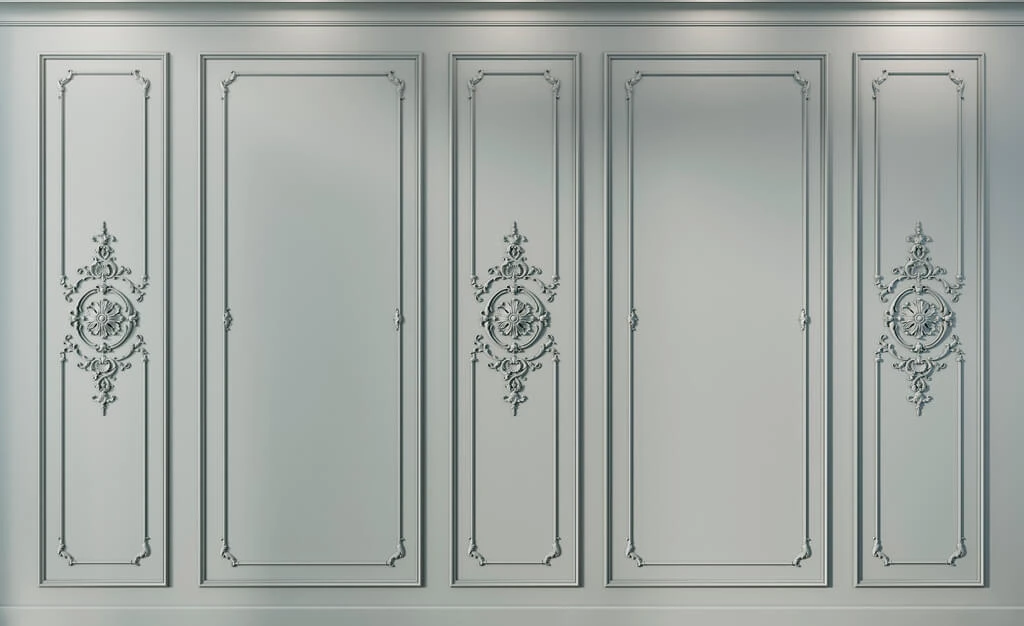
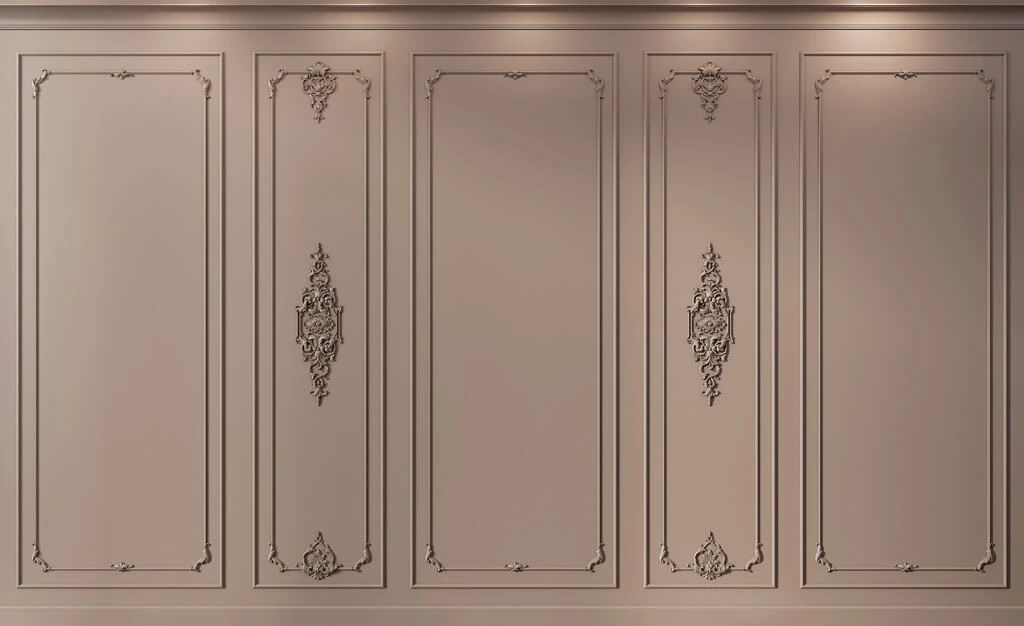
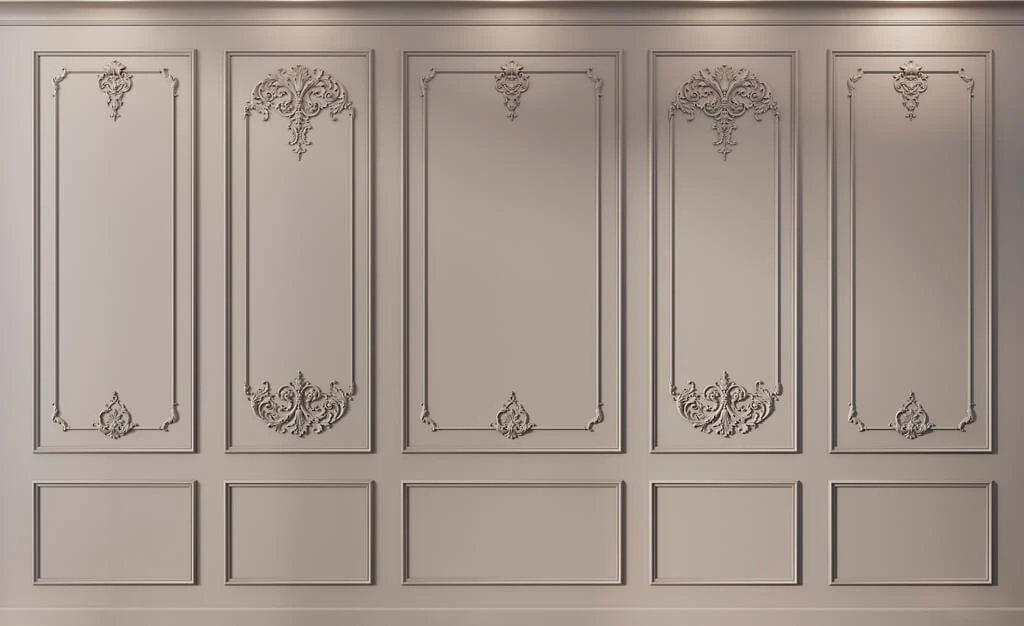
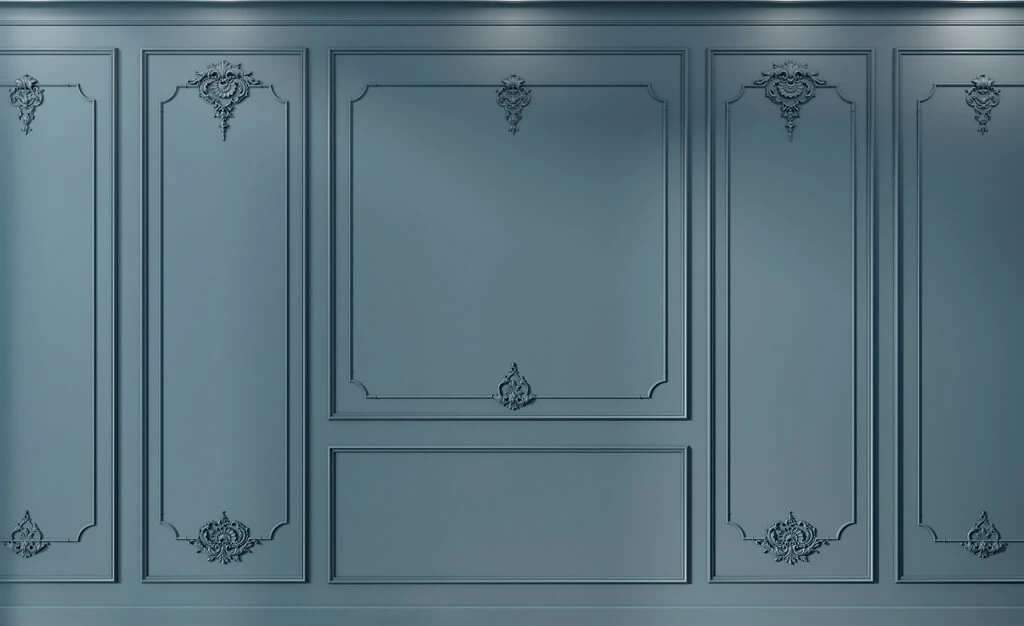
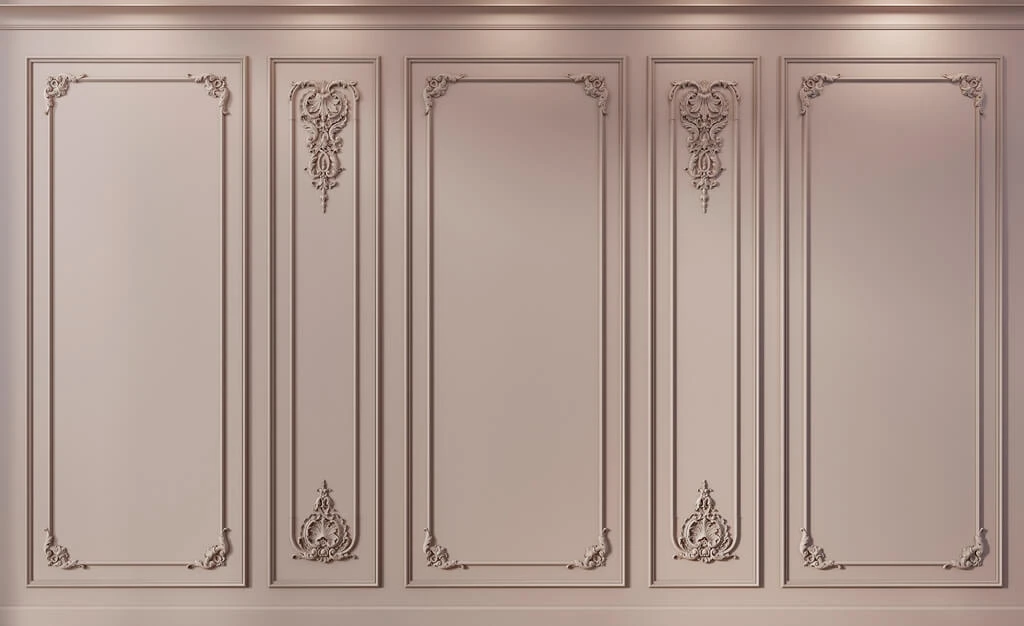
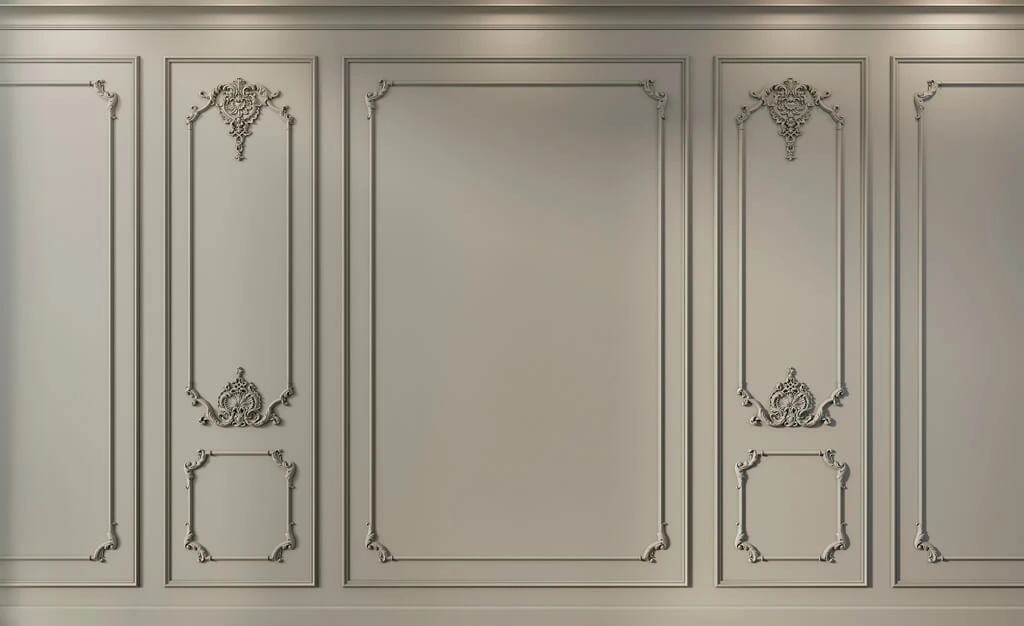
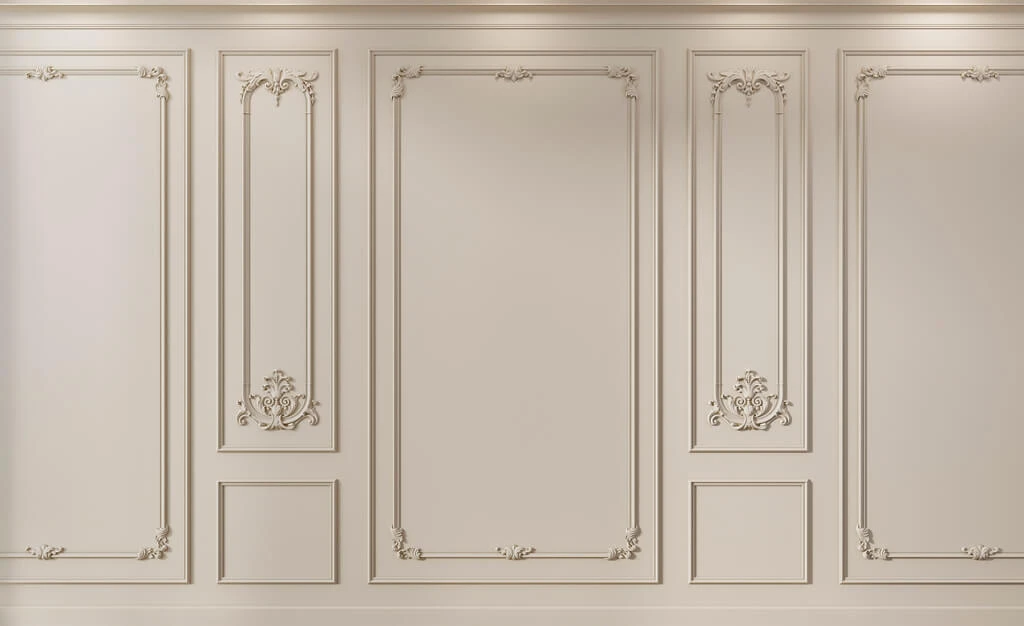
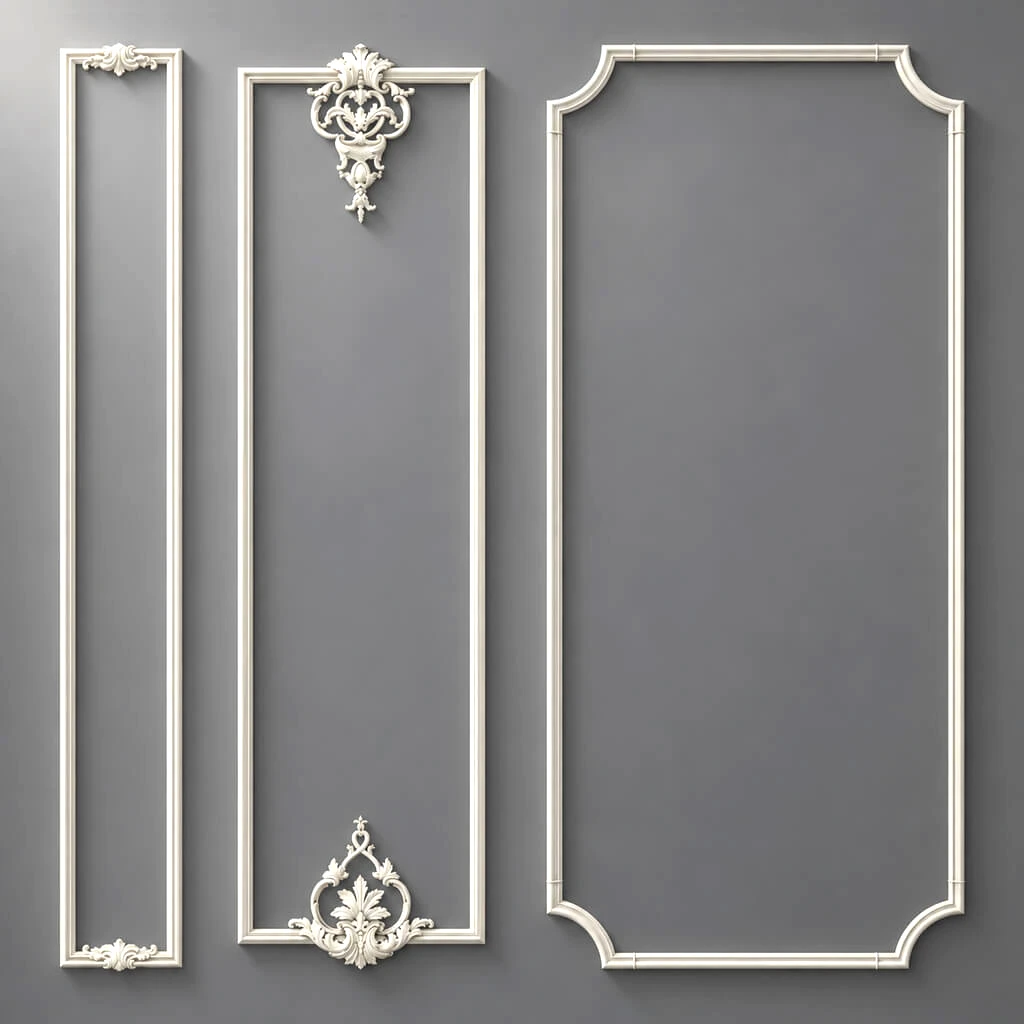
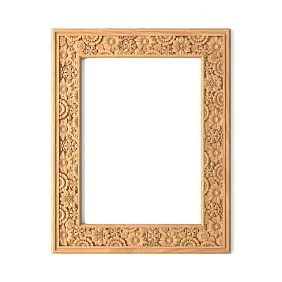
Decorative frame compositions on walls are one of the most popular interior techniques currently. From wooden baguette they create:
-
Single frames for an accent wall without an object inside — simply as an architectural element.
-
Series of rectangles that visually divide a large wall into sections.
-
Framing of fabric panels, decorative inserts, illuminated niches.
-
Frame medallions with decorative elements inside.
In these cases, the baguette works not as a frame for an object, but as an independent decorative element — architectural design of the plane. And it is here that the footage is especially important: a series of identical frames for a specific wall size requires precise length calculation.
Furniture facades and decorative overlays
A separate scenario is the use of wooden baguette as a decorative frame on the facade of a cabinet, chest of drawers, or door. This is a more demanding case: the profile must be thin, the ornament neat, and the depth of the rabbet must match the thickness of the facade.
This scenario works well Wood and MDF linear products STAVROS — moldings for furniture. They are thinner and lighter than standard baguette. But a number of STAVROS wooden baguette profiles are also suitable for furniture facades — check the product card for details.
Commercial interior
Boutique, restaurant, hotel, office, showroom — wherever atmosphere and interior precision matter, solid wood baguette works differently than plastic profiles or aluminum frames. It adds weight, naturalness, history. For commercial projects where a series of identical frames is needed, buy wooden molding with footage at STAVROS — optimal logic.
STAVROS wooden baguette catalog: what's available and how to navigate
In the products made of wood and MDF STAVROS wooden baguette is presented as part of the solid wood molding section. Over 78 SKUs is a serious lineup that requires navigation.
Let's break down which specific STAVROS items are worth considering first:
Wooden Molding K-034 — classic profile with a pronounced ornament. Suitable for framing mirrors and paintings in a classic interior, works in pair with moldings of the same style.
Wooden molding K-125 — a profile with a more restrained design, suitable for modern neoclassicism and transitional styles.
Wooden molding K-105 — a profile with character, suitable for interiors where profile detailing and pronounced relief are important.
Wooden Molding K-006 — another option for those seeking clear geometry in the profile without overloading with ornament.
If you are working on a project and want to coordinate the profile with the client or with the actual interior — start by ordering samples of STAVROS wooden moldings. This is one of the most practical items in the catalog: get samples in person, hold them up to a mirror or wall, coordinate — and only then order the footage.
How to choose the width of a wooden baguette
The question of width is one of the most common when choosing. And one of the most underestimated. The mistake here is a narrow molding on a large mirror or, conversely, a monumental wide profile around a small watercolor.
To avoid mistakes, use the following logic:
For small formats (up to 30×40 cm):
Narrow or medium profile — from 20 to 50 mm. Ornament — delicate or minimal. A too-wide molding will "eat" the artwork, and the picture will get lost in the frame.
For medium formats (30×40 — 60×80 cm):
Medium profile — 40–70 mm. You can choose both smooth and with moderate ornament. The rule here is simple: the calmer the ornament of the work, the richer the profile can be.
For large formats (from 70×100 and above):
Wide profile — from 70 mm. A narrow baguette on a large mirror or big painting will look like packing tape — technically, unfinished. Large works need a profile with weight.
For interior panels:
The logic here is different. A decorative frame without content can be of any width — depending on the desired architectural scale. Narrow — for a delicate rhythm. Wide — for an expressive accent.
For commercial projects:
When designing a series of works in a single style — one profile for all. Different widths in one space create visual chaos.
Practitioner's tip: print or draw the outline of the future frame on paper at 1:1 scale and hold it against the painting or mirror. It takes 10 minutes but shows the correctness of the width more clearly than any description.
Style and ornament: how to choose a wooden baguette for the interior
STAVROS offers wooden baguettes in several collection directions. Each is not just a name, but a guide for the interior style.
Classic and Empire
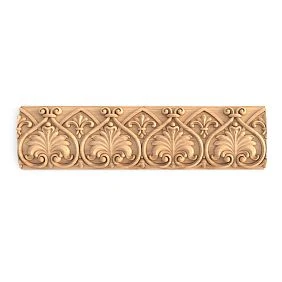
Empire style is monumentality, symmetry, strict ornament: laurel branches, palmettes, solemn friezes, rich acanthus. An Empire-style baguette is appropriate in formal interiors, studies, and living rooms with high ceilings. It is heavy, expressive, and does not tolerate being near simple furniture.
Classic is slightly softer than Empire: plant ornament instead of solemn, a golden mean between richness and delicacy. Suitable for most classic and transitional interiors.
Art Deco
Art Deco is geometry, clear rhythm, contrast of light and shadow in the profile, a minimum of "natural" motifs. A baguette in this style: strict lines, possibly a stepped profile, ornament with geometric inserts. For modern urban interiors, black-and-white interiors, boutiques, and galleries.
Modern
Modern is plastic, smooth lines, natural forms without the rigidity of geometry. Thin stems, buds, soft profile transitions. For interiors with natural materials, warm tones, organic furniture forms.
Russian Style
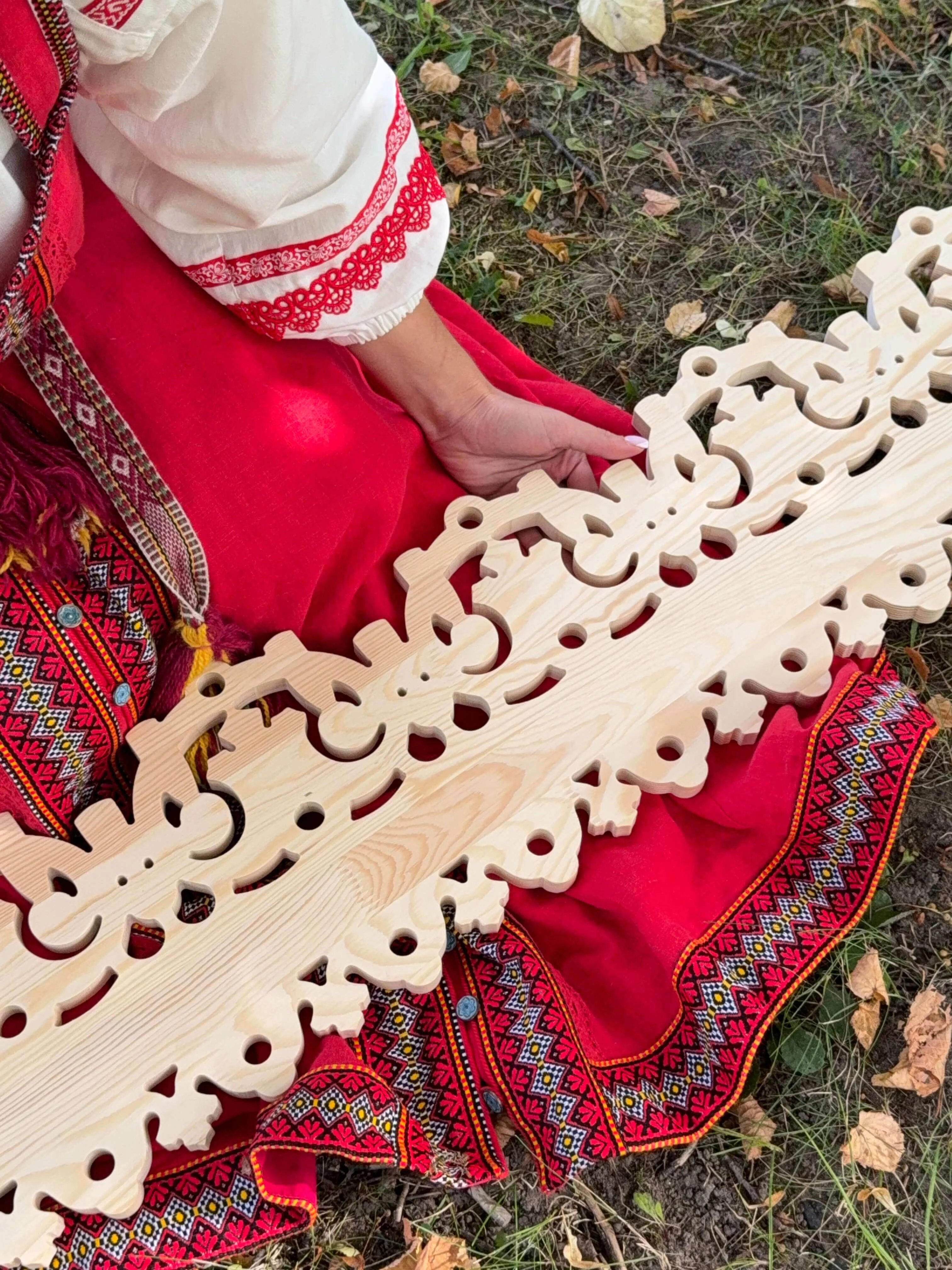
Expressive three-dimensional carving, folk motifs, bright tactility. For country interiors, country houses, rustic style, themed spaces.
Modern style
Smooth or minimally decorated profile, restrained geometry. For minimalist interiors, Scandinavian style, loft, high-tech. Here the strength is in the shape of the profile, not the ornament.
STAVROS collections: grape, gothic, ionic, braid, beads
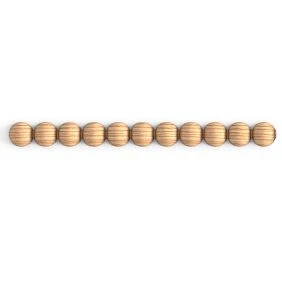
Individual STAVROS ornaments are independent decorative languages. "Grape" is for warm, lively, Mediterranean interiors. "Gothic" is for sharp-angled, medieval, austere spaces. "Ionic" and "beads" are classic architectural motifs, appropriate in strict interiors. "Braid" is a restrained woven texture that works well in neutral interiors.
Unpainted wooden baguette: when the absence of color is an advantage
There is a temptation to buy a ready-painted profile — to save a step of finishing. But in most cases an unfinished wooden baguette — the right decision. That's why.
Perfect color match. No standard painted product will exactly match the color of your doors, baseboards, furniture, and frames. Unpainted profile is a blank canvas. You paint it in the color that your interior needs.
Finish flexibility. Oil, varnish, enamel, patina, tinting, wax — any option is only possible on unpainted solid wood. Painted profile limits possibilities.
Approval before purchase. You can take Wooden molding samples, hold it against the interior, test the finish on a sample — and only then order the footage. This is a professional approach that eliminates mistakes.
Repeatability. If in a year you need to buy more footage of the same profile — the unpainted option will allow you to accurately reproduce the finish. A painted batch from another delivery may differ in shade.
For finishing solid wood baguette — oil Rubio Monocoat — the recommended choice for natural wood. It preserves the texture, protects the surface, and gives a living feel of solid wood.
How to correctly calculate the length of a wooden baguette
Calculating the footage is math that is better done correctly once than to fix a mistake twice.
Basic formula for a rectangular frame
Frame perimeter = 2 × (width + height of the framed object).
But this is only a basic calculation. You need to add:
Allowance for miter cuts. Each corner is a 45° cut. When cutting, a piece of profile approximately equal to the width of the profile itself is lost. For four corners, this is 4 × profile width × 2 (two ends per joint). For a profile 60 mm wide, the allowance for miter cuts will be about 480 mm — almost half a meter.
Allowance for trimming. If the ornament has a repeating rhythm, you need to adjust the pattern so that the ornament matches at the corners. This requires additional length — from 10 to 20% above the calculated perimeter.
Allowance for error. Especially important when cutting yourself without professional equipment. It is recommended to add at least 10% to the final calculation. For expensive carved baguette — 15–20%.
Example calculation
Mirror 80×120 cm. Profile width 60 mm.
-
Perimeter: 2 × (800 + 1200) = 4000 mm = 4 m
-
Allowance for miter cuts: 4 × 60 × 2 = 480 mm ≈ 0.5 m
-
Allowance for ornament and error (15%): (4 + 0.5) × 0.15 = 0.675 m ≈ 0.7 m
-
Total: 4 + 0.5 + 0.7 = 5.2 m
Order 5.5 m — with a small reserve.
For a series of frames
If you are making several frames of the same size, multiply the calculated length by the number of frames, but add the reserve only once: when ordering a large batch of the same profile, cutting losses per frame are smaller.
For a panel without an object inside
Here the rabbet does not matter — mount the profile as a molding. Calculate the perimeter of the rectangle and add 15% for corners and errors.
How to miter corners of a wooden baguette without a frame workshop
Mitering corners is the main technical issue when assembling a frame yourself. And it is what scares off those who would like to work with linear meters but are afraid of the technical part.
Good news: with the right tool, it is no more difficult than assembling furniture from a package.
Miter box with saw. The most accessible tool. A miter box is a device with fixed slots for cutting at 45°. A wooden baguette is placed in the miter box, the saw follows the slot — and the angle turns out precise. The miter box is inexpensive and sold at any hardware store.
Miter saw. A professional tool that provides a perfectly clean cut. If there is a miter saw in the house or workshop, the task becomes even easier.
Right and left side rule. For each corner, a pair of cuts is needed: left and right at 45°. The horizontal sides of the frame are cuts in one direction, the vertical ones are mirrored. Do not confuse the orientation.
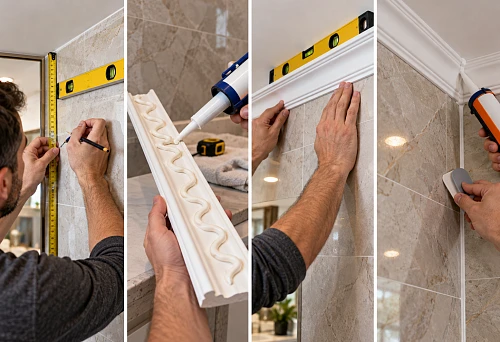
Fixation. After cutting, the sides of the frame are glued with wood glue and tightened with corner clamps or special frame tape. The corners must be held in fixation until the glue is completely dry.
Compatibility of wooden baguette with other decorative elements
Wooden baguette is not a standalone element. It is part of the decorative system of the interior, and its choice affects everything else.
If already installed in the interior STAVROS moldings and cornices — the baguette must be from the same collection or the same stylistic direction. The ornament does not have to match exactly, but the scale, character, and "temperature" of the style must be coordinated.
If next to the mirror there will be STAVROS mirror frames ready-made production — the profile of the baguette for paintings must match the profile of the finished frame. Otherwise, the wall will look disjointed.
If installed on furniture STAVROS wooden decorative overlays with a specific ornament — choose a baguette with the same ornament or a neutral one.
If on furniture facades — STAVROS carved decor — then the frames in the same space should be from the same stylistic system.
The principle is simple: an interior is an ensemble, not a collection of individual purchases. A wooden baguette coordinated with other decorative elements works much more convincingly than the most expensive profile bought 'on its own'.
Material of wooden baguette: oak, beech and their features
Oak
Oak is a dense, heavy wood. Carving on oak results in clear edges and a pronounced porous texture. Oak baguette after oil finishing is lively, warm, with character.
For oil painting frames, mirrors in a classic interior, panels in a study or library — oak works flawlessly. It adds weight and status.
It is important to remember: oak contains tannins that react to metal. Use stainless steel nails and fasteners — otherwise dark spots will appear at contact points.
Beech
Beech is a more neutral wood, lighter and more uniform than oak. The fine pores allow for a finer and more detailed ornament. Beech easily accepts enamel, primer, and paint.
For frames that will be coated with white enamel, patina, or tinted to a specific color, beech is preferable. It provides a more even and predictable result when painting.
After treatment with Rubio Monocoat Pure oil beech baguette becomes warm, restrained, with a soft liveliness of the surface.
10 mistakes when choosing and buying wooden baguette by the meter
Mistakes in this topic are predictable and fixable — if you know about them in advance.
Mistake 1: buying a profile only from a photo. A photo does not give either the real scale or the tactile sensation. Order Wooden molding samples — in person, the profile often looks different than on the screen.
Mistake 2: not considering the depth of the rabbet. If the mirror panel or canvas does not fit into the rabbet, the frame will not work. Check the rabbet depth in the product card and compare it with the thickness of the object being framed.
Mistake 3: choosing a profile that is too narrow for a large mirror. A narrow baguette on a large mirror looks unfinished and visually does not "hold" the object. The scale of the profile should match the scale of the mirror.
Error 4: choosing too active an ornament for a small painting. A rich carved profile overwhelms a small work. For small formats — a calm, concise profile.
Error 5: not accounting for miter joint allowance. Miter cuts consume a significant portion of the length. Without extra footage, you may literally be short one side of the frame.
Error 6: not considering pattern repeat. If the baguette ornament has a clear rhythm — it should match at the corners or at least not break in an unfortunate spot. This requires additional footage.
Error 7: confusing wooden frame baguette with curtain profile. These are different products with different structural solutions. Do not buy a curtain rod instead of a frame baguette — they are not interchangeable.
Error 8: not coordinating with adjacent decor elements. Buying a beautiful profile in isolation from the rest of the interior — and getting decorative dissonance. Always consider what is nearby.
Error 9: not buying spare material. Mistakes during cutting happen. One bad saw line — and a piece of profile is written off. Order with a 15–20% margin.
Error 10: not thinking about finishing in advance. If you buy an unpainted baguette — finishing must be planned before installation, not after. Painting an assembled frame is significantly harder than painting the profile before assembly.
What to buy together with a wooden baguette: the logic of a bundled order
A wooden baguette is a system element. Here is what professionals and experienced buyers add to their orders.
Samples of wooden baguettes. If you are working on a project — start with samples. Physical samples allow you to coordinate the profile with the interior before purchasing the footage.
Rubio Monocoat oil. For finishing untreated solid oak or beech wood baguette frames. Rubio Monocoat oil protects the surface, preserves the texture, and does not create a film.
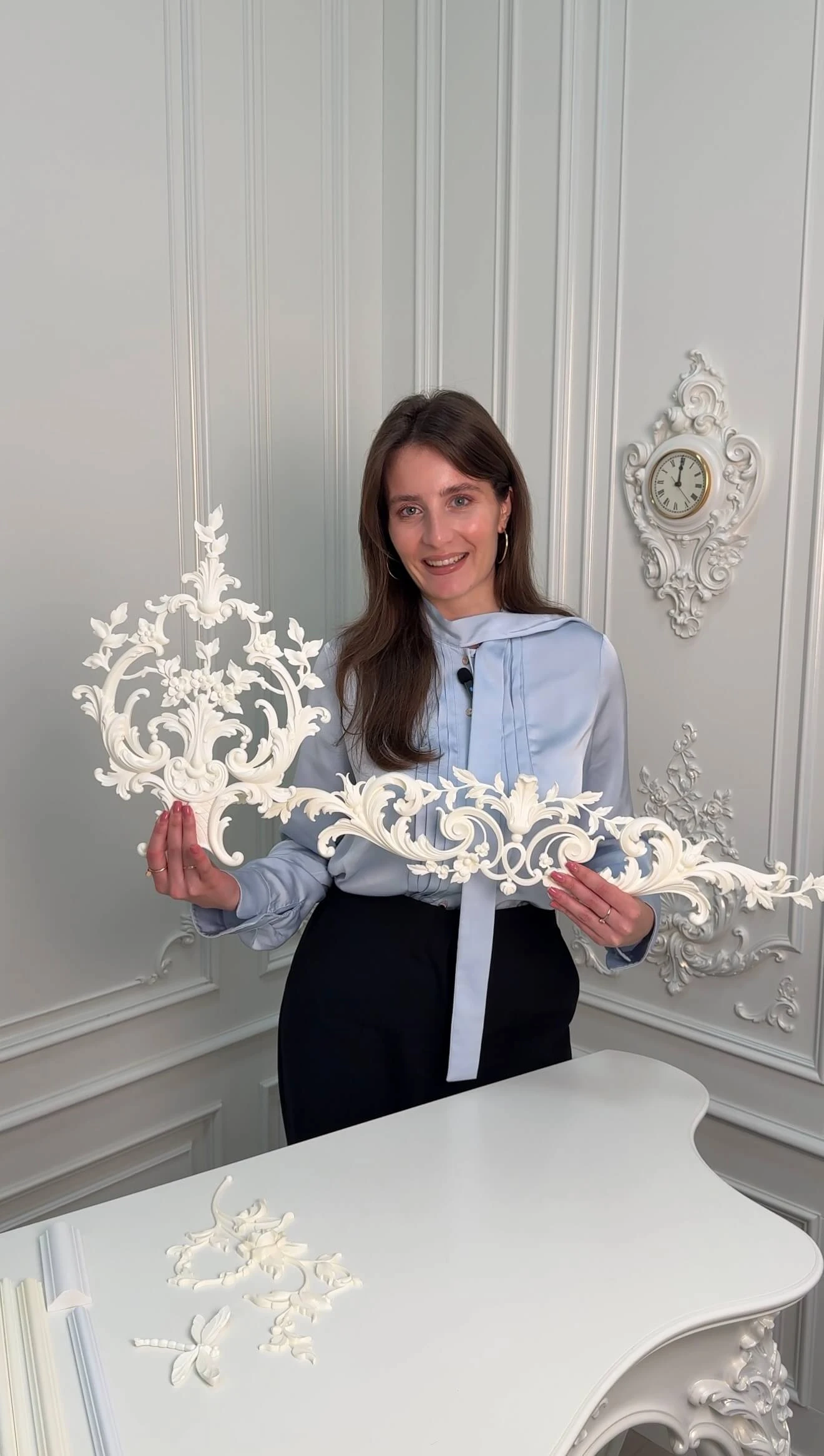
Decorative corner pieces. For frame corner transitions, accent details, and corner finishing — STAVROS wooden decorative overlays in the same pattern as the selected baguette.
Ready-made mirror frames. If a mirror in a ready-made frame is placed next to a frame made from meter-length baguette — STAVROS mirror frames they are matched in the same style.
Linear products and moldings. For wall frame compositions where decorative frames alternate with horizontal and vertical moldings, you need STAVROS solid wood linear products.
Installation materials. Wood glue, construction adhesive, fasteners — all in the section STAVROS installation and finishing materials.
Custom manufacturing. If the required profile is not in the standard catalog — STAVROS offers Custom item manufacturing. This is especially relevant for commercial projects with non-standard requirements for profile, size, or ornament.
Wooden baguette in commercial projects: the logic of a large-scale order
For interior designers, architects, and decorators working with commercial properties, a solid wood baguette is a professional tool, not a household purchase.
In a hotel or restaurant, a series of frames must be identical: one profile, one width, one finish. A linear meter order from a single manufacturer is the only way to ensure this identity. STAVROS supplies wooden baguette by the meter from a single production batch, guaranteeing consistency in wood color, density, and carving character.
For boutiques and showrooms where the aesthetics of every detail matter, a solid wood baguette is an argument for quality and naturalness. It works as part of the space's brand.
About the company STAVROS
STAVROS is a Russian manufacturer of wooden decorative products and furniture hardware with a history that began in 2002 in St. Petersburg. The company's founders — artists Andrey Ragozin and Evgeny Tsapko — started with a small workshop for producing carved wooden products. In the early years of operation, STAVROS participated in the reconstruction of the Constantine Palace in Strelna, then in restoration work at the Hermitage, the Alexander Palace, and the Trinity-Izmailovsky Cathedral.
Today, STAVROS is a production facility in St. Petersburg, showrooms in Moscow and St. Petersburg, and Contact us to confirm shipping to your destination. from a single unit. The catalog includes wooden baguette, linear moldings, moldings, carved overlays, decorative elements, mirror frames, furniture handles, slatted panels, and materials for installation and finishing.
STAVROS wooden baguette is not just a wooden profile. It is a tool for creating an interior that remembers what real work with wood is.
Frequently asked questions
What is STAVROS wooden baguette?
This is a solid wood profile (oak, beech) with a rebate for framing pictures, mirrors, panels, and decorative inserts. It is sold by the meter — in linear meters — and allows you to assemble frames of any non-standard size.
How to distinguish a wooden baguette from a molding?
A baguette has a rebate — a groove or step for placing the framed object. A molding has no rebate: it is attached to a flat surface as a decorative element. Check for the rebate in the product card before purchasing.
How much wooden baguette is needed for a frame?
Calculate the perimeter of the frame + allowance for corner cuts (4 × profile width × 2) + 15–20% for pattern rhythm and errors. For a mirror 80×120 cm with a 60 mm profile, about 5.5 m is needed.
Can I order samples of wooden baguette?
Yes. In the STAVROS catalog, there is an item "Samples of wooden baguettes" — you can order samples to match the profile with the interior before purchasing by the meter.
What to coat a solid wood baguette with?
For a natural finish — Rubio Monocoat Pure oil. For painting — primer + enamel. For patination — special compounds, pre-tested on a sample.
Can a wooden baguette be used for an interior panel without a picture inside?
Yes. A baguette as a decorative frame line on the wall is a popular interior technique. In this case, the profile is mounted like a molding: with glue without using a rabbet.
How to join wooden baguettes at corners?
Cut at 45° using a miter box or miter saw. Glue with wood glue and secure with corner clamps or special adhesive tape. After complete drying, level with wood putty if necessary.
Where to buy a wooden baguette for a mirror in Saint Petersburg?
At the STAVROS showroom in Saint Petersburg or in the online catalog with Contact us to confirm shipping to your destination. Orders start from one linear meter.
Is wooden baguette suitable for outdoor use?
No. STAVROS wooden baguette made of solid wood is for interior use. Outdoor conditions require special wood species and coatings with weather-resistant properties.
Can I order a wooden baguette with a non-standard profile?
Yes. STAVROS offers custom-made products. Check conditions with a manager by phone or email.