Article Contents:
- Short answer: what to buy for your task
- What is a wooden baguette in interior design and why it's not just a "strip"
- Wooden baguette is a system element, not a standalone decor
- Where wooden baguette is used: all usage scenarios
- Wall frame panels
- Transition between wall and ceiling
- Framing door and arch openings
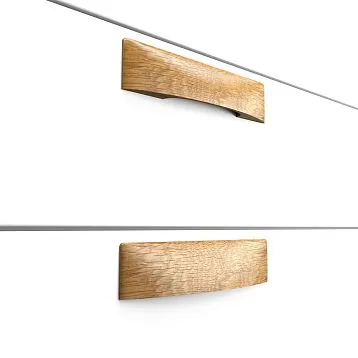
- Furniture fronts
- Decorating mirrors and panels
- Fireplace area
- Ceiling coffers
- Wooden cornice baguette: when exactly it is needed
- Wooden baguette or molding: what is the difference and what to choose
- How to choose a profile shape: straight, relief, wide or narrow
- Straight baguette
- Relief baguette
- Wide baguette
- Narrow baguette
- Material and species: oak, beech and what to choose for the task
- Oak
- Oak
- MDF alternative
- How to choose the color of a wooden baguette for your interior
- Natural Wood
- Light shades
- Dark tinting
- White Enamel
- For a specific interior color
- How to combine a wooden baguette with baseboards, cornices, and moldings
- Vertical axis of the interior
- Horizontal connections
- Wooden slats as the basis for a baguette system
- How to calculate the amount of wooden baguette
- Step-by-step calculation scheme
- Example calculation for one wall
- Mistakes when buying a wooden baguette: itemized breakdown
- They buy without considering other moldings
- They choose a profile that is too small for a large wall
- They use a relief baguette in a minimalist interior
- They don't account for miter cut waste
- They don't consider the color of doors and furniture
- They confuse profiles by purpose
- They don't check how the profile joins at corners
- Wooden baguette in specific spaces
- Living room with high ceilings
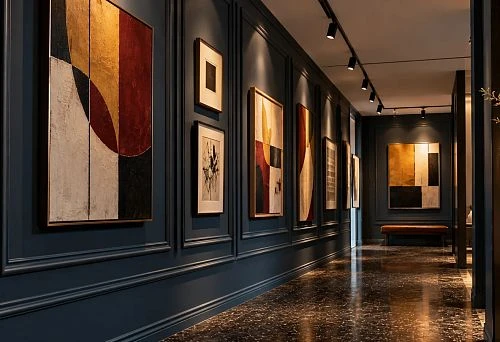
- Study with dark finish
- Bedroom in neutral classic style
- Country house
- Children's room
- What to buy with a wooden baguette: a comprehensive approach
- Final guideline: three questions before buying
- About the Company STAVROS
- FAQ: Answers to Popular Questions
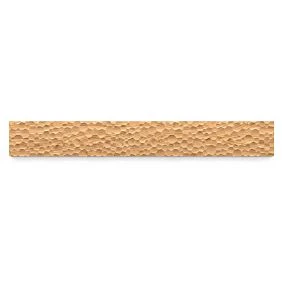
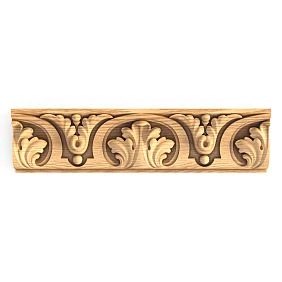
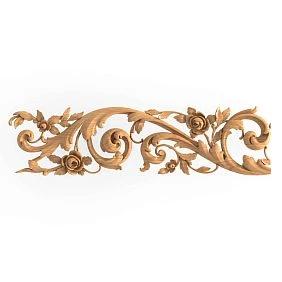
Short answer: what to buy for your task
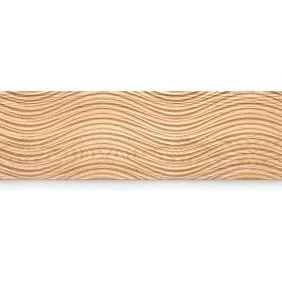
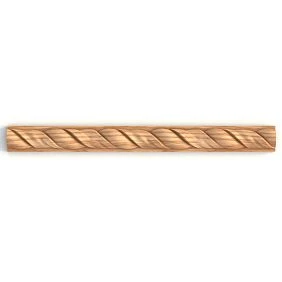
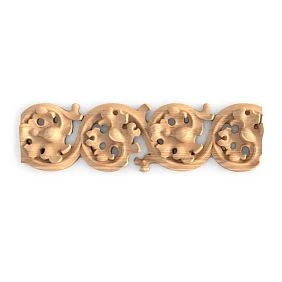
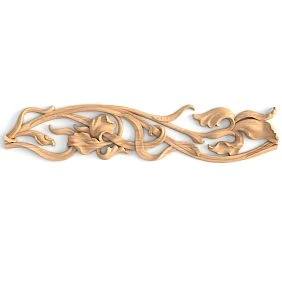
Wooden baguette is a decorative profile made of solid wood that works at the intersection of function and aesthetics. It frames edges, completes transitions, creates borders, supports the cornice line, and ties the interior together. In short: buy wooden molding is needed when you need an expressive decorative profile — for a wall, ceiling, opening, furniture, or decorative composition.
For a modern interior with clear geometry, calm straight profiles with a smooth surface are suitable. For a classic interior, study, or country house — a relief, more expressive baguette with a rich profile. In all cases, the key requirement is one: the wooden baguette must be part of a system — connected with the baseboard, cornice, casing, and moldings in a single material, color, and style.




What is a wooden baguette in the interior and why it is not just a "strip"
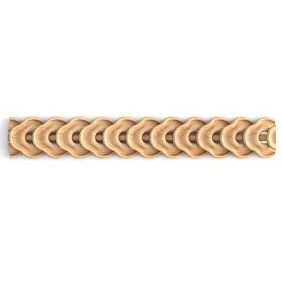
The word "baguette" comes from the French baguette — a long, thin, elongated shape. In an interior sense, a wooden baguette is a decorative profile made of solid wood with a specific cross-section, used to frame edges, borders, transitions, and lines in a space.
The baguette works where you need not just to close a joint or edge, but to do it beautifully and meaningfully. It creates frame panels on walls, designs the transition between wall and ceiling, completes a furniture facade, frames a mirror or decorative panel. This is not a background element — it is an architectural detail.
The difference between a baguette and a regular baseboard or strip is in purpose and shape. Pogonazh iz massiva includes several types of profiles: baseboards close the lower joint of wall and floor, cornices — the upper transition to the ceiling, moldings make frames on walls, and a wooden baguette can act both as a cornice profile and as a decorative frame or transition element. The more accurately you understand the task — the easier it is to choose the right profile.
Our factory also produces:
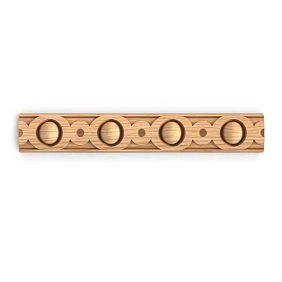
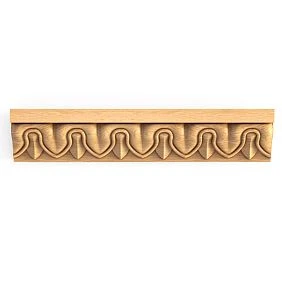
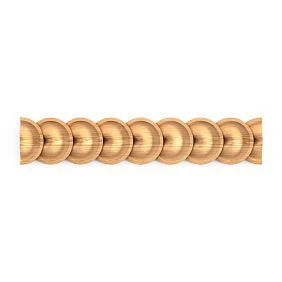
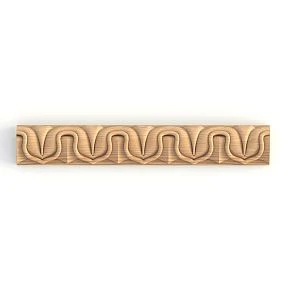
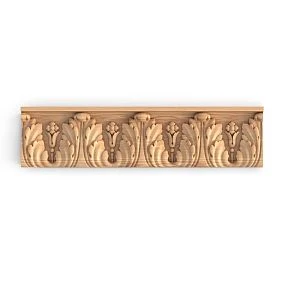
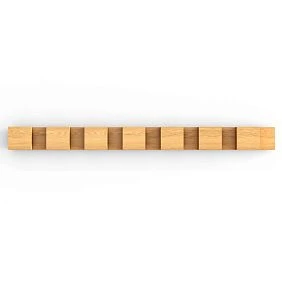
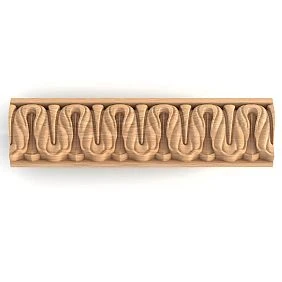
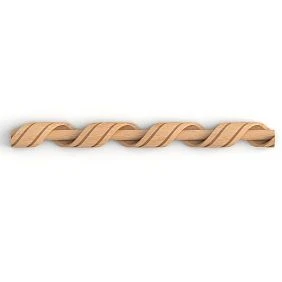
Wooden baguette is a system element, not a standalone decor
The rule is simple: a wooden baguette does not work in isolation. A single profile on an empty wall looks random. The same detail in a system with baseboard, cornice, moldings, and architraves becomes interior architecture. That's why professional designers always consider wood trim items as a single set, not a collection of individual items.
Get Consultation
Where wooden baguette is used: all usage scenarios
Wooden baguette is one of the most versatile elements in the interior decor arsenal. Its scope of application is much broader than commonly thought.
Wall frame panels
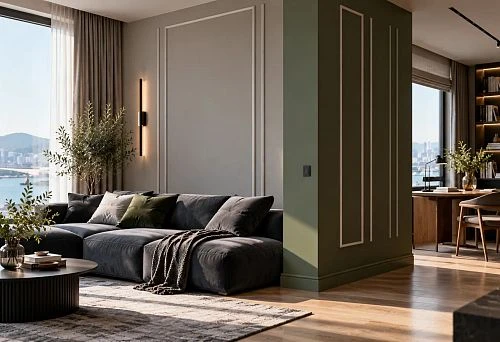
The most common application. Rectangular or square frames made of wooden baguette are mounted on a flat wall — and the wall transforms from a flat background into an expressive architectural surface. This technique works in classic living rooms, bedrooms, studies, and hallways. The frame panel can be painted in the wall color (then the decor works through relief and shadow) or highlighted with a contrasting color.
Wall and ceiling transition
A wooden baguette cornice is exactly the profile that decorates the top line of the wall. If a regular ceiling plinth simply covers the joint, then wooden baguette cornice creates a decorative transition, visually separating the wall from the ceiling and emphasizing the height of the room.
Framing of door and arch openings
A wooden baguette for framing an opening is a wider and more expressive version of a platband. Where a regular platband simply covers the gap between the frame and the wall, a decorative baguette creates a full-fledged frame — theatrical, weighty, architectural.
Furniture facades
On kitchen fronts, cabinets, chests of drawers, and nightstands, a wooden baguette is used as an overlay frame, creating the effect of a paneled front. This is significantly cheaper than making a front with real panels, but the visual result is close.
Design of mirrors and panels
A wooden baguette for a mirror is a classic application. The profile is cut at 45 degrees and assembled into a frame of the desired size. The live texture of solid wood and the precise profile make such a frame significantly more expensive than any MDF alternative.
Fireplace zone
Framing a fireplace with a wooden baguette is a technique from classical English and Italian traditions. A wide relief profile around the perimeter of the firebox, vertical pilasters, a horizontal shelf — all this is assembled from a wooden baguette and of wooden moldings into a single decorative structure.
Ceiling coffers
Dividing the ceiling into rectangular coffers is a classic ceiling decor. For this, wooden slats and a wooden baguette are used: the former create the base, the latter frames the edges of the coffers. The result is a coffered ceiling, which in expensive interiors has always been a sign of high class.
Wooden baguette cornice: when exactly it is needed
This question requires a clear answer because cornices and baguettes are often confused. buy wooden cornice It is worth it when you need a ready-made profile for the top line of the wall with a clear cross-section and precise shape. But there is a separate category — a wooden baguette cornice, that is, a cornice profile with an expressive relief pattern that works not only as a covering element but also as a full-fledged decorative accent.
A baguette cornice is chosen in the following situations:
-
Classic or neoclassical interior, where the top line of the wall should have a pronounced architectural character.
-
Living room or study with high ceilings, where a thin baseboard profile will look weak and inexpressive.
-
Interior with decorative frame panels on the walls — in this case, the cornice at the top and the baseboard at the bottom form a single vertical system.
-
Country house with wooden finishes, where the natural texture of solid wood in the cornice supports the overall concept.
-
Fireplace area, where the cornice above the firebox creates a horizontal "shelf" and completes the decorative structure.
Wooden cornice in this case, it is a precise tool, not just a linear detail.
Wooden baguette or molding: what is the difference and what to choose
One of the most common questions. Molding and baguette are close concepts, but with different emphases in application. Let's figure it out.
| Element | When to choose |
|---|---|
| Wooden picture frame molding | When an expressive decorative profile is needed for frames, cornices, trims, openings, and furniture |
| wooden molding | For linear wall decorative elements, wall frames, and architectural details |
| wooden cornice | For the top line of the wall, ceiling transition, decorative cornice line |
| Pogonazh iz massiva | When you need to gather all profiles in a single style — baseboard, cornice, molding, batten, casing |
| Wooden casings | Exclusively for framing door and window openings |
Practical tip: if you can't clearly determine whether you need a baguette or molding, start with the task. Where will the profile work? On the wall as a frame? That's molding. On the top line of the wall as cornice decor? That's a cornice or baguette cornice. On furniture as an overlay detail? That's furniture baguette. The task is always more precise than the name.
Buy wooden molding needed where a linear wall profile is required to create an architectural pattern on the surface. Wooden baguette is a broader concept that includes cornice, frame, and furniture profiles with various cross-sectional geometries.
How to choose a profile shape: straight, embossed, wide or narrow
The cross-sectional shape is the heart of any baguette. It determines how the profile will look on the wall, how the shadow will fall on it, how it will be perceived from different distances and in different lighting.
Straight molding
A straight, geometrically clear cross-section without curves or relief. It looks concise, modern, and strict. It works well in minimalism, modern classics, and Scandinavian interiors. It is the easiest to install — straight cuts at corners create neat joints without additional adjustment.
Straight molding is relevant where the main task is to define geometry, not to create decor. For example, a straight frame on a wall without relief in a modern interior is not poverty, but restraint that works precisely through its conciseness.
Relief molding
A profile with one or more curves in cross-section — ogee, bead, scotia, straight chamfer. It is the relief profiles that provide that very play of light and shadow that makes the interior "alive." In a classic space, a relief wooden molding is not a decoration, but a mandatory architectural element.
The more complex the profile, the more difficult its installation — especially at corners. Complex relief molding is cut strictly at 45 degrees with precise alignment of the pattern at each joint. An error of a few degrees is immediately visible.
Wide molding
A wide profile (from 60–80 mm and more) for large spaces, high walls, and fireplace areas. Such molding carries greater visual weight and requires a corresponding room scale. In a small room, a wide cornice molding can create a feeling of heaviness and tightness.
Narrow molding
A narrow profile (up to 30–40 mm) — for delicate frames, furniture details, small decorative elements. Good in bedrooms, children's rooms, studies with unobtrusive decor. Can be used over wooden strips for creating geometric patterns on walls.
Material and wood species: oak, beech, and what to choose for the task
A wooden decorative profile made from solid wood is always a specific species, and the choice of species affects not only the color but also how the profile will behave during processing and in the finished interior.
Oak
Oak is a species with a pronounced porous pattern and characteristic medullary texture. Under transparent tints and oils, it acquires a rich, deep surface where every centimeter of the cross-section looks individual. Dark shades — wenge, tobacco, bog oak — create a rich, saturated environment. Light natural oak brings warmth.
Oak is the ideal species where the wood texture should remain visible. If buy wooden molding under clear varnish — oak will give a unique living surface.
Beech
Beech is a dense, fine-porous species with a more uniform structure and almost invisible fiber pattern. It is the ideal base for opaque coatings — white enamel, pastel tones, rich colors. Under enamel, the surface becomes smooth, even, without spotting or variations.
If you need a wooden baguette for painting — beech is the first choice. That is why most white classic profiles are made from beech: the surface under enamel turns out perfectly smooth.
MDF alternative
MDF profiles are cheaper but inferior in density, durability, and material feel. Under opaque enamel, the difference between beech and MDF is almost visually unnoticeable, but during installation, at corners, and with long-term use, solid wood wins in all aspects.
How to choose the color of a wooden baguette for your interior
Color is the parameter that either makes an interior cohesive or breaks it into unrelated fragments.
Natural wood
Transparent tinting, oil, or wax preserving the texture — for interiors where wood appears in several elements simultaneously. A wooden baguette in the tone of natural oak organically connects with wooden skirting board, furniture, wooden casings and cornices.
Light shades
For Scandinavian and Japandi interiors, modern light classics, and pastel spaces. Light tints on beech or oak create an airy, soft surface that does not weigh down the space.
Dark tinting
For studies, libraries, living rooms with heavy drapes and dark furniture. A dark wooden baguette creates contrast with light walls and ceilings, visually highlighting the architectural lines of the room.
White enamel
White wooden baguette is the most versatile solution for classic interiors with white ceilings and light walls. It does not compete with other details but supports the overall lightness of the space. At the same time, due to the relief and shadow, the white profile never looks 'flat' — it is voluminous and clean.
To match a specific interior color
If the interior has a dominant color — the color of doors, furniture, window frames — the wooden baguette can be painted in the same shade or a similar one. This is a technique for creating "lines" from details, where all horizontal and vertical accents in the room are perceived as a single system.
How to combine wooden baguette with baseboard, cornice, and moldings
This is one of the most important questions for those who want to achieve a finished interior, not a set of random profiles. A wooden baguette does not exist in isolation — it works within a system.
Vertical axis of the interior
Any room has three horizontal lines: the floor, the middle line of the walls, and the ceiling. Wooden decor is distributed across all three levels:
-
Lower level — Skirting made of solid wood or MDF Skirting Board with a laconic or expressive profile.
-
Middle level — wooden baguette in the form of frame panels, moldings, horizontal divider profiles.
-
Upper level — wooden baguette cornice or wooden cornice, finishing the wall at the ceiling.
When all three levels are executed in the same material and similar style, the interior is perceived as complete. When at least one falls out, a feeling of incompleteness arises, which is hard to articulate but easy to feel.
Horizontal connections
In addition to the vertical axis, the wooden decor creates horizontal connections: Wooden casings at the doors, a wooden baguette in frames around the windows, a wooden cornice above the windows linked with a wall cornice. The unity of material and shade creates what in design is called a "through theme" — when the same element repeats in different points of the space and creates a visual rhythm.
Wooden slats as a base for a baguette system
An interesting constructive technique: Wooden planks are mounted on the wall in the form of a grid or vertical strips, and a wooden baguette is used to frame their edges and create frame accents. This is especially relevant for modern slatted walls with a decorative insert.
How to calculate the amount of wooden baguette
Calculation is not a difficult task, but requires methodicalness. An error of 5% can lead to a shortage of material at the most inconvenient moment.
Step-by-step calculation scheme
Step 1. Measure the length of each section — walls, ceiling, perimeter of frames, openings. Record each section separately.
Step 2. Determine the number of frames — if you are making frame panels on the walls, calculate the perimeter of each frame (2 × width + 2 × height) and multiply by the number of frames.
Step 3. Account for corners and miter cuts — each internal or external corner requires two pieces cut at 45 degrees. This leaves a small waste from each piece. The finer the cut, the higher the waste percentage.
Step 4. Add a margin — for straight profiles, a margin of 5–7%; for relief profiles with corner joints, 10–15%. For complex relief profiles on non-standard walls, up to 20%.
Step 5. Check the standard product lengths — if the standard profile length is 2 or 3 meters and your section is 2.5 meters, you need two pieces with inevitable waste. This is also accounted for in the calculation.
Example calculation for one wall
Wall 4 × 2.8 m, with 4 frame panels measuring 0.9 × 1.5 m.
-
Perimeter of one frame: (0.9 + 1.5) × 2 = 4.8 m
-
Total for 4 frames: 4.8 × 4 = 19.2 m
-
Margin of 12% (relief profile, corner miter cuts): 19.2 × 1.12 = 21.5 m
That's all the math. Simple, but it needs to be done before the trip for materials, not after.
Mistakes when buying wooden baguettes: itemized breakdown
The most common mistakes are not bad taste or lack of knowledge. It's simply carelessness at the selection stage. Let's honestly break down each one.
They buy without connection to other moldings
Wooden baguette is chosen 'on its own' — beautiful, liked it. But the baseboard in the room is a different tone, the cornice is made of a different material, the architraves are from the Soviet past. Result: three beautiful elements that don't create unity.
Solution: first define the molding system — material, wood species, shade, profile style — and only then choose specific items.
They choose a profile that is too small for a large wall
A narrow elegant baguette on a 4x3 meter wall with three-meter ceilings simply won't be readable from a distance. It will get lost. The scale of the profile must match the scale of the space.
They take a relief baguette for a minimalist interior
A rich baroque profile in an interior with concrete walls and frameless doors is not originality, it's a conflict. The profile style should support, not contradict, the overall architecture of the space.
They don't account for the allowance for cuts
They buy exactly by the footage — and there's not enough one and a half meters for the last frame. An allowance is always mandatory. For relief corner profiles — especially.
They do not consider the color of doors and furniture
A wooden baguette in dark tinting against white doors and light furniture is not a design technique, it is simply a mismatch. The color of the baguette must be justified by at least one other element in the room.
They confuse profiles by purpose
They buy a cornice instead of a molding. Or a molding instead of a casing. This leads to incorrect installation and disappointment in the result. Before purchasing, always clarify the purpose of a specific profile. Catalogs exist for this purpose of wooden moldings и wooden cornice with clear descriptions of application.
They do not check how the profile joins at corners
Some relief profiles have a complex asymmetrical pattern that does not join in a straight miter cut. Before buying, clarify how exactly a specific profile connects at corners. Otherwise, after cutting, you will find that the pattern does not match.
Wooden baguette in specific spaces
Theory is good. But let's see how a wooden baguette solves real interior tasks in specific rooms.
Living room with high ceilings
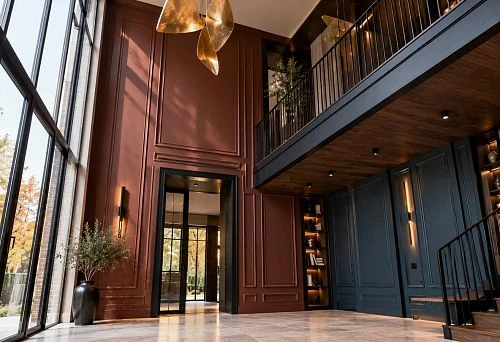
Walls 3.2 meters high with frame panels made of wooden baguette is a classic solution, proven over centuries. The lower row of panels is about 1.5 meters high, above are larger rectangular frames up to the cornice line. All of this is made from one profile, one wood species, one shade.
Such a wall does not require any wallpaper, decorative plasters, or art objects. It itself is a work of architectural mastery. This project involves: wooden baguette, Wooden baseboard, wooden cornice и Wooden moldings — four positions, a unified system.
Study with dark finishes
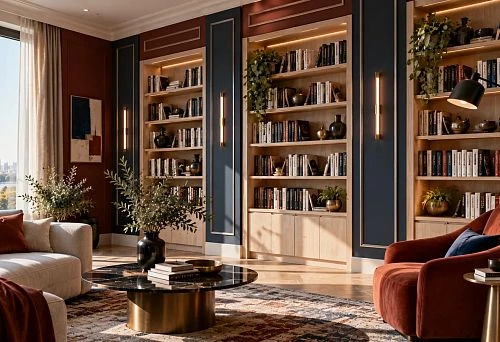
In the study, the wooden baguette works more heavily and expressively. Dark oak, wide relief profile, matte tinting. Frame panels up to shoulder level, above — light walls with soft texture or wallpaper. This horizontal division — "dado panel" — is historically characteristic of English libraries and studies.
Here wood trim items made of oak with dark tinting create a sense of solidity and weight. A study with such decor conveys seriousness not declaratively, but through the material environment.
Bedroom in neutral classic
In the bedroom, the wooden baguette works more delicately. Narrow profile, light beech shade under soft white enamel. Frame panel at the head of the bed — a simple rectangle, without complex relief. This creates an accent for the relaxation area without excessive decor.
Country house
There are no restrictions on material here — only towards naturalness. Wooden baguette made of solid wood with pronounced texture, oil coating, warm tone. Frame panels in the hallway, cornice baguette in the living room, framing of the fireplace area — all from the same species, all in the same character. Warmth, solidity, durability.
Children's room
In the children's room, the wooden baguette also works for safety: natural material without toxic components, durable surface that can be washed. The narrow profile creates frame zones that can later be used as "boards" for attaching drawings or shelves.
What to buy together with wooden baguette: a comprehensive approach
Wooden baguette is the entry point into the system. By purchasing it, you automatically start assembling a set that will determine the final look of the interior.
Wooden moldings — linear wall profiles for frame panels, architectural lines, and wall patterns. Together with wooden baguettes, they form a unified wall system.
wooden cornice — the top line of the wall. Completes the wall system started by moldings and baguettes. Selected in the same wood species and shade.
buy wooden cornice — for wall mounting with curtain rod brackets.
Skirting made of solid wood — the lower horizontal line of the interior. Covers the joint between wall and floor and supports the wooden room contour from below.
MDF Skirting Board — a budget-friendly alternative for painting with good geometry and a wide range of profiles.
Wooden casings — framing of door and window openings. Paired with wooden baguettes on walls, they create the impression that all wooden decor was designed as a single project.
Wooden planks — for slatted walls, frame structures, and decorative grilles. Compatible with wooden baguettes in wood species and finish.
Wooden angle — covers external and internal corners of wooden trim, ensuring a neat transition.
All items together constitute Pogonazh iz massiva in the full sense of the word. A set of decorative profiles that form the wooden "skeleton" of the interior.
Final benchmark: three questions before buying
Before buying a wooden baguette, answer three questions:
First: where will the profile work? On the wall, ceiling, furniture, in an opening, or in a decorative frame. The answer determines the shape and width of the profile.
Second: what system does it work in? A single profile or part of a set with baseboard, cornice, moldings, and architraves. The answer determines the material and shade.
Third: what is the interior style? Minimalism, classic, country house, study, Japandi. The answer determines the degree of relief and expressiveness of the profile.
Three answers — and the choice becomes obvious.
About the company STAVROS
A decorative solid wood profile is a product that requires precise manufacturing. Uneven cross-section, poorly dried wood, or careless relief — all of this shows up immediately during installation and remains visible throughout the entire life of the interior.
Since 2002, STAVROS has been manufacturing wooden millwork and decorative profiles from solid oak and beech. The company's portfolio includes work with cultural heritage sites: the Konstantinovsky Palace in Strelna, the Hermitage, and the Alexander Palace. Experience with high-category historical interiors is not a marketing statement but the foundation of quality standards that STAVROS applies in serial production.
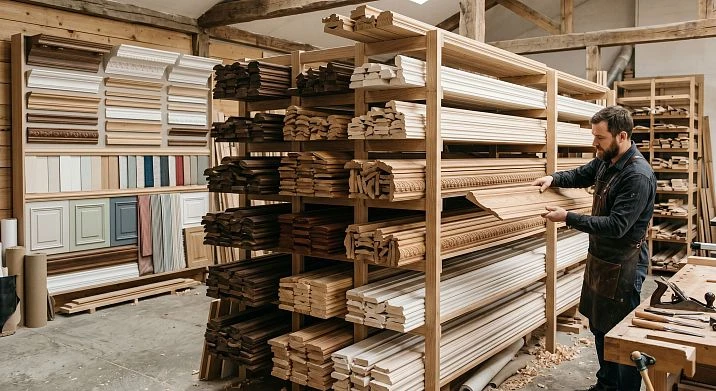
Today STAVROS offers a full range wood trim: wooden baguettes and profiles, Wooden moldings, Wooden cornices, Solid wood skirting boards, Wooden casings and all related moldings. Shipment from a warehouse in St. Petersburg, Contact us to confirm shipping to your destination. from one piece via CDEK and DPD. Showrooms are in St. Petersburg and Moscow.
FAQ: Answers to popular questions
What is a wooden baguette?
This is a decorative profile made of solid wood with a specific cross-section, used for framing, cornice lines, furniture facades, openings, ceiling transitions, and wall decorative systems. Essentially, a wooden baguette is a universal element of architectural interior decor.
How is a wooden baguette different from molding?
Molding is a narrower concept, denoting a linear wall profile for frames and architectural lines. Wooden baguette is a broader category, including cornice, frame, furniture, and framing profiles of various widths and reliefs. In practice, these terms are often used interchangeably.
Where to use a wooden cornice baguette?
wooden baguette cornice used for decorating the top line of the wall and the transition to the ceiling. It is especially appropriate in classic, neoclassical interiors, studies, living rooms with high ceilings, and country houses with wooden finishes.
Can a wooden frame be painted?
Yes. A solid wood profile accepts any type of coating well: opaque enamels, tints, stains, oils, varnishes, primers for painting. For opaque enamel, beech is better suited — its fine-pored structure provides a perfectly smooth surface. For transparent tints preserving the texture — oak.
How to calculate the amount of wooden baguette for frame panels?
Calculate the perimeter of each frame (2 × width + 2 × height), multiply by the number of frames. Add 10–15% margin for corner cuts and possible defects. For relief profiles with a symmetrical pattern, the margin is higher.
What to combine wooden baguette with?
Best paired with wooden skirting board, with wooden cornices, wooden moldings и wooden casings in a single wood species and shade. It is this system that forms a solid wooden contour of the interior.
Is acclimatization of a wooden baguette required before installation?
Yes. A solid wood profile must be kept in the room for 48–72 hours in a horizontal position before installation. This allows the wood to stabilize in humidity and prevent deformation after installation.
How to choose the width of a wooden baguette?
Focus on the scale of the room. For rooms with ceilings up to 2.8 m, profiles with a width of 30–60 mm are suitable. For high rooms (3 m and above) — 60–100 mm and more. For furniture parts and small frames — 15–30 mm. A narrow profile gets lost on a large wall, while a wide one creates heaviness in a small room.