

































Article Contents:
- Wooden baguette K-067: what exactly STAVROS sells
- "For enamel" does not mean "sanding does not matter"
- Wooden carved baguette K-067 in "Standard" quality: what the buyer gets
- Carved wooden frieze K-067 "Prestige": what customers actually pay extra for
- How much does it cost to upgrade from "Standard" to "Prestige"
- How to calculate your own threshold between "Standard" and "Prestige"
- If the baguette will be painted anyway: when it is more profitable to order "Standard"
- When it makes sense to buy the wooden baguette K-067 "Prestige"
- 90, 110, or 130 mm: you cannot choose sanding quality instead of size
- Beech or oak for K-067 under opaque enamel
- K-067 — repeating frieze: joint quality affects the order no less than sanding
- Why it is useful to order a sample before a large order
- What to tell the manager when ordering wooden baguette K-067
- Where to buy wooden baguette K-067 and other carved profiles
- Questions before purchasing K-067 under enamel
- Does "under enamel" mean the product is already primed?
- How does "Standard" differ from "Prestige"?
- Can K-067 "Standard" be painted without additional preparation?
- Does "Prestige" completely eliminate the painter's work before painting?
- Why is the price difference so big?
- How can I tell if the "Prestige" will pay off?
- Can I choose "Standard" for four slats and "Prestige" for one visible one?
- Which K-067 size should I choose — 90, 110, or 130 mm?
- Does oak make sense if everything is painted with opaque enamel?
- Why is it important to consider pattern repeat?
- Does a 100 mm sample accurately represent the finished two-meter K-067?
- Should the packaging frame be included in the budget?
- Can I change the relief myself by sanding after purchase?
- When is it better not to buy K-067 right now?
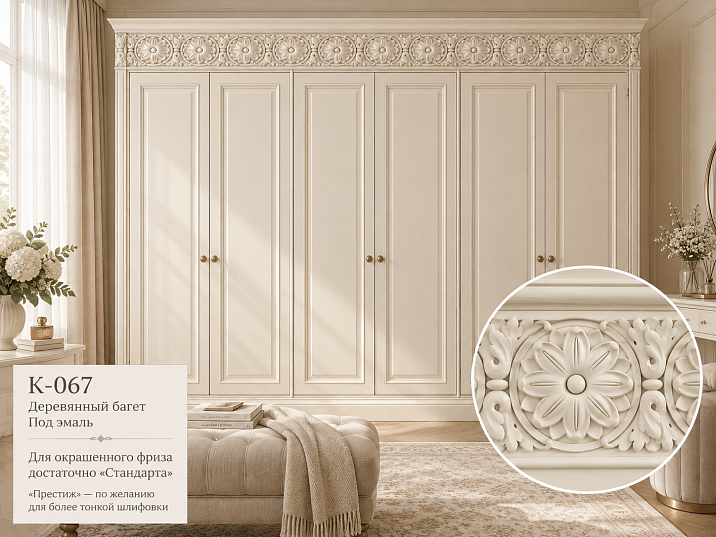
K-067 has already been selected based on the drawing, and the finish is also clear: the decorative frieze will be painted with opaque enamel. The card still has a fork — order "Standard" or "Prestige." At first glance, it seems that expensive hand sanding is not needed for painted wood: the enamel will cover the color of the lamellas anyway. But here two different characteristics are mixed.
"Under enamel" describes the quality of the joinery blank and the future opaque finish. "Standard" and "Prestige" describe the quality of surface treatment before this finish. Therefore, the choice depends not on the fact of painting as such, but on who and how much will refine the complex carving of K-067 before applying the paint and varnish material.
If the project has its own finisher, manual preparation is already included in the technological map and its cost is lower than the price difference between the versions, "Standard" may be economically reasonable. If there is no separate finishing stage, deadlines are tight, or it is important to get a maximally prepared carved relief, "Prestige" removes a significant part of this work from the site. The decision is better made based on the specific width of K-067, order volume, and preparation estimate, rather than on the principle "we are painting anyway."

Wooden baguette K-067: what exactly STAVROS sells
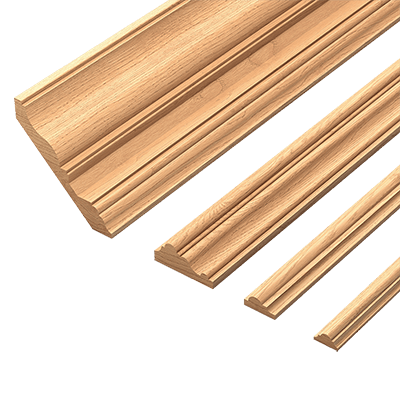
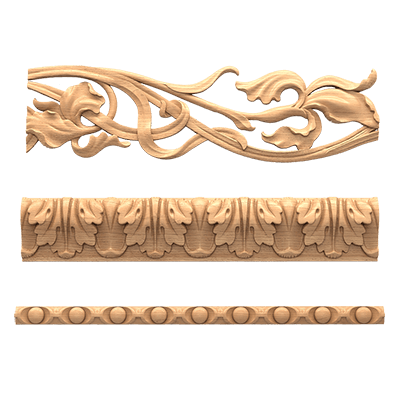
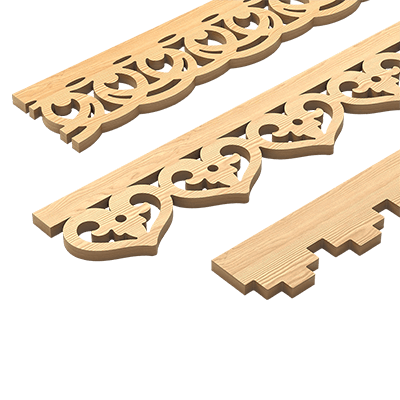
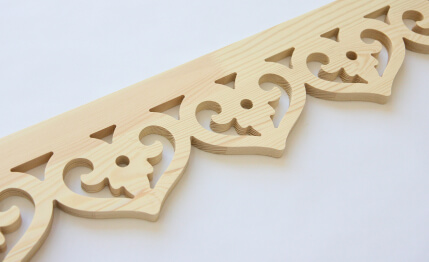
K-067 is a carved wooden baguette, which the manufacturer also describes as a decorative frieze. In the current card as of September 8, 2026, four geometric versions are presented: a short element 90 × 18 × 300 mm and three options with a length of 2000 mm — widths of 90, 110, and 130 mm.
| Size A × C × L | Material | "Standard" | "Prestige" |
|---|---|---|---|
| 90 × 18 × 300 mm | Beech | 2 150 ₽ | 3 960 ₽ |
| 90 × 18 × 300 mm | Oak | 2 830 ₽ | 4 380 ₽ |
| 90 × 18 × 2000 mm | Beech | 14 370 ₽ | 26 380 ₽ |
| 90 × 18 × 2000 mm | Oak | 18 870 ₽ | 29 200 ₽ |
| 110 × 22 × 2000 mm | Beech | 17 730 ₽ | 30 110 ₽ |
| 110 × 22 × 2000 mm | Oak | 23 870 ₽ | 34 360 ₽ |
| 130 × 26 × 2000 mm | Beech | 18 630 ₽ | 31 880 ₽ |
| 130 × 26 × 2000 mm | Oak | 27 520 ₽ | 39 460 ₽ |
For the shown versions, the card indicates the gluing quality "Under enamel" and a production time of 5–10 days to order. A rigid packaging frame is also added to the order; its current stated cost is 390 ₽.
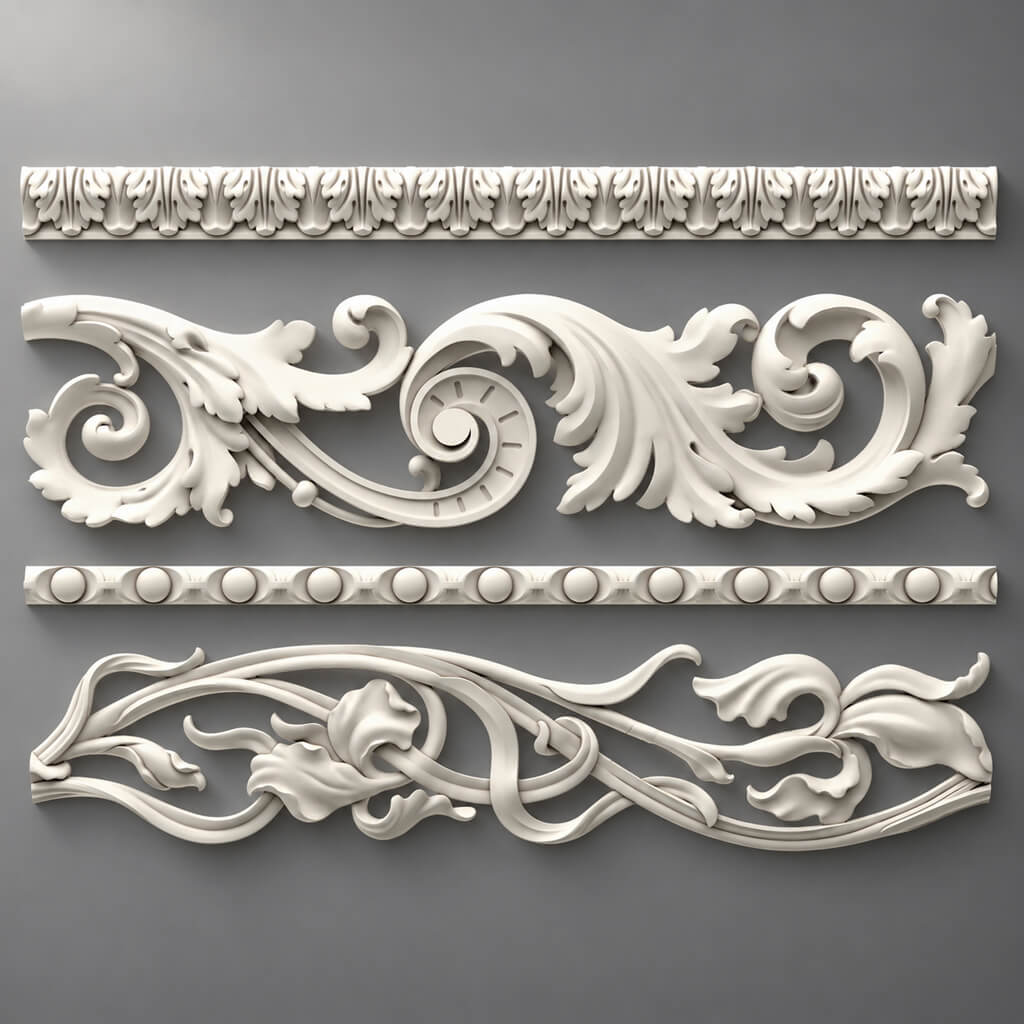
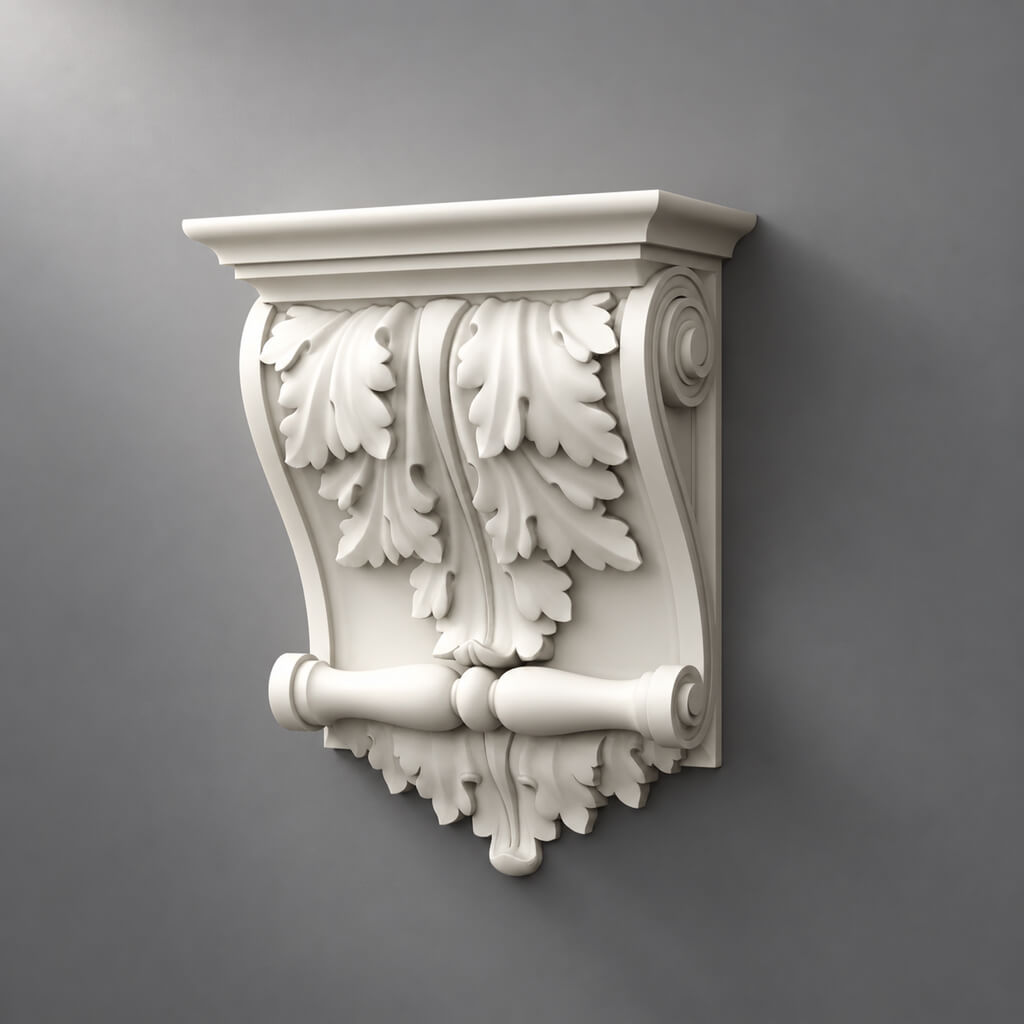
Drawing K-067 is built on large floral elements. The manufacturer separately emphasizes the repeatability of the ornament and a convenient step for joining. This is important for the sanding topic: we are not dealing with a smooth strip, but a developed relief with recesses and transitions, where manual preparation requires noticeably more attention.
If the model is already approved, buy wooden molding K-067 better after fixing the width, material, sanding quality, and the role of further finishing in the overall estimate.
"Under enamel" does not mean "sanding does not matter"
At STAVROS, these are two independent characteristics.
"Under enamel" refers to the joinery blank. Lamellas can be glued without matching by color and texture, because dense tinting or opaque coating is assumed. The difference in wood shades after such finishing is not the main visual task.
"Standard" and "Prestige" refer to surface treatment. In "Standard," milling and machine sanding are performed. In "Prestige," detailed manual sanding is added to them, including hard-to-reach places.
Therefore, the logic "under enamel = you can skip thorough sanding" is incorrect. Enamel covers color differences, but it does not turn a rough relief into a smooth one. Moreover, an opaque coating can visually emphasize individual surface preparation defects, especially in side light.
The manufacturer allows for "Standard" visible milling marks, slight roughness, and fuzz within part of the treated surface, whereas for "Prestige" the allowable share of such marks is significantly lower. This is the real boundary between the options, not "good" and "bad" molding.
Our factory also produces:


Wooden carved molding K-067 as "Standard": what the buyer gets
"Standard" is not a raw blank. The surface undergoes milling and machine sanding, with minor defects corrected using putty. However, the manufacturer explicitly allows residual milling marks, roughness, and fuzz.
For a workshop, this means a clear production model: purchase the more affordable K-067, then perform your own inspection and finishing before painting. This option is especially logical when manual preparation is already part of the technological chain regardless of the chosen profile.
For example, if all furniture, doors, and carved decor of a project go to a single painting shop after fitting, the craftsman still inspects each piece, raises the grain if necessary, refines recesses, eliminates transport marks, and only then applies primer. In such a system, part of the savings on "Standard" can be real, because the work does not create a separate new process.
But "Standard" cannot be automatically considered advantageous. The more complex the ornament, the more manual time is spent on areas where machine sanding does not reach well. For four identical strips, this work is multiplied by four; for a series, by the entire volume.
Get Consultation
Carved wooden frieze K-067 "Prestige": what you are actually paying extra for
"Prestige" includes detailed manual sanding after machine sanding. The manufacturer describes the result as a smooth surface ready for the application of paint and varnish materials. For K-067, this difference is especially clear visually: the large floral ornament creates recesses, radius transitions, and areas around petals where manual finishing is more difficult than on a straight profile.
The buyer is not paying for a different wood species or a different pattern. They are paying for a higher level of surface readiness.
This can reduce the amount of work for the painter on site, but it does not eliminate incoming inspection. Even "Prestige" after transport needs to be inspected before priming and enameling: check corners, joints, possible packaging damage, and areas of future cuts. The difference is that planned manual sanding of the entire relief has already been done by the manufacturer.
If the project does not have a separate joinery-painting stage, this saves not only manual time but also work organization: fewer operations between unpacking and the start of finishing.
How much does it cost to switch from "Standard" to "Prestige"
The price clearly shows why the choice cannot be made automatically. For two-meter K-067, the premium for "Prestige" ranges from 10,330 to 13,250 ₽ per plank.
| Size, material | "Standard" | "Prestige" | Difference per plank |
|---|---|---|---|
| 90 × 18 × 2000, beech | 14 370 ₽ | 26 380 ₽ | 12 010 ₽ |
| 90 × 18 × 2000, oak | 18 870 ₽ | 29 200 ₽ | 10 330 ₽ |
| 110 × 22 × 2000, beech | 17 730 ₽ | 30 110 ₽ | 12 380 ₽ |
| 110 × 22 × 2000, oak | 23 870 ₽ | 34 360 ₽ | 10 490 ₽ |
| 130 × 26 × 2000, beech | 18 630 ₽ | 31 880 ₽ | 13 250 ₽ |
| 130 × 26 × 2000, oak | 27 520 ₽ | 39 460 ₽ | 11 940 ₽ |
For a conditional line of four beech planks K-067 90 × 18 × 2000 mm:
"Standard": 4 × 14,370 = 57,480 RUB.
"Prestige": 4 × 26,380 = 105,520 RUB.
The difference is 48,040 RUB.
These 48,040 RUB are the price of deeper factory-level surface preparation of four slats, not the "cost of a good result in general." To make the comparison fair, the workshop must estimate its own manual finishing of the same four elements.
Working formula:
"Standard" option = price of the baguette + internal finishing + control + primer/enamel + possible rework;
"Prestige" option = price of the baguette + incoming control + primer/enamel + possible local corrections.
Without the price of your own working hour, the number of passes, and quality requirements, it is impossible to declare one option cheaper for everyone.
How to calculate your own threshold between "Standard" and "Prestige"
The most useful figure for a workshop is not the markup percentage, but the marginal cost of your own finishing of one slat. For beech K-067 90 × 18 × 2000 mm, the difference between "Standard" and "Prestige" is currently 12,010 RUB. This means: if the actual additional preparation of one "Standard" in your production costs noticeably less than 12,010 RUB and delivers the required quality, "Standard" has an economic argument. If the actual finishing, along with control and rework, approaches or exceeds this amount, "Prestige" becomes increasingly rational.
But you need to compare the same scope of work. You cannot pit only the pure time of the sander against 12,010 RUB. Your own cost includes workplace preparation, abrasives, hand tools, cleaning threads from dust, control after sanding, rework on missed areas, and the cost of defects if the relief is accidentally damaged.
For a batch of N identical slats, a simple model can be used:
The "Prestige" premium = N × (price of "Prestige" − price of "Standard").
For four beech slats 90 × 18 × 2000 mm, this is the already calculated 48,040 ₽. If the workshop estimates additional manual finishing of all four at 20–25 thousand ₽ and has the necessary specialist available, "Standard" looks stronger in terms of direct cost. However, if this work requires separately bringing in a craftsman, slowing down the painting area, and accepting the risk of rework, the hourly rate alone does not reflect the real economics.
This model does not turn "Prestige" into a guarantee of a perfect finish, nor does it eliminate the need to inspect the resulting products. It simply allows converting the "expensive/cheap" discussion into a comparison of two specific technological scenarios.
If the baguette is going to be painted anyway: when it is more profitable to order "Standard"
"Standard" is worth considering when the workshop can actually turn it into the desired finish and this work is already integrated into production.
The first typical scenario is serial furniture or an interior object, where carved molding goes through the same preparation area as other wooden parts. The operator and painter are already scheduled, tools are available, and manual finishing does not create a separate on-site operation.
The second is a large volume, where the difference between "Standard" and "Prestige" turns into a significant amount. In that case, it makes sense to calculate your own cost of finishing rather than buying the maximum level of preparation by default.
The third is a project with complex subsequent processing: fitting, cutting, joining, and local adjustment. If additional processing of ends and joints will be required after installation anyway, your own preparation cycle may prove logical.
But "Standard" ceases to be a saving if the finisher underestimated the time needed for the floral relief. Several hours of manual work on one slat, multiplied by the volume, quickly eat up the difference in purchase price. Therefore, before a large batch, it is useful to actually prepare one element and measure the labor costs.
When it makes sense to buy a wooden baguette K-067 "Prestige"
"Prestige" is reasonable when the buyer wants to transfer labor-intensive manual sanding from the site to production.
This is especially noticeable in a small batch. If you need two or three visible strips for an office, furniture frieze, or decorative line, organizing a separate stage of manual finishing can be more expensive and inconvenient than the price difference itself.
The second scenario is a limited timeframe for finishing work. When the object is already assembled and the painter must quickly move on to primer and enamel, a more prepared surface reduces the number of mandatory operations before painting.
The third is the absence of an in-house carving specialist. Many finishers can confidently handle a smooth strip, but a complex relief requires careful work to avoid "blurring" the sharp edges of the ornament or altering the pattern through excessive sanding.
In such a project buy carved wooden baguette a higher degree of preparation may be more rational than saving on purchase and then looking for a contractor for manual finishing.
90, 110, or 130 mm: you cannot choose sanding quality instead of size
First, the geometry of K-067 is determined in the project, then the material and level of sanding.
The 90 mm version has a thickness of 18 mm. For the 110 mm one, the thickness increases to 22 mm, and for the 130 mm one, to 26 mm. This is not the same frieze with a different price: the scale of the relief and the protrusion of the product change.
Therefore, you cannot choose "Prestige 90 mm" just because it is cheaper than "Prestige 130 mm" if the project requires a large frieze. Conversely, greater width does not automatically make "Standard" or "Prestige" more correct.
On the wall, it is useful to make a full-size paper template of the selected width. For furniture, apply it to the facade or cornice part. At this stage, the scale and position are decided. Only after this does it make sense to calculate the cost of sanding.
If you want to see other scales before the final article, Beadboard can be purchased by the linear meter (hence the name), cut to required sizes for each specific object (a mirror frame 80×120 cm requires perimeter = 4 meters of beadboard, accounting for 45-degree corner cuts). you can do so from the general category, where different profiles are presented.
Beech or oak for K-067 under opaque enamel
For K-067 in the current card, beech and oak are available, and the quality of lamination is marked as "Under enamel." This already sets the main scenario: an opaque or dense finish, where matching lamellas by natural color and texture is not the primary task.
But it does not follow that the wood species ceases to matter. Beech and oak have different wood structures, prices, and behavior in finishing. The specific priming and enamel technology must be coordinated with the finisher.
If the main goal is to preserve a pronounced natural texture under a transparent or semi-transparent coating, the product specification itself "under enamel" requires re-verification. You should not automatically buy this configuration and hope that after transparent finishing, the lamellas will look like tone-matched solid wood.
For the article, the order is important: first the finishing task, then the quality of lamination, then the wood species, and only after that "Standard" or "Prestige."
K-067 is a repeating frieze: the quality of joining affects the order no less than sanding.
K-067 cannot be considered simply a strip of wood of a given length. Its pattern repeats, and the manufacturer marks a convenient ornament step for joining.
Before ordering, it is necessary to determine where the decorative line begins and ends, which joints will remain visible, where external and internal corners pass, how the pattern fits a doorway, furniture module, or adjacent decor.
If two planks are joined on a visible surface, the finisher must see not only the mechanical seam but also the continuation of the ornament. An unsuccessfully chosen joint location may require additional fitting and shifting of the cut. This affects the amount of material regardless of the quality of sanding.
That is why the total footage is only the first calculation. For the final order, a sketch of the line with the layout of two-meter elements and the direction of the pattern is needed.
Why it is useful to order a sample before a large order
STAVROS has a separate card for samples of linear products 100 mm long. The manufacturer offers them for fitting, coordination with the client, and evaluating combinations in the interior.
For K-067, the sample is especially useful not as a miniature replacement for the entire two-meter plank, but as a way to see the real wood, the scale of the relief, and the quality of the surface before a large order. When comparing "Standard"/"Prestige", it is worth clarifying in advance which exact finish is available in samples: a warehouse sample should not automatically be considered representative of the required sanding quality.
You can order samples of wooden baguette and use them together with trial enamel. Then the customer will see how the selected primer and color work on real carving, and the painter will be able to assess the volume of their own preparation.
On the samples page, different price values currently appear in the trade block and description, so the cost of the sample should be confirmed when placing a request, without including it in the estimate based on a single displayed number.
What to tell the manager when ordering wooden molding K-067
The request should be more specific than the phrase "need K-067 for painting." For each item, record:
- article K-067;
- size A × C × L;
- beech or oak;
- "Standard" or "Prestige";
- quality of lamination "Under enamel";
- number of planks;
- purpose — wall, furniture, stair or ceiling frieze;
- requirements for pattern continuity and joints;
- planned finishing technology;
- address and delivery conditions.
For a conditional order, the line might look like this:
K-067 / 90 × 18 × 2000 mm / beech / "Prestige" / under enamel / 4 pcs. / wall frieze / joints along the ornament to be agreed per layout.
It is also useful for the manager to send a sketch of the line with lengths and angles. For the finisher, a separate task on primer, enamel, color, gloss, and joint treatment.
After approval, you can order wooden baguette K-067 already as an exact specification, rather than as an article name without size and quality.
Where to buy wooden baguette K-067 and other carved profiles
If K-067 fits in pattern and size, the product card is the final point of ordering. If the project is still choosing a profile, it is more convenient to first view the general category: buy wooden molding with matching of scale, length, and ornament.
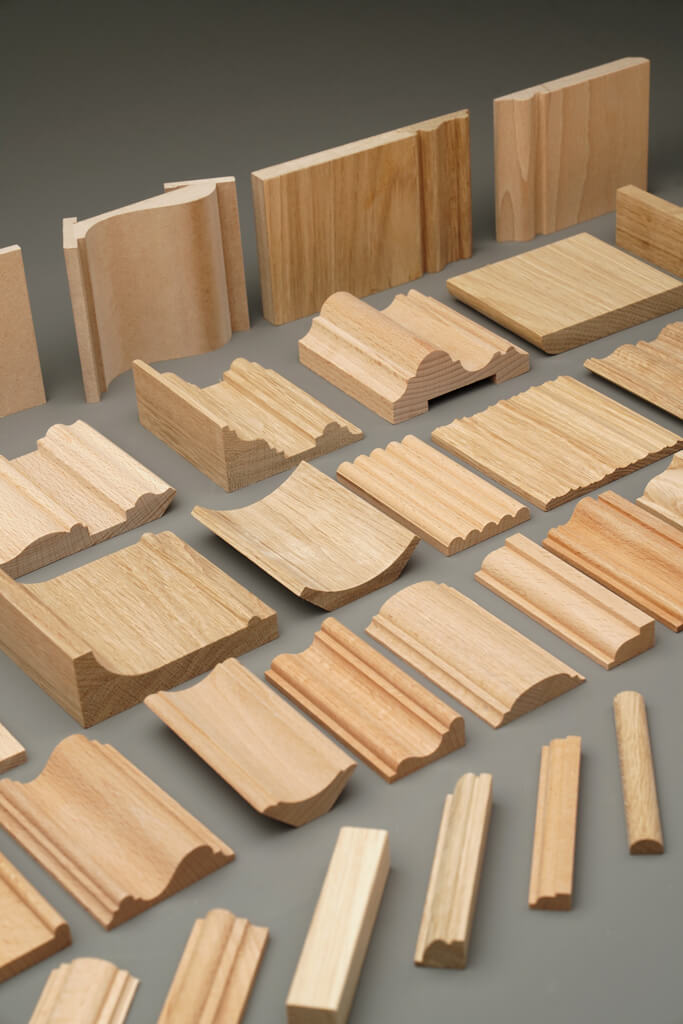
For a broader selection of moldings, you can go to the section wood trim items. There the choice is no longer limited only to carved baguettes, so the transition makes sense at the stage of searching for an alternative, rather than after the final approval of K-067.
The main fork of this article remains the same. "Standard" is chosen not because the enamel will hide everything, but because the own finishing is already calculated and economically justified. "Prestige" is chosen not for the sake of the word in the card, but when manual preparation of a complex relief is more profitable to get at the production site.
Questions before purchasing K-067 for enamel
Does "for enamel" mean that the product is already primed?
No. This is a characteristic of the quality of the carpentry blank and the intended opaque finish. Priming and painting are separate operations.
How does "Standard" differ from "Prestige"?
In the "Standard" option, machine sanding is performed. In the "Prestige" option, detailed hand sanding is added, especially significant in hard-to-reach carved areas.
Can K-067 "Standard" be painted without additional preparation?
The manufacturer allows residual traces of processing, roughness, and fuzz for the "Standard" quality. Before finishing, specific parts need to be inspected; the amount of refinement depends on the finish requirements.
Does "Prestige" completely eliminate the painter's work before painting?
No. It significantly increases the degree of surface readiness, but after transportation, incoming inspection, checking of joints, cuts, and possible local damage is still necessary.
Why is the price difference so large?
"Prestige" includes labor-intensive hand sanding of complex relief. For two-meter K-067 planks, the current difference is approximately 10–13 thousand rubles per piece, depending on size and material.
How can I understand if "Prestige" will pay off?
Compare the price premium with your own cost of manual refinement: master's time, control, re-treatment, and the risk of rework. Without your own hourly rate, there is no universal answer.
Can I choose "Standard" for four slats and "Prestige" for one visible one?
Technically, these are different product configurations, but the visual and technological uniformity of such a solution needs to be verified. For one continuous line, it is better to agree on a uniform surface quality in advance.
Which size of K-067 should I choose — 90, 110, or 130 mm?
Based on the scale of the specific wall or furniture. First, a compositional trial of the width and projection is done, then the material and sanding quality are calculated.
Does oak make sense if everything is painted with opaque enamel?
Both beech and oak are possible. But the choice of wood species should be based on the project, cost, and finishing technology, not on the rule that "enamel makes species identical."
Why is it important to consider pattern repeat?
Because the joint must preserve the rhythm of the floral pattern. The cut and joint location can change the actual consumption of two-meter slats.
Does a 100 mm sample accurately show the finished two-meter K-067?
It helps to evaluate the material, relief, and finish, but it does not show the long line, joint distribution, and overall frieze rhythm. For that, a separate layout sketch is needed.
Should the packaging frame be included in the budget?
Yes. The K-067 card specifies the addition of a rigid packaging frame. For a specific order, the number of packages and final logistics should be confirmed in the invoice.
Can I change the relief myself by sanding after purchase?
Any aggressive manual refinement risks 'blurring' the sharp edges of the ornament. The task of finishing is to remove roughness and lint, not to change the shape of the carving.
When is it better not to buy K-067 right now?
If the size is not selected, the finish is not defined, the scope of 'Standard' finishing is unclear, the joint layout is not done, or the ornament is not yet coordinated with the interior. First, resolve these issues, then place the order.