































Article Contents:
- When to buy wooden furniture handles
- What is a wooden furniture handle and why it affects the perception of the facade
- Main types of wooden handles: shape, purpose, and convenience
- Button Handles
- Recessed wooden handles
- Profile handles
- Handles with and without coating
- Comparison of options by coating and application
- Need to update an old dresser
- Need to choose handles for the kitchen
- Need to make furniture in a natural style
- Need to furnish children's furniture
- Need to create modern furniture without unnecessary decor
- Need to make a designer piece
- Need to select hardware for a commercial interior
- Table: what to buy together with wooden handles
- Choosing only by a beautiful photo
- Not considering frequency of use
- Buying one form for all furniture without checking
- Not considering the finish
- Confusing a knob and a profile
- Not checking the thickness of the facade
- Forgetting about old holes
- Mixing too many materials
- Which wooden handles for furniture are best to buy?
- What to choose: a knob handle, a recessed handle, or a profile handle?
- Can you buy wooden handles without coating?
- Are there wooden handles with ready-made coating?
- Which handles are suitable for kitchen furniture?
- Are wooden handles suitable for children's furniture?
- What is better for restoration — handles with or without coating?
- How to know if the handle won't be too small?
- Can you make wooden handles yourself?
- What to check before ordering handles?
- Where to buy wooden handles for furniture from the manufacturer?
- What to buy together with wooden handles?
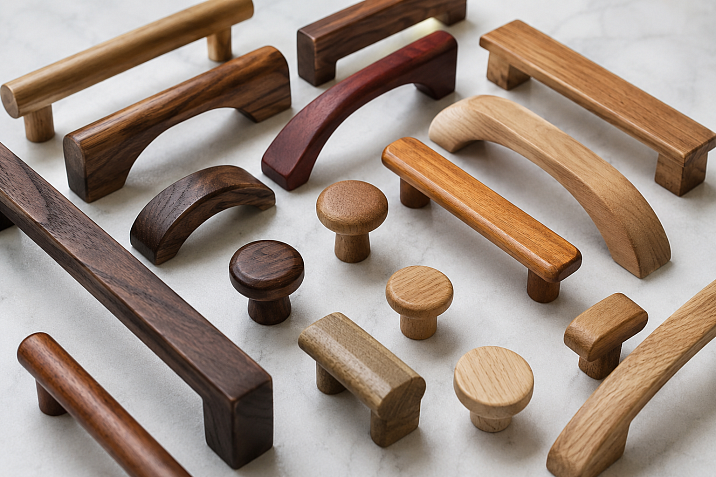
You should buy wooden furniture handles not at the last moment, when the facades are already ready and "all that's left is to screw on the hardware," but at the stage of carefully planning the entire furniture composition. A handle seems like a small detail, but it is the one that ends up in your hand every day, sets the character of the facade, supports the furniture material, and can completely change the impression of a chest of drawers, kitchen, wardrobe, cabinet, display case, or custom piece.
Ordinary metal hardware often looks neutral. A wooden handle works differently: it adds warmth to the furniture, emphasizes the natural material, softens the strict geometry of the facade, and helps connect the piece with other wooden details in the interior. But choosing it based solely on appearance is risky. You need to consider the shape, size, material, finish, grip comfort, facade type, room style, and whether the handle will be painted, tinted, or used with an already finished coating.
In the STAVROS catalog you can buy wooden handles for furniture in different formats: knob handles, inset options, profile solutions, unfinished products, and handles with a ready-made finish. This selection is convenient for private buyers, furniture makers, designers, restorers, and craftsmen who want not just to replace old hardware, but to create a cohesive furniture look.
This article will help you understand which wooden handles are suitable for a kitchen, chest of drawers, wardrobe, cabinet, children's furniture, dressing room, custom project, or commercial interior. We'll break down the shape, material, coating, installation, combination with facades, selection mistakes, and a practical purchasing route at STAVROS.


When to buy wooden handles for furniture
Wooden furniture handles are especially appropriate where the furniture should look like a thoughtfully designed piece, not a random set of facades and hardware. They help soften the rigid line of the body, add tactility, support natural materials, and make the facade feel more alive. Even a simple cabinet with smooth doors can look different if you replace a standard metal handle with a wooden one.
This choice often arises in three situations. The first is updating existing furniture. An old chest of drawers, wardrobe, or kitchen set may be sturdy but visually outdated. Replacing the handles provides a quick effect: the furniture doesn't need a complete overhaul, but it gains a new character. This is especially noticeable on painted facades, where wooden hardware creates a soft contrast.
The second situation is custom-made new furniture. When a craftsman or designer plans the facades, it's better to select handles in advance. Their shape affects the layout, installation, spacing between parts, ease of opening, facade thickness, and the overall scale of the furniture. If handles are chosen after manufacturing, it may turn out that the shape doesn't fit, the grip is uncomfortable, and the color doesn't match the rest of the finish.
The third situation is custom furniture and interior design projects. Here, the handle becomes not just a way to open a door, but a part of the design. It can complement legs, wooden overlays, slats, moldings, facade inserts, and other solid wood elements. In such projects, the buyer often isn't just looking to "buy wooden furniture handles," but wants to select hardware that looks like an integral part of the piece.
Wooden handles work well in kitchens, bedrooms, children's rooms, hallways, studies, dressing rooms, salons, showrooms, hotel interiors, and small designer workshops. They are suitable for new furniture, restoration, repainting fronts, replacing plastic or metal fittings, and creating a calm, natural look.


What is a wooden furniture handle and why does it affect the perception of the facade
A wooden handle is not just a fitting for opening. In furniture, it performs several tasks at once. The first is practical: the handle is grasped by hand, so the shape should be comfortable, not too sharp, not too small, and suitable for the frequency of use. The second is decorative: the handle is visible on the front and influences the style. The third is structural: it must be properly attached, match the front thickness, and not interfere with adjacent doors or drawers.
On a small facade, the handle can become the main accent. For example, a round wooden knob on a plain cabinet immediately makes the piece softer and more expressive. On a long facade, rhythm is more important: handles should be evenly spaced, match the scale, and not fragment the furniture. In the kitchen, convenience comes to the forefront: the handle will be touched many times a day, so a beautiful silhouette alone is not enough.
Wood gives a special feeling in the hand. It is warmer than metal, visually softer, and pairs better with natural textures. Therefore, wooden handles are chosen for solid wood furniture, veneered fronts, painted doors, children's furniture, soft classics, Scandinavian style, country, modern furniture with warm accents, and interiors where you want to move away from cold technical fittings.
But wood requires a thoughtful selection. You need to understand whether the handle will be used without coating, for individual finishing, or with a ready-made protective-decorative surface. You need to consider the wood species, shape, installation, facade color, and operating conditions. Requirements for kitchen furniture, children's rooms, and frequently opened drawers differ from those for a decorative display case or a dresser in the bedroom.
Our factory also produces:



Main types of wooden handles: shape, purpose, and convenience
The STAVROS catalog features different types of handles. Each type solves its own task. It cannot be said that one shape is better than another for all cases. A knob handle is good for one facade, a recessed handle for another, a profile handle for a third. First, you need to understand the furniture, and only then choose the shape.
Get Consultation
Knob handles
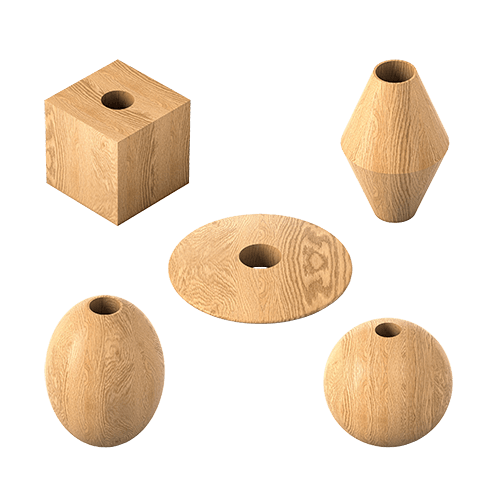
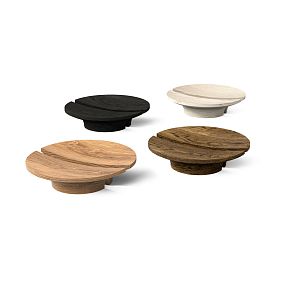
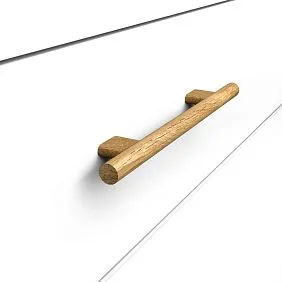
A knob handle is one of the most straightforward and decorative options. It is mounted at a single point, looks good on small facades, drawers, dressers, cabinets, display cases, children's furniture, and items with a soft character. A round or near-round shape makes the facade friendlier, especially if the furniture is painted in a calm color.
If a buyer is looking to buy wooden round handles for furniture, they most often need exactly these compact solutions. They are suitable for replacing old hardware, updating a dresser, cabinet, bedside table, sideboard, or children's furniture. It is important to check the diameter, protrusion height, grip comfort, and how noticeable the handle will be on the facade.
For projects that require compact wooden hardware, you can look at wooden knob handlesBefore ordering, check the product card: actual dimensions, material, coating or lack thereof, mounting method, and compatibility with the facade.
Flush-mounted wooden handles
A recessed handle looks more laconic. It does not protrude as much above the facade and is better suited for furniture where a calm, built-in look is needed. Such handles are often chosen for modern facades, cabinets, dressers, kitchen furniture, wardrobes, and projects where active hardware on the surface is not desired.
The flush-mounted option requires a more careful approach to installation. Here you need to consider the mounting seat, facade thickness, precision of the cutout, and ease of grip. If the handle is installed on ready-made furniture, it's important to understand in advance whether the facade can be carefully prepared. If the furniture is designed from scratch, it's better to include such hardware in the drawing in advance.
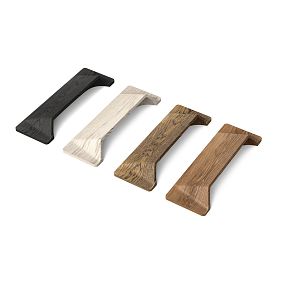
For concise furniture solutions, you can consider Mortise wooden handles. They help make the facade calmer and neater, but require precise preparation of the mounting seat.
Profile handles
A profile handle is suitable for modern facades, long drawers, kitchens, chests, cabinets, and furniture where a horizontal or vertical line is important. It can be almost invisible or, conversely, emphasize the geometry of the facade. Unlike a knob handle, a profile works as a line, not a point.
This option is especially interesting for modern kitchens, dressing rooms, minimalist dressers, office furniture, and projects where the handle should support the shape of the facade rather than compete with it. Here, the length, mounting method, ease of grip, and compatibility with the facade thickness are important.
If you need a more modern and elongated option, take a look at wooden profile handles. Before ordering, it is better to check the dimensions in the product card and understand how the profile will be positioned: horizontally, vertically, along the edge of the facade, or in another design logic.
Handles with and without coating
Finishing changes not only the appearance, but also the purchase scenario. An unpainted handle is needed for those who want to independently choose the color, tint or finish for a specific facade. A coated handle is convenient when the buyer wants to get a ready-made decorative surface and not deal with separate finishing.
For individual projects, painting, restoration, and precise color matching of the facade, the following are suitable unpainted wooden furniture handles. If a ready-made finish is needed, you can consider wooden handles with coating, as well as the individual Nature and Esthete collections.
Table of characteristics of wooden furniture handles
| Parameter | What is confirmed on the topic | How to use when selecting |
|---|---|---|
| Product group | Wooden furniture handles | Suitable for facades, drawers, chests of drawers, nightstands, cabinets, kitchen furniture and custom items |
| Main section | buy wooden handles for furniture | It is better to start the selection with a general category to compare shapes and finish options |
| Product types | Knob handles, inset handles, profile handles | The shape depends on the facade, style, frequency of use, and installation method |
| Material | Wood; for collections with coating, oak and beech are specified | The wood species affects the texture, strength of the visual image, and combination with furniture |
| Finish | There are handles without a finish and handles with a finish | Without finish — for custom finishing; with finish — for a ready-made project |
| Collections | Nature and Esthete for handles with a finish | Helps choose a ready-made decorative line without separately selecting the finish |
| Dimensions | Current sizes should be checked in the product card | The size affects grip comfort, facade scale, and fit |
| Installation | Depends on the handle type and facade | Before ordering, you need to check the mounting parameters and facade thickness |
| Package contents | Specified in the product card | Do not assume the presence of fasteners in advance if not stated in the card |
| Related category | Furniture hardware | Helps select adjacent elements for a furniture project |
This table helps to quickly see the main thing: a wooden handle is chosen not only by shape. You need to check the material, presence of coating, type of installation, dimensions, purpose, and how the hardware will work on a specific facade. If the handle is bought for a kitchen, you need to think about daily grip. If for a bedroom dresser, about style and scale. If for custom furniture, about combination with other solid wood elements.
Material: oak, beech and solid wood
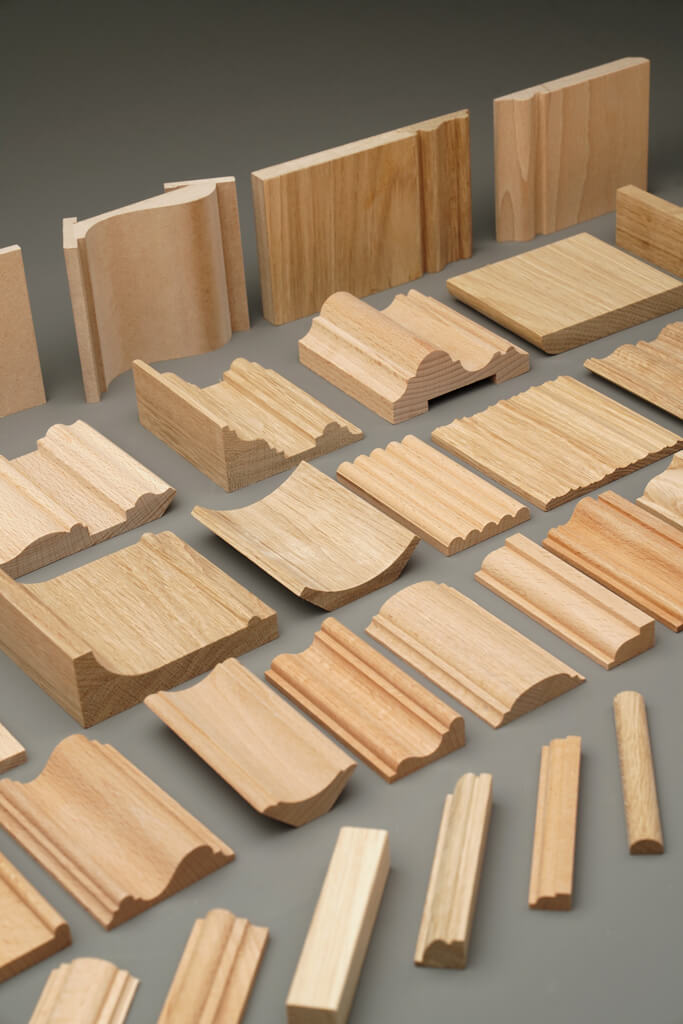
Wooden handles are valued for their material. Unlike plastic hardware, wood feels warmer, more tactile, and more natural. It pairs well with facades made of solid wood, veneer, painted MDF, plywood, furniture panels, and decorative wooden elements. But the material should be chosen not abstractly, but for the task.
Oak is usually perceived as a more expressive wood. Its texture can be more noticeable, and the overall impression denser and more solid. Beech often gives a calmer impression. It may be appropriate where the handle should not compete with the facade but should still feel wooden. However, the specific visual result depends on the handle shape, coating, lighting, and adjacent materials.
In collections of handles with STAVROS coating, oak and beech are specified, as well as a wear-resistant coating. For the buyer, this means that you can choose not only the shape but also a ready-made finish option. If the furniture is almost ready and you need to close the issue of fittings without separate painting, handles with coating may be more convenient. If the project requires an exact match to the facade color, stain, enamel or custom finish, products without coating are more often considered.
The material also influences the style. A wooden handle on a white facade makes the furniture softer. On dark furniture, it can become a warm contrast. On a natural veneer facade, it can continue the wood theme. On a brightly painted chest, it can add a handcrafted, almost artisanal touch. Therefore, wooden handles for furniture are chosen not only for their durability but also for their character.
Before ordering, it is worth checking the product card: wood species, dimensions, coating, shape, mounting method, and purpose. If the handles need to match other items, it is useful to look more broadly — for example, Solid wood products for furniture and interior projects where a consistent material logic is important.
Coated or Uncoated Handles: What to Buy
The choice between a coated and an uncoated handle depends on who is responsible for the final look of the furniture. If the furniture maker, designer, or buyer wants to independently choose the color, use stain, varnish, enamel, or another finish option, it's more convenient to take uncoated handles. If a ready decorative result is needed, it's easier to choose coated handles.
Uncoated handles are especially useful for restoration. For example, an old chest is repainted in a new color, and the handles need to match the facade or, conversely, provide a soft contrast. In such a project, a ready painted handle may not match the shade, while an uncoated one offers freedom. It can be adapted to the overall concept, coordinated with the facade and adjacent details.
Coated handles are suitable for projects where you don't want to add a separate finishing stage. They are convenient for new furniture, interior solutions with an already chosen palette, commercial projects, and cases where the buyer wants to move faster from selection to installation. The website has coated handles from the Nature collection и coated handles from the Esthete collectionBefore ordering, you need to compare the appearance, material, shape, dimensions, and current parameters in the product cards.
Comparison of options by coating and application
| Option | When to choose | Advantage | What to check before ordering |
|---|---|---|---|
| Uncoated handles | Need painting, tinting, custom finishing, restoration | Can be adapted to the facade, furniture color, and custom project | Material, shape, dimensions, preparation for finishing |
| Handles with coating | Need a ready decorative option without separate painting | Save the final finishing stage and provide a finished look | Type of coating, color perception, compatibility with the facade |
| Knob handles | Compact facades, dressers, cabinets, children's furniture | They provide a soft accent and are convenient for small doors and drawers | Diameter, projection height, seating |
| Flush handles | Minimalist facades, modern furniture, wardrobes | Protrude less and look calmer | Mounting location, facade thickness, installation precision |
| Profile handles | Kitchens, long facades, modern cabinets and chests | They support the facade line and are convenient for long surfaces | Length, placement, grip, mounting |
The buyer should decide in advance what is more important: freedom of finishing or a ready-made result. If the project is custom and the facades will be painted individually, handles without coating offer more flexibility. If the interior is already assembled and beautiful ready-made hardware is needed, handles with coating shorten the path to installation.
How to choose wooden handles to match the furniture style
Furniture style is often read through details. The body, facade, color, and proportions set the foundation, but handles reveal character. The same cabinet with a metal bracket, a wooden knob, and a recessed handle will be perceived differently. Therefore, it's better to buy wooden furniture handles after understanding the item's style.
For classic furniture, handles that do not look too technical are suitable. These can be rounded shapes, warm wood, a coating with a soft decorative effect, hardware that supports the facade and does not ruin the overall image. In classics, the handle should be noticeable but not random. If there are carved elements, panels, or wooden decor nearby, the shape of the handle should harmonize with them.
For modern interiors, more laconic solutions are often chosen. Profile and recessed handles, calm geometry, clean lines, and minimal extra decor are appropriate here. In this case, wood doesn't make furniture look "old-fashioned" but adds warmth to a strict facade. This works especially well on monochrome kitchens, TV cabinets, wardrobes, and office furniture.
For Scandinavian or natural style, a wooden handle almost always looks organic. It supports light facades, soft shades, natural materials, simple forms, and a homey feel. Here, a knob handle can be particularly successful: it adds simplicity and warmth to furniture without unnecessary decorativeness.
For children's furniture, safety, convenience, and pleasant tactility are important. Too sharp, heavy, or protruding elements can be uncomfortable. A wooden handle with a soft shape looks calmer and is more pleasant in daily use. But before ordering, you need to check the dimensions, shape, protrusion, and mounting method.
For kitchen furniture, the choice is more complex. The query "buy wooden handles for kitchen furniture" is related not only to aesthetics. A kitchen handle is touched constantly, often with wet hands, near cooking, dishes, and appliances. Therefore, you need to carefully consider the coating, grip comfort, shape, protrusion, and maintenance. If a ready-made surface is needed, it is worth considering handles with a coating, and if the project involves separate finishing, unfinished options.
Size, shape, and grip comfort
The handle should be proportionate to the facade. A small knob on a large door can get lost and be uncomfortable. A large handle on a small drawer can look heavy. A long profile on a narrow facade can disrupt proportions. Therefore, before buying, you need to look not only at the photo but also at the dimensions of the specific furniture.
Grip comfort depends on the shape. A knob handle should fit comfortably in the fingers. A recessed handle should have enough space for gripping. A profile should allow opening the facade without extra effort. If the handle is beautiful but uncomfortable, irritation will appear within a few days of use.
On drawers with heavy contents, the handle should provide a secure grip. On light doors, more compact solutions can be used. On upper kitchen cabinets, it is important that the hand easily finds the handle. On lower drawers, you need to consider the body's tilt and how a person grabs the facade in motion.
The thickness of the front also influences the choice. For surface-mounted handles, the fastening and fit are important. For recessed handles, the possibility of neat routing is key. For profile handles, the placement along the edge or plane of the front matters. If the furniture is already finished, you need to carefully check whether the selected handle type can be installed without rework.
Visual scale should be checked on actual furniture. You can hold a piece of paper with the approximate size of the future handle against the facade or make a simple marking with painter's tape. This helps to see if the handle will be too small, too large, too low, or too high. Such a simple trick often saves you from making a mistake before purchasing.
Wooden handles for kitchen furniture: what to consider separately
The kitchen places more demands on handles than a bedroom or living room. Here, facades are opened frequently, and surfaces are exposed to moisture, grease, fingerprints, and household dust. Therefore, you can buy wooden handles for kitchen furniture, but the choice must be careful.
First — the coating. If the handle will be in the kitchen, it's worth understanding in advance whether the chosen finish is suitable for frequent use. Handles with a ready-made coating can be more convenient because they already have a decorative and protective surface. But the actual properties of a specific coating need to be checked in the product card.
Second — the shape. In the kitchen, handles that are easy to grasp quickly are often convenient. A too-small knob on a large lower drawer may not be the best solution. A profile handle or a more convenient grip shape might be more practical. For upper fronts and small doors, on the other hand, compact handles can look neat.
Third — maintenance. A textured or complex shape can collect more dirt. A simple smooth shape is easier to clean daily. If the kitchen is actively used, this should be considered before purchase, not after installation.
Fourth — combination with the front. On a white kitchen, a wooden handle provides a warm accent. On wood-look fronts, it can complement the material. On a dark kitchen, it can add contrast and soften the severity. But if the interior already has many different wood tones, you need to look at samples and avoid mixing too many different shades.
Practical selection for different customer scenarios
Need to update an old dresser
For a chest of drawers, knob handles or small neat handles are often suitable. If the fronts are being repainted, it is convenient to choose unpainted items and finish them together with the furniture. If the chest of drawers is already finished and you just need to replace the hardware, you should look at handles with a coating. You need to check the number of drawers, the distance between holes, old mounting points, and the scale of the handle.
Need to select handles for the kitchen
For the kitchen, convenience comes first. Lower drawers, fronts in the dishwasher area, and cabinets that are frequently opened require a reliable grip. Knob handles are not always suitable: on heavy drawers they may be less convenient. Profile or longer options often work better on modern fronts. The coating should be chosen considering frequent hand contact.
Need to make furniture in a natural style
If the furniture is built around wood, solid wood handles help maintain integrity. Here it is important not to mix too many different textures. If the fronts are already wooden, the handle should either complement them or provide a subtle contrast. It is useful to look not only at hardware but also at adjacent categories of solid wood products.
Need to design children's furniture
For children's rooms, it is better to choose shapes without aggressive geometry and with a comfortable grip. The handle should be understandable for a child, not too small and not too protruding. Before ordering, you need to check the size, coating, fastening, and placement on the front.
Need to create modern furniture without unnecessary decor
In this scenario, recessed handles and profiles are often suitable. They do not overload the front and maintain a clean line. Wood adds warmth but does not turn the furniture into classic style. This approach works especially well for wardrobes, kitchens, TV cabinets, and office furniture.
Need to make a designer piece
For a custom piece, the handle can become part of the idea. It should match the legs, decorative overlays, front, body material, and finish. It's better to gather all visible details into one palette in advance and check if they conflict with each other.
You need to select hardware for a commercial interior.
In a salon, boutique, hotel room, showroom, or cafe, handles must withstand frequent use and support the space's image. The coating, grip comfort, repeatability, and installation precision are especially important here. It's better to choose not random hardware but a clear line so that the furniture looks cohesive.
Make it yourself or buy ready-made wooden handles.
The question 'how to make wooden handles for furniture' is understandable: a person wants to save money, get a custom shape, or make a part for a specific project. Self-manufacturing is possible if you have the tools, experience, suitable wood, and understanding of fastening, sanding, and finishing. But in real furniture, the handle must be not only beautiful on the table but also comfortable after installation.
A homemade handle often faces several problems. The first is repeatability. For one drawer, you can make an interesting part by hand, but for a kitchen, dresser, or wardrobe, you need many identical handles. The slightest difference in shape and size will be noticeable on the facades. The second is fit. The handle must be securely attached, not rotate, not crack, and match the thickness of the facade. The third is finish. The surface that is constantly touched by hands must be carefully prepared.
Ready-made wooden handles help eliminate some risks. The buyer does not need to cut the shape from scratch, achieve identical geometry, select random blanks, or experiment with fit. You can focus on choosing the shape, material, coating, front color, and careful installation.
This is especially important for projects with many handles. In a kitchen or large cabinet, handles must be identical. On a dresser, a difference of a few millimeters can already spoil the look. In designer furniture, handcraft is valued, but even there, a ready-made handle often becomes a more reasonable base: it can be refined with finish, integrated into the project, and achieve a neat result.
If you want individuality, you don't have to make everything from scratch. You can choose handles without coating, select the desired shape, and perform finishing for the project. This path preserves design freedom but does not force you to re-solve the geometry and basic structure of the handle.
What to buy together with wooden handles
Handles are rarely purchased in isolation from a furniture project. If the hardware is changed, related questions often arise: whether other elements for the facade are needed, how to support the wood in the interior, what to replace old hardware with, what details to add to the furniture, and how to avoid a mix of materials.
For furniture projects, it's useful to look Furniture hardware. This helps avoid limiting yourself to just one handle and instead consider the compatibility of furniture parts. If the project involves solid wood, it is also worth looking at Solid wood products, so that the handles don't look like a separate random purchase.
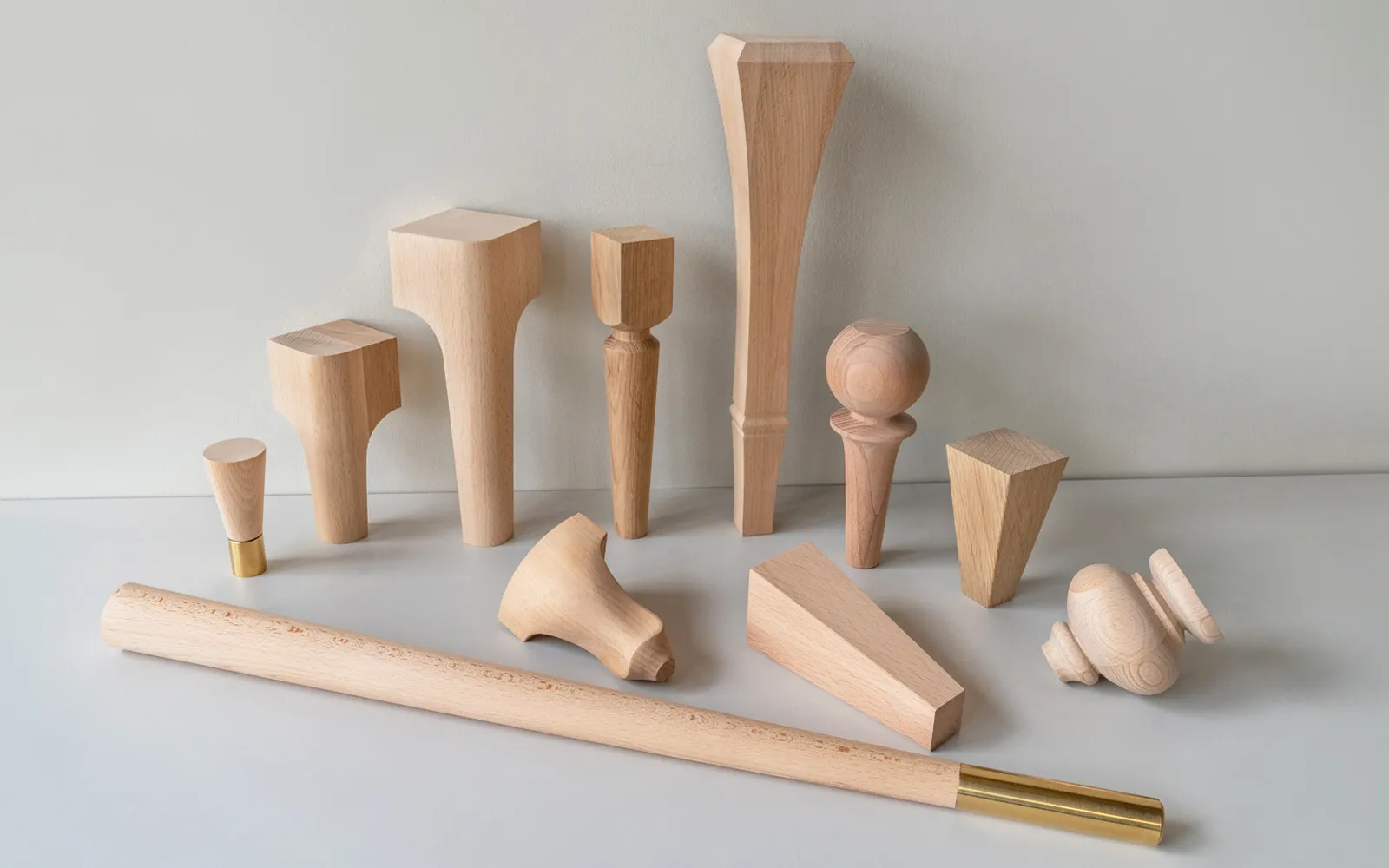
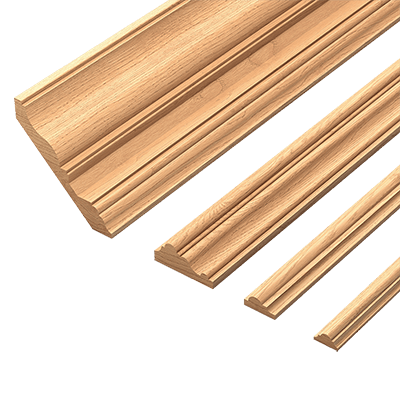
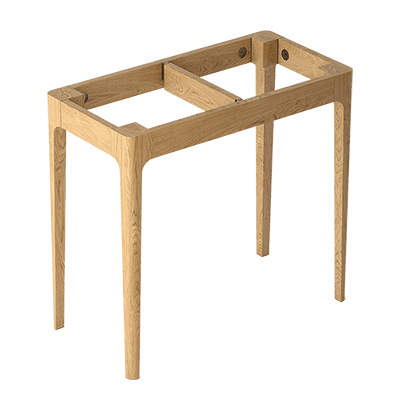
If the furniture is being completely updated, handles can be combined with decorative overlays, wooden elements, legs, moldings, and facade parts, but links and selections should only be made through available sections and specific product cards. In this article, the main route is furniture handles, hardware, and solid wood products that help assemble a project in a unified material language.
Table: what to buy together with wooden handles
| What to add to the purchase | Why this is needed | Which scenario it suits | What to pay attention to |
|---|---|---|---|
| Furniture hardware | To select adjacent elements for facades and furniture projects | Kitchens, cabinets, nightstands, dressers, custom furniture | Compatibility with facade, color, and purpose |
| Solid wood products | To support wooden handles with other solid wood details | Designer furniture, restoration, interior projects | Breed, texture, scale and finish |
| unpainted wooden furniture handles | To achieve a finish matching a specific facade color | Furniture repainting, restoration, custom projects | Preparation for finishing, material, shape |
| wooden handles with coating | To obtain a ready decorative surface | New furniture, quick hardware replacement, commercial project | Cover type, color combination, care |
| wooden knob handles | To design compact facades and drawers | Chests of drawers, cabinets, children's furniture, sideboards | Size, protrusion, grip comfort |
| Mortise wooden handles | To make the front minimalist and less protruding | Modern furniture, cabinets, wardrobes | Seating position, facade thickness |
| wooden profile handles | To emphasize the facade line | Kitchens, long drawers, cabinets, wardrobes | Length, grip, placement |
This approach helps avoid buying handles "separately from the furniture." When the hardware, material, and adjacent elements are thought out together, the facade looks cohesive, and the interior doesn't fall apart into random details.
How not to confuse wooden handles with similar solutions
Wooden handles can be confused with decorative overlays, furniture slats, ordinary blanks, metal hardware with a wood finish, or homemade elements. In photos, all these options may seem similar, but in practice they differ.
A decorative overlay adorns the facade but is not always designed for hand grip. A handle must withstand regular use and be comfortable. If you install a decorative piece instead of a handle, it may be uncomfortable or unsuitable for mounting.
An ordinary wooden blank is also not equal to a furniture handle. The blank needs to be refined: shape the grip, sand, select fasteners, check fit, and finish. This is possible for one creative project, but for furniture with multiple facades, it's better to choose ready-made handles to maintain consistency.
A metal handle with a wood-like coating provides a different tactile effect. It can visually imitate wood, but feels different in the hand. If the goal is a natural material and connection with wooden furniture elements, it is better to look at handles made of wood.
Knob handles, recessed handles, and profiles are also not interchangeable. A knob is suitable for point grip. A recessed handle requires a mounting slot. A profile works as a line and is often used on modern facades. Before purchasing, you need to understand what type of opening is needed, how the facade is constructed, and how often the furniture will be used.
Installation, fit, and preparation of the front
Installation of wooden handles depends on the type of product. Surface-mounted knob handles usually require precise marking on the facade. Recessed handles require a prepared mounting slot. Profile solutions need to be especially carefully positioned along the facade line to look even and not interfere with opening.
The most common mistake is drilling the facade without preliminary marking. On one drawer, this may be almost unnoticeable, but on a chest of drawers or kitchen, the difference between handles is immediately apparent. Before installation, you need to mark centers, check height, distance from the edge, symmetry, and grip comfort.
If handles are being installed to replace old ones, you need to check the old holes. The new handle may not match the fit. Sometimes old holes have to be filled, puttied, repainted, or you need to choose a handle that will cover traces of the previous hardware. Therefore, replacing handles on finished furniture requires not only purchase but also assessment of the facade.
For unfinished handles, it is important to plan the finishing before installation. If you first screw on the handle and then try to carefully coat it on the front, the result may be worse. It is usually more convenient to prepare the surface, perform the finishing, let it gain the required strength, and only then install.
For handles with a coating, you need to handle the surface carefully during installation. Tools, dirty hands, excessive pressure, or careless marking can ruin the appearance. Therefore, installation is best done calmly, checking each step.
Mistakes when buying wooden furniture handles
Choosing only based on a beautiful photo
Photos help understand the style but don't show the actual size in hand or on the facade. A handle may look large on the product card but turn out small on a big cabinet. Or vice versa: a compact item in the photo may appear too noticeable on a small drawer. Before ordering, you need to check the dimensions.
Not considering frequency of use
A handle on a decorative display and a handle on a kitchen drawer work under different conditions. For frequently used furniture, you need a comfortable grip, suitable coating, and reliable fastening. For rare use, you can focus more on decorativeness.
Buying one shape for all furniture without checking
Sometimes the same handle looks good on an upper cabinet but is inconvenient on a lower drawer. Or it suits a small facade but gets lost on a large one. In a large project, it is worth checking different furniture zones separately.
Not considering the finish
An unfinished handle without further finishing may not be suitable for active use. A handle with a coating may not match the color of the facade. Therefore, you need to decide in advance who and how is responsible for the final appearance.
Confusing a handle-button with a profile
A button and a profile provide different opening mechanics. A button works pointwise. A profile offers a more extended grip. If you choose the shape based solely on style, you may end up with uncomfortable furniture.
Not checking the facade thickness
The fastening and fit depend on the facade. This especially applies to inset handles and profiles. Before ordering, you need to know the thickness of the door or drawer, as well as the installation method.
Forget about old holes
When replacing hardware, old holes may not align with the new handle. This is especially important for dressers, kitchens, and cabinets where the facades are already painted or finished. Sometimes it's easier to choose a shape that covers the old mounting, but this needs to be checked in advance.
Mixing too many materials
Wooden handles are beautiful, but if the interior already has several different wood tones, metal, stone, a bright facade, and active decor, the hardware can become another unnecessary element. It's better to compare handles with the furniture and adjacent details in advance.
Who wooden handles are suitable for, and who should choose a different option
Wooden handles are suitable for those who want to add warmth, naturalness, and tactility to furniture. They work well in projects with solid wood, veneer, painted fronts, furniture for children's rooms, bedrooms, kitchens, hallways, studies, and custom pieces. They are especially useful when you need to move away from cold standard hardware and make furniture more lively.
Such handles are worth considering for those updating old furniture. Replacing hardware can noticeably change a dresser, nightstand, sideboard, or cabinet. If you add repainting the fronts, the effect will be even stronger. For such tasks, handles without a coating are often suitable because they can be finished together with the furniture.
Wooden handles are also suitable for craftsmen and designers who design furniture for a specific interior. They allow you to connect facades with other wooden details and not be limited to standard metal hardware.
It's better to choose a different option if the furniture is in conditions where wood and coating are not suitable for use, or if a maximally technical, almost invisible opening mechanism is needed. In some modern projects, a handleless system, hidden profile, or other hardware is more appropriate. But if the goal is a warm natural accent and pleasant contact with furniture, wooden handles remain a strong solution.
Where to buy wooden furniture handles and how to choose on STAVROS
If you need to buy wooden handles for furniture, it's easier to start from the main catalog. In the section buy wooden handles for furniture you can go to product types, compare options with and without coating, look at knob handles, inset handles, and profiles.
The selection route is simple. First, determine the furniture: kitchen, chest of drawers, nightstand, wardrobe, dressing room, children's room, display case, or custom piece. Then decide what type of handle is needed: knob, inset option, or profile. After that, choose the finish: an unpainted handle for custom work or a ready-made handle with coating. Next, you need to check the dimensions, fit, material, mounting method, and current parameters in the product card.
If the furniture is already ready, pay special attention to old holes, facade thickness, and color. If the furniture is being designed from scratch, it's better to include handles in the project in advance. If you need many handles, check the quantity and repeatability of the chosen shape. If you have doubts about the coating, material, or installation, it's better to clarify details with a STAVROS manager before ordering.
Shopping on STAVROS is convenient because you can choose handles as part of a furniture project, not as random hardware. Along with handles, you can view hardware, solid wood products, and adjacent furniture solutions so that facades, material, and details work in the same style.
FAQ: frequent questions about wooden handles for furniture
Which wooden furniture handles are best to buy?
The best option depends on the furniture. For compact fronts, knob handles are often suitable. For minimalist modern fronts, recessed handles or profiles work well. For custom finishing, handles without coating are convenient. For a ready-made project, you can choose handles with coating.
What to choose: a knob handle, an inset handle, or a profile handle?
A knob handle provides a point accent and is suitable for dressers, nightstands, and small drawers. A recessed handle looks calmer and protrudes less. A profile handle emphasizes the front line and works well on kitchens, long drawers, cabinets, and modern furniture.
Can I buy wooden handles without coating?
Yes, you can choose unpainted wooden furniture handles. They are suitable for painting, tinting, restoration, and projects where you need to match a specific facade color.
Are there wooden handles with a ready-made coating?
Yes, on the website there are wooden handles with coating, as well as the Nature and Esthete collections. Before ordering, you need to check the shape, material, dimensions, and appearance of the coating in the product card.
Which handles are suitable for kitchen furniture?
For the kitchen, you need to choose handles with a comfortable grip and suitable finish. On frequently used drawers, it is better to avoid very small and uncomfortable shapes. You should carefully check the coating, dimensions, protrusion, and mounting method.
Are wooden handles suitable for children's furniture?
Yes, if the shape is comfortable, without aggressive geometry and excessive protrusion. For children's furniture, size, tactility, reliable fastening, and coating are especially important. Before ordering, you need to check the parameters in the product card.
What is better for restoration — handles with or without coating?
For restoration, handles without coating are often more convenient because they can be finished to match the new color of the furniture. If the facades are not being repainted and a quick result is needed, you can choose ready-made handles with coating.
How to understand if the handle will be too small?
You need to compare the size of the handle with the facade. You can mark the furniture or use a paper template of approximate size. This makes it easier to see the scale before purchasing.
Can I make wooden handles myself?
You can, but you need to ensure uniform shape, comfortable grip, proper fastening, sanding, and finishing. For furniture with multiple facades, it is easier and more reliable to buy ready-made handles, especially if repeatability is important.
What to check before ordering handles?
Check the type of handle, dimensions, material, presence or absence of coating, fastening method, facade thickness, number of items, and compatibility with the furniture. If the handle is replacing an old one, you need to account for existing holes.
Where to buy wooden furniture handles from the manufacturer?
Wooden furniture handles can be selected in the STAVROS catalog. It is convenient to start from the section buy wooden handles for furniture, then go to the desired type: without coating, with coating, knobs, inset handles, or profiles.
What to buy together with wooden handles?
For a furniture project, you can look at Furniture hardware и Solid wood products. This helps to select adjacent elements and avoid mixing random parts.
Summary: how to choose wooden handles without a random purchase
Wooden handles change furniture more than it seems. They make the facade warmer, add a pleasant contact with natural material, help to update an old piece or complete new custom furniture. But a good purchase starts not with a beautiful photo, but with a clear task: what kind of furniture, what shape, what material, whether coating is needed, how the handle will be attached, and how comfortable it is to use every day.
If you need freedom of finishing, you should look at handles without coating. If the finished result is important — handles with coating, including the Nature and Esthete collections. For compact facades, knob handles are suitable; for minimalist projects, inset options; for modern long facades, profiles. Before ordering, you need to check the dimensions, fit, facade thickness, quantity, and compatibility with the furniture.
STAVROS helps to choose wooden handles as part of a complete furniture solution. The buyer can move from an idea to a specific category, compare shapes, coatings, and product types, select related fittings, and assemble furniture without random parts. This approach is especially important where the handle should not just open the facade, but support the style, material, and character of the entire piece.