Article Contents:
- Short answer: which legs to choose for a chair
- When you need to buy separate legs for a chair
- How chair legs differ from regular furniture supports
- How to choose the height of chair legs
- How to choose the shape of chair legs
- Straight wooden legs
- Turned legs
- Shaped legs
- Massive legs
- Thin elegant legs
- Material: why wood is suitable for chair legs
- Load and fastening: what to check before buying
- Legs for kitchen, dining, and classic chairs
- For kitchen chairs
- For dining chairs
- For classic chairs
- For restoring an old chair
- How to match chair legs with other furniture
- Mistakes when choosing chair legs
- What to buy together with chair legs
- FAQ: Answers to Popular Questions

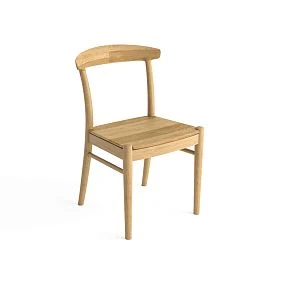
wooden legs for a chair — these are not just supports. They are load-bearing elements that determine the stability, ergonomics, and visual character of the entire piece. Properly selected wooden furniture legs turn an ordinary chair into a thing. Wrong ones make it unreliable, ugly, or uncomfortable, even if everything else is done well. Let's figure out how not to make a mistake.
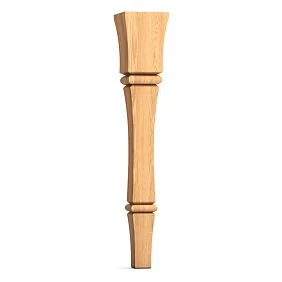
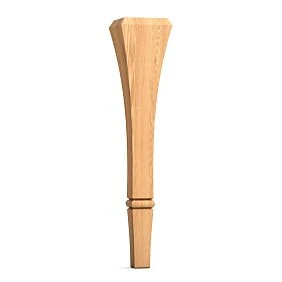
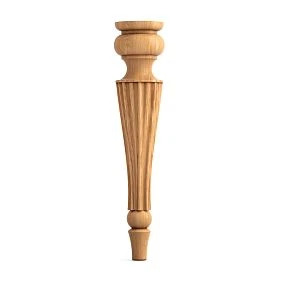
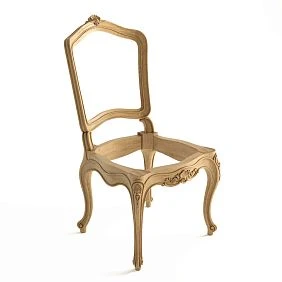
Short answer: which legs to choose for a chair
For those who value specifics — a quick guide to the main situations.
For a kitchen chair — strong, simple in shape wooden furniture legs with sufficient cross-section. The kitchen is a high-load area. Here people sit down and stand up dozens of times a day, chairs are moved, pushed under the table, children are placed on them. Decorativeness is secondary. Strength is primary.
For a classic or dining chair — turned legs from solid wood with a figured profile. The dining area is a formal space where the chair is viewed from several sides, stands next to the table, and must match the overall style.
For restoring an old chair — legs as close as possible in height, cross-section, installation angle, and style to the original. The replacement of a leg should be unnoticeable.
For making a set with a table — legs in the same wood species and a similar profile to the table legs. A single material unites the set into a system.
For a chair to be painted — legs with high-quality sanding without coating: for white enamel, colored paint, or tinting.




When you need to buy separate legs for a chair
The question is not rhetorical — each situation has its own logic of choice.
One or several supports broke. The most common situation. The chair is good, the seat is intact, the backrest is fine — but the leg is cracked or broken out. Buy chair legs and replacing the damaged support is the right decision. Key point: the new leg must match the others in height and installation angle, otherwise the chair will wobble.
Restoration of an old chair. Grandmother's chair with a beautiful backrest — but on random metal legs that were put on once out of necessity. Or vice versa: the original legs exist, but one is rotten. Restoration involves selecting legs according to the style of the era — a turned classic profile, correct height, correct finish.
Custom or DIY furniture making. If you are making a chair yourself — it is easier to buy ready-made turned wooden legs for a chairthan to turn them yourself. This saves time, guarantees identical geometry, and professional surface treatment.
Replacing simple legs with decorative ones. Sometimes the chair is functionally sound but visually outdated. Straight square legs can be replaced with turned classic ones — and the chair changes completely, even if everything else remains the same.
Set with a table. If you are assembling a dining group — the table and chairs should be in a unified style. Legs for a kitchen table and chair legs from the same wood species, with a similar profile — that's a set. Mismatched legs turn the group into a collection of random items.
Furniture renewal. Repainting old furniture with leg replacement is cheaper and more eco-friendly than buying new. New wooden legs, new wooden furniture handlesnew facade coating — and the furniture looks like it was bought last week.
Our factory also produces:
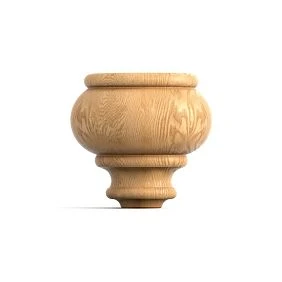
How chair legs differ from regular furniture supports
This is a fundamental question that is often ignored when choosing. Legs for a chest of drawers, nightstand, or sofa — and legs for a chair — are different products with different requirements.
Dynamic load. Chair legs experience a fundamentally different type of load than nightstand legs. A nightstand stands still — vertical static load, evenly distributed. A chair takes an impact each time someone sits down, a jerk when standing up, and a lateral moment during movement. This is a cyclic dynamic load that requires a larger cross-section and material density.
Stability when sitting down and standing up. The moment a person sits on a chair — the load is applied off-center and not vertically. A person sits down leaning forward, their weight concentrates on the front legs. When standing up — the reverse moment. Chair legs must withstand these asymmetric loads without deformation.
Geometry requirements. All four chair legs must be absolutely identical in height — with a tolerance of no more than 0.5 mm. The slightest difference — and the chair will wobble. For a nightstand, the tolerance is larger because it stands on the floor without movement. When buying legs for a chair — identical height of the entire set is mandatory.
Installation angle. Most chairs have legs installed with a slight outward tilt (2–5°). This angle widens the support base and increases stability. When choosing legs, this must be considered: the mounting plate should be flat or have an angled cut for installation with a tilt.
Profile safety. A chair leg is in the area of a person's legs — they bump into it, trip over it. Sharp corners and protruding decorative elements at ankle level — risk of injury. The profile of a chair leg should be rounded at all levels accessible for body contact.
Get Consultation
How to choose the height of chair legs
Leg height is a working parameter that directly affects ergonomics. Incorrect height makes the chair uncomfortable regardless of all other qualities.
Standard seat height. The classic seat height of a chair from the floor is 44–46 cm for kitchen and dining chairs. This is the optimal height for an average-height person at a standard table height of 74–76 cm. The distance between the seat and the tabletop with this combination is 28–32 cm, which is sufficient for free placement of hands on the table.
Seat thickness. If you choose chair legs separately and mount them to the seat, the leg height should be adjusted considering the seat thickness. A seat made of a 30 mm board — subtract 30 mm from the desired height. A seat with soft padding of 60 mm — subtract 60 mm. The final seat height + leg height = height from floor to top of seat.
Accounting for table height. If the chair is made as a set for a specific table, measure the table height and calculate the optimal seat height: table height minus 28–32 cm. The legs for the kitchen table and the chair legs should form a correct pair.
When replacing old legs. If you are restoring a chair, do not guess, but measure. Remove one original leg and measure it precisely: from the end of the mounting plate to the floor. This exact size is the required height of the new leg.
Children's chairs. For children's chairs, the seat height is 28–32 cm for preschool children, 34–38 cm for primary school children. The legs for a children's chair should be proportional.
Bar and semi-bar options. For a bar stool, the seat height is 72–76 cm (for a bar counter 90–105 cm). For a semi-bar stool, it is 60–65 cm (for a table 85–90 cm). When selecting furniture supports for such furniture, the leg height is fundamentally different.
How to choose the shape of chair legs
Shape is not just aesthetics. The geometry of the leg profile affects its strength, support area, and the feel of the chair as a piece of furniture.
Straight wooden legs
Rectangular or square cross-section without turning. The simplest and yet one of the strongest profiles: uniform cross-section along the entire length means no "weak spots" in the form of narrowings. Furniture support with a straight profile — a workhorse for kitchens, cafes, workspaces, and all places where load is high and decorativeness is secondary.
Straight legs work well for chairs in Scandinavian style, loft, minimalism. They do not require coordination with complex decor — they themselves carry a calm, honest character. Cross-section for a chair — at least 35×35 mm, optimally 40×40–45×45 mm.
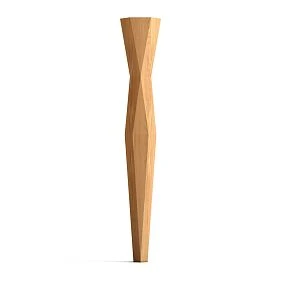
Straight legs with a chamfer or rounded edges — a more elegant option, yet no less strong. The corner edges are not sharp — safe when in contact with a person's legs.
Turned legs
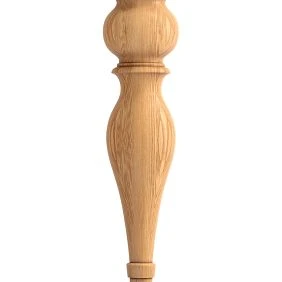
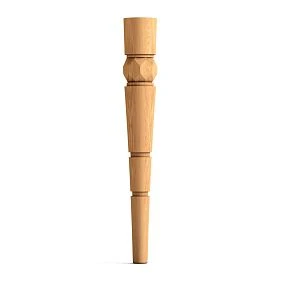
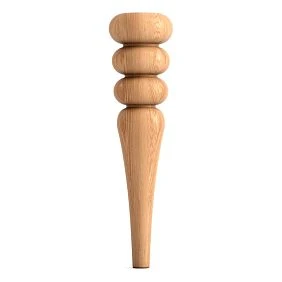
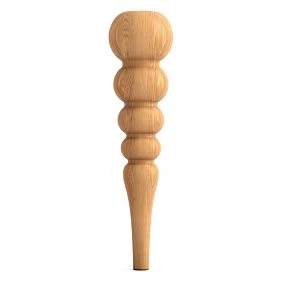
Turned wooden legs — a classic of furniture production. Turning creates alternating thickenings and narrowings — "vase", "spindle", "column". This is a profile that traces its history from 18th–19th century furniture and remains the language of classical and neoclassical furniture to this day.
It is important to understand: a turned leg is stronger than it seems. The narrowings in the profile — areas of smaller cross-section — with proper calculation are not weak spots, because they work in bending, not shear. For a chair, it is important that the minimum cross-section of a turned leg is at least 25–28 mm in diameter.
Turned legs for a dining and classic chair — an optimal choice. They create a decorative accent near the floor, look good under a soft seat with fabric upholstery, and fit organically into the dining room space with classic furniture.
Shaped legs
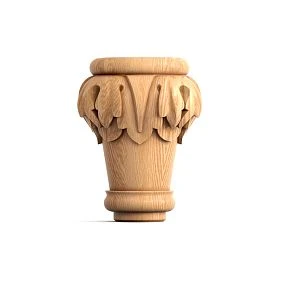
Complex profile with pronounced decorative elements: carved details, multi-level turning, relief belts. For expressive classic chairs, banquettes, armchairs, and furniture in Baroque or Empire style. A shaped leg is an artistic element that requires coordination with all other decor.
Figurative wooden furniture supports in restoration projects — indispensable. If you are restoring a chair from the late 19th — early 20th century, it is the shaped profile that recreates the historical appearance.
Massive legs
Large cross-section, dense wood, pronounced volume. For heavy chairs with a wide seat, for bar stools with high load, for furniture in country, Provence, rustic styles. A massive leg — stability and durability as core values.
For massive chairs with a load over 120 kg — leg cross-section at least 50×50 mm (straight) or 40 mm minimum diameter (turned). Wood species — oak or ash: density at least 650–700 kg/m³.
Thin elegant legs
Narrow profile, elongated proportions, visual lightness. A chair on thin legs looks weightless — this is a design technique that creates a sense of space. But thin legs require dense wood: only oak, ash, beech. Pine or birch with a minimal cross-section will not withstand the chair's load.
For a chair with thin legs — a stretcher is mandatory: a horizontal wooden frame or rungs connecting the legs. Without this reinforcement, thin legs will wobble under lateral loads.
Material: why wood is suitable for chair legs
Once, legs were made only from wood. Then came metal, plastic, metal-plastic. Today, the pendulum has swung back toward natural materials — and not by chance.
Aesthetics. Wood in the interior is a living material. Each leg has a unique grain pattern. Under clear varnish, oak legs look like no metal can: warm, natural, with character.
Painting and tinting. Wooden legs can be painted any color, tinted to match any wood species, coated with clear matte varnish, oil, or wax. This means: the same legs can become white for a Scandinavian kitchen, dark brown for a classic dining room, or natural for Japandi style.
Compatibility with wooden interiors. If the room has with a classic profile creates a sense of solidity, reliability., wooden doors, Wooden handles и Decorative Inserts — wooden chair legs fit organically into this system. Metal legs in such an interior are a dissonance.
Repairability. A wooden leg can be sanded and repainted. One leg can be replaced without changing the entire chair. A metal or plastic base is replaced entirely when damaged.
Classic and modern furniture. Wood works in both directions: a turned leg is classic, a straight beveled leg at a 5° angle is modern Scandinavian design. The range of application is from a neoclassical kitchen to a minimalist living room.
Sanding quality. This is a parameter that cannot be ignored. A poorly sanded wooden leg with fiber tears will not accept the coating evenly — all defects will become visible under varnish. High-quality wooden furniture legs are sanded to at least grit 150–180, which provides a smooth surface without fuzziness.
Stable geometry. A leg dried with improper technology will warp after installation. Wooden chair legs must be made from dry wood (moisture content no more than 8–10%). With higher moisture content, the leg will shrink after installation — a gap will form in the joint, and the chair will start to wobble.
Load and fastening: what to check before buying
A technical section that determines the product's durability. Beautiful legs that last only six months are a bad solution. Reliable fastening and correct load calculation are what make a chair a long-lasting item.
Load calculation. The chair must support a person's weight with a safety factor. The standard for chair legs is a load of 100–120 kg for the entire product. If the chair is intended for people weighing over 100 kg, choose legs made of dense wood (oak, ash) with an increased cross-section.
Four legs vs three. A three-legged chair is inherently stable — three points always lie in the same plane. A four-legged chair requires all four legs to be exactly the same height — otherwise it wobbles. When purchasing a set of four legs, check their height individually.
Mounting area. The mounting platform of the leg (the horizontal end by which the leg attaches to the seat or apron) — the larger it is, the more reliable the connection. A platform diameter of 30 mm for a turned leg is the minimum. For a massive straight leg with a cross-section of 45×45 mm, the mounting area is 45×45 = 2025 mm², which is sufficient with proper joining.
Attachment method. Three main methods for chairs:
-
Tenon and mortise. A classic joinery method: a tenon is milled on the end of the leg, and a mortise is drilled in the apron or seat. The joint with PVA or wood glue is one of the strongest.
-
Tightening bolt. A threaded insert (nut) is screwed into the leg, and a bolt is tightened through a hole in the apron. Allows the chair to be disassembled.
-
Metal plate with thread. A metal insert is screwed onto the mounting platform of the leg, which is then screwed into a threaded socket in the seat. Quick installation, moderate strength.
Presence of an apron. The apron is a horizontal wooden frame connecting the chair legs under the seat. It is fundamentally important for structural strength: without an apron, each leg works independently and gradually loosens. With an apron, the legs form a rigid spatial system that is many times more stable.
Installation angle. If the legs are to be installed at an angle, the mounting platform must be cut at the corresponding angle or initially have a beveled end. A straight leg installed at an angle without cutting the platform will not rest on the floor with its full area — this is unstable.
Caps and pads for the bottom end. The bottom end of the leg that touches the floor must be protected: a self-adhesive felt pad prevents scratches on the floor and reduces noise when moving the chair. Without protection, the wooden end wears down within 1–2 years with regular use.
Legs for kitchen, dining, and classic chairs
For a kitchen chair
The kitchen is the most intensive place for a chair in the house. Three times a day, every day. Plus children who stand on the chair with their feet, tilt it, move it across tiles. The requirements for legs for a kitchen chair are strict.
Wood species — oak or ash: Brinell hardness 3.5–3.9, not afraid of moisture and frequent cleaning. Profile — straight or slightly turned with a minimum cross-section of 38–45 mm. Coating — polyurethane varnish or oil with hard wax: resistant to moisture and household chemicals.
For a kitchen chair, it is important to match the kitchen table. If the table stands on square straight legs — chairs with turned profiles will look inconsistent. Choose legs for a kitchen table and chair legs in the same style.
For a dining chair
The dining area falls between the kitchen and the living room in terms of decorative requirements. People sit here less often than in the kitchen, but they look at the chairs more closely. They stand at the dining table as part of an ensemble.
Turned furniture legs For a dining chair — a classic choice. Seat height — 44–46 cm. Leg profile — in coordination with the dining table legs. If the table has turned legs like a "spindle" — the chairs have the same or similar profile. A unified style of the group is more important than each individual element.
For a dining chair in a modern interior — straight legs with a chamfer, set with a slight outward tilt. This is Scandinavian classic: simplicity of form, natural wood, clear lacquer. Suitable for such a chair Legs for coffee table of the same profile — and all wooden surfaces in the room start speaking the same language.
For a classic chair
A classic chair is a product with a history of forms. Turned legs with a vase, cabriole, or baluster profile — architectural forms dating back to French and English furniture of the 18th–19th centuries. They require turned wooden legs with a pronounced relief.
For a classic dining room with classic furniture chairs with figured legs under white enamel or dark walnut — part of an architectural ensemble. The legs coordinate with the table legs, with decorative brackets on the sideboard or credenza, with the cornice and baseboard. This is a comprehensive solution, not a separate detail.
For restoring an old chair
Restoration requires the greatest precision in selection. Three criteria are mandatory:
Height. Measure the remaining legs to the nearest 1 mm. New legs must match exactly.
Cross-section. For a tenon joint, the diameter of the tenon or the cross-section of the straight leg end is important — it must match the socket in the apron or seat.
Style. For an antique chair from the mid-19th century, a historically accurate turned profile is needed — not a modern Scandinavian leg, but a baluster or vase-shaped profile. Buy legs for furniture without coating — and then select a coating to match the original tone.
How to combine chair legs with other furniture
A chair is not an isolated object. It exists in context: next to a table, in a room with other furniture, on a floor of a certain color, under a ceiling with specific decor.
With table legs. The first and main reference. If you are choosing wooden legs for a chair — look at the table next to which it will stand. The same wood species, the same profile style, the same finish. This creates a dining set, not a collection of random items.
With wooden handles. If kitchen cabinets have Wooden handles — the legs of kitchen chairs made from the same wood create a horizontal unity of the kitchen space. Cabinet handles and chair legs are at the same level of perception.
With a baseboard. with a classic profile creates a sense of solidity, reliability. made of oak under clear varnish — and oak chair legs under the same varnish: this is the lower tier of the room, executed in a single material. Floor, baseboard, chair legs — a horizontal line of natural wood that gives the space solidity and warmth.
With decorative overlays. If the facades of a sideboard or cabinet have Decorative Inserts made of wood — chair legs from the same species connect floor furniture and vertical surfaces into a single wooden system.
With floor color. Light oak parquet and light chair legs — a single warm field near the floor. Dark parquet — contrast is possible: light legs on a dark floor create an expressive rhythm of verticals.
With doors. Wooden doors with architraves made of the same wood as the chair legs — another way to create a unified wooden space. Doors, architraves, baseboards, and chair legs: four elements in one material.
Mistakes when choosing chair legs
Let's break it down honestly and specifically — without generalities.
Choosing only by appearance. A beautiful turned pine leg that splits under load after three months is a bad choice. Appearance is important, but the wood species and cross-section are more important.
Not considering seat height. This is the most common mistake when making a chair yourself or replacing legs. You picked beautiful legs, but the chair turned out too tall for the table. Measure three times before buying.
Not checking the load. A chair for a child weighing 25 kg and a chair for an adult weighing 110 kg require different legs. For heavy loads, use dense wood and a larger cross-section. You cannot skimp on the strength of the load-bearing structure.
Legs that are too thin for a heavy seat. A heavy wooden seat with soft padding and fabric weighs 4–6 kg. Add a person to that, totaling 80–100 kg on four legs. Legs with a diameter of 20 mm are insufficient for such a load.
Not checking the compatibility of the attachment method. Legs with an M8 threaded insert will not fit into a 25 mm tenon socket. Clarify the attachment method before purchasing, not after.
Buying legs that don't match the table. A chair in Scandinavian minimalism next to a classic carved table is a style conflict that starts with the legs. First the table, then the chairs.
Forgetting about the finish coating. Legs made of raw or uncoated wood in a kitchen environment will immediately start absorbing moisture and dirt. Coating is mandatory. Varnish, oil, or paint before installation.
Using different shaped legs on one chair. When replacing one broken leg, you need to find the same model, not a "similar" one. Any difference in profile, height, or wood species will be immediately noticeable and will annoy you for a long time.
Not using protection for the bottom end. An unprotected wooden end on parquet or tile means scratches on the floor and gradual destruction of the leg end. Felt pads are a mandatory element of final assembly.
What to buy together with chair legs
Legs alone don't make a chair. And they don't make an interior. Let's consider what makes sense to buy as a set.
wooden furniture legs in the same series — for a table, nightstand, chest of drawers. A unified leg system throughout the room is the most effective way to create a cohesive interior.
wooden furniture handles — for cabinets and chests of drawers in the same area. Chair legs and cabinet handles from the same wood species — a decorative system for the lower and middle tiers of the room.
Wooden bracket — for kitchen cabinets. Next to wooden kitchen chairs — wooden cabinet handles: a unified material language for the kitchen space.
decor for furniture — overlays and rosettes for updating facades together with new legs. Replacing legs plus overlays plus painting — a complete furniture update without replacing the body.
decorative bracket — for open shelves above the table or next to the chair. Made from the same wood species as the legs.
with a classic profile creates a sense of solidity, reliability. — the lower horizontal line of the space. Together with chair legs from the same wood species — a unified wooden line near the floor.
Wooden molding — for framing the apron or decorative seat trim. A thin wooden profile as a frame around the soft seat — an elegant solution that elevates the chair to a higher class.
Classic Furniture — for those furnishing the space completely. Chairs with wooden legs in the same style as a set of classic furniture — a complete interior ensemble.
FAQ: Answers to popular questions
Which legs are best to choose for a chair?
Best chair legs — made of dense wood (oak, ash, beech) with the correct cross-section, high-quality sanding, and stable geometry. The profile shape depends on the interior style: straight for kitchens and modern chairs, turned for classic ones. The height must be strictly calculated considering the table height and seat thickness.
Can the legs of an old chair be replaced?
Yes — if the legs are chosen correctly. The height, attachment method, and profile must match. Buy chair legs without coating, adjust to height and coat to match the original — a standard restoration scheme. If one leg is replaced, the others should also be checked and, if necessary, leveled in height.
Which legs are suitable for a kitchen chair?
Durable wooden legs made of oak or ash with a cross-section of at least 38–40 mm, coated with polyurethane varnish or oil. Simple profile — straight or slightly turned. In coordination with the kitchen table legs in terms of wood type and coating.
How are turned legs better than regular ones?
Turned wooden furniture legs They create a decorative accent and historically correspond to the language of classic furniture. They look good under upholstery and read as an expressive silhouette near the floor. With a sufficient minimum diameter (at least 25–28 mm), they are not inferior to straight legs in strength.
Can you paint wooden chair legs?
Yes, and this is one of the main advantages. White enamel — for Scandinavian and classic styles. Dark stain — for a classic dining set. Clear matte varnish — for a natural Scandinavian look. Buy wooden legs without coating and coat yourself — the optimal solution when you need to match an exact shade.
How to attach wooden legs to a chair?
Three main methods: tenon-and-mortise with wood glue (most durable), tightening bolt with threaded insert (detachable construction), metal plate with screw-in insert (quick installation). The choice depends on the specific chair design. In any case, a crosspiece is required for lateral rigidity of the structure.