






























Article Contents:
- What is a wooden table base and why is it bought separately
- When a table base is better than a ready-made table
- What table bases and frames are available in the STAVROS section
- Example of a specific model: table base STL-027
- Table of confirmed specifications
- How to choose a table base by shape
- How to choose size: height, width, depth, and balance
- Table base material: beech or oak
- Tabletop to base: why you can't pick the top randomly
- Comparison of selection options
- How to choose a table base for different customer scenarios
- For a private home and large dining room
- For a classic living room
- For Office
- For a restaurant, cafe, or hotel
- For a furniture workshop
- For interior designer
- Need to assemble a table for a classic dining room
- Need to select a base for an already chosen tabletop
- Need to make a table for enamel finish
- Need to make a table with wood texture
- Need to assemble furniture for a restaurant or hotel
- Need to replace a random base with a decorative one
- In the dining room
- In the living room
- In the study
- In the hall
- In a restaurant or salon
- Mistake 1. Looking only at the photo
- Mistake 2. Not considering the tabletop
- Mistake 3. Confusing the underframe with legs
- Mistake 4. Choosing material without understanding the finish
- Error 5. Not checking the fit
- Error 6. Ignoring the height
- Error 7. Not coordinating the finish with the interior
- Error 8. Buying one part without understanding the set
- Error 9. Not clarifying current parameters
- Error 10. Taking a random blank instead of a finished element
- Which wooden underframe to buy for a table?
- Can you buy an underframe separately from the tabletop?
- How does an underframe differ from furniture legs?
- What to buy together with a wooden table base?
- How to choose an underframe for a round table?
- Would a carved table base suit a modern interior?
- Which is better to choose: beech or oak?
- Can MDF be used for a tabletop?
- How to know if the base will support the tabletop?
- Do I need to buy the base and tabletop in the same material?
- What should I check before ordering a table base?
- Can I assemble the table myself?
- Why shouldn't I buy a random base instead of a table base?
- Where can I see wooden table bases?

When a person decides to assemble a table not from random parts, they first think about the tabletop: shape, size, color, thickness, texture. But it is the base that makes the table stable, expressive, and stylistically cohesive. Therefore, the query "buy wooden table base" almost always means not just buying the lower part of the table, but choosing the entire future structure: where it will stand, what load it will bear, how it will combine with the tabletop, and what image it will create in the room.
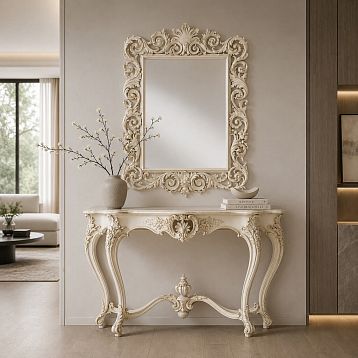
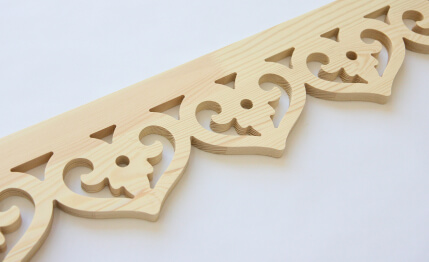
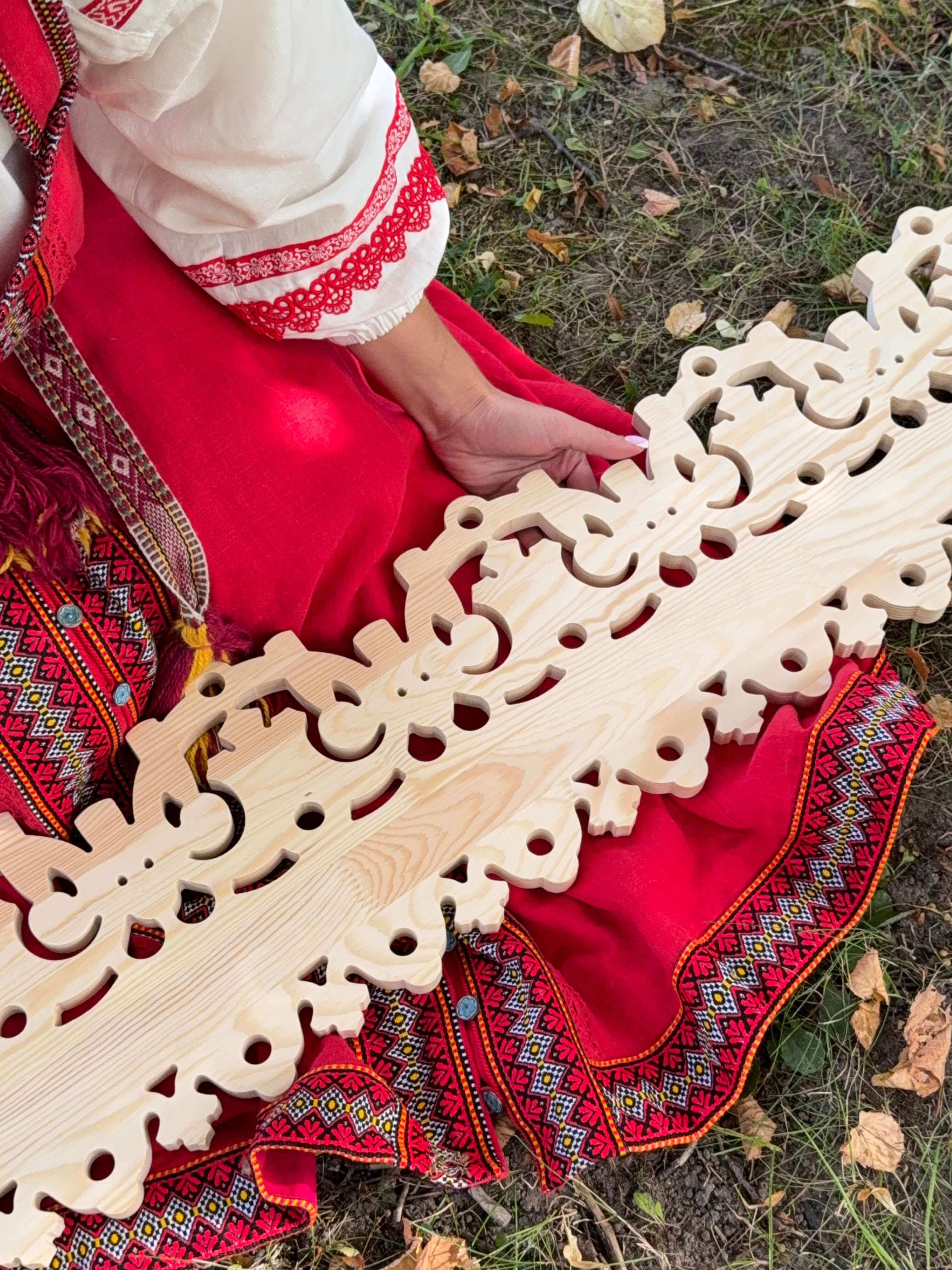
A wooden table base is especially important where the table should look not like temporary furniture, but like an independent interior piece. This could be a dining table in a private house, a decorative table in the living room, a classic desk for a study, a console composition, a hall table, furniture for a restaurant, hotel, or salon. In such tasks, ordinary legs often look too simple, and a metal frame does not always support the desired style. A carved wooden base helps to assemble a table with character: it holds the tabletop, sets the proportions, and becomes a visible part of the interior.
At STAVROS, you can choose not only the base but also compatible elements for assembly. If you need a ready-made selection route, it is convenient to start with the section Buy wooden baseand then look at specific models, shape, material, dimensions, and suitable tabletops. This approach helps you avoid assembling a table "by eye" and instead immediately compare real options: base, tabletop, material, finish, and purpose.
The main mistake when buying is choosing a table base only from a photo. In a photo, it may look impressive, but for a real table, the height, width, depth, material, compatibility with the tabletop, future finish, and installation location are important. The base should not just be liked separately. It must work together with the tabletop, the room, the chairs, the walkways, the light, the wall color, and the overall furniture group.


What is a wooden table base and why is it bought separately
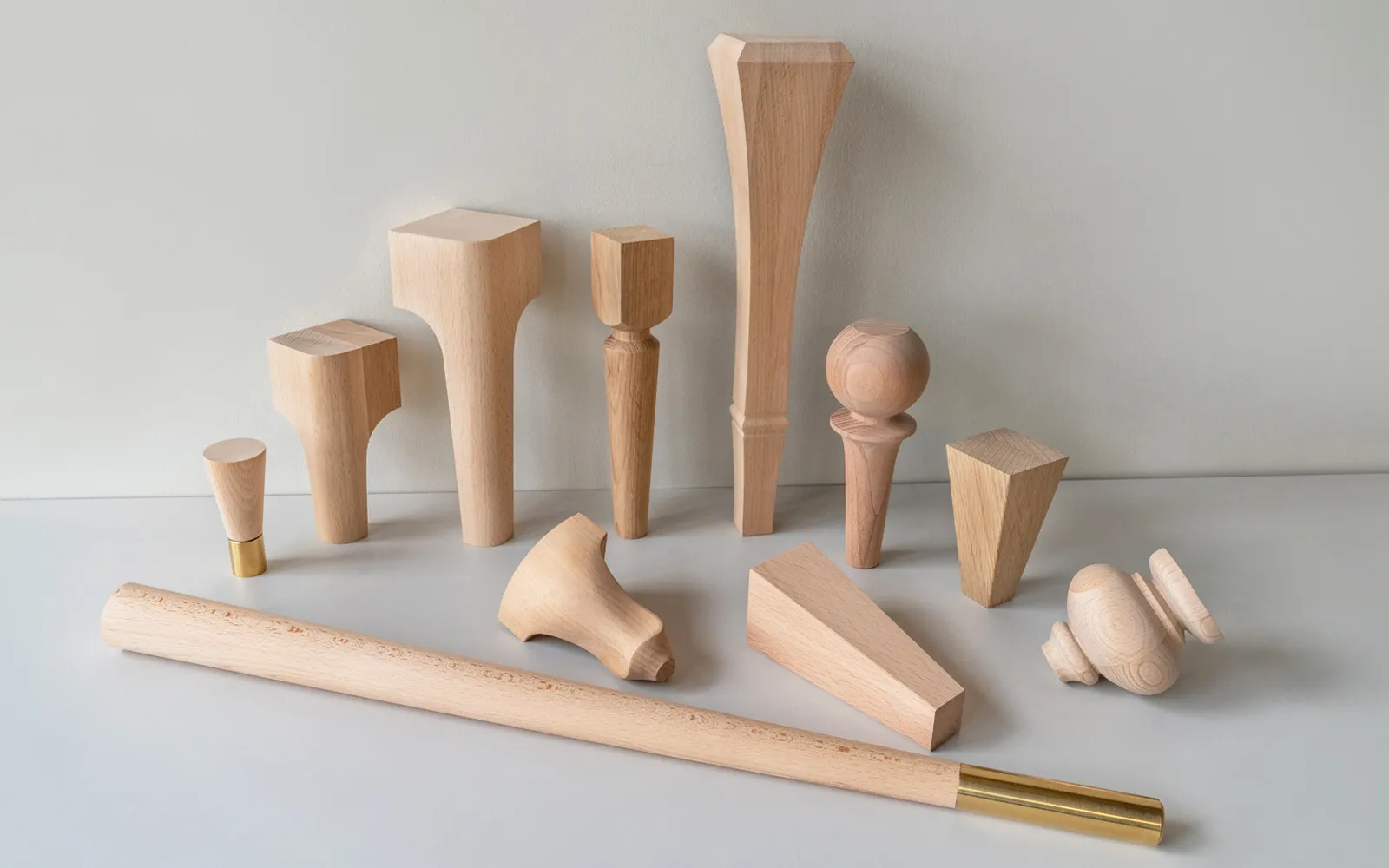
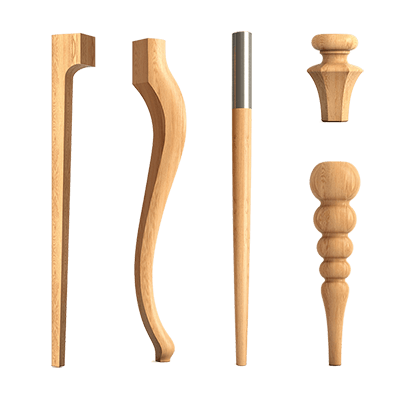
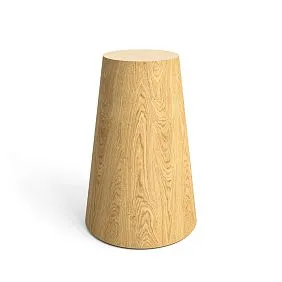
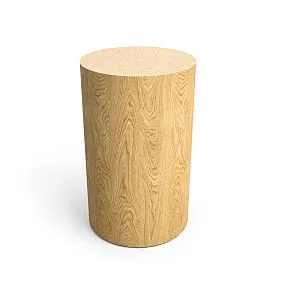
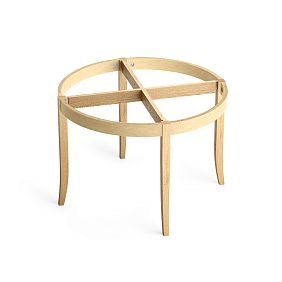
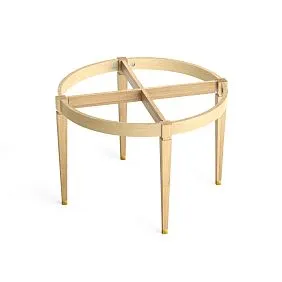
A table base is the load-bearing lower part of a table. It takes the load from the tabletop, affects stability, and simultaneously shapes the furniture's appearance. For a simple table, the base may consist of four separate legs and aprons. For a decorative or classic table, the base often looks like a more complex structure: with carved supports, connecting elements, shaped forms, and a thoughtful silhouette.
Buying a table base separately is necessary in several cases. The first is when you want to assemble a table for a specific tabletop. For example, the top shape is already chosen, the room size is known, there is an understanding of the future finish, but the ready-made table from the store does not fit in style or dimensions. The second case is when a designer or furniture workshop creates an item for a project: an expressive base is needed, and the tabletop is selected separately. The third is when the interior requires not ordinary furniture, but an item with a decorative role: a dining table in a classic dining room, a table in an executive office, a table in a hall, furniture for a restaurant or boutique hotel.
A separate wooden table base is also convenient because the buyer can more flexibly manage the appearance of the future table. You can choose a material for painting with enamel, for tinting, for a calmer or more expressive wood texture. You can coordinate the shade of the base with the tabletop, doors, wall panels, staircase elements, furniture facades, or other wooden decor.
It is important to understand: a table base is not the same as furniture legs. Legs are separate supports. They are good for chests of drawers, nightstands, benches, simple tables, and furniture where the structure is assembled according to a different scheme. A table base, however, is perceived as a solid foundation. It has a stronger influence on the table's image, helps maintain the scale of a large tabletop, and often looks more complete in a classic interior.

When a table base is better than a ready-made table
A ready-made table is convenient when the size, style, material, and color already fully match the task. But this is not always the case. In interiors with custom finishes, standard furniture often does not hit the right tone: the tabletop seems too simple, the base too light, the shape random, and the overall look foreign to the room.
A separate underframe solves this problem. It allows you to assemble a table like a construction set: choose a decorative base, select a tabletop, coordinate the finish, and get furniture that looks well-thought-out. This approach is especially useful for projects where the table should be the central piece: in a dining room, living room, meeting room, office, restaurant, or reception hall.
There is also a practical reason. If a buyer selects the base and tabletop separately, they better understand what each part is responsible for. The base is responsible for support, height, stability, style, and visual scale. The tabletop is responsible for the work surface, edge shape, area, and contact with hands and objects. When these two parts are chosen thoughtfully, the table turns out not only more beautiful but also more convenient.
For a classic interior, a separate base often proves stronger than a ready-made mass-produced table. Carving, solid wood, complex profiles, and proportions give the feeling of an item made for the space. This is important if there are already expressive doors, wooden panels, a staircase, a fireplace area, a console, or other furniture with decorative details nearby.
Our factory also produces:


What bases and frames are available in the STAVROS section
In the STAVROS catalog, bases are located in the furniture frames group. This is not accidental: a buyer often looks not for a single support, but for an entire structural foundation for furniture. In the section STAVROS furniture frames and underframes you can view bases, tabletops, and other furniture frames, comparing them by purpose, shape, material, and application.
This section has filters by product type. Among the options, you can find bases, table frames, chair frames, armchair frames, bench frames, stool frames, console frames, tabletops, and other furniture elements. This is convenient for the buyer: you can not limit yourself to one product, but immediately understand what parts a furniture group is assembled from.
By product shape, items can be square, round, rectangular, or vertical. This is especially important for a table. A round shape is perceived differently in a room than a rectangular one. A rectangular base better supports an elongated tabletop. A square shape may suit a compact table or a decorative table. Vertical elements are important for frames and individual furniture structures.
By application, the section helps distinguish solutions for tables, console tables, beds, stools, and banquettes. This protects against the mistake when a buyer sees a beautiful carved detail and tries to use it for a purpose it was not intended for. For a table, you need to look specifically at what is designed for a tabletop and the corresponding furniture task.
Get Consultation
Example of a specific model: base STL-027
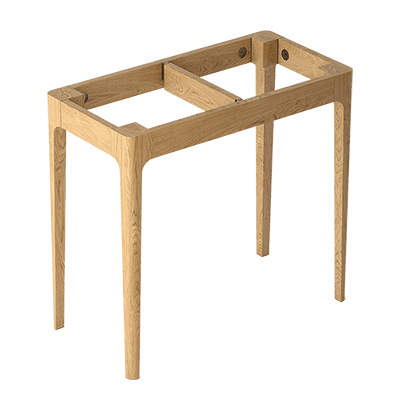
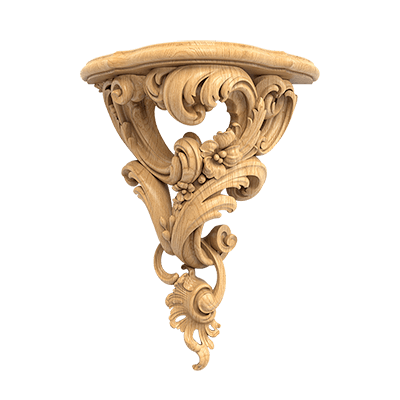
A good reference point for a classic table is Table base STL-027. This is a carved wooden base that can be considered a decorative and load-bearing foundation for a tabletop. It is suitable for cases when the table should look not like an ordinary work surface, but like a noticeable piece of furniture.
The STL-027 has confirmed dimensions of 690 × 720 × 620 mm. These parameters are important not only for technical compatibility but also for visual balance. The base must be large enough not to get lost under the tabletop, yet not interfere with seating, passages, and chair arrangement. Before ordering, you need to consider not only the height but also the width and depth: they determine how the underframe will be perceived from below and how confidently it will support the top.
For the material of STL-027, beech and oak are specified. These are different options in character. Beech is usually chosen when a neat finish under enamel is planned and a calm material with even behavior in painting is needed. Oak is chosen when you want to emphasize the natural texture, make the table more expressive, and use the wood grain as part of the design. The card also indicates options for enamel and tinting, so before purchasing, it is important to decide in advance what the final color of the table will be.
The STL-027 underframe is especially suitable for classic, neoclassical, and representative interiors. It can serve as the basis for a dining table, decorative table, table in a spacious hall, or an expressive piece for a commercial space. But it cannot be chosen separately from the tabletop: the scale of the base and the top must match, otherwise the table will look either heavy or unstable.
Table of confirmed characteristics
| Parameter | What is known about the specified products | Why this is important for the buyer |
|---|---|---|
| Main category | Furniture frames, underframes | Allows you to choose not only one model but also adjacent furniture elements for a set |
| Main product for example | Table underframe STL-027 | Provides a specific base for assembling a table with a decorative base |
| Size STL-027 | 690 × 720 × 620 mm | Helps to pre-assess height, width, depth, and fit under the tabletop |
| Material STL-027 | Beech, oak | Offers a choice between an enamel-ready option and one with expressive wood grain |
| Sanding quality STL-027 | Prestige | Affects surface preparation for further finishing |
| Finishing options STL-027 | For enamel, for tinting | Allows you to plan the color and character of the finish coating in advance |
| Related compatible product | Tabletop ST-020 | Helps assemble not only the base but also the top part of the table |
| Size ST-020 | 1930 × 1128 × 30 mm | Important for calculating the scale of the future table and compatibility with the underframe |
| Materials ST-020 | MDF, oak/MDF/oak veneer, beech/MDF/beech veneer | Provides options for enamel, tinting, varnish, and more expressive wood finish |
| Purpose ST-020 | Rectangular tabletop with a shaped profile in a classic style | Suitable for assembling a dining or decorative classic table |
| What to clarify before ordering | Current price, availability, lead time, configuration, finish, and compatibility | These parameters may depend on the selected configuration and product card |
This table is not for dry comparison, but for decision-making. It is important for the buyer to immediately see that the base and tabletop are different parts of the future table. The base is chosen for stability, height, material, and style. The tabletop is chosen for size, shape, thickness, edge profile, and finish. Only together do these parameters give a finished item.
How to choose a base by shape
The shape of the base should support the shape of the tabletop. This does not mean that a round tabletop always requires only a round base, and a rectangular one only a rectangular one. Different combinations are possible in an interior. But each combination has its own logic.
For a rectangular tabletop, a base that does not look too small in length and depth looks best. If you place an overly compact base under a large rectangular top, the table will seem unstable, even if technically everything is fastened correctly. The eye reads proportions faster than a person can check the structure. Therefore, an elongated tabletop needs a base with sufficient visual weight.
For a round table, the center is especially important. The base must support the tabletop so that the table does not appear to be tilting to the sides. When a customer is looking to buy a wooden table base for a round table, they usually want not just a beautiful leg, but a stable central or symmetrical base. Here, you need to consider the diameter of the tabletop, the height, the future chairs, and how many people will be sitting at the table.
The square shape is good for compact tables, coffee tables, and decorative solutions. It creates a sense of stability but requires precise scale matching. A base that is too massive under a small tabletop will make the piece look heavy. A base that is too light under a wide surface will look accidental.
In a classic interior, the shape of the table base should also support the style. A carved base with expressive details is best revealed when there is space around it. If placed in a cramped area where only the edge of the tabletop and part of the support are visible, the decorative work will be lost. Therefore, before purchasing, it is worth imagining not only the table itself but also the viewpoint: where it will be seen from, how people approach it, and what is nearby.
How to choose the size: height, width, depth, and balance
The size of the table base is not just one parameter. The buyer needs to look at the height, width, depth, proportions relative to the tabletop, and the seating position of a person at the table. For STL-027, the dimensions are 690 × 720 × 620 mm. These numbers already provide a hint: the base is quite noticeable, and it requires a tabletop that will not look like a random lid.
Height affects seating comfort. If the table is intended as a dining table, you need to consider not only the base and tabletop but also the height of the chairs, the thickness of the top, and the legroom. An error of a few centimeters can make the table uncomfortable: knees will bump, the seating will be too high or too low, and the decorative base will get in the way.
Width and depth determine stability and visual scale. The larger the tabletop, the more attention must be paid to the base. A large top requires a confident base. However, the base should not exceed reasonable limits, otherwise it will interfere with seated people and disrupt walkways. It's important to plan in advance where the chairs will be placed and how much space will remain around them.
The thickness of the tabletop also affects perception. For example, the ST-020 tabletop for a classic table has dimensions of 1930 × 1128 × 30 mm. The 30 mm thickness and shaped profile give the table a finished edge. Such a tabletop should not look too light in relation to the carved base. Therefore, the base and the top should be viewed as a pair.
Another important point is the tabletop overhang. If the top overhangs the base too much, the table may seem unstable. If the overhang is small, sitting may be uncomfortable, and the base will become too prominent. In a classic table, the overhang often helps make the silhouette more elegant, but it cannot be chosen randomly. It's better to check the dimensions of the base, tabletop, and intended layout in advance.
Underframe material: beech or oak
The material affects not only durability but also the future finish. For a wooden table underframe, the surface is especially important: it will be visible from different sides, light falls on it, and chairs, floor, walls, and other furniture items stand nearby. A mistake in material can ruin even a good shape.
Beech is a practical choice for those planning enamel. It has a calmer texture, so the painted surface looks smoother and neater. If the future table should be white, milky, gray, graphite, colored, or support enameled facades, beech is often a rational choice. It does not conflict with color and allows the form of the carving to take center stage.
Oak is chosen for its texture. It works well when wood texture is important in the interior: warm natural tone, stain, varnish, noble pattern. An oak underframe can look more stately and expressive, especially if there is wooden flooring, doors, wall panels, stairs, or furniture with visible texture nearby. But oak requires more careful shade selection: if there is already wood nearby, the tones must match.
You cannot choose a material based solely on the principle 'more expensive means better.' The best option depends on the task. For enamel, beech is often more sensible. For expressive tinting and showcasing wood grain, oak is better. For combined tabletops with MDF, veneer, and solid wood, you need to see how the top will pair with the base. If the tabletop is to be painted, the underframe should follow the same logic. If the top shows oak or beech veneer, the base should support that texture.
Before ordering, it is useful to decide whether the table will look unified or contrasting. A unified option is when the underframe and tabletop are close in color, material, and finish. A contrasting option is when the base, for example, is painted with enamel, and the top has a wood texture. Both approaches can be successful, but they need to be chosen deliberately.
Tabletop to underframe: why the top cannot be chosen randomly
The tabletop is the most contact-intensive part of the table. It is seen from above, people sit behind it, and dishes, documents, decor, and work items are placed on it. The base can be beautiful, but if the tabletop does not match in size, thickness, or style, the entire piece loses credibility.
For a classic table, the edge is important. A shaped profile helps connect the top with the carved base. If the underframe has a complex decorative silhouette, a simple flat tabletop without an expressive edge may look too plain. Conversely, an overly heavy tabletop on a light base creates a sense of imbalance.
The size of the top part should be chosen based on the room. For a dining room, seating spaces and walkways are important. For an office, the work area and distance to the chair matter. For a hall or living room, the decorative role and viewpoint are key. For a restaurant or hotel, not only beauty but also ease of service, stability, and repeatability of solutions across multiple zones are important.
The tabletop material should support the usage scenario. MDF is suitable when enamel painting and a more restrained configuration are needed. Combined options with MDF, solid wood, and veneer help achieve an expressive appearance with wood texture. Beech and oak in veneer or solid wood provide different shades and surface character. Before purchasing, it's important to look not only at the material name but also at how it will be finished.
If the buyer chooses Buy a wooden table baseIt's worth opening the tabletop card right away. This makes it easier to see the connection: base, top, profile, dimensions, and material. This prevents a situation where the underframe is already ordered, but a suitable tabletop has to be found separately and matched in style later.
Comparison of selection options
| Situation | What to choose | Pros | What to pay attention to |
|---|---|---|---|
| Need a classic dining table | Carved wooden underframe and shaped tabletop | The table looks like a cohesive interior piece | Tabletop size, seating, overhang, height |
| Need a table for enamel | Beech underframe and tabletop for painting | Even color, smooth texture, clean classic look | Matching of base and tabletop preparation for finishing |
| Need a table with a wood texture | Oak underframe or a version for tinting | Expressive wood grain, prestigious appearance | Combination of shade with floor, doors, and other furniture |
| Need a more practical tabletop | MDF or a combined solution | Convenient for painting and classic profile | Clarify finish, thickness, and compatibility with the base |
| Need a decorative table for the hall | Expressive base with a noticeable silhouette | The table works as an accent and welcomes guests | Leave enough space around |
| Need a table for a commercial interior | Base and tabletop with verifiable parameters | Easier to repeat the solution in multiple zones | Clarify dimensions, finish, availability, and timelines |
| There is already a selected tabletop | Base for existing size and weight | You can update or assemble a table for a ready-made top | Check dimensions, attachment points, and visual balance |
| Need a fully ready table without selection | Better to look at ready-made furniture rather than a separate base | Fewer decisions on the buyer's side | A separate base requires selecting a tabletop and finish |
This table helps to honestly assess the task. Not everyone needs to buy a base. It is needed for those who want to assemble a table consciously, control the look and material, get a decorative foundation, and not be limited to ready-made mass-produced furniture.
How to choose an underframe for different customer scenarios
For a private house and large dining room
In a private house, the table often becomes the center of the dining room or kitchen-living room. It must withstand family dinners, holidays, gatherings of guests, and at the same time support the overall style. Here it is especially important that the base does not look too light. A large room requires an item with scale.
For this scenario, a carved wooden base with an expressive shape will work. It works well with a rectangular tabletop, especially if the top has a figured profile. Before ordering, you need to check the length of the tabletop, width, height of the base, and distance to the chairs. A beautiful base should not interfere with sitting.
For a classic living room
In a living room, a table doesn't have to be just for dining. Sometimes it plays a decorative role: placed by the sofa area, in a bay window, next to a fireplace, or in a spacious hall. Here, the focus is not on maximum seating capacity, but on the image. The base can be more prominent, and the tabletop can have an expressive profile.
In such an interior, carved wooden elements look good, especially if they echo the frames, doors, panels, staircase, or other decor. But you need to remember the scale. In a small living room, a base that is too large will overload the space, while in a large one, one that is too modest will get lost.
For a study
A desk in a study should look composed and calm. Excessive decorativeness is not always needed here, but proportions and material are important. An oak texture can support the stately character of a study, while beech under enamel can support a more strict and light neoclassicism.
If the table is used as a work desk, you need to pay special attention to the height, legroom, and tabletop thickness. The decorative base should not interfere with the chair, seating, or movement. For a study, it's better to think in advance from which side the table will be seen most often: from the entrance, from the chair, or from the meeting area.
For a restaurant, cafe, or hotel
In a commercial interior, the table works to impress the guest. A carved wooden underframe helps create the feeling of well-thought-out furniture, not a random purchase. This is especially important for restaurants with a classic, historical, palatial, vintage, or designer concept.
But for a commercial space, beauty alone is not enough. You need to consider stability, seating comfort, the ability to repeat the solution, compatibility of the finish with the interior, and maintenance during operation. If there are several tables, it is better to agree on identical parameters in advance so that the furniture group looks cohesive.
For a furniture workshop
For workshops, a table base is useful as a ready-made decorative foundation. This saves time on complex shapes and carving, allowing the main work to focus on assembly, the tabletop, finishing, and installation. Instead of carving a complex element from scratch, a craftsman can take a ready-made base and integrate it into the project.
Here, precise dimensions are especially important. The craftsman must understand which tabletop to install, how to distribute the fasteners, which finish to choose, and how the product will behave in the finished furniture. Before ordering, you need to check the product card and, if necessary, clarify details with the manager.
For an interior designer
For a designer, an underframe helps turn an idea into a specific object. In a visualization, you can show a beautiful table, but for implementation, you need real dimensions, material, and a link to the product. When there is a ready-made card for the underframe and tabletop, the project gets closer to production.
For a designer, it's important not only to choose the model itself but also to explain to the client why it is needed. The underframe is responsible for style and scale. The tabletop is responsible for shape, area, and convenience. Together, they create an item that can be integrated into the overall interior concept.
How to choose by purpose: dining, round, coffee, or decorative table
A dining table requires the most thorough inspection. People sit at it, move chairs, place dishes, and use the surface every day. Here, you cannot choose based solely on decorativeness. You need to consider seating, height, tabletop overhang, stability, top weight, and free space around it.
A round table is often chosen for a softer, more intimate seating arrangement. It has no corners, works well in bay windows, dining rooms, small living rooms, and conversation areas. But the base for a round table must be chosen very precisely. If the base is too narrow, the table will look unsteady. If it is too massive, it will interfere with legs and disrupt the lightness of the round shape.
A coffee or side table follows different rules. It is lower, often viewed from above and the side, and stands next to a sofa or armchairs. Here, the base can be more decorative, and the tabletop less large. But even for a coffee table, stability is important: books, cups, decor, and sometimes heavy items are placed on it.
A decorative table for a hall, salon, or showroom can be chosen almost as a sculptural piece. Its task is to greet, decorate, and support the style. In such a scenario, the base often plays the main role. But even here, practicality should not be forgotten: passages, safety, height, stability, and surface care remain important.
What to buy with a table base
An underframe is rarely purchased in complete isolation. Even if it seems that only the base is needed, the future table will still require a top, fastening, finishing, and compatibility checks. Therefore, the question 'what to buy together with the underframe' is not additional but fundamental.
The first thing to choose is the tabletop. Without it, the base remains just the lower part of the furniture. For a classic table, you should look for a tabletop with a suitable profile, thickness, and material. If the base is carved, the top should not be too simple. If the base is calm, the tabletop can take on part of the decorative role.
Second — finishing. For enamel, varnish, stain, or tinting, it's better to plan ahead. The base and tabletop must be coordinated. A common mistake occurs when the underframe is chosen for enamel, but the tabletop is intended to retain a wood texture, and the shades and styling don't match. Such contrast can be beautiful, but only if it's planned.
The third is fasteners and assembly logic. In the SEO scheme, there is no separate confirmed link for fasteners, so no link should be placed here. But it is important for the buyer to understand: the connection method depends on the design, material, and chosen tabletop. Before ordering, it is worth clarifying what is included in the package and what work will be required during assembly.
Fourth — adjacent furniture elements. If a table is being chosen for a comprehensive project, it makes sense to look beyond just one base. In the section buying a wooden table underframe you can evaluate which other frames and tabletops match the style. This is useful for workshops, designers, and buyers who are assembling not just one item but an entire furniture group.
Table: what to buy together with the underframe
| What to add to the purchase | Why this is needed | Which scenario it suits | What to pay attention to |
|---|---|---|---|
| Tabletop | Without it, the underframe does not become a full-fledged table | Dining, decorative, office table | Size, thickness, edge profile, material, weight |
| Tabletop ST-020 | Helps to assemble a classic table with an expressive shaped profile | Classic dining room, living room, office | Check the size 1930 × 1128 × 30 mm and material in the card |
| Finishing materials | Needed to match the color of the base and top | Under enamel, varnish, stain, tint | Do not mix random shades without a sample |
| Fastening | Needed to connect the base and the tabletop | Any table assembly | Check compatibility and configuration before ordering |
| Finish sample | Helps avoid color errors | Projects with expensive finishes, oak, veneer, enamel | View the sample under the lighting where the table will be placed |
| Adjacent furniture frames | Help assemble a set in one style | Restaurant, hotel, canteen, living room | Compare shape, material, and decorativeness |
| Manager consultation | Needed for complex underframe and tabletop combinations | Custom project, large order, non-standard task | Prepare dimensions, interior photos, and desired finish in advance |
This table shows the main point: buying a table base is not the final step, but the start of assembling a table. The earlier the buyer thinks about the tabletop, finish, and installation, the lower the risk of getting beautiful but poorly matching parts.
How not to confuse an underframe with similar products
The catalog of furniture elements has many similar words: underframe, table frame, tabletop, furniture legs, banquette frame, console frame. For an inexperienced buyer, they may seem almost identical. But their purpose is different.
A table base is the foundation specifically for a table. It supports the tabletop and forms the lower part of the furniture. It is chosen when you need to assemble a table, not just replace one support. If the project requires a solid decorative base, a table base is better than individual legs.
The tabletop is the upper part. It does not replace the base. Even if the tabletop is beautiful, without the right base it will not become a convenient table. Therefore, the top should be chosen together with the base, not after a random purchase.
A table frame is a broader concept. In some cases, it may include structural elements that differ from the underframe in shape and purpose. If a buyer sees the word "frame," they need to look at the product card: what type of furniture it is intended for, what load it assumes, and how the tabletop is attached.
Furniture legs are separate supports. They suit a different assembly logic. Legs can be placed on a chest of drawers, cabinet, ottoman, simple table, or furniture structure, but they do not always provide the decorative and structural effect that a solid underframe does.
A bench frame is needed for a seat, not for a table. An error occurs when a buyer sees a beautiful shape and tries to use it for a different purpose. Externally, the frame may be appealing, but the seating, load, and construction of a bench are different.
| Similar product | What it is for | When to buy |
|---|---|---|
| Underframe | Load-bearing and decorative table base | When a ready-made base for a tabletop is needed |
| Tabletop | Upper work surface | When the base is already selected or a set is needed |
| Table frame | Structural base of a table | When not only a decorative support but also a complete frame scheme is needed |
| Furniture legs | Individual supports | When assembling simple furniture or replacing legs |
| Bench frame | Seat base | When assembling a bench, stool, or upholstered seat |
| Console frame | Base for a console table | When a narrow wall-mounted or decorative piece is needed |
The main sign of a correct choice is the purpose. If you need a table with a tabletop, look at the underframe and tabletop. If you need a cabinet, bench, or chair, the underframe will not replace the corresponding frame.
Practical selection for specific situations
Need to assemble a table for a classic dining room
For a classic dining room, scale and completeness are important. The table is in the center, visible from different sides, people gather around it. Here, a combination works well: a carved underframe, a shaped tabletop, and coordinated finishes. You need to check the room size, walkways, chairs, and lighting in advance.
If you want an expressive base, you can look at Table base STL-027 and immediately compare it with a suitable tabletop. A mistake is to buy a beautiful base and then put a random top on it without profile and proper scale.
You need to choose a base for the already selected tabletop.
First, you need to take the dimensions of the tabletop: length, width, thickness, material, and weight. Then you need to understand what overhang is acceptable, where people will sit, and whether the base will interfere with legs. Only after that can you choose the underframe.
If the tabletop is rectangular and large, the base should be visually strong enough. If the top is light, thin, or decorative, a too-massive underframe can overpower it. In such a situation, it's better not to rush the order and check the proportions with a manager.
Need to make a table for enamel
For enamel, a smooth surface and preparation are important. Beech is often chosen specifically for painting because it provides a neat base for an even color. The tabletop should also be selected with future enamel in mind. If the top and bottom are painted in the same color, the table will become more cohesive.
Before ordering, you need to clarify what preparation option the product is offered in, which elements are suitable for enamel, and which are better for tinting. A mistake is choosing material based on a picture without thinking about the finish. After painting, the texture and relief are perceived differently.
You need to make a table with a wood texture.
If you want to show the wood, look at oak, oak veneer, beech, beech veneer, and options for tinting. In such a task, it's important that the texture of the base and tabletop do not conflict. An oak base and an oak tabletop can create a cohesive look, but the shade of stain and varnish must be coordinated in advance.
A table with a wood texture looks especially good next to natural flooring, wooden doors, wall panels, stairs, or solid wood furniture. But if the room already has many different wood shades, a new table can add an extra tone. Therefore, before ordering, it's useful to compare samples.
Need to furnish furniture for a restaurant or hotel
For commercial interiors, repeatability is important. One beautiful table is good, but if the hall has several zones, the furniture should look like a system. It's better to choose bases, tabletops, and finishes so they don't clash with each other.
In a restaurant, you need to consider not only the appearance but also the comfort of guests. A too complex base can hinder seating. Too protruding parts can be inconvenient in aisles. It's better to plan the layout in advance and check how the table will work in a real scenario.
You need to replace the random base with a decorative one
Sometimes the tabletop already exists, but the base looks poor or doesn't fit the interior. In such a case, a table base helps update the item without completely replacing all the furniture. But before purchasing, you need to check if the new base can support the chosen tabletop and if the height matches.
Stain and tinting allow you to change the color of the wood without completely removing its grain. This is useful when you need to match the shade of the floor, doors, panels, or other furniture. But tinting should not be chosen from memory. It's better to look at a sample because the color changes under different lighting.
Patina can emphasize the relief and add depth to a classic shape. But it's easy to overdo it. If the interior is calm, too active patina will make the table theatrical. If the room is rich in details, patina can support the overall style. The decision depends on the surroundings.
Application in interior: where a wooden table base works best
In the dining room
The dining room is the most natural place for a wooden table base. Here, the table is not hidden. It sets the center of the composition, around which the lighting, rug, chairs, sideboard, or display cabinet are arranged. A carved base helps make the table an object that anchors the interior.
For the dining room, it's important that the table base not only looks beautiful but also doesn't interfere with seating. If the chairs are large, with armrests or upholstered seats, you need to check the distances especially carefully. The table should be comfortable every day, not just impressive in a photo.
In the living room
In a living room, the table base can serve as a decorative accent. A table with an expressive base looks good next to a sofa, armchairs, fireplace, large mirror, or panel. In such a scenario, the table doesn't always bear a heavy load, but its visibility is important.
For the living room, you can afford a more expressive silhouette, but you need to consider the style of the neighboring furniture. If there is modern minimalism nearby, a carved base will require support: a frame, moldings, wooden decor, color, or texture.
In a study
The study loves material and proportions. A wooden underframe here helps create a sense of solidity. Oak, dark tinting, calm varnish, and a classic tabletop profile work especially well. But the study should not turn into an exhibition of decor. If the desk will be a working one, convenience is more important than excessive carving.
In a hallway
In a spacious hallway, a table often greets guests. A vase, arrangement, books, or seasonal decor are placed on it. The table base in this area is almost completely visible, so its decorative quality is especially well revealed. The main thing is not to block passages or place too wide an item in a narrow spot.
In a restaurant or salon
In restaurants, hotels, salons, and showrooms, furniture works for the first impression. A wooden underframe helps show that the interior is carefully assembled. It can support a classic style, a historical theme, an author's atmosphere, or a premium presentation of the space.
In commercial spaces, it's important to think about practicality in advance. The table should be stable, convenient for visitors and service staff. The finish should match the actual load. If the item will be used frequently, it's better to clarify care and coating recommendations in advance.
How to assemble a set without random mismatches
A set begins not with a purchase, but with coordinating parameters. The buyer must answer several questions: what table is needed, where it will stand, how many people will sit at it, which tabletop is suitable, which material is better, what finish is needed, and what is already in the interior.
Then you need to choose the base. To do this, it is convenient to open the section Buy wooden furniture and look not only at photos, but also at filters: product type, shape, application, material, dimensions. Filters help quickly remove unsuitable options and avoid mixing underframes with frames for other furniture.
After that, you need to select a tabletop. It is important not just to find a top of the right size, but to check the edge profile, thickness, material, and finish. If the underframe is carved, the tabletop should be expressive enough. If the base is calmer, the top can take on more of a decorative role.
The third step is to coordinate the finish. The base and top can be the same, similar, or contrasting. But the contrast must be well thought out. For example, a painted underframe and a tabletop with a wood texture can look beautiful if the shades are supported in the interior. Without support, it may look random.
The fourth step is to check the assembly. You need to understand in advance who will connect the underframe and tabletop, what fasteners will be needed, what is included in the kit, and what parameters need to be clarified. If the project is complex, it is better not to leave this until the last moment.
Installation, preparation, and care: what's important to understand before ordering
The article does not replace professional assembly, but helps prepare for the purchase. The underframe and tabletop have several practical aspects that need to be thought through in advance.
First — storage before installation. Wooden products and elements for finishing do not like random conditions: sharp humidity changes, dampness, overheating, long storage near heat sources. If the product is purchased in advance, you need to ensure a normal room and careful placement.
The second is checking the surface before finishing. If the base and tabletop are to be painted, the craftsman must evaluate the sanding, relief, joints, visible areas, and preparation. Carved details require a careful approach: paint or varnish must be applied so as not to clog the pattern or create drips.
Third — attaching the tabletop. Different designs may have different solutions. You cannot simply assume that any top can be placed on any base without checking. It's important to consider the tabletop thickness, weight, attachment points, and load. If the buyer does not handle assembly themselves, these issues are best passed to a craftsman, but the product parameters should still be verified in advance.
The fourth is care after installation. Care depends on the coating. Enamel, varnish, tinting, patina, and natural texture require different handling. Do not use aggressive agents, abrasives, or excessive moisture. The more complex the finish, the more careful the care should be.
Fifth — usage. Even a good underframe will not fix improper load. Do not use a decorative table as a workbench, stand on the tabletop, overload the edge, or place furniture in conditions it is not designed for. A wooden table lasts longer when used as intended.
Mistakes when choosing a wooden base
Mistake 1. Looking only at the photo
A photo shows the shape but does not give a full understanding of the size. The underframe may seem compact but actually be large. Or vice versa: in a separate shot it looks expressive, but under a large tabletop it gets lost. Therefore, always check the dimensions in the product card.
Mistake 2. Not considering the tabletop
The underframe and tabletop should be chosen together. If you buy the base first and then look for the top, you may encounter mismatches in style, thickness, color, or scale. It is better to immediately consider the complete logic: base, top, finish, attachment.
Mistake 3. Confusing the base with legs
Individual legs do not replace a solid decorative base. They may be good for other furniture, but will not provide the same look. If you need a classic table with an expressive lower part, an underframe is more suitable.
Error 4. Choosing material without understanding the finish
Beech and oak behave differently visually. Beech is often used for enamel, oak for texture and tinting. If the buyer hasn't decided whether the table will be painted or will retain its wood grain, the material can be chosen incorrectly.
Error 5. Not checking the fit
A beautiful base can interfere with legs, chairs, or walkways. This is especially important for a dining table. You need to imagine in advance how people will sit, where the chairs will be placed, and how much space will remain around.
Error 6. Ignoring the height
The height of the underframe together with the thickness of the tabletop determines comfort. If you don't calculate the overall level, the table may be uncomfortable. For a decorative table this is less critical, for a dining table it is very important.
Error 7. Not coordinating the finish with the interior
Even expensive wood can look bad if the shade clashes with the floor, doors, or other furniture. Before ordering, it's better to understand in advance what color is needed: enamel, varnish, stain, tinting, patina, or natural texture.
Error 8. Buying one part without understanding the set
The underframe is an important part, but not the whole table. You need a tabletop, finish, fasteners, and assembly. If you forget about this, the purchase will drag on, and the result may be unpredictable.
Error 9. Not clarifying current parameters
Dimensions, availability, price, deadlines, material, and configuration should be checked before ordering. Even if the buyer has already viewed the card before, it's better to verify the current information before payment.
Error 10. Using a random blank instead of a finished element
A random blank may feel cheaper, but it does not provide a clear shape, a ready decorative solution, or a verifiable product card. A finished table base is more convenient because it has a name, dimensions, material, and a clear purpose.
Who is a wooden table base suitable for, and who should choose a different option
A wooden table base suits those who want to assemble a table to match the interior, rather than buying a ready-made item without the ability to influence details. It is well suited for owners of private homes, designers, furniture workshops, carpentry productions, restaurants, hotels, salons, and anyone who wants a table with an expressive base.
This solution is especially appropriate in classic and neoclassical interiors. A carved base supports stucco decor, wooden panels, decorative moldings, massive doors, stairs, fireplace areas, sideboards, and display cabinets. It helps the table look like part of the interior, not a random purchase.
The table base is also suitable for those who want to assemble a table to a custom size but do not want to make a complex base from scratch. The finished model saves time on finding a shape, and the buyer or craftsman can focus on the tabletop, finishing, and assembly.
But the table base is not suitable if a fully finished table without selecting parts is needed. In this case, it is better to look at ready-made furniture. It is not suitable if the buyer is looking for a metal base, a temporary support, a maximally simple budget option, or a table without a decorative role.
Also, a table base may be unnecessary for a very small room where there is no space for an expressive base. If the table will be squeezed between a wall, a cabinet, and a passage, the carved work will be almost invisible. In such a case, it is wiser to choose a simpler structure.
How to buy on STAVROS and what to check before ordering
It's best to start shopping by category. Open the section STAVROS furniture frames and underframes and select products by purpose: table, console table, stool, or bench. For the article, we are interested specifically in the table, so you should not accidentally go into frames of other furniture.
Then you need to look at the specific product card. In the card, check the dimensions, material, finish options, availability, price, ordering conditions, and compatibility with the future task. If considering STL-027, it is important to verify its dimensions 690 × 720 × 620 mm, material, preparation for enamel or tinting, and how it will combine with the selected tabletop.
After choosing the base, you need to move on to the tabletop. For a classic table, you can look at ST-020: it has a rectangular shape, figured profile, dimensions 1930 × 1128 × 30 mm, and material options including MDF, oak/MDF/oak veneer, beech/MDF/beech veneer. Before ordering, you need to understand which option suits the finish and overall style.
If in doubt, it is better to contact a STAVROS manager in advance. This is especially important if the table is being assembled for a large room, commercial project, restaurant, hotel, or interior with existing wooden trim. The more details known before ordering, the lower the risk of making a mistake.
FAQ
Which wooden table base to buy for a table?
You should choose based on the table's purpose, tabletop shape, height, material, interior style, and future finish. For a classic interior, look at carved wooden bases made of beech or oak, and then select a tabletop to match in size and profile.
Can you buy a table base separately from the tabletop?
Yes, the table base can be purchased separately. But it's better to think in advance about which tabletop will be installed on top. This makes it easier to avoid mistakes in size, thickness, material, and style.
How is an underframe different from furniture legs?
A table base is a solid or more complex load-bearing foundation of the table. Furniture legs are separate supports. Legs are suitable for simple structures, while a table base works better where an expressive decorative bottom and a cohesive table look are needed.
What to buy together with a wooden underframe?
Minimally, a tabletop is needed. You also need to think in advance about fasteners, finishing, color, varnish, enamel, stain, or tinting. If the table is being assembled for a project, it's worth immediately looking at adjacent furniture frames and compatible elements.
How to choose a base for a round table?
You need to consider the diameter of the tabletop, height, center of gravity, seating arrangement, and the visual scale of the base. The base should not be too small, otherwise the round tabletop will look unstable.
Is a carved base suitable for a modern interior?
It is suitable if the interior allows for a decorative accent. In a modern space, a carved base is better supported by color, material, or another detail: a frame, panel, door, lamp, wood texture. Without such support, it may look out of place.
What is better to choose: beech or oak?
Beech is often chosen for enamel and even painting. Oak is chosen when you need to show wood texture, tinting, or a more expressive natural pattern. The choice depends not on an abstract 'best' species, but on the future finish and style of the room.
Can MDF be used for a tabletop?
Yes, if the selected tabletop provides for such material. For example, ST-020 has an MDF version and combined options with MDF, solid wood, and veneer. MDF is convenient for painting with enamels and classic shaped profiles.
How to know if the base will support the tabletop?
You need to look at the dimensions, product purpose, tabletop material, weight, fastening scheme, and recommendations in the product card. If the tabletop is large or heavy, it's better to check compatibility in advance with a STAVROS manager or the craftsman who will perform the assembly.
Do I need to buy the base and tabletop in the same material?
Not always. You can make the base and top in the same material or create a contrasting pair: for example, a painted base and a tabletop with a wood texture. The main thing is that the contrast is intentional and supported by the interior.
What to check before ordering a base?
Check the size, material, shape, purpose, finish, availability, current price, ordering conditions, and compatibility with the tabletop. If the table will be used daily, separately evaluate the seating, height, and legroom.
Can I assemble the table myself?
You can, if you have experience assembling furniture, understand the fastening, and have the right tools. But the base and tabletop require careful fitting. If the product is expensive, large, or decorative, it's better to entrust the assembly to a professional.
Why shouldn't I buy a random base instead of a table base?
A random base may not fit in terms of height, strength, material, style, and fastening. A ready-made underframe is more convenient because it has clear dimensions, material, purpose, and a product card where you can check the parameters before ordering.
Where can I see wooden underframes for a table?
It's convenient to start with the section Buy wooden base, where furniture frames, underframes, and tabletops are collected. Then you should go to the specific model's card and check the dimensions, material, and finish.
Result: how to go from idea to purchase
A wooden table base helps assemble a table that looks not like random furniture, but a well-thought-out interior piece. It is responsible for stability, scale, decorative character, and connection with the tabletop. But you need to choose it not just by photo. Size, material, shape, height, finish, purpose, and installation location are important.
If you need a classic table with an expressive base, you should consider the table base together with the tabletop. For guidance, you can study STL-027, compare its parameters with the future top, and look at ST-020 as a tabletop option with a figured profile. This approach helps you immediately see not individual details, but the future table as a whole.
On STAVROS, a customer can move from an idea to a specific choice: open a category, compare underframes and frames, study the product card, choose a tabletop, clarify the finish, and ask questions to a manager. This is more reliable than assembling a table from random elements without precise dimensions and clear compatibility. A good table starts with the right base — and it is the underframe that gives it character, stability, and style.