

























Article Contents:
- What is a wooden pull handle: shape, logic, application
- Where is a wooden pull handle used: seven contexts
- Interior Doors
- Wardrobes: freestanding and built-in
- Chests of drawers
- Sideboards and display cabinets
- Kitchen fronts
- Cabinets in the hallway and dressing room
- Restoration of old furniture
- How a pull handle differs from a knob handle: practical comparison
- How to choose the length of a wooden pull handle: from 96 to 250 mm
- Center-to-Center Distance
- How to choose length by furniture type
- Proportion rule
- Pull handle material: beech, oak, birch, solid wood
- Oak
- Oak
- Birch
- Linden and alder
- Array vs glued material
- Handle-bracket coating: uncoated, varnish, tinting, oil
- Uncoated handles
- Coated handles
- How to choose a coating
- How to match a wooden handle-bracket to furniture style
- Classicism and Baroque
- Neoclassicism
- Art of installation: installing trims
- Modern classicism
- Restoration of old furniture
- Mounting a wooden handle-bracket: technical details
- Mounting types
- Marking for mounting
- Important installation nuances
- How to match the color of a handle-bracket to furniture facade
- "Tone-on-tone" approach: handle matches the facade
- "Accent" approach: handle darker or lighter than the facade
- Rule: one pen color throughout the space
- Mistakes when choosing a wooden pull handle
- Wooden handle bracket and furniture decor system
- Care for the wooden handle bracket
- FAQ: answers to key questions about the wooden handle bracket
- STAVROS: the handle you feel right
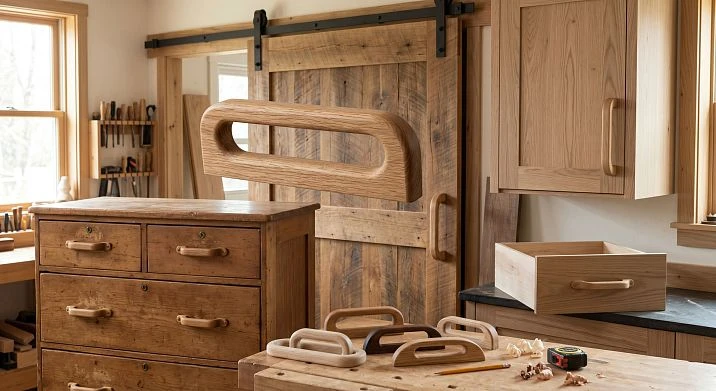
There are details that are only noticed when they are wrong. The handle is one of them. You pull a cabinet door, open a dresser drawer, grasp an interior door — and the first thing your hand feels is the shape, material, and weight of the handle. If everything is right — the hand simply opens. If not — a vague sense of mismatch arises, impossible to explain to guests, but also impossible to ignore yourself.
The wooden handle bracket is a form chosen deliberately. Not because it's "cheaper" or "simpler," but because it provides what no metal construction can: the warmth of wood under your hand, an organic combination with wooden facades and interiors, visual lightness with actual reliability.
Wooden bracket handle — it is an elongated profile with two attachment points, fully grasped by the hand: not pinched with fingers like a button, but gripped with the palm. This makes it indispensable for large facades, doors, cabinets, and sideboards.
In this article — everything about how to choose a wooden handle bracket correctly: shape, length, wood species, finish, attachment, and consistency with furniture style.
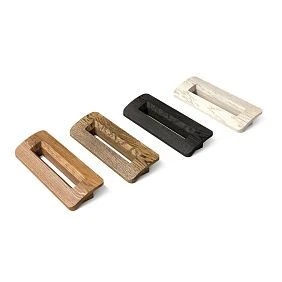
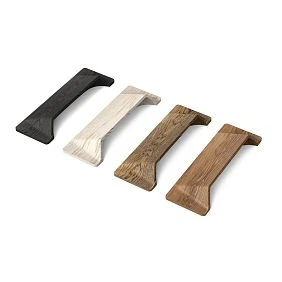
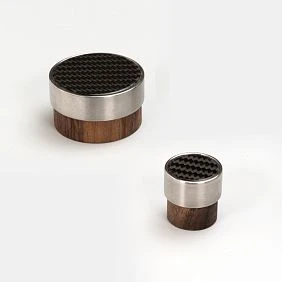
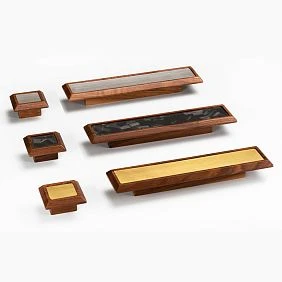
What is a wooden handle bracket: shape, logic, application
A bracket handle is a type of hardware that differs from all others in its grip shape. While a knob handle is a point grip with one or two fingers, a bracket provides a full palm grip. Structurally: a straight or curved rod raised above the facade surface on two support posts, which are attached to the facade with screws.
It is this shape that gives the bracket several key advantages:
Ergonomics. Grip with the whole hand — not with two fingers. This is important for heavy doors, large cabinet sections, and kitchen fronts that are opened hundreds of times a day.
Scale. A bracket handle visually matches large facades. A small knob on a two-meter cabinet door is disproportionate. A bracket 130–200 mm long is organic.
Style. A wooden bracket handle is a historically authentic element for classic, neoclassical furniture, country, rustic, and Provence styles. It existed in furniture long before metal hardware appeared and remains relevant precisely because it fits naturally into the wooden furniture context.
Versatility. A bracket is equally suitable for an interior door, cabinet door, dresser drawer, sideboard facade, or kitchen cabinet. One shape — seven applications.
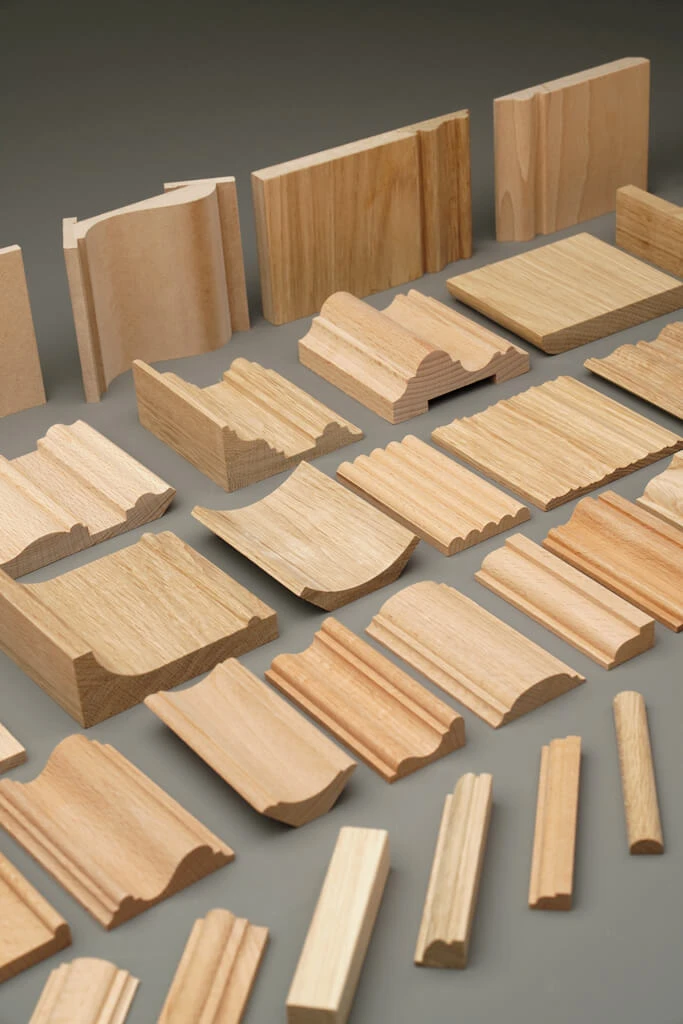
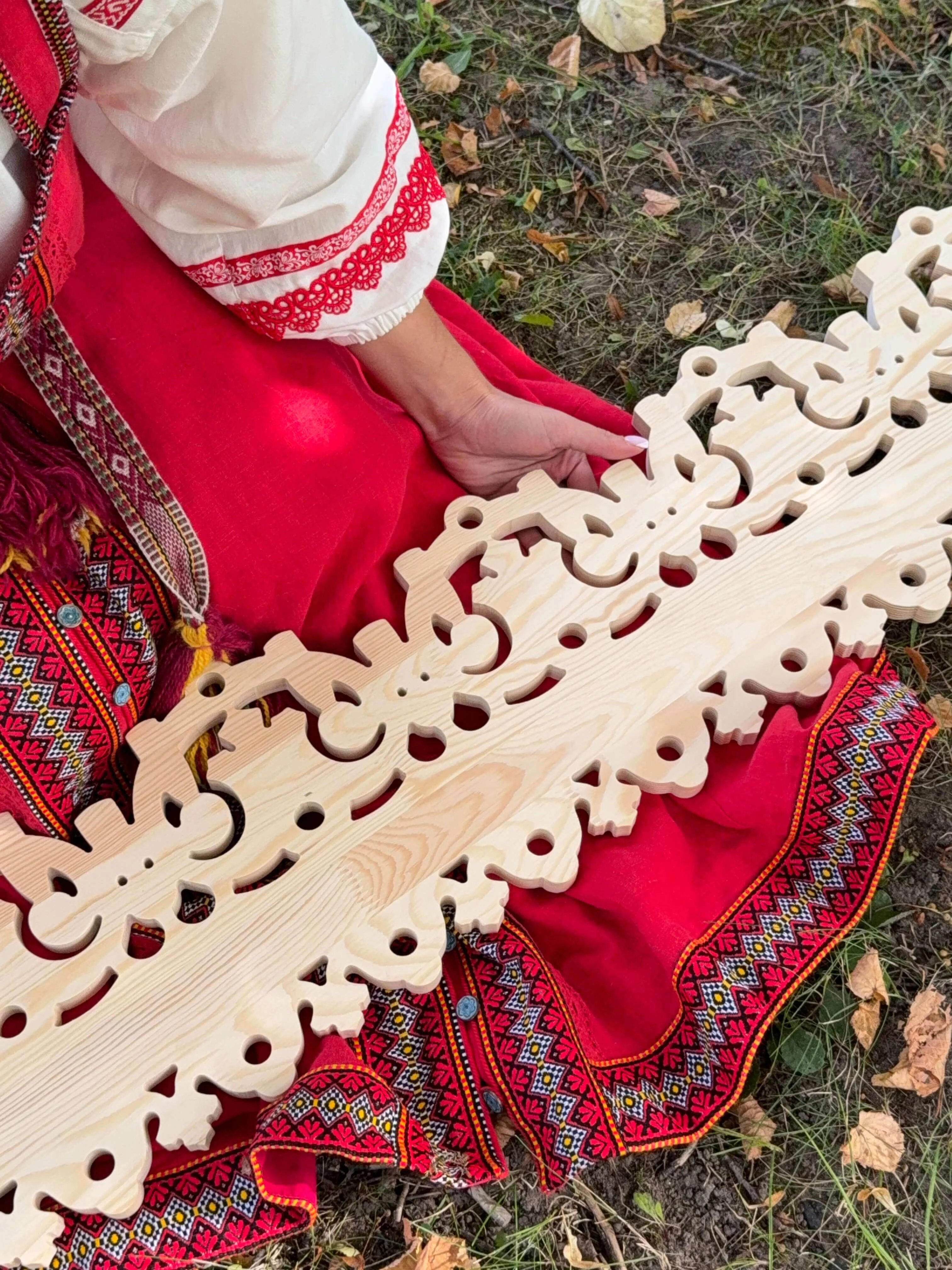
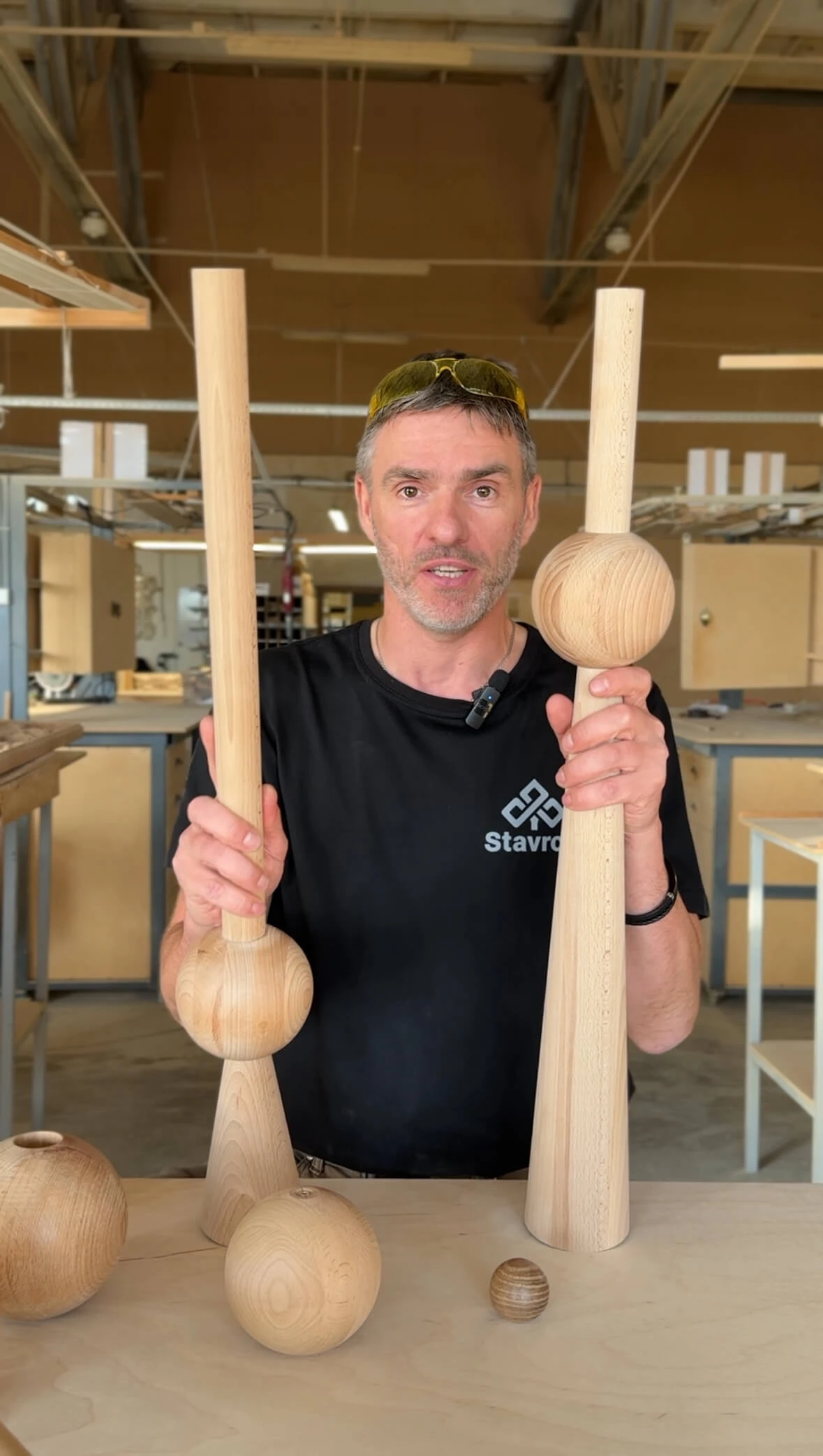
Where a wooden bracket handle is used: seven contexts
Our factory also produces:
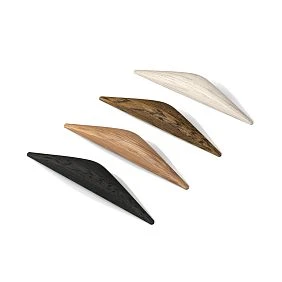
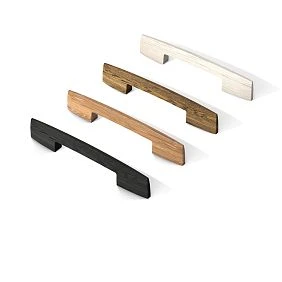
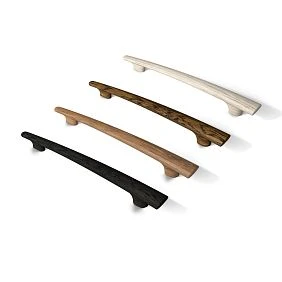
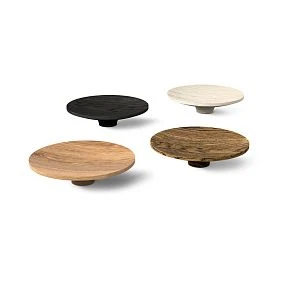
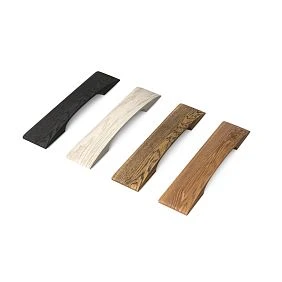
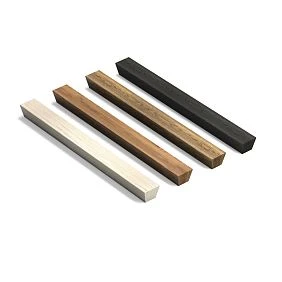
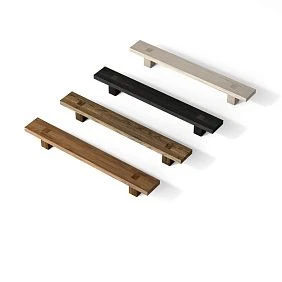
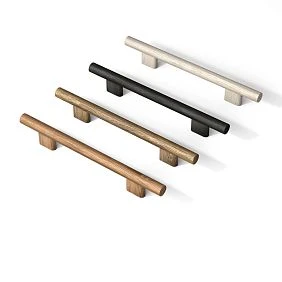
Interior doors
This is one of the main contexts for using a wooden bracket handle. On an interior door, a bracket is an elegant alternative to a standard metal push handle. It is especially suitable for hinged doors without a lock (pantry, dressing room, children's room), where no latch or catch is needed, but a reliable grip is required.
For wooden interior doors in a classic or country interior wooden door bracket handles create a unified wooden look: door, casing, baseboard, handle — all from the same material.
Get Consultation
Cabinets: framed and built-in
On cabinet fronts, a pull handle is the optimal choice for sections 40 cm wide or more. The wider the front, the longer the handle should be: a narrow short pull on a wide door creates visual emptiness. A pull of the correct length centers the door and creates a focal point.
For a built-in cabinet with fronts to be painted — an unfinished pull for painting to match the fronts. For a cabinet made of natural wood — a pull from the same or similar wood species with a lacquer or oil finish.
Chests of Drawers
On a dresser drawer, a pull looks significantly more interesting than a knob: it sets a horizontal axis on the drawer front, visually widening it. For a classic dresser with multiple drawers — vertically aligned pulls on each drawer create a rhythmic structure for the entire piece.
Pull length on a dresser drawer: 96–128 mm (center-to-center distance). For a wide bottom drawer — 128–160 mm.
Sideboards and display cabinets
A sideboard is one of the most 'handle-demanding' pieces of furniture. Lower sideboard doors — longer pulls (128–160 mm), upper glass doors — shorter pulls (96–128 mm), lower drawers — compact pulls or the same as on the doors for series unity.
For a classic-style sideboard — solid wood pull handles with walnut or beech tinting, sometimes with a light patina. This gives the sideboard a 'heirloom' character.
Kitchen fronts
In the kitchen, the pull operates under 'high load': opening and closing is frequent, every day. A wooden pull in these conditions is preferable for kitchens in natural, classic, or Provencal style. For a modern minimalist kitchen — metal.
Pull on a kitchen front: length 128–160 mm for standard cabinets, 160–200 mm for wide fronts. Finish — oil or lacquer with water-repellent properties.
Cabinets in the hallway and dressing room
A cabinet with one or two doors — a pull handle with a length of 96–128 mm. On the cabinet, the pull handle is often the only decorative accent: the body is neutral, while the handle is expressive.
Restoration of old furniture
This is a separate and very important context. When restoring furniture from the Soviet period, antique furniture, or furniture 'with history' — an unpainted wooden pull handle allows you to independently select the tint and varnish to match the original color of the furniture. This is impossible to do with metal fittings.
handles without coating — specifically for such tasks: pure wood, ready to accept any color, varnish, or stain.
How a pull handle differs from a knob handle: a practical comparison
This question arises for everyone who chooses furniture fittings: pull handle or knob? The answer lies in function and scale.
| Parameter | Bracket handle | Button handle |
|---|---|---|
| Grip shape | With the whole hand (palm) | With fingers (1–2) |
| Length | 96–250 mm | 30–50 mm |
| Mounting | Two self-tapping screws | One self-tapping screw |
| Suitable for | Large facades, doors, cabinets | Small drawers, lightweight doors |
| Load | High | Medium |
| Visual weight | Pronounced accent | Minimal accent |
| Style | Classic, country, neoclassical | Universally |
A handle is chosen where grip and scale matter. A knob is chosen where conciseness and precision are needed.
Mixing them in one set is a mistake. If the cabinet has handles, then the nearby dresser should also have handles. Mixing handle shapes in one space is stylistic chaos that the eye perceives, even if a person cannot articulate it.
How to choose the length of a wooden handle: from 96 to 250 mm
The length of a handle bracket is not just a "size." It is a ratio with the width of the facade, the scale of the furniture, and the ergonomics of the hand.
Center-to-center distance
The main parameter of a bracket is not the total length, but the center-to-center distance (the distance between the centers of the two mounting holes). It is for this that you drill the facade.
Standard center-to-center distances:
-
64 mm — the shortest brackets, for small drawers
-
96 mm — compact brackets, for small cabinets and drawers
-
128 mm — standard for most furniture facades
-
160 mm — for wide cabinet doors and kitchen facades
-
192–200 mm — for large facades and doors
-
224–250 mm — for two-meter cabinet doors and interior doors
How to choose the length by furniture type
Dresser drawer (width 40–60 cm): center-to-center distance 96–128 mm.
Cabinet door (width 40–60 cm): center-to-center 128–160 mm.
Wide cabinet door (width 60–80 cm): center-to-center 160–192 mm. It is possible to use two brackets — one at the top and one at the bottom for vertical placement.
Kitchen cabinet (standard 40–60 cm): center-to-center 128–160 mm.
Interior door: center-to-center 200–250 mm. The bracket should be long enough for the hand to fully grip it when opening a heavy door leaf.
Sideboard (lower doors): center-to-center 128–160 mm. Upper doors — 96–128 mm.
Proportion rule
Practical rule: the length of the bracket (overall length, not center-to-center distance) should be 25–35% of the facade width. For a facade 40 cm wide — a bracket with an overall length of 10–14 cm. Following this proportion guarantees visual harmony.
Material of the handle-bracket: beech, oak, birch, solid wood
Wood is a living material. Each species behaves differently, looks differently, and ages differently.
Beech
Beech is the most popular wood for furniture handles. Dense, hard, with a uniform fine texture that accepts any finish: stain, varnish, oil, tinting. Beech does not chip under mechanical loads — a beech handle lasts for decades without losing its shape.
The color of natural beech is warm beige with a slight pinkish tint. After tinting — from light walnut to dark wenge.
Oak
Oak is a species with a pronounced texture. The wide pores of oak create a characteristic "oaky" pattern that is clearly visible on a polished or lacquered surface. For handles with an emphasized wood texture, oak is more expressive than beech.
Oak is heavier and denser than beech. An oak handle feels more substantial in the hand, adding a sense of "premium quality."
Birch
Birch is a more affordable species with a neutral texture. For unfinished handles intended for DIY finishing, birch is a good choice: it accepts any color and is cheaper than beech.
Linden and alder
Soft woods used for carved decorative handles. For a pull that experiences mechanical stress, they are undesirable: too soft for intensive use.
Solid wood vs. glued material
solid wood pull handles — a single piece of wood without gluing. For a pull, this is optimal: no risk of delamination, no visible glue lines, and a uniform surface.
Why wood feels warmer than metal is not a metaphor but physics: the thermal conductivity of wood is significantly lower than that of metal, so the hand does not feel cold upon contact. In a cold room (entryway, pantry, veranda of a country house), this difference is literally noticeable.
Pull handle finish: unfinished, lacquer, tinting, oil
Choosing a finish is a choice between a ready-made solution and the possibility of DIY finishing.
Handles without coating
handles without coating — This is a blank made of pure wood, untreated except for sanding. Why?
-
For self-painting: if the facades are white, the handle is painted the same white — resulting in a monochrome look where the handle blends with the facade
-
For tinting to the desired shade: you can achieve an exact match with the shade of specific furniture
-
For applying oil or wax: for natural interiors where the living texture of wood without varnish gloss is important
-
For staining: for restoring old furniture when you need to match the color to the original coating
An uncoated handle requires treatment before installation or after mounting. An unpainted wooden handle in a living space quickly gets dirty and changes color from grease and moisture.
Handles with coating
Handles with Finish — ready-to-install products: varnish, tinting, enamel, oil. Saves time, requires no additional treatment.
Coating options:
Clear varnish. Preserves the natural color and texture of wood, protects against moisture and mechanical impact. Matte varnish — for classic and Provencal style, glossy — for a more formal look.
Tinting + varnish. The handle is painted in the desired shade (walnut, dark walnut, wenge, oak) and coated with varnish. The most popular option for classic furniture.
Enamel. The handle is painted in a solid color: white, beige, gray. For kitchen fronts to be painted or for built-in cabinets with painted fronts.
Oil or wax. A matte, tactilely pleasant coating that emphasizes the natural texture of the wood. For Scandinavian style, eco-interiors, solid wood kitchens. Less moisture-resistant than varnish — requires periodic renewal.
How to choose a coating
-
Furniture to be painted in a single color → handle without coating for the same paint
-
Wooden furniture with natural texture → tinting + varnish in tone
-
White classic furniture → white enamel or handle for self-painting
-
Solid wood kitchen in natural style → oil
-
Sideboard in dark walnut → dark walnut tinting + matte varnish
How to choose a wooden pull handle to match the furniture style
Style is the main filter when choosing. The shape of the pull, its length, coating, wood species — all of this should work within a single stylistic concept.
Classical and Baroque
For classic-style furniture — a bracket with a pronounced handle profile: not just a straight cylinder, but a turned shape with thickenings, chamfers, or a slight curve. The bracket's support posts have a decorative profile, possibly with a slight widening at the base.
Finish: dark walnut, patina, aging to resemble old wood. Pairs well with wood furniture decor on the fronts — overlays, carved elements, moldings.
For a classic sideboard or chest of drawers — the bracket's shade should be slightly darker than the main furniture tone or match the color of the applied decor.
Neoclassicism
A bracket with a strict shape: a straight cylindrical rod, minimal profile of support posts. Length — 128–160 mm. Finish: clear matte lacquer or tinting in a neutral shade. Posts — without decoration, just a neat cylindrical support.
Neoclassicism requires precision: identical brackets on all fronts, perfectly symmetrical placement, color matching.
Country and Provence
Here, the bracket may have a slight curve — a slightly bent rod that is more 'soft' in character than a straight one. Finish: oil, matte lacquer in a natural wood tone or with a slight 'aged' look. Length — medium: 96–128 mm.
Country and Provence styles are not about perfect geometry, but coziness. A bracket with a slight 'handmade' irregularity in profile is organic.
Modern classic
A bracket with a clean straight rod and minimalist support posts. Length — 128–160 mm. Finish: matte lacquer in a natural wood shade or tinting in 'oak' / 'ash'. Suitable for furniture with moldings on the fronts, but without complex carved decor.
Restoration of old furniture
Here — only handles without finish. Reason: during restoration, it's impossible to predict in advance the exact shade that will match the surface of the restored item. An unfinished handle allows tinting it during the restoration process to achieve an exact match.
Mounting a wooden handle bracket: technical details
Proper bracket installation is not only about strength but also precision. A crookedly installed handle — even the most expensive one — ruins the appearance.
Types of mounting
Standard threaded mounting through the facade. Two through holes (usually 5–6 mm in diameter) are drilled in the facade at the handle's center distance. Screws are passed through the holes and screwed into threaded bushings or nuts inside the handle's support posts. The most common type: reliable, invisible from the front side.
Mounting with self-tapping screws from the front side. A less common type for decorative handles. The screw heads or decorative caps are visible from the front side of the facade. For a wooden bracket in a country style, this can be a decorative element.
Marking for mounting
Accurate marking is critical. An error of 2–3 mm shifts the handle from horizontal, which is immediately noticeable. For marking:
-
Determine the horizontal position of the bracket on the facade: usually centered on the height of the door or drawer
-
Mark the center of the handle — the horizontal center of the facade
-
From the center, measure half the center distance in both directions
-
Check the horizontal level with a level
-
Drill strictly perpendicular to the facade
For simultaneous marking of several identical facades, use a jig: a wooden or metal template with holes for a specific center distance.
Important installation nuances
-
Length of mounting screws: must be sufficient to pass through the facade + enter the handle body by 10–15 mm. Too short — won't hold. Too long — will come out the other side.
-
Tightening: moderate. Wood is softer than metal — overtightening crushes the fibers and leaves dents at the base of the posts.
-
Gaskets: between the support posts and the facade surface — thin rubber or felt gaskets prevent scratches during installation.
How to choose the color of a pull handle for furniture facades
The color of the handle is not a trifle. It is either an accent or harmony. Both approaches are correct, but must be chosen consciously.
The 'matching' approach: the handle matches the facade
A handle of the same color as the facade is a monochrome solution. The pull 'dissolves' into the facade, creating a single plane. The eye does not catch on the handle — it sees the facade as a whole.
When appropriate: for white kitchens with white handles, for gray cabinets with gray handles, for built-in furniture where minimal visual activity is needed.
How to implement: an uncoated handle is painted with the same paint as the facade, in one process — before or after installation.
The "accent" approach: handle darker or lighter than the facade
A dark walnut handle on a white facade is a classic contrast that works flawlessly. A light oak handle on a dark body is also a contrast, but more refined. An accent handle draws attention, making the hardware a decorative element.
When appropriate: for classic furniture, sideboards, dressers, where the handle is part of the decor. For furniture with carved overlays and moldings — the handle can be darker, continuing the "dark" line of decor on a light facade.
Rule: one color of handles throughout the space
If there are several pieces of furniture in a room — a wardrobe, dresser, nightstand — the handles on all of them should be the same color. Even if the handles are of different lengths for different facades, the color is uniform. This is a rule of visual unity in the space that cannot be ignored.
Mistakes when choosing a wooden bracket handle
A handle that is too short for a large facade. A 96 mm handle on a cabinet door 60 cm wide is a proportional mistake. The handle gets lost on a large surface. For a facade 60 cm wide — minimum 128–160 mm.
They don't consider the center-to-center distance. They buy a "pretty" handle without checking if the center-to-center distance matches the already drilled holes. Result: new holes in the facade, old ones need to be filled with putty.
They choose a color based on a photo on the screen. The monitor lies. The real shade of wood with coating is always slightly different. If accuracy is important — request a sample or buy handles without coating for self-finishing.
A thin bracket is placed on a heavy door. The diameter of the bracket handle is an important parameter for mechanical load. For an interior door made of solid wood, a bracket with a handle diameter of at least 20–25 mm is required. A thin decorative bracket under such a load quickly becomes loose.
They do not check the grip comfort. A bracket with a handle diameter of 18–20 mm is comfortable for most people. But if there are children in the family, a thinner handle (14–16 mm) is needed, which a small hand can fully grasp.
They mix brackets and knobs in the same set. A cabinet uses brackets, while a nearby chest uses knobs. This is a stylistic conflict that is immediately noticeable.
They install the handle without a level. A tilt of 3° on a horizontal bracket is noticeable from a distance of three meters. Always use a level.
They buy different batches of the same handle. The shade of wood and tinting may vary between batches. The entire set should come from one batch.
They paint the bracket carelessly after installation. Paint gets on the facade at the base of the posts, creating an unsightly border. Paint should be applied before installation or with careful masking afterward.
Wooden handle-bracket and furniture decor system
The handle-bracket does not work in isolation. It is part of a system of wooden furniture elements and should be considered in the context of this system.
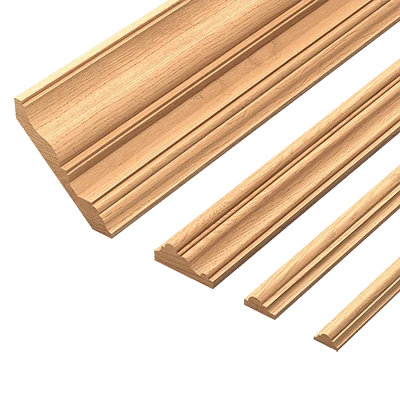
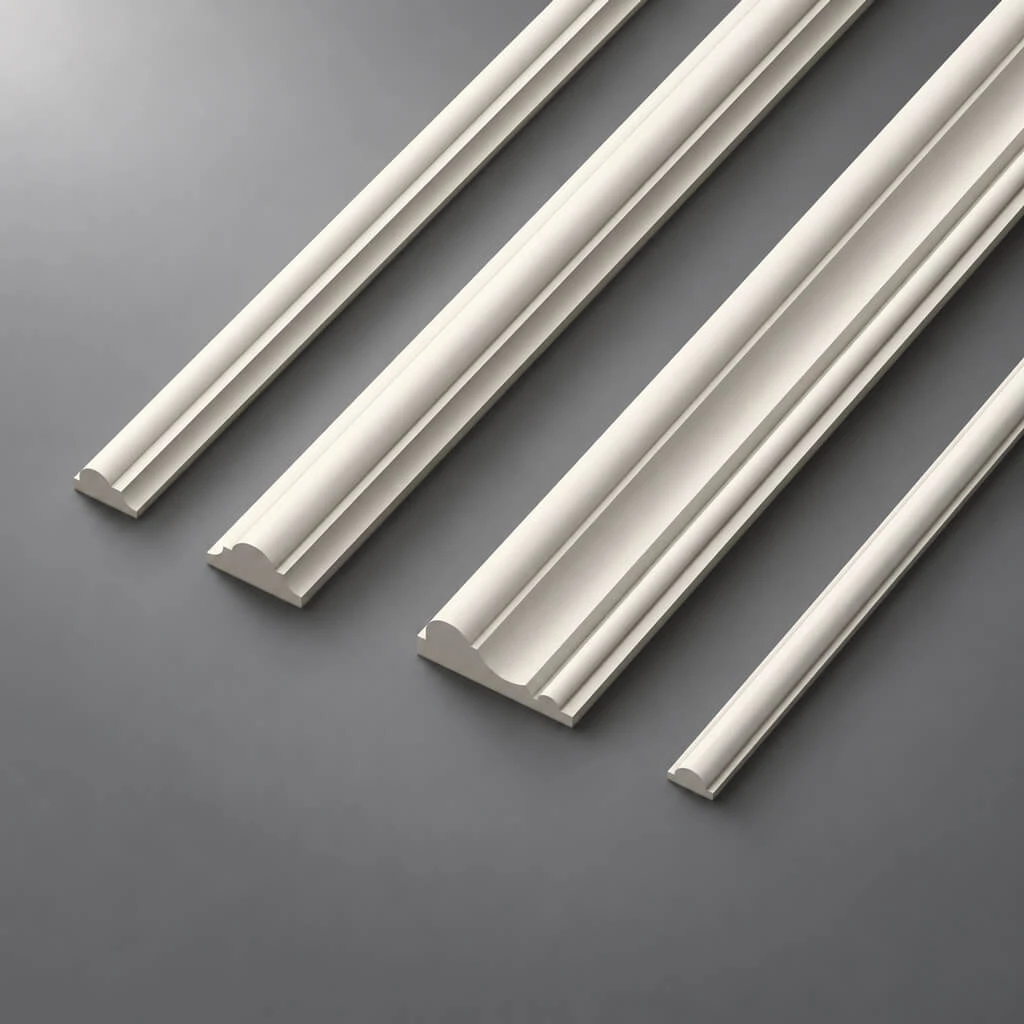
Bracket + moldings. Moldings on the facades of a cabinet or chest set a decorative grid. The handle-bracket is a point accent within this grid. The color of the bracket should match the color of the moldings. For white furniture with white moldings, use a white bracket. For dark classic styles, use a bracket in the tone of the dark decor.
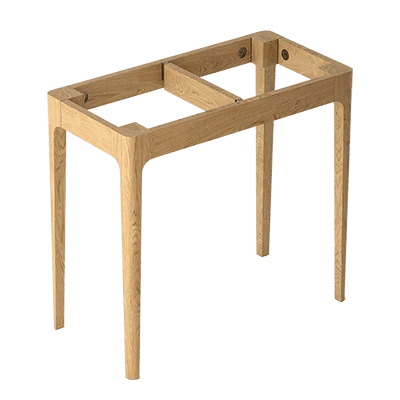
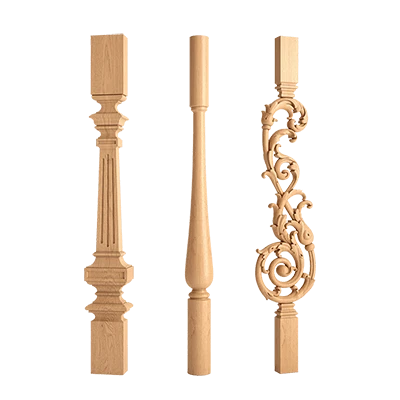
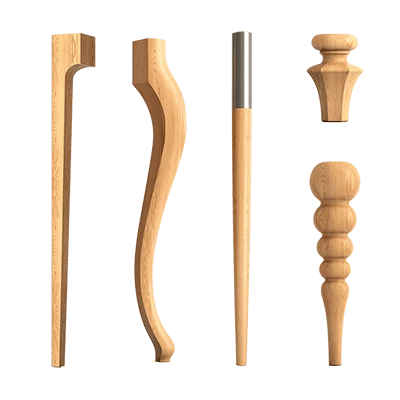
Bracket + legs. wooden furniture legs and handles are details of the same style world. If the furniture has turned legs with a "dark walnut" tint, the bracket should be in the same tint.
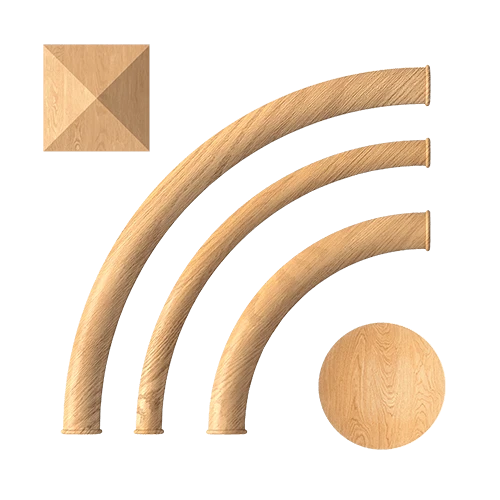
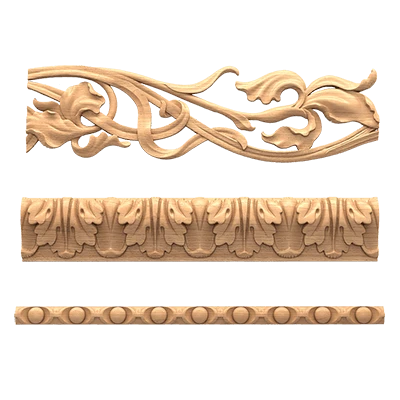
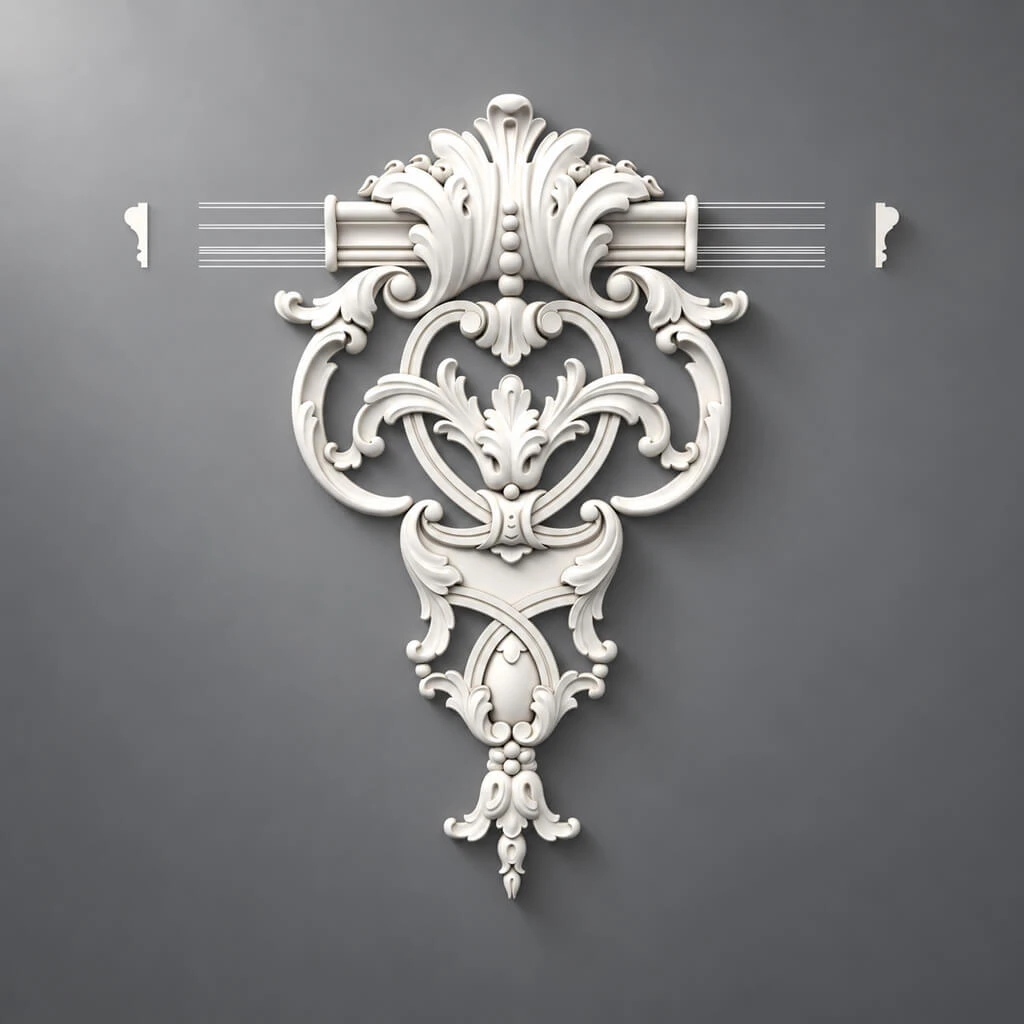
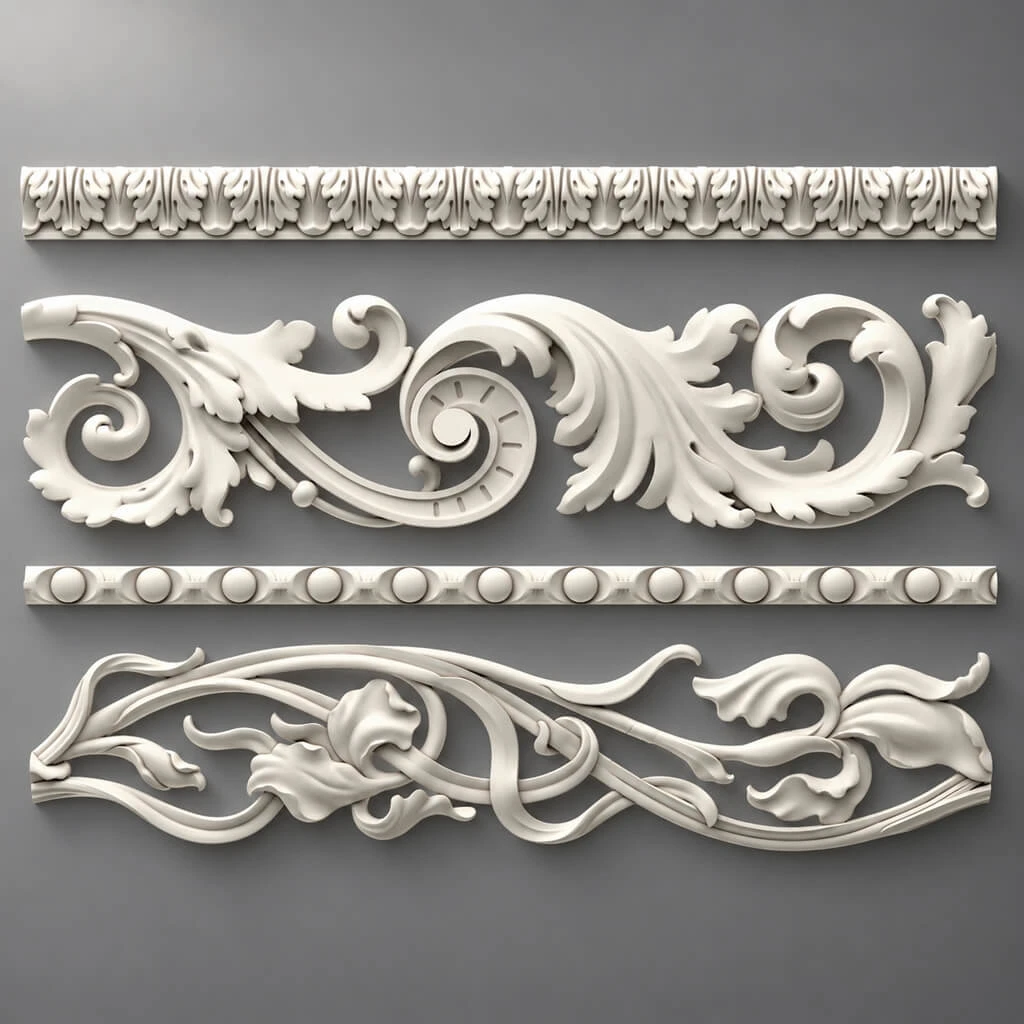
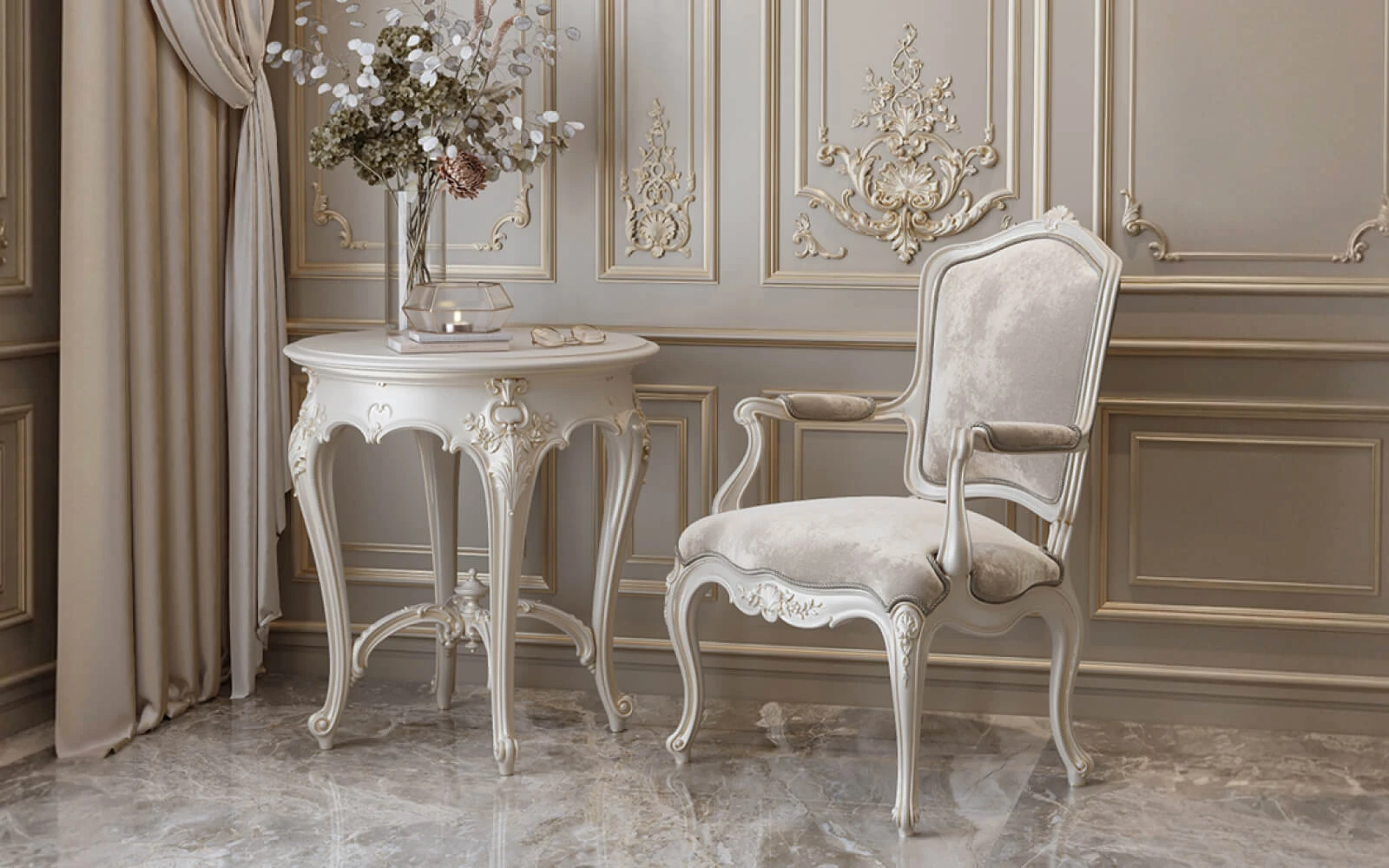
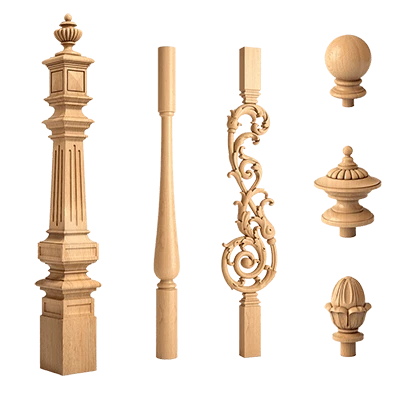
Bracket + overlays. Furniture Decoration from Wood — applied ornamental elements — create a decorative context for the handle. A bracket with a pronounced profile is appropriate next to rich applied decor. A cylinder bracket without a profile is appropriate next to neutral facades.
Bracket + plinth. The lower furniture plinth and the handle both form horizontal accents of the furniture. Their color must be coordinated.
Bracket + door. If wooden bracket handles are installed on both furniture and interior doors, this creates a unified wooden language for the entire space: from hardware to furniture.
Care for a wooden bracket handle
Wood is a living material that requires minimal but regular care.
Handles with lacquer coating. Wipe with a damp soft cloth. No abrasive products, no hard brushes. If gloss is lost, polish with a soft cloth and furniture polish.
Handles with oil coating. Once a year, apply a thin layer of furniture oil to a rag, distribute over the surface, let sit for 15–20 minutes, remove excess. This restores protective properties and highlights the wood grain.
Handles without coating (in use). If a handle is installed without coating and is in use, it will inevitably darken from skin oils and moisture within 3–6 months. This is unavoidable. The best solution: always coat handles before or immediately after installation.
Replacing the handle. Unlike a metal handle, a wooden bracket handle can be restored: sanding + a new coating restores its original appearance. A metal handle with worn chrome or peeling nickel can only be replaced.
FAQ: answers to the main questions about the wooden bracket handle
What is a wooden bracket handle?
This is an elongated furniture or door handle designed to be grasped with the whole hand. It is attached at two points to the front of a cabinet, drawer, or door. It is made from solid beech, oak, birch, and other types of wood.
Where does a wooden bracket handle fit?
On interior doors, cabinet and wardrobe doors, dresser drawers, kitchen cabinet fronts, sideboards, display cabinets, nightstands. A universal shape for any furniture where a secure grip is needed.
Can a wooden bracket handle be installed on an interior door?
Yes. For interior doors, brackets with a center-to-center distance of 200–250 mm and a handle diameter of at least 20–25 mm are used. They withstand the load of daily use.
How is a bracket handle different from a knob handle?
Bracket — elongated shape, palm grip, two attachment points, for large fronts and doors. Knob — compact, finger grip, one attachment point, for small drawers and lightweight doors.
How to choose the length of a wooden pull handle?
By center distance: 96–128 mm for drawers, 128–160 mm for standard cabinet doors, 160–200 mm for wide fronts, 200–250 mm for interior doors. The total length of the handle should be 25–35% of the front width.
Which pull handle is best for a cabinet?
Length: 128–160 mm (center distance). Material: beech or oak. Finish: matching the fronts or contrasting. Profile: with slight decoration for a classic cabinet, straight cylinder for a modern one.
Is a wooden pull handle suitable for a kitchen?
Yes, for a kitchen in classic, country, or natural style. Finish: oil or varnish with moisture-resistant properties. For a modern minimalist kitchen, a metal handle is preferable.
Can an unfinished pull handle be painted?
Yes. handles without coating Specially designed for DIY finishing: stain, tinting, enamel, oil, varnish. Sanding with fine grit (P180–P220) → primer → desired finish.
How to match a pull handle to the furniture color?
Either 'matching' — the handle is painted the color of the front, creating a monochrome look. Or 'accent' — the handle is a shade darker or lighter than the front. The main rule: all handles in the room should be the same color.
Where to buy wooden handle brackets?
In the STAVROS catalog — section wooden handle brackets. Next to it — all wooden handles for furniture, Handles with Finish, Wooden decor и Furniture legs.
STAVROS: the handle you feel right
A wooden handle bracket is a part that is touched by hands every day. Many times. And that is why it must be right: from the right wood species, the right length, with the right finish, in the right place.
STAVROS offers Wooden handle brackets from beech and oak solid wood — with and without finish, in different lengths and profiles. In the catalog next to — full range of wooden handles for furniture, Furniture legs, wooden overlays and decor — everything to create a unified wooden look for furniture and interior.
STAVROS — because the right detail changes the whole feeling.