Article Contents:
- What is a decorative wooden beam
- Where decorative wooden beams are used
- Wooden beams on the ceiling
- Wooden beam on the wall
- Beams for room zoning
- Decorative beams in commercial interiors
- Decorative beam vs construction timber: let's settle it once and for all
- How to choose a wooden beam to match your interior style
- Classic interior and solid wood beams
- Modern interior: balance of wood and emptiness
- Country, chalet and rustic: wood in full voice
- Neoclassicism: restrained accent
- Loft: wood in an industrial context
- How to choose the size of a decorative wooden beam
- Color and finish of a decorative solid wood beam
- What to combine wooden beams with: the system works better than a single element
- Mistakes when choosing a decorative beam: what not to do
- Wooden ceiling decor: the beam as part of a large system
- Where to buy a decorative wooden beam for interior
- FAQ: Answers to Key Questions
- About the company
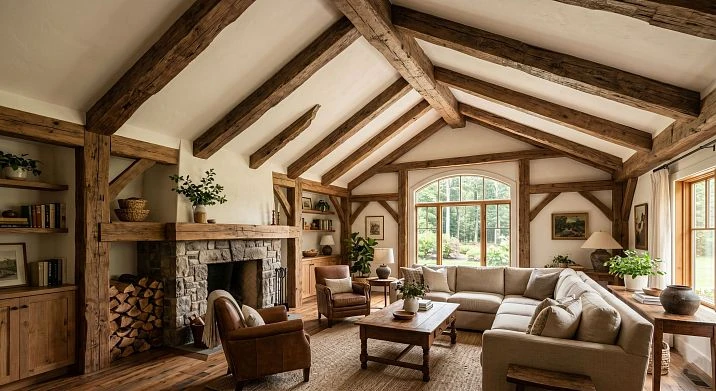
Let's make it clear right away: this article is not about construction beams, load-bearing floors, or structural roof elements. It is exclusively about decorative wooden beams as an interior element: a profiled solid wood product that changes the perception of space, creates atmosphere, and makes a room memorable. This is an important distinction — and it's where the conversation about selection should begin.
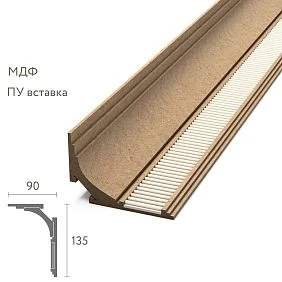
What is a decorative wooden beam
When people search for "wooden beam in interior," very different images come to mind. Some imagine an oak ceiling in a country house with open beam ceilings. Others picture a cozy café with brushed beams styled to look antique. Still others think of a modern living room where a horizontal beam above the sofa creates an accent zone. All these cases share one thing: wood on the ceiling or wall as a deliberate architectural gesture, not a structural necessity.
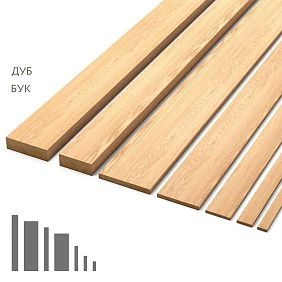
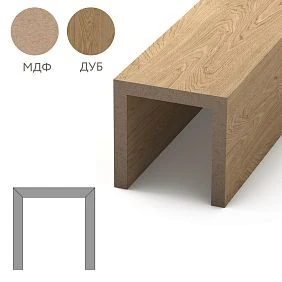
A solid wood beam in a decorative sense is a profiled linear product with a rectangular or complex cross-section, mounted on the ceiling or wall without a load-bearing function. Its purpose is aesthetic: to create rhythm, set scale, and add the warmth of natural wood to a space that would otherwise be neutral or empty.
How How does a wooden beam fundamentally differ from simple timber? In surface profile, treatment, geometric precision, and design for visual perception. Construction timber is raw material. A decorative beam is a product with specific visual parameters: a smooth surface or deliberately emphasized texture, precise cross-section dimensions, uniform coating or open solid wood for self-finishing. These are two fundamentally different products, despite their external similarity.
Why does wood make an interior more expensive? Not because it is rare or difficult to produce. But because natural material carries information about time and nature — that very depth that no imitation can reproduce. The living grain pattern of oak, the warmth of beech, the expressiveness of steamed or aged wood — all of this works on a subconscious level. A person enters a room with wooden beams on the ceiling and feels: it's good here. It's cozy here. It's expensive here.




Where are decorative wooden beams used?
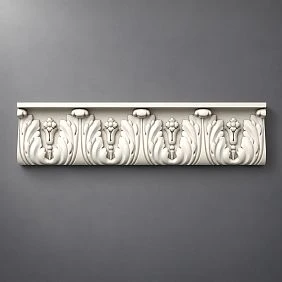
Our factory also produces:
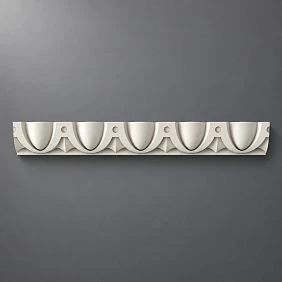
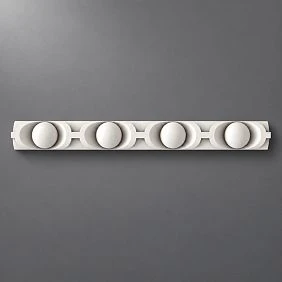
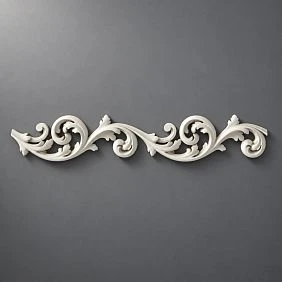
Wooden beams on the ceiling
The ceiling is the most popular place for decorative beams, and this is no coincidence. Horizontal lines on the ceiling work on several levels at once. First, they structure the space: the rhythmic alternation of beams creates visual order, a "division" of the ceiling into zones. Second, they set the scale: powerful beams make the room monumental, while thin and frequent ones make it intimate and cozy. Third, they create a play of shadows — especially with properly placed accent lighting.
Wooden beams on the ceiling especially in demand in open-plan kitchen-living rooms, where the ceiling, due to the merging of zones, becomes very large and needs visual division. In attics and houses with high sloping ceilings, beams emphasize the roof architecture and turn a structural necessity into a decorative technique. In country houses, they create an atmosphere of warmth and solidity that fundamentally distinguishes a house from a city apartment.
Get Consultation
Wooden beam on the wall
The wall is a less obvious but no less effective place. A horizontal beam on the wall creates an accent without a loud gesture: it simply exists, sets the proportion, divides the wall into upper and lower zones. This is a technique from classical architecture: a horizontal profile as a "belt" of the wall.
Vertical beams on the wall are a different story. They create the effect of a frame or paneling, giving the wall volume and texture. In the loft style, vertical wooden posts on the wall imitate an industrial interior with an open structure. In country or rustic style — a rural house with wooden panels. In a modern interior — a rhythmic pattern that works as an art installation.
TV area, fireplace wall, niche behind the headboard — these are the three most sought-after places for decorative beam on the wall. In each of these cases, the beam does not stand alone but as part of an accent composition, framing the main element of the space.
Beams for zoning rooms
Open plan is freedom and a challenge at the same time. How to divide the kitchen and living room without partitions? How to mark the dining area without destroying the visual connectivity of the space? One of the most elegant answers is a beam. A transverse beam on the ceiling above the "border" of zones creates a psychological boundary without a physical barrier. The eye registers it, the body senses the transition — but there is no wall.
This technique works especially well in studio apartments and homes with a kitchen-living room, where it is important to maintain a sense of spaciousness while creating functional zones with character. Solid wood beams for interior as a zoning element — this is a subtle and professional technique that immediately distinguishes a well-thought-out project from a random arrangement of furniture.
Decorative beams in commercial interiors
Cafes, restaurants, boutiques, hotels, country complexes — all these spaces compete for one thing: the impression they make in the first seconds after entering. And wood on the ceiling works more powerfully than most other solutions. It creates an atmosphere instantly: warmth, solidity, a hint of history.
Wooden beam for a restaurant — this is almost a mandatory element for establishments with a "home cooking" concept, an Italian trattoria, a hunting club, or a Mediterranean bistro. In wine rooms and cigar clubs, dark oak beams create that very "adult" atmosphere that cannot be bought in any other way. Wooden beams for a cafe of a lighter format — light wood, calm profile, Scandinavian spirit — give a feeling of coziness without pomposity.
Decorative beam and construction timber: let's figure it out once and for all
This question arises regularly: "Can I just take a timber and screw it to the ceiling?" Technically — yes. Visually — it will be construction timber on the ceiling. The difference is obvious when comparing.
Construction timber is produced according to GOST for structural tasks: it is calibrated for load-bearing capacity, but not for appearance. The surface may be rough, with fiber tears, uneven density, with knots and cracks, untreated. The cross-section geometry is not always ideal. Such material is intended to be hidden — under cladding, under plaster, under insulation.
decorative wooden beam is produced as an interior product: precise cross-section geometry, treated surface (sanded or brushed), uniform texture, correct fiber pattern. It is designed to be looked at — and this is what makes it a fundamentally different product.
Compatibility with the system is also important. Wooden beam for interior should match in species, tone, and texture with wooden corniceswith baseboards, moldings, and door elements. A random construction beam cannot be integrated into this system — it will look like a foreign element even with the same coating color.
How to choose a wooden beam to match your interior style
Classic interior and solid wood beams
In classic design, wood is one of the main materials. Dark oak with a 'walnut' or 'wenge' tint on the ceiling, combined with classic furniture made of natural wood, wooden architraves and cornices — this is a system that creates a sense of weight and history. A beam in a classic interior should be massive in cross-section (from 100×100 mm and above), dark in tone, with a pronounced texture.
The ideal combination in classic design: oak ceiling beams + Wooden baseboard high-profile + wooden cornices around the ceiling perimeter. The entire system in one tone — dark or medium — forms an architectural frame around the space. In such a room, even simple furniture looks impressive.
Modern interior: balancing wood and emptiness
Minimalism and modern style do not reject wood — they reinterpret it. Here, the beam works differently: not as a massive piece with history, but as pure geometry. A small rectangular cross-section, light oil or matte varnish, an even rhythm — three or four beams on the ceiling with wide gaps between them. Nothing extra.
Light oak or beech in this context is an ideal material. The pronounced grain pattern of oak with a light coating creates exactly the effect of 'honest wood' that is highly valued in Scandinavian and Japanese aesthetics. Decorative wooden slat in a rhythmic layout on the ceiling or wall — this is a lighter version of the same technique that works well in apartments with low ceilings.
Country, chalet, and rustic: wood at full voice
In these styles, wood is not just present — it is the main character. Rough, almost deliberately imperfect texture, pronounced knots, brushed or aged surface, wide beams with a powerful cross-section — all this creates the image of a home with history, where time has left its marks intentionally and beautifully.
Decorative beam for a country house in the chalet or rustic style — this is a product with a deliberately open texture, treated with oil or wax without hiding the grain. Wide cross-section (120×120 or 150×100 mm), dark brown or gray-brown tone, combined with rough plaster, natural stone, and wrought iron — a classic image of an Alpine or Provencal interior.
An interesting technique in rustic style is beams of different widths, arranged unevenly. This imitates a genuine village ceiling, where each log was laid as available, without strict mathematics. Deliberate "irregularity" here works as an advantage.
Neoclassical: restrained accent
Neoclassical is classicism filtered through modern taste. There is no excess of Baroque and there is the strictness of Classicism. Beams in a neoclassical interior are neat, with a clear rectangular or slightly profiled cross-section, painted to match the ceiling or in a delicate contrasting shade. They are present — but they do not shout.
For neoclassical, the combination of light beams with wooden cornices Along the perimeter of the ceiling from one collection. The cornice sets the frame, the beams structure the field inside it — resulting in a complete ceiling composition in a strict academic spirit.
Loft: wood in an industrial context
In a loft, wood is warmth against the cold. Concrete, brick, metal — hard, gray, industrial. A wooden beam against such a background becomes a "thawing" element that does not destroy the concept but makes it more human. Dark tones, brushed or patinated surfaces, and pronounced texture are valued here.
Interestingly, in lofts, beams are often combined with decorative brackets made of wood or metal — this creates the image of a genuine structure, where the beam seems to rest on a bracket. Visually convincing and stylish, even when the entire system carries purely decorative load.
How to choose the size of a decorative wooden beam
Size is not just aesthetics. It is proportion. And this is one of the most common mistakes: people choose a beam that they "like on its own" without thinking about how it will look in the context of a specific room.
| Room | Recommended beam cross-section | Notes |
|---|---|---|
| Apartment, ceiling height 2.5–2.7 m | 60×60 or 80×60 mm | Light profile, not overloaded |
| Apartment, ceiling 2.8–3 m | 80×80 or 100×60 mm | Balance between accent and delicacy |
| Country house, ceiling 3–3.5 m | 100×100 or 120×80 mm | Expressive accent, readable |
| Spacious hall, height from 4 m | 150×120 mm and above | Monumental beam for scale |
| Cafe/restaurant, commercial property | 100–150 mm, depends on height | Atmospheric accent |
| Attic with sloping ceiling | Along the slope length, from 80×80 mm | Emphasizes the roof architecture |
The distance between beams on the ceiling is no less important than the size of the beams themselves. A general rule: the distance between beam axes should be 5–8 times the width of the beam itself. Beams placed too frequently create visual clutter and a sense of pressure. Too far apart, and the rhythm is lost. For a standard living room of 4×5 m, three to four beams is optimal.
Ceiling height is the main limiting factor. With a ceiling of 2.5 m, a massive beam of 150×150 mm will turn the room into a basement. With a high ceiling of 4 m or more, the same beam will look organic and grand. The rule is simple: the lower the ceiling, the narrower and thinner the wooden ceiling beam.
The width of the room determines the length of the beams and affects the perception of rhythm. If the beams run along the short wall, they visually lengthen the room. If along the long wall, they make it appear wider. This is a basic optical correction technique that professional designers intentionally use.
Color and finish of solid wood decorative beam
Beam coating is the second most important parameter after size. The color of wood on the ceiling dominates the interior: it sets the temperature of the entire space, determining whether the room will be warm or cold, dark or light.
Natural wood color is the most honest option. Oil or wax without tinting preserves the natural shade of oak or beech. Oak in natural oil is golden-beige with a greenish undertone and a pronounced grain. Beech is pinkish-beige, softer, and more uniform. Both options work well in modern, Scandinavian, and neoclassical interiors.
Dark tinting — walnut, wenge, mocha, ebony — creates the most "expensive" visual effect. Dark wood on the ceiling gives a sense of weight, solidity, and richness. This is a choice for classic, neoclassical, dark loft, and upscale commercial spaces. Important: dark beams require good artificial lighting — otherwise, the ceiling will "lower" and the room will darken.
Light finish — white or cream coating. A beam painted to match the ceiling works as a delicate structural accent: its presence is felt but not conspicuous. A good technique for Provence, colonial style, and light classic. In a modern minimalist interior, a white beam is geometry without decoration.
Gray, aged finish — the effect of old wood, patina, whitewashed solid wood. A popular technique for rustic, chalet, and Scandinavian styles. Brushed surface with deliberately emphasized fibrous texture, gray-brown or gray-beige tone — all this creates the image of a home with history.
Contrast beam — when the beam tone is significantly darker or lighter than the ceiling. This is an accent that immediately catches the eye. Used in modern and loft interiors, where contrast is one of the main tools. Requires confidence in the decision: either it works perfectly or looks awkward.
When choosing a color, always consider the floor. The floor and beams are two horizontal planes that should be coordinated in tone. They don't have to match, but they should be in the same "family" of shades: both warm, or both cool, or one neutral and the other accent. Dissonance between the floor and ceiling destroys the integrity of the interior.
What to pair wooden beams with: the system works better than a single element
A common mistake: buying a beam and perceiving it as a self-sufficient element. In reality Solid wood beams for interior they fully reveal themselves only in a system — when there are other wooden elements around them that "support" the theme.
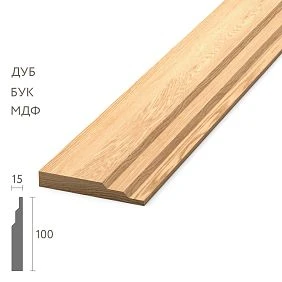
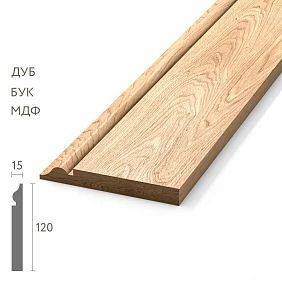
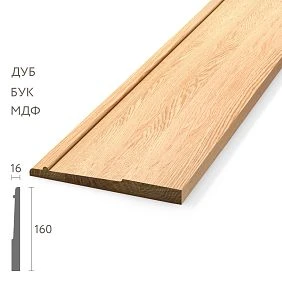
The most basic and effective system is beams + baseboards. buy wooden skirting board from the same species and in the same tone as the beams — means creating a vertical rhythm: wood at the top and wood at the bottom frame the wall as a single architectural system. The eye moves between them and perceives the space as cohesive.
The next level is beams + cornices + baseboards. A wooden cornice around the perimeter of the ceiling, from which the beams visually "grow" — this is a classic ceiling design technique. The cornice sets the frame, the beams fill the field. All elements from the same collection solid wood trim — and the result looks like a design project, not a random selection.
Decorative wooden slat — another element of the system. On the walls, slats create a rhythmic vertical texture that visually raises the ceiling and adds volume to a flat surface. In combination with horizontal beams on the ceiling, vertical slats on the walls form a perpendicular grid — strict and architecturally precise.
Wooden molding — the thinnest element that works in joints and as an overlay trim. In combination with beams, the trim helps to design the junction points of the beam to the wall or ceiling, hide gaps during installation, and give the node a finished look.
Decorative brackets — a functional and decorative element at the same time. They imitate the support node of a beam, creating the illusion of a load-bearing structure. In a country house, in a restaurant, in a loft — brackets add credibility to the image and create an additional focal point in the beam area.
Solid Wood Items — the entire range, from legs and frames to architraves and handles — should work in the same material and tonal key as the beams. This does not mean everything should be the same color. It means that the wood in the interior should "recognize" itself everywhere the eye falls.
Mistakes when choosing a decorative beam: what not to do
Experience shows: most unsuccessful decisions with beams are explained by several typical mistakes. Let's break them down point by point.
Too massive beam with a low ceiling. A 150×150 mm beam with a 2.6 m ceiling won't create coziness — it will create pressure. The ceiling will visually drop, the room will feel smaller. For standard city ceilings, choose a cross-section of no more than 80–100 mm.
Floor and furniture color not considered. Dark beams on a dark floor with light walls create a fragmented space: the eye darts between top and bottom without a center. Solution: either a coordinated tone or a deliberate contrast that is a conceptual decision, not an accident.
Beams placed too frequently. When the distance between beams is less than two to three times their width, the ceiling turns into a dense wooden grid. This feels heavy and uncomfortable. Maintain spacing — the empty space between beams works just as well as the beams themselves.
Mixing rustic beams with delicate classic trim. A rough brushed beam "in the countryside" next to fine white moldings in Louis style is a stylistic conflict that reads neither as trendy eclecticism nor as a conscious choice. The beam style should match the overall spirit of the interior.
Total footage not calculated. Bought three 2.5 m beams, but the room is 5 m wide — now there's a joint in the middle. Before ordering, measure the span and check whether beams are produced in the required length or if cutting to size is possible.
Construction lumber instead of decorative beams. Saving will lead to rework: construction lumber doesn't accept decorative coating like a finished product, its surface is uneven, and the cross-section geometry is often inconsistent.
Joints and corners not thought out. Where does the beam meet the wall? How is the end finished? Are plugs or brackets needed at the connection point? These details are not trivial: they make the installation either professional or amateurish.
Lack of a layout plan. Beams are installed once. If you haven't drawn a diagram with dimensions before purchase — you risk getting a random result. Draw a ceiling plan, mark the beam axes, check symmetry and distances. This takes 30 minutes and saves you from rework.
Wooden decor for the ceiling: beam as part of a large system
To talk about beams and not mention the full picture of ceiling decor means to miss something important. Wooden ceiling decor is a system where the beam takes center stage, but not the only one.
In classic and neoclassical interiors, the beam is combined with , friezes, rosettes. along the ceiling perimeter, with ceiling medallions under the chandelier, with corner inserts where the cornice meets. This is a complete architectural system where the wooden beam is the "body" of the ceiling, and the cornice and moldings are its "frame."
In a modern minimalist interior, the beam is combined with slats on the ceiling or walls — creating a perpendicular or parallel grid that structures the plane without decoration. This is no less design work, but the result is clean and strong.
In a loft, beams are combined with exposed engineering systems (pipes, ducts), with metal brackets, with brickwork on one wall. Here, wood is a warm pause in an industrial context. And that is precisely what makes the loft feel alive, not like a museum.
Where to buy a wooden beam for the interior
If you are looking not for a building material, but for decorative wooden beams for interior design, it is most convenient to work with a catalog where the beam is presented not as a building material, but as an element of the finishing system.
In the STAVROS catalog wooden beams in the house and commercial spaces — this is a product made of solid oak with specific cross-section parameters, with a treated surface, in an unpainted form for self-finishing. Alongside is the entire range of related linear products: cornices, moldings, baseboards, slats, trims. Everything from one source, in one material, compatible by system.
Wooden beams on the ceiling — model BL-001 in the STAVROS catalog is a basic product with a rectangular cross-section made of solid wood. It is suitable for most interior tasks: living room, kitchen-living room, study, bedroom in a country house, commercial space.
What you get when ordering from STAVROS:
-
product made of solid oak with a treated surface;
-
precise cross-section geometry;
-
unpainted option for any finish;
-
possibility to order by custom length;
-
full range of related elements: cornices, baseboards, moldings, slats, brackets;
-
Contact us to confirm shipping to your destination., pickup from Moscow and St. Petersburg;
-
expert consultation on system selection.
FAQ: Answers to Key Questions
How is a decorative wooden beam different from a construction beam?
A construction beam is a structural element for load-bearing functions: it is designed for load, but not for appearance. A decorative A solid wood beam is an interior product with a finished surface, precise geometry, and designed to be looked at. Buying construction timber for decoration means getting an untidy result even after painting.
Can wooden beams be used in an apartment?
Yes, and it is an excellent solution. The main thing is to choose the right size: for a standard apartment with a ceiling of 2.5–2.7 m, the optimal beam cross-section is 60×60 or 80×60 mm. Such a profile creates an expressive accent without pressure. wooden ceiling beam in an apartment — an increasingly popular solution in modern design projects.
Which beams to choose for a low ceiling?
Narrow, with a small cross-section — up to 80×60 mm. Light finish: natural oil or white paint. Minimum number of beams — two or three with wide gaps. Under no circumstances dark or frequent: this visually "lowers" the ceiling and feels oppressive.
Are wooden beams suitable for a modern interior?
Absolutely. In a modern interior, a laconic rectangular cross-section, light or neutral finish, and restrained rhythm work well. Wooden beams for interior in a minimalist style — it's an accent without decor: only form, material, and light.
Can a decorative beam be painted or tinted?
Yes. Solid wood products accept any finish well: oil, wax, tinting, varnish, opaque paint. Beams are supplied unpainted — you choose the final finish for your specific interior independently or with the help of a specialist.
What to combine wooden beams on the ceiling with?
Ideal system: beams + Wooden baseboard from the same wood species + wooden cornices around the perimeter. Additionally — Decorative brackets at the junction points and wooden plank on the walls to continue the wood theme.
Where to buy a wooden beam for the interior?
In the section of molded products and solid wood decor. The STAVROS catalog features decorative wooden beam BL-001, next to it — the entire range of related elements: cornices, baseboards, moldings, slats, brackets. Contact us to confirm shipping to your destination. and pickup are available.
About the Company
STAVROS is a Russian manufacturer of wooden interior products and solid oak and beech moldings. Full-cycle in-house production, wide range: beams, cornices, moldings, baseboards, slats, trims, brackets, furniture components, and decorative elements. All products are supplied unpainted, ready for any finish. Custom orders based on drawings, photos, or sketches are possible. Contact us to confirm shipping to your destination., pickup from Moscow and St. Petersburg. Special cooperation terms for designers, architects, and furniture manufacturers.