Article Contents:
- How FUR-032 differs from FUR-033
- Why cover visible screw heads
- When to buy FUR-032 in antique bronze color
- When to choose FUR-033 in nickel color
- How to match the cap to the color of the furniture handle
- Antique bronze in classic and restored furniture
- Nickel in modern furniture
- Where are furniture plugs used
- How to check compatibility with a specific screw
- Practical comparison for different types of furniture
- How to calculate the number of caps
- When a cap does not need to be installed
- How to install a cap without damaging furniture
- Can the cap be removed and reused
- Metal cap or plastic cover
- How to combine multiple metals
- What to buy together with caps
- How not to confuse a decorative cap with similar parts
- Mistakes in selection and installation
- Who FUR-032 is suitable for
- Who is FUR-033 suitable for
- How to buy FUR-032 or FUR-033 on STAVROS
- Table of 'what to buy together'
- How to choose furniture handles and face fittings
- How to choose a plug by facade color
- Inner and outer side of the facade
- Plugs for the kitchen
- Plugs for the bedroom and dressing room
- Plugs for the study and office furniture
- Plugs for doors
- Restoration of a chest of drawers, nightstand, and sideboard
- Custom-made furniture
- How to compare shade before a large order
- What to do if the handle color is not determined
- Seating, protrusion, and clearance
- What to do if the handle wobbles
- How to store spare plugs
- Care for metal plugs
- Commercial furniture and serial configuration
- How to choose a plug for different handle types
- Plug near decorative plate and lock
- Why you should not paint the screw head
- How is a screw plug different from a hole plug
- What to measure before ordering
- How to conduct a test purchase
- How to accept work after installation
- Why it's better to choose small hardware as a set
- How to place an order for a restorer or cabinetmaker
- How to choose between bronze and nickel for mixed finishes
- How to account for the shine of a metal part
- How to avoid damaging the enamel around the screw
- How to place a repeat order after several years
- Final check before adding to cart
- Why neat fasteners affect the perception of the entire piece of furniture
- Checking the set before handing it over to the customer
- FAQ: questions about FUR-032 and FUR-033
- What is the decorative cap for?
- How does FUR-032 differ from FUR-033?
- Which cap should I choose for a bronze handle?
- Which cap should I choose for nickel fittings?
- Does the cap fit any furniture screw?
- Can I cover a self-tapping screw with the cap?
- When should I install the cap?
- Can I use glue?
- Can I remove the cap?
- Can the plug be reused?
- How many plugs should I buy?
- Will FUR-032 fit a brass handle?
- Will FUR-033 fit chrome?
- Where should such plugs be used?
- How is a metal plug different from a plastic one?
- Do I need to cover all screws?
- What should I check before ordering?
Decorative plugs for furniture screws are usually purchased after assembly: the handle is installed, the door hangs straight, the dresser is updated, but a noticeable screw head remains on the front or inner side. It may be technically correct and reliable, but visually disrupts the finish, especially on a neatly painted facade, solid wood door, or restored furniture. A small metal part covers the fastener and helps complete the installation without trying to mask the screw with paint, putty, or a random plastic cap.
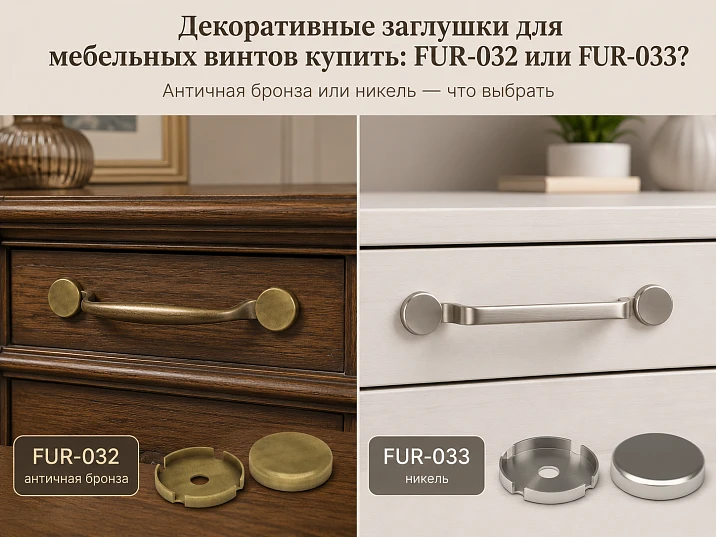
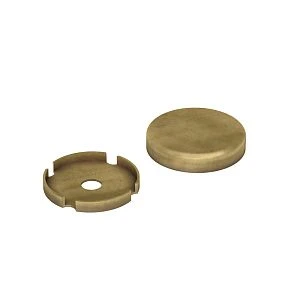
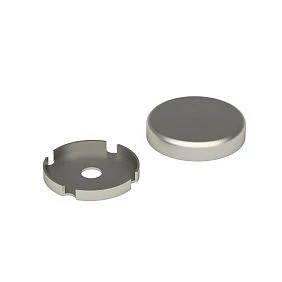
In the STAVROS assortment, two specific models solve this task. FUR-032 is a metal decorative plug in the "antique bronze" color. It suits warm, aged, and classic hardware, pairs well with bronze handles, dark wood, and furniture with a historical character. FUR-033 is finished in "nickel." It is chosen alongside silver metal, nickel handles, light furniture, and more modern facades.
The main fork seems to be about color, but the choice doesn't end with a single palette. The cap must match the specific screw head and installation method. Before ordering, you need to determine which fastener is used, how much it protrudes or is recessed, how many points remain visible, whether the cap interferes with opening, and whether it can be installed without damaging the furniture. Dimensions and fit cannot be guessed from a photo: actual compatibility is checked in the product card or with a STAVROS manager.
Below, we'll break down when antique bronze looks more accurate than nickel, how to match the cap with furniture handles, door hardware, and facade color, where such details are truly needed, how to calculate the quantity, and why a metal cap is not a universal replacement for any plastic cover. After the article, it will be clear which model to add to the order and what to check before installation.
Short answer. Choose FUR-032 for warm bronze, aged, and classic hardware: the "antique bronze" color complements dark wood, patinated handles, and furniture after restoration. FUR-033 is suitable for nickel, silver metal, light facades, and more modern handles.
Color does not confirm mechanical compatibility. Before purchasing, compare the specific screw with the cap's product card: the head, seating area, protrusion, number of fasteners, and possibility of subsequent access. Do not finalize the screw cover until the handle tightening and door operation have been checked.
Buy decorative cap FUR-032 Buy metal cap FUR-033 View furniture caps and fasteners
How FUR-032 differs from FUR-033
Both models are metal and designed for decorative masking of visible screws and fasteners on furniture, handles, and doors. The confirmed difference is the color and associated stylistic character. FUR-032 has a warm antique bronze shade, FUR-033 has a cold nickel shade. Exact dimensions, fit geometry, and compatibility with a specific screw must be verified directly in the product card before ordering.
| Criterion | FUR-032 | FUR-033 |
|---|---|---|
| Type | Metal decorative cap | Metal decorative cap |
| Main task | Hide a visible screw or fastener | Hide a visible screw or fastener |
| Color | Antique bronze | Nickel |
| Color temperature | Warm | Cold or neutral-cold |
| What it is most often combined with | Bronze handles, patina, dark wood, classic furniture | Nickel and silver handles, light fronts, modern furniture |
| Application | Furniture, furniture handles, doors | Furniture, furniture handles, doors |
| Material | Metal | Metal |
| Exact compatibility | Checked against the card and specific screw | Checked against the card and specific screw |
| Main reason to buy | Preserve the warm classic palette of fittings | Preserve the cold metallic palette of fittings |
Comparison should not become a rule of "bronze only for classics, nickel only for modern interiors." A warm cap can be a deliberate contrast on a light facade, and a nickel one can be a neat point on dark furniture. But for inconspicuous masking, it is easier to match the metal of the handle, hinge, or other visible detail.




Why cover visible screw heads
The screw performs a structural task, but its head is rarely perceived as a decorative element. On the inside of a door, it can be noticeable every time it is opened; on the front side, it can disrupt the facade pattern; and next to a beautiful handle, it can look like a random technical point. The cap does not make the fastening stronger, but it helps complete the appearance.
Open fasteners are especially noticeable on solid enamel, light wood, and smooth doors. Contrasting metal attracts the eye more than a slight unevenness. If the cap color matches the handle, the technical point becomes part of the overall fitting system.
In restoration, furniture often retains old holes, replaced screws, and fasteners of different colors. A properly selected metal cap helps bring visible points to a single shade. But it does not replace repairing a broken hole and does not hide a serious base defect.
On a door, the cap is useful where the visible screw is associated with a handle, overlay part, or decorative fitting. Before installation, ensure the fastener is finally tightened and does not require regular access.
Our factory also produces:
When to buy FUR-032 in antique bronze color
FUR-032 is chosen when warm metal is already present nearby. Antique bronze complements aged-effect handles, decorative plates, classic hinges, and other elements in a brown-golden palette. The cap does not need to be an exact copy of every highlight, but its color should feel like part of the same family.
On oak, walnut shades, dark enamel, and furniture with patina, antique bronze looks natural. It does not create a sharp cold spot and helps maintain the feeling of warm hand-finishing.
When updating a chest of drawers or sideboard, you can Buy decorative cap FUR-032 together with bronze handles. First install the handle, check the length and screw tightness, then cover the visible head.
FUR-032 is also useful on a door in a classic interior. If the handle, plate, and decorative screws have aged metal, a nickel point would look out of place. The bronze cap ties the fastener to the rest of the hardware.
Antique bronze should not be chosen just because the furniture is dark. If the handle is nickel or chrome, a warm cap may create an unwanted contrast. The metal of the adjacent part is more important than the overall body color.
Get Consultation
When to choose FUR-033 in nickel color
FUR-033 suits nickel, silver, and neutral-cool handles. It is especially appropriate on white, gray, blue, and graphite fronts, in modern kitchens, wardrobes, or office furniture.
Nickel helps maintain a clean technical aesthetic. On the light inner side of the door, the cap appears as a neat metal point, not a dark spot. On a dark front, it may become more noticeable, so the effect should be evaluated next to the handle.
For a buyer who needs nickel-colored furniture screw cap, it's important to compare not only the name of the metal but also the shade of the adjacent hardware. Polished, matte, satin, and aged metal look different.
FUR-033 is often more accurate for minimalist furniture, where decorative elements are reduced to a single metal. A small cap does not add a new historical tone and supports simple-shaped handles.
If the interior combines nickel with warm wood, this is not a contradiction. Cold hardware can be a deliberate modern contrast. In such a project, the cap matches the metal of the handle, not the wood.
How to choose a cap to match the color of the furniture handle
The safest approach is to match the dominant metal of the handle. A bronze handle gets FUR-032, a nickel one gets FUR-033. This creates a visually cohesive installation, especially if the screw is near the base of the handle.
The color should be evaluated under real lighting. A warm lamp makes nickel softer and bronze more golden. Cold light enhances the silvery character of FUR-033 and can darken FUR-032.
If the handle is wooden, focus on other metal hardware: the screw, hinge, plate, lock, or decorative insert. In the absence of other metals, choose a shade based on the furniture style and the color of the fastener.
Do not mix several metals randomly. A bronze cap next to a nickel handle is only acceptable as a deliberate contrast. In a small detail, an accidental difference often looks like a configuration error.
Before placing a large order, attach one cap to the handle and the facade. A product photo does not convey the exact screen shade, gloss, or behavior in shadow.
Antique bronze in classic and restored furniture
Antique bronze evokes a sense of time, warm metal, and hand-finishing. It suits classic chests of drawers, sideboards, wardrobes, cabinets, and paneled doors.
In restoration, FUR-032 helps cover new screws that stand out too much from old hardware. However, the cap should not imitate a historical detail where its shape does not match the design. First, check the fit and visual scale.
On furniture with patina, the cap's shade can be supported by small bronze handles or plates. Then several points form a system, not a single spot.
In modern classics, antique bronze works well on milky, gray-beige, and deep colored enamel. A warm point softens the facade and connects it to a wooden floor or countertop.
Nickel in modern furniture
Nickel feels cleaner and more neutral than antique bronze. It suits smooth facades, light enamel, gray wood, glass, and furniture with simple geometry.
In the kitchen, FUR-033 can be paired with handles, appliances, and other silver elements. It's important not to automatically equate nickel with any chrome or stainless steel: shades and shine may differ.
In a wardrobe or office, a nickel cap looks restrained and does not add decorative historicity. It works well where fasteners should be neat but not completely invisible.
On children's furniture, a metal cap is used only with confirmed compatibility and secure fit. Any small part must be installed so it cannot be removed accidentally.
Where furniture caps are used
On handles, the cap covers the visible screw head after installation. The location may be on the inside of the door, on the end, or in another area provided by the design.
On a chest of drawers and a nightstand, caps help unify the appearance of several drawers and doors. This is especially useful if handles have been replaced and the new screws differ in color.
On a wardrobe, visible fasteners are often noticeable inside when opening. The cap makes the interior side neater, which is important for dressing rooms and frequently used furniture.
On a door, a metal cap can cover the attachment of a handle or an overlay decorative part. Before installation, check that it does not interfere with the movement of the lock, latch, or door leaf.
On a furniture front, the cap is used only where open fastening is provided. It is not intended for randomly covering any hole without verification.
How to check compatibility with a specific screw
The first parameter is the shape and size of the head. The cap must fit onto the fastener as intended by the design. A cap that is too small will not install, while one that is too large may hold unreliably or look bulky.
The second parameter is the protrusion height. If the head protrudes significantly above the surface, the cap may not fit snugly. If the screw is deeply recessed, the fit may also differ.
The third parameter is the free space around it. Nearby may be the handle base, the edge of the front, glass, a frame, or a moving part. The cap must not catch on anything.
The fourth parameter is the need for access. If the screw will need to be tightened, the handle removed, or the mechanism serviced, ensure that the cap can be removed in a manner allowed by the card.
The exact dimensions and installation method for FUR-032 and FUR-033 are not specified in the provided diagram. Therefore, before ordering, compare the fastener with the current card or send a photo and dimensions to the manager.
Practical comparison for different types of furniture
| Situation | Preferred option | Why | What to Check |
|---|---|---|---|
| Chest of drawers with bronze handles | FUR-032 | Warm metal supports the handles | Installation, number of screws, shade in daylight |
| White kitchen with nickel handles | FUR-033 | Cold metal matches the hardware | Nickel shine and proximity to appliances |
| Restoration of an old sideboard | More often FUR-032 | Antique bronze supports the aged character | Doesn't the plug hide a defect that requires repair |
| Modern gray cabinet | More often FUR-033 | Nickel looks neutral and neat | Match with handle and hinges |
| Wooden handle without visible metal | For the rest of the fittings | The color is chosen based on hinges, lock, or furniture style | Doesn't the plug create an accidental contrast |
| Door with classic bronze handle | FUR-032 | Maintains a unified warm palette | Gaps and lock operation |
| Door with silver hardware | FUR-033 | Supports cold metal | Shade and removal method |
| Mixed bronze and nickel | By dominant metal | The plug should not add a third random shade | Sample next to handle and facade |
How to calculate the number of plugs
You should count not by the number of handles, but by the number of visible screw heads. One handle can be attached with one, two, or another number of elements depending on the design. A plug is only needed where the fastener remains visible and is compatible with the model.
Create a simple list: furniture item, number of handles or plates, number of visible screws on each, color, and spare. For a large cabinet, this protects against a situation where some doors are left without plugs.
If furniture is assembled from several items, count each separately. A chest of drawers, a bedside table, and a wardrobe may have handles of a similar type but different fastenings.
A small justified reserve is useful for installation and future maintenance, but the specific quantity depends on the project. Do not buy extra dozens of parts without calculation.
Before mass installation, test one plug on one screw. Only after confirming the fit, order the entire set.
When a plug does not need to be installed
If the screw is hidden inside the body and does not affect the appearance, a decorative part may be unnecessary. Not every fastener must be covered.
If the head is needed for regular adjustment, a plug will complicate access. First complete the adjustment, then decide if masking is acceptable.
If the fastener is loose, damaged, or installed incorrectly, you cannot cover the problem with a decorative cap. First, repair the connection.
If the fit is not confirmed, do not attempt to secure the plug with random glue. This may damage the coating and make maintenance impossible.
If the color does not match the hardware and creates a noticeable spot, it is better to leave a neat screw or choose another option rather than install an unsuitable part.
How to install the plug without damaging the furniture
First, check the fastening of the handle or trim. The screw should be tightened with the correct force, but without damaging the thread and the front. The plug is installed only after the final check.
Clean the head and the area around it from dust, chips, and residues of finishing materials. Contamination can interfere with the fit and scratch the surface.
The installation method depends on the design of FUR-032 or FUR-033. Do not use impact, strong pressure, or tools with sharp edges unless specified in the card.
Protect the front with a soft pad when working near enamel or varnish. A metal part can leave a scratch before it is installed.
After installation, open and close the door, check the handle and adjacent elements. The plug should not rotate, catch, or fall out.
Can the plug be removed and reused
The possibility of removal depends on the method of fit and the condition of the part. Without confirmed information, repeated use cannot be guaranteed.
If you need to access the screw, do not pry the metal cap with a sharp tool directly on the facade. This can damage the enamel, veneer, or wood.
Before installation, consider future maintenance. On a rarely removed handle, masking is convenient; on an adjustable assembly, it may be impractical.
If the cap becomes deformed during removal, do not reinstall it just to save money. An unreliable fit will worsen the appearance and may lead to loss of the part.
Keep several spare items of the same color if the furniture is used intensively or the hardware set is unique.
Metal cap or plastic cover
A metal cap supports furniture hardware in terms of material and visually appears as part of the handle or trim. A plastic cover more often serves technical masking and may not match the metal.
For a classic dresser with bronze handles FUR-032, it is more logical than random brown plastic. For modern nickel hardware, FUR-033 preserves the metallic character.
Plastic may be suitable inside the cabinet, where a neutral panel color is more important. Metal is for the visible side, next to a decorative handle or door component.
The choice is determined not only by aesthetics. The fit must match the specific screw. One type cannot be replaced by another without checking dimensions and attachment method.
The metal cap is not intended for painting. Its own color should be part of the design.
How to combine multiple metals
Modern interiors allow mixing bronze, nickel, black metal, and brass, but the number of shades is controlled. A cap is too small to justify a new color on its own.
If the handle is two-tone, repeat the metal that is closer to the screw or occupies a larger area. You can compare both models and choose the less noticeable one.
For furniture with bronze handles and nickel hinges, focus on the visible side. Inside the FUR-033 cabinet, it can connect with hinges; outside, FUR-032 can connect with handles, if the design allows.
Do not use different caps on the same screws of one door without a plan. Consistency makes installation neat.
For a furniture series, specify the choice in the specification: which model is used on the dresser, cabinet, and doors. This prevents accidental mixing during assembly.
What to buy with caps
Most often, a cap is purchased together with a handle and fasteners. First, choose the handle, then confirm the screw, and only then add FUR-032 or FUR-033.
Through the category, you can Buy wooden furniture handles and match them with the style of the hardware. A wooden handle does not cancel metal fasteners, so the cap color is chosen based on visible details.
For complete installation, it is useful to open materials for neat furniture assembly. Specific adhesives, tools, and finishing materials are chosen based on the task; do not use them to forcibly secure a plug without instructions.
A wide selection of fasteners and related parts is available in the category where you can buy furniture hardware. Model queries FUR-032 and FUR-033 should lead directly to the product cards.
If furniture is only being designed, it is better to choose the handle, screw, and plug as one unit. This reduces the risk of incompatibility and mismatch.
How not to confuse a decorative plug with similar parts
A screw plug covers the head of the fastener. It is not a washer, nut, bushing, or mounting plate and does not serve a structural connection function.
It is also not a plug for a large-diameter technological hole. Other products are used for holes, pipe ends, and furniture profiles.
FUR-032 and FUR-033 differ in color, but they cannot be considered universal for all screws of the same shade. The geometry of the fastener is more important than color matching.
A metal part does not replace the repair of stripped threads or a damaged facade. It masks a functional, correctly installed fastener.
Before purchasing, check the full name and URL. The FUR-033 product page address contains a trailing hyphen; it cannot be corrected or shortened.
Errors in selection and installation
The first mistake is buying a cap solely by color. Even perfect nickel is useless if the part does not fit the screw head.
The second is assuming any warm metal is antique bronze. Brass, copper, and bronze differ, so compare actual parts.
The third is covering the screw before final tightening of the handle. During maintenance, the cap will need to be removed.
The fourth is using glue without confirmation. It can ruin the facade and make the fastener inaccessible.
The fifth is counting by handles without checking the number of screws. Furniture configuration may vary.
The sixth is installing a cap on a damaged fastener. First, repair the connection.
The seventh is mixing FUR-032 and FUR-033 on the same facade without a design plan. The difference will look like a mistake.
The eighth is prying the part with a metal screwdriver on the enamel. This leaves chips and scratches.
Ninth — expect the plug to disappear completely. It remains a metal decorative point, so color and scale are important.
Tenth — do not check the actual card. Dimensions, availability, and compatibility are clarified before ordering.
Who FUR-032 is suitable for
FUR-032 is suitable for owners of classic furniture, restorers, door makers, and cabinetmakers who use warm bronze hardware.
It is especially useful on dressers, sideboards, cabinets, and doors where the screw is next to an antique bronze-colored handle.
The model may not suit cold nickel, chrome, and modern silver hardware. In that case, FUR-033 looks more cohesive.
Who FUR-033 is suitable for
FUR-033 is suitable for modern furniture, white and gray fronts, nickel handles, wardrobes, kitchens, and office cabinets.
It helps neatly complete installation without adding a warm aged tone.
The model may not suit furniture with pronounced bronze patina and warm historical hardware. There, FUR-032 is usually more natural.
How to buy FUR-032 or FUR-033 at STAVROS
First, identify all visible screws and take photos next to a ruler. Record the quantity and installation location.
Open the FUR-032 or FUR-033 card and compare the fit with your hardware. If data is insufficient, send the dimensions to the STAVROS manager.
Match the cap with the handle under real lighting. For bronze hardware, start with FUR-032; for nickel, start with FUR-033.
First order one or a small test quantity for a complex project. After fitting, calculate the full set.
When purchasing handles, screws, and caps together, lock the selected items in the specification so the installer does not mix up colors.
Table "what to buy together"
| What to add to the purchase | Why | For which scenario | What to Check |
|---|---|---|---|
| Furniture Handles | Assemble a single unit from the handle, screw, and cap | New furniture or hardware replacement | Metal color, number of screws, facade thickness |
| Furniture caps and fasteners | Select compatible elements | Assembly, repair and restoration | Do not replace a specific model card with a broad category |
| Materials for furniture assembly | Prepare the surface and perform neat assembly | Restoration and new furniture | Do not apply glue to the plug without confirmed technology |
| FUR-032 antique bronze color | Cover the fastener near warm hardware | Classic handles and doors | Fit and shade |
| FUR-033 nickel color | Close fastener near cold metal | Modern facades and handles | Fit and shine |
| Spare caps | Keep service kit | Intensively used furniture | Same article and color |
How to choose furniture handles and face fittings
The cap is the last small detail, so its selection starts not from itself, but from the overall fitting system. Material about how to choose furniture handles, helps to match shape, style, and convenience. After choosing the handle, it becomes clearer which metal the cap should match.
If the facade includes handles, overlays, hinges, and visible fasteners, it is useful to read the article about combining handles, fasteners, and decorative elements. The more details on the facade, the more important it is to limit the number of colors and prepare a specification in advance.
How to choose a cap by facade color
The color of the facade affects how noticeable the metal point remains after installation. On dark wood, FUR-032 often blends in more softly, especially next to a bronze handle. On light enamel, antique bronze becomes a standalone warm accent. This can be beautiful, but it is no longer an invisible disguise.
FUR-033 on white, gray, and cool beige facades is usually perceived as lighter. Nickel reflects ambient light and can appear lighter or darker depending on the angle. On a graphite facade, it becomes a contrasting silver point, so it is worth evaluating on a real sample.
On brightly colored furniture, the cap is chosen not to match the enamel color, but to match the color of the entire hardware group. A red, blue, or green door can be combined with both bronze and nickel. The decision is determined by the handle, hinge, decorative overlay, and the overall style of the item.
If you want the fastener to almost disappear, choose a cap to match the nearest metal and avoid new contrast. If, on the contrary, a small metal point should support the decorative pattern, it is acceptable to make it more noticeable, but the same on all facades.
Inner and outer side of the facade
On the outer side, color requirements are especially high. The cap comes into view together with the handle and should look like part of the design. Here, an accidental shade difference is more noticeable than inside the body.
On the inner side of the door, the priority may shift to neatness and compatibility. FUR-033 often suits light interior surfaces, FUR-032 suits furniture with warm wood and bronze hinges. However, the choice is still linked to visible hardware.
If the same screw passes through the facade, the same decorative solution is not always required on both sides. The design may provide for a cap on only one head. The quantity is determined by the actually visible points.
Before ordering, open all doors and inspect the furniture from normal height. Some screws, invisible when the facade is closed, are constantly visible during use. Such an inspection gives an accurate count and helps decide where caps are really needed.
Caps for kitchen
In the kitchen, handles and fasteners are repeated on a large number of doors and drawers. One mismatched cap quickly becomes noticeable in a row. Therefore, FUR-032 or FUR-033 is chosen once for the entire series and the article is fixed in the specification.
For a kitchen with warm wooden facades and bronze handles, FUR-032 supports the overall palette. In a white, gray, or graphite kitchen with nickel handles, FUR-033 is often more appropriate. But the final decision is made after fitting to a specific handle.
Kitchen furniture is regularly opened, so access to screws may be needed for tightening handles. Do not close the fasteners until all facades have been adjusted and checked. For future maintenance, keep a few spare caps.
When cleaning, do not use abrasive products or hard metal sponges near the decorative part. The care method is determined by the coating of the furniture and the hardware itself. The small part should remain clean but not be subjected to aggressive treatment.
Caps for bedroom and dressing room
In the bedroom, hardware is usually considered
Caps for study and office furniture
In the study, metal points are often part of a strict hardware system. Nickel FUR-033 supports modern cabinets, bedside tables, and shelving units with silver handles. Antique bronze FUR-032 is appropriate in a classic study with dark wood.
Office furniture is used intensively, so handle screws may require periodic checking. The cap should not turn routine maintenance into a complex repair. The possibility of safe removal is clarified before installation.
If the furniture consists of a large number of identical modules, the color and article number of the cap should be recorded in the specification. This simplifies handle replacement or restoration of one door without mixing shades.
In the meeting room and reception area, small details affect the overall impression more strongly than in a utility room. Exposed fasteners next to a decorative handle look unfinished, while a properly selected cap makes the assembly neat.
Caps for doors
On a door, the cap can cover the fastening of a handle, plate, or other compatible part. Here it is especially important to check the thickness of the assembly and the mechanism's operation. The decorative part should not interfere with the rotation of the handle, movement of the latch, or closing of the door leaf.
FUR-032 is usually combined with classic bronze door handles, dark wood, and paneled door leaves. FUR-033 is suitable for silver and nickel hardware, smooth modern doors, and light finishes.
Before installation, check the door operation several times. If the screw needs to be tightened after the first cycles, early masking will complicate access. The plug is installed only after final adjustment.
If the fastener is on the end, evaluate the gap between the panel and the frame. Even a slight protrusion can be critical. Precise fit is checked on site and according to the product card.
Restoration of a chest of drawers, cabinet, and sideboard
During restoration, first restore the structure, then replace or return the handles, and only after that select the plugs. Do not cover a stripped thread, crack, or too large hole with a decorative element.
Antique furniture often has hardware of several shades after previous repairs. FUR-032 helps to assemble a warm bronze palette, but before ordering, it is worth comparing it with real handles, not with a photograph.
If the restoration intentionally combines old wood and modern nickel, FUR-033 may be more appropriate. Such contrast should be repeated in several details: handles, lamps, or other metal elements.
After a trial installation, inspect the furniture from a distance and under side lighting. The plug should cover the technical head but not look like too large a decorative spot.
Custom new furniture
In new furniture, it is better to include the plug in the project before production. The designer determines the screw, fit, quantity, and location in advance. Then FUR-032 or FUR-033 becomes part of the configuration, not an attempt to fix the appearance after assembly.
The designer chooses the color together with the handles and other metals. For each facade collection, it is useful to approve one sample: handle, screw, plug, and surface finish.
The furniture maker must know whether access to the fasteners is required after installation. If the handle is adjustable or frequently removed, decorative masking may be impractical.
The client gets a more predictable result when all small details are included in the specification. This eliminates the situation where the finished furniture has already been delivered, but the matching color of the caps has to be sourced separately.
How to compare the shade before a large order
It is best to compare FUR-032 and FUR-033 next to the actual handle, facade, and screw. Place the parts on a horizontal surface, then hold them vertically, because the reflection of light changes.
Look at the set during the day, in the evening, and with the main lighting on. Antique bronze can become almost brown in the shade, while nickel can brightly reflect directed light.
A photo helps compare several options, but the camera changes the white balance. Make the final decision with your eyes on the object, not just from the screen.
For serial furniture, keep a signed sample. It will be useful for reordering, replacing handles, and monitoring installation at different stages.
How to proceed if the handle color is not specified
Sometimes the handle is described as "silver", "bronze", or "vintage", but the exact coating is unknown. In this case, you cannot automatically choose FUR-033 or FUR-032 based on a single word.
Compare the temperature of the shade. A warm brown-golden metal is closer to antique bronze, a cool gray-silver one is closer to nickel. Then check the gloss and degree of aging.
If the handle is wooden or painted, choose a cap based on other visible metals. If there are no reference points at all, you can use the facade and style, but a trial fitting is mandatory.
For a complex set, send a photo of the handle in natural light and the screw data to the STAVROS manager. This does not replace a physical fitting but helps narrow down the choice.
Fit, protrusion, and clearance
Even a part that fits in diameter can interfere if there is little space around the screw. The handle base, edge of the plate, or facade frame may be too close.
Check not only the front view but also the side profile. The cap should not create a protrusion that catches on clothing, a hand, or an adjacent door.
On the door end, clearance is especially limited. Close the door without the cap, measure the gap, and only then assess the possibility of installation.
If the screw is recessed into a cutout, the fit shape may differ from an exposed head. Do not try to compensate for a mismatch with glue, a gasket, or deformation of the metal part.
What to do if the handle is loose
A loose handle cannot be masked with a cap. First, determine the cause: screw loosening, incorrect length, damaged threads, or facade deformation.
After repair, test the handle with several opening cycles. Only when the connection remains stable can the visible head be covered.
If the screw has to be tightened regularly, the decorative cap may be inconvenient. In such a unit, service accessibility is more important than complete concealment.
If in doubt, consult a furniture maker. A small decorative detail should not hide a problem that affects the integrity of the handle and the front.
How to store spare caps
Store spare FUR-032 and FUR-033 separately, even if the shades seem similar in dim light. Label the article number and the piece of furniture.
It is convenient to keep small metal parts in a sealed bag or box together with the hardware diagram. This way they do not get lost or mixed with fasteners.
Do not store caps loose with screws and tools that could scratch the surface. Appearance matters because the part remains visible.
When transferring furniture to a new owner or management company, leave a spare and specification. This will simplify future repairs without random shade matching.
Care for metal caps
Care should match the finish of the part itself and the front. For regular cleaning, a soft dry or slightly damp cloth without abrasives is usually sufficient.
Do not use metal brushes, powders, or sharp objects. They can alter the shine or leave scratches on the cap and nearby furniture.
During cleaning, check for any movement. If a part rotates or falls out, remove it safely and determine the cause, rather than fixing it with random glue.
In the kitchen and hallway, it's best to remove dirt promptly. Dried stains require more pressure, which is undesirable for a small installed part.
Commercial furniture and serial fittings
In a hotel, restaurant, salon, or office, plugs are installed on dozens of identical facades. Here, a test assembly, accurate count, and spare parts for maintenance are especially important.
FUR-032 suits interiors with bronze fittings and warm decorative finishes. FUR-033 is for modern silver systems. Mixing them in one series looks like a delivery error.
The installer must receive a list specifying the article number, quantity, and installation location. Relying only on the label "bronze" or "silver" is not acceptable.
After project handover, spare parts are transferred to the responsible employee. This allows for quick restoration of a neat appearance after replacing a handle.
How to choose a plug for different types of handles
A button is attached differently than a long pull, and a recessed handle may not leave an exposed screw in the same area at all. Therefore, the number and location of plugs depend not on the external shape of the handle, but on the actual mounting assembly.
A long pull usually has several attachment points, and each visible head must be accounted for separately. If one point is covered by the handle body, a plug is not needed there.
For a wooden handle, a metal plug can support the screw and other elements. FUR-032 makes the combination warmer, FUR-033 makes it more modern. Mechanical compatibility remains the main condition.
Before replacing handles, remove one old part and inspect the fastener. Such an inspection helps to understand whether a plug is needed at all and what access will remain after installing new fittings.
Plug next to the decorative plate and lock
On furniture and doors, the screw may be located not only next to the handle, but also next to the plate, lock strike plate, or other face element. The color of the plug is chosen based on the nearest visible hardware.
If the plate is bronze, FUR-032 usually creates a cohesive group. If the element is nickel or silver, FUR-033 looks calmer. With different metals, the dominant one is determined.
The free space next to the plate may be minimal. The plug should not overlap the edge, interfere with the key, handle, or moving part of the mechanism.
The decorative cap is installed only on compatible fasteners. It does not replace the standard lock part and should not affect the safety of the mechanism's operation.
Why you should not paint the screw head
Paint seems like a simple way to hide the fastener, but during subsequent disassembly, the coating cracks and the slot may become filled. Access to the screw becomes more difficult.
Metal and the facade reflect light differently and may perceive the coating differently. A painted head often remains noticeable as an unevenness, especially on smooth enamel.
FUR-032 or FUR-033 creates a separate finished metal point and does not require masking the fastener under wood or paint. In this case, the fit must be confirmed.
If the project requires a completely invisible fastener in the color of the facade, a different structural scheme may be needed, not a metal decorative cap. This is decided before furniture manufacturing.
How a screw cap differs from a hole cap
A screw cap is installed on the head of a compatible fastener and preserves the connection underneath it. A hole cap covers an empty technological cavity and may have a different shape and size.
You cannot buy FUR-032 or FUR-033 just because a round mark is visible on the furniture. First, determine what is inside: a screw, a hole, a bushing, or another element.
If an old handle was removed and empty holes remain, decorative screw caps may not solve the problem. Facade repair or another type of hardware may be required.
Proper diagnostics protect against buying a beautiful but useless part. Photos from two sides and dimensions help the manager understand the task.
What to measure before ordering
Record the screw head size, its shape, height above the surface, and distance to adjacent parts. Use a precise measuring tool, not a comparison with a coin or finger.
Measure the facade thickness and record the handle model if the cap is related to its fastening. This data helps check the entire assembly, not just the visible part.
Count the number of identical screws and separately note non-standard points. Different fasteners may be found in one furniture set.
Take photos from the front, side, and with the door open. When contacting the STAVROS manager, this set of information is more useful than a single general photo of the furniture.
How to conduct a test purchase
For a large series, it is reasonable to first purchase a small test quantity. One plug shows the mechanical fit, but several parts allow you to evaluate repeatability on different facades.
Install samples on typical components: a drawer, a cabinet door, and a door if they differ. Do not transfer a successful result from one screw to another without checking.
After several days of normal use, inspect the parts. The plug should not fall out, rotate, snag, or interfere with tightening the handle.
Only after a test installation should you order the full quantity. This approach is especially useful for kitchens, hotels, offices, and serial furniture.
How to accept the work after installation
Inspect all plugs with the facades open and closed. They should be installed uniformly, without misalignment or visible surface damage.
Check the handles: they should not wobble, and the plugs should not hide the need for tightening. The decorative part is installed after the technical acceptance of the assembly.
Compare the color across the entire set. FUR-032 and FUR-033 must not be accidentally mixed on identical facades. Pay special attention to hidden inner sides.
Open the doors to the full angle, pull out the drawers, and check the gaps. The metal part should not touch adjacent furniture, boxes, or items.
Why it's better to choose small fittings as a set
The price and size of a cap may seem insignificant, but missing one part leaves the installation incomplete. Therefore, caps are included in the overall list along with handles and screws.
Choosing as a set reduces the risk of color mismatch. The buyer sees the handle, fastener, and FUR-032 or FUR-033 together and immediately evaluates the result.
The furniture maker receives the exact quantity and does not replace a missing part with a random cap. This is especially important for a series of identical doors.
On STAVROS, product cards and categories allow you to assemble such a route without searching for unnamed analogs: first the handle and fastener, then the compatible decorative cap.
How to place an order for a restorer or furniture maker
In the request, specify the article FUR-032 or FUR-033, quantity, purpose, and screw data. The wording "need bronze caps" is not precise enough.
Attach a photo of the handle and facade. For restoration, a photo of the entire piece of furniture is also useful to assess the warm or cool palette.
If both colors are needed for different items, separate the positions in the list. Do not store them in one unlabeled package at the site.
Before installation, the master must confirm a test fit and the order of access to the screw. The order is considered complete not after receiving the parts, but after checking the assembly.
How to choose between bronze and nickel in mixed finishes
In some interiors, handles, hinges, lights, and furniture legs have different metals. In such a situation, choose the cap based on the nearest part, not the entire room. If the screw is at the base of a bronze handle, FUR-032 is usually more convincing, even when a nickel light is nearby.
If the cap is inside a cabinet and visually neighbors nickel hinges, FUR-033 may be more accurate, even though the outer handle is bronze. The main thing is not to mix colors on the same nodes without clear logic.
Take a photo of the open and closed facade. It shows which metal dominates in each position. After that, you can split the order by zones or choose one common shade.
How to account for the shine of a metal part
The same color name does not guarantee the same shine. Nickel can appear soft or bright depending on the surface, and antique bronze can be more matte or contrasting. Therefore, comparison with the handle is done not only by shade.
A brightly reflective cap is more noticeable on a matte facade. A calmer metal hides the fastener more easily. The actual effect depends on lighting and viewing distance.
If an exact match in shine is critical, order a test part. Screens and photos do not convey reflection as well as real hardware.
How to avoid damaging the enamel around the screw
Before installation, make sure the edge of the hole and the area around the screw have no chips. A metal cap does not hide damage to the base and can emphasize unevenness.
Do not press the part through a hard tool. Any force must correspond to the product's design. Work with clean hands and protect the surface with a soft material.
After installation, inspect the facade under side lighting. A small scratch or dent near a shiny plug becomes especially noticeable.
How to place a repeat order after several years
Save the article number, link to the product card, photo of the installed part, and a few spare plugs. It is difficult to restore the exact model with just one word like "bronze" or "nickel."
If the handle was replaced, re-check compatibility. The new screw may differ from the old one, even if the hardware color remains the same.
When reordering, compare the current product card and parameters. Do not rely solely on the old packaging if the furniture component has changed.
Final check before adding to cart
Make sure the correct card is selected: FUR-032 for antique bronze or FUR-033 for nickel. Check the full URL because the address FUR-033 has a trailing hyphen.
Verify the quantity against the list of visible screws, not the number of furniture items. Add only a justified reserve.
Prepare the fastener data and, if in doubt, clarify compatibility with a STAVROS manager. After confirmation, plugs can be purchased together with handles and other furniture hardware.
Why neat fasteners affect the perception of the entire furniture
A buyer rarely examines a plug separately, but quickly notices an unfinished assembly. An exposed screw head next to a beautiful handle creates the impression that the installation stopped at the technical stage. A metal plug helps bring the work to a visually finished state.
On an expensive facade, a small detail should not look random. Matching metal, consistent fit, and repeatability on all doors create a neatness that cannot be replaced by general words about furniture quality.
FUR-032 and FUR-033 solve this problem differently. Antique bronze adds a warm classic character, nickel preserves a cool modern palette. The choice becomes part of the overall design, not a last compromise after assembly.
At the same time, decorative masking should not hide technical errors. Screw reliability, correct length, proper thread, and service access remain more important than appearance. The plug completes a functional assembly, not replaces its repair.
When the handle, screw, and plug are selected simultaneously, the furniture looks more cohesive and is serviced predictably. That is why even a small accessory should be included in the specification in advance.
Checking the set before handing over to the customer
Before handing over furniture to the customer, it is useful to go through the entire set along one route: open each door, check the handle, ensure the same color of plugs and no damage around the screws. Such an inspection takes little time but immediately reveals a missed point or an accidentally installed different shade.
If some plugs remain in reserve, they are handed over with the article number marking. This is especially important for hotel, office, and kitchen furniture, where a single handle may need replacement after a few years without updating the entire set.
The final set is considered successful when the decorative detail does not attract unnecessary attention, does not interfere with the operation of the hardware, and can be serviced safely if needed. Then FUR-032 or FUR-033 truly completes the installation, not just covers the metal.
Before ordering, also check whether the screws are the same on all facades. Visually similar furniture may have different heads after repair or partial handle replacement, so one plug does not always fit the entire set.
Precise fitting of one part remains the most reliable way to confirm both color and fit.
After such a check, the order becomes accurate, and installation proceeds without random replacements and unnecessary rework of furniture.
FAQ: questions about FUR-032 and FUR-033
What is a decorative cap for?
It covers the visible head of a screw or other compatible fastener and makes the installation of furniture, handle, or door neater.
How does FUR-032 differ from FUR-033?
FUR-032 has an antique bronze color, FUR-033 — nickel. The purpose is the same, but the color and stylistic role differ.
Which cap should I choose for a bronze handle?
Usually FUR-032. Before ordering, compare the shade and confirm the fit on the specific screw.
Which cap should I choose for nickel hardware?
Usually FUR-033. Consider the shine and shade of the adjacent handle.
Does the cap fit any furniture screw?
No. The size, head shape, protrusion, and seating method must match. Compatibility is checked via the card.
Can the cap cover a self-tapping screw?
Only if the specific seating is confirmed. The product should not be considered universal for any self-tapping screw.
When to install the cap?
After final tightening and checking the handle, door, or overlay.
Can glue be used?
Only if such a method is directly specified in the instructions. Random glue may damage the facade and complicate disassembly.
Can the cap be removed?
Possibility depends on the design and fit. Do not pry it with a sharp tool without a safe technique.
Can the plug be reused?
Only if it is not deformed and reinstallation is allowed by the design. This needs to be checked.
How many plugs to buy?
By the number of visible compatible screws, not by the number of handles. First, make a list.
Will FUR-032 fit a brass handle?
Shades may be close but not identical. Compare the parts under real light.
Will FUR-033 fit chrome?
Nickel and chrome differ. The possibility of matching is assessed visually; mechanical compatibility is checked separately.
Where to use such plugs?
On furniture, furniture handles, and doors where visible compatible fasteners remain.
How does a metal cap differ from a plastic one?
Metal better supports handles and face fittings in material and color. Plastic is more often used as neutral technical masking.
Do I need to cover all screws?
No. Only visible points where the cap is appropriate, compatible, and does not interfere with maintenance.
What should be checked before ordering?
Article number, color, shape and size of the screw head, fit, quantity, installation location, and need for future access.
Result: FUR-032 or FUR-033
Choose FUR-032 when the furniture handle, door, or other face fitting is finished in warm antique bronze. The cap supports the classic palette, dark wood, patina, and restored furniture. Choose FUR-033 near nickel, silver metal, white and gray facades, and modern fittings.
Color is only half the choice. A metal decorative cap must match the specific screw head and mounting location. Before ordering, measure the fastener, check the protrusion, clearance, and need for subsequent access. Do not use the part to mask a loose or incorrectly installed screw.
On STAVROS, you can link the FUR-032 and FUR-033 cards to the furniture handle category and general fittings to assemble a neat mounting kit. This approach is more reliable than random selection: the handle, screw, and decorative cap are chosen as a single unit, not as three independent parts.