























Article Contents:
- It's not the handle that ruins the facade, but the visible fasteners
- What is a decorative furniture cap
- When you need a metal cap, not a self-adhesive one
- Where decorative caps for screws are needed
- Kitchen fronts
- Cabinets and chests of drawers
- Cabinets and nightstands
- Interior Doors
- Furniture Restoration
- After replacing handles with a different center-to-center distance
- Why a metal cap is a different level
- FUR-032 and FUR-033: two colors, one solution
- FUR-032 — antique bronze
- FUR-033 — nickel
- How to choose a color: nickel or antique bronze
- Size and screw compatibility: why you shouldn't choose "by eye"
- Caps after replacing handles: how to save a facade without repairs
- Furniture cap in the interior: application scenarios by room
- Kitchen
- Bedroom and living room
- Children's room
- Hallway and bathroom
- 8 mistakes when choosing caps that ruin the result
- What to buy together with STAVROS furniture caps
- Wooden furniture handles
- Furniture hardware
- Materials for installation and finishing
- Decorative appliqués
- How to properly install a metal plug
- A clean facade is not an accident, it's a system
- About the Company STAVROS
- Frequently Asked Questions
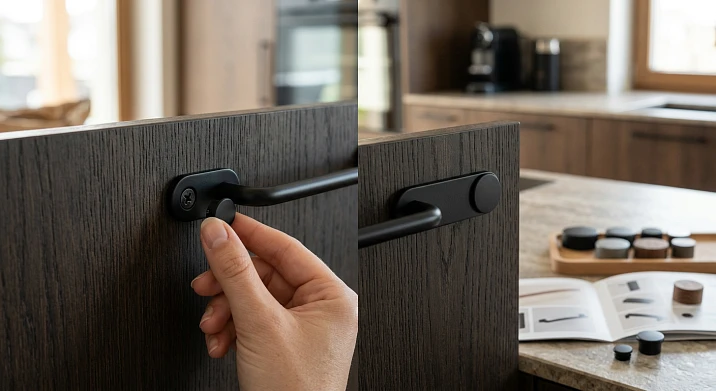
There are details you don't notice until you see them. So you've installed new handles on your kitchen fronts — beautiful, expensive, perfectly matched. And suddenly your eye catches something superfluous: a shiny screw head sticking out of the facade, or a dark hole next to the mounting. The handle is in place, but the facade looks unfinished — as if the craftsman left without finishing the job.
This is where a small but fundamentally important detail comes into play — the decorative furniture plug. It seems like a trifle. But it is this detail that decides whether your interior will look like a finished design solution or an unfinished renovation. In this article — everything you need to know about how to choose the right buy furniture plugs the right ones, match them to the color of the hardware, screw size, and interior style. No fluff — just the essence, just the practice.
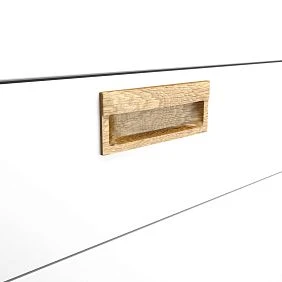
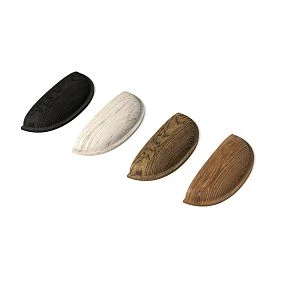
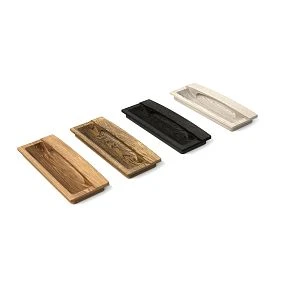
It's not the handle that ruins the facade, but the visible fastener
Think about it from this perspective. Furniture hardware manufacturers spend millions on developing shapes, coatings, and textures for handles. Interior designers spend hours matching shades of bronze, nickel, matte chrome. Apartment owners approve the color of every detail. And all of this is for one purpose: to make the facade look flawless.
But leave a screw head visible, and all this work is devalued. The technical trace of the fastener disrupts the visual rhythm of the facade. It stands out from the interior like a random note in a harmonious melody.
The problem is compounded in several situations:
-
During initial handle installation, when the M4 screw with a pan head remains visible.
-
When replacing old handles with new ones with a different center distance, some holes remain exposed.
-
During furniture restoration, when the facade is still in good condition, but traces of old fasteners spoil the appearance.
-
After self-installation, when this finishing element was simply forgotten.
The solution is simple and elegant: decorative screw caps. They cover the head of the fastener, mask extra holes, and give the facade that finished, "expensive" look for which the entire renovation was undertaken.
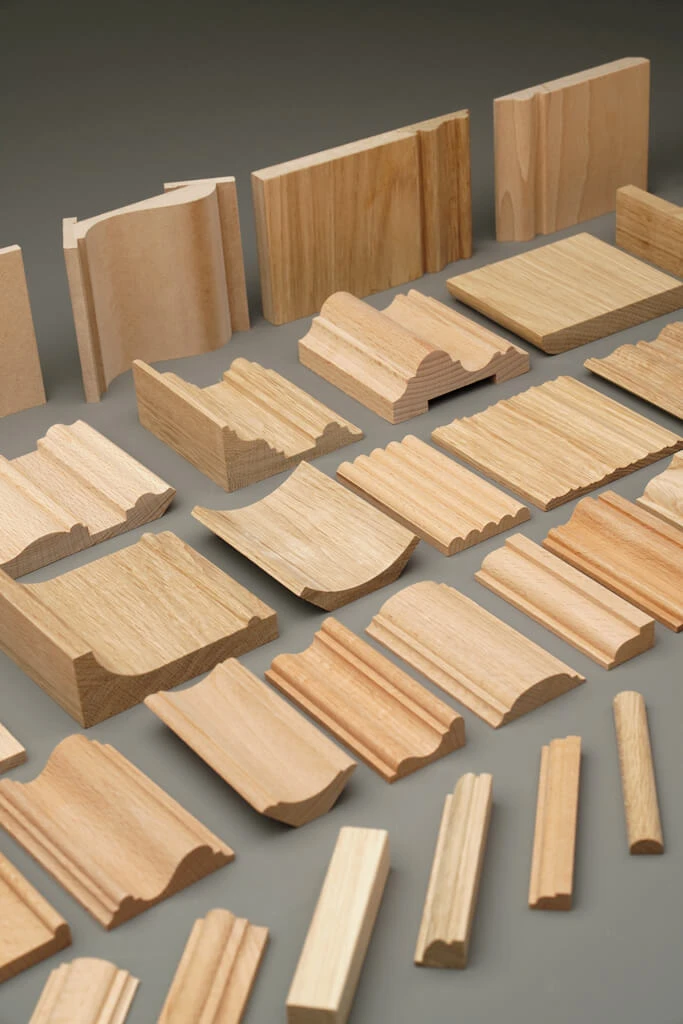
What is a decorative furniture cap
Before discussing selection, it's worth understanding the term. A furniture cap is not just a "plug for a hole," as it is sometimes disrespectfully called. It is a finishing element of a hardware assembly that performs several functions at once.
The first function is aesthetic. The cap hides visible fasteners: the screw head, an open hole, a technical gap. It makes the handle attachment point visually unnoticeable, allowing the facade to look monolithic.
The second function is protective. An open hole in the facade is an entry point for moisture, dust, and grease. This is especially relevant for kitchen facades, where the environment is aggressive. The plug seals this area, extending the service life of both the facade and the fasteners.
The third function is structural. In some cases, the plug fixes or stabilizes the screw's seating, preventing it from "moving" during use.
Furniture hole plugs come in different types: plastic self-adhesive circles, rubber plugs for technical holes, metal decorative caps. But if you work with quality furniture, with fittings matching the interior color, with expensive MDF or solid wood facades — the choice is clear: a metal decorative plug. And that's what we'll discuss.
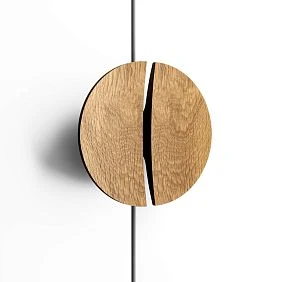
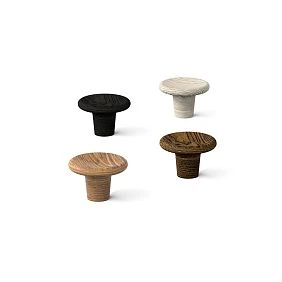
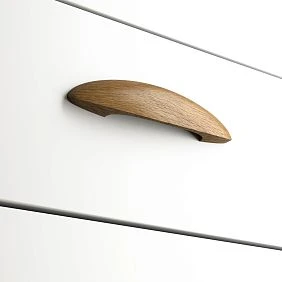
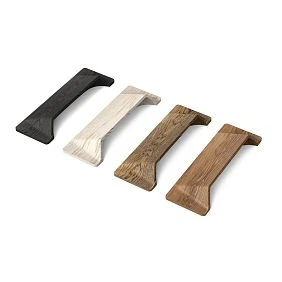
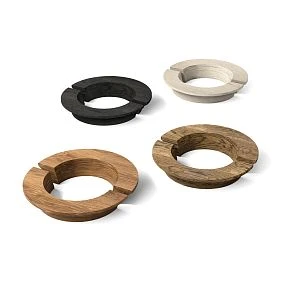
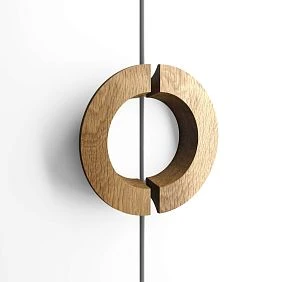
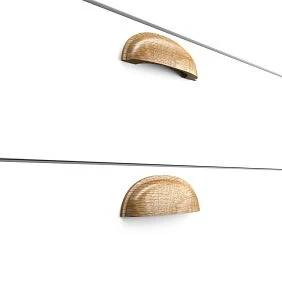
Our factory also produces:
When you need a metal plug, not a self-adhesive one
This is one of the key questions asked when purchasing. Self-adhesive plastic circles exist on the market and formally also "cover the hole." But between these two solutions, there is a chasm.
A self-adhesive plug sticks to the facade surface, holds on due to the adhesive layer, and over time peels off, yellows, and cracks. At the slightest color mismatch, it looks like a patch. On an expensive MDF facade with enamel or on solid oak, such a detail would look out of place.
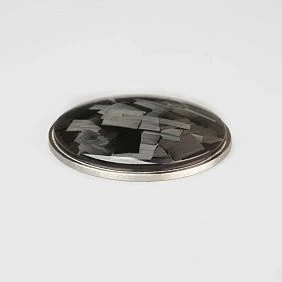
A metal plug for a furniture handle is a different class of product. It is made of metal with a decorative coating, resistant to mechanical stress and humidity, does not yellow, does not peel off, and does not change appearance over time. It sits on a screw with a semi-circular head, completely covering the head. This is not a decorative sticker; it is a fitting element.
Get Consultation
Where decorative screw plugs are needed
If you think plugs are only for the kitchen, you are underestimating the scope of the task. Here is a complete list of scenarios where they are truly necessary:
Kitchen fronts
The kitchen is an area with high demands for both appearance and functionality. Grease, steam, temperature fluctuations, and frequent contact with surfaces all make any exposed fastener a potential problem. Caps for kitchen fronts here solve a dual task: visual and protective. Color matching is especially important: if the kitchen has nickel-plated hardware, the cap should be nickel. If it's bronze, it should be antique bronze.
Cabinets and Chests
On furniture in the bedroom or living room, fasteners are particularly visible. The flat door of a wardrobe, the front of a chest of drawers without decorative frames—these are surfaces where every point is in plain sight. decorative inlays for furniture They work with large areas, but it is the caps that finish the handle attachment point.
Cabinets and nightstands
Small pieces of furniture that are in plain sight require special attention to detail. A TV stand, a bedside table, a bathroom cabinet—everywhere there are handles, there are fastening screws, and everywhere they need to be covered.
Interior doors
Door handles are attached in a similar way. After installation on MDF, solid wood, or veneer doors, the screw head remains visible on the back side of the panel. A door handle cap is essential here if you want the door to look like a finished product, not an incomplete installation.
Furniture Restoration
When restoring old furniture, handles are often replaced, fronts are refreshed, and surfaces are repainted. If the front is good but the fasteners are outdated or look unsightly, caps allow you to update the appearance without complete disassembly.
After replacing handles with a different center-to-center distance
This is a separate and very common scenario. You bought new handles, but their center-to-center distance didn't match the old ones. As a result, the old hole remains under the new fastener—and it's visible. A decorative cap allows you to neatly cover the old hole without resorting to putty, painting, or other extensive interventions.
Why a metal cap is a different level
Let's talk frankly about the difference between a metal and a plastic cap. Not in a technical sense—that's obvious. But in what the eye sees when looking at the front.
A plastic cap looks cheap. Period. It doesn't "ruin" it, it just doesn't add value. You can tolerate it on furniture in a pantry or utility room. But on a kitchen with fittings worth several thousand rubles, on a solid oak cabinet, or on a dresser with patinated handles — plastic looks like a compromise, like "it'll do."
Metallic decorative screw caps work differently. They become part of the fitting ensemble. When the cap is made of metal with a coating matching the handle — nickel to nickel, bronze to bronze — the fastening unit gains completeness. The eye glides smoothly across the facade surface, not catching on anything superfluous. This is precisely what is called a "clean facade."
An additional argument is durability. Metal does not yellow, crumble, or lose its shape. A good metal cap lasts as long as the handle itself. It is not a consumable that needs to be replaced every year.
And finally — the feeling of quality. When you grasp the handle of a cabinet or kitchen facade, your fingers pass near the fastening point. A metal cap under your hand provides a completely different tactile sensation than a plastic disc.
FUR-032 and FUR-033: two colors — one solution
STAVROS offers two models of metal decorative caps that cover all main usage scenarios. These are Decorative metal cap FUR-032 и Decorative metal cap FUR-033. They are identical in design and purpose but differ in coating color — and this is precisely what makes them a universal solution for two main directions in furniture design.
FUR-032 — antique bronze
The "antique bronze" color is a warm, slightly muted metallic shade with a patina of aged metal. It fits organically into classic interiors, wooden facades with dark tinting, furniture in Provence, retro, country, or neoclassical styles. If your interior features golden, copper, or dark brown tones — FUR-032 will create a unified fitting ensemble.
The FUR-032 cap is designed for an M4 screw with a round head. Installation requires no special tools or professional skills — setup takes seconds. The result is a facade with no visible traces of the fastening unit.
FUR-032 works especially organically with furniture handles in an "antique bronze" finish. If you have already chosen handles in this color, a plug from the same STAVROS line will complete the hardware set.
FUR-033 — nickel
Nickel is the cold, restrained shine of modern metal. It is appropriate in minimalist kitchens, white MDF facades, and interiors in loft, hi-tech, Scandinavian minimalism, or modern classic styles. The FUR-033 plug in nickel works where handles are chrome, matte nickel, or steel.
The same construction — metal, durable coating, compatibility with an M4 screw with a round head. The same simple installation. But a different aesthetic: concise, clean, modern.
Both plugs — FUR-032 and FUR-033 — cost 59 rubles each. This is the price of the finishing touch that turns an installed handle into a complete hardware element.
How to choose a color: nickel or antique bronze
The question of color choice seems simple only at first glance. In practice, many make a mistake: they choose a plug separately from the handles, relying "by eye" or "approximately." The result is a mismatch of shades that catches the eye precisely because the parts are next to each other.
There is one rule: the plug is chosen in the same color as the handle. If the handles are nickel-plated, take FUR-033. If in antique bronze, take FUR-032. No "almost," no "similar." Only an exact match.
Use the following logic for navigation:
Nickel is suitable:
-
White and light gray facades
-
Minimalist and loft style kitchens
-
Interiors with a predominance of cool shades
-
Chrome, matte steel, matte nickel hardware
Antique bronze is suitable for:
-
Facades made of dark wood or wood-like
-
Classic kitchens, living rooms, bedrooms
-
Furniture in Provence, Art Deco, Baroque, Rustic style
-
Brass, bronze, gold with patina hardware
A separate point is shine. Nickel can be glossy or matte. Antique bronze always has a characteristic muted shine of patinated metal. If your handles are matte nickel-plated, make sure the FUR-033 cap matches the degree of shine. This is a nuance, but it is important in the final hardware ensemble.
Size and screw compatibility: why you shouldn't choose "by eye"
The second key parameter after color is size. More precisely, compatibility with a specific mounting screw.
Both STAVROS caps — FUR-032 and FUR-033 — are designed for an M4 screw with a round head. This is a standard fastener used in the vast majority of furniture handles. If you buy wooden furniture handles or metal handles from STAVROS — they come with exactly this type of fastener.
Why is it important to understand the parameters?
Head diameter. The cap must completely cover the screw head. If the head diameter is larger than the cap diameter, the effect will be the opposite: the cap will draw attention to the fastener rather than hide it.
Head shape. The design of the FUR-032 and FUR-033 caps is specifically intended for an M4 round head. If you have a different head type — countersunk, cylindrical, hex — you need to check compatibility.
Seating depth. This depends on the thickness of the facade and the length of the screw. With non-standard MDF or solid wood thicknesses, the situation may differ from the typical one — ensure the fit will be tight.
Facade material. MDF, solid wood, chipboard, veneer — each material has its own installation specifics. A metal cap fits securely on any of them, but it is important that the facade surface is smooth and undamaged at the installation point.
Caps after replacing handles: how to save the facade without repairs
This is one of the most practical sections of the article — and one of the most popular purchase scenarios. Changing handles is a quick and relatively inexpensive way to update furniture. That's what this is about. article about changing furniture handles: a few hours of work — and the kitchen or dresser looks brand new.
But there's a catch. If the new handles have a different center-to-center distance, the old holes remain visible next to the new attachment points. What to do?
Option 1: plug the old holes and cover the new fasteners. If the old holes match the diameter of the new ones, a plug will work for both. Place plugs on both the new fasteners and the old points — the facade will look clean again.
Option 2: use plugs only on visible points. If the old holes are located near the new handle, they can be covered with a plug matching the facade color. The main condition is that the plug must fit tightly in the hole, without any gap.
Option 3: combine plugs with restoration. If the facade is damaged at the old attachment point (chip, crack, delamination) — one plug won't be enough. First, surface restoration is needed, and only then — installing the plug as a finishing element.
Important point: cover the holes from the handle with a plug is only possible if the hole diameter and the plug diameter match. If the hole is larger — the plug will fall through instead of covering it. This is one of the typical mistakes when purchasing, which are detailed in the next section.
Furniture cap in the interior: application scenarios by room
Let's go through specific applications — not in theory, but in real life.
Kitchen
The kitchen is the most obvious place for using caps. Here, every detail of the facade is in plain sight. Here, handles are touched dozens of times a day. Here, it's important that the fasteners are covered: for cleanliness, for hygiene, for aesthetics.
For a kitchen with white or light facades and nickel-plated handles — choose FUR-033. For a kitchen in classic, country, or Provence style with dark facades and bronze handles — FUR-032. If you want to select both handles and caps at the same time — check out Wooden handles for the kitchen, there you'll also find detailed tips on choosing the style of hardware.
Bedroom and living room
Chest of drawers, wardrobe, nightstand. Furniture that is in plain sight and used every day. Here, facades are often made of solid wood or veneer, with a pronounced wood texture. Wood and MDF Products from STAVROS — it's always a clean surface, which is only spoiled by exposed fasteners. A cap matching the handle covers this single weak point.
Children's room
In a children's room, furniture is used intensively. Exposed screw heads are also a safety issue: you can catch on them or get scratched. A metal cap, tightly fitted in place, eliminates this problem.
In the hallway and bathroom
In the hallway — a wardrobe, a shoe cabinet, a mirror with handles. In the bathroom — cabinets, shelves with hardware. Everywhere there are handles, there are fastening screws. And everywhere, a metal decorative cap is the right finishing touch.
8 mistakes when choosing plugs that ruin the result
It seems simple — just buy a plug? But practice shows: most mistakes happen at this stage, leading to repeat purchases or the facade still looking untidy.
Mistake 1: buying a plug without checking the screw type. Plugs FUR-032 and FUR-033 are designed for M4 screws with a round head. If you have a different standard, the fit won't be correct. Always check the fastener type before purchasing.
Mistake 2: choosing a color without comparing it to the handle. Nickel can vary: glossy, matte, with a bluish tint, with a warm tone. The same goes for bronze. Don't rely on 'nickel is nickel.' Get a plug from the same line as the handles — then a match is guaranteed.
Mistake 3: putting a plastic plug on a high-quality facade. This point was already discussed above. Let's add just one thing: saving 10–20 rubles on a plug devalues an expensive facade, an expensive handle, and the entire interior. This isn't saving — it's a loss.
Mistake 4: covering a damaged hole with a plug. If there's a chip, delamination, or an enlarged hole at the attachment point, the plug will simply fall through or sit unevenly. First — restoration, then — the plug.
Mistake 5: not considering the sheen. A matte handle + a glossy plug = disharmony. Matching in color without matching in sheen level still catches the eye.
Mistake 6: mixing incompatible finishes. Nickel, chrome, brass, bronze — each has its own color temperature and surface character. They cannot be mixed without logic. If the interior chaotically combines nickel plugs, bronze handles, and chrome hinges, the facade will look worse than without any plugs.
Mistake 7: buying plugs separately from handles, after the fact. The best practice is to buy handles and plugs at the same time, in one order, from the same line. STAVROS offers exactly this: FUR-032 and FUR-033 are listed alongside handles in the same catalog, making them easy to add to the cart when ordering the main hardware.
Mistake 8: using a plug where a full facade repair is needed. A plug is a finishing element, not a means to hide damage. If the facade is cracked, swollen, or the coating has degraded, a plug won't help. First, restore the surface.
What to buy together with STAVROS furniture caps
A cap is the finishing element in the handle installation chain. But it is not the only element to consider. The correct purchasing logic is: first — handles, then — everything needed for their proper installation and beautiful completion.
Wooden furniture handles
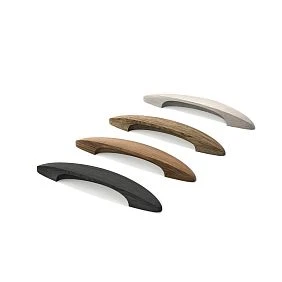
STAVROS produces handles from solid oak and beech — these are products with the highest level of detail, worthy of the most expensive furniture. Furniture Handle Delta HL-008LM — a laconic bracket for modern facades. Furniture Handle Grace HL-009M — an elegant classic shape that looks equally organic in the kitchen and the bedroom. For each of them — a cap in the desired color.
Furniture Hardware
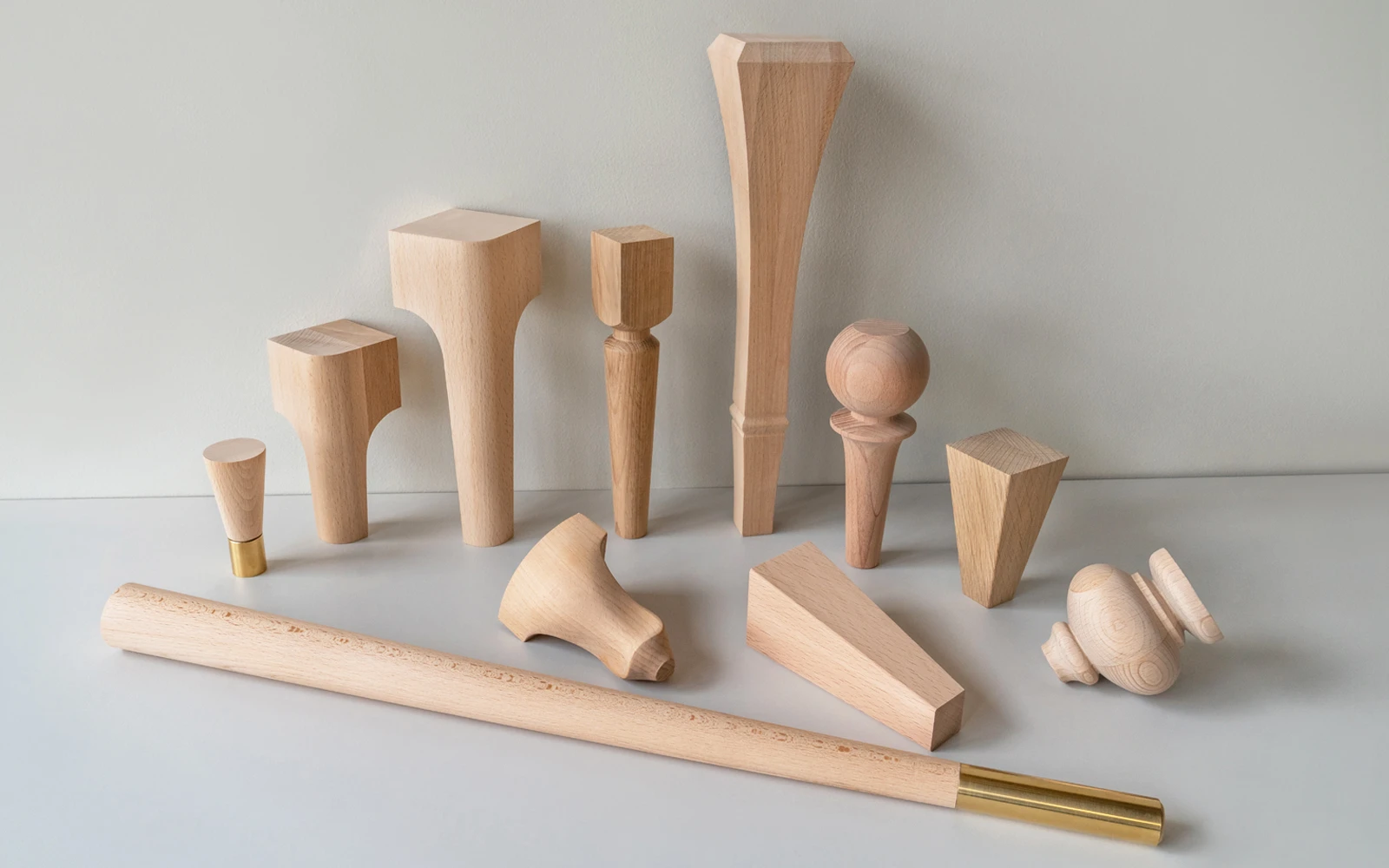
Full catalog STAVROS furniture fittings includes not only caps and handles, but also fasteners, base pads, decorative elements for legs. All of this is a single line where parts are matched by color and style.
Materials for installation and finishing
After installing handles and caps, small tasks often remain: secure a decorative element, treat the facade edge, apply a finishing coating to the surface. STAVROS installation and finishing materials — this is Rubio Monocoat oil for solid wood treatment, KUDO mounting adhesive for attaching decorative elements. Everything in one section — convenient to order together.
Decorative appliqués
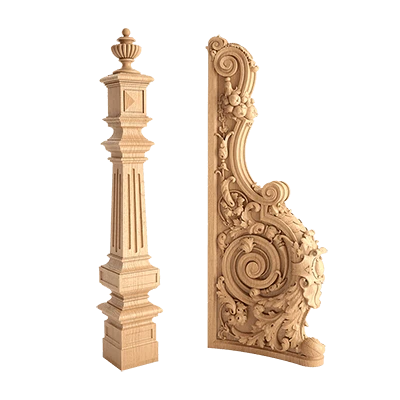
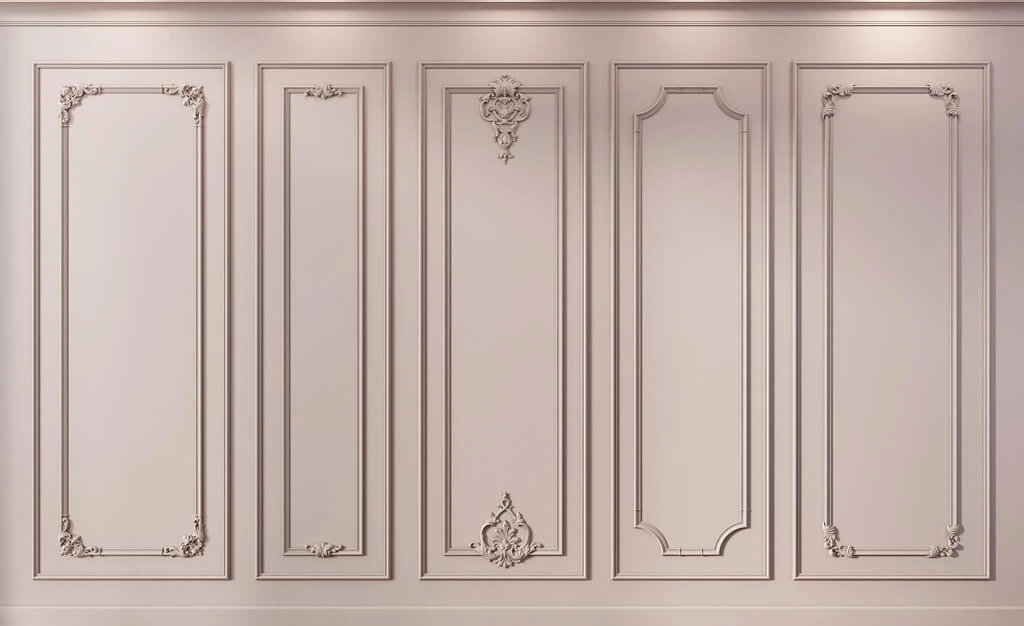
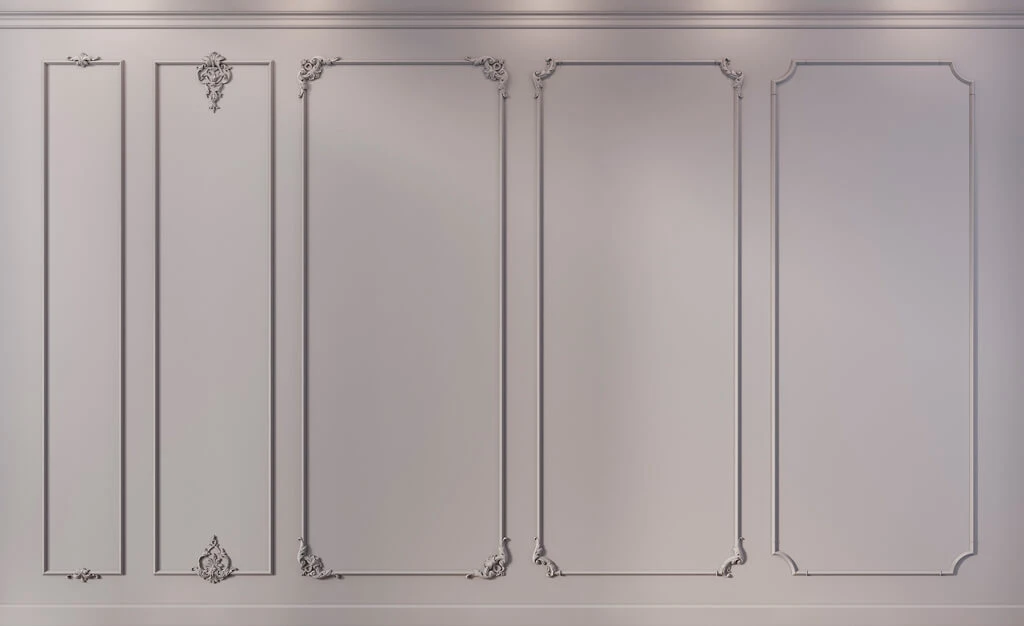
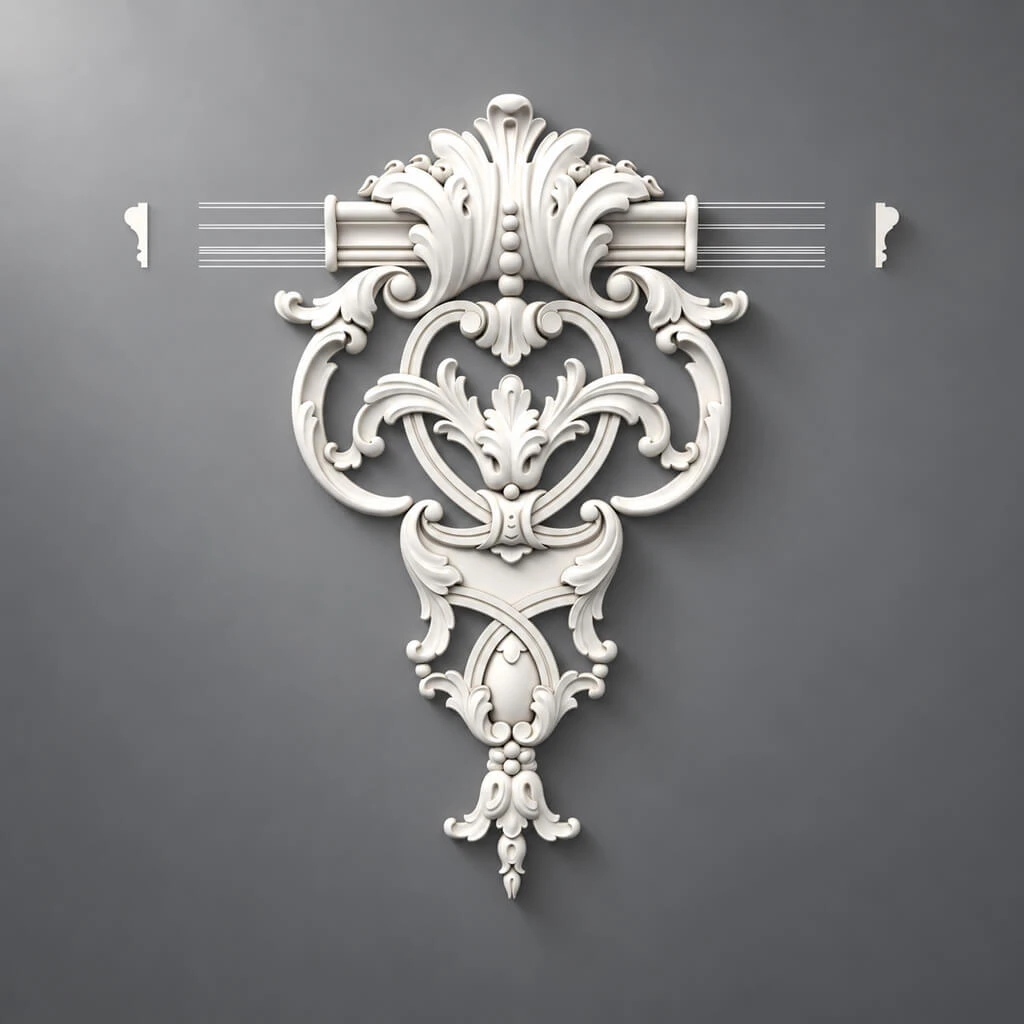
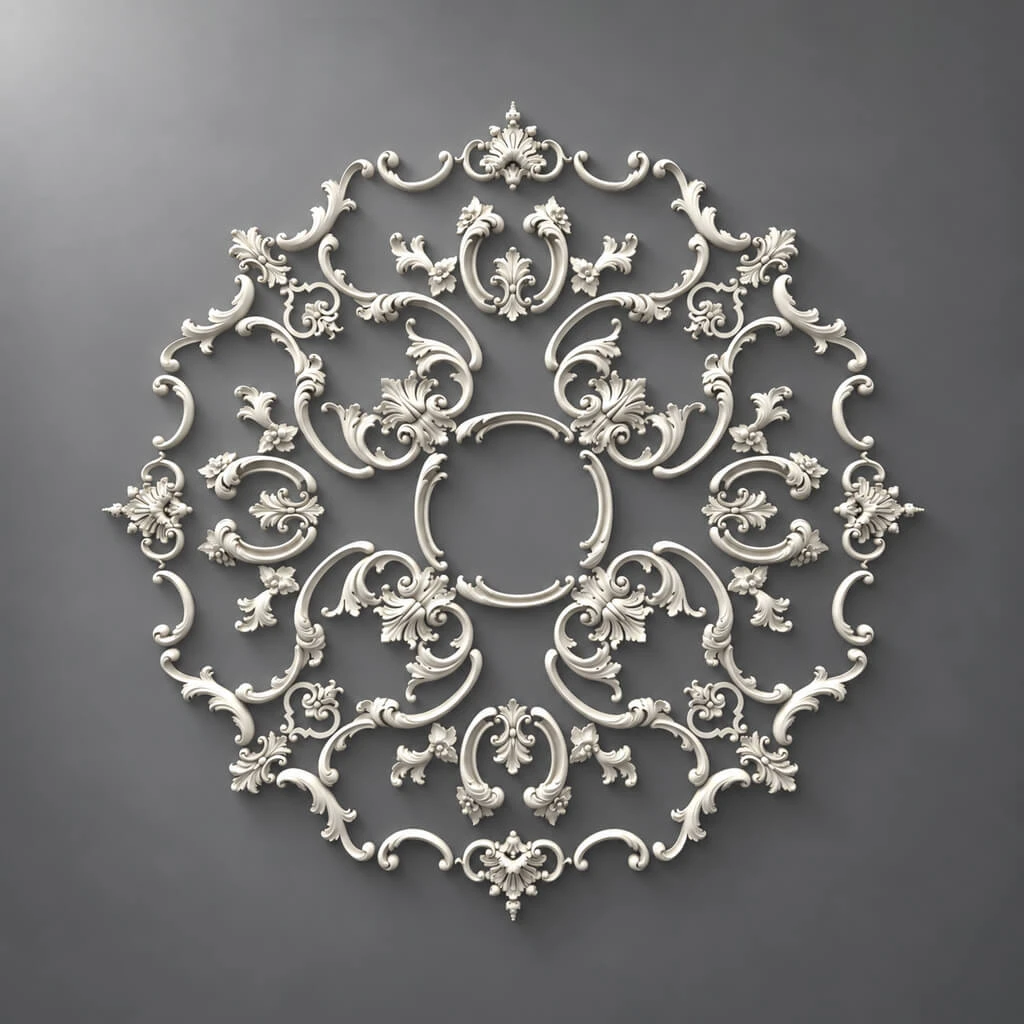
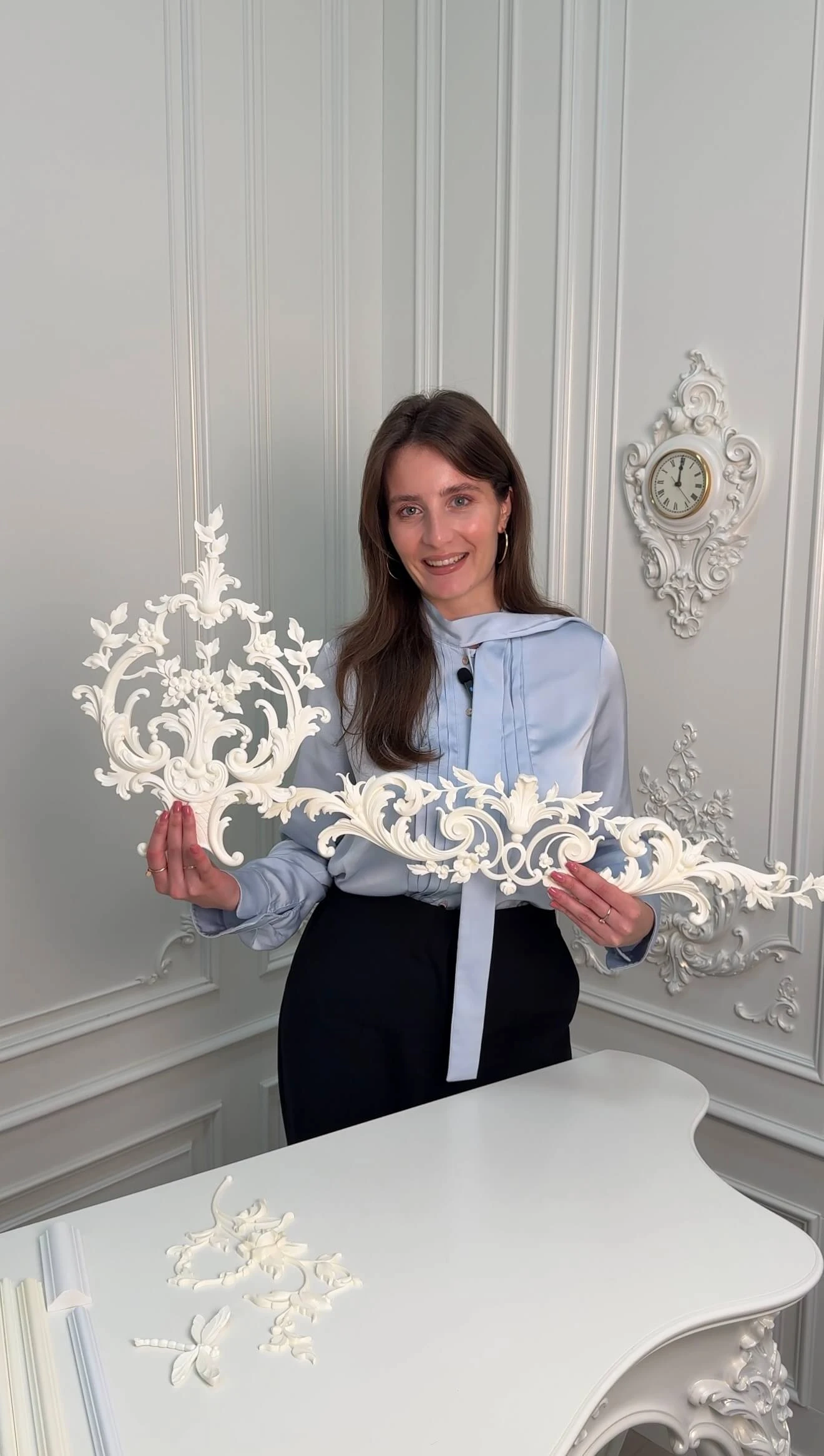
If the facade needs not only finishing of the fasteners but also decorative enrichment — decorative overlays for STAVROS furniture offer a wide selection of carved decor from solid wood and MDF. These are overlay elements that are applied to the facade plane and radically change its character: from a minimalist plane to a rich classical relief.
How to properly install a metal cap
Installing FUR-032 and FUR-033 caps requires no special tools and takes less than a minute. But there are a few nuances worth knowing in advance.
Step 1: make sure the handle is installed correctly. The cap is installed last — after the handle is fixed on the facade and the screw is tightened. If you install the cap on an untightened or unevenly seated fastener, the result will be messy.
Step 2: check the facade surface at the installation point. The surface must be smooth, without chips or protrusions. If there is dirt or traces of mounting paste, wipe with a dry cloth.
Step 3: install the cap. The metal cap is placed onto the screw head — firmly, without force. The fit should be secure: the cap does not wobble or shift when touched.
Step 4: check the fit. The edge of the cap should fit tightly against the facade surface along the entire perimeter. A gap or misalignment indicates incorrect installation or size incompatibility.
That's the entire installation. No drills, glue, or complex tools. That's why caps are so convenient when changing handles yourself: changed the handles — installed the caps — the facade is ready.
A clean facade is not an accident, it's a system
After years of working with furniture interiors, it becomes clear: the difference between "expensive" and "cheap" in furniture perception is rarely determined by the cost of the wood or paint itself. It is determined by the attention to detail. That final finishing touch that turns "made" into "completed".
The fastening point of a furniture handle is not a technical element that can be left as is. It is a point that catches the eye with every touch to the facade. And what it sees there shapes the overall impression of the furniture, the interior, and the entire renovation.
Metallic furniture screw caps — this is not a trivial 59-ruble item. It is the finishing touch that costs 59 rubles but adds value to the entire piece of furniture. It is a solution that distinguishes professional installation from amateur work. It is a detail that goes unnoticed — and that is precisely the sign of its proper function.
About the company STAVROS
STAVROS — Russian manufacturer furniture hardware and solid wood products with a history of over 20 years. The company was founded in 2002 by two artists — Andrey Ragozin and Evgeny Tsapko — as a small creative workshop for making carved wooden items. Within a year, the workshop participated in the reconstruction of the Konstantinovsky Palace in Strelna, and later in the restoration of the interiors of the Hermitage, the Alexander Palace, and the Trinity-Izmailovsky Cathedral.
Today, STAVROS is a full-fledged production facility in St. Petersburg, with showrooms in Moscow and St. Petersburg, and Contact us to confirm shipping to your destination. starting from a single piece. The catalog includes furniture handles made of solid wood and metal, decorative overlays, Solid wood products, hardware for installation and finishing. Caps FUR-032 and FUR-033 are part of this same system, where every detail is thought out and matched to another.
If you want your facades to look flawless — STAVROS provides everything necessary for that: from handles to caps, from glue to finishing oil. One cart. One order. One clean result.
Frequently asked questions
What is a decorative furniture cap?
It is a metal or plastic hardware element that covers the visible head of a mounting screw or an open hole on a furniture facade. A metal cap is a decorative finishing element that makes the handle installation complete and neat.
How does FUR-032 differ from FUR-033?
Only the coating color. FUR-032 is antique bronze, suitable for classic furniture and warm interiors. FUR-033 is nickel, for modern facades and cool interiors. The design, purpose, and size are the same. Both are designed for an M4 screw with a round head.
Can old holes be closed after replacing handles?
Yes, provided the hole diameter matches the plug diameter. If the hole is larger or damaged, facade restoration is needed first, then plug installation.
Are special tools needed for installation?
No. FUR-032 and FUR-033 plugs are installed without special tools — they are placed onto the head of the installed screw. Installation takes a few seconds.
How many plugs are needed for one handle?
Depends on the handle type. A pull (two-point handle) requires two plugs — one for each mounting screw. A knob (one-point handle) requires one plug.
Where to buy STAVROS metal furniture plugs?
In the STAVROS online catalog in the section materials for installation and finishingContact us to confirm shipping to your destination. from one piece. Price is 59 rubles per plug.
Are STAVROS plugs suitable for interior doors?
Yes, if the door handle is attached with an M4 screw with a round head — FUR-032 and FUR-033 plugs will fit. Before purchasing, check the type of fastener on your door handle.
How to choose the right color cap for the handle?
Take a cap from the same line as STAVROS handles: in the same tone — nickel to nickel, bronze to bronze. This eliminates mismatches in color and gloss level.
Can I buy caps wholesale?
Yes, STAVROS works with both retail and wholesale customers. Check conditions with the manager by phone +7 (800) 555-46-75 or by email [email protected].
Are caps compatible with handles from other manufacturers?
FUR-032 and FUR-033 are compatible with any handles that use an M4 screw with a round head. This is an industry standard, so the caps work with most furniture handles on the market.