Article Contents:
- A ceiling that says something
- First, understand the ceiling's purpose
- Ceiling rosette: framing a chandelier as an architectural technique
- When a rosette is a must
- How to choose the size of a rosette
- Rosette style and interior style
- Installing the Rosette
- Ceiling molding: a neat joint without extra weight
- When molding is enough
- How to choose a ceiling molding profile
- How much molding to buy
- Ceiling cornice: when the top of the room should look more expensive
- What is a ceiling cornice
- Cornice size and ceiling height
- Cornice as a connection with wall moldings
- Cornice with a groove for LED strip
- Ceiling stucco: when a full set is needed
- Ceiling rosette — the center of the system
- Cornice around the perimeter — the frame of the entire space
- Molding contours on the ceiling
- Decorative elements on the ceiling
- Ceiling molding and zoning
- Which rooms need ceiling molding the most
- Living Room
- Hall and Foyer
- Bedroom
- Office
- Kitchen-Dining Room
- Ceiling molding color: painting strategies
- Material: why polyurethane for the ceiling
- What to buy for different tasks: practical table
- How to calculate and order: step-by-step checklist
- Frequently Asked Questions
- About the Company STAVROS


A ceiling that says something
There is a simple truth that everyone who has done at least one serious renovation understands: the ceiling is the last surface people pay attention to, and the first one they notice when it is done poorly. Painted white, smooth, clean — and yet completely empty. No structure, no finishing. Beautiful furniture, well-thought-out walls, carefully arranged lighting — and the ceiling hangs over it all like an empty field that pulls everything else down.
Why does this happen? Because the ceiling is the fifth wall. It is a surface that is constantly seen, even if not consciously. It shapes the feeling of height and air, or conversely, of pressure. It completes the interior from above — or leaves it unfinished.
And it is here that Ceiling molding does what no other decorative element can: it turns a flat white surface into the architectural top of the room — with rhythm, structure, accents, and completion.
The question is not whether ceiling stucco is needed. The question is what exactly to buy — a rosette, molding, cornice, or a full ceiling set. And we will answer this question in detail, practically, and specifically.




First — understand the task of the ceiling
Before choosing specific products, it's worth stopping and answering one simple question: what exactly do you want from the ceiling? This is not a rhetorical question — the composition of your purchase depends on the answer.
The tasks for the ceiling can be different:
-
Decorate a chandelier — there is a pendant light that 'hangs in the air' without a decorative base. A ceiling rosette is needed.
-
Cover the joint between the wall and ceiling — after renovation, an ugly seam or gap is visible. A ceiling molding or small cornice is needed.
-
Make the room visually taller — a vertical accent is needed that lifts the gaze. A cornice with the right profile provides exactly this effect.
-
Connect walls and ceiling — if there are already molding frames on the walls and the ceiling is empty, the room looks unfinished. Ceiling stucco coordinated with the rest of the decor is needed.
-
Add an expensive accent without complex decor — a rosette under a chandelier with a good ornament immediately elevates the feel of the entire ceiling.
-
Complete a classic or neoclassical interior — a full set is needed: rosette, cornice, possibly moldings in the ceiling area.
A clearly defined task eliminates the main mistake — buying "everything at once" or, conversely, buying "one socket" where a full ceiling kit is needed.
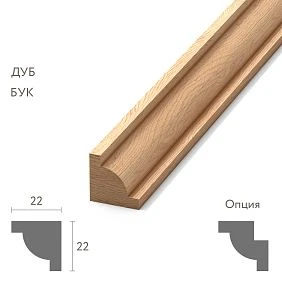
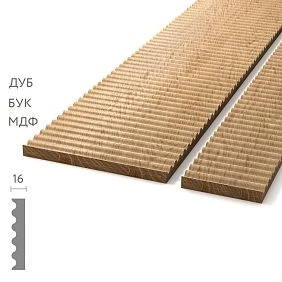
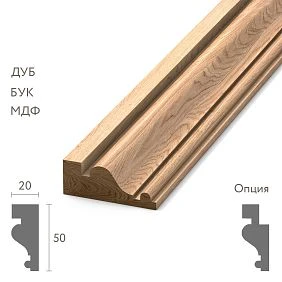
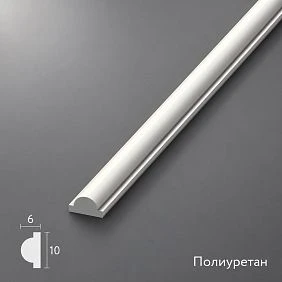
Our factory also produces:
Ceiling socket: styling a chandelier as an architectural technique
Let's start with the most obvious and most frequently purchased ceiling element — the ceiling rosette.
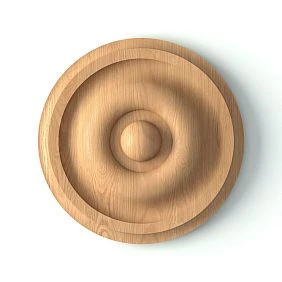
A socket is a decorative element that is glued to the ceiling around the chandelier's suspension point. Its function is simple: to turn a mounting hook or wire from the ceiling into an architectural detail. Without a socket, the chandelier looks like an "object screwed to the ceiling." With a socket, it looks like a central element of the ceiling composition that is integrated into the space, not just existing in it.
Get Consultation
When a socket is a must
Classic chandelier. Crystal, with shades, with a long suspension — any chandelier that claims decorative status requires a socket. Without it, even the most expensive light fixture looks "unfinished."
Large pendant light. A large modern pendant with a diameter of 50 cm or more also benefits from a socket. It gives the top attachment point a "pedestal" and visually enhances the significance of the light fixture.
Classic and neoclassical interior. In a classic interior, a socket is a mandatory element. This is a rule without exceptions: a ceiling with a chandelier and without a socket in a classic interior looks incomplete.
High ceilings. On a high ceiling, just the chandelier hook is too small a detail in a large space. A large-diameter socket creates the right scale for the ceiling.
How to choose the size of a rosette
The main question when choosing polyurethane rosettes — diameter. A rosette that is too small under a large chandelier gets lost. One that is too large dominates the light fixture and "weighs down" the ceiling.
Practical ratio: the diameter of the rosette should be approximately 1.5–2 times larger than the diameter of the chandelier base. For example, if the chandelier base is 20 cm, the rosette should be 35–40 cm. If the chandelier is large with a 40 cm base, the rosette should be 60–80 cm.
The second guideline is the room area:
-
Room 15–20 m² — rosette diameter 300–450 mm
-
Room 20–30 m² — diameter 450–600 mm
-
Room from 30 m² — diameter 600–800 mm and more
The third guideline is ceiling height. Ceilings 2.5 m — compact rosette, no more than 400 mm. Ceilings from 3 m — rosettes with a diameter of 500–800 mm can be used.
Rosette style and interior style
Polyurethane rosettes are available in a wide range of styles: from simple geometric ones with minimal relief to richly ornamented ones with acanthus leaves, laurel wreaths, volutes, and plant weaves.
For a modern interior, choose a rosette with a geometric or lightly ornamented relief, without baroque curls. For classic and neoclassic styles, choose an ornamental rosette with plant motifs. For Provence style, choose a rosette with a soft, natural relief. For minimalism, choose a flat rosette with one or two concentric rings.
An important principle: the style of the rosette should match the style of the cornice or molding, if present. The ornament of the rosette and the ornament of the cornice should speak the same language.
Mounting the medallion
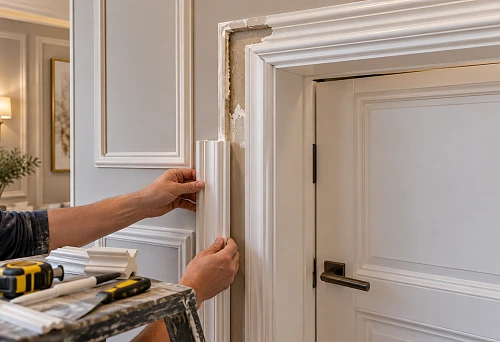
A polyurethane ceiling rosette is glued with assembly adhesive. The ceiling surface is pre-degreased and primed. The rosette is temporarily fixed with painter's tape until the glue is completely dry (usually 24 hours). Then, prime and paint to match the ceiling color. That's it. No drills, anchors, or special tools needed.
Ceiling molding: a neat joint without extra weight
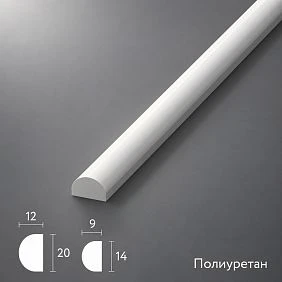
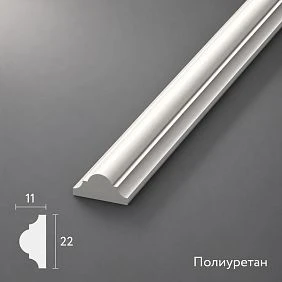
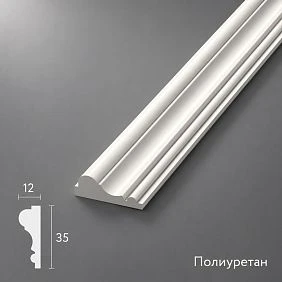
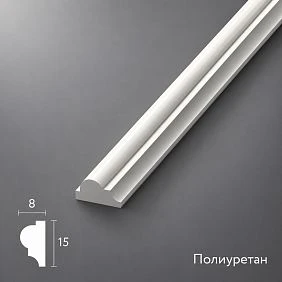
If the task of the ceiling is only to cover the joint between the wall and the ceiling and to make the line between the surfaces clean and beautiful, without a heavy classic cornice — Moldings made of polyurethane provide exactly that.
Ceiling molding is a narrow profile that is glued to the joint between the wall and the ceiling. Width ranges from 10 to 40–50 mm. It is a delicate detail that says 'here the wall ends, and here the ceiling begins' — clearly, beautifully, without extra decor.
When molding is enough
Modern interior. In minimalist, Scandinavian, and loft spaces, a heavy classic cornice is inappropriate. But a thin molding at the joint is quite organic: it covers the seam, provides a line, and does not claim architectural status.
Small rooms. For rooms with ceilings of 2.5 m and an area of up to 15 m², a heavy cornice is too much. A molding with a width of 15–25 mm is just right.
Bedroom with a neutral interior. The ceiling in the bedroom should be calm. A narrow molding in the color of the wall covers the joint without creating tension.
Children's room. In a children's room, cornices with ornaments are rarely appropriate. A thin molding in the color of the wall or ceiling is a clean and practical solution.
How to choose a ceiling molding profile
Choosing a profile is choosing how the molding will look in light and shadow. A ceiling molding is illuminated by side light from the walls, and it is the relief of the profile that determines how it "reads."
-
Flat profile — almost invisible, works only as a line
-
Semi-oval profile — soft shadow, delicate appearance
-
Stepped profile — clear shadow, more expressive appearance
-
S-shaped profile — classic, reads well in any lighting
For ceiling molding in a modern interior — flat or semi-oval profile. For a classic one — S-shaped or stepped.
How much molding to buy
Room perimeter + 15% reserve for cutting at corners. Corners are the most labor-intensive part of installation: the molding is cut at 45° and joined. Without a reserve, any mistake during cutting leads to a shortage of material.
buy polyurethane moldings It's better to order with a surplus in one order — the shade of the batch may differ slightly when reordering, which will be noticeable after painting.
Ceiling cornice: when the top of the room should look more expensive
A cornice is not just a 'large molding.' It is an architectural element of a different status. If a molding says 'here is a clean joint,' a cornice says 'here is architecture.' It is heavier, more expressive, more voluminous. It creates a pronounced shadow, gives the top of the room monumentality and completion.
Ceiling molding In the form of a classic cornice — this is what makes a classic living room, grand hall, or neoclassical study look incomplete without it. A ceiling without a cornice in such spaces feels like 'unfinished renovation,' even if everything else is done perfectly.
What is a ceiling cornice
A cornice is a profile element with a width from 50 to 150 mm (and more — for very high rooms), which is glued to the joint of the wall and ceiling. It is larger than a molding, has a more complex profile with several levels of relief, creates a noticeable shadow, and is easily readable from a distance.
A cornice can be:
-
Smooth — without ornament, only a geometric profile
-
Semi-ornamental — with a light relief on one of the profile levels
-
Ornamental — with acanthus leaves, laurel ribbons, geometric weaves
For modern classics and neoclassicism — a smooth or semi-ornamental cornice. For classics and baroque — an ornamental one.
Cornice size and ceiling height
The cornice size must match the room height. This is a strict rule:
-
Ceilings 2.5 m — cornice width 50–70 mm
-
Ceilings 2.7–2.9 m — cornice 70–100 mm
-
Ceilings from 3 m — cornice 100–140 mm
-
Ceilings from 3.5 m — cornice 140–200 mm or more
A cornice that is too wide for the room height creates a feeling of pressure — the ceiling "drops." A cornice that is too narrow gets lost and is not perceived as an architectural element.
Cornice as a connection with wall moldings
If there are already molding frames on the walls, the ceiling cornice should be coordinated with them in profile scale. Rule: the cornice is approximately 2–3 times wider than the wall moldings. Moldings 25 mm — cornice 60–80 mm. Moldings 40 mm — cornice 100–120 mm.
This creates a hierarchy: wall moldings are delicate mid-scale elements, the cornice is the final large element. The entire system is perceived as a unified architectural system, not a set of random details.
Cornice with a groove for LED strip
One of the modern techniques increasingly used in residential interiors is a ceiling cornice with an internal groove for an LED strip. The LED strip is hidden in the cornice groove and illuminates the ceiling with contour diffused light. The strip is not visible from the outside — only a soft glow along the ceiling perimeter is visible.
This technique simultaneously solves two tasks: it decorates the wall-ceiling joint and adds a functional light contour. It looks especially impressive in an open-plan kitchen-living room, a living room with high ceilings, and a bedroom with zonal lighting.
Ceiling stucco molding: when a full set is needed
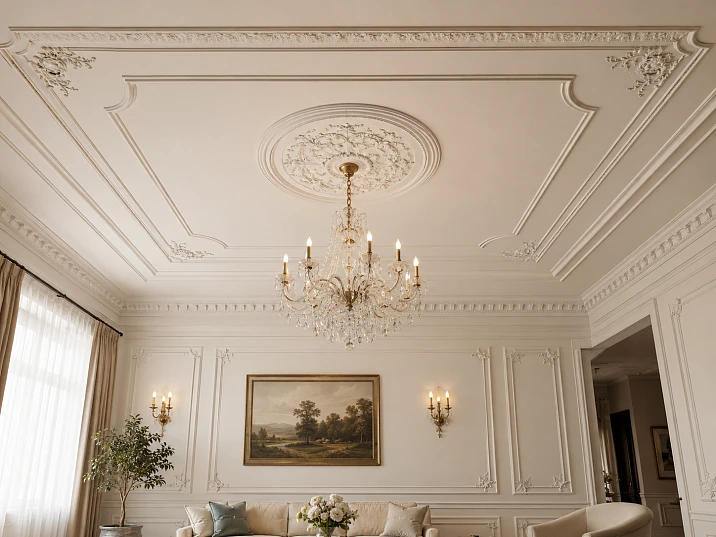
Now — about the main scenario: when you need not 'one detail,' but a well-thought-out ceiling set. Buy ceiling molding as a system — this is an approach for a living room, hall, study, bedroom with classic furniture, and any space that aspires to completeness and style.
What is included in a full ceiling set?
Ceiling rosette — the center of the system
The rosette is the center of the ceiling composition. All other elements (cornice, moldings, decorative accents) are built around it as an architectural focus. The rosette sets the scale and style — the rest of the selection is built from it.
Perimeter cornice — the frame of the entire space
Perimeter cornice — a horizontal contour that "frames" the entire ceiling. It encloses the space from above and creates a sense of completeness that cannot be achieved by any other means.
Molding contours on the ceiling
In large rooms (from 25 m²) with high ceilings (from 3 m), ceiling decor can be developed further: molding frames on the ceiling, concentric squares or rectangles around the rosette. This turns the central ceiling area into a ceiling "medallion" — an architectural accent that makes the entire space solemn.
This solution is traditional for classic living rooms and formal halls. But on a moderate scale, it works perfectly in modern apartments with spacious areas.
Decorative elements on the ceiling
Relief Decoration on the ceiling — decorative overlays in the corners of ceiling molding frames, ornamental accents along the perimeter of the central rosette, elements at the corner points of the cornice intersection. This is the final layer that saturates the ceiling system with details.
An important principle: there should be fewer decorative accents on the ceiling than seems necessary. The ceiling is a surface viewed from below upward. An overloaded ceiling quickly becomes tiresome. One well-chosen accent works better than five random ones.
Ceiling stucco and zoning
In open-plan layouts — kitchen-living room, living-dining room — ceiling stucco performs another important function: zoning without partitions. A ceiling molding along the contour of the dining area, a rosette above the dining table, a cornice only in one part of the space — all this, without walls or screens, delineates functional zones and gives each its own architectural character.
Which rooms require ceiling molding the most
Not all rooms need ceiling decor equally. There are spaces where ceiling molding works particularly well.
Living Room
Living room — the main space of the home. This is where the ceiling is most often visible, and its condition affects the impression of the entire interior. For the living room — a ceiling medallion under the chandelier (mandatory), crown molding around the perimeter (recommended), molding frames on the ceiling (optional, for heights from 3 m).
Hall and Entrance
Hall — the first impression of the home. Crown molding around the perimeter and a ceiling medallion under the hall light fixture — a minimal set that makes the hall "architectural" rather than just a corridor.
Bedroom
In the bedroom, the ceiling should be calm, not overloaded. A thin crown molding 60–70 mm around the perimeter and a small medallion under the chandelier or flush mount — enough. More — only with high ceilings from 3 m.
Office
Study — a space for status. Medium-scale crown molding 100–120 mm, an ornamental medallion under the chandelier, possibly molding contours on the ceiling — this is a full ceiling set for a study with classic furniture.
Kitchen-dining room
In the kitchen, ceiling molding works in the dining area: a medallion above the dining table, a molding contour around the perimeter of the dining area, crown molding around the ceiling perimeter — delicate, 50–70 mm.
Ceiling molding color: painting strategies
The issue of color is no less important than choosing the model. Ceiling molding can be painted in different ways, and each solution gives a different effect.
Molding in the color of the ceiling — a delicate, monochrome solution. The medallion, crown molding, and moldings are white — the ceiling is white. The molding is read solely through the shadow from the relief. This is the calmest and most versatile option. Works in any style and with any level of wall decor.
Stucco lighter than walls is a traditional classic technique. Walls in beige, warm, or colored tones, ceiling and stucco are white. This creates a visual "lift" of the ceiling: a white top always appears higher than colored walls.
Stucco with accent coloring is a bold solution for expressive interiors. A rosette in gold or silver, a cornice with a gilded relief, decorative accents with patination. This solution is for classic, baroque, interiors with mirrors and crystal chandeliers.
Stucco in the color of the walls with a white ceiling — the cornice and moldings are painted the same color as the walls. The ceiling remains white. This technique visually creates a "high ceiling" and a smooth transition between walls and ceiling.
Material: why polyurethane for the ceiling
For ceiling stucco, polyurethane is the optimal choice for several reasons that are important specifically for the ceiling.
Lightness. A polyurethane cornice weighs 5–7 times less than a plaster counterpart. On the ceiling, this is fundamental: heavy plaster cornices require strong anchoring with anchors. Polyurethane ones are held by mounting adhesive.
Precise geometry. Ceiling moldings and cornices must be perfectly straight. Polyurethane does not shrink during production — geometry is precise, joints are minimal.
Performance with temperature changes. The ceiling is an area where temperature fluctuations are felt more strongly, especially near exterior walls. Polyurethane does not deform with temperature changes, maintaining geometry.
Simple installation. Mounting adhesive, level, miter box for cutting. No special skills required. A ceiling cornice 3 m long can be installed by one person in 20–30 minutes.
You can buy ready-made stucco matching the Baroque style. Calculate the quantity: linear meters of cornices and moldings, number of rosettes, pilasters, consoles, corner elements. Add a ten to fifteen percent allowance for trimming. for the ceiling today is available in a wide range of profiles: from the thinnest skirting boards of 10 mm to monumental cornices of 200 mm for high ceilings.
What to buy for different tasks: a practical table
| Task | What to buy |
|---|---|
| Install a chandelier | Ceiling rosette of the required diameter |
| Close the joint between the wall and ceiling | Ceiling molding 15–40 mm |
| Make the ceiling noticeably more expensive | Cornice 70–120 mm + rosette |
| Connect walls and ceiling into a system | Wall moldings + ceiling stucco (cornice) |
| Ceiling without a chandelier | Cornice around the perimeter, without rosette |
| Classical or neoclassical interior | Rosette + cornice + molding frames on the ceiling |
| Open-plan kitchen-living room | Zoned cornice + socket above the dining table |
| Bedroom | Thin cornice 60–70 mm + small socket |
| High ceilings from 3 m | Cornice 100–140 mm + ornamental rosette + molding contour |
| Ceiling with LED lighting | Cornice with groove for LED strip |
How to calculate and order: step-by-step checklist
Before ordering ceiling moldings, go through this list:
-
Measure the ceiling perimeter — this is the base amount of cornice or molding
-
Add 15% margin — for trimming at corners and joints
-
Determine the type of corners — straight 90° or other. Non-standard corners require marking and a larger margin
-
Decide on the ceiling rose — is there a chandelier? If yes — determine the diameter of the chandelier base and the room area
-
Choose from one line — it's better to buy cornice, moldings, and ceiling rose from the same collection for consistency of profiles and ornaments
-
Purchase glue — special mounting glue for polyurethane products
-
Don't forget about paint and primer — one coat of primer + 2 coats of paint = long-lasting result
Frequently asked questions
What to buy for a ceiling with a chandelier?
First of all — ceiling outlet of the appropriate diameter. The diameter is chosen in proportion to the chandelier base and the room area. For the ceiling rose — a cornice around the perimeter, if the ceiling needs finishing. For a classic interior — a cornice is mandatory.
What is better to choose: ceiling molding or cornice?
Depends on ceiling height and interior style. Molding is for small rooms with 2.5m ceilings and modern interiors. Cornice is for rooms from 2.7m, for classical and neoclassical style, for spaces where architectural ceiling status is needed.
Is ceiling stucco needed without a chandelier?
Yes. Without a chandelier, a rosette is not needed, but a cornice around the perimeter and, if necessary, molding contours on the ceiling give the ceiling completeness regardless of the light fixture.
What to buy together with ceiling molding?
Mounting adhesive for polyurethane, acrylic primer, paint in the chosen color, and a 15% reserve of the calculated footage. If there is a chandelier, a rosette. If lighting is planned, a cornice with a groove for an LED strip.
Can a rosette be installed without a cornice?
Yes. The rosette and cornice are independent elements, each working separately. A rosette without a cornice is for cases where the wall-ceiling joint is covered in another way or does not require decoration. A cornice without a rosette is when there is no chandelier or it does not require a decorative base.
How to install a ceiling cornice?
Mark the installation line with a laser level. Apply mounting adhesive to the back surface of the cornice in a zigzag or straight lines. Press against the surface according to the markings, secure with masking tape for 24 hours. Cut corners at 45° using a miter box or miter saw. After the adhesive dries, prime and paint.
How to calculate the number of rosettes?
One rosette for each chandelier or main pendant light attachment point. If the room has several zone pendants, a rosette for each.
Is primer needed before installation?
Yes. The ceiling must be clean, level, and primed. Primer ensures reliable adhesion of the mounting adhesive. On a primed surface, the adhesive holds significantly better than on an unpainted or untreated surface.
About the company STAVROS
Everything you need for a beautiful ceiling — Ceiling molding, ceiling rosettes, Moldings made of polyurethane, Relief Decoration и You can buy ready-made stucco matching the Baroque style. Calculate the quantity: linear meters of cornices and moldings, number of rosettes, pilasters, consoles, corner elements. Add a ten to fifteen percent allowance for trimming. in full assortment — all of this is produced and sold by STAVROS.
STAVROS is a Russian company with its own production of stucco and architectural decor from polyurethane and polystyrene. The STAVROS catalog features a full range of ceiling decor: cornices from 10 to 200 mm, ceiling rosettes with over 70 models ranging from 150 to 800 mm in diameter, moldings of any scale and profile, decorative overlays, and stucco decor for accents.
All STAVROS products are made from high-density moisture-resistant polyurethane: precise geometry, reliable adhesive installation, ready for painting, and resistant to temperature fluctuations. Delivery across all of Russia. Order from a single unit.