Article Contents:
- What is wooden baguette molding and where is it used
- How baguette molding differs from a ready-made frame
- Key characteristics of wooden molding
- Where to use STAVROS wooden baguette
- Frames for paintings and panels
- Mirror Framing
- Furniture facades for chests of drawers, cabinets, and consoles
- Door panels and decorative inserts
- Portals, niches, and interior compositions
- Narrow profile for a delicate frame
- Wide profile for expressive framing
- Geometric ornament
- Bead ornament
- Floral pattern
- Frieze molding
- Need to frame a small picture
- Need to make a frame for a large mirror
- Need to decorate a furniture facade
- Need to design a door
- Need to assemble a portal
- Need to select decor for a commercial interior
- Choosing only based on a beautiful pattern
- Not accounting for trimming waste
- Not considering pattern repeat
- Buying profiles without a finishing plan
- Confusing baguette with molding
- Not buying complementary decor
- Not checking scale on the actual site
- Which wooden baguette should I buy for a frame?
- Can I buy unpainted wooden baguette?
- What is the difference between wooden baguette and molding?
- What to buy together with a wooden baguette?
- How to calculate the length of wooden baguette?
- Is baguette suitable for a mirror?
- Can baguette be used on furniture facades?
- Which profile to choose for a portal?
- What is better: a ready-made frame or baguette molding?
- Do I need to buy samples before a large order?
- How not to make a mistake with the ornament?
- Where to buy wooden baguette for pictures and mirrors?
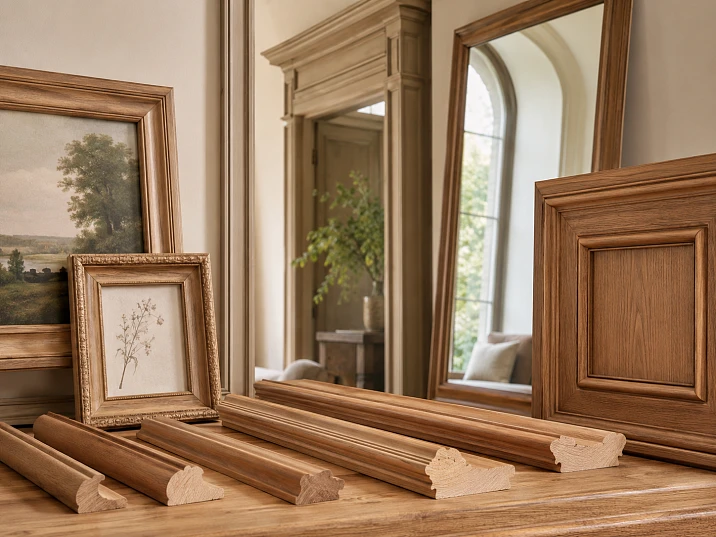
When a buyer is looking for where to buy unpainted wooden baguette by the meter, behind this is usually not an abstract interest in molding, but a specific task: to frame a mirror, assemble a frame for a picture, highlight a furniture facade, decorate a door leaf, cover a decorative joint, or create an expressive portal. In such projects, not only the length of the profile is important, but also its width, ornament, relief depth, material, finishing options, and compatibility with other wooden elements.
Wooden baguette molding is convenient because it does not limit the buyer to a ready-made frame. It can be cut to the desired size, used in rectangular, vertical, horizontal, and composite compositions, painted to match furniture, doors, wall panels, or interior portals. That is why wooden baguette is often chosen by designers, carpenters, furniture workshops, restorers, and homeowners who need not a random profile, but a natural decorative element for a specific project.
At STAVROS you can buy wooden baguette by the meter for frames, mirrors, facades, doors, and interior decoration. The assortment includes wooden baguettes and carved moldings, which can be considered as a basis for framing, decorative lines, and complex compositions. But before buying, it is important not just to choose a beautiful ornament. You need to understand which profile will suit the scale, where it will be used, how to calculate the length, what to complement the corners and central elements with, which finish to choose, and how not to confuse a baguette with a molding, overlay, or ready-made frame.
This article is a practical commercial guide to choosing wooden baguette molding. We will break down where it is used, why unpainted baguette is convenient for finishing, which profile to choose for a frame, mirror, furniture, and portal, what to buy together, and what mistakes most often lead to extra costs, ugly joints, or inconsistency in decor.
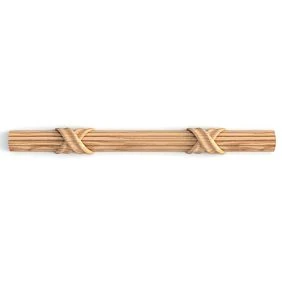
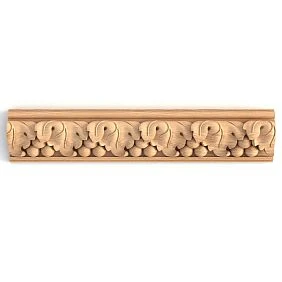
What is wooden baguette molding and where is it used
Wooden baguette molding is a linear decorative profile used for framing, accent lines, decorative frames, furniture inserts, mirrors, doors, portals, and interior compositions. Unlike a ready-made frame, molding is purchased as a profile: it is selected by pattern, width, height, material, and future finish, and then cut to a specific size.
For the buyer, this provides flexibility. There's no need to adjust a mirror or painting to a pre-assembled frame. You can take a profile, calculate the perimeter, allow for corner trimming, and assemble the framing to your own size. This approach is especially convenient for non-standard mirrors, decorative panels, furniture fronts, portals, and projects where a ready-made frame simply doesn't fit.
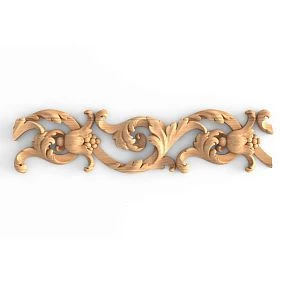
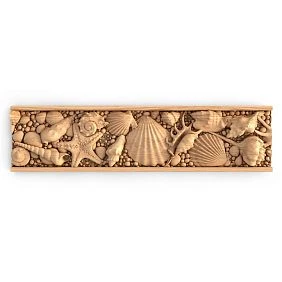
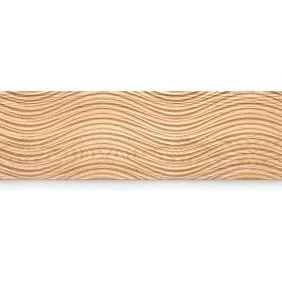
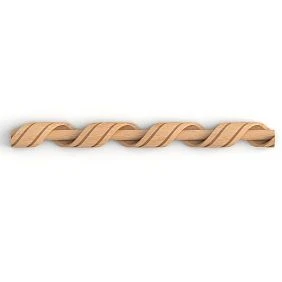
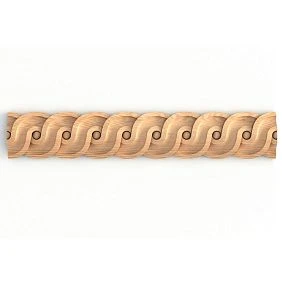
A wooden baguette differs from a regular flat strip in that it has a decorative profile. This can be a geometric relief, ornament, frieze line, "beads," floral pattern, wave, stepped shape, or a more restrained classic treatment. The profile doesn't just cover the edge. It creates a transition, emphasizes the border, sets the scale, and helps make the object complete.
In furniture, baguette molding works as a facade framing. It can highlight the central part of a door, create a frame composition on a chest of drawers, nightstand, console, or cabinet, support decorative overlays, and tie the facade together with handles, legs, tabletop, or portal. In interiors, baguette helps frame a mirror, niche, door leaf, decorative panel, fireplace area, or wall composition.
The main advantage of a wooden baguette is the finishing capability. If the profile is unpainted, it can be prepared for enamel, stain, varnish, or another finish to match the furniture, door, wall, or adjacent decor. That's why the request unfinished wooden molding is often associated not with a one-time purchase, but with a project where color and texture need to be controlled.




How baguette molding differs from a ready-made frame
A ready-made frame is an already assembled product with a set size. It's convenient if you need to quickly frame a painting, photo, or mirror of a standard format. But as soon as the task goes beyond the standard size, a ready-made frame starts to limit. It may not fit in width, color, ornament, fit, style, or proportions.
Baguette molding works differently. It's a profile from which you can assemble framing to the desired size. It's used not only for paintings but also for facades, doors, mirrors, portals, niches, and decorative zones. The buyer, either personally or through a craftsman, determines the length, cutting, corner joint, finish, and combination with other elements.
For a picture frame, this is convenient because you can choose a profile according to the scale of the image. A small graphic panel doesn't require heavy, wide framing. A large mirror in the hallway or living room, on the other hand, can get lost in too thin a line. The baguette profile allows you to select the width and pattern more precisely.
For furniture, the difference is even more important. A ready-made frame won't solve the task of decorating the facade of a chest of drawers or nightstand. But wooden baguette molding can be used as a decorative frame on the facade, around the perimeter of an insert, or around a central element. It can be combined with carved overlays, rosettes, and other moldings.
For a portal or niche, a ready-made frame almost never fits. Here, lengths for a specific opening, precise corners, symmetry of the ornament, and connection with the room's architecture are needed. The baguette profile makes it possible to assemble exactly the contour required by the project.
Our factory also produces:
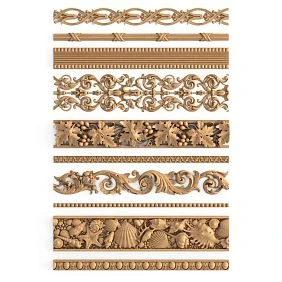
Main characteristics of wooden baguette
When choosing a wooden baguette, it is important to look not only at the photo. The profile must suit the purpose, material, pattern, width, relief height, future finish, and compatibility with other details. STAVROS has a separate section for wooden baguettes, as well as carved moldings and related decor for composite compositions.
| Parameter | What is important for the buyer |
|---|---|
| Product type | Wooden baguette moldings |
| Main tasks | Framing of frames, mirrors, facades, doors, portals, niches, and decorative compositions |
| Application format | Purchase of profile with subsequent cutting for the project |
| Finishing | Unpainted baguette is convenient for enamel, stain, varnish, or color matching to furniture |
| Possible ornaments | Geometry, "beads," floral pattern, frieze profile, and other decorative options |
| Related products | Carved moldings, decorative overlays, wooden rosettes, materials for installation and finishing |
| What to check before ordering | Profile width, pattern, relief height, length, trimming allowance, task compatibility |
| Main section | https://www.stavros.ru/products/izdeliya-iz-massiva/derevyannyy-baget/ |
This table helps quickly understand where to start choosing, but does not replace the product card. Specific models may differ in size, pattern, material, presence or absence of finish, purpose, and application features. Before ordering, you need to open the card of the selected profile and check the current parameters.
If the baguette is for a frame, the perimeter, profile width, and corner accuracy are important. If for a mirror, the scale and stability of the visual framing matter. If for furniture, compatibility with the facade, handles, legs, and finish is key. If for a portal, symmetry, pattern repetition, and the overall architectural effect are crucial.
Get Consultation
Where to use STAVROS wooden baguette
Frames for paintings and panels
For paintings, graphics, decorative panels, and posters, a wooden baguette helps create an expressive frame that supports the image rather than competing with it. A narrow profile is suitable for lightweight works, small images, minimalist panels, and graphics. A wider profile looks better with mirrors, large paintings, classic subjects, and decorative compositions.
When choosing, it is important to consider not only the size of the painting but also its character. Calm graphics often require a thin and restrained framing. A pictorial canvas or decorative panel can handle a more active profile. If the baguette is too simple, the image loses expressiveness. If it is too heavy, the frame begins to dominate.
For projects intended for painting, it is convenient to choose an unpainted profile. It can be made to match the wall, furniture, door, or highlighted with contrast. Therefore, the request 'buy wooden baguette for paintings by the meter' is often associated not with an ordinary frame, but with the task of selecting a profile for a specific work and interior.
Framing mirrors
A mirror without framing can look too technical, especially in a classic, neoclassical, or warm wooden interior. A wooden baguette helps turn the mirror into a full-fledged interior object. It sets a boundary, emphasizes the shape, and connects the mirror with furniture, doors, panels, a console, or a decorative portal.
For a small mirror in the hallway, a more delicate profile is suitable. For a large mirror in the living room, bedroom, or dressing room, you can choose a wider and more expressive baguette. If the mirror is placed above a console, chest of drawers, or fireplace area, the profile should support the overall scale of the composition.
When framing a mirror, the corners are especially important. Even a beautiful baguette will look bad if the cutting is done carelessly or the pattern at the corners is not aligned. Therefore, when calculating, you need to consider not only the perimeter but also the allowance for trimming.
Furniture facades of chests of drawers, nightstands, and consoles
On furniture facades, baguette molding helps create a frame composition. It can frame a central insert, highlight a drawer, create a decorative frame on a door, support a classic style, or add depth to a simple facade. This works especially well on chests of drawers, nightstands, consoles, sideboards, and custom furniture.
If the facade is smooth, the baguette adds relief. If the furniture already has decorative handles or legs, the baguette can connect them to the plane of the facade. If the item is being updated, an unpainted profile can be painted together with the body to make the furniture look cohesive.
For furniture facades, it is important not to overload the surface. A baguette that is too wide on a small door can look heavy. A profile that is too thin on a large facade will get lost. You need to consider the size of the facade, the height of the furniture, the number of drawers, the placement of handles, and the future finish.
If you need to enhance central accents, you can also look at Buy carved overlays for furnitureThe overlay works not as a long profile, but as a separate decorative element: a center, a corner, the upper part of a facade, or an accent area.
Door panels and decorative inserts
Wooden baguette can be used on door panels, decorative inserts, and interior panels. It helps create a frame structure, highlight the central part, repeat the motif of the furniture, or support the classic style of the room. This solution is especially appropriate if the door should be not just a passage element, but part of the overall interior composition.
On the door, it is important to maintain scale. The profile should be visible but not interfere with opening, and should not conflict with the architraves, handle, or overall door thickness. If multiple frame zones are used, distances and symmetry must be calculated in advance.
For painted doors, an unpainted baguette works well. It can be finished in the color of the door leaf or made slightly more expressive with a tint, varnish, or stain. However, the finish must be planned in advance, otherwise the decorative profile will look like a randomly glued-on detail.
Portals, niches, and interior compositions
A portal, niche, or decorative wall requires larger-scale thinking. Here, the baguette molding works as an architectural line. It can frame an opening, highlight the area around a mirror, decorative panel, fireplace mantel, console, or a wall with backlighting. In such projects, the profile becomes part of the interior, not just a frame.
For a portal, a more expressive baguette is usually chosen. A narrow profile can get lost on a large surface. But an overly active ornament is not always suitable either. The room height, opening width, adjacent moldings, baseboards, cornices, furniture, and doors must be taken into account.
In complex compositions, the baguette often works together with rosettes, overlays, and other moldings. For example, corners can be emphasized with decorative elements, the central part with a rosette, and the lines with a baguette profile. In this case, it is important to assemble the set in advance and not buy parts separately without an overall scheme.
How to choose a baguette profile
Narrow profile for a delicate frame
A narrow wooden baguette is suitable where the decorative line should be neat but not dominant. This includes small frames, thin furniture facades, light panels, small mirrors, and internal decorative inserts. It helps define the boundary but does not take all the attention.
This profile is especially good when the object itself is already expressive. For example, a painting has an active color, a mirror is located in a saturated area, or a furniture facade is complemented by handles or overlays. A narrow baguette supports the composition but does not argue with other details.
When choosing a narrow profile, it is important to check the relief. Sometimes a too fine pattern gets lost after painting. If the baguette will be coated with dense enamel, fine details of the ornament may become less noticeable. For stain or varnish, the pattern may read differently because the wood and relief retain more texture.
Wide profile for expressive framing
A wide baguette is chosen when the framing should be a noticeable part of the object. These are large mirrors, portals, large decorative panels, large furniture facades, door inserts, and interior compositions. Such a profile sets the scale and makes the object more substantial.
A wide baguette works well in classic and neoclassical interiors. It can support massive furniture, tall doors, large mirrors, fireplace areas, consoles, and decorative portals. But it must be chosen carefully. On a small frame, a wide profile can look heavier than the image itself. On a narrow facade, it can eat up the usable surface and disrupt proportions.
If a baguette is purchased for a portal, the profile width should correspond to the size of the opening. A large wall requires a more noticeable line. A small niche requires a thinner one. Before ordering, it is useful to make a simple sketch with dimensions to understand how the profile will look not in a catalog, but in real scale.
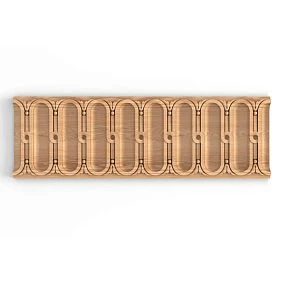
Geometric ornament
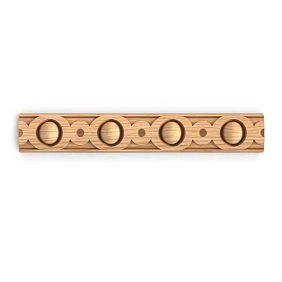
A geometric ornament is suitable for projects where a clear decorative line is needed without excessive softness. It works well on facades, doors, modern classic interiors, strict frames, and portals. Geometry helps to assemble the composition, emphasize corners, and make the decor more architectural.
Such a profile is convenient for furniture because it combines more easily with straight facades, handles, legs, and the body. It does not steer the item into too romantic or historical a style, but adds depth. For modern interiors, this is often a good compromise: natural wood and relief are present, but without excessive decorativeness.
Before purchasing a geometric profile, it is important to consider the joints. The pattern must align neatly at the corners. If the ornament has a repeat, the allowance for cutting may be larger than with a simple smooth profile.
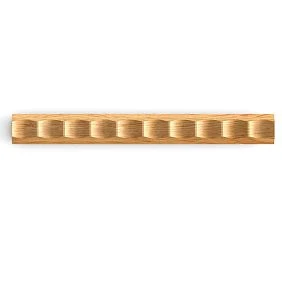
Bead ornament
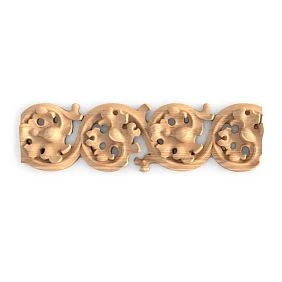
The bead ornament works well where a soft classic rhythm needs to be added. It is often perceived as lighter than large carvings, but more expressive than a simple smooth line. Such a profile can be suitable for mirrors, frames, furniture facades, door inserts, and decorative areas.
"Beads" go well with classic handles, carved overlays, wooden rosettes, and frame-structured facades. They help make the framing more lively, but are not always suitable for strict minimalism. If the interior is completely minimalist, such an ornament may seem superfluous.
When finishing, it is important not to clog the relief. Dense paint can soften small details, while stain or varnish will better emphasize the texture. The exact effect depends on the chosen profile and finish, so before a large order, it is wise to test a sample or at least carefully study the product card.
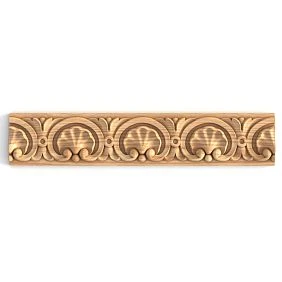
Floral pattern
A floral pattern adds decorativeness and softness to the baguette. It suits classic, neoclassical, Provence styles, interiors with carved details, mirrors in expressive frames, portals, and furniture with an artistic character. Such a profile becomes a noticeable part of the composition, so it must be chosen with particular care.
A floral baguette looks good next to carved overlays, wooden rosettes, shaped furniture elements, portals, and classic facades. But if used too much, the interior can become overloaded. Therefore, it is worth deciding in advance where the main accent will be: on the baguette, on the overlay, on the mirror, on the facade, or on the portal.
For furniture, a floral ornament is best used sparingly. For example, on the central part of the facade, in the framing of a mirror, or on a decorative door. If the facade is small, a large floral profile may look cramped. If the area is large, it will reveal itself better.
Frieze baguette
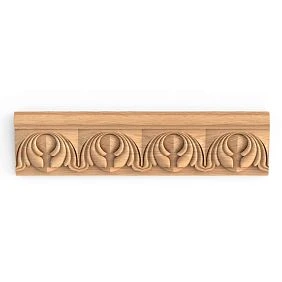
A frieze baguette is used where a decorative strip with a pronounced pattern is needed. It can work as the top or bottom line of a composition, portal framing, an accent on a facade, part of a decorative panel. Such a profile is especially appropriate in interiors with architectural logic: division of planes, frames, belts, niches, portals.
A frieze profile is not always suitable for a small frame. It needs space for the pattern to be readable. However, in large compositions, it helps create a sense of completeness and handcrafted decorative work. It can be combined with calmer profiles to avoid overloading the entire area.
If a frieze baguette is used together with overlays and rosettes, it is important to plan in advance where the pattern will start and end. An accidental break in the ornament at a corner or joint can spoil the impression.
Unpainted wooden baguette: when it is the best option
Unpainted wooden baguette is chosen when the buyer needs to control the final color and texture. This is especially useful for furniture, doors, portals, mirrors, and frames that must match an existing interior. A ready-made color does not always match the desired shade, but an unpainted profile can be prepared for the project.
Under enamel, an unpainted baguette is convenient when a solid color is needed: white, milky, gray, graphite, the color of a facade, or a wall shade. Enamel works well for furniture, doors, and classic interior compositions. However, before finishing, the depth of the relief must be considered: the finer the ornament, the more careful the coating work must be.
Under stain, a baguette is chosen when the wood character needs to be emphasized and a shade matching stairs, furniture, doors, floors, or a portal is desired. Stain can make the profile warmer, darker, or more expressive. But the result depends on the wood species and surface preparation, so it is better to check exact finishing options in advance.
Under varnish, a wooden baguette is suitable when the natural look of the material is to be preserved. Varnish can highlight the texture, protect the surface, and keep the profile visually more natural. This option is good for mirrors, frames, wooden furniture, doors, and interiors where the texture of solid wood is important.
An unpainted baguette is especially useful in projects where several details must match each other: baguette, overlays, rosettes, furniture elements, doors, portals, moldings. If everything is finished in the same logic, the interior looks cohesive. If each element is purchased with a ready-made random color, inconsistency appears.
How to choose a baguette for a frame, mirror, facade, and portal
For a frame, the main thing is the ratio of the profile to the object. A small painting should not be lost in a too wide baguette. A large panel should not look poor in a too thin frame. If the image is calm, the baguette can be more expressive. If the image is active, it is better to choose a more restrained profile.
For a mirror, the scale of the room is important. In a hallway, a mirror often works together with a console, bench, door, or lamp. In a bedroom, with a dresser, vanity table, or textiles. In a living room, with a fireplace area, accent wall, or furniture group. The baguette should connect the mirror with these items.
For a furniture facade, it is important to consider the dimensions of the door or drawer. The profile should not interfere with handles, opening, adjacent facades, or gaps. If the facade is to be repainted, the unpainted baguette can be finished together with the body. If the furniture is already ready, the color and relief will have to be matched more precisely.
For a door, the baguette must account for architraves, handles, hinges, the thickness of the door leaf, and the style of the room. Symmetry is especially important on doors. Even a small mistake in the placement of frames is noticeable because the door is usually perceived as a whole and is at eye level.
For a portal, architectural logic is important. Here, the baguette can be part of a larger system: side lines, top lintel, decorative overlays, rosettes, moldings, central accent. Before purchasing, it is better to assemble a diagram and understand which profile will be the main one and which will be auxiliary.
How to calculate the length of a baguette profile for a frame or decor
The calculation starts with the perimeter. For a simple rectangular frame, you need to measure two widths and two heights of the future framing. But you cannot buy the profile strictly by the perimeter. You need a margin for cutting corners, possible errors, pattern matching, and symmetry of the ornament.
For a frame with 45-degree corners, the margin is especially important. When cutting, part of the profile goes to waste. If the ornament has a repeat, additional length may be needed so that the pattern matches nicely at the corners. The more complex the relief, the more careful the calculation should be.
For a furniture facade, you need to consider not only the outer perimeter of the frame but also the distances from the edge of the facade, handles, adjacent drawers, and decorative elements. If the baguette will be placed on several facades, it is important to maintain equal indents and repeatability of the pattern.
For a portal, the calculation is more complex. You need to measure the height and width of the opening, determine the number of lines, corners, joints, possible decorative inserts, and central elements. If multiple profiles are used, each is calculated separately.
In a large project, it is reasonable to first order samples or a small volume to check the scale, relief, and finish. This is especially useful if the profile will be painted, tinted, or combined with already finished furniture.
Commercial choice: which section to open for your task
| Buyer's task | What to offer | Where to look |
|---|---|---|
| Buy the main decorative profile | Wooden picture frame molding | buy wooden baguette by the meter |
| Select carved solid wood moldings | Carved moldings / wooden baguettes | buy carved solid wood moldings |
| Frame a painting or mirror | Baguette profile for framing | wooden molding for paintings and mirrors |
| Add central and corner accents | Decorative overlays | Buy carved overlays for furniture |
| Close joints and strengthen the composition | Wooden rosettes | buy wooden rosettes for decor |
This route helps you not get lost in the assortment. If you need a main profile for a frame, mirror, or facade, start with a wooden baguette. If the task is broader and you need to select carved moldings for a decorative system, look at carved solid wood moldings. If the composition needs corners, centers, accents, and connecting parts, add overlays and rosettes.
What to buy together with a wooden baguette
A wooden baguette often reveals itself better not alone, but in combination with neighboring elements. If you need to frame a mirror, one profile may suffice. But if it's about furniture, a portal, a door, or a decorative wall, additional details almost always appear: overlays, rosettes, other moldings, materials for installation and finishing.
Decorative overlays are needed when a composition lacks a central accent. For example, on a dresser facade, a baguette creates a frame, while an overlay enhances the top, center, or corner. On a door, an overlay can support a classic style. On a portal, it can become a focal detail.
Wooden rosettes help cover joints, shape corners, create a composition center, or connect several lines. They are especially useful where a simple profile joint looks dry or technical. A rosette can make the transition intentional rather than accidental.
Carved solid wood molding is needed when one baguette does not cover the entire task. For example, a portal may use several profiles: a main baguette, a calmer line, a frieze, a decorative insert. In furniture, molding helps assemble the facade in a unified style.
| What to add to the purchase | Why this is needed | Which scenario it suits |
|---|---|---|
| Decorative overlays | Add central, corner, and facade accents | Furniture, doors, portals, classic compositions |
| Wooden rosettes | Help shape joints, corners, and the composition center | Frames, portals, panels, decorative zones |
| Baguette samples | Allow checking scale, relief, and future finish | Large order, furniture for painting, complex interior |
| Materials for finishing and installation | Needed for painting, fixing, and surface preparation | Unpainted baguette, furniture, doors, portals |
| Carved solid wood moldings | Helps create a unified decorative system | Portals, panels, facades, large interior solutions |
The biggest mistake is to buy only the baguette and then look for something to cover the corners, strengthen the center, or support the style. It's better to imagine the entire composition in advance: where the profile will be, where the joint, where the accent, where a rosette is needed, where an overlay is appropriate, what finish will unify the details.
How not to confuse a wooden baguette with similar products
Wooden baguette, molding, overlay, rosette, and finished frame can be part of one project, but they are different products. If their purpose is confused, the buyer risks ordering the wrong element: a profile instead of a local accent, an overlay instead of a linear frame, or a finished frame instead of linear molding for cutting.
| Product | What it is for | When to buy |
|---|---|---|
| Wooden picture frame molding | Framing, borders, decorative lines, facades, portals | When a carved or geometric profile in length is needed |
| Molding | Linear design of wall, ceiling, panel or facade | When a stricter profile line is needed |
| Overlay | A separate carved element for the center, corner or facade | When a local decorative accent is needed |
| Wooden rosette | Central or connecting decorative element | When you need to cover a joint or design the center of a composition |
| Ready-made frame | Already assembled frame | When cutting and assembly from linear elements are not needed |
Bagette is more often chosen for framing. It works along the perimeter or along a line. Molding can be stricter and is more often used for wall or ceiling compositions. An overlay does not replace bagette because it does not create a long line. A rosette helps to cover a joint or highlight the center, but does not frame the entire perimeter. A ready-made frame is convenient only when the size already fits and individual assembly is not needed.
Practical selection for different situations
You need to design a small frame
Choose a narrow or medium profile without overly large ornamentation. A small frame should complement the image, not compete with it. If painting is planned, look at unpainted baguette and decide in advance whether it will match the image, wall, or furniture.
You need to make a frame for a large mirror
For a large mirror, it's better to choose a more noticeable profile. A thin baguette can get lost, especially if the mirror hangs in a spacious hallway, living room, or above a console. But the width should match not only the mirror but also the nearby furniture. If a massive console stands under the mirror, a too-light profile will look weak.
You need to decorate a furniture facade
First, measure the facade and determine the indents. The baguette should not interfere with handles, opening, or adjacent drawers. If the facade is small, choose the profile more carefully. If the facade is large, a more expressive ornament can be used. For a unified result, it's better to finish the baguette together with the furniture.
You need to design a door
Symmetry is important on doors. Before purchasing, you need to decide how many frame zones will be on the panel, what indents from the edges, how the profile will combine with the handle and trim. If the door will be painted, an unpainted baguette will allow for a cohesive design.
You need to assemble a portal
A portal requires calculation and a comprehensive approach. One baguette may not be enough. Often, rosettes, overlays, additional moldings, and thoughtful finishing are needed. First, determine the main profile, then select auxiliary elements and calculate the length with a margin for corners.
You need to select decor for a commercial interior
In a salon, showroom, restaurant, or office, baguette moldings help make the interior more expressive. They can be used to decorate mirrors, wall panels, portals, furniture facades, and decorative zones. Here, it's especially important that the profile looks professional rather than domestic: correct scale, neat joints, unified finish.
Installation, trimming, and finishing: what to plan in advance
Installation of a wooden baguette depends on the base and the task. On a frame, precision of angles is important. On a facade, neat fitting and compatibility with opening are key. On a door, symmetry and secure fastening matter. On a portal, a straight line, joints, and combination with adjacent details are essential.
Before installation, the surface must be checked. It should be clean, level, and ready for fixing. If the baguette will be painted after installation, protection of adjacent surfaces should be considered. If finishing is done before installation, it is important not to damage the profile during trimming.
Trimming corners requires precision, especially if the profile has an ornament. For a simple smooth baguette, an error is less noticeable, but for a carved profile, a mismatch in the pattern is immediately obvious. Therefore, an allowance for trimming is not a formality but a normal part of the calculation.
Finishing is best planned before purchase. The same baguette under enamel, stain, and varnish can look different. Enamel makes the profile more graphic, stain emphasizes the wood character, and varnish preserves naturalness. If the baguette must match furniture or a door, it is better to choose the finish in advance and check compatibility.
Mistakes when buying wooden baguette moldings
Choosing only by a beautiful ornament
The ornament is important, but it doesn't solve everything. A profile can be beautiful in itself but not suitable for the task. For a small frame, it may be too large; for a portal, too weak; for a facade, inconvenient in thickness. First the task, then the pattern.
Not counting an allowance for trimming
Buying strictly by the perimeter is almost always risky. Corners, errors, pattern repetition, and fitting require an allowance. If there isn't enough baguette, you'll have to buy more, and the batch, shade, or availability may differ.
Do not consider pattern repeat
For ornamental baguettes, it's important how the pattern aligns at corners. If the repeat breaks randomly, the frame or portal looks untidy. The more active the ornament, the more carefully you need to calculate the layout.
Buying profile without a finishing plan
An unpainted baguette is only good when you know how to finish it. If you buy a profile without a color solution, you can end up with a prolonged project and a random result. The color should be coordinated with furniture, doors, walls, or mirrors in advance.
Confusing baguette with molding
Molding and baguette are similar, but not always interchangeable. Baguette often works as a frame, molding as a linear architectural detail. If you need a profile for a frame or mirror, it's better to look specifically at the baguette section.
Not buying accompanying decor
For a complex composition, one baguette may not be enough. Corners, centers, and joints often require overlays or rosettes. If you don't plan this in advance, the decor will look unfinished.
Not checking scale on a real object
A profile in the catalog may appear larger or smaller than in real life. Before a large order, it's useful to evaluate the dimensions on a sketch, apply a sample, or at least compare the baguette width with the actual size of the frame, facade, or portal.
Who is wooden baguette molding suitable for
Baguette molding is suitable for designers who assemble interior compositions from natural materials and want to control the shape, color, and scale of the decor. It helps to frame a mirror, portal, facade, door, or decorative panel for a specific project.
It is suitable for furniture workshops and carpenters. With wooden baguette, you can make a facade more expressive, add a frame structure, design inserts, support a classic style, or update old furniture.
It is suitable for restorers because an unpainted profile can be adjusted to match existing finishes. Old furniture, mirrors, and doors often require non-standard solutions, and a ready-made frame or random strip does not provide the desired effect.
It is suitable for homeowners and apartment dwellers who want to frame a mirror, painting, portal, niche, or furniture with natural wooden decor. If you want not a ready-made standard size but a solution for a specific task, baguette molding is more convenient.
But it is not suitable for those who need a completely finished frame without cutting and assembly. It is not suitable for tasks where a plastic profile, an electrical frame for sockets, or a temporary solution without finishing is needed. Also, it should not be purchased without calculating the length, understanding the ornament, and having an installation plan.
How to buy wooden baguette at STAVROS
Start with the task. If you need to frame a picture or mirror, determine the size, width of the future framing, and style. If the baguette is needed for furniture, measure the facades, handles, offsets, and opening areas. If it is about a portal or niche, first assemble a diagram of the entire composition.
Then choose the main profile. To do this, you can open the section where wooden baguette is presented and look at options by pattern, scale, and application. If a broader decorative selection is needed, additionally study carved solid wood molding. For corners, centers, and accents, pre-select overlays and rosettes.
Before ordering, check the length, profile, ornament, material, finish, allowance for cutting, and compatibility with the task. If the project is large, it is better to evaluate a sample in advance or clarify parameters with a STAVROS manager. This is especially important if the baguette will be painted to match furniture, a door, or a portal.
This approach helps to buy not a random profile, but a full-fledged decorative element for the project. Wooden baguette molding reveals itself best when chosen consciously: according to size, style, finish, joints, and adjacent details.
FAQ: frequently asked questions about wooden baguette moldings
Which wooden baguette should I buy for a frame?
For a frame, it's better to choose a profile based on the image size, the width of the future framing, the depth of the relief, and the interior style. For small works, a narrow profile is suitable; for a large mirror or panel, a wider and more expressive one.
Can I buy an unpainted wooden baguette?
Yes. An unpainted baguette is convenient if you need to match the color to furniture, a door, a wall panel, a mirror, or a portal. It can be finished with enamel, stain, or varnish if it suits the specific project.
What is the difference between a wooden baguette and a molding?
A baguette is more often used as a framing decorative profile: for frames, mirrors, facades, doors, and portals. A molding more often works as a linear element of a wall, ceiling, or facade composition.
What to buy together with a wooden baguette?
Along with the baguette, it's worth considering decorative overlays, wooden rosettes, samples, mounting materials, and related moldings. For complex portals and furniture facades, a comprehensive approach almost always yields the best result.
How to calculate the length of a wooden baguette?
You need to measure the perimeter of the frame, facade, or decorative area, add a margin for cutting corners, and account for pattern repeat. For complex compositions, it's better to calculate each section separately.
Is a baguette suitable for a mirror?
Yes, a wooden baguette is well-suited for framing mirrors. For a small mirror, it's better to choose a more delicate profile; for a large one, a more expressive one. It's important to consider weight, installation, and the overall scale of the interior.
Can baguette be used on a furniture facade?
Yes. Baguette molding is used for frame facades, decorative inserts, chests of drawers, nightstands, consoles, and custom furniture. You need to check the profile thickness, offsets, handle placement, and compatibility with the finish.
Which profile should I choose for a portal?
For a portal, a more noticeable profile is usually needed than for a small frame. It should match the size of the opening, wall height, and adjacent details. Often, the baguette is combined with rosettes, overlays, and other moldings.
What is better: a ready-made frame or baguette molding?
A ready-made frame is convenient for a standard size without modification. Baguette molding is better if you need a non-standard size, custom finish, or to design furniture, a door, portal, or mirror for a project.
Do I need to buy samples before a large order?
For a large project, this is reasonable. A sample helps assess the profile scale, relief depth, finish behavior, and combination with furniture, door, wall, or mirror.
How not to make a mistake with the ornament?
Evaluate the ornament not separately, but next to the object. For a small frame, a large pattern may be heavy. For a portal, a small profile may get lost. It is also important to consider the pattern repeat and corner joining.
Where to buy wooden baguette for paintings and mirrors?
In the STAVROS catalog you can choose wooden molding for paintings and mirrors and select a profile according to size, style, and future finish.
Result: how to choose baguette molding without random mistakes
Wooden baguette molding helps to design a frame, mirror, furniture facade, door, portal, or decorative composition not by template, but for a specific size and style. It gives more freedom than a ready-made frame and allows you to assemble a trim for the project: with the desired ornament, width, finish, corners, and accompanying accents.
Choosing a wooden baguette should be based not only on the beauty of the pattern. The task, scale, profile width, pattern repeat, length calculation, allowance for cutting, future finish, and combination with overlays, rosettes, and other moldings are important. For furniture, facades and handles need to be considered. For a mirror, the size and interior. For a portal, the architectural logic of the entire area.
At STAVROS, you can select wooden baguette, carved solid wood molding, decorative overlays, and wooden rosettes for a unified composition. This approach helps to move from the idea of "need to decorate beautifully" to a clear choice: which profile to buy, what to complement it with, how to calculate the length, and what to check before ordering.