Article Contents:
- What is a picture frame molding and why it is more than just a frame
- What does a picture frame molding consist of
- How a picture frame molding differs from a regular frame
- Where and why wooden picture frame moldings are used
- Paintings and original works
- Posters and art prints
- Gallery wall
- Mirrors
- Offices and home libraries
- Living rooms, bedrooms, halls
- Restaurants, hotels, offices
- How to choose the width of a wooden baguette
- Narrow profile: 10–30 mm
- Medium profile: 30–60 mm
- Wide profile: 60–120 mm and more
- Rule of Scale
- How to choose the style of a wooden baguette
- Classicism and Baroque
- Neoclassicism and Modern Classicism
- Minimalism and Scandinavian style
- Rustic and country interior
- Interior with wooden furniture
- Why a wooden baguette looks more expensive than all alternatives
- Wood texture — a living surface
- Finishing options
- Combination with wooden interior details
- Durability
- Frame for canvas painting: specifics of selection
- Rebate depth
- Perimeter gap
- Frame style for painting
- Frame for poster and graphics: when restraint is strength
- Mat: why it is needed
- Profile for poster
- Gallery wall of posters
- How to choose the color of a wooden frame for a painting and interior
- Repeating a color from the painting
- Contrast
- Neutral tone
- Coordination with interior
- White frame — when it is appropriate
- Dark tints: walnut, wenge, dark oak
- Gallery wall: how to assemble a collection of frames
- Unified frame color scheme
- Variety of formats
- Distance between frames
- Centering
- Wooden baguette by the meter: for those who do it themselves
- Technical parameters: rabbet, load, mounting
- Rabbet depth and width
- Frame weight and mounting
- Glass for frames
- Mistakes when choosing a baguette frame
- Where to buy a baguette frame for paintings
- FAQ: Answers to Popular Questions
- About the manufacturer

A painting without a frame is an unfinished sentence. Painting, graphics, poster, photography — any work acquires completeness only when properly framed. The frame does not just hold the canvas or paper. It serves as a transition between the world of the painting and the world of the interior, and how accurately this transition is chosen determines whether the painting will speak or remain silent.
Molded picture frame made of wood — it is not a decorative trifle. It is a tool that professional gallerists, designers, and collectors select as carefully as the work itself. Profile width, depth, relief, color, finish — each parameter affects how the painting is perceived in the space: whether it dominates or delicately exists, complements the interior or conflicts with it.
But for most people, choosing a frame is a complete fog. Wide or narrow? Dark or light? Classic or minimalist? With relief or without? This article clears the fog once and for all. Read it — and after that, you will choose a frame like a professional.
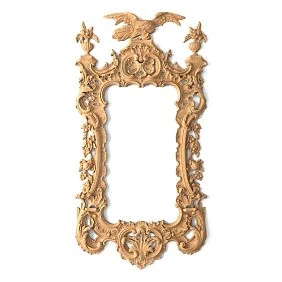
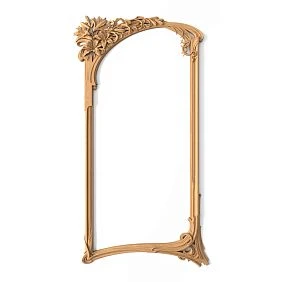
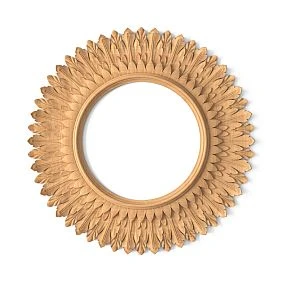
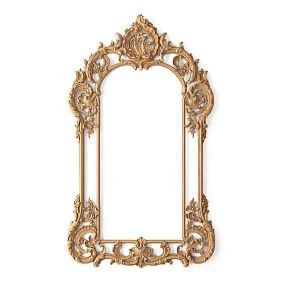
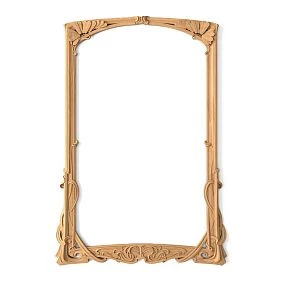
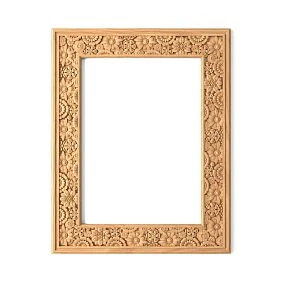
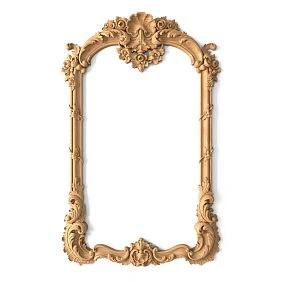
What is a baguette frame and why it's more than just a frame
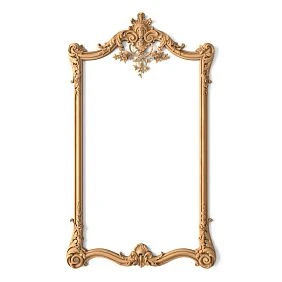
The word "baguette" comes from French and means "rod" or "profile strip". In a professional context, a baguette is a profile element from which a frame is assembled: four segments joined at a 45-degree angle. The profile can be anything: straight, shaped, with relief, with a groove, with false gilding.
Wooden Picture Frame — the classic of baguette craftsmanship. Wood has served as the basis for frames in museum collections, galleries, and aristocratic homes for millennia. Plastic and metal came much later — as a cheaper alternative. But wooden baguette always remains the standard: in terms of tactility, texture, finishing possibilities, and that special feeling of "authenticity" that no substitute can imitate.




What does a baguette frame consist of
Classic Wooden picture frame includes:
Profile (baguette) — the wooden element itself with a cross-sectional shape. Its width, height, and relief determine the character of the frame.
Rabbit — the inner groove of the profile into which the painting, canvas, or glass is inserted. The depth of the rabbit determines how deep a canvas fits into the frame.
Mat (optional) — a cardboard spacer between the frame and the artwork, creating an additional field around the image. Used for graphics, photography, watercolors.
Backing — a sheet material covering the back side of the frame (hardboard, cardboard, plywood).
Glass (optional) — for protecting works on paper, graphics, photographs.
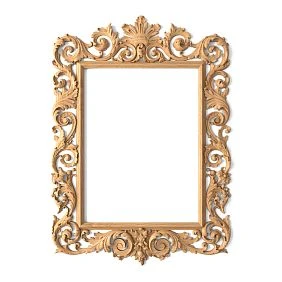
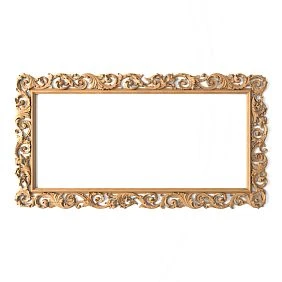
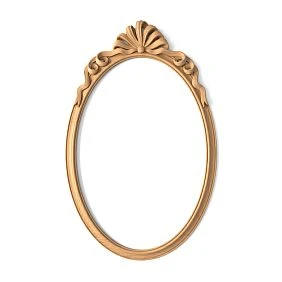
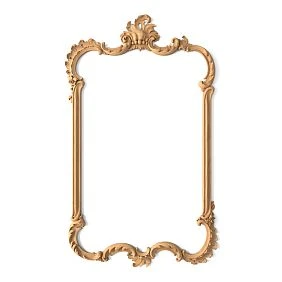
Our factory also produces:
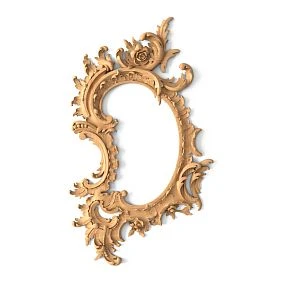
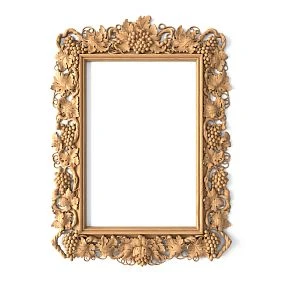
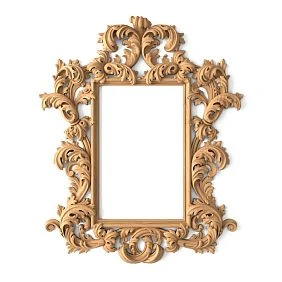
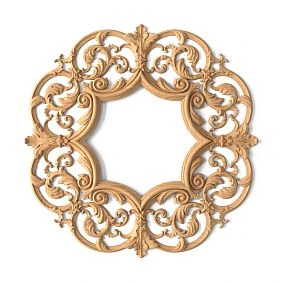
How a baguette frame differs from a regular frame
Many people confuse a baguette frame with a regular photo frame. The difference is fundamental.
A regular photo frame is a standard construction designed for a specific format (10×15, A4, A3) with a fixed simple profile. It only serves the function of storage and display.
Molded picture frame — is a product with a profile selected for a specific task: style, scale, character of the artwork, interior. The profile can range from 10 mm to 150 mm and wider. The relief can be from completely smooth to multi-level with ornamentation. The finish can range from natural varnish to faux gold. It is a design tool, not just a paper holder.
Moreover, Wooden molding is also sold by the meter — for those who make frames themselves. This makes it possible to create a frame of any non-standard size.
Get Consultation
Where and for what purpose are wooden baguette frames used
The scope of application is wider than it seems at first glance.
Paintings and original works
The main scenario. Oil painting, tempera, acrylic, watercolor under glass — each type of painting requires its own frame. Oil painting on canvas — wide profile, deep rabbet for canvas on stretcher. Watercolor and graphics — thin or medium profile with mat.
Posters and art prints
Posters have become full-fledged objects of interior decor. The right wooden picture frame turns even an inexpensive print into a true interior object. Here, a laconic profile that does not overload the image is important.
Gallery wall
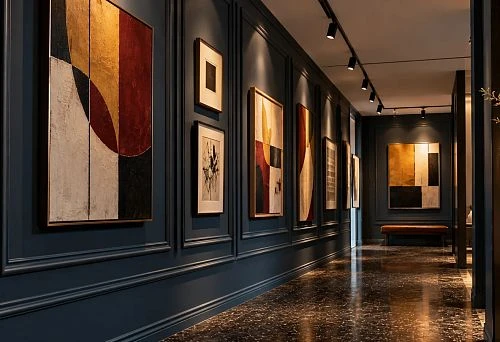
One of the main interior trends of the last decade is the gallery wall, a gallery wall of several works of different formats. For it, frames are selected in a single color scheme or a single material. wooden frames with the same tint tone create a cohesive collection.
Mirrors
wooden frame a frame for a mirror and a baguette frame for a painting are technically similar products. The difference is in the depth of the rabbet and the permissible load. Many wooden frames are used for both paintings and mirrors.
Offices and home libraries
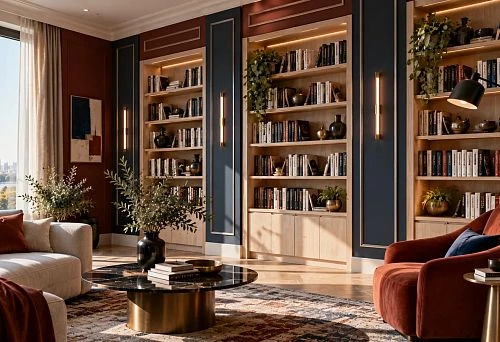
A classic office with dark bookshelves and paintings in wide dark gold frames is a recognizable archetype. It is here that a wide ornamental wooden baguette with an antique gold tint achieves its highest expressiveness.
Living rooms, bedrooms, halls
In the living room — an accent work in a wide frame on the wall above the sofa. In the bedroom — a series of small works in delicate thin frames. In the hall — a mirror or painting in a frame that greets the guest from the first seconds.
Restaurants, hotels, offices
Commercial spaces are increasingly using paintings and art prints in wooden frames as part of the atmosphere. This is a demonstration of taste and culture — and at the same time a professional design technique.
How to choose the width of a wooden baguette
Profile width is the main parameter that a person sees immediately. It is what sets the "weight" of the frame and how the painting is perceived in the space.
Narrow profile: 10–30 mm
Thin Wooden Picture Frame — for graphics, black-and-white photography, minimalist posters, small watercolors. Here the frame says: "I don't interfere. Look at the work." This is the right position for modern and Scandinavian interiors.
A narrow profile is organic on a gallery wall when several works form a collection — a thin frame does not create visual noise.
Medium profile: 30–60 mm
A universal range. Works for most formats and most interiors. Noticeable enough to frame a picture, and restrained enough not to dominate the image.
For works in A3–A2 format, small canvases 40×50–60×80 cm, posters, photographs — a medium profile is optimal.
Wide profile: 60–120 mm and more
A wide wooden baguette is an architectural object. It creates a field around the image that itself carries decorative value. A wide frame is suitable for:
-
large paintings;
-
classical and neoclassical interiors;
-
accent pieces above a fireplace or sofa;
-
studies and libraries with dark wood.
A wide profile allows space for relief, ornament, and several decorative bands — which is why it was historically used in museum and palace collections.
Rule of Scale
The width of the frame should match the size of the painting. The specific ratio: the profile width is 5–10% of the shorter side of the painting. Painting 60×80 cm — frame 30–60 mm. Painting 100×150 cm — frame 50–100 mm.
| Picture size | Recommended profile width |
|---|---|
| Up to 30×40 cm | 10–25 mm |
| 40×50 — 60×80 cm | 25–50 mm |
| 60×90 — 80×120 cm | 40–70 mm |
| 100×150 cm and more | 60–120 mm |
| Monumental works | 100–150 mm |
How to choose the style of a wooden baguette
Style is the consistency between the frame, the painting, and the interior. Here are three sides of a triangle, and all three must match each other.
Classical and Baroque
A wide wooden baguette with deep relief: leaves, pearls, meander, geometric bands. Finish — toning under old gold, dark walnut, bronze. This style is created for formal interiors, antique paintings, a classic living room with stucco and wooden moldings.
A classic frame says: "This work is important. It deserves a formal framing." This is exactly how works are exhibited in museums and private collections.
Neoclassicism and modern classicism
Medium or wide profile with geometric relief without ornamentation. Clean lines, clear contours, possibly one decorative band. Finish — toning under light oak, dark walnut, or white enamel.
This is the most versatile style, which combines with most modern interiors without looking outdated or cold.
Minimalism and Scandinavian style
Thin smooth profile without relief. Natural light wood or white paint. The task of the frame here is to be invisible, not to distract from the work. This is a frame for a space where purity and air are valued.
Rustic and country interior
Wooden profile with visible texture, possibly with deliberately rough surface treatment. Finish — toning under dark oak, wenge, or untreated wood. For country houses, wooden interiors, dining rooms with rough furniture.
Interior with wooden furniture
If the room has wooden furniture made of oak or beech, the frame should be of the same species or the same toning. This creates a unified wooden ensemble where the frame is an organic part of the space, not a foreign body.
Why a wooden baguette looks more expensive than all alternatives
This is not a marketing gimmick. It's the physics of the material.
The texture of wood is a living surface
Natural wood has a micro-relief that interacts with light differently than plastic or metal. The tinting in the wood texture creates a depth that cannot be imitated. This is why a wooden frame in an interior always feels "heavier" than a plastic one, even with the same profile.
Finishing options
buy wooden molding available in various finishing options: clear varnish preserving the texture, stain for walnut or oak, white enamel, antique gold tinting, patination. Plastic does not allow such variety.
Combination with wooden interior details
A wooden frame pairs with parquet, wooden doors, wooden molding, solid wood furniture. It is organic in a space with wood — plastic or metal would be a dissonance here.
Durability
A high-quality wooden frame lasts for decades without deformation. Frames in museum collections are often pieces from the 17th–19th centuries that have survived better than the artworks they frame.
Baguette frame for canvas painting: specifics of selection
A canvas on a stretcher is a three-dimensional object. Its thickness is usually 18–40 mm depending on the stretcher. This requires a proper rabbet.
Rabbet depth
The rabbet of the frame for a canvas must be at least 15 mm for a standard stretcher, and at least 35–40 mm for a thick gallery-type stretcher. If the rabbet is shallow, the canvas simply won't fit.
When ordering a wooden frame for a painting Always check the rabbet depth for canvas. This is the primary technical parameter.
Perimeter gap
There should be a gap of 1–2 mm on each side between the edge of the canvas and the rabbet of the frame. Wood works — it expands with humidity and contracts with dryness. A tight fit without a gap will eventually lead to deformation of the canvas or frame.
Frame style for paintings
A painting — especially a classical one — requires a frame with character. A wide profile with relief emphasizes the significance of the work. For modern abstraction — on the contrary: a minimalist profile or even a floating frame, where there is a visible gap between the frame and the canvas.
Baguette frame for posters and graphics: when restraint is strength
Poster, graphic, art print — this is work on paper. Glass is essential here: it protects the paper from dust and moisture. And a mat is most often used here.
Mat: why it is needed
A mat is a cardboard border around the image. It creates a white (or colored) field between the image and the frame, which:
-
visually 'lifts' the work, making it more noticeable;
-
isolates the paper from the glass (the paper should not touch the glass);
-
gives a museum exhibition feel.
The standard mat width is 5–8 cm on each side. The bottom margin of the mat is usually made slightly wider than the top — this is a classic optical technique.
Profile for poster
For posters and graphics, choose a thin or medium Wooden Picture Frame: 15–40 mm. Smooth or with minimal relief. Tinting — natural wood, white, or black.
A heavy ornamental profile for a poster with a modern design is overload. The frame will overpower the image.
Gallery wall of posters
For a gallery wall of multiple posters and prints, uniformity of frames is important: the same profile, the same finish. This creates a sense of a series, a collection. A mix of frames on a gallery wall is visual chaos.
How to choose the color of a wooden frame for a painting and interior
The color of the frame is perhaps the most difficult parameter to choose. There are no absolute rules, but there are working principles.
Repeating a color from the painting
A classic technique: find one of the dominant tones in the painting and repeat it in the frame. A painting with warm ochre tones — a frame in dark walnut. A painting with cool blue tones — a frame in dark gray or anthracite tone.
Contrast
A white frame on a dark painting is contrast that makes the image brighter. A dark frame around a light watercolor — the same principle. Contrast is acceptable and even effective, but requires confidence in the decision.
Neutral tone
Natural light wood is the safest choice. It doesn't compete with either warm or cool tones of the painting. This is a frame that 'works' in most cases.
Combination with the interior
Dark parquet and dark wooden furniture — a dark frame to match. Light walls and light furniture — a light or white frame. An interior with golden accents — a frame with faux gilding.
The key principle: the frame should be part of the interior, not oppose it.
White frame — when it is appropriate
White enamel on a wooden profile is neoclassicism, Provence, Scandinavian style. A white frame does not distract attention, creates purity and air. It is especially good for black-and-white photography and monochrome graphics.
Dark tints: walnut, wenge, dark oak
For classic interiors with dark wood — a dark frame enhances monumentality. For studies, libraries, dining rooms with leather furniture — this is an organic choice.
Gallery wall: how to assemble a collection of frames
A gallery wall is when several works of different formats and characters are combined on one wall into a single composition. This is one of the most complex interior techniques — and one of the most expressive.
Unified range of frames
For a gallery wall, frames should be connected by one of three principles:
One material — all frames are wooden, of different profiles, but from the same species or with the same tint.
One color — all frames are white or all black, regardless of profile.
One style — all frames are classic or all minimalist, regardless of tint.
Variety of formats
A gallery wall thrives on the variety of formats and orientations of works: vertical, horizontal, square — in different proportions. wooden frames of different sizes but a unified style create visual rhythm without clutter.
Distance between frames
The standard distance between adjacent frames on a gallery wall is 5–8 cm. Less — too merged, more — too scattered.
Centering
A gallery wall is centered horizontally or along the central axis. The key work—the largest or most important—is placed in the center. The rest are arranged around it.
Wooden molding by the meter: for those who do it themselves
Wooden trim Molding for frames is also sold by the meter—for self-making frames of non-standard sizes. This is a popular solution for:
-
artists who make frames for specific works;
-
restorers who need an exact profile to match an old frame;
-
designers who produce a series of frames for a gallery wall.
For self-assembling a frame, you need a miter box (a tool for cutting at 45°), wood glue, corner brackets or staples. It's not difficult—and it allows you to create a frame of any non-standard size with millimeter precision.
Technical parameters: rabbet, load, mounting
Rabbet depth and width
The rabbet is the inner groove into which the artwork is inserted. Its parameters:
-
Rebate width: determined by the thickness of the inserted element (canvas, glass, mat). Standard — 3–5 mm for glass, 20–40 mm for stretcher frame.
-
Rebate depth: distance from the front surface of the frame to the bottom of the groove. For a painting under glass, 8–12 mm is sufficient. For canvas on a stretcher frame — 20–40 mm.
Frame weight and mounting
A wooden frame weighs significantly less than it might seem. A frame with a 60 mm profile for a 60×80 cm painting weighs 1.5–2.5 kg. With canvas — plus the weight of the painting. Total 3–5 kg. This requires reliable wall mounting.
Standard mounting — a loop on a cable or a U-shaped hook on the back of the frame. For heavy works — two mounts at a distance of 30–40% of the total frame width.
Glass for frames
Standard 2 mm glass — for frames up to 50×70 cm. Larger frames — 3–4 mm glass or museum non-glare glass. Non-glare glass is more expensive but significantly improves the perception of the work under side lighting.
Mistakes when choosing a picture frame
Let's analyze typical mistakes. Most of them are made out of ignorance — after this article, you won't repeat them.
Choosing a frame only to match the wall color. The frame should match both the painting and the interior. A frame matching the wall color makes the painting invisible: it 'drowns' into the wall.
Choosing too narrow a baguette for a large painting. A 15 mm frame for a 100×150 cm canvas looks like a thread around a sheet. The scale of the frame should match the scale of the painting.
Overloading modern graphics with a heavy profile. A wide baroque frame with ornamentation around a minimalist poster is a style conflict. A contemporary work requires restrained framing.
Not considering a mat. For graphics and photographs, a mat is mandatory — it isolates the paper from the glass and creates a museum look. Without a mat, the work looks 'bare' in the frame.
Forgetting about weight and mounting. A heavy frame on a thin nail is a risk. Calculate the load and use appropriate hardware.
Mixing different wood stains. On one gallery wall — frames in walnut and light oak — that's color chaos. Choose a single tone.
Choosing a frame separately from the interior. The frame is part of the interior. It should match not only the painting but also the room's style, furniture, floor, and moldings.
Not considering the depth of the canvas. If the rabbet is shallow, the canvas won't fit. Always check the rabbet depth when ordering a frame for a painting on a stretcher.
Where to buy a baguette frame for paintings
Buy picture frames made of wood — it's a matter of choosing a reliable supplier with a real assortment and precise specifications.
in the STAVROS catalog Wooden Frames for Artworks и Solid wood frames various profiles — from thin minimalist to wide classic. Here also — Wooden Picture Frame footage for self-made frames of any non-standard sizes.
Additionally in the catalog: Wooden moldings for furniture and interior decor and a full range wooden products for interiors — in a unified system of material and style.
FAQ: Answers to popular questions
How to choose a baguette frame for a painting?
Determine the format and nature of the work, the interior style, and the desired accent. Choose the profile width according to the size of the painting, the style according to the interior, and the tint according to the color scheme of the work and the room.
How is a baguette different from a regular frame?
A baguette is a profile element with shape, relief, and a decorative purpose. A regular frame is a standard product without profile variability. A baguette frame is created for a specific artwork and interior.
Which wooden baguette to choose for a canvas?
With a rebate depth of at least 15–20 mm for a standard stretcher. Profile width — 5–10% of the shorter side of the painting. Style — corresponding to the genre of painting and the interior.
Is a baguette frame suitable for a poster?
Yes. For a poster, choose a thin or medium profile of 15–35 mm with a mat and glass. A heavy ornamental profile is excessive for a poster.
How to choose the width of the baguette?
The profile width is 5–10% of the smaller side of the painting. Small works — thin profile. Large paintings — wide profile. Gallery wall — a single profile for the entire series.
How to match the frame color to the painting?
Repeat the dominant tone of the painting in the frame tint — or choose a neutral natural wood tone. Contrast is acceptable as a deliberate design technique.
Which is better: narrow or wide baguette?
Depends on the size of the painting, interior style, and task. Narrow — for graphics, posters, modern interiors. Wide — for paintings, classics, accent works.
Can a wooden baguette be used for a mirror?
Yes. Technically, a wooden frame for a painting and a frame for a mirror are similar. The difference is in the depth of the rabbet and the load on the mounting.
How to combine frames on a gallery wall?
One material, one color, or one style — one of three principles. A mix of frames on a gallery wall creates chaos.
Where to buy a picture frame molding?
In the STAVROS catalog: wooden frames, Solid wood frames и Wooden Picture Frame by the meter — with Contact us to confirm shipping to your destination.
About the manufacturer
STAVROS is a Russian manufacturer of wood products for interiors and furniture. The company's catalog includes Wooden Frames for Artworks, Solid wood frames, wooden moldings and picture frames, Moldings and a full range wooden products for decorating spaces. If you are looking for a picture frame molding — in the catalog STAVROS you will find the right profile, style, and size with the quality guarantee of natural wood.