Article Contents:
- Wooden cornice KZ-017 109×109 mm: what the product card actually offers
- The specification says "oak": why you cannot automatically order KZ-017 oak/MDF
- Cornice KZ-017 made of oak/MDF: what questions to ask before placing an order
- Wooden cornice made of solid oak KZ-017: when the word "solid" is crucial
- Beech and beech/MDF: the same mistake may happen a second time
- MDF 2600 mm and other versions 2400 mm: the material also changes the length
- How much do eight KZ-017 units cost in different configurations
- Why price cannot be the only selection criterion
- How to understand that the invoice contains exactly the required version of KZ-017
- KZ-017 is a prefabricated hollow cornice: why the material needs to be read especially carefully
- Under enamel and under tint: what cannot be transferred automatically between versions
- Ceiling cornice or furniture cornice: it is also useful to record the purpose
- When instead of KZ-017 it is better to return to the cornice section
- Wooden plinth for KZ-017: the bottom line of the wall also needs to be specified accurately
- How to write KZ-017 in an order so that the manager does not have to guess
- How to formulate a question to the manager if the project just says "oak"
- Packaging of KZ-017: it also needs to be checked in a large order
- Acceptance of KZ-017 after delivery: we verify the material before unpacking the entire batch
- Why the difference of 620 ₽ per strip does not show the real savings of the project
- If the adjacent trim is already oak: we check not only the color, but also the material system
- What to do if the designer only wrote "KZ-017 oak" and is unavailable
- Final specification for a batch of eight slats
- When to stop order KZ-017 until clarification
- Errors when ordering KZ-017
- What to confirm before paying for wooden cornice KZ-017
- Questions before purchasing KZ-017
- What size is KZ-017?
- What materials are available for KZ-017?
- How is oak different from oak/MDF?
- Can oak be replaced with oak/MDF without approval?
- Does the same rule apply to beech?
- What length is KZ-017 made of MDF?
- What is the length of oak KZ-017?
- What is the length of oak/MDF?
- How much does KZ-017 oak/MDF cost?
- How much does KZ-017 made of oak cost?
- How much does beech/MDF cost?
- How much does KZ-017 made of beech cost?
- What sanding is specified in the product card?
- Is KZ-017 solid or assembled?
- Can KZ-017 be used for furniture?
- Where can I see other wooden cornices?
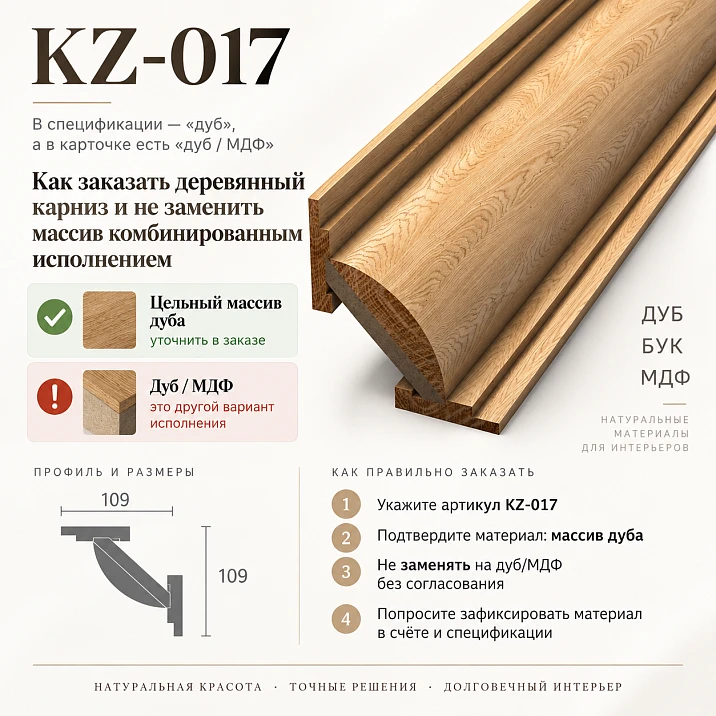
The project specification states: “KZ-017 / oak / 109×109 mm.” The buyer opens the product card and sees two similar lines: “oak/MDF” and “oak.” Both refer to the same item KZ-017, both have dimensions 109×109×2400 mm, but the price and material designation differ. At this point, it is easy to assume that the combined version is simply a more affordable option of the same oak cornice and can be added to the order without additional approval.
This should not be done. In the current STAVROS card, "oak/MDF" and "oak" are separate product items. The same applies to "beech/MDF" and "beech." If the project author specifically wrote "oak," the purchaser should not independently interpret this as permission to replace solid wood with a combined version.
The correct sequence is: first clarify what exactly was meant by "oak" in the project, then select the specific product line KZ-017, record the material, length, finish, quantity, and application, and only then confirm the invoice. If a combined version is needed, its construction and suitability for the chosen finish should be separately clarified with the manufacturer — the card does not provide enough data to independently describe which parts are made of oak and which are made of MDF.
The specific item can be opened via the link Buy wooden cornice KZ-017, but the order should include not only the model name but the full material specification.
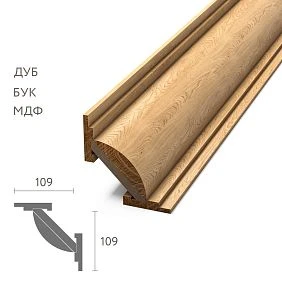
Wooden cornice KZ-017 109×109 mm: what the card actually offers
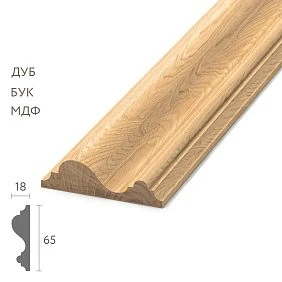
KZ-017 has one main profile 109×109 mm, but five product variations.
| Execution | Size, mm | Sanding | Price at the time of check |
|---|---|---|---|
| MDF | 109×109×2600 | Prestige | 4 380 ₽ |
| Oak/MDF | 109×109×2400 | Prestige | 13 380 ₽ |
| Beech/MDF | 109×109×2400 | Prestige | 9 260 ₽ |
| Beech | 109×109×2400 | Prestige | 9 670 ₽ |
| Oak | 109×109×2400 | Prestige | 14 000 ₽ |
That is, the article KZ-017 by itself does not complete the order. After it, the material is mandatory.
The card describes KZ-017 as a prefabricated hollow cornice. It consists of a convex central part and two side profiles combined into a single structure. The internal angle of the profile is 90°. The manufacturer indicates use both in interiors and for furniture decoration.
For the MDF item, the card shows "Prestige / Under enamel." For solid wood, the description separately mentions the possibilities of opaque and semi-transparent finishes. But for the combined lines "oak/MDF" and "beech/MDF," all properties of solid wood cannot be automatically transferred without manufacturer confirmation.
Therefore, the entry:
KZ-017 / 109×109 / 8 pcs.
insufficient.
Need, for example:
KZ-017 / oak / 109×109×2400 mm / Prestige / quantity ___ / finish ___.
Or:
KZ-017 / oak/MDF / 109×109×2400 mm / Prestige / quantity ___ / confirm finish and construction of the combined version.




The specification says "oak": why can't KZ-017 oak/MDF be ordered automatically
The word "oak" in the project may denote not only the desired shade. It can be a fundamental material requirement.
The designer could have chosen solid wood because of:
- open natural texture;
- toning;
- combination with oak doors or furniture;
- a unified finish system;
- customer requirements for natural material;
- junctions with adjacent oak trim.
If you put "oak/MDF" into such a project without approval, the buyer will change not the price, but the specification itself.
The card does offer a combined version cheaper than solid oak:
14,000 − 13,380 = 620 ₽ per single plank.
For eight items:
8 × 620 = 4 960 ₽.
The savings are real, but they are not a sufficient reason to replace the material.
In project work, the question should not be:
Can we take oak/MDF, it's cheaper?
But:
Is the commercial version KZ-017 "oak/MDF" acceptable for this project instead of the "oak" line, and does it match the required finish?
Our factory also produces:
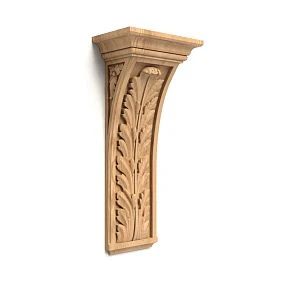
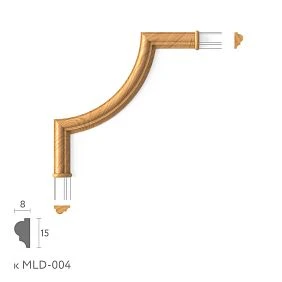
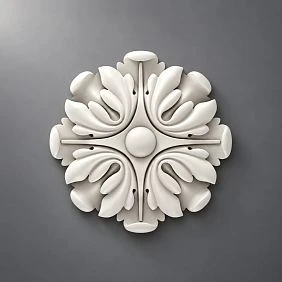
Cornice KZ-017 in oak/MDF: what questions to ask before placing an order
The card shows the commercial line "oak/MDF", but does not provide a detailed material distribution scheme across the elements of the assembled profile in the table.
Therefore, it is safe not to invent the design, but to request it.
Before payment, it is useful to ask the manager:
- which elements of KZ-017 in this version are made of oak;
- which elements are made of MDF;
- which surfaces remain visible after installation;
- which finishing system is recommended for this specific version;
- is semi-transparent finishing allowed;
- can it be visually coordinated with adjacent oak products;
- does the preparation of joints and ends differ from the solid wood version;
- is a special painting or staining procedure required.
These questions are especially important if the interior is designed to showcase visible wood grain.
If the entire cornice is to be painted with an opaque enamel, the combined version may be commercially attractive, but this still needs to be confirmed for the specific project.
Get Consultation
Solid oak cornice KZ-017: when the word "solid" is fundamental
If the project explicitly states "solid oak," replacement with oak/MDF must go through the specification author.
This is especially important if:
- the cornice remains in a natural wood tone;
- a stain or clear varnish is used;
- an oak casing, molding, or baseboard is located nearby;
- the customer separately approved the material;
- the cornice must match the solid wood body;
- the product is part of an author's interior design solution.
In these cases, even a perfectly matched color of the combined version does not automatically make it equivalent to solid wood.
If solid wood is needed, it is better to write in the order:
KZ-017 / oak / 109×109×2400 mm
And not:
KZ-017 / oak.
The word "oak" in everyday speech can describe both appearance and material. In the invoice, it is better to use the exact product designation from the card.
Beech and beech/MDF: the same mistake may occur a second time
The KZ-017 card is arranged symmetrically:
- beech/MDF — 9,260 RUB;
- beech — 9,670 RUB.
The difference:
9,670 − 9,260 = 410 ₽ per plank.
For eight planks:
8 × 410 = 3 280 ₽.
Again, there is a temptation to automatically select the combined option.
But the principle is the same:
beech ≠ automatically beech/MDF.
If the project requires solid beech, the buyer must not replace it on their own.
This conclusion is useful not only for KZ-017. Any time one card contains multiple lines differing by the slash "material/MDF", they should be considered separate product variants, not price options of the same material.
MDF 2600 mm and other versions 2400 mm: the material also changes the length
For KZ-017, the material affects not only the price.
MDF has a length:
2600 mm.
Oak/MDF, beech/MDF, beech and oak:
2400 mm.
This means that replacing a product item can change:
- the number of purchased strips;
- the joint map;
- the gross footage;
- the number of packages;
- the delivery cost;
- cutting on site.
For example, a designer calculated a line for 2400-mm oak elements. If a buyer replaces them with MDF 2600 mm, the original cutting map no longer matches the product.
Conversely, if the estimate was calculated for MDF 2600, switching to oak 2400 may increase the number of initial slats.
Therefore, length is not a random parameter. It is part of a specific product line.
How much do eight KZ-017 cost in different configurations
Let's take a hypothetical project where, after cutting, eight planks of the selected SKU are indeed required.
| Execution | Price per unit | 8 pcs. |
|---|---|---|
| MDF 2600 | 4 380 ₽ | 35 040 ₽ |
| beech/MDF 2400 | 9 260 ₽ | 74 080 ₽ |
| Beech 2400 | 9 670 ₽ | 77 360 ₽ |
| oak/MDF 2400 | 13 380 ₽ | 107 040 ₽ |
| Oak 2400 | 14 000 ₽ | 112 000 ₽ |
This table does not mean that eight products made from different materials provide the same useful length. MDF is 200 mm longer.
But it clearly shows the cost of misinterpreting the specification.
If the project requires oak, and the buyer supplies oak/MDF, the invoice will decrease by 4,960 ₽. Based on price alone, the error may look like a good saving.
That is why you need to check not only the total amount, but also the material in the line.
Why price cannot be the only selection criterion
In procurement, reverse logic often occurs: a manager offers a cheaper item, the buyer sees savings and considers the replacement obviously beneficial.
This is especially dangerous for KZ-017 because:
- the article name remains the same;
- the size 109×109 remains the same;
- the length of oak and oak/MDF is the same — 2400 mm;
- the price difference is relatively small.
That is, the commercial line looks very similar externally.
But the material is specified differently, and this is already enough to require separate approval.
If the designer chose the material deliberately, saving 620 ₽ on the strip does not compensate for the risk of getting a different finish or a different visual perception in the finished line.
How to understand that the invoice contains exactly the required version of KZ-017
Before paying the commercial proposal, you need to verify at least seven fields:
| Check | What should be included |
|---|---|
| Article number | KZ-017 |
| Size | 109×109 mm |
| Material | MDF / beech / MDF / oak / MDF / beech / oak |
| Length | 2600 or 2400 mm |
| Sanding | Prestige |
| Quantity | According to the cutting map |
| Finishing | confirmed for the selected version |
If the project contains the word "oak", but the invoice says "oak/MDF", this is not a reason to automatically consider the invoice erroneous. Perhaps the manager offered an agreed replacement.
But before payment, there must be written confirmation that such execution suits the project.
KZ-017 — prefabricated hollow cornice: why the material should be read especially carefully
KZ-017 differs from a simple solid plank.
The card describes it as a prefabricated hollow structure made of three profile elements.
This leads to an important commercial conclusion: the word "material" in the product line refers not just to a single board of uniform cross-section.
Therefore, the designations:
MDF
beech/MDF
oak/MDF
Beech
Oak
should be perceived as separate configurations of the entire assembled model.
At the same time, one cannot independently make technical conclusions about the internal composition of each combined version. This information is better requested before replacing the solid wood.
Under enamel and under tinting: what cannot be automatically transferred between versions
For MDF, the card shows the preparation "Under enamel."
In the description of solid wood, the manufacturer allows a wider range of finishes, including tinting and transparent coatings.
But this does not mean that for the line "oak/MDF" all finishing scenarios for solid oak automatically apply.
If the project requires:
- clear varnish;
- stain;
- patina with visible wood;
- exact match with the adjacent oak,
the combined version needs to be separately approved.
If the project is fully painted with opaque enamel, the task is simpler, but you still should not assign the finishing technology without confirmation.
Ceiling cornice or furniture cornice: it is also useful to note the purpose
Card KZ-017 indicates use in interiors and for furniture decoration.
Therefore, the purpose can be added to the work order.
For example:
KZ-017 / oak / 109×109×2400 / ceiling cornice / finish ___
Or:
KZ-017 / oak / 109×109×2400 / furniture cornice / finish ___
Why is this useful?
Because the same product can be used in different assemblies. If the manager and finisher understand the purpose, it is easier for them to verify the finishing logic, quantity, and related project elements.
If required buy wooden cornicesThe category is needed at the selection stage. Once KZ-017 is approved, it's better to move the purpose to a specific order line.
When it is better to return to the cornice section instead of KZ-017
If after clarification it turns out that KZ-017 is not suitable, you shouldn't change the material within this article just to keep the number.
Returning to the category is reasonable if:
- 109×109 mm is too large a profile;
- the project allows only solid material, and the price of solid wood exceeds the budget;
- the combined construction doesn't suit the finish;
- a different shape of the central part is needed;
- a more compact cornice is required;
- the architectural scale of the room has changed.
In this case, it is better to choose a different profile rather than forcing KZ-017 to fit an unsuitable project.
Wooden baseboard for KZ-017: the bottom line of the wall also needs to be specified precisely
If KZ-017 is part of a unified architectural system of the room, the lower trim should preferably be coordinated in scale, material, and finish.
But the following should not appear in the schedule:
"oak baseboard";
“tall wooden baseboard”.
Like KZ-017, the baseboard needs specific:
- article number;
- profile;
- the material;
- length;
- finishing.
For selection, you can buy a wooden baseboard through a separate category, and then transfer the already selected SKU to the final specification.
How to write KZ-017 in an order so that the manager does not have to guess
Bad line:
KZ-017 / oak / 8 pcs.
It is better than just a "cornice 109×109", but still leaves open the length, finish, and purpose.
Full line for solid wood:
KZ-017 / oak / 109×109×2400 mm / Prestige / quantity ___ / application ___ / finish ___
For a combined item:
KZ-017 / oak/MDF / 109×109×2400 mm / Prestige / quantity ___ / application ___ / finish of the combined version confirmed
For MDF:
KZ-017 / MDF / 109×109×2600 mm / Prestige / For enamel / quantity ___
Such lines allow checking the invoice literally character by character.
How to phrase a question to the manager if the project just says "oak"
You can send a short message:
The project specifies KZ-017 made of oak. In the card, I see two options: "oak" and "oak/MDF". Please confirm the construction of the "oak/MDF" version, the recommended finish type, and its acceptability as a replacement for solid oak in our project. Until confirmation, we keep "oak" in the order.
Such a request is better than:
And how is oak/MDF worse?
The first option specifies the subject of approval and does not force the manager to guess what exactly matters to the designer.
Packaging KZ-017: it also needs to be checked in the large order
The card indicates a rigid packaging frame costing 390 ₽.
For solid wood, a guideline of up to two items per frame is specified; for MDF, up to five.
For a batch of eight slats, this means the packaging scheme may vary depending on the material.
These standards should not be turned into a final transport calculation without order confirmation, but it is worth keeping a separate line in the estimate:
packaging — to be clarified based on actual quantity and material.
This is especially important when delivering long molding to another city.
Receiving KZ-017 after delivery: we verify the material before unpacking the entire batch
When receiving a batch, you should not rely only on the 109×109 profile.
They verify:
- article KZ-017;
- full material designation;
- length;
- quantity;
- packaging;
- condition of the items.
If oak is ordered, the documents should not unexpectedly show "oak/MDF" without a pre-agreed substitution.
If a combined option is ordered, it must match the confirmed specification.
This way, the material is checked before installation and finishing, not after the entire line is already installed.
Why the 620 ₽ difference per plank doesn't show the project's real savings
On the product card, oak/MDF is cheaper than oak by 620 ₽ per item. For eight planks, that is 4,960 ₽, and such a figure may look like a ready basis for replacement.
But procurement savings are not just the price of the product.
If switching to a combined version requires different surface preparation, separate finish approval, a test paint-out, or additional finisher work, the final project difference will change.
Therefore, the correct calculation looks like this:
cost of KZ-017 + finishing + packaging + delivery + installation work + possible joint adjustment.
You shouldn't assume in advance that the combined version is necessarily cheaper in the finished interior just because its product price is lower.
The same rule applies to beech and beech/MDF. The savings of 410 ₽ per slat is only the difference on the product card, not confirmed savings for the entire finishing system.
If the adjacent trim is already oak: we check not only the color, but also the material system
Let's imagine that KZ-017 should continue a composition where oak architraves, moldings, or baseboards have already been selected.
In the bill of quantities, a temptation may arise:
We'll take oak/MDF for the cornice, we'll paint or tint it to one color anyway.
But visual matching after finishing cannot be guaranteed without a sample.
Before replacing solid wood with a combined version, it's useful to agree on:
- how the face surface will look;
- which part of the product participates in the visible composition;
- whether adjacent materials accept the finish equally;
- is a test paint-out needed;
- how the ends and joints will look;
- whether a difference will appear after installation under side lighting.
If the project is based on a pronounced natural oak texture, this block is especially important. If everything is painted opaquely, the risk of visual difference may be lower, but the decision should still be confirmed.
What to do if the designer only wrote "KZ-017 oak" and is unavailable
Sometimes procurement is urgent, and the project author does not respond.
In such a situation, you should not independently choose oak/MDF just for the sake of availability or a lower price.
Working solution:
- keep the original line "oak" in the order;
- request the full oak/MDF description from STAVROS;
- record the commercial alternative separately;
- wait for approval from the responsible person;
- only then change the material version.
So the buyer does not make a design decision on behalf of the project author.
If deadlines are critical, you can prepare two invoice options — oak and oak/MDF — and submit them for approval. This is faster than first paying for a "similar" product and then processing a return or redoing the finish.
Final specification for a batch of eight slats
If after approval a solid oak is selected:
KZ-017 / oak / 109×109×2400 mm / Prestige / 8 pcs. / application: ___ / finish: ___ / current product price 14,000 ₽ per piece.
Item total:
8 × 14 000 = 112 000 ₽.
If oak/MDF is approved:
KZ-017 / oak/MDF / 109×109×2400 mm / Prestige / 8 pcs. / application: ___ / finish of the combined version confirmed.
Item total:
8 × 13 380 = 107 040 ₽.
In both lines, packaging, delivery, and finish must be calculated separately.
This pair of specifications shows well why you cannot simply write:
KZ-017 oak — 8 pcs.
In one short line, both the material and the ability to check which specific product item was invoiced are lost.
When order KZ-017 is better to pause until clarification
Не стоит оплачивать заказ вслепую, если:
- the project says "oak", but the invoice says "oak/MDF" without approval;
- The project states "beech," but the invoice lists "beech/MDF";
- менеджер предлагает комбинированную версию, но никто не подтвердил её конструкцию;
- a transparent finish is assumed, but the suitability of the combined version has not been clarified;
- the material is changed only for a lower price;
- the length in the cutting map does not match the selected product line;
- The purpose has changed from ceiling to furniture;
- The adjacent molding is already approved from the array and should visually match.
In such cases, the correct commercial action is to stop payment and close the issue, rather than choosing the "most similar" line.
Errors in order KZ-017
Error: counting oak and oak/MDF as one material. In the card, these are separate items.
Error: choosing the combined version only because of the price. First, you need to confirm its compliance with the project.
Error: independently describing the composition of oak/MDF. The card does not provide enough data for such a conclusion.
Error: considering beech and beech/MDF interchangeable. This is the same problem as with oak.
Error: forgetting about the length. MDF is 2600 mm, other current versions are 2400 mm.
Error: transferring the cutting map after changing the material without recalculating. Changing the length changes the purchase.
Error: writing only KZ-017 / 109×109. The material version remains unknown.
What to confirm before paying for the wooden cornice KZ-017
Final checklist:
- exact article number KZ-017;
- material is written in full;
- "oak" is not replaced with "oak/MDF" without approval;
- "beech" is not replaced with "beech/MDF" without agreement;
- the design of the combined option is clarified if it is important for the project;
- the correct finish is selected;
- the length matches the product line;
- the quantity is recalculated after material selection;
- the purpose is recorded;
- the current price is verified;
- availability or production time confirmed;
- delivery of long linear materials is approved.
If all items are closed, you can proceed with the specific KZ-017.
Questions before purchasing KZ-017
What is the size of KZ-017?
The main profile is 109×109 mm.
What materials are available for KZ-017?
MDF, oak/MDF, beech/MDF, beech, and oak.
How is oak different from oak/MDF?
In the product card, these are different items. For the combined version, the detailed construction should be confirmed with the manufacturer before replacing the solid wood.
Can oak be replaced with oak/MDF without approval?
Not worth it. If the project specifies oak, the material substitution must be confirmed by the specification author or the client.
Does the same rule apply to beech?
Yes. Beech and beech/MDF are also shown as separate items.
What is the length of the MDF KZ-017?
2600 mm.
What is the length of the oak KZ-017?
2400 mm.
What is the length of the oak/MDF?
2400 mm.
How much does the KZ-017 oak/MDF cost?
13,380 RUB at the time of checking.
How much does the KZ-017 made of oak cost?
14 000 ₽.
How much does beech/MDF cost?
9 260 ₽.
How much does the KZ-017 made of beech cost?
9 670 ₽.
What sanding is specified in the card?
"Prestige".
Is KZ-017 solid or assembled?
The card describes it as an assembled hollow cornice consisting of a central and two side profile parts.
Can KZ-017 be used for furniture?
Yes, the card indicates use in interiors and for decorating furniture.
Where can I see other wooden cornices?
In the STAVROS wooden cornices category.