











































































Article Contents:
- Why the color of slatted panels cannot be chosen separately
- Slatted panels in wood style: warmth that cannot be copied
- Wooden panels made of solid oak
- Coordination with wooden flooring
- Combination with wooden doors and furniture
- Slatted panels for painting: freedom of color and modern precision
- When to choose MDF panels for painting
- Panels matching wall color
- Panels in the color of doors
- Which MDF baseboard works well in such a scheme
- White slatted panels: purity with character
- White panels for a small room
- White panels and white baseboard
- White panels and light doors
- How to avoid the "hospital" effect
- White panels in the hallway
- White panels in the bedroom
- Dark and black slatted panels: an accent that works
- Black panels as an architectural accent
- Dark panels in the TV area
- Dark panels and light baseboard: when it works
- Dark panels and wooden baseboard
- When dark color overloads the room
- How to use dark panels sparingly
- How to match a baseboard to the color of slatted panels
- Selection principles
- Wooden baseboard for wood-look panels
- Tall baseboard as a decorative frame
- When you need a contrasting baseboard
- Color of slat panels in each room
- Entry Hall
- Hallway
- Living Room
- TV Area
- Bedroom
- Kitchen-living room
- Office
- Commercial interior
- Mistakes when choosing the color of slatted panels
- FAQ: answers to questions about the color of slat panels
- Where to buy slatted panels in the desired color with baseboard and additional elements

Color is the first thing the eye notices. Before evaluating the shape of the slats, the width of the lamellas, or the quality of the joints, a person perceives the color. And it is at this moment that the main thing is decided: the panels live in the interior or contradict it. A wall with slatted panels can be flawlessly installed, perfectly fitted at the ends, decorated with moldings — and still look like a foreign element if the color is chosen without considering the floor, doors, baseboard, and furniture.
The color of slatted panels is not a separate decision. It is part of a system. Warm golden oak, cool gray MDF, deep anthracite, pure white — each shade of the panel enters into a dialogue with every surrounding surface. And this dialogue can be harmonious or conflicting. The difference between the two options lies in the ability to see the interior as a whole.
In this article, we will go through all color scenarios: from wooden panels in oak to black accent walls, from white minimalism to dark library solutions. And we will analyze how to correctly choose the baseboard, architraves, and moldings for each color.


Why the color of slatted panels cannot be chosen separately
You want to buy beautiful panels and put them on the wall. That's exactly what most people do. And then they discover that warm honey-colored lamellas stand next to cool gray laminate, white panels next to cream doors, and Wooden baseboard turns out to be three shades darker than the panels. This is not a mistake of taste. This is a mistake of method.
A slatted panel occupies a large area of the wall. An accent wall in the living room is 5–12 m² of visible surface. A wall in the hallway is another 3–5 m². Any color in such an area is amplified many times over: the shade that seemed neutral in the catalog becomes the dominant tone of the entire space on a large wall.
Second: the color of the panels affects the visual proportions of the room. Dark panels visually compress the space — the wall "advances." Light ones expand it. Vertical light slats raise the ceiling; dark horizontal ones visually widen the wall but lower its top edge. This is the geometry of perception, which works regardless of whether you like the theory or not.
Third: the baseboard creates a lower horizontal line. This line is the boundary between the wall and the floor, and it sets the visual "weight" of the lower part of the interior. Wooden baseboard the tone of the panels extends their color to the floor. A contrasting baseboard creates a clear horizontal line that can work as an architectural accent or as a break in the color logic — depending on the intention.
Fourth: doors and Wooden casings — vertical accents that should support or balance the color of the panels. Panels in the tone of the doors — a unified wooden system. Panels and doors of different tonalities without a unifying element — an interior without a concept.
Fifth: furniture. If the room has solid wood furniture, dark veneer, or a white lacquered surface — these are already color constants that the panels adapt to, not the other way around.




Slatted wood-look panels: warmth that cannot be copied
wood-look slatted panels — the most popular request, and not by chance. Wood in the interior works on a physiological level: warm tones of natural materials reduce psychological tension, create a sense of security and closeness to nature. Wood on the wall is not a trend, it is an archetypal choice with a thousand years of history.
What does this mean in practical terms? You have two paths: natural wood or MDF with a wood-like coating. These are fundamentally different products, and the difference between them becomes apparent precisely when you need to match the color with other interior elements.
Our factory also produces:



Solid oak wood panels
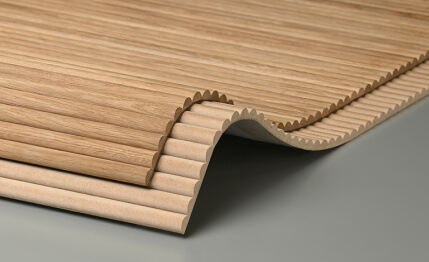
oak slat panel PAN-003 — this is about a living texture that cannot be replicated on synthetic material. The natural pattern of oak changes from board to board, from slat to slat. The same tone — "honey oak" — will be slightly darker, slightly lighter on different slats, with a more or less pronounced pattern of annual rings. This is not a defect — it is an advantage that creates liveliness and depth of the surface.
Oak is tinted with oils and varnishes in a wide range of shades:
-
Bleached oak — Scandinavian accent, light and airy; works well in small spaces
-
Natural light oak — warm honey tone; versatile, suits most interiors
-
Tobacco oak — rich warm brown; for studies, country houses, classic interiors
-
Dark walnut — deep, almost chocolate; creates richness and accent
-
Stained oak — dark gray with a cool undertone; modern, restrained, strong
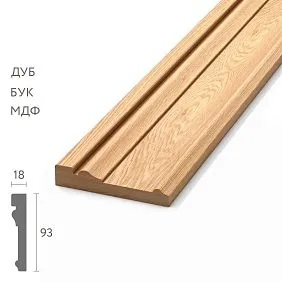
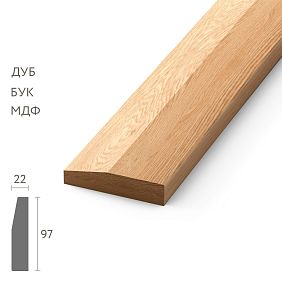
Wood-like Rafter panels Solid wood Wooden baseboard from the same species — the only logical choice. Natural wood next to natural wood creates material solidity. An oak baseboard 1–2 shades darker than the panels creates a visual "grounding" of the wall — the bottom line appears stable and strong.
Get Consultation
Matching with wooden flooring
One of the most common questions: how to match wood-look slatted panels With wooden parquet or laminate? The rule is simple: you don't need to achieve a perfect match of tones — that's impossible on different materials and different areas. You need to achieve tonal proximity.
Warm oak on the wall + warm walnut parquet: close temperature, different saturation. The rule is that panels are lighter or darker than the floor, but in the same tonal family. The baseboard is the connecting link: its tone is chosen closer either to the floor or to the panels.
Cold stained oak on the wall + warm honey floor — a conflict. It is resolved through a neutral baseboard in white or gray, which separates two incompatible shades.
Combination with wooden doors and furniture
If the room has wooden doors and wooden furniture — Rafter panels they should be in the same wood species or a close shade. Three different species in one space without a unifying logic is interior chaos. One tone: oak everywhere. Or a justified contrast: dark panels with light doors and light furniture — that's a deliberate accent, not an accident.
Wooden casings in the tone of the panels create a unified wooden framing: the wall and the doorway become an architectural whole.
Slatted panels for painting: freedom of color and modern precision
MDF slatted panel for painting PAN-002 is a product for those who think in color, not in material. The primed surface is ready for any enamel application. Want an exact NCS code from the design project? Please. Need the same gray-beige as on the ceiling? No problem. Want a wall the color of faded wormwood — grab a Farrow & Ball chart and paint.
This is not a "budget" choice, but a functional one. MDF panels for painting provide a degree of color accuracy that is unattainable when tinting wood: the paint lays on a uniform surface without natural variations, and the color turns out even, like on a door or wall.
When to choose MDF panels for painting
-
In monochrome interiors where the wall, ceiling, and doors are painted in similar or identical tones
-
When you need the panels to "dissolve" into the wall, creating a relief effect without a color accent
-
In Scandinavian, minimalist, modern interiors with clean geometry
-
When repainting is planned during the next renovation — MDF can be repainted without loss of quality
-
In commercial interiors with brand-specific colors
Panels in the color of the wall
Painted in the same tone as the wall, slatted panels create a monochrome relief effect. The wall does not change color — it acquires texture. This is a technique from high-end design: in the morning side light, the relief of the slats becomes noticeable as a play of shadows on a uniform surface. In direct lighting, the panels are almost invisible.
This solution works well where no accent is needed, but a finish above simple painting is desired: in the bedroom behind the headboard, in the study behind the desk, in the hallway next to the mirror.
Panels in the color of the doors
MDF panels for painting In the tone of the doors — a strategy of unifying vertical accents. The wall takes on the color of the doors, and the doors cease to be separate "holes" in the interior: the entire wooden horizontal line — baseboard, trim, panels, doors — becomes a single system. Particularly effective in interiors with dark or colored doors.
Which MDF baseboard works well in this scheme
MDF baseboard for painting in the exact tone of the panels — a monochrome system. The lower boundary of the wall disappears as a separate detail: the eye sees only the vertical rhythm of the slats extending to the floor. For modern interiors — one of the strongest solutions.
Alternative: baseboard in the tone of the floor. Then the monochrome row of panels ends with a clear horizontal line at the floor — there is a boundary, but it belongs to the floor, not the wall.
White slatted panels: purity with character
White is the most popular color in modern interiors. And the most treacherous. White Rafter panels in the right context create a feeling of air, space, and modern cleanliness. In the wrong one — "hospital" monotony or cold emptiness.
How are white panels different from just a white wall? Relief. The vertical rhythm of the slats on a white surface creates a light-and-shadow play that, depending on the lighting angle, makes the wall alive. A flat white wall reflects light evenly — and that's boring. White slats collect shadows in the gaps — and that's interesting.
White panels for a small room
In small spaces, white Wall slatted panels — an optimal choice. Light color does not absorb space like dark does. Vertical slats visually stretch the wall upward. Small bedroom, narrow hallway, compact study — white panels work here to expand the space.
Important: "white" comes in different shades. Cool white (with a blue or gray undertone) with warm wooden flooring — a conflict. Warm milky white with light beech parquet — harmony. Always check which temperature your white belongs to.
White panels and white baseboard
White panels paired with wooden skirting board, painted white, or an MDF baseboard for white painting — a monolithic white vertical line. This scheme is extremely simple and extremely effective. It works with any floor, any doors, any furniture — because white is neutral.
Nuance: ensure the white of the baseboard matches the temperature of the white panels. A cool-white baseboard under warm-milky panels — a noticeable visual dissonance up close.
White panels and light doors
White decorative slatted panels paired with white doors and white casings — an interior where only texture and form work. The wall, doors, and baseboard disappear as color objects. Only space, furniture, and light remain. This is a very complex style because any deviation in shade is immediately noticeable.
Wooden casings in white paint with white panels create a single white contour of the doorway — concise and architecturally strong.
How to avoid the "hospital" effect
White panels become cold and sterile when there are no warm accents in the interior. Solution: warm wooden floor, wooden furniture, warm textiles, plants. White panels + warm wood + soft light = calm modern interior. White panels + white floor + cold light = medical office.
Alternative: choose not pure white, but milky, cream or light beige — the panels will remain light but gain warmth.
White panels in the hallway
In the hallway, white slatted panels create a sense of spaciousness. They work well with mirrors — the mirror enhances visual expansion. Wooden baseboard in a light shade or white baseboard for painting completes the bottom line. Wooden architraves at the front door — in the tone of the floor or doors.
White panels in the bedroom
In the bedroom, white slatted panels behind the headboard create a calm architectural background. They don't claim to be an accent — it's a background that holds the space. Thin Molding along the top edge or a shadow gap at the ceiling — enough for completeness.
Dark and black slatted panels: an accent that works
Black is the boldest choice for wall panels. And the most striking when used correctly. Rafter panels in a dark or black finish made of MDF for Painting or made of oak in a dark tint — fundamentally different aesthetics.
Dark wood panels are richness and depth. Black MDF panels for painting are graphics and minimalism. Both versions are strong. Both require understanding where and how to apply them.
Black panels as an architectural accent
A black accent wall in the living room is a statement. Dark vertical slats create visual weight that draws and holds the eye. The sofa, armchairs, rug — all of this is set against a powerful dark surface, and the interior gains cinematic expressiveness.
Wooden baseboard with black panels — in a dark tone or black. A light baseboard against a black wall creates a sharp horizontal break that undermines the monolithicity of the dark accent. If contrast at the floor is needed, a wooden baseboard in a natural wood tone is better than white.
Dark panels in the TV area
A TV area with dark slatted panels is one of the best application scenarios. A dark background reduces screen glare, creates a cinematic effect, and turns the TV wall into an architectural object. Built-in LED lighting in the gaps between the slats with dark panels creates a contrasting light play — this looks significantly more impressive than the same lighting with light panels.
Dark panels and light baseboard: when it works
A light baseboard with dark panels is a deliberate contrast that creates a clear horizontal line at the floor. This technique works well in interiors where white doors and white trim already create light vertical accents. The white baseboard becomes an extension of this system: light verticals + light horizontal at the floor + dark accent wall.
But this technique requires intentionality. If the light baseboard appears accidentally — not as a continuation of the color system, but because "they didn't think about it" — the contrast looks like a mistake.
Dark panels and wooden baseboard
Wooden baseboard in a natural tone with dark slatted panels — a natural accent at the floor. Natural-colored wood "warms" the dark wall, adding a natural feel. This works especially well if the dark panels are wooden: dark tinted oak + natural baseboard from the same species = material cohesion with color contrast.
When dark color overloads the room
Dark panels overload the space in three cases: a small room without a lot of natural light, dark panels on several walls simultaneously, dark panels + dark floor + dark furniture without a single light accent. A dark accent only works in contrast with a light background. If there is no background, the accent disappears into the overall darkness.
How to use dark panels in moderation
One accent wall — and only one. The other walls are neutral or light. Dark Slatted wall panels on one wall with a white or light gray background on the others — this is an accent in its pure form. The eye immediately understands where to look.
How to choose a baseboard to match the color of slatted panels
This block is the most practical. The right baseboard doesn't just cover the bottom joint—it completes the wall's color scheme. The wrong baseboard breaks even the most carefully planned color scheme.
Selection principles
There are three strategies that work in any interior:
Strategy 1: Baseboard matching the panels. Wooden baseboard or an MDF baseboard in the same shade as the panels. The wall is perceived as a single vertical surface from the floor to the top edge of the panels. The lower boundary of the wall dissolves—the panels literally "stand" on the floor.
Strategy 2: Baseboard matching the doors. The baseboard coordinates with the doors and trim, creating a unified wooden "ring" around the room's perimeter. The wall with panels remains an independent accent, while the baseboard belongs to the door decor system.
Strategy 3: Baseboard matching the floor. The baseboard coordinates with the floor, creating a smooth transition from the flooring to the wall. The panels can be any color—they sit above the baseboard as an independent element.
| Panel color | Optimal skirting board | Alternative option |
|---|---|---|
| Light oak | Oak wood baseboard | White or milky MDF |
| Dark walnut | Walnut / dark oak wooden baseboard | Natural oak as contrast |
| White MDF | White MDF matching tone | Light wood as accent |
| Black MDF | Black or dark gray | Natural wood |
| Gray MDF | Gray MDF matching tone / white | Dark wood as accent |
| Smoked oak | Stained wooden baseboard | Dark gray MDF |
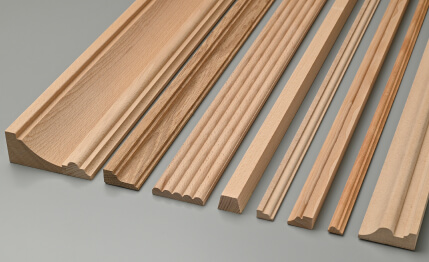
Wooden baseboard for wood paneling
solid wood baseboard For wooden slatted panels, it is the only materially correct choice. A baseboard of the same species, in the same tone or slightly darker: ground under a wooden wall. A baseboard one shade darker than the panels creates a "grounding" — the wall appears stable and strong.
Important: if wooden panels and wooden baseboards are from different batches or different suppliers, shades may not match even with the same tone name. Buy everything in one place, from one catalog, in one batch.
High baseboard as a decorative frame
High Wooden baseboard From 100 mm gives the lower part of the wall with slatted panels monumentality. This is an architectural "base": the wall stands on it like a column on a plinth. In living rooms and studies with ceilings above 2.7 m, a high baseboard creates correct proportions — it is proportionate to the high space.
In small rooms, a high baseboard is undesirable: it visually eats up the height. With ceilings of 2.5 m — no more than 80 mm of baseboard height.
When a contrasting baseboard is needed
Contrasting baseboard is a deliberate architectural technique. A white baseboard with dark panels creates a clear horizontal line at the floor — like an emphasized lower edge. A dark baseboard with light panels is a weighty foundation that "nails" the wall to the floor.
A contrasting baseboard requires consistency with other elements: if white baseboard, then white doors or white trim. If dark baseboard — dark doors or dark furniture. Contrast without system is chaos.
The color of slatted panels in each room
Entryway
In the hallway Rafter panels they greet guests. For a small hallway — light tones: white, milky, light oak. For a spacious hallway — dark accents are acceptable, but only on one wall. Wooden baseboard 80–100 mm high protects the lower area from mechanical loads. The entrance door trim — in the tone of the panels or doors.
A good scenario: light slatted panels made of MDF for Painting in a milky tone + a wooden oak baseboard in a light tint + wooden trims in the same shade. The hallway looks expensive and warm.
Corridor
A corridor is a passage space, not a contemplation space. The color of the panels here should either expand or lengthen. Light or white Slatted wall panels is the standard for narrow corridors. The direction of the slats along the corridor — it appears longer. Baseboard in the tone of the panels — a single vertical line without a lower horizontal line.
Living Room
In the living room, the color of the accent wall is the main decorative solution for the entire space. For a warm classic interior: oak slat panel in a honey or tobacco tone + wooden baseboard + wooden trims. For a modern monochrome: MDF panels for painting in a muted neutral tone + MDF baseboard in the same tone. For a bold accent: dark wooden panels or black MDF + natural wooden baseboard as a contrast.
TV area
For the TV zone — dark tones are preferable. Dark slatted panels in the TV area reduce screen glare, create a cinematic effect, and turn the area into an architectural feature. Wooden baseboard in a dark tone completes the monolithic look of the dark wall. Built-in lighting in the gaps is a must-have element.
Bedroom
In the bedroom — warm, muted, natural tones. Bleached oak, light ash, natural honey — wooden Rafter panels behind the headboard. A thin baseboard in the same tone or slightly darker. Molding along the top edge — from wooden trim — finishes the bottom and top joints. No aggressive dark accents in the bedroom: it should be calming.
Kitchen-living room
In an open-plan layout, panels zone the space through color. The wall behind the dining table or kitchen island — in the tone of the kitchen furniture or wooden floor. This creates a visual connection for the area. Wooden baseboard matches the kitchen fronts or floor.
Office
In the study, dark wooden slatted panels are an ideal solution. Dark walnut or tobacco oak create an atmosphere of solidity. High Wooden baseboard of the same wood species, wooden architraves, Wooden moldings around the perimeter — an architectural frame of the workspace.
Commercial interior
In restaurants, hotels, boutiques wood-look slatted panels — an atmosphere tool. Warm wood tones create coziness that keeps people around. Dark accents create a sense of exclusivity. Wooden trim for ends, corners, and transitions in a unified material system — a sign of quality that is intuitively perceived.
Mistakes when choosing the color of slatted panels
This is not a list of obvious platitudes. It is an analysis of real situations that even people with renovation experience encounter.
Choosing panels only by photos on a monitor screen. The monitor distorts color. Warm honey oak on the screen may turn out to be cold yellow on the actual panel. Request material samples.
Not considering the floor color. The floor occupies a large area and sets the basic tone of the space. Panels that conflict with the floor in temperature (warm + cold) create constant color tension that cannot be removed with furniture or textiles.
Forgetting about the baseboard. After installing beautiful wood panels, it turns out that the baseboard already in the room is white plastic or gray MDF of a completely different shade. Replacing the baseboard is not a difficult job, but it should have been planned in advance.
Mixing warm and cold wood tones. Three different wood shades in one space without unifying logic is not 'material richness' but color chaos. Rule: no more than two wood tones, and they must be from the same temperature family.
Installing black panels in a narrow dark hallway. A black wall in a narrow space without good lighting creates a claustrophobic effect. If you really want dark panels in a hallway — only on the end wall at the far end, not on the side walls.
Choose white panels without connection to doors. White. Rafter panels With cream or gray-brown doors — a temperature conflict. Either the doors should be white, or the panels should be milky or cream to match the doors.
Not considering the color of the ends. The end of a wooden panel is a cross-section of the wood. It is lighter than the front surface, even if it is tinted. A visible end at the doorway disrupts the color uniformity of the wall. Wooden trim For closing the ends — a mandatory item.
Buy panels without architraves and moldings. Architraves and end strips made of trim — part of the color scheme. An architrave of a different shade ruins all the work on matching the color of the panels with the doors.
FAQ: answers to questions about the color of slatted panels
What color of slatted panels should I choose for walls?
The choice depends on the floor, doors, furniture, and lighting. For a warm natural interior — wooden panels or wood-look panels. For a modern monochrome — MDF for painting. White and light panels — for small spaces and light interiors. Dark and black — for accent areas with sufficient natural light.
Which baseboard suits slatted panels with a wood look?
The best choice is Wooden baseboard from the same breed in a close shade. It creates material solidity for the lower part of the wall. If wooden doors and architraves are in a different tone, the skirting board is chosen to match their tone, unifying the horizontal perimeter of the room.
Can slatted panels be painted the color of the wall?
Yes, if they are MDF panels for painting. A monochrome approach — panels in the wall's tone — creates a relief effect without a color accent. The wall gains texture without changing color. This is one of the most modern and refined ways to use slatted panels.
What skirting board goes with white slatted panels?
Most often, with a white MDF skirting board for painting or a wooden skirting board in a white tint. If the room has wooden elements (floor, furniture), a light wooden skirting board works well — it adds warmth to the monochrome white system.
Are black slatted panels suitable for a small room?
Only in moderation: an accent wall in the TV area or on the end wall at the end of a hallway. For a narrow hallway or small bedroom, dark panels are undesirable — they visually compress the space. If you want drama in a small room, choose a rich dark neutral tone, but not black.
Slatted panels in wood or for painting: how to choose?
Wooden panels — when naturalness and tactile richness of the material are important. For painting — when precise color coordination with other painted elements is needed. In most modern interiors, MDF for painting works in monochrome solutions, while wooden panels work in warm natural ones.
Where to buy slatted panels in the desired color with baseboard and additional elements
The right color solution for a slatted wall is always a set: Rafter panels, Wooden baseboard, Moldings, Casings и Wooden trim for ends and corners. All elements from the same catalog, from the same material, in the same tone.
in the STAVROS catalog Rafter panels made of natural solid oak — Decorative panel PAN-001, oak slat panel PAN-003 — and MDF panels for painting PAN-002. Next to it — Wooden baseboard in several profiles and heights, Wooden moldings, Wooden casings и Wooden trim for ends, corners, and any transition zones.
STAVROS manufactures Wooden items made of natural solid oak, beech, and ash with precise geometry and a finished surface. Everything in one catalog — buy slatted panels and baseboard with delivery to Saint Petersburg and all of Russia.