Article Contents:
- Wholesale building materials in Moscow and the Moscow region: when it pays to combine multiple sites into one purchase
- One SKU across three sites is still three separate requirements
- Wooden skirting board: how to split a combined order between addresses
- Why it's better to buy identical skirting boards under a single specification
- Wooden moulding: why mix-ups between sites are especially dangerous
- How to label trim by address
- Wholesale building materials Moscow: one purchase does not mean one delivery
- When a single central unloading point is better
- When it is more cost-effective to deliver directly to sites
- Wooden cornice: why distribution should be by whole products, not just linear meters
- How to avoid the situation where Moscow takes Moscow Region's reserve
- What is free remaining stock in a combined purchase
- Wholesale building materials in Moscow: how to organize transfers between sites
- When transferring between sites is truly more cost-effective than a new additional order
- When material from another site cannot be used
- Buying wholesale building materials in Moscow: first we combine specifications
- How to combine three specifications
- Why you cannot combine by product name only
- How to handle different completion dates for objects
- Why introduce a NEED-BY date for each item
- Why early delivery can be worse than late delivery
- How to receive a consolidated shipment
- Why labeling cannot be done after unloading
- How to handle leftovers after completing the first object
- When the total remainder can be transferred to the next object
- How to calculate the actual consumption of each address
- Practical table of movement between objects
- Mistakes that make consolidated purchasing stop being profitable
- Mistake 1. Merging similar profiles
- Mistake 2. Treating the entire warehouse as free
- Mistake 3. Not recording inter-site transfers
- Mistake 4. Delivering everything too early
- Mistake 5. Releasing the remainder before project closure

When a single client is simultaneously fitting out an apartment in Moscow, a country house in Krasnogorsk, and a restaurant in Odintsovo, there is a temptation to combine all the wooden moulding into one large order. This can indeed simplify purchasing: identical SKUs are summed up, the total volume becomes clearer, and negotiations with the supplier are conducted using a single specification. But after the order is placed, another task appears — not losing track of the distribution of goods between sites.
If building materials wholesale in Moscow and Moscow Region are purchased at once for several addresses, a single line “PLT-A — 480 m” is not enough. You need to understand which part belongs to Moscow, which to Krasnogorsk, which to Odintsovo, and how many meters are reserve. Otherwise, the central warehouse quickly turns into a shared pool without an owner: one site takes another’s stock, identical bundles get mixed up, and actual balances stop matching the project ones.
The working scheme consists of two documents:
general procurement specification + distribution sheet by project.
For example:
| Article | Total | Moscow | Krasnogorsk | Odintsovo | Reserve |
|---|---|---|---|---|---|
| PLT-A | 480 м | 180 м | 140 м | 120 м | 40 м |
| MLD-A | 620 м | 240 м | 180 м | 150 м | 50 м |
| KZ-A | 210 м | 80 м | 60 м | 50 м | 20 м |
This table answers two questions at once: how much we buy from the supplier and who owns each part of the total batch.
It is useful to add another column — "free balance after distribution". Then the buyer immediately sees which part actually remains shared. If 480 m of PLT-A is fully distributed among three projects and the reserve, there is no free balance, even if all the goods are still stored in one room.
Another practical technique is to keep the distribution not only in linear meters, but also in whole planks after a specific design has been approved. This reduces the discrepancy between the design calculation and the actual shipment.
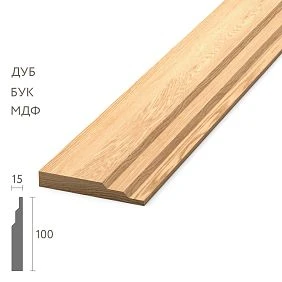
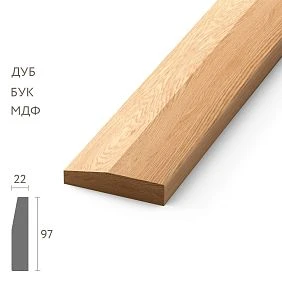
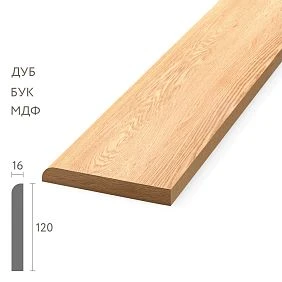
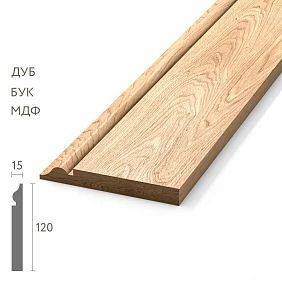
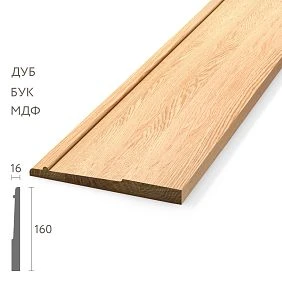
Building materials wholesale in Moscow and the Moscow region: when it is worth combining several projects into one purchase
Combining makes sense only for truly identical items. It is not the general names that must match, but the procurement characteristics:
- exact article number;
- the material;
- size and cross-section;
- execution;
- product length;
- finishing requirements, if they are included in the order.
If the same wooden skirting board is used across three projects, the quantities can be summed. If one project uses PLT-A and another uses a visually similar PLT-B, they cannot be combined under the name "oak skirting board".
Before merging, it is practically useful to run all line items through the rule "SKU + material + finish". If all three fields match, the line can be a candidate for merging. If at least one does not match, the items remain separate. This is especially important if the same SKU exists in different materials or finishes.
There is also a timing condition. If one project requires the item in a week, while the second only in four months, the total purchasing volume can remain unified, but logistics and storage must be calculated separately.




One SKU across three projects is still three separate requirements
Suppose the total requirement for PLT-A is 460 m:
- project A — 180 m;
- project B — 160 m;
- project C — 120 m.
In the purchasing table, a line is acceptable PLT-A — 460 m. But in the distribution sheet it must be kept as three allocations.
This is especially important after the goods arrive. If all 460 m are physically in the warehouse, this does not mean they can be freely used.
Our factory also produces:




Wooden skirting board: how to split a common order between addresses
For each site, not only the net meterage is recorded, but also the structure of the requirement:
- calculated volume;
- installation reserve;
- operational reserve;
- the date by which the material must be at the site.
For example, Moscow requires 160 m by net calculation, 12 m for installation and 8 m as a reserve. In the distribution sheet, the site receives 180 m, not just “approximately 180”.
This makes it possible to decide separately what to send immediately, what to leave at the central warehouse and what should not be transported at all for now.
For skirting boards, it is useful to separate at least three quantities: net requirement, installation stock and operational reserve. If all three are merged into one figure, it is later impossible to understand which part can actually be transferred to another site. The installation stock is usually “used up” as installation progresses, the operational reserve must remain after the work is completed, and the free remainder can be redistributed.
Get Consultation
Why it is better to purchase identical skirting boards according to a common specification
When each project is handled by its own employee, there is a risk of divergence. One will purchase PLT-A, another a similar PLT-B, and a third will approve a different version of the same profile.
If the architectural logic of the projects is shared, a single master specification helps maintain identical parameters. In it, one SKU has one procurement identification, and projects differ only in quantity and required date.
Wooden moulding: why mix-ups between projects are especially dangerous
Mouldings may be similar in width, material, and pattern, but belong to different layouts.
For example:
MLD-A — apartment in Moscow
MLD-B — restaurant in Odintsovo
Both profiles are oak and visually similar. If the packs are delivered to a shared warehouse without project marking, the error may only be discovered during installation.
Therefore, one article number on the packaging is not enough. For multi-project procurement, a destination code is also needed.
How to mark linear mouldings by address
Convenient format:
MSK-A / PLT-001
KRG-B / MLD-014
ODN-C / KZ-008
It is useful to indicate on the label:
- item code;
- article number;
- the material;
- quantity per package;
- cargo unit number;
- if necessary — delivery queue.
The code must match the distribution sheet. It is better not to invent new designations “for warehouse convenience.”
Building materials wholesale Moscow: one purchase does not mean one delivery
When building materials wholesale Moscow and the region are combined in one order, this does not obligate you to transport the entire batch at once.
Buying together ≠ delivering together.
You can form one purchasing pool, but split the receipt:
- batch No. 1 — Moscow;
- batch No. 2 — Krasnogorsk;
- batch No. 3 — Odintsovo.
The main thing is that after splitting, the sum of the batches matches the overall specification and reserve.
When a single central unloading point is better
If the contractor or customer has their own warehouse, the following scheme is possible:
the entire batch → central receiving → internal distribution to the sites.
Advantages:
- a single initial receiving;
- easier to verify the overall order;
- you can independently form batches by address;
- more convenient to manage the total free balance.
Disadvantages:
- additional reloading;
- space is needed for long-length items;
- its own internal logistics emerges;
- responsibility for labeling increases.
A central warehouse is not beneficial in itself. It is useful if it actually reduces the chaos between sites.
Before choosing such a scheme, it is useful to count the number of additional touches on the cargo. If the linear trim is first unloaded at the central site, then sorted, loaded again, and sent to the site, the batch acquires an additional logistics operation. For cheap short goods, this may be insignificant. For long-length decorative profile, it is already a risk and cost factor.
Therefore, the central scheme works best where the contractor has its own accounting discipline: separate storage zones by site, readable labeling, a person responsible for issuing, and a movement log.
When it is more profitable to deliver directly to sites
Direct delivery makes sense if the batch is already divided, each site is ready to receive the material, and intermediate storage is not needed.
In that case, the central warehouse would only add unloading, reloading, and the risk of damage.
But a direct route requires precise assembly before departure. A bundle intended for Odintsovo must not accidentally go to Krasnogorsk.
For direct delivery, it is convenient to create a separate packing list for each address. It repeats only the items for the specific site: SKU, material, number of planks, package number, and reserve. Then the driver and the receiving party work not with a general multi-site specification, but with a short address-specific list.
Wooden cornice: why distribution should be by whole items, not just linear meters
Suppose a site requires 47 m of cornice. That is the design linear footage, but actual shipments contain whole planks.
First, calculate:
linear requirement → cutting → number of whole planks → actual shipment volume.
If this step is skipped, the distribution table may show the correct meters but the wrong number of physical items.
How to avoid the situation where Moscow takes the Moscow region's reserve
At the Moscow site, 12 m are suddenly missing. A suitable PLT-A is sitting in the central warehouse. The crew takes it because the goods are physically "available."
Two weeks later, it turns out that this was Odintsovo's reserve.
To prevent this from happening, each part of the remaining stock needs a status:
| Status | Value |
|---|---|
| ALLOCATED | Assigned to a specific project |
| RESERVE | Project reserve, do not use without permission |
| FREE | Free stock that can be reallocated |
| HOLD | Temporarily blocked pending review |
What is free stock in a combined purchase
There are physically 150 m of PLT-A in the warehouse.
But of these:
- 80 m — project A;
- 50 m — project B;
- 10 m — operational reserve;
- 10 m — not secured by anything.
In fact, only 10 m is free.
This is one of the most important figures in consolidated procurement. Stock on hand and free stock are different indicators.
The management formula is simple:
FREE = physical stock – ALLOCATED – RESERVE – HOLD.
If there are physically 150 m in the warehouse, but 140 m are already allocated, the buyer should not promise all 150 m to a new project. For efficient work, this formula can be calculated automatically for each line.
Wholesale building materials in Moscow: how to organize transfers between sites
If building materials wholesale in Moscow purchased as a common pool, transfers between sites must be recorded as separate operations.
For example:
Object A → Object B: 20 m MLD-A
After recording, the available stock A decreases and the allocation B increases simultaneously.
It is useful to record not only the quantity but also the reason: "surplus after completion," "temporary reallocation," "initial calculation error," "urgent need." Then, when analyzing the project, it is clear why the material was moved and whether the same planning mistake is being repeated.
If you simply physically move a batch, in a month the table will no longer match the warehouse.
When transferring between sites is genuinely more advantageous than a new additional order
A transfer makes sense if:
- the item code matches exactly;
- the material matches;
- the finish matches;
- the length suits the new cutting plan;
- the position is genuinely FREE;
- the original site no longer needs it;
- internal transfer is more efficient than a separate replenishment.
Visual similarity alone is not enough.
When material from another object cannot be used
Must not take:
- installation stock of an unfinished object;
- operational reserve without a separate decision;
- position of another material;
- different version;
- custom-made profile;
- item with a different finish;
- a batch that the project requires to be kept separately.
A physically similar item is not a free resource until it is confirmed by the specification.
Buy building materials wholesale in Moscow: first we consolidate specifications
Before buy building materials wholesale in Moscow for multiple sites, there is no need to start with a discount for a conditional 1,000 meters.
First:
- collect the specification for site A;
- add site B;
- add site C;
- normalize SKUs;
- merge only fully matching SKUs;
- preserve the original distribution by address.
And only after that does a reliable total procurement volume emerge.
If the three source tables are maintained in different units — some in meters, some in planks, some in packs — they must be converted to a single system before merging. Otherwise, mathematically identical rows will be incomparable.
A good practice: keep design calculations in meters, procurement in whole units, and logistics in cargo places. Then each unit corresponds to its own stage and does not substitute for another.
How to merge three specifications
Object A:
PLT-A — 100 m
MLD-B — 80 m
Object B:
PLT-A — 140 m
MLD-C — 90 m
Object C:
PLT-A — 70 m
MLD-B — 120 m
Total purchase:
PLT-A — 310 m
MLD-B — 200 m
MLD-C — 90 m
But the project breakdown remains alongside it. The summary line does not replace the original requirements.
Why you cannot merge by product name alone
Two tables may both say "oak skirting", but one project needs PLT-A and the other needs PLT-B.
If Excel groups them by text name, it will result in a purchasing error.
Merging is done by exact SKU and finish, not by product category.
How to handle different object readiness dates
Let's imagine a conditional schedule:
- Moscow is ready on October 1;
- Krasnogorsk — October 15;
- Odintsovo — November 15.
There is no need to automatically send the entire combined order on October 1.
It is better to use the model:
a single procurement volume + a distribution calendar.
Why introduce a NEED-BY date for each item
| Object | Article | Quantity | NEED-BY |
|---|---|---|---|
| Moscow | PLT-A | 180 м | 01.10 |
| Krasnogorsk | PLT-A | 140 м | 15.10 |
| Odintsovo | PLT-A | 120 м | 15.11 |
NEED-BY answers not the question "when do we want to receive it," but "by what date must the material be available for the next stage of work."
The date should account for a small organizational buffer. If installation starts on the morning of October 15, setting NEED-BY for exactly October 15 is risky: the material still needs to be received, checked, and distributed. That is why in a real project the buyer ties NEED-BY to the moment the material is ready for work, not to the formal start of installation.
For a single item at different sites, the dates may differ. This is exactly what makes it possible to purchase the total volume without turning it into a single premature shipment.
This allows the buyer to separate urgent demand from future demand and avoid turning early delivery into unnecessary storage.
Why early delivery can be worse than late delivery
If the space is not ready yet, early trim will have to be stored, moved, and protected. Every additional move increases the risk of damaging long items and mixing up packages.
For a large order, it makes more sense to tie deliveries to the readiness of zones rather than to the desire to "close the issue right away."
Early delivery is especially disadvantageous if the site does not have a designated clean area. The trim starts being moved from room to room, clearing passages for other contractors. Every such move is an additional operation and a risk of mixing up bundles from different zones.
How to receive a combined batch
Acceptance is done in two levels.
Level 1 — total order. We check that the required total quantity of PLT-A, MLD-A, KZ-A and other SKUs has been received.
Level 2 — distribution. We check that the object structure is preserved within the total quantity.
For example:
PLT-A — 480 m received
- Moscow — 180 m;
- Krasnogorsk — 140 m;
- Odintsovo — 120 m;
- reserve — 40 m.
If the total figure matches but the object batches are mixed up, acceptance cannot be considered fully complete.
For a large batch, it is convenient to accept using the principle of "first SKU, then address". First, the total volume of a specific item is confirmed, then the distribution across objects is checked within it. This order more quickly identifies both underdelivery and incorrect assignment of goods.
Why labeling cannot be done after unloading
Once dozens of identical packages are stacked in one zone, it becomes much harder to restore their purpose.
Therefore, object labeling must appear already during picking. The warehouse receives already labeled locations instead of trying to distribute them from memory.
How to handle leftovers after completing the first project
Moscow is finished. 22 m remain for PLT-A.
They cannot be automatically declared free.
First, check:
- whether all installation work has been completed;
- whether an operational reserve is needed;
- whether there are disputed areas or future finishing work;
- whether the remainder meets the requirements of other projects.
Only after official release does the position receive FREE status.
If the first object is partially closed, it is better not to release the remainder entirely. For example, 22 m are physically sitting idle, but 8 m are still needed as a reserve until the painting work is completed. Then 8 m remain RESERVE, and only 14 m become free.
When the total remainder can be transferred to the next object
Transfer is justified if the first object is closed, the reserve is allocated, the SKU matches completely, and the next object still needs the material.
This is exactly where combined purchasing provides additional benefit: instead of a new reorder, the actual free leftover from the first phase can be used.
How to calculate the actual consumption of each address
You cannot simply divide the total invoice proportionally by the area of the objects. Each address has its own actual consumption and its own remainder.
It is necessary to record:
- received;
- used;
- returned to the central warehouse;
- transferred to another project;
- left in reserve;
- written off due to damage, if that occurred.
Then you can evaluate the real economics of each project and see where overspending occurred.
For analysis, the following metric is useful:
actual consumption ratio = used / net project requirement.
If the project calculation was 100 m, but 112 m was actually used, the ratio was 1.12. Comparing several projects by the same SKU helps to understand where the stock was calculated more accurately and where additional losses or cutting errors occurred.
Practical table of movement between projects
| Date | Article | From | Where to | Quantity | Reason |
|---|---|---|---|---|---|
| … | PLT-A | Moscow | Krasnogorsk | 20 м | Free balance after closing |
| … | MLD-A | Central warehouse | Odintsovo | 40 м | Queue 2 |
Such a simple ledger is often more useful than a complex warehouse report when the goal is to keep track of which project each material belongs to.
If there are many transfers, it is worth adding "who authorized" and "who received" fields to the log. Then an expensive reserve cannot disappear from the warehouse just because one crew urgently asked for a few more planks.
Mistakes that make combined purchasing stop being worthwhile
Mistake 1. Combining similar profiles
Why it happens: the tables use generic names. Consequence: the wrong SKU is ordered. Prevention: group only by exact article number and finish.
Mistake 2. Treating the entire warehouse as free
Why it happens: the system shows physical stock but not reservations. Consequence: one project takes another project's material. Prevention: ALLOCATED / RESERVE / FREE statuses.
Mistake 3. Not recording inter-project transfers
Why it happens: it is easier to quickly move a pack than to file a record. Consequence: after several operations, the records diverge from reality. Prevention: each transfer is a separate movement line.
Error 4. Delivering everything too early
Why it happens: you want to close out logistics in one operation. Consequence: unnecessary storage and movements. Prevention: NEED-BY by project.
Error 5. Releasing the remaining stock before project closure
Why it happens: the main installation is complete. Consequence: while finishing work on the first project, the reserve has already been shipped out. Prevention: official transfer of ALLOCATED/RESERVE → FREE.
When projects should not be combined at all
A joint purchase is not always beneficial. It is better to keep projects separate if:
- the SKUs barely overlap;
- the materials or finishes differ;
- the timelines are spaced many months apart;
- the projects have different clients or budgets that cannot be mixed;
- batches must be strictly isolated;
- centralized logistics creates more costs than it saves.
Consolidation makes sense only where it reduces work and cost, rather than creating an additional layer of accounting with no practical benefit.
A simple criterion: after consolidation, it should become easier in at least two areas — purchasing, price, configuration, delivery, or redistribution of stock. If the only effect is one large table instead of three, while physical logistics remains fully separate, the value of consolidation is questionable.
Final scheme for multiple locations Moscow + Moscow region
- Compile a separate specification for each location.
- Bring the names to exact SKUs and configurations.
- Combine only fully identical SKUs.
- Calculate the total purchase volume.
- Preserve the distribution for each address.
- Separately record the installation and operational reserves.
- Assign a NEED-BY to each project batch.
- Choose a central or direct delivery scheme.
- Mark the linear stock during kitting.
- After acceptance, assign the remaining stock to ALLOCATED / RESERVE / FREE / HOLD.
- Record all movements between projects.
- After the project is closed, allocate the operational reserve.
- Only then release the remaining stock for the next project.
- Calculate actual consumption separately for each address.
As a result, one large purchase stops being a common pile of identical planks. It remains a manageable pool: the supplier sees the total volume, the purchaser sees the deadlines, the warehouse sees the ownership of each batch, and the site foreman sees the specific material for their project.
For Moscow and the Moscow region, this model is especially convenient when several sites are located relatively close to each other but are at different stages of finishing. A shared purchase can be used to consolidate identical SKUs, while the physical movement of material should be tied to the actual readiness of each address.
The main rule is simple: we combine purchasing, but we do not erase ownership of the goods. As long as each pack, meter, and reserve has its owner in the system, a shared wholesale order helps save money and simplifies supply. When allocation is lost, those same advantages quickly turn into mix-ups, urgent transfers, and new additional orders.