Article Contents:
- The customer bought the material, but another company will use it
- The supplier's delivery note does not confirm how much the installation contractor received
- Transfer to the contractor must not destroy product identity
- Materials wholesale: transfer is done by installation zones
- Installed
- Usable offcut
- Damaged
- Full return
- Transferred to another crew
- The word “written off” explains too little
- The reason for consumption must be recorded separately
- A cut-off remains part of the material stock if it is usable
- The threshold for a usable remainder is set by the project, not by the article
- Why damage cannot be postponed “until the end of work”
- Verbal transfer between crews creates false overconsumption
- A zone is not closed until the material balance reconciles
- Why small discrepancies cannot be accumulated until the end of the project
- How to investigate a difference without stopping the entire project
- How to distinguish normal technological waste from an installation error
- A useful metric is the unexplained difference, not the entire waste
- How to work with a contractor who uses their own intermediate warehouse
- What to do if the contractor delivered part of their own material
- A contract with a contractor should not be closed before the material is returned
- How to process the return of intact items
- A returned intact plank becomes part of the customer's available stock again
- How to account for useful offcuts quantitatively
- When a useful remainder can truly be considered waste
- How to work with material after a project change
- How to handle a re-cut caused by an error
- How to account for re-finishing or reworking an already installed profile
- How to count the cornice after handover to the contractor
- Wholesale building materials: we verify reorder requests via the contractor's balance
- How to record material that is physically on the floor but not yet accepted by the crew
- How to handle sealed packages and opened packs
- How to account for material held by the contractor's subcontractor
- How to handle material that the contractor wants to leave "for the next zone"
- How to avoid losing balance during night and day shifts
- How to handle material with no readable labeling
- How to account for returns of material with damaged packaging
- How to close the balance not in meters, but by physical states
- How to work with expensive or rare profiles
- Practical example: a request for 20 planks turns into an order for 5
- Practical example: useful offcuts cover short sections without a new plank
- Practical example: transfer between crews explains a false minus
- Practical example: a project change is not contractor overspending
- The final material report is needed before closing the queue
- Material transfer must end with confirmation of what was actually accepted How to understand that additional consumption is caused not by the crew, but by an unsuccessful initial cutting plan
- How to understand that additional consumption is caused not by the crew, but by an unsuccessful initial cutting plan
- How to close the material balance when a zone is partially completed
- How to handle material stored in a contractor's locked premises
- Contractor inventory before reordering
- How to handle material after partial cancellation of work
- How to handle replacing one SKU with another after handover
- When a complex accounting system is not needed
- How to perform a final reconciliation before a new major phase
- Why material balance is useful for the contractor as well
- When material ceases to be counted as the contractor's warehouse stock
- Installation acceptance and material balance answer different questions
- How to keep a brief daily balance without heavy reporting
- How to act when the contractor stops work early
- What to do if the customer discovers a balance after the contractor has been closed out
- When the customer does not need a separate contractor material balance
- Why a closed balance reduces the risk of extra purchasing at the next stage
- How to act if part of the balance is found after reconciliation
- 1. Transferring only meters to the contractor
- 2. Not recording the quantity of whole items
- 3. Issuing without SKU
- 4. Do not tie issuance to a zone
- 5. Treat everything issued as installed
- 6. Do not account for full returns
- 7. Discard useful offcuts without recording
- 8. Mix waste and damage
- 9. Do not record the cause of damage
- 10. Allow verbal handover between crews
- 11. Take service reserve without a separate decision
- 12. Place additional orders only at the foreman's request
- 13. Do not reconcile the contractor's remaining stock
- 14. Close the zone before the material balance
- 15. Correct the difference retroactively
- 16. Treat all overspending as a crew error
- 17. Accumulate discrepancies until the end of the project
- 18. Complete the contractor's work without a final return
- Should linear trim be handed over to the contractor by an act?
- Can only linear meters be counted?
- What should be done with usable offcuts?
- Who is responsible for a damaged plank?
- Can a contractor take material from the operational reserve?
- What should be done if the contractor requests an additional order?
- How should a difference of one or two planks be closed out?
- Can contractors be compared by waste percentage?
- What should be done when the contractor changes?
- When is a zone considered materially closed?

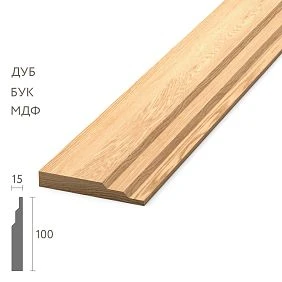
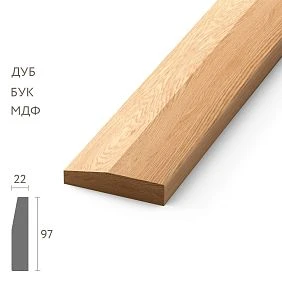
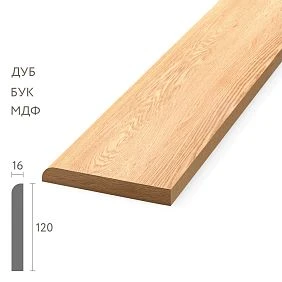
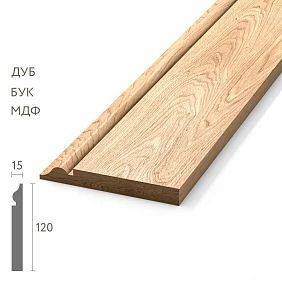
The customer independently purchased wooden trim for the project: 180 skirting planks, 96 moldings, and 34 cornices. The delivery has been accepted, and the material is stored in the project's central warehouse. However, installation is being performed by another organization — a contractor that did not form the original order and did not purchase these items at its own expense.
A month later, the contractor reports that the skirting has run out and 20 more planks are needed. According to the design calculation, after closing the first rooms, no fewer than 14 whole items should have remained. The question arises: where is the material?
There are many possibilities. Some could have gone into normal cutting. Several planks could have been damaged. The remainder could be on another floor, transferred to another crew, returned to the warehouse without a record, or turned into usable offcuts. Finally, the contractor may actually have been given a different quantity from what is recorded in the table.
Therefore building materials wholesale, purchased by the customer and handed over to another installation organization, require a separate material flow. It is not enough to know how much arrived at the project. You need to know how much the customer physically handed over to the contractor, what the contractor accepted, what was installed, what was returned, what was damaged, what was transferred to another crew, and what difference remained after the zone was closed.
The main formula of the article:
TRANSFERRED TO CONTRACTOR = INSTALLED + FULL RETURN + USABLE OFF-CUTS + CONFIRMED LOSSES + TRANSFERS TO OTHER CREWS.
If the equation does not balance, it is not a new order that appears, but a status:
UNEXPLAINED DISCREPANCY.
The customer bought the material, but another company will use it
This is a separate operating model. In the usual scenario, the contractor can buy the material, deliver it, and install it. Then the movement of goods stays within one organization.
Here the chain is different:
customer purchased → accepted at the site → transferred to the contractor → contractor accepted → distributed by zone → installed → returned the remainder → the parties reconciled the balance.
An additional control point appears — the transfer of material to the contractor. It is precisely there that it must be recorded for exactly what quantity the contractor began to be responsible in the operational accounting of the site.
The article does not establish universal legal liability of the parties: it depends on the contract of the specific project. What is considered here is practical physical accounting, which allows the customer and the contractor to see the same physical movement of the trim.




The supplier's delivery note does not confirm how much the installation contractor received
STAVROS could deliver to the customer:
PLT-A — 180 pcs.
But for the first phase, the contractor could only be issued:
PLT-A — 64 pcs.
The remaining 116 stay at the customer's central warehouse, in reserve, or are intended for the following floors.
Therefore:
delivery to the site ≠ handover to the contractor.
If these events are mixed up, at the first discrepancy no one will be able to tell whether the material was lost before handover or was already in the installation company's possession.
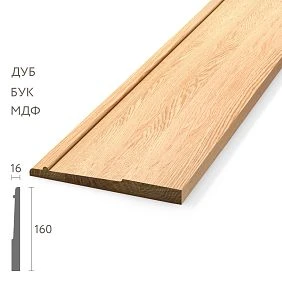
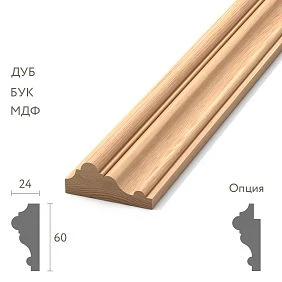
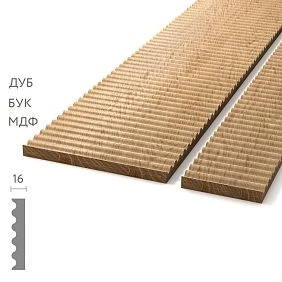
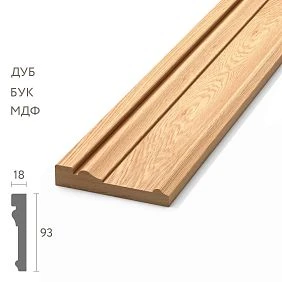
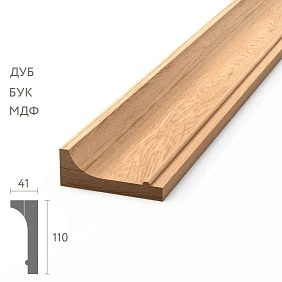
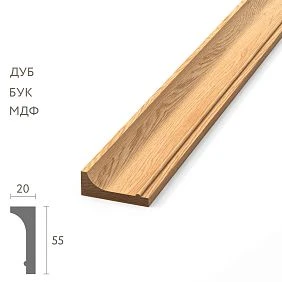
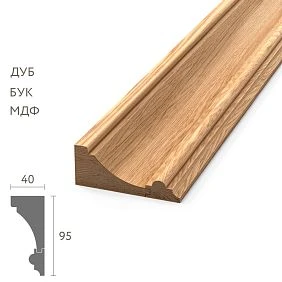
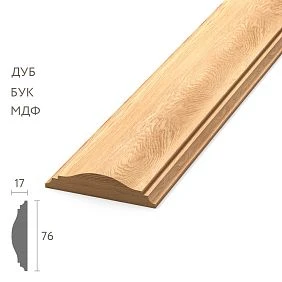
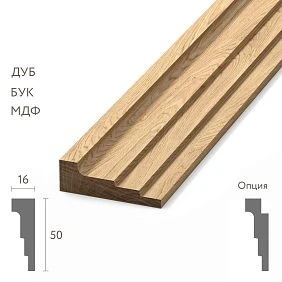
Our factory also produces:
Each handover to the contractor must be a separate operation
| Date | Zone | SKU | Material | Length | Quantity | Handed over | Received |
|---|---|---|---|---|---|---|---|
| ___ | Floor 2 / rooms 201–210 | PLT-A | Oak | 2400 | 24 | ___ | ___ |
| ___ | Floor 2 / rooms 201–210 | MLD-A | Oak | 2400 | 18 | ___ | ___ |
This entry serves two functions. The first is to confirm the physical quantity. The second is to link the material to a specific installation zone and a specific side.
The wording "issued molding for the second floor to the contractor" is too vague. A week later, two crews may be working on the floor, and the same profile may be used in the corridor and in the rooms.
Get Consultation
It is better to hand over whole items to the contractor, and track meters separately
For long-length trim, the entry:
57.6 m
does not show the physical composition of the material handed over.
Entry:
24 pieces × 2400 mm
can be recounted, returned, linked to the cutting map, and checked after the shift.
Meters remain useful for project requirements, but actual movement is more convenient to track in pieces and lengths. This approach is also consistent with the existing STAVROS logic, where long-length items for a project warehouse are accounted for by SKU, zones, and whole items.
Transfer to the contractor must not destroy product identity
It must not be turned into:
PLT-006 / oak / 2400
into the entry:
"skirting board to the contractor — 24 pieces."
Before installation, it is necessary to preserve:
- SKU;
- the material;
- commercial length;
- execution;
- the finish, if it differs;
- zone;
- the batch, if necessary.
Otherwise, the contractor may honestly return 6 planks, but the customer will not be able to determine whether they are the same profile that was issued.
materials in bulk: transfer is carried out by installation zones
A large batch is better transferred not as one general material debt of the contractor, but in stages.
For example:
Issue 01 — Floor 2 / rooms 201–210.
Issue 02 — Floor 2 / corridor.
Issue 03 — Lobby.
If the contractor mixes materials from different zones on their own without recording it, subsequent consumption reconciliation becomes weaker. The planned requirement relates to specific rooms, while the actual issue turns into a total volume "per floor."
The contractor's material balance is the main document of the article
| SKU | Handed over to the contractor | Installed | Full return | Usable offcuts | Damaged | Handed over to another crew | Difference |
|---|---|---|---|---|---|---|---|
| PLT-A | 180 | 152 | 14 | 12 | 2 | 0 | 0 |
| MLD-A | 96 | 82 | 8 | 5 | 1 | 0 | 0 |
| KZ-A | 34 | 29 | 3 | 2 | 0 | 0 | 0 |
This kind of balance is far more informative than the phrase "everything issued was used." It shows where each type of remainder physically went.
Not everything that disappeared from the contractor's warehouse is considered installed
Consumption must be divided into at least five types.
Installed
The material is physically located in the project zone and accepted as completed work.
Usable offcut
After cutting, an identifiable part of the profile remained, suitable for another task.
Damaged
The product or its part has become unusable and the event has been recorded.
Full return
The unused strip has been returned to the customer or to the central warehouse.
Transferred to another crew
The material physically left one contractor's balance but did not disappear from the site.
Only with this separation can actual consumption be understood.
The word "written off" explains too little
The entry "12 planks written off" does not answer the main question — why.
Possible causes:
- normal cutting;
- cutting error;
- project change;
- damage;
- transfer to another crew;
- loss of identification;
- unexplained loss.
For the purchaser and project manager, these are completely different events. Some relate to normal technology, others require a process change.
The reason for consumption must be recorded separately
Even a simple classification makes the material balance significantly more useful. For the project, Russian reasons can be used:
- CUTTING — normal consumption during trimming;
- DAMAGE — material was spoiled after handover;
- PROJECT CHANGE — the item lost its purpose due to a new revision;
- INSTALLATION ERROR — re-cutting or incorrect trimming;
- HANDOVER — material went to another crew;
- UNDEFINED — the reason has not yet been confirmed.
It is not necessary to build a complex information system. Even a single “reason” field allows separating normal technological consumption from an event that requires investigation.
Wooden skirting board: how to close the material balance by zone
for wooden baseboard piece-by-piece control is convenient.
For example, the project requirement for a room:
PLT-A — 22 whole planks.
Handed over to the contractor:
24 planks.
After installation:
- 21 planks installed;
- 2 whole planks returned;
- 1 plank went into confirmed cutting and yielded useful offcuts.
Balance:
24 = 21 + 2 + 1.
The zone closes without questions. It is important that the customer sees not only “consumption of 22,” but the actual movement of all 24 delivered items.
If consumption is higher than the project requirement, a new order has not yet been confirmed
Planned requirement — 22 planks. The contractor reports using 26 and requests more material.
Bad reaction:
"order four more".
Before reordering, check:
- actual room dimensions;
- current project revision;
- cutting map;
- returns;
- useful offcuts;
- damage;
- repeat cuts;
- material transfers between zones.
Only the shortfall remaining after this check becomes a real purchasing requirement.
Wooden moulding requires more detailed cutting accounting
С wooden molding consumption is more complex: frames create angled cuts, repeating sides, and many usable short offcuts.
For example, one frame requires:
- 2 verticals of 1800 mm each;
- 2 horizontals of 900 mm each.
A single 2400 mm strip can cover a 1800 mm vertical and leave 600 mm, but this remainder is no longer suitable for a 900 mm horizontal. Therefore, the total waste footage does not explain the quality of the cutting plan.
For moulding, it is useful to distinguish:
- normal technological offcut;
- usable offcut;
- re-cut due to an error;
- damage before cutting;
- change in frame geometry.
An offcut remains part of the material inventory if it is suitable
After installation, the contractor may put all short pieces into one box and call it "waste." This is convenient, but incorrect for procurement.
An 820 mm offcut from PLT-A can cover a short section by the door. A 640 mm offcut from MLD-A may be suitable for the side of a small frame. If they are discarded without checking, the next additional order may be placed while material is actually available on site.
Therefore, suitable offcuts are returned as a separate stock.
Useful offcuts must be returned with labeling
Bad:
“offcut box.”
Better:
PLT-A / oak / 820 mm / 3 pcs.
MLD-A / oak / 640 mm / 4 pcs.
For each suitable offcut, it is enough to know the SKU, material, length, and quantity. Then it can be used again in cutting for future zones.
Without labeling, after a few days even an experienced employee may not be able to distinguish two similar profiles.
The threshold for a useful offcut is set by the project, not by the article
You cannot universally say that any piece longer than 500 or 700 mm must be stored. Usefulness depends on the specific geometry.
For a long plinth line, 600 mm may be useless. For the short side of a decorative frame, the same size may be needed.
Therefore, the project can choose one of two models:
- return all identifiable remnants;
- return only the remnants that fit the future cutting plan.
The main thing is that the rule must be known to the contractor in advance.
construction material wholesale: the operational reserve is not part of the regular installation turnover
If the customer has allocated a service stock in advance for future repairs, the contractor must not take it as a regular remnant just because the main material has run out.
For example:
- main installation remnant PLT-A — 0;
- operational reserve — 8 planks;
- the contractor requests 3 more.
First, the cause of the shortage is determined. Then, by a separate decision, it is determined whether part of the reserve can be temporarily used and whether it needs to be replenished with a new order.
Otherwise, the contractor's material balance may reconcile, while the future stock of the object disappears unnoticed.
Material damage is recorded at the moment of detection
If the contractor has damaged a plank, there is no need to reduce the process to an immediate search for the guilty party. First, the material fact is recorded.
Damage card:
| Field | What to record |
|---|---|
| Event code | P-017 |
| SKU | PLT-A |
| Quantity | 1 pc. |
| Zone | Number 214 |
| Condition | Chip / deformation / finish damage |
| Photo | Present |
| Can part of it be used? | Yes / no / check |
| Further resolution | ___ |
Financial responsibility is determined by the parties' agreement, while material accounting must remain factual.
Why damage cannot be postponed "until the end of the work"
A week later, the damaged plank may end up among the offcuts. The marking will be lost, the original length will be forgotten, and the location of the event will become unknown.
Then the customer sees only the missing unit but does not understand whether it is:
- damage;
- normal offcut;
- transfer to another crew;
- accounting error;
- unexplained loss.
Timely recording makes the difference explainable.
Transferring material between contractors must change two balances simultaneously
Scenario:
Crew A received 30 moldings. They have 6 left. Crew B urgently needs these 6 for the adjacent zone.
Bad process:
"take them from the neighbors".
Good:
| SKU | From whom | Who | Quantity | Date |
|---|---|---|---|---|
| MLD-A | Team A | Team B | 6 | ___ |
After the operation, Team A's balance decreases by 6, and Team B's increases by 6. The material does not disappear from the common fund.
Verbal transfer between teams creates a false overconsumption
If 6 moldings physically went to another team, but no record was made, the first company will appear to have lost material, while the second will appear to have completed installation with less consumption than it actually received.
That is why comparing contractors without correct inter-team transfers can lead to false conclusions.
Before a new reorder, the customer must see the entire available fund
Contractor's request:
"we need 20 more PLT-A planks"
— this is not yet a confirmed need for a new order.
Before placing an order, the following is checked:
- the customer's central warehouse;
- remaining stock at the current contractor;
- remaining stock on other floors;
- full returns from previous zones;
- useful offcuts;
- material held by other crews;
- already open orders;
- operational reserve — separately and only as a protected category.
Only after this reconciliation does a real shortage emerge.
building materials wholesale: a new order cannot be created solely at the foreman's request
The foreman sees his current zone and can honestly report that he has run out of PLT-A. But he is not required to know that 12 whole planks are in the central warehouse, 4 have been returned from another floor, and 3 more are already on the way as part of a previously placed order.
Therefore, the procurement formula is:
ZONE REQUIREMENT − AVAILABLE STOCK − ALREADY ORDERED = ACTUAL SHORTAGE.
If the result is zero, a new order is not needed.
Closing out an installation zone begins with a physical return
Installation on the second floor is complete. Before the contractor moves on to the next phase, he returns:
- whole unused products;
- approved usable offcuts;
- material mistakenly issued to this zone;
- items of the next stage;
- damaged elements, if according to the project they need to be kept for documentation;
- leftovers with unclear marking — separately, not in the general warehouse.
Only after the return can consumption be honestly calculated.
The zone is not closed until the material balance reconciles
Even if the installation is visually complete, the material part remains open if:
- intact leftovers are still with the contractor;
- the return has not been processed;
- usable offcuts have not been accounted for;
- damages have not been documented;
- there is an unexplained discrepancy;
- part of the material was transferred to another crew without a record.
The status "work completed" and the status "material balance closed" are different events.
What closing the material balance by floor looks like
Example:
| Indicator | PLT-A | MLD-A | KZ-A |
|---|---|---|---|
| Transferred to contractor | 196 | 118 | 40 |
| Installed | 174 | 102 | 35 |
| Full return | 12 | 8 | 3 |
| Usable offcuts | 8 | 6 | 2 |
| Damaged | 2 | 2 | 0 |
| Difference | 0 | 0 | 0 |
The balance is closed across all three lines. The next queue starts from a clear central remainder.
An unexplained discrepancy is a separate status, not an accusation
For example:
PLT-A / transferred 60 / explained 57 / difference −3.
You can't just write:
"the contractor lost 3 planks."
Correct status:
UNEXPLAINED DIFFERENCE — 3 pcs.
Next, the following are checked:
- adjacent zones;
- issuance log;
- returns;
- transfers between crews;
- project changes;
- damage;
- recount errors;
- unaccounted usable leftovers.
Why small discrepancies shouldn't be accumulated until the end of the project
On the first zone, one plank didn't add up. On the second — two. On the third — three more. If everything is left "for the final reconciliation," in a few months no one will remember where and under what circumstances each discrepancy appeared.
Therefore, it is better to close the material balance by queues:
zone → installation → return → reconciliation → closure → next zone.
This way, the problem remains local.
How to investigate the discrepancy without stopping the entire project
An unexplained discrepancy on one line does not have to block all subsequent work. You can:
- record the specific SKU and quantity;
- continue independent work;
- check adjacent zones;
- freeze only the disputed issue, if necessary;
- close the cause before the final settlement with the contractor.
The key point is not to carry an unknown discrepancy into the next stage as if it does not exist.
How to distinguish normal technological waste from an installation error
The same amount of offcuts can have different origins.
For example, with a complex moulding frame, a large number of short residual pieces may be unavoidable. On a straight skirting wall, the same amount of waste may indicate a poor cutting plan.
The assessment uses:
- the geometry of the area;
- the lengths of the original products;
- the map of required segments;
- number of corners;
- repeat cuts;
- the actual usable remnants.
Waste from areas of different complexity cannot be compared using a single percentage.
How to compare contractors without unfair conclusions
Contractor A shows 8% total waste, contractor B — 4%. This does not yet prove that B performs twice as well.
The first one may have:
- small frames;
- many angles;
- short wall sections;
- complex portals;
- non-standard on-site changes.
The second one — long straight lines.
It is more correct to compare comparable zones and look not only at total waste, but at the unexplained difference and recurring errors.
A useful metric is the unexplained difference, not all waste
Normal cutting can create waste that is fully explained by geometry. Such material is not an accounting loss.
A much more useful indicator:
UNEXPLAINED DISCREPANCY.
If the contractor has a large technological waste, but each plank has a clear fate, that is one situation. If the overall waste is small, but several whole products disappear without a record, that is another.
How to work with a contractor who uses their own intermediate warehouse
Sometimes, after handover by the customer, the material does not go directly to the installation area, but to the contractor's temporary warehouse.
Then two points need to be recorded:
CUSTOMER HANDED OVER → CONTRACTOR ACCEPTED TO THEIR WAREHOUSE.
and then:
CONTRACTOR'S WAREHOUSE → INSTALLATION AREA.
The contractor's internal movement may be tracked using their own form, but the final balance before the customer must still reconcile with the handed-over quantity.
What to do if the contractor brought some of their own material
In practice, a mixed scheme may arise: the customer bought the main skirting board, while the contractor brought several of their own planks to speed up the work.
These flows cannot be mixed without labeling.
In the register:
| SKU | Source | Quantity | Zone |
|---|---|---|---|
| PLT-A | Customer-supplied material | 24 | Room 201 |
| PLT-A | Contractor-supplied material | 4 | Room 201 |
Otherwise, upon return it is impossible to tell who owns the four remaining planks.
construction materials wholesale: ownership and physical storage are not the same thing
Material may physically be at the contractor's site but be purchased by the customer. Or conversely, the contractor may temporarily bring their own material to the project site's storage.
Therefore, it is useful to have two different fields in the material registry:
- who is the source of the material;
- who currently physically holds it.
This eliminates confusion during transfers between warehouses and crews.
How to transfer material to the next contractor when the crew changes
If the first company stops work, the new one should not start with the general question "what is left here".
The following are provided:
- the current material balance of the first company;
- intact remaining stock;
- useful offcuts;
- damaged items for which no decision has been made yet;
- open unexplained discrepancies;
- material on hold;
- separately — the operational reserve.
After the first company's final return, the new crew receives the material as a separate operation.
The contract with the contractor should not be closed before the material is returned
Operationally, it is a simple principle: if the customer's material remains in the contractor's hands, its fate must be determined before the material part of the relationship is fully completed.
It is not necessary to wait for all financial issues to be closed, but it must be clear:
- what is installed;
- what has been returned;
- what is damaged;
- what has been transferred to others;
- which discrepancies are still open.
The article does not establish a legal procedure for closing the contract, but shows the practical necessity of a final material balance.
How to process the return of whole items
The return must be as much a standalone operation as the issue.
| Date | Zone | SKU | Material | Length | Quantity | Returned | Received |
|---|---|---|---|---|---|---|---|
| ___ | Floor 2 | PLT-A | Oak | 2400 | 12 | ___ | ___ |
| ___ | Floor 2 | MLD-A | Oak | 2400 | 8 | ___ | ___ |
The phrase “returned the leftovers” without quantity and SKU does not close the balance. Especially if several similar profiles are being worked on at the site at the same time.
A returned whole strip again becomes part of the customer's available stock
After the return is accepted, the material must physically return to a clear warehouse status.
For example:
PLT-A / oak / 2400 / available balance — 12 pcs.
If these 12 are simply left near the warehouse without a new record, the contractor has formally returned the material, but the customer's procurement system still does not see it.
A return must change the central balance.
How to account for useful offcuts quantitatively
A useful offcut is better not converted into conventional “equivalent pieces” if the actual length matters for future cutting.
For example:
| SKU | Material | Leftover length | Quantity | Status |
|---|---|---|---|---|
| PLT-A | Oak | 920 мм | 3 | Useful remainder |
| PLT-A | Oak | 680 мм | 2 | Useful remainder |
| MLD-A | Oak | 640 мм | 4 | Useful remainder |
In the next calculation, it is clear which short segments can be covered without a new full plank.
When a useful remainder can truly be considered waste
If the remainder is too short for all future sections, damaged, or has lost its identification, it can be removed from the useful stock. But this decision must be tied to the actual installation map, not to the convenience of cleanup.
On one project, a 500 mm MLD-A may be valuable. On another, it may be useless. There is no universal threshold for all profiles.
How to handle material after a project change
The contractor was issued 20 PLT-A planks for the area. After the project change, the area was reduced, and 6 planks are no longer needed.
These 6 are not:
- waste;
- a contractor error;
- damage;
- a reason for a new order.
They are returned as the customer's intact free remaining stock.
Reason:
project change.
This way, the material balance does not distort the real reason for non-use.
How to handle re-cutting due to an error
If a plank was cut incorrectly and a second one had to be used, consumption increased by one unit.
In balance:
- first bar — INSTALLATION ERROR;
- usable remainder from it — return, if any;
- second bar — INSTALLED.
This shows why the actual output exceeded the design requirement.
How to account for re-finishing or reworking an already installed profile
Sometimes an item was installed but then dismantled due to a design change or a defect in an adjacent assembly.
You cannot simply leave it in the "installed" column if it has been physically removed.
The status changes:
INSTALLED → DISMANTLED → REUSED / DAMAGED / RETURNED.
This is especially important at a late stage, when the same profile may go through several states.
How to account for the cornice after handover to the contractor
У wooden cornice the quantity is often small, but each strip is tied to a long continuous contour.
For example:
- 10 strips handed over;
- 8 installed;
- 1 returned intact;
- 1 yielded a useful remainder.
The balance reconciles. If, however, one cornice goes missing from the records, the discrepancy percentage will be large and may block the completion of a specific room.
wholesale building materials: we check the reorder request against the contractor's balance
Before each new order, one of the mandatory check lines becomes:
the contractor's current material balance for this SKU.
If the contractor was given 80 planks, 60 were installed, 5 were returned intact, the usable offcuts are equivalent to actual short pieces, and 8 planks are still physically at their site, a new request for 20 items requires an explanation.
First, the math on the material already handed over needs to be settled.
How to record material that is physically on the floor but has not yet been accepted by the crew
Sometimes the customer brings the material up to the floor in advance, but the contractor has not officially received it yet.
This intermediate state cannot be considered a handover.
It is useful to distinguish:
- ON THE FLOOR / STILL WITH THE CUSTOMER;
- HANDED OVER TO THE CONTRACTOR;
- ACCEPTED BY THE CONTRACTOR.
Otherwise, in case of a shortage, the dispute will begin with the question of when the material actually came into the crew's possession.
How to handle sealed packages and opened packs
A sealed pack is convenient for handover: the quantity and labeling are clear. After opening, the contractor must preserve the identity of the remaining stock.
If 12 of the 20 moldings in a pack are issued for work, the remaining 8 must not turn into an unnamed loose pile.
Temporary labeling:
MLD-A / oak / 2400 / received 20 / remaining 8.
Upon return, the customer can recount exactly these 8.
How to account for material held by a contractor's subcontractor
A installation company may transfer part of the work to its specialized crew. For the customer, this must not create a "black hole" in material accounting.
Two models are possible:
- the general installation contractor remains solely responsible to the customer and keeps internal records itself;
- the customer sees individual transfers to the subcontractor in the overall system.
The specific model is determined by the project, but the final total must match the quantity handed over to the main contractor.
How to handle material that the contractor wants to leave "for the next zone"
After closing the floor, the contractor may say: "don't return the 10 PLT-A to the central warehouse, they'll be needed tomorrow on the third floor."
This is permissible only as a new transfer operation.
For example:
Floor 2 → closing → remaining 10 PLT-A → reassigned to Floor 3.
Then the balance of the second floor is closed, and the third floor gets an opening receipt of 10 planks.
How to avoid losing balance during night and day shifts
If one crew works during the day and another at night, material can pass between shifts without being physically returned to the warehouse.
A shift balance is needed:
| SKU | Start of shift | Received | Consumed | Transferred to the next shift |
|---|---|---|---|---|
| PLT-A | 12 | 20 | 18 | 14 |
This way, the next shift receives not an abstract "remaining stock on the floor," but a specific quantity.
How to handle material without readable labeling
If, after opening, the contractor has lost the label and two profiles look visually similar, such material cannot be automatically returned to the free stock.
Status:
REQUIRES IDENTIFICATION.
Until the SKU is confirmed, it is not used to cover a shortage in another zone.
How to account for material returns with damaged packaging
Damaged packaging does not automatically mean damaged trim. Upon return, the customer checks:
- SKU;
- quantity;
- the condition of the items;
- length;
- the presence of surface damage;
- Can a group be returned to regular stock?
If the item is intact, it becomes free stock again after repackaging and labeling.
How to close the balance not in meters, but by physical states
A total formula in meters can hide important differences. For example, 4.8 m as two whole planks and 4.8 m as six short offcuts are different resources.
Therefore, it is better to split the balance into:
- whole items;
- installed products;
- usable offcuts by length;
- unusable waste;
- damaged products;
- unexplained difference.
Meters remain the control value, but they do not replace the physical composition.
How to work with expensive or rare profiles
The harder it is to obtain a profile again, the stricter its transfer should be handled. This applies to small batches, custom finishes, and items used in only a few species zones.
For them, it is useful to:
- transfer in small batches;
- record each zone;
- do not mix usable offcuts;
- return the remainder after each queue;
- do not use the reserve without separate approval.
One lost rare cornice can create a more serious delay than several standard skirting boards.
Practical example: the customer handed over 180 skirting boards, and the contractor is asking for more
Initially, the customer handed over 180 PLT-A planks to the contractor.
According to the work log:
- 152 installed;
- 14 returned intact;
- 8 accounted for as usable offcuts;
- 2 damaged;
- 2 handed over to another crew;
- 2 not yet accounted for.
Mathematics:
180 = 152 + 14 + 8 + 2 + 2 + 2.
Before placing a new order, there is an unexplained difference of 2 planks. First, check the floor-by-floor leftovers, the second crew, and the returns. Only then decide whether there is a real shortage.
Practical example: a request for 20 planks turns into an order for 5
The contractor requests 20 PLT-A for the next zone.
Stock check:
| Source | Quantity |
|---|---|
| Central warehouse | 7 |
| A full return from the previous floor | 4 |
| From another crew after closing the zone | 2 |
| Already in transit on an open order | 2 |
| Real shortage | 5 |
New order — 5, not 20. The remaining 15 already exist in the site's material loop.
Practical example: useful offcuts cover short sections without a new plank
The next zone needs four short PLT-A sections:
- 880 mm;
- 760 mm;
- 640 mm;
- 600 mm.
The useful remnants warehouse has:
- 920 mm;
- 820 mm;
- 700 mm;
- 680 mm.
All four sections can be covered with existing remnants. If the "offcuts" box was thrown away after the previous zone, the project will use new full planks.
Practical example: a transfer between crews explains a false negative
Crew A received 40 MLD-A. According to the documents, it installed 30 and returned 4. The difference is 6.
At first it seems that 6 moldings are lost. But it turns out that Crew B took them for an urgent portal.
After completing the transfer:
Brigade A: 40 = 30 + 4 + 6 handed over.
Brigade B: receipt +6.
The difference disappears without write-off and new order.
Practical example: a project change is not contractor overspending
30 planks were handed over to the contractor for the area. After issue, the project shortened the skirting line. 22 were actually installed, 8 intact ones were returned.
If you look only at the original plan and the issue, it seems that the contractor “did not use” 8. But the reason is a project change.
These 8 are returned to the customer’s fund and can be used in another area. In the contractor’s statistics, they should not be counted as technological waste.
A final material report is needed before closing the queue
After completing the stage, it is useful to have a short summary for each SKU:
| SKU | Transferred | Installed | Returned | Usable remnants | Damaged | Transferred to others | Difference |
|---|---|---|---|---|---|---|---|
| PLT-A | 196 | 174 | 12 | 8 | 2 | 0 | 0 |
| MLD-A | 118 | 100 | 8 | 6 | 2 | 2 | 0 |
This is how the customer closes out the material portion of the queue before moving to the next stage.
The material transfer must end with confirmation of what was actually accepted for
How to determine that the additional consumption was caused not by the crew, but by an unsuccessful initial cutting layout
Sometimes the project specification itself underestimates the number of whole items. For example, based on the total length of the molding, 8.4 m is required, and the calculation included four strips of 2400 mm — 9.6 m. But the required parts cannot be arranged into four strips without cutting conflicts, and in fact a fifth is needed.
If the contractor used five, this is not necessarily overconsumption. The cutting map needs to be checked. For long-length items, the arithmetic linear meterage and the actual number of stock lengths can produce different results.
How to close out the material balance when a zone is partially completed
A zone may pause for several weeks. For example, the contractor has completed 70% of the rooms, while the rest are waiting for doors. In that case, there is no need to wait for the entire floor to be finished in order to understand the state of the material.
An interim reconciliation can be performed:
- how much has been transferred;
- how much has been installed in completed rooms;
- how many whole planks the contractor has left;
- what usable offcuts exist;
- what damage has already been recorded;
- what volume is reserved for unfinished rooms.
Thus, when work resumes, the area starts not from an unknown remainder, but from a confirmed interim balance.
How to handle material stored in a contractor's locked room
If the customer cannot physically verify the remainder at any time, this does not mean that accounting is impossible. But during a control reconciliation, the contractor must show the material by SKU and quantity.
This is especially important before a new reorder. The note “the contractor's warehouse should have 14” is not sufficient. A physical check or a confirmed inventory count is needed.
Contractor inventory before reordering
Before requesting new material, you can use a short table:
| SKU | According to records, it should be | Actually found | Difference | Solution |
|---|---|---|---|---|
| PLT-A | 14 | 12 | −2 | Check issues and transfers |
| MLD-A | 8 | 8 | 0 | Use until a new order |
If the physical balance is less than the recorded balance, first investigate the discrepancy. If they match, this stock is included in the calculation of the next requirement.
How to handle material after partial cancellation of work
The customer transferred 40 planks to the contractor for an area that was later excluded from the project. Unused material does not become the property of the installation company and is not considered an expense.
Operational sequence:
WORK CANCELLATION → BALANCE RECALCULATION → FULL RETURN / USABLE OFF-CUTS → BALANCE UPDATE.
If some of the strips have already been cut for the cancelled section, they are counted according to their actual state, and the reason is recorded as a project change.
How to handle replacing one SKU with another after handover
The contractor was given PLT-A, but a new revision of the project requires PLT-B. In that case, PLT-A cannot simply be left in the balance as "unused".
You need to:
- stop the consumption of PLT-A in the affected area;
- recalculate the remaining intact material;
- return it to the customer or reassign it to another area;
- issue PLT-B separately;
- record the reason for the change.
This way, a project change does not turn into a false overconsumption by the contractor.
When a complex accounting system is not needed
If a contractor receives 8 identical planks, installs them in one room in a day, and immediately returns the remainder, a simple handover and return log is sufficient. There is no point in creating dozens of statuses.
A detailed system is needed where there are:
- multiple stages;
- multiple crews;
- many SKUs;
- useful offcuts;
- inter-zone transfers;
- project changes;
- operational reserve;
- regular additional orders.
The purpose of tracking is to reduce disputes and unnecessary purchases, not to create paperwork for the sake of the system itself.
How to conduct a final reconciliation before a new major stage
Before starting the next floor, it is useful for the customer to get a single picture of the previous one:
- all issues to the contractor are closed;
- full returns accepted;
- usable remnants accounted for;
- damages documented;
- inter-team transfers recorded;
- unexplained discrepancies resolved or set aside;
- service reserve untouched without a decision;
- central warehouse recounted.
The next stage receives an already cleared material fund without a tail of old errors.
Why material balance is useful for the contractor as well
Such a system protects not only the client. The contractor can show that increased consumption arose due to changed geometry, additional volume, complex cutting, or materials that were transferred to another team.
Without a balance, any overspend looks the same: "more material was used." With a balance, there is a provable reason.
When material ceases to be counted as the contractor's warehouse stock
A plank must not remain simultaneously in the contractor's balance and in the installed volume. After installation is confirmed, it moves from the "at the contractor" state to the "installed in the project" state.
This does not require a separate document for each plank. It is enough that for the zone being closed out, there is a confirmed actual installation volume that can be compared with the material issued.
This prevents double counting: the material is already in the interior, but the table still shows it as free stock at the crew's disposal.
Installation acceptance and material balance answer different questions
Installation acceptance answers: was the work performed correctly. Material balance answers: where did the material handed over by the customer go.
It is possible to have a well-installed section and still have an unexplained difference of three planks. Conversely, the material balance may reconcile perfectly, but the installation itself may have defects.
Therefore, these two processes should not be substituted for each other:
- installation quality — a separate check;
- material movement — a separate reconciliation;
- closing the zone requires a clear result in both directions.
How to keep a brief daily balance without heavy reporting
In an active zone, the contractor does not need a complex report every evening. A short table for the main SKUs is enough:
| SKU | In the morning | Received | Installed | Damaged / transferred | Balance in the evening |
|---|---|---|---|---|---|
| PLT-A | 14 | 20 | 18 | 2 | 14 |
| MLD-A | 22 | 0 | 12 | 0 | 10 |
Such a record makes it possible to quickly notice a discrepancy while employees still remember the specific events of the shift. The final material balance of the zone is then assembled from already clear daily movements.
How to act when the contractor stops work early
If the contractor leaves the site before completing their zone, material return becomes especially important. You cannot simply hand over the premises to the next company along with “whatever is left there.”
The following needs to be carried out:
- inventory of finished items;
- inventory of usable offcuts;
- check of damaged items;
- reconciliation of inter-team transfers;
- recording of the established volume;
- resolution of unexplained discrepancies;
- return to the customer;
- new transfer to the next contractor.
This way, one company's material liability does not dissolve into another's work.
What to do if the customer discovers leftover material after the contractor has been closed out
Sometimes, a few days later, a sealed pack or several whole planks are found on the floor that were not included in the final return. They cannot simply be added to the general warehouse and have the history forgotten.
You need to identify the SKU, quantity, and original zone, and enter an adjustment into the material report. If an unexplained discrepancy existed earlier, the found leftover may partially or fully close it.
The adjustment must be dated so that the final balance preserves a truthful history rather than looking as if the material had been accounted for from the start.
When the customer does not need a separate contractor material balance
A separate detailed balance may be excessive if the contractor receives a small amount of material for one short task, uses it immediately, and returns the leftover the same day.
But even in such a scenario, it is useful to have at minimum:
- what was handed over;
- how much was accepted;
- what is installed;
- what has been returned;
- whether there is any damage.
That is, the form can be simplified, but not the logic of material movement itself.
Why a closed balance reduces the risk of unnecessary purchasing at the next stage
If the previous zone is closed, the customer knows exactly the free remaining balance. The next crew receives an already recalculated fund, and the purchaser sees the real requirement before placing a new order.
If the previous balance is open, the new calculation simultaneously contains unknown remainders, unconfirmed offcuts, and possible transfers. Any additional order at such a moment has an increased risk of becoming unnecessary.
Therefore, material closing is not only contractor control, but also preparation for the next purchasing operation.
What to do if part of the remaining balance is found after reconciliation
Sometimes, after closing a shift or even after preliminary reconciliation, material is found in another room: several whole planks were standing behind the door, usable offcuts were lying by the machine, and one package had been temporarily moved to the neighboring floor. Such material cannot simply be added to the central warehouse without a link to the previous balance.
An adjustment must be made: specify the SKU, quantity, actual location where it was found, and which issue the found remainder relates to. If an unexplained difference previously existed, it is reduced by the found quantity. For example, there were −4 planks, 3 whole PLT-A were found — the open difference becomes −1.
This is more important than a nice zero table. The material report must show the real history, not a version rewritten after the fact. If one item is still not found, it remains a separate open difference until a decision established by the project.
This approach is also useful for additional ordering: found whole items immediately return to the available fund and reduce the real requirement of the next zone. The customer does not buy material again just because it was discovered later than the initial reconciliation.
18 mistakes when transferring customer's material to a contractor
1. Transferring only meters to the contractor
Why it happens: the project is calculated in linear meters. Consequence: it is impossible to accurately recalculate the physical remaining balance. How to prevent: track pieces and commercial lengths.
2. Not recording the quantity of whole items
Reason: packaging is opened immediately. Consequence: a dispute begins already at the first return. Prevention: recount upon transfer.
3. Issuing without SKU
Reason: profiles are visually familiar. Consequence: returns and remaining stock lose their identity. Prevention: full product line.
4. Not linking the issue to a zone
Reason: material is transferred "to the floor." Consequence: it is impossible to compare planned and actual consumption. Prevention: linking to a zone and room.
5. Considering everything issued as installed
Cause: the material disappeared from the warehouse. Consequence: offcuts, damage, and returns are hidden in a single number. Prevention: separate the states.
6. Not accounting for a full return
Cause: the planks were physically put back. Consequence: the central fund is understated. Prevention: return as a separate operation.
7. Throwing away useful offcuts without recording them
Cause: they look like waste. Consequence: short sections are covered with new full planks. Prevention: mark usable lengths.
8. Mixing waste and damage
Cause: neither has been installed. Consequence: it is impossible to understand the technical cause of losses. Prevention: different statuses.
9. Not recording the cause of damage
Cause: the main thing is to remove the defect. Consequence: the recurring error remains invisible. Prevention: a damage card.
10. Allowing transfers between crews verbally
Cause: the material is needed urgently. Consequence: the first crew gets a false negative. Prevention: record “from whom → to whom → how much.”
11. Taking the service reserve without a separate decision
Cause: the reserve is nearby. Consequence: the future stock for the site disappears. Prevention: keep it out of the installation turnover.
12. Placing an additional order only at the foreman’s request
Cause: the material ran out at the section. Consequence: they buy what is already lying in another place. Prevention: check the actual stock of the site.
13. Not reconciling the contractor’s remaining balance
Cause: it is assumed that the entire issued batch is in use. Consequence: a new order is placed while the crew still has stock. Prevention: current balance by SKU.
14. Closing the zone before the material balance
Cause: installation is finished. Consequence: unknown discrepancies are carried over to the next phase. Prevention: return and reconciliation before closing.
15. Correcting the difference retroactively
Reason: there is a desire to reduce the table to zero. Consequence: the movement history becomes unreliable. Prevention: a separate status for the unexplained difference.
16. Treat all overspending as a crew error
Reason: actual consumption is higher than planned. Consequence: project changes and complex cutting are not taken into account. Prevention: analyze the cause.
17. Accumulate discrepancies until the end of the project
Reason: each difference seems small. Consequence: after months, it is impossible to restore the origin. Prevention: close the balance by phases.
18. Complete the contractor's work without a final return
Reason: the construction work is already finished. Consequence: the customer's remaining material is left without a status. Prevention: final material report and return.
Final procedure for handover and closing of consumption
CUSTOMER PURCHASES → CENTRAL WAREHOUSE → HANDOVER TO CONTRACTOR → CONTRACTOR ACCEPTS → DISTRIBUTION BY ZONE → INSTALLATION → INSTALLED / USEFUL OFF-CUT / DAMAGED / TRANSFERRED TO ANOTHER CREW → RETURN → MATERIAL BALANCE → UNEXPLAINED DIFFERENCE IF PRESENT → ZONE CLOSURE → FINAL RETURN.
- Accept the linear stock purchased by the customer into the central warehouse.
- Save SKU, material, lengths, and purposes.
- Determine the installation zone.
- Prepare the quantity of whole items for handover.
- Record who handed over and who received.
- Hand over to the contractor piece by piece.
- Do not include the operational reserve in regular issuance.
- Track consumption within the zone.
- Separate installation from cutting.
- Label usable offcuts.
- Record damage immediately.
- Arrange inter-crew transfers.
- Before reordering, check the entire available stock.
- After completing the zone, return intact items.
- Return the agreed usable offcuts.
- Recount the central warehouse.
- Reconcile what was transferred and what was explained.
- Record any unexplained discrepancy, if present.
- Investigate the cause of the discrepancy.
- Close the zone's material balance.
- Only after that, move the contractor to the next queue.
Bottom line: the customer's material must be closed out as carefully as the installation work itself
When the customer buys the wooden trim themselves and a separate company handles the installation, an additional boundary of responsibility appears between the warehouse and the finished interior. At this boundary, it is easy to lose several whole pieces, mix usable offcuts with waste, or place an unnecessary reorder.
The working logic is simple:
handed over → contractor accepted → distributed → installed → explained the remainder → returned → the balance matched.
The main goal of such accounting is not to find someone to blame, but to ensure the same material picture on both sides. The customer understands where the resource they purchased went. The contractor can show normal technological consumption and separate it from damage or design changes. The purchaser does not reorder what is already on site.
For long-length wooden trim, piece-by-piece accounting is especially useful: a whole plank, an 820 mm offcut, and a damaged segment are three different material states, even if their total linear meterage matches.
Frequently asked questions
Should the trim be handed over to the contractor by an act?
The article does not establish a legal form. In practice, it is important that the parties record the SKU, length, quantity, zone, and fact of handover. The specific document is determined by the contract and project rules.
Can only linear meters be accounted for?
Meters are useful for the project, but for the actual handover of long-length items it is better to additionally account for whole pieces and commercial lengths.
What should be done with usable offcuts?
Return them to inventory with SKU and actual length if they are suitable for future sections.
Who is responsible for a damaged plank?
Financial responsibility is determined by the contract and the circumstances. In material accounting, the fact, SKU, quantity, zone, and condition are recorded first.
Can a contractor take material from the operational reserve?
Only by a separate project decision. It is better to keep the reserve outside the normal installation turnover.
What should be done if a contractor requests an additional order?
First check the central warehouse, its balance, other zones, usable offcuts, and already open orders. After that, calculate the actual shortage.
How should a difference of one or two planks be closed?
Do not correct the table retroactively. Record the unexplained difference and check issues, returns, transfers, damage, and adjacent zones.
Can contractors be compared by waste percentage?
Only with comparable works. Different profiles and geometries produce different technological waste. It is more useful to control the unexplained difference and recurring errors.
What to do when changing contractors?
The first company closes the material balance and returns the remainder to the customer. The new one receives the material in a separate new handover.
When is a zone considered materially closed?
When all transferred quantity has been installed, returned, damaged, and passed on, and the unexplained difference is zero or officially referred to a separate investigation.