Article Contents:
- First recalculate the requirement, then reduce the order
- Not every difference between the old and new quantity is excess stock
- The main matrix: the order stage changes everything
- FORECAST is the easiest to reduce
- PLANNED: the order has not been released yet, but the bill of materials is already ready
- RESERVED: the reservation may already have commercial terms
- PO ISSUED: the original order cannot be rewritten retroactively
- ACKNOWLEDGED: the supplier has already confirmed the order
- REQUESTED CANCELLATION ≠ CONFIRMED CANCELLATION
- REQUESTED
- CONFIRMED
- ORIGINAL QTY
- REQUIRED QTY
- REDUCTION CANDIDATE
- CANCELLABLE QTY
- COMMITTED QTY
- SCOPE REDUCTION
- DESIGN CHANGE
- QUANTITY CORRECTION
- PHASE DEFERRED
- DUPLICATE ORDER
- KEEP
- DEFER
- REDUCE
- TRANSFER
- CANCEL
- Can an order be reduced if the goods have not yet been shipped?
- What is a Reduction Candidate?
- How does Cancellable Qty differ from Reduction Candidate?
- Do I need to change the original PO?
- What to do with the deferred queue?
- What should be done with the excess trim that has already been received?
- Does a quantity reduction mean a refund of the same amount?
- When can a reduction be considered complete?

The project changes after procurement — this is a common situation. A built-in wardrobe covers part of the wall, the second floor is moved to the next phase, several moulding frames are removed, and the ceiling contour is simplified. As a result, the original volume of skirting, moulding, or cornice becomes greater than the actual need.
For example, the following was ordered:
- PLT-A — 320 pcs.;
- MLD-B — 480 pcs.;
- KZ-C — 110 pcs.
After recalculation, MLD-B requires 360 pieces instead of 480.
The difference:
480 − 360 = 120 pcs.
But these 120 cannot automatically be considered cancellable.
for buy building materials wholesale the correct logic looks like this:
NEW QTY CONFIRMED → REDUCTION CANDIDATE → STATUS CHECK → CANCELLABLE / COMMITTED / RECEIVED → REDUCTION REQUEST → SUPPLIER CONFIRMATION → PO REVISION → FINANCIAL RECONCILIATION.
The key question of the article is not "how to recalculate the footage" — that should already be done. The key question is:
what to do with the excess volume that is already at various stages of procurement?
The same difference of 120 units has different consequences if the item is still only in forecast, reserved, ordered, in production, ready, or already shipped.
Therefore, reducing an order begins not with an email saying "minus 120," but with checking the status of each line.
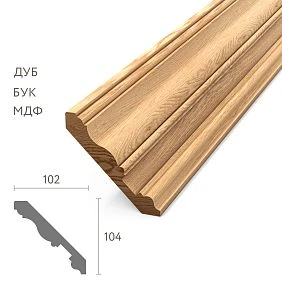
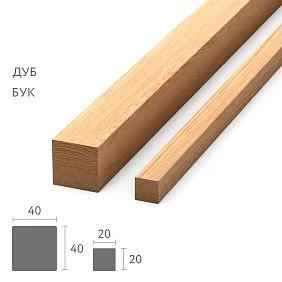
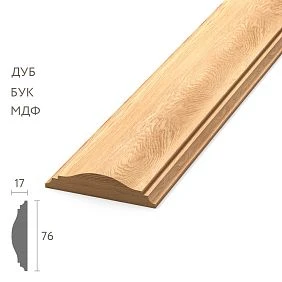
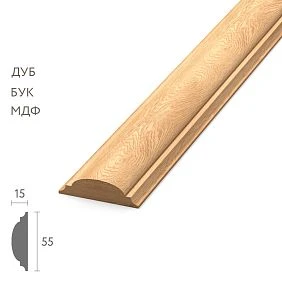
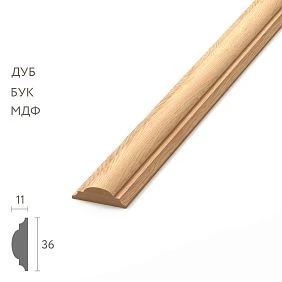
For current skirting boards, mouldings, and cornices, you can refer to the section STAVROS wooden molding, but the commercial possibility of reducing a specific order always depends on the actual stage and the agreed terms of the deal.
First recalculate the requirement, then reduce the order
You cannot cancel "roughly the extra quarter."
First, the new quantity must be confirmed.
For example:
Original Order = 480 pcs.
New net installation volume:
340 pcs.
Installation reserve:
12 pcs.
Operational reserve:
8 pcs.
Then:
Required Total = 340 + 12 + 8 = 360 pcs.
And only after that:
Reduction Candidate = 480 − 360 = 120 pcs.
This is already a normal procurement figure.
It explains:
- what remains for the project;
- what is included in the reserve;
- what volume can potentially be removed.
Without this, the buyer risks cutting the order too much and having to place an emergency reorder a week later.




Not every difference between the old and new quantity is excess stock
Let's imagine another case.
Ordered:
200 planks.
New net requirement:
182.
At first glance:
200 − 182 = 18 excess.
But the project needs:
- 8 installation reserve strips;
- 4 operational reserve strips.
Total:
182 + 8 + 4 = 194.
Real excess:
200 − 194 = 6 pcs.
Therefore:
ORDERED − NEW NET REQUIREMENT ≠ CANCELLATION QTY.
First, the new full required total is calculated.
Only then does the reduction candidate appear.
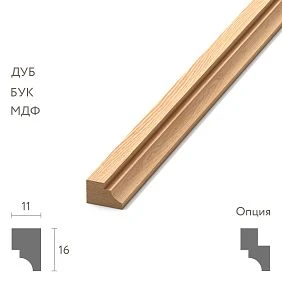
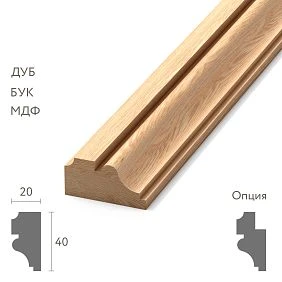
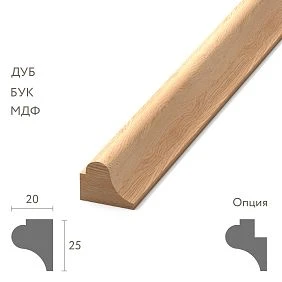
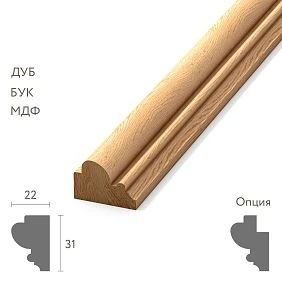
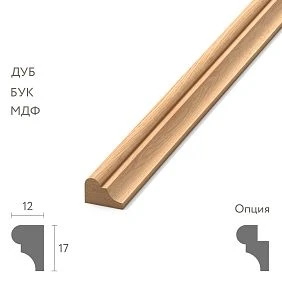
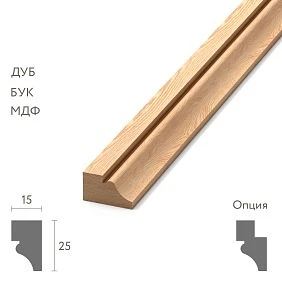
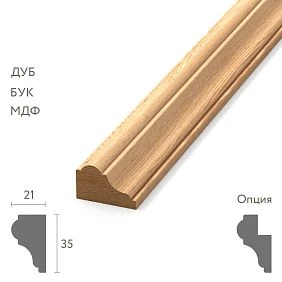
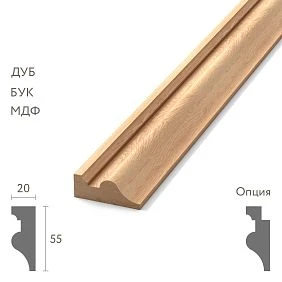
Our factory also produces:
The main matrix: the order stage changes everything
| Stage | What it means | What to do | | --- | --- | --- | | FORECAST | the order has not been placed yet | change the forecast | | PLANNED | procurement is being prepared | adjust the quantity | | RESERVED | the volume is reserved | coordinate the reserve change | | PO ISSUED | the official order has been issued | process the change | | ACKNOWLEDGED | the supplier has confirmed | request a reduction | | IN PRODUCTION | production has started | find out the actual consequences | | READY | the goods are ready | decide their further fate | | SHIPPED | the goods have been shipped | this is no longer a regular cancellation |
That is exactly why one command:
“remove 120”
not suitable for all stages.
Get Consultation
FORECAST is the easiest to reduce
If the position still exists only as a future requirement:
B03 — FORECAST 150 pcs
and the new plan requires:
80 pcs
then there may be no actual order cancellation at all.
The forecast is simply updated:
FORECAST 150 → 80.
But the change history is still useful.
This way the financial and procurement plan understands why the future amount decreased.
The main thing is not to confuse forecast with a firm order.
PLANNED: the order has not been released yet, but the bill of materials is already ready
At the stage PLANNED the buyer may already have:
- an approved SKU;
- quantity;
- commercial proposal;
- budget;
- a future order date.
If the reduction is confirmed before the PO, this is a good moment to make the change.
The new line must be included in the final purchasing list before the order is released.
This way, the project does not create an extra commitment that would later have to be reduced separately.
RESERVED: the reservation may already have commercial terms
Word:
reserved
does not have a single universal meaning.
For one supplier, this is just a verbal confirmation:
we're holding it for you.
For another — a specific reservation with:
- a deadline;
- a deposit;
- a price;
- an obligation to buy;
- a separate letter.
Therefore, when reducing a reserved volume, you need to find out:
- what exactly is reserved;
- for what period;
- under what conditions;
- can the volume be reduced;
- which part is already physically set aside or prepared.
Reserved quantity cannot be considered automatically cancellable.
PO ISSUED: the original order cannot be rewritten retroactively
Was:
PO-147-R00 = 480 pcs.
After changing the project, you cannot simply open the file and change:
480 → 360.
This is how history disappears.
Stronger:
PO-147-R00 = 480
↓
Approved Reduction
↓
PO-147-R01 = 360
R00 receives archival status:
SUPERSEDED.
Now, six months later, it is clear:
- how much was originally ordered;
- why it changed;
- when;
- who confirmed it;
- what volume became active.
ACKNOWLEDGED: the supplier has already confirmed the order
This is the next level of commitment.
The buyer has already sent the PO.
The supplier confirmed:
- SKU;
- quantity;
- price;
- the deadline;
- conditions.
Now reduction is not editing an internal table.
A formal change request needs to be made.
Until the supplier confirms, the status of the excess volume is:
REQUESTED FOR REDUCTION
And not:
CANCELLED.
This is an important distinction.
REQUESTED CANCELLATION ≠ CONFIRMED CANCELLATION
Let's imagine:
the buyer sent:
we request to reduce MLD-B from 480 to 360 pcs.
Within the company, someone immediately updated the table:
Active Qty = 360.
But the supplier has not responded yet.
Meanwhile, production continues at 480.
A week later, 480 are ready.
A conflict arises:
the buyer believes that 120 have been canceled;
the supplier believes it is fulfilling a confirmed order.
Therefore, the statuses must be different.
REQUESTED
The buyer requested a change in volume.
CONFIRMED
The supplier confirmed the new quantity.
Only after CONFIRMED the new figure becomes the working commercial basis.
IN PRODUCTION: first, we determine the actual status
Before requesting cancellation, it is useful to get a line-by-line breakdown.
For example:
| Line | Qty | Status | | --- | ---: | --- | | 10 | 200 | READY | | 20 | 180 | IN PRODUCTION | | 30 | 100 | NOT STARTED |
The order needs to be reduced by 100 units.
It makes sense to first analyze:
Line 30 / NOT STARTED
and not 200 ready-made pieces.
But even NOT STARTED does not automatically mean:
can be cancelled without consequences.
The following may exist:
- purchased raw materials;
- agreed minimum volume;
- special conditions;
- reserved production capacity.
The correct wording is:
find out the actual stage and the agreed terms for changing the order.
You cannot promise: "if it hasn't been shipped, it can be cancelled"
This is one of the most dangerous phrases.
A product can be:
- not shipped;
- but fully produced;
- made to order;
- painted to project specifications;
- packed;
- reserved;
- tied to a separate commercial term.
Therefore, the stage SHIPPED / NOT SHIPPED insufficient.
It is necessary to understand the entire actual process.
Especially for a custom profile.
Standard and custom trim profiles create different negotiation positions
A standard catalog SKU can potentially be returned to the supplier's general inventory more easily.
Individual:
CUSTOM-M03
can be manufactured for only one project.
This does not imply an automatic legal conclusion:
a custom item cannot be changed.
And it does not imply the opposite.
This is a factor in negotiations and a commercial decision.
The article cannot promise a universal outcome.
You need to work based on the facts of a specific order.
Why reducing the perimeter does not mean automatically removing the skirting board
Built-in wardrobe covered:
7.2 m of wall.
It seems:
minus 3 planks of 2.4 m.
But a new cutting plan may change the distribution of parts.
Before the wardrobe, one plank was used for two adjacent segments.
After the change, these segments are cut differently.
As a result, the actual savings may differ from simply dividing the meters.
Therefore, for a wooden skirting board:
GEOMETRY CHANGE → RECALCULATE CUT PLAN → NEW REQUIRED QTY → REDUCTION CANDIDATE.
Not the other way around.
Molding: removing several frames can sharply reduce the volume
Was:
12 frames.
Now:
8.
The number of repeating elements decreased by a third.
But before reducing, you need to check:
- whether the frames are identical;
- whether the molding is being moved to another zone;
- whether reserve is needed;
- what volume has already been released to production;
- whether there is a second batch with the same SKU.
Otherwise, the project may reduce the order today and, a month later, return the same volume as a different line item.
A cornice cannot be reduced by meters alone
A section of the ceiling contour was removed:
6 m.
This does not yet mean:
minus 6 m of the order.
It is necessary to recalculate:
- lengths of whole planks;
- joints;
- corners;
- short segments;
- Cutting.
If 2.4 m planks were used, six clean meters are not necessarily equal to exactly three canceled items.
First, a new cut plan.
Then reduction.
Four quantities that must not be confused
ORIGINAL QTY
Initial volume.
REQUIRED QTY
New confirmed requirement with the required reserve.
REDUCTION CANDIDATE
Mathematical difference between original and required.
CANCELLABLE QTY
The portion of the reduction candidate that the supplier has actually confirmed as excludable.
One more metric can be added:
COMMITTED QTY
The volume that, based on the actual stage and conditions, is already part of the current commitment or production process.
That is exactly why:
Required Qty ≠ Cancellable Qty.
Example: reduction candidate 120, but not the entire volume is cancellable
Original:
480.
Required:
360.
Reduction Candidate:
120.
But the status of the remaining quantity:
- 40 pcs — NOT STARTED;
- 50 pcs — IN PRODUCTION;
- 30 pcs — READY.
It cannot be recorded in advance:
Cancellable = 120.
First, the supplier confirms which part can be changed under the current terms.
After negotiations, the result may be less than the reduction candidate.
Logic matters more than a pre-selected number.
The reason for the reduction must be recorded
Useful reasons:
SCOPE REDUCTION
Part of the project was excluded.
DESIGN CHANGE
The architecture changed.
QUANTITY CORRECTION
A calculation error was fixed.
PHASE DEFERRED
The queue was moved.
DUPLICATE ORDER
Duplication was detected.
The reason matters for analytics.
In a year, the company will be able to understand:
- the problem was in the original calculation;
- the project;
- duplication;
- timelines.
Without a reason code, all reductions look the same.
DEFERRED ≠ CANCELLED
This is a critical distinction.
Batch B03 was needed in October.
Now it is needed in six months.
This:
DEFERRED
and not necessarily:
CANCELLED.
If it is completely removed from the plans, in six months the procurement will start over without any connection to the original need.
For a deferred position, it is useful to preserve:
- SKU;
- future volume;
- new target date;
- current status;
- the need to recheck the price and timeline.
HOLD: when a decision on the zone has not yet been made
Sometimes the customer does not yet know:
- exclude the zone;
- keep;
- postpone;
- change.
Then it is premature to set CANCELLED.
Working status:
ON HOLD
may be useful within the project.
But the ability to actually put a supplier order "on hold" must be separately agreed with them.
An internal status does not create an automatic right to stop an already launched delivery.
Buy construction materials wholesale by project: the quantity must have the status
When buy building materials wholesale, a single figure Qty = 240 is sometimes insufficient.
It is useful to distinguish:
120 FIRM
80 FORECAST
40 HOLD
Then the buyer understands the commercial maturity of the quantity.
FIRM — a actually confirmed active volume.
FORECAST — expected future demand.
HOLD — the decision is not yet closed.
This reduces the risk of issuing a PO for the entire theoretical project too early.
What to send to the supplier: Cancellation / Reduction Request
Not:
remove part of the molding.
But:
| Field | Value | | --- | --- | | Request ID | CN-01 | | PO | PO-147 | | Current Revision | R00 | | SKU | MLD-B | | Original Qty | 480 | | Requested New Qty | 360 | | Requested Reduction | −120 | | Reason | Scope Reduction | | Required Date | ___ | | Request Status | FOR CONFIRMATION |
If there are multiple lines, each gets a separate line reference.
This way the supplier understands exactly what the buyer is asking to change.
Cancellation Register
| Change | PO | SKU | Original | Requested | Confirmed | Status | | --- | --- | --- | ---: | ---: | ---: | --- | | CN-01 | PO-147 | MLD-B | 480 | 360 | 360 | CONFIRMED | | CN-02 | PO-151 | PLT-B | 220 | 180 | — | PENDING | | CN-03 | PO-155 | KZ-C | 90 | 0 | — | REVIEW |
This register shows where the new quantity has already been confirmed and where the company has only sent a request.
It is especially important not to put CANCELLED until the supplier responds.
Buying building materials wholesale: purchase and reduction are different operations
If buy construction materials wholesale initially for 480 units, the first operation says:
buy 480.
Reduction must leave a separate trace:
active volume after confirmation — 360.
Otherwise, one employee opens the original PO and sees 480, while another looks at the internal table and sees 360.
The document revision combines both versions.
The financial effect must be calculated separately from the quantity
A reduction of 120 units does not automatically mean:
the price for 120 units will be restored.
Need to verify:
- new confirmed cost;
- already paid;
- remaining balance due;
- delivery;
- custom works;
- packaging;
- other agreed terms.
There should be no universal accounting rules here.
Working structure:
| Metric | Amount | | --- | ---: | | Original PO | X | | Revised PO | Y | | Paid | Z | | Open Balance | calculate |
After confirmed reduction, the finance team updates the plan based on actual documents.
Excess goods already received are not a cancellation
If 40 extra strips are already on site, the process changes.
This:
POST-DELIVERY SURPLUS
And not:
PRE-SHIP REDUCTION.
Possible design solutions:
- save as reserve;
- move to another zone;
- use on another project;
- approve the return, if it is allowed;
- another documented decision.
Goods that have already arrived cannot be called "cancelled".
It physically exists and requires accounting.
Installed material is fully excluded from cancellation quantity
Example:
480 ordered.
Of these:
- 200 already installed;
- 100 is on site;
- 180 are still in the production plan.
The project has been reduced.
The reduction can only apply to future demand.
The installed 200 remain in the as-built history.
The received 100 are a separate surplus / stock decision.
Only the remaining 180 are part of the current reduction review.
Scope Reduction Matrix
| Zone | Old Qty | New Qty | Installed | Received | Future | Action | | --- | ---: | ---: | ---: | ---: | ---: | --- | | Lobby | 100 | 100 | 100 | 0 | 0 | none | | Floor 2 | 180 | 120 | 60 | 60 | 60 | reduce future | | Floor 3 | 200 | 140 | 0 | 0 | 200 | review reduction |
This matrix separates:
- already installed;
- already received;
- future active volume.
Without it, the whole difference just collapses into a single line, “extra.”
What to do if the supplier does not confirm the reduction
You cannot advise:
demand a refund.
Correct order:
- check the order terms;
- obtain official production status;
- determine the actually completed volume;
- separate standard and custom items;
- discuss acceptable options;
- record the agreed decision.
Typical options:
KEEP
Keep the volume.
DEFER
Postpone the future delivery, if agreed.
REDUCE
Reduce the volume.
TRANSFER
Reassign to another part of the project, if technically suitable.
CANCEL
Exclude the confirmed volume, if agreed.
Not every option is available in every order.
Procurement Tracker and payment schedule must be updated after confirmed reduction
If the active quantity has changed:
480 → 360
You cannot update only the PO.
It needs to be brought into alignment:
- Procurement Tracker;
- release schedule;
- payment schedule;
- warehouse plan;
- budget forecast;
- zone allocation.
Otherwise, one document will show 360, while the financial plan will continue to wait for a payment of 480.
A reduction is considered complete only when the new quantity has become consistent across all working systems.
What to keep in history
Even after a confirmed reduction, it is useful to keep:
- Original PO;
- the old quantity specification;
- request;
- the supplier's response;
- confirmed new quantity;
- the new revision;
- reason;
- the financial impact;
- the fate of surplus.
So in a year it can be restored:
why the order was 480, but 360 was delivered.
Without history, the reduction looks like a data error.
When reduction is not needed
A mathematical excess is not always worth turning into a cancellation.
For example:
- the excess is small;
- the SKU is critical for future repairs;
- the batch is unique in finish;
- the project is long;
- reordering later will be more difficult;
- extra items can be used as an operational reserve.
Then it is more reasonable:
KEEP AS PROJECT RESERVE
than to achieve a minimum remaining balance at any cost.
The goal is not to make the order as small as possible.
The goal is to remove truly unnecessary volume without creating new risk.
It is better to reduce by line items, not by one total amount
If the PO contains baseboard, molding, and cornice, you cannot write:
reduce the order by 20%.
Each line item may be at a different stage.
For example:
| Line | SKU | Original Qty | Status | Reduction Candidate | | --- | --- | ---: | --- | ---: | | 10 | PLT-A | 320 | READY | 0 | | 20 | MLD-B | 480 | IN PRODUCTION | 120 | | 30 | KZ-C | 110 | NOT STARTED | 20 |
The general request for "minus 140" hides an important difference.
For PLT-A, there is nothing left to reduce.
For MLD-B, it is necessary to determine which part of the 120 is actually changeable.
For KZ-C, 20 units are at an earlier stage and potentially easier for review.
Therefore, a Reduction Request is best linked to:
PO + LINE + SKU + ORIGINAL QTY + REQUESTED NEW QTY.
This reduces the risk that the supplier applies the change to the wrong line item.
After the reduction is confirmed, a verification check is needed
Once the supplier has confirmed the new quantity, the buyer must check the four systems once again:
- PO — the active revision contains the new figure.
- Procurement Tracker — the old quantity is no longer considered active.
- Payment Schedule — future payments recalculated.
- Warehouse / Delivery Plan — no excess volume expected for receipt.
If at least one system remains on the old version, the reduction is formally confirmed but not operationally complete.
This is especially dangerous with partial deliveries: the warehouse may continue to expect 480, while the revised PO is already 360.
Therefore, after CONFIRMED a separate status is useful:
REDUCTION IMPLEMENTED
It means that the new quantity is not only agreed with the supplier, but also distributed across all working documents of the project.
Ten mistakes when reducing a wholesale order
Mistake 1. Reducing the quantity before recalculating the cutting plan.
You may cancel strips that are still needed.
Error 2. Removing the installation reserve together with excess.
After the very first error, an emergency reorder will appear.
Error 3. Not checking the production status.
The buyer considers the item cancellable, even though it is already ready.
Error 4. Treating a request as a confirmed cancellation.
The supplier continues fulfilling the old order.
Error 5. Rewriting the old PO.
The history disappears.
Error 6. Not accounting for goods already received.
Cancellation is mixed with surplus.
Error 7. Confusing defer and cancel.
The deferred queue disappears from the future plan.
Error 8. Not updating the payment schedule.
The financial plan remains at the old volume.
Error 9. Not updating the Procurement Tracker.
Procurement and finance start living in different versions.
Error 10. Not recording the reason.
The company does not understand the source of constant reductions.
Final order reduction algorithm
- Obtain a confirmed project change.
- Recalculate the new geometry.
- Recalculate the cutting plan.
- Determine the new clean need.
- Add an installation reserve.
- Add operational reserve.
- Get Required Total.
- Calculate Reduction Candidate.
- Split the order by statuses.
- Check how much has already been ordered.
- Check how much has been produced.
- Check how much is ready.
- Check how much has been shipped.
- Check how much has been received.
- Check how much has been installed.
- Determine the potentially changeable balance.
- Issue a Reduction Request.
- Assign a status to the request
REQUESTED. - Receive the supplier's response.
- Lock in
CONFIRMED NEW QTY. - Issue a new PO revision.
- Update the payment schedule.
- Update the Procurement Tracker.
- Separately decide the fate of the post-delivery surplus.
- Save the original order history.
This way, a wholesale purchase reduction stops being a "minus 120" message and becomes a manageable process: the project understands how much is truly no longer needed, the buyer knows the stage of this volume, the supplier confirms the change, and the new figure is reflected consistently in the order, payment, and inventory records.
Questions about reducing an order
Can an order be reduced if the goods have not yet been shipped?
Not always. First, you need to check production, readiness, purchased raw materials, and the agreed terms for changing the order.
What is a Reduction Candidate?
This is the mathematical difference between the original order and the new full requirement with reserves. It is not yet equal to a confirmed cancellation.
How does Cancellable Qty differ from Reduction Candidate?
Cancellable Qty is the portion that, after checking the status and terms, the supplier has confirmed as excludable.
Do I need to change the original PO?
Do not rewrite the old version. It is better to release a new revision and keep the original in history.
What should be done with the deferred queue?
Use the status DEFERRED, if the requirement remains for the future. Do not confuse it with cancellation.
What should be done with the excess linear meters already received?
This is already surplus, not cancellation. A separate decision is needed on whether to keep it in reserve, transfer it, use it in another area, or agree on another option.
Does a quantity reduction mean a refund of the same amount?
Not necessarily. The financial effect must be verified against the actual documents and the terms of the specific order.
When can a reduction be considered complete?
When the new quantity is confirmed by the supplier, the current order revision is issued, and procurement, financial, and warehouse records are updated.