Article Contents:
- Construction goods: why not all of a site's nomenclature is procured in the same way
- COMMODITY
- TECHNICAL
- DESIGN-CRITICAL

On a large project, the general bill of quantities may contain hundreds of items: dry mixes, paint, fasteners, flooring, doors, electrical, plumbing, skirting boards, mouldings and cornices. For the purchaser, all of this formally belongs to one project. But each item cannot be purchased using the same logic.
It is especially dangerous to dissolve wooden trim inside the general line “finishing materials — per project”. For a mix, the grade, volume and technical characteristics are sufficient. For a design-critical skirting board or moulding, you also need the exact article number, profile, wood species, length, finish, approved sample, application area and replacement rules.
Therefore, it is useful to divide the construction goods of a large project into separate procurement packages. For wooden trim, you can create:
PG-01 — WOOD MOULDINGS & TRIMS.
And within the package, manage skirting boards, mouldings, cornices, architraves, battens and other approved profiles as a single technical system.
The main task of this approach is not to create yet another Excel. It is necessary to separate the design-critical material from the ordinary procurement mass and give it its own technical boundary, revision, status, samples, RFQ and change approval procedure.
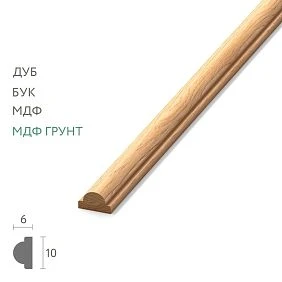
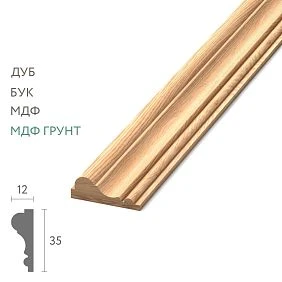
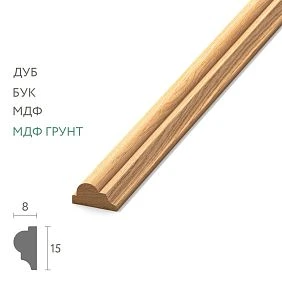
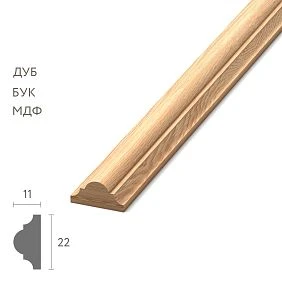
Construction goods: why not all items in a project are procured the same way
It is convenient to conditionally divide items into three classes.




COMMODITY
Standardized goods, where procurement is mainly determined by technical parameters, quantity, price, and lead time.
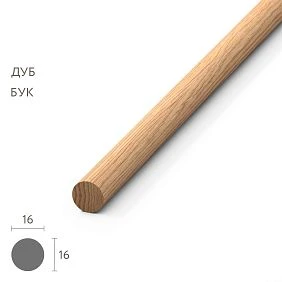
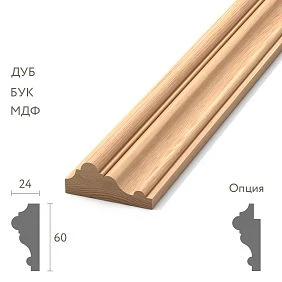
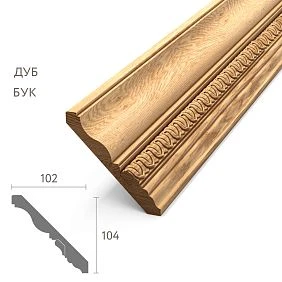
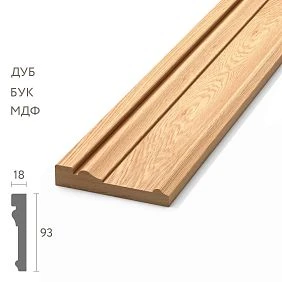
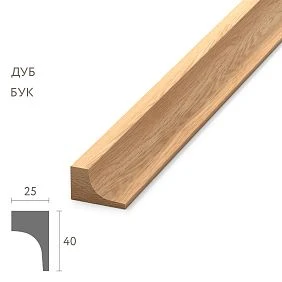
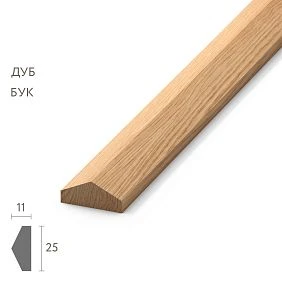
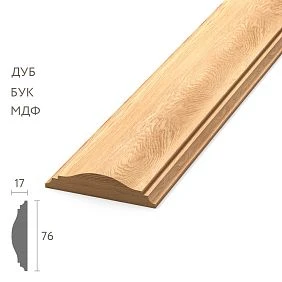
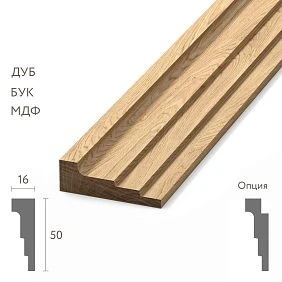
Our factory also produces:
TECHNICAL
Items where an error in specifications can lead to incompatibility, rework, or impossibility of installation.
Get Consultation
DESIGN-CRITICAL
Items where an error affects not only installation but also the architectural result.
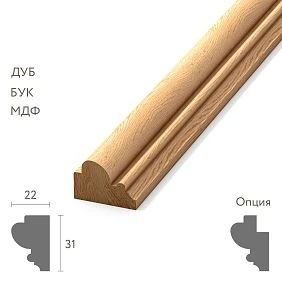
Wooden trim often falls under DESIGN-CRITICAL. If a "similar" molding arrives instead of the approved one, it may physically adhere to the wall but change the frame pattern, light and shadow, joints, and proportions of the interior.
What happens if trim is left within the general line "finishing materials"
The tender includes:
Wooden trim — 1850 m.
Company A counts one profile. Company B — another. Company C automatically offers an equivalent. The total amounts can be compared, but technically the participants are counting different goods.
As a result, the procurement looks competitive only at the money level, although there is no real bid leveling.
Linear trim must be broken down to the level of exact SKUs and specifications before requesting a price.
One procurement package — one technical boundary
For example:
PACKAGE PG-01 — WOOD MOULDINGS & TRIMS
The package includes:
- wooden skirting boards;
- Moldings;
- cornices;
- Baseboards;
- slats and trims, if they belong to the same interior system;
- approved samples and finishes.
But it is equally important to describe what is not included. If installation is performed by another contractor, this should be visible. If the finish is priced separately — that too.
Why package boundaries need to be written out in words
The phrase “PG-01 includes wooden linear trim” alone is not enough.
The scope description specifies:
- the product;
- the material;
- finish;
- samples;
- packaging;
- delivery;
- installation — included or not;
- fasteners — included or not;
- custom manufacturing — included or not.
This eliminates the situation where the buyer thought tinting was included in the price, while the supplier was quoting only the unfinished product.
Why skirting boards cannot be purchased separately from their interfaces
A wooden skirting board is not connected only to the wall.
It interacts with:
- the floor covering;
- with the casing;
- doorway;
- with built-in furniture;
- with joints between materials;
- the actual geometry of the wall.
Therefore, within PG-01 it is useful to have an INTERFACE LIST — a list of dependencies that must be checked before issuing the FOR PROCUREMENT package.
Interface Matrix for wooden skirting board
| Interface | What to Check | Who provides the input data |
|---|---|---|
| Floor | Elevation, thickness, junction | Floor design / contractor |
| Casing | Width, projection, joint node | Door package |
| Furniture | end points | Furniture documentation |
| Wall | Geometry and finish layer | Architecture / finishing |
The skirting supplier is not obliged to design adjacent systems. But the procurement package must understand which decisions determine whether its position is correct.
Why moulding should have not only an SKU but also a layout code
Suppose MLD-A is used in wall frame WALL-R2.
It is useful to see in the specification:
M03 / MLD-A / WALL-R2 / 130 pcs
Then the buyer understands that these 130 strips relate not to an abstract “decor” line, but to a specific composition.
If the supplier offers a substitution, the project team immediately sees which assembly will be affected.
What happens with an accidental molding substitution
Even a profile of similar width can change:
- relief;
- the depth;
- chiaroscuro;
- the corner joint;
- the scale of the frame;
- material consumption.
Therefore, the following rule must apply within the package:
NO SUBSTITUTE WITHOUT APPROVAL.
An alternative is possible, but only as a separate technical proposal, not as a hidden line item in the commercial estimate.
Why a wooden cornice is a separate risk within the package
The cornice is tied to the wall, ceiling, room height, built-in systems, and long-length logistics.
The line "cornice — 200 m" does not give the buyer enough information.
Required:
- exact article number;
- the material;
- cross-section;
- product length;
- finish;
- number of whole products;
- area of application;
- sample, if it was approved.
What the structure of the PG-01 procurement package looks like
| Field | Example |
|---|---|
| Package | PG-01 |
| Revision | R04 |
| Status | FOR PROCUREMENT |
| Item Code | M03 |
| Product | MLD-… |
| Material | Oak |
| Finish | FIN-02 |
| Length | According to the approved execution |
| Quantity | … |
| Zone | Lobby |
| Sample | S-04 APPROVED |
| Substitute | NO / approval required |
This table becomes the main procurement basis of the package. The commercial proposal must already respond specifically to it.
Why the package must have its own revision
For example, PG-01-R03 has already been sent to the RFQ participants. Three days later, the designer changed one molding.
New version:
PG-01-R04
You cannot simply replace the Excel file in the correspondence and continue comparing prices. Participants must confirm that they are pricing the same revision.
FOR DESIGN and FOR PROCUREMENT are not the same thing
Convenient to use statuses.
| Status | Value |
|---|---|
| FOR DESIGN | Profile is still under discussion |
| APPROVED | Architecturally approved |
| FOR PROCUREMENT | Approved to send to procurement |
| ON HOLD | Pause procurement until clarification |
This way the buyer doesn't purchase what the designer considered "almost approved."
Construction materials: why the package must appear before the price request
Construction materials must first be technically structured, and only then compared commercially.
Correct order:
unified specification → identical scope → identical revision → RFQ → technical review → price.
If you start with requests like "how much does the molding cost," participants will fill in the technical gaps differently.
Identical specifications for all procurement participants
Supplier A receives R04. Supplier B — R02. Supplier C — screenshots from the design project.
Their amounts cannot be compared as a single tender.
For bid leveling, all companies must quote the same set:
- the same revision;
- the same SKUs;
- the same materials;
- the same quantities;
- the same finish requirements;
- the same scope.
How to do bid leveling for wooden trim
| Field | Company A | Company B | Company C |
|---|---|---|---|
| SKU matches | ✓ | ✓ | ✕ |
| Material | Oak | Oak | Beech |
| Quantity | 480 | 480 | 480 |
| Finish | Enabled | Separately | Not specified |
| Delivery | Separately | Enabled | Separately |
| Lead time | … | … | … |
Technical discrepancies are resolved first. Only after that is cost compared.
How to record a supplier deviation list
Each participant must clearly show where they do not comply with the RFQ.
| Code | Requirement | Proposal | Deviation | Status |
|---|---|---|---|---|
| M03 | MLD-A / oak | MLD-B / oak | Different section | REVIEW |
| K01 | FIN-02 included | Finish separately | Scope difference | COMMERCIAL |
This way the buyer doesn't look for differences inside a long email. Deviations become a separate, manageable list.
The lowest total line does not yet mean the cheapest offer
One participant included the finish. Another did not. One counts oak, the other beech.
This is not a price difference, but a scope difference.
If it is not leveled, the winner will be not the more advantageous offer, but simply the shorter one.
Why a package should have BASE BID and alternatives separately
If a supplier wants to offer cheaper wood, a different profile, or a different finish, this can be considered. But the alternative must not replace the base response.
Participant provides:
BASE BID — strictly per PG-01.
ALTERNATIVE / VE OPTION — a separate proposal describing the differences.
Then the client sees the price of the original design solution and the savings from the proposed change without mixing them into a single figure.
Construction goods wholesale: why a specialized package should not be mixed with a regular wholesale order
construction materials wholesale on a large project they can span hundreds of lines. But PG-01 must retain its own:
- article numbers;
- samples;
- revisions;
- statuses;
- replacement rules;
- RFI history.
It can be included in the overall procurement register, but it must not be turned into an anonymous line item "decorative materials."
"Everything for construction and renovation" is convenient for procurement, but dangerous for the design specification
The phrase "everything for construction and repair" is convenient at the level of general supply. But within a project, specialized packages must remain self-contained.
A single master procurement register can include dozens of packages:
FL-01 — FLOORING
DR-01 — DOORS
PG-01 — WOOD MOULDINGS
EL-01 — ELECTRICAL
One register does not mean one unstructured procurement.
Construction goods: how to link a trim package to the general schedule
Construction goods remain visible in the overall system, but details are stored within a specialized package.
| Package | Description | Status | Document |
|---|---|---|---|
| PG-01 | WOOD MOULDINGS | RFQ | SPEC-PG-R04 |
General procurement sees the package status, but technical details are not lost in 850 lines of the general register.
Who owns package PG-01
It is not necessary to create a new position. But it must be clear who:
- issues the current specification;
- controls revisions;
- sends RFQ;
- collects supplier questions;
- records RFI;
- tracks samples;
- confirms FOR PROCUREMENT status;
- hands over the final package to the order.
If there is no owner, the designer, procurement specialist, contractor, and supplier begin changing the document in parallel.
RACI for package PG-01
On a complex project, it is useful to assign roles at least in a simple form.
| Action | Designer | Buyer | Site Foreman | Supplier |
|---|---|---|---|---|
| Profile Approval | A/R | C | C | I |
| RFQ Issuance | C | A/R | I | I |
| RFI Response | A/R | C | C | I |
| Commercial Proposal | I | C | I | A/R |
| On-site Acceptance | I | C | A/R | C |
Here R — Responsible, A — Accountable, C — Consulted, I — Informed. The specific matrix depends on the project structure, but the idea itself eliminates the situation where everyone thinks someone else should make the decision.
Why the designer should not directly change the package after FOR PROCUREMENT
After the release of FOR PROCUREMENT, any change to the profile, material, finish, or quantity must be processed as a change.
For example:
CHANGE-PG-007 / M03 / MLD-A → MLD-B / reason: revised wall composition
A Change must answer at least four questions:
- what changed;
- why;
- from which revision it applies;
- what commercial and calendar consequences have arisen.
Only after that does a new version of PG-01 get released.
Not because the design can no longer be changed. But because the consequences need to be understood:
- price recalculation;
- quantity change;
- new sample;
- new RFQ revision;
- possible schedule shift.
What to do if the supplier finds a contradiction
The specification states MLD-A, but the drawing shows MLD-B.
The supplier must not choose on behalf of the designer.
An RFI is created — Request for Information:
RFI-PG-012: which profile is the active one for WALL-R2 — MLD-A or MLD-B?
Until an official response, the line receives HOLD.
Why a good RFI is cheaper than an incorrect delivery
A few minutes to formulate the question can prevent:
- production of incorrect profile;
- return;
- repeat order;
- rework;
- installation downtime;
- dispute over who chose the wrong option.
RFI is not bureaucracy, but control of the unknown.
When a control sample is needed
A sample is especially useful for an item critical in terms of:
- profile;
- species;
- color;
- finish;
- visual matching with other elements.
It must be linked to:
PG-01 / ITEM M03 / FINISH F02 / SAMPLE S04 / REV R04
This way the sample becomes part of the package, rather than a separate piece of wood without context.
Submittal Register: how not to lose samples and approvals
If there are multiple samples, a separate register is useful.
| Submittal | SKU | Finish | Revision | Status |
|---|---|---|---|---|
| S-01 | PLT-A | FIN-02 | R04 | APPROVED |
| S-02 | MLD-A | FIN-02 | R04 | APPROVED |
| S-03 | KZ-A | FIN-02 | R04 | REVIEW |
Before purchasing a critical item, the sample status must be clear. REVIEW is not yet APPROVED.
The catalog, sample, and purchasing line must point to the same product
The correct sequence is:
catalog → sample → specification → RFQ → order.
If the sample refers to MLD-A, but MLD-B suddenly appears in the purchasing line, the system must stop the process.
One procurement package can have multiple batches
For example:
PG-01 / BATCH-01
PG-01 / BATCH-02
PG-01 / BATCH-03
Physical deliveries are separated, but the technical basis remains the same.
This allows the total volume to be allocated in advance:
| SKU | Project Total | Batch 01 | Batch 02 | Batch 03 |
|---|---|---|---|---|
| PLT-A | 680 м | 220 м | 240 м | 220 м |
| MLD-A | 940 м | 300 м | 330 м | 310 м |
| KZ-A | 260 м | 90 м | 85 м | 85 м |
Each batch is part of a single Project Total, not a new independent order.
This is important for phased projects: batches may ship in different months, but they must not gradually drift in SKU, material, or finish.
How to prevent drift between BATCH-01 and BATCH-03
Each batch must reference the current revision of PG-01.
| Batch | Spec Revision | Status |
|---|---|---|
| BATCH-01 | R04 | ORDERED |
| BATCH-02 | R04 | PLANNED |
| BATCH-03 | R04 | PLANNED |
If R05 is issued between them, it must be clear from which batch it takes effect.
The package must define in advance the criteria by which the goods will be accepted
Before ordering, the acceptance criteria are fixed:
- SKU;
- quantity;
- the material;
- length;
- execution;
- finish;
- marking;
- link to the sample, if one is provided.
Then acceptance checks against a pre-agreed package rather than inventing requirements after the truck arrives.
How the package helps verify the invoice before payment
The final invoice must also reference the same scope.
The purchaser checks:
PG-01-R04 → QUOTATION → INVOICE.
If a different SKU appears on the invoice or a finish line goes missing, the discrepancy is caught before money changes hands, not on site.
When PG-01 is considered closed
Not immediately after the last delivery.
The package can be considered closed when:
- the entire agreed scope has been delivered;
- open RFIs closed;
- discrepancies resolved;
- claims completed;
- balance recorded;
- operational reserve handed over, if provided;
- final documentation saved.
Which documents should remain in the package archive
Minimum archive:
- latest APPROVED / FOR PROCUREMENT specification;
- revision history;
- RFI and responses;
- approved samples and their identifiers;
- final quotation;
- order / invoice;
- batch log;
- acceptance results;
- closed claims.
A year later, it should be clear from the archive which product was actually purchased and why.
When a separate trim package is not needed
Not every project requires a separate PG-01.
If a single simple standard profile without a finish, without complex junctions, and without project samples is used, it can be left within the broader finishing package.
A separate package is justified when an independent technical boundary genuinely reduces the risk of errors and simplifies procurement.
How to determine that trim and molding truly needs a separate procurement package
It is useful to apply a simple diagnostic filter. The more “yes” answers, the stronger the argument for a separate PG-01.
| Question | Yes / no |
|---|---|
| Are there several SKUs of the same product type? | … |
| Is the exact profile critical? | … |
| Are there approved samples? | … |
| Is there a separate finish? | … |
| Are the items tied to specific layouts? | … |
| Is there a risk of uncoordinated substitution? | … |
| Will there be multiple delivery batches? | … |
| Are there complex interfaces with doors, flooring, or furniture? | … |
If the project answers "yes" to almost all points, keeping trim in the general "finishing" line item is already risky.
Pre-RFQ Gate: what must be ready before requesting a price
Before sending the RFQ, the package passes through the PRE-RFQ checkpoint.
At a minimum, they cover:
- scope boundaries;
- the current revision;
- the SKU list;
- materials;
- finishes;
- quantities;
- samples;
- substitute rules;
- open RFIs;
- expected delivery dates.
If half of these items are still "in progress," a price request will be premature. Suppliers will start filling in the gaps each in their own way, and then the buyer will spend more time aligning the responses.
Why open RFIs need to be closed before commercial comparison
Suppose one participant counts MLD-A, and another counts MLD-B, because the drawing and the specification contain different data.
As long as the RFI is not closed, comparing prices is pointless. First the project confirms the current profile, then all participants recalculate the same line item.
A good practice is not to release a line item to FOR PROCUREMENT status if it has an open technical question affecting the product, quantity, or finish.
Why overly fine splitting of packages is also harmful
There is a reverse mistake: creating a separate procurement package for each profile. For example, one package for the skirting board, a second for each molding, a third for the cornice.
This is how consistency is lost. If these items belong to a single interior composition, share a common finish, common samples, and the same approval rules, it is more reasonable to keep them within one PG-01 and separate them by item codes.
The package should be large enough to cover one technical system, and narrow enough not to dissolve critical parameters among unrelated goods.
How to control the package budget without losing technical logic
PG-01 may have its own budget limit, but it cannot be used as the sole optimization criterion.
For example, the package costs 1,200,000 ₽, while the target budget is 1,100,000 ₽. You cannot automatically reduce the cost by covertly substituting oak with beech or removing the finish.
First, options are formed:
- BASE — the original project;
- VE-01 — approved material substitution;
- VE-02 — unification of several SKUs;
- VE-03 — change in logistics or batch splitting.
Then the savings are transparent: you can see exactly which parameter changed and how much money it yields. The price does not become detached from the scope.
When the package is ready for Purchase Order issuance
The final transition from procurement preparation to order can be considered a separate gate.
Before the Purchase Order, the following must be closed:
- technical specification;
- revision;
- samples;
- RFI;
- deviation list;
- bid leveling;
- final price;
- the deadline;
- delivery terms;
- replacement rules.
After this, the Purchase Order should no longer be a place where new technical solutions appear. It locks in the agreed package and triggers execution.
Final algorithm for separating wooden trim into a dedicated purchase
- Find all wooden trim in the general schedule.
- Define the boundaries of PG-01.
- Record what is and is not included in the scope.
- Assign an owner for the package.
- Assign project codes to the items.
- Record the SKU, material, length, quantity, and finish.
- Link the baseboard to its interfaces.
- Link the moldings to the layout codes.
- Link samples to SKU and revision.
- Issue FOR PROCUREMENT status.
- Send the same RFQ revision to all participants.
- Collect RFI and resolve contradictions.
- Perform bid leveling.
- Compare identical scope.
- Lock down substitute rules.
- Hand over the final package to the order.
- Split the delivery into batches if necessary while maintaining a single technical basis.
- Accept goods according to the criteria defined in PG-01.
- Close the package only after all discrepancies are resolved.
For a large project, the procurement architecture matters no less than the price of the goods themselves. If wooden trim remains an unnamed line among hundreds of ordinary construction items, design precision is lost before the order is even placed.
A separate PG-01 makes the process manageable: the architecture defines a precise profile, procurement receives an unambiguous scope, suppliers estimate a single technical task, and prices are compared only after proposals are leveled.
This way, wooden skirting, molding, and cornice remain a unified project system from design decision to final order, rather than turning into "a few more construction items" within a huge general invoice.
PG-01 control checklist before order release
| Check | Status |
|---|---|
| Scope defined | OK / HOLD |
| Revision is up to date | OK / HOLD |
| All SKUs approved | OK / HOLD |
| No open RFIs | OK / HOLD |
| Samples APPROVED | OK / HOLD |
| Bid leveling completed | OK / HOLD |
| Deviation list closed | OK / HOLD |
| Substitute rules locked | OK / HOLD |
| Timeline and batches confirmed | OK / HOLD |
| The final price applies to the same scope | OK / HOLD |
If at least one critical item remains on HOLD, the package is not yet ready to order. This short gate prevents launching a technically incomplete solution just because the commercial proposal has already arrived.