Article Contents:
- Turned furniture leg MN-145.1: what the product card confirms before ordering
- MN-145.1 at a 12° angle: where the lower axis of the 350 mm leg will end up
- Floor glide D25: why a single axis is not enough
- What happens if the axis of the top mounting is 60 mm from the edge
- Scenario 1. Leg tilted directly toward the nearest edge
- Scenario 2. Leg directed diagonally toward the corner
- What must match for all four supports
- 350 mm option
- 449 mm option
- Schematic table of all confirmed lengths
- Oak
- Oak
- Oak
- Oak
- What sizes are available for MN-145.1?
- What is the diameter of MN-145.1?
- What angle does the mounting plate have?
- What wood is MN-145.1 made from?
- Can I buy MN-145.1 in oak?
- Can I order MN-145.1 in beech?
- What is the diameter of the foot cap?
- Is there brass hardware?
- Is there stainless steel hardware?
- How much does the 350 mm leg shift at a 12° tilt?
- Why does 85.3 mm appear in the calculation?
- Can the foot cap extend beyond the edge of the tabletop?
- What changes with a diagonal tilt toward the corner?
- Where to attach the legs on a 700×700 mm tabletop?
- How does the 449 mm version differ from the 350 mm in terms of overhang?
- How do I calculate the final height of the table?
- What is included in the MN-145.1 kit?
- Which screws need to be purchased separately?
- Is MN-145.1 suitable for a heavy stone tabletop?
- How much do four MN-145.1 350 mm beech legs cost?
- How much do four oak MN-145.1 350 mm legs cost?
- Where to Buy Furniture Legs?
- Where to buy legs for a coffee table?
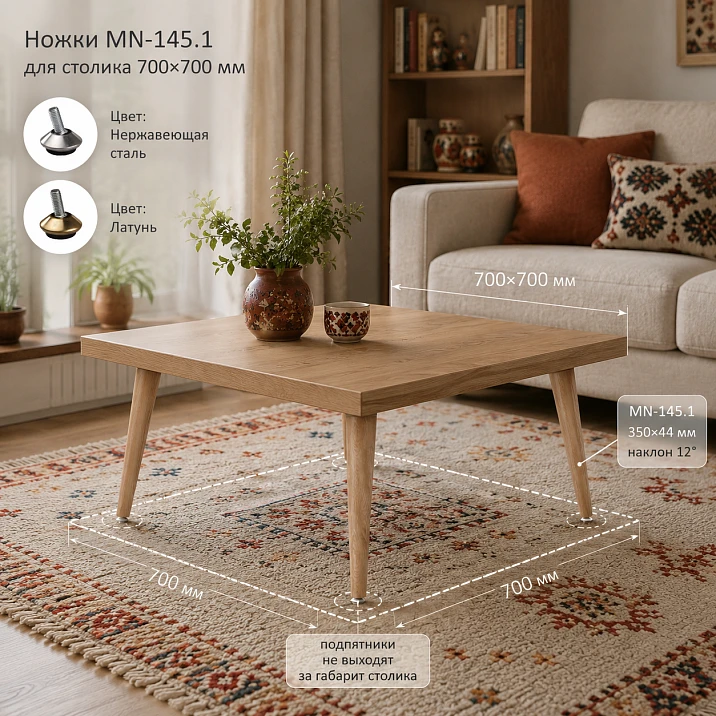
The tabletop is turned face down and placed on a workbench. On the underside, four intended attachment points are marked with a pencil—typically, closer to the corners. Then, next to one mark, a line is drawn at an angle set by the MN-145.1 mounting plate. And here, the usual furniture logic of "step back from the edge and screw on the leg" stops working.
The MN-145.1 with a length of 350 mm is installed at a 12° tilt. The lower foot pad is therefore not directly under the top attachment point: it shifts outward. For a 700×700 mm tabletop, this matters twice. First, the metal foot pad may visually extend beyond the projection of the upper square. Second, the four legs may get too large a lower footprint if the plates are oriented outward and close to the edges.
Preliminary geometry gives:
350 × sin 12° ≈ 72.8 mm
horizontal displacement of the leg axis.
The foot has a diameter of D25, so from its axis to the outer point there is approximately:
25 / 2 = 12.5 mm.
Schematic external overhang along the tilt direction:
72.8 + 12.5 ≈ 85.3 mm.
But there is a fundamental caveat here: 85.3 mm is the overhang along the tilt vector, not automatically 85.3 mm to each side of the square tabletop. If the leg is tilted strictly toward one edge, almost the entire overhang works toward that edge. If the plate is oriented diagonally toward a corner, the horizontal displacement is distributed between two coordinates, and a smaller component reaches each edge.
Therefore, the answer to the main question is: MN-145.1 350×44 mm may fit a 700×700 mm tabletop, but you should not buy four legs before planning the mounting layout. First, you need to draw the actual directions of all four plates, check the bottom contour of the feet, and make sure the structure does not become wider than the top tabletop more than the project allows.
To compare models, you can open the category Buy furniture legs for a 200-room hotel project — this is not an ordinary deal, but a partnership requiring a special approach., but the specific MN-145.1 is chosen after a geometric check.
Turned furniture leg MN-145.1: what the product card confirms before ordering
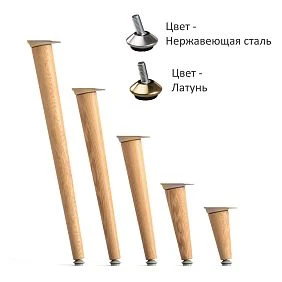
MN-145.1 is made from solid oak or beech. Diameter B for confirmed sizes is 44 mm.
The current product card has five A options:
| A, mm | B, mm | Beech, price at the time of check | Oak, price at the time of check |
|---|---|---|---|
| 104 | 44 | 900 ₽ | 1 050 ₽ |
| 153 | 44 | 970 ₽ | 1 190 ₽ |
| 252 | 44 | 1 210 ₽ | 1 600 ₽ |
| 350 | 44 | 1 360 ₽ | 1 920 ₽ |
| 449 | 44 | 1 580 ₽ | 2 280 ₽ |
For each size, you can choose hardware in brass or stainless steel color. At the time of checking, the price of the corresponding leg does not change depending on the choice of these two colors.
For the article, we are interested in MN-145.1 350×44 mm. The kit according to the product card includes:
-
wooden support;
-
a metric stud/self-tapping screw M8×60;
-
a metal mounting plate M8 with a 12° tilt angle;
-
M6×13 insert nut;
-
a metal swivel foot D25.
Self-tapping screws for attaching the mounting plate to the furniture are not included in the kit.
The product card separately indicates use for light loads and frameless constructions, including coffee tables. Therefore, MN-145.1 cannot be used as a universal support for any heavy tabletop without a separate load check.
After the plan is approved, you can order MN-145.1 350×44 mm as a set of four identical supports.




MN-145.1 at a 12° angle: where the lower axis of the 350 mm leg will be
For a preliminary check, we consider MN-145.1 as an inclined segment 350 mm long.
Horizontal component:
350 × sin 12° ≈ 72.8 mm.
Vertical component:
350 × cos 12° ≈ 342.4 mm.
This is a useful sketch, but not the factory mounting dimension. The actual height and position of the lower point depend on the plate design, the hinge support, and the specific connection assembly.
The main point of the calculation is different: the lower axis shifts noticeably relative to the upper one.
For a straight vertical leg, the top and bottom projections almost coincide. For MN-145.1, this cannot be assumed.
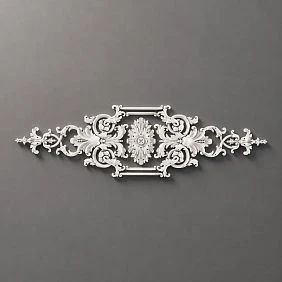
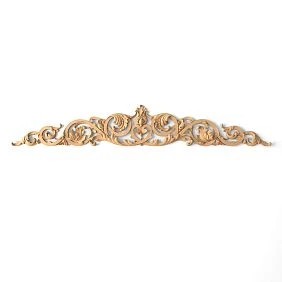
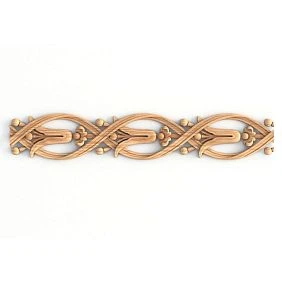
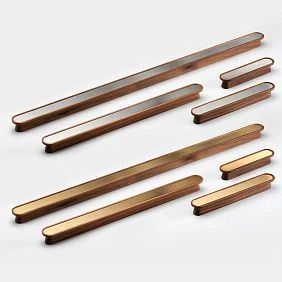
Our factory also produces:
Foot cap D25: why one axis is not enough
Even if the axis of the lower part is still within the tabletop projection, the metal foot cap has its own diameter.
D25 → radius 12.5 mm.
If we consider the outer point of the foot cap along the tilt direction, we get:
72.8 + 12.5 = 85.3 mm.
This is no longer the center position, but a preliminary extreme point of the support footprint.
This calculation is especially useful before purchase: it shows what margin should be allowed between the axis of the upper mounting and the outer contour of the tabletop.
Get Consultation
What happens if the axis of the upper mounting is 60 mm from the edge
Here, a single answer cannot be given without the tilt direction.
Scenario 1. The leg is tilted directly toward the nearest edge
All preliminary external overhang works almost in one direction.
Axis of the top mounting:
60 mm from the edge.
Schematic external overhang:
85.3 mm.
We get:
85.3 − 60 ≈ 25.3 mm.
The outer point of the foot may end up about 25 mm beyond the tabletop projection.
This is not the final mounting dimension, but a strong signal: the mounting is too close to the edge for this orientation.
Scenario 2. The leg is directed diagonally toward the corner
Now the horizontal offset of 72.8 mm is distributed between the two axes of the tabletop.
With an ideal 45° direction:
72.8 / √2 ≈ 51.5 mm
for each coordinate.
To this, add the radius of the round support pad of 12.5 mm toward each edge:
51.5 + 12.5 ≈ 64 mm.
If the upper axis is 60 mm from both sides simultaneously, the outer circle of the support pad may extend beyond each edge by approximately:
64 − 60 ≈ 4 mm.
This is no longer the 25 mm from the first scenario.
Hence the main conclusion: the offset cannot be checked without the direction of the mounting plate.
Where to place four MN-145.1 on a 700×700 mm tabletop
The working scheme starts not with the number "60 mm" or "100 mm", but with a complete plan.
Draw a 700×700 mm square to scale.
Then for each leg, mark:
-
the center of the top mounting;
-
the tilt direction of the plate;
-
the expected axis offset;
-
the D25 circle at the bottom point;
-
the outer contour of all four support feet.
After that, not just one leg is checked, but the entire bottom dimension of the table.
What must match for the four supports
-
identical offset of the top points;
-
identical orientation of the plates;
-
mirror symmetry;
-
identical tilt direction relative to the corners;
-
identical outer overhang;
-
sufficient distance between the bottom points.
For a buyer who already knows the countertop size, it is more useful to first look at the selection Legs for a coffee table to buy, and then return to MN-145.1 with the specific diagram.
Why the four mounting plates must be oriented identically
The tilt angle of the plate is set, but the direction of this plate in plan determines where the bottom point will go.
If you turn one leg slightly differently:
-
the bottom contour will no longer be symmetrical;
-
one foot pad will be closer to the edge;
-
the visual "spread" of the legs will become different;
-
the bottom square or trapezoid of the supports will be distorted.
On large furniture, a slight discrepancy is sometimes lost. On a coffee table 700×700 mm, it is more noticeable.
Therefore, before drilling, it is convenient to make one template for the plate position and mirror it to the four corners.
MN-145.1 350 mm and 449 mm: length changes not only the height
Sometimes a buyer sees 350 and 449 mm in the product card and thinks only about the height of the coffee table.
For an inclined leg, the length simultaneously affects the horizontal offset.
Option 350 mm
Axis offset:
350 × sin 12° ≈ 72.8 mm.
With a D25 foot along the tilt vector:
about 85.3 mm.
Option 449 mm
Axis offset:
449 × sin 12° ≈ 93.3 mm.
With foot radius:
93.3 + 12.5 ≈ 105.8 mm.
That is, switching from 350 to 449 mm increases the preliminary external offset by almost:
105.8 − 85.3 ≈ 20.5 mm.
This already affects the size of the lower support spot.
Schematic table of all confirmed lengths
| A, mm | Horizontal axis displacement at 12° | Taking into account the D25 radius along the slope |
|---|---|---|
| 104 | ≈21.6 mm | ≈34.1 mm |
| 153 | ≈31.8 mm | ≈44.3 mm |
| 252 | ≈52.4 mm | ≈64.9 mm |
| 350 | ≈72.8 mm | ≈85.3 mm |
| 449 | ≈93.3 mm | ≈105.8 mm |
The table does not replace the drawing. It shows a trend: the longer the leg at the same angle of 12°, the further the bottom point moves away.
Final height of the coffee table: why you can't simply add 350 mm and the tabletop thickness
For a vertical support, a simple scheme is often used:
leg + tabletop = total height.
For MN-145.1, such arithmetic is too rough.
Vertical projection of axial length 350 mm:
350 × cos 12° ≈ 342.4 mm.
For 449 mm:
449 × cos 12° ≈ 439.2 mm.
But the actual final height also depends on:
-
the mounting plate;
-
position of the upper connection;
-
hinged thrust bearing;
-
adjustment;
-
tabletop thickness.
Therefore, the formula:
350 + 30 = 380 mm
cannot be presented as the ready height of a specific table on MN-145.1.
First, you need a real node.
Oak MN-145.1 or beech under enamel
The geometry of oak and beech is the same for the same size A×B. The material is chosen after the mounting points are confirmed.
Oak
It is rational when you need to preserve the natural wood grain and connect the legs with a natural tabletop or other oak elements.
Beech
It is often convenient for covering finishes when the legs need to match the color of the furniture.
To compare other models, you can Buy wooden furniture legs in the general category.
Brass or stainless steel: the color of the floor protector is chosen after the geometry
For MN-145.1, two metal hardware options are available:
-
brass;
-
stainless steel.
But decorative metal is not the first question.
First, you need to confirm:
-
size 350 mm;
-
plate arrangement;
-
direction of inclination;
-
lower dimension;
-
permissible load.
Only then choose the color of the support pad.
Brass is logical if the interior already has warm metal details.
Stainless steel will support cold metal, chrome, steel, or a neutral modern palette.
Furniture fitting MN-145.1: what is included and what needs to be determined separately
The card includes in the set:
-
support;
-
M8×60;
-
inclined plate 12°;
-
M6×13 insert nut;
-
hinged thrust bearing D25.
However, the screws for attaching the mounting plate are not supplied.
This is important before assembly.
You cannot take a random screw just because it fits through the plate hole. The fastener is selected based on the material and thickness of the specific countertop.
If you need to select additional components, you can open the section Furniture leg hardware.
Why MN-145.1 cannot be automatically installed under a heavy stone countertop
The card directly classifies MN-145.1 as a support for light loads and frameless structures like coffee tables.
This means that the article does not have the right to assign the permissible weight itself.
If the tabletop:
-
made of heavy stone;
-
thick;
-
has a large overhang;
-
contains a heavy insert;
-
must withstand increased operational load,
you need to separately check the design with the manufacturer or furniture designer.
The size 700×700 by itself does not indicate mass.
Two tabletops of the same size made of plywood and stone create completely different conditions.
Can MN-145.1 be used without aprons
The card positions the model exactly this way: for frameless constructions with light loads.
But the frameless scheme still requires:
-
sufficient rigidity of the tabletop itself;
-
correct placement of fasteners;
-
identical orientation of the plates;
-
correct mounting hardware;
-
checking the entire structure after assembly.
The absence of a crossbar does not mean the absence of calculation.
Why you should first assemble a full-size template underneath the tabletop
Before drilling, it is useful to make a simple mock-up.
On a sheet of cardboard or directly on the protective paper of the tabletop, mark a 700×700 mm square.
Then apply:
-
four axis points;
-
12° direction;
-
72.8 mm offset for the 350 variant;
-
D25 circles at the lower points.
This way you can check what the lower clearance will be without a single hole.
It is especially useful to compare two offsets — for example, conditional 60 and 90 mm — not as recommendations, but as two scenarios.
If at 60 mm the lower contour extends too far, the point can be moved inward and recalculated.
How much do four MN-145.1 350×44 mm cost
At the time of checking:
Beech
One leg — 1,360 ₽.
Four:
4 × 1 360 = 5 440 ₽.
Oak
One leg — 1,920 ₽.
Four:
4 × 1 920 = 7 680 ₽.
The price is the same for the hardware color selected in the card — brass or stainless steel.
This is the cost of the complete legs themselves at the time of checking, without additional screws for mounting plates, finishing, delivery, and tabletop manufacturing.
Turned furniture legs: when MN-145.1 is better to compare with another model
MN-145.1 has a distinct design feature — a 12° tilt.
If the buyer absolutely needs the bottom points to remain almost strictly under the top mounts, it's better not to try to "overcome" the tilt by excessively shifting the plates inward.
It's worth opening the selection buy turned furniture legs and look at models with a different installation scheme.
The product must fit the design, not force the design to adapt to a beautiful shape at any cost.
Unpainted furniture legs: finishing is planned before assembly
MN-145.1 refers to unpainted wooden supports.
If the legs will be painted or tinted, it is better to determine the technological process before final assembly of the table.
For comparison, you can open the section Buy unpainted furniture legs.
There is no need to assemble the finished table and then decide for the first time how to paint the areas near the plates and metal parts.
How to order four MN-145.1 without confusion
All variables are fixed in one specification.
Example:
MN-145.1 / 350×44 mm / 4 pcs. / material oak or beech / hardware brass or stainless steel / mounting plate 12° / tabletop 700×700 mm / attachment points according to approved drawing / tilt direction identical and mirror-symmetrical.
This is better than four separate items "leg 350 mm".
What to send to the STAVROS manager before ordering
It is useful to convey:
-
tabletop size — 700×700 mm;
-
thickness;
-
material;
-
approximate weight;
-
required final height;
-
selected size MN-145.1;
-
four proposed mounting points;
-
tilt direction of each support;
-
allowable lower dimension;
-
leg material;
-
hardware color;
-
Quantity.
If the structure is heavy or unusual, it is worth asking separately whether MN-145.1 is suitable for this load.
When MN-145.1 is not to buy yet
It is better to postpone the purchase if:
-
only the tabletop size is known;
-
four mounting plates are not drawn;
-
tilt direction is not selected;
-
bottom clearance is not checked;
-
tabletop weight is unknown;
-
350 and 449 mm are compared only by height;
-
beech or oak is not selected;
-
finish is not resolved;
-
mounting hardware is to be selected "on site" without considering the tabletop material.
Result: will MN-145.1 350×44 mm fit for a 700×700 mm tabletop
It can fit, but the solution depends primarily on the position and orientation of the four mounting plates.
For a length of 350 mm, the preliminary geometry gives:
350 × sin 12° ≈ 72.8 mm
axis offsets.
With the D25 foot, the outermost point along the tilt direction is approximately:
72.8 + 12.5 ≈ 85.3 mm
from the top axis.
But 85.3 mm cannot be mechanically subtracted from each edge clearance. If the leg is directed diagonally toward a corner, a smaller component applies to each side. If directed straight toward one edge, almost the entire overhang applies to that edge.
Therefore, before ordering, you need to:
-
draw a 700×700 mm tabletop;
-
place the four top axes;
-
set the actual direction of the plates;
-
apply an offset;
-
construct a circle D25;
-
check the overall bottom contour;
-
confirm the load and fasteners.
only after that buy a turned furniture leg MN-145.1 as a set of four identical supports.
So the finished tabletop 700×700 mm remains the initial project constraint, and the angled legs become a calculated design, not a surprise after assembly.
FAQ
What sizes are available for MN-145.1?
Confirmed A=104, 153, 252, 350 and 449 mm with B=44 mm.
What is the diameter of MN-145.1?
B=44 mm.
What angle does the mounting plate have?
12°.
What wood is MN-145.1 made from?
From oak or beech.
Can I buy MN-145.1 made of oak?
Yes.
Can I order MN-145.1 made of beech?
Yes.
What is the diameter of the foot plate?
D25, that is, 25 mm.
Is there brass hardware?
Yes, the card offers a version with brass.
Is there stainless steel hardware?
Yes.
How much does the 350 mm leg shift at a 12° tilt?
Schematically, the axis shifts approximately 72.8 mm horizontally.
Why does 85.3 mm appear in the calculation?
The radius of the D25 foot pad — 12.5 mm — is added to 72.8 mm to estimate the outermost point along the tilt direction.
Can the foot pad extend beyond the edge of the tabletop?
Yes, if the top point is too close to the edge or the plate is oriented unfavorably.
What changes with a diagonal tilt toward the corner?
The shift is distributed between two coordinates, so each edge receives a smaller component than when tilting directly toward one side.
Where should the legs be attached on a 700×700 mm tabletop?
There is no universal offset. Points are selected according to the plan, taking into account the 12° direction, lower clearance, fasteners, and tabletop construction.
How does the 449 mm version differ from the 350 mm in terms of overhang?
At the same 12° angle, the preliminary external overhang increases from approximately 85.3 to 105.8 mm along the tilt direction.
How to calculate the final table height?
You need to account for the vertical projection of the leg, mounting assembly, foot pad, and tabletop thickness. Simply adding 350 mm and the tabletop thickness is incorrect.
What is included in the MN-145.1 set?
Support, M8×60, inclined plate 12°, insert nut M6×13, and swivel foot pad D25.
Which screws need to be purchased separately?
The card indicates that screws for attaching the plate are not supplied. Specific fasteners are selected based on the material and thickness of the tabletop.
Is MN-145.1 suitable for a heavy stone tabletop?
The card indicates low loads. For a heavy structure, suitability must be approved separately.
How much do four MN-145.1 350 mm in beech cost?
5,440 RUB at the card price at the time of check.
How much do four oak MN-145.1 350 mm legs cost?
7 680 ₽.
Where to buy furniture legs?
In the general category of legs and supports STAVROS.
Where to buy legs for a coffee table?
In a special selection of legs for coffee tables STAVROS.