










































































Article Contents:
- What is stucco in Stalinist Empire style
- Empire stucco: which STAVROS products to use
- How to choose molding by application area
- Walls: Stalinist Empire stucco as the main surface
- Ceiling: Empire stucco cornice and rosette
- Doorways: capitals and linear moldings
- Hall: Empire style stucco in the entrance area
- Living room: rosettes, cornices, central overlays
- Study: strict decor in Empire style
- How to choose scale: proportions and calculation
- Which elements not to mix
- Standard kits for assembling an Empire-style interior
- Minimum starter kit
- Wall set
- Ceiling set
- Architectural set
- Mistakes when choosing stucco for Stalinist Empire style
- Polyurethane in a Stalinist apartment: why it's the right choice
- Installation: What You Need to Know Before Starting Work
- Where to buy stucco for a Stalinist Empire interior STAVROS
- Frequently Asked Questions

Stalinist Empire is an architectural and interior style that tolerates no compromises: large scale, perfect symmetry, monumental forms, and rich decor covering walls, ceiling, doorways, and hall simultaneously. If you want to recreate such an interior today, the right path is to select molding from polyurethane through the STAVROS collection and catalog. Polyurethane overlays, polyurethane rosettes, Polyurethane trim, Capitals, Moldings and cornices — these are the elements that form the architectural language of Stalinist Empire, accessible today to anyone who understands the scale of the task.


What is stucco molding in Stalinist Empire style
Stalinist Empire style is a Soviet interpretation of imperial style that developed in the 1930s–1950s. Its ideological foundation is the demonstration of power through architecture: high ceilings, wide halls, symmetry as the law of space. Stucco molding in Stalinist Empire style is not decoration, but a load-bearing element of the visual system. Without decorative belts, cornices, rosettes, and overlays, the interior loses its stylistic integrity — it becomes just a tall room with white walls.
Stucco molding in the Empire style is built on several principles that need to be understood before starting to select elements.
Monumentality. All elements are large. Overlays with laurel wreaths do not occupy 15 centimeters — they occupy half the pier. Ceiling rosettes reach 60–80 centimeters in diameter. Cornices have a profile height of 8–15 centimeters or more. In a Stalinist building with a 3.2-meter ceiling, small stucco molding looks alien — it gets lost and destroys the scale.
Symmetry as a law. Empire style stucco molding is always built relative to an axis. The central overlay on the wall is strictly in the center. Side elements are strictly paired, at equal distances. The cornice runs exactly along the perimeter without breaks. The molding is not interrupted at a random height. Even a slight violation of the axis is perceived as a mistake.
High ceiling as a condition. Empire stucco molding is organic only at a height of 2.9 meters and above. It is then that the decorative belt at a level of 60–70 centimeters from the ceiling reads as an element of style, not as a narrowing of space. A cornice set back 5–8 centimeters from the ceiling forms a horizontal line that makes the room solemn.
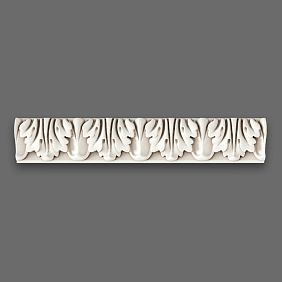
Antique motifs. Decor in Empire style appeals to images of Rome and Greece: laurel wreaths as a symbol of victory, bows as an element of ceremonial decoration, palmettes, acanthus leaves, meander. In the STAVROS collection, these elements are embodied in overlays, molding tapes, and decorative inserts for moldings.
Connection of walls, ceiling, and doorways. In an Empire interior, decor does not exist as separate accents. It is a through system: wall molding transitions into door framing, ceiling cornice connects with the decorative belt, ceiling rosette echoes the wall overlay. If this connection is broken, the style falls apart.




Empire stucco: which STAVROS products to use
STAVROS offers a complete set of elements for assembling an Empire-style interior. Below is a table with product categories, tasks, and links to catalog sections.
| Element | Task in an Empire-style interior | Catalog section |
|---|---|---|
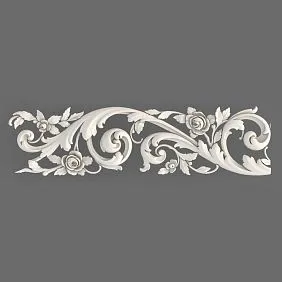
| Polyurethane stucco molding | Central overlays, large ornaments, panels | Go to section |
| Empire Collection | Style selection with laurel wreaths, bows | Collection of neoclassicism |
| Polyurethane molding | Decorative belts, ribbons, frames | Molding section |
| Polyurethane rosettes | Central ceiling accents, chandelier zone | Socket section |
| Polyurethane capitals | Architectural accents, pilaster terminations | Capital section |
| Moldings and cornices | Frames, upper belt, division lines | Moldings and cornices |
| Decor for moldings | Corner elements, inserts, frame terminations | Decor for Molding |
Each of these sections is part of a single catalog polyurethane products, which covers the entire decorative range from a minimal molding to an architectural set with capitals and cornices.
Our factory also produces:



How to choose molding by application area
Stalinist Empire style requires understanding what works where. A zoning mistake—when large overlays go to the kitchen while the hall remains without decor—destroys the logic of the style.
Get Consultation
Walls: stucco molding in Stalinist Empire style as the main surface
A wall in an Empire interior is not a background. It is a load-bearing decorative plane. It is divided into zones: a base belt (lower third), a main field (middle part), and an upper belt under the ceiling. Each level has its own elements.
At the base level—a baseboard with a rich profile and a horizontal molding separating the lower zone from the main field. In the main field—central overlays with laurel wreaths or floral ornaments, with paired smaller elements on the sides. The upper belt—a decorative band of polyurethane molding, which closes the wall and transitions into the cornice. This approach creates a visual three-level structure characteristic of formal interiors.
For walls, overlays with a clearly defined relief should be used. Flat decorative elements do not work in Stalinist Empire style—they get lost under any lighting. The minimum profile height for an overlay on a wall with a 3-meter ceiling is 4–6 centimeters. The depth of the relief is at least 2 centimeters, otherwise the play of light and shadow will be weak.
Ceiling: Empire style stucco cornice and rosette
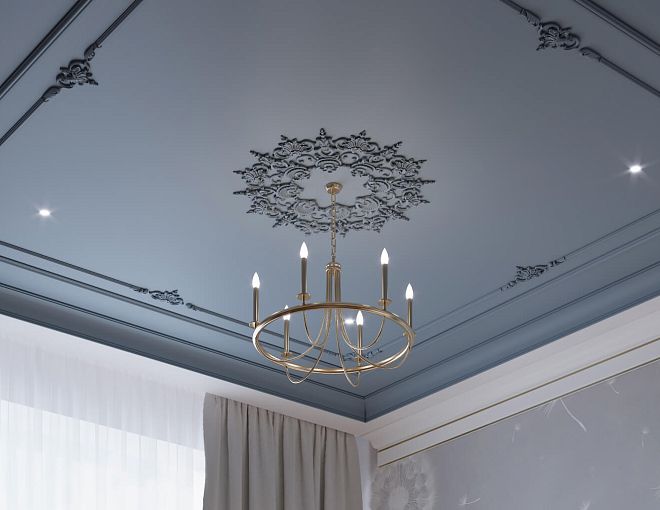
The ceiling in an Empire interior is an area of special attention. This is where the most expressive decorative load is concentrated. The rule is simple: a ceiling without a cornice in Stalinist style is an unfinished interior.
Polyurethane moldings and cornices are installed around the entire perimeter of the ceiling. The profile height of the cornice is chosen proportionally to the height of the room. For a ceiling of 3.2 meters—a cornice height of 10–14 centimeters. For a ceiling of 3.5 meters and above—15–20 centimeters. The cornice is not just decoration: it visually lowers the ceiling to a comfortable perception level and creates a horizontal line that makes the room solemn, not just tall.
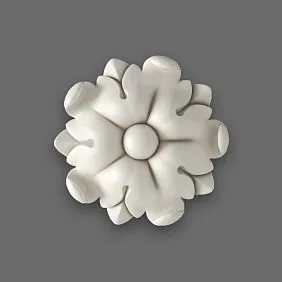
The rosette on the ceiling is the central element of the chandelier zone. In Empire style, it is not a decorative trifle but an architectural accent. The diameter of the rosette should be comparable to or exceed the diameter of the chandelier. For a hall of 4×5 meters, a rosette with a diameter of 50–70 centimeters is justified. A rosette with a laurel wreath or concentric ornamental rings is a classic Empire solution.
Decorative belt between the cornice and the main ceiling field — an additional horizontal line. This is a strip of molding 3–6 centimeters wide, running parallel to the cornice at a distance of 15–25 centimeters from it. It enhances the tiered composition of the ceiling and adds depth.
Door openings: capitals and molding
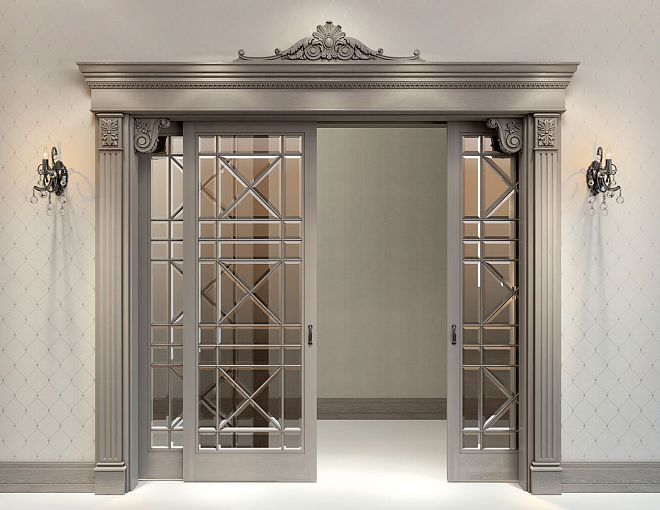
A doorway in an Empire-style interior is not just an opening in the wall. It is an architectural element framed like a portal. Molding runs along three sides of the opening — two verticals and the horizontal lintel. The vertical posts are topped with polyurethane capitals — small but expressive elements that create the feel of an architectural frame.
In this case, the capital does not serve a structural function — it serves a visual one. Its task: to mark the transition point from vertical to horizontal and give the opening a finished architectural character. For doors 2.1–2.2 meters high, a capital measuring 8–12 centimeters is organic and does not overload the opening.
Under the doorway, along the floor line, the same baseboard continues as around the entire perimeter of the room. This ensures visual continuity of the lower horizontal line.
Hall: Empire style stucco in the formal area
The hall is the first thing a guest sees. In Stalinist Empire style, the hall should speak the language of monumental decor. Here, maximum decorative saturation is acceptable: large symmetrical wall overlays, a developed cornice along the ceiling, decorative belts, capitals at doorways.
If the hall has a niche or arch, this is an opportunity to install molded decoration made of polyurethane into a semi-circular vault, creating a ceremonial accent. Framing the arch with molding featuring Empire-style ornament is one of the characteristic techniques of this style. In a hall with an area of 6–10 square meters, two large central overlays on opposite walls, a molding belt under the ceiling, and a developed cornice are enough — and the space acquires the necessary solemn scale.
Living room: rosettes, cornices, central overlays
The living room is the main space of an Empire-style interior. Here, the decorative program should be complete. The central axis of the ceiling is a rosette. The perimeter is a cornice. The walls are overlays framed by moldings. The area above the fireplace or console is a large symmetrical composition of two side elements and a central overlay.
For a living room with an area of 20–30 square meters and a ceiling height of 3.2 meters, the following set is recommended: a rosette with a diameter of 60–80 centimeters, a cornice 12–16 centimeters high along the perimeter, a molding belt at a level of 60 centimeters from the ceiling, three to four overlays on the walls, Decor for Molding at the corner points of the frames.
Study: strict decor in the Empire style
A study in an Empire-style interior is an area of restrained monumentality. Here, the decor should be stricter than in the living room: fewer floral ornaments, more straight lines, geometric belts, and strict profiles. Empire stucco in a study is molding with a clear rectilinear profile, molding frames without overloaded ornament, capitals on bookcases or pilasters, and a small disciplined rosette on the ceiling.
How to choose the scale: proportions and calculation
A mistake in scale is the main problem when creating Empire interiors. A beautiful element chosen at the wrong scale kills the style more effectively than a complete lack of decor.
Ceiling height is the primary parameter. Before choosing any element, you need to know the exact ceiling height from floor to ceiling. Everything else is calculated from it.
At a height of 2.7–2.9 meters: cornice 6–9 centimeters, rosette 35–50 centimeters, wall overlays 15–25 centimeters in height, molding strip 3–5 centimeters wide.
At a height of 3.0–3.2 meters: cornice 10–14 centimeters, rosette 50–70 centimeters, overlays 25–40 centimeters, molding 4–7 centimeters.
At a height of 3.2 meters and above: cornice 15–22 centimeters, rosette 60–90 centimeters or more, overlays from 40 centimeters, molding 6–10 centimeters.
The width of the wall determines the size of the overlay. The central overlay should occupy 25–35 percent of the wall width. On a wall 3.5 meters wide, the central overlay should have a width of 80–120 centimeters. If the overlay is smaller, it gets lost. If larger, it overwhelms the space.
Diameter of the rosette and diameter of the chandelier. The rosette should be no smaller than the diameter of the upper part of the chandelier. Optimally, it should be 15–30 percent wider. This creates a visual base from which the light fixture 'grows'.
Rhythm of the molding. The molding is installed continuously. Any break is perceived as an installation error. Joints of molding strips are masked with corner decorative elements for moldings — special inserts that form corners without visible seams.
Distance between elements on the wall. Side overlays are placed symmetrically to the central one. The distance from the edge of the central overlay to the edge of the side overlay is no less than the width of the central overlay. This creates visual 'breathing' between elements.
Symmetry relative to the center of the wall. All elements are aligned along one vertical axis — the center of the wall or the center of the wall section. A deviation of even 2–3 centimeters with large overlays is noticeable to the naked eye and destroys the sense of grandeur.
Connection with doorways. If there is a doorway on the wall, the overlays are placed symmetrically to it or on walls without an opening. The decor is not 'cut off' by the door — it goes around it or ends before it.
Balance with furniture. A large overlay should not end up behind a sofa or cabinet. It must be fully visible. When planning the arrangement of decor, the future position of the furniture must be taken into account.
Color after painting. Stalinist Empire stucco is traditionally painted in the color of the wall or in ivory tone on a white background. Gilding of cornices and rosettes is permissible in formal areas but requires professional execution. Polyurethane is easily painted with any water-based or acrylic paint and accepts any tinting compounds — this is one of the material's practical advantages.
Which elements not to mix
Stalinist Empire is a closed style system. Mixing incompatible elements destroys it completely, not partially. Here is what categorically does not combine.
Empire and Japandi. The minimalist Japanese-Scandinavian aesthetic with natural textures and zero decor is fundamentally opposite to Empire. Adding 'one Empire element' to a Japandi interior means creating a stylistic conflict with no winner.
Empire and Loft. Loft is deliberate brutality: brick, metal, exposed pipes. Empire stucco decor in a loft space looks random and out of place. These are two poles — they cannot be united.
Large capitals and thin decorative slats. A capital is an architectural element with mass and volume. Next to it, thin linear decor gets lost and seems random. Scales must be coordinated.
Antique ornament and random geometry. A laurel wreath does not coexist with an abstract triangle. The ornamental sequence must be stylistically unified. Mixing historical styles within a single interior is unacceptable.
Small overlays on a large wall. A 10×15 centimeter overlay on a wall 3.2 meters high is a visual loss. Small decor in large-scale spaces creates a feeling of frivolity and incompleteness.
Facade stucco as an interior element. Facade Decorative stucco designed for outdoor use: different proportions, different character of ornament. In an interior context, it breaks the scale.
Standard kits for assembling an Empire-style interior
Practice shows: it's better to start with a minimal kit and expand it than to overload the space on the first try. STAVROS offers all the necessary elements for assembling kits of any level.
Minimal starter kit
This kit is suitable for a small room or for a first introduction to the style.
-
Polyurethane moldings and cornices — basic cornice along the perimeter of the ceiling
-
Small central wall overlay — an accent element with Empire ornament
-
polyurethane rosette — central ceiling accent
-
Polyurethane trim — horizontal belt under the cornice
This set provides sufficient style identification, does not overload the space, and allows for adding elements later.
Wall set
To create a full decorative wall in the Empire style, the following set is needed.
-
Central overlay with a laurel wreath or floral ornament
-
Paired side elements, symmetrical to the center
-
Molding frames framing the main field of the wall
-
Decor for Molding — corner inserts and frame completions
A wall decorated in this way becomes an architectural statement, not just a surface with applied decor.
Ceiling set
The ceiling program of an Empire interior is one of the most expressive zones.
-
Cornice around the perimeter with a developed profile
-
Large diameter rosette in the center of the ceiling plane
-
Linear molding belt parallel to the cornice, set back 20–30 centimeters
-
Decorative corner inserts — to complete the perimeter
Architectural kit
For formal rooms — hall, living room, dining room — a full program is needed.
-
Polyurethane capitals at doorways and transition points
-
Elaborate Polyurethane trim on walls and in door framing
-
Large overlays with multi-level relief
-
Molding frames with full decor
-
Cornices with a 15–20 centimeter profile
-
Large diameter rosettes with detailed ornament
Architectural set from the section Empire STAVROS collections includes elements with laurel wreaths, bows, and characteristic Empire ornaments — carved overlays, brackets, molding tapes, and rosettes, reproducing the aesthetics of imperial interiors.
Mistakes when choosing stucco for Stalinist Empire style
Knowledge of typical mistakes is worth more than any recommendations — it saves you from losing time, money, and stylistic integrity.
Too small decor in a high room. This is the most common mistake. Overlays and rosettes chosen without considering ceiling height get lost on large surfaces. The result is that the space looks unfinished, and the decor looks random.
Violation of symmetry. Empire style does not tolerate asymmetry. Any deviation from the axis is an installation error that is immediately visible. Before installing any element, precise marking with vertical and horizontal lines must be done.
One large overlay without supporting elements. The central accent only works within a system. An overlay without a molding frame, without side elements, without a coordinated molding belt is a decorative "island" in emptiness. It does not create style, but only indicates its absence.
Mixing historical styles. Baroque, Classicism, Empire, and Rococo are different style systems with different figurative logic. Baroque ornament (heavy, asymmetrical, smooth) is incompatible with Empire ornament (concise, symmetrical, geometrically precise). Mixing even two elements from different systems destroys stylistic unity.
Ignoring ceiling height when choosing a cornice. A cornice that is too heavy for a small room presses on the space and reduces the feeling of height. A cornice that is too light for a grand hall is unnoticeable and does not work.
Using facade elements in the interior. Decorative stucco for facades has a different scale and ornamental language. It is not intended for the interior and looks alien in it.
Lack of connection between zones. When the ceiling decor, wall decor, and door frame decor are not linked by a single stylistic logic, it's a collection of elements, not an Empire-style interior. You need to design a system, not buy individual beautiful things.
Saving on moldings and corner inserts. Corner molding decorative elements — these are not optional decor. They are elements that complete the frames and make the installation neat. Without them, seams are visible, corners look sloppy, and the entire volume of work loses quality.
Polyurethane in a Stalin-era apartment: why it's the right choice
Historically, Stalin-era buildings were built with plaster stucco. It was beautiful and massive, but required professional installation, weighed tens of kilograms, and over decades fell into disrepair in most surviving apartments. Today molded decoration made of polyurethane solves the same decorative tasks without creating any of the problems of plaster.
Polyurethane weighs 5–7 times less than plaster — installation does not require reinforcement of ceilings or special equipment. The material is cut with a regular hacksaw, glued with construction acrylic adhesive, and painted with any water-based paint. The service life of polyurethane elements with proper installation is several decades without loss of appearance.
Polyurethane does not absorb moisture, does not crack from temperature changes, and does not react to household chemicals. For an apartment in an old Stalin-era building, where ceilings are not designed for additional loads, polyurethane decorative stucco is the only reasonable choice. It provides full visual compliance with the historical style without structural risks.
Installation: What You Need to Know Before Starting Work
Installing polyurethane stucco does not require professional construction skills, but does require precision. Several principles that determine the quality of the result.
Surface preparation. The wall or ceiling must be clean, free of grease stains and flaking coating. Loose plaster needs to be reinforced or removed. Glossy paint should be sanded to improve adhesion.
Marking is a mandatory stage. Before installing any element, you need to do a full marking: mark the horizontal line for the cornice, mark the central axis of the wall, outline the position of each overlay. A laser level is the best tool for this job.
Glue and its application. For polyurethane stucco molding, assembly glue on an acrylic or polyurethane base is used. The glue is applied to the back surface of the element in a "snake" pattern or in dots. The element is pressed against the surface for 30–60 seconds and fixed with masking tape until fully set.
Puttying the seams. After installation, all joints and gaps are puttied with finishing putty. The quality of the seam puttying determines whether the stucco molding will look like a monolithic architectural detail or like a glued-on decoration.
Painting. After puttying and priming, the surface is painted in two to three coats. Polyurethane does not absorb paint unevenly and does not require special primers — a universal acrylic one is sufficient.
Where to buy stucco molding for interiors in the Stalinist Empire style STAVROS
STAVROS is a specialized supplier of decorative elements made of polyurethane and natural wood. The entire range necessary for creating an Empire-style interior is collected in a single catalog polyurethane products.
For working with the Stalinist Empire style, STAVROS offers:
-
Polyurethane moldings — overlays, central ornaments, large decorative elements for walls and ceilings
-
Collection of neoclassicism — style selection with laurel wreaths, bows, brackets, and characteristic Empire details
-
Polyurethane trim — linear moldings, decorative belts, door and window trims
-
polyurethane rosettes — ceiling rosettes of different diameters for the chandelier area and decorative accents
-
Polyurethane capitals — architectural elements for doorways, pilasters, and posts
-
Polyurethane moldings and cornices — cornices, moldings, baseboards with Empire profile
-
Decor for Molding — corner inserts, finials, decorative accents for frames
Buying Empire decor through the STAVROS catalog is convenient: the entire assortment is structured by product type, material, and collection. Product photos give an accurate idea of the relief and scale. For complex projects, specialist consultation on kit selection is available.
If you are looking to buy Empire decor for a specific room, start with the Empire STAVROS collections: it gathers stylistically consistent elements in one section. Then go to the sections by product type and pick up the missing items.
Frequently asked questions
Where to start selecting stucco for Stalinist Empire style?
With measurements. Ceiling height, wall width, doorway size — these three parameters determine the scale of all other elements. Knowing them, you can easily choose the correct size of cornice, rosette, and overlays through the catalog polyurethane products from STAVROS.
Can polyurethane molding be installed independently?
Yes. Polyurethane moldings is mounted with acrylic mounting glue without special tools or skills. It is important to make accurate markings, properly prepare the surface, and carefully putty the seams. After that, the elements are painted with regular water-based paint.
How to avoid mistakes with the size of a rosette?
The size of the rosette should be comparable to the diameter of the chandelier or exceed it by 15–30 percent. For a room up to 20 square meters — a rosette with a diameter of 40–60 centimeters. For a spacious hall — 60–90 centimeters. See the rosettes section in the STAVROS catalog: the descriptions include exact dimensions.
Are capitals needed if there are no columns?
Yes. In an Empire-style interior, a capital is used not only on columns but also on pilasters, vertical door frame elements, and decorative posts. This is an architectural accent that completes the vertical line and gives the opening a ceremonial character. Polyurethane capitals are available in different sizes in the STAVROS catalog.
What is the difference between a run and a molding?
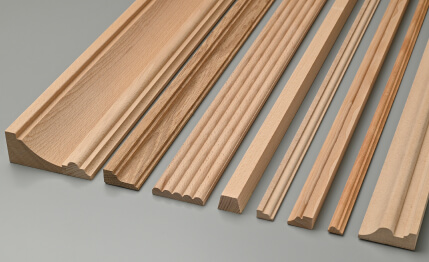
A run is a long decorative element with a repeating profile or pattern that goes in a continuous strip. A molding is a broader concept: it is a flat or three-dimensional element that can be either a run or an overlay. In an Empire-style interior Polyurethane trim it is used to create horizontal decorative bands, and Moldings and cornices — for frames, dividing lines and the upper cornice belt.
How to properly paint polyurethane stucco molding?
Polyurethane is painted without a special primer — standard acrylic primer is sufficient. Paint — water-based or acrylic. Apply in two to three layers with a thin brush or mini roller. To imitate plaster — white with a slight ivory tint. For a formal option — gilding or silvering of cornices and rosettes is possible using decorative pastes or special paints.
Can Empire style stucco molding be used in a modern apartment without historical finishes?
Yes, but with reservations. Empire decor requires an appropriate context: high ceilings, classic furniture, correct proportions. In a standard apartment with a 2.5 meter ceiling, a full Empire interior cannot be created. But individual elements — cornice, rosette, decorative frames — can give the space a classic character without fully immersing in the style.
How many elements are needed for one room?
Depends on the area and task. Minimum set for a room of 15–20 square meters: cornice around the perimeter (15–20 linear meters), one rosette, two to three wall overlays, Decor for Molding for corner finishes. Full architectural set for a formal hall of 30+ square meters — cornice, several decorative belts, 4–6 overlays, door capitals, rosette, molding frames.