


























Article Contents:
- Why the price of stucco molding depends not only on the footage
- What is included in the total cost of decor
- Which elements are included in the calculation
- Moldings
- Cornices
- PU overlays
- Ceiling Rosettes
- Corner Elements
- Linear elements: baseboards, belts, pilasters
- How much does wall stucco molding cost
- Scenario one: minimal accent
- Scenario two: framed wall
- Scenario three: full decoration
- How much does ceiling stucco molding cost
- Calculation of cornice along the perimeter
- Socket for chandelier
- Example of a full ceiling budget
- What determines the price of moldings and cornices
- Profile Width and Height
- Complexity of relief
- Density of polyurethane
- Series and collection
- Length of element
- How to calculate the amount of stucco before purchasing
- Step one: room measurements
- Step two: calculating cornice along the perimeter
- Step three: calculating moldings for frames
- Step four: corner elements calculation
- Step five: piece elements
- Stock: why it is needed
- Why you should not choose stucco molding only by low price
- Problem one: unstable dimensions
- Problem two: poor relief
- Problem three: deformation over time
- Problem four: collection incompatibility
- How to choose stucco molding for a budget: three scenarios
- Scenario "Delicate": budget 15,000–25,000 rubles
- Scenario "Expressive": budget 40,000–65,000 rubles
- "Architectural" scenario: budget from 90,000 rubles
- How not to overpay: practical tips for budget optimization
- Tip one: start with a catalog, not with an Instagram photo
- Tip two: choose one series for the entire project
- Tip three: make frames large
- Tip four: use ready-made corner elements
- Tip five: order with a margin, but without fanaticism
- How to combine stucco with wooden decor: price and aesthetic logic
- Wooden baseboard as a base
- Wooden overlays on furniture
- Complex project budget
- Where to buy polyurethane stucco: from catalog to purchase
- Key criteria for choosing a supplier
- STAVROS: catalog, quality, reliability
- Frequently Asked Questions
- How much does stucco for a standard room cost?
- Why does one molding cost 200 rubles, while another costs 900 per meter?
- Do I need a reserve when ordering stucco?
- Can I buy stucco in parts — first cornices, then moldings?
- How to calculate a cornice for a room?
- Where to view the stucco catalog with prices?
- Is it worth paying extra for high-quality stucco molding?

When a person comes to the idea of decorating an apartment with stucco molding, the first question is almost always the same: how much does it cost? And this is the right question — not because you need to look for something cheaper, but because without understanding the budget, it is impossible to plan either the design or the purchase. Wall and ceiling decor is not just one rosette or two meters of molding. It is a system where the correct calculation determines both the result and the final amount.
Molding price — is one of the most ambiguous queries on this topic. The price range of polyurethane decor is wide: from several hundred rubles per linear meter to several thousand per one decorative element. And this is not a spread of "cheap or expensive." These are different categories of products, different application formats, different results. Understanding this logic means learning to choose wisely, not overpaying for the unnecessary, and not saving where savings will lead to disappointment.
In this article — an honest, detailed breakdown: what determines the price of polyurethane stucco molding, how to calculate the budget for specific tasks, which elements are more expensive, and which allow you to create an expressive interior with reasonable investments.


Why the price of stucco molding depends not only on the footage
A common misconception: "I'll calculate the perimeter of the room — and I'll understand how much money I need." In practice, everything is more complicated and interesting. Polyurethane moldings — this is not a homogeneous linear material, like, for example, a cable channel or a skirting board made of foamed PVC. This is a system of heterogeneous elements, each of which has its own purpose, its own dimensions, and its own price.




What is included in the total cost of decor
Imagine a standard living room: decorating it with stucco molding involves at least four cost categories:
First — the cornice along the ceiling perimeter. This is a linear element, priced per linear meter. But a cornice 40 mm high and another 150 mm high are different products in terms of material consumption, profile complexity, and, accordingly, price.
Second — moldings for wall panels. Again, a linear material, but here you need to calculate not just the wall perimeter, but the total perimeter of all panel frames. Five frames on one wall means five contours with joints at all corners.
Third — corner elements. Each frame corner is either a 45-degree cut (requires skill and tools) or a ready-made corner element (costs separately, but installs quickly and evenly). The number of corner elements equals the number of corners in all frames plus the corners of the room itself.
Fourth — piece overlays. A rosette for the chandelier, decorative medallions, accent elements above doorways, ornamental overlays on the accent wall — all these are piece items with their own price per unit.
Thus, Polyurethane molding price — is the sum of several items, not a single line in the estimate. Understanding this structure allows you to plan the budget wisely.
Our factory also produces:


Which elements are included in the calculation
Before counting money, you need to understand exactly what you will be buying. A detailed classification of stucco molding types is in the article Types of polyurethane molding, here — a brief pricing breakdown by category.
Get Consultation
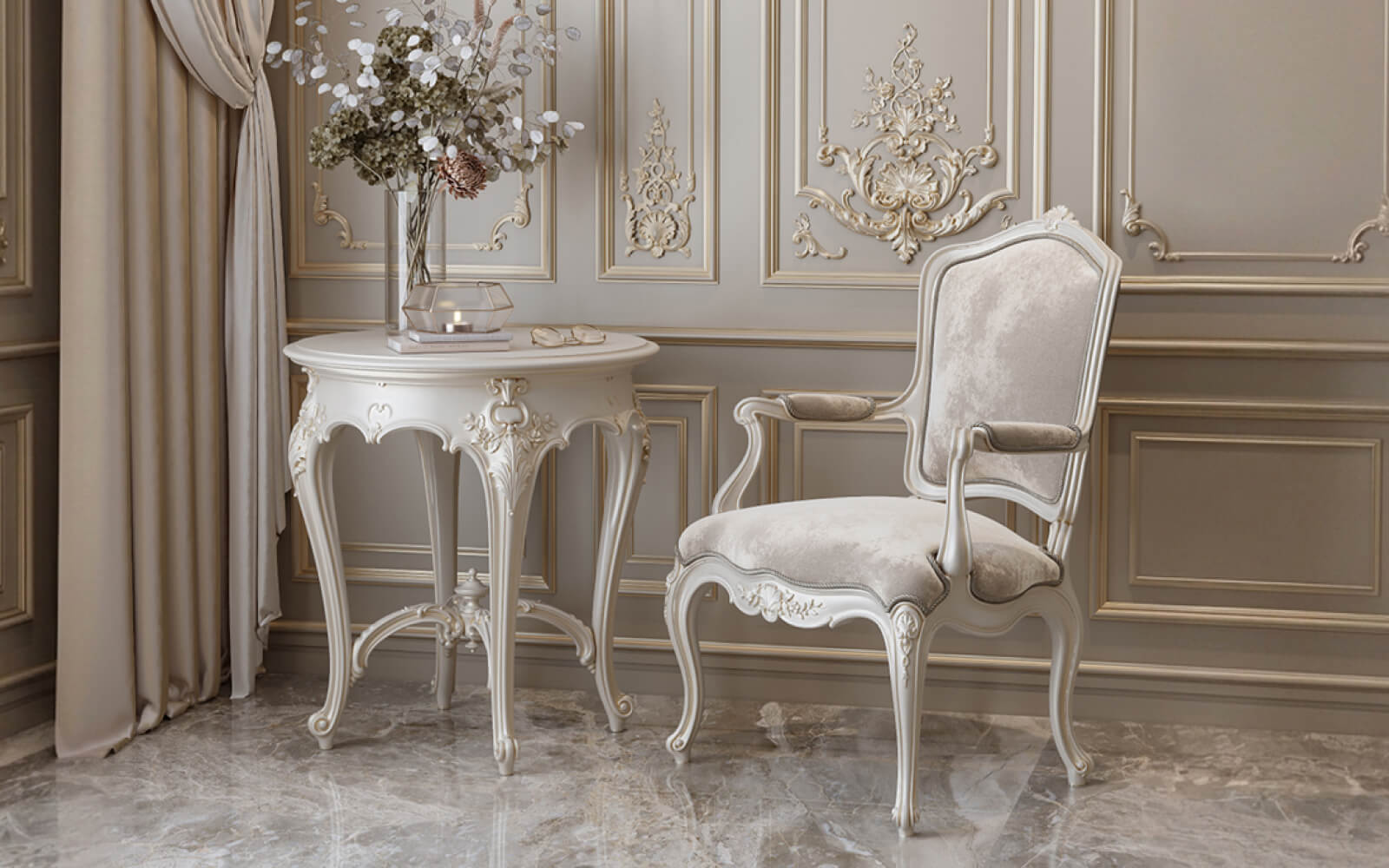
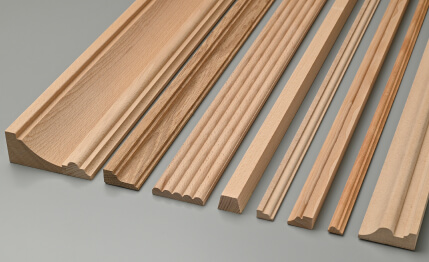
Moldings are linear profiles used to create framed compositions, zone walls, and frame openings. They come in various widths (from 20 to 150 mm) and relief complexity — from smooth to richly decorated.
Molding — a profile strip for wall panels, door frame trims, horizontal bands. Sold by linear meter. Price range — from 180–250 rubles per linear meter (simple profiles 20–30 mm wide) to 600–900 rubles (wide complex profiles with ornament).
Crown mouldings
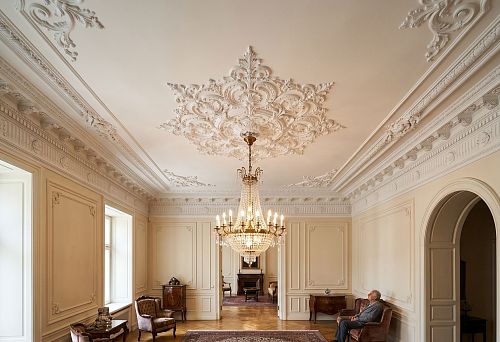
Cornice — an element for transitioning between ceiling and wall. Sold by linear meter. Price range — from 250 rubles per meter (simple ceiling cornices 40–50 mm) to 1,200–1,500 rubles per meter (large architectural cornices 130–200 mm with developed relief). Cornices are one of the main cost factors in the overall budget, as they run along the entire perimeter of the room.
PU overlays
polyurethane decor In the format of overlays — piece items: medallions, cartouches, ornamental inserts, accent rosettes for walls. Price — from 300–500 rubles for small flat overlays to 3,000–5,000 rubles and more for large volumetric elements with detailed relief.
Ceiling Rosettes
Ceiling rosettes for chandeliers — piece items. Diameter 200–300 mm — 400–800 rubles. Diameter 400–600 mm — 1,200–2,500 rubles. Diameter 700 mm and more — from 3,000 rubles.
Corner elements
Ready-made internal and external corners for moldings and cornices. Sold individually. Price — from 100–150 rubles per corner for simple profiles to 400–600 rubles for complex cornices.
Linear elements: baseboards, belts, pilasters
Decorative vertical pilasters, horizontal belts, and inter-tier rods — linear material. Price comparable to cornices: from 200 to 1,000+ rubles per linear meter.
How much does wall stucco decoration cost
Wall Polyurethane Decor — the most variable budget item. You can spend 3,000 rubles and get a delicate accent, or you can spend 80,000 rubles and create a full-fledged architectural living room. It all depends on the scenario.
Scenario one: minimal accent
One wall with two decorative overlays and a simple molding around the perimeter. For example, a wall behind a sofa 3.5 m wide and 2.7 m high. Frame perimeter = (3.5 + 2.7) × 2 = 12.4 m. With a 15% margin = 14.3 m of molding. At a molding price of 280 rubles/m = 4,000 rubles. Plus 4 corner pieces × 150 rubles = 600 rubles. Plus 2 decorative overlays × 600 rubles = 1,200 rubles.
Total: about 5,800 rubles for an accent wall.
This is the minimum budget that already gives a visible result.
Scenario two: framed wall
Three walls of a 4×5 m living room with frame panels made of molding. Suppose each wall has 3 frames.
Room perimeter (three walls without the fourth under the TV) = 4 + 5 + 5 = 14 m. But frames are not the wall perimeter, but the perimeter of each field. Nine frames with an average perimeter of 7 m each = 63 m of molding. Plus 15% margin = 72.5 m. At a price of 350 rubles/m = 25,375 rubles. Plus 36 corner pieces × 200 rubles = 7,200 rubles.
Total: about 32,000–35,000 rubles for framing three walls.
Scenario three: full decoration
All four walls with frames, decorative overlays on accent areas, pilasters between frames, a horizontal molding belt in the middle of the wall.
Such a project is a fundamentally different level. Budget: 80,000–150,000 rubles and above, depending on the chosen profiles, the number of piece elements, and the complexity of the scheme.
How much does ceiling molding cost
ceiling molding — this is a cornice around the perimeter and a rosette in the center. This is a basic set that is present in almost any project with molding.
Calculation of the cornice around the perimeter
Formula: room perimeter × cornice price per linear meter + 15% reserve.
| Room | Perimeter | Cornice 60 mm (350 RUB/m) | Cornice 100 mm (650 RUB/m) | Cornice 150 mm (1100 RUB/m) |
|---|---|---|---|---|
| 3×4 m | 14 м | 5,635 RUB | 10,465 RUB | 17,710 RUB |
| 4×5 m | 18 м | 7,245 RUB | 13,455 RUB | 22,770 RUB |
| 5×6 m | 22 м | 8,855 RUB | 16,445 RUB | 27,830 RUB |
| 6×8 m | 28 м | 11,270 RUB | 20,930 RUB | 35,420 RUB |
All prices include a 15% allowance for corner joints and trimming.
Socket for chandelier
Socket — one-time purchase. Selected by diameter (proportional to ceiling area and chandelier size).
Details on selection and installation — in the article Ceiling Molding for Chandeliers.
| Socket diameter | Approximate price |
|---|---|
| 200–300 mm | 400–900 RUB |
| 350–500 mm | 900–2,500 rub. |
| 500–700 mm | 2,500–4,500 RUB |
| Over 700 mm | from 4,500 RUB |
Example of total ceiling budget
Living room 5×6 m, ceiling 2.8 m. Cornice 80 mm (500 RUB/m): 22 m × 1.15 = 25.3 m × 500 = 12,650 RUB. Socket 450 mm: 2,000 RUB. 4 corner pieces × 250 RUB = 1,000 RUB.
Total ceiling decor: about 15,650 RUB.
What determines the price of moldings and cornices
This is a key question for those who have seen a huge price range in catalogs and don't understand: why does one molding cost 200 rubles per meter, while another costs 900?
Width and height of the profile
More material means a more expensive product. A 20 mm wide molding and a 100 mm wide molding are fundamentally different volumes of polyurethane. A high-volume 150 mm cornice contains 4–5 times more material than a delicate 40 mm cornice.
Complexity of relief
A smooth geometric profile is the most affordable category. A profile with rollers, shelves, and heels is slightly more expensive. A profile with ornamentation (beading, astragal, ionics, acanthus, running wave) is significantly more expensive. Complex ornamental relief requires precise molds, careful production, and high material density to preserve detail.
Polyurethane density
This is a parameter that is hard to see in a photo but easy to feel in your hand. Low-density PU (density 200–300 g/l) is light, soft, and cheap. It easily wrinkles, poorly holds sharp relief edges, and deforms over time. High-density PU (density 500–700 g/l) is durable, stable, and holds its shape for decades. Its price is higher, but the difference in quality is fundamental.
Series and collection
Major manufacturers combine products into collections that are developed as a system: molding, cornice, corner element, pilaster — all in one style and with compatible proportions. Such systematicity costs more than individual products but guarantees visual consistency.
Element length
The standard length of a linear element is 2 m. Some manufacturers offer lengths of 2.5 m or 3 m. Longer elements are convenient for installation (fewer joints on long walls) and are often more cost-effective per linear meter.
How to calculate the amount of stucco before purchasing
Without proper calculation, any estimate is just guesswork. Correct calculation of stucco molding is simple math that can be mastered in 15 minutes.
Step one: measuring the room
Measure the length of each wall. Record the ceiling height. Note the locations of door and window openings — they interrupt the linear footage of cornices and moldings.
Step two: calculating the cornice perimeter
Sum the lengths of all walls. Subtract the width of door openings (if the cornice does not extend above the door). Add 15% for corner joints and possible errors.
Example: room 4.2 m × 3.8 m, one door 0.9 m wide. Perimeter = (4.2 + 3.8) × 2 = 16 m. Minus door = 15.1 m. Plus 15% = 17.4 m → purchase 18 m of cornice.
Step three: calculating moldings for frames
Draw a diagram of the frames on each wall. Determine the dimensions of each frame. Calculate the perimeter of each frame. Sum all perimeters. Add 15%.
Example: 6 frames with a perimeter of 6.8 m each = 40.8 m. Plus 15% = 46.9 m → purchase 47 m of molding.
Step four: calculation of corner elements
Each frame has 4 corners. 6 frames = 24 corner pieces. Plus the corners of the room itself for the cornice: 4 internal corners. Total for cornice: 4 corner pieces. Total for molding frames: 24 corner pieces.
Step five: piece elements
Socket for chandelier: 1 piece. Decorative overlays: according to the number of planned accent points. This is decided at the design stage.
Stock: why it is needed
15% stock is not over-insurance. It is a real need that arises when cutting at 45 degrees at corners, when correcting installation errors, when replacing elements damaged during transportation. Professional installers work with exactly this stock.
Why you cannot choose molding only by low price
This issue should be considered honestly and without condescension to buyer illusions. Yes, there are Decorative stucco at a very low price. And it has serious problems.
Problem one: unstable dimensions
Cheap low-density polyurethane often gives unstable dimensions in batches. You bought 20 meters of molding — and the profile width 'varies' from 22 to 27 mm in different pieces. In a frame panel, this is immediately visible: joints do not match, the frame line is uneven.
Problem two: poor relief
Low-density material does not hold sharp edges and thin ornamental details. The beadwork "clumps together," acanthus leaves look melted, and the clear profile turns into a vague wave. This is even more noticeable after painting.
Problem three: deformation over time
Soft PU deforms under temperature fluctuations, humidity, and simply the weight of the material itself on long sections. A cornice that starts to sag and warp after three years is not savings—it's a forced redo.
Problem four: collection incompatibility
Cheap moldings from different sources often do not match in height, profile, and style. Installing a molding from one manufacturer and a cornice from another—and ending up with visually inconsistent decor—is a real story.
The pragmatic conclusion: it's better to choose a simpler profile made of quality material than a complex ornamental molding made of cheap, unstable PU. Simplicity with quality wins over decorativeness without it.
How to choose stucco molding on a budget: three scenarios
The correct way to frame the task: not "how little can I spend," but "what exactly do I want to achieve—and how much does it cost with the right choice of elements." Here are three real scenarios for a 4×5 m living room with a 2.7 m ceiling.
Scenario "Delicate": budget 15,000–25,000 rubles
What we do:
-
Cornice 50–60 mm around the perimeter (simple geometric profile)
-
Ceiling rosette with a diameter of 250–300 mm
-
Molding on one accent wall (2–3 frames)
Result: a clean, neat interior with a subtle architectural accent. The cornice will hide uneven ceiling-wall joints, the rosette will decorate the center of the ceiling, and the frames on the accent wall will add depth without overloading.
Estimated budget:
-
Cornice 60 mm: 18 m × 1.15 × 350 RUB/m = 7,245 RUB.
-
Rosette 280 mm: 700 RUB.
-
Molding on accent wall: 15 m × 280 RUB/m = 4,200 RUB.
-
Corner pieces: 16 pcs × 150 RUB = 2,400 RUB.
-
Total: approximately 14,500 RUB
"Expressive" scenario: budget 40,000–65,000 rubles
What we do:
-
Cornice 90–100 mm with moderate relief around the entire perimeter
-
Ceiling rosette 400–450 mm
-
Frame panels on two to three walls (5–7 frames)
-
2–4 decorative overlays in accent areas
Result: a full-fledged classic interior with architectural structure of walls and ceiling. The space gains character, depth, and historical reference — without excessive heaviness.
Estimated budget:
-
Cornice 100 mm: 18 m × 1.15 × 650 rub/m = 13,455 rub.
-
Rosette 430 mm: 2,200 rub.
-
Molding (55 m with reserve): 55 × 380 rub. = 20,900 rub.
-
Corner elements (40 pcs): 40 × 220 = 8,800 rub.
-
Overlays (4 pcs): 4 × 800 = 3,200 rub.
-
Total: about 48,555 rubles
"Architectural" scenario: budget from 90,000 rubles
What we do:
-
Large cornice 130–160 mm with elaborate ornamental profile
-
Large ceiling rosette 600+ mm
-
Frame panels on all four walls
-
Horizontal molding belt at a height of 90–100 cm (imitation of a high baseboard)
-
Decorative pilasters between frames
-
Ornamental overlays, medallions, cartouches
Result: a grand interior with a full architectural system. Walls and ceiling work as a single whole — like in a historic mansion. This is the highest level of polyurethane decor application.
This scenario requires not only a budget but also professional design: it is important to correctly choose the scale, proportions, and collection of elements.
How not to overpay: practical tips for budget optimization
There are several well-tested techniques that allow you to achieve expressive results without extra costs.
Tip one: start with a catalog, not with an Instagram photo
A beautiful picture in an interior magazine doesn't tell you the sizes or the price. moldings catalog with real sizes and prices — your working tool. Only by working with a catalog can you realistically estimate the budget.
Tip two: choose one series for the entire project
Don't mix moldings and cornices from different collections. One supplier, one collection, consistent proportions. This is not only aesthetically more correct — it is often cheaper too, because elements of one series have a unified pricing logic.
Tip three: make the frames large
The larger the frames — the less molding per frame relative to the wall area. Frame panels of 1.2 × 1.8 m use less molding than 20 small frames of 30 × 40 cm.
Tip four: use ready-made corner elements
Cutting molding at 45 degrees requires skill and tools. A mistake means a ruined piece. Ready-made corner elements cost extra, but save material and nerves.
Tip five: order with a margin, but without fanaticism
15% margin is optimal. 30% is already excessive. Leftover stucco molding stores poorly: long pieces take up space, get wrinkled, and break.
How to combine stucco molding with wooden decor: price and aesthetic logic
An interior with stucco molding and wood is a classic solution found in St. Petersburg apartments, country houses, and classic living rooms throughout Russia. For details, see the article stucco and wooden decor in the interior, here — the price and practical aspect.
Wooden baseboard as a foundation
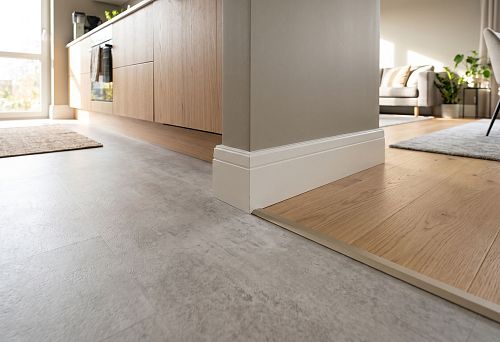
with a classic profile creates a sense of solidity, reliability. made of solid oak or pine — this is the lower "architectural belt" of the room. It works in tandem with the ceiling cornice: both create horizontal lines that structure the space. Total budget: baseboard + cornice — this is the budget of the room's basic architectural frame.
Wooden overlays on furniture
Wooden decoration on furniture facades — decorative overlays, carved elements, furniture moldings — create a connection between wall stucco and furniture. A cabinet with wooden overlays under classic moldings on the walls is a systematic interior, not a random set of items.
Complex project budget
If you plan to combine stucco molding and wooden decor, calculate the budget together. For a 4×5 m living room:
-
Stucco molding ("Expressive" scenario): ~48,000 RUB
-
Wooden baseboard around the perimeter: ~6,000–9,000 RUB
-
Wooden overlays for furniture: ~3,000–8,000 RUB
Complex budget: 57,000–65,000 RUB for a fully decorated living room with stucco molding and wooden decor.
Where to buy polyurethane stucco molding: from catalog to purchase
Once the budget is calculated, the list of elements is compiled, and the dimensions are determined, the final and most practical step arrives. Where to buy all this in one place, with quality assurance and proper logistics?
Key criteria for choosing a supplier
First — availability of a catalog with dimensions and prices. Moldings shop Without a detailed catalog, it's a lottery. A reliable supplier provides comprehensive information for each item: dimensions, interior photos, compatible series elements.
Second is stable warehouse availability. If part of an order needs to wait "for production," it risks delaying the renovation. A good supplier keeps all popular items in stock.
Third is material quality. High-density polyurethane, consistent dimensions, clear relief, smooth surface without pits or defects. This can only be verified through actual products or the manufacturer's reputation.
Fourth is delivery. Moldings are fragile, long-length cargo. Proper packaging and careful delivery across Russia are not optional but mandatory.
STAVROS: catalog, quality, reliability
STAVROS is a Russian manufacturer and distributor of decorative polyurethane products. Buy moldings The STAVROS catalog provides access to the full range: moldings, cornices, ceiling rosettes, — everything must correspond to the chosen era. in the form of overlays, pilasters, decorative belts, and individual ornamental details.
All STAVROS products are made from high-density European polyurethane. Clear relief, consistent batch dimensions, smooth paintable surface — these are not marketing words but a technical production standard.
polyurethane moldings buy The STAVROS catalog is available online with delivery across Russia. The warehouse program ensures fast order fulfillment. Special cooperation terms are available for wholesale buyers, designers, and construction companies.
Frequently asked questions
How much does stucco molding cost for a standard room?
For a room 4×5 m with a ceiling of 2.7 m: basic design (cornice + rosette) — 8,000–16,000 rubles. With frame panels on two or three walls — 40,000–65,000 rubles. Full architectural system — from 90,000 rubles.
Why does one molding cost 200 rubles, while another costs 900 per meter?
Profile width, relief height, ornament complexity, and polyurethane density. A simple smooth molding 25 mm from standard PU — 200 rubles. A wide ornamental molding 80 mm from high-density material — 700–900 rubles.
Is a reserve needed when ordering stucco molding?
Absolutely. The standard reserve is 15% of the calculated quantity. It is used for corner cuts, joints, and possible installation errors.
Can I buy stucco molding in parts — first cornices, then moldings?
Technically, yes. But it is better to order everything at once from the same collection: this guarantees matching batches in shade and dimensions.
How to calculate the cornice for a room?
Measure the perimeter of the room, subtract the width of doorways (if the cornice does not go above the door), add 15% reserve. The result is the required amount of cornice in linear meters.
Where to view the catalog of stucco molding with prices?
Full moldings catalog with dimensions, descriptions, and prices — on the STAVROS website. The catalog structure allows you to quickly find the desired type of element and compare options.
Is it worth paying extra for high-quality stucco molding?
Yes. The difference between cheap and high-quality stucco molding is not just the price. It's dimensional stability, clarity of relief, durability, and a result you'll be happy with in 10 years, not one you'll want to redo in two.
STAVROS is a company that produces and supplies decorative products made of polyurethane and solid wood for professionals and private customers throughout Russia. Polyurethane moldings in the STAVROS catalog is not just a product in stock. It is a well-thought-out system of elements where each molding, cornice, and overlay has its place in the interior logic. If you want to calculate the budget accurately, choose the right elements, and get decor that will delight you for years — You can buy ready-made stucco matching the Baroque style. Calculate the quantity: linear meters of cornices and moldings, number of rosettes, pilasters, consoles, corner elements. Add a ten to fifteen percent allowance for trimming. at STAVROS is the choice of a professional. Trust STAVROS — and your interior will get exactly the architectural value for which it all was started.