

























Article Contents:
- What is included in ceiling molding
- Ceiling Cornice
- Ceiling rosette
- Ceiling Moldings
- Decorative overlays and molding elements
- Corner Elements
- Linear molding for wall-to-ceiling transition
- How to choose ceiling molding for the ceiling height
- Principle of proportion
- Low ceilings: 2.4–2.7 m
- Medium ceilings: 2.7–3.2 m
- High ceilings: from 3.2 m and above
- Ceiling height selection table
- Ceiling cornice: why it is needed and how it works
- Three functions of the cornice
- Cornice profile: what is read in the interior
- Cornice and wooden decor
- Ceiling rosette for chandelier: how to choose size and style
- How to calculate the required diameter
- Relation to chandelier size
- Relief depth and style
- Ceiling rosette without chandelier
- Ceiling moldings: when appropriate and how to do it right
- When ceiling moldings are appropriate
- How to build a ceiling frame
- Double frame
- Ceiling zoning with moldings
- Decorative stucco for classic interiors
- Ceiling-wall-floor system
- Collectible unity
- Wooden decor as an extension of the classic ceiling
- Stucco decoration for walls and ceilings: universal overlays
- Corner medallions
- Decorative inserts in the center of ceiling fields
- Decorative crosses and stars
- Ceiling stucco for painting
- White stucco matching the ceiling tone
- Stucco with light tinting
- Contrasting stucco
- Cornice color and wall color
- How to calculate the amount of ceiling stucco
- Calculation of cornice
- Calculation of ceiling moldings
- Rosette
- Decorative appliqués
- Calculation table for standard rooms
- Common mistakes when choosing ceiling molding
- Mistake one: massive cornice with low ceiling
- Mistake two: rosette smaller than the chandelier
- Mistake three: different collections of cornice and moldings
- Mistake four: buying without calculating the perimeter
- Mistake five: moldings on the ceiling with a height of 2.5 m
- Mistake six: installing the socket not in the center
- Stucco price: ceiling budget in numbers
- Budget scenario: cornice + socket
- Medium scenario: cornice + socket + ceiling frame
- Premium scenario: full ceiling program
- Where to buy polyurethane ceiling stucco
- What to look for when choosing
- STAVROS: full catalog of ceiling decor
- Frequently Asked Questions
- Which cornice to choose for a 2.7 m ceiling?
- How to calculate the diameter of a ceiling rosette?
- Can ceiling moldings be installed with a 2.5 m ceiling?
- Are corner pieces needed for the cornice?
- What to paint ceiling stucco with?
- How much does it cost to decorate a ceiling with stucco?
- Where to buy ceiling stucco with Contact us to confirm shipping to your destination.?
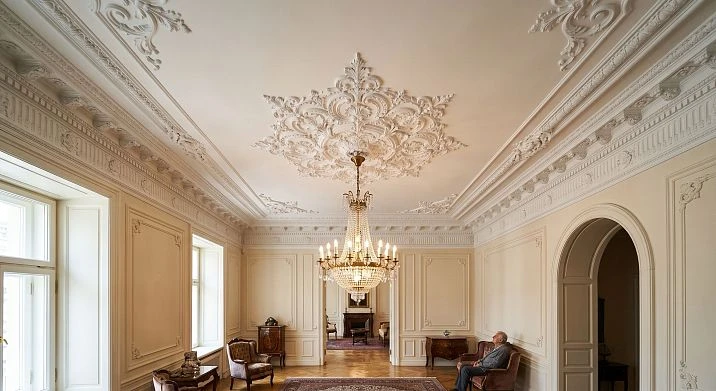
The ceiling is the only surface in the room that is visible from everywhere. From a chair, from a sofa, lying in bed. And it is often the last unfinished plane in the interior: walls are papered, floor is laid, furniture is arranged — but the ceiling is white, flat, and faceless. As if the room is not yet finished. As if something is missing.
Polyurethane Ceiling Moldings — this is precisely the final touch that closes the space from above and makes the interior complete. A cornice around the perimeter, a rosette under the chandelier, molding frames on the ceiling plane — each of these elements works independently, but together they create a ceiling with architectural character.
How to choose the right cornice for the ceiling height? What diameter of rosette is needed for your chandelier? When are moldings on the ceiling appropriate, and when are they overkill? For all these questions — detailed, honest, and practical answers.
What is included in ceiling molding
Before choosing specific items, it is important to understand: ceiling molding — it is not one type of product, but a system of several categories. Each solves its own task, and a well-designed ceiling decor usually includes two or more types of elements.

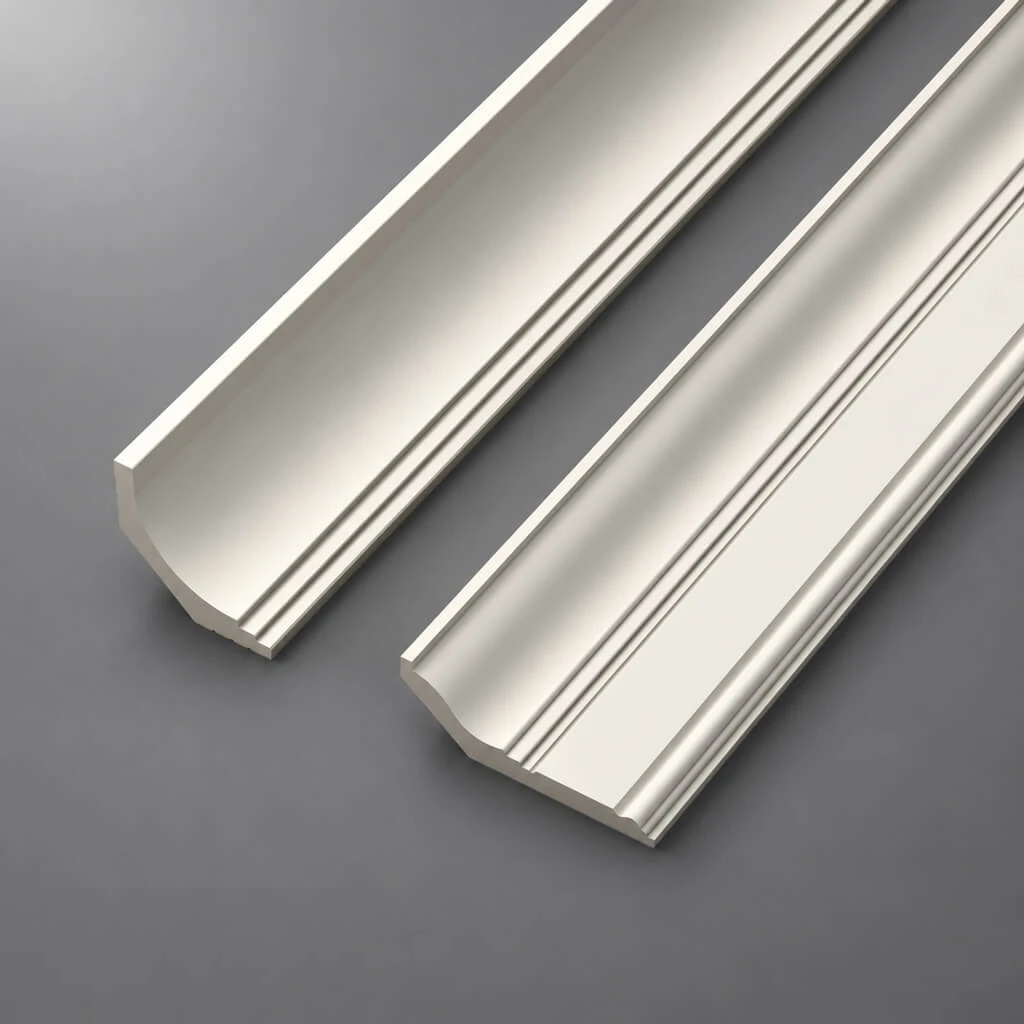
Ceiling cornice
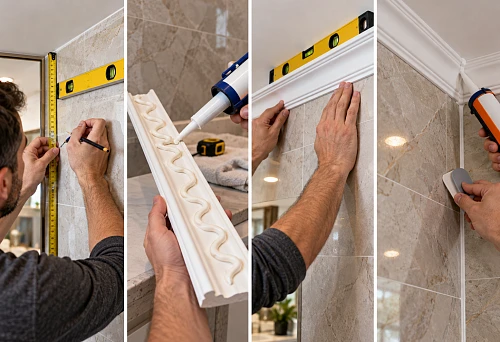
Cornice — the main element of any ceiling system. It is installed at the junction of the ceiling and wall along the entire perimeter of the room. It performs several functions: hides joint irregularities (which almost always exist in real homes), creates a clear architectural transition line between two planes, and visually raises the ceiling.
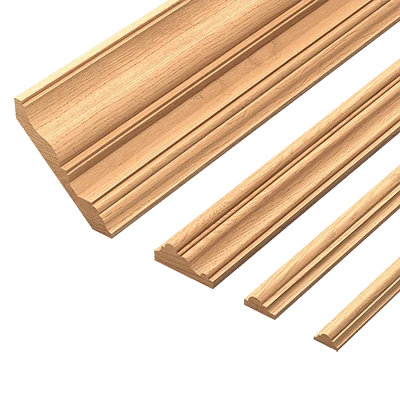
Polyurethane cornices come in a wide variety of profiles: from delicate 40 mm with a simple cross-section to massive 200 mm with rich ornamental relief. The appropriate profile is primarily determined by the ceiling height — more on this in the next section.
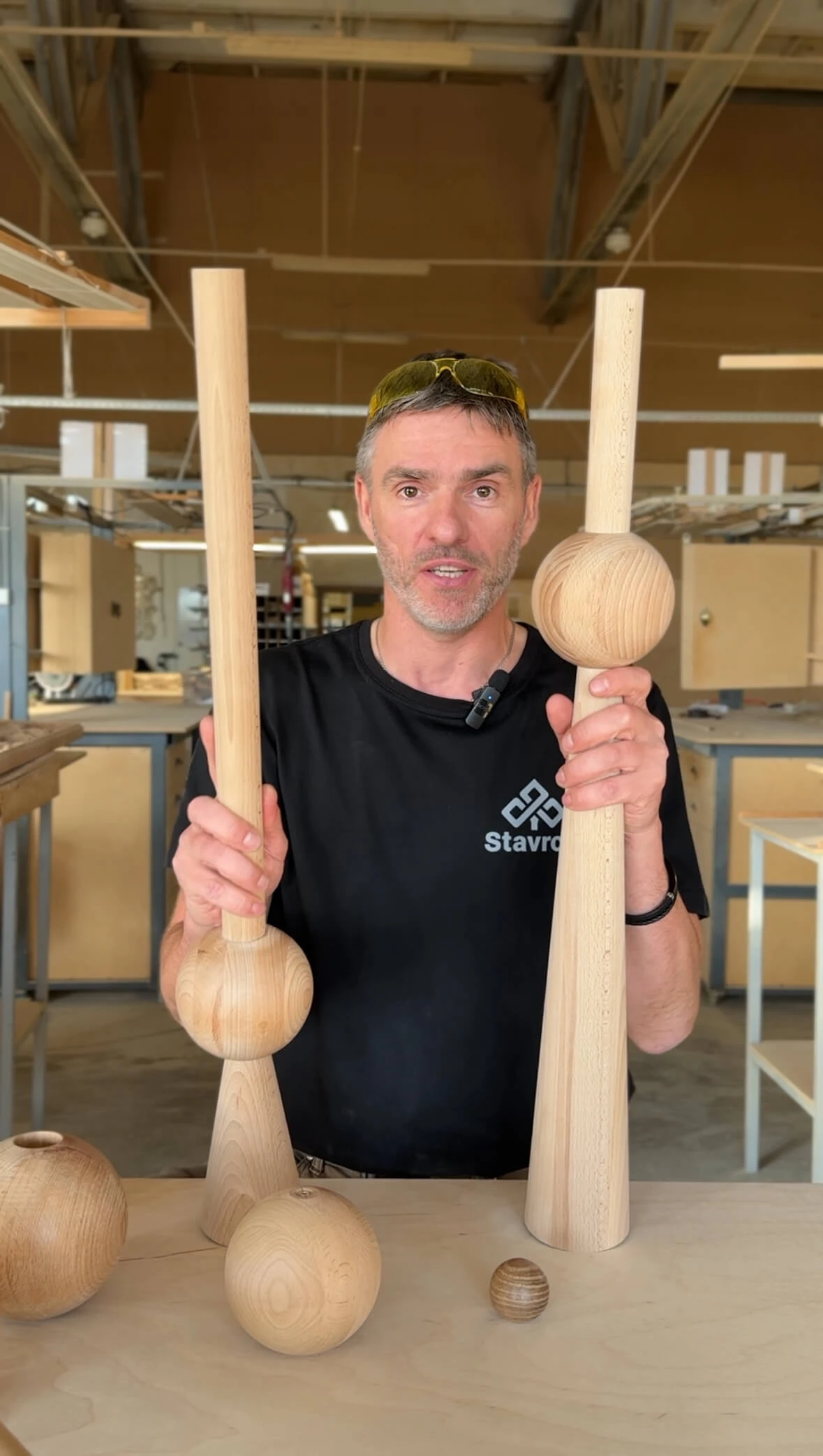
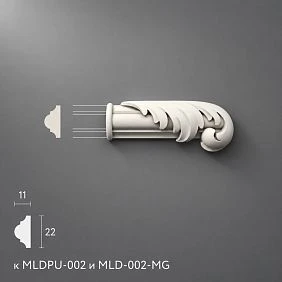
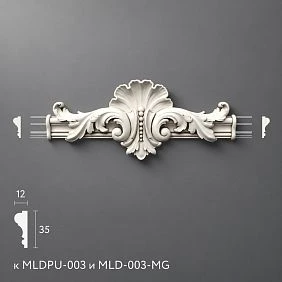
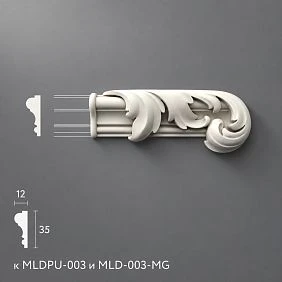
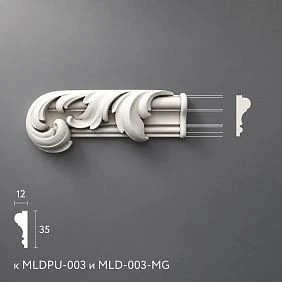
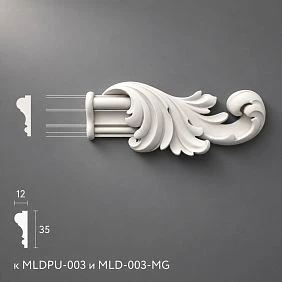
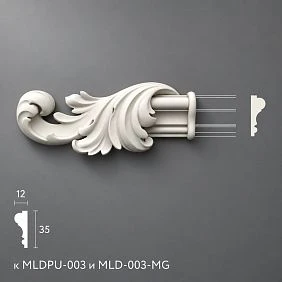
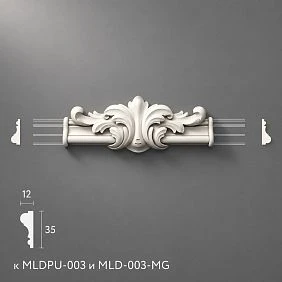
Our factory also produces:
Ceiling rosette
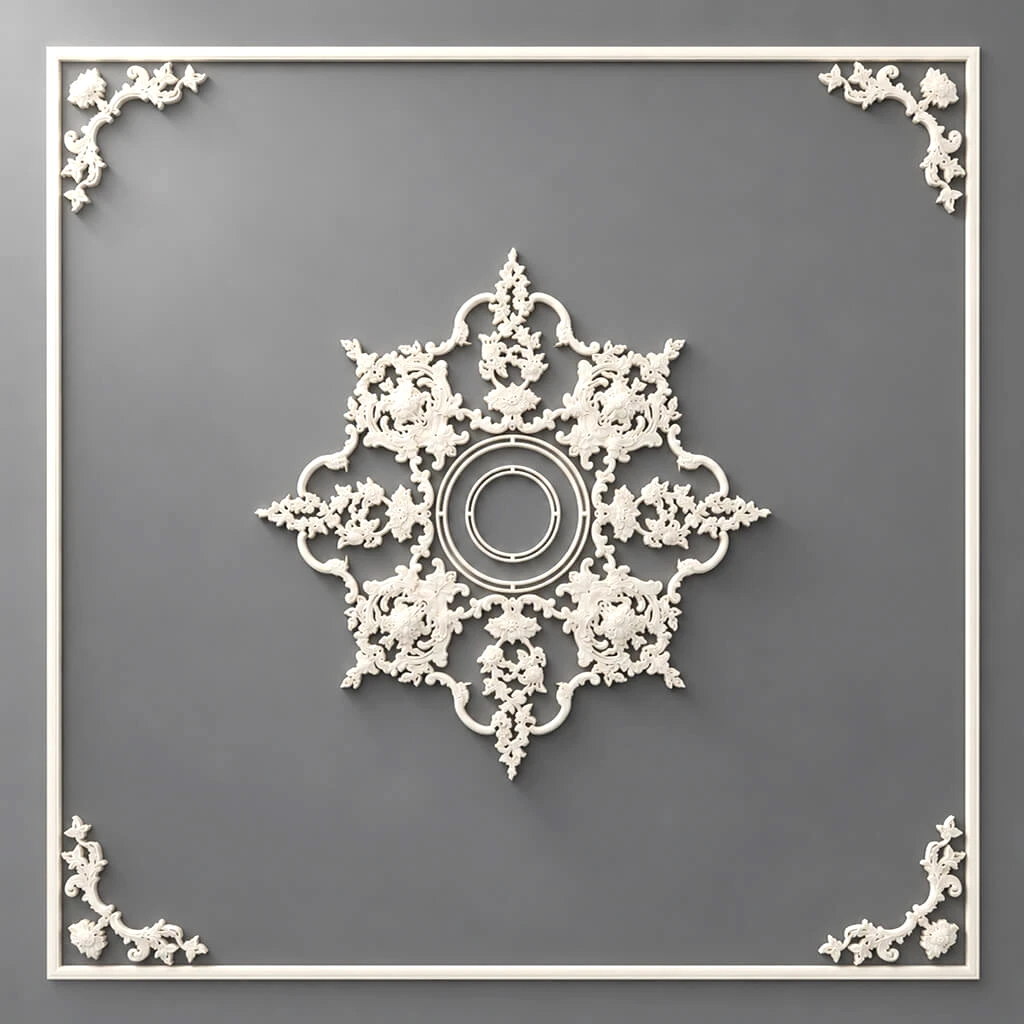
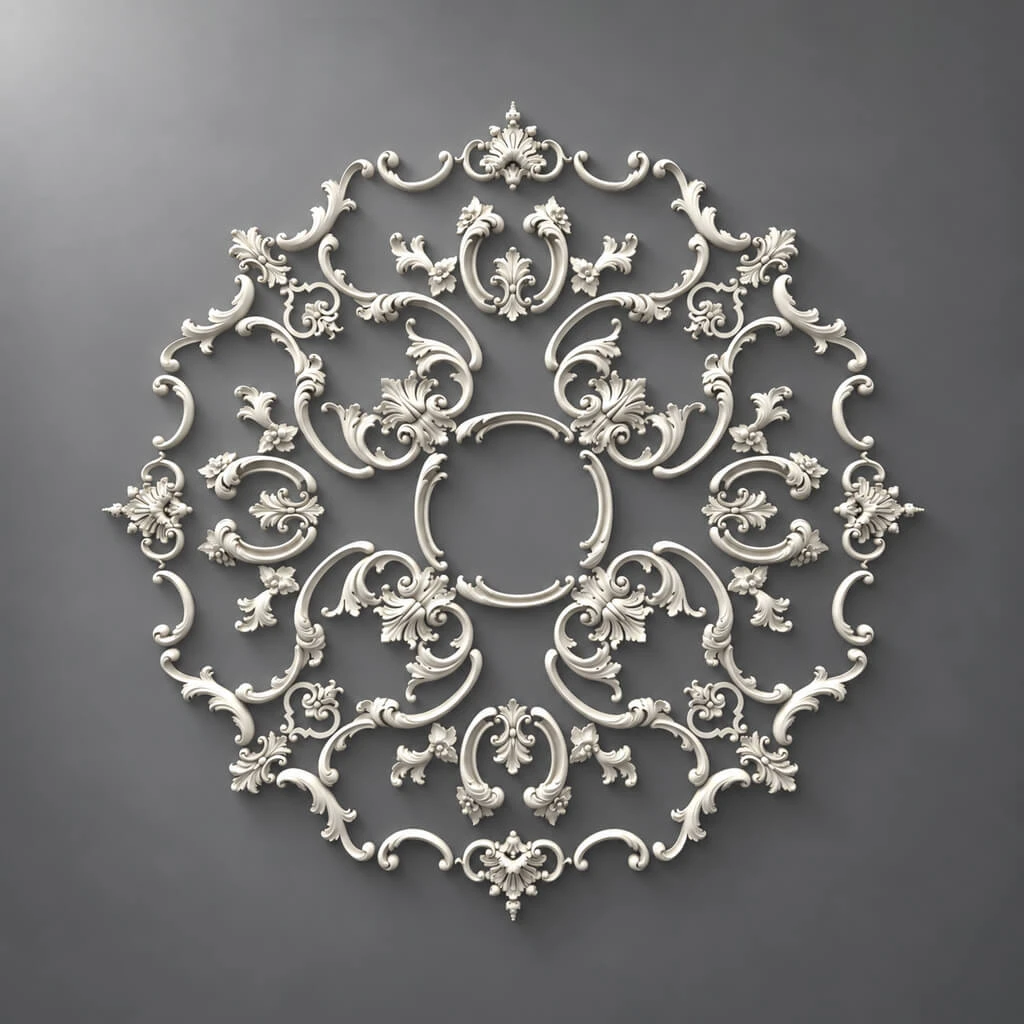
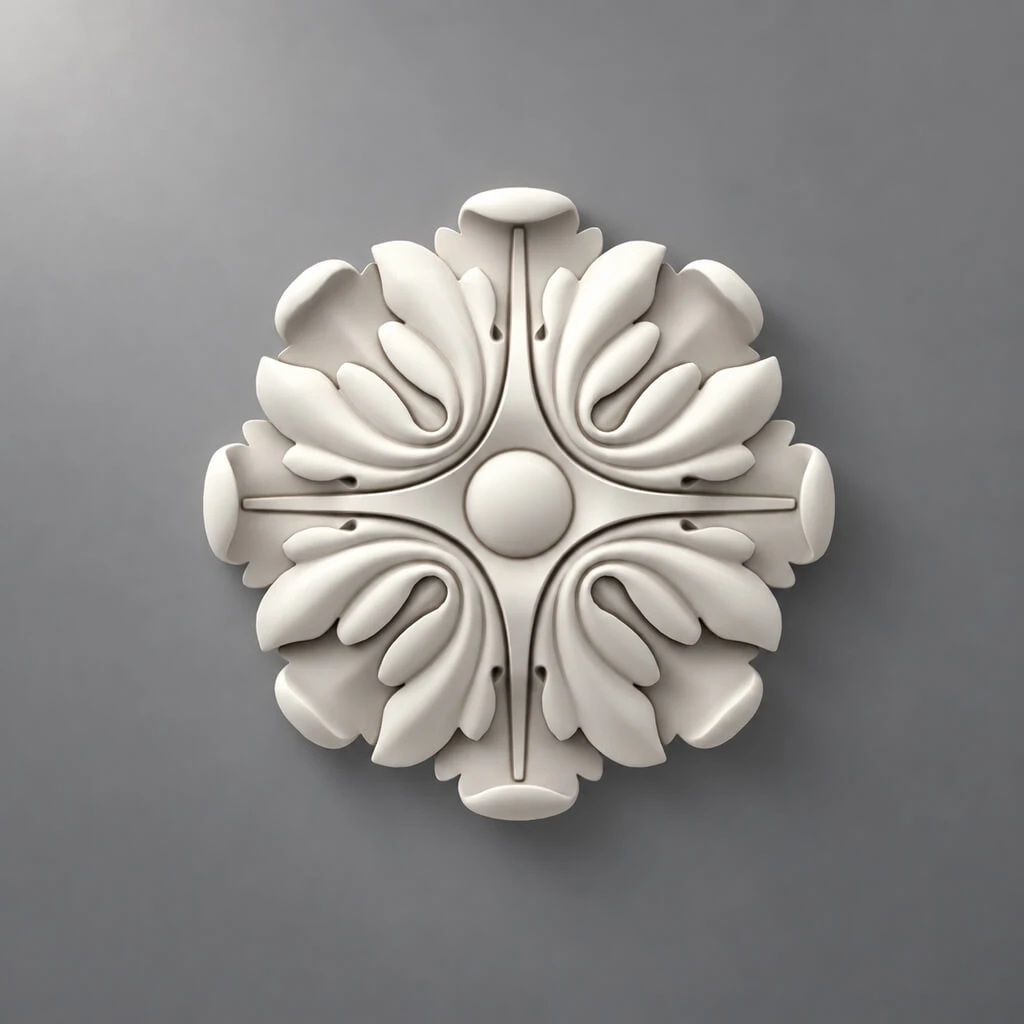
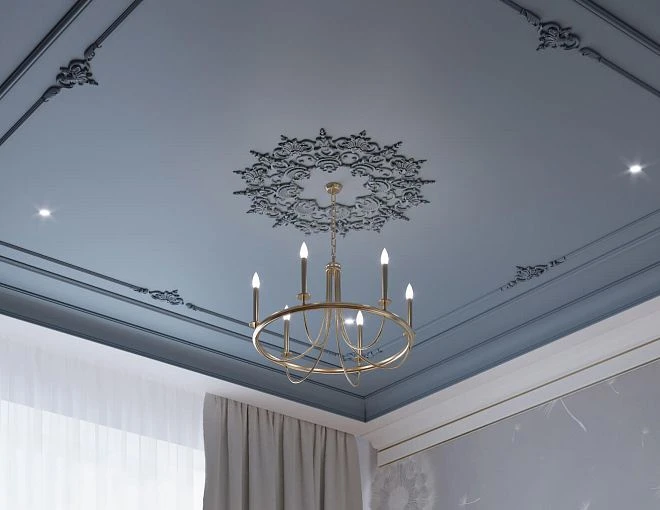
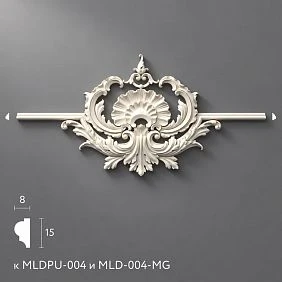
Rosette — a decorative medallion installed in the center of the ceiling, usually under a chandelier. Its diameter ranges from 150–200 mm (the most delicate models for small rooms) to 800–1000 mm (for grand spacious halls).
The rosette creates a visual center of the ceiling plane and 'frames' the chandelier, turning it not just into a light source, but into an architectural element of the interior. Details on selection and installation — in the material cornice under the chandelier.
Get Consultation
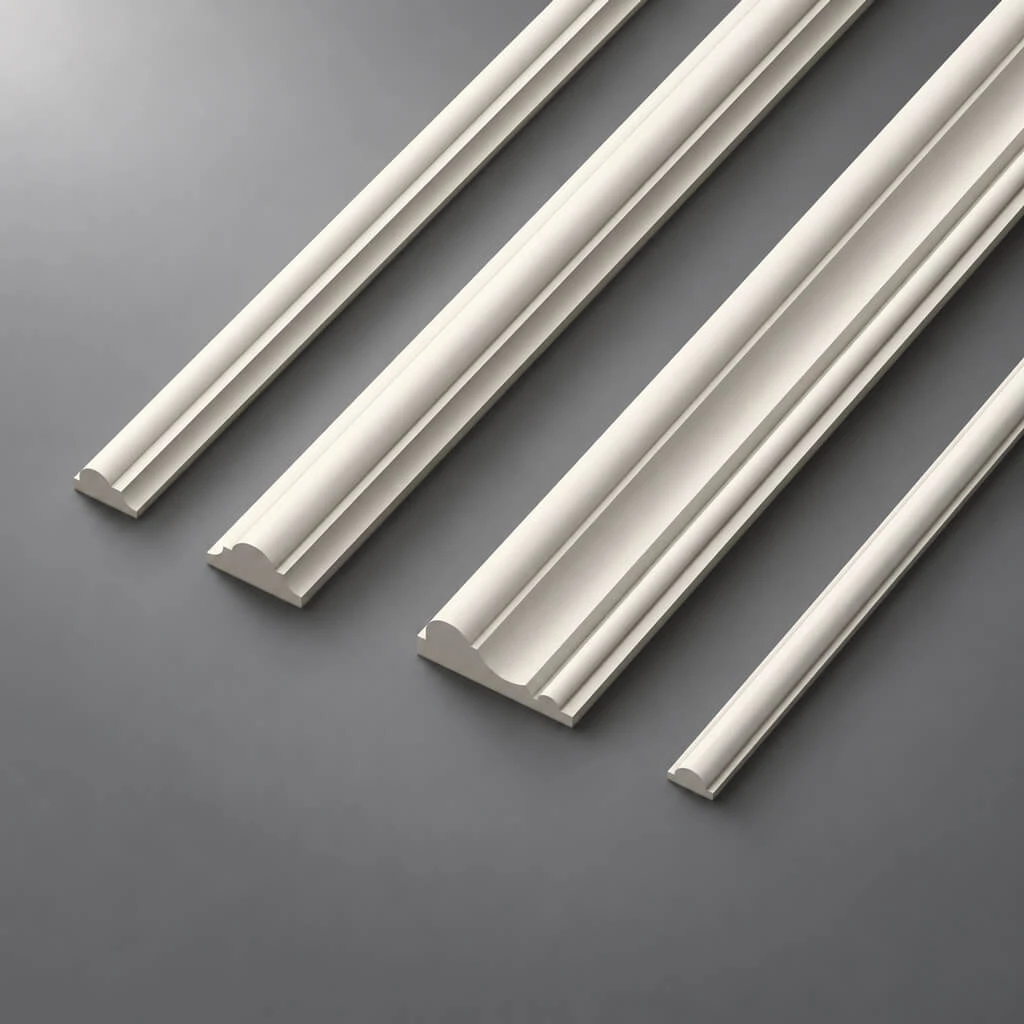
Ceiling moldings
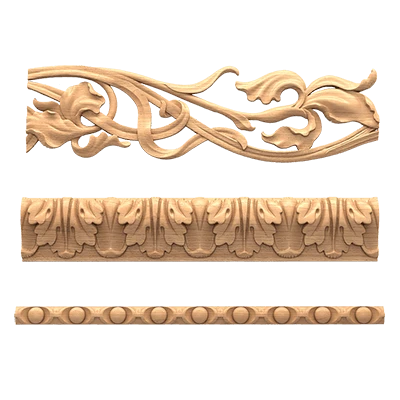
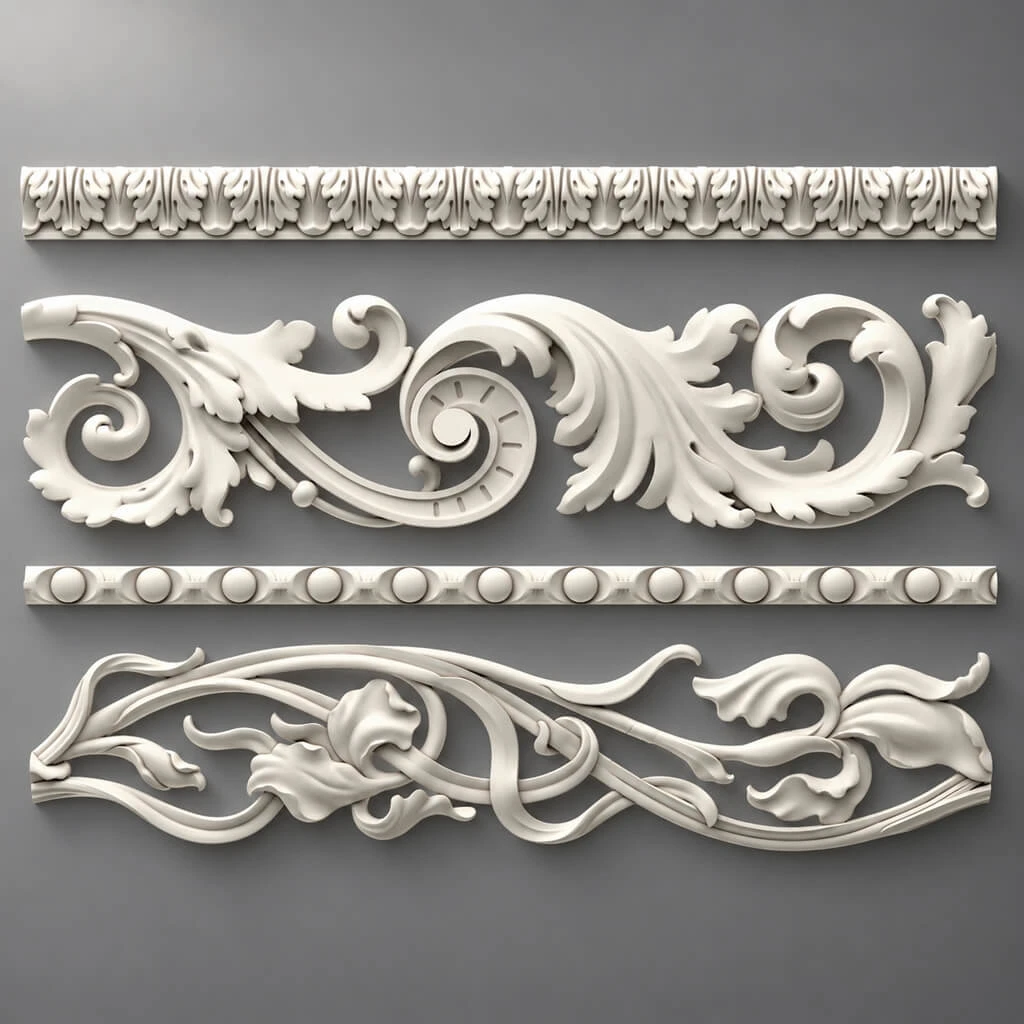
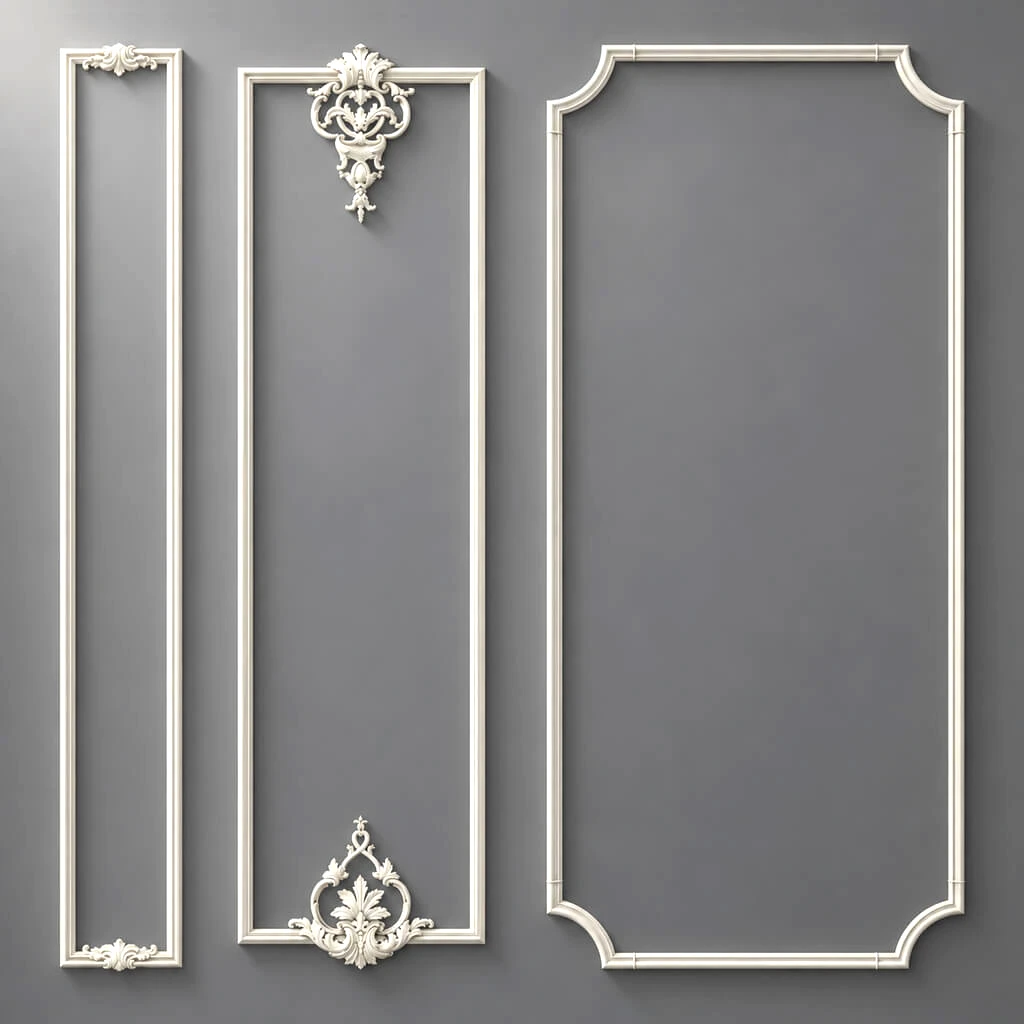
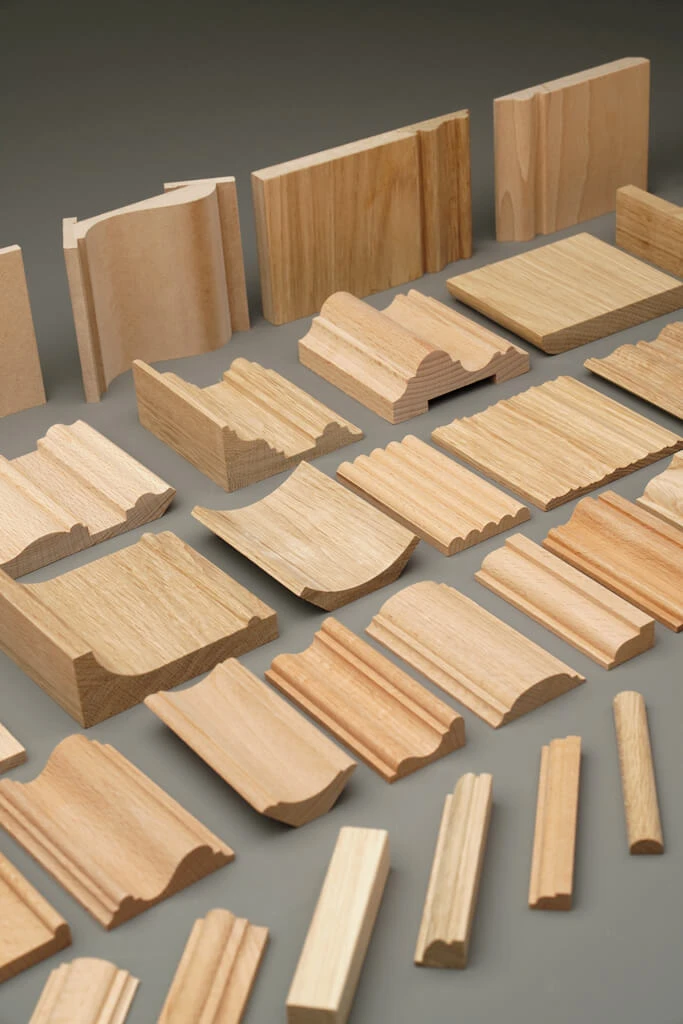
Ceiling moldings are profile strips that create decorative frames or geometric compositions on the ceiling plane. Do not confuse with wall moldings: ceiling moldings are installed horizontally, on the ceiling plane, usually symmetrically relative to the center or rosette.
Decorative overlays and — everything must correspond to the chosen era.
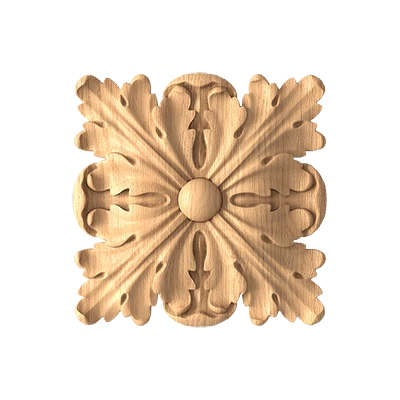
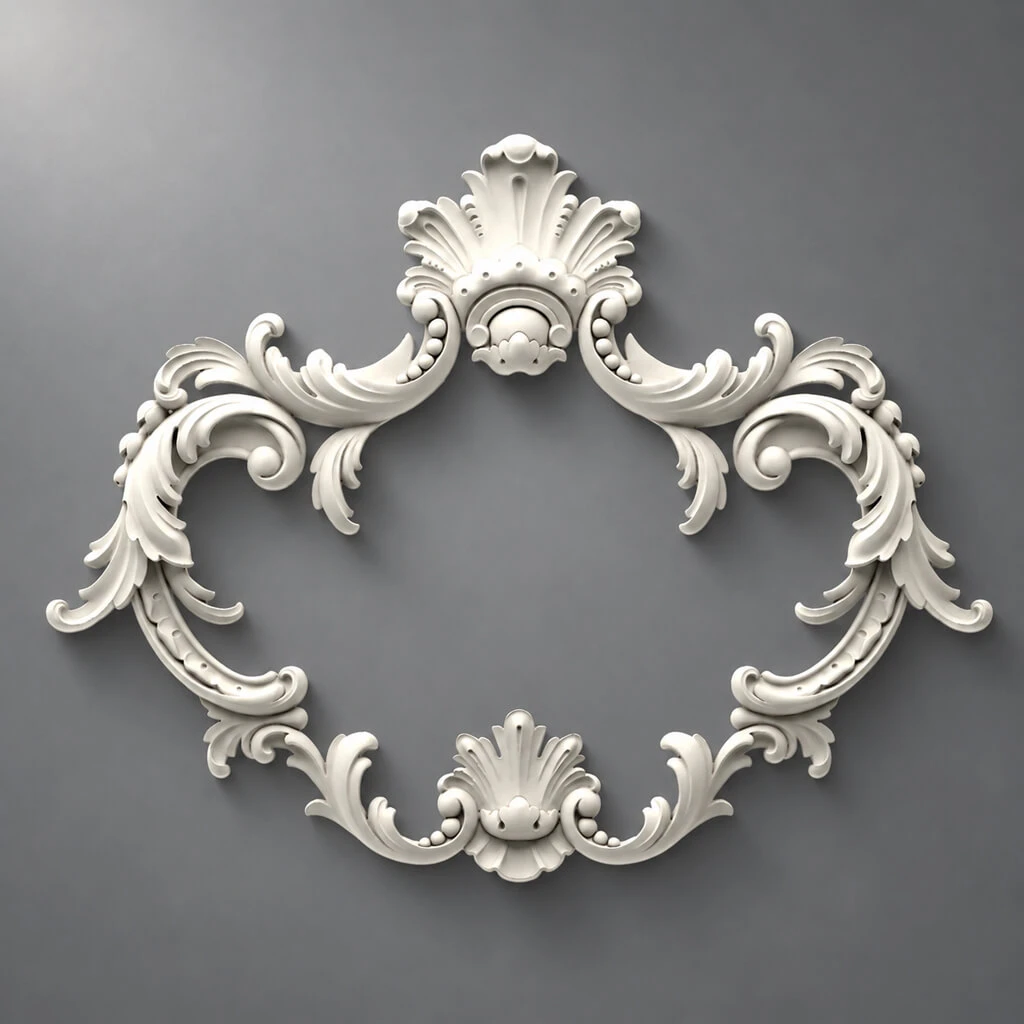
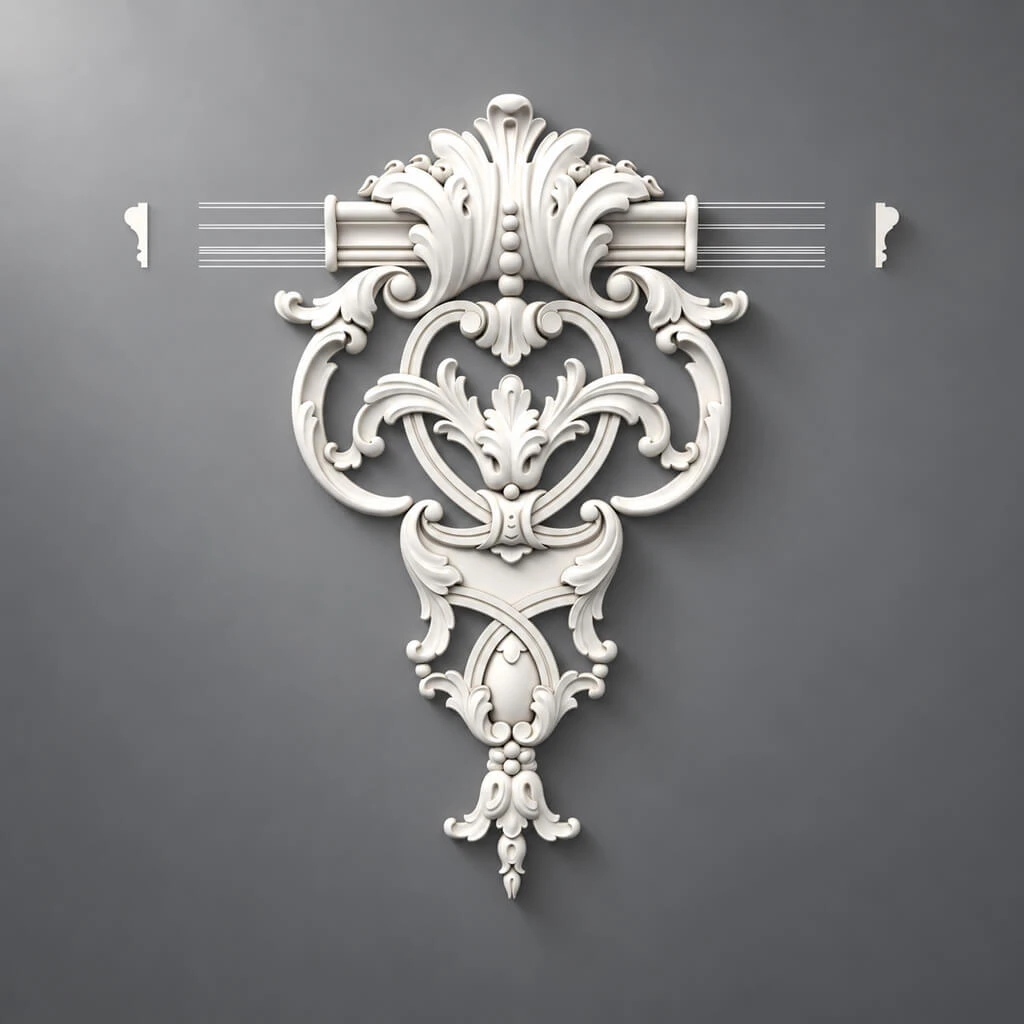
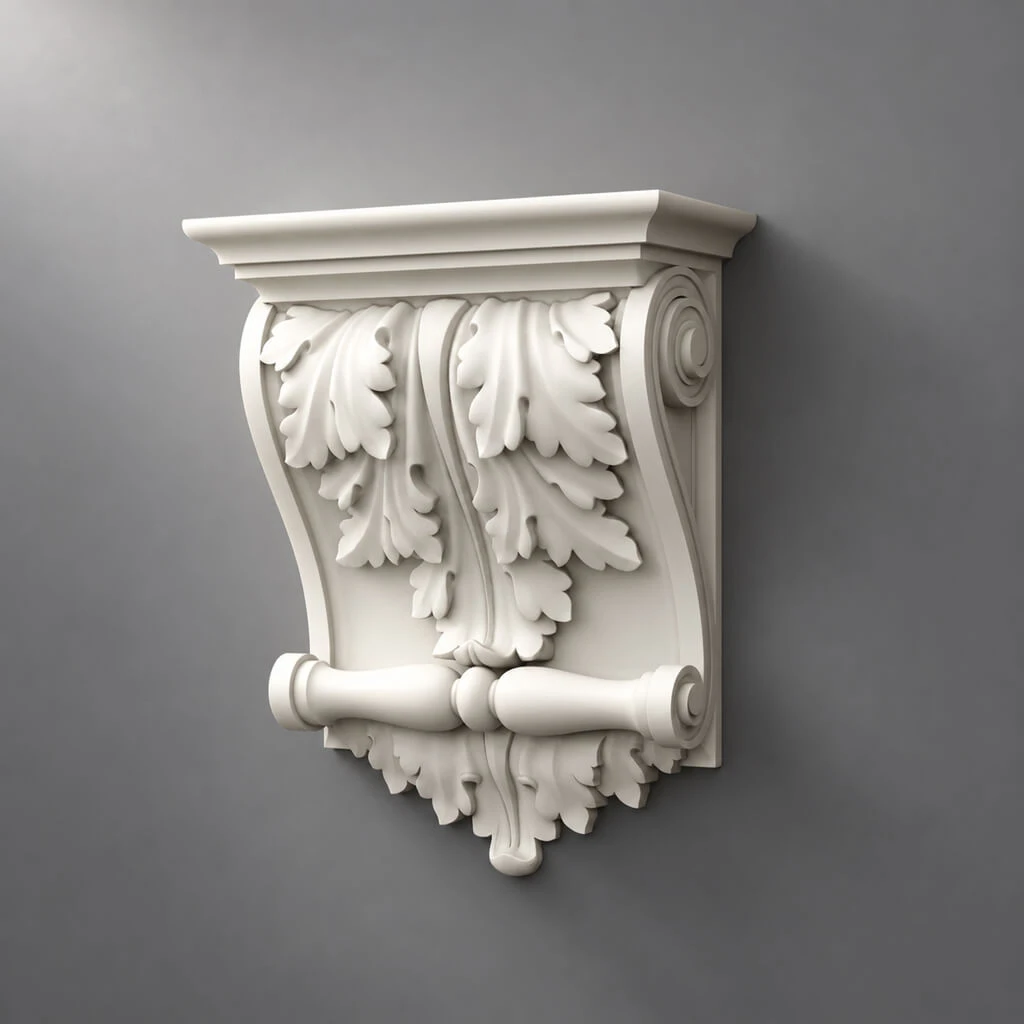
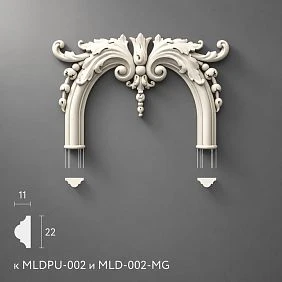
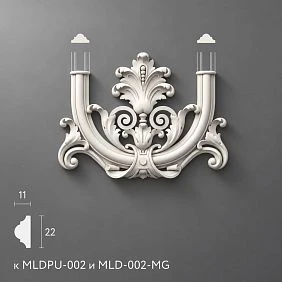
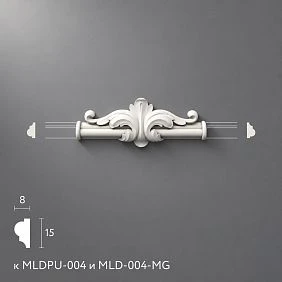
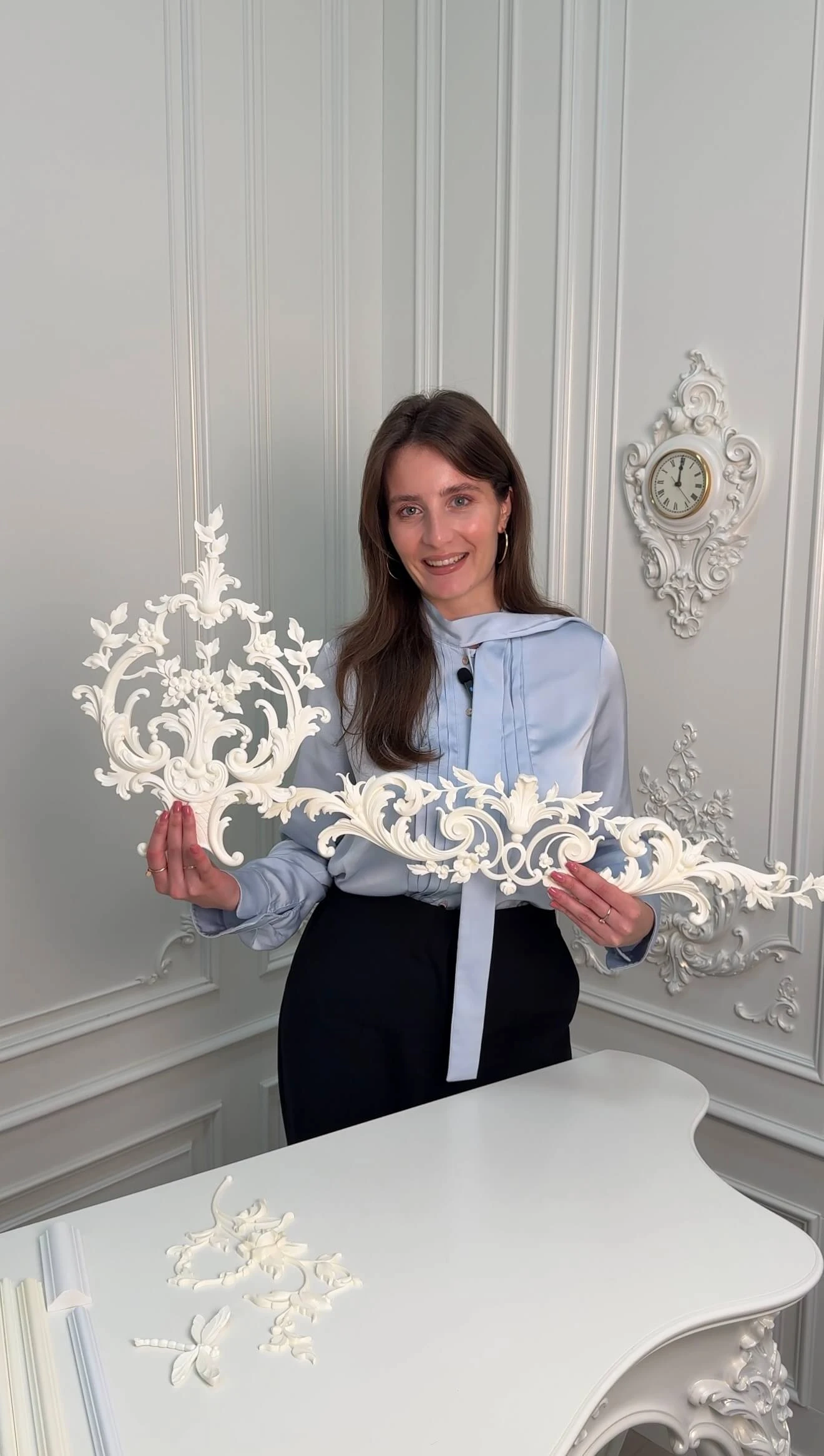
Flat and three-dimensional decorative elements for creating accent zones on the ceiling: corner medallions, ornamental inserts in frame corners, 'star' rosettes, decorative crosses in the center of ceiling fields. They are used to complicate the ceiling composition and create an 'architectural layer' overhead.
Corner elements
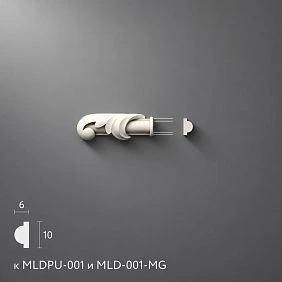
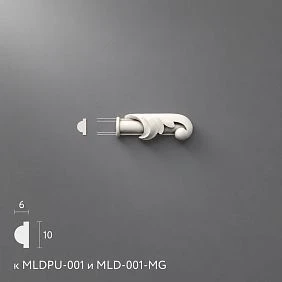
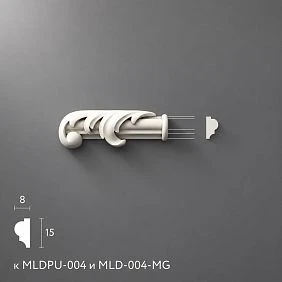
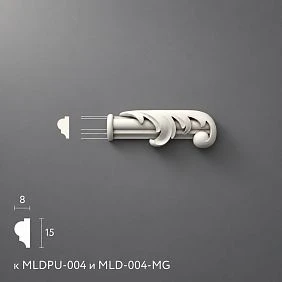
Internal and external corners for cornices and ceiling moldings. Sold individually. Simplify installation at room corners and ensure precise joints without complex trimming.
Molding for transitioning from wall to ceiling
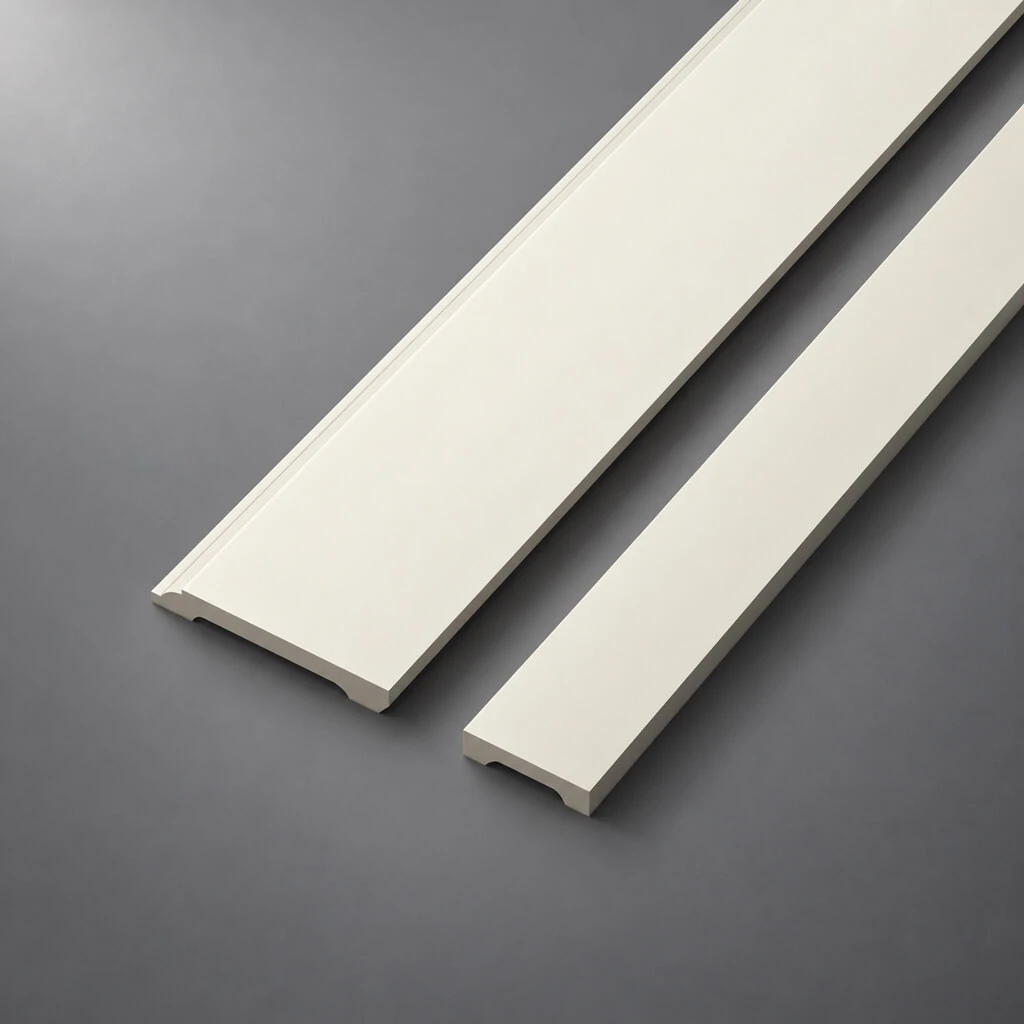
Thin decorative rods, bands, and shelves installed below the cornice or between the cornice and wall moldings. Create a sense of architectural layering.
How to choose ceiling molding according to ceiling height
This is a fundamental principle that is most often violated. A beautiful cornice in the catalog may look perfect. But installed in a room with a low ceiling, it will overwhelm the space and create a claustrophobic effect.
Principle of Proportion
The height of the cornice should be proportional to the height of the room. General rule: the height of the cornice (in centimeters) should not exceed 3–4% of the room height (in centimeters).
Ceiling 2.5 m = 250 cm. 4% = 10 cm. So, a cornice height of 100 mm is the limit for such a room. Better 60–70 mm.
Ceiling 3.2 m = 320 cm. 4% = 12.8 cm. A cornice up to 130 mm is possible.
Ceiling 4.5 m = 450 cm. 4% = 18 cm. A large architectural cornice of 150–200 mm is organic and proportionate.
Low ceilings: 2.4–2.7 m
This is the reality of most modern city apartments — both in new builds and Soviet-era houses. For such spaces — delicate solutions:
-
Cornice 40–60 mm with a clean geometric profile, without excessive relief
-
Ceiling rosette with a diameter of 200–280 mm
-
No ceiling molding frames — they will "lower" the ceiling even further
-
White color of all elements matching the ceiling — visually "dissolves" the decor and does not reduce space
Medium ceilings: 2.7–3.2 m
Optimal zone for most design solutions. A wide choice is possible here:
-
Cornice 60–100 mm with moderate or developed profile
-
Rosette with a diameter of 300–450 mm
-
Ceiling molding frames — if the style requires
-
Decorative corner overlays in frames
High ceilings: from 3.2 m and above
High ceilings are a rarity and luxury that should not be missed. A bare high ceiling without decoration looks unfinished and cold. This is where a true architectural program begins:
-
Cornice 100–200 mm with rich ornamental profile
-
Large rosette 500–800 mm
-
Ceiling molding frames, possibly several tiers
-
Decorative overlays, medallions, ornamental inserts
-
Ceiling belt below the cornice — to create a multi-layered transition
Ceiling Height Selection Table
| Ceiling Height | Crown Molding | Rosette | Moldings on the ceiling |
|---|---|---|---|
| 2.4–2.6 m | 40–55 mm | 180–250 mm | Not recommended |
| 2.6–2.8 m | 55–75 mm | 250–320 mm | Very delicately |
| 2.8–3.2 m | 75–110 mm | 320–460 mm | Appropriate |
| 3.2–4.0 m | 100–150 mm | 450–650 mm | Recommended |
| over 4.0 m | 150–200+ mm | 600–900 mm | Necessary |
Ceiling cornice: why it is needed and how it works
The cornice is the first thing you start with when designing a ceiling. And that's right: it sets the scale for the entire ceiling program.
Three functions of the cornice
Architectural function. The cornice creates a line between the wall and the ceiling — clear, expressive, with a profile. It is the "frame" of the ceiling plane. Without it, the ceiling looks like an unfinished sheet of paper simply leaning against the walls.
Technical function. In real rooms, the joint between the ceiling and wall is almost never perfectly even. Drops, gaps, putty marks, unevenness — the cornice covers all of this in one motion.
Visual function. A properly selected cornice visually raises the ceiling. This seems paradoxical, but it works: the dark lower part of the cornice "pushes" the ceiling line upward, creating an optical illusion of greater room height.
Cornice profile: what is read in the interior
The cornice profile is its "face." It is by the profile that the cornice belongs to one style or another.
Simple geometric profile — right angles, flat planes, minimal details. Suitable for Scandinavian style, minimalism, modern classic. Creates a clean line without distracting details.
Classic S-profile — a smooth concave and convex curve. This is a basic classic profile that fits organically in most traditional interiors. Elegant, versatile, time-tested.
Stepped profile — several horizontal shelves of different widths. Creates a sense of architectural "tiers." Characteristic of neoclassicism and art deco.
Ornamental profile — with beads, pearl strings, ionics, plant friezes. This is the "highest level" of classic interiors. Such a cornice is a true architectural piece. Suitable for historical interiors, luxurious classicism, grand halls.
Cornice and wooden decor
In interiors where natural wood is used — parquet, wooden slats, wooden cornice from solid wood as a furniture element or window framing — a polyurethane ceiling cornice works in tandem with the wooden floor baseboard: they frame the space from above and below, creating a complete architectural frame for the room.
About the full combination of these materials — in the article stucco and wooden decor in the interior.
Ceiling rosette for a chandelier: how to choose size and style
A rosette is the semantic center of the ceiling. Where it is installed, the eye stops first. This is almost mathematical precision: the human eye seeks the center of any plane, and the rosette gives it that point.
How to calculate the required diameter
There is a classic rule among architects and decorators: the diameter of a ceiling rosette (in centimeters) is approximately equal to the sum of the room's length and width (in meters), multiplied by a coefficient of 2.5–3.
Room 4×5 m: (4+5) × 2.75 ≈ 25 cm → rosette with a diameter of 250 mm.
Room 5×6 m: (5+6) × 2.75 ≈ 30 cm → rosette 300 mm.
Room 6×8 m: (6+8) × 2.75 ≈ 38 cm → rosette 380–400 mm.
For formal rooms with high ceilings, the coefficient increases to 3.5–4.
Relation to chandelier size
The diameter of the rosette should be equal to or slightly larger than the diameter of the upper part of the chandelier. If the chandelier has a wide shade of 60 cm, a rosette with a diameter of 200 mm will disappear under it — it simply won't be visible. The logic is simple: the rosette should 'frame' the chandelier, not hide behind it.
If the exact dimensions of the chandelier are not yet determined — choose a rosette with a margin: 350–450 mm for standard living rooms. This is a safe universal format.
Relief depth and style
Polyurethane rosettes can be flat (minimal relief 10–15 mm above the ceiling plane) and voluminous (relief 30–50 mm or more). Flat rosettes are a delicate accent, almost invisible, but setting the center. Voluminous rosettes with acanthus leaves, open flowers, curls, and pearl beads are a true sculptural decoration.
The style of the rosette should be consistent with the style of the cornice. If the cornice is a simple geometric profile, a rosette with lush floral ornamentation will be dissonant. Conversely, a delicate flat rosette against a rich ornamental cornice will be lost.
Rosette without chandelier
A separate scenario: there is no hanging chandelier in the room, lighting is spot or wall-mounted. Is a rosette needed then? Yes, if there are classic elements in the interior. In this case, the rosette is an independent decorative accent, without a functional purpose. Paint it the color of the ceiling — and you get a delicate relief medallion that does not require a chandelier but creates a center of the plane.
Moldings on the ceiling: when appropriate and how to do it right
Ceiling molding frames are a technique that requires precision. It works brilliantly in the right context and looks ridiculous in an unsuitable one.
When moldings on the ceiling are appropriate
High ceilings from 2.9 m and above. Only at this height do ceiling molding frames not "press" on the space, but enrich it.
Classic and neoclassical interior. Frames made of moldings are an architectural technique that dates back to classicism. In a classic interior, it is organic. In a minimalist modern one, it creates a stylistic contradiction.
Symmetrical rooms. A rectangular room with a clear center is ideal geometry for ceiling frames. In non-standard rooms with sloping ceilings, ledges, and niches, it is difficult.
Living room, dining room, study. Bedroom — less often (although possible). Kitchen — almost never. Hallway — not recommended.
How to build a ceiling frame
A classic ceiling frame is a rectangle of moldings, located symmetrically to the center of the ceiling with an indentation from the cornice. The size of the frame should be 60–75% of the size of the ceiling plane. The indentation from the cornice to the frame molding is 20–30 cm.
Inside the frame is a rosette. The rosette should be located exactly in the center of the frame. This is a golden rule: violation of symmetry here is immediately visible.
Example: ceiling 4.5 × 5.5 m. Frame: (4.5 × 0.65) × (5.5 × 0.65) = 2.9 × 3.6 m. Indent from the wall (including cornice): (4.5 − 2.9) / 2 = 0.8 m and (5.5 − 3.6) / 2 = 0.95 m.
Double frame
A more complex and expressive technique: two concentric frames with space between them. The outer frame is a larger molding. The inner one is a delicate profile. In the space between the frames are small corner medallions. This is an architectural technique characteristic of Empire and Neoclassicism.
Zoning the ceiling with moldings
In open-plan layouts where the living room and dining room are combined into one space, ceiling moldings are an effective zoning tool. Above the sofa area is its own ceiling frame with a rosette. Above the dining table is its own frame, possibly smaller. Between them is open space or a delicate dividing molding.
Decorative stucco For a classic interior
Classic and Neoclassical are the main environments where ceiling stucco fully unfolds. Here it ceases to be just decor and becomes part of the architectural system.
Ceiling — Wall — Floor system
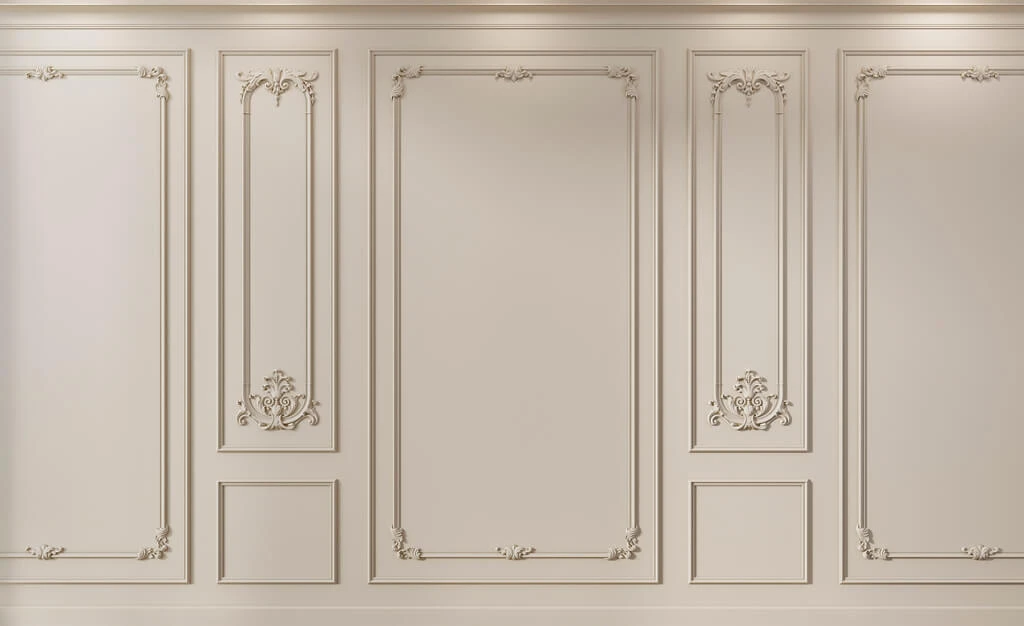
In a classic interior, the ceiling Polyurethane moldings is part of a vertical ensemble. At the top is a cornice with a developed profile, on the walls are molding frames and horizontal belts, at the bottom is a high Wooden baseboard solid wood baseboard. All three "belts" create a single architectural frame of the space.
Collective unity
This is a crucial principle: the cornice, rosette, and ceiling moldings must be from the same collection or at least from the same stylistic group. The profiles must be coordinated in terms of relief height and ornamental language. If the cornice uses a plant ornament (acanthus, laurel), the rosette should be in the same style.
About types and collections of decor — in the article Types of polyurethane molding.
Wooden decor as a continuation of the classic ceiling
Wooden decoration in a classic interior — overlays on furniture facades, carved elements of cabinets and chests — works as a "lower response" to the ceiling program. White stucco on the ceiling and dark oak overlays on furniture create a vertical dialogue between the natural and the architectural.
Plaster ornament for walls and ceilings: universal overlays
There is a category of products that works simultaneously on walls and ceilings — these are polyurethane decor in the form of flat and three-dimensional overlays.
Corner medallions
Small square or diamond-shaped overlays that are installed in the corners of ceiling frames. They hide the joint of two moldings and simultaneously create a decorative accent. Corner medallions can be geometric, floral, in the form of rosettes or cartouches.
Decorative inserts in the center of ceiling fields
In large ceiling frames — between the rosette and corners — additional overlays are often installed: small oval medallions, ornamental diamonds, symmetrical leaf motifs. This creates a "filled" ceiling field and enhances the sense of grandeur.
Decorative crosses and "stars"
A characteristic element of Art Deco and Neoclassical ceiling decor: four-petal or eight-petal overlays in the center or corners of ceiling fields. They create rhythm and geometric dynamics within strict rectangular frames.
Ceiling stucco for painting
One of the main advantages of polyurethane is its perfect compatibility with paints. Buy moldings in its unpainted form — means getting a material that accepts any color scheme.
White stucco matching the ceiling
The most common option. The cornice and rosette are painted the same white as the ceiling. The decor is "integrated" into the plane, working as a relief without a color accent. This monochrome solution works well for small rooms: it does not weigh down or reduce space, but adds architectural depth.
Stucco with light tinting
A slightly creamy or warm white tone for moldings — with a pure white ceiling. Creates a delicate contrast: the decor is slightly warmer than the background, visually "protruding" from the plane. A classic technique for "Italian classic" interiors.
Contrasting moldings
A white cornice on a dark blue or deep green ceiling. Or — a gold rosette on a snow-white ceiling. These are accent solutions that require confidence and appropriate scale. They are not for small rooms or indecisive interiors. But where they are appropriate, they produce a powerful effect.
Cornice color and wall color
Another technique: the cornice is painted not the color of the ceiling, but the color of the wall. It seems to "grow" out of the wall and transition onto the ceiling. This creates a smooth flow effect and visually increases the height of the room.
How to calculate the amount of ceiling moldings
Calculation errors are one of the most common problems when purchasing decor. Too little — you'll have to reorder, and the new batch may not match the shade. Too much — extra expenses and unused material.
Cornice calculation
Basic formula:
Amount of cornice (m) = room perimeter (m) − width of doorways (m) + 15% reserve
Example: room 4.2 × 3.6 m. Perimeter = (4.2 + 3.6) × 2 = 15.6 m. Minus doorway 0.9 m = 14.7 m. Plus 15% = 16.9 m → purchase 17 m of cornice.
Corner elements for cornice: 1 for each internal corner of the room = typically 4 pieces.
Calculation of ceiling moldings
Determine the dimensions of the frames on the ceiling. Calculate the perimeter of each frame. Sum all perimeters. Add 15% margin.
Example: one frame 2.8 × 3.6 m. Perimeter = (2.8 + 3.6) × 2 = 12.8 m. With 15% margin = 14.72 m → purchase 15 m of molding.
Corner elements for frame: 4 pieces (4 corners).
Rosette
One piece. Selected by diameter — see section above.
Decorative appliqués
By the number of planned accent points: corner medallions, central inserts, decorative 'stars'. Counted individually at the design stage.
Calculation table for typical rooms
| Room | Perimeter | Cornice (+15%) | Frame molding (+15%) | Corner elements |
|---|---|---|---|---|
| 3×3 m | 12 м | 13.8 m | — | 4 pcs |
| 3×4 m | 14 м | 16.1 m | 12–14 m | 8 pcs |
| 4×5 m | 18 м | 20.7 m | 14–18 m | 8 pcs |
| 5×6 m | 22 м | 25.3 m | 18–24 m | 8–12 pcs |
| 6×8 m | 28 м | 32.2 m | 24–32 m | 12–16 pcs |
Common mistakes when choosing ceiling molding
Knowing typical mistakes saves money and nerves. Here are specific blunders that occur most often.
Mistake one: massive cornice with a low ceiling
This is the most common and most painful mistake. A 120 mm cornice with a 2.5 m ceiling takes up 5% of the room's height with decor. The room feels noticeably "lowered." The result: uncomfortable, oppressive, you want to take it off. Rule: for ceilings below 2.7 m — cornice no higher than 60–65 mm.
Mistake two: a rosette that is smaller than the chandelier
A rosette with a diameter of 250 mm and a chandelier with a 60 cm shade. The rosette is completely hidden under the chandelier. It is not visible — neither from below nor from the side. Money spent, zero effect. Rule: the diameter of the rosette ≥ the diameter of the upper part of the chandelier.
Mistake three: different collections of cornice and moldings
A cornice from one manufacturer with a floral ornament — and ceiling moldings from another manufacturer with a geometric profile. The stylistic mismatch is immediately apparent: two different 'languages' in one space. Rule: the entire ceiling program — from one collection or at least from one stylistic group.
Mistake four: purchasing without calculating the perimeter
'I'll buy about 15 meters — that'll be enough.' It won't be enough. Or it will be enough with 6 meters left over. A correct calculation takes 10 minutes and saves you from repeat orders. Be sure to do the calculation — with a 15% margin.
Mistake five: moldings on the ceiling with a height of 2.5 m
Ceiling frames made of moldings on a low ceiling create a grid effect that literally 'covers' the room. Rule: ceiling molding frames — only with a ceiling height of at least 2.9 m.
Mistake six: installing a rosette not in the center
A rosette shifted from the center of the ceiling plane by 10–15 cm looks like an installation error. The eye immediately senses the asymmetry. Before drilling — double-check the center.
Molding price: ceiling budget in numbers
The question about the cost of ceiling decor is practical and legitimate. A detailed breakdown of pricing is in a separate article; here are specific benchmarks for ceiling elements.
Budget scenario: cornice + rosette
Room 4×5 m, ceiling 2.8 m:
-
Cornice 65 mm (370 RUB/m): 18 m × 1.15 × 370 = 7,659 RUB
-
Corner pieces (4 pcs × 200 RUB): 800 RUB
-
Rosette 320 mm: 1,100 RUB
-
Total: ~9,559 RUB
Medium scenario: cornice + rosette + ceiling frame
-
Cornice 90 mm (580 RUB/m): 18 m × 1.15 × 580 = 12,006 RUB
-
Ceiling molding frame: 16 m × 380 rub. = 6,080 rub.
-
Corner pieces total: 8 pcs × 250 rub. = 2,000 rub.
-
Rosette 430 mm: 2,200 rub.
-
4 corner medallions on the frame: 4 × 500 rub. = 2,000 rub.
-
Total: ~24,286 rubles
Premium scenario: full ceiling program
Room 6×8 m, ceiling 3.4 m:
-
Cornice 130 mm (900 rub/m): 28 m × 1.15 × 900 = 28,980 rub.
-
Ceiling moldings double frame: 35 m × 600 rub. = 21,000 rub.
-
Corner pieces: 20 pcs × 350 rub. = 7,000 rub.
-
Socket 650 mm: 4,500 RUB
-
Decorative overlays: 8 pcs × 800 RUB = 6,400 RUB
-
Total: ~67,880 RUB
Where to buy polyurethane ceiling moldings
When the design is thought out, dimensions calculated, and the list of elements ready, the moment of choosing a supplier arrives. And it's important not to make a mistake: ceiling moldings are products whose quality determines the outcome of the renovation for years to come.
What to look for when choosing
Profile accuracy. The cornice must be even along its entire length: without dips, without expansions, without a "floating" relief. This is checked against real samples or the manufacturer's reputation.
Batch consistency. If you order 20 m of cornice, all pieces must be of the same shade and size. Variation in the batch is a sign of poor production quality control.
Collection completeness. A good supplier offers not only the cornice but also corner elements for it, compatible moldings, and sockets. Assembling a ceiling system from products of different manufacturers is inherently risky.
Structure molding catalog. A clear catalog with dimensions, interior photos, and compatible SKUs is a tool that saves your time and eliminates errors.
About how to choose Moldings shop and what to pay attention to when ordering, in a separate article.
If you are in the Northern capital, also read the article about polyurethane stucco in Saint Petersburg: delivery conditions, selection for the Petersburg interior, and features of the geo-local market.
STAVROS: full catalog of ceiling decor
STAVROS is a manufacturer and distributor of polyurethane and solid wood products. The company's catalog includes a full range for ceiling decoration: cornices from 40 to 200 mm, ceiling rosettes from 180 to 900 mm, moldings for ceiling frames, corner elements, decorative overlays, and medallions.
All STAVROS products are made from high-density polyurethane with a clear relief and stable dimensions. The surface is smooth, ready for priming and painting. Collections are systematically structured: cornice, molding, and rosette are matched in a unified style and coordinated in proportions.
Buy polyurethane molding in the STAVROS catalog online with Contact us to confirm shipping to your destination. The warehouse program is constantly in stock, ensuring fast order fulfillment without waiting for production. For private buyers, orders from one piece. For professionals, stable wholesale supplies.
Frequently asked questions
Which cornice to choose for a 2.7 m ceiling?
For a 2.7 m ceiling, a cornice with a height of 60–75 mm and a moderate profile is optimal. A taller cornice will look disproportionately large.
How to calculate the diameter of a ceiling rosette?
Add the length and width of the room in meters, multiply by 2.5–3 — you get the rosette diameter in centimeters. For a 4×5 m living room: (4+5) × 2.75 ≈ 25 cm.
Can ceiling moldings be installed with a 2.5 m ceiling?
Not recommended: molding frames on a low ceiling visually lower it even more. Limit yourself to a cornice and a rosette.
Are corner elements needed for the cornice?
Preferably. Ready-made corners provide a precise joint without cutting at 45 degrees. This is especially important for cornices with ornamentation, where manual relief adjustment is difficult.
What to paint ceiling stucco with?
Acrylic paint from any manufacturer. Before painting — acrylic primer. Stucco can be painted before installation (more convenient in hard-to-reach places near the cornice) or after.
How much does it cost to decorate a ceiling with stucco?
Budget option (cornice + rosette) for a 4×5 m room — 9,000–12,000 rubles. With a ceiling frame — 22,000–28,000 rubles. Full architectural program for a large room — from 60,000 rubles.
Where to buy ceiling moldings with Contact us to confirm shipping to your destination.?
The STAVROS catalog offers a full range of ceiling moldings with Contact us to confirm shipping to your destination. Constant warehouse availability, stable batches, professional selection consultation.
The ceiling is not just the upper plane. It is the fifth facade of the room, which is read every time you look up. A well-chosen Polyurethane Ceiling Moldings — cornice, rosette, molding frames — turns this "fifth facade" into an architectural statement. Simple or complex, delicate or grand — depending on your vision.
STAVROS is a company that provides the tools for this vision: a full moldings catalog, well-thought-out collections, stable quality. STAVROS is the choice of those who understand that a beautiful ceiling is not an accident, but the result of the right decision. Trust STAVROS — and your ceiling will become exactly as you envisioned it.