








































































Article Contents:
- When it's worth updating an old dresser instead of replacing it
- The body is intact, but the fronts look outdated
- Handles have lost their appearance or don't match the new interior
- There are chips, empty fronts, or damage
- The bottom of the dresser looks heavy or outdated
- Wooden handles for a dresser
- Uncoated handles for self-painting
- Coated handles for a ready-made solution
- Profile handle for a modern calm facade
- Carved overlays for a dresser facade
- Furniture legs and supports for the bottom part
- By style: classic, retro, neoclassical, modern update
- By shape: knob, bracket, long handle, profile handle
- By box size
- By color of the future coating
- By scenario: restoration to look antique or modern update
- Central overlay for an empty facade
- Paired overlays for symmetry
- Horizontal overlays for long drawers
- When the overlay covers damage
- When it's better not to install an overlay
- Scenario 1. The dresser is sturdy, but the handles are old
- Scenario 2. The dresser is empty and too simple
- Scenario 3. The dresser needs to be made to look antique
- Scenario 4. The dresser needs to be made more modern
- Scenario 5. The bottom of the dresser is damaged
- Mistake 1. Starting with paint, not details
- Mistake 2. Buying handles without measuring the holes
- Mistake 3. Putting large handles on small drawers
- Mistake 4. Combining active handles and active overlays
- Mistake 5. Not considering the bottom part
- Mistake 6. Using an overlay as a random patch
- Mistake 7. Not checking the condition of the body
- Mistake 8. Doing everything in one "antique" style without moderation
- Which handles to buy for an old chest of drawers?
- How to restore an old chest of drawers without completely replacing the furniture?
- What to buy for restoring a chest of drawers first?
- Which handles to choose: vintage or modern?
- Can handles and carved overlays be combined?
- When are handles without coating needed?
- When is it better to choose handles with coating?
- What to do if the new handles don't match the old holes?
- When are carved overlays needed?
- When is it better not to install overlays?
- Do I need to change the legs when restoring a dresser?
- Can a chest of drawers be restored at home?
- What to check before ordering handles for a dresser?
- How not to overload an old chest of drawers with decor?
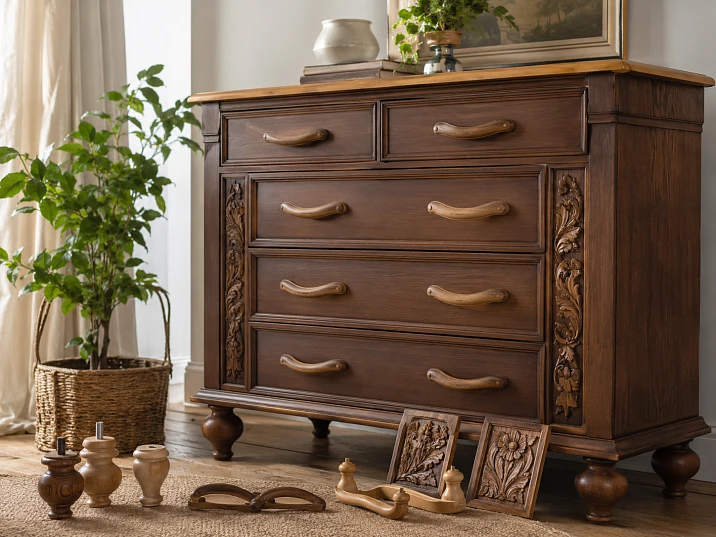
People often want to buy handles for a chest of drawers after the old one has stopped pleasing aesthetically but is still sturdy, convenient, and the right size. The body stands straight, the drawers open, the wood or MDF can be prepared for finishing, but the fronts look outdated, the handles are worn, the lower part seems heavy, and the overall look doesn't match the new interior. In such a situation, it's not always necessary to buy new furniture. Sometimes it's enough to competently update the chest of drawers: replace the handles, add decorative overlays, refresh the coating, and if necessary, install new furniture legs or supports.
The query "how to restore an old chest of drawers" often sounds like a request for step-by-step instructions. But in real furniture repair, the main question quickly becomes different: what exactly to buy so that the update looks like a cohesive result, not a random repair. Paint alone is not enough if the fronts remain empty. Overlays alone are not enough if the old handles clash with the new style. New handles can change the front, but the bottom of the chest will still look heavy if the legs are outdated or don't match the furniture's proportions.
Therefore, it's better to view restoring a chest of drawers as selecting a set of parts. For the front — wooden handles. For empty or damaged areas — carved overlays. For the silhouette — furniture legs and supports. For DIY finishing — handles without coating. For a quick ready-made solution — handles with coating. If a more modern front without active carving is needed, consider a profile handle. This approach helps move from the idea of 'updating an old chest of drawers' to a clear purchase of STAVROS parts.
In this article, we'll break down when an old chest of drawers is worth restoring, which parts to buy first, how to choose handles for a vintage or modern update, when overlays are needed, why change furniture legs, and how not to turn restoration into a collection of random elements.
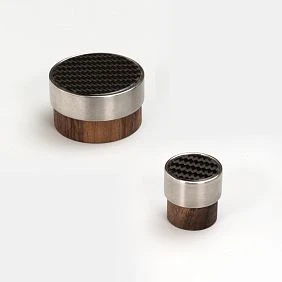
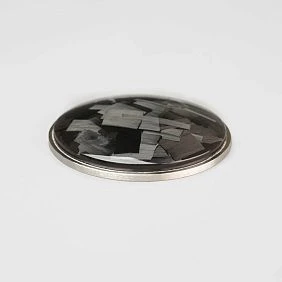
When an old chest of drawers should be updated rather than replaced
Not every old chest of drawers needs to be saved. If the body is destroyed, the geometry is severely compromised, drawers don't stay in place, guides are broken, wood is rotten, or fronts are warped, carpentry repair is needed first. Decorative details should not mask serious structural issues. But if the chest is sturdy, convenient, and fits the size, updating the hardware and decor can yield a strong result without completely replacing the furniture.
An old chest of drawers is often valued for its proportions. It may have good depth, a convenient height, quality drawers, natural material, or simply a fortunate spot in the room. It is difficult to find a new chest of drawers of the same size, and it is not always wise to completely replace furniture due to outdated handles or a worn facade. In such cases, restoration becomes not a compromise, but a way to preserve the foundation and add a new outer layer to it.




The body is intact, but the fronts look outdated
Facades are the first to reveal the age of a dresser. They can be smooth but too empty. They may have old varnish, scuffs, marks from previous handles, outdated color, or a boring flat surface. If the drawers work and the body doesn't require serious repair, the facades can be updated decoratively.
The fastest way to change a facade is to replace the handles. That's why queries like "buy handles for a dresser", "buy handles for an old dresser", "buy retro handles for a dresser" have direct commercial sense. The handle is at the center of interaction with the furniture: it's visible, touched daily, and sets the style of the facade. Sometimes a new wooden handle immediately makes an old dresser look calmer, warmer, and more expensive visually.
If the facade is too empty, one handle may not be enough. That's when carved overlays come to the rescue. They add relief, cover empty space, and help make the facade decoratively complete.
Our factory also produces:
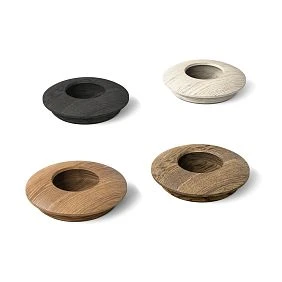
The handles have lost their appearance or do not fit the new interior
Old handles often ruin a dresser more than it seems. They can be worn, loose, oxidized, too small, too shiny, too rough, or simply not fit the new interior. This is especially noticeable after repainting the body. The dresser has become light, calm, or noble, but the old hardware remains out of place.
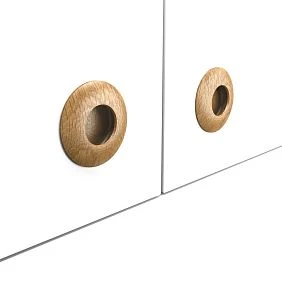
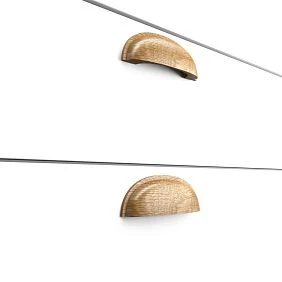
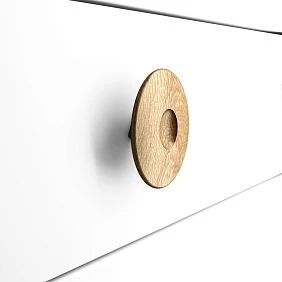
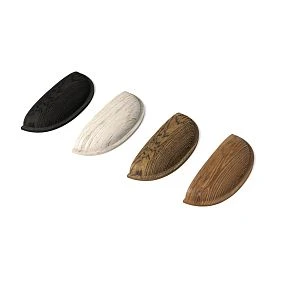
To update the facade, you can buy wooden handles for the STAVROS dresser. Wooden handles are good because they are easier to match with the body, overlays, legs, and future finishing. They do not look like a foreign metal insert if the project is built around wood, enamel, tinting, or soft neoclassicism.
Get Consultation
There are chips, empty facades, or damages
Minor damages can be fixed by surface preparation, sanding, puttying, painting or tinting. But sometimes after repair, the facade remains visually poor. In this case, a decorative overlay helps not just to hide the problem area, but to turn it into the center of the composition.
If the damage is in an inconvenient place, an overlay won't always help. It shouldn't be placed randomly just for masking. It's better when the decor looks planned: centered on the facade, symmetrical, in a frame, next to the handle, or in the overall composition. For such tasks, the following are suitable carved overlays for the dresser facade.
The bottom of the dresser looks heavy or outdated
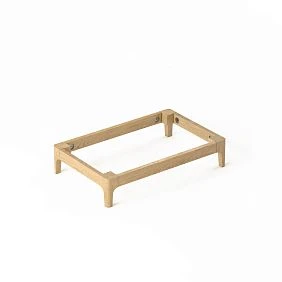
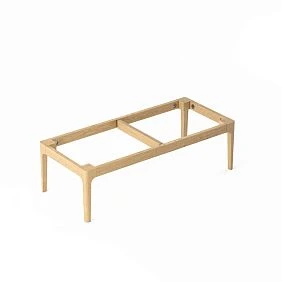
Sometimes the facade is already updated, handles are replaced, overlays are selected, but the dresser still looks heavy. The reason may be in the lower part. Old short legs, a massive base, damaged feet, or an outdated plinth make the furniture squat. New furniture legs help change the silhouette: the dresser can become visually lighter, taller, neater, and more modern.
If you need to update the lower part, you should look at furniture legs and supports for updating the dresser. But before purchasing, it's important to check the design: whether the supports can be replaced, whether the body can handle the new type of legs, what mounting hardware is needed, and how the height and stability will change.
What to buy for restoring an old dresser
Restoring an old dresser doesn't start with buying everything at once. First, you need to understand what exactly spoils the furniture's appearance. If the problem is with the facade — start with handles and overlays. If with the silhouette — with legs. If with the color — with finishing. If with functionality — with hardware and drawer repair. For the commercial route STAVROS, the main set looks like this: handles, overlays, legs or supports.
Wooden handles for a dresser
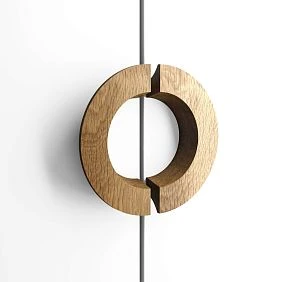
Handles are the fastest and most noticeable element of an update. Even if the dresser is not completely repainted, new handles can change the character of the furniture. A wooden handle is perceived softer in classic, retro, neoclassical, and natural interiors. It can be painted, tinted, left with a wood texture, or matched with a ready-made finish.
If an old dresser is to be repainted, it is important to decide in advance: should the handles blend with the facade or stand out. In the first case, it is better to look at unpainted handles for self-finishing. In the second, you can choose a ready-made finish or leave a wood accent.
The main transition for selection is buy wooden handles for the STAVROS dresser. In this section, it's convenient to start the selection if it's not yet clear what shape is needed: knob, bracket, long handle, or profile.
Handles without coating for self-painting
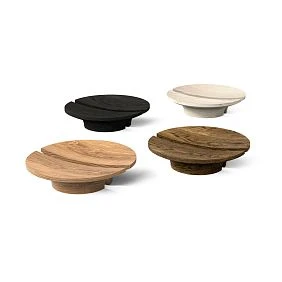
If the dresser is being restored at home, you often want to match the exact color of the body. Old facades are repainted in white, milky, graphite, olive, beige, powder, or another shade, and a ready-made handle may not match. Then it's more convenient to choose handles without coating for dresser restoration.
Handles without coating offer more freedom. They can be painted together with the front, made contrasting, tinted to match wood, coated with varnish, or matched to the overall decorative scheme. This option is especially useful if the dresser should look like a cohesive, renewed piece, rather than an old body with new hardware.
Handles with coating for a ready-made solution
There is not always the desire or opportunity to do self-finishing of handles. Sometimes you need to get a ready-made solution faster and install the hardware after preparing the facade. Then handles with coating are suitable. handles with coating for an old dresser.
Coated handles are convenient when the body is already painted or tinted, and the buyer wants to avoid separate painting of the hardware. This option should be chosen if the color and texture of the handle are clear in advance and match the body. But if the dresser is in the process of restoration and the final color has not yet been approved, an unpainted option may be more flexible.
Profile handle for a modern, calm front
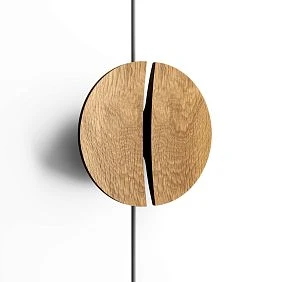
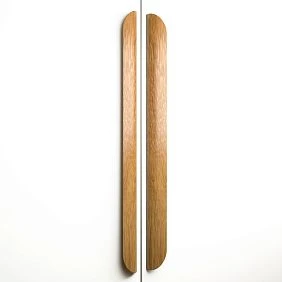
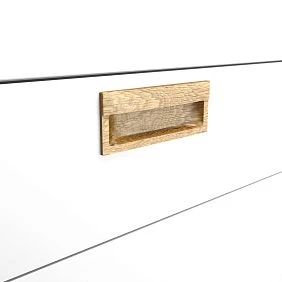
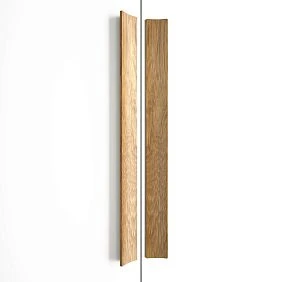
Not every restoration of an old dresser must lead to classics. Sometimes, on the contrary, you need to remove the "antique" look, making the facade calmer, cleaner, and more modern. In this case, handles in an antique style or active carved elements may be unnecessary. Instead, you can consider wooden profile handle for updating the facade.
A profile handle helps update the dresser without a strong decorative accent. It is suitable if the facades should be laconic, and the handle should support the form without competing with it. This option is especially good for a dresser that is being integrated into a modern bedroom, hallway, or living room.
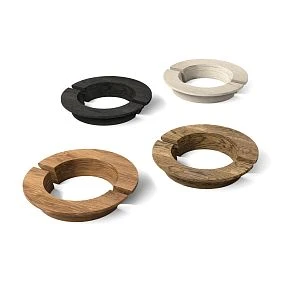
Carved overlays for the dresser facade
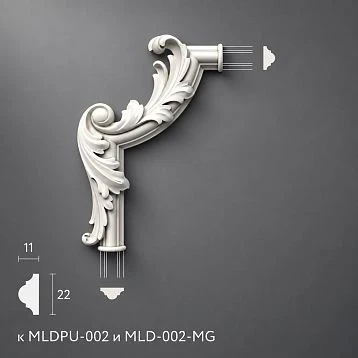
If handles alone are not enough, it is worth adding decor. Overlays help cover an empty surface, emphasize the center of a drawer, design the side part, and make the facade more expressive. They are especially useful for dressers with simple, flat facades where a feeling of emptiness remains after painting.
For such tasks, you can look at carved overlays for the dresser facadeWhen choosing, it is important to consider the size of the box, the location of the handle, symmetry, the thickness of the overlay, and the future finish. The overlay should not interfere with opening and should not conflict with the handle.
Furniture legs and supports for the lower part
New handles and overlays change the facade, but not the silhouette. If the chest of drawers is visually heavy, it is worth evaluating the lower part. New legs can lift the body, make the furniture lighter, and add a classic or modern character. They are especially important if the old supports are damaged, do not match the new style, or make the chest of drawers too squat.
Before purchasing legs, you need to check the bottom structure, the method of attachment, the expected load, height, and stability. You cannot simply take beautiful supports and screw them onto an unprepared base. The lower part of the chest of drawers must withstand the new installation.
Brief table for selecting parts for restoration
| Task | What to buy | Where to go |
|---|---|---|
| Need to replace old handles | Wooden furniture handles | buy wooden handles for the STAVROS dresser |
| Need to paint the handles to match the body color | Uncoated handles | handles without coating for dresser restoration |
| Need a ready-made finish | Handles with coating | handles with coating for an old dresser |
| Need a modern, calm facade | Profile handles | wooden profile handle for updating the facade |
| Need to cover an empty or damaged facade | Carved overlays | carved overlays for the dresser facade |
| Need to update the lower part | Furniture legs and supports | furniture legs and supports for updating the dresser |
This table helps avoid mixing tasks. The handle is responsible for the convenience and style of the facade. The overlay is for the decorative relief. The leg is for the silhouette and fit of the furniture. If you choose everything at once, but without understanding the role of each detail, the dresser can become overloaded.
How to choose handles for an old dresser
Handles for an old dresser should be chosen not only by appearance. The size of the drawer, the weight of the facade, usage habits, holes from old hardware, future color, interior style, and whether there will be additional decor on the facade are important. Sometimes a beautiful handle doesn't fit because it's uncomfortable to hold. Sometimes a handle that is good in shape covers old holes. Sometimes, on the contrary, new handles require different markings and preparation of the facade.
By style: classic, retro, neoclassical, modern update
If the dresser is antique or styled to look old, it makes sense to look for handles with a soft classic character. In this scenario, queries like "buy handles for an antique dresser", "buy antique handles for a dresser", "buy retro handles for a dresser" work naturally. The buyer wants to preserve the look of old furniture but make it neater.
If the dresser is being updated in a neoclassical style, it is better to choose calmer handles. Too active decor can conflict with overlays, moldings, or color. Wooden forms that do not look like random metal hardware work well here.
If the task is modern, a profile handle may be better than an antique-style handle. It makes the facade cleaner and doesn't overload the furniture. This is especially important if the dresser will be in a modern interior where carved decor is not needed.
By shape: knob, bracket, long handle, profile handle
A knob handle is well suited for small drawers. It is compact, neat, and doesn't take up much space. But for a heavy, wide drawer, it can be inconvenient: one small grip point is not enough.
A bracket handle is more convenient for wide drawers. It is easier to grip, distributes visual emphasis across the facade, and often looks better on a chest with large sections. If the drawers are heavy or used daily, a bracket handle is more practical.
A long handle changes the proportion of the facade. It can visually elongate the drawer, making the dresser calmer or more modern. But a long handle requires precise markings and matching the width of the facade.
A profile handle is needed when you want to remove excess decor and make the facade more strict. It is suitable for a modern update where the main goal is a clean line, not a retro effect.
By drawer size
The handle size should match the drawer size. A small handle on a wide facade looks lost. A handle that is too large on a small drawer seems heavy. If the chest has several rows of drawers of different heights, you can use handles of the same style but different sizes, if the assortment allows and the composition looks cohesive.
Before ordering, measure the width and height of the facade, the distance between old holes, the thickness of the facade, and the place where the hand will pull the drawer. If old holes remain, the new handle must either match them or cover them after surface preparation.
By color of the future finish
If the chest is being completely repainted, the handles can be made in the color of the body. This is a good technique for a calm update. The relief and shape remain, but the facade looks cohesive. For this scenario, handles without a finish are suitable.
If the handles are to become an accent, you can choose a finish that differs from the body. For example, a dark wooden handle on a light facade or a light one on a dark one. However, the contrast should be supported by other details: legs, overlays, frame, tabletop, or room decor.
By scenario: restoration to look antique or modern update
Restoration in an antique style does not mean leaving everything old. It is rather a careful renewal: preserve the character of the furniture, but replace worn-out parts. In this case, the handles should support the age and style of the chest of drawers. Carved overlays can also be appropriate if the fronts are too bare.
Modern renewal works differently. Here you can remove excess decor, choose a profile handle, paint the body in a calm shade, and abandon large overlays. The old chest of drawers turns not into a "museum" piece, but into relevant furniture with a preserved base.
How to add overlays if handles alone aren't enough
Handles change the facade, but they don't always solve the problem of an empty surface. If the dresser is wide, the drawers are large, and the new color is solid, the facade can look too simple. Then carved overlays help add relief and tie the furniture to the interior.
Central overlay for an empty facade
A central overlay works if there's an empty field on the facade. It helps create a focal point and eliminate the feeling of emptiness. But the center must be chosen precisely. If the overlay is offset, the facade looks messy. If it's too close to the handle, both details start to compete.
It is better to first lay out the composition on paper or attach a template to the facade. You need to understand where the handle will be, where the overlay, what margins will remain at the top, bottom, and sides. Such a simple step saves many mistakes.
Paired overlays for symmetry
If the facade is wide or there are several drawers, you can use paired overlays. They help maintain symmetry and make the furniture more classic. But paired elements require precise marking. Even a difference of a few millimeters can be noticeable, especially after painting.
Paired overlays should be chosen if the chest of drawers has a clear axis and identical facades. If the drawers are of different sizes, it is better to be cautious about repetition and not overload each element.
Horizontal overlays for long drawers
A long drawer often needs horizontal logic. If you place a small decoration in the center, it may get lost. If you use an elongated overlay or a combination of a handle and a decorative line, the facade becomes more cohesive. Here, it is important not to interfere with the handle grip.
When the overlay covers damage
An overlay can cover a mark from old hardware, a small damage, or an empty spot after repairs. But it should look like an intended decor. If the damage is too close to the edge or in a random spot, it's better to first restore the surface rather than try to cover it with an overlay.
When it is better not to install an overlay
An overlay is not needed if the dresser is small, the fronts already have an active frame, the handles are expressive enough, or the interior requires calm furniture. Decor should help, not overload. Sometimes the best option is new handles, neat painting, and updated legs without carved front decor.
Furniture legs and supports: when to update the lower part of a dresser
The lower part of the dresser affects the entire silhouette. Even a beautiful front can look heavy if the dresser stands on an old base, short damaged legs, or rough supports. New furniture legs help change the proportion: lift the body, add air, support the style of handles and overlays.
If the dresser is low and massive, new supports can make it lighter. If it is classic, wooden legs can enhance the character. If the update is modern, it is worth choosing calmer shapes. The main thing is not to install legs just based on a picture. You need to consider the weight of the dresser, the bottom structure, the attachment method, and stability.
Replacing supports is especially useful if the old lower part is damaged. The dresser may stand unevenly, scratch the floor, have chips on the legs, or look outdated. But if the body is not designed for replacing supports, you first need to prepare the base.
What to buy together for a complete update
Restoration looks successful when details support each other. Handles, overlays, and supports should not be from different stories. If handles are calm and modern, carved overlays may be unnecessary. If overlays are active, handles should be more restrained. If legs are classic, the facade should also support this style.
| Main purchase | What to add | Why |
|---|---|---|
| Drawer handles | Carved overlays | So that the facade looks not just renovated, but decoratively finished |
| Uncoated handles | Finish coating | To match the body color |
| Handles with coating | Overlays in a similar style | To assemble a complete set |
| Profile handle | Minimal decor without carving | For a calm modern update |
| Overlays | New furniture supports | To update not only the facade, but also the silhouette of the furniture |
| Furniture legs | Mounting hardware | For correct installation |
Even if the buyer starts only with handles, it's worth looking at overlays and legs in advance. This doesn't mean you need to buy everything at once. But understanding the full set helps avoid mistakes with the style.
How not to confuse similar products
| Product | What it is | When to buy |
|---|---|---|
| Knob handle | Compact handle for a small drawer | If the chest is small or a light accent is needed |
| Handle bracket | Comfortable handle for a wide drawer | If the drawer is heavy or frequently used |
| Profile handle | Elongated profile option | If a modern facade without a carved accent is needed |
| Carved overlay | Decorative element for the facade | If you need to decorate the surface or fill a visual void |
| Furniture leg | Support for the lower part of the furniture | If you need to change the height or silhouette |
| Molding or trim | Linear profile | If you need to create a frame rather than a point decor |
The error occurs when a buyer tries to solve all tasks with one detail. A handle does not replace a plate. A plate does not make a drawer more convenient. A leg does not fix a facade. Molding creates a frame but does not replace a handle. Therefore, it is better to separate functions: convenience, decor, silhouette, frame, finishing.
Practical scenario for restoring an old dresser
Scenario 1. The dresser is sturdy, but the handles are old
The simplest way is to replace the handles. Remove the old hardware, measure the holes, assess the size of the facade, and choose wooden handles. If the new color of the dresser is not ready yet, look at handles without coating. If the body is already finished, you can choose handles with coating.
Scenario 2. The dresser is empty and too simple
If after painting the facades look boring, add plates. First, choose the handles, then select the decor around them. The plate should not interfere with opening and should not look like a random patch.
Scenario 3. The dresser needs to be made to look antique
For such an update, antique-style handles, soft painting, possibly patination, carved overlays, and classic legs are suitable. But it's important not to overdo it: if you add too many elements, the dresser will become heavy.
Scenario 4. The dresser needs to be made more modern
Then it's better to avoid active carved overlays and choose a profile handle. The body can be repainted in a calm shade, and the lower part can be updated with more laconic supports. Such a chest of drawers will retain its base but will look modern.
Scenario 5. The bottom of the dresser is damaged
If the legs or base are damaged, start with the structure. Check if new supports can be installed. After that, select handles and facade decor. You cannot update only the facade if the chest of drawers is unstable.
What not to make from scratch if there are ready-made STAVROS elements
Restoring an old dresser does not mean that all parts need to be carved, turned, sanded, and designed from scratch. Ready-made wooden handles, overlays, and furniture legs save time and help avoid random results.
You don't need to carve handles by hand if you can choose ready-made wooden forms. You don't need to make carved decorative elements yourself if there are overlays. You don't need to keep old heavy supports if the lower part can be updated with furniture legs. You don't need to assemble a facade from mismatched parts if you can select elements in one material direction.
The correct route is: assess the condition of the chest of drawers, choose an update scenario, select handles, then address the issue with overlays and supports. After that, plan the finishing, installation, and final touches.
Mistakes when restoring an old chest of drawers
Mistake 1. Start with paint, not with details
Many people paint the chest of drawers first and then think about the handles. As a result, the chosen hardware does not match in color, style, or size. It is better to decide in advance which handles and overlays will be on the facade.
Mistake 2. Buy handles without measuring the holes
If the old holes don't match the new handle, you'll have to patch the front and make new markings. This is fine if planned in advance. But it's bad if it becomes a surprise after purchase.
Mistake 3. Putting large handles on small drawers
A large handle can look heavy and interfere with the facade. For small drawers, compact shapes are better. For wide ones, brackets or long handles.
Mistake 4. Combining active handles and active overlays
If both the handle and the overlay are too expressive, the facade becomes overloaded. One element should be the main one, the other supporting.
Mistake 5. Not considering the bottom part
An updated facade does not save a chest if the bottom looks old and heavy. Sometimes new supports are as important as handles.
Mistake 6. Using an overlay as a random patch
The overlay should look decoratively justified. If it simply covers damage in a strange place, the facade will look worse, not better.
Mistake 7. Not checking the condition of the body
If the chest is warped, drawers don't work, the bottom is weak, and legs are poorly attached, repairs are needed first. Handles and overlays are installed after assessing the structure.
Mistake 8. Doing everything in one "antique" style without moderation
Retro handles, carved overlays, patina, dark finish, and heavy legs together can overload the furniture. An old chest of drawers should look updated, not over-decorated.
Who is this update method suitable for
This method is suitable for those who want to update an old chest of drawers without buying a new one. It is especially useful if the body is intact, the drawers work, the facades can be prepared for finishing, and the appearance needs to be changed. Suitable for restoration craftsmen, decorators, owners of old furniture, buyers who need wooden parts for painting, and those who want to assemble a chest of drawers to fit their interior.
This path is not suitable if the body is destroyed, the furniture requires serious carpentry repair, the user does not plan to change the hardware, or only plastic or metal handles are needed. Also, do not start with decoration if the chest of drawers is unstable or cannot be used safely.
| Suitable | Not suitable |
|---|---|
| For those who want to update an old dresser without buying a new one | If the dresser body is destroyed and requires carpentry repairs |
| For those looking for handles for an old or antique dresser | If metal or plastic handles are needed |
| For restoration craftsmen and decorators | If the user does not plan to change the fittings |
| For customers who need wooden parts for painting | If you need a ready-made mass set without selection |
| For dressers, nightstands, drawers, and small furniture | If the furniture cannot be used safely |
How to buy parts for restoring a dresser on STAVROS
It's best to start with handles. This is the main commercial and practical element of updating the facade. Open the section buy wooden handles for the STAVROS dresser and determine the shape: knob, bracket, long handle, or profile. Then decide if you need handles without coating for dresser restoration or handles with coating for an old dresser.
After handles, evaluate the facades. If they are empty or require a decorative center, look carved overlays for the dresser facade. If the bottom of the dresser looks heavy or the old supports are damaged, go to the section furniture legs and supports for updating the dresser.
Before ordering, check the size of the facades, old holes, drawer thickness, body condition, future color, interior style, number of handles, need for overlays, and the possibility of replacing supports. If all this is checked in advance, the update will be cohesive.
FAQ
Which handles to buy for an old dresser?
For an old dresser, it makes sense to look at wooden handles. If the dresser will be painted, handles without coating will work. If a ready-made option is needed, you can choose handles with coating. For a modern, calm facade, consider a profile handle.
How to restore an old dresser without completely replacing the furniture?
First, assess the body and drawers. If the base is intact, replace the handles, update the facades, add overlays if necessary, and check the bottom part. If the supports are old or damaged, replace them with furniture legs.
What to buy for restoring a dresser first?
First of all, handles, because they have the strongest impact on the appearance and convenience of the facade. Then you can add overlays and supports.
Which handles to choose: antique or modern?
If the chest of drawers is classic or antique, choose handles with a retro character. If you want to make the furniture calmer and more modern, it's better to look at profile handles or laconic wooden shapes.
Can handles and carved overlays be combined?
Yes, but you need to maintain scale. A large overlay should not compete with the handle, and the handle should not overlap the center of the composition. It's better to mark the facade in advance.
When are uncoated handles needed?
They are needed if the handles are planned to be painted or tinted together with the chest of drawers. This is convenient when you need to match the body color exactly.
When is it better to choose coated handles?
Handles with coating are convenient if the finish is already clear and you don't want to do the hardware painting yourself.
What to do if the new handles don't match the old holes?
The old holes need to be filled, the surface prepared, and new markings made. It's better to plan this before buying the handles.
When are carved overlays needed?
Overlays are needed if the facade is too plain, has visual damage, or you want to add a decorative center. They are especially useful for classic and neoclassical updates.
When is it better not to use overlays?
If the dresser is small, the facades are already overloaded, the handles are active, or the interior requires calm furniture, overlays may be unnecessary.
Do I need to change the legs when restoring a chest of drawers?
Not always. But if the lower part is damaged, looks heavy, or doesn't match the updated facade, new furniture legs can significantly change the silhouette.
Can a dresser be restored at home?
Yes, if the body is intact and the work doesn't require complex carpentry repairs. At home, handles are most often replaced, facades are prepared, surfaces are painted, and overlays are added.
What should be checked before ordering handles for a dresser?
Check the facade size, distance between old holes, drawer thickness, grip shape, style, future color, and number of handles.
How not to overload an old chest of drawers with decor?
Choose the main accent. If the handles are expressive, the overlays should be calmer. If the overlay is large, the handle should not compete with it. The lower part should also support the overall style.
Result: it is better to update an old dresser with a set of parts, not with one random purchase
An old dresser can be restored without completely replacing the furniture if the body is intact and there is a clear update plan. The strongest first step is new handles. Next, you should evaluate the fronts: whether carved overlays, a frame, or a finish coating are needed. After that, the lower part: whether the legs or supports need replacement.
At STAVROS, the correct route is simple: first choose wooden handles for the dresser, then decide whether handles without coating or with coating are needed, after that add carved overlays for the facade and furniture legs if necessary. This approach helps not just to "fix an old dresser," but to assemble updated furniture that looks cohesive, is convenient to use, and fits the interior.