Article Contents:
- Short answer: what to choose — a knob handle or a pull handle
- How a knob handle differs from a pull handle
- Where it's best to use knob handles
- For dressers and cabinets
- For small drawers
- For children's furniture
- For decorative furniture
- Where it's best to use pull handles
- For cabinets
- For Kitchen
- For large drawers
- For classic furniture
- Why you should choose wooden handles
- How to choose the size of a furniture handle
- How to choose handles to match furniture style
- How to combine handles with other furniture decor
- Handles for furniture restoration
- Mistakes when choosing furniture handles
- What to buy together with wooden handles
- FAQ: Answers to Popular Questions
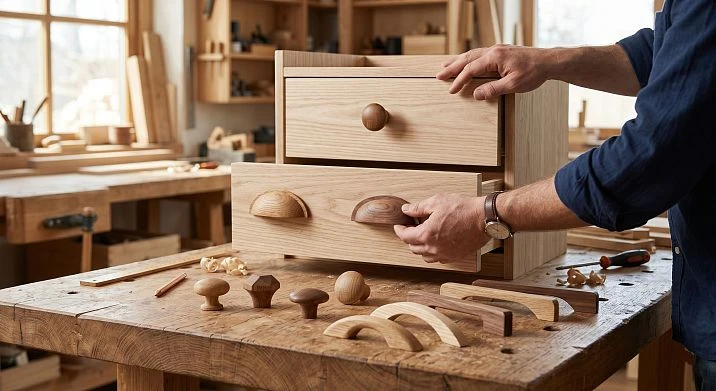
wooden furniture handles — this is the final touch in the story of every piece of furniture. The detail that is touched by hands every day. The one used to open, close, pull out, push in. And it is this detail that ultimately determines whether the furniture looks like a cohesive solution or a set of random compromises. Let's thoroughly understand the issue.
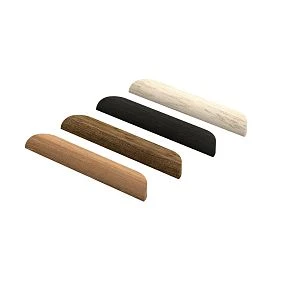
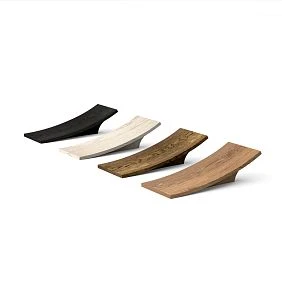
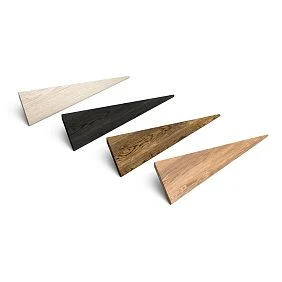
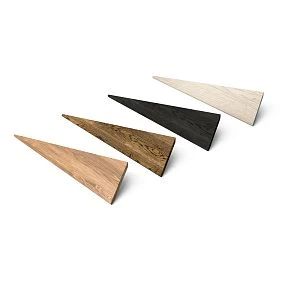
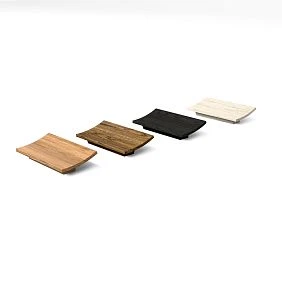
Short answer: what to choose — a knob handle or a pull handle
If you need a quick guide — here it is, without lengthy introductions.
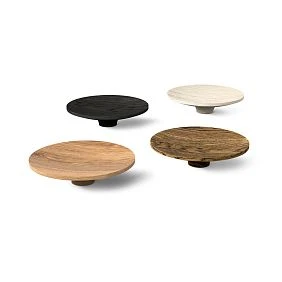
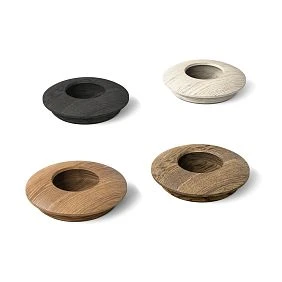
Wooden knob handle — for small fronts, lightweight drawers, nightstands, and dressers. When you need a compact, neat solution that does not visually overload the surface.
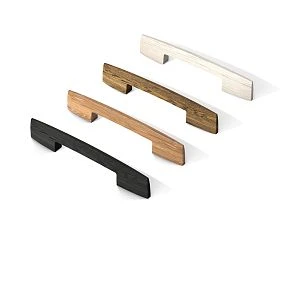
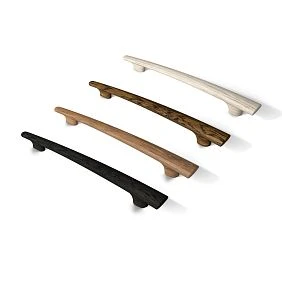
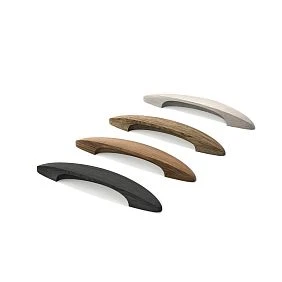
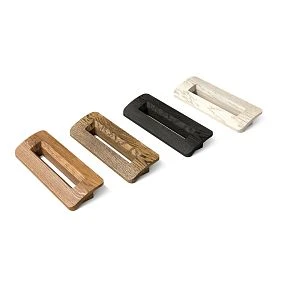
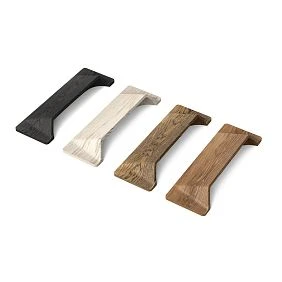
Wooden bracket handle — for cabinets, kitchen fronts, large drawers, and areas with frequent and intensive opening. The bracket provides a full hand grip — more convenient, practical, and reliable for regular use.
Wooden handle in any finish — when you need a warm, natural, and lively feel from contact with the furniture. Wood is not metal, not plastic: it is warm, organic, with a unique grain.
A shaped handle — for children's, themed, or custom furniture. A star shape, paw shape, or non-standard silhouette — all of this turns the handle from a technical detail into a decorative accent.
A handle for painting — if you are painting your furniture a single color and want the handles to become an extension of the front, not a contrasting element. The wooden base for paint accepts any coating.




How a knob handle differs from a bracket handle
The question seems simple — but the answer determines the ease of using the furniture for years to come.
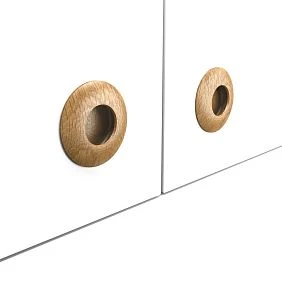
A knob — one attachment point. It is a protruding round or shaped element that is attached with one bolt through a hole in the front. Installation — one hole. No measurements of center distance, no marking of a pair of points.
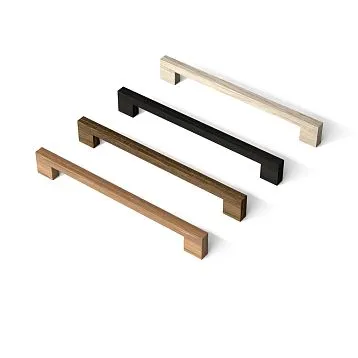
A bracket — two attachment points. An arched or rectangular profile with two attachment points. Between them is a fixed center distance (center-to-center): 64, 96, 128, 160, 192 mm — standard values. Marking for a bracket requires precision: both holes must be on the same horizontal line with the correct distance between them.
Visual weight. A knob is compact and point-like. A bracket is a horizontal line that emphasizes the width of the front. On a small drawer, a knob looks elegant. On a large cabinet door, a knob gets lost and looks insufficient. A bracket on a large front reads confidently.
Ergonomics. A bracket allows you to grip the handle with your entire palm — all four fingers under the profile. A knob is grasped with three fingers or two. For a light drawer, this is fine. For a heavy kitchen front that is opened hundreds of times a year — a bracket is more convenient.
Load. A knob transfers load through a single point in the center of the facade. With lateral force (which is always present when opening), this creates a moment of force relative to the attachment point. For a lightweight facade, this is not a problem. For a heavy one, a bracket with two attachment points distributes the load much better.
Style. A knob is a more playful, romantic shape. It is appropriate in Provence, Scandinavian style, children's room, bedroom. A bracket is more functional, strict. It is appropriate in the kitchen, study, modern or classic interior.
Our factory also produces:
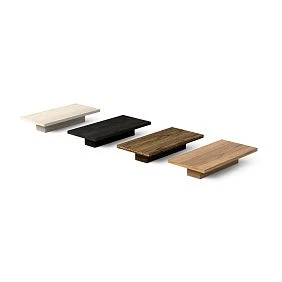
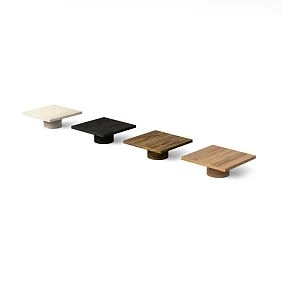
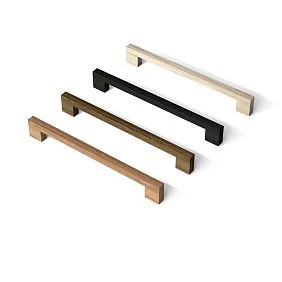
Where it is better to use knob handles
Get Consultation
For dressers and cabinets
A chest of drawers is a space of drawers of different widths. The lower drawers are wide, the upper ones are narrower. For the upper narrow drawers Button Handle — an obvious choice: neat, proportional, without excess. On the lower wide drawers, a knob is also used, but here an alternative is already possible — a small bracket.
For symmetry in a chest of drawers with three to five rows of drawers — identical knobs across the entire height look rhythmic and calm. This is a single vertical axis of handles that organizes the facade of the chest of drawers as an architectural plane.
A bedside table is an ideal place for a knob. A small drawer, a lightweight facade, a night area where large details are not needed. Wooden knob handle on a solid wood bedside table — a laconic, warm accent.
For small drawers
Narrow pull-out drawers — in a desk, a secretary desk, a small cabinet — are the button zone. A drawer up to 300 mm wide and weighing 1–2 kg does not require a power grip. The button handles it perfectly.
An important technical point: the button on a narrow drawer must be positioned exactly at the center of the facade horizontally. Even a shift of 5–8 mm is noticeable and creates a feeling of carelessness. During installation — marking, center, one hole.
For children's furniture
For children's furniture wooden knob handles — is one of the best options. A rounded shape without sharp corners, one attachment point without protruding ends. The child grabs the button with the whole palm — a natural, intuitive grip.
For children's rooms, shaped handles are also relevant: star for a themed space, paw for a playroom. These are decorative buttons in terms of attachment principle — but with a figurative shape that creates an atmosphere.
For decorative furniture
A small desk-bureau with one drawer. A secretary desk with a drop-down lid. A console with a thin drawer at the mirror in the hallway. Here Wooden Handle works as a jewelry accent — a small detail you look at every time you pass by. A button of the right size and shape on such an item is a point that completes the look.
Where is it better to use pull handles
For wardrobes
A cabinet is the most obvious case for a pull handle. A tall door, a heavy facade, frequent use. A person opens the cabinet with a full hand motion — wraps their fingers around the pull handle and pulls. Wooden bracket handle with a center-to-center distance of 128 mm — the standard for most cabinet doors.
The height of the pull handle placement on the door is an ergonomics issue. For an adult, the optimal height is 1,000–1,200 mm from the floor. This is the zone of natural hand movement when opening without bending. For a children's cabinet — 800–900 mm.
For a double-door cabinet — the pull handles on adjacent doors should be mirror-symmetrical: on the left door, the handle is on the right; on the right door, on the left. The distance between the ends of two pull handles at the door joint is 40–60 mm. Less — inconvenient to open both doors at once. More — visually breaks the perception of the pair.
For Kitchen
The kitchen is the record holder for the frequency of hardware use. Kitchen facades are opened hundreds of times a week: cabinets, drawers, tall units, wall-mounted modules. Here Handle-screw dominates — and not by chance.
A pull handle with constant use is more reliable than a button: the load is distributed over two points, there is no concentration of force at a single attachment point. For the kitchen under the sink, where facades get wet — a wooden pull handle with a water-resistant coating.
Style consideration: wooden furniture handles in a solid wood kitchen — an organic choice. Wood on a wooden kitchen creates a unified material system. Even if the kitchen is partially painted — wooden handles in the same enamel make them part of the facade.
For wall-mounted kitchen cabinets — brackets are placed horizontally along the bottom edge of the door. For floor cabinets — horizontally or vertically along the top edge of the drawer, at a level of 100–150 mm from the top of the facade.
For large drawers
A wide dresser drawer — 500–700 mm. A heavy drawer with bed linen or clothes — 3–5 kg. Such a drawer requires effort to pull out, especially if the guides are tight or slide unevenly. A push-to-open mechanism in this situation is technically a poor solution: the load is point-based, fingers slip off.
A bracket 96–128 mm on a wide drawer — the right solution. Fingers under the profile, even grip, pull along the axis — the drawer slides out smoothly. buy wooden handles in the form of brackets for a wide dresser — the first step towards making furniture comfortable.
For classic furniture
Wooden bracket handle with a soft profile in a classic interior — this is a historically justified solution. Brackets on furniture were used as early as the 17th–19th centuries — only then they were bronze. A wooden bracket in the same traditional form, under white enamel or under a dark solid wood tone — a translation of the classic form into natural material.
for classic furniture a wooden bracket works in tandem with decorative inlays on the facades, wooden legs и a wooden cornice above the cabinet. A unified wooden system — from the lower legs to the upper cornice, from the facade to the handle.
Why choose wooden handles
The question is not rhetorical — it has specific answers.
Natural appearance. Wood in the interior is a living material. Each handle has a unique grain pattern. Under clear varnish, an oak handle looks like a piece of jewelry: warm tone, fine texture, natural unevenness. No metal or plastic can replicate this.
Tactile superiority. Wood is warm in the literal sense: the thermal conductivity of wood is 10–15 times lower than that of steel. A metal handle in a cold room is an unpleasant contact. A wooden one is neutral, comfortable, natural temperature.
Possibility of any coating. uncoated wooden handles — a blank canvas. White enamel, cream paint, stain for dark walnut, matte varnish, oil — any option. This means: the handle can become exactly the tone needed for a specific interior.
Organic combination with wooden elements. If the room has wooden cornice, Skirting made of solid wood, wooden furniture legs — wooden handles complete the system. All wooden elements speak the same material language.
Compatibility with all styles. Classic, neoclassical, Provence, Scandinavian style, country, children's room, kitchen, study — a wooden handle is appropriate everywhere. The shape changes depending on the style, but the material remains organic in any context.
Repairability. A scratched wooden handle can be repainted or re-varnished. A metal one cannot. A darkened handle under enamel can be refreshed. This is an advantage that shows not at the time of purchase, but after several years of use.
Restoration potential. Old furniture with wooden handles is updated by simply replacing the hardware. buy wooden handlesremoving old ones, installing new ones — 20 minutes of work, and the furniture looks different.
How to choose the size of a furniture handle
Size is proportion. An error in proportion is immediately visible and cannot be corrected by anything other than replacing the handle.
The rule of proportion. The handle (button diameter or bracket center-to-center distance) should be 15–25% of the facade width. For a drawer 400 mm wide — a bracket 64–96 mm or a button with a diameter of 40–60 mm. For a drawer 600 mm — a bracket 96–128 mm. For a cabinet door 450 mm — a bracket 96–128 mm.
A small handle on a large facade. A button with a diameter of 30 mm on a cabinet door 500×800 mm is a proportion error. The handle gets 'lost' on the facade, does not create an accent, looks random. A button with a diameter of at least 50 mm or a switch to a bracket is needed.
A large bracket on a small facade. A bracket 160 mm on a bedside drawer 250 mm wide — the bracket covers most of the facade and looks bulky. For a narrow drawer — a button or bracket no more than 64 mm.
For a pair of doors. If the cabinet is double-door — both handles should be at the same height and at the same distance from the door joint. Marking is done simultaneously for both doors — with a ruler, not by eye.
For a furniture set. If you install Wooden Furniture Handles on several items in one room — a uniform size and type. Different handle sizes on a chest of drawers and a cabinet in the same bedroom — visual inconsistency.
Bracket arch height. In addition to the bracket length (center-to-center distance), there is the arch height above the facade surface. Standard: 20–35 mm. For a children's room — no more than 25 mm (less risk of catching on clothing). For a kitchen — 25–35 mm (more comfortable grip with wet hands).
How to choose handles according to furniture style
Style is context. The same wooden handle looks different in different contexts: in classic — appropriate, in minimalism — also appropriate, but a different shape.
Classic. Wooden handles for classic furniture — these are brackets with a soft relief profile or buttons with a decorative shape. For white enamel or dark walnut. Paired with turned wooden legs и decorative inlays. No sharp straight brackets — only smooth transitions.
Neoclassical. A more restrained version of the classic. Brackets with a laconic profile without extra relief — for white or cream enamel. Moldings from solid wood on the walls, Cornice above the cabinet and a wooden handle in the same tone — a unified white architectural system.
Provence. Light facades, worn tones, natural linen. A round wooden button under aged enamel — the perfect character. Can be combined with with wooden brackets for open shelves and light rails in wall decor.
Modern interior. Straight lines, neutral tones. A wooden bracket with a straight profile without relief or a cylindrical knob without ornament. Natural wood as the only decorative element on a clean facade is enough.
Scandinavian style. White + natural wood. A wooden knob or bracket without coating — under matte varnish — on a white facade. The contrast of natural wood and white surface is a characteristic Scandinavian technique.
Children's room. Rounded knobs, shaped handles. Wooden handles for children's furniture — safety first. Rounded corners, high-quality sanding, moderate protrusion above the facade.
Restoration. Here the task is to match the original style of the furniture. An antique sideboard from the late 19th century requires a decorative bracket with a historical shape. A kitchen set from the 1990s requires a neutral bracket or knob. Wooden handle without coating + tinting to match the original — standard restoration scheme.
How to combine handles with other furniture decor
A handle is a detail that works in a system. Let's consider the system completely.
Handles and legs. wooden furniture legs and wooden handles are the most obvious pairing. The handles of an oak chest of drawers under white enamel and oak legs under the same enamel: the top and bottom of the piece are designed in a unified logic. This vertical pairing creates a furniture ensemble.
Handles and overlays. decorative elements for furniture — corner rosettes, central overlays, frame elements — made of the same wood species as the handles. With a single paint finish, this is automatically achieved. With a natural finish, it is important to match the wood species: oak with oak, beech with beech.
Handles and cornice. wooden cornice above the cabinet or above kitchen wall units — the upper horizontal of the system. Handles on the facades — the middle zone. Legs — the lower one. All three levels from the same material and in the same tone — this is a vertical architectural system.
Handles and brackets. decorative bracket for open shelves next to the cabinet — from the same wood as the handles on the cabinet. An open shelf with a wooden bracket becomes part of the overall decor, not a random addition.
Handles and slats. Wooden planks in wall decor — a vertical rhythm. If the slats and handles are from the same wood, the wall decor and furniture hardware merge into a single wooden context of the room. This creates a space where everything is coordinated.
Handles and trim. Wooden molding for frame design of facades — thin profiles creating rectangular frames on flat doors. The handle inside the frame is the central accent of the decorative panel. Layout + overlay + handle — a three-layer facade decor in a classic style.
Handles and baseboard. with a classic profile creates a sense of solidity, reliability. from the same wood as the handles — the lower horizontal of the entire space. When the baseboard, furniture legs, and handles are from the same wood, the lower tier of the room becomes unified.
Handles and baguette. Wooden Picture Frame for frames of paintings and mirrors — another element of the wooden system of the space. A mirror frame from the same oak as the cabinet handles next to it — furniture and decor speak the same language.
The principle of non-saturation. Important note: there should not be too many wooden elements on one piece of furniture. Legs + handles are enough. Legs + handles + overlays + layout + bracket on one cabinet is already overload. Decor should be dosed.
Handles for furniture restoration
This is a separate case that requires its own approach — and its own logic of choice.
Furniture restoration with handle replacement is the cheapest and fastest way to change the appearance of an item. Sometimes this alone is enough.
Step one: assess the body. If the body is sturdy, without cracks, delaminations, or surface damage — restore, not replace. New handles provide 60–70% visual renewal at minimal cost.
Step two: remove the old handles. The bolt is unscrewed from inside the drawer — the handle is removed. The hole remains. If the new handles are of the same type (button or bracket with the same center distance) — the new ones fit into the same holes. If the type changes — the old holes are puttied, new ones are drilled.
Step three: choose wooden handles to match the color or paint. Uncoated wooden handle — the optimal choice for restoration. It can be painted any color, tinted to match the original furniture tone, or coated with the same varnish as the entire body.
Step four: add new legs. Buy legs for furniture wooden — replace plastic or metal supports with wooden ones. This is the next level of upgrade: new handles + new legs — the furniture has completely changed its character.
Step five: design the facades. Wooden molding on flat doors creates a frame effect. Decorative Inserts — the central accent. All this together with new wooden handles is a complete transformation without replacing the body.
Financial argument. A set of wooden handles + legs + overlays will cost several thousand rubles. A new chest of drawers or wardrobe costs tens of thousands. Restoration with replacement of wooden fittings is not a compromise. It is a thrifty attitude towards good things that still serve.
Mistakes when choosing furniture handles
An honest list — without unnecessary words.
Choose only by photo. The photo does not convey the size, does not show the quality of sanding, does not give a tactile feel. Before buying — measure the facade, check with the dimensions in the description.
Not considering the size of the facade. The proportion of the handle and the facade is the first thing the eye sees. An incorrect proportion destroys the entire visual image of the object.
Putting a knob on a heavy wide drawer. Technically incorrect and inconvenient. The knob is designed for light facades. A wide, heavy drawer requires a pull.
Choosing a bracket that is too long for a small cabinet. A 128 mm bracket on a 200 mm wide drawer — the bracket takes up 64% of the facade width. This is grotesque.
Not checking the center distance. A bracket with a center distance of 128 mm will not fit into holes spaced 96 mm apart. This is obvious, but it is constantly forgotten. Always measure the distance between existing holes before ordering.
Mixing handles of different styles. A wooden shaped knob on a chest and a metal minimalist bracket on a cabinet in the same room — a style conflict. Everything in one room — in one solution.
Not matching handles with legs. Wooden handles and plastic legs — this is not a system. A system is when both handles and legs are made of the same material in the same style.
Forgetting about coating before installation. If handles need to be painted — paint them before installation. After installation, it is impossible to fully paint a handle (especially at the bolt exit point). All sides must be coated — including the back.
Buying exactly the required quantity without a reserve. One handle may be defective (burr, crack, uneven sanding). A 10–15% reserve of the quantity is insurance.
What to buy together with wooden handles
Handles start the system. What completes it?
wooden furniture legs — the lower accent of the item. Made from the same wood species as the handles. Buy legs for furniture without coating and paint together with the handles — a unified wooden furniture system.
Decorative Inserts — wooden decor for facades. Corner elements, rosettes, central overlays. Paired with handles from the same wood species, they form a decorative facade ensemble.
decorative bracket — for open shelves above furniture. A wooden bracket from the same series as the handles connects open and closed storage into a unified look.
Wooden plank — for vertical wall decor or facade design. Combined with wooden handles — a single wooden motif in the space.
Wooden molding — for frame-style facade design. Wooden rectangular frames on doors + a wooden handle inside each frame — classic furniture decor.
Wooden Picture Frame — for mirror and picture frames. In a unified system with handles and overlays — a complete wooden ensemble for the space.
wooden cornice — above a cabinet or kitchen modules. Completes the furniture ensemble from above, creating an architectural crown over the cabinet.
Moldings from solid wood — for wall panels and decorative belts. In a unified system with handles, cornices, and baseboards — a complete architectural wall finish.
with a classic profile creates a sense of solidity, reliability. — the lower horizontal of the entire space. Made from the same wood species as the handles — closes the wooden system from below.
FAQ: Answers to popular questions
What is better: a knob handle or a pull handle?
For small drawers of chests and nightstands — Wooden knob handleFor cabinets, kitchen fronts, and wide drawers — Wooden bracket handle. A handle is more convenient for frequent use and on heavy fronts — you grip it with your whole hand, distributing the load across two attachment points.
Which wooden handles to choose for a chest of drawers?
For narrow top drawers — knobs with a diameter of 35–50 mm. For wide bottom drawers — handles 96–128 mm. Within one chest of drawers, it's better to use one type of handle: either only knobs or only handles — for a unified visual rhythm.
Which handles are best for a wardrobe?
wooden furniture handles In the form of handles — optimal for a wardrobe. Center-to-center distance 96–128 mm, arc height 20–30 mm, placement at a height of 1,000–1,200 mm from the floor. For a classic wardrobe — a handle with a soft relief profile to match enamel or the tone of solid wood.
Can wooden handles be painted?
Yes — and this is the main advantage of wooden handles over metal ones. handles without coating paint before installation: sanding, primer, 2–3 coats of acrylic enamel. Tinting — stain, then varnish. Natural look — matte or semi-matte varnish. Can be painted in any color to match the front.
How to update furniture with handles?
Remove old handles, install new wooden ones — that's the first level. Complement: Wooden legs, Decorative Inserts, Wooden molding on the facades. If desired, repaint the facades. The effect is a complete transformation of the furniture without replacing the body. This is economical, environmentally friendly, and often more effective than buying new.