








































































Article Contents:
- What to evaluate when buying slatted panels: criteria that matter
- First criterion: substrate material
- Second criterion: quality of the face covering
- Third criterion: module geometry accuracy
- Fourth criterion: seamless rhythm when joining
- Fifth criterion: availability of additional elements
- Sixth criterion: format and logistics
- Seventh criterion: manufacturer reputation
- What polyurethane stucco decor is really needed
- What is polyurethane decor from a technical perspective
- Assortment: what exists and why
- Bad decor: how to recognize it
- How to combine slatted panels and polyurethane decor in one project
- The principle of a unified system
- Three practical schemes
- Installation order: why sequence is crucial
- Which materials are suitable for residential interiors: an honest classification
- By room zones
- By interior style
- What not to skimp on: five items that determine the outcome
- First: MDF density
- Second: adhesive for decorative molding
- Third: additional elements
- Fourth: acclimatization
- Fifth: professional consultation before ordering
- Mistakes of quick purchases: analysis of real situations
- First mistake: buying from a photo without a sample
- Second mistake: estimating quantity 'by eye'
- Third mistake: ignoring rhythm when joining
- Mistake four: decor without architectural context
- Mistake five: mixing styles of stucco decor
- Mistake six: skimping on packaging during delivery
- Slatted panels in specific rooms: what and where
- Living Room
- Bedroom
- Entry Hall
- Kitchen
- Office and Library
- Technical parameters: decision-making table
- FAQ: answers to the most frequently asked questions
- About the Company STAVROS
Buying finishing materials is not a commercial transaction. It is an architectural decision, the consequences of which you will see every day for the next ten years. That is why the question 'where to buy slatted panels in Vitebsk' is only half the task. The second half is to understand what exactly to buy, why, in what execution, and how it will combine with polyurethane stucco decor, if that is also part of the project.
This article is not an advertisement. It is an honest conversation about how to avoid costly mistakes when choosing materials for walls and ceilings. About which parameters actually affect the result, and which are just marketing words. About where saving is appropriate, and where it will result in rework in six months.
Read carefully. There is no filler here.


What to evaluate when buying slatted panels: criteria that matter
The market for slatted panels today is extremely wide. Manufacturers from Russia, China, Europe, Belarus. Formats from 600×300 mm to 3000×600 mm. Materials from plastic to solid oak. Prices differing tenfold. How to navigate this and not buy something that will disappoint even before installation is complete?
The answer lies in understanding the criteria. There are seven. Each is important.


First criterion: substrate material
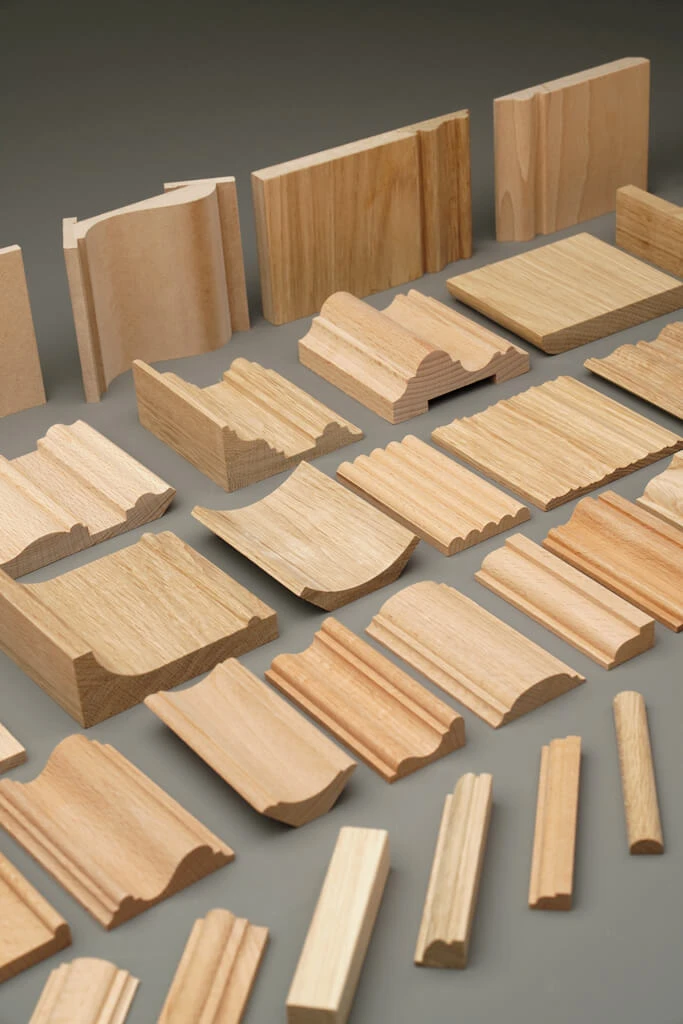
The substrate is the load-bearing base of the panel to which the slats are attached. It determines how the panel will behave under changes in humidity and temperature, how accurately it will maintain its geometry, and how reliably it will accept fasteners.
High-density MDF (from 750 kg/m³) is the best choice for residential interiors in dry areas. Boards with a density below 680 kg/m³ are unstable: they delaminate under humidity fluctuations, lose geometry, and slats begin to detach. This is not a scare tactic—it's a technical fact. Ask the seller for the MDF density. If they can't answer, that's a red flag.
Solid wood is for those who chooseWooden slat panelsfor the living natural texture that cannot be imitated. Oak, ash, pine—each species has its own fiber plasticity. Solid wood requires mandatory acclimatization in the room before installation—at least 48 hours at operating temperature and humidity.
WPC (wood-polymer composite) is the only sensible choice for areas with constant moisture: bathrooms, balconies, verandas.DCP slatted panelsare fundamentally not afraid of water—no swelling, no delamination, no fungus.
Our factory also produces:




Second criterion: quality of the surface finish
The surface finish is what you see every day and touch with your hands. Three things are important here: the adhesion of the finish to the base, resistance to mechanical damage, and the possibility of subsequent painting.
paintable slatted wall panels— that's a separate story. Good paintable MDF has a primed surface with minimal porosity. Paint applies evenly on such a base, without spots, without the need for four coats. Bad paintable MDF has a rough, porous surface that soaks up paint like a sponge. You can tell by touch: the surface should be smooth, almost slippery.
Veneered slats are a separate conversation. Veneer can be 0.3 mm and 1.2 mm thick. Thin veneer wears through to the MDF with mechanical damage. Thick veneer is restorable. Clarify the thickness.
Get Consultation
Criterion three: module geometry accuracy
Geometry is what determines the cleanliness of joints. If a module is not rectangular with an accuracy of ±0.5 mm — when installing several pieces, the joints will 'drift'. Result: visible gaps or steps on the surface.
It's simple to check: take two modules, press their ends together, and look at the joint. If it's perfectly even — the geometry is fine. If there are gaps or waves — it's defective.
Criterion four: seamless rhythm when joining
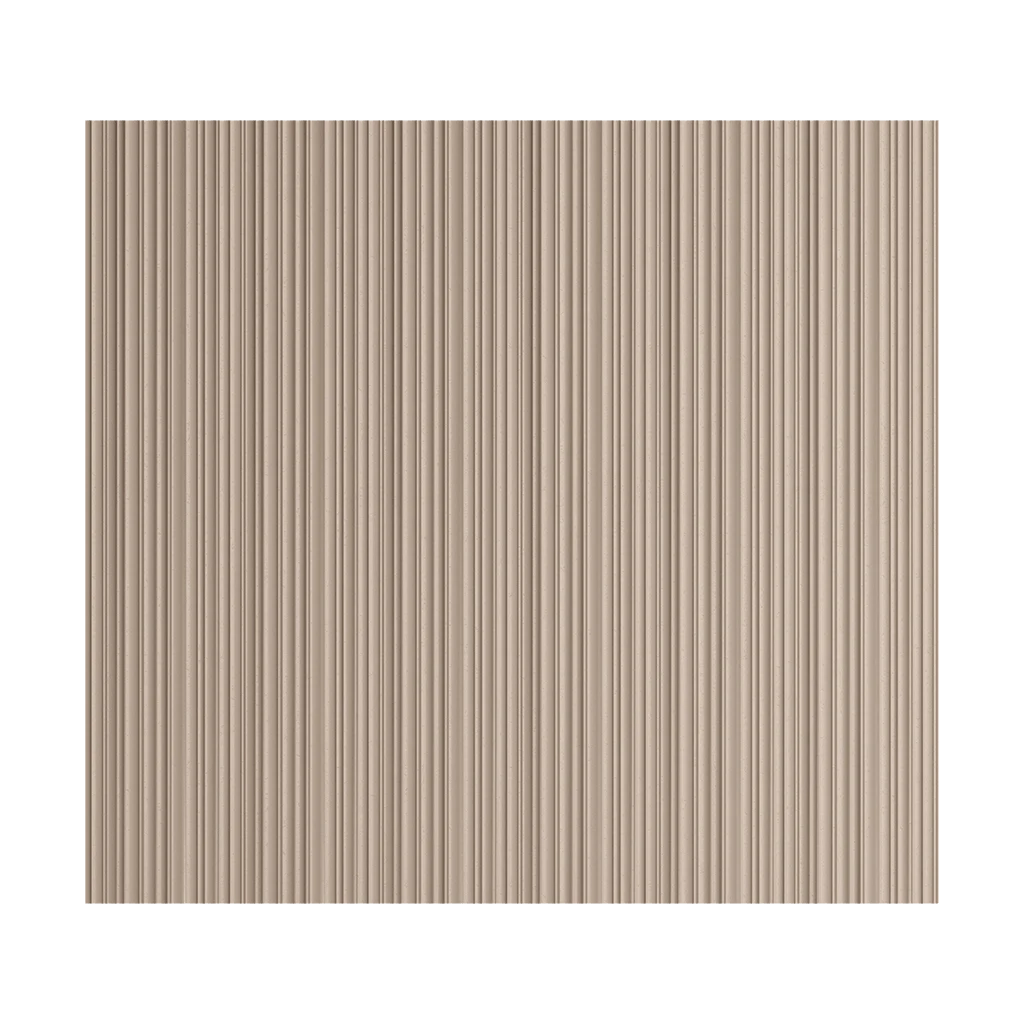
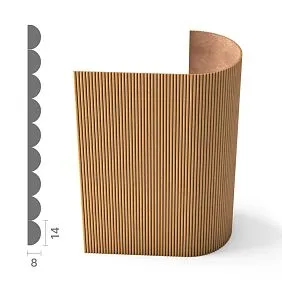
slatted modular wall panelA good manufacturer ensures a continuous slat rhythm when joining modules: the outermost slats of adjacent panels form the same pitch as the inner ones. A bad product creates a double slat or a double gap at every joint — and the rhythm breaks exactly where you want to see it continuous.
This is a parameter you need to clarify before ordering. Ask directly: 'Will the slat rhythm be continuous when joining modules?' If the answer is uncertain — look at samples.
Criterion five: availability of accessory elements
Accessory elements are corner trims, end strips, starter and finishing profiles. Their availability in the manufacturer's range indicates you're dealing with a system, not just 'panels'.
Without extension pieces, installation will inevitably face the need to invent solutions at corners, baseboards, and door frames. These solutions always look worse than factory-made extensions. Always.
Important: when ordering panels, immediately calculate the extension elements as well. Not 'I'll buy them later'—exactly right away, in one order. Different batches may vary in color—even within the same article number.
Criterion six: format and logistics
Standard formatsslatted wall panels— 2400×600 mm, 2700×600 mm, 3000×600 mm. A longer format means fewer transverse joints on the wall. This is important for large surfaces.
When ordering with delivery, consider: long panels are transported in special packaging. Damage during transportation is one of the most common reasons for complaints. Demand packaging with corner protectors and rigid external crating.
Criterion seven: manufacturer reputation
Here everything is simple. A manufacturer that has been on the market for more than five years and publicly presents its product with technical specifications is more reliable than an anonymous supplier from a marketplace. A well-known manufacturer has something to lose and values quality. An anonymous one does not.
Which polyurethane molded decor is really needed
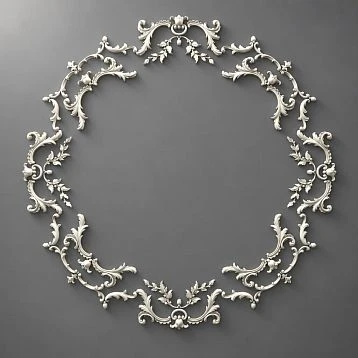
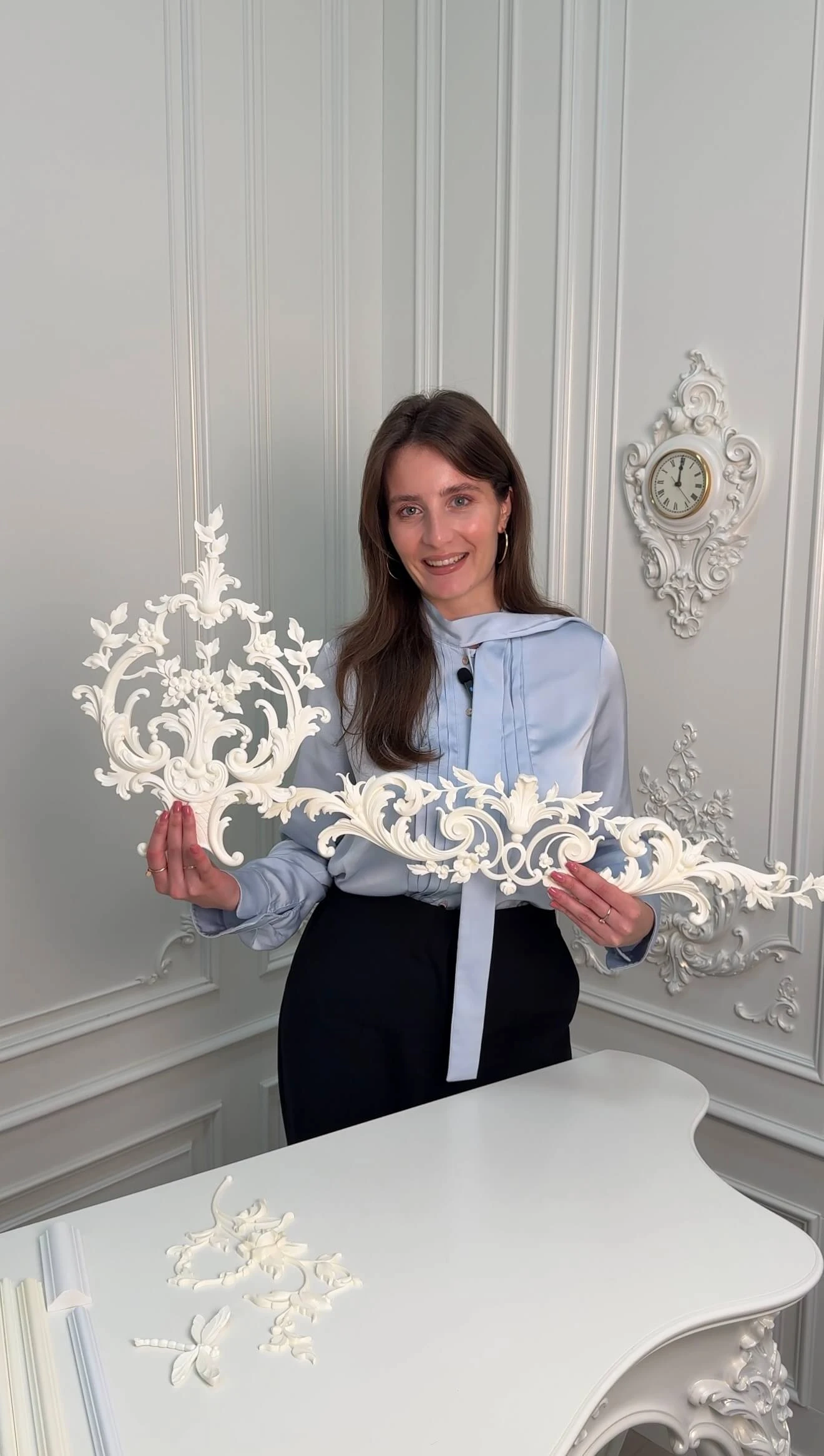
The second material of our topic—molded decoration made of polyurethaneAnd here, too, it's worth clarifying right away: not all decor is equally useful. There is what truly works in an interior, and there is what creates a sense of excess.
What is polyurethane decor from a technical point of view
Online store of polyurethane molding offers a wide range of products: cornices, moldings, belts, corner blocks, rosettes, pilasters, frames, architraves. All are made from high-density expanded polyurethane—a material with a closed-cell structure.
Key properties that make polyurethane decor preferable for most residential projects:
-
Density 80–120 kg/m³ — sufficient rigidity with minimal weight. A linear meter of cornice weighs 300–500 grams. Installation without lifting equipment and without reinforcing ceiling structures.
-
Closed porosity — the material does not absorb water. This means: shape stability with changes in humidity, suitability for use in kitchens and bathrooms.
-
Precise factory geometry — the profile is consistent from start to end of a linear meter and from batch to batch. Joints are practically invisible with proper installation.
-
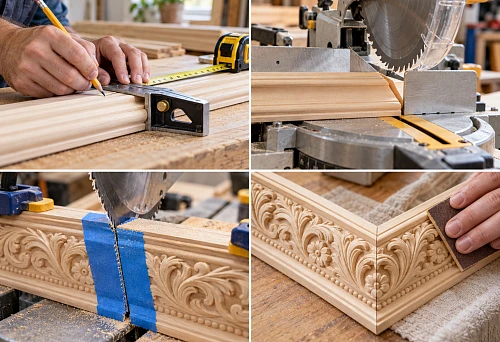
Easy processing — polyurethane can be cut with a regular hacksaw for metal or a miter saw. The cut is clean, without crumbling.
-
Paintability — any water-based or alkyd paint applies evenly. The surface is smooth enough to do without primer, although priming improves adhesion.
Range: what is available and why
Ceiling cornices. The main element. Hides the wall-ceiling transition, masks imperfections, creates an architectural horizontal line. Profile height from 30 to 150 mm — suitable for any room scale. Rule: cornice height (in mm) ≈ ceiling height (in cm). Ceiling 270 cm — cornice 50–70 mm.
Moldings and friezes. Horizontal strips on walls. Divide the wall into three parts: lower field, middle zone, frieze under the ceiling. Act as a boundary between finishing zones — for example, between paneling and a painted surface.
Corner blocks. Decorative elements at the intersection of cornices or moldings in external and internal corners. Eliminate the need for precise miter cuts — installation is significantly easier.
Ceiling rosettes. Decorative elements around a chandelier or recessed light fixture. Act as a visual 'anchor' on the ceiling — especially important in rooms without central lighting, when the only chandelier is not in the geometric center.
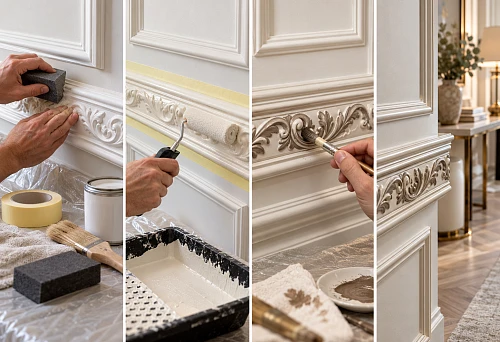
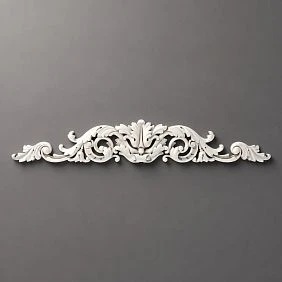
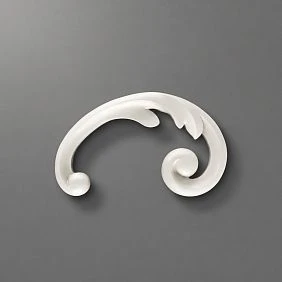
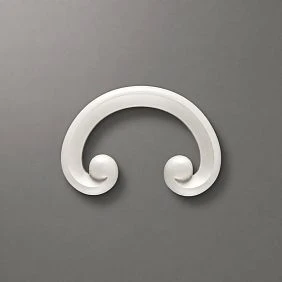
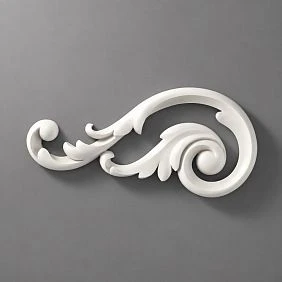
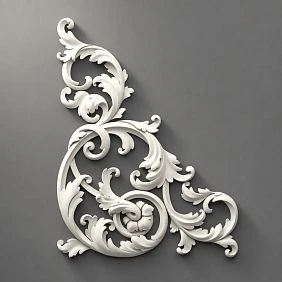
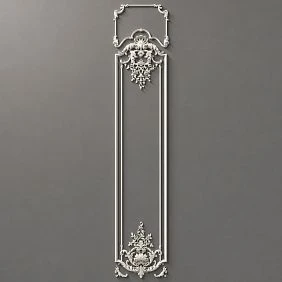
Frame overlays and cartouches.Buy Polyurethane Molded Decoration in the form of framing systems — means gaining the ability to create architectural panels on the wall: rectangular or shaped frames, inside which a painted surface, wallpaper, or fabric is placed. A classic technique that works in any style from Empire to modern neoclassicism.
Pilasters and columns. Vertical decorative elements imitating architectural structures. Suitable for formal spaces: halls, offices, meeting rooms.
Bad decor: how to recognize it
Low-quality polyurethane decor is distinguished by several signs:
-
Lightness when pressed. Good polyurethane with a density of 80+ kg/m³ does not dent when pressed with a finger. Soft, springy material indicates low density, fragility, and shape instability.
-
Blurry profile. A good cornice has sharp, precise edges. A blurred, 'smeared' relief is a sign of a cheap mold or incorrect technology.
-
Odor. Good polyurethane does not have a sharp chemical smell. A strong odor is a sign of a violation of production technology.
-
Delamination of the surface layer. The surface of a quality product is uniform along its entire length. If delamination or cracks are already noticeable in the packaging, it is a defect.
How to combine slatted panels and polyurethane decor in one project
This is where many make a key mistake — they buy materials separately, without thinking about how they will interact in the space. And then they are surprised: everything is good individually, but together — it's not right.
Principle of a unified system
The slatted panel and polyurethane decor should belong to a single design system. This means: coordinated scale, a unified color story, logical spatial hierarchy.
Scale. The width of the slats and the height of the molding profile should be proportionate. Thin slats 25–30 mm — thin molding 20–30 mm. Massive slats 60–80 mm — rich cornice 80–120 mm. A mismatch in scale creates discomfort that is difficult to put into words but easy to feel.
Color. Three options that work flawlessly:
-
White for everything — panels for white paint, white molding, white ceiling. A unified monochrome field with expressiveness through relief and rhythm.
-
Contrast — dark battens, white decor. A classic and very convincing technique: a natural or dark-lacquered wall, white cornices and moldings as architectural lines.
-
Neutral background — neutral wall color, tinted battens, decor matching the wall tone. The decor almost dissolves, leaving only the architectural structure.
Hierarchy. The batten panel is a plane. Molded decor is a border, frame, transition. The panel speaks the language of rhythm and texture. The decor speaks the language of line and volume. They should not compete — one works as content, the other as framing.
Three practical schemes
Scheme 'wall with history'. Batten panels occupy the lower third of the accent wall — from the floor to a height of 100–120 cm. Along the top edge — a polyurethane molding strip. Above — a painted surface up to the ceiling. The ceiling cornice completes the entire structure. Result: a three-part wall with a clear horizontal structure.
Scheme 'frame around a niche'.Slatted wall panel on the back surface of the niche. Molding around the perimeter of the niche. Lighting inside. Result — the niche turns into an architectural object, not just a recess.
Scheme 'full accent wall'. Batten cladding over the entire height of one wall — from the baseboard to the ceiling. Ceiling cornice around the entire perimeter of the room. No molding on the batten wall itself — here the accent is made through material, not through division. The cornice completes and frames.
Installation order: why sequence is crucial
Always — first batten panels, then decor. This is not a recommendation. It is a technological requirement.
Slat panels are mounted to the wall and ceiling — their ends need to be covered. Molded cornices and moldings cover these ends, hide transitions, and create clean lines. If done the other way around — the cornice will have to be removed or the panels trimmed to fit the already installed molding. This is a loss of material, time, and nerves.
installation of slatted panelsmust be fully completed — including corner trims and extensions — before the installation of molded decor begins. Only then will the cornice fit precisely, the joints will be clean, and the entire system will look like a single whole.
Which materials are suitable for residential interiors: an honest classification
Not every material sold as 'slat panels' is equally suitable for residential spaces. Let's set the record straight.
By room zones
Living room and bedroom. The best choice isMDF Plank Panelsor solid wood. MDF offers color freedom, solid wood — a living texture. Both materials are stable under standard living room conditions: humidity 40–60%, temperature 18–25°C.
Hallway and corridor. Here, resistance to mechanical impacts is important — bags, umbrellas, children's bicycles. Solid wood is preferable to MDF: it is stronger and restorable. If you choose MDF — the coating should have a hard lacquer, not wax.
Kitchen. Only outside the work zone with steam — in the dining area, on the wall opposite the stove. MDF with a moisture-resistant coating or solid wood under lacquer.Slatted panels in the kitchencreate an atmosphere unattainable with either tiles or paint — especially in a wooden finish.
Bathroom. Only WPC or special moisture-resistant PVC. Regular MDF and solid wood without special treatment won't last in the bathroom.
Children's room. The most important criterion is environmental purity. MDF of emission class E0 or E1 (formaldehyde is practically absent). For a child's room, natural solid wood with natural oil-wax is optimal — without synthetic varnishes and solvents.
By interior style
Minimalism.paintable slatted wall panelsIn the tone of the wall. Thin flat molding on the ceiling. One color for everything — rhythm is expressed through light and shadow, not through material contrast.
Scandinavian style.Wooden slat panelsMade of pine or oak with light oil. Natural texture without excessive processing. Molded decor is minimalistic or completely absent.
Modern classic. Three-part wall with slatted panels in the lower zone and a rich cornice near the ceiling — a classic technique that works regardless of fashion waves.
Contemporary. Dark slats on a white wall or white slats on a dark one — contrast as the main technique. Molded decor in a restrained execution: a thin horizontal line of molding as a structural, not a decorative element.
What you shouldn't skimp on: five items that determine the result
Saving on repairs is a reasonable thing. But there are items where saving inevitably backfires. Here they are.
First: MDF density
Cheap panels are made from MDF with a density of 550–620 kg/m³. They are cheaper, lighter, and unstable when humidity changes. After a year of use, such panels warp, battens come loose, and joints separate. Redoing it will cost more than if you had bought quality material from the start.
Second: adhesive for molding decor
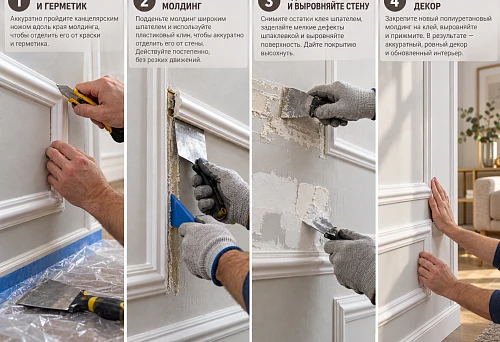
Polyurethane cornice is glued with mounting adhesive. Cheap adhesive has insufficient adhesion to polyurethane — after a year, the cornice will start peeling off the ceiling, especially in corners. Use adhesive recommended by the molding manufacturer, or adhesive with proven adhesion to polyurethane.
Third: additional elements
The temptation to save on corner overlays and end trims is understandable: they are small and seem insignificant. But they determine the cleanliness of the final result. A corner without an overlay is an open MDF end that warps, gets dirty, and looks unfinished.
Fourth: acclimatization
This is not a material purchase, it's a time resource. But if ignored — wooden panels will deform after installation due to changes in moisture content. 48 hours before installation is the minimum. In winter with heating on — 72 hours.
Fifth: professional consultation before ordering
One phone call to a qualified manufacturer's manager can save a significant amount. They will help correctly calculate the material quantity considering trimming, choose the right format for the specific room, and avoid ordering incompatible items.
Quick Purchase Mistakes: Analyzing Real Situations
A quick purchase during renovation is almost always an expensive purchase. Let's examine the most common scenarios.
First mistake: buying from photos without a sample
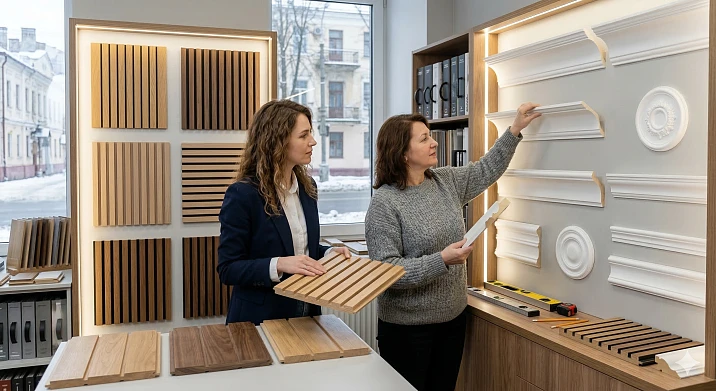
Monitors lie. The color on screen and the color in real life are two different realities. This is especially true for wood textures: what looks like warm walnut in a photo may turn out to be a cold gray-brown in reality. Before ordering a large batch, order a sample. It costs little and completely eliminates color disappointment.
Second mistake: estimating quantity 'by eye'
'I need one wall 4×3 meters, so 12 square meters.' No. You need 12 square meters plus at least 12–15% for trimming at the floor, ceiling, and openings. Total — at least 13.5–14 square meters. Plus — additional elements for corners and ends. Underestimating when ordering leads to buying material from a different batch — and the color may not match.
Third mistake: ignoring rhythm when joining
Wall slat panels in interiorPanels work as a single field — only when the rhythm of the slats is continuous across the entire surface. If at every module joint the rhythm is broken by a double slat or a double gap — the wall turns into a set of separate fragments. Check this parameter before ordering.
Fourth mistake: decor without architectural context
Buy Polyurethane Molded DecorationBuying a cornice and attaching it arbitrarily is not design. Every decorative element should solve an architectural task: cover a transition, structure a surface, create a frame. Decor for the sake of decor, without a logical connection to the space, looks like an accident.
Mistake five: mixing styles of stucco decor
A sleek modern molding in one corner and a rich Baroque cornice in another—this is not variety. It is stylistic inconsistency that disrupts the integrity of the interior. Choose one profile style for the entire space.
Mistake six: skimping on packaging during delivery
Slatted panels that arrive with damaged corners or dents on the surface are unsuitable for installation. When ordering with delivery to Vitebsk or Minsk, request packaging with corner protectors, rigid sides, and air bubbles between modules. Additional expenses for packaging are insurance against a complete reorder.
Slatted panels in specific rooms: what and where
Living Room
Accent wall—behind the sofa or behind the TV.Slatted panels in the living room interiorThey are most effective here: the gaze lingers on this wall the longest, and it forms the first impression of the room. The other three walls are neutral.
Ceiling cornice along the entire perimeter of the living room is a mandatory element when there is a slatted accent wall. It creates a horizontal link between the slatted accent and the neutral walls, preventing the accent wall from 'falling out' of the overall picture.
Bedroom
slatted panels in the bedroomBehind the headboard of the bed—this is an architectural answer to the question 'how to make the bed the main object in the room.' The panel creates a background, the molding along the top edge—a frame. The result is better than any other solution in the same price category.
For the bedroom, a warm color is preferable: natural wood with light oil, warm beige, or linen for painting. Cold gray tones are suitable for offices—in the bedroom, they create tension instead of relaxation.
Entryway
Slatted panels in the hallway interiorThe lower section of the wall serves a practical purpose: protecting the surface from mechanical damage. A molding strip along the top edge completes this zone. Above it is a painted wall or mirror.
In narrow hallways, the vertical rhythm of slats visually raises the ceiling. In wide entryways, horizontal slat installation is an unconventional technique that adds width to the space.
Kitchen
The dining area is the best place forslatted panels in a kitchen interior. Outside the zone of direct contact with steam and splashes, a slatted wall creates an atmosphere unattainable with ordinary tiles or paint. A wooden backdrop behind the dining table always brings warmth and coziness.
Office and library
It is hereslatted panels for wallsmade of solid oak with a dark oil finish reveal their full potential. Dark oak, a leather armchair, a table lamp—this is timeless interior classic. A ceiling cornice with a stepped profile completes the space and adds a sense of prestige.
Technical parameters: a decision-making table
| Parameter | MDF for painting | Solid oak | DPC |
|---|---|---|---|
| Areas of application | Dry residential premises | Residential premises, offices | Bathrooms, balconies, facade |
| Moisture resistance | Low | Medium (with coating) | High |
| Color freedom | Maximum | Limited by tinting | Limited |
| Restorability | No | Yes | No |
| Ecological | E0–E1 | Maximum | Medium |
| Cost | Low–medium | High | Medium |
| Acclimatization | Not required | Mandatory 48 hours | Not required |
FAQ: answers to the most frequently asked questions
Is it possible to buy slatted panels in Vitebsk with delivery from Russia?
Yes. The company STAVROS delivers products to all regions of Russia and to neighboring countries, including Belarus. Delivery is carried out by transport companies with professional packaging. Orders are placed online.
Slatted panels Minsk — is there any point in looking specifically there?
The local market offers what is in stock. Manufacturing companies with a wide range work remotely — and often offer a better price-quality ratio than local retail stores. When ordering online with photos and samples, you receive full product information before purchase.
What glue to use for a polyurethane cornice?
Mounting adhesive with good adhesion to porous materials — 'liquid nails' on a polyurethane or acrylic base. Silicone adhesive is not suitable: it does not provide a rigid connection. The adhesive is applied in a zigzag along the entire length of the profile, the cornice is pressed and fixed with painter's tape for 20–30 minutes.
How to avoid gaps at the joints of a plaster cornice?
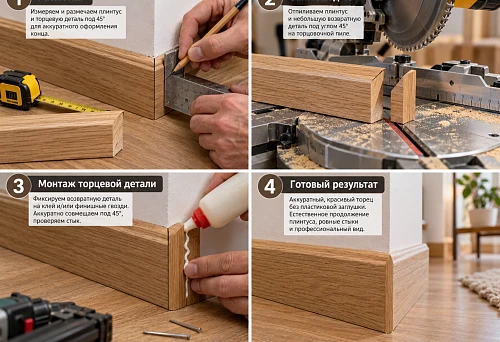
Precise 45° cutting with a miter saw is a must. The joint is filled with acrylic putty after installation, sanded with fine sandpaper, and painted. A properly executed joint is practically invisible after painting.
Wall paneling — how to correctly calculate the quantity?
Measure the area of the surfaces to be finished. Subtract the area of openings (doors, windows). Add 15% for cutting. Divide by the area of one module. Round up. Separately calculate the linear meters of additional elements: corner trims by the number of corners, end strips by the perimeter of the paneled area.
Can ISlatted panels for the ceilingglue without a frame?
On a perfectly flat ceiling — yes, with adhesive and additional fasteners. If there are level differences of more than 5 mm — only via a frame. For the ceiling, fastener reliability is crucial: panels are under constant load from their own weight, and insufficient fastening will show itself after a year.
WhatTypes of slat panelsbest suited for an apartment with children?
Solid wood with natural oil-wax finish — the most eco-friendly option without volatile chemical compounds. MDF with emission class E0 — the second most eco-friendly. The main condition: after installation, at least 72 hours of ventilation must pass before children enter the room.
soft slat panels— what are they for?
For non-standard surfaces: arches, columns, rounded corners, vaulted walls. The flexible backing allows it to follow any shape without complex cutting. Used where a regular rigid panel physically cannot be installed evenly.
About the company STAVROS
When you face the task of buying slatted panels in Vitebsk with a quality guarantee and the ability to select a complete set of materials — including molded decor, additional elements, and trim — the solution is obvious.
STAVROS is a Russian manufacturing brand specializing in architectural materials for interior finishing. The STAVROS catalog features:
-
Buy slatted panels for walls— MDF, solid oak, WPC, in a wide range of formats, colors, and textures
-
molded decoration made of polyurethane— cornices, moldings, frames, rosettes, overlays for any interior style
-
Polyurethane molding— skirting boards, cornices, belts for all types of premises
-
Pogonazh iz massiva— wooden additional elements for final finishing
STAVROS works with orders from Vitebsk, Minsk, and all of Belarus. Delivery with professional packaging, technical consultation on material selection and quantity calculation — all this is available when placing an order on the website.
Materials that won't disappoint after installation start with the right supplier. STAVROS is the choice that doesn't need redoing.