Article Contents:
- What are WPC slat panels
- Where are WPC slat panels used
- Building facades
- Terraces and decking
- Entrance groups and canopies
- Open balconies and loggias
- Commercial exteriors and architectural objects
- Fences, railings, pergolas
- Technical and semi-open areas
- WPC slatted facade panels: what you need to know
- Thermal Expansion
- Fastening system
- Ventilation gap
- Color and ultraviolet
- Panel ends
- Pros and cons of WPC slatted panels
- What is WPC material from the inside
- WPC, MDF or wood: what to choose for the task
- When WPC is not the best choice
- Accent wall in the living room
- TV area with backlighting
- Interior with moldings and decor
- Project with precise color
- Bedroom with slatted panel headboard
- Commercial interior with premium aspirations
- What to replace WPC with in interiors: STAVROS solutions
- Slatted MDF panels — a versatile choice
- Wooden slatted panels — natural maximalism
- Slatted panels for painting — a designer's tool
- Wood-look slatted panels — warm effect without compromise
- System: panels + moldings + overlays + stucco
- Slatted panels for different rooms: how each solution works
- In the living room
- In the entryway
- In the bedroom
- In offices and commercial spaces
- What affects the price of WPC slat panels
- Technical parameters: what to look for when buying WPC
- How to choose slat panels before buying: a checklist
- Installation: key differences between WPC and MDF
- Where to buy slat panels: conclusion
- FAQ: Answers to Popular Questions
- About the Company STAVROS
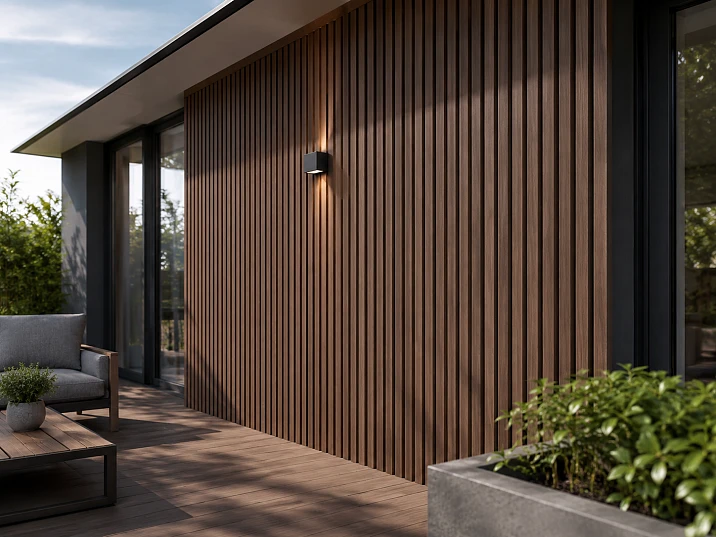
There are materials that work where they are supposed to and deteriorate where they are mistakenly placed. WPC slat panels are exactly that case. Wood-polymer composite is a smart, technological, and practical material for outdoor tasks. But when it is attempted to turn it into a decorative living room wall or an accent surface in a bedroom — something goes wrong.
This article is an analysis from foundation to finish. What WPC is as a material, where it actually works, why WPC slat facade panels are one story, and an interior slat wall is a completely different one. And most importantly: what to choose instead of WPC when the task is to create an expressive, durable, and cohesive interior, not just cover a surface.
Read carefully. There is no fluff here — only practice, specifics, and an honest look at the material.
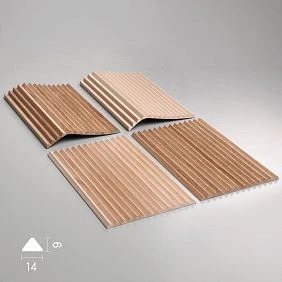
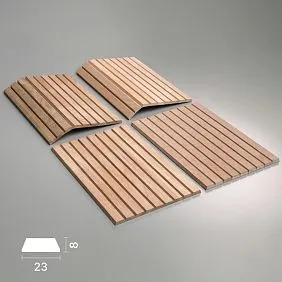
What are WPC slat panels
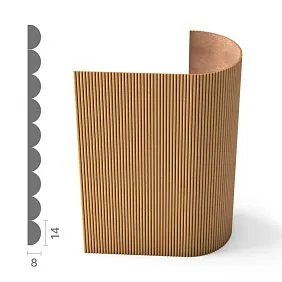
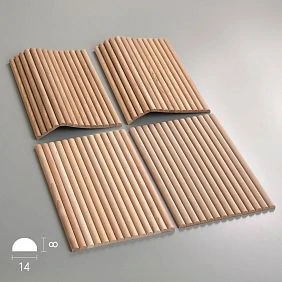
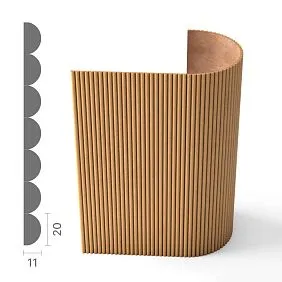
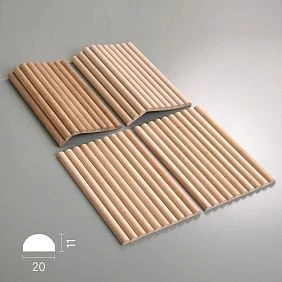
WPC slatted panels are finishing products made from wood-polymer composite with a profile that reproduces a slatted visual rhythm. WPC (Wood Plastic Composite) is a material obtained by mixing crushed wood or cellulose with a thermoplastic polymer (polypropylene, polyethylene, PVC) and additives — pigments, antiseptics, UV stabilizers, fire retardants.
The ratio of components varies by product type: facade WPC panels typically contain 50–70% wood filler and 30–50% polymer matrix. It is the polymer component that provides moisture resistance — the main property for which WPC exists.
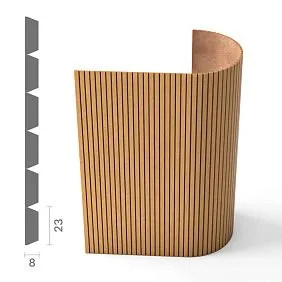
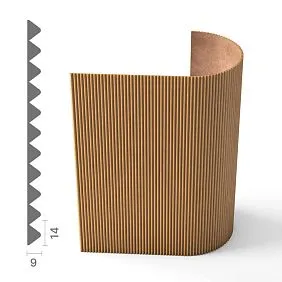
The panel profile is formed by extrusion or pressing. For the slatted effect, the surface has raised protruding "slats" with equal spacing or is cut into individual planks forming a lattice rhythm. The wood texture is achieved by embossing or applying a decorative coating.
What is fundamentally important to understand from the start: WPC was created as a material for outdoor applications. Terrace, facade, fencing, decking — where wood quickly deteriorates and PVC looks inorganic. In this niche, WPC is truly good. The question arises when it is considered for interior tasks — and here it is worth examining in detail.




Where are WPC slatted panels used
The application map for WPC panels is logical and straightforward: everything related to outdoor, semi-open, and wet areas.
Our factory also produces:

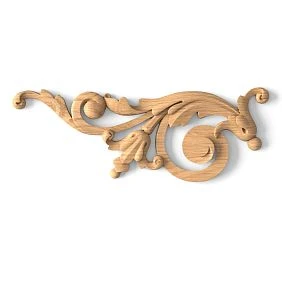

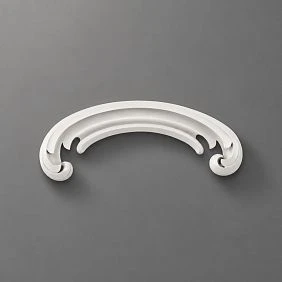
Building facades
Facade cladding is the main area of application for WPC slats. A ventilated curtain wall with WPC slatted cladding creates an expressive architectural rhythm on the building's exterior. With proper installation including a ventilation gap, panels last 15–20 years without significant loss of appearance. Important: WPC on the facade requires a correct substructure — aluminum or steel guides, proper gaps for thermal expansion, and end protection.
Get Consultation
Terraces and decking
WPC boards for terraces are one of the most common products in this category. Moisture resistance, non-slip surface, minimal maintenance — everything needed for an open terrace. WPC slatted railings and side screens complement the decking, forming a unified architectural concept.
Entrance groups and canopies
Rack WPC panels as decorative screens for entrance groups, siding for canopies, cladding for awnings — here WPC works both aesthetically and functionally. Direct contact with precipitation, snow, and temperature fluctuations is all endured without deformation, provided proper installation.
Open-type balconies and loggias
An open balcony without glazing is an area with humidity and temperature fluctuations, where WPC as fencing or side wall cladding is logical. For a glazed loggia with a normal microclimate, it's already worth considering MDF or wood.
Commercial exteriors and architectural objects
Shopping centers, restaurants with open summer areas, administrative buildings — WPC rack panels on the facade create a modern architectural image with relatively low maintenance costs. Quality control of incoming raw materials is critical here: cheap WPC with an unstable composition begins to delaminate and lose color within 3–5 years.
Fences, railings, pergolas
Garden and landscape structures are another organic niche. Rack WPC on a garden fence looks significantly better than corrugated sheeting and is significantly more reliable than untreated board.
Technical and semi-open areas
Parking lots, technical walkways, utility rooms with high humidity — here decorative requirements are minimal, functionality is paramount.
Rack facade panels made of WPC: what is important to know
Rack facade panels made of WPC are a separate subcategory with their own technical requirements. The facade operates under conditions that interior finishing does not encounter: direct solar radiation, rain, snow, daily and seasonal temperature fluctuations from -40°C to +60°C (the surface under direct sunlight heats up significantly more than the air), wind loads.
Thermal expansion
WPC expands when heated and contracts when cooled significantly more intensely than wood. The coefficient of linear expansion of WPC is 3–5 mm per linear meter with a temperature difference of 60°C. This means that for slats 3 m long, the temperature gap should be 9–15 mm at the end. Installation without gaps guarantees swelling and deformation after one or two seasons.
Fastening system
The correct fastening system for facade WPC panels is hidden clip fastening on an aluminum or steel substructure. This allows the panels to move during expansion without creating stress in the material. Direct fixation with self-tapping screws is a forced but less preferable solution: the holes compromise moisture protection.
Ventilation gap
A ventilated facade with WPC cladding requires a gap between the cladding and the wall — at least 40–60 mm. The gap ensures ventilation, condensate drainage, and prevents moisture accumulation under the panels. Without a gap — mold on the load-bearing wall and accelerated destruction of the substructure.
Color and ultraviolet
WPC panels darken under direct sunlight in the first year — this is a normal process of photooxidation of the wood filler. High-quality panels with UV stabilizers reach a stable tone after 12–18 months and do not change further. Cheap panels without stabilizers continue to degrade — spots, uneven fading, loss of decorative appearance.
Panel ends
The ends are the most vulnerable part of WPC. Even with good surface coating, the end remains open to moisture penetration. End caps made of the same polymer are a mandatory element that is often saved on, and then people are surprised by swelling and delamination.
Pros and cons of rack WPC panels
| Parameter | Plus | Limitation |
|---|---|---|
| Moisture resistance | High — for outdoor areas | Depends on the quality of the polymer matrix |
| Outdoor durability | 15–25 years with proper installation | Requires a correct substructure and expansion gaps |
| Care | Minimal — washing with water | Specific stains require special care |
| Appearance | Wood imitation | Reads as an artificial material up close |
| Decorative appeal for interiors | Limited | Significantly inferior to MDF and solid wood in texture depth |
| Painting | Does not repaint | Limited to factory colors |
| Combination with moldings | Problematic | Geometry is not coordinated with polyurethane decorative systems |
| Tactile | Medium | Synthetic feel on contact |
| Perceived eco-friendliness | Lower than natural wood | Polymer component is not perceived as a natural material |
| Installation | Systematic, technological | Requires knowledge of material specifics |
| Price | More affordable than solid wood | More expensive than basic MDF |
The table is honest. WPC is a strong material under the right conditions. It becomes weak when forced into tasks it's not suited for.
What material is WPC from the inside
Before making a decision, it's worth understanding what the panel you're considering is actually made of.
Wood filler — sawdust, shavings, or flour from coniferous or deciduous species. It determines the "wooden" character of the material: smell when cutting, visual texture, tactile feel. The higher its proportion, the more natural the feel, but the lower the moisture resistance.
Polymer matrix — PVC, polypropylene, or polyethylene. Polypropylene and polyethylene are less brittle and better withstand impact loads. PVC matrix is stiffer and retains shape better at high temperatures.
Additives: antiseptics against mold and fungus, flame retardants, UV stabilizers, pigments. The composition of additives determines the price difference between cheap and high-quality WPC.
Structure: solid or hollow. Solid panels are heavier, more impact-resistant, and better for load-bearing surfaces. Hollow ones are lighter, cheaper, and more suitable for facade cladding.
An important nuance: WPC looks like wood from a distance and under certain lighting conditions. But under your hands and in bright side light, its synthetic nature is obvious. The depth of relief, shade, surface texture — none of this reaches the level of natural wood or high-quality MDF with clear varnish.
WPC, MDF, or wood: what to choose for the task
This comparison is the key to making the right choice. Three materials, three different application scenarios, three different results.
| Material | Where best to use | Moisture resistance | Decorative | Combination with decor | Durability |
|---|---|---|---|---|---|
| WPC (Wood-Plastic Composite) | Facade, terrace, balcony, outdoor areas | High | Medium | Weak | 15–25 years with proper installation |
| MDF | Living room, bedroom, hallway, TV area, office | Medium (with coating) | High | Excellent | 15–25 years under normal conditions |
| Solid wood | Premium interiors, country houses | Requires treatment | Maximum | Perfect | 30+ years with maintenance |
| MDF for painting | Projects with precise color, designer interiors | Medium | High (any shade) | Perfect | 15–20 years |
The question is not which material is "better" in the abstract. The question is where the panels will be, what they need to do, and how they will look in 10 years.
For the facade of a private house or cottage — WPC is logical. For the living room of the same house — Rafter panels from MDF or solid wood. Mixing these solutions is not a mistake, but an architectural technique: natural WPC on the outside, natural materials on the inside, creating continuity between the exterior and interior.
When WPC is not the best choice
Let's talk straight. There are situations where buying WPC slatted panels for the interior is a disappointment that could have been prevented.
Accent Wall in Living Room
The living room is the most viewed space. An accent wall here should work in any lighting: daylight, artificial, evening. MDF with a clear milled relief and deep gaps — a play of shadows, volume, expressiveness. WPC with an embossed surface is a flat imitation that, in bright light, reads unambiguously as an artificial material.
TV area with backlighting
Backlighting behind a molding or an LED strip in the gaps of a slatted surface is one of the most powerful interior techniques. But it only works with MDF or wood, where the relief is deep enough for the shadow to be expressive. WPC with a fine embossed profile loses the effect — the backlighting does not create the depth that is needed. wood-look slatted panels or For painting from MDF — precisely for such solutions.
Interior with moldings and decor
Moldings made of polyurethane, Wall Decor, PU overlays — these are precise geometric profiles with a given mass and relief. Next to them, WPC looks alien: a different material weight, a different profile logic, mismatched geometric proportions. The molding system is designed for MDF and wood — only they provide that unified material language that turns a set of elements into an architectural statement.
Project with precise color
If the interior is built around a specific shade — say, Farrow & Ball blue-gray, warm Jotun cream, or a precise RAL for kitchen fronts — WPC is powerless here. Its surface cannot be reliably repainted. Paintable lath panels MDF accepts any water-based enamel and coordinates with any decor and doors.
Bedroom with a headboard made of slatted panels
The headboard area is a place of maximum tactility. You literally touch this surface with your hands. Warm wood, dense lacquered MDF — a natural, pleasant contact. WPC gives a synthetic feel that resembles plastic to the touch. For a bedroom, this is a fundamental difference.
Commercial interior with a claim to premium quality
A restaurant, class A office, boutique, showroom — here, every material is read on an automatic level. Guests don't know the panel brands, but they sense: this is expensive or this is cheap. MDF with deep milled relief and moldings in the background — that's expensive. WPC slats — not.
What to replace WPC with in the interior: STAVROS solutions
If you've realized that WPC is not your material for an interior task, here are several alternatives with specific application scenarios.
Slatted MDF panels — a universal choice
Rafter panels Made from MDF with a density of 720–780 kg/m³ — the basis of most high-quality interior projects with slatted finishes. The milled profile creates clear, sharp or neatly rounded edges of the slats — just like in the designer's render, but in real life. The relief is deep: the gaps create real shadow, not an imitation of it.
The geometry is stable — precisely because production takes place in a controlled microclimate. This means that a year after installation, the panels will not warp, will not create gaps at the joints, and will not change their geometry.
Wooden slatted panels — natural maximalism
Solid oak or beech — a material with a living character. Each panel has a unique grain pattern. Under clear varnish — a fully open natural texture. Under white enamel — the feeling of a living relief beneath a layer of paint, which neither MDF nor WPC has.
Wooden Rafter panels — for projects where naturalness is not a compromise, but a concept. Where there is solid wood furniture, natural parquet flooring, and natural stone decor nearby.
Slatted panels for painting — a designer's tool
Paintable lath panels — this is a blank canvas for the designer. MDF with a double primer, ready for any acrylic enamel. Color according to RAL, NCS, Pantone — you take the exact shade, paint it with a spray gun before installation, and get a surface without tonal variation.
It is this option that allows you to coordinate the panels with moldings, baseboards, door frames, and ceiling cornices into a single monochrome or contrasting system. WPC does not offer this possibility.
Slatted panels with a wood finish — a warm effect without compromises
wood-look slatted panels — MDF with a textured embossed coating in the tones of oak, walnut, wenge. The natural character is visually present, but without the instability that real wood brings: no drying out, no chipping at the ends, no changes in geometry with humidity fluctuations.
For the TV area, sofa wall, headboard in the bedroom — one of the best options in terms of visual effect, stability, and price.
System: panels + moldings + overlays + stucco
This is the top level of interior work with slatted surfaces. Rafter panels as a surface base, Moldings made of polyurethane as a frame system, Wall Decor as a flexible architectural element, Moldings as an ornamental accent.
This system is unavailable for WPC by definition. WPC cannot be organically integrated into it — the geometry, material weight, and surface character are incompatible with polyurethane profiles. But if your goal is to create an interior that looks finished, multi-layered, and well-thought-out — this is exactly the system that provides it.
Slatted panels for different rooms: how each solution works
In the living room
The living room is a space for living and for guests. Here, the panel is constantly in view, under different lighting and at different times of day. WPC for the living room: possible but impractical. MDF or wood: the right choice.
wood-look slatted panels in the TV area with a molding frame around the perimeter and hidden LED backlighting — a benchmark that most design projects in the category of "high-end residential design without architectural renovation" strive for.
In the hallway
The hallway — high operational load plus the calling card of the apartment. MDF with hard lacquer withstands contact as well as WPC, while looking significantly more presentable. Add Polyurethane wall decor — pilasters at the edges of the panel zone, a molding belt at mid-height — and the hallway ceases to be a corridor and becomes an architectural space.
In the bedroom
A headboard made of slatted panels is one of those techniques that gives the bedroom architectural completeness without redevelopment. White Paintable lath panels in the tone of the walls with backlighting behind the molding — a refined monochrome detail. A warm wood tone — a natural accent in a japandi interior.
In the office and commercial spaces
Meeting room, reception, waiting area — slatted MDF panels as a background for the work area organize the view and reduce reverberation. Moldings as a point decorative accent on a slatted background — a tool for commercial interiors where the task is to make an impression.
What affects the price of WPC slatted panels
For those who still choose WPC for exterior use — understanding pricing helps make the right purchase.
Composite composition. The proportion of virgin polymer, quality of wood filler, presence of UV stabilizers and fire retardants — all of this directly affects the price. Cheap WPC without stabilizers will lose its decorative properties in 3–5 years.
Panel thickness and structure. Solid panels are more expensive and stronger. Hollow panels are cheaper and lighter. For facade slats, a thickness of at least 21 mm is sufficient.
Slat length and width. Standard length is 3–4 m. Non-standard sizes are available by order with a surcharge. Slat width ranges from 100 to 200 mm — the wider the slat, the larger the rhythm on the surface.
Type of coating. Solid color — base price. Texture with wood embossing — more expensive. Sublimation printing with detailed imitation of wood grain — premium segment.
Fastening system. Hidden clip fastening included — costs more, but is correct and long-lasting. Installation without a complete system — savings at the purchase stage, rework at the operation stage.
Substructure. Aluminum guide profiles, brackets, spacer elements — this accounts for 20–30% of the total cost of the facade system. You cannot save on the substructure by installing expensive panels: the foundation determines the service life of the entire structure.
Order volume. For large volumes — discounts, agreed batch (no tone discrepancies), fewer joints.
Delivery. WPC is a heavy and long-length material. Delivery significantly affects the final cost, especially when ordering from another region.
Additional elements. End caps, corner profiles, flashing strips, junctions to window slopes — these are mandatory elements without which the facade is not complete.
Technical parameters: what to look for when buying WPC
Practical analysis for those who have already decided on WPC for outdoor use.
Density. 1000–1400 kg/m³ for quality WPC. Lower means loose structure, higher means prone to water absorption.
Water absorption. No more than 1% over 24 hours when fully immersed is the standard for quality material. With water absorption above 3%, the risk of deformation during freezing is significant.
Surface hardness. Should be sufficient to avoid scratches from accidental contact. Check with a sharp object.
Flammability. Flammability class G2 — self-extinguishing. Standard for facade use. G3 and G4 — do not use for facades.
Color in different batches. When purchasing a large batch in several stages, there is a risk of tone discrepancy. Order all panels for one object from the same batch.
How to choose slatted panels before purchase: a checklist
Regardless of the material — answer these questions before placing an order.
Where will the panels be: outdoors or indoors?
-
Facade, balcony, terrace → WPC, choose by composition and fastening system
-
Living space → MDF, solid wood, panels for painting or wood-like finish
Is moisture resistance needed?
-
Constant contact with precipitation → WPC or special moisture-resistant solutions
-
Bathroom with normal ventilation → moisture-resistant MDF or PVC is acceptable
-
Living rooms → standard MDF or wood
What visual effect is needed?
-
Natural, lively, with deep texture → solid wood or MDF
-
Exact color matching the interior system → MDF for painting
-
Warm wood tone without fuss → MDF with wood finish
-
External architectural rhythm → WPC
Will there be moldings, cornices, stucco nearby?
-
Yes → only MDF or wood: system compatibility
Is tactility important?
-
Yes → array or MDF with lacquer
-
No / technical areas → WPC acceptable
Is backlighting needed behind the molding?
-
Yes → MDF with polyurethane moldings: the only correct option
What service life is expected?
-
15–25 years and more, interior → MDF or solid wood
-
15–25 years, exterior → high-quality WPC with proper installation
Is there in the project Moldings or PU overlays?
-
Yes → only MDF or wood
Installation: fundamental differences between WPC and MDF
Briefly about where the installation logic diverges.
WPC on the facade: metal substructure with a 40–60 mm gap from the wall, hidden clip fastening, thermal gaps at the ends, end caps, corner profiles. Installation requires understanding the material's specifics: without gaps — deformation, without caps — swelling.
MDF in the interior: adhesive installation with MS polymer on a level base (deviation no more than 3–5 mm per two meters) or frame installation for larger deviations. The first panel — strictly according to the laser level. Horizontal joints in height — are closed molding. The technique for working with corners and joints is discussed in detail in the article about installing polyurethane moldings.
Painting MDF panels: double priming with intermediate sanding 180–220, painting with a spray gun before installation at a temperature of 18–25°C. The edges are touched up with a soft brush after installation.
Where to buy slatted panels: summary
If the task is slatted facade panels made of WPC for a cottage, country house, commercial exterior — look for a quality manufacturer with confirmed water absorption rates, UV stabilizers in the composition, and a complete mounting system. Do not skimp on the substructure — it is the foundation of the entire structure.
If the task is a decorative slatted wall in the living room, TV area, bedroom with an accent on the headboard, hallway with moldings, commercial interior with a claim to quality — choose Rafter panels STAVROS. MDF and solid wood, Panels for painting и wood-like, coordinated with moldings, wall decor, PU overlays и moldings into a single interior system.
Two different materials, two different worlds. It is important not to confuse them.
FAQ: Answers to popular questions
What are WPC slatted panels?
These are finishing panels made of wood-polymer composite with a slatted surface profile. WPC is designed for outdoor applications: moisture resistance, UV resistance, resistance to temperature fluctuations. The main niche is facades, terraces, balconies, entrance groups.
Where are WPC slatted panels used?
Building facades, terraces and decking, open balconies, canopies, entrance groups, fences and railings, commercial exteriors. For interior use — only in high-humidity areas and when there are no decorative quality requirements.
Are WPC panels suitable for interiors?
Technically — yes. Practically — for residential interiors (living room, bedroom, hallway, TV area) WPC loses to MDF and solid wood in decorativeness, relief depth, tactility, and compatibility with molding and stucco systems.
How does WPC differ from MDF?
WPC is an exterior material with high moisture resistance and medium decorativeness. MDF is an interior material with high decorativeness, precise geometry, and full compatibility with polyurethane decorative systems. For outdoors — WPC. For residential interiors — MDF.
What is better for a living room wall: WPC or MDF?
MDF. Without reservations. Deeper relief, cleaner geometry, better compatibility with moldings and decor, possibility of painting in any shade. WPC in the living room is a forced compromise with loss of decorative quality.
What affects the price of WPC slat panels?
Composite composition (share of virgin polymer, presence of stabilizers), thickness and structure (solid/hollow), slat width and length, coating type, fastening system, mounting substructure, order volume, and delivery.
When is it better to choose STAVROS interior panels instead of WPC?
When the task is to create a decorative accent wall in a residential or commercial interior. When there are moldings, baseboards, and stucco nearby. When tactility and the natural character of the material are important. When painting in an exact shade is required. When the result should look like a designer project, not a practical finish.
How long do WPC slatted facade panels last?
With proper installation including a ventilation gap, thermal compensators, and end caps — 15–25 years. With installation without following the technology — 5–8 years before deformations and loss of decorative appearance occur.
About the company STAVROS
STAVROS is a St. Petersburg manufacturer of decorative interior products with a history since 2002. The company started with a workshop for artistic carving and restoration work at the Konstantinovsky Palace in Strelna, the Hermitage, and the Alexander Palace. These origins define the philosophy: every product is made with attention to geometry, proportion, surface quality, and compatibility with other elements of the interior system.
Today STAVROS produces a full range for creating a complete decorative space: Rafter panels from MDF and solid wood, Moldings and cornices from polyurethane, Wall Decor, PU overlays, molding. Production in St. Petersburg with controlled workshop microclimate. "Prestige" class sanding — manual finishing, ready for final finishing without additional steps.
STAVROS delivers throughout Russia. Samples — before a large order. Consultations on selection, calculation, and installation — by phone, messenger, and on the website. One supplier, a unified system, a proven result.