Article Contents:
- What exactly is being purchased: a frame around the screen or the entire TV zone project
- Two ways to buy a TV frame
- Ready-made artistic composition of the RTV series
- Modular frame made of wooden baguette
- Main difference: ready-made composition or custom assembly
- A finished classic look is needed
- Complex carving is required that cannot be assembled from straight baguette
- TV zone includes shelves and side modules
- All elements must be kept in a single composition
- The TV has a non-standard size
- Only the frame is needed without side modules
- The profile of the mirror or furniture needs to be replicated
- TV replacement may be possible in the future
- Control of the width and height of the framing is needed
- What to provide for calculating RTV-002
- Who RTV-003 is suitable for
- What to check especially carefully
- Measure the body, not the diagonal
- Consider the front plane of the screen
- Do not assign a universal gap
- Check the external size
- Make a full-size layout
- Connectors must remain accessible
- Cable channel is calculated in advance
- Swivel bracket requires more space
- The TV must be removable
- Oak for visible texture and tinting
- Beech for enamel and even coloring
- When the wood grain should match the furniture
- Don't choose material separately from the design
- High classic
- Baroque and Rococo
- Calm classic
- Modern Neoclassicism
- Art Deco
- RTV and a regular picture frame
- Ready-made carved RTV and wooden molding
- Frame and wall panel
- Frame and furniture portal
- The TV is already hanging on the finished wall
- The TV zone is designed together with the renovation
- A frame for a large TV is needed
- The TV is planned to be replaced
- TV zone is in a commercial interior
- Wall preparation
- Common axis marking
- Equipment check before closing
- Removable elements
- Lighting
- Inaccurate corner cutting
- Incorrect internal size
- Too thin profile
- Too heavy frame
- Lack of removability
- Choosing only by diagonal
- Tight fit without ventilation
- Ignoring future replacement
- Random trim selection
- Buying shelves without understanding the load
- Lack of access to connectors
- Frame rests on the TV
- Buying a baguette without calculating angles and waste
- Too much decor around the screen
- Room photos
- Plan with dimensions
- Equipment
- Style and finish
- Service scenario
- Where to buy a TV frame for the wall?
- How is a ready-made RTV different from a baguette one?
- Can a frame be made for a specific diagonal?
- What TV size is needed?
- What gap should be left between the screen and the frame?
- Can ventilation openings be covered?
- Is RTV suitable for a swivel mount?
- How to hide the wires?
- What to choose for painting — oak or beech?
- Can the dimensions of a ready-made RTV model be changed?
- How to remove the TV after installing the frame?
- How is a large carved frame delivered?
- Can I order a frame without side shelves?
- What should I buy together with the frame?
- Can I install the frame after mounting the TV?
- Do I need to add backlighting?
- Which frame is best for a small living room?
- Can I replicate the mirror molding around the TV?
- Start with the inner opening
- Consider the method of joining corners
- Add a reasonable margin
- Do not assemble the view side from short leftovers
- Sockets should not end up behind the non-removable part
- Embedded parts are calculated for the actual load
- The cable channel should have a reserve
- The wall must be level
- Living Room
- Office and Library
- Bedroom
- Home Theater
- Hotel, salon, or executive office
- Restaurant and meeting room
- What is included in the calculation of a baguette frame
- What is included in the RTV calculation
- Calculate the cost of future alterations
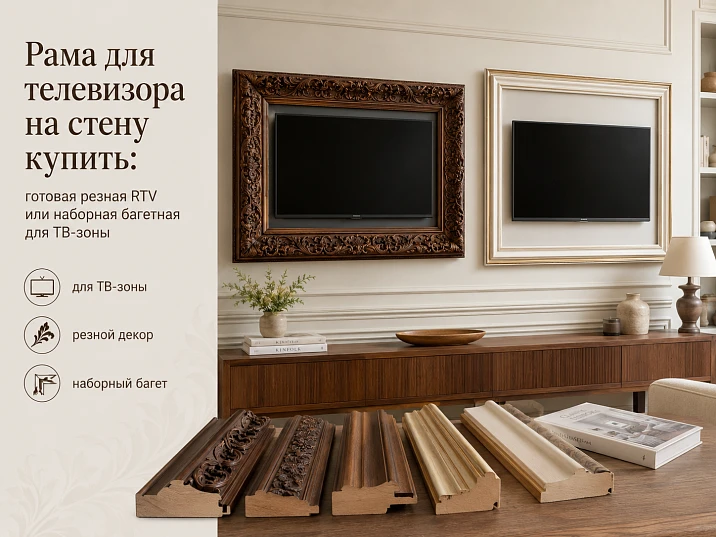
A buyer who wants to buy a TV frame for the wall, usually chooses not just a decorative border. They need to fit a large black screen into a living room, study, library, or home theater so that the equipment does not look like a random rectangle in the middle of a classic interior. This problem can be solved in two ways: order a ready-made artistic composition from the RTV series or assemble a rectangular frame from wooden baguette to the actual dimensions of a specific TV.
These options cannot be compared only by appearance. Carved RTV is a project design of the entire TV zone. Depending on the model, the composition may include a complex top, side posts, open niches, shelves, columns, built-in lighting, and additional decorative modules. A composite baguette frame is arranged differently: the master selects a wooden profile, calculates four sides, cuts the corners, and obtains a frame of the required width and height without a large architectural portal.
The difference affects measurements, cost, installation, and future equipment replacement. A ready-made carved model is chosen for a complete artistic image and a coordinated set of details. Baguette is more convenient when the TV has a non-standard body, only a neat frame is needed, or the profile should match the framing of a mirror, furniture, or wall panels. In both cases, you cannot rely only on the screen diagonal: you need the actual dimensions of the body, depth, position of ventilation holes, connectors, bracket, and cables.
on the Stavros website you can buy a TV frame for the wall as a design solution from the RTV series, and for an individual rectangular frame — buy a wooden baguette for the frame. Below, we'll break down which solution suits a specific TV zone, how RTV-002, RTV-003, RTV-004, and RTV-007 differ, what measurements need to be taken before calculation, and what to add to the order so the framing doesn't interfere with ventilation, connections, or TV removal.
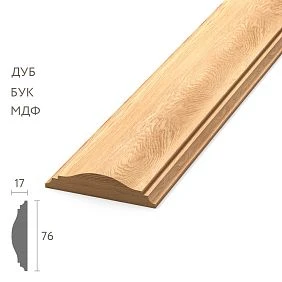
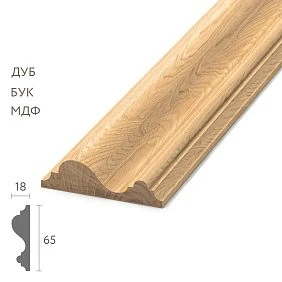
What exactly is being purchased: a frame around the screen or a project of the entire TV zone
The word "frame" creates the impression of a simple product made of four slats. For a modular molding option, this is close to reality: the profile is cut to size, joined at the corners, and a rectangular outline is obtained. The RTV series belongs to a different type of solution. These are interior compositions where the TV becomes the central part of the architectural design.
A ready-made carved RTV frame does not necessarily mean a standard product of one size that can be hung around any screen without measurements. The model pages show a ready-made artistic idea and a set of elements, and the parameters can be adapted to the TV and the room. For example, RTV-003 provides the ability to adjust sizes, choose a color scheme, and add decorative details. This approach is closer to ordering a project kit than to buying a regular picture frame.
A modular molding frame is more localized. It directly frames the TV body or a prepared niche around it. It usually lacks side cabinets, shelves, or a developed portal. However, the dimensions are calculated for a specific model of equipment, and the profile can be selected by width, relief, and style.
Therefore, the first question is not "which frame is prettier," but "which part of the wall needs to be decorated." If the buyer needs the center of a large classic composition with side storage areas, carved pillars, and lighting, the RTV series should be considered. If the interior is already finished and only needs to connect the screen with mirrors, furniture, or moldings, molding is usually more suitable.




Two ways to buy a TV frame
Our factory also produces:
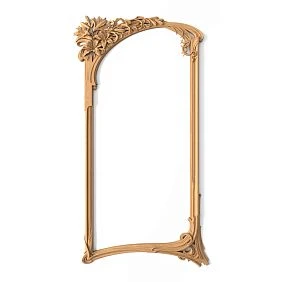
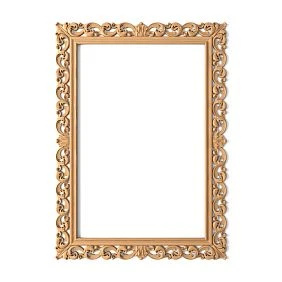
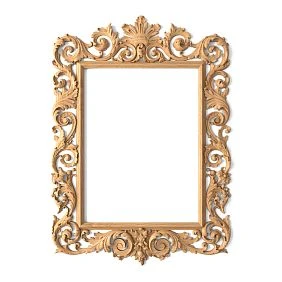
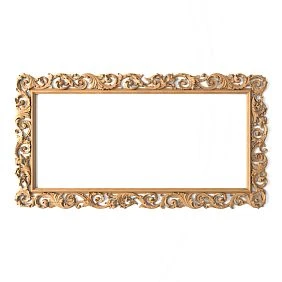
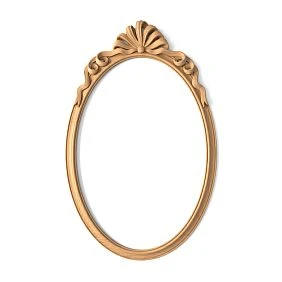
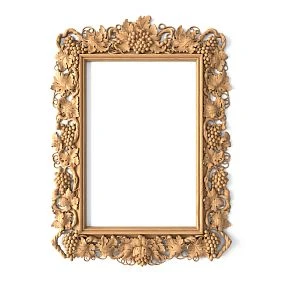
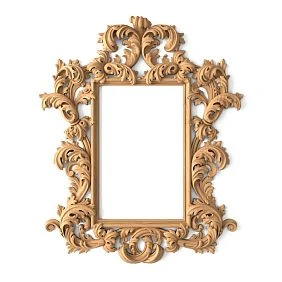
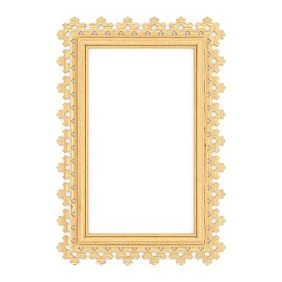
Ready-made artistic composition of the RTV series
RTV models offer a pre-developed decorative concept. The buyer chooses a composition they like, provides the dimensions of the TV and TV zone, and then clarifies the project adaptation, finish, and set of elements. The strong point of this approach is that the complex design is already assembled: the top, side pillars, inner contour, niches, and carved accents are subordinated to one idea.
A ready-made project solution is especially useful when the customer likes a specific look and does not want to independently select dozens of disparate parts. Instead of a random set of baguettes, brackets, overlays, and shelves, they receive a clear basis for calculation.
Get Consultation
Modular frame made of wooden baguette
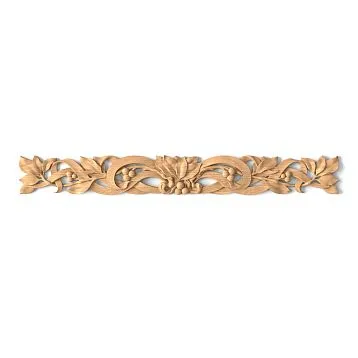
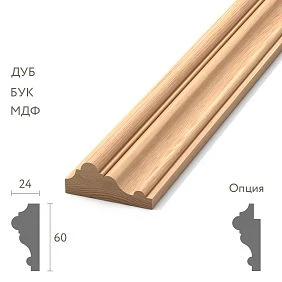
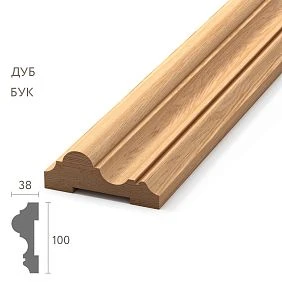
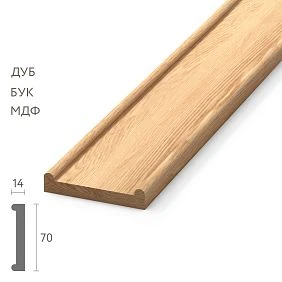
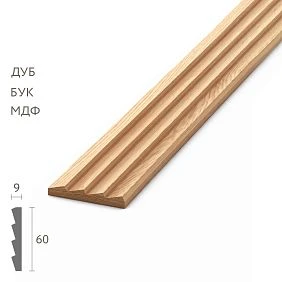
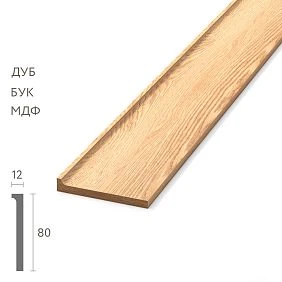
A wooden baguette is a linear profile with geometric, floral, frieze ornamentation, or a 'bead' pattern. It can be used to assemble a frame for the actual width and height of the TV. The catalog includes narrow and wide profiles, so the framing can be delicate or prominent.
This path gives more control over the size and outer width of the frame. It is suitable for a standard rectangular contour when side modules and a complex top are not needed. The baguette is also convenient for repeating an already selected profile: the same pattern can be used around a TV, mirror, panel, or furniture front.
The main difference: a ready-made composition or individual assembly
RTV is chosen as an artistic project. Baguette is chosen as a material for designing your own frame. In the first case, the main solution is already formed but requires adaptation to the equipment and wall. In the second, the buyer determines the profile, proportions, and outer size themselves, but must separately address issues of corners, base, mounting, and adjacent decor.
Characteristics of solutions to compare
| Solution | Confirmed features | What to clarify before ordering | Who it suits |
|---|---|---|---|
| Carved TV frame RTV-002 | Classic carved composition, side built-in shelves, lower shelves with soft lighting, possibility of individual color and decorative element changes. | TV size, entire wall dimensions, shelf composition, lighting, finish, and cable access method. | For those who need a full TV area with space for books, souvenirs, and decor. |
| Carved TV frame RTV-003 | Vertical fluted columns, built-in bottom lighting; size, color scheme, and decorative element composition adjustments are allowed. | Column proportions, inner opening, screen dimensions, additional decor, and lighting. | For a tall symmetrical wall and an interior with classic panels and moldings. |
| Classic TV frame RTV-004 | Carved top cartouche, side vertical elements, deep open sections and shelves; a blend of classic and Art Deco. | Niche dimensions, composition depth, accessory placement, bracket, and TV serviceability. | For a study, library, or living room where the TV zone is combined with decorative storage. |
| Order a frame for TV RTV-007 | Classic motifs with elements of Baroque and Rococo, acanthus leaves and scrolls, inner relief contour, built-in lighting; in the presented project — dark wood and silver patina. | Dimensions, finish composition, lighting placement, access to equipment, and adaptability to the interior. | For an expressive TV zone where the framing should become the main decorative center. |
| Wooden baguette for a custom frame | Linear profiles of various sizes and ornaments: geometry, beads, floral pattern, frieze; suitable for frames, furniture, mirrors, doors, and panels. | Profile article, width and thickness, plank length, quantity, miter cut, material, and finish. | For a simple frame to fit the exact dimensions of the TV or niche. |
The exact external and internal dimensions of RTV should not be determined from a photo. They are calculated for a specific screen and wall. The buyer needs to provide not only the diagonal but also the full TV model or a diagram of the case with dimensions. For a baguette frame, a drawing is also required, but the construction itself is simpler and usually consists of four straight sections.
Finished carved RTV or modular baguette: comparison before ordering
| Criterion | Ready-made carved RTV | Modular baguette frame |
|---|---|---|
| Purchase principle | Selection of a ready-made artistic model with project adaptation. | Selection of linear profile and frame assembly to size. |
| Size | Tied to the TV zone and the capabilities of the specific model. | Adjusted to the TV case or niche. |
| Decorativeness | Complex carving, finials, columns, niches, shelves, and lighting depending on the model. | Depends on the width and ornament of the selected baguette. |
| Side elements | May be part of the overall composition. | Usually absent; added as a separate project. |
| Installation difficulty | Requires project preparation of the wall, lighting, cables, and mounting of large modules. | Simpler with a regular rectangular shape, but requires precise corner cutting. |
| TV replacement | The new model must fit within the light opening and maintain technological gaps. | The frame can sometimes be remade or reassembled from the same profile. |
| Style selection | Ready-made expressive composition. | The profile is matched to existing mirrors, furniture, and panels. |
| Who it suits | Interior owners and designers who need a finished project. | For a craftsman, designer, or private client with a straightforward rectangular task. |
When it's better to buy a ready-made carved RTV frame
A finished classic look is needed
A TV often disrupts the classical architecture of a room. There are panels, cornices, columns, and wooden furniture around, but the screen remains a standalone technical object. RTV connects it to the interior with elaborate carving, vertical posts, and a top finish.
This choice is especially appropriate when the TV area occupies the central wall. A simple narrow frame can get lost next to a high ceiling, large doors, and library cabinets. An artistic composition creates a scale comparable to the entire room.
Complex carving is required that cannot be assembled from straight molding
Molding forms a repeating line. It works well around the perimeter but does not by itself create a complex top piece, columns, carved posts, or elaborate side modules. Such design requires additional elements and separate work by a designer.
In RTV, the decorative logic is already shown in a ready-made example. The buyer sees how the top, bottom, side parts, and inner contour combine. This reduces the risk of a random set of details.
The TV area includes shelves and side modules
RTV-002 has built-in side shelves and lighting in the lower sections. RTV-004 also includes open niches and shelves. These models are suitable when you need to place books, photos, small items, or decorative accessories around the TV.
Shelves should not be chosen solely for appearance. Before ordering, determine what will be placed on them, whether an outlet is needed, how light will pass, and how easy it is to clean deep sections. The dimensions of items affect the height of the shelves and the overall size of the composition.
All elements must be maintained in a single composition
Independent selection often leads to scale mismatch: a wide frame, small brackets, too thin shelves, and a random top piece. In the project RTV, the elements are already united by a common style. Size adaptation is done while maintaining proportions, not by simply stretching one part.
When a modular baguette frame is more advantageous
The TV has a non-standard size
Two TVs of the same diagonal may have different external dimensions. The thickness of the body frame, the lower block, the placement of speakers, and the depth differ. The baguette structure is calculated based on actual dimensions, so it is convenient for a non-standard model or a prepared niche.
Only a frame without side modules is needed
When the interior already includes shelves, a cabinet, and panels, a large RTV can duplicate existing furniture. A modular frame highlights the screen without rebuilding the entire wall. This is a rational option for a finished room where only the black outline of the TV needs to be styled.
The profile of the mirror or furniture needs to be repeated
One baguette can be used for multiple objects. The TV frame, mirror, and decorative panel will be linked by the same ornament. Such repetition looks calmer than installing a separate complex composition with no analogues in the room.
TV replacement is possible in the future
If the equipment changes every few years, a simple frame reduces the cost of rework. When switching to a larger screen, you can reassemble the four sides or order a new set from the same profile. A complex RTV can also be adapted, but the amount of work is usually greater.
Control of the framing width and height is needed
A narrow baguette barely increases the overall size of the TV zone. A wide one turns the screen into something like a painting. The buyer can choose the profile width considering the distance to the window, door, cabinet, or sconce. In a developed RTV, the external dimensions are set by the entire composition, not just the inner contour.
RTV-002: carved frame with built-in side shelves
Carved TV frame RTV-002 It will suit a buyer who finds it insufficient to frame only the screen. The composition includes built-in shelves on the sides, and the lower sections are complemented by soft lighting. As a result, the TV becomes the center of a full-fledged interior wall.
This solution is convenient for a living room, library, study, hotel room, or representative space. Books, small paintings, souvenirs, and collectibles can be placed on the shelves. But the filling needs to be thought out in advance: a random set of accessories can overload an already rich carved structure.
The upper part of RTV-002 is decorated with classic scrolls and acanthus motifs, the side posts support the overall pattern. The light finish of the presented project with a patinated antique effect emphasizes the relief. The model page allows individual changes to the color scheme and decorative elements, so the final result does not have to completely replicate the demonstration version.
What to provide for calculating RTV-002
- model and external dimensions of the TV;
- width and height of the wall;
- desired width of the side modules;
- items that should fit on the shelves;
- location of outlets, cables, and power supply;
- type of wall mount;
- preferences for finishing and lighting;
- photos of adjacent furniture, doors, and panels.
RTV-002 should not be chosen for a very narrow wall. Shelves and stands take up space on both sides of the screen, and free background space is needed around the structure. If the TV almost fills the entire available width, a picture frame will be safer.
RTV-003: symmetry, columns, and adaptability
Carved TV frame RTV-003 is built on pronounced vertical symmetry. Fluted columns on the sides make the composition architectural, and the lower backlight highlights the TV area in the evening. This model pairs well with classic wall panels, moldings, and natural wood.
The strong point of RTV-003 is its proven adaptability. The model page specifies size adjustments to fit the TV dimensions and room proportions, changes in veneer shade and patination, as well as the addition of columns, capitals, cornices, or lighting accents.
This does not mean that any part can be changed independently. If the inner opening is significantly enlarged, the width of the columns and the top element will need to be recalculated. Good adaptation preserves the proportions of the original model, rather than stretching the ornament.
Who is RTV-003 suitable for
The model is appropriate in a high living room, study, home library, and representative commercial space. Vertical columns require height and free side margins. In a low room, they can visually weigh down the wall.
RTV-003 is also suitable when the room already has fluting, pilasters, or columns. Repeating the architectural motif ties the TV area to door portals and furniture.
RTV-004: classic framing with open niches
Classic TV frame RTV-004 combines a carved cartouche at the top, side vertical elements, and deep open sections with shelves. The design blends classic motifs with art deco elements.
RTV-004 should be considered not as a frame, but as a decorative portal. The TV takes center stage, while the side and top areas become part of the overall wall. Open niches are suitable for books, photos, and accessories, but require thoughtful depth and regular maintenance.
Before ordering, decide whether the equipment should be visually recessed into the structure or be almost flush with the front contour. The depth of the shelves and the position of the TV affect the side view. If the screen protrudes far forward, the portal may look shallow; if it is deeply recessed, accessing the connectors becomes more difficult.
RTV-004 is suitable for a study, library, or living room where the TV area also serves as decorative storage. For a bedroom with limited space, such a composition may be too elaborate.
RTV-007: expressive frame with Baroque and Rococo motifs
Order a frame for TV RTV-007 It is suitable for interiors where the TV area should be the main decorative object. The model features acanthus leaves, scrolls, voluminous classical ornaments, and an inner relief contour. In the presented project, dark wood is combined with silver patina, and built-in lighting highlights the carving.
RTV-007 is best showcased on a free wall. There should not be many competing paintings, panels, or small decor items nearby. The intricate carving already creates a strong pattern. Adding rich wallpaper, bright stone, and numerous accessories would overload the TV zone.
The model suits classic, neoclassical, Art Deco, and interiors with Baroque and Rococo motifs. However, the dark demo finish should not be automatically replicated. The color and patina must coordinate with the furniture and doors. Current finish options are confirmed during calculation.
What to check especially carefully
The inner relief contour is located close to the screen, so the light opening and technical gap must be precisely determined. The lighting should not reflect in the screen in a way that interferes with viewing. Before manufacturing, it is useful to test the scene in the evening and choose the light direction.
How to choose the frame size for a TV
Measure the body, not the diagonal
The diagonal describes the screen and does not show the full width of the body. Two 65-inch models may have different bezels, bottom blocks, and logo placement. For calculation, you need the width, height, and depth of the TV in millimeters.
The best option is to provide the exact model designation and independently double-check the dimensions against the actual body. If the TV is already installed, measurements are taken on the wall, not relying solely on the specification values.
Consider the front plane of the screen
The wall mount determines how far the TV protrudes from the wall. The frame can be around the body, in front of it, or part of a deeper niche. In a side view, you need to show the wall, mount, back cover, screen, and front edge of the framing.
Do not assign a universal gap
A technical gap is needed between the body and the frame, but one number does not fit all TVs. It depends on ventilation, the method of removing from the mount, the location of buttons, speakers, and permissible access to connectors. The gap is determined by the requirements of the specific equipment and frame design.
Check the external size
The internal opening ensures compatibility with the TV, the external one ensures placement on the wall. The width of the baguette, carved posts, shelves, and finial must be added to the external dimensions. Check the distance to the ceiling, cabinet, sconces, windows, and doors.
Make a full-size layout
For a baguette frame, it is enough to mark the outer contour with masking tape. For RTV, it is better to add silhouettes of side modules and top decor made of paper or cardboard. The layout shows the real scale better than a small visualization.
Ventilation: the frame must not interfere with the TV's operation
The TV generates heat. Air passes through ventilation openings, the location of which depends on the model. They must not be blocked by wood, decorative panels, fabric, or a tight niche. Overheating reduces the device's lifespan and may cause shutdowns.
Before designing, find all ventilation zones on the back, top, and bottom of the casing. Compare them with the internal geometry of the frame. If the screen is recessed into the portal, free air movement inside the niche is required.
Backlighting and power supplies also generate heat. They must not be placed flush against the TV casing without calculation. The driver should remain accessible for replacement. Cables must not block ventilation grilles.
If the TV manufacturer requires specific distances to walls and objects, these values take priority over the decorative design. It is better to slightly increase the light opening than to risk the equipment for a tight fit.
Access to connectors, cables, and the bracket
Connectors must remain accessible
HDMI, USB, antenna, network, and power may be located on the side or back. If the frame comes too close, connecting a new device will require dismantling the decor. The design should provide hand access, a removable panel, or a clear sequence for removing the TV.
Cable channel is calculated in advance
Wires must not accidentally run behind a carved detail or lie on a shelf. Plan a vertical channel to the cabinet, outlets, and media player. If the TV area includes backlighting, additional cables and power supplies will be added.
A swivel bracket requires more space
A TV on a swivel bracket changes position and may hit the inner contour. Most dense frames are designed for a fixed plane. For movable equipment, extreme positions need to be modeled and cables checked.
The TV must be removable
Even reliable equipment may require repair or replacement. The frame should not permanently block the mounting. Determine in advance whether the inner contour is removed first, the TV is pulled forward, or access is provided through side sections.
Oak or beech: what to choose for a wooden frame
The wood species affects the texture and finishing method. However, it cannot be automatically stated that every RTV model is available in any species. The specific material and design of the project frame are clarified during calculation. The choice between oak and beech is useful as a direction for future design.
Oak for visible texture and tinting
Oak has an expressive pattern and deep pores. It is suitable when the frame should match oak furniture, doors, panels, or parquet. Semi-transparent finish preserves the wood structure and highlights the carving.
Matching the wood type does not guarantee matching the color. Oak products vary in grain, and stain changes shade depending on preparation. For a finished interior, a test sample next to the furniture is needed.
Beech for enamel and uniform coloring
Beech has a calmer structure. It is often chosen under opaque enamel when the frame needs to be made white, gray, colored, or matched with painted panels. Under a dense coating, the main role is played by the relief, not the texture.
When the wood species must match the furniture
With a transparent finish, matching is desirable. An oak frame next to beech furniture may differ even after similar tinting. Under enamel, the difference is less noticeable, but the materials still require proper preparation.
Do not choose the material separately from the structure
A large RTV may include parts and bases with different functions. The current project composition should be clarified with STAVROS. For a modular frame, it is easier to choose a single wooden baguette and maintain one material around the entire perimeter.
Selecting a frame according to interior style
High classic
For high classic, symmetrical RTVs with a developed top, columns, and carved uprights are suitable. RTV-003 creates an architectural vertical, RTV-004 a portal with niches, RTV-002 a composition with side shelves.
Baroque and Rococo
RTV-007 with acanthus leaves and scrolls supports rich carving, patina, and complex furniture forms. In such an interior, a baguette frame will only be appropriate if a sufficiently expressive floral profile is chosen.
Calm classic
When a room already has moldings and paneled doors, the frame doesn't have to be the main object. A wide wooden baguette or a restrained RTV project will help integrate the screen without extra shelves.
Modern Neoclassicism
In neoclassicism, a laconic enamel profile works well. The frame can match the wall panel in color. The black screen gets a neat border, while the interior remains light.
Art Deco style is renowned for its love of ornamentation, symmetry, and refined details. The molded decoration NPU-422 can become an excellent complement to geometric motifs and contrasting color combinations characteristic of this style. Try highlighting it with metallic paint or patina — and you’ll get an eye-catching detail that’s hard to look away from.
For Art Deco, geometric baguettes, contrasting materials, and RTV-004 or RTV-007 models with adapted finishes are suitable. It's important not to mix too many ornaments: geometry and floral carving should have a clear hierarchy.
Quick selection based on the customer's task
| Task | What to consider | Main check |
|---|---|---|
| Most expressive classic TV zone | Ready-made carved RTV | Whether the wall dimensions and room height are sufficient. |
| Built-in side shelves are needed | RTV-002 or RTV-004 project | Dimensions of objects, depth of niches, and access to wires. |
| Non-standard size TV | Wooden baguette or adaptable RTV | Actual body dimensions and ventilation. |
| Only a rectangular frame is needed | Assembled baguette frame | Profile width and corner precision. |
| Need to match the mirror or furniture profile | Same wooden frame | Match of article and finish. |
| Need a custom artistic project | RTV with adaptation | Technical specification, measurements, and module composition. |
What to check before purchase
The frame is designed around the working equipment, so the list of checks is broader than for a painting or mirror. An error in one parameter can hinder cooling, connection, or disassembly of the TV.
- Exact TV model. It helps find the housing diagram and manufacturer requirements.
- Full external dimensions. Width, height, and depth are measured in millimeters.
- Ventilation position. The frame and panel must not block air channels.
- Connectors. Need access to HDMI, USB, network, antenna, and power.
- Bracket. Fixed, tilt, and swivel options require different space.
- Wall material. It determines the mounting of the TV and large modules.
- Internal light opening. It must account for the casing, gap, and removal method.
- External dimension. Checked against ceiling, floor, furniture, windows, and sconces.
- Cables and power supplies. They need a route and access for maintenance.
- Material and finish. They match the furniture, doors, and panels.
- Shelves and niches. Their dimensions depend on the actual content.
- Possibility of replacing the TV. We need to understand the acceptable range of future sizes.
- Delivery. A large carved composition must fit through doors, elevator, and stairs.
- Installation. RTV requires professional wall preparation and precise assembly sequence.
What to buy together with the TV zone frame
Framing is rarely installed in isolation. A baguette structure requires materials for assembly and finishing. For RTV, side carved accents, shelves, brackets, background panels, and mounting compounds may be needed. The kit is selected after the drawing is approved.
| What to add | Why this is needed | What to pay attention to |
|---|---|---|
| Wooden baguette for a custom frame | Allows assembling a rectangular frame to exact dimensions. | SKU, width, thickness, length of slats, and corner cutting. |
| Solid wood frames | Help compare frame solutions, shapes, and overall carving character. | Do not confuse a mirror or picture frame with a structure around working equipment. |
| Carved elements for TV zone design | Add side, top, and center accents. | Size, wood species, relief, and compatibility with baguette. |
| Wooden brackets for shelves | Decorative shelves on the sides of the TV support it. | Purpose, dimensions, load, and wall material. |
| materials for wood installation and finishing | Needed for fixing decorative parts and finishing. | Compatibility with wood, base, and selected finish. |
Do not buy accompanying decor until the external frame size is approved. The bracket or overlay may look suitable separately but not fit next to the screen and shelf. First, create a wall layout, then form the specification.
How not to confuse a TV frame with similar products
RTV and a regular picture frame
A painting does not emit heat, has no cables, and does not require access to connectors. A TV is working equipment. Its framing must account for ventilation, bracket, maintenance, and removability. A regular wooden frame can be a stylistic guide but should not be automatically used around the screen without a technical project.
Finished carved RTV and wooden baguette
Baguette is a linear profile. RTV is a complete composition that may include columns, shelves, niches, a top piece, and lighting. When buying a baguette, the customer receives material for a frame. When choosing RTV, they order an adaptation of a ready-made artistic solution.
Frame and wall panel
The panel forms the background of a large part of the wall and may include stone, wood, fabric, or a painted surface. The frame highlights the screen itself or the immediate area. In one project, they can be combined: the panel creates a background, and the baguette or RTV frames the center.
Frame and furniture portal
The portal often rests on a cabinet, has side posts, a top part, and additional sections. Some RTVs are close in scale to a portal. A simple baguette frame has no architectural base of its own and works only along the contour.
Practical choice for different situations
The TV is already mounted on the finished wall
Measure the body, the distance from the wall, and the free field. If there is no space nearby for side modules, choose a baguette. If the wall is wide and allows for remodeling, an RTV can be considered, but existing sockets and the bracket will need to be checked.
The TV zone is designed together with the renovation
This is the best time for a finished RTV. Cables, embedded elements, outlets, lighting, and niches can be laid before finishing. The model is chosen before electrical work, not after painting the walls.
Need a frame for a large TV
A large screen requires proportionally wide framing, but excessive relief can make the overall wall even larger. Make a mockup. For a simple task, a wide baguette will do; for a high classic room, an adapted RTV.
The TV is planned to be replaced
Leave the internal range
The TV zone is in a commercial interior
For a hotel, salon, restaurant, or executive office, RTV creates a strong image. At the same time, equipment maintenance should remain simple: staff must understand how to access cables and remove the screen.
Installation of finished RTV: why it should be planned as a separate project
A large carved composition has several levels: base, TV, inner contour, side modules, shelves, top piece, and lighting. The installation sequence affects the ability to adjust and repair. You cannot first permanently close the frame and then try to connect HDMI.
Wall preparation
The wall must support the TV and additional elements. The base material determines the fasteners. For drywall, embedded parts installed before finishing may be required. Large shelves cannot be attached only to the decorative cladding.
Marking the common axis
The center of the TV, frame, and wall does not always coincide. Sometimes the screen is shifted relative to the room due to furniture. The decision is made on the layout, then transferred to the wall using a laser level.
Checking the equipment before closing
The TV is connected, the image, network, sound, and all cables are checked. After that, ensure the wires are not taut and do not touch sharp edges.
Removable elements
It is useful to make the inner contour or part of the panel removable if the design allows. This solution simplifies repair and replacement of equipment. The removal method is recorded in the owner's manual.
Lighting
Before installing the thread, check the direction of light, absence of glare, and access to the power supply. Wiring should not be sealed without the possibility of maintenance.
Assembling a baguette frame: where the main mistakes occur
Inaccurate corner cutting
Four planks seem like a simple task, but a noticeable gap in the corner ruins the entire frame. The profile is cut taking into account the actual pattern, not just mathematical 45 degrees. The ornament should continue symmetrically.
Incorrect internal size
If the opening is calculated diagonally, the frame may overlap the body or be too large. First, determine the technological gap, then the internal dimensions, and only after that the length of the sides.
Too thin profile
On a large TV, a narrow frame gets lost. For a screen that occupies most of the wall, the profile is evaluated from the viewing distance. Full-size paper strips help compare several width options.
Frame too heavy
A wide wooden profile has weight. The mounting is calculated separately from the TV. The frame should not rest on the device's body or transfer load to it.
Lack of removability
If the frame is glued flush to the wall, replacing the TV becomes difficult. It is better to design a structure that can be removed or disassembled without damaging the screen or wall.
Mistakes when buying a TV frame
Choosing only by diagonal
The diagonal does not show the dimensions of the body. Three measurements and the exact model of the device are needed for calculation.
Tight fit without ventilation
The desire to hide the TV's black frame should not lead to blocking air channels. The gap is calculated according to the device's requirements.
Ignoring future replacement
If the RTV is calculated without margin, the new TV may not fit. Discuss the acceptable size range with the designer.
Random selection of finish
Dark patina on the model page may look beautiful in a demo project but conflict with the client's light furniture. The color is agreed upon using samples.
Buying shelves without understanding the load
A decorative shelf for a small figurine and a shelf for heavy books require different designs. The purpose is communicated before calculation.
Lack of access to connectors
After installation, it turns out that it is impossible to connect a console or media player. All working connections are marked on the drawing.
Frame rests on the TV
The decorative structure must be attached to the wall or its own base. The device body is not used as a load-bearing element.
Buying a baguette without calculating angles and waste
The net perimeter does not equal the amount of material. You need extra for trimming, pattern matching, and possible errors.
Too much decor around the screen
A frame, panels, shelves, paintings, and bright wallpaper all distract from viewing at the same time. One main technique works more convincingly than several competing ones.
Who is a carved or baguette frame suitable for
- owners of classic and neoclassical interiors;
- designers of apartments and private houses;
- living rooms, studies, libraries, and home theaters;
- projects with wooden furniture and panels;
- rooms where the black screen stands out from the overall finish;
- for customers who need a frame for a specific model of equipment;
- for hotels, salons, restaurants, and representative spaces;
- for those who want to combine a TV, shelves, and carved decor into one wall.
When it's better to refuse or choose another solution
- the TV is often changed to a model of a different size;
- ventilation areas cannot be left open;
- there is no access to connectors and cables;
- the frame prevents removing the TV from the bracket;
- the wall is not prepared for the weight of the structure;
- the room is humid, and the wood finish is not agreed upon;
- the client wants a completely invisible minimalist TV zone;
- measurements are taken only diagonally;
- the TV is used on a swivel mount with a large range of motion, which conflicts with the frame.
An honest refusal of excessive RTV sometimes preserves the interior better than trying to place a large composition on a small wall. In such a situation, a thin baguette or a background panel without a tight frame will be more practical.
How to prepare a technical specification for a custom frame
A good technical specification helps the designer and manufacturer quickly understand whether the chosen RTV is suitable and what changes will be needed. A general phrase like "need a frame for a 75-inch TV" is not enough. The diagonal does not describe the wall, furniture, or how the equipment is used.
Photos of the room
Take a front photo of the wall and two side ones. The photos should show the ceiling, floor, windows, doors, cabinet, sconces, and adjacent furniture. If the renovation hasn't started yet, include a visualization and a layout.
Plan with dimensions
Specify the width and height of the wall, the distance from the floor to the center of the TV, the dimensions of the cabinet, and the free margins. Mark the sockets, backlight outputs, and cable channels. For RTV with shelves, specify the desired width of the entire composition.
Equipment
Write down the full model name of the TV, the type of bracket, and the list of connected devices. If a media player, game console, or set-top box must be placed on a shelf, their dimensions and ventilation requirements are needed.
Style and Finish
Attach photos of doors, furniture, parquet, and panels. Indicate whether visible wood grain, enamel, tinting, or patina is required. Do not choose a shade based solely on the screen: a sample will be needed for accurate matching.
Service Scenario
Describe how often new devices are connected and whether a TV replacement is planned. For a home theater, access to cables is more important than for a screen used only for broadcast.
Based on such a specification, you can compare RTV and baguette not abstractly, but by actual cost, dimensions, and installation complexity.
How to Connect the Frame to the Cabinet and Wall Panels
A TV rarely exists on an empty wall. Below it is a cabinet, next to it are panels, doors, bookcases, or decorative shelves. The frame must match them in width, material, and height.
If the cabinet is wider than the TV, the outer contour of the baguette frame can be slightly narrower than the cabinet, creating a stable pyramid. If the RTV includes side sections, the entire composition sometimes becomes wider than the lower furniture. Then the base needs to be visually reinforced or the separate cabinet replaced with a built-in lower part of the project.
Wall panels can fit flush against the frame or leave a free field. The first option makes the TV area built-in, the second emphasizes it as a separate object. The drawing shows actual thicknesses so that the baguette does not end up recessed behind the protruding panel.
The material can be matched in two ways: by exact match or by deliberate contrast. An oak frame next to an oak cabinet requires a similar tint. A painted frame can match the wall and contrast with natural furniture. A random medium shade usually looks less convincing.
How to evaluate the frame in daylight and evening lighting
The carving reveals itself differently depending on the direction of light. A side window emphasizes the depth of RTV-007 and RTV-002, but also shows uneven joints. Front diffused light makes the ornament calmer.
Built-in lighting should not be directed into the eyes or reflected as a bright strip on the screen. Before making a final choice, it is useful to create a temporary lighting scenario: attach an LED strip to a mockup and look at the TV from the sofa.
The color temperature of the light affects the finish. Warm light enhances the golden and brown shades of wood, cold light makes silver patina more noticeable. If there are several types of lamps in the room, the test sample is examined under each of them.
Matte enamel softens glare, glossy emphasizes the relief but can reflect the screen. For deep niches, light is needed not only for decoration but also for practicality: items on shelves should remain visible without harsh shadows.
How to buy a TV frame on STAVROS
To start, open the section where TV Zone Frames. Compare RTV-002, RTV-003, RTV-004 and RTV-007 not only by photo, but also by composition: shelves, columns, inner contour, lighting and overall scale.
Then prepare the data for calculation:
- exact TV model designation;
- width, height, and depth of the cabinet;
- photo of the wall and adjacent furniture;
- dimensions of the free zone;
- type of bracket and distance of the screen from the wall;
- location of sockets, cables, and connectors;
- desired material and finish type;
- need for shelves, niches, and lighting;
- dimensions of doorways and delivery conditions.
If you need a simple frame, go to the catalog and choose a wooden baguette. Compare size A, size C, ornament, and collection style. After selecting the item, the master calculates four sides, allowance, and mounting method.
For a complex project, send a TV zone layout and request a consultation. RTV dimensions, module composition, material, finish, cost, and timeline are determined after referencing the specific room. This approach is more reliable than buying decor based on an image and trying to adjust it on site.
FAQ: questions about TV frames
Where to buy a TV frame for the wall?
The STAVROS website features a section for RTV design frames and a catalog of wooden baguettes. RTV is chosen as a ready-made artistic composition with adaptation, while baguette is selected as a profile for an individual rectangular frame.
How does a ready-made RTV differ from a baguette one?
RTV may include a carved top, columns, shelves, niches, and backlighting. A baguette frame usually consists of four linear profiles and only frames the screen contour.
Can a frame be made for a specific diagonal?
Yes, but for the calculation, not only the diagonal is needed. The full dimensions of the body, depth, TV model, and ventilation diagram are transmitted.
What TV dimensions are needed?
Width, height, and depth in millimeters, the position of the front plane relative to the wall, and the exact model name. Photos of the connectors and back panel are useful.
What gap should be left between the screen and the frame?
There is no universal value. The gap depends on ventilation, the method of removing from the bracket, buttons, and connectors. It is calculated based on the specific equipment.
Can ventilation openings be covered?
No. The frame, panel, and cables must not interfere with cooling. The TV manufacturer's requirements take priority.
Is RTV suitable for a swivel bracket?
Only after checking all positions. The screen may hit the inner contour when rotating. For tight framing, a fixed bracket is usually more convenient.
How to hide the wires?
A cable channel and access to sockets are provided in the wall or structure. You cannot simply clamp the wires between the frame and the TV body.
What to choose for painting — oak or beech?
For opaque enamel, beech is usually convenient; for visible texture and tinting, oak is preferred. The specific material of the selected RTV is clarified during project calculation.
Can the dimensions of the finished RTV model be changed?
The models are used as a design basis. The possibility of modification and the allowable range depend on the design. For RTV-003, size adaptation to the TV and room is explicitly specified.
How to remove the TV after installing the frame?
The dismantling method is designed in advance: a removable inner contour, side access, or extension on a bracket. The frame should not permanently block the equipment.
How is a large carved frame delivered?
Conditions depend on the size and composition of the project. Before ordering, the delivery path, elevator, staircase, and doorways are checked. Exact delivery conditions are communicated by STAVROS during calculation.
Can I order a frame without side shelves?
For a simple composition, you can choose a baguette or an RTV model without developed side modules. The possibility of changing a specific project is clarified during consultation.
What to buy together with the frame?
Wooden baguette, decorative elements, shelf brackets, and materials for installation and finishing — only after approval of the drawing and specification.
Can the frame be installed after the TV is mounted?
Yes, if the existing position of the screen, outlets, and bracket is compatible with the project. Sometimes the TV has to be temporarily removed for precise installation and connection.
Do I need to make backlighting?
No, it is not mandatory. Backlighting highlights the carving and shelves, but can create reflections on the screen. Its direction is checked before final installation.
Which frame is better for a small living room?
A modular baguette or a restrained RTV without wide side sections is usually more suitable. Large shelves and columns require a free wall and sufficient height.
Can the mirror baguette be repeated around the TV?
Yes. This is one of the strong scenarios for a modular frame. But the dimensions and ventilation gaps for the TV are calculated separately.
Result: what to buy for the TV zone
A ready-made carved RTV and a modular baguette frame solve one common task — they help integrate the TV into the interior — but achieve the result through different paths. RTV turns the entire wall into an artistic composition. Baguette neatly frames the screen and offers more freedom in precise dimensions.
RTV-002 is chosen when built-in side shelves and lighting are needed. RTV-003 is suitable for symmetrical classical architecture with columns and allows adaptation of dimensions and finishes. RTV-004 combines carved framing with open niches. RTV-007 creates an expressive center with Baroque and Rocaille motifs.
A modular wooden baguette is rational for a non-standard TV, a small wall, matching a mirror profile, or future equipment replacement. But even a simple frame requires a project: ventilation, access to connectors, and the possibility of dismantling must be considered.
Before ordering, measure the casing, specify the bracket type, mark ventilation holes and cables on the plan, and then choose the artistic route. At STAVROS you can select an RTV model for the TV zone or buy a wooden baguette for the frame. A thoughtful calculation allows you to get a beautiful frame that does not interfere with the TV's operation and remains convenient for maintenance.
How to calculate the amount of wooden baguette for a frame
A modular frame seems simple: two vertical and two horizontal strips. But the clean perimeter does not show the actual consumption. In the corners, the profile is cut, the ornament pattern must be aligned, and part of the strip may go to a test cut. Therefore, the purchase is calculated not only in linear meters but also according to the cutting scheme.
Start with the inner opening
First, determine the width and height of the light opening, taking into account the technological gap around the frame. Then add the width of the selected baguette on each side. This gives the external size of the finished frame. If the profile is wide and has a complex protruding relief, it is better to check its external dimensions against the drawing.
Consider the method of joining corners
When cutting at 45 degrees, the length of each side is calculated along both the inner and outer edges simultaneously. An error of a few millimeters leads to a gap or misalignment. For carved profiles, pattern matching is also important: sometimes the plank has to be shifted relative to the calculated point so that the ornament continues neatly.
Add a reasonable margin
The allowance depends on the length of the planks, the complexity of the pattern, and the craftsman's experience. For a simple geometric baguette, losses are usually smaller; for a large floral ornament, they are larger. A universal percentage cannot be assigned without a selected article. It is better to create a cutting map based on the actual length of the linear footage and add material for one test corner or to replace a damaged section.
Do not assemble the visible side from short remnants
On a long top side, a longitudinal joint will be especially noticeable. If the length of one plank is insufficient, the joining point is chosen in advance and masked with a pattern or a central decorative element. Short remnants are more rationally used on side sections, if the ornament allows.
After calculation, it is useful to photograph the selected profile and note the article number. If the frame has to be remade in a few years, the exact name of the baguette will simplify reordering.
How to prepare the wall and electrical work before ordering RTV
A large frame cannot be considered as the last decorative layer added after the renovation is complete. It is connected to electrical work, embedded elements, cable channels, socket placement, and wall geometry. The earlier the project is chosen, the fewer alterations will be required.
Sockets should not end up behind a non-removable part
Power for the TV, backlighting, set-top box, and audio system should be positioned so that the connectors are accessible. A regular socket behind a tightly installed screen can interfere with the bracket. For a custom RTV, the electrician must receive a side section and a module layout plan.
Embedded elements are calculated for the actual load
The TV and decorative composition may be attached to different points. The screen bracket cannot be transferred to a carved frame without a separate calculation. Shelves and columns also require their own fastening. In a drywall wall, embedded elements are installed before cladding, based on the approved drawing.
The cable channel must have a margin
Today the TV is connected to power and one cable; tomorrow a game console, audio system, or network may be added. A too narrow channel will quickly become filled. At the same time, it should not create a dense bundle near ventilation. Plan for the possibility of running a new cable without dismantling the entire wall.
The wall must be level
Long carved details and shelves emphasize waves in the base. If the wall is uneven, gaps will appear between the module and the surface. Before installation, check the flatness, angles, and verticality. Significant curvature cannot be corrected with a thick layer of glue.
When the RTV project is approved before rough work, electrical and finishing become part of one system. This reduces the risk that a socket ends up under a column, a light outlet is off-center, or a bracket doesn't align with an interior opening.
How to choose a frame for different rooms
Living room
In the living room, the screen is usually visible from several points, so the overall scale is especially important. For a wide central wall, RTV-002, RTV-003, RTV-004, or RTV-007 are suitable after checking dimensions. In a small living room, a baguette frame often looks calmer and doesn't take up space from walkways.
Study and library
Here, the frame can be connected to bookshelves, wooden panels, and a desk. RTV with columns or shelves supports the library architecture. A tinted baguette is suitable when the TV is placed inside an existing furniture section.
Bedroom
In the bedroom, the TV should rarely become the most active object. A restrained baguette in the color of the wall or furniture helps soften the black outline. A large RTV is chosen only for a spacious room where the screen is part of a separate decorative wall.
Home theater
In a home theater, sound, ventilation, and absence of glare come first. Complex lighting and light patina can distract from viewing. Here, a darker baguette frame or an RTV with switchable light and easy access to equipment is useful.
Hotel, salon, or executive office
In a commercial space, a carved RTV helps create a memorable image. But maintenance should be understandable for staff. Removable panels, labeling of power supplies, and access to connectors are more important than the tightest possible framing.
Restaurant and meeting room
The TV can be used for presentations, broadcasts, and events. The frame should match the interior but not obstruct the view or laptop connection. If the equipment is frequently serviced, a modular removable baguette is more convenient than a deep non-removable composition.
How to compare the cost of two solutions without making a wrong conclusion
You cannot directly compare the price of a finished RTV and a linear baguette. A baguette frame consists of a profile, corner assembly, base, mounting, and finishing. RTV includes significantly more decorative and functional parts. To understand the budget, you need to compare the full scope of work.
What is included in the calculation of a baguette frame
The length of the profile, waste, corner preparation, assembly, painting or tinting, hidden base, removable mounting, and installation are taken into account. If carved finials or side details are added, these are separate items.
What is included in the calculation of RTV
The composition depends on the model and adaptation: carved modules, columns, shelves, panels, lighting, finishing, project binding, packaging, delivery, and installation. Exact parameters cannot be transferred from a demonstration image to a new object without calculation.
Consider the cost of future rework
If the TV is planned to be replaced in two years, a simple frame may be more economical over the lifecycle. If the equipment is installed for a long time and the entire living room is designed as a single classical ensemble, RTV provides a more cohesive result and eliminates the need to independently select many details.
The correct comparison looks like this: the same task, the same level of finishing, a complete set, and installation. The price of one baguette strip does not show the cost of a finished TV zone, and a photo of RTV does not show the result without dimensions and project composition.