Article Contents:
- Product identity: internal code, manufacturer, and mandatory characteristics
- One physical item must have one master record
- Why the record name cannot be the only identifier
- Which name format is convenient
- The manufacturer and its part number are stored separately from the internal code
- The manufacturer part number does not need to be "normalized" to the internal style
- If the product is purchased through an intermediary
- Which attributes of wooden moulding need to be stored in a structured way
- MLD-050 shows why the material is not enough in the name
- PLT-006 shows why one model is not enough even more so
- When a new card is truly needed and when it creates a duplicate
- A new object should not generate a new product
- A room number is even less a part of the nomenclature
- Building material suppliers: a change of seller does not mean a change of product
- When an intermediary truly sells a different item
- Building material supplier: reserve, warranty, and installation are stock states, not new products
- Why this matters for the overall physical fund
- Duplicate items corrupt stock levels and trigger unnecessary purchases
- A duplicate can be hidden
- How to search for possible duplicates before creating a new card
- Searching by exact name alone is weak
- What to do with SKUs without a hyphen
- If a duplicate is already in use, it cannot be deleted without checking its history
- How to choose the primary card
- The "do not use for new purchases" status is safer than instant deletion
- Material suppliers: the manufacturer must exist as a separate entity
- Supplier and manufacturer can be different
- Unit of measure: meters and whole items must not be confused
- There is no single universal unit for any 1C configuration
- Why product length should be a separate meaningful attribute
- Price is not a product identifier
- Why the old price should still be kept in history
- The source of technical data should be stored alongside the item
- The manufacturer's website has changed — the item is not overwritten automatically
- A discontinued SKU does not free up the internal code
- How to work with an old card
- Proper nomenclature links purchasing, warehouse, returns, and reordering
- A return from a site must increase the same card
- A claim must also reference the nomenclature
- Who has the right to create a new nomenclature card
- Minimum control before creation
- The registry of problem cards allows cleaning the catalog without risk
- Which cards to check first
- Critical parameters must not be stored only in a comment
- Bulk loading of the entire manufacturer catalog is usually unnecessary
- The manufacturer catalog and the internal reference guide serve different purposes
- Practical audit: how to detect five records of the same MLD-050
- Step 1. Restore structured attributes
- Step 2. Check duplicate history
- Step 3. Prevent further duplication
- Step 4. Fix required fields
- Step 5. Check actual stock
- How to distinguish a variant of the same item from a true duplicate
- Why the material almost always requires separate accounting
- When different lengths are especially critical
- Finishing and surface preparation: when it is a new item and when it is a batch property
- Scenario 1. The product arrives as a standalone factory finish
- Scenario 2. The finish appears only after arrival at the site
- Scenario 3. Color is only a project designation
- Packaging and transport unit must not become a new stock item
- When packaging still affects purchasing
- Barcodes, internal codes, and synonyms should help find the card, not create it anew
- A synonym is not a separate card
- A barcode does not replace technical identity either
- An individual or modified profile requires separate logic
- Why the word "individual" in a comment is not enough
- How to maintain the item list when one item is discontinued and replaced by a new one
- Why this matters for operations
- Bulk import from Excel is the main risk point for duplicates
- What to check in the file before import
- The card must be checked before the first order, not after the warehouse's first mistake
- How to check the quality of the catalog through real transactions
- Reorder test
- Warehouse test
- Return test
- Reserve test
- Complaint test
- How not to turn the nomenclature into a copy of the project specification
- If a company already has thousands of duplicates, you shouldn't start with the entire catalog
- Why a new process matters more than old perfect cleanliness
- A batch, series, and receipt date should not automatically become a new product
- When the batch attribute must be preserved with particular care
- Why the cards "MLD-050 May" and "MLD-050 August" are dangerous
- Physical warehouse labeling must use the same identity as 1C
- The project zone is added to the label but does not replace the item
- End-to-end example: one card goes through the entire lifecycle
- Step 1. The project approves the item
- Step 2. The nomenclature is created
- Step 3. First order
- Step 4. Receipt
- Step 5. Second object
- Step 6. Purchase through an intermediary
- Step 7. Return from installation
- Step 8. Warranty claim
- Step 9. Repeat reorder
- How to generate a duplicate report without complex automation
- Why cards without movement still cannot be deleted automatically
- How to distinguish a bad name from a true duplicate
- When a separate card for a project is truly acceptable as an exception
- How to implement rules in a company without stopping procurement
- Which rules an employee needs to remember daily
- Introduce the status "requires confirmation"
- Priority of sources
- If two official sources contradict each other
- An old invoice is not an eternal technical reference
- If physical stock already exists but the card is incomplete
- How to check a card before the first physical receipt
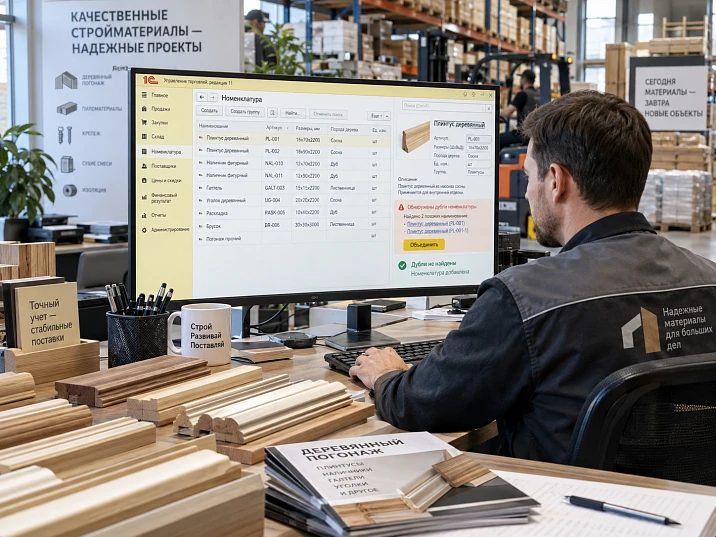
The profile has already been selected and approved. For example, the project needs MLD-050 in oak with a commercial length of 2400 mm. At this stage, it seems that the technical uncertainty is over: the item code is known, the material is known, the length is known, and the supplier is clear. But it is precisely after the specification is approved that a new problem may arise within the buyer's company — one physical product turns into several different inventory records.
One employee creates "Molding MLD-050 oak." A second cannot find it in search and creates "MLD050 oak 2.4." A third copies an abbreviated name from an old invoice: "Wooden molding 50." A fourth adds the project to the name: "MLD-050 oak hotel." A fifth creates the same item again because they are buying it through a different seller.
Physically, the same profile remains in the warehouse. In the accounting system, there are already five different item records. The stock balance is fragmented, prices are distributed across different records, the reserved quantity is only partially visible, a return increases the wrong item, and the purchaser places an extra reorder because they cannot see the total actual available stock.
Therefore construction materials supplier delivers to the buyer a product with its own identity, and the task of the buyer's internal system is to preserve that identity. For wooden trim, the main rule can be formulated as follows: one physically distinguishable supplied configuration should have one main item record, regardless of project, room, seller, price, or stock purpose.
MANUFACTURER → ITEM CODE → MATERIAL → SIZE / CROSS-SECTION → COMMERCIAL LENGTH → FACTORY FINISH → DUPLICATE SEARCH → INTERNAL ITEM RECORD → ORDER → RECEIPT → WAREHOUSE → ISSUE → RETURN → REORDER
The specific fields and mechanics depend on the 1C configuration or other accounting system in use. The article does not impose one technical program setup. It defines an information model: which attributes must be preserved so that the product does not lose its identity throughout the entire purchasing and warehouse cycle.
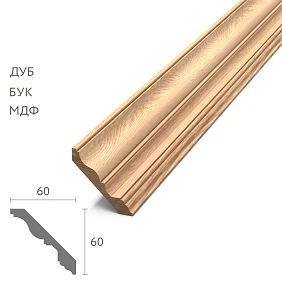
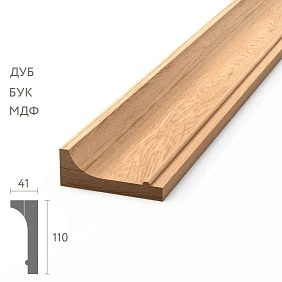
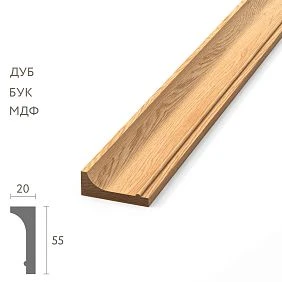
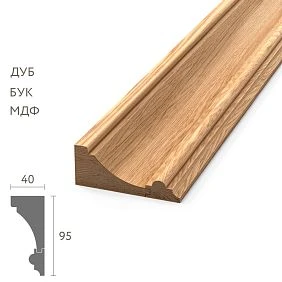
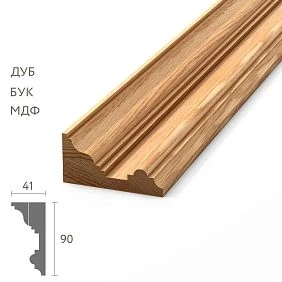
Product identity: internal code, manufacturer, and mandatory characteristics




One physical item should have one main item record
Let's look at one product:
STAVROS / MLD-050 / oak / 65×18×2400 mm.
The customer's internal code can be anything:
PG-000145.
This is a normal scheme. A company has the right to use its own numbering. The problem arises not because of the internal code, but when it exists without a link to the original manufacturer and SKU.
| Field | Example | Why it's needed |
|---|---|---|
| Internal code | PG-000145 | Identifier within the company |
| Manufacturer | STAVROS | Product source |
| Manufacturer's SKU | MLD-050 | Link to the original product system |
| Product type | Molding | Correct product category |
| Material | Oak | Distinguishes physically different versions |
| Cross-section | 65×18 mm | Confirms the geometry |
| commercial length | 2400 мм | Affects the cutting layout and the number of whole products |
| Surface finish | Based on the actual order | Distinguishes significant supply options |
| Source of technical data | Card / drawing | Allows parameters to be rechecked |
| Card status | Active | Separates the current position from the archived one |
A year later, a new purchaser should open PG-000145 and understand exactly what is hidden under this code without digging up old invoices and correspondence.
Our factory also produces:
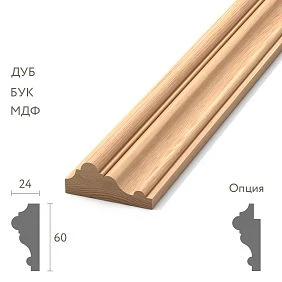
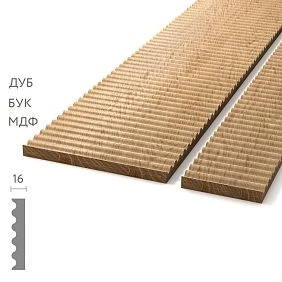
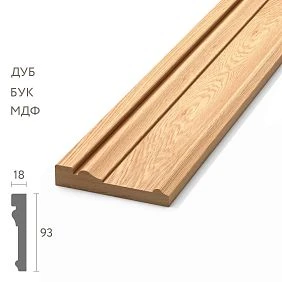
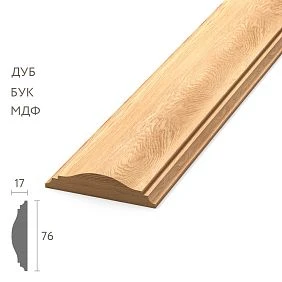
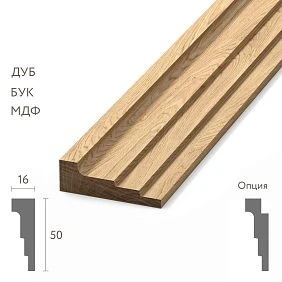
Why the card name cannot be the only identifier
The name is intended for a person. It helps to quickly read the card, but free text is unstable. One employee writes "oak", another — "oak array", a third abbreviates the article number, a fourth changes the word order.
Two different profiles can be called "oak wooden moulding". And one product can get five different names. Therefore, duplicate search and identification should rely not on a single name string, but on structured attributes.
Get Consultation
Which name format is convenient
A corporate template might look like this:
Moulding STAVROS MLD-050, oak, 65×18×2400 mm
or otherwise, if another order is convenient for the company. The main thing is a single template for the entire group. One catalog should not simultaneously contain "MLD-050 D 2.4", "oak moulding 50", "Stavros moulding", and "hotel moulding" for one position.
The manufacturer and its article number are stored separately from the internal code
The manufacturer's article number is not a decorative part of the name. It is the bridge between the buyer's internal accounting and a product that can be reordered, checked against its product page, returned, matched to a drawing, or cited in a claim.
If a company stores only the internal code PG-000145, six months later the question arises: "What is this, anyway?" If STAVROS and MLD-050 are stored alongside it, the chain is restored immediately.
The manufacturer's article number does not need to be "normalized" to match the internal style
If the manufacturer uses MLD-050, it is better to keep exactly MLD-050, rather than converting it to MLD-050, MLD050 or MLD 050 just for the sake of uniformity.
A company's internal code can be formatted however you like. An external source's article number is more useful stored in its original spelling, because that is what is used to search for the product page, the drawing, an old shipment, and a new order.
If the product is purchased through an intermediary
Three identifiers may appear:
| Level | Example |
|---|---|
| Internal customer code | PG-000145 |
| Seller code | 4811 |
| Manufacturer's SKU | MLD-050 |
All three can be useful if there is an unambiguous relationship between them. The intermediary code should not replace the original manufacturer's SKU.
Which characteristics of wooden moulding should be stored in a structured way
For project procurement, the minimum depends on the actual supplied configuration, but usually you need to store:
- manufacturer;
- manufacturer's SKU;
- product type;
- the material;
- cross-section or size;
- commercial length;
- significant factory surface finish;
- unit of accounting;
- source of technical data;
- card status: active or archived.
The word "significant" is fundamental here. Not every project comment should be turned into a card. But a characteristic that changes the physically supplied product, the cutting plan, or the possibility of interchangeability must be available for search and verification.
MLD-050 shows why the material alone is not enough in the name
У MLD-050 there are versions made of MDF, beech, and oak. For beech and oak, a length of 2400 mm is confirmed; for MDF, 2600 mm. This means the entry "MLD-050" does not describe the full purchasing item.
The card must allow distinguishing at least:
MLD-050 / oak / 65×18×2400
from:
MLD-050 / beech / 65×18×2400
and from:
MLD-050 / MDF / 65×18×2600.
If the company actually purchases these variants as different products, they cannot be merged into a single warehouse card just because they share the same model code.
PLT-006 shows why a single model is not enough even more clearly
У PLT-006 the MDF variants measure 100×16×2600 mm, while beech and oak measure 100×15×2400 mm. Here, not only the material changes, but also the thickness and the commercial length.
Product card PLT-006 without material and variant is dangerous. The next employee sees the model but does not understand what exactly to order and what is physically in stock.
When to create a new card and when to use an existing one
When a new card is truly needed and when it creates a duplicate
A new item is needed when the physically significant configuration changes.
| Change | Is a new card usually justified? | Why |
|---|---|---|
| Different SKU | Yes | This is a different model |
| Different material | Yes | Physically different design |
| Different supplied length | Yes, if it is independent in purchasing and stock | Changes the quantity of whole items and cutting |
| Different geometry | Yes | Not automatically interchangeable |
| Different factory design affecting supply | Yes | Must be distinguished in the order and in the warehouse |
| New project | No | Project — usage analytics, not a product attribute |
| New room | No | Location — stock purpose |
| new price | No | The price changed, the product did not |
| New seller | No, if the product is physically the same | Supplier — a separate purchasing dimension |
| Reserve instead of free stock | No | Stock status changes |
A new object must not create a new product
Bad:
- MLD-050 hotel;
- MLD-050 restaurant;
- MLD-050 office.
If the physical configuration matches, it is one card. The object is accounted for by a project, order, analytics, warehouse assignment, or another mechanism of a specific system — but not as a new product.
A room number is even less a part of the item master
No need to create:
- PLT-006 room 201;
- PLT-006 room 202;
- PLT-006 room 203.
If number 201 is later changed to 215, the product card must remain the same. What changes is the batch assignment, not the skirting board itself.
Building material suppliers: a change of seller does not mean a change of product
If building material suppliers change, but physically the same STAVROS MLD-050 in oak, 2400 mm long, is being purchased; automatic creation of a new card destroys the shared stock balance.
A supplier relates to a procurement transaction. A product relates to the item master. These entities must not be mixed.
For example, the first batch was bought directly from the manufacturer, and the second through a trading company. The internal card remains:
PG-000145 / STAVROS / MLD-050 / oak / 65×18×2400.
In procurement documents, the counterparty, price, and terms change. The product itself does not become new.
When an intermediary actually sells a different item
If the seller offers an “MLD-050 analogue” from another manufacturer or a different version, this is no longer the same card. Similarity of purpose or appearance does not make the items identical.
First, the manufacturer, item code, material, geometry, and length are confirmed. Only after that is it decided whether the existing product card can be used.
Building materials supplier: reserve, warranty, and installation are stock states, not new products
building materials supplier can supply 40 identical PLT-006 in oak. After acceptance, the company will distribute them:
- 24 — installation queue;
- 8 — installation reserve;
- 8 — operational reserve.
The physical product has not changed. Therefore, there is no need to create:
- PLT-006 main;
- PLT-006 reserve;
- PLT-006 warranty.
All three funds must reference the same product card, but differ by purpose or stock status.
Why this matters for the total physical fund
If the reserve lives on a separate card, the purchaser sees a free stock of 24 and may decide that there is too little product, even though the company physically owns 40 identical items. The right system allows you to see both the total physical fund and the restriction on using its parts at the same time.
How to find and safely resolve duplicates
Duplicate SKUs break stock and trigger unnecessary purchases
Physically, there are 28 MLD-050 oak moldings 2400 mm long in the warehouse. In the accounting system, they are distributed:
| Card | Name | Remainder |
|---|---|---|
| 000145 | MLD-050 oak | 12 |
| 000816 | MLD050 oak 2.4 | 10 |
| 001042 | Molding STAVROS MLD050 | 6 |
Each employee opens one of the cards and sees a shortage. The physical stock of 28 does not exist in the system as a single number.
Consequences:
- excess reorder;
- unapproved prices for "different" items;
- incorrect reservation;
- return increases the wrong stock balance;
- project closure leaves "dead" stock in duplicates;
- consumption and purchasing analytics become unreliable.
A duplicate can be hidden
Two cards may have the same nice name but remain different internal accounting objects. Simply renaming 000816 to "MLD-050 oak 2400" does not merge the history with 000145.
You need to identify the primary card and separately decide the fate of the duplicate within a specific configuration and company rules.
How to search for possible duplicates before creating a new card
The rule "if I can't find it in twenty seconds, I'll create a new one" quickly destroys any reference catalog. Before creating an item, a mandatory search by several attributes is required.
Checked:
- manufacturer;
- manufacturer's SKU;
- the material;
- size or cross-section;
- product length;
- a significant factory version.
If all attributes match, the probability of a duplicate is very high, even if the card names differ.
| Card | Manufacturer's part number | Material | Length | Preliminary decision |
|---|---|---|---|---|
| 000145 | MLD-050 | Oak | 2400 | Primary |
| 000816 | MLD050 | Oak | 2400 | Check as duplicate |
| 001042 | MLD-050 | Oak | 2400 | Check as duplicate |
| 001121 | MLD-050 | Beech | 2400 | Separate item |
Searching only by exact name is weak
The card "Molding MLD-050 oak" will not find "MLD050 oak 2.4" if the search depends on the exact string. Therefore, it is useful to search by part number with spelling variants, by manufacturer, by material, and by size.
What to do with part numbers without a hyphen
If the old product card contains MLD050, and the manufacturer uses MLD-050, this is not a reason to automatically consider them different products. It is necessary to check the remaining characteristics and the data source.
If the duplicate is already in use, it cannot be deleted without checking the history
The old product card may have a zero current stock balance, but be involved in:
- open supplier orders;
- expected receipts;
- reserves;
- returns;
- facility specifications;
- complaint histories;
- reports on past projects.
Therefore, the catalog cleanup procedure should take into account not only the current warehouse stock.
How to choose the primary card
It is practical to choose the card that:
- has a confirmed correct manufacturer;
- has the SKU stored in its original form;
- has the material and length filled in correctly;
- has the most complete history and up-to-date documents;
- the card is already used in active processes.
But the specific mechanism of merging, transferring balances, or closing a duplicate depends on the configuration of the accounting system and internal rules. The article does not recommend deleting or technically "gluing" objects without testing.
The status "do not use for new purchases" is safer than instant deletion
If the company is not ready to transfer the entire history at once, the duplicate can first be taken out of further use: mark it as archived or prohibit the creation of new orders for it. Old documents preserve the history, and new transactions are directed to the main card.
Material suppliers: the manufacturer must exist as a separate entity
When working with Material suppliers the same company should not appear in the directory as "STAVROS", "Stavros", "Ставрос", "ООО Ставрос" and several other variants if we are talking about the same manufacturer.
If the system allows a separate manufacturer directory, it is better to use one confirmed manufacturer card and link product items to it.
This reduces the number of false duplicates during search: an employee can filter by manufacturer and see the entire assortment that has already been entered in the company.
The supplier and the manufacturer may be different
The seller may be a trading company, while the manufacturer is STAVROS. These fields serve different purposes. If they are mixed into one, a change of seller begins to look like the appearance of a new product.
Units, price, data source, and card lifecycle
Unit of account: meters and whole items must not be confused
For estimates and design calculations, it is convenient to use linear meters. For purchasing and warehouse logistics of wooden moldings, it is often critical to know the number of whole items of a specific length.
For example:
24 planks × 2400 mm = 57.6 linear m.
But the entry 57.6 m by itself does not indicate that the warehouse has exactly 24 whole items of 2400 mm each.
Almost the same total length can be obtained with a different combination of lengths. For a cutting plan, this is already a different stock.
| Representation | What is visible | What is not visible |
|---|---|---|
| 57.6 linear m | Total length | Number of whole planks and their length |
| 24 × 2400 mm | Physical structure of stock | Total linear meters need to be calculated |
There is no single universal unit for any 1C configuration
A company may use a base unit in pieces, meters, or additional conversion mechanisms — this depends on the specific system and processes. The main requirement for the model: the link between the number of product units and their actual length must not be lost.
Why product length should be a separate meaningful attribute
If the length is hidden only in a comment like “seems to be 2.4 m each,” you cannot properly search for duplicates, verify purchases, or compare stock by it.
For long-length goods, length is involved in calculating the number of planks, cutting, and possible joints. It must be available for filtering and verification.
Price is not a product identifier
Today MLD-050 in oak costs one amount, in a few months — another. A physical product does not become new just because the price has changed.
Creating a new item record every time the price changes leads to the classic chain of duplicates:
- MLD-050 oak — old price;
- MLD-050 oak new price list;
- MLD-050 oak September;
- MLD-050 oak special price.
Price relates to a specific purchase, price list, contract, or batch. Product identity is determined by its technical configuration.
Why the old price should still be preserved in history
For analytics, it is useful to see at what price the company purchased the product previously. But price history should exist in purchasing documents and analytics, not as several product cards.
Technical data source should be stored alongside the item
The "MLD-050 / oak / 2400" card becomes more reliable if the original manufacturer's card or technical drawing can be opened alongside it.
Useful to store:
- link to the manufacturer's page;
- drawing or specification file;
- date of the last check;
- internal note about the confirmed configuration.
If a year later the marketing description on the website has changed, the company can understand which data was used when creating its card.
The manufacturer's website has changed — the card is not rewritten automatically
First, you need to understand what exactly has changed:
- only the description text;
- price;
- availability;
- technical geometry;
- product length;
- set of available materials;
- the old configuration has been discontinued.
Price and availability do not require a new item. A real change to the physically supplied product may require a separate card or a new version.
A discontinued SKU does not release the internal code
If MLD-050 is no longer used by the company, its internal card retains the history.
You cannot do this:
PG-000145 previously = MLD-050
and a year later:
PG-000145 now = a different molding.
Old orders, returns, claims, and reports will reference a code that already means a different product.
The new physical item gets its own card and a new internal identifier.
How to work with the old card
It can be assigned the status "archived," "not used for new purchases," or another corporate status. The main thing is to preserve the ability to read the old history.
Proper nomenclature links purchasing, warehouse, returns, and reordering
Six months later, the purchaser opens PG-000145 and sees:
STAVROS / MLD-050 / oak / 65×18×2400 mm.
Based on this card, they can:
- check the current warehouse stock;
- view the reserve;
- create a repeat request;
- match the old order;
- process a return;
- link a complaint;
- calculate total consumption by project.
No need to recall "that same molding we bought in spring."
A return from a project should increase exactly the same item card
The installer returns three intact items. The warehouse receives not "three oak moldings," but three units of PG-000145. Then the stock balance becomes correct and a reorder is not placed prematurely.
A complaint must also reference the item
If four items are damaged, the card immediately provides the SKU, material, length, and purchase history. This speeds up contacting the supplier and finding a reserve.
Directory management and control over the creation of new items
Who has the right to create a new item card
The larger the organization, the more dangerous it is to allow every purchaser, warehouse worker, and accountant to freely create cards.
A useful process:
NEED → SEARCH FOR AN EXISTING CARD → CHECK BY MANUFACTURER AND SKU → CHECK MATERIAL AND LENGTH → CHECK FOR A DUPLICATE → IF THE ITEM DOES NOT EXIST — CREATE A NEW CARD → CHECK REQUIRED FIELDS → APPROVAL FOR PURCHASE
Not every employee should act on the principle of “didn’t find it — created it.” Even if the program technically allows this, the process may require confirmation from the person responsible for the directory.
Minimum control before creation
- whether such a manufacturer already exists;
- whether this SKU exists;
- does the material match;
- does the geometry match;
- does the product length match;
- does the factory configuration match;
- whether the found card is an archived version of the same product.
The problem card registry allows cleaning the catalog without risk
Instead of a one-time "general cleanup", it is useful to maintain a queue of problem cards.
| Card | Issue | Next action |
|---|---|---|
| 000145 | Correct | Leave |
| 000816 | Possible duplicate 000145 | Check history |
| 000912 | Material not specified | Clarify |
| 001004 | No manufacturer SKU | Restore source |
| 001115 | Obsolete item | Close for new purchases |
This way the catalog is corrected in a controlled manner, without mass deletion of historical data.
Which cards to check first
Prioritize items for which:
- there is stock remaining;
- active purchasing is in progress;
- additional orders are frequently placed;
- there are several similar cards;
- return errors occur;
- significant inventory value.
Critical parameters cannot be stored only in a comment
Bad:
Name: molding
Comment: seems like MLD-050, oak, long.
Such a reference list cannot be scaled. Significant data must be stored where it can be:
- find;
- filter;
- compare;
- export;
- check automatically or semi-automatically.
A comment is useful for additional explanations, but not as the sole storage for the SKU, material, and length.
Bulk loading of the manufacturer's entire catalog is usually unnecessary
If a company actually uses twelve STAVROS items, creating several thousand cards "for the future" rarely improves the catalog.
Appear:
- unused items;
- complex search;
- outdated data;
- erroneous purchases based on product cards that no one verified;
- difficult maintenance of materials and lengths.
It is more rational to create a product card after a specific project item has been approved.
The manufacturer's catalog and the internal reference list serve different purposes
The manufacturer's catalog answers: what can be purchased at all?
The internal nomenclature answers: which specific items does the organization actually work with?
They should be linked, but they do not have to match completely.
Practical audit: how to detect five product cards for one MLD-050
Suppose the company discovered that the stock balances for a molding look suspicious. A free-text search shows five product cards.
| Code | Name | Remainder | Last purchase |
|---|---|---|---|
| 000145 | Molding MLD-050 oak | 12 | August |
| 000816 | MLD050 oak 2.4 | 10 | July |
| 001042 | Molding STAVROS MLD050 | 6 | September |
| 001087 | MLD-050 hotel | 0 | May |
| 001121 | MLD-050 beech | 4 | June |
Step 1. Restoring structured features
According to documents and sources, it is confirmed:
- 000145 — STAVROS / MLD-050 / oak / 2400;
- 000816 — STAVROS / MLD-050 / oak / 2400;
- 001042 — STAVROS / MLD-050 / oak / 2400;
- 001087 — STAVROS / MLD-050 / oak / 2400;
- 001121 — STAVROS / MLD-050 / beech / 2400.
The first four cards describe one physical product. The fifth is a separate version made of a different material.
Step 2. Check the duplicate history
000145 has been in use the longest and contains complete data. 000816 has a balance of 10, 001042 — a balance of 6, 001087 — zero, but it is part of an old object.
You cannot simply delete three cards. You need to check open documents, reservations, expected returns, and reports.
Step 3. Prohibit further duplication
Until the technical merge or history transfer, new orders are placed only using the main card. Duplicates receive a clear status of "do not use for new purchases."
Step 4. Fix the required fields
In the main card, the manufacturer, article number, material, size, length, and data source are checked. After that, future users can find it by several attributes, not just by name.
Step 5. Check the actual warehouse stock
After normalization, you need to make sure that 12 + 10 + 6 really are 28 items of the same configuration. An accounting duplicate sometimes also hides a physical mix-up, so merging stock only arithmetically without a warehouse check is dangerous.
Product variants, packaging, and custom configurations
How to distinguish a variant of one item from a true duplicate
The hardest part of cleaning up the catalog is not merging things that only seem identical. A matching model article number does not always mean full interchangeability.
A useful sequence to follow is:
| Check | If it matches | If it differs |
|---|---|---|
| Manufacturer | Move on | Usually different items |
| Manufacturer's SKU | Move on | Different models |
| Material | Move on | Different procurement versions |
| Size / cross-section | Move on | Do not merge without confirmation |
| commercial length | Move on | May require separate accounting |
| Factory version | High probability of duplicate | Check as a separate variant |
Only after all checks can you decide that 000145 and 000816 are actually one product, not two similar ones.
Why material almost always requires separate accounting
Oak, beech, and MDF cannot be mixed just because the profile model is the same. They may have different geometry, length, cost, finishing method, and purpose.
For MLD-050, oak and beech have the same length of 2400 mm, but they are physically different materials. For PLT-006, the difference is even greater: solid wood and MDF versions differ in both thickness and length.
When different lengths are especially critical
If the product length affects cutting, the number of joints, and the number of whole strips, the warehouse must be able to distinguish 2400 from 2600 mm. Otherwise, the entry "PLT-XXX / oak" does not show what is actually in stock.
If a specific organization purchases the same item in several lengths as separate products, these lengths must remain separately identifiable.
Finishing and surface preparation: when it is a new item and when it is a batch property
Not all information about finishing automatically requires a separate card. The decision depends on what exactly is supplied and how it is stored.
Scenario 1. The product arrives as a standalone factory version
If one version is supplied for painting and another comes with a finished coating, and they are stored as separate physical goods, mixing them in a single stock balance is risky. In this case, the finish must be part of the identification.
Scenario 2. The finish appears only after arrival at the site
For example, the same unfinished moulding arrives at the warehouse, and later different parts of the batch are sent to the workshop for F01 and F02. Before painting, this is a single stock item. After the product is physically changed, the company needs to decide how it accounts for the already finished items. This depends on the production and warehouse process.
The main thing is not to create cards in advance such as “MLD-A white,” “MLD-A grey,” or “MLD-A restaurant” just because such variants are planned for the project, if the same blank physically arrives at the input.
Scenario 3. Colour is only a project designation
If the product has not yet been painted and the colour exists only in the project specification, the colour should not split the incoming item. It can live in the finishing order, specification, or batch analytics.
Packaging and transport unit should not become a new item
The same MLD-050 can arrive:
- in one large pack;
- in two smaller ones;
- in a rigid transport frame;
- per unit after partial return.
If the same physical item is inside, the packaging itself does not make it a new SKU.
A transport unit and a product card serve different purposes:
| Entity | Answers the question |
|---|---|
| SKU | What is this product? |
| Packaging / cargo unit | How exactly is it currently packaged and moved? |
When packaging does affect purchasing
If a manufacturer sells different product bundles as standalone commercial items, that must be accounted for separately. But ordinary logistical repackaging after arrival should not create a new product.
Barcodes, internal codes, and synonyms should help find a card, not create it anew
A user may search for the same item in different ways:
- MLD-050;
- MLD050;
- PG-000145;
- STAVROS molding 65×18;
- old seller's code.
A good search system should, where possible, lead to a single primary card rather than forcing the creation of a new one due to a string mismatch.
A synonym is not a separate card
Internal search tags and alternative spellings can be stored as auxiliary information if the system supports it. This is more convenient than creating a card for every name that appeared in old invoices.
A barcode does not replace technical identity either
A barcode helps you quickly select a product card, but it should not be the only proof of the item. When transferring data, processing a return, or searching manually, you still need the manufacturer, SKU, material, and other meaningful parameters.
A custom or modified profile requires separate logic
A project may include an item that looks like the standard MLD-050 but is made to a custom drawing with modified geometry. Calling it “MLD-050 special” and mixing it with the standard product is dangerous.
If the geometry or another physically significant parameter has been changed, this is already a new supplied configuration. It must have its own unambiguous product card with:
- an internal code;
- the manufacturer;
- a link to the custom drawing or order;
- by material;
- by size;
- length;
- the difference from the standard equivalent.
Why the word “custom” in a comment is not enough
A year later, an employee might overlook the comment and order a serial model with a similar name. The difference must be visible in the structured data and in the name itself.
How to manage the nomenclature when one item is discontinued and replaced by a new one
The manufacturer may discontinue an old SKU and offer another. The new model must not replace the old card.
Correct history:
PG-000145 / MLD-050 / archived for new purchases.
PG-000382 / MLD-XXX / new item.
A "recommended replacement" link or a similar note can be stored between them, but old documents continue to reference MLD-050.
Why this matters for operations
The old profile is still installed at the site. During repairs, the operations service must understand that MLD-050 was originally installed, even if today it can only be purchased under the new item.
Import, migration, and uniqueness rules without dangerous automation
Mass import from Excel — the main risk point for duplicates
When a company uploads dozens or hundreds of rows from an old file, duplicates can appear within minutes.
Typical reasons:
- in one file it's "STAVROS", in another "Ставрос";
- the SKU is sometimes with a hyphen, sometimes without;
- the material is recorded as "oak", "solid oak", "O";
- length is stored in the name for only some rows;
- the project has been added to the product name;
- old archived items are uploaded as active.
Before a mass upload, it's useful to normalize the source file and check the intended unique key.
What to check in the file before import
| Check | Purpose | ||||||||||||||||||||||||||||||||||||||||||||||||||||||||||||||||||||||||||||||||||
|---|---|---|---|---|---|---|---|---|---|---|---|---|---|---|---|---|---|---|---|---|---|---|---|---|---|---|---|---|---|---|---|---|---|---|---|---|---|---|---|---|---|---|---|---|---|---|---|---|---|---|---|---|---|---|---|---|---|---|---|---|---|---|---|---|---|---|---|---|---|---|---|---|---|---|---|---|---|---|---|---|---|---|---|
| Unified manufacturer name | Do not duplicate the manufacturer | ||||||||||||||||||||||||||||||||||||||||||||||||||||||||||||||||||||||||||||||||||
| SKU in its original spelling | Keep the link to the source | ||||||||||||||||||||||||||||||||||||||||||||||||||||||||||||||||||||||||||||||||||
| Separate material | Do not mix oak, beech, and MDF | ||||||||||||||||||||||||||||||||||||||||||||||||||||||||||||||||||||||||||||||||||
| Separate length | Do not lose the long-length item structure | ||||||||||||||||||||||||||||||||||||||||||||||||||||||||||||||||||||||||||||||||||
Removal of project words andThe card must be checked before the first order, not after the warehouse's first mistakeA short checklist is useful.
The card is allowed for purchase after the main fields are confirmed. How to check the quality of the catalog through real operationsA good nomenclature must withstand not only a beautiful card view, but also everyday actions. Reorder testA new purchaser without old correspondence opens the card and is able to form an unambiguous request to the supplier. Warehouse testThe storekeeper sees one card for one physical item and does not choose between three similar names. Return testThe installer returns three whole items, and the warehouse employee unambiguously understands which stock to increase. Reserve testThe system shows that part of a single physical stock is reserved, but does not create a separate “reserve item.” Claim testUsing the item code, you can restore the manufacturer, SKU, material, length, and original purchase. If at least one test constantly requires an old invoice, an employee’s memory, or free-text search, the catalog is not robust enough. How not to turn the item list into a copy of the project specificationA project specification may contain much more information:
Not all of these fields should become part of the permanent product card. Convenient to separate:
This way, a single item can participate in dozens of projects without duplicating cards. If a company already has thousands of duplicates, you shouldn't start with the full catalogTrying to clean up the entire database at once often ends with the project being halted. Rational order:
After cleaning the active core, a rule is introduced that prevents the creation of new duplicates. Then the catalog is cleaned up gradually. Why a new process matters more than old perfect cleanlinessYou can spend a month merging old cards, but if every employee still creates a new item without checking, the problem will return in six months. First, you need to stop the appearance of new duplicates. Batches, physical labeling, and end-to-end lifecycleA batch, series, and receipt date should not automatically become a new productThe same MLD-050 in oak can arrive in May, August, and November. To track origin, the company can store the supply number, batch, date, or another movement identifier. But the fact of a new batch does not mean a new item.
The delivery number helps investigate quality and trace origin, but the stock of one physically identical item must still be consolidated under a single SKU. When the batch attribute needs to be preserved especially carefullyIf finish, shade, material, or technical history repeatability matters for the project, the batch can be critical analytics. But origin analytics should not replace the product card. Why the cards "MLD-050 May" and "MLD-050 August" are dangerousAfter the project ends, no one sees the total stock of the item. When reordering, it seems that the May card is out of stock, even though the August card holds a suitable physical balance. Physical warehouse labeling must use the same identity as 1CEven a perfect catalog is useless if the package is labeled differently in the warehouse. Card:
Warehouse label:
The storekeeper cannot unambiguously link the physical package to the records. Returns, recounts, and issuing again depend on memory. It is useful to duplicate the following on the warehouse label:
For example:
Then the physical recount and the accounting card speak the same language. The project zone is added to the label but does not replace the product
End-to-end example: one card goes through the entire lifecycleThe company is purchasing MLD-050 in oak, 2400 mm long, for a hotel for the first time. Step 1. The project approves the productIn the specification:
The buyer searches for the item code and manufacturer in the internal catalog. There is no matching card. Step 2. A stock item is created
Step 3. First order60 strips are ordered for the hotel. The "Hotel" project exists in the procurement document and analytics, but is not added to the item name. Order:
Step 4. Receipt60 accepted into stock. The warehouse label contains PG-000145 and MLD-050. Of these 60:
These are three states of one stock balance, not three items. Step 5. Second objectA month later, the restaurant needs the same MLD-050 in oak, 2400 long. The new purchaser finds PG-000145. They do not create an "MLD-050 restaurant". The second purchase uses the same card and a different project. Step 6. Purchase through an intermediaryThe direct channel is temporarily inconvenient, and the goods are purchased through a trading company. The seller has their own code 4811. The seller's code is saved in the procurement data, but the goods are again receipted to PG-000145 after full identity confirmation. Step 7. Return from installationThe crew returns three intact items. The balance increases under PG-000145. No "MLD-050 return" card is created. Step 8. Warranty remarkA few months later, one plank is needed for repair. Operations, using the as-built information, finds PG-000145, sees the original article number, and checks the service reserve. Step 9. Repeat reorderThe reserve is insufficient. The supplier request is generated by STAVROS / MLD-050 / oak / 2400, not by the phrase "we need the same molding from the hotel." The entire lifecycle rests on a single stable product identity. How to generate a duplicate report without complex automationEven if the accounting system does not have a specialized duplicate search mechanism, the problem can be identified through regular exports of the catalog. The table includes:
Next, the cards are sorted by manufacturer and SKU. Groups with the same SKU are checked by material and length. Groups without a SKU become a separate queue for data restoration. Why cards with no movement still cannot be deleted automaticallyZero activity over a year does not prove that an item is useless. It may be related to an already completed project for which the history of claims or repeat repairs is important. How to distinguish a bad name from a true duplicateA card may be unique but have an inconvenient name:
If manufacturer, article number, material, and length are filled in correctly, it is not a duplicate. The problem is the quality of the name. It can be corrected using the corporate template without creating a new card. And conversely, two cards may have perfectly identical names but still remain duplicates. Therefore, name audit and identity audit are different tasks. When a separate card for a project is truly acceptable as an exceptionFor a standard serial product — almost never. But an individual profile is possible, one that is technically manufactured only for a specific project and has a unique drawing. Then the project name may be part of the human-readable name:
But uniqueness is created not by the word "project A", but by a separate physical configuration and drawing. If the same custom profile is later used on another project without changes, a new card does not need to be created again. How to implement rules in a company without stopping procurementYou do not have to first clean up the entire catalog and only then start working. Implementation can be phased:
This way, new garbage stops appearing immediately, and the historical database is corrected without stopping the business. What rules an employee needs to remember dailyThere are only four:
What to do if technical data is incomplete or contradictorySometimes a new item enters accounting not from a perfect specification, but from an old invoice, a contractor's email, or a photo of the packaging. For example, "MLD-050, oak" is known, but the length is not specified. Or one document states 2400 mm, while an old internal card says 2600 mm. The most dangerous reaction is to choose a plausible value and continue purchasing. An incomplete product card may look neat, but it creates a real risk of ordering a different version. We set the status "requires confirmation"If a significant parameter is unknown, the product card must not mask the uncertainty. An internal status can be used: REQUIRES CONFIRMATION OF TECHNICAL DATA. Until it is cleared, the item is either not allowed for a new order, or purchasing proceeds only after manual review by a responsible employee. Priority of sourcesFor each disputed field, it is advisable to return to the most primary source:
The exact procedure may vary depending on company processes, but the general principle is simple: the closer the source is to the manufacturer and the actual delivery, the higher its evidentiary value. If two official sources contradict each otherThere is no need to average the values or choose the convenient one. The conflict is recorded in the card, and procurement receives a task to confirm. For example:
After confirmation, it is useful to save the date and the source on which the decision was made in the card. An old account is not an eternal technical referenceAn account may contain an abbreviated name, an outdated characteristic, or only the commercially necessary minimum. It is useful for restoring history, but the permanent nomenclature must rely on confirmed technical data. If the physical stock already exists, but the card is incompleteFirst, the warehouse item is identified. Marking, cross-section, length, packaging, and receipt history are checked. You cannot simply assign the most similar card to the existing strips just to close the inventory. If identification remains uncertain, the physical stock receives a separate status until a decision is made. This is better than mixing an unknown item with the confirmed stock and then placing an incorrect reorder. This way, the accounting system stores not only data but also the level of confidence in it. For procurement, this is critical: an empty field is noticeable, while a fabricated value looks credible and is therefore more dangerous. How to check the card before the first physical receiptEven after the nomenclature is approved, it is useful to perform a final reconciliation with the first actual receipt. The receiving employee compares the internal card with the marking and documents: manufacturer, item number, material, geometry, commercial length, and the number of whole items must describe the same item.
If it arrives at the warehouse The first receipt is also a convenient checkpoint because it allows you to verify the warehouse label. If the storekeeper sees only the internal code and the original SKU is missing from the label, it is better to correct the labeling template immediately. After dozens of receipts, changing an established system is significantly more difficult. After a successful reconciliation, the card becomes a verified working item: it can be used in repeat purchasing, reservation, issue, and return without re-establishing identity from old documents. 20 typical nomenclature errors for wooden moulding
Final algorithm for creating and using a card1. AN APPROVED ITEM HAS BEEN RECEIVED ↓ 2. MANUFACTURER CONFIRMED ↓ 3. MANUFACTURER SKU CONFIRMED ↓ 4. MATERIAL, SIZE, AND PRODUCT LENGTH CONFIRMED ↓ 5. EXISTING PRODUCT CARD SEARCHED ↓ 6. SIMILAR CARDS CHECKED FOR DUPLICATES ↓ 7. IF NO ITEM EXISTS — A NEW ONE CREATED ↓ 8. INTERNAL CODE LINKED TO MANUFACTURER AND THEIR SKU ↓ 9. SOURCE OF TECHNICAL DATA SAVED ↓ 10. ONE CARD USED IN ORDER, RECEIPT, WAREHOUSE, ISSUE, RETURN AND REORDER ↓ 11. PROJECT, ROOM, RESERVATION, PRICE AND SELLER DO NOT CREATE A NEW ITEM ON THEIR OWN Conclusion: a good catalog preserves the physical identity of the productThe problem of duplicate items begins not at the moment of inventory, but much earlier — when an approved product is entered into the internal system without clear rules. For wooden moulding, a single name is not enough. You need to preserve the manufacturer, original SKU, material, size and commercial length. It is these attributes that make it clear that MLD-050 in oak with a length of 2400 mm and MLD-050 in beech of the same length are different purchasing items, while MLD-050 in oak for a hotel and the same MLD-050 in oak for an office are one physical product with different project purposes. A new seller, a new price, a new room, an installation reserve, or a warranty stock should not automatically create a new item. This data relates to the purchasing transaction, analytics, or stock status. Before creating a new card, you need to search for an existing one by manufacturer and SKU, and then check the material, geometry, length, and finish. If a duplicate already exists, it cannot simply be renamed or deleted without checking stock balances, open documents, and history. This is how the internal nomenclature becomes a stable bridge between the building materials supplier, purchasing, warehouse, installation, returns, and repeat orders. One physical item remains one clear accounting position, and the company sees real stock instead of several scattered cards. |