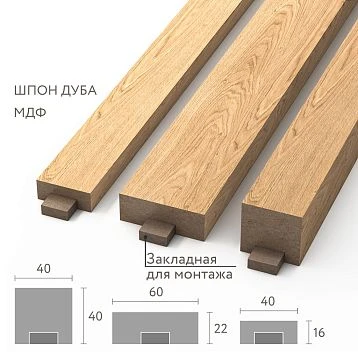
Article Contents:
- Material delivery does not end with the last truck
- PHYSICALLY DELIVERED and OPERATIONALLY CLOSED are different states
- Why you can't look only at the total number of meters
- Final Reconciliation Register — the main closing table
- Why the Final Reconciliation Register is kept by rows, not only by batches
- How to calculate OPEN BALANCE
- How to calculate FINAL REQUIRED with multiple project changes
- Wooden skirting board: why received and accepted are not the same
- What happens after receiving a replacement
- How not to count a replacement twice
- Why a replacement should not increase the original order
- Wooden moulding: mis-sorting cannot be counted toward completed volume
- An unapproved analogue does not close the original line
- How to close an approved substitute
- Wooden cornice: one missing item can keep the entire zone open
- How to calculate zone completion
- What to do if the supplier no longer physically owes any deliveries
- Why a change order must be separated from a supply error
- SUPPLIER VARIANCE
- PROJECT VARIANCE
- INSTALLATION VARIANCE
- OPEN
- PARTIAL
- DELIVERED
- READY TO CLOSE
- CLOSED

The last truck has been unloaded. At first glance, everything is simple: the supply is complete, and the order can be closed. But on a large project, the physical arrival of the last batch does not yet mean that obligations for every line item have actually been fulfilled, discrepancies have been closed, and the fate of the remaining stock is clear.
After the final shipment, there may still be four missing molding strips, three mistakenly delivered cornices, an open claim for a damaged baseboard, an approved return, an unprocessed replacement, a remaining installation reserve, or an additional volume due to a project change.
Therefore, the supply of materials should be completed not by the last truck, but by FINAL ORDER RECONCILIATION — the final reconciliation of the entire order.
The main task: for each purchasing line, answer one question — is any further action still required? If the answer is “yes,” the order is still open.

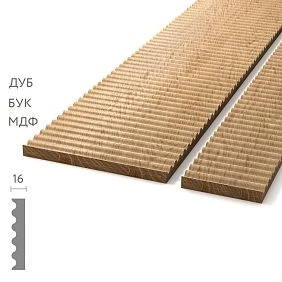
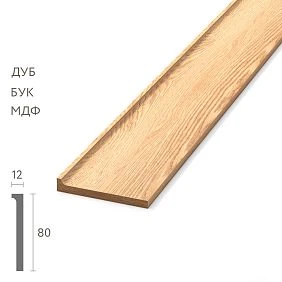
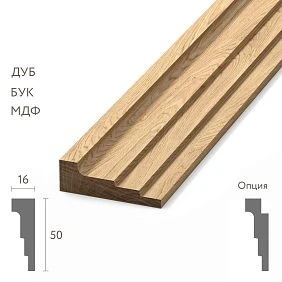
The supply of materials does not end with the last truck
The transport schedule and the order status are different things.
The last scheduled machine can arrive on December 20, but one line item still has the status:
- SHORTAGE OPEN;
- CLAIM OPEN;
- REPLACEMENT PENDING;
- RETURN PENDING;
- CLOSED WITH CHANGE.
An order can only be closed when every line has a final, explainable status.
Key formula:
DELIVERED ≠ CLOSED.




PHYSICALLY DELIVERED and OPERATIONALLY CLOSED are different states
PHYSICALLY DELIVERED answers the question: what has physically arrived at the site.
OPERATIONALLY CLOSED answers another: what has been accepted, which deviations have been closed, and whether any further action is required for this line item.
For example, 420 skirting board strips have physically arrived. Four are damaged. This means:
DELIVERED = 420
ACCEPTED = 416
REJECTED = 4
OPEN = 4
The line is not yet closed, even though the transport delivery is complete.
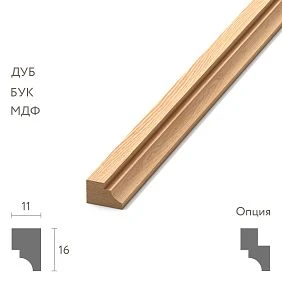
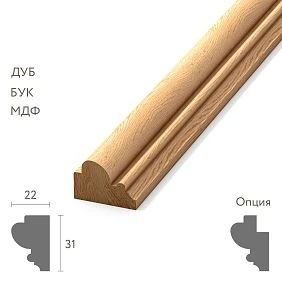
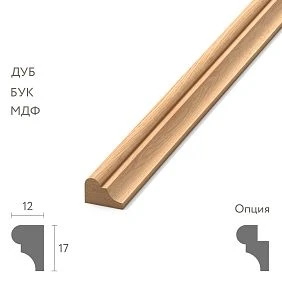
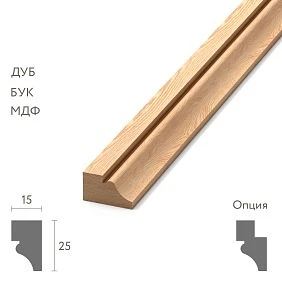
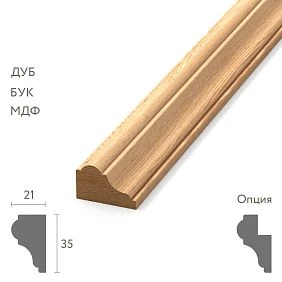
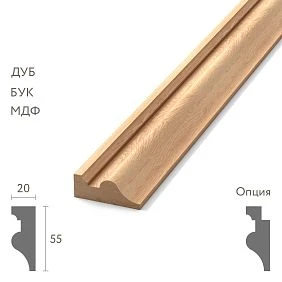
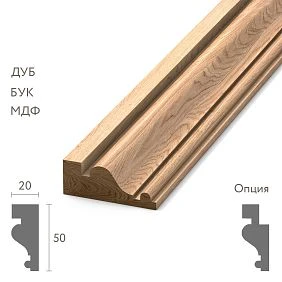
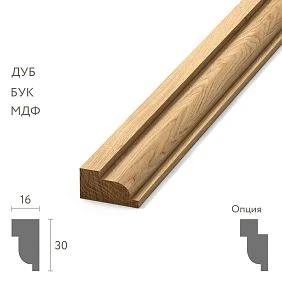
Our factory also produces:
Why you can't look only at the total number of meters
1,000 linear meters were ordered. 1,000 m have physically arrived at the site. It seems that completion is 100%.
But 40 m turned out to be a different molding.
Quantitatively:
100% delivered.
Technically:
only 960 m of the correct product was accepted.
Therefore, closing is done by SKU and configurations, not by total mass or total linear meters.
Get Consultation
Final Reconciliation Register — the main closing table
| SKU | Ordered | Delivered | Accepted | Rejected | Replacement | Returned | Open |
|---|---|---|---|---|---|---|---|
| PLT-A | 120 | 120 | 118 | 2 | 2 | — | 0 |
| MLD-A | 240 | 238 | 238 | 0 | — | — | 2 |
| KZ-A | 50 | 52 | 50 | 2 | — | 2 | 0 |
The main column is OPEN BALANCE. It must become zero or receive a documented final decision.
Why the Final Reconciliation Register is maintained by rows, not only by batches
Three trucks could have been accepted without formal comments on the total number of places, but the same MLD-A line could pass through all three batches. If only BATCH-01, BATCH-02, and BATCH-03 are closed, it is easy to lose the overall picture for a specific SKU.
Therefore, the final reconciliation must have two dimensions:
- batch view — what happened in each delivery;
- item view — how each purchasing line ended.
At the closing stage, item view becomes the key. It is what determines whether the order for PLT-A, MLD-A, and KZ-A has been fulfilled in full.
How to calculate OPEN BALANCE
Simplified logic:
OPEN BALANCE = FINAL REQUIRED – FINAL ACCEPTED.
But FINAL REQUIRED is not always equal to the original ORDERED. If the project has officially changed, the requirement changes too.
Therefore, the final required quantity is determined first, and then it is compared with the accepted correct goods.
How to calculate FINAL REQUIRED when there are multiple project changes
If the project has changed several times, it is useful not to overwrite the old numbers, but to build a chain:
ORIGINAL ORDER = 100
CHANGE-01 = +12
CHANGE-02 = −4
FINAL REQUIRED = 108
Then the final requirement is explainable. Anyone later understands why the final number differs from the original one.
This is especially important when the supplier has formally fulfilled the original order, but the project has officially added new zones afterwards. Without change history, such a situation looks like an underdelivery, although the cause lies on the project side.
Wooden skirting board: why received and accepted are not the same thing
For PLT-A, 420 planks were ordered.
The truck delivered 420.
Of these:
- 416 — accepted;
- 4 — damaged and separated.
The physical delivery equals the order. But the line remains OPEN for four items until a decision is made: replacement, agreed acceptance, or another final outcome.
What happens after receiving the replacement
The supplier brings four more planks.
You can't just record:
RECEIVED = 424
and decide that an extra item has appeared.
The correct approach:
ORIGINAL DELIVERY = 420
REJECTED = 4
REPLACEMENT = 4
FINAL ACCEPTED = 420
OPEN = 0
This is how the meaning of the operation is preserved.
How not to count replacement twice
A typical mistake in the final reconciliation is to include the replacement in both Delivered and an additional Accepted without subtracting Reject.
For example:
Original delivered = 100
Rejected = 5
Replacement delivered = 5
The final Accepted is 100, not 105.
Replacement must always be linked to a specific rejected quantity or a separate claim. Then it is clear which problem it resolves and why it does not increase the project requirement.
Why a replacement should not increase the original order
Replacement is the restoration of the accepted quantity, not a new requirement.
If the original order was 420 and four items were replaced, the total requirement remains 420.
This is important for subsequent analytics: otherwise the system will show that the project consumed 424 planks, even though four of them were never accepted into work.
Wooden moulding: mis-shipment cannot be counted toward the completed volume
Ordered:
MLD-A — 150 pcs.
Received:
MLD-A — 145
MLD-B — 5
Even if the cost of MLD-A and MLD-B is the same, the original line is under-delivered by five units.
Until MLD-B is approved as an official replacement or the correct MLD-A arrives:
ACCEPTED MLD-A = 145
WRONG SKU = 5
OPEN = 5
An unapproved equivalent does not close the original line
This is especially important for decorative profiles, where visually similar items have different geometry.
The entry “150 of 150 received” is incorrect if five strips have a different cross-section.
Another SKU can close the line item only after a formal replacement approval.
How to close an approved substitute
If MLD-B is officially accepted instead of MLD-A, the original line cannot simply be deleted.
Working history:
ORDERED: MLD-A = 150
DELIVERED: MLD-A = 145
WRONG SKU: MLD-B = 5
CHANGE APPROVED: MLD-B accepted as substitute = 5
FINAL STATUS: CLOSED WITH CHANGE
This makes it clear that the original configuration was changed deliberately. This is important for subsequent reordering: the team already knows that part of the area was actually completed with another SKU.
Wooden cornice: one missing line item can keep the entire area open
The common area requires 30 identical cornices.
29 received.
For the project as a whole, 99.8% of the linear footage may be closed, but the ceiling line in this area remains incomplete.
Therefore, besides ITEM STATUS, it is useful to have:
ZONE COMPLETION STATUS.
How to calculate zone completion
| Zone | Skirting board | Molding | Crown Molding | Status |
|---|---|---|---|---|
| Lobby | CLOSED | CLOSED | 1 OPEN | NOT COMPLETE |
| Floor 2 | CLOSED | CLOSED | CLOSED | COMPLETE |
This helps distinguish "the order is almost closed" from "a specific installation zone is actually complete."
What to do if the supplier no longer physically needs to deliver anything
Suppose 100 items were originally ordered. After a project change, the requirement became 96.
You cannot simply rewrite ORDERED 100 → 96 retroactively.
More correctly:
ORDERED = 100
PROJECT CHANGE = −4
FINAL REQUIRED = 96
ACCEPTED = 96
OPEN = 0
This shows that the supplier did not underdeliver four items — the project officially reduced the requirement.
Why a change order must be separated from a delivery error
The reasons for the discrepancy must be distinguished.
SUPPLIER VARIANCE
Fewer were delivered, or the wrong or damaged items were delivered.
PROJECT VARIANCE
The project and the final requirement changed.
INSTALLATION VARIANCE
Additional material was needed due to actual consumption, rework, or the installation scenario.
Without this classification, after the project it is impossible to understand why the total volume changed.
An additional order does not always increase the original order
The original specification could have been completely correct. Later, the client added a new room.
The additional 20 m of molding is a new requirement.
It is better to formalize them as:
CHANGE / ADDITIONAL ORDER.
Then the original order continues to show the initial accuracy of the calculation.
Why the origin of the additional quantity needs to be preserved
There were 1000 m. Later, another 120 m were ordered.
If you write only "total — 1120 m" at the end, it is impossible to understand the reason:
- calculation error;
- project change;
- damage;
- new zone;
- overrun;
- operational reserve.
Therefore, the additional quantity must have a reason code.
Reason codes for final analytics
A simple set of codes helps avoid arguing about the causes of deviations six months later:
- RC01 — PROJECT CHANGE;
- RC02 — INSTALLATION OVERRUN;
- RC03 — DAMAGE REPLACEMENT;
- RC04 — WRONG SKU REPLACEMENT;
- RC05 — ADDITIONAL AREA;
- RC06 — RESERVE.
Then an additional order for 120 m ceases to be just "plus 120". It gains a provenance that can be analyzed in future projects.
Delivery of construction material: a damaged plank must have a final outcome
When delivering construction material, a damaged element must not remain indefinitely in the status "lying separately".
Final outcome:
- REPLACED;
- ACCEPTED WITH AGREEMENT;
- RETURNED;
- WRITTEN OFF — if this is provided for by internal procedure.
Until such an outcome occurs, the issue remains OPEN.
Aging of open items: why the date an issue appears matters
At final closure, it is useful to see not only the number of open issues but also their age.
| Issue | SKU | Open Since | Age | Next Action |
|---|---|---|---|---|
| C-02 | MLD-B | 01.12 | … days | Replacement |
| C-05 | PLT-A | 08.12 | … days | Return document |
An old OPEN item is more dangerous than a new one: it easily falls out of active communication. Therefore reconciliation should highlight not only OPEN but also aging.
An open claim means the delivery is not yet closed
Even if the installers have already finished another part of the site.
For example:
CLAIM-008 / PLT-A / 4 pcs / replacement pending
While a replacement, return, or other agreed solution is pending, the line remains open.
One claims register is better than a dozen email threads
| Claim | SKU | Qty | Reason | Solution | Status |
|---|---|---|---|---|---|
| C-01 | PLT-A | 4 | Damage | Replacement | CLOSED |
| C-02 | MLD-B | 3 | Wrong item | Pending | OPEN |
The register should show not only the problem but also the expected action.
Why every OPEN item must have an owner
If the Next Action column says "awaiting replacement" but does not specify who is managing the process, the issue effectively belongs to no one.
Useful fields:
- OWNER;
- NEXT ACTION;
- DUE DATE;
- STATUS.
For example: the purchaser is responsible for the claim, the warehouse — for the return, the site manager — for confirming the actual need. This way, the final stage of the order does not dissolve between departments.
Why issue and claim are not the same thing
Issue — any detected discrepancy.
Claim — a formalized resolution process with the supplier.
For example, an incorrect SKU is found during receiving. At first, this is an ISSUE. After it is passed to the supplier and a replacement is agreed, a CLAIM appears.
To close an order, it is important to understand both the internal and external status.
A return must be distinguished from the remaining stock at the site
If the return is approved, the item receives:
RETURN PENDING
Then:
RETURNED
If extra items remain at the site, this is already a different category:
PROJECT STOCK
Or:
RESERVE
The legal and accounting procedure for returns depends on the specific transaction. What matters here is the management logic: returns and remaining stock must not be mixed.
Why does physical stock remaining after installation not necessarily mean a surplus
The site may have leftover:
- full planks;
- long usable offcuts;
- installation reserve;
- operational reserve.
Before closing the order, the purpose of each group must be determined.
How to calculate the project's final balance
It is useful to separate:
FINAL PHYSICAL STOCK = full planks + usable offcuts + reserve + disputed stock.
But separate statuses are needed for closing:
- USABLE STOCK;
- RESERVE;
- HOLD;
- RETURN PENDING;
- WASTE / WRITE-OFF according to internal procedure.
Only after such classification does it become clear how much material actually remains an asset of the project, and how much still requires action.
Installation reserve changes status after installation is completed
During the works, the material was INSTALLATION RESERVE.
After installation, it can:
- transfer to operational stock;
- close the snag list;
- remain in the project warehouse;
- be handled according to the project's internal rules.
But its status must change explicitly.
The operational reserve must be listed as a separate line
For example:
PLT-A — 6 full planks
MLD-A — 8 full planks
KZ-A — 2 full planks
For each position, record:
- article number;
- the material;
- finish;
- quantity;
- storage location;
- project.
In two years, the maintenance team must understand what these profiles are intended for.
Why short offcuts and the operational reserve cannot be combined
The operational reserve must be genuinely suitable for future replacement.
A set of short fragments of 20–30 cm can be useful as samples or for local restoration, but it is not equivalent to a full reserve in case a long section is damaged.
Therefore, leftovers are classified by usefulness, not just by meters.
Which documents must reconcile at closing
Operationally, the buyer verifies:
- the original order;
- the current specification;
- all actual deliveries;
- acceptance documents;
- claim register;
- replacements;
- returns;
- change orders;
- the final balance.
The goal is not an accounting audit, but technical and quantitative explainability of the result.
A quantitatively closed delivery may still be financially open
For example, the goods were returned, but the adjustment document has not yet been processed.
Or vice versa: the documents are closed, but the replacement for the damaged item has not yet arrived.
That is why it is convenient to have two independent statuses:
MATERIAL CLOSED
и
COMMERCIAL CLOSED.
Final status:
ORDER CLOSED
is set only when both blocks are closed according to the company procedure.
What a dual order status looks like
| Order | Material | Commercial | Final |
|---|---|---|---|
| PG-01 | CLOSED | OPEN | READY TO CLOSE |
| PG-02 | CLOSED | CLOSED | CLOSED |
This way, the order is not closed prematurely just because the goods are already physically at the site.
Why erroneous lines cannot be deleted from the history
We ordered 100.
First delivery — 96.
Shortage — 4.
Second delivery — 4.
Bad practice — editing the old record as if all 100 had arrived at once.
Correct:
ORDER = 100
DELIVERY 1 = 96
SHORTAGE = 4
DELIVERY 2 = 4
CLOSED = 100
The history allows later assessment of delivery quality and the frequency of additional deliveries.
What metrics can be obtained after order closure
After FINAL RECONCILIATION, a solid basis for evaluating fulfillment appears:
- share of SKUs closed with the first delivery;
- number of shortage cases;
- number of wrong SKU;
- replacement volume;
- number of claims;
- average claim closure time;
- volume of additional orders by reason codes;
- size of the operational reserve.
This is now a normal delivery story, not a subjective "overall everything was delivered fine."
Why the last delivery needs to be checked especially carefully
After it, there is no natural "next batch" where a few forgotten planks can be added.
Therefore, before the DELIVERED status, you need to:
- recount all open lines;
- check claims;
- check replacements;
- reconcile returns;
- close inter-zone borrowings;
- allocate operating reserve.
One floor took material from another — how to close this at the end
Floor 2 temporarily used 10 MLD-A planks intended for floor 3.
Later, a compensation batch arrived.
If accounting simply shows “the overall order is 100% closed,” a local shortage can be missed.
Therefore, the internal transfer needs to be closed:
TRANSFER: FLOOR 3 → FLOOR 2 = 10
Then:
COMPENSATION TO FLOOR 3 = 10
Only after this are both zones considered covered.
Five clear order statuses
OPEN
The order has been placed, fulfillment is ongoing.
PARTIAL
Partially received.
DELIVERED
All planned batches have physically arrived.
READY TO CLOSE
The material balance is being reconciled, but documents, reservation, or formal completion remain.
CLOSED
No further actions are required.
Key idea:
DELIVERED ≠ CLOSED.
Why a separate CLOSE DATE is needed
The last delivery date and the order closing date may differ.
For example:
LAST DELIVERY DATE = 20.12
FINAL CLAIM CLOSED = 10.01
ORDER CLOSE DATE = 10.01
This way you can see the actual fulfillment duration. If you set the close date equal to the last machine, the analytics will hide the tail of claims and returns.
What to do with the CLOSED WITH CHANGE status
Sometimes the original line is closed not by an exact delivery, but by an agreed project change.
For example, MLD-A is replaced by MLD-B of a new revision.
Then the status:
CLOSED WITH CHANGE
and a link to the change order.
This way it is clear that the original configuration was not delivered, but the issue was closed by an official change rather than lost.
Why construction material deliveries cannot be closed from memory
On a long project, several people remember different versions of events: the foreman — that "everything seemed to have been delivered", the purchaser — that "there was also a return", accounting — that "everything was paid according to the invoice".
When supply of construction materials the final status must come from the register, not from collective memory.
This is why the Final Reconciliation Register becomes the single point of closure.
Who should confirm ORDER CLOSED
On a small order, one procurement specialist can do this. On a large project, it is useful to split the confirmation:
- the project confirms the material balance;
- procurement confirms claims, replacements, and returns;
- the commercial/financial track confirms there are no open adjustments;
- the responsible person issues the final ORDER CLOSED.
This reduces the risk that one department closes the order while another is still waiting for a replacement or document.
What counts as a zero OPEN BALANCE
Zero does not mean “we are not physically waiting for anything else,” but rather:
- all finally required SKUs are accepted;
- all replacements are closed;
- wrong SKUs are not counted as correct;
- project changes are documented;
- returns have received their final status;
- claims are closed or moved to a separate formal process.
When an open claim can be moved out of the order
Sometimes a company internally closes a material order while handling the financial claim through a separate process.
This is only possible if the rule is defined in advance and the order contains a reference to a separate claim.
You cannot simply forget an open claim just to get a nice CLOSED status.
How to hold the final meeting to close out an order
For a large project, a short reconciliation session with procurement, the site, and the person responsible for accounting is useful.
Agenda:
- open the Final Reconciliation Register;
- go through all OPEN lines;
- check change orders;
- check claims;
- confirm returns;
- confirm reserve;
- reconcile MATERIAL CLOSED;
- reconcile COMMERCIAL CLOSED;
- set ORDER CLOSED.
Such a meeting replaces months of fragmented correspondence after installation is completed.
Final Snapshot: what to save at the moment of closing
After the CLOSED status, it is useful to save a final snapshot of the order so that a year later you don't have to reconstruct the history from a dozen files.
The Final Snapshot includes:
- FINAL REQUIRED for each SKU;
- FINAL ACCEPTED;
- OPEN BALANCE = 0;
- list of CLOSED WITH CHANGE;
- closed claims;
- final reserve;
- storage location of the operational stock;
- ORDER CLOSE DATE;
- responsible for closing.
Such a snapshot does not replace primary documents. It serves as a short map of the entire order and allows you to quickly answer the question: how exactly did each line item end.
Why source data cannot be rewritten after CLOSED
After closing, the history must freeze. If a new problem is discovered later or an additional need arises, a new issue, service order, or additional order is created — depending on the company's process.
You cannot retroactively change DELIVERED, ACCEPTED, or CHANGE HISTORY as if the new information had been known from the start. Otherwise, the final analytics stop reflecting actual execution.
Closing checklist before ORDER CLOSED
- All SKUs of the original order have a final status.
- There are no unexplained underdeliveries.
- Mis-shipment is closed.
- Damages have received a final resolution.
- Replacements have been received or formally settled.
- Additional project volumes are separated from the original order.
- Returns and adjustments are closed according to the accepted procedure.
- Balances have been recalculated.
- Operational reserve has been allocated.
- The latest claims are closed or officially moved to a separate process.
- MATERIAL CLOSED confirmed.
- COMMERCIAL CLOSED confirmed.
- OPEN BALANCE across all lines is zero or has a documented closure.
- The order receives the status ORDER CLOSED.
Final algorithm for closing the supply of wooden moulding
- Open the original order and the current specification.
- Collect all supply batches.
- Reconcile DELIVERED for each SKU.
- Reconcile ACCEPTED.
- Show REJECTED separately.
- Account for replacements.
- Account for wrong SKU.
- Account for returns.
- Separate project changes.
- Separate installation variances.
- Recalculate FINAL REQUIRED.
- Calculate OPEN BALANCE.
- Close claims.
- Close inter-zone transfers.
- allocate operating reserve.
- Confirm MATERIAL CLOSED.
- Confirm COMMERCIAL CLOSED.
- set ORDER CLOSED.
Final order closure is not a formality after delivery. It is the moment when the buyer proves that the entire project history reconciles: how much was ordered, how much arrived, how much was accepted, what was damaged, what was replaced, what was returned, what the project changed, and what remained as operational reserve.
If such reconciliation is not done, an order can look "closed" for years simply because people stopped talking about it. If it is done, every line has a clear final outcome, and the next project gets a quality history instead of a set of scattered invoices and correspondence.