










































Article Contents:
- Polyurethane vs. Polystyrene Molding: The Short Answer
- Understand the Materials Before Comparing Them
- What Is Polystyrene Molding?
- What Is Polyurethane Molding?
- What Is Duropolymer®? Is It Polyurethane?
- High-Density Polystyrene Baseboards for Everyday Rooms
- When a Polyurethane Baseboard May Make Sense
- Baseboard Height and Profile Matter More Than Labels
- Heat Exposure
- Sunlight and UV Exposure
- Household Chemicals
- U.S. Fire and Building Requirements
- Cutting and Miters
- Mounting Adhesive Versus Joint Adhesive
- Priming and Painting
- Repairs and Future Replacement
- Example: Baseboards for a 12-by-13-Foot Room
- Is polyurethane better than polystyrene for baseboards?
- What is the difference between polyurethane molding and polystyrene molding?
- Is Duropolymer® the same as polyurethane?
- Which is better for ornate crown molding or classical decoration?
- Can polyurethane molding bend around an arch?
- Is polystyrene trim suitable for a bathroom?
- Is polyurethane trim stronger than high-density polystyrene?
- Can both materials be painted to match walls and cabinetry?
- Which option costs less per linear foot?
- Can I combine polystyrene baseboards with polyurethane wall molding?

Choosing between polyurethane molding and polystyrene molding sounds like a simple material comparison. In practice, it is a decision about where the trim will be installed, how it will be handled, how much detail the design needs, and which exact product the supplier is selling. A baseboard at floor level has a different job from a decorative picture-frame molding halfway up a dining-room wall. A simple crown molding in a bedroom has different requirements from a deeply sculpted acanthus frieze in a traditional living room.
Both materials can create clean architectural lines and paintable decorative finishes. Neither is automatically the more durable, more flexible, safer, or better choice in every application. High-density polystyrene baseboards can be a practical option for straightforward floor-level trim, while rigid polyurethane architectural moldings are especially useful for detailed ornamental profiles, decorative wall frames, and applied accents. The formulation and product geometry matter at least as much as the polymer's name.
This U.S.-focused guide explains the differences between EPS, XPS, impact-modified and high-density polystyrene, and cast polyurethane; compares appearance, installation, moisture exposure, impact, finish compatibility, and project cost; and shows how to select products from the STAVROS architectural molding and decorative trim catalog. The goal is to help you buy polyurethane molding or polystyrene trim for the right reason—not because of an exaggerated marketing claim.





Polyurethane vs. Polystyrene Molding: The Short Answer
If your project calls for a straight, paint-grade floor baseboard, start by comparing purpose-made high-density polystyrene baseboards by profile height, projection, toughness, and installation requirements. If it calls for ornate molding, a three-dimensional decorative applique, a sharply defined floral motif, or a classical wall-panel composition, inspect cast polyurethane alternatives.
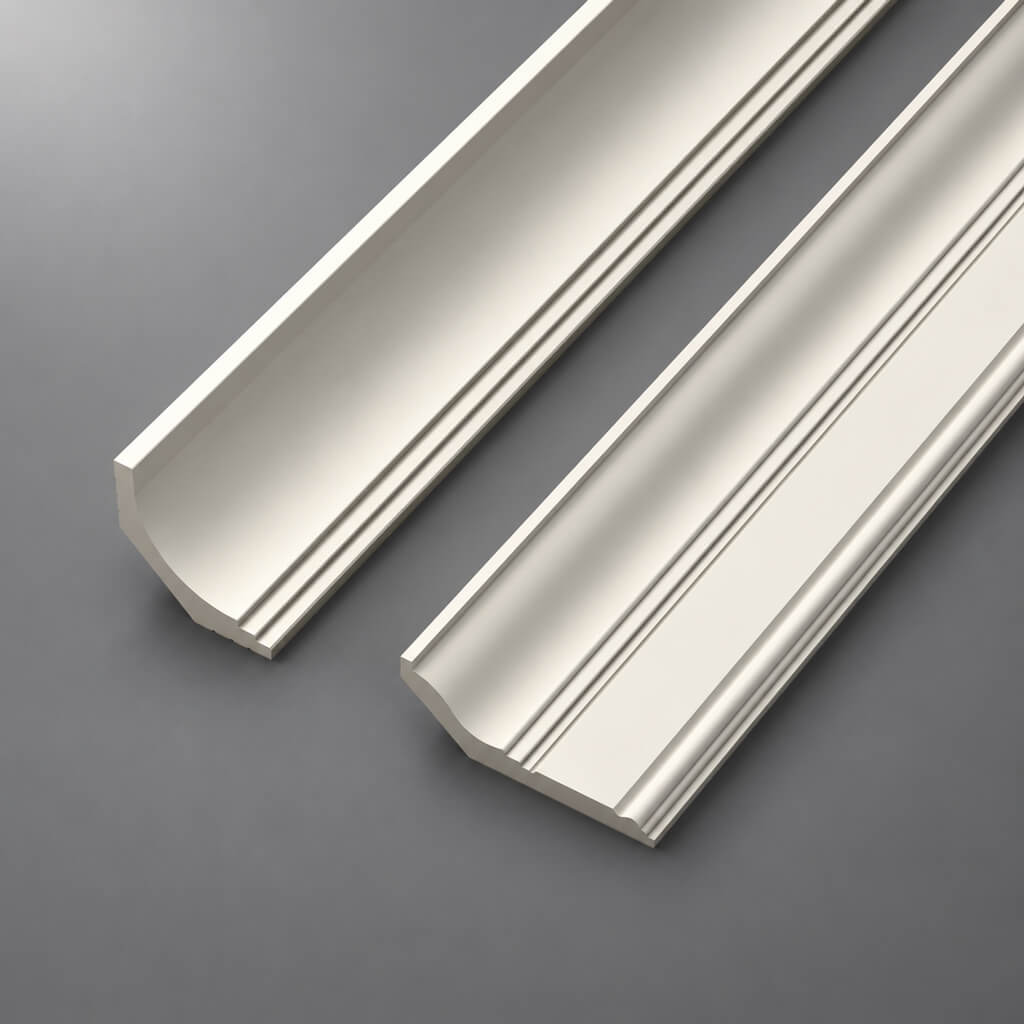
For crown molding, either material family may be represented in the broader market, but the actual STAVROS crown molding category currently emphasizes polystyrene products. A polyurethane wall molding should not be described as a polyurethane crown molding simply because it has a decorative cross-section.
| Buying criterion | Polystyrene architectural trim | Polyurethane architectural trim |
|---|---|---|
| Common products | Purpose-made baseboards, lightweight crown profiles, smooth and stepped wall trim | Cast wall moldings, ornamental trim, onlays, rosettes, decorative architectural details |
| Surface detail | Depends greatly on density and manufacturing; dense profiles can have clean edges and defined details | Cast formulations can reproduce deep relief and intricate shapes exceptionally well |
| Impact behavior | Lightweight foam and dense impact-resistant grades differ substantially | Depends on rigid formulation, geometry, thickness, and coating; not automatically tougher |
| Flexibility | Standard rigid profiles generally should not be bent without approval | Standard rigid cast profiles generally should not be bent either; specialty flexible versions are separate products |
| Moisture exposure | Some products suit humid interiors when the full installation is compatible | Some products suit humid interiors when the full installation is compatible |
| Painting | Usually paint-grade when specified; check primer and coating | Usually paint-grade when specified; check primer and coating |
| Installation | Follow the exact product's adhesive, cut, joint, and substrate instructions | Same principle; ornate surfaces and profile projection may require additional care |
| Price comparison | Compare the actual stock length, product dimensions, quantity, and delivered cost | Compare like-for-like function and the complete installed system |
This is a comparison of product families, not a claim that every SKU shares identical performance. A detailed data sheet should always override general material assumptions.

Understand the Materials Before Comparing Them
Наша фабрика также производит:
Смотреть весь Каталог продукции
What Is Polystyrene Molding?
Polystyrene is a thermoplastic polymer. Manufacturers can formulate and process it into very different products, from extremely light foams to relatively dense, solid-feeling extruded trim. That is why comparing “polystyrene” with “polyurethane” as if each were a single material grade leads to misleading conclusions.
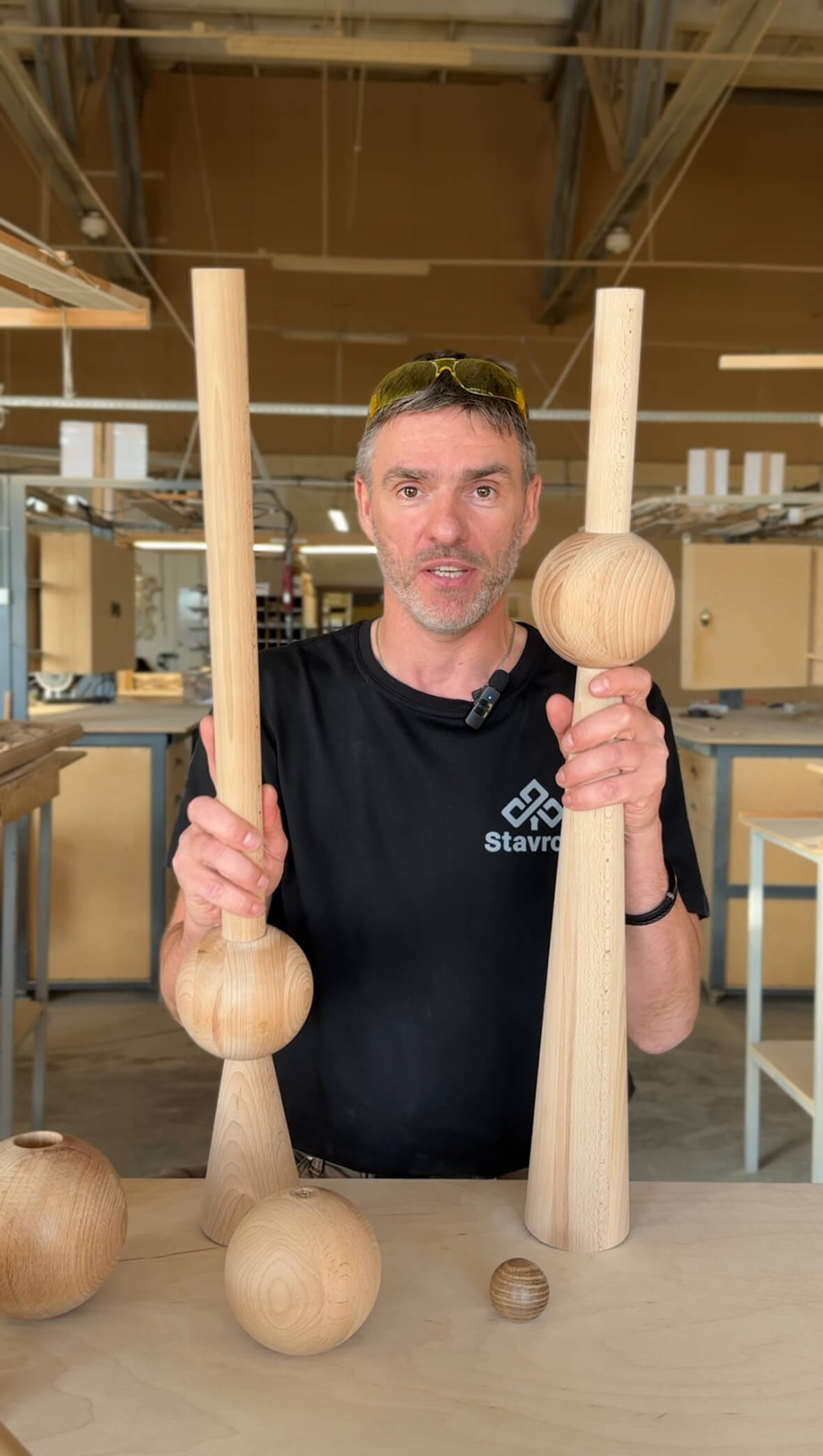
Expanded polystyrene (EPS) is produced by expanding and molding beads into foam. Lightweight EPS products can be economical for certain decorative applications, but a low-density foam profile should not be confused with a dense floor baseboard designed to tolerate incidental contact.
Extruded polystyrene foam (XPS) is a foamed material produced through extrusion. In the United States the abbreviation XPS is strongly associated with insulation board, although the broader extrusion process is used in other manufactured products. Do not assume an architectural trim listing marked extruded polystyrene has the same structure, density, or performance as XPS insulation.
High-impact polystyrene (HIPS) is modified to improve impact performance compared with ordinary general-purpose polystyrene. It is not simply another name for EPS or XPS, and the word high-impact is not enough to establish the properties of a particular baseboard.
High-density polystyrene trim may be extruded into rigid, paintable profiles with substantially different characteristics from low-density foam. These are the products most relevant when selecting high-contact baseboards or more defined architectural trim. Their properties depend on the exact formulation and manufacturing process.
When reviewing STAVROS polystyrene baseboards, look at the material field and the individual model—not generic descriptions of polystyrene foam.
Получить консультацию
What Is Polyurethane Molding?
Polyurethane is a family of polymers formed through urethane chemistry, with formulations ranging from flexible elastomers to rigid foams and cast decorative products. For interior architectural details, polyurethane molding, urethane molding, and PU molding usually refer to the shaped decorative component, not to an adhesive or insulation board.
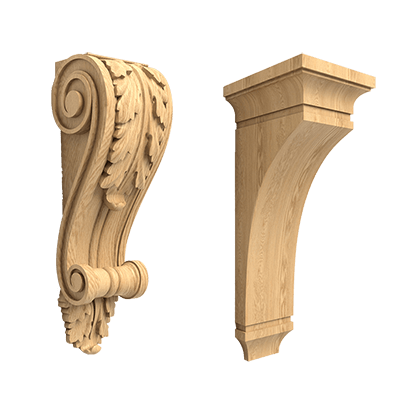
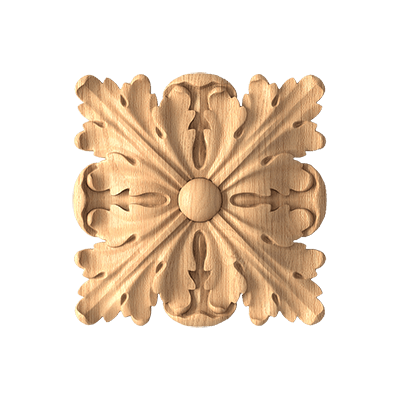
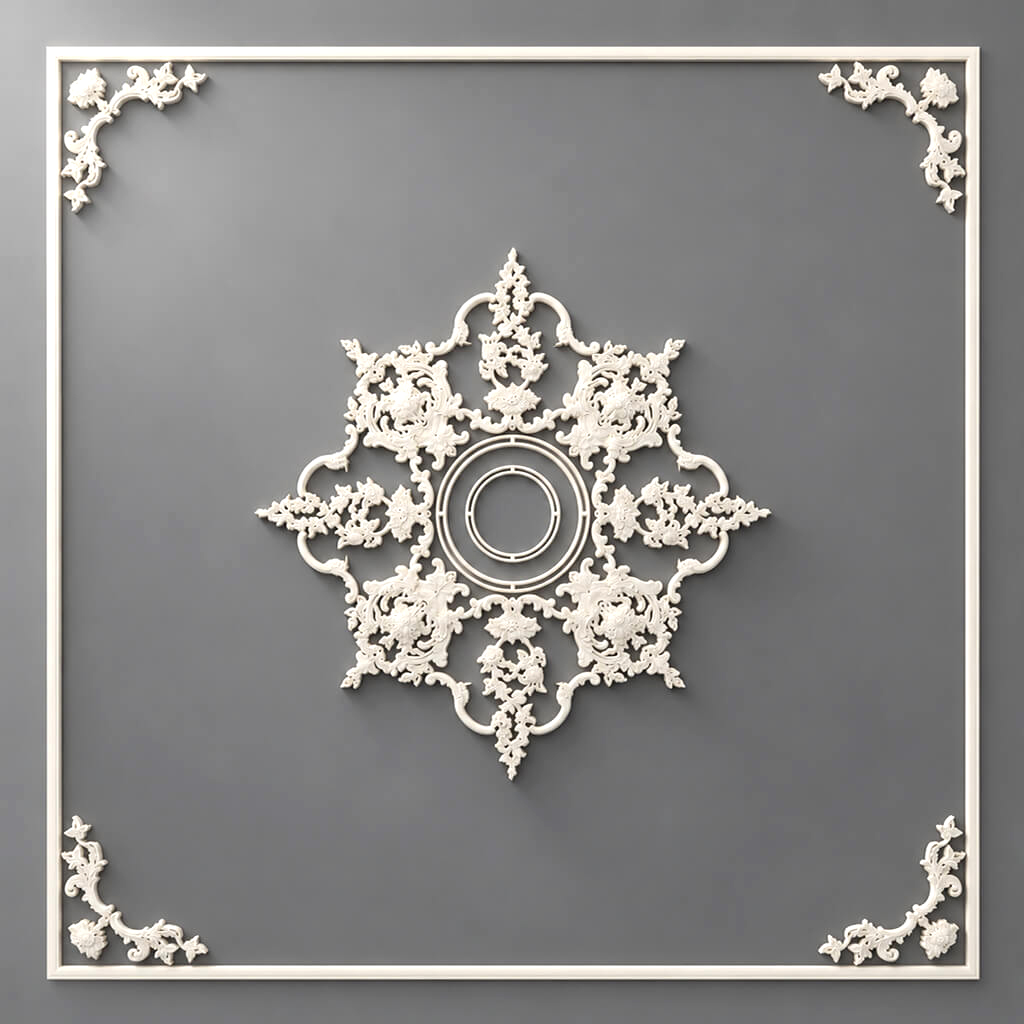
Rigid cast polyurethane can reproduce intricate patterns such as acanthus leaves, scrolls, shells, beads, and floral relief. It is particularly suitable for ornamental designs whose visual impact depends on crisp contours and depth. But a standard rigid polyurethane molding is not necessarily bendable, and polyurethane chemistry alone does not guarantee impact resistance or a particular service life.
For example, STAVROS polyurethane molding MLDPU-001 is a narrow decorative bead listed at 10 × 6 × 2,600 mm, approximately 0.39 × 0.24 × 102.36 inches. The broader MLDPU-003 polyurethane wall molding is listed at 35 × 12 × 2,600 mm, approximately 1.38 × 0.47 × 102.36 inches. Both are polyurethane, yet their size, shadow, and intended design roles differ.
What Is Duropolymer®? Is It Polyurethane?
Duropolymer® is not a synonym for polyurethane. It is Orac's named material associated with extruded, impact-resistant high-density polystyrene. Orac separately identifies its Purotouch® material as polyurethane and its Durofoam® products as a lighter polystyrene-based blend.
Some online listings use duropolymer, duro-polymer, phytopolymer, and high-density polystyrene loosely. These labels are not interchangeable technical standards. When buying a competing product or a HI WOOD baseboard, confirm the actual composition from the manufacturer rather than inferring it from a marketing name.
For practical U.S. purchasing, high-density polystyrene baseboard is a clear material-and-application description. Duropolymer® should be used specifically when referring to the branded product line, not as a generic classification for every dense polystyrene profile.
Which Material Is Better for Baseboards?
A baseboard is installed where walls meet flooring. It creates a finished visual transition, helps conceal the expansion gap where the flooring system requires one, and is exposed to shoes, vacuum cleaners, furniture, and household cleaning.
The most important purchasing questions are therefore straightforward: Is the profile specifically designed as a floor baseboard? Does its projection cover the required floor-to-wall gap without obstructing doors or cabinetry? Is the surface appropriate for expected contact and cleaning? And can it be installed on the actual wall substrate?
High-Density Polystyrene Baseboards for Everyday Rooms
A purpose-made dense polystyrene baseboard can be an effective paint-grade choice in bedrooms, living rooms, home offices, and hallways. Unlike a light decorative foam strip, a higher-density profile may be engineered for closer contact with normal household activity. Evaluate it by its individual impact and finish claims, not by the assumption that all polystyrene is fragile.
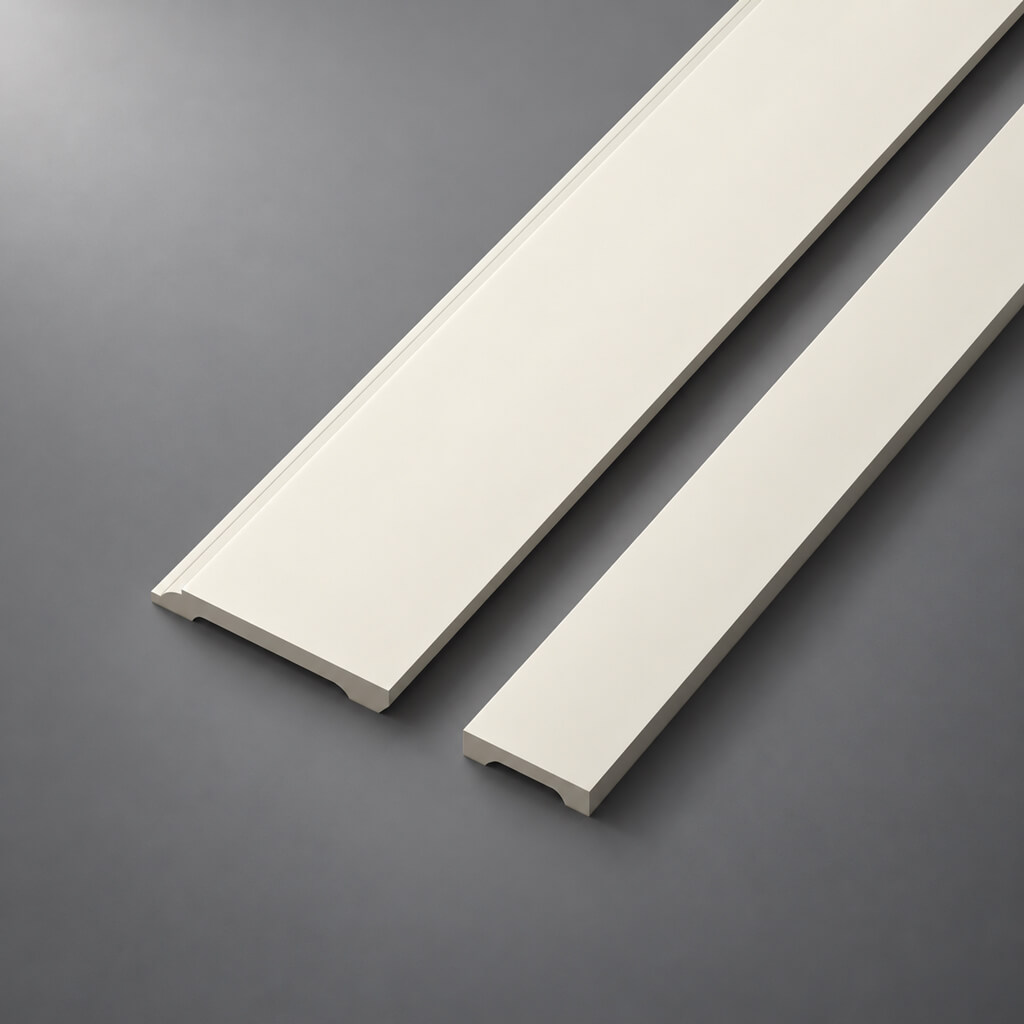
The STAVROS HI WOOD polystyrene baseboard collection includes multiple heights and profiles. As a concrete example, HI WOOD B80B is a polystyrene floor baseboard listed at 80 × 14 × 2,000 mm, or approximately 3.15 inches high × 0.55 inches deep × 78.74 inches long.
That is a genuine floor-baseboard product with dimensions appropriate for evaluating the lower wall. It should not be compared directly with the slim MLDPU-001 decorative bead: the latter is a wall or furniture profile, not a product intended to cover the same floor junction.
When a Polyurethane Baseboard May Make Sense
In the wider American market, polyurethane baseboards can be suitable where the exact product is manufactured and specified for floor-level use. Sculpted profiles can complement traditional paneling, door casing, and ornate room details.
But choose a purpose-made polyurethane baseboard, not merely a polyurethane molding with a profile you happen to like. A decorative strip may lack the height, back geometry, or contact characteristics required at the floor. Where STAVROS currently presents polystyrene floor baseboards and polyurethane wall moldings as separate categories, maintain that distinction in the specification.
Baseboard Height and Profile Matter More Than Labels
In American houses with 8- or 9-foot ceilings, the appropriate baseboard height depends on the existing door casing, architectural style, wall proportions, and desired visual emphasis. A 3- to 4-inch baseboard may appear restrained, while a taller profile creates a stronger, more traditional foundation. There is no universal formula that makes one material correct for a particular ceiling height.
For a more pronounced painted baseboard, examine the dimensions of a model such as HI WOOD B100V1 polystyrene baseboard. Compare the visible face, projection, corner details, and whether it aligns with the casing already installed in the room.
Practical takeaway: For baseboards, specify the correct floor-trim product first. Choose between formulations only after comparing like-for-like profiles designed for that job.
Crown Molding: Polystyrene vs. Polyurethane Near the Ceiling
Crown molding is the normal American term for trim at the wall-to-ceiling transition. Other relevant terms include ceiling molding and, in some contexts, cove molding. The word cornice appears in architectural specifications, but crown molding is usually the more natural search term for U.S. residential buyers.
A ceiling profile does not experience the same scuffs as a floor baseboard. The main concerns are profile scale, ceiling and wall contact surfaces, installation access, joint quality, paintability, and the finished shadow line.
A relatively lightweight polystyrene profile can be practical when the design calls for a simple, straight perimeter. A specially manufactured polyurethane crown molding may be attractive for a very detailed classical profile—but a decorative polyurethane wall strip is not automatically a crown product.
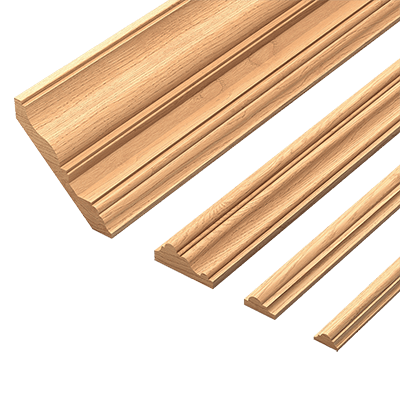
The actual STAVROS crown molding collection currently lists HI WOOD polystyrene crown moldings, including simple and stepped profiles. For example, HI WOOD M1702 is identified as a polystyrene ceiling profile, not a polyurethane one.
Check its cross-section and installed dimensions. A crown profile may have different contact surfaces on the ceiling and wall. A photograph showing a decorative face does not disclose every mounting measurement, especially on angled profiles.
For vaulted ceilings, sloped transitions, concealed lighting, and unusual corners, the selection becomes more technical. Verify whether the profile supports the geometry and any proposed LED installation; do not assume a regular decorative cornice is an approved lighting channel or safe to place near heat-producing equipment.
Wall Panel Molding: Where Polyurethane Has a Strong Design Role
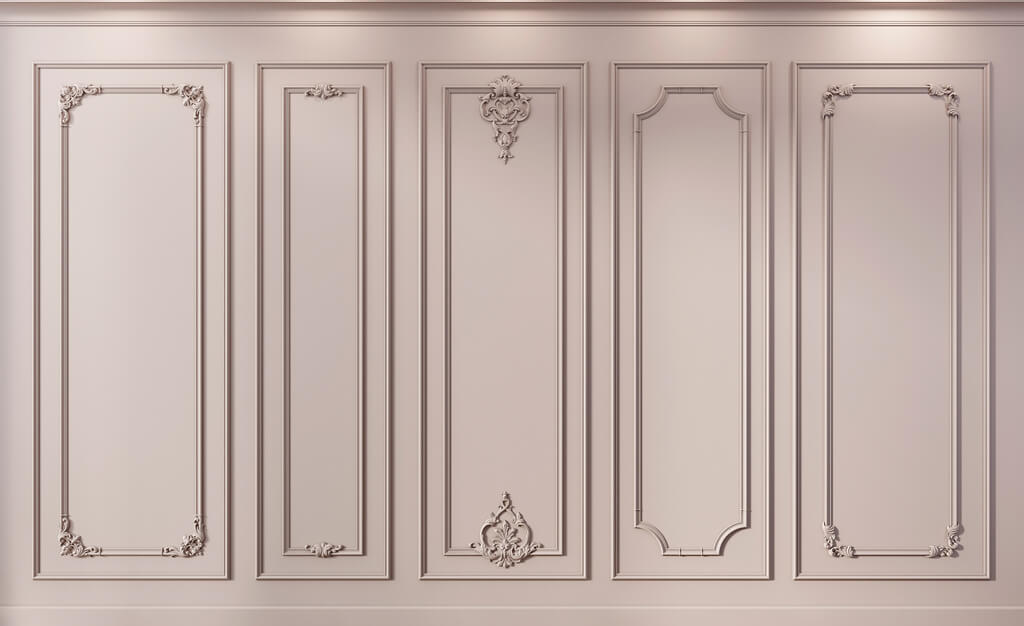
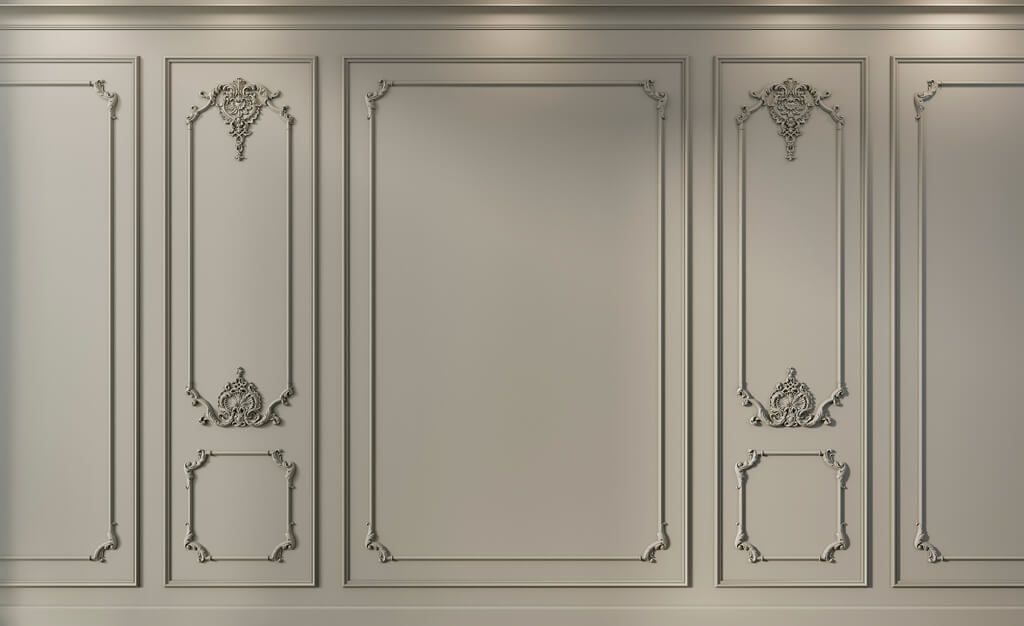
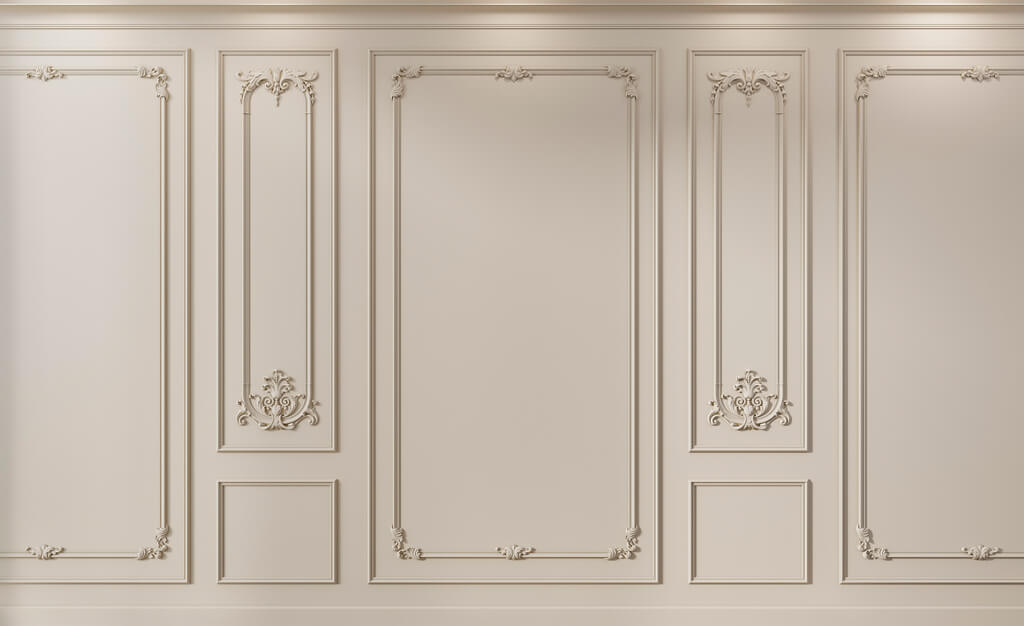
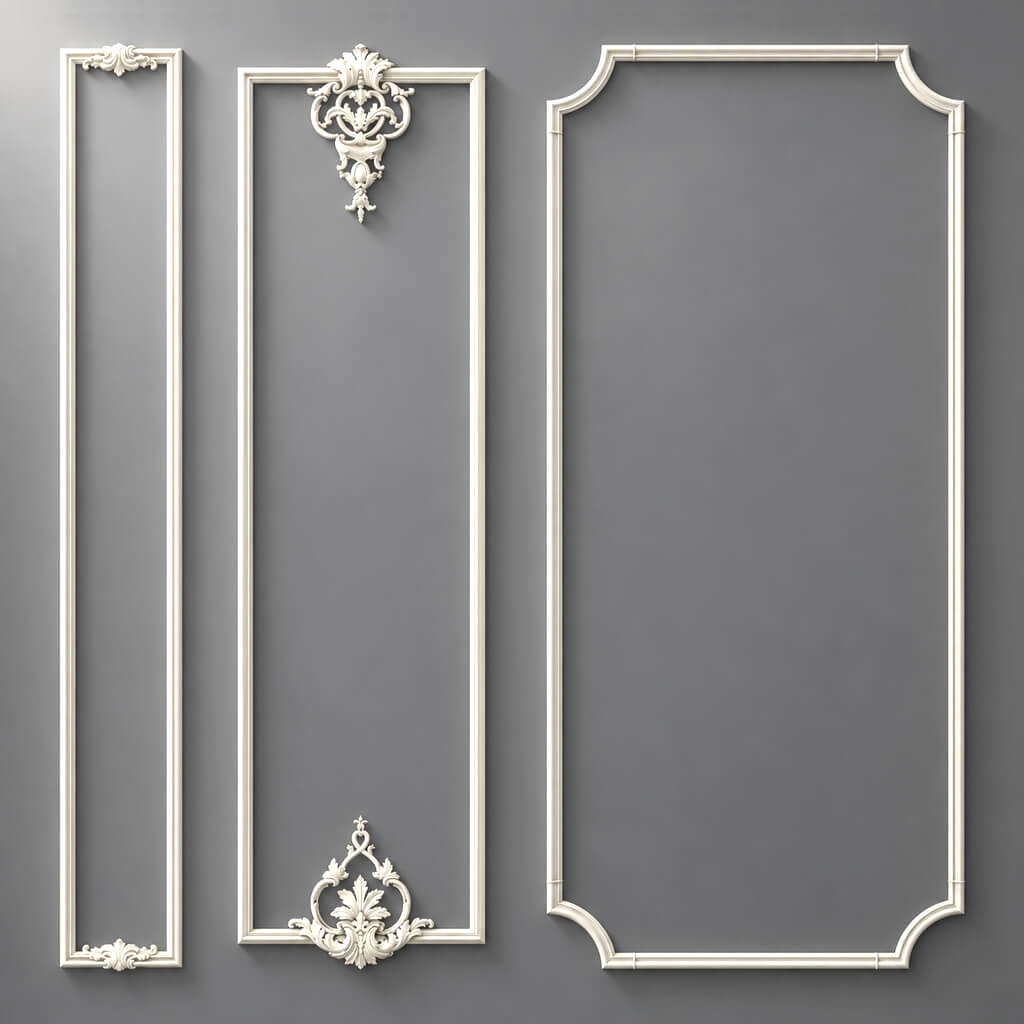
Applied wall frames are a different application from crown molding or floor baseboards. Picture-frame molding, wall panel molding, decorative trim molding, and wainscoting trim can all describe the decorative profiles used to establish rectangular or geometric compositions.
Both rigid polystyrene and polyurethane may work as paint-grade wall trim when properly specified. The key differences are the profile you can obtain, the depth of the ornament, the accuracy of repeated pieces, and how the joints will look after finishing.
A simple geometric wall might use a slim bead or a stepped molding. A traditional dining room might incorporate an acanthus ornament, decorative rosette, or substantial frieze. In those more sculptural applications, rigid cast polyurethane is worth close consideration.
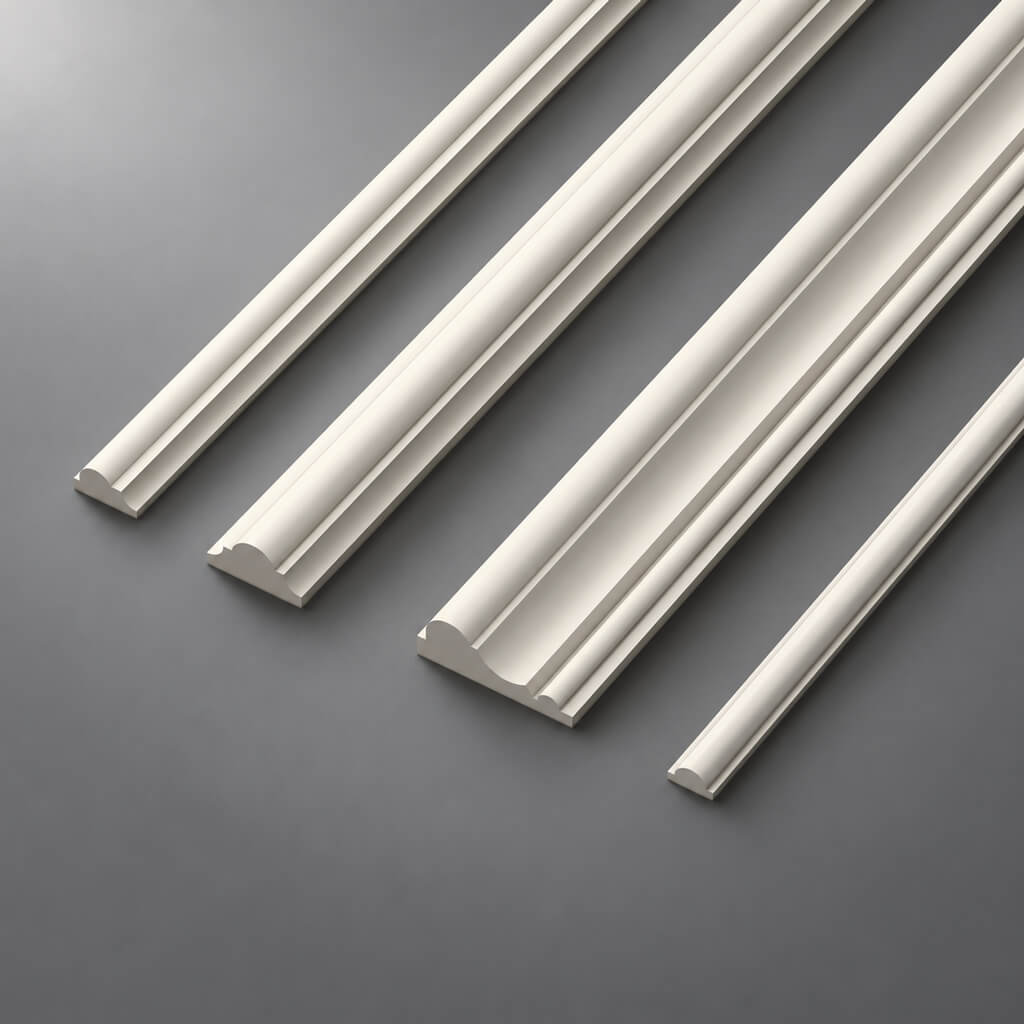
The STAVROS polyurethane wall molding range includes:
-
MLDPU-001 for a delicate beaded outline;
-
MLDPU-002 for a more pronounced stepped line;
-
MLDPU-003 for a wider architectural frame.
These are not simply three “quality grades.” Their different cross-sections produce different proportions and shadows. A narrow profile may be the best design on a compact bedroom wall; a broader profile may suit a formal dining room with generous panel spacing.
Before placing an order, sketch the layout using actual inches, identify outlets and adjacent door casing, and calculate the pieces from the supplier's full stock lengths, not just total linear footage.
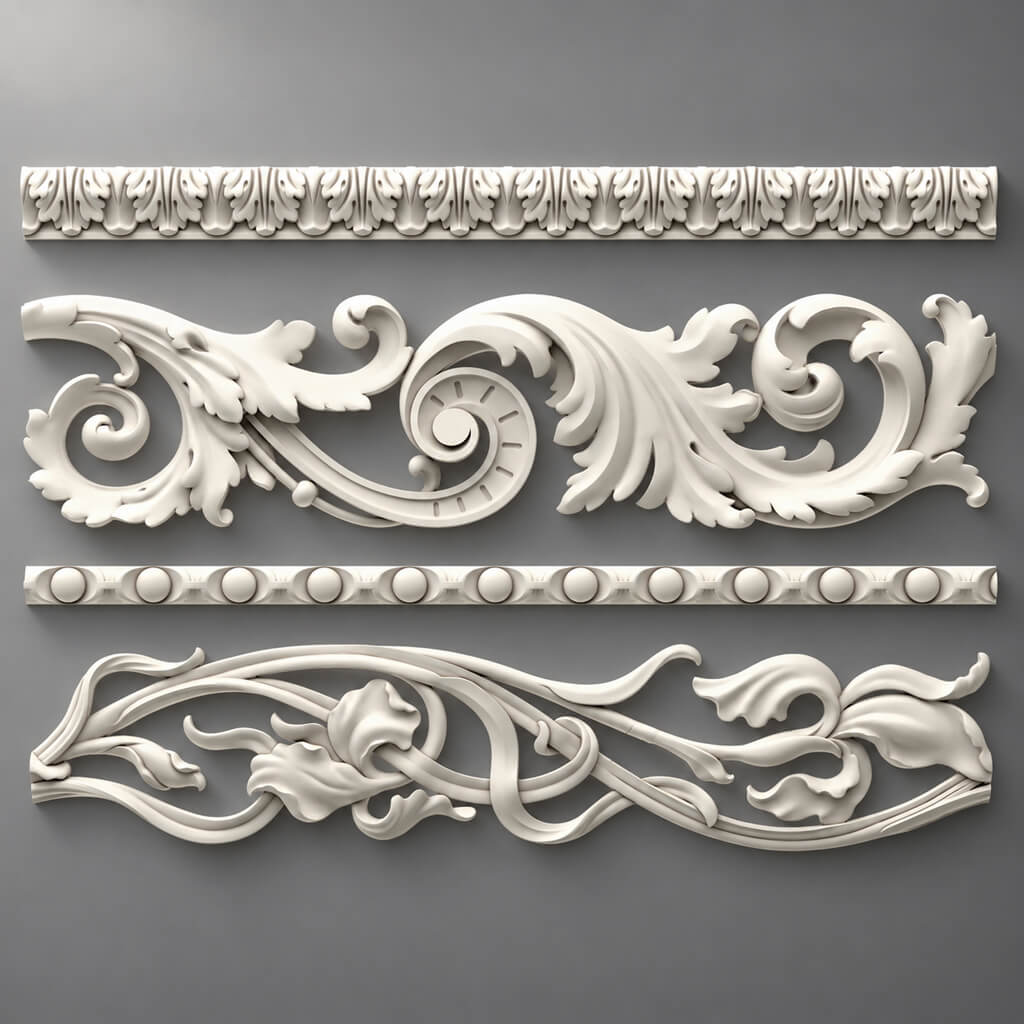
Ornamental Trim: Rope, Beaded, Floral, and Acanthus Designs
American shoppers searching for ornate architectural details often use more specific terms than decorative polyurethane molding. Those terms also describe different visual results.
Beaded molding has repeated rounded details that establish rhythm along a cabinet front, panel, or interior border. Beading can be discreet or prominent depending on the profile's diameter and spacing.
Rope molding uses a twisted pattern associated with traditional cabinetmaking and architectural ornament. The twisting direction and pattern repeat deserve careful attention at joints.
Ornate molding is a broad commercial term encompassing strongly modeled relief, scrollwork, and other decorative designs.
Acanthus leaf molding refers to classical leaf ornament, often used in traditional interiors and architectural details. The actual quality of the leaf edges and recessed areas matters as much as the nominal material.
Frieze molding describes a continuous horizontal decorative band. It can be composed of floral, geometric, or classical motifs, and its scale may be far larger than an ordinary bead.
Floral molding features flowers, foliage, vines, or other plant-derived ornament and can work in neoclassical, transitional, and highly decorative interiors.
For these applications, explore the STAVROS polyurethane ornamental trim collection, including KPU decorative profiles. The collection spans narrow patterns and deeper sculptural designs; confirm each product's width, projection, stock length, and left/right orientation if applicable.
In a coordinated interior, an ornament should complement the surrounding straight lines rather than compete with every other detail. For instance, a broad decorative frieze may be more effective when paired with simpler polyurethane wall molding instead of several additional ornate borders.
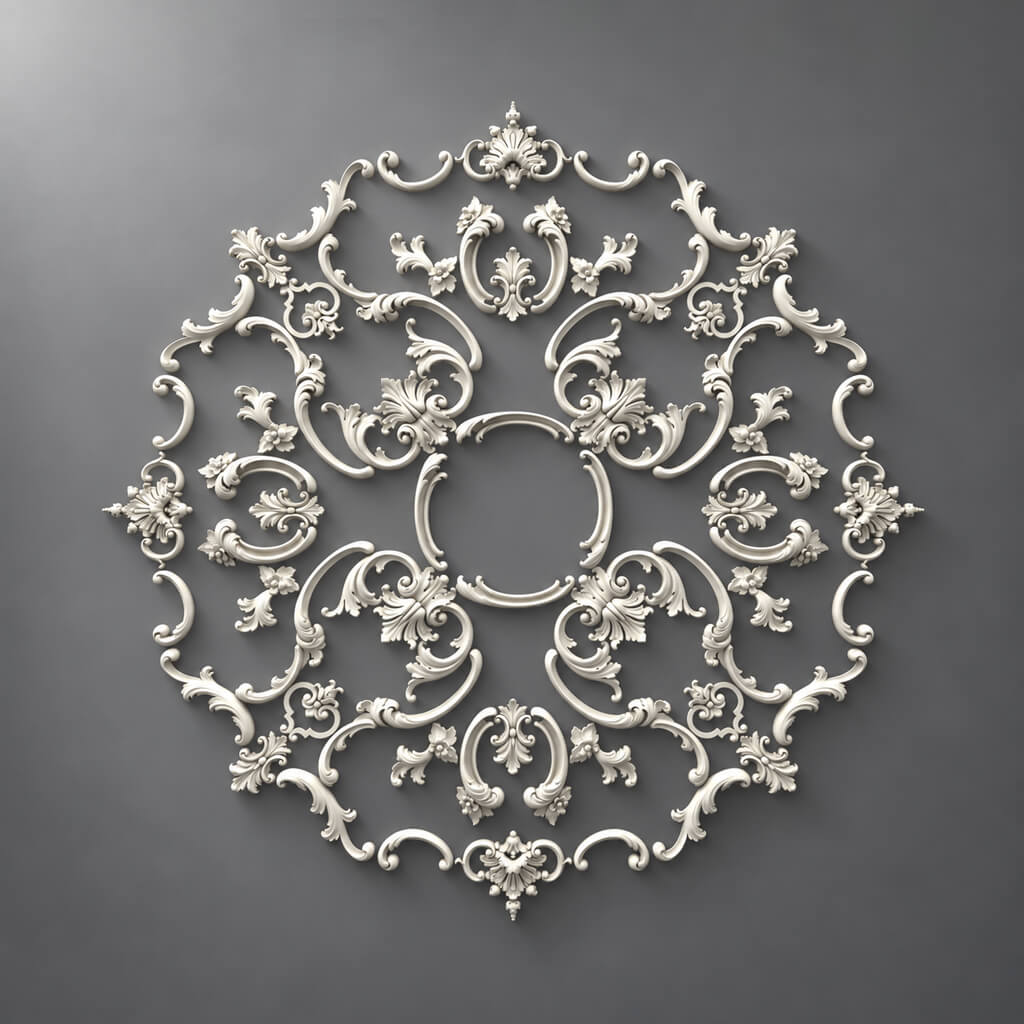
For cabinetry and applied wall accents, polyurethane decorative onlays and appliques offer another way to introduce floral or classical motifs without committing to heavily patterned linear trim.
Impact Resistance: Do Not Choose by Density Alone
One of the most common myths is that polyurethane always withstands impacts better than polystyrene. Another is that any material described as high-density must be stronger or more durable.
A more accurate assessment looks at the specific formulation, surface hardness, toughness, cross-section, and mounting surface. Low-density EPS trim may dent easily. A purpose-made impact-resistant polystyrene baseboard can behave very differently. Likewise, one rigid polyurethane casting may tolerate normal handling well while a thin decorative projection remains vulnerable to chipping.
For floor trim exposed to vacuum cleaners, pet activity, wheeled bags, or furniture movement, ask about the intended use and any documented impact testing. For decorative onlays above chair-rail height, the ability to reproduce fine detail may matter more than impact performance.
Avoid improvised tests that involve deliberately bending, striking, or heating a product without manufacturer guidance. A sample can help you judge the surface and finish, but it cannot establish a standardized impact rating by itself.
Best rule: Compare a genuine dense polystyrene baseboard against a genuine polyurethane baseboard of similar dimensions if impact resistance is the deciding factor. Comparing a thin polyurethane applique with a thick floor baseboard cannot answer that question.
Flexibility: A Separate Product Feature, Not a Polyurethane Guarantee
The Russian-language original made a categorical recommendation to choose polyurethane for curves. That is not technically reliable. Rigid polyurethane molding is generally manufactured to hold its molded shape, while flexible trim is a distinct product that should have a manufacturer-specified minimum bend radius and supported bending orientation.
Dense polystyrene trim is also commonly rigid. Attempting to bend it around a staircase, bay window, arch, or curved wall can damage the profile and open the joints. Do not assume saw kerfs on the back are an approved way to transform a rigid decorative product into curved trim.
For curved installations, document the radius, wall height, curvature direction, and any changes in substrate. Ask the supplier whether an approved flexible version or factory-curved component exists. If neither is available, consider a redesigned segmented composition or another material rather than forcing the chosen strip to fit.
The practical question is not “Which polymer bends more?” It is “Is this exact SKU approved for this exact radius and orientation?”
Moisture Resistance: Bathrooms, Kitchens, and Laundry Rooms
The base material is only one part of a moisture-resistant installation. Even where a polystyrene or polyurethane molding has favorable water-resistance characteristics, the adhesive, joints, paint, wall substrate, and any additional components can determine whether the assembly is suitable for the location.
A powder room with occasional ambient humidity is not the same as a shower enclosure receiving direct spray. A bathroom with a properly ventilated painted wall is not the same as a wet commercial washdown area.
For a bathroom baseboard, a purpose-made polystyrene profile may be worth considering. For decorative wall details, a suitable rigid polyurethane molding may also work. But neither should be described as universally waterproof, immune to mold, or approved for continuous immersion without product-specific evidence.
When choosing trim for bathrooms or kitchens:
-
Confirm that the product is approved for the actual exposure—not merely described as moisture resistant.
-
Check how the trim meets the floor, wall, shower enclosure, or backsplash. Follow the flooring system's required movement gap and sealing details.
-
Choose compatible adhesives and coatings; do not assume all caulks or construction adhesives suit every plastic and primer.
-
Pay attention to existing leaks and damp substrates. Decorative trim must not conceal an unresolved moisture problem.
-
For mixed-material wall kits, verify whether MDF or another moisture-sensitive component limits the application.
For products in the STAVROS baseboard category, review the item-specific conditions rather than treating the whole category as an approval for steam rooms, showers, or pools.
Heat, Sunlight, Chemicals, and Fire Performance
Heat Exposure
Thermoplastics such as polystyrene and many rigid polyurethane decorative formulations respond differently to heat, but there is no universal safe installation temperature for every piece of trim. Claims such as “all polyurethane remains stable up to 300°F” or “all polystyrene must be installed 4 inches away from a radiator” are not adequate specifications.
Near fireplaces, stoves, heating registers, high-output lighting, or unusually warm surfaces, consult the product's service-temperature limits and the appliance manufacturer's clearance requirements. A decorative coating does not transform heat-sensitive material into a noncombustible building product.
Sunlight and UV Exposure
UV exposure can affect the appearance and properties of some plastics and coatings. Whether a given profile yellows or fades depends on its formulation, protective finish, and exposure. It would be misleading to promise an exact number of years before color change without product-specific testing.
If the trim will receive strong direct sunlight, verify the recommended finish. Exterior-rated products require separate confirmation; a material advertised for an indoor wall should not automatically be installed on a porch or facade.
Household Chemicals
Some solvents can attack polystyrene, and a particular coating may be more sensitive than the underlying molding. Polyurethane is not universally immune to solvents either. Use cleaners and adhesives approved for the actual product and finish. Do not assume acetone, paint thinner, mineral spirits, alcohol, or abrasive cleaners are safe merely because a generic online guide recommends them.
U.S. Fire and Building Requirements
Both material families require attention to fire-performance requirements where applicable. In the United States, a project specification may require documentation such as results under ASTM E84, which measures comparative surface-burning behavior under defined test conditions. An E84 test result is not the same as a guarantee that a product is noncombustible or approved for every occupancy.
For commercial or code-regulated work, request a report identifying the exact tested product or product family, installation arrangement, finish, and reported results. The architect, contractor, and local authority having jurisdiction should determine whether the proposed trim satisfies the applicable code. Do not transfer a test result from a European product, a different SKU, or an unrelated coating to STAVROS products without supporting documentation.
Installing Polystyrene and Polyurethane Trim: What Changes?
Both materials can often be handled using common finish-carpentry tools, but the manufacturer's cutting and bonding instructions should govern the installation.
Cutting and Miters
Use a suitable fine-tooth saw or other approved method, with the profile supported to avoid chipping or crushing. Check face width and projection before setting the piece in a miter box. On ornate molding, plan the motif where two lengths meet; a geometrically clean joint can still look wrong if the rope or leaf pattern is visibly interrupted.
Do not assume every polystyrene trim item can be sliced neatly with a utility knife, nor that every rigid polyurethane profile needs a power saw. The product's density, geometry, and size determine a practical method.
Mounting Adhesive Versus Joint Adhesive
A mounting adhesive bonds the profile to the wall or ceiling. A joint adhesive, when specified by the trim manufacturer, addresses the ends of adjoining pieces. Paintable caulk may finish certain small gaps but is not automatically a replacement for either adhesive.
Some solvent-containing products can damage polystyrene or incompatible coatings; some water-based adhesives are unsuitable between two nonporous surfaces without a drying path. Hybrid and other construction adhesives vary by formulation. Always verify compatibility with the actual molding, substrate, and installation conditions.
STAVROS lists installation and finishing materials, but being sold in the same catalog does not itself confirm suitability for every trim SKU or U.S. project.
Priming and Painting
Many polystyrene and polyurethane architectural profiles are sold for paint-grade finishing. Some arrive primed; others require further preparation. Use the coating instructions for the actual item, not an assumption that either material accepts every acrylic, latex, alkyd, or solvent-based paint.
A light, compatible finish can preserve delicate relief. Heavy paint buildup in beaded, rope, or acanthus details can obscure the very ornament you purchased. On a long baseboard run, the visual quality of joints and wall transitions matters as much as the finish on each individual piece.
Repairs and Future Replacement
Minor cosmetic dents or seam issues may be repairable with a compatible filler and paint. A severely damaged or distorted piece may need replacement. The correct repair depends on the material, its finish, the defect, and whether the issue is merely cosmetic or reflects a failed bond.
Avoid suggesting that polyurethane dents can always be restored with a heat gun. Heating unknown plastic formulations can cause deformation or release hazardous fumes. Replace or repair the component according to its maker's recommendations.
Compare the Total Cost, Not Just the Price of One Stick
A useful U.S. purchasing comparison is based on cost per linear foot of material plus the costs of the actual installation. The number printed in an online listing may be per 78.74-inch strip, per 102.36-inch strip, per individual onlay, or per complete kit.
Use this formula for linear profiles:
Material cost per linear foot = current price per full strip ÷ (stock length in inches ÷ 12).
Then create a cutting plan. You may need more complete sticks than the total linear footage alone suggests because the individual walls, corners, and door openings determine how pieces can be cut efficiently.
Example: Baseboards for a 12-by-13-Foot Room
A rectangular room measuring 12 × 13 feet has a 50-foot nominal perimeter. Subtract one 3-foot doorway if no baseboard runs across the opening, leaving 47 linear feet of nominal baseboard to cover. The total may change with cabinets, alcoves, returns, and built-ins.
Suppose the selected HI WOOD B80B polystyrene baseboard is sold in 2,000-mm lengths, approximately 78.74 inches or 6.56 feet per piece.
Theoretical footage calculation: 47 ÷ 6.56 = about 7.16, so at least eight complete pieces are needed even before waste. A simple room with straight walls and the opening arranged to create 12-, 13-, 12-, 5-, and 5-foot runs can be planned around eight strips in principle, but actual cuts, end quality, joints, saw kerf, and the desired number of seams must be checked. Buying another piece as contingency may be reasonable when the cut schedule is tight.
Do not compare the cost of those eight purpose-made polystyrene baseboard strips with eight MLDPU-001 polyurethane beads. They have different intended uses, widths, and stock lengths. For a valid comparison, quote a purpose-made polyurethane baseboard of comparable visible dimensions and installation scope from the available supplier.
Your complete budget may include adhesive, joint treatment, paint, labor, packaging, freight, and any applicable taxes or import charges. These can change the apparent ranking of two options when the installation systems or supply routes differ.
Which Material Should You Choose Room by Room?
The table below is a practical decision framework, not a product certification or universal performance guarantee.
| U.S. room or application | Sensible starting point | What to verify |
|---|---|---|
| Bedroom or home office baseboards | Purpose-made paint-grade high-density polystyrene baseboard | Height, profile, floor gap coverage, finish compatibility |
| Busy entryway and hallway | Purpose-made impact-resistant baseboard, material chosen by specific performance | Scuff and impact resistance, repairability, approved cleaners |
| Living room picture-frame molding | Polyurethane wall molding or suitably specified polystyrene panel molding | Width, projection, layout, repeatability and joint treatment |
| Traditional dining room with deep ornament | Polyurethane ornamental molding, decorative onlays, or a coordinated composition | Relief definition, profile consistency, pattern alignment |
| Simple bedroom crown molding | Purpose-made polystyrene or polyurethane crown product | Cross-section, installation position, adhesives, clearance |
| Bathroom baseboards | Product documented for the actual humid environment | Joint design, substrate, paint, moisture and cleaning exposure |
| Cabinet fronts and furniture appliques | Decorative polyurethane onlays or suitable purpose-made trim | Hardware clearance, substrate, attachment, finish |
| Curved arch or radius wall | A documented flexible or factory-curved product of an appropriate material | Minimum bend radius and orientation for the exact SKU |
| Commercial interior | Material meeting the project specification, not a generic category preference | Fire documentation, durability, submittals, maintenance and local code |
A combination can be more sensible than choosing one material for the entire home. You might use purpose-made polystyrene baseboards, a suitable polystyrene crown molding, and polyurethane ornamental wall trim within the same project. Matching paint and proportion can make the architectural system feel coherent even when the components are made from different materials.
How to Coordinate Baseboards, Crown Molding, and Ornamental Wall Trim
A polished room depends on the relationship between the floor line, wall ornament, doors, and ceiling transition. Material selection should support that hierarchy rather than dictate it.
For a transitional living room, a clean HI WOOD polystyrene baseboard can establish a quiet foundation, while a moderately profiled polyurethane wall molding forms picture-frame panels above the sofa. A restrained polystyrene crown molding can finish the ceiling line without overpowering the wall arrangement.
For a more traditional room, the wall frames may remain relatively simple while a selective acanthus leaf molding, floral molding, or frieze molding provides a focal point. Decorative polyurethane onlays can be used on cabinet doors, built-ins, or wall panels when their dimensions and mounting conditions suit the project.
If several elements are intended to connect physically, check profile widths, relief depths, and compatibility. Similar-looking pieces from different collections do not automatically meet cleanly. Browse decorative molding corners and accents for purpose-made details rather than trying to conceal every joint with an unrelated applique.
The strongest design is often selective: simple lines in high-coverage areas, with a limited number of carefully chosen ornate accents. This approach can control material consumption and installation work while giving the space a more distinctive character.
How to Evaluate a Supplier Before You Buy
When shopping for polyurethane trim for sale, decorative trim molding, or polystyrene baseboards, verify the same fundamentals regardless of brand:
-
Material identification. Is the item genuinely polyurethane, or a polystyrene, MDF, PVC, wood, or mixed-material product?
-
Exact dimensions. Does the listing specify face width, projection, stock length, and mounting geometry?
-
Application. Is the SKU designed as a floor baseboard, crown molding, wall trim, or decorative onlay?
-
Finish. Is it supplied primed, unprimed, or prefinished, and which coatings are approved?
-
Installation. What adhesives, joints, supports, and substrates are specified?
-
Environment. Are moisture, sunlight, heat, or commercial-use limitations relevant?
-
Documentation. Are drawings or technical reports available where the project requires them?
-
Quantity and logistics. How many complete lengths and separate ornaments are needed, and what is the actual delivered cost?
STAVROS provides architectural product catalogs and drawings that can help architects, interior designers, and millwork shops coordinate the selected items. Compare exact SKUs rather than importing category descriptions into specifications without checking the product details.
For a U.S. project, also verify fulfillment. The published STAVROS payment and delivery information primarily addresses shipping within Russia and nearby markets. Prices displayed in U.S. dollars and dimensions shown in inches do not, by themselves, establish that shipment to a particular U.S. address is available. Confirm shipping, customs responsibilities, packaging, and current availability before committing to installation dates.
Frequently Asked Questions About Polyurethane and Polystyrene Molding
Is polyurethane better than polystyrene for baseboards?
Not automatically. The best baseboard is a product specifically designed for floor-level use, with the right dimensions, surface durability, finish system, and installation instructions. A high-density polystyrene baseboard may suit many ordinary rooms very well. Compare it with a purpose-made polyurethane baseboard of similar dimensions if you need to judge the materials directly.
What is the difference between polyurethane molding and polystyrene molding?
They are different polymer families. Architectural polystyrene can range from lightweight foam to dense extruded products. Polyurethane decorative moldings are often rigid cast components that can reproduce deeply modeled details. Performance depends on the actual formulation, product design, and finish—not the polymer name alone.
Is Duropolymer® the same as polyurethane?
No. Orac identifies Duropolymer® as a high-density polystyrene-based material and Purotouch® as polyurethane. The names should not be used interchangeably.
Which is better for ornate crown molding or classical decoration?
A well-made rigid polyurethane casting is worth evaluating for complex relief such as acanthus leaves, floral friezes, and sculpted ornaments. A dense polystyrene profile may also provide attractive clean edges and simpler decorative shapes. For crown molding itself, confirm that the exact product is designed for the wall-to-ceiling transition.
Can polyurethane molding bend around an arch?
Do not assume it can. Standard rigid polyurethane products are not automatically flexible. Use a documented flexible version or factory-curved product that is approved for the measured radius and bend direction.
Is polystyrene trim suitable for a bathroom?
Some products may be suitable for humid interiors, but the full system matters: substrate, adhesive, joints, primer, paint, and exposure. “Moisture resistant” should not be interpreted as unconditional approval for showers, pools, or constantly wet locations.
Is polyurethane trim stronger than high-density polystyrene?
There is no universal ranking. Impact resistance, hardness, brittleness, and dimensional stability vary by formulation, geometry, and testing method. Compare the exact products and their intended applications.
Can both materials be painted to match walls and cabinetry?
Often yes, when sold for paint-grade architectural applications. Check whether each item is primed and use a compatible coating system. Test finish adhesion and the appearance of any fine ornament before painting a large installation.
Which option costs less per linear foot?
It depends on the actual product, width, shape, supplied length, and seller. Calculate price per linear foot from the full-strip price, then add cutting waste, installation, finishing, and delivery. Do not compare a narrow polyurethane decorative bead with a tall polystyrene floor baseboard as if they were equivalent products.
Can I combine polystyrene baseboards with polyurethane wall molding?
Yes, provided each product is used appropriately and the installation and finishing systems are compatible. Consistent proportions, color, and transitions can make different materials read as one coherent interior design.
Shop the Right Trim for the Right Project at STAVROS
The practical answer to polyurethane vs. polystyrene molding is not that one polymer wins in every category. It is that different architectural jobs reward different product characteristics.
For everyday paint-grade floor trim, begin with HI WOOD polystyrene baseboards at STAVROS. For wall frames and decorative panel outlines, compare STAVROS polyurethane wall moldings. For traditional interiors requiring more detailed decoration, explore ornamental polyurethane trim and polyurethane furniture and wall appliques. For the ceiling line, review the actual materials listed in the STAVROS crown molding collection.
Measure first. Compare like-for-like products. Read the technical requirements. Then choose the molding that fits the design and the way the room will actually be used.
Better architectural trim starts with a better specification—not with a blanket promise about polyurethane or polystyrene.
Where to buy and what to pay attention to
Criteria for selecting a supplier:
-
Official manufacturer dealer
-
Presence of quality certificates
-
Possibility of returning defective goods
-
Consultation with specialists
-
Delivery
STAVROS Company offers:
-
Wide selection of skirting boards made of polystyrene, duroplastic, and polyurethane
-
Products from verified manufacturers, including Hi Wood
-
Professional consultations for selection
-
Assistance in calculating required quantity
-
Guarantee of material quality
-
Installation recommendations
Conclusion
For typical housing with limited budget, quality {count} from a trusted manufacturer is the optimal solution.
For typical housing with limited budget, quality {count} from a trusted manufacturer is the optimal solution.polystyrene skirting boardFor premium interiors, rooms with curved surfaces, or high mechanical loads, polyurethane justifies the price difference. Duropolymers occupy an intermediate position, offering a compromise between price and quality.
STAVROS Company recommends a combined approach: use different materials for different rooms depending on usage conditions. This will allow you to optimize your budget, achieving maximum quality where it is critically important. Our specialists will help you select the optimal solution for your project, taking into account all nuances of layout, design, and budget.
Remember: the right choice of skirting board is not only about aesthetics, but also about practicality for decades to come. Contact STAVROS professionals — create an interior that will last for many years!