Article Contents:
- What is a table base for a small table
- Why separate legs are not always convenient
- How the table base affects stability
- Small table by the sofa
- Side table
- Decorative table
- Coffee table
- Bedside table
- Makeup table
- Table for a cafe or lounge area
- Determine the size of the tabletop
- Consider the weight of the tabletop
- Check the height
- Choose a stable support shape
- Think about whether the table will be moved often
- Height next to a sofa and armchair
- Compactness without losing stability
- Scenario of frequent movement
- Form and style
- Material and finish
- Decorativeness should not compromise stability
- Bedside table
- Makeup table
- Working or decorative scenario
- Coffee table
- Round table
- Risk of overhang at the edge
- Tabletop shape
- Thickness and weight
- Tabletop overhang
- Mounting area
- Compatibility with interior
- When individual legs are suitable
- When a support is needed
- When a ready-made underframe is better
- When to choose a wooden underframe
- How to combine with the interior
- Choosing too light a base
- Not considering the height of the sofa, bed, or armchair
- Choosing a base only by appearance
- Not checking the tabletop size
- Not considering the weight of decor, lamps, or objects
- Confusing coffee, side, and bedside table scenarios
- Choosing too massive a base for a small tabletop
- Not planning the interior style
- Suitable
- Not suitable
- How to choose a base for a small table?
- What underframe to buy for a side table?
- What is the difference between an underframe for a small table and an underframe for a large table?
- What base is needed for a decorative table?
- How to choose an underframe for a small tabletop?
- Is one underframe suitable for both a coffee table and a side table?
- How to choose an underframe for a bedside table?
- Which underframe is best for a vanity table?
- How to choose an underframe for a round table?
- Can a heavy wooden tabletop be placed on a small underframe?
- What is better for a small table: legs or an underframe?
- Where to buy a table base?
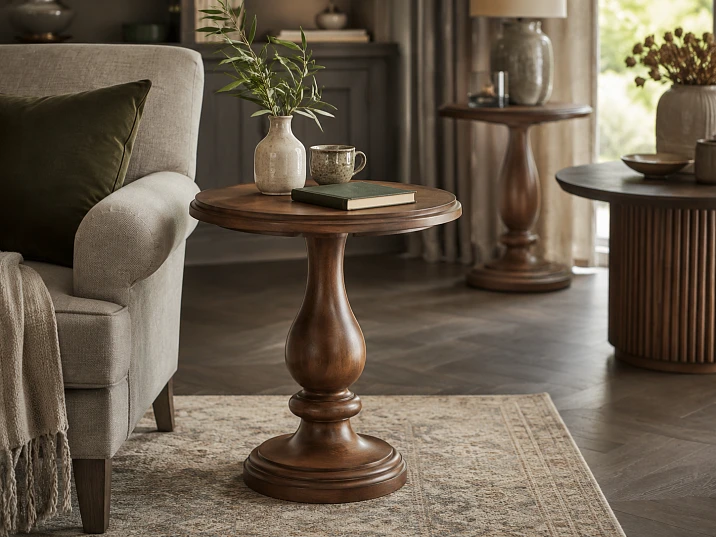
table base They are chosen not only for coffee tables. This concept includes various small interior items: side tables by the sofa, decorative accent tables, bedside table solutions with a lightweight top, coffee tables, vanity tables, small round tables for the living room, bedroom, lounge area, or cafe. All these scenarios share a common task: a compact, beautiful, and stable base for a small tabletop is needed.
The mistake begins when a small table is perceived as simple furniture, to which any legs can be selected 'by eye.' In practice, a small size does not eliminate the requirements for stability. Moreover, a small table is easier to tip over if the base is too narrow, too light, or does not match the height of the sofa, armchair, bed, or seating group.
For an interior table, three things are important: stability, proportions, and appearance. The base must support the tabletop, not interfere with nearby furniture, match the usage height, and look complete. If the table is in a living room, bedroom, hallway, salon, or cafe, the lower part is often as visible as the tabletop itself. Therefore, the table base becomes not a technical detail but an important part of the design.
If you need to assemble a neat base for a small tabletop, you can in advance buy a table base in the STAVROS furniture frames section and select it according to the table type, height, shape, material, and interior style.



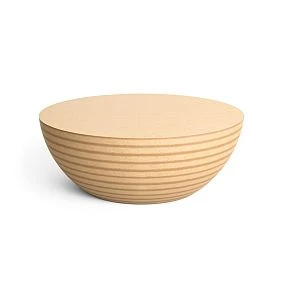
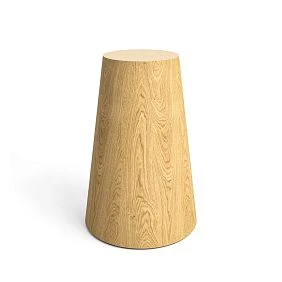
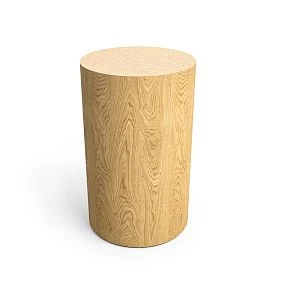
What is a table base
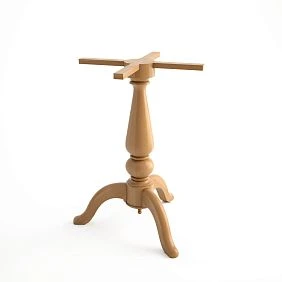
An underframe for a table is a ready-made base on which a small tabletop is installed. Unlike individual legs, the underframe is perceived as a more integral solution: it sets the height, helps distribute the load, affects stability, and shapes the appearance of the lower part of the table.
For a large table, the base is often chosen for strength, fit, and ability to support a heavy tabletop. For a small table, the priorities are slightly different. Here, compactness, balance, visual lightness, stability with a small footprint, and compatibility with adjacent furniture are important. A side table next to a sofa, a bedside table near a bed, and a decorative table in a living room corner require different proportions.
The main advantage of a ready-made table base is predictability. The buyer chooses not random legs, but a foundation that is already perceived as the lower part of the future table. This is especially convenient if the tabletop is small, decorative, round, oval, or non-standard.




Why individual legs are not always convenient
Individual legs seem like a simple solution. They can be attached to the tabletop to make a table. But in small items, this simplicity often leads to problems. If the legs are too thin, the table may wobble. If they are placed too close to the center, the edge of the tabletop becomes vulnerable to tipping. If the height is chosen incorrectly, the table is inconvenient to use next to a sofa or bed.
A table base helps avoid random assembly. It sets a clearer geometry and allows the table to be perceived as a single object, rather than a tabletop on four independent elements. This is especially important for decorative tables, where the lower part is clearly visible and should support the room's style.
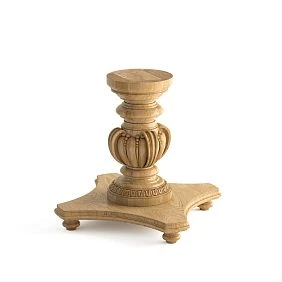
Our factory also produces:

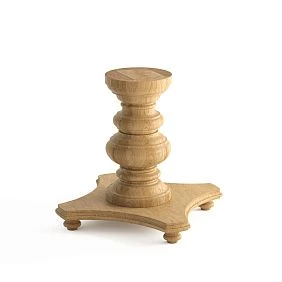
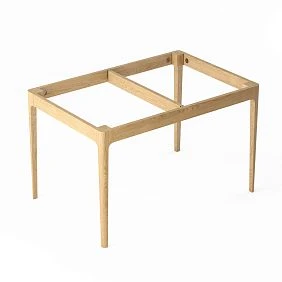
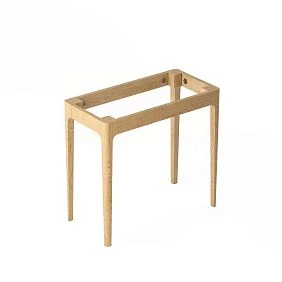
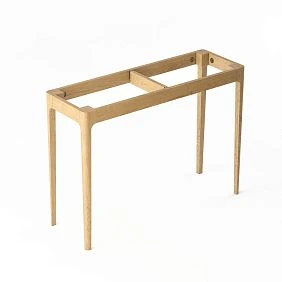
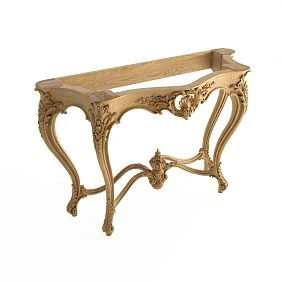

How the table base affects stability
A small table may be less loaded than a dining table, but its risk of tipping over is higher. A cup, book, vase, lamp, or phone is placed on a side table. A tray may be placed on a coffee table. A lamp, glass of water, and personal items go on a bedside table. If the base is too narrow or light, accidentally bumping the edge of the tabletop is enough for the table to lose balance.
Therefore, for a small table, it is important to consider not only the beauty of the base but also the width of the base, the shape of the support, the height, the attachment area, and the ratio to the tabletop size. The more the tabletop overhangs the base, the more carefully stability needs to be checked.
Get Consultation
How a table base for a small table differs from a base for a large table
A table base for a small table cannot be chosen by the same rules as a base for a large dining table. They have different loads, usage scenarios, and risks. A large table more often suffers from sagging, loosening, and overloading. A small table is more often mistakenly made too light, too tall, or too narrow at the base.
| Criterion | Table underframe | Underframe for a large table |
|---|---|---|
| Size | Compact, designed for a small tabletop | More massive, for a large tabletop |
| Load | Lower, but stability is especially important | Higher, the strength of the entire structure is important |
| Scenario | Decor, coffee, bedside area, accent | Dining, work, kitchen, daily load |
| Risk | Tipping due to small base | Bending, loosening, overload |
| Choice | By height, lightness, style, and balance | By strength, size, fit, and load |
The table shows: a small table does not mean "you can go simpler." It has its own requirements. The base must be compact enough not to overload the furniture, but stable enough so the table does not wobble when touched. It should match the interior but not lose practicality for the sake of decorativeness.
If you are choosing a base specifically for a small item, do not automatically take a solution from a large table. A too massive underframe can visually overwhelm a small tabletop. Conversely, a too light support will make the table unstable and flimsy.
Which tables are suitable for a separate underframe
A separate underframe is suitable not only for a coffee table. This is an important point because demand for small tables is broader. The buyer may need a side table, a small round table in the living room, a bedside surface, a decorative stand, a coffee table, a vanity table, or a compact table for a lounge area.
Each scenario has its own logic. In some cases, height is important. In others, decorativeness. In some, mobility. In others, stability with a small tabletop diameter. Therefore, the underframe should be chosen not just "for a small table," but for a specific type of use.
Small side table by the sofa
A sofa side table is often used for a cup, book, phone, remote control, desk lamp, or decorative vase. It should be nearby but not obstruct the walkway. Height is especially important in this area: if the table is lower than the seat, it's uncomfortable to use; if too high, it looks out of place and may hinder movement.
The base for a small table in the sofa area should be compact but stable. If the base is too wide, it will interfere with legs and furniture. If too narrow, the table can be easily bumped and knocked over.
Side table
A side table often stands next to a sofa, armchair, or bed. It may be moved, rotated, or used as a temporary surface. Therefore, the base for a small table in such a scenario must withstand not only static load but also frequent movement.
A side table should not be as heavy as a dining table, but a too-light base is dangerous here. If a cup or book is placed on the edge, the table must remain stable.
Decorative table
A decorative table works as an accent. It is placed in a corner of the living room, in the hall, next to an armchair, by the window, in the bedroom, or in the salon. A vase, lamp, sculpture, books, or seasonal decor may be placed on it. In this case, the lower part is especially noticeable.
For a decorative table, it is important not only to buy a base that will support the tabletop but also to choose the style. The base should match the furniture, doors, wall panels, wooden decor, and other interior elements. At the same time, decorativeness should not compromise stability.
Coffee table
A coffee table is usually lower than a regular side table. It is placed in front of the sofa or in a lounge area. Cups, a tray, books, candles, and decor are placed on it. It should be stable but not too tall or visually heavy.
If you need a low option for the living room, it is useful to additionally check the material about Base for Coffee Tables. But this article covers a broader scope: not just coffee tables, but all small interior tables.
Bedside table
A bedside table should be convenient next to the bed. A lamp, book, phone, glass of water, clock, or small personal items are placed on it. Not only stability is important here, but also the correct height relative to the mattress.
If the base is too low, using the table is uncomfortable. If it's too high, it disrupts the bedroom composition. For a bedside scenario, a neat, calm, and stable base is needed.
Vanity table
A vanity table differs from a decorative one in that people can sit at it. Here, seating, legroom, tabletop height, and ease of use are important. If the base is too massive or awkwardly positioned, it will get in the way.
The base for a vanity table must match its purpose: it is not just a stand for decor, but a small furniture zone for daily activities. Therefore, it is important to understand in advance whether the table will be used only as a decorative piece or as a full-fledged place for grooming, storage, and sitting.
Table for a cafe or lounge area
In cafes, salons, hotels, showrooms, or lounge areas, small tables often work harder than at home. They are moved, different people sit at them, and drinks, dishes, catalogs, and decor are placed on them. In such conditions, stability is especially important.
The base should be strong and stable enough, but at the same time match the style of the space. A too ordinary base may look weak, while a too heavy one may overload the interior.
How to choose a base for a small table
To choose a base for a small table, you need to start not with the shape of the legs or a beautiful photo, but with the future tabletop. It is the tabletop that sets the main parameters: size, weight, shape, thickness, installation height, and usage scenario.
A small table often seems like a simple item, but there are no fewer mistakes here than when choosing a large table. Incorrect height makes it uncomfortable. A too narrow base creates a risk of tipping over. A too massive base visually disrupts proportions. A too decorative shape can interfere with nearby furniture.
Determine the size of the tabletop
First, you need to measure or choose the size of the tabletop. For a small table, the ratio between the width of the tabletop and the area of the base is especially important. The greater the overhang of the tabletop beyond the base, the higher the risk of imbalance when pressing on the edge.
A round tabletop requires symmetrical balance. A square one requires careful alignment of the base with the geometry. A rectangular one requires stability along the long side. An oval one requires particularly careful selection, because it visually appears soft, but the load on the edges can be uneven.
Consider the weight of the tabletop
The weight of the tabletop affects the choice of base no less than the size. A light decorative tabletop can stand on a lighter base. A heavy wooden tabletop requires a more stable base. If the top is heavier than the bottom, the table may seem unsteady and dangerous to touch.
For wooden interior solutions, you should look not only at the base but also at the surrounding Solid Wood Itemsso that the future table does not stand out in material, texture, and style.
Check the height
Height is one of the most common sources of errors. A side table should be comfortable next to a sofa or armchair. A bedside table should be comfortable next to a bed. A coffee table should be lower than a regular table. A vanity table should allow you to sit and use the surface without discomfort.
Before buying a table base, it is useful to measure the adjacent furniture. If the table will be placed next to a sofa, evaluate the height of the armrest and seat. If next to a bed, the height of the mattress. If in a cafe, the height of the chairs or lounge sofas.
Choose a stable support shape
The shape of the base affects stability more than it seems. A narrow central support can be beautiful, but for a wide tabletop, it needs to be checked especially carefully. A wide base is more stable, but it can interfere with legs or neighboring furniture.
For round and coffee tables, central or symmetrical solutions are often convenient. For side tables, compact bases that do not take up much space next to the sofa. For decorative tables, bases where the shape works as an accent but does not make the table wobbly.
Consider whether the table will be moved often
Side and coffee tables are often moved. They are pushed closer to the sofa, moved aside during cleaning, repositioned closer to an armchair or bed. If the base is awkward to grip, too fragile, or poorly balanced, such a table will quickly become annoying.
The table base must withstand not only standing in one place but also normal household use. For commercial interiors, this is especially important: tables may be moved every day.
Table base for a side table
A side table is one of the most demanding small formats. It must be compact, mobile, stable, and convenient next to other furniture. It is placed by a sofa, armchair, bed, chaise lounge, lounge chair, or in a small waiting area.
The main feature of a side table is that it lives next to a person. It is not placed "for decoration" in a far corner. It is used by hand: to put a cup, a phone, a book, glasses, a remote control, or a small lamp. Therefore, any mistake in height or stability is immediately felt.
Height next to a sofa and armchair
The base for a side table should be chosen considering the nearby furniture. If the table is lower than the seat, it is inconvenient to reach. If it is higher than the armrest, it may get in the way and look too prominent. The correct height depends on the specific sofa or armchair.
Before ordering, it is worth measuring the seat height, armrest height, and the expected thickness of the tabletop. The final height of the table consists of the base and the tabletop, so you cannot look at only one part.
Compactness without losing stability
A side table should take up little space. But compactness should not be confused with excessive narrowness. If the base is too small, the table may tip over from a light sideways touch. This is especially important if the table is placed in a walkway or next to upholstered furniture.
When choosing a base for a side table, you usually want to buy quickly: you like the shape, it fits the interior, the price is right. But it is better to first check how wide a base is needed for a specific tabletop and whether it will interfere with nearby furniture.
Scenario of frequent movement
Side tables are often moved. Therefore, the base should be not only beautiful but also convenient in real use. A too complex shape may catch on a carpet or furniture. A too heavy base will be inconvenient if the table is constantly rearranged. A too light one will worsen stability.
A good base for a side table strikes a balance between lightness and stability. It should not turn a small table into a bulky object, but it should not make it look toy-like either.
Base for a decorative table
A decorative table is not just a surface to place things on. It participates in the interior as an accent. It can be placed in the living room, hallway, bedroom, foyer, study, salon, showroom, or next to an armchair. Therefore, the base here works both as a structure and as a decorative detail.
What kind of base is needed for a decorative table? One that does not conflict with the tabletop, does not overwhelm the small size, and yet looks expressive enough. If the table is meant to attract attention, the lower part can be more decorative. If it supports a calm interior, it is better to choose a restrained base.
Shape and style
For a decorative table, the shape of the base is especially noticeable. In small furniture, every line reads more strongly. A base that is too simple can make the table look random. One that is too complex can overwhelm it. A balance must be found between expressiveness and scale.
If the interior already has wooden elements, doors, panels, solid wood furniture, or carved decor, wooden table base it helps connect the table with the surrounding environment. It does not look like a foreign material and supports a warm furniture character.
Material and Finish
The material of the base influences the perception of the entire table. A wooden base is suitable for interiors where naturalness, furniture expressiveness, and connection with other details are important. But before ordering, you need to check the current parameters in the product card: material, dimensions, purpose, and features of the specific model.
You should not invent a finish in advance if it is not confirmed in the product card. It is better to assess how the base will combine with the tabletop and neighboring items, and then clarify the details before purchasing.
Decorativeness should not compromise stability
Sometimes a buyer chooses a base for a decorative table solely based on appearance. This is a mistake. A small table often holds a vase, a lamp, a ceramic item, or a stack of books. If the base is unstable, a beautiful table becomes risky.
Decorativeness should work together with the structure. A good base not only decorates but also supports the tabletop, maintains balance, and does not create a feeling of fragility.
Base for bedside and dressing table
Bedside and dressing tables are similar in size but differ in purpose. A bedside table often functions as a convenient surface next to the bed. A dressing table can be used as a place to sit at. Therefore, the base for them is chosen according to different parameters.
Bedside table
For a bedside table, compactness and stability are important. It stands next to the bed, sometimes in a narrow passage. A lamp, book, phone, glass of water, clock, cosmetics, or a small vase are placed on it. If the base is too wide, it obstructs the passage. If too narrow, the table is easily knocked.
The base for a bedside table should match the height of the bed. It is more convenient when the surface is approximately at a logical height for use: easy to reach without bending or raising your arm too much. At the same time, the final height depends on the tabletop itself, so its thickness also needs to be considered.
Vanity table
For a dressing table, not only stability is important, but also seating. If it is intended to sit at, the base should not interfere with the legs. A massive central base or an overly decorative structure that takes up space under the tabletop is not always suitable here.
The base for a dressing table should be chosen considering the seat height, tabletop depth, area width, and what will be placed on top: mirror, cosmetics, organizers, lamp, or decor. If the table is used daily, convenience is more important than a striking shape.
Work or decorative scenario
Before purchasing, it is worth honestly determining how the table will be used. If it is a decorative item near the bed, you can focus more on appearance. If it is a place for grooming, makeup, or working with small items, height, seating comfort, and free space are more important.
The same base can look good as a bedside table but be inconvenient for a vanity scenario. Therefore, the purpose should be determined before purchase.
Base for coffee and round table
Coffee and round tables often seem the simplest. They are small, low, and look decorative. But they often have balance issues: low height, round shape, tabletop overhang, and central load require careful base selection.
Coffee table
A coffee table is usually lower than a side table. It stands in front of the sofa, in a lounge area, next to armchairs, or in a relaxation space. Its task is to be a convenient surface for drinks, books, trays, decor, and small items.
The base for a coffee table should be lower, more resistant to lateral load, and visually lighter than the base for a dining table. If it's too high, the table loses its coffee table character. If it's too massive, it overloads the soft seating area.
Round table
A round tabletop requires special balance. If the base is too narrow, pressing on the edge can cause tipping. If the base is too wide, it can interfere with legs or visually conflict with the light shape of the tabletop.
The base for a round table is best chosen based on the diameter and weight of the tabletop. The larger the diameter, the more carefully you need to check the support area. For a small round table, symmetrical solutions that support the shape and do not disrupt the visual center work well.
Risk of edge tipping
Small round and coffee tables often have a tabletop overhang beyond the base. This looks nice but requires stability testing. If a heavy object is placed near the edge or someone accidentally leans on it, the table should not lose balance.
Therefore, the base for a small tabletop is chosen not only by the size of the top but also by its behavior under lateral load. This is especially important for families with children, cafes, salons, and rooms where the table is placed in a walkway area.
How to choose a base for a small tabletop
Choosing a base for a small tabletop is easier if you evaluate not just one parameter but several at once: shape, size, weight, thickness, overhang, attachment area, finished table height, and installation location.
If you choose only by appearance, you might get a table that looks good on its own but performs poorly in the room. The right base should match the actual task.
Tabletop shape
A round tabletop loves symmetry. A square one requires calm geometry. A rectangular one needs support along the long side. An oval one looks soft but requires particularly careful balance because its edges may protrude more.
If the tabletop shape is non-standard, it's better not to choose the base by eye. You need to understand where the center of gravity will be and how the table will be used.
Thickness and weight
The thickness of the tabletop affects the overall look. A thin tabletop on a too massive base may appear weaker. A thick wooden tabletop on a thin underframe may look heavy and unstable.
Weight is also important. The heavier the top, the more sturdy the base should be. If the table will be moved frequently, a balance is needed: the structure should be stable enough but not excessively heavy.
Tabletop overhang
Overhang is the distance the tabletop extends beyond the base. On small tables, overhang is often done for aesthetics, but it affects stability. The larger the overhang, the higher the risk of tipping when pressure is applied to the edge.
For decorative tables, a neat overhang is acceptable if the base is stable. For side and bedside tables, it's better not to make the tabletop too large relative to the base.
Mounting area
Even a beautiful base should have a clear mounting area to the tabletop. If the mounting area is small, the table may wobble. This is especially important for round, coffee, and side tables that are frequently touched and moved.
Before ordering, you need to check how the base will connect to the tabletop and whether there is enough space for secure fastening. It's best to clarify specific installation details with a specialist for the particular product.
Compatibility with interior
The base for a small tabletop should match the room's style. In a classic interior, a random metal support may look out of place. In a modern, calm space, an overly decorative base may clash with the rest of the furniture.
If the interior is based on natural materials, wooden furniture, and decorative elements, a solid wood base or wooden support helps create a more cohesive look.
What to choose: underframe, support, or individual legs
The buyer often sees several similar options: individual legs, a support, a base, a frame. For a small table, the choice is especially important because a mistake immediately affects stability and appearance.
Individual legs are suitable for simple solutions. The support can be part of the underframe. A ready-made underframe is easier to choose as a single base. If you need to delve deeper into the difference in terms, you can look at a separate material. table frame or underframe.
When individual legs are suitable
Individual legs can be considered for a lightweight tabletop and a simple table. For example, if the product is small, located in a quiet area, and does not experience heavy loads. However, legs require precise installation and proper positioning.
For decorative and side tables, individual legs may be appropriate, but only if they provide sufficient stability and do not look random.
When a support is needed
The support can be central, side, shaped, or part of a more complex structure. In queries like "table underframe supports", "table supports underframe", and "underframe supports for table", there is usually a desire to understand what exactly holds the tabletop.
For a small round or decorative table, a central support can be convenient if it is stable enough. For a rectangular tabletop, more distributed support may be needed.
When a ready-made underframe is better
A ready-made underframe is better to choose if the table should look finished. This is especially important for decorative, coffee, bedside, and side tables that are placed in visible areas. The underframe helps avoid the feeling that the furniture is assembled from random elements.
If you want not just to place a tabletop on legs, but to get a complete interior piece, a base will be a more logical choice.
Material and style: why a wooden base often looks more convincing
For a small table, the material of the base matters a lot. Small furniture often stands in a focal area: near a sofa, bed, armchair, mirror, entryway, or display case. Therefore, the base should not look like a random technical detail.
A wooden base works well in interiors that already have solid wood furniture, wooden doors, panels, carved decor, classic elements, or warm natural textures. It helps connect a small table to the overall setting and makes it part of the furniture ensemble.
When to choose a wooden base
A wooden base is appropriate when the table should look like a permanent furniture piece rather than a temporary one. This is important for living rooms, bedrooms, studies, hallways, salons, cafes, and showrooms. Wood visually adds substance even to a small table.
However, the material does not eliminate the need to check dimensions. Even a beautiful wooden base must match the tabletop in height, width, weight, and purpose. Before ordering, you should verify the parameters in the product card.
How to combine with the interior
If there is wooden furniture in the room, the base can be chosen in the same style. If the interior is light and modern, the base should be neat and not too massive. If the space is classic or more decorative, the base can be more expressive.
In a commercial interior, it is important to consider the wear of the visual image. Too random supports quickly cheapen the impression. A more solid wooden base helps tables look like part of a well-thought-out space.
What to buy together with a table base
A table base alone does not make a finished table. You need to think in advance about the tabletop, fastening, finishing, adjacent furniture, and usage scenario. This is especially important for small items: one mistake in size or height is immediately noticeable.
If you choose table base for a small tabletop, don't limit yourself to the question "does it match the style." Check whether the table will be stable, convenient to use, and how it will look next to a sofa, armchair, bed, or other furniture.
| What to add to the purchase | Why this is needed | What to pay attention to |
|---|---|---|
| Small tabletop | To assemble a finished table | Shape, size, weight, thickness |
| Fasteners and mounting materials | For connecting the base and tabletop | Compatibility with material and construction |
| Adjacent wooden elements | So that the table does not stand out from the interior | Material, texture, style, future finish |
| Decor or a lamp for the table | To check the actual load | Weight of items and risk of imbalance |
If the table will be placed in a visible area, it's better to think in terms of a set right away: base, tabletop, adjacent furniture, decor, and usage height. This makes it easier to avoid style mismatches and get not just a random stand, but a full-fledged interior piece.
Mistakes when choosing a table base
Choosing a base that is too light
A small table should not be fragile. If the base is too light, it may not hold the tabletop when bumped from the side. This is especially risky for side and bedside tables, which are often placed near people.
Lightness is good only when it doesn't compromise stability. If the table is meant to be moved, a balance between mobility and reliability must be found.
Not considering the height of the sofa, bed, or armchair
The base can be beautiful, but if the final height doesn't match the furniture next to it, the table will be uncomfortable. A side table should work next to a sofa. A bedside table should work next to a bed. A coffee table should be in the area of low upholstered furniture.
Before ordering, you need to measure the adjacent furniture and add the thickness of the future tabletop.
Choosing a base only by appearance
Shape is important, but it shouldn't be the only criterion. The base must match the load, height, tabletop size, and installation location. If you buy a beautiful base without calculation, the table may be unstable or uncomfortable.
Not checking the size of the tabletop
The tabletop and base should match in scale. A tabletop that is too large on a small base creates a risk of tipping. A tabletop that is too small on a massive base looks heavy and disproportionate.
Not considering the weight of decor, lamps, or objects
Small tables often hold items that seem light individually but together create a noticeable load: a lamp, books, a vase, a tray, dishes, ceramic decor. If all of this is placed closer to the edge, the risk of tipping increases.
Confusing coffee, side, and bedside table scenarios
A coffee table is usually lower. A side table should be convenient next to a sofa or armchair. A bedside table should be next to the bed. If you choose the same base without considering the scenario, the table may be uncomfortable.
Choosing a base that is too massive for a small tabletop
Sometimes a buyer tries to increase stability by making the base massive. But a small tabletop on a heavy base can look disproportionate. It's important not just to weigh down the bottom, but to choose the right scale.
Not thinking through the interior style
A small table is often in plain sight. If the base doesn't match the interior, it's noticeable. The underframe should coordinate with the furniture, walls, doors, decor, and the overall character of the room.
Who an underframe for a small table is suitable for
This solution is suitable for those who want to assemble a small table not from random parts, but as a full-fledged interior item. The underframe is especially useful if decorativeness, stability, and a neat connection with the tabletop are important.
Suitable
The underframe is worth considering for apartment and house owners who are choosing a small table for the living room, bedroom, or hallway. It is also useful for designers, furniture makers, decorators, and owners of cafes, salons, showrooms, and hotels where small tables should look neat and withstand regular use.
A ready-made base is convenient if the tabletop has already been chosen, but you need to select the lower part by height, style, and stability. It also helps when the table should look not like a temporary stand, but as part of a furniture composition.
Not suitable
The underframe may be unnecessary if the buyer only needs individual legs for a simple lightweight structure. It also does not replace a full-fledged large frame for a big dining or work table. If the tabletop is heavy and large, you need to look at solutions for the corresponding load.
If the task is to assemble a large table, it's better to choose a base according to the rules of large structures. Small underframes should not be used where the rigidity of a large table is required.
Where to buy an underframe for a table
Before purchasing, determine the type of table: side, decorative, bedside, coffee, vanity, round, or commercial for a lounge area. Then check the shape and size of the tabletop, weight, height of the finished product, installation location, and room style.
In the section furniture frames STAVROS can be matched with a base for different furniture tasks. If you need a small interior format, use this article as a checklist: don't choose based only on photos, don't forget the height of nearby furniture, check stability, and think in advance about what will be placed on the table.
For a ready-made wooden base for a small tabletop, you can go to the section where it is presented wooden table base. If you need a general selection of furniture bases, start with the section where you can buy a table base and compare options by purpose.
FAQ
How to choose a base for a small table?
You need to consider the size and weight of the tabletop, the height of nearby furniture, the stability of the base, and the usage scenario. For a small table, it is especially important that the base is not too narrow or light.
Which base should I buy for a side table?
For a side table, it is better to choose a compact and stable base that matches the height of the sofa, armchair, or bed and does not interfere with movement. It is also important to consider whether the table will be moved frequently.
How does a base for a small table differ from a base for a dining table?
The base for a small table is usually more compact and designed for a smaller tabletop. However, stability requirements remain important because a small table is easier to tip over if the base size is unsuitable.
What base is needed for a decorative table?
For a decorative table, you need a base that combines stability and appearance. It should support the interior style, not overload the small tabletop, and withstand the items that will be placed on top.
How to choose a base for a small tabletop?
You need to match the shape, size, weight of the tabletop, and the height of the future table. It is also important to check the attachment area, the overhang of the tabletop beyond the base, and stability under lateral load.
Is one base suitable for both a coffee table and a side table?
Sometimes yes, if the height, tabletop size, and usage scenario match. But a side table is usually taller and more compact, while a coffee table is lower and more stable in the area in front of the sofa.
How to choose a base for a bedside table?
Focus on the bed height, passage size, weight of the lamp or items on top, and base stability. A bedside table should be convenient from the bed and not obstruct movement nearby.
Which base is best for a vanity table?
For a vanity table, height, seating position, and legroom are important. If someone will sit at the table, avoid choosing a base that interferes with knees or takes up too much space under the tabletop.
How to choose a base for a round table?
For a round table, symmetry and stability are important. The base must match the diameter and weight of the tabletop so that the table does not lose balance when pressure is applied to the edge.
Can a heavy wooden tabletop be placed on a small base?
Only if the dimensions, fastening, and stability match exactly. If the tabletop is heavy and the base is too small, the table may be unstable. Before purchasing, check the parameters and, if necessary, choose a more secure base.
What is better for a small table: legs or a base?
Individual legs are suitable for simple and lightweight solutions. A base is better if the table should look solid, stable, and decorative. For small interior tables, a ready-made base is often more convenient than a random set of legs.
Where to buy a base for a table?
You can choose a base for a table on the STAVROS website in the furniture frames section. Before ordering, you should check the type of table, the shape and weight of the tabletop, height, interior style, and stability of the base.
Summary: how to choose a base for a small, side, and decorative table
The base for a table should be chosen not as a secondary detail, but as the foundation of the entire product. A small size does not make the table simpler. A side table should be convenient next to a sofa or bed. A decorative table should look expressive and stable. A coffee table should be lower and not lose balance. A bedside table should match the height of the bed. A vanity table should leave room for seating.
A good table base helps assemble the table as a complete interior item. It holds the tabletop, sets the height, supports the room's style, and reduces the risk of a random choice. Before ordering, you need to check the shape, size, weight, tabletop overhang, mounting area, height, and usage scenario.
With STAVROS, you can choose a furniture base for various tasks: from a small decorative table to a side or coffee table solution. Start by understanding your task, compare options by size and purpose, check the parameters in the product card — and only then select a table base that will be not just beautiful, but stable, convenient, and appropriate in the interior.