




































Article Contents:
- Why skirting board color affects the perception of the entire room
- Three main schemes for choosing MDF skirting board color
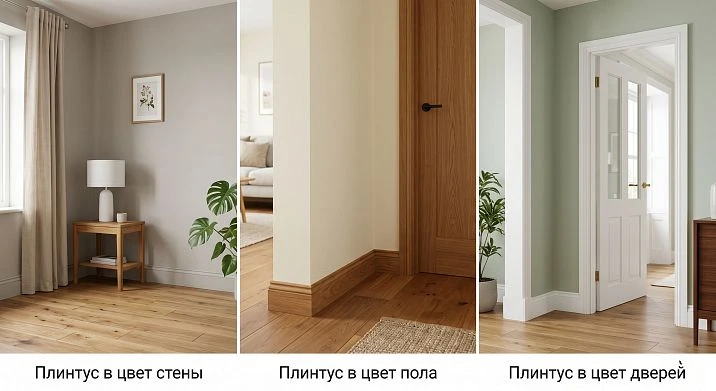
- Scheme one: skirting board matching floor color
- Scheme two: skirting board matching door and trim color
- Scheme three: skirting board matching wall color
- Additional scheme: contrasting skirting board as an accent
- White MDF skirting board: universal but not flawless
- When white skirting board works flawlessly
- When white baseboard creates a problem
- Nuances of white: not all whites are the same
- MDF baseboard for painting: maximum freedom of color choice
- Why paint the baseboard the color of the wall
- How to paint a baseboard for painting correctly
- When painting is better than ready-made white
- MDF baseboard in oak and wood style: warmth, naturalness, character
- Oak shades: more than it seems
- How not to make a mistake with the oak shade
- Wood-style baseboard with white doors: does it work?
- When a wood-look baseboard is better replaced with a wooden one
- Do not mix several wood shades
- Gray MDF baseboard: neutrality that can surprise
- Where gray baseboard works
- The danger of gray: a "dirty" shade
- Black MDF baseboard: maximum accent, maximum responsibility
- When black baseboard is appropriate
- When black baseboard is a mistake
- Requirements for installing black baseboard
- How to choose a baseboard for doors and trims: the logic of selection
- White doors and architraves
- Wooden doors and architraves
- Oak-style doors (MDF with decor)
- Concealed doors without architraves
- Dark doors
- How to choose the color of skirting boards for the floor: a detailed breakdown
- For light oak (beige, ash, bleached oak)
- For dark floors (walnut, wenge, mocha, dark oak)
- For gray laminate or porcelain stoneware
- For parquet and engineered board
- For a contrasting interior
- MDF skirting board for classic and modern interiors: different logics
- Classic and neoclassic
- Modern interior and minimalism
- Scandinavian Style
- Loft and Industrial Style
- Color schemes in the table: what goes with what
- Mistakes when choosing the color of MDF skirting boards
- What to buy for a finished interior
- FAQ: Answers to Popular Questions
- About the Company STAVROS
The color of the skirting board is a question that seems simple exactly until the moment a person is faced with a choice. White? Gray? Oak? To match the floor or the doors? To match the wall or as a contrast? And then it turns out that "just get the same as the neighbor's" doesn't work: the neighbor has a different floor, different doors, different light. And you have your own interior, with its own logic and its own connections between surfaces.
MDF Skirting Board in the wrong color is not a disaster. But it is an irritant that works every day: the eye catches on the lower contour of the room and finds no peace. Something is wrong. Something is extra. Something stands out. This is exactly how people describe the feeling when they chose a skirting board "by feel" without comparing it to the real surroundings.
This article is a systematic and honest analysis: how to choose the color of an MDF skirting board for a specific interior, which schemes work and which create chaos, and what you need to consider before clicking the "buy" button.
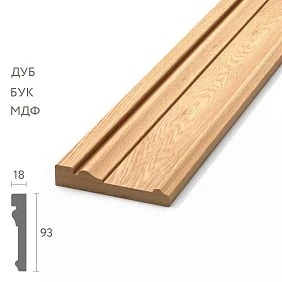
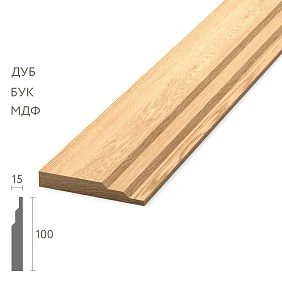
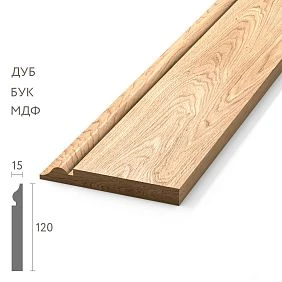
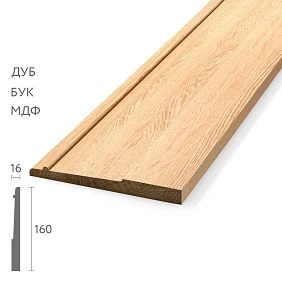
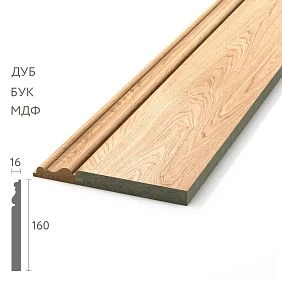
Why the color of the skirting board affects the perception of the entire room
The skirting board occupies a unique position in space: it simultaneously borders three zones — the floor, the wall, and, at the doorway, the architrave. This is the only decorative element with such a "three-point" connection. That is why its color does not exist in isolation: it is always perceived against the background of the floor below and the wall behind, and at the doorway — next to the architrave.
If the color of the skirting board is not connected to any of these surfaces, it "floats" in the interior like a random element. The eye, moving around the room, constantly "stumbles" over the lower contour that belongs neither to the floor nor the wall.
And conversely: a correctly chosen color Floor MDF skirting board works invisibly. It bonds surfaces, creating a sense of wholeness and "completeness" of the space — exactly the feeling for which renovations are undertaken.
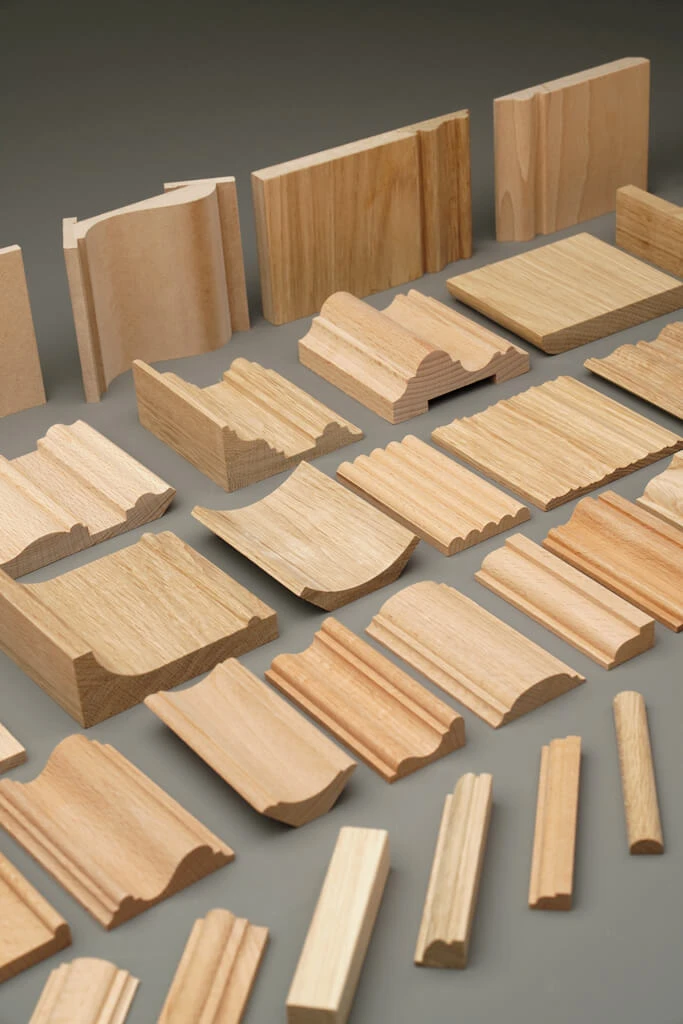


Three main schemes for choosing the color of MDF baseboards
Before breaking down specific colors, you need to understand the principle to use when choosing. There are three working schemes and one additional one.
Our factory also produces:
Scheme one: baseboard matching the floor color
The baseboard closely matches the shade of the flooring. The lower contour "extends" the floor vertically: the eye perceives the floor and baseboard as a single surface. The walls then appear to "rise" and seem higher.
When it works: light parquet, oak-look laminate, dark flooring, gray porcelain stoneware, concrete flooring. In each case — a baseboard of the same shade.
Main risk: "approximately the same shade" is worse than a clear contrast. Two similar but non-matching colors next to each other — this is an "error" that everyone notices. Either an exact match or a deliberate departure from it.
Get Consultation
Scheme two: baseboard matching the color of doors and architraves
The baseboard matches the color of the door leaf and architraves. As a result, a unified "framing" system is created: doors + architraves + baseboard of the same shade form a cohesive border for the space. The floor and walls then become independent, contrasting zones.
When it works: rooms with multiple doors, classic interiors, spaces where doors are the main architectural accent.
Main risk: if there are few doors (one), and the walls are "active" — a baseboard matching the door color may look lonely.
Scheme three: baseboard matching the wall color
The baseboard blends into the wall. The lower boundary of the room becomes invisible — visually, the walls "descend" to the floor. The space appears taller, and the floor looks like a large field without framing.
When it works: modern minimalism, interiors with hidden doors, spaces where the floor is the accent (expensive parquet, striking stone), small rooms that need "air."
The best tool for this scheme is — is a horizontal element that frames the room at the bottom of the walls where the wall meets the floor. Skirting boards perform several functions: they hide the technological gap between the wall and floor covering (necessary for thermal expansion), protect the lower part of the wall from mechanical damage, create visual completion, and may conceal wiring.: painted exactly the same color as the wall.
Additional scheme: contrasting baseboard as an accent
Intentional contrast — a conscious design choice. A dark baseboard on a light floor or a white baseboard on a dark floor. The lower contour becomes an expressive graphic line.
When it works: bold, daring interiors with a clear black-and-white or dark-light palette. Does not work in "soft," warm spaces where accents are unnecessary.
White MDF baseboard: universal, but not flawless
White MDF Skirting Board — the most popular option in Russian apartments. And this popularity has an explanation: white baseboard is neutral, visually enlarges the room, and goes well with most interiors. But popularity is not a synonym for universality.
When white baseboard works flawlessly
With white doors and white architraves. This is a classic — a single white contour of the doorway, continued around the perimeter of the room. Walls of any shade (gray, beige, powder, green), floor of any color — and the white baseboard keeps the "frame" in the right place.
With beige and light cream walls. White baseboard does not stand out, does not compete, creates a light and clean lower contour. It is in this range that white baseboard looks most organic.
In small rooms. The white lower contour does not "press down" the space: the eye glides along the walls and does not notice the transition to the baseboard.
In Scandinavian and minimalist style. Light floors, white walls, white doors — and white baseboard as a logical completion of this uniform system.
When white baseboard creates a problem
With warm cream or ivory doors. White and cream are not the same thing. Next to each other, they create an unpleasant dissonance: both are "almost white," but clearly different. Here, white baseboard does not work.
With dark, rich floors. Dark parquet + white baseboard — too sharp a contrast at the very base. The eye "cuts" on this boundary. If the contrast is intentional — it is acceptable, but requires a confident hand in other decisions.
In warm, rich interiors. Terracotta on the walls, ochre, mustard, warm green — and white baseboard next to it? This is a cold accent in a warm environment. Better — a baseboard in the color of the floor or paintable to a shade close to the walls.
Nuances of white: not all whites are the same
MDF baseboard manufacturers use different white bases: neutral white, cool white (with a bluish tint), warm white (with a yellowish tint). These differences are subtle on a sample but noticeable next to doors and architraves.
Rule: always compare the baseboard sample with the door architrave in daylight conditions. Two "whites" that don't match are worse than a deliberate contrast.
MDF baseboard for painting: maximum freedom of color choice
— is a horizontal element that frames the room at the bottom of the walls where the wall meets the floor. Skirting boards perform several functions: they hide the technological gap between the wall and floor covering (necessary for thermal expansion), protect the lower part of the wall from mechanical damage, create visual completion, and may conceal wiring. — This is a clean primed surface without a finish coating. It can be painted any color you choose. This is the only baseboard option that can be perfectly integrated into any interior: simply pick the same paint tone used for the walls.
Why paint the baseboard the same color as the wall
When the baseboard disappears, the space changes. Without a visible lower boundary, walls appear taller, the floor wider, and the room more spacious. Designers actively use this technique in small spaces, hallways, and rooms with non-standard proportions.
This works especially effectively in combination with hidden doors without trim: a baseboard in the wall color, a flush door — the lower and vertical contours disappear, and the space becomes almost abstract in form.
How to paint a baseboard for painting correctly
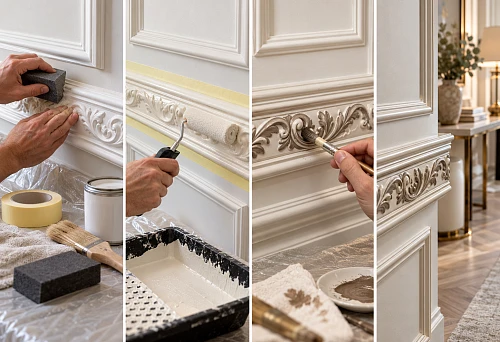
A baseboard for painting requires proper preparation — more details in the full guide on installing MDF skirting boards. Basic sequence:
-
Installation of baseboard
-
Puttying all joints and attachment points
-
Sanding (P220–P280)
-
Priming the entire surface
-
Painting in 2 coats with intermediate drying
Paint — the same as used for walls, or a close shade. When painting to match the wall color — painter's tape on the floor, paint the baseboard after finishing the walls.
When paintable is better than ready white
-
Wall color is non-standard (gray, blue, green, warm beige)
-
Need to 'dissolve' the lower contour
-
Interior style — strict minimalism
-
Hidden doors, without architraves
-
High baseboard as an architectural element that should be unified with the wall
Choosing a paintable baseboard means choosing maximum control over the result. No 'approximately matches' — only exact match.
MDF baseboard in oak and wood finish: warmth, naturalness, character
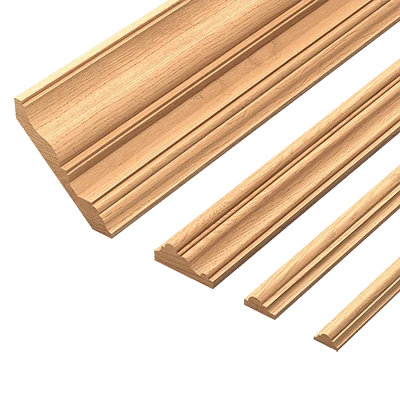
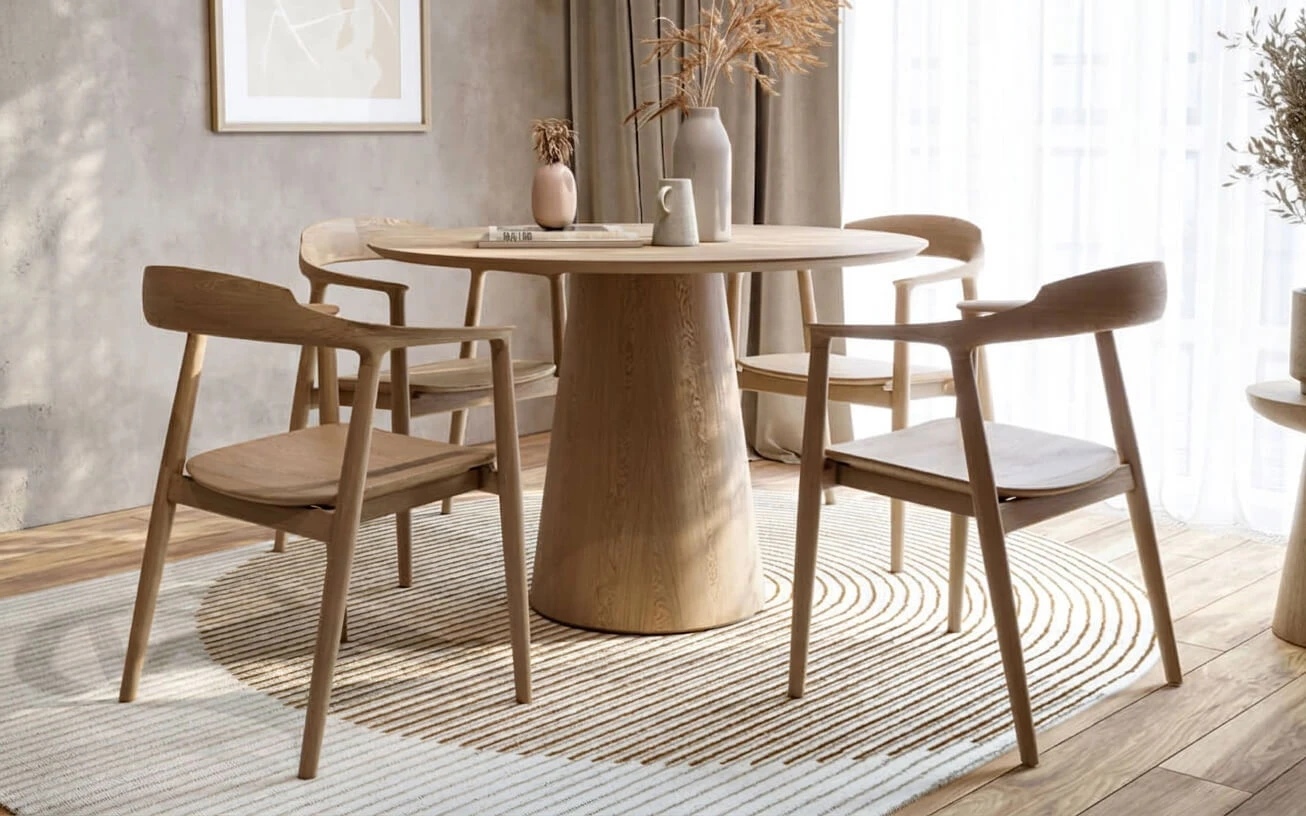
MDF skirting board oak — the second most popular option after white. And this is natural: in Russia, most apartments have wood-look floors (laminate in shades of oak, walnut, ash), and a skirting board in the same decor is a logical continuation of this theme.
A detailed analysis of choosing between MDF skirting boards with a wood finish and natural wooden skirting boards is in a separate article. an MDF skirting board with a wood finish is.
Oak shades: more than meets the eye
"Oak" is not a single color, but a whole spectrum:
-
Natural oak — medium warm tone, honey-brown
-
Light oak (bleached) — coolish, almost beige with a milky tint
-
Gray oak — neutral, with a grayish base, without pronounced warmth
-
Honey oak — rich warm, with pronounced grain
-
Dark oak (smoked, tobacco) — rich brown, close to walnut
Each of these shades "gets along" with different interiors. An MDF skirting board in an oak color is not a specific shade, it's a direction. And within it, there is a difference that, if it doesn't match the floor, creates obvious dissonance.
How not to make a mistake with the oak shade
There is one rule, but it's categorical: compare samples in person, in the room where the baseboard will be installed. Not from a catalog, not from a photo, not 'roughly similar'. Bring a piece of laminate or parquet board — and place it next to the baseboard sample. In daylight from the window. Only this way.
A common mistake: 'natural oak' from a laminate manufacturer and 'natural oak' from a baseboard manufacturer are different things. Same name, different shade. The only reliable method is physical comparison.
Wood-look baseboard with white doors: does it work?
Yes, if it's a deliberate decision. White doors + oak-look baseboard — the baseboard 'belongs' to the floor, the doors to their own level. This separation works provided there is a shade match between the floor and the baseboard. If the baseboard is chosen as 'oak-look', but the floor is in a cool gray tone — and the baseboard is warm, and the doors are white, and the floor is cool — a three-way conflict arises.
When a wood-look baseboard is better replaced with a wooden one
If the interior features natural piece parquet, solid wood flooring, or veneered furniture — Wooden baseboard solid wood is more organic than MDF with imitation. The living texture of natural wood next to the living texture of parquet — one 'language' of materials. MDF with film next to natural wood creates a sense of material nature mismatch.
Do not mix several wood shades
Laminate 'walnut', doors 'honey oak', baseboard 'light ash', furniture 'cherry' — these are four different woods in one room. The eye doesn't understand what unites these surfaces and reads it as chaos.
Rule: one wood theme — one shade or close tones of one direction. All other wooden elements — in the same range.
Gray MDF baseboard: neutrality that knows how to surprise
Gray MDF baseboard is a choice for modern interiors built in a neutral or cool palette. Gray is not an "absence of color," it is an independent position: cool confidence, urban strictness, concrete aesthetics.
Where gray baseboard works
With gray flooring. Porcelain stoneware imitating concrete, laminate in ash oak shade, natural stone with a grayish base — gray MDF baseboard is logical and precise here. The lower contour "continues" the floor without creating an additional accent.
With white walls in a modern interior. White walls + gray floor + gray baseboard is a "sober" neutral scheme that values silence. Nothing extra, nothing accidental.
With black hardware. Black door handles, black switches, black light fixtures — and gray baseboard as a "softened" version of black. The space gains graphic quality without aggression.
In bathrooms and washrooms with gray tiles. Gray MDF baseboard in a gray tile environment is a well-thought-out mono-scheme where details are subordinated to a single tone.
The danger of gray: "dirty" shade
Gray is a tricky color. Under improper lighting or with an "unfortunate" shade, a gray baseboard can look not "modern" but "dirty." The combination of a warm beige floor with a cool gray baseboard is especially dangerous: the warmth of the floor emphasizes the "lifelessness" of gray.
Rule: gray baseboard — in a cool or neutral environment. It does not fit into a warm interior (beige walls, warm oak, cream furniture).
Black MDF baseboard: maximum accent, maximum responsibility
A black baseboard is not just a color. It is a statement. It immediately becomes a noticeable element of the lower tier, creating a clear graphic line at the base of the wall. Such a line requires that everything else in the interior be prepared for its presence.
When a black baseboard is appropriate
In a modern interior with black accents. Black window frames, black plumbing, black door handles, metal details in the "industrial" or "loft" style — and a black baseboard as one of the elements of this theme. Here it is not alone: black is repeated several times in the interior, and the baseboard becomes part of a unified system.
With white walls and light flooring. White top, light floor, black baseboard line — this is a minimalist graphic technique. It works with confident design where contrast is intentional.
In large rooms with high ceilings. The black lower contour "roots" the space, adds weight. In a small room, the same technique narrows the space from below and creates a feeling of pressure.
When a black baseboard is a mistake
-
Small rooms without good lighting
-
Warm interiors in a beige-brown palette
-
Rooms with wooden floors in natural tones (black baseboard next to natural wood — an aggressive contrast)
-
Children's rooms, bedrooms where calm is needed
Requirements for installing a black baseboard
Black color does not forgive carelessness. Joints, gaps, uneven corners, traces of sealant — all of this is clearly visible on a dark surface. A black baseboard requires perfect installation and perfect finishing. This is a color for those who are ready to work for results.
How to match a baseboard to doors and architraves: the logic of choice
Doors and architraves are the second most important reference point when choosing a baseboard color (after the floor). The logic is simple: the baseboard and architraves are in the same visual field near the doorway. If they are not connected, the transition looks random.
Detailed analysis of joining a baseboard with door architraves — in the material about MDF baseboard and door architraves.
White doors and architraves
White baseboard — the first and most logical choice. Creates a unified white framing system: doors + architraves + baseboard. The space reads as organized and calm.
If the floor is warm and rich (dark oak, walnut), and you want a baseboard in the floor color — white doors and a dark baseboard will "clash" at the doorway. Here you need to choose: either a baseboard to match the doors (white), or to match the floor (dark), and accept a compromise.
Wooden doors and architraves
Wooden baseboard made of solid wood in the same shade — ideal. Both elements from natural wood create an organic ensemble. A slight difference in shade (within the same species) is acceptable and even adds "liveliness."
An MDF baseboard in an "oak" finish next to a door made of natural wood works with careful shade selection. But if the door is solid wood with a pronounced natural texture, and the MDF baseboard has a uniform "printed" pattern, the difference in material nature is noticeable.
Doors in oak (MDF with decor)
An MDF baseboard in the same oak decor — ideal. One production system, one surface type. But: "oak" from the door manufacturer and "oak" from the baseboard manufacturer may differ. Compare samples.
Hidden doors without architraves
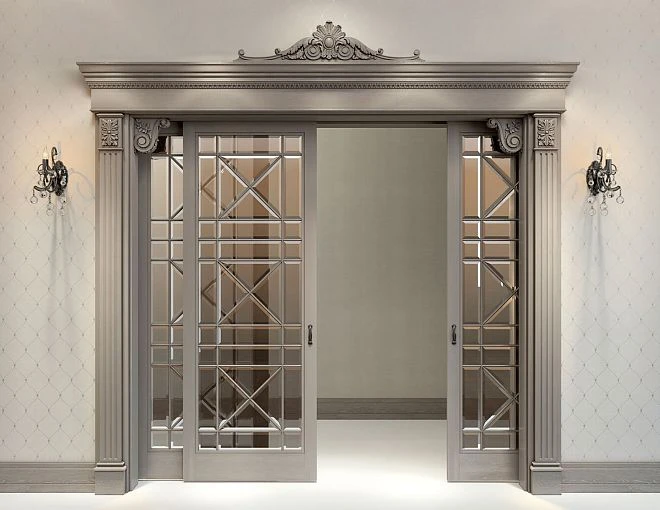
A hidden door implies no architraves — the door is "embedded" into the wall. Here, a baseboard in the wall color is the only solution that preserves the "invisible door" effect. Any other baseboard color ruins the illusion.
Dark doors
Dark doors are rare in Russian apartments but are gaining popularity. For dark doors in wenge, dark oak, or graphite:
-
Skirting board matching the doors — a unified dark system
-
Skirting board matching the floor (if the floor is light) — contrasting zone separation
-
Neutral gray skirting board — as a buffer between dark doors and light floor
How to choose the color of the skirting board to match the floor: a detailed breakdown
The floor is the main reference. Its color, shade temperature, and pattern intensity set the framework for choosing the skirting board.
For light oak (beige, ash, bleached oak)
Three options:
-
Skirting board matching the floor — lightness, airiness, the space seems wider
-
White skirting board — works with white doors and white walls
-
Skirting board for painting in the color of the walls — if the walls are light and neutral
For dark floor (walnut, wenge, mocha, dark oak)
-
Baseboard matching the floor color — a continuation of the dark "base", weight and depth
-
White baseboard — contrast, "separating" the floor from the wall: effective in large rooms
-
Gray baseboard — as a "soft" transition between dark floor and light walls
Not recommended: wood-tone baseboard in a warm shade with a dark cold floor. A warm baseboard next to a cold-dark floor — color dissonance.
For gray laminate or porcelain stoneware
Gray floor — neutral base:
-
Gray MDF baseboard — exact match, even neutral scheme
-
White baseboard — light contrast with white walls
-
Black baseboard — graphic accent in a modern interior
For parquet and engineered board
Natural parquet — a living surface with a unique pattern. It is organic with wooden skirting board purchase from the array: one material, one character.
If you want to use an MDF baseboard under parquet, choose very carefully, comparing samples in person. The uniform "printed" texture of MDF next to the live pattern of parquet sometimes looks disproportionate.
For a contrasting interior
If the interior is deliberately built on contrast (dark floor + light walls or light floor + dark walls), the baseboard is chosen based on the dominant element. Or it deliberately takes a "third side": neutral gray or black as a mediator.
MDF baseboard for classic and modern interiors: different logics
Interior style is another guideline when choosing. Not the only one, but an important one.
Classicism and neoclassicism
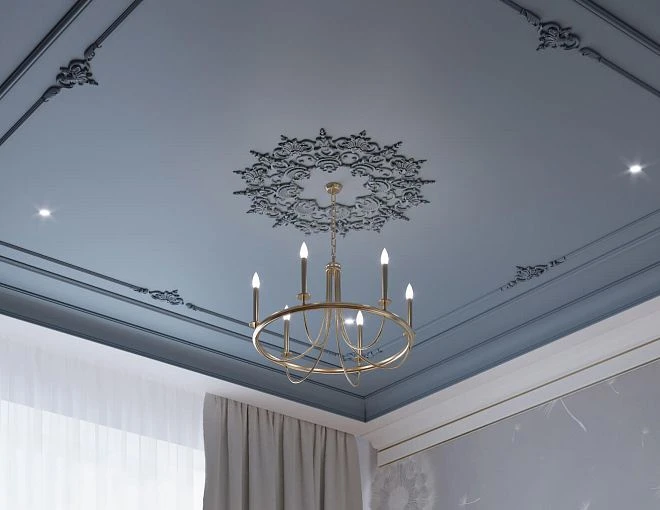
In a classic interior, the baseboard is an architectural element, not just a "gap cover." Here, a high profiled baseboard with an expressive shape is appropriate—and most often white (paired with white trim and white cornices) or in natural wood.
wooden molding and wooden cornices in a classic interior form an ensemble into which the baseboard must fit in terms of material and character.
Modern interior and minimalism
Here, the baseboard should not stand out. A straight profile without unnecessary plasticity, height 60–80 mm, color matching the floor, wall, or white. MDF baseboard for painting is an ideal tool for minimalist interiors.
Scandinavian style
White walls, light wooden floor, light furniture—and a white or light baseboard in wood. Scandinavian style values tonal uniformity and avoids sharp contrasts at the lower boundary.
Loft and industrial style
Concrete, metal, dark wood, exposed structures — and here a black or dark gray baseboard is logical. Or — the complete absence of a baseboard as an element (typical for a loft with open floors).
Color schemes in the table: what goes with what
| Floor | Doors | Recommended skirting board |
|---|---|---|
| Light oak | White | White or light oak |
| Light oak | Light oak finish | MDF baseboard oak (same shade) |
| Dark walnut | White | White or dark baseboard (contrast) |
| Dark walnut | Walnut | MDF baseboard walnut / wooden |
| Gray laminate | White | White or gray |
| Gray laminate | Gray/graphite | Gray or black |
| Concrete floor | No (hidden) | Baseboard in wall color |
| Natural parquet | Wooden | Wooden skirting board |
| Natural parquet | White | White or skirting board matching the parquet tone |
| Any | Hidden (without casings) | Skirting board for painting in wall color |
Mistakes when choosing MDF skirting board color
1. Choosing based on a photo in a catalog or on a phone screen. The monitor does not convey the real shade. A sample in hand in daylight is the only criterion.
2. Not comparing with the floor and doors in person. "Well, they look similar" is not an argument. Similar but different shades look worse together than contrast.
3. Mixing several oak shades. Honey oak + bleached oak + gray oak in one room — three different trees that have nothing in common.
4. Installing a white baseboard with warm cream doors. Cold white next to warm cream — an obvious gap at every doorway.
5. Using black baseboards for small rooms. A dark lower contour visually compresses the room from below. In small spaces without strong lighting, it creates a "box" effect.
6. Forgetting about architraves. The baseboard is chosen with the floor and doors in mind, but the architraves are forgotten. And they stand next to the baseboard at every opening.
7. Not considering furniture against the walls. If dark cabinet furniture will stand along the wall, the dark baseboard under it is invisible, but on open areas it works as an accent. This needs to be decided in advance.
8. Choosing a baseboard for painting without planning the final finish. A baseboard for painting in its "raw" form — a gray surface without finish. It requires putty, sanding, primer, and painting. If resources for finishing are not planned, it's better to choose a ready-made white one.
What to buy for a finished interior
MDF Skirting Board — main element. Available in white, for painting, in wood decors (oak, ash, walnut, wenge, gray oak).
White MDF Skirting Board — with factory enamel. For rooms with white doors and a neutral interior.
— is a horizontal element that frames the room at the bottom of the walls where the wall meets the floor. Skirting boards perform several functions: they hide the technological gap between the wall and floor covering (necessary for thermal expansion), protect the lower part of the wall from mechanical damage, create visual completion, and may conceal wiring. — for minimalist interiors, hidden doors, and non-standard wall shades. Paints in any color.
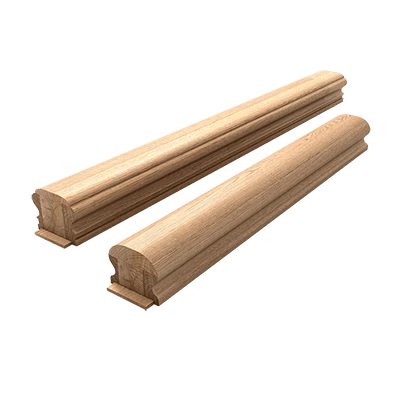
Wooden baseboard — for natural interiors with parquet, solid wood furniture, and wooden doors.
Wooden corner bracket — for clean finishing of external corners and ends of door openings. Matches the baseboard tone.
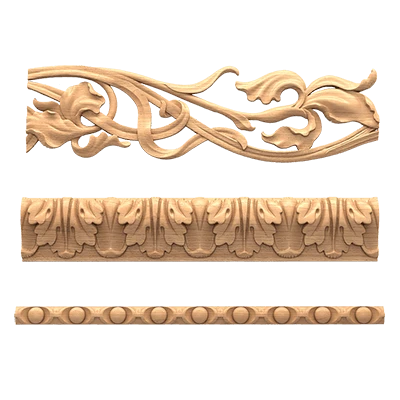
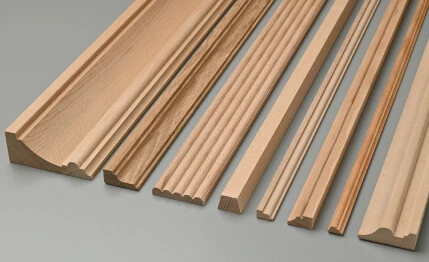
wooden molding — for classic interiors with wooden frames and decorative belts.
Trimming Items — a complete system of wooden linear elements: baseboards, corners, slats, moldings in a unified quality system.
Selection information which MDF skirting board to choose for a specific type of room — in a separate guide. O about MDF skirting board sizes for different ceilings and interiors — as well.
FAQ: Answers to popular questions
Which color of MDF skirting board to choose?
Depends on the interior. Rule: the skirting board should be connected to at least one of three surfaces — floor, doors, or walls. White is a universal choice with white doors. Wood-colored skirting board — with floors in oak, walnut, ash tones. Gray — with gray floors and neutral interiors. For painting — when you want to match the skirting board to the wall color or non-standard interior solutions.
Should the skirting board match the floor or the doors?
Both options work. Skirting board matching the floor color — the floor "continues" along the wall, the space feels more voluminous. Skirting board matching the door color — a unified door system, the space reads as organized. The choice depends on what is more important in a particular interior.
When is it better to choose a white MDF baseboard?
With white doors and trim, with light or neutral walls, in Scandinavian or minimalist style, in small rooms that need lightness. Not suitable for warm cream doors and dark rich floors without intentional contrast.
Can you paint MDF baseboard the color of the wall?
Yes. For this, you need a paintable MDF baseboard — without a factory finish. After installation, filling joints, and priming, it is painted with the same paint as the wall. Result: the baseboard 'dissolves' into the wall, the lower boundary disappears.
Is a gray MDF baseboard suitable for an apartment?
Yes, provided the interior is in a neutral or cool color scheme. With gray floors, concrete floors, porcelain tile, gray laminate, white walls with a cool undertone — gray baseboard works perfectly. Not suitable for warm interiors (beige walls, warm oak).
Where is a black MDF baseboard appropriate?
In modern interiors with black accents (handles, lights, frames), in lofts, in rooms with a 'light + dark' contrast solution. Only in spacious, well-lit rooms. In small rooms, it visually compresses the space.
How to choose an MDF skirting board in oak finish for laminate flooring?
Bring a sample of the laminate (or a piece of the board) to the skirting board sales point and compare shades in person. "Natural oak" from different manufacturers has different shades. Only a physical comparison in daylight gives the correct result.
What is better: a wood-effect skirting board or one for painting?
It depends on the style and the floor. For laminate in wood tones — an MDF skirting board with a wood finish in the corresponding decor. In a modern minimalist interior with hidden doors or non-standard wall colors — a skirting board for painting. For natural parquet — consider a solid wood skirting board.
About the company STAVROS
Color is the first thing to choose. But behind the right color should be the right quality: even geometry of the skirting board, stable coating without bubbles and delamination, precise edges, uniform shade from plank to plank.
STAVROS manufactures MDF skirting boards with a full-wrapping decorative coating — including the side edges of the profile. The shade is consistently reproduced from batch to batch, which is especially important when adding to already purchased laminate or doors. The range includes: white MDF baseboard with factory enamel, paintable baseboard, decors in oak (natural, light, gray), ash, walnut, wenge.
In addition to MDF baseboards — solid wood baseboards, corners, moldings, and millwork products. All items are manufactured to uniform dimensional standards, allowing them to be used in a single system without adjustment.
Clarify MDF skirting board price per linear meter, see real shade samples and place an order — on the STAVROS website.