










































































Article Contents:
- Why wooden baseboard is important in interior
- Three functions in one detail
- Why Wooden Skirting Board is Better Than Plastic
- How to choose the height of a wooden baseboard
- Why height is the first parameter, not the last
- Height ranges and their logic
- Proportion: baseboard and ceiling height
- Proportion: baseboard and cornice
- How to choose the profile of a wooden baseboard
- Profile is the character of the baseboard
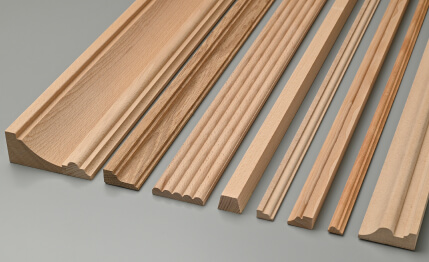
- Profile types: classification
- How to choose a profile for the interior style
- Baseboard color: matching floor, doors, walls, or furniture
- The main question with no single answer
- Principle 1: Baseboard matching the floor
- Principle 2: Baseboard matching the doors
- Principle 3: Baseboard matching the wall
- Principle 4: Baseboard matching the furniture
- Principle 5: Contrasting baseboard
- Color selection table
- Wooden baseboard for classic interior
- Why classic requires a wooden baseboard
- White baseboard in a classic interior
- Baseboard and wooden molding: how to assemble a unified system
- A system is not a random set of parts
- Structure of a complete wooden molding system
- One wood species — the main rule
- Wooden baseboard for parquet and laminate
- Parquet and wooden baseboard
- Wooden skirting for laminate
- Wooden baseboard for painting, varnishing, or tinting
- Three finishing paths: how to choose the right one
- First method: white enamel
- Second method: tinting + varnish
- Third method: natural oil or wax
- Fourth method: without coating (for self-finishing)
- Installation of wooden baseboard: from marking to finish
- Installation tools
- Two methods of fastening
- Corner joints: the main node
- Work sequence
- Important installation nuances
- Common mistakes when choosing a wooden skirting board
- Mistake 1: Baseboard is chosen last
- Mistake 2: Too low baseboard in a classic interior
- Error 3: Color mismatch with doors
- Error 4: Different wood species in one room
- Error 5: Rough profile in a small room
- Error 6: Installation without acclimatization
- Error 7: Profile mismatch with wall moldings
- Error 8: Purchase without measurements
- FAQ: Popular questions about wooden floor baseboards
- Where to buy wooden floor baseboards
- STAVROS: Wooden baseboard and complete solid wood millwork system

There are details that are invisible when correct — and instantly catch the eye when wrong. The baseboard is exactly such a detail. It runs along the entire perimeter of the room, along the bottom edge of every wall, at every door, along every furniture group. It is constantly seen out of the corner of the eye. And if it is wrong, the interior "unzips."
with a classic profile creates a sense of solidity, reliability. — it's not just closing the joint between the wall and the floor covering. It's the lower boundary of the room. The line where the wall begins. An architectural element that is as important in a classic interior as the cornice at the ceiling.
Why do so many people choose wooden baseboards incorrectly? Because they rush. They buy "something suitable" at the last moment, when the floor is already laid, furniture is arranged, and walls are painted. The baseboard is perceived as a finishing trifle. This is a mistake. The baseboard is a decision made together with the choice of flooring, doors, and the overall finishing concept.
This article is for those who want to do it right the first time. We'll cover everything: height, profile, color, material, finish, installation, and combination with other wooden decor elements.



Why wooden baseboard is important in interior design




Three functions in one detail
The baseboard is a multifunctional element. Its significance is not limited to any single task: it solves three at once.
First function: technical. The baseboard covers the technological gap between the floor covering and the wall. This gap is necessary: parquet, laminate, and boards expand and contract with changes in temperature and humidity. Without an expansion gap, the covering will buckle. The baseboard hides this gap — solving a technical problem with an aesthetic method.
Second function: protective. The lower part of the wall is the zone of greatest mechanical impact. Chair legs, vacuum cleaners, children's toys, shoes. The baseboard absorbs impacts, protecting the wall finish from damage.
Third function: architectural. The baseboard sets the lower horizontal line of the wall. In a classic interior, it serves as the "base" of the vertical finishing system: baseboard → wall → cornice. A good baseboard makes the room complete. A bad or unsuitable one destroys even the most carefully thought-out interior.
Our factory also produces:
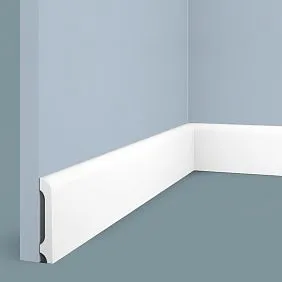
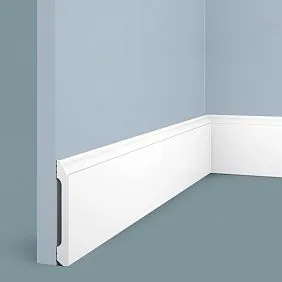
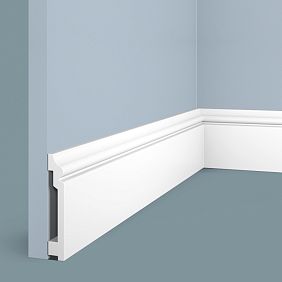
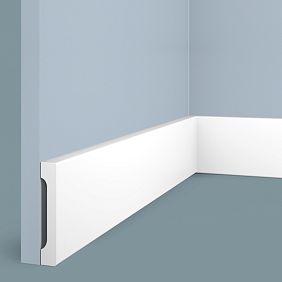
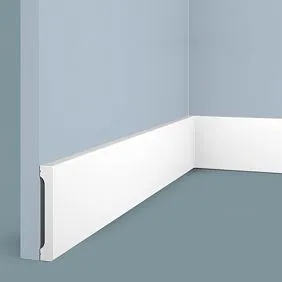
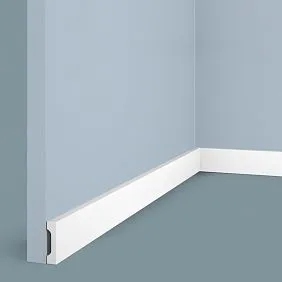
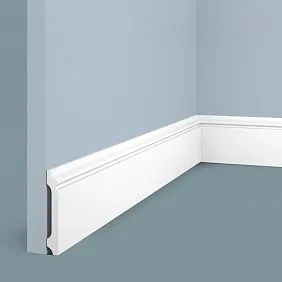

Why wooden baseboard is better than plastic
The question is rhetorical for those who work with wood. But the answer is needed — because many choose between wood and plastic based solely on price.
Natural material. Wood is a living material with texture, warm tone, and tactile quality. Plastic imitates wood — and always loses to the original.
Durability. A high-quality wooden baseboard, with proper finishing, lasts for decades. Plastic ones turn yellow, crack, and lose their shape.
Restoration capability. A wooden baseboard can be repainted, re-varnished, and sanded to remove scratches. Plastic ones can only be replaced.
Compatibility. A wooden baseboard organically combines with wooden floors, furniture, and doors. Plastic never creates the same material connection.
Eco-friendliness. Natural wood without toxic additives is a safe choice for children's rooms, bedrooms, and living spaces.
Get Consultation
How to choose the height of a wooden baseboard
Why height is the first parameter, not the last
Most buyers start choosing a baseboard by profile or color. This is the wrong order. The first parameter is height. It is height that determines how the baseboard "reads" in the room: whether it remains inconspicuous or becomes an expressive element.
Height ranges and their logic
35–50 mm: minimalist baseboard.
Barely noticeable. It blends into the lower part of the wall without drawing attention. Suitable for modern minimalist spaces, apartments with low ceilings (2.4–2.5 m), where it's important not to 'weigh down' the wall with additional horizontal lines. For interiors in Scandinavian minimalism, loft style with white walls.
55–70 mm: universal baseboard.
The most common range. Clearly visible, creates a distinct lower line of the room without dominating. For most living spaces with standard ceilings of 2.5–2.8 m, for neutral interiors, transitional zones (hallways, corridors).
80–100 mm: expressive baseboard.
Noticeable, shapes the character of the lower part of the wall. For classic interiors, rooms with ceilings of 2.8–3.2 m, bedrooms with wooden furniture, studies. Works well with parquet and solid wood flooring.
120–150 mm and above: architectural baseboard.
This is already a decorative element — not just a detail. A high baseboard in classic living rooms and formal halls is a principle of palace architecture, transferred to a residential interior. Creates a powerful horizontal line at the base of the walls. For rooms with ceilings from 3.0 m, for neoclassicism and rich classicism, for interiors with a pronounced architectural concept.
Proportion: baseboard and ceiling height
| Ceiling Height | Recommended skirting board height |
|---|---|
| 2.4–2.5 m | 35–50 mm |
| 2.5–2.7 m | 50–70 mm |
| 2.7–3.0 m | 70–100 mm |
| 3.0–3.5 m | 100–130 mm |
| More than 3.5 m | 130–160 mm and above |
These are not strict rules, but working proportions. Use them as a starting point — and adjust for the specific interior and style.
Proportion: baseboard and cornice
Classic architectural rule: the cornice at the ceiling is wider than the baseboard at the floor — by about 20–30%. This creates the feeling that the room is "covered" from above and "rests" from below — proportionally and confidently.
Example: baseboard 70 mm + wooden cornice 90 mm. Or baseboard 100 mm + cornice 130 mm.
Violation of proportion (cornice thinner than baseboard) creates the feeling of an inverted pyramid — visually uncomfortable.
How to choose a wooden baseboard profile
Profile is the character of the baseboard
The cross-section profile of the baseboard determines its "character": strict, soft, decorative, architectural. The same baseboard height — 80 mm — can look like a modest detail or an expressive interior element. This is determined by the profile.
Types of profiles: classification
Rectangular (flat) profile.
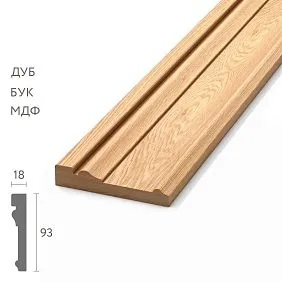
Simplest profile: rectangular cross-section without pronounced bevels or roundings. The baseboard stands vertically against the wall. For minimalist interiors, Scandinavian style, modern classic with straight lines. Easy to install — does not require precise fitting to uneven walls.
Profile with reverse bevel (leaning).
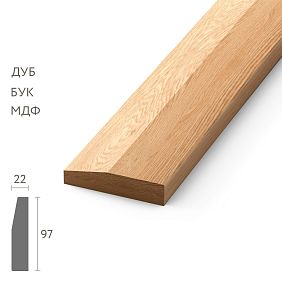
The lower part of the baseboard is tilted toward the floor, the upper part fits against the wall. The bevel hides the gap at the floor and presses the baseboard tightly against the wall along the top edge. A universal option for most situations.
Profile with fillet (rounded top edge).
The top edge of the baseboard is rounded — creates a smooth transition from the baseboard to the wall. Suitable for warm, cozy interiors — bedrooms, children's rooms, living rooms in classic and Provencal style.
Ornate classic profile.
One or more decorative elements in the cross-section: protrusion, fillet, reverse curve, bead. A baseboard with pronounced relief that creates its own shadow at the base. For classic interiors, solid wood furniture, rich wooden spaces.
Composite profile.
Several decorative elements in the cross-section: shelf, fillet, reverse curve, straight bevel. A monumental, architectural baseboard. For formal interiors, high rooms, neoclassical and classic spaces with rich finishes.
How to choose a profile for your interior style
| Interior style | Recommended profile |
|---|---|
| Minimalism, loft | Rectangular flat |
| Scandinavian | Rectangular with slight fillet |
| Modern Classic | Leaning with fillet |
| Classic, neoclassic | Classical figured |
| Baroque, Louis | Composite with multiple elements |
| Provence, country | Shaped with soft rounding |
Baseboard color: match floor, doors, walls, or furniture
The main question with no single answer
What color should a wooden floor baseboard be? This is the most common question. And there is no single correct answer — only principles that work.
Principle 1: Baseboard matching the floor color
The most common and "safe" choice. A baseboard in the same tone as the flooring — parquet, plank, laminate. In this case, the baseboard "continues" the floor, blends into it, and does not distract attention. The floor-wall line becomes smooth, and the walls visually "rise" higher.
When it works: for any interiors where the floor is the main decorative element and you don't want to interrupt it.
Principle 2: Baseboard in the tone of the doors
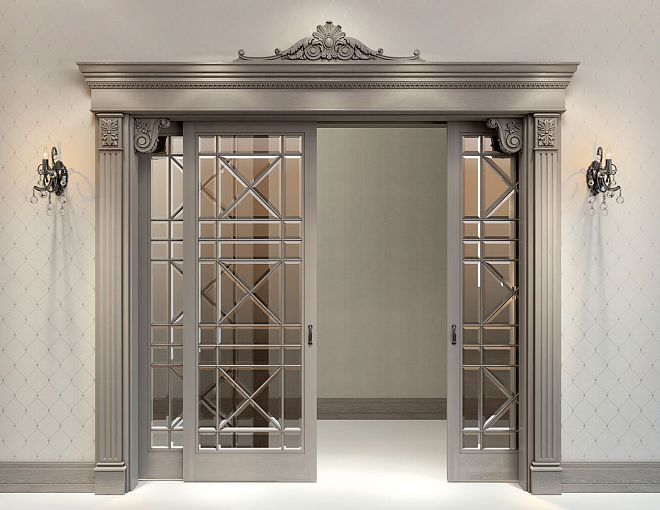
A classic architectural technique: baseboard and door trim in the same tone. White baseboard + white trim — standard for classic interiors. Dark baseboard + dark trim — for interiors with rich wood finishes.
When it works: for interiors with pronounced door frame finishes, where doors are an active decorative element.
Principle 3: Baseboard in the tone of the wall
A monochrome approach. The baseboard is painted in the color of the wall — it disappears as an independent element, creating the feeling of a solid vertical plane. This is a modern minimalist technique: the wall "falls" all the way to the floor without visual interruptions.
When it works: for minimalist interiors where the wall is the main plane and any horizontal lines are unwanted noise.
Principle 4: Baseboard in the tone of the furniture
A wooden baseboard in the tone of the room's key furniture — a sofa with wooden legs, a wardrobe, a bed. The room is perceived as a single whole: furniture and wall are "from the same world."
When it works: for rooms with pronounced solid wood furniture, where wood is the main interior material.
Principle 5: Contrasting baseboard
A dark baseboard on a light wall is a bold and striking solution. It creates a clear bottom line, "grounds" the space, and adds graphic quality. It's not for everyone — but for interiors with a strong character, it works flawlessly.
When it works: for interiors with dark wood floors and light walls, for spaces with a pronounced architectural concept, for modern classics with a contrasting palette.
Color selection table
| Situation | Recommended approach |
|---|---|
| Light parquet + white walls | White or natural light baseboard |
| Dark parquet + light walls | Baseboard matching the parquet or contrasting white |
| White doors + classic | White enamel baseboard |
| Dark doors + wooden furniture | Baseboard matching doors and furniture |
| Minimalism, monochrome | Baseboard in wall color |
Wooden baseboard for classic interior
Why classic requires a wooden baseboard
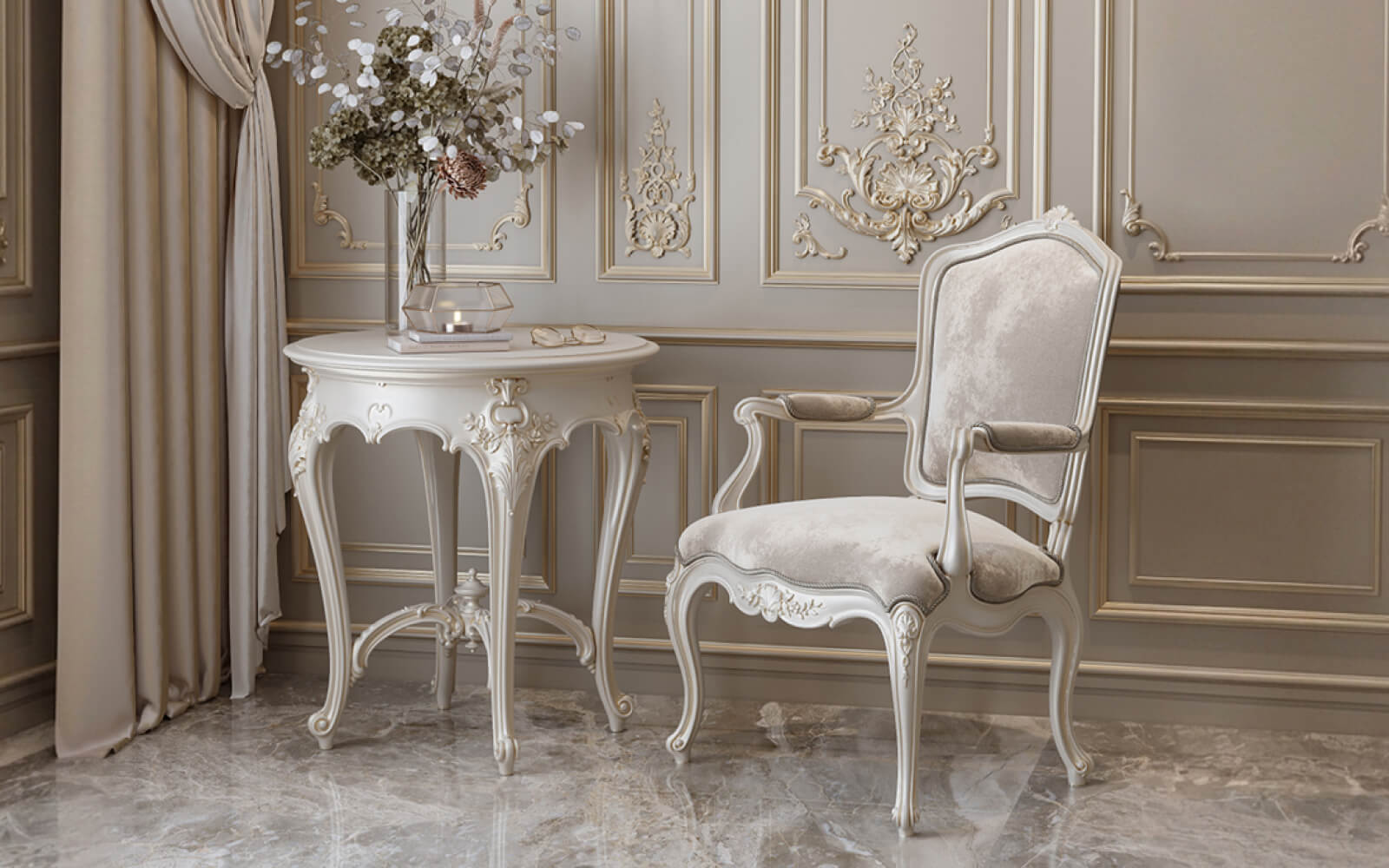
In a classic interior, all details work as a system. There are no random elements, no "fillers." Every detail is part of the architectural concept. And the baseboard is one of the key participants in this system.
with a classic profile creates a sense of solidity, reliability. in a classic interior, it is the base of the vertical decorative system. Its connection with other elements is mandatory:
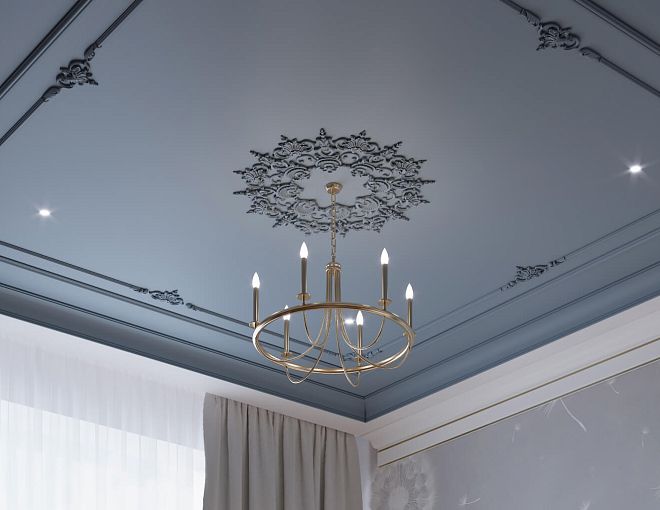
Baseboard + cornice. The lower and upper horizontal elements of the room. They must be made of the same wood species, in the same tone, with a similar profile "language". O wooden cornice in the interior — in a separate article by STAVROS.
Baseboard + moldings. Wooden moldings on the walls create a middle level of decor between the baseboard and the cornice. All three elements form a single vertical system. Details about wooden moldings for walls and furniture — in the corresponding article.
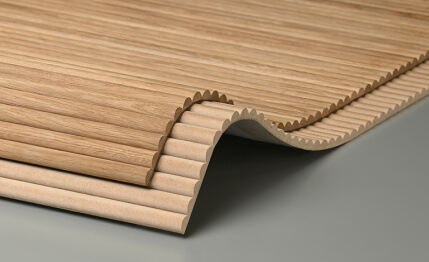
Baseboard + wooden slats. If installed on an accent wall Wooden boards in interior, the baseboard is the lower finish of the slat panel. The slats meet the baseboard from above or go behind it.
Baseboard + furniture legs. In classic furniture, the legs are made of the same wood as the baseboard. A sofa with turned wooden legs in "dark walnut" color + a "dark walnut" baseboard form a system.
Baseboard + wooden decor. decor for furniture solid wood overlays — rosettes, friezes, carved elements — in the same tone as the baseboard. The room reads as a single ensemble.
White baseboard in a classic interior
White wooden baseboard for enamel — a classic in the truest sense. White door trims, white cornice, white moldings, white baseboard. Walls in color: beige, gray, blue, olive. This technique works in any classic space.
Important: the "white" baseboard must be painted in the same shade as other white elements in the room. Cool white and warm white next to each other — a noticeable mismatch.
Baseboard and wooden trim: how to assemble a unified system
A system is not a random set of details
An interior where wooden floor baseboards, cornices, moldings, slats, corners, and baguettes are made from different species and in different tones is not a system. It is a set of elements. And that is exactly what is read in the finished space: fragmentation, randomness, lack of intent.
The right approach: Wooden trim is chosen as a unified system from a single source.
Structure of a complete wooden trim system
Level 1: lower — baseboard.
with a classic profile creates a sense of solidity, reliability. — base. Covers the floor-wall joint, sets the height of the lower horizontal line.
Level 2: corner transitions.
Wooden corner bracket — covers internal and external corners of baseboards and wall panels. Details in the article about wooden corner trim for walls, furniture, and joints.
Level 3: middle — moldings and battens.
Moldings on walls create a middle level — frames, horizontal lines. Wooden plank creates vertical rhythm on accent walls.
Level 4: horizontal transitions.
Wooden molding covers horizontal joints, creates dividing lines on wall panels. More about application in the material on flat wooden layout.
Level 5: top — cornice.
wooden cornice — completion of the vertical system. Wall-to-ceiling transition. Mirror response to the baseboard at the floor.
Additional level: wooden baguette.
Wooden Picture Frame — for framing mirrors, paintings, decorative panels. Picture frame strip as an element of frame decor adds completeness to a classic interior.
One wood species — the main rule
All elements of the system are from the same wood species. Beech with beech, oak with oak, pine with pine. Different species with the same tinting will give different results: different fiber density, different surface porosity — the tone lays differently.
Buy Wooden trim in a set from one catalog — this is not only convenience, but also a guarantee of uniformity of the result.
Wooden baseboard for parquet and laminate
Parquet and wooden baseboard
Parquet is natural wood. Wooden baseboard is natural wood. This is an organic pair. Principles:
For solid wood flooring. Baseboard made of the same species as the floorboard: oak + oak, ash + ash. Tone — close or identical. Result — floor and baseboard from the same material world.
For dark-toned engineered wood flooring. Baseboard in a dark tone: walnut, mocha, wenge. Height — from 70 mm: a dark high baseboard "grounds" the space, adding weight to the lower part of the room.
For multi-layer engineered wood flooring. Wooden baseboard matching the tone of the board's finish layer. Since engineered wood often has natural veneer from valuable species, a wooden baseboard of the same species creates organic unity.
Wooden skirting board for laminate flooring
Laminate is an imitation of wood. A wooden baseboard next to laminate always wins: it is more natural, warmer, more alive.
Selection: baseboard matching the laminate decor tone. If the laminate is "light oak" — baseboard made of beech in a light tint. If the laminate is "dark walnut" — baseboard in a dark tint.
Don't try to match the baseboard "perfectly to the laminate" to the point of indistinguishability. A difference of a few tones is acceptable and even desirable: the wooden baseboard should be an independent element, not a disguise.
Wooden baseboard for painting, varnishing, or tinting
Three finishing paths: how to choose the right one
Choosing the baseboard finish is choosing the final look. Each path gives a different result.
Path one: white enamel
Classic of classics. A white solid wood baseboard for enamel — a neutral, elegant, proven solution.
Who it's suitable for:
-
Classic interiors with white doors and cornices.
-
Modern classic with neutral walls.
-
Any interiors where cleanliness and simplicity of the bottom line are important.
Technology: sanding → primer (2 coats) → putty → sanding → enamel (2–3 coats with drying).
Wood species: beech — the best choice for white enamel. Uniform surface, excellent adhesion.
Path two: tinting + varnish
Natural wood texture with the desired tone — the most organic option for wooden spaces.
Who it's suitable for:
-
Interiors with wooden parquet, engineered wood flooring, oak furniture.
-
Classic and neoclassical spaces with open wood texture.
-
Rooms where wood is the main decorative material.
Tinting tones:
-
Light (natural, pine, honey) — for light Scandinavian and classic interiors.
-
Medium (walnut, oak, chestnut) — universal, for most interiors.
-
Dark (wenge, mocha, espresso) — for rich dark classic spaces.
Technology: sanding → applying stain → drying → varnish 2–3 coats with interlayer sanding.
Third path: natural oil or wax
Open wood texture with minimal coating. The baseboard breathes, tactilely warm, alive.
Who it's suitable for:
-
Eco-friendly interiors where naturalness is a priority.
-
Spaces with oak or ash parquet under oil.
-
Scandinavian and japandi style.
Important: requires renewal every 2–3 years. Less resistant to mechanical damage than lacquer coating.
Fourth option: without coating (for self-finishing)
Sanded solid wood baseboard without coating — for those who want to independently select the shade to match the finished interior. Maximum flexibility of choice.
Installation of wooden baseboard: from marking to finish
Installation tools
-
Miter saw (or miter box + hacksaw) — for corner cuts.
-
Building level — for checking horizontality.
-
Measuring tape and pencil.
-
Drill and dowels (for concrete and brick walls).
-
Finishing nails 40–50 mm.
-
Liquid nails — auxiliary fastening.
-
Wood putty.
-
Paint / varnish / oil.
Two methods of fastening
Method 1: with glue + nails.
Liquid nails are applied to the back of the baseboard, the baseboard is pressed against the wall. Finish nails every 300–400 mm additionally secure it. For smooth walls made of drywall or plastered.
Method 2: with dowels.
For concrete, brick, block walls. Holes are drilled with a hammer drill, dowels are inserted, the baseboard is fastened with self-tapping screws. The heads are countersunk and puttied.
Corner joints: the main assembly
Internal corner (90°). Two methods:
-
Miter joint at 45° — both pieces are cut at a 45° angle and joined at the corner. Requires precise cutting.
-
Butt joint — one baseboard is cut flush against the wall, the other meets it end-to-end. Simpler, but less neat.
External corner. Miter joint at 45° is the only correct option. The baseboard on an external corner is always visible from both sides.
For external corners with uneven walls — Wooden corner bracket as an overlay element that hides joint imperfections.
Work sequence
-
Acclimatization of the baseboard in the room: 24–48 hours before installation.
-
Perimeter marking: horizontal line using a level — mark the height of the baseboard.
-
Cutting: start with the corners, prepare all corner elements.
-
Installation: start with the longest wall, move around the perimeter.
-
Sealing: puttying joints, nail heads, gaps near the wall.
-
Finish: primer → paint / varnish according to the selected scheme.
Important installation nuances
Gap at the floor. The baseboard should not rest against the flooring. There should be a 1–2 mm gap between the bottom edge and the flooring. Otherwise, when the floor expands, the baseboard will be pushed out.
Gap at the wall. Small gaps between the baseboard and an uneven wall are normal. Wood putty + painting completely hides them.
Alignment with door trims. The baseboard fits flush against the trim and is carefully cut. Do not attempt to make a miter joint with the trim — only a straight end.
Common mistakes when choosing wooden baseboards
Mistake 1: Baseboard is chosen last
The most common mistake. The baseboard is not a finishing detail, but a system element that should be chosen together with the floor, doors, and wall finishing concept.
Mistake 2: Too low baseboard in a classic interior
A 35 mm baseboard in a room with cornices, moldings, and solid wood furniture is a visual dissonance. The scale doesn't match. For classic interiors — at least 70 mm.
Mistake 3: Color mismatch with doors
White doors + dark wooden baseboard without any logic — a contradiction that "doesn't tie together" the interior. Either the baseboard matches the doors, or the floor, or the walls. Random choice is unacceptable.
Mistake 4: Different wood species in one room
Pine baseboard + beech moldings + oak cornice — three different tones with the same stain. Always use one wood species for all wooden trim in the space.
Mistake 5: Rough profile in a small room
A massive composite profile 120 mm high in a room of 10–12 sq. m with a 2.5 m ceiling — oppressive, narrowing. Proportions are not observed.
Mistake 6: Installation without acclimatization
Baseboard installed immediately after delivery in a cold room may "warp" after a few weeks — slight buckling at attachment points. 48 hours in room conditions is a mandatory step.
Mistake 7: Mismatch between profile and wall moldings
Baseboard with soft rounded transitions + moldings with sharp straight bevels — a stylistic mismatch. Choose baseboard and moldings from the same style family.
Mistake 8: Buying without measurements
Looked at a photo in the catalog — bought it. The photo doesn't convey the real scale. A 50 mm baseboard in a photo with a high ceiling looks different than in a real room. Always check the dimensions in millimeters and compare them with the actual height of your ceiling.
FAQ: popular questions about wooden floor baseboards
Which wooden baseboard to choose for an apartment?
For standard apartments with ceilings 2.6–2.8 m — height 60–80 mm, shaped or classic profile, wood species to match the finish. For modern interiors — rectangular profile 50–60 mm.
Why is a wooden skirting board better than MDF?
Solid wood is stronger, more durable, and can be restored. MDF is a cheaper option with texture imitation, but without the natural properties of wood.
Wooden baseboard for laminate — which is better?
To match the laminate decor. Beech or pine with a 'light walnut' tint for most light laminates. Dark tint for dark floor coverings.
Can you install a high baseboard in a small room?
Caution. With ceilings below 2.5 m, a baseboard higher than 70 mm will take up a disproportionately large part of the wall. Refer to the proportion table above.
Should you paint the baseboard before or after installation?
Both options work. Before installation — it's more convenient to paint, no need to mask the floor and wall. After installation — it's more convenient to putty the joints and do the final color alignment at connection points.
How to calculate baseboard quantity?
Room perimeter (in meters) minus width of door openings + 10–15% for allowance and trimming of corner joints.
How to choose a baseboard for white doors?
White enamel on the baseboard of the same tone as the doors. Cool white and warm white are different shades that don't visually match. Check the tone next to the door casing.
Where to buy wooden floor baseboard
Full STAVROS assortment:
-
with a classic profile creates a sense of solidity, reliability. — baseboards made of beech and pine solid wood.
-
Wooden trim — complete catalog of linear molding products.
-
Wooden plank — solid wood slats.
-
wooden cornice — solid wood cornices.
-
Moldings — decorative profiles.
-
Wooden corner bracket — corner elements.
-
Wooden Picture Frame — profiles for frames and trims.
-
Wooden molding — horizontal transition elements.
-
Wooden decoration — overlay decorative elements.
-
Furniture and decor from solid wood — complete product catalog.
STAVROS: wooden skirting board and a complete system of solid wood moldings
with a classic profile creates a sense of solidity, reliability. — the bottom line of your interior. It is where the vertical of the room begins. When chosen correctly, it is invisible as a technical detail and obvious as an architectural solution — creating completeness, scale, and character.
STAVROS produces skirting boards from solid beech and pine: in various heights and profiles, for painting and tinting, for classic and modern interiors. In the same catalog as the skirting boards — cornices, moldings, slats, corners, trims, baguettes, furniture decor. All from one system, one wood species, in unified tones.
STAVROS works with designers, construction teams, furniture manufacturers, and private clients across Russia. Precision in dimensions, consistent quality, prompt shipment.