Article Contents:
- What does MDF skirting board for painting by RAL mean
- A blank for enamel and a ready-made painted skirting board are not the same thing
- White shades: RAL 9003, RAL 9010, and RAL 9016
- Gray and graphite solutions: RAL 7044 and RAL 7016
- Beige, complex neutral, and colored skirting boards
- When is it better to choose a wall color
- When contrast works better
- Same RAL, same gloss level
- Transition from baseboard to architrave
- Baseboard and built-in wardrobe
- Baseboard and painted wall panels
- Base and primer
- Matte, semi-matte, or glossy enamel
- Daylight and artificial light
- Different batches and application methods
- Where to view the swatch
- What to record after approval
- PLT-005: profile 120 × 16 mm
- PLT-004: tall profile 160 × 16 mm
- PLT-001-1: wide profile 120 × 16/15 mm
- Bedroom and living room
- Kitchen and hallway
- Bathroom, toilet, and direct wet areas
- 120 mm profile
- 160 mm profile
- Thickness and overhang relative to the casing
- Need to make the skirting board almost invisible
- Need to match doors and casings
- Need a graphite contour
- Need to select a baseboard for a colored kitchen
- Need a profile for a classic interior
- Need a modern, calm interior
- Need to design a commercial interior
- MDF baseboard for painting and ready colored baseboard
- Regular MDF and moisture-resistant MDF
- Baseboard and casing of the same profile
- MDF for enamel and natural wood for tinting
- Example calculation
- What margin to allow
- Why it's better to paint the entire batch in one cycle
- Reserve for future repairs
- What to coordinate with the painter
- What to coordinate with the installer
- Living Room
- Bedroom
- Entry Hall
- Kitchen
- Children's room
- Office
- Commercial space
- Choosing color only by screen
- Assuming the same number always looks the same
- Ordering color before choosing the profile
- Not considering the height
- Confuse regular and moisture-resistant MDF
- Not allowing for extra material
- Do not match the baseboard with the architrave
- Expect a ready RAL color from the 'under enamel' position
- Paint part of the batch separately
- Choose coating without considering maintenance
- Ignore the condition of the walls
- Do not check the selected card line
- Do not account for sockets and furniture
- When it's better to choose another option
- Commercial route without unnecessary actions
- Can MDF baseboard be painted in any RAL color?
- What is better: baseboard matching wall color or door color?
- Which white RAL to choose for baseboard?
- Why do door and baseboard of the same RAL look different?
- Is a test paintout needed?
- Which profile to choose: 120 or 160 mm?
- Is regular MDF suitable for kitchen?
- Can moisture-resistant MDF be painted?
- How to choose the gloss level?
- How to calculate the amount of baseboard?
- Do I need to paint the spare strip immediately?
- Can I choose a skirting board for already installed doors?
- Which gray RAL should I choose for a graphite skirting board?
- Is the coating for enamel ready for installation?
- What is more important when ordering: color or model?
- Can I use one color for walls, doors, and skirting boards?
- Do I need to subtract built-in wardrobes from the calculation?
- Can I order just one additional strip later?
- How do I know if PLT-004 is suitable for my room?
- How is PLT-005 different from PLT-001-1?
- Do I need to choose a skirting board exactly matching the floor color?
- Why does the color appear lighter on a small sample?
- How to store the repair stock?
- Can I paint the skirting board after installation?
- Which option is more practical: matte or semi-matte?
- Do I need to consider the color of lighting?
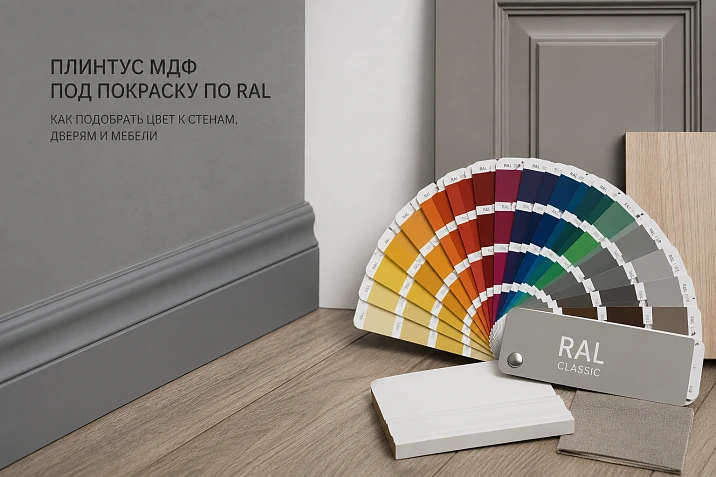
MDF skirting boards for painting in RAL are bought not for the sake of the number from the catalog, but for an accurate result in the interior. One project needs an almost invisible lower contour matching the wall color, another needs an expressive line matching doors and architraves, and a third needs a graphite or colored profile that ties together furniture, panels, and floor finish. A mistake at this stage is immediately noticeable: the shade may be colder than the wall, the gloss higher than the doors, and the high profile too heavy for a small room.
Therefore, the choice begins not with the phrase 'paint it white', but with several specific decisions: what profile is needed in height and shape, whether regular or moisture-resistant MDF is suitable for the room, what surface to compare the color with, what degree of gloss the enamel will have, and who performs the test painting. The RAL number sets a reference, but the final perception depends on the base, primer, paint composition, lighting, and adjacent materials.
The STAVROS range includes MDF and moisture-resistant MDF profiles prepared for opaque finishing. This does not mean that each item is pre-painted in the warehouse in all catalog colors. The correct scenario is different: the buyer selects the appropriate profile, orders the option for enamel, agrees on the painting technology, and receives the skirting board in the color needed for the interior.
This approach is especially useful when the baseboard must match the walls, door frame, or furniture fronts. The article will help you choose the color, height, and material, understand the role of a test sample, calculate a single batch, and move on to real models PLT-005, PLT-004, and PLT-001-1 without expectations not listed in the product cards.
What does MDF baseboard for painting according to RAL mean
MDF baseboard for painting is a profiled strip with a surface designed for subsequent opaque finishing. After preparation and application of enamel, the board structure should not be visible: the buyer perceives the product as a smooth colored architectural element. This base is convenient precisely when natural wood texture is not needed, but accurate matching with other surfaces is more important.
The RAL catalog helps to fix a color reference. Instead of vague formulations like "milky white," "warm gray," or "almost graphite," the project gets a number by which the shade can be coordinated with the painter, furniture production, door factory, and designer. However, the number does not cancel verification: different enamels, bases, batches, and gloss levels may be perceived differently even with the same marking.




A blank for enamel and a finished painted baseboard are not the same thing
A finished painted baseboard already has a final coating. The buyer only needs to check the color, surface quality, quantity, and condition of the batch. A blank for enamel is sold for further opaque painting. It gives more freedom but requires deciding in advance who is responsible for priming, interlayer sanding, enamel application, drying, and shade control.
For an individual interior, the second path is often more accurate. You can choose a baseboard in the color of the wall, replicate the shade of the doors, or order a graphite line to match the furniture. But you cannot assume that the inscription "for enamel" automatically means the product is ready for installation without painting. Before ordering, you need to clarify the surface condition and the technological chain with the finishing contractor.
When a specific color is needed, it is reasonable to first Buy MDF baseboard for painting, suitable in height and material, and then tie the agreed sample to it. This way, the color does not replace the constructive choice: a beautiful shade will not fix an unsuitable thickness, excessive height, or incorrectly selected material.
Our factory also produces:

Confirmed profiles for painting
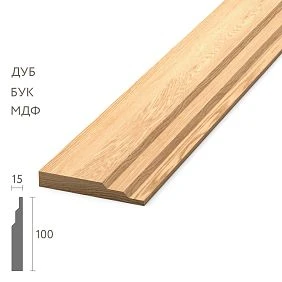
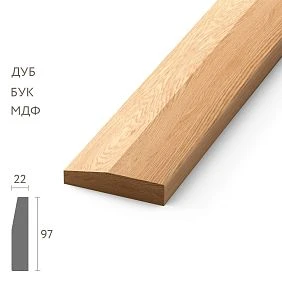
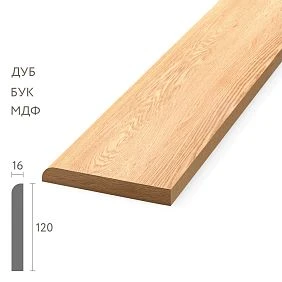
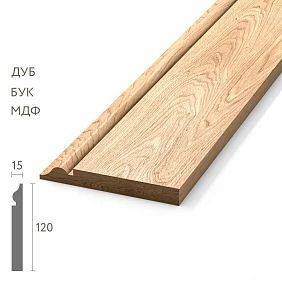
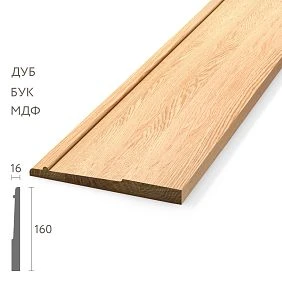
The article examines three real models. PLT-005 and PLT-001-1 are available in standard and moisture-resistant MDF, as well as other materials, but for RAL painting we are interested specifically in MDF options for enamel. PLT-004 stands out with a height of 160 mm and is perceived as a more noticeable architectural line. Before purchasing, the specific length, material, and batch condition must be verified in the product card.
| Model | Confirmed parameters | When to consider |
|---|---|---|
| PLT-005 | 120 × 16 mm; MDF and moisture-resistant MDF; preparation for enamel | Universal high line, living rooms, hallways, and kitchens with the right material choice |
| PLT-004 | 160 × 16 mm; high profiled baseboard; MDF options | High walls, expressive lower contour, classic and modern interiors with architectural scale |
| PLT-001-1 | 120 × 16/15 mm; MDF and moisture-resistant MDF; preparation for enamel | Projects where a wide classic profile and a choice between standard and moisture-resistant base are needed |
The parameters in the table help filter out unsuitable options but do not replace viewing the drawing. With the same height, two profiles may work differently next to a door casing, wall trim, and furniture. On a small sample, the difference seems insignificant, but after installation around the entire perimeter, the shape begins to affect the character of the room.
Get Consultation
Which RAL color to choose for the baseboard
Choosing an RAL number starts with answering the question: what exactly should the skirting board match? The wall, door, casing, furniture front, or a separate decorative element? Trying to match all surfaces at once is rarely reasonable. A white door, white wall, and white furniture can have different undertones, and a glossy front and a matte wall will look different even with the same number.
A main reference surface is needed. If the goal is to blend the skirting board, the wall becomes the reference. If a unified door portal is required, the color is matched to the door leaf and casings. If the lower contour should support the kitchen or built-in furniture, the comparison is made with the fronts, baseboard, and visible side panels.
White shades: RAL 9003, RAL 9010, and RAL 9016
White MDF skirting board remains a common choice, but the word 'white' does not denote one color. RAL 9003 is often perceived as pure signal white, RAL 9010 as softer and calmer, RAL 9016 as light traffic white. In a specific room, the impression changes due to lamp temperature, floor color, and reflections from walls.
Against warm beige and cream walls, a too cold white contour can look like a separate strip. This is appropriate when contrast is needed, but hinders if the skirting board should calmly continue the door trim. Next to cool gray walls, a soft white sometimes appears yellowish. Therefore, the number is chosen not by name, but by a physical sample and test swatch.
If doors are already installed, it is better to get the exact color designation and gloss level from the manufacturer. The phrase 'white enamel' is insufficient. Even matching the RAL number does not guarantee visual identity if the door is painted with polyurethane enamel with a semi-matte finish and the skirting board with a different composition with a deep matte surface.
Gray and graphite solutions: RAL 7044 and RAL 7016
A gray skirting board can be a neutral extension of the wall or an independent graphic line. Light RAL 7044 is suitable in calm interiors where a soft transition between warm wood floors and gray-beige walls is needed. Deep RAL 7016 forms a noticeable graphite contour and supports dark window frames, metal details, kitchen fronts, and furniture well.
Graphite color has a practical feature: it shows dust, scuffs, marks from cleaning tools, and local surface defects more strongly. The higher the gloss level, the more noticeable reflections and irregularities. For a frequently used hallway, a deep matte color looks expressive but requires careful base preparation and a clear maintenance plan.
You should not choose gray based only on a photo. The camera, screen, and image processing change the shade. One gray can lean into blue, green, or beige undertones. The error is especially noticeable next to a large solid-color wall: the skirting board seems 'alien,' even though it looked suitable in a separate sample.
Beige, complex neutral, and colored baseboards
A beige baseboard is useful in interiors with warm walls, natural stone, oak flooring, and furniture in calm shades. It can be lighter than the wall, match it, or complement the textiles. The challenge is that beige tones are especially sensitive to lighting: during the day they look neutral, but in the evening they become warmer.
A colored MDF baseboard is not necessarily a bright stripe. A muted green, blue, terracotta, or burgundy profile can match the door leaf, furniture facade, or wall panel. This choice requires discipline: the color must appear in the interior meaningfully, not as a random addition. It works well when the shade is supported by at least one large or several small details.
In commercial spaces, a colored lower contour helps tie the finish to the brand palette, highlight a specific zone, or make navigation clearer. But even here, the coating's durability and the possibility of local repairs are checked first. The baseboard is in the contact zone with shoes, cleaning equipment, and furniture, so the decorative idea must account for usage.
| Color task | How to choose | What to check on the sample |
|---|---|---|
| Baseboard in wall color | Compare with the actual wall after the finish paint has dried | Undertone, gloss, transition in daylight and evening light |
| Baseboard matching the doors | Get the number and coating specification from the door manufacturer | Match with the casing, leaf, and door frame |
| Contrast graphite | Evaluate the connection with windows, furniture, lighting and fittings | Visibility of dust, scratches and reflections |
| Colored profile | Repeat the shade in a noticeable interior detail | Saturation on a long horizontal line |
Baseboard in wall color or contrasting: two different scenarios
A baseboard painted in the color of the wall visually extends the vertical surface to the floor. This technique reduces the number of color boundaries, makes the room calmer, and helps tall profiles not look heavy. It works especially convincingly in interiors with a complex wall shade, where a standard white baseboard would destroy the integrity.
The contrasting option behaves differently. It emphasizes the perimeter, highlights the geometry of the room, and becomes part of the architectural finish. A tall baseboard in white, graphite, or colored finish can support doors, cornices, panels, and furniture. Such a contour is more noticeable, so the shape of the profile, the quality of joints, and the evenness of painting come to the fore.
When it is better to choose the wall color
Matching the wall is suitable for small rooms, spaces with many doors, and interiors where the main role is given to furniture, art, or textured flooring. The baseboard remains a functional border but does not fragment the walls with an additional strip. This is a good approach for complex gray-beige, green, blue, and dusty shades.
To achieve a seamless effect, it is not enough to specify one RAL number. The wall may be painted with water-dispersion paint, while the baseboard may be painted with enamel. Due to differences in texture and gloss, the surfaces will differ. Sometimes this looks neat: the color matches, and the material is apparent. Sometimes the difference is perceived as a mistake. A decision is made only after comparing samples on site.
In this scenario, the top line of the baseboard becomes more important than the color itself. If a dark gap or wavy joint remains between the wall and the profile, the effect of a single plane disappears. Before ordering, you need to assess the evenness of the walls and determine how the junction will be finished after installation.
When contrast works better
Contrast is needed when the interior lacks a clear lower boundary or when the baseboard should unify doors and architraves. A light profile on a colored wall makes the room more architectural, while a dark one creates a graphic frame. In a spacious room with high ceilings, a contrasting line helps relate the scale of the floor, walls, and doorways.
But contrast increases installation requirements. An uneven top edge, a gap near the wall, different shades on adjacent planks, and sloppy corners will be more noticeable. Before purchasing, you should check the walls, plan the preparation of junctions, and decide how the joints will be painted after installation.
A contrasting baseboard also has a stronger impact on the perception of space. A dark band visually anchors the lower part of the room, while a light one creates a more familiar frame. Neither option can be called universal: the result depends on the profile height, the saturation of the walls, and the amount of free perimeter.
How to choose a baseboard for doors and architraves
The 'door — architrave — baseboard' combination looks convincing when not only the colors match but also the logic of the profiles. A tall, ornate baseboard next to a thin, minimalist architrave can clash with the door even with an exact RAL match. Conversely, a simple, wide profile can support a modern door without extra decoration.
The first step is to determine which element is primary. In a classic interior, it is often the door portal: the baseboard matches the architrave in color and scale. In a modern project, the wall color may be primary, and the door is made hidden or nearly invisible. Then the baseboard does not have to match the door leaf.
Same RAL, same gloss level
A matte door and a glossy baseboard rarely look like a unified set. Light reflects differently from surfaces, and the eye perceives them as different colors. For a cohesive result, match the matte, semi-matte, or glossy finish. Texture must also be considered: smooth MDF and painted solid wood can retain different reliefs.
If the door and baseboard are painted by different contractors, they should be given one approved physical sample. A verbal number is not enough. It is useful to record the paint manufacturer, series, base, tinting formula, and gloss level. This reduces the risk that both parties formally use RAL 9016, but the final details will differ.
You should compare not only the flat part of the door leaf, but also the casing. On a relief, light changes the shade, and a narrow detail may appear darker than a large plane. If the door frame is already installed, the baseboard sample is applied directly to the bottom of the casing.
Transition of baseboard to casing
At the junction, thickness and height are important. If the baseboard is thicker than the casing, the end may protrude and require a separate solution. If the casing is thicker, the transition is usually perceived more calmly, but the shape must be coordinated. Before ordering, it is useful to compare drawings or apply real samples.
Complex profiles require particularly careful mating. The upper decorative part of the baseboard should not accidentally rest against the relief of the casing. Sometimes an intermediate plinth element helps, but adding it without a project is not advisable. The less improvisation left to the installers, the neater the result.
If the baseboard and casing are painted after installation, the joint can be visually unified, but this will not correct the geometric mismatch. Painting hides the color difference, not the difference in thickness and shape.
How to connect baseboard with furniture
A baseboard in the color of the furniture is used when built-in wardrobes, a kitchen, or wall panels occupy a significant part of the room. Matching the lower contour with the facades helps to unify disparate planes. Repeating a graphite, dark blue, green, or complex beige shade works especially well.
It is not necessary to paint the baseboard exactly the color of each object. Freestanding furniture changes, while the baseboard remains part of the finish. It is better to choose built-in elements or a large permanent structure as a reference. A sofa, armchair, and small cabinet can support the shade, but should not dictate it without an overall concept.
For kitchen furniture, you need to distinguish between the color of the facades and the color of the plinth. The plinth is located near the floor and can be darker or more practical than the facades. A baseboard matching the facade continues the vertical color theme; one matching the plinth gathers the bottom line. Both solutions are acceptable but yield different results.
Baseboard and built-in wardrobe
If the wardrobe reaches the wall, decide in advance whether the baseboard runs behind the body, approaches the side panel, or is interrupted. Color alone does not solve the joint. When matching the facades, the baseboard may appear as a continuation of the furniture, but only if the end of the wardrobe is neatly finished.
It is also necessary to check the thickness of the side panel and the depth of the plinth. A high profile sometimes prevents the furniture from fitting tightly against the wall. In that case, the designer provides a cutout, extension, or another method of joining before manufacturing the wardrobe.
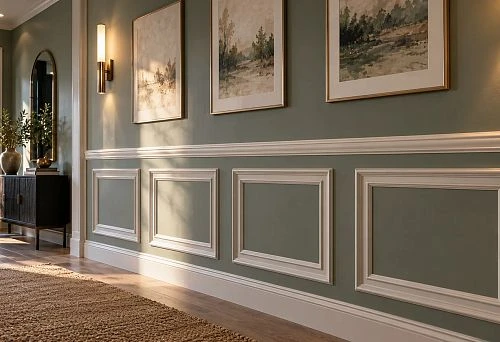
Baseboard and painted wall panels
When walls are finished with panels, the baseboard can continue their color and relief or separate the panels from the floor. In the first case, a unified enamel system is important; in the second, intentional contrast. If the panels and baseboard have different profiles, check whether the lower zone becomes overloaded.
Why one RAL number looks different
The RAL catalog standardizes a color reference, but does not make all painted surfaces physically identical. Perception is influenced by paint composition, base type, primer, layer thickness, application method, gloss level, and lighting. Therefore, the phrase "it's the same number" is not a guarantee of matching.
Base and primer
MDF absorbs materials differently than plaster, metal, or natural wood. Primer isolates the base, evens out absorption, and creates a foundation for enamel. If the preparation system differs, the color and uniformity of the coating may also differ. Absorption is higher on edges and milled areas, so they require special attention.
Light and complex shades are sensitive to the color of the primer. A dark base under white enamel may require more coats, and uneven primer on adjacent parts affects the result. The painter chooses the technology based on the specific material and coating, and it is important for the buyer to agree on it before starting the entire batch.
Matte, semi-matte, or glossy enamel
A matte surface absorbs more light and looks calmer. It is well suited for walls and modern interiors, but a deep matte finish can be sensitive to dirt and local polishing from touch. The semi-matte option is easier to match with doors and furniture, often more practical to clean, and softly reflects light.
Gloss enhances color and emphasizes the shape of the profile, but shows unevenness, waves, and joint defects. On a high decorative baseboard, reflections can be part of the decorative effect. In a minimalist room, random shine can sometimes look too active. The choice is made not by fashion, but by adjacent surfaces and operating conditions.
The conventional names "matte" and "semi-matte" from different manufacturers do not always mean the same level of gloss. For an exact match, you need to look at the technical designation or a physical sample, not just the verbal description.
Daylight and artificial light
A north-facing window makes many shades colder, warm lamps enhance yellow and red components, and cold sources emphasize blue and gray ones. The baseboard is located low, often in the shadow of furniture and far from the main light. A sample at eye level and a sample near the floor can be perceived differently.
Proper testing takes place in the room where installation will occur. The paint sample is applied to the wall, door, and floor in the morning, afternoon, and evening. For a long horizontal line, it is better to use not a small card, but a fragment of the profile: the shape creates shadows that change the impression of the color.
Different batches and application methods
Spraying, roller, and brush produce different textures. Even the same enamel reflects light differently if one surface is smooth and another has a micro-relief. It is usually more advantageous to paint a baseboard using a method that ensures even coverage of the profile, but the specific technique is determined by the applicator.
Tinting on different days and with different equipment can also produce a slight difference. Therefore, it is better to paint the entire visible batch in one cycle and keep a control sample.
Why a test coat is necessary
A test coat is not a formality or an unnecessary expense. It allows you to see the actual color on the actual profile with the chosen primer and enamel system. It is used to evaluate coverage, uniformity, gloss, paint behavior on milling, and compatibility with the interior.
It is better to prepare a full-length section rather than covering a small spot. On a wide baseboard of 120 or 160 mm, light distributes differently than on a flat card. The top edge, grooves, and protrusions create shadows. A number that seemed light on the RAL fan may look deeper on a textured profile.
Where to view the test coat
The sample is applied to the finished wall near the floor, next to the door, and near the furniture with which it is intended to match. It is not held only in the center of the room under bright light. Corners, areas behind curtains, walls opposite the window, and zones of artificial lighting are important.
If the baseboard runs through several rooms, the test coat is checked in each one. The same color may look neutral in a bright living room and too cold in a dark hallway. Sometimes it is more reasonable to keep a single number for unity, sometimes to separate rooms by color.
What to record after approval
After approval, you need to save the sample itself and record the coating parameters: RAL number, manufacturer and series of enamel, base, gloss level, primer, number of coats, and application method. If an additional strip is needed in a few months, this information will simplify reproducing the result.
Even with a preserved formulation, a new batch may differ slightly. Therefore, it is better to paint the repair reserve simultaneously with the main order. A spare plank painted later may stand out against the already installed baseboard due to a different batch of paint and natural changes in the coating over time.
Which profile to buy for painting
Color attracts attention, but the profile determines the scale. A height of 120 mm is usually perceived as noticeable but versatile architectural line. A height of 160 mm requires more space and a conscious connection with doors, panels, ceiling height, and room size. Thickness affects the fit to architraves and furniture.
The profile cannot be chosen only by a large product photo. In an image without scale, 120 and 160 mm may look similar. In a room, the difference is four centimeters around the entire perimeter, which is significant. It is useful to mark the intended height with painter's tape on several walls and evaluate it from different points.
PLT-005: profile 120 × 16 mm
PLT-005 is suitable for projects where a wide baseboard with a pronounced but not excessive height is needed. The card presents options made of MDF and moisture-resistant MDF, as well as an enamel-ready version. The 120 mm height works well with standard and raised ceilings if other elements support its scale.
For a hallway, kitchen, or other room where a more moisture-resistant base is important, you can buy an MDF baseboard 120 × 16 mm for enamel and select the appropriate material in the card. Moisture-resistant MDF does not eliminate the need for coating protection and careful use, but it provides a more suitable base for areas with periodic humidity changes.
PLT-005 should be compared with the architrave before ordering. The width and relief should transition into each other without accidental protrusion. If the baseboard is painted in the color of the wall, the profile becomes calmer; in contrasting enamel, its shape reads more actively.
The height of 120 mm is also convenient for combining with painted wall panels. The skirting board can finish the panel from below or run throughout the room as an independent line. With a single RAL, the relief is preserved, but the color transition disappears.
PLT-004: high profile 160 × 16 mm
PLT-004 with a height of 160 mm is designed for interiors where the lower part of the wall should look architectural. This size is noticeable even in the wall color and is especially expressive in a contrasting finish. It is appropriate next to high doors, wide architraves, wall panels, and ceilings that support the scale.
For a spacious living room, hall, study, or commercial space, you can buy a high MDF skirting board 160 × 16 mm, after first checking the material and preparation of the specific option. A high profile should not be chosen just because it looks impressive in a photo. In a small room with low doors, it can draw attention to the floor.
When painting in a rich color, the 160-millimeter strip occupies a significant area around the entire perimeter. A test paint is especially important here. A dark shade on a long line may appear visually heavier than expected from a small sample.
PLT-004 requires checking sockets, floor convectors, radiators, and lower furniture guides. If elements are located low, the high profile may intersect with them. Moving electrical points after finishing is more expensive than a preliminary check.
PLT-001-1: wide profile 120 × 16/15 mm
PLT-001-1 offers a classic wide shape and options from regular or moisture-resistant MDF. The size 120 × 16/15 mm should be read together with the specific material: the thickness may differ. This matters when adjoining door trim and when calculating the projection relative to the wall.
When a solution is needed for a room with high requirements for the base, you can buy a moisture-resistant MDF skirting board for enamel. Before ordering, it is important to check the length, thickness, and preparation of the selected item, rather than transferring the parameters of one material to all model variants.
Visually, PLT-001-1 suits interiors where the skirting board should look like a full part of the finish, not a narrow technical strip. In the color of the wall, it creates relief without an additional color band; in the color of the door, it connects the perimeter with the openings.
If the profile is to be used next to a wide casing, it is useful to place two samples together. Color matching does not always compensate for the difference in relief. In a classic interior, the transition should look intentional, not like a combination of randomly found details.
| Model | Strong point | What to check before ordering |
|---|---|---|
| PLT-005 | Height 120 mm, choice of regular or moisture-resistant MDF, preparation for enamel | Material, length, shape of the junction to the casing |
| PLT-004 | Height 160 mm and expressive architectural scale | Matching ceiling height, doors, and room size |
| PLT-001-1 | Wide classic profile and several base options | Thickness 16/15 mm for specific material and preparation condition |
Standard or moisture-resistant MDF
Standard MDF is suitable for dry living spaces with a stable microclimate: bedroom, living room, study, dressing room. Moisture-resistant MDF is more practical in hallways, kitchens, and other areas where periodic humidity fluctuations, wet cleaning, and contact with outdoor moisture are possible. However, the material name does not turn the skirting board into a product for constant wetting.
Protection depends not only on the board but also on the entire finishing system. Ends, cut areas, joints, and coating damage remain vulnerable. If water regularly gets under the bottom edge after installation, even a suitable base will not compensate for improper use. End coating and careful maintenance need to be considered.
Bedroom and living room
In dry rooms, the main criteria are shape, height, and surface quality for enamel. Standard MDF allows for a smooth opaque color and does not require overpaying for a characteristic that is not used. However, if the living room is combined with a kitchen or has access to a terrace, conditions at different walls may vary.
A skirting board in the color of the walls makes the bedroom calmer, especially with a complex warm shade. In the living room, a contrasting line can support doors and furniture. For both rooms, it is useful to check how the profile looks behind curtains, near radiators, and by built-in wardrobes: part of the perimeter will be unevenly lit.
Kitchen and hallway
In the kitchen, the lower contour more often encounters wet cleaning, splashes, and temperature changes. In the hallway, wet shoes, sand, and frequent contact with cleaning equipment are added. Here, a moisture-resistant base seems more rational, especially if a wide profile is chosen, which is noticeable and should maintain its geometry for a long time.
Dark enamel is not always practical: light dust is clearly visible on it. A very light surface shows shoe marks. The optimal color is chosen considering the floor and cleaning scenario, and the gloss level is chosen considering the ability to wipe the coating without creating shiny spots.
Bathroom, toilet, and direct wet areas
Moisture-resistant MDF handles humidity changes better than regular MDF, but that's not a reason to automatically use it where surfaces are regularly splashed with water. The shower area, the space near the bathtub, and other direct wet areas require separate evaluation of the material, coating, and installation.
If a baseboard is needed in a bathroom, it is necessary to clarify the permissible conditions with the manufacturer and contractor. Special attention is paid to the bottom edge, ends, and joints. Continuous coverage is more important than a beautiful RAL number.
How baseboard height changes the color scheme
The same RAL on a 120 mm and 160 mm profile is perceived differently. The higher the strip, the larger the color area and the stronger its influence on the room. A light baseboard adds an architectural light frame, a dark one forms a noticeable belt, and one matching the wall creates a textured lower section without a color break.
120 mm profile
A height of 120 mm is usually suitable for rooms with standard and high ceilings, if doorways and furniture are not too miniature. It is noticeable but remains manageable. In the wall color, the profile looks restrained; in white or graphite, it forms an independent outline.
For a room with a lot of furniture, 120 mm is often more practical than 160 mm: the baseboard is visible in open areas but does not compete with low cabinets and radiators. Before ordering, you need to check the height of outlets, lower cabinet guides, and other elements located near the floor.
If ceilings are low, the wall color helps reduce the visual activity of a wide profile. A contrasting option is also possible, but then you need to assess whether the lower strip becomes the main element of the room.
160 mm profile
A height of 160 mm requires a free wall. Near low-lying sockets, radiators, and furniture plinths, it can create complex junctions. This profile is particularly convincing in spacious rooms, where its height relates to doors and the ceiling.
If PLT-004 is painted in the wall color, it can look like a lower architectural panel. In a contrasting color, the effect is stronger: the line visually reduces the height of the free wall but adds composure to the interior. The solution is tested on a full-size section, not just on a drawing.
Thickness and projection relative to the architrave
A thickness of 15 or 16 mm seems like a small difference, but it is noticeable at the junction with the architrave. If the architrave is thinner, the skirting board will protrude. If thicker, a step forms in the other direction. Both joints can be neatly finished when planned in advance.
Near built-in furniture, the projection is also important. The profile should not interfere with opening the facade, pulling out a drawer, or installing a side panel. The size is checked before ordering the furniture and skirting board.
Practical choice for different interior tasks
Need to make the baseboard almost invisible
Choose a profile that suits the room in scale, and paint it in the wall color. Match the RAL number with the gloss level or a deliberate difference in texture. If the wall is deep matte and the skirting board enamel is semi-matte, the boundary will remain visible under side lighting.
For a hidden effect, the top joint is especially important. A gap or uneven line will ruin the impression, even if the color is precisely matched. Before painting the entire batch, it is useful to attach a sample to the finished wall and view it from a distance of several meters.
If the walls have a complex color, first complete the main wall painting and let the coating fully develop. Only then approve the skirting board. Tinting based on a still-dry sample can lead to errors.
Need to unify doors and architraves
First, get a sample of the door covering. Choose a skirting board that matches the trim in thickness and profile character. Then, make a paint-out with the same RAL number and a similar degree of gloss. If the doors already have a complex branded color, a simple number may not be enough — a physical sample should be the reference.
At the junction with the trim, decide in advance which part protrudes forward. This issue cannot be left until installation. A clear joint makes the set convincing, while a random step reveals an uncoordinated selection.
If the apartment has several types of doors, determine whether the skirting board should match all of them or only the main ones. Sometimes a neutral wall color is more unifying than an attempt to replicate different door shades.
You need a graphite outline
Graphite works well next to dark windows, furniture, lights, and hardware. For a calm result, repeat the shade in at least one large element. It is not necessary to make all details identical, but the dark line at the floor should have a visual explanation.
Check the sample for dust and touch. Very matte graphite sometimes shows marks more than semi-matte. A glossy option emphasizes the relief but requires more flawless preparation of the profile and joints.
On a dark floor, a graphite skirting board can almost disappear, while on a light floor it becomes a contrasting frame. Both effects are acceptable, but they need to be chosen consciously.
You need to choose a skirting board for a colored kitchen
Determine whether the skirting board repeats the facade, base, or wall. If the kitchen occupies only one part of the room, the color of the facades around the entire perimeter may be too active. Sometimes it is better to continue the color only in the kitchen area, but such a transition must be planned in the project.
For a combined kitchen-living room, a neutral wall or door color that runs throughout the space is useful. Moisture-resistant MDF is considered for areas with more intensive cleaning, and the finish is chosen considering contact with water and household dirt.
You should not select the color only based on a facade sample in the showroom. The kitchen surface under working lighting may look different. Comparison is done in the finished room or using a large approved sample.
Need a profile for a classic interior
In classic style, not only height but also relief matters. PLT-005 and PLT-001-1 provide a wide expressive line, while PLT-004 enhances scale. White, cream, and complex neutral shades tie the baseboard to doors, cornices, and panels. Contrasting color is used more cautiously so that the lower band does not draw too much attention.
A classic profile should match the architraves. If the door trim is thin and simple, too
Need a modern calm interior
A modern interior does not necessarily require a low straight baseboard. A tall profile can look concise if painted in the wall color and not overloaded with contrasts. The relief becomes noticeable only through light and shadow, while the room maintains its integrity.
For such a solution, even walls and neat joints are especially important. Color does not mask geometry. If the base is wavy, the preparation issue is resolved first, otherwise the top line will noticeably fluctuate.
Need to design a commercial interior
In a hotel, salon, restaurant, or showroom, the color can support the brand palette. At the same time, durability is more important than a beautiful presentation. A repair stock, preserved formula, and a coating that allows regular cleaning are needed.
A tall profile is appropriate in a spacious hall, but in a narrow corridor it often gets bumped. It is worth deciding in advance how local damage will be repaired and where the painted reserve is stored.
How not to confuse a baseboard for enamel with similar products
Buyers often lump together ready-made white baseboard, primed profile, painted product, and ordinary unfinished plank into one category. There is a fundamental difference between them. A profile for enamel implies further opaque finishing, but the specific degree of surface readiness requires checking in the product card.
Also, array parameters cannot be transferred to MDF. One model can be produced in several materials and lengths. If the card shows oak, beech, regular and moisture-resistant MDF, the selected row determines not only the price, but also dimensions, length, preparation, and purpose.
MDF skirting board for painting and ready-made colored skirting board
A finished product is chosen based on the existing coating. A profile for painting is chosen based on shape, material, and the ability to obtain the desired color. The second option is more convenient for an individual palette, but adds stages of approval and finishing. The buyer must include them in the project timeline and budget.
If the renovation is on a tight schedule, you need to find out in advance how long the test painting, approval, and painting of the batch will take. The profile itself may be available, but color preparation requires separate organization.
Regular MDF and moisture-resistant MDF
They may look the same in a photo, but are designed for different conditions. You cannot choose moisture resistance based on the base color or model name. The material is specified in a specific product variant. Before adding to the cart, you need to check the selected modification.
The moisture-resistant option does not eliminate the need for final protection. The open end after cutting remains a weak point. It is treated as part of the selected finishing system.
Skirting board and architrave of the same profile
Some profiles can be used in multiple roles, but this does not mean automatic compatibility in every project. For floor applications, check the height, thickness, ends, and junction points. For door framing, the width and joining method are important. The common shape helps to assemble the interior, but requires a drawing.
MDF for enamel and natural wood for tinting
MDF is chosen when a smooth, opaque surface is needed. Oak or beech are justified if the texture is preserved and a transparent or tinted finish is used. You can cover expensive, expressive wood with dense enamel, but first it's worth understanding if there is practical sense in it.
You should not choose material based solely on prestige. For a specific painting task, MDF is often more rational: it provides stable geometry and a smooth base, while the natural texture will still be hidden.
How to calculate the amount of baseboard before painting
The calculation starts with the perimeter of all rooms where there will be one color and one profile. Doorways are subtracted from the total length only where the baseboard truly does not pass. Then, sections behind built-in furniture are added if the furniture can be dismantled or if the project requires continuous finishing.
The resulting length is divided by the length of the selected plank. For MDF in the models under consideration, a length of 2600 mm is found, but the specific parameter needs to be checked in the product card. The result is rounded up to a whole number of items. After that, a reserve is added for trimming, corners, defects, and future repairs.
Calculation example
Suppose the total perimeter of the room after subtracting doorways is 31 meters. With a plank length of 2.6 meters, a simple calculation gives 11.93 items, meaning at least 12 planks without reserve. If the room has many corners and short walls, this amount may not be enough due to cutting.
You need to see what leftovers can be used on adjacent sections. Sometimes one long wall requires almost a whole plank, and a small leftover is suitable for a section near the door. Layout by walls is more accurate than a percentage reserve.
What reserve to include
For a simple rectangular room with a small number of corners, the reserve can be moderate. Complex layouts, bay windows, columns, short walls, and a large number of doors increase waste. There is no single percentage for all objects: cutting needs to be assessed based on the room layout and plank length.
A separate reserve is needed for repairs. It is better to paint one or more additional strips together with the main batch. In a few years, it is more difficult to exactly match the color and gloss than to keep a ready-made stock. It is stored under suitable conditions, protected from deformation and damage to the coating.
Why it is better to paint the entire batch in one cycle
Even with the same tinting formula, batches of enamel may differ slightly. If part of the baseboard is painted today and part in a month, the difference becomes noticeable on a long wall. A single cycle reduces the risk of differences in shade, gloss, and application texture.
The strips are marked by room and cut before finishing, or enough material is left for trimming with subsequent protection of the ends. The specific technology is determined by the contractor. It is important for the buyer to agree on at which stage cuts, painting, and installation are performed to avoid untreated areas.
Reserve for future repairs
A spare strip is more useful than a can of paint. Over the years, the enamel in the can may lose its properties, and the installed coating may change shade due to light and cleaning. A ready-made painted profile allows replacing a damaged section without repeating the full cycle.
The reserve is marked with the RAL number, model, material, and room. This is especially important if several close white or gray shades are used in the apartment.
What to buy and prepare together with the baseboard
The main purchase is the profile of the required model, material, and length. The remaining items depend on the installation and painting technology. You cannot automatically add random glue or primer: the composition must be compatible with the base, MDF, enamel, and room conditions.
It is commercially reasonable to first compile a specification: the number of strips, reserve, selected RAL, gloss level, material, preparation system, installation compound, and junction scheme. Then the purchase turns into a kit, not a set of unrelated items.
| What to consider | Why this is needed | What to Check |
|---|---|---|
| Additional plank from the same batch | Allowance for cutting and future local repairs | Material, length, and simultaneous painting |
| Test profile segment | RAL, gloss, and enamel behavior check on the relief | The same primer and paint system as in the main batch |
| Primer and enamel | Formation of an even opaque coating | Compatibility with MDF and between layers |
| Installation materials | Reliable fastening to a specific base | Wall type, profile weight, and contractor recommendations |
| Material for protecting ends and joints | Reducing the risk of moisture penetration and visible seams | Compatibility with finishing enamel |
The table intentionally has no random links to related products. No confirmed URLs are provided for them. It is much safer to coordinate materials with the painter and installer than to choose a compound based only on its general name.
What to coordinate with the painter
The contractor must know the profile material, preparation condition, chosen color, gloss level, and requirements for the ends. It is useful to determine in advance whether the strips are painted before installation, after it, or in a combined manner. Each method has its own implications for joints and repairs.
What to coordinate with the installer
The installer needs profile drawings, a junction diagram, wall type, and work sequence. If the baseboard is already painted, fastening and cutting should minimally damage the coating. If the finish is applied after installation, the floor and walls need protection.
Selection for different rooms
Living room
In the living room, the baseboard is visible on long free walls, so the color and profile are particularly noticeable. If the interior is built around art, furniture, and textiles, a baseboard in the wall color does not compete with the main elements. If architectural frames are needed, it can match the doors and architraves.
A height of 160 mm is justified in a spacious room with tall openings. For a more compact space, 120 mm is often easier to match with furniture. You need to check in advance whether the profile intersects with low sockets and floor convectors.
If the living room is combined with a dining room or kitchen, the color of the baseboard should work throughout the open space. A shade that looks good next to the sofa may appear different near the kitchen unit. The sample is checked in several zones.
Bedroom
In the bedroom, calm transitions and matte or softly semi-matte finishes are more comfortable. A baseboard in the color of the wall supports a sense of unity. A contrasting white is appropriate if it continues doors, cabinets, and other light elements.
A dark contour near the bed can look expressive, but on a small perimeter it creates a strong frame. A full-size sample helps to understand whether the color becomes too heavy under evening light.
A built-in wardrobe often covers part of the baseboard. It is necessary to decide whether the profile runs behind it and how the end near the side panel is finished. This junction affects the quantity and cutting.
Hallway
The hallway requires a more practical material and finish. Moisture-resistant MDF should be considered due to wet shoes and frequent cleaning. The color is better checked for visibility of dirt: pure white shows dark marks, graphite shows light dust.
If doors open into the hallway, a baseboard in their color unifies the space. However, a large number of junctions increases requirements for thickness and joining with architraves. Before ordering, you need to measure each junction, rather than relying on one opening.
At the entrance door, the baseboard may end near the threshold or slope. Here, a neat end and durable finish are needed. An accidental exposed edge quickly spoils the impression of expensive finishing.
Kitchen
The kitchen baseboard should coordinate with the furniture but does not necessarily have to match the facades. A neutral wall color often better connects the kitchen with the living room. A moisture-resistant base and durable washable finish are useful for a high-traffic area.
Near the kitchen unit, you need to decide whether the wall baseboard runs behind the furniture or ends at the side panel. The exposed end must be neatly finished. The color scheme is coordinated with the plinth, floor, and visible side panel.
If the kitchen has an island, its base does not necessarily have to match the wall skirting board. The same RAL can unify the space, but different heights of the details will preserve their functional distinction.
Children's room
In a children's room, maintainability and a calm palette are important. A skirting board in the color of the wall allows for local updates to the lower part if the coating system is preserved. A bright contrasting line can support the furniture, but it is better to avoid a too complex palette that is difficult to replicate during repairs.
The degree of gloss is chosen considering cleaning. A very matte coating looks soft, but some compositions are more sensitive to wiping. Specific properties depend on the enamel, so the decision is discussed with the contractor.
Cabinet
In a study, a dark skirting board can support bookshelves, a desk, and door portals. On light walls, it creates a cohesive graphic; on dark walls, it dissolves and leaves relief. The height is chosen considering built-in furniture and cable outlets.
If wires run along the perimeter or sockets are located low, a high profile requires separate verification. You cannot assume that the skirting board will automatically hide communications: its design must allow for this.
Commercial space
In a salon, restaurant, hotel, or showroom, the skirting board operates in a more intensive mode. Here, a moisture-resistant base, repair stock, and documented color recipe are useful. A branded shade can be used as part of navigation and design, but the coating must withstand regular cleaning.
A high profile enhances the architecture of the space, especially in halls and rooms. In narrow passages, it more often comes into contact with carts and equipment, so you need to evaluate not only the aesthetics but also the possibility of local restoration.
Mistakes when buying a skirting board by RAL
Choosing color only by screen
The monitor does not convey color accurately. Brightness, screen profile, photography, and lighting distort the shade. The RAL number can be found online for reference, but a physical sample and a test patch in the room are needed for approval.
Even professional visualization shows a concept, not a guaranteed result. It is useful for choosing a direction, after which work with real materials begins.
Assuming that the same number always looks the same
Different materials, enamels, and gloss levels change perception. A baseboard and a door may have the same number but look different. Compare not the specification entry, but the actual painted parts.
Ordering a color before choosing a profile
Relief creates shadows and changes saturation. First, choose the model, material, and height, then make a sample on that profile. A sample on a flat plate does not show how the color will behave on the milling.
Not considering the height
A 160 mm colored strip is much more active than a 120 mm one. On a fan deck, the shade may seem calm, but on a long, tall profile, it may dominate. You need to evaluate the color area on the scale of the room.
Confusing regular and moisture-resistant MDF
The material is chosen based on room conditions, not appearance. For a hallway and kitchen, a moisture-resistant base is often more rational. But it also requires quality coating and edge protection.
Not allowing for a reserve
The missing strip has to be ordered and painted later. The new batch may differ in shade and gloss. It is better to include the allowance for cutting and repairs immediately and paint it together with the main volume.
Do not match the baseboard with the casing
Matching color does not fix an inconvenient joint. Thickness, shape, and height must be compatible. Before ordering, compare drawings or physical samples.
Expect a ready RAL color from the "under enamel" option
Preparation for enamel means the possibility of further opaque painting, not the presence of a ready coating for any number. Who performs the painting, what materials are used, and what is included in the order must be clarified in advance.
Paint part of the batch separately
Different cycles increase the risk of differences. It is better to paint the entire batch and the repair stock simultaneously, preserving the recipe and the control sample.
Choose a coating without considering maintenance
Deep matte graphite and glossy white require different maintenance. The former may show wiping marks, the latter — unevenness and scratches. The finish is selected based on actual load.
Ignore the condition of the walls
A rigid high profile does not subtly follow the strong waves of the base. If the wall is uneven, the top line reveals the problem. Before installation, you need to decide whether the surface will be leveled and how the joint is finished.
Do not check the selected card row
The model may be produced in several materials and lengths. The buyer sees the general name and mistakenly assumes all parameters are the same. Before placing an order, check the specific modification.
Do not account for sockets and furniture
A high baseboard may intersect with electrical points, a radiator, a cabinet guide, or a low facade. Check dimensions on the plan before purchase, not after delivery.
Who is MDF baseboard for painting by RAL suitable for
This option is suitable for buyers who need a specific color not available among standard ready-made solutions. It is useful for interiors with colored walls, custom doors, built-in furniture, and a complex neutral palette. The blank for enamel allows linking several elements with one shade.
A baseboard for painting is also convenient for designers and specifiers who need to control color through a sample and specification. You can choose a profile by scale and approve the color later, when walls, doors, and furniture facades are ready.
Another suitable scenario is a renovation where the palette is planned to be updated. MDF for opaque finishing provides a clear base for a coordinated coating, but the possibility of repainting depends on the condition of the old layer and the preparation technology.
When it is better to choose another option
If you need quick installation without painting work, a ready-painted skirting board may be simpler. If the natural texture of oak or beech is important, opaque enamel hides the main advantage of solid wood — then it makes more sense to choose a material for tinting or transparent finish.
For areas with constant direct contact with water, MDF may be unsuitable regardless of the moisture resistance marking. Application conditions must be assessed separately. If the walls are very uneven and the renovation does not involve preparation, a tall rigid profile will highlight joint issues.
Not all projects need a tall decorative contour. In a minimalist room with very low doors and compact furniture, a wide classic shape may look heavy. In such a case, it is better to consider a different profile, but not to invent a reference to an unconfirmed category.
How to buy MDF skirting board for enamel at STAVROS
Start with the MDF skirting board category and select the height. For a universal tall contour, consider 120 mm; for a more pronounced architectural solution, 160 mm. Then open the model card and choose exactly the MDF or moisture-resistant MDF option, if available.
Check the dimensions A × C × L, material, availability or custom manufacturing, preparation status, and selected finish. Do not transfer parameters from one card row to another. For PLT-001-1, thickness depends on the material, and for PLT-005, the length of MDF and solid wood differs.
Before placing an order, prepare the room perimeter and a cutting plan. Add a margin, decide if a repair reserve is needed, and agree on who performs the painting. For the color, record the RAL number, gloss level, and a control sample. If the skirting board must match doors or furniture, provide the contractor with an actual part or an approved color swatch.
For complex joints, send the manager the dimensions of the architrave, photos of the nodes, and a room drawing. Consulting before purchase helps avoid situations where the profile looks nice on its own but does not fit in thickness or height with already installed elements.
Commercial route without unnecessary steps
- Select a model by height and shape.
- Open the card and select the MDF or moisture-resistant MDF option.
- Check the length, thickness, preparation for enamel, and availability.
- Calculate the quantity around the perimeter and add a reserve.
- Coordinate the test color and gloss level.
- Paint the entire batch and repair reserve in one cycle.
- Before installation, check the junctions with doors and furniture.
This procedure does not complicate the purchase, but eliminates expensive rework. The color is chosen at the right moment, and the profile is not accidental.
Frequently asked questions
Can an MDF baseboard be painted in any RAL color?
The profile prepared for enamel is designed for opaque painting, but the possibility of obtaining a specific color depends on the chosen paint system and the contractor. It cannot be assumed that any number is already available in finished form in stock. First, the profile is selected, then the color sample is coordinated.
What is better: a baseboard in the color of the wall or in the color of the doors?
A baseboard matching the wall color looks calmer and breaks up the room less. Matching the door and trim color creates a unified architectural set. The choice depends on which surface should be the main focus in the interior.
Which white RAL should I choose for the baseboard?
RAL 9003, 9010, and 9016 can be perceived differently next to walls and doors. There is no universal white. You need to compare physical samples with the finished finish under both daylight and artificial light.
Why do a door and baseboard of the same RAL look different?
The cause can be different enamels, bases, primers, textures, and gloss levels. A matte surface appears deeper, while a glossy one reflects its surroundings. For a match, a common reference sample and a coordinated coating system are needed.
Is a test paint-out necessary?
Yes, especially for complex whites, grays, beiges, and saturated shades. It's better to do the paint-out on a fragment of the chosen profile because the relief creates shadows and changes color perception.
Which profile should I choose: 120 or 160 mm?
The 120 mm height is more universal and suits most residential spaces. The 160 mm profile is more noticeable and requires tall doors, sufficient wall area, and an appropriate room scale. The decision is verified with a full-size sample.
Is regular MDF suitable for the kitchen?
In the kitchen and hallway, it is rational to consider moisture-resistant MDF, especially with frequent wet cleaning. However, the material still requires high-quality finishing and edge protection. It is not intended for constant wetting.
Can moisture-resistant MDF be painted?
Yes, if the specific option is designed for enamel and a compatible preparation system is used. The material, primer, and finish must be verified in the product card and with the painting contractor.
How to choose the degree of gloss?
Focus on doors, walls, and furniture. A matte finish is calmer, semi-matte is often more practical, and glossy highlights relief and defects. The choice should be tested on a sample under real lighting.
How to calculate the amount of baseboard?
Add up the length of all walls, subtract openings where the baseboard will not be installed, divide the result by the length of one plank, and round up. Then add a margin for cutting, corners, and repairs. The percentage depends on the complexity of the layout.
Is it necessary to paint the spare plank immediately?
Yes. Simultaneous painting reduces the risk of differences in shade and gloss. The spare will be useful in case of cutting errors or local repairs after several years.
Can a baseboard be matched to already installed doors?
Yes, but a sample of the door coating and measurements of the casing are needed. Compare the number, undertone, gloss, thickness, and connection shape. Photos and the name "white enamel" are insufficient for an exact match.
Which gray RAL should I choose for a graphite baseboard?
RAL 7016 is often used as an example of a deep graphite shade, but it may look too cold or dark in a specific room. Compare it with windows, furniture, and flooring on a full-size sample.
Is the enamel-ready coating already prepared for installation?
No, the wording means preparation for subsequent opaque painting. The exact degree of readiness, the need for primer, and the scope of work should be checked in the product card and coordinated with the contractor.
What is more important when ordering: color or model?
First, choose the model, material, height, and thickness. Then approve the color on the selected profile. Unsuitable geometry cannot be fixed with a good RAL, but color can be selected after the structural solution.
Can one color be used for walls, doors, and baseboards?
Yes, but visual matching depends on materials and gloss. A wall, door, and MDF reflect light differently. Coordinate samples of all three surfaces and decide if a slight texture difference is acceptable.
Should built-in wardrobes be subtracted from the calculation?
This depends on the design. If the wardrobe is permanently installed flush against the wall, the hidden area is sometimes excluded. If the furniture may be replaced or a continuous contour is needed underneath, it is better to include the baseboard. The decision is made together with the furniture project.
Is it possible to order just one additional strip later?
Technically it may be possible, but color matching after separate painting is not guaranteed. It's more practical to buy a spare from the same batch and paint it together with the main volume.
How do I know if PLT-004 is suitable for my room?
Mark the height of 160 mm with painter's tape on several walls, check sockets, radiators, doors, and furniture. If the line looks proportionate and does not intersect with equipment, the model can be considered further.
How is PLT-005 different from PLT-001-1?
Both models have a height of about 120 mm, but differ in profile shape and individual parameters. PLT-001-1 has a thickness of 16/15 mm depending on the material. The choice is made based on the drawing and the junction with the architrave, not just the height.
Do I need to match the skirting board exactly to the floor color?
Not necessarily. Matching the floor is more common for natural wood solutions. Skirting board under enamel is usually tied to walls, doors, or furniture. The main thing is to choose a reference surface in advance.
Why does the color on a small sample seem lighter?
On a large area, the shade is perceived as more saturated and darker. A tall skirting board forms a long strip, so a small RAL fan does not show the real scale. A full-size paint sample is needed.
How to store repair stock?
Slats are stored in a dry room, protected from bending, impacts and direct sunlight. The packaging indicates the model, material, RAL number, room and painting date.
Can the baseboard be painted after installation?
Yes, if the technology is agreed upon and the walls and floor are reliably protected. Painting after installation helps to unify joints, but complicates work near the floor. Pre-painting gives a clean surface, but cut and fastening areas require local touch-ups.
Which option is more practical: matte or semi-matte?
Semi-matte finish is often easier to clean and simpler to match with doors. Matte looks calmer, but properties depend on the specific enamel. Compare not only the appearance but also care recommendations.
Do I need to consider the color of lighting?
Yes. Warm lamps enhance cream and beige undertones, cold lamps enhance gray and blue ones. The paint sample is checked under all lighting scenarios that will be used daily.
Result: how to go from RAL number to finished interior
MDF baseboard for painting by RAL allows you not to adjust the interior to a standard white profile, but to assemble the lower contour in the color of walls, doors, architraves or furniture. But a quality result begins not with tinting. First, choose the model, height, thickness and material, then check the junctions, calculate the batch, and only after that approve the paint sample.
PLT-005 and PLT-001-1 are suitable for projects requiring a wide 120 mm profile and a choice between standard and moisture-resistant MDF. PLT-004 with a height of 160 mm is designed for a more expressive scale. In all cases, it is important to understand: preparation for enamel is not equivalent to a finished factory coating for each RAL number.
Before ordering, keep a physical sample, record the coating composition, and paint the repair stock together with the main batch. On the STAVROS website, you can select a real profile by parameters, and coordinate the color finish as a separate part of the project. This approach is more reliable than a random purchase: the interior gets not just a colored baseboard, but a coordinated element that suits the room in scale, material, and operation.