










































































Article Contents:
- What is a furniture baseboard: definition and purpose
- Where furniture baseboard is used: eight application contexts
- Wardrobes: freestanding and built-in
- Kitchens
- Chests of drawers
- Sideboards and display cabinets
- Libraries and shelving units
- TV stands, hallway cabinets
- Built-in furniture in niches
- Custom classic furniture
- How furniture baseboard differs from floor baseboard: fundamental difference
- How to choose the height and shape of the profile: from low to high, from smooth to classic
- Profile height
- Profile shape
- Material: wood, MDF or polyurethane
- Wood: solid and glued laminated timber
- MDF
- Polyurethane
- Skirting board for a wardrobe: how to properly close the bottom part
- Built-in wardrobe
- Built-in wardrobe
- Wardrobe in classic interior
- Skirting board for a kitchen: decor or technology
- Technological kitchen plinth
- Decorative wooden skirting board for a kitchen
- Skirting board for a chest of drawers, sideboard and display cabinet: the lower belt as an architectural element
- Commode
- Sideboard
- Showcase
- How to choose a baseboard to match your furniture style
- Classicism and Baroque
- Neoclassicism
- Modern classicism
- Solid wood furniture in rustic or Scandinavian style
- Installing furniture baseboard: how to do it correctly
- Marking and Preparation
- Straight sections
- Corner joints
- Gaps and sealing
- Combining furniture baseboard with other wooden elements
- Mistakes when choosing a furniture baseboard
- FAQ: answers to the main questions about furniture baseboard
- STAVROS: the bottom line that holds everything
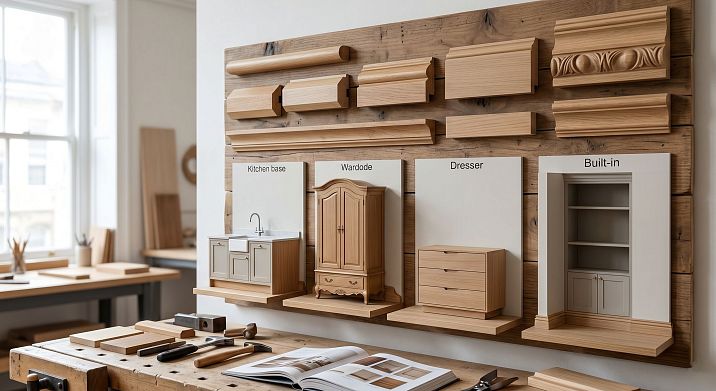
Look at any wardrobe or chest of drawers from below. What is there? Most often — a bare body, cut off at floor level, or a plastic kitchen plinth placed "to cover it up." This lower centimeter gap between the furniture and the floor is a place where either everything ends correctly, or everything falls apart. And this is exactly where the furniture plinth works.
Furniture skirting — this is not a floor plinth, which everyone has seen. It is a decorative profile for finishing the lower part of a furniture body: a wardrobe, kitchen, chest of drawers, sideboard, display case, library, built-in structure. It covers the base, completes the silhouette of the item, visually "places" the furniture in its place — and without it, even expensive furniture looks unfinished.
Understanding which furniture plinth you need is the goal of this article. There is no fluff here: only parameters, examples, and practical solutions.



What is a furniture plinth: definition and purpose
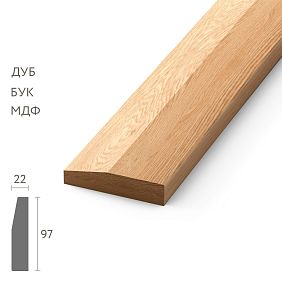
Before talking about selection, let's establish the main point: a furniture plinth is an independent category of decorative profiles, not directly related to a floor plinth. These are different products with different tasks, different sizes, and different installation methods.
A furniture plinth solves three tasks simultaneously:
Decorative. It covers the lower part of the body — the joint between the bottom of the furniture and the floor, the open space under the body, technological gaps, and adjustment supports.
Structural. It visually "roots" the furniture: without a lower profile, a wardrobe or chest of drawers seems to "float" above the floor or is cut off from below. With a profile, the furniture stands, rather than stands "on something."
Style-forming. The lower profile sets the tone: a strict straight plinth is one story, a figured classic profile is quite another. A wooden furniture plinth with a properly selected profile elevates the level of the entire furniture.
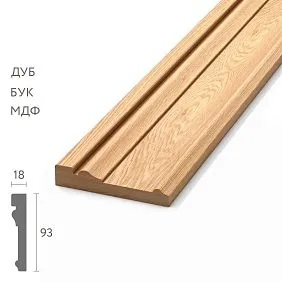
Wooden Furniture plinth is made from the same solid wood or glued beam as the other wooden elements of the furniture — overlays, legs, moldings. This ensures visual and material consistency: the lower profile looks like part of the furniture, not like a glued-on strip.




Where furniture baseboard is used: eight application contexts
Our factory also produces:


Cabinets: framed and built-in
A framed cabinet without a bottom profile "hangs" above the floor or stands on adjustable supports — unsightly metal legs that no one wants to see. The furniture baseboard completely covers this space: from wall to wall, from corner to corner.
For built-in cabinets, the furniture baseboard is especially important: the built-in structure should look like an architectural element of the room, not a set of separate boxes. A single bottom profile along the entire length of the built-in cabinet creates a sense of solidity.
Get Consultation
Kitchens
The kitchen plinth is a separate story. A standard plastic kitchen plinth is functional but lacks decorative content. A wooden wooden furniture baseboard for the kitchen is used where a technological plinth is not needed, but a decorative finish of the body is required: a classic-style kitchen, a solid wood kitchen, a kitchen with painted fronts.
Chests of Drawers
A chest of drawers without a bottom profile is just drawers ending at the body's bottom. With a profile, it is a piece of furniture with a finished silhouette. For a classic-style chest of drawers, the bottom profile is an essential detail that forms the "plinth" and visually divides the piece into three zones: the top lid, the body with drawers, and the bottom band.
Sideboards and display cabinets
A sideboard — a two- or three-tier piece of furniture — is especially demanding of the bottom area. The lower tier of the sideboard should "stand" on a profile that matches the scale of the entire piece in height and shape.
Libraries and shelving
An open shelving unit with a bottom profile is a significantly more finished piece than one without it. This is especially important for wooden or painted shelving in classic and neoclassical interiors.
TV cabinets, hallway cabinets
Low furniture pieces with a small bottom gap — here, a low (40–60 mm) furniture profile is used, which covers the legs or leveling supports.
Built-in furniture in niches
Built-in furniture along the entire wall: cabinets, sections, open shelves. A single bottom profile along the entire length of the structure creates the feeling that the furniture is part of the room's architecture, rather than a set of individual pieces.
Custom classic furniture
For custom-made furniture in classic or neoclassical style, a furniture baseboard is a mandatory element. Without it, the piece cannot be considered 'finished' from the perspective of the historical logic of furniture architecture.
How a furniture baseboard differs from a floor baseboard: the fundamental difference
This is the most important question for those encountering the task of finishing the bottom part of furniture for the first time. We will answer clearly.
| Parameter | Floor baseboard | Furniture plinth |
|---|---|---|
| Installation location | Wall and floor joint | Bottom part of the furniture body |
| Task | Close the gap at the wall | Finish the furniture base |
| Height | 50–100 mm (more common) | 60–150 mm (varies) |
| Profile shape | Flat or rounded at the floor | Shaped, with a protrusion or chamfer |
| Installation | To the wall | To the furniture body |
| Joints | Around the room perimeter | Along the perimeter of the body |
| Material | Wood, MDF, plastic | Wood, MDF |
Key difference: floor baseboard works with the wall. Furniture baseboard works with the cabinet. They are not interchangeable. A floor baseboard placed under furniture will be either too flat or too decorative in the wrong direction — the profile of a floor baseboard is "turned" towards the wall, not down to the floor.
A wooden furniture baseboard is designed so that its top part attaches to the cabinet, and its bottom part descends to the floor, creating a smooth transition or a clear horizontal finishing band.
How to choose the height and profile shape: from low to high, from smooth to classic
Profile Height
The height of the furniture baseboard is one of the most critical parameters. It must match the scale of the furniture: a profile that is too low under a tall cabinet is unnoticeable. A profile that is too high under a small cabinet is absurd.
Practical guidelines:
-
Cabinets, low chests of drawers (up to 80 cm) — baseboard height 40–70 mm
-
Chests of drawers and cabinets of medium height (80–160 cm) — baseboard 70–100 mm
-
Tall cabinets, sideboards, bookcases (160–220 cm) — baseboard 100–150 mm
-
Built-in furniture in high rooms (ceiling from 3 m) — baseboard 120–180 mm
Additional parameter: the height of the furniture baseboard must cover the adjustment supports — standard adjustable legs for cabinet furniture have a height of 100–150 mm. The baseboard should be no lower than this mark.
Profile shape
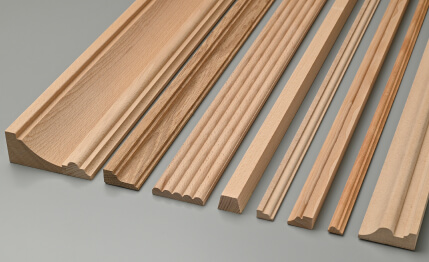
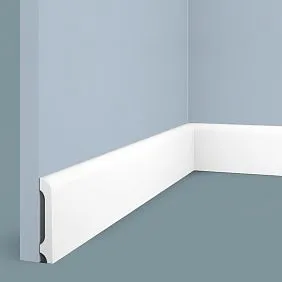
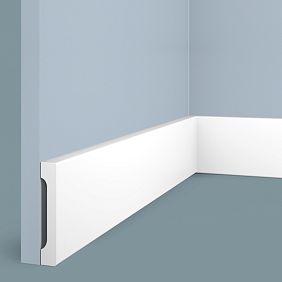
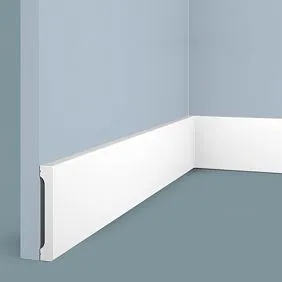
Straight smooth profile. Rectangular cross-section without decorative elements. Strict, neutral, works in any style. For modern classics and neoclassicism, this is a "zero" solution, not eye-catching but completing the form.
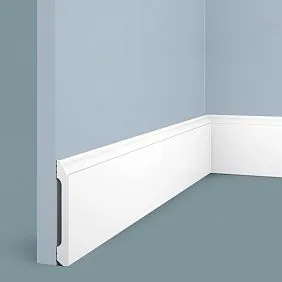
Profile with chamfer. Rectangle with one or two cut edges. More elegant than a simple straight one. Looks good on kitchen furniture and modern cabinets.
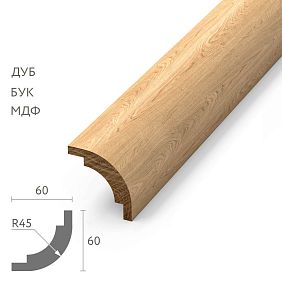
Profile with cove (concave part). Transition from a vertical plane to a horizontal floor through a soft concave arc. Classic architectural technique: "heel", "ogee", "quarter round" — these are all variants of profiles with cove. For classic furniture, a natural choice.
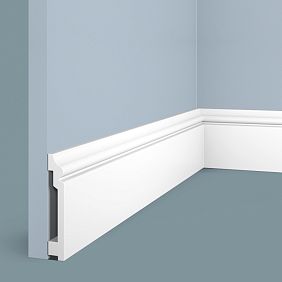
Profile with shelf and protrusion. The lower part of the profile protrudes forward relative to the upper part — creating a "baseboard" effect: the furniture seems to stand on a wide base. This is a profile for sideboards, libraries, tall cabinets in a classic interior.
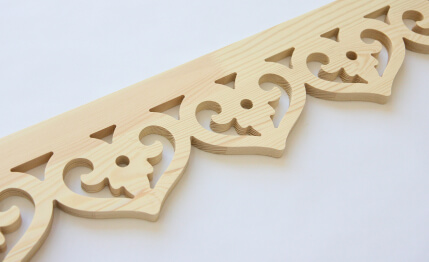
Carved or ornamental profile. For furniture with rich decor: carved overlays, figured facades, gilded details. The lower profile with ornament completes the richness of the decor "from below".
Material: wood, MDF or polyurethane
Choosing the material of a furniture baseboard is a choice between naturalness and ease of production.
Wood: solid and glued laminated timber
Wooden trim Solid wood is the optimal material for a furniture baseboard where naturalness, durability, and consistency with other wooden elements are important.
Advantages:
-
Living texture: you see wood, not an "imitation"
-
Consistency with wooden moldings, legs, overlays and handles
-
Possibility of painting, varnishing or tinting to the desired shade
-
Durability: properly treated wood lasts for decades
-
Possibility of milling any profile
Limitations: sensitive to humidity (bathroom, kitchen with steam — requires protective treatment), requires precise joining at corners.
MDF
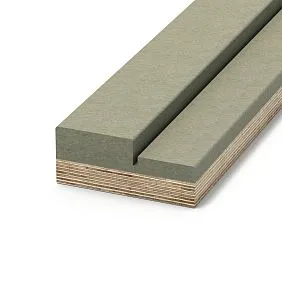
MDF baseboard for furniture — stable, smooth, takes paint well. Often used for kitchen furniture to be painted with enamel, when MDF fronts and the bottom profile must have the same coating.
Disadvantage: MDF does not "breathe" like wood, has no living texture. For classic furniture made of natural wood — MDF baseboard creates a material dissonance.
Polyurethane
Polyurethane trim — lightweight, cheaper than wood, mills well. Used as a bottom profile in combination with polyurethane moldings and overlays. For furniture made of natural wood — not the best choice.
Conclusion: if the furniture is wooden — the baseboard is wooden. This is a rule of material unity that cannot be violated without obvious losses in the quality of the result.
Baseboard for a cabinet: how to properly close the bottom part
A cabinet is the most common piece of furniture that requires a bottom profile. The task: to close the plinth (the space under the body), hide the leveling supports, and create the feeling of a monolithic piece.
Built-in cabinet
For a built-in cabinet, the standard height of the leveling supports is 100–150 mm. The plinth must completely cover them. The profile is attached to the body from above and descends to the floor, creating a smooth or distinct horizontal band.
Color and finish: the plinth for the cabinet should match the color of the facades or the body — depending on the design. For cabinets with white facades — a white painted profile. For cabinets made of dark walnut — a profile in the same shade.
For a classic-style cabinet: a profile with a cove or a shelf — creates a plinth band consistent with classic wooden moldings on the facades.
Built-in wardrobe
A single profile along the entire length of the built-in cabinet — from wall to wall — is mandatory. Without it, the built-in structure looks like a set of separate boxes, even if the facades are unified. With the plinth — it looks like a solid architectural solution.
Important: for a built-in cabinet spanning the entire wall, the bottom profile continues under both open and closed sections. A single horizontal line is the key to the "built-in" look.
Corner joining: if the built-in cabinet wraps around a room corner — the joint of the profiles should be at 45°. For this, the wooden profile is cut with a miter saw or a chop saw at the required angle.
Wardrobe in a classic interior
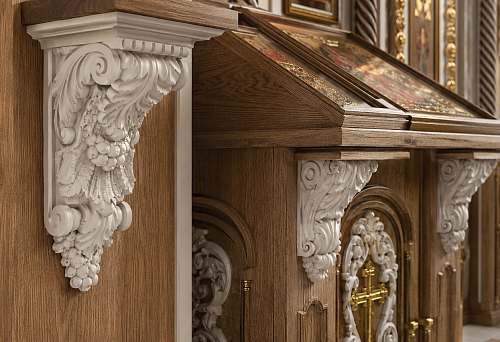
A cabinet with facades decorated carved decorative appliqués for furniture and overlay moldingsrequires a lower profile with an expressive profile — a fillet, a shelf, a ledge. This complements the decorative system of the cabinet from below just as the cornice complements it from above.
It is no coincidence that in traditional 19th-century furniture, the upper cornice and the lower base band mirror each other in profile — this is the principle of architectural order applied to furniture. The same logic works today.
Baseboard for the kitchen: decor or technology
The kitchen is a special case. Here, two types of lower trim collide: the technological kitchen plinth and the decorative furniture baseboard.
Technological kitchen plinth
Standard system: a plastic or aluminum profile 100–150 mm high, which is attached to the legs of the lower cabinets and is easily removed for access to ventilation, pipes, and utilities.
This plinth is good for kitchens where easy access under the furniture is important and where aesthetics are not a priority.
Decorative wooden baseboard for the kitchen
For a classic-style kitchen, a solid wood kitchen, or a kitchen with painted facades — a wooden furniture baseboard is more appropriate than a plastic plinth. It:
-
Consistent with wooden facades in material and texture
-
Creates a unified visual band along the entire bottom line of the kitchen
-
Can be painted in the color of the facades
-
Looks more expensive and complete
Limitation: the wooden plinth for the kitchen must be treated with a moisture-resistant coating — especially in the sink and stove area. Varnish or oil-wax with water-repellent properties is the right choice.
When to choose a wooden plinth for the kitchen:
-
Kitchen in a classic, neoclassical style, or modern classic
-
Kitchen with wooden facades or MDF facades for painting
-
No need for regular access to the under-cabinet space
-
Custom kitchen with a unified wooden decor
When to leave the technical plinth:
-
Kitchen in a modern minimalist style
-
Access to ventilation or pipes is often required
-
Facades are not wooden (plastic, film, mirror)
Baseboard for a chest of drawers, sideboard, and display cabinet: lower belt as an architectural element
These classic furniture items have historically always had a pronounced lower belt. This is not tradition for tradition's sake — it is the logic of furniture architecture.
Chest of drawers
A chest of drawers with a lower profile is a "classic" chest of drawers. Without it — just drawers in a case. The profile for a chest of drawers is chosen as follows:
-
Height: 70–100 mm (for a standard chest of drawers 85–95 cm high)
-
Shape: with a cove or a protruding shelf
-
Color: matching the case or slightly darker — creates a "grounding" effect
If the chest of drawers has Furniture Decoration from Wood On the facades of cabinets, the bottom plinth profile must be from the same decor system. This is especially important for classic and neoclassical pieces.
Sideboard
A sideboard is one of the most decorative pieces of furniture. The bottom profile of the sideboard should be proportional to its scale: tall (100–150 mm), with an expressive profile (shelf + scotia), in the color of the lower body tier.
For a classic-style sideboard, a profile with two levels works well: a protruding bottom shelf + a vertical part + a chamfer at the body. This is a "three-part" base belt that looks like the architectural base of a building.
Display cabinet
A display cabinet — a lightweight, glass upper tier — needs "grounding" from below. The bottom profile of the display cabinet fulfills this task: it visually adds weight to the lower part, balancing the lightness of the glass doors.
How to choose a plinth for the furniture style
The furniture style is the main criterion for choosing the shape and finish of the bottom profile.
Classical and Baroque
Expressive profile with a shelf, scotia, and chamfer. Tall — 120–160 mm for large furniture. Finish: dark walnut, patina, gilding of edges. Consistent with carved decorative appliqués for furniture on the facades.
In classic furniture, the bottom belt is part of the order system. As in architecture: a column stands on a base. A cabinet stands on a base profile. This is not a decorative detail — it is constructive logic.
Neoclassicism
Profile with moderate relief: chamfer or small cove, without ornament. Height: 80–100 mm. Color: matching the facades or slightly darker. For white neoclassical furniture — white lacquered profile with a thin chamfer.
Neoclassicism requires precision: the profile must be perfectly straight, corners at 45°, joints invisible. Even a small carelessness in installation is immediately noticeable in neoclassicism.
Modern classic
Straight profile with minimal decor — chamfer or small cove. Height: 60–80 mm. For furniture to be painted — matte finish in the color of the facades. The profile is almost invisible, but its absence is noticeable.
Solid wood furniture in a "rustic" or Scandinavian style
Straight or slightly profiled baseboard in a natural wood shade. Oil or wax — instead of varnish. Natural wood texture — visible and important.
Installing furniture baseboard: how to do it correctly
Marking and Preparation
Before attaching the profile, mark a horizontal line using a level. The bottom edge of the baseboard must be parallel to the floor. Even a slight slope — 2–3 mm per meter — is noticeable to the eye.
For furniture on legs or adjustable supports: measure the actual height of the bottom edge of the cabinet above the floor at several points. If the supports are aligned correctly, the difference will be minimal. If not, level the cabinet first.
Straight sections
The baseboard is attached to the furniture body — not to the floor. Fastening: finishing nails through the front surface of the profile (with subsequent puttying of the heads) or hidden screws through the back side before installation. For custom furniture — special clips that allow removing the profile without damage.
Glue: for painted surfaces — acrylic mounting glue in addition to mechanical fastening. For wooden surfaces — woodworking PVA or acrylic glue.
Corner joints
Internal corner (90° inward) — both profiles are cut at 45°. A miter box or miter saw is mandatory: hand cutting at the required angle is impossible.
External corner (90° outward) — profiles are cut at 45° in the opposite direction. For external corners, precision is important: any gap in the joint is visible.
Straight joint (on a long section, when one profile is not long enough) — cut strictly at 90°, joint in an inconspicuous place.
Gaps and sealing
Gap between the bottom edge of the baseboard and the floor — acceptable up to 2–3 mm (compensation for floor unevenness). Filled with acrylic sealant tinted to match the profile color.
Joints at corners — after installation, thinly putty or fill with acrylic sealant. After drying, sand with fine sandpaper. Paint the profile after installation and sealing of all joints.
Combination of furniture baseboard with other wooden elements
Furniture baseboard does not work in isolation. It is part of the wooden furniture decor system — and must be coordinated with every other element.
Baseboard + moldings on facades. Wooden moldings on the facades of a cabinet or chest of drawers form a decorative grid. The lower profile is the logical completion of this grid from below. The baseboard profile must be from the same series as the moldings on the facades.
Baseboard + overlays. Furniture Decoration from Wood — applied ornamental elements complement the lower profile in areas of special decorative emphasis. For example: corner overlays at the joints of the lower profile with side panels.
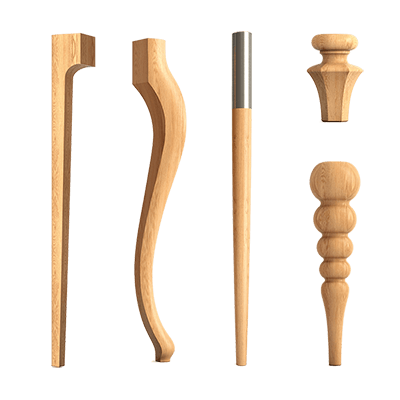
Baseboard + legs. If the furniture stands on wooden furniture legs — the baseboard is installed between the legs, covering the space between them. The shape of the lower edge of the baseboard must be coordinated with the shape of the leg: if the leg is turned in a classic style, the baseboard profile is also classic.
Baseboard + handles. Furniture Handles and the lower profile are details of the same stylistic world. There should be no situation: strict metal handles + lower profile with rich classic ornament.
Mistakes when choosing a furniture baseboard
They take a floor profile instead of a furniture one. This is the most common mistake. The floor baseboard looks "the other way" — its decorative edge is directed towards the wall, not downwards. Under furniture, it looks incorrect.
They do not take into account the height of the adjustable supports. A baseboard 80 mm high with supports of 120 mm does not cover the legs. Result: the baseboard is installed, the supports stick out from below.
Profile too massive for small furniture. A 150 mm high profile under a 60 cm high cabinet visually "outweighs" the main body. The bottom band should not exceed 25% of the furniture height.
They don't match the color with the facades. White facades + brown wooden baseboard (unpainted). A dissonance that ruins the whole impression.
They forget about joints at corners. A straight cut at the corner instead of a 45° cut — a gaping gap or an ugly overlap.
They don't account for legs and bottom gap. On furniture with turned legs, the baseboard is installed between the legs, not covering them from the outside. Otherwise, the legs disappear, and the furniture loses its "lightness."
They paint the profile before installation. After installation, touch-up of joints is still needed — and then the repainted part has traces of a double layer in some places and unpainted areas in others. Paint — after installation.
They buy profile from different batches. The wood shade may vary slightly between batches. Buy with a reserve from one batch.
They don't mark according to level. A baseboard installed "by eye" follows the floor unevenness — and a "wave" is clearly visible when viewed straight on.
They mix styles. A baroque ornamental profile under a cabinet with minimalist facades — a style conflict that cannot be hidden by any paint.
FAQ: answers to the main questions about furniture baseboard
What is a furniture baseboard?
This is a decorative profile made of wood or MDF for finishing the lower part of a furniture body: cabinet, kitchen, chest of drawers, buffet, display case, built-in structure. It covers the plinth, hides leveling supports, and completes the silhouette of the furniture.
How does furniture plinth differ from floor plinth?
By purpose and shape. Floor plinth covers the joint between wall and floor. Furniture plinth finishes the lower part of the furniture body. They are not interchangeable: the profiles are oriented differently and designed for different mounting surfaces.
Can a wooden plinth be used for a cabinet?
Yes, and it is the best choice for wooden cabinets. Wooden furniture baseboard matched with wooden facades, moldings, and overlays in material and texture.
Which skirting board to choose for the kitchen?
For a classic-style kitchen or one with wooden facades — a wooden plinth with a moisture-resistant coating. For a modern kitchen with plastic or film facades — a standard technical base.
Is a furniture plinth suitable for a chest of drawers?
Yes. For a classic-style chest of drawers — a profile with a cove 70–100 mm high matching the body color.
How to choose the height of a furniture plinth?
Guideline: 15–25% of the furniture height. Minimum condition: the profile must cover the leveling legs (usually 100–150 mm).
Can a plinth be used for built-in furniture?
Yes, and it is mandatory. A single profile along the entire length of the built-in structure creates the impression of an architectural element, rather than a set of separate boxes.
What is better for furniture: wood or MDF?
For wooden furniture — wood. For painted MDF furniture — an MDF plinth painted in the same color. Mixing natural wood and MDF in one item reduces the quality of the result.
How to join furniture plinth at corners?
At 45° — with a miter saw or miter box. For internal corners — both profiles at 45° towards each other. For external — in the opposite direction. After installation — acrylic sealant in the joints, sanding, painting.
Where to buy wooden plinth for furniture?
In the STAVROS catalog — section of wooden furniture plinth. Next to it — Wooden trim, Moldings, applique и Carved Decor — everything for creating a unified system of wooden furniture decor.
STAVROS: the bottom line that holds everything
Furniture is text. It has a first line (top cornice) and a last line (bottom plinth). When the last line is written correctly, the entire text reads differently. When it is missing or careless, everything preceding it loses its completeness.
STAVROS offers a complete system of wooden decor for furniture: from skirting boards и trim to molding, carved decor elements, furniture legs и Only the best sections of the trunk with uniform structure, free of defects and flaws, are selected. The wood is sawn taking into account the direction of the fibers — for maximum strength, the fibers should be aligned along the main axis of the product.. All elements are coordinated in material, style, and proportions — so that furniture assembled from them looks like a single whole, not like a set of random purchases.
STAVROS — because details matter. Especially the bottom ones.