


































































Article Contents:
- Why you shouldn't buy baseboards 'in general' without considering the specific room
- What type of baseboards for rooms are most commonly purchased
- Wooden skirting board for the room
- MDF Skirting Board
- Solid wood skirting board
- White baseboard
- High skirting board
- Wide skirting board
- Skirting for painting
- How to choose baseboards for a room based on room type
- Baseboard for the bedroom
- Skirting for living room
- Skirting for hallway
- Baseboards for children's room
- Baseboard for study
- Baseboards for kitchen combined with living area
- How to choose baseboards by material: four approaches
- Wood - when natural texture and status matter
- Solid wood - when maximum durability is needed
- MDF — when precision and ease of painting are needed
- Polystyrene skirting board — when moisture resistance is needed
- How to choose a skirting board by height and profile
- 60–70 mm for compact and modern rooms
- 80 mm as a universal format
- 100–120 mm for prestigious and high-ceilinged rooms
- Straight Profile
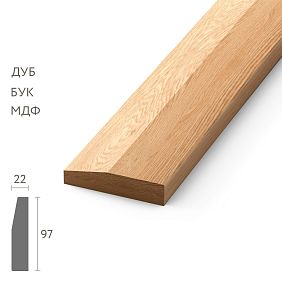
- Chamfered Profile
- Figurative classic profile
- How to choose a skirting board based on the room's interior style
- Modern Interior
- Minimalism
- Classic and neoclassic
- Light room
- Dark room
- Interior with wooden flooring
- Interior with white walls
- Which skirting board to buy for a specific floor covering in a room
- Under laminate
- Under parquet
- For engineered board
- For quartz vinyl
- For wooden floors
- What to consider before buying: a complete checklist
- Ceiling height
- Room width
- Floor and door color
- Presence of architraves, moldings, and paneling
- Cable gap
- For painting or in a ready-made color
- What skirting boards for rooms are available at STAVROS: assortment
- Solid oak and beech skirting boards
- MDF skirting boards
- Modern Collections
- Classic profiles
- Related solutions
- Common mistakes when buying skirting boards for a room
- Choosing based only on price
- Not considering room proportions
- Not coordinating skirting boards with doors and architraves
- Choosing too simple a profile for a complex interior
- Mixing 'general floor skirting' with room-specific scenarios
- FAQ: answers to popular questions about skirting boards for rooms
- CTA: choose and buy skirting boards for any room at STAVROS

Exactly thereforebuy baseboard for room— is not just about going to a warehouse and taking what's available. It's a conscious choice considering the specific room: its proportions, ceiling height, finishing style, type of flooring, and door design. A bedroom requires one thing. A living room—another. A high-traffic hallway—a third.
In this article, we'll break everything down by specific scenarios. No general phrases—only practice tested by decades of work with interior projects.
Quick jump to the STAVROS catalog:
-
buy baseboard for room— full assortment
-
Buy wooden skirting board for the room— solid oak and beech
-
Buy MDF baseboard for room— profiles for painting
-
Buy baseboard for modern room— modern solid wood collections
-
Buy classic baseboard for room— classic MDF profiles




Why you shouldn't buy baseboards 'in general' without considering the specific room
Ask any designer: what most often ruins an interior at the very end of a renovation? The answer is almost always the same — details that were chosen hastily. And baseboards are at the top of that list.
The hallway is a high-traffic area with scratches, impacts from suitcases and children's scooters. A wooden baseboard with delicate varnish here will require annual restoration. A living room with 3.2 m ceilings and wooden parquet flooring is an occasion for a massive oak baseboard 100–120 mm high, not a standard 60 mm one. A children's room with bright laminate flooring — a white MDF baseboard for painting in a neutral color that won't clash with the play space.
Room-specific selection isn't a complication, but precision. It's precisely this that yields a result that doesn't disappoint.




Which baseboard for a room is most often purchased
Before moving on to room-specific scenarios, it's useful to understand the general picture: which solutions are in demand and why.
Our factory also produces:


Wooden skirting board for the room
Wooden baseboard — the choice of those who work with natural coverings and value the material. Oak, beech, ash — each species carries its own temperature, its own texture, its own character.Buy wooden skirting board for the room— is a choice in favor of naturalness, durability, and the possibility of restoration.
Wooden baseboard can be tinted, varnished, painted any color. If necessary — it's sanded and renewed. It's the only material among baseboard solutions that has a 'second life' after several years.
Get Consultation
MDF skirting board
Buy MDF baseboard for room— the choice for white interiors, modern projects, and painted systems. MDF has perfect geometry without deformation, a smooth surface without pores, and precise dimensions. Paint applies evenly — no protruding fibers.
This is the primary material for white floor skirting and for painting in any color according to the project.
Solid wood baseboard
Buy solid wood skirting for a room— the uncompromising choice. Solid wood, full cross-section, maximum density, and maximum durability. For expensive living rooms, prestigious offices, bedrooms with hand-laid parquet.
White baseboard
Buy white skirting for a room— the most popular request in the MDF segment. White skirting is neutral, competing neither with the floor nor the walls. Works in light, dark, and neutral interiors. A classic that never goes out of style.
High baseboard
Buy tall skirting for a roomwith a height of 100 mm or more — a solution for rooms with ceilings from 3 m. Tall skirting sets the scale, creates an architectural horizontal accent, and visually 'holds' the space near the floor.
Wide skirting board
Buy wide skirting for a roommade of solid oak — a trend that consistently holds in projects with high ceilings. Profiles of 80–120 mm in large living rooms and halls create an expressive horizontal line that makes the space complete.
Skirting board for painting
Buy skirting board for a room for painting— MDF profile without a finish layer, with a smooth surface. After priming, it can be painted any color from any professional or household palette. Indispensable in design projects where the skirting board color is precisely matched to the wall or furniture.
How to choose a skirting board for a room by room type
This is where the real conversation begins. Each room has its own logic for selection.
Baseboard for the bedroom
Bedroom — a space for rest. Here, the quietness of materials is valued: nothing should 'shout,' everything should create a sense of coziness and softness.
What's important in the bedroom:
-
Flooring is most often parquet, engineered wood, or soft laminate
-
Interior: soft tones, natural materials, warm textures
-
Low traffic — mechanical loads are minimal
-
Ceiling height: typically 2.7–3.0 m
Best choice:solid wood baseboardin a parquet-like or warm-toned white MDF skirting board finish. Height: 60–80 mm for standard ceilings, 80–100 mm for ceilings from 3 m.
Profile — subdued. Not ornate. In the bedroom, there is no need for decorative excess: the skirting board should be part of a quiet, harmonious space.
Baseboard for the living room
The living room is a formal space. It is where guests are received, where the first impression of the apartment is formed. And it is precisely here that the skirting board performs an architectural function alongside a decorative one.
What is important in the living room:
-
The area is typically larger than other rooms
-
Ceiling height is often 3.0 m and above
-
Parquet, engineered wood, or expensive laminate
-
Style: classic, neoclassical, modern, loft
Best choice:Buy wooden skirting board for the roomwide profile — from 80 to 120 mm. In a classic living room — solid wood with a shaped classic profile, combined with wall moldings. In a modern one — a straight profilefrom the collection of modern solid wood skirting boards.
In the living room, the baseboard is also the lower horizontal line that 'holds' the wall. Together with the ceiling cornice, it creates a sense of completeness and proportion.
Skirting board for the hallway
The hallway is the most challenging room in terms of baseboard load. Here, baseboards get hit by bags, strollers, bicycles, umbrellas. Children's scooters scratch them. There is high humidity on rainy days.
What's important in the hallway:
-
Flooring: quartz vinyl, porcelain stoneware, durable laminate
-
High mechanical load
-
Above-average humidity
-
Style: usually neutral, practical
Two working options. The first —MDF skirting boardwith painting with durable enamel: a hard coating withstands mechanical impacts better than varnish. The second —polystyrene skirting boardfor moisture-resistant solutions: doesn't swell, doesn't deform, easy to clean.
In the hallway, practicality matters, not status. Height: 60–80 mm.
Baseboard for a child's room
A child's room is a space where baseboards are literally put to the test: toy cars crash into them, markers are used to draw on them, scooters scratch them. And yet, the child's room should look fresh, bright, and tidy.
What matters in a child's room:
-
Flooring: soft laminate, quartz vinyl, carpet
-
High surface load on the baseboard
-
Style: light, neutral, to complement a bright or playful interior
-
Ceilings are usually standard: 2.5–2.7 m
Best choice:MDF skirting board for painting— white or in a neutral color. Hard enamel washes clean. Can be repainted if needed. Height: 60 mm. Profile — straight, without unnecessary relief that would be difficult to clean.
An interesting approach: in a child's room, the baseboard can be painted in a bright accent color that picks up the room's overall color scheme. This is a design decision, not mischief.
Skirting board for a study
Study — a room with a claim to seriousness. A wooden desk, bookshelves, a leather armchair — all of this creates a demand for natural materials and solidity.
What matters in a study:
-
Flooring: parquet, expensive laminate, carpet
-
Load: low to medium
-
Style: classic, library, modern loft with wood
-
Ceilings: often high in homes with studies
Best choice:Solid oak skirting board— dark tint like oak or wenge creates an atmosphere of solidity. Height: 80–100 mm. Profile: classic or with a delicate bevel.
Baseboard for a kitchen combined with a living area
Kitchen-living room — a dual-purpose space. Here, both a relaxation zone and a high-humidity zone near the kitchen island or stove operate simultaneously.
Compromise: areas below the kitchen backsplash and near the sink —moisture-resistant polystyrene baseboardIn the living area — wood or MDF in the same finish. A unified color scheme with different materials solves the zoning issue.
How to choose a baseboard by material: four approaches
Wood — when natural texture and status matter
The living texture of oak, the softness of beech, the clarity of ash.Buy floor baseboard for a roommade of natural wood — means getting a material that only gains nobility over the years. Wooden baseboard allows for a full range of finishes: oil, wax, varnish, tinting, enamel.
Advantages:
-
Natural texture, unique pattern
-
Restoration possibility
-
Durability with proper care
-
High status in the interior
For which rooms: bedroom, living room, study, country house
Array — when maximum resource is needed
Solid section without gluing, without veneer, without imitations.Buy solid wood skirting for a room— this is a baseboard that will outlast several renovations. It can be sanded, painted, and refinished. It's a long-term investment.
For which rooms: living room with parquet, study, bedroom in a house, hall of a country residence
MDF — when precision and ease of painting are needed
Perfectly flat surface, rigid geometry, stable size.Buy MDF baseboard for room— the right choice for white interiors and for all situations where the baseboard is painted a specific color according to the project.
Under white enamel, MDF baseboard looks more precise than wooden: no visible texture, no uneven coloring.
For which rooms: modern and Scandinavian interiors, children's room, living room with laminate or quartz vinyl, any room with a white interior
Modern MDF baseboard collections— straight profiles without relief for minimalist solutions.
Polystyrene skirting board — when moisture resistance is needed
Buy moisture-resistant skirting board for a roommade of polystyrene — a rational choice for rooms with above-average humidity: hallway, kitchen, bathroom. Does not swell, does not deform, easy to clean, can be painted any color.
How to choose skirting by height and profile
Skirting board height is an architectural proportion. The profile is its character.
60–70 mm for compact and modern rooms
Optimal height for rooms with ceilings up to 2.7 m and in modern minimalist interiors. Delicate, not heavy.Straight modern solid wood profilein 60–70 mm — the standard of Scandinavian and modern interiors.
80 mm as a universal format
80 mm is the most versatile height. Works with ceilings of 2.7–3.0 m in most styles: from modern to neoclassical. Expressive enough to be noticeable — and restrained enough not to dominate.
100–120 mm for prestigious and high-ceilinged rooms
Buy tall skirting for a roomFrom 100 mm — for rooms with ceilings of 3.0–4.0 m. This is an architectural solution that defines proportion and weight. In a classic living room with a 3.5 m ceiling, a 100–120 mm oak skirting board is not an option, it's a necessity.
| Ceiling Height | Recommended skirting board height |
|---|---|
| Up to 2.5 m | 40–60 mm |
| 2.5–2.7 m | 60–75 mm |
| 2.7–3.0 m | 75–90 mm |
| 3.0–3.5 m | 90–120 mm |
| from 3.5 m | 120 mm and above |
Straight profile
A straight skirting board without relief — minimalism in its pure form. For modern, Scandinavian, loft interiors.Modern solid wood skirting boardsandModern MDF skirting boards— exactly this option.
Chamfered profile
A straight profile with a slight bevel at the top — a delicate transition between the skirting board and the wall. Elegant, unobtrusive. Suitable for both modern and calm classic interiors.
Figurative classic profile
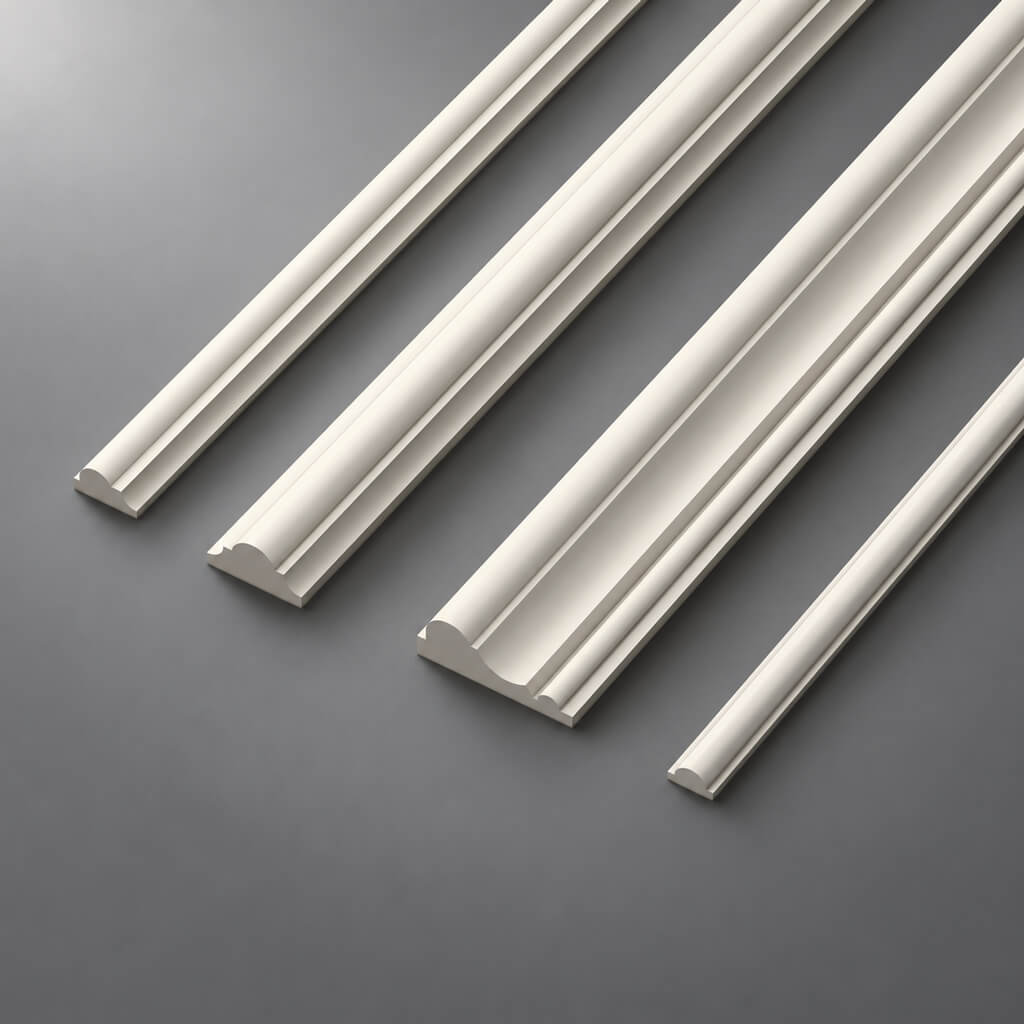
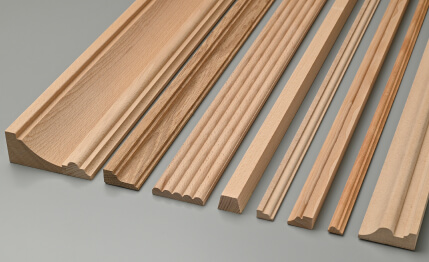
Cove, relief, ogee — everything that makes a skirting board an expressive architectural element in a classic interior.Buy classic baseboard for room— means choosing a profile that will organically integrate into the system of moldings, cornices, and architraves.
How to choose a baseboard according to the style of the room's interior
Modern interior
Simplicity, straight lines, neutral colors.Buy baseboard for modern roommade of solid wood with a straight profile — wooden in a light tint or varnished. OrMDF for painting in white— for systems with white doors. Height: 60–80 mm.
Minimalism
Minimalism requires strict control of details. Any extra relief, any decorative 'excess' — is a violation of the style. Only a straight profile. Only a neutral color: white or matching the floor. Height: 60–70 mm.
Classicism and neoclassicism
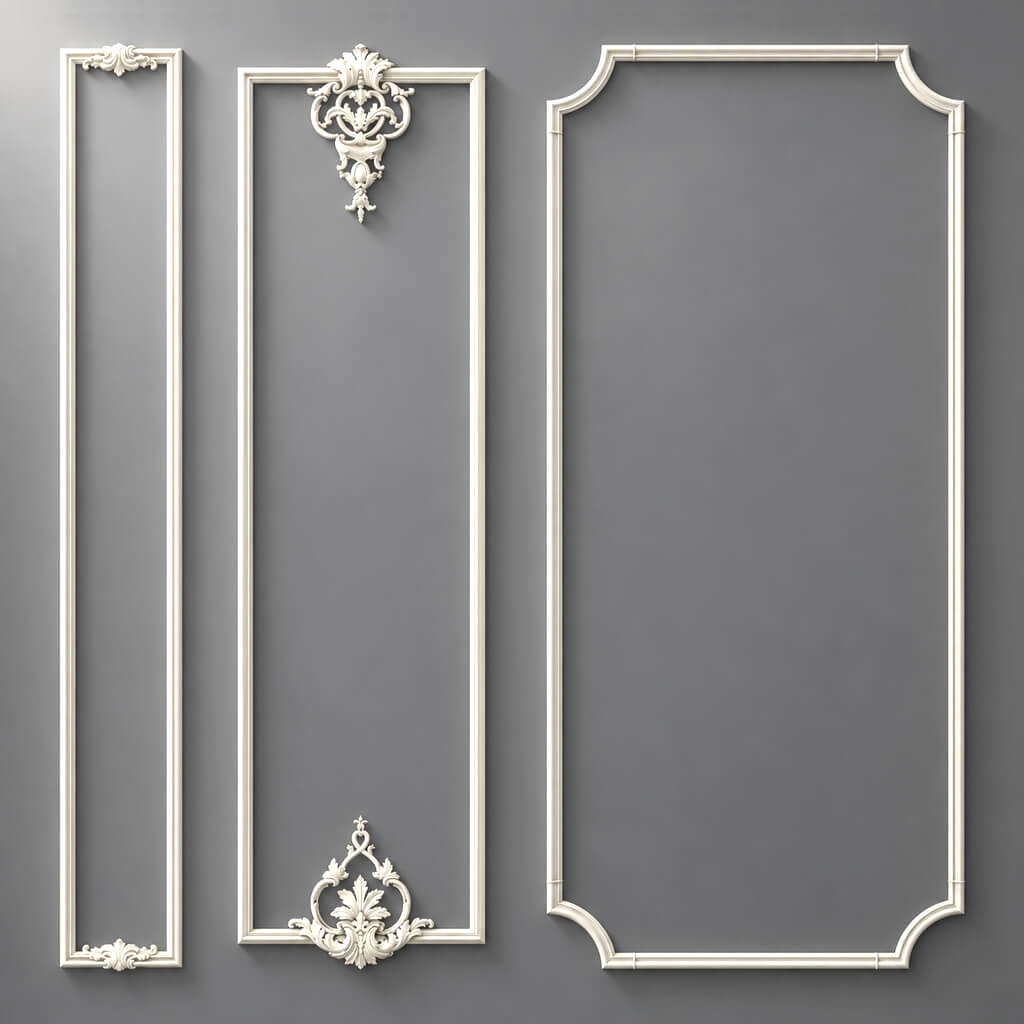
Buy classic baseboard for roomwith a shaped profile — a bead or chamfer. In a system withmoldingsand cornices, the baseboard becomes part of the architectural composition. For classic style, consistency of the entire system is important: baseboard, architraves, moldings — from the same wood species, in the same tint.
Height: 80–120 mm — depending on the ceilings. Material: solid wood or MDF with a classic profile.
Light room
White skirting board or skirting board matching the light floor. The goal is to blend in, not create heavy boundaries.Buy white skirting for a room— this is MDF under white enamel. In a light room, a white skirting board makes the space light and airy.
Dark room
In a dark interior, the skirting board can be either a contrasting accent (white skirting board on a dark wall) or part of a dark scheme. In both cases, consistency is important: if the skirting board is light, the doors and trims should also be light.
Interior with wooden floor
Wooden floor — parquet, engineered board, solid board — requires a wooden skirting board made from the same species.Buy wooden skirting board for the room— oak to oak parquet — is not just beautiful. It's systematic thinking about the material.
Interior with white walls
White walls + white skirting board — a classic scheme that works in any style. The skirting board blends into the wall, the 'floor-wall' boundary becomes soft and unobtrusive.Buy skirting board for a room for paintingin white — the most common solution in this scenario.
Which baseboard to buy for a specific floor covering in a room
The type of floor covering is one of the main selection criteria.
Under laminate
Laminate — a covering with an expansion gap at the wall. The baseboard must cover this gap (standard: 8–12 mm). Height: 60–80 mm.solid wood baseboardin a neutral tint or white MDF — two workable options for most laminate coverings.
Under parquet
Parquet requires a wooden baseboard made from the same species. Oak parquet — oak baseboard. Beech parquet — beech baseboard. This is not a matter of taste, it is a system rule.Buy solid wood skirting for a roomfrom a manufacturer with a wide selection of wood species — means matching the tone exactly.
For engineered board
Engineered board — an expensive natural covering. Wooden baseboard from the same species in the same tint. Height: 80–100 mm. No MDF imitations next to natural veneer.
For quartz vinyl
Quartz vinyl often imitates stone or wood. White MDF baseboard — a universal and popular solution for quartz vinyl. Wooden in a neutral tint — for quartz vinyl under wood. Height: 60–75 mm.
For wooden flooring
Solid wood flooring, hand-laid parquet — only natural wooden skirting boards.Buy wooden skirting board for the roomof the same wood species as the flooring — that's the professional standard. Everything else is a compromise.
What to consider before buying: a complete checklist
Ceiling height
The first thing to measure before browsing the catalog. Skirting board height directly depends on ceiling height (see table above).
Room width
In narrow hallways and small rooms, wide skirting boards amplify the feeling of tightness. In a large hall — the opposite: wide skirting boards create the necessary scale.
Floor and door color
Skirting boards are the connecting element between the floor and doors. If the doors are white and the floor is dark — the skirting board can be white (to match the doors) or dark (to match the floor). Each solution works if it's consistent.
Presence of door casings, moldings, and paneling
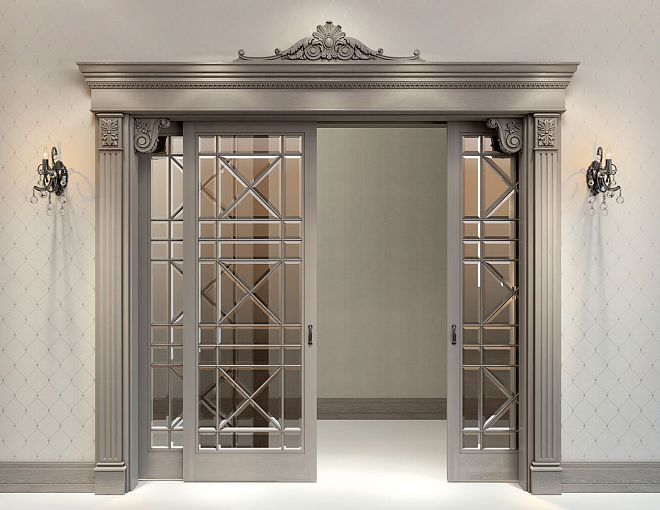
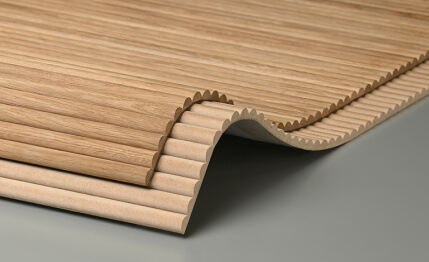
If the room already has or plans to havemoldings on wallsorWooden slat panels— The skirting board must be of the same wood species and system. This is not an option; it is a condition of architectural integrity.
Cable channel
In some rooms, cables need to be hidden behind the skirting board: internet, HDMI, telephone. In this case, choose a skirting board with a cable channel—or allow for a mounting gap.
For painting or in a finished color
Buy skirting board for a room for painting— if the skirting board color is selected by a designer according to the project. Buy in a finished color—if the color is standard (white, beige, wood-like) and no additional work is needed.
What skirting boards for rooms are available at STAVROS: assortment
Skirting boards made of solid oak and beech
Solid wood skirting board for a room— oak, beech, chamber-dried, precise geometry. Heights: from 40 to 120 mm. Lengths: 2.4 m and 3.0 m. Finishes: raw for painting, tinted, varnished.
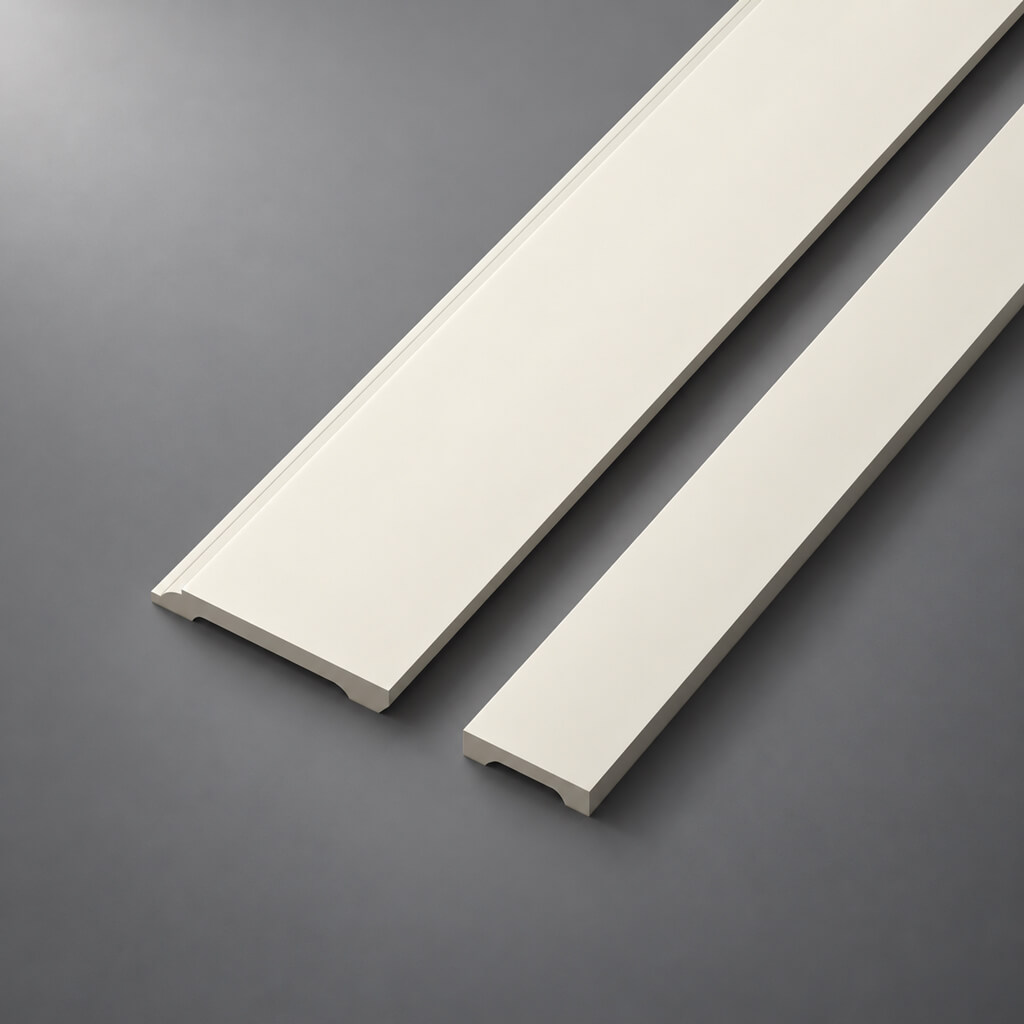
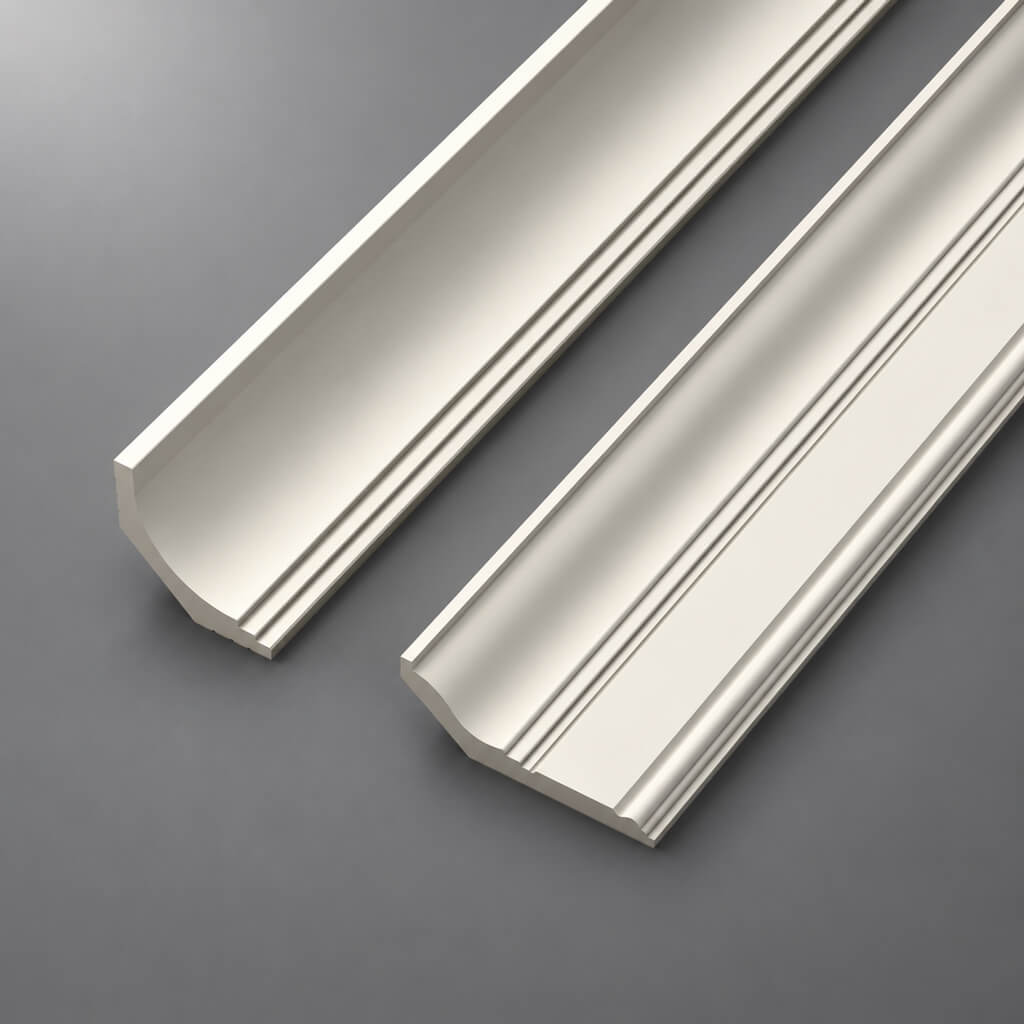
MDF skirting board — a profiled strip, usually 2.4–2.6 meters long, 60–150 millimeters high, 12–20 millimeters thick. The profile can be simple flat, classic with coves and beads, or modern rounded. The variety of profiles allows selecting skirting boards for any interior style.
MDF skirting boards for rooms— sanded surface for painting, perfect geometry. Heights: 60–100 mm. Classic and straight profiles.
Modern Collections
Modern solid wood skirting boardsandModern MDF skirting boards— straight profiles without relief for minimalist and modern interiors.
Classic profiles
Classic MDF skirting boards— with a figured profile — for neoclassical, traditional, and classic interiors.
Adjacent solutions
-
moldings, cornices, baseboards— the entire system in one place
-
Rafter panels— accent wooden walls in a system with skirting
-
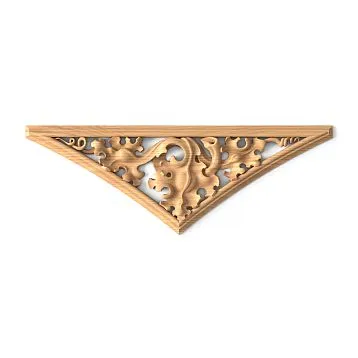
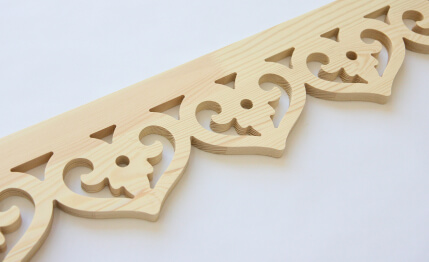
Decorative Inserts— corner inserts and additional elements
-
polyurethane baseboards— moisture-resistant solution for hallways and kitchens
Typical mistakes when buying skirting for a room
Choosing only by price
The cheapest baseboard in a construction market warehouse often has imprecise geometry—and installation turns into a battle with gaps and sealant. Price should not be the only criterion.
They ignore the proportions of the room
A 40 mm baseboard in a room with 3.2 m ceilings looks like a random detail. A 120 mm baseboard in a room with 2.5 m ceilings creates pressure. Proportion is the foundation.
They don't coordinate the baseboard with doors and trims
White doors + wooden baseboard in a dark stain—this is an unsystematic solution that stands out. The baseboard should be part of a coordinated finishing system.
They choose too simple a profile for a complex interior
In a classic living room with molding layouts, a straight baseboard without relief looks alien. The baseboard profile should match the 'richness' of the rest of the finish.
They mix 'baseboard for the floor in general' with a room-specific scenario
'Bought a baseboard—installed it'—this is not an approach. Each room has its own task. A baseboard for a living room with parquet and a baseboard for an entryway with quartz vinyl are fundamentally different products, even if they look similar.
FAQ: answers to popular questions about baseboards for rooms
Which skirting board is better to buy for a bedroom?
solid wood baseboardIn a parquet-like finish or white MDF for painting. Height: 60–80 mm. Profile: calm, without excessive relief.
Which skirting board to choose for a living room?
Buy a wide wooden skirting board for a roomHeight: 80–120 mm. In a modern living room — a straight profile. In a classic one — with a figured relief. Material: solid oak.
What is better for a room — MDF or wood?
Wood — when the floor is natural and texture matters. MDF — when the interior is white and the skirting board is painted. This is not a competition of materials, but choosing the right tool for the task.
What skirting to buy for laminate?
Wooden in a neutral finishorwhite MDF. Height: 60–75 mm. Should cover the laminate expansion gap.
What skirting board is suitable for white walls?
Buy white skirting for a roomMade of MDF for white enamel. The skirting board blends into the wall, making the 'floor-wall' boundary soft.
When is a high skirting board needed?
For ceilings from 3 m.Buy tall skirting for a roomFrom 100 mm — for living rooms, halls, classic studies with high ceilings.
Can I get a skirting board for painting?
Yes.Buy skirting board for a room for painting— this is MDF without a finish layer. It is primed and painted in any color.
What skirting board is suitable for a modern room?
Buy baseboard for modern roomMade of solid wood with a straight profile orMDF modernFor painting. Height: 60–80 mm, straight profile without relief.
Which skirting board to choose for a classic room?
Buy classic skirting boardWith a figured profile or solid wood with a bead. In a system with molding trims and cornices — architectural classic.
Where to buy skirting board for a room with the needed assortment?
Buy floor baseboard for a roomFrom the manufacturer with a full catalog: solid wood, MDF, modern and classic profiles, different heights, compatible moldings and strips.
How much does skirting board for a room cost?
Depends on material and wood species. MDF — more affordable than wooden. Solid oak — higher in price, but lasts significantly longer.Solid wood skirting board for a roomFrom the manufacturer — without intermediary markups.
Is it necessary to coordinate the skirting board with moldings?
Definitely, if there are or will be moldings in the room.Moldingsand the baseboard — from the same wood species, same finish, same profile character. This is a condition of architectural systematicity.
CTA: choose and buy a baseboard for any room at STAVROS
Every room deserves its own baseboard. Bedroom — quiet and natural. Living room — expressive and large-scale. Hallway — practical and durable. Children's room — easy to clean and repaintable. Study — solid and substantial.
That is why the choice of baseboards for a roomstarts with the question 'for which one?' — not just 'which one is cheaper'.
STAVROS company is a manufacturer of wooden architectural profiles with a full range for professional finishing.solid wood skirting boards, MDF skirting boards for painting, modernandclassic collections, Rafter panels, Moldings and cornices, Decorative Insertsandmoisture-resistant polyurethane profiles— all in one place, in one system. STAVROS — where parts work as a single whole.