Article Contents:
- Oval as an architectural tool: what this shape can do
- How an oval rosette differs from round and square ones
- When to choose an oval ceiling rosette
- Which rooms suit an oval rosette: detailed application map
- Dining room: the axis of the table is the axis of the rosette
- Long living room: supporting the spatial vector
- Hallway: ceremonial elongation
- Kitchen-living room: zoning through decor
- Bedroom: softness instead of strictness
- Study with an elongated work desk
- Hallway with central lighting
- How to choose the size of an oval ceiling rosette: two parameters instead of one
- Long axis: focus on the chandelier and table
- Short axis: proportion and relief
- Ceiling height and size
- Which relief to choose for an oval ceiling rosette
- Laurel wreath and acanthus leaves
- Concentric elliptical bands
- Smooth ribbon ornament
- Smooth shape with profiled rim
- Relief and size: proportion
- How to combine an oval rosette with a chandelier: practical scenarios
- When the combination works perfectly
- When to choose a different shape
- Oval rosette and ceiling moldings: how to create a system
- Ceiling system with oval rosette: steps
- Orientation of the oval rosette: how to avoid mistakes
- Installation of an oval rosette: specifics of an elongated shape
- Markup: two axes instead of one
- Applying adhesive
- Clamp
- Perimeter sealing
- Painting
- Oval rosette in different styles: how it reads
- Classic and neoclassic
- Restrained neoclassicism
- Art Deco
- Modern classic and transitional
- Provence
- What to buy with an oval ceiling rosette
- Minimum installation kit
- Extended kit for ceiling system
- Why polyurethane is the right choice for an oval rosette
- Five scenarios: oval ceiling rosette in real interiors
- Frequently Asked Questions
- About the Company STAVROS
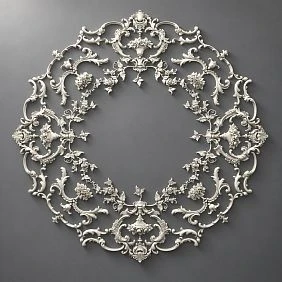
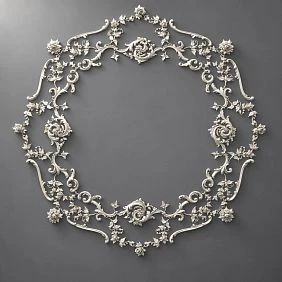
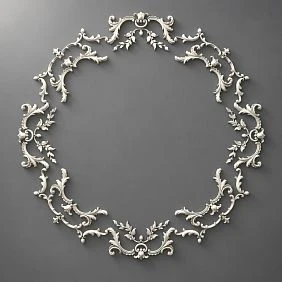
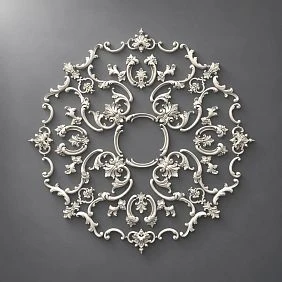
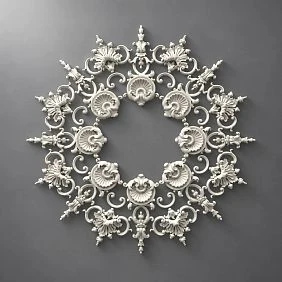
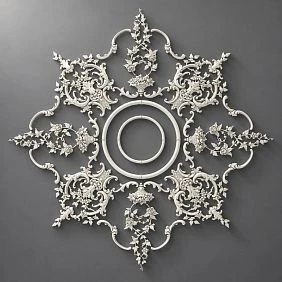
The oval as an architectural tool: what this form can do
There are forms that fix a point. The circle is a perfect example: it concentrates attention in the center without creating direction. There are forms that set a direction. The oval is exactly that form. It is elongated along one axis, meaning it 'tells' the space: there is movement here, there is length here, there is a vector.
In interior practice, this means the following: oval polyurethane ceiling rosette works not as a point central accent, but as an elongated ceiling medallion — an element that supports the longitudinal logic of the space. It enhances the length of the room, aligns with the axis of the table, supports the elongated hallway zone, and creates a smooth decorative center where a circle would be too 'symmetrical' and a square too 'geometric'.
That's why the oval rosette is not just a 'different shape' version of a rosette, but an independent architectural solution with a specific logic of application.




How an oval rosette differs from a round and square one
Three shapes of ceiling rosettes — three different architectural tools.
A round rosette is universal. It works in any interior, in any room, with any chandelier. It is neutral in the sense that it does not set a direction or create geometric tension. It is ideal where a decorative center is needed without additional statements.
A square rosette is structural. It creates geometric rigor, supports the straight lines of moldings and frames, and speaks to the architectural precision of the ceiling. It is ideal for studies, neoclassical living rooms, and spaces with clear rectangular geometry.
An oval rosette is dynamic. It is directional, elongated, and plastic. It does not fix a point — it creates a zone. It is softer than a square and more expressive than a circle. It is ideal for dining rooms with rectangular tables, long rooms, hallways, and kitchen-living rooms with a pronounced longitudinal axis.
| Parameter | Round rosette | Square rosette | Oval rosette |
|---|---|---|---|
| Shape character | Neutral, central | Strict, geometric | Dynamic, directional |
| Sets the axis? | No | No | Yes — along the long axis |
| Best context | Any | Straight-line interiors | Elongated spaces, dining rooms |
| Relief | Any | Geometric | Smooth, ornamental |
| Combination with moldings | Good | Excellent | Excellent — with elongated frames |
| Above the table | Good | Good | Very good — along the table axis |
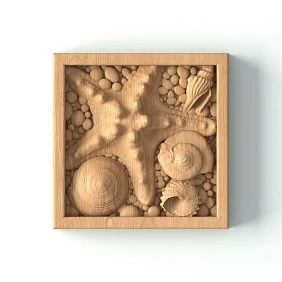
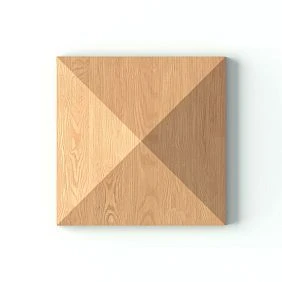
Our factory also produces:
When should you choose an oval ceiling rosette
Understanding whether an oval rosette is needed means answering several specific questions about the interior.
Is there a pronounced longitudinal axis in the room? If the living room is elongated — 6 × 4 m, for example — its long axis 'demands' decorative confirmation. An oval rosette oriented along the long wall supports this vector and visually 'gathers' the ceiling plane.
Is the chandelier hanging above a rectangular table? This is the most classic scenario for an oval rosette. The table is rectangular — the rosette is oval, oriented along the table's axis. The vertical connection 'table — chandelier — rosette' becomes complete and logical.
Are several pendant lights planned in a row? A group of three pendants above a kitchen island or dining table is an elongated light axis. An oval rosette works organically above such a light group: it 'frames' the entire group, not just one point.
Is there a rectangular ceiling molding in the room? A rectangular frame of moldings — and inside it, an oval rosette. This is an architectural technique with a rich history: the combination of a rectangular outline and an inscribed ellipse is found in ceiling decorations of classic mansions.
Is a softer shape needed than a square, but more expressive than a circle? This is the 'golden mean' that an oval provides. Smoothness without neutrality, expressiveness without rigidity.
Do you want to visually lengthen the room? An oval rosette oriented along the room's long axis creates the illusion of greater ceiling plane length. This is an old designer trick — working flawlessly.
Get Consultation
Which rooms are suitable for an oval rosette: a detailed application map
Dining room: the table axis is the rosette axis
The dining room is a space where the vertical axis "floor — table — chandelier — ceiling" serves as the main planning core. And if the table is rectangular — and most dining tables are rectangular — this core has not only a vertical but also a horizontal vector.
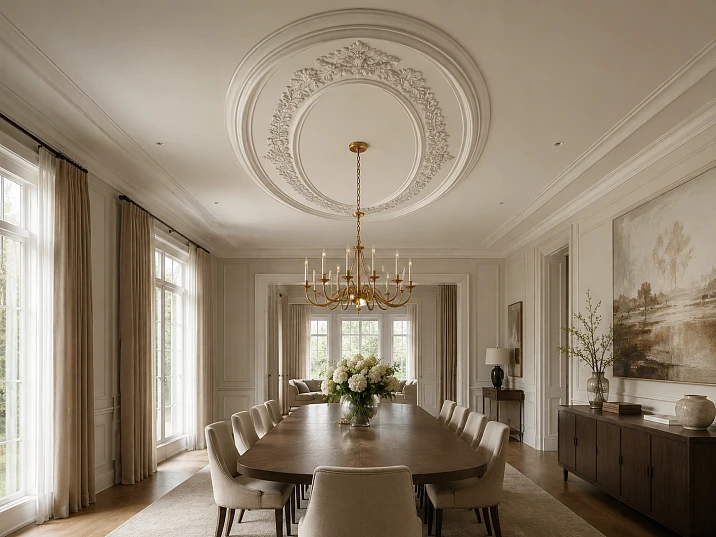
A ceiling rosette for the dining room is an element that closes the vertical axis while supporting the horizontal vector of the table. The best way to handle this task is with an oval rosette under the chandelier: its long axis is oriented parallel to the long side of the table, creating an ideal ceiling "frame" for the light fixture above the table.
Size for the dining room: oval length — 400–600 mm, width — 280–420 mm. Relief — moderate, smooth: acanthus ornament, laurel wreath, concentric elliptical bands.
Long living room: supporting the spatial vector
A living room with pronounced longitudinal geometry — long, narrow — creates an architectural challenge: how to make the ceiling both complete and consistent with the spatial vector. A round rosette in such a room "hovers" in the air, having no connection with the room's geometry. An oval rosette, oriented along the long axis, picks up this vector.
For a long living room 8–10 × 4 m — an oval rosette with a length of 550–700 mm. Placed at the center of the long axis of the ceiling. Relief — expressive, matching the scale of the space.
Hallway: formal elongation
The hallway is a special zone. It is almost always elongated: it is a corridor-like transit space, whose function is to create a first impression and direct movement deeper into the apartment or house. The ceiling decor of the hallway should work along the longitudinal axis.
Oval ceiling rosette for the hall — is one of the best options. It complements the length of the hall, creates an expressive central accent, and does not conflict with the elongated geometry of the space. For a hall 4–6 m long, an oval rosette 450–600 mm long is ideal.
Kitchen-living room: zoning through decor
The kitchen-living room space combines two functional zones, each with its own lighting axis. Above the dining area — a chandelier or a group of pendants over the table. Above the kitchen island — a row of pendant lights. In both cases, an oval polyurethane ceiling rosette works better than a round one: it frames not a point, but a zone — a lighting group or the axis of the fixtures.
Using ceiling molding By using an oval rosette and adding molding frames, you can visually separate the dining area from the kitchen area while uniting the ceiling plane into a single architectural system.
Bedroom: softness instead of strictness
For the bedroom, an oval rosette is an alternative to a round one in cases where the bed is strictly aligned with the room's axis and the chandelier is located directly above the headboard or center of the bed. If the bed is rectangular and wide, an oval rosette oriented across the bed (along its width) supports the horizontal axis of the headboard.
For the bedroom, the diameter (axis length) should not be too large: 300–400 mm. The relief should be delicate and soft. This is not a space for monumental architectural statements.
Study with an elongated desk
In a study where the desk is placed along the long side of the room, an oval rosette above the ceiling light supports the work axis. This is a restrained, precise, professional solution.
Corridor with central lighting
A long corridor is a space where ceiling lighting is traditionally placed in spots or lines. One oval ceiling rose under a central light in the corridor creates an unexpectedly strong architectural accent — small, delicate, but perfectly precise.
How to choose the size of an oval ceiling rose: two parameters instead of one
Choosing the size of a round ceiling rose is one parameter: diameter. Choosing a square one is one side. Choosing an oval one is two parameters: the long axis and the short axis, or the ratio between them. This makes the task slightly more complex, but it also allows you to tailor the shape more precisely to a specific situation.
Long axis: orient towards the chandelier and table
The long axis of the oval should be oriented along the longitudinal axis of the light fixture or furniture. If the chandelier above a table is 180 cm long, the long axis of the rose should be comparable to the length of the table or slightly smaller. For example, for a 180 cm table — an oval with a long axis of 500–600 mm.
If there is a group of three pendant lights above the table, arranged in a row 50 cm apart, the long axis of the rose should cover the entire light group: 500–600 mm.
Short axis: proportion and relief
The short axis determines the 'fatness' of the oval: how elongated or close to a circle it is. The classic proportion for oval ceiling roses is a ratio of 3:2 or 4:3 (long to short). An overly elongated oval (ratio 5:2 or more) looks unusual and requires a very specific context.
The short axis also affects the perception of the relief: with a narrow oval, the relief elements are 'compressed', while with a wide one, they read more spaciously.
Ceiling height and size
General rule: the higher the ceiling, the larger the rosette can be. But for an oval shape, this rule primarily applies along the long axis: you can take a more elongated oval with a high ceiling, and a less elongated one with a low ceiling.
With a ceiling of 2.7 m — the long axis is no more than 450–500 mm. With a ceiling of 2.9–3.0 m — 500–650 mm. With a ceiling above 3.0 m — 650 mm and above.
| Situation | Recommended size (long axis) |
|---|---|
| Table for 4 people, 120–140 cm | 350–450 mm |
| Table for 6 people, 160–180 cm | 450–550 mm |
| Long living room 8 × 4 m | 550–700 mm |
| Hall 5 × 2 m | 450–600 mm |
| Bedroom, chandelier above the bed | 320–420 mm |
| Office with a desk | 300–400 mm |
| Corridor with central lighting | 250–350 mm |
Which relief to choose for an oval ceiling rosette
The relief of an oval rosette is not just a decorative choice. The smooth shape of the oval implies a certain 'language' of ornament — it should be equally smooth and organic.
Laurel wreath and acanthus leaves
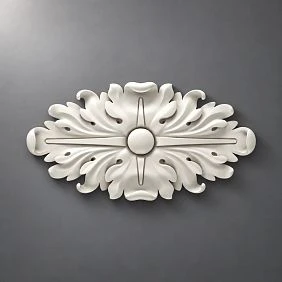
A classic ornament for an oval rosette is a laurel wreath or acanthus leaves arranged along the perimeter of the ellipse. This is a historically accurate solution: such decor was used in the ceilings of classic European mansions of the 18th–19th centuries. The smooth leaves harmonize with the smoothness of the oval shape, creating a unified organic relief.
Concentric elliptical bands
A more restrained option: one or several concentric elliptical bands with a geometric or ribbed pattern. This is delicate decorativeness — enough for the shape to read as stucco, but not so rich as to overload the ceiling.
Works well in neoclassicism, modern classicism, and minimalist interiors.
Smooth ribbon ornament
Ribbon ornament — a continuous curl or a row of intertwined elements — along the oval contour creates a sense of movement, which enhances the dynamics of the form. This is an expressive, lively relief that looks good on large oval rosettes.
Smooth form with a profiled rim
A smooth inner surface framed by a clear profiled rim is the most laconic option. For a minimalist interior, modern classic, bedroom in neutral tones. The form speaks for itself.
Relief and size: proportion
For a large oval rosette (long axis 600 mm or more) — the relief can be more saturated: acanthus leaves, double belt, central ornamental medallion. For a small one (long axis 300–400 mm) — delicate relief, one belt, simple ornament.
| Interior | Recommended relief |
|---|---|
| Classic dining room | Laurel wreath, acanthus leaves |
| Neoclassical living room | Concentric belts, moderate ornament |
| Modern Classic | Smooth shape with a profiled rim |
| Hall with high ceiling | Rich smooth ornament |
| Bedroom | Delicate leaf belt |
| Office | Strict geometric belt |
How to combine an oval rosette with a chandelier: practical scenarios
The shape of the rosette and the type of light fixture are a pair that must be coordinated. An oval rosette requires a specific 'partner'.
When the combination works perfectly
Chandelier above a rectangular dining table. The strongest scenario. The long axis of the rosette is parallel to the long side of the table, the chandelier is along the axis of the rosette. Everything is built into a single longitudinal system: table — light fixture — rosette.
A group of pendant lights in a row. Three or five pendants above a kitchen island or table. The rosette covers the entire light group. One decorative element — one light accent.
An elongated chandelier with multiple arms. A chandelier with arms or shades arranged along the long axis is an ideal partner for an oval rosette. The shape of the light fixture and the shape of the rosette 'rhyme'.
Neoclassical chandelier with an elongated base. The base is a bar with multiple suspension points, oriented along the axis of the table or room — and an oval rosette along the axis of the base.
When to choose a different shape
Strictly round compact chandelier. If the fixture is a perfect sphere or a short symmetrical cylinder without a pronounced horizontal axis, an oval rosette creates asymmetry. Better to use a round one.
Square chandelier with a square base. A geometrically distinct square chandelier requires either a square or round rosette. An oval here would be dissonant.
Very small point light fixture. If the fixture occupies minimal ceiling area, a large elongated oval creates visual imbalance.
Oval rosette and ceiling moldings: how to create a system
A rectangular frame of moldings — with an oval rosette inscribed inside. This is one of the most refined techniques of classical ceiling architecture. It is called a "cartouche" — a decorative ceiling medallion framed by a border.
Moldings made of polyurethane In the form of one or two rectangular contours around the oval rosette, they create a ceiling "picture" — a decorative field with clearly defined boundaries. The rosette inside this frame becomes the central medallion.
For such a system, it is important to maintain proportions: the rosette should occupy 40–60% of the inner field area of the frame. A rosette that is too small in a large frame creates emptiness. Too large creates crampedness.
Ceiling system with an oval rosette: steps
Step one: determine the length and width of the rectangular frame made of moldings. Use the width of the table or the length of the chandelier group as a guide.
Step two: inside the frame, choose the size of the oval rosette — with an indent from the inner edge of the frame of 8–12 cm along the short axis and 10–15 cm along the long axis.
Step three: choose Moldings made of polyurethane with a profile that matches the relief of the rosette.
Step four: add corner decorative elements — decorative molding in the corners of the frame for completeness of the system.
Step five: complete with a perimeter cornice — ceiling moldings along the walls, which will connect the central system with the perimeter of the room.
Result: a ceiling that is perceived as a work of architecture, not just a painted plane overhead.
Orientation of the oval rosette: how to avoid mistakes
This is a technically simple but fundamentally important question. The oval is not symmetrical on both axes — it has a long and a short axis, and orientation matters.
Along the long side of the room. When the socket is installed in a long room, the long axis of the oval is oriented along the long wall. This supports the spatial vector.
Along the axis of the table. When the socket is installed above a dining table, the long axis is oriented along the long side of the table. This creates a unified longitudinal system.
Along the axis of the light group. When the socket is installed above a row of pendant lights, the long axis is oriented along their row.
Across the room. Sometimes the oval is oriented across the room — this creates a visual expansion, "spreading" the space sideways. The technique is rare but interesting for narrow spaces.
Diagonal orientation. An extremely rare and risky option. Only permissible in special interior concepts.
Installing an oval socket: specifics of the elongated shape
Installing an oval polyurethane socket is generally standard — but the specifics of the shape require considering a few additional nuances. The full algorithm for installing any molding is described in the guide on installing polyurethane molding. Here — what is important specifically for the oval shape.
Marking: two axes instead of one
For a round socket, it's enough to find the center — and that suffices. For an oval one, you need to fix not only the center but also the orientation of the long axis. Mark the orientation line of the socket's long axis on the ceiling — using a laser level or a chalk line. Align the socket's long axis with this line.
Applying adhesive
Apply glue evenly over the entire back surface. For an elongated shape, it's important to apply glue not only along the perimeter but also in the central part of the back surface: otherwise, the center of the socket may not adhere evenly to the ceiling.
Pressing
Hold the oval socket pressed against the ceiling for 3–5 minutes. For large products (long axis 600 mm or more), it's convenient to use a support stand or ask an assistant.
Sealing the perimeter
Seal along the oval contour with acrylic sealant. The smooth curve of the contour means the spatula should be moved in a smooth, continuous motion, without making angular transitions. For an even seam — move from one end of the long axis to the other without stopping.
Painting
After installation, sealing, and drying — prime and paint to match the ceiling color. White finish "blends" the socket into the ceiling plane. A colored accent on the relief bands — for decoratively active interiors.
Oval socket in different styles: how it reads
Classicism and neoclassicism
In a classic interior, an oval socket is a historically accurate choice. Ceiling elliptical medallions with acanthus ornaments are decor known since the Renaissance, actively used in Classicism and Empire style. For classics — rich relief, a laurel wreath or acanthus leaves, white or tinted color.
Restrained neoclassicism
In the modern interpretation of neoclassicism — a moderate relief, clean profile bands, delicate ornament. The oval rosette here looks like a historical quote, but without Baroque heaviness. This solution is in demand in modern city apartments with neoclassical interiors.
Art Deco
In Art Deco, the oval is one of the key forms. Elongated medallions, elliptical frames, dynamic radial ornaments — all of this is part of the style's decorative language. For Art Deco, an oval rosette with a geometric relief and a possible diagonal ribbon motif is suitable.
Modern classic and transitional
In transitional style interiors (a "transitional" style that combines modernity and historicism), the oval rosette works as a delicate historical replica. It adds "depth" to a modern interior without fully immersing in classicism. For such interiors — a smooth or minimally relief form.
Provence
In a Provencal interior with its soft tones, linen, and picturesque "wornness," an oval rosette with a smooth leaf ornament looks organic. A delicate cream or white color, moderate relief — this is a warm and cozy solution.
What to buy together with an oval ceiling rosette
A complete result always requires a comprehensive approach.
Minimum installation kit
-
Glue for polyurethane stucco — a specialized compound that ensures reliable adhesion to the ceiling surface.
-
Acrylic sealant — for sealing the gap along the curved contour of the oval.
-
Primer — for preparing the surface before painting.
-
Paint — water-based or acrylic in the ceiling color.
Extended kit for ceiling system
-
Ceiling moldings. Moldings made of polyurethane for creating a rectangular or square frame around an oval rosette — the main decorative partner.
-
Cornice. A perimeter cornice along the room walls completes the system. Ceiling molding in the form of a cornice connects the center with the perimeter.
-
Corner decorative elements. Decorative stucco — corner overlays, rosettes in the corners of molding frames, ornamental details.
-
Spare materials. A small supply of glue and sealant — for fixing minor imperfections.
Task What to buy Arrange a chandelier over a rectangular table Oval ceiling rosette along the table axis Emphasize the elongated room Oval rosette along the long axis + moldings Make the ceiling softer than with a square Oval rosette with smooth ornament Design the kitchen-living room Oval rosette + rectangular molding frames Do not overload the low ceiling Oval rosette with low relief, long axis up to 400 mm Assemble a complete ceiling set Socket, moldings, cornice, glue, paint, overlays
Why polyurethane is the right choice for an oval socket
For an oval shape, manufacturing precision is especially critical. The smooth curve of the contour must be flawless — the slightest unevenness is more noticeable on an elongated contour than on a circle. Polyurethane as a material provides this precision.
Accurate reproduction of smooth curves. The oval contour is reproduced with high geometric precision. Relief elements on a smooth surface look soft and organic.
Shape stability. The polyurethane product does not deform during storage, transportation, or humidity changes. The oval remains a precise oval.
Lightweight. An oval socket with a long axis of 500–600 mm made of polyurethane weighs 400–700 g. Installation with glue without anchors — sufficient and reliable.
Moisture resistance. Polyurethane is not afraid of moisture — it can be used in the kitchen, hallway, bathroom (with a moisture-protected light fixture).
Ease of painting. Smooth surface without pores — paint applies evenly without additional operations. buy polyurethane rosettes — means getting a product ready for installation and immediate finishing.
Five scenarios: oval socket in real interiors
Scenario one: dining room 18 m², rectangular table 180 × 90 cm, chandelier above the table.
Oval rosette with a long axis of 520 mm and a short axis of 350 mm. Acanthus relief, concentric bands. Oriented along the table axis. Color — white to match the ceiling. Result: a completed vertical axis "table — chandelier — rosette", architectural integrity.
Scenario two: long living room 9 × 4 m, ceiling 2.9 m, one large chandelier.
Oval rosette with a long axis of 650 mm and a short axis of 450 mm. Rich laurel wreath, moderate relief. Along the long axis of the room. Two rectangular molding contours around. Result: a ceiling medallion that gathers the long room and gives it an architectural center.
Scenario three: hall 5 × 2 m, ceiling 3.0 m, pendant light.
Oval rosette with a long axis of 500 mm and a short axis of 340 mm. Smooth ribbon ornament, delicate relief. Along the long axis of the hall. White color. Result: a grand accent in the first space that is remembered from the threshold.
Scenario four: kitchen-living room, dining table area, three pendants in a row.
Oval rosette with a long axis of 580 mm and a short axis of 380 mm. Smooth with a profiled rim, no ornament. Above the light group, along the axis of the pendant row. White. Result: a delicate, modern solution that visually "gathers" the light group.
Scenario five: bedroom 16 m², bed 160 cm, chandelier above the center of the bed.
Oval rosette with a long axis of 380 mm and a short axis of 260 mm. Delicate leaf belt. Oriented along the width of the bed (transversely). Warm white color. Result: a soft, cozy ceiling accent above the headboard — quiet and complete.
Frequently asked questions
When to choose an oval ceiling rosette instead of a round one?
An oval rosette is chosen where there is a longitudinal axis — above a rectangular table, in a long room, hall, kitchen-living room. If you need to support an elongated area rather than just decorate a central point on the ceiling, an oval will be more precise. For symmetrical square rooms without a pronounced axis, a round shape is often more organic.
Will an oval rosette suit a round chandelier?
Yes, if it is oriented along the axis of the furniture or room, rather than just 'repeating' the shape of the chandelier. The oval and circle together create a geometric contrast — 'the frame sets the direction, the light fixture sets the point.' In a proper interior, this works.
How to orient an oval rosette?
The long axis is oriented along the longitudinal axis of the table, room, or light group. For this, the axis is marked on the ceiling using a laser level. Installation is carried out strictly according to this marking.
Can an oval rosette be combined with ceiling moldings?
Yes — this is one of the strongest scenarios. A rectangular frame made of of polyurethane moldings and an oval rosette inscribed in it is a classic ceiling medallion. The rosette should occupy 40–60% of the inner area of the frame.
What to buy together with an oval ceiling rosette?
Required: glue, acrylic sealant, primer, paint. If you want to create a system: Moldings made of polyurethane, perimeter cornice, corner decorative overlays. Full range — in the catalog polyurethane products.
How to install an oval rosette yourself?
Installation is standard — with glue, without anchors. Main thing: mark not only the center, but also the orientation axis. Apply glue evenly over the entire back surface, including the central part. After installation, the perimeter — acrylic sealant, smooth movement along the curve. Detailed algorithm — in the guide on installing polyurethane molding.
Can I paint the oval rosette in a color different from the ceiling?
Yes. A color accent — gold, bronze, pearl, contrasting tone — makes the oval rosette an independent decorative object. The polyurethane surface accepts any paint evenly.
About the company STAVROS
STAVROS is a specialized supplier of decorative polyurethane products for professional and private interior design. The company's catalog includes oval, round, square ceiling rosettes of various sizes and styles, Moldings and cornices for creating ceiling frame systems, Decorative Inserts for corner accents and ornamental details, Ceiling molding and a full range polyurethane products to create a complete architectural interior. All STAVROS products are manufactured with high geometric precision, ready for painting, and available with Contact us to confirm shipping to your destination.