Article Contents:
- Selective acceptance does not mean superficial acceptance
- First, we check the structure of the entire batch
- What to check on 100% of packaging units
- Damaged packaging must not dissolve into the regular sample
- Why you cannot open only the top or nearest packs
- Group-distributed sampling: a simple principle without statistical overload
- Why you cannot assign a single universal inspection percentage
- When the sample can be made relatively compact
- What is especially important not to lose during a reduced inspection
- What to measure and what to assess visually
- We verify
- We measure on control samples
- Why a general shot of “here’s the batch” is almost useless
- High risk
- Lower risk
- What to prepare physically
- What to do if the group consists of only two or three packages
- What to do with a very large homogeneous group
- Why "approximately 2400" is not enough
- When a profile template is useful
- Why you cannot accept the second trip only "by analogy with the first"
- Scenario 1 — too superficial
- Scenario 2 — too in-depth
- Scenario 3 — controlled sampling acceptance
- Do you need to open every plank?
- Can you check only one package of each SKU?
- What should you do if one defect is found in the sample?
- Do you need to stop the entire machine because of one problematic pack?
- How do you accept natural wood if the pattern differs?
- When should you increase the sample size?
- Where does acceptance end and warehouse accounting begin?

A total of 64 packages of wooden trim arrived at the site. Inside are several hundred pieces of skirting boards, mouldings and cornices, several wood species, several commercial lengths and several installation zones. Within a few hours, some of the material must be sent to different floors. If you check only the delivery note, you can miss a systemic error. If you fully unpack every piece, measure it and then repack it, acceptance will take a long time and will itself create a risk of damage and mix-ups.
For a large batch, the choice is not between two extremes — “not looking inside at all” or “opening everything down to the last piece.” What is needed is an acceptance plan that separates three levels of control: checking all packages, detailed sampling within pre-formed groups, and extended inspection if a significant or recurring discrepancy is found in the sample.
100% OF PACKAGES → SELECTIVE OPENING OF CONTROL GROUPS → EXTENDED INSPECTION IF A DEVIATION IS FOUND
For each transport unit, the marking, order affiliation, material, declared length, external condition and number of units are checked. Then control packages and items are selected from different product groups. If the sample matches the specification and the reference sample, the group can be accepted. If a discrepancy is found, the inspection is extended specifically for that group, rather than automatically stopping the entire vehicle.
This approach is needed when building materials wholesalers you have already reached the actual delivery stage: the supplier has been selected, the contract is in place, the goods have been manufactured, and the vehicle has arrived. The buyer’s task is to verifiably check a large volume, keep the batch manageable and not turn acceptance into chaotic opening of hundreds of items.
The main idea of the article: checking 100% of a batch does not mean unpacking 100% of the items.
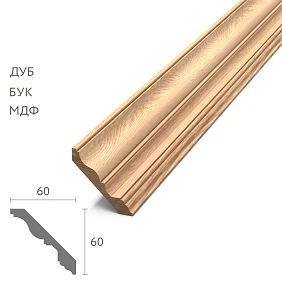




Selective acceptance does not mean superficial acceptance
The phrase "we'll check selectively" is often taken too simply: open a couple of packs, look at a few planks, everything looks fine — so the delivery is good. Such a procedure proves nothing if the structure of the order is not clear before opening.
First you need to know which SKUs arrived, which materials and lengths are present, whether there are different finishes, production batches, and installation zones. Only after that can you choose what exactly to open. The sample must represent the structure of the delivery, not the convenience of the packs' location in the truck.
| Weak acceptance | Controlled acceptance |
|---|---|
| Opened a few nearest packs | First divided the order into control groups |
| Looked at "overall quality" | Checked specific specification parameters |
| Did not record what exactly was opened | Each control point is linked to a group and a result |
| In case of deviation, continued with the regular sampling | In case of deviation, expanded control of the corresponding group |
Sampling inspection saves time only when its result can be interpreted. If it is unknown which group the items were taken from, it is impossible to understand which part of the order the conclusion applies to.




First, we check the structure of the entire batch
The first task is not to look for micro-defects in the wood. First, we need to establish whether what was supposed to arrive actually arrived. Packaging markings and documents allow verifying the structure without fully unpacking.
| Article | Ordered | Packages | Received | Material | Status |
|---|---|---|---|---|---|
| PLT-A | 180 pcs. | 12 | 180 pcs. | Oak | Matches |
| MLD-A | 240 pcs. | 16 | 240 pcs. | Oak | Matches |
| MLD-B | 96 pcs. | 8 | 96 pcs. | Beech | Matches |
| KZ-A | 54 pcs. | 9 | 54 pcs. | Oak | Matches |
It is especially dangerous to check only the grand total. 570 items ordered, 570 actually — that is not yet proof of correctness. Inside there may be extra items of one SKU and missing items of another.
For example, 100 MLD-A and MLD-B each were ordered. In fact, 120 MLD-A and 80 MLD-B arrived. The total is correct — 200. The project specification is violated. Therefore, the structure is always checked by individual line items.
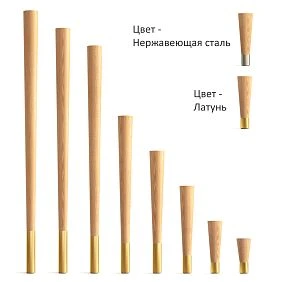
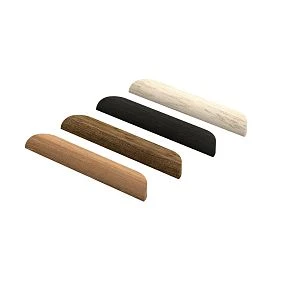
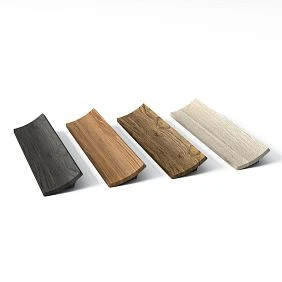
Our factory also produces:




What to check on 100% of packaging units
It is more convenient to start full control of the entire delivery with parameters that are available without opening the packaging. This creates a "skeleton" for acceptance and at the same time helps select units for subsequent opening.
| Check | What we look at | Why |
|---|---|---|
| Labeling | SKU and identifier | Link to the order |
| Material | Oak, beech, MDF, or other finish | Rule out material substitution |
| commercial length | Length version on the packaging | Length affects cutting and joints |
| Quantity | Number of places and declared number of items | Check completeness |
| Batch | Identifier, if applicable | Traceability |
| Mounting area | Floor, queue or room, if marked | Prevent mixing after unloading |
| Packaging condition | Punctures, dents, wetting, opening, impact marks | Highlight risk before distribution |
At this stage, there is no need to measure every plank and lay out hundreds of items. Full control of packaging units is control of identification and external condition, not total detailed measurement of products.
Get Consultation
Damaged packaging must not dissolve in the regular sample
If the packaging has a puncture, crushing, signs of moisture, or a strong impact, that spot already carries an increased risk. It cannot be used as an ordinary random control unit and then assumed that the problem "ended up in the sample."
STANDARD SAMPLING → conformity check of a homogeneous group
DAMAGED PACKAGING → separate inspection for possible damage
The damaged spot is opened deliberately in the risk area. If the puncture is at the end face, it is specifically the end-face part that is inspected. If the packaging got wet at the bottom, the bottom layer and the condition of the material are checked, not a random top plank.
It is useful to photograph the external damage before moving it: the overall view of the spot, the label, the packaging number, a close-up of the defect, and its position. After several relocations, it is harder to prove the original condition.
Why you cannot open only the top or nearest packs
When building materials supplier wholesale when a multi-item order is delivered, several packs near the truck doors may belong to the same item. All of them may be of the same SKU, the same length, the same material, and the same production batch.
Therefore, "we opened three packs" says nothing until it is known what exactly those three packs represent.
Control spots are selected from different significant parts of the order: different SKUs, materials, lengths, and batches. For a large homogeneous group, it is useful to take spots from different parts of it, if this is possible without unsafe overloading.
The goal is not randomness for randomness's sake, but coverage of the structure.
Group-distributed sampling: a simple principle without statistical overload
A large shipment is rarely completely homogeneous. If there are PLT-A, PLT-B, MLD-A, MLD-B, and KZ-A, checking only PLT-A does not allow you to say "the batch has been checked."
The practical principle is simple: first divide the order into meaningful control groups, then check each critical group.
A group can be defined by a combination of:
SKU + material + commercial length + finish/execution + production batch.
| Group | Article | Material | Length | Finish | Batch |
|---|---|---|---|---|---|
| G01 | PLT-A | Oak | 2400 | F01 | 01 |
| G02 | PLT-A | Beech | 2400 | F02 | 02 |
| G03 | MLD-A | Oak | 2400 | F01 | 01 |
| G04 | KZ-A | Oak | 2000 | F01 | 03 |
Even if all four groups arrived on one truck, they are four inspection objects. If a deviation is found in G02, it should not automatically "infect" G01, G03, and G04 until there are grounds to consider the problem common.
Why you cannot assign a single universal inspection percentage
The formula "always open 10%" creates a false sense of precision. Without conditions, it is just a random number.
The depth of sampling depends on the number of items, the number of groups, the cost of an error, the criticality of the position, the history of previous deliveries, the condition of the packaging, the availability of an approved reference sample, the number of production batches, and whether the specification has changed.
If the company uses a formal statistical acceptance sampling plan, the sample sizes must be determined by that approved system. If there is no such plan, it is safer to use a risk-based approach rather than inventing a universal standard.
| Factor | Impact on inspection depth |
|---|---|
| First order of a new SKU | Increases |
| Repeat delivery with no history of issues | Can reduce uncertainty |
| Damaged packaging | Requires separate verification |
| Many similar profiles | Increases identification control |
| Delivery after a complaint | Strengthens control of the problematic parameter |
| Different materials/lengths in one SKU | Requires splitting into groups |
When the sample can be kept relatively compact
The risk is lower if several conditions are met simultaneously: a familiar serial SKU is supplied, the material and length have not changed, the packaging is intact, the marking is complete, there is an approved reference sample, and previous batches of the same project were accepted without systemic deviations.
Even in such a case, two mandatory components remain: checking all packaging units and selectively opening products. Low risk reduces the depth of inspection but does not eliminate it.
What is especially important not to lose during a reduced inspection
- confirmation of the SKU;
- the material;
- commercial length;
- compliance of the packaging marking with the actual contents;
- condition of the surface of the control items;
- link to the current version of the order.
When control needs to be strengthened
The size of the supplier company alone says nothing about the risk of a specific delivery. Even if large supplier of building materials it operates consistently, the first batch of a new SKU requires more attention than the tenth repeat delivery with no changes.
Checks are strengthened if at least one of the following factors is present:
- new SKU;
- new material;
- first delivery for the project;
- new finish;
- several visually similar profiles;
- different lengths of the same SKU;
- damaged packaging;
- delivery after complaint;
- reproduction after specification change;
- mixing of several batches in one machine;
- non-standard packaging;
- high cost of error for the installation schedule.
This logic allows directing the acceptance team's time to where it actually reduces risk.
Matrix “risk × inspection depth”
| Risk | Example | Approach |
|---|---|---|
| Below average | Repeat serial skirting board without changes | Basic distributed sampling |
| Medium | A familiar profile, but a new material | Strengthen inspection of the material and surface |
| Elevated | Damaged packaging | Separate inspection of a specific spot |
| High | Several similar moldings | Control of each product group |
| Systemic | The same discrepancy in several packs | Expand the inspection and suspend the group |
The table does not set percentages. It helps decide where the sample should be deeper and which groups cannot be accepted under the minimal procedure.
Wooden skirting board: what to check in the control strip
At the control point wooden baseboard verification must follow the specification, not a general impression of a "normal profile."
They verify:
- exact article number;
- profile shape;
- the material;
- commercial length;
- main cross-section dimensions;
- surface quality;
- visible straightness;
- conformity to the approved sample or reference;
- absence of transport damage.
What to measure and what to assess visually
Numerical parameters — length and main dimensions — are measured. The surface, chips, damage, relief, and overall straightness are assessed visually with reference to the sample and specification.
If the project sets its own tolerances, they must be fixed in advance. You cannot invent a universal tolerance already on site.
Do not compare the product with memory
The phrase "it seems the same as what we approved" is not suitable for a large batch. Memory poorly retains the exact depth of the relief, the width of the shelf, and the shade of the surface.
At least two control points are needed:
- approved sample or its identifier;
- technical specification line.
ACTUAL PRODUCT ↔ REFERENCE ↔ SPECIFICATION ↔ ORDER
If the physical reference is stored on site, it must be labeled. If the reference is documentary, the photos must be linked to the SKU and version.
Wooden molding: similar profiles require separate groups
If MLD-A, MLD-B, and MLD-C arrive at the same time, a quick inspection of the packaging does not guarantee that the correct profiles are inside. One SKU may differ from another by a few millimeters or by a pattern that is noticeable only after opening.
Therefore, the control wooden molding is checked separately for each SKU.
It is especially important to verify:
- relief;
- width and height;
- the material;
- commercial length;
- finish;
- packaging markings and actual contents.
If the total volume of moldings is large, an error in one SKU can be more critical than a small shortfall in pieces.
Why a correct grand total can hide mis-shipment
| Position | Order | Actual | Deviation |
|---|---|---|---|
| MLD-A | 100 | 120 | +20 |
| MLD-B | 100 | 80 | −20 |
| TOTAL | 200 | 200 | 0 |
The total quantity matches, but the project configuration is compromised. This is why selective acceptance is organized by groups rather than by the total number of items.
Wooden cornice: inspection must not create a defect itself
Large wooden cornice may be wider, heavier, and more susceptible to damage to protruding parts than a small molding.
Before opening, prepare:
- a level support;
- a clean place;
- protection of the front surface;
- measuring tool;
- method for returning the item to its packaging;
- “checked” label.
Do not throw the curtain rod on the floor, lean it against the wall on one end, or stack several different profiles on top of each other just for the convenience of inspection. The acceptance procedure must preserve the original condition of the item.
What to measure and what is enough to verify
When Building materials suppliers wholesale when a large batch arrives, there is no need to turn every opened package into a laboratory protocol.
We verify
- article number;
- the material;
- marking;
- execution;
- the batch;
- belonging to the order.
We measure on control items
- length;
- main profile dimensions;
- critical parameters of the specific project;
- parameters that previously caused discrepancies.
The acceptance sheet must be prepared in advance so that no dispute arises on site about “what we actually consider important today”.
Inspection sheet: the central acceptance document
| Group | Locations checked | Items checked | Parameters | Result | Action |
|---|---|---|---|---|---|
| G01 | ___ | ___ | SKU, length, profile | matches | ACCEPT |
| G02 | ___ | ___ | SKU, material, profile | Deviation | Expand |
| G03 | ___ | ___ | Finish, geometry | matches | ACCEPT |
| G04 | ___ | ___ | Damaged packaging | Damage | quarantine |
The template has no universal numbers. The specific project determines the sample size according to its own risk and procedure.
Four statuses: accept, suspend, expand, isolate
| Status | Meaning |
|---|---|
| ACCEPT | The control group meets the established requirements |
| Put on hold | Insufficient information to decide |
| EXPAND INSPECTION | Deviation found, the initial sample is insufficient |
| quarantine | The disputed group is physically separated and is not released for installation |
MATCHES → ACCEPT
UNCLEAR → HOLD
REPEATED DEVIATION → EXPAND
RISK OF MIXING OR DAMAGE → QUARANTINE
What “expand inspection” means
Suppose the same discrepancy is found in several MLD-A control items. After such a result, the remaining packages cannot be assumed to be fine.
The next step is to expand control specifically for the MLD-A group: select additional locations from this group, check whether the problem repeats, link the result to the production batch, and only then make a decision.
At the same time, independent PLT-A and KZ-A may remain in their statuses. Expansion should follow the boundaries of risk.
An error in one group does not always block the entire shipment
| Group | Status | Action |
|---|---|---|
| PLT-A | ACCEPTED | Allow distribution |
| MLD-A | ACCEPTED | Allow distribution |
| MLD-B | ON HOLD | Leave in the control zone |
| KZ-A | ACCEPTED | Allow distribution |
So one disputed line does not stop installation where the item has already been checked and is independent of the problematic position.
What to place in quarantine
Quarantine is a physical separation pending a decision, not an automatic rejection of the item.
The following are sent there:
- packages with unknown markings;
- a different SKU;
- a different length, if it has not been agreed;
- different material;
- unknown version;
- damaged areas;
- a group with a recurring discrepancy;
- an item that cannot be linked to the active specification.
The disputed bundle must be physically separated from the accepted one. Otherwise, within a few hours it may end up in regular dispatch.
Why a suspended material must not be left next to accepted material
Once the planks have been distributed across floors or cut, it is harder to prove their original condition. Therefore, a simple rule applies:
SUSPENDED ≠ AVAILABLE FOR INSTALLATION.
The status must be visible in the log and on the physical packaging.
Photo documentation of random inspection
There is no point in photographing every plank. Photos should confirm the context and the specific decision.
Useful shots:
- the entire label;
- article number;
- the material;
- batch number or identifier;
- general view of the opened packaging;
- control item next to the reference sample;
- measurement of length or cross-section;
- detected deviation;
- packaging damage;
- quarantine zone marking.
A good photograph makes it possible, a week later, to understand exactly what was being checked, which group the item belonged to, and why a particular decision was made.
Why a general shot of “here’s the batch” is almost useless
It shows the volume, but does not prove the SKU, length, material, or nature of the defect. For evidence-based acceptance, the link “location → marking → item → measurement/deviation” is essential.
How to label opened control packaging
After inspection, the packaging is no longer the same as untouched packaging. It is useful to indicate on it:
CHECKED / date / group / result / responsible person
For example:
CHECKED 12.09 / G03 / COMPLIANT / I.I.
This reduces the risk that the same pack will later be counted again as a new sample or that it will be decided that the packaging was damaged during transportation.
How not to create a mix-up during the inspection itself
Inspection can itself become the cause of an error if many groups are opened at the same time.
Scenario:
- opened PLT-A;
- PLT-B nearby;
- MLD-A nearby;
- removed several items;
- laid everything out on one table;
- took photos;
- returned the strips to the wrong packs.
To prevent this:
- work with a limited number of groups at a time;
- leave the label next to the item;
- do not mix profiles on one surface;
- after checking, immediately return the item to its original packaging;
- close and label the packaging;
- only then move on to the next group.
What to do if the product length does not match
If one length was ordered but a different one is found in the inspection package, the argument "the total linear meters are the same" cannot be accepted.
Length affects cutting, the number of joints, and distribution across walls. This is especially critical for long visible sections.
Working status:
PAUSE / VERIFY THE SPECIFICATION AND CUTTING PLAN.
A different length can be accepted only after an explicit decision that the new configuration is acceptable for the project. This is an agreed change, not acceptance "as is."
What to do if the material does not match
You ordered oak, but the package contains beech. This is not natural variability or a "similar shade." It is a different procurement configuration.
Such a batch must not proceed to installation until the causes are clarified and a replacement decision is made. Even if the product is planned to be painted, unauthorized substitution of material must not become the norm.
How to evaluate minor visual differences in natural wood
Natural wood has variability in grain pattern and shade. One cannot expect every plank to be graphically identical to the adjacent one.
But it is important to distinguish natural variation from other situations:
- incorrect species;
- different finish;
- different profile;
- mechanical damage;
- clear deviation from the approved reference sample;
- mixing of different batches, which the project does not allow.
If appearance is critical, the decision relies on the agreed reference sample and order conditions, not on a subjective “this plank is darker.”
Why sampling inspection should take place before distribution across floors
If the batch has already been distributed across the site, extended inspection becomes sharply more difficult.
Let's imagine:
- 20 packs on the second floor;
- 16 on the third;
- 12 with the installers;
- some of the packs are already opened.
Now, if a discrepancy is found in one group, it must be collected across the entire site. That is why, before internal distribution, a receiving waiting zone is needed.
UNLOADING → RECEIVING ZONE → INSPECTION → ACCEPTED / ON HOLD / QUARANTINE → ONLY THEN FLOORS AND INSTALLATION
How to organize a receiving zone for a large batch
No complex technology is needed. What is needed is visually clear boundaries.
| Zone | What is in it |
|---|---|
| NOT VERIFIED | Unloaded locations pending inspection |
| ACCEPTED | Groups with completed inspection |
| ON HOLD | Groups with no decision yet |
| quarantine | Disputed or damaged groups |
Zones can be marked with signs and floor markings. The key is that any accidental movement is noticeable.
First and repeat batches are not inspected the same way
When large building material suppliers several queues of the same project are shipped, the history of previous batches becomes part of the risk assessment.
The first batch provides the most new information: whether the supplier understood the specification correctly, how labeling is organized, whether package contents match the documents, and how the actual packaging performs.
A repeat delivery of the same SKU can be inspected according to an already established procedure if there were no systemic issues and the specification has not changed. But a repeat batch still undergoes identification and sampling.
After a complaint, control of the specific group is tightened
If the previous MLD-A delivery had a problem, the next replacement group cannot be accepted under the minimal procedure just because the supplier has "already fixed it."
This particular SKU receives additional attention. The parameter that previously failed is checked: SKU, length, profile, finish, marking, or packaging.
This is not distrust of the supplier, but verification that the corrective action actually worked.
Not all product groups are equally critical
High risk
- species moulding;
- long cornice;
- special finish;
- SKU without quick replacement;
- large repeating volume;
- delivery after complaint;
- profile similar to another SKU.
Lower risk
- small standard section;
- familiar serial profile;
- hidden area;
- repeat supply without changes or issue history.
Low risk does not cancel identification. It affects the depth of detailed control.
When sampling is not enough
There are situations when the question is no longer “which other pack to open,” but “can the delivery be considered identified.”
For example:
- systemic discrepancy detected;
- markings are mixed up;
- the structure of the batches cannot be understood;
- a significant portion of the packaging is damaged;
- the goods cannot be linked to the specification;
- a different revision arrived;
- the actual SKUs do not match the documents;
- different configurations are under the same marking.
In this case, sampling inspection does not provide sufficient grounds for accepting the batch. Extended control or a joint decision with the supplier is needed.
How to expand inspection without chaos
The expansion should follow the same group logic.
Example:
G02 / MLD-B / length discrepancy detected
- keep G01, G03, and G04 in their current statuses;
- isolate G02;
- select additional packages specifically for G02;
- check whether the discrepancy is isolated;
- link the results to the batch number;
- make a decision on G02;
- if necessary, file a claim.
This is faster and more accurate than starting to randomly open the entire shipment.
Who should make the decision on a disputed group
The role depends on the object. It could be a purchaser, an assembler, a foreman, a technical specialist, or a customer representative.
The key is to define authority in advance. A loader should not decide that another SKU is "almost the same." An installer should not open a quarantined pack because there is nothing else to install today.
A disputed group must have a single person responsible for the next action.
How to save results for the next delivery
After closing the batch, it is useful to save:
- the structure of control groups;
- which places were opened;
- which parameters were measured;
- which deviations were found;
- which groups were inspected with extended checks;
- which packages were quarantined;
- final decision;
- links to photos;
- claim number, if there was one.
The next delivery is no longer accepted from scratch, but with accumulated history.
Supplier history helps configure control, but does not replace it
Ten good past batches reduce uncertainty, but do not automatically prove the quality of the eleventh.
History may allow reducing the depth of detailed control for a familiar group. But if the SKU, material, finish, production batch, packaging, or specification version has changed, the risk must be reassessed.
How sampling acceptance relates to the warehouse
After the status "accepted," a different process begins: storage, issuance, return of leftovers, and operational reserve.
The acceptance sheet should not turn into a permanent warehouse ledger. Its task is to confirm the transition:
ARRIVED → CHECKED → APPROVED FOR INTERNAL DISTRIBUTION.
After that, the material lives by the rules of the site warehouse.
How sampling acceptance relates to a claim
If a deviation is found, acceptance must provide the claim with facts:
- article number;
- the material;
- batch number;
- packaging unit number;
- number of inspected items;
- nature of the discrepancy;
- photographs;
- dimensions;
- scale of the problem;
- group status.
Then the claim is based not on the phrase "the batch is bad," but on a verifiable picture.
The acceptance plan must be prepared before the truck arrives
The most common organizational mistake is to start thinking about sampling only after unloading. At that moment, the site is occupied by cargo, the driver is waiting for documents, the installers are rushing the warehouse, and the person in charge is seeing the list of SKUs for the first time. Under such pressure, sampling almost inevitably becomes random.
Before delivery, it is useful to prepare a short acceptance plan. It does not need dozens of pages. It is enough to answer practical questions:
- which product groups should arrive;
- how many packages are expected for each;
- which groups are considered critical;
- where the approved reference sample is located;
- which dimensions need to be measured;
- which packages are opened separately in case of any damage;
- who makes the decision to suspend;
- where to physically place the quarantine;
- who takes photos and keeps the control sheet;
- at what point the accepted goods can be distributed across the site.
Such a plan is especially useful if the delivery arrives early in the morning, in the evening, or in several vehicles. It makes the procedure independent of who exactly is on site.
What to prepare physically
Before the vehicle arrives, it is advisable to have a tape measure, calipers or another agreed measuring tool, markers, labels, protective material for the surface, repackaging supplies, a phone or camera for documentation, and a printed or electronic specification.
The absence of one simple thing, such as a tape measure of the required length or a free table, can turn measuring long-length items into improvisation.
How to select specific packages within a single control group
After dividing the batch into groups, a second question remains: which exact places to open within G01 or G02. Here, too, it is undesirable to choose only what is easiest to reach.
For a large homogeneous group, it is useful to spread out the control points. For example, if 16 packages of the same molding are stacked in sequence, control samples can be taken from different parts of that sequence. This is not a formal statistical norm, but a way to reduce the risk of checking only one local fragment of a large group.
If different pallets, production batches, packaging dates, or transport units are known, the sample should cover these differences.
What to do if the group consists of only two or three packages
Then the sampling logic may naturally shift to almost full control of the group. If a critical SKU is represented by two units, the savings from refusing to open the second one may be disproportionate to the risk.
What to do with a very large homogeneous group
With dozens of identical packages, the main thing is not to open several adjacent ones in a row and assume that the entire series has been checked. It is better to distribute the points across the group, and if any repeatable deviation occurs, switch to an extended check.
How to check length without creating a new error
Measuring a long-length product seems like a simple operation, but on site it is easy to get an inaccurate result. The plank lies at an angle, the tape measure sags, the end is damaged, the profile is held in the air by two people — the final number can no longer be considered reliable.
For a control measurement, the product is placed on a flat, supported surface. The start of the measurement is tied to the actual end. If the end is damaged, this is recorded separately, and the length is measured so that it is clear what exactly was obtained.
If the project is critical to the commercial length, it is useful to measure several products from the group rather than one. The goal is to make sure that the marking and the actual configuration match.
Why "approximately 2400" is not enough
For a short wall section, the difference may not matter, but for a cutting map of long walls it may. Acceptance should be based on the accuracy that the specification actually requires.
How to check the profile cross-section
The main dimensions of a skirting board, moulding or cornice are best checked where they determine compatibility with the project: width, height, thickness, projection or another specified value.
There is no need to measure random decorative relief details if the project has not established criteria for them. But the key dimensions by which two similar profiles differ must be included in the inspection.
For example, two mouldings look similar, but one is a few millimetres taller. If this particular value affects the frame or the junction, it becomes a mandatory control parameter.
When a profile template is useful
For a complex repeating cross-section, a physical template or an approved cut-off piece is convenient. It allows you to spot the substitution of a similar profile faster than repeatedly measuring all the small parts.
How to check straightness without a laboratory
Site acceptance does not have to turn into a metrology laboratory, but obvious deformation of a long-length item can be seen before installation.
The control bar is placed on a flat support or inspected along its length. Several items from the same group are compared. If one bar differs noticeably, it is set aside and checked separately.
If the project or contract specifies a quantitative tolerance for straightness, then an agreed measurement method is applied. Without such a requirement, one must not invent
How to handle a delivery from several vehicles
If one order arrives in several trips, one cannot automatically consider each vehicle a separate independent batch. First, you need to understand how the supplier linked them to the order and production groups.
Two scenarios are possible:
- each vehicle contains a separate homogeneous batch;
- the item codes and batches are distributed among the trips.
In the second case, the final structural inspection is closed only after information on all trips has been collected. But each vehicle is still checked by packaging places during unloading.
Why you cannot accept a second shipment merely "by analogy with the first"
It may contain a different production period, a different packaging sequence, or additional SKUs. The history of the first shipment reduces uncertainty, but does not replace checking the second.
How to accept a mixed delivery of oak, beech, and MDF
If one profile exists in several materials, external marking becomes especially important. Some items after cover preparation may look similar before finishing, but remain different purchasing positions.
For such a delivery, control groups must be separated by material. An oak reference does not confirm beech, and control of one MDF package does not confirm solid wood.
When opening items made of different materials, they must not lie together without marking: it is precisely at the control stage that a new mix-up is most easily created by accident.
How to account for finish and surface treatment
If an order includes several finishes of one profile, they must be separate groups. You cannot accept 100 planks of one SKU "as a whole" if half must have one surface finish and half another.
Inspection includes:
- finish or treatment code;
- marking compliance;
- visual comparison against the reference sample;
- absence of obvious mixing of different versions;
- surface condition after transportation.
If natural wood allows for visual variation, the criterion should be tied to an agreed reference sample, not to an expectation of absolute uniformity.
How to accept a batch after a specification change
If there was an official replacement of the SKU, material, or length between the order and delivery, acceptance should work only with the current revision.
Dangerous situation:
- the supplier's warehouse picked according to version 4;
- the purchaser checks against version 5;
- the site received part of the old and part of the new configuration.
Before opening, it is useful to verify the revision number in the documents and understand which items have changed. These are the items that receive increased attention.
How to accept an urgent delivery without reducing inspection quality
Urgency of installation is often used as an argument: “let's sign everything now and check later.” This is the most dangerous moment for selective acceptance.
If time is limited, inspection should not be cancelled but prioritized:
- first, 100% identification of packages;
- then critical SKUs;
- then damaged packaging;
- then the groups that go into installation first;
- after that, the remaining groups.
Material that has physically arrived but has not yet been inspected remains in the “not inspected” status, even if the installation crew is waiting.
How to use a barcode or digital marking, if available
If the supplier uses machine-readable codes, they can speed up 100% identification of packaging units. But a digital code does not replace physical verification of the contents of selected packages.
A digital system is useful for:
- linking packaging to the SKU;
- registering the batch;
- recording the status;
- quickly transferring data to the warehouse registry;
- locating the item in case of a claim.
But if a different profile is placed inside the correct packaging, scanning the label alone will not detect the error.
How selective acceptance helps control reorders
A month later, the site may receive another 30 planks of the same SKU. They cannot simply be mixed with the remainder of the first delivery before inspection.
The reorder first receives its own identification and sampling. After confirmation, it can be merged with the old remainder in inventory records if the material and finish allow such a merge.
If the appearance of natural wood is critical, it is useful to separately compare the new batch with a saved reference sample and the current project material.
How to evaluate the effectiveness of the acceptance procedure itself
After several deliveries, it is useful to look not only at the supplier but also at your own procedure.
Questions:
- which errors were detected before distribution;
- which ones still made it into installation;
- how long acceptance took;
- where queues and repeat openings occurred;
- which groups always turned out to be low-risk;
- which item codes regularly required extended control;
- whether the statuses are clear enough for the warehouse and installers.
So the acceptance plan gradually becomes more precise, but does not turn into automatic trust.
Picking route by vehicle and unloading zone
When there are many packages, it is useful to decide in advance not only "how many to open," but also where to physically take the control items from. If the receiver moves only from the vehicle door to the nearest stack, the far part of the shipment may remain without any detailed inspection at all.
A simple route can be built based on the actual layout: front part, middle, rear part, different pallets or rows. For each point, it is noted which product groups are located there.
| Zone | Group | Packaging | Check | Status |
|---|---|---|---|---|
| Front | G01 | 01-03 | Opened | matches |
| Middle | G01 | 01-09 | Opened | matches |
| Rear | G02 | 02-14 | Opened | ON HOLD |
This way the receiver sees not an abstract "three packages," but the actual coverage of the delivery.
Packing list control sheet
For large orders, it is useful to keep a short list of all packages before opening them. Each package is assigned a row with minimal fields.
| Place | Article | Material | Length | External condition | Opening |
|---|---|---|---|---|---|
| 01-01 | PLT-A | Oak | 2400 | whole | No |
| 01-02 | PLT-A | Oak | 2400 | whole | Yes |
| 01-03 | PLT-A | Oak | 2400 | Corner dented | Separate check |
Such a list is especially useful if some packages are later distributed across floors. You can always reconstruct where a specific package was at the time of acceptance and whether it was opened.
What to do if the external labeling is correct but the contents are different
This is a more serious signal than just a damaged label. It means that external identification does not guarantee the contents.
In such a situation, you cannot limit yourself to correcting one pack. You need to:
- pause the relevant control group;
- expand the inspection to other locations in the same group;
- check neighboring packages with similar labeling;
- record the location numbers;
- contact the supplier and determine the scope of the problem;
- do not distribute the group until the scale is established.
CORRECT LABEL + INCORRECT CONTENT → EXPAND INSPECTION OF THE ENTIRE RELATED GROUP
Such a discrepancy shows that a standard 100% labeling check alone is insufficient for this group.
How to receive a delivery across multiple installation phases
On a multi-phase project, a single truck may carry material for several phases at once. For example, part is needed today, part in two weeks, and part as a reserve.
In this case, one more attribute is added to the product group — the installation sequence.
| Queue | Article | Quantity | Inspection | After acceptance |
|---|---|---|---|---|
| Stage 1 | PLT-A | 80 | Priority | To the floor |
| Stage 2 | PLT-A | 60 | Standard | To the warehouse |
| Reserve | PLT-A | 20 | Identification + picking | Separate zone |
Material for the first batch is checked earlier, but this does not mean that the remaining locations can be allocated without status. They remain in the receiving area until their own inspection is closed.
The first batch after a part number change requires a new baseline level of control
If the project has officially replaced PLT-A with PLT-B, the history of successful PLT-A deliveries should not automatically reduce control for PLT-B.
A new configuration is a new control group with its own geometry, length, material, and possible mixed-up risks.
For the first batch after a replacement, it is useful to check separately:
- that the old marking is no longer used;
- that the supplier's warehouse picked according to the new revision;
- that the documents and packaging name the same part number;
- that the actual profile matches the new reference;
- that the old and new part numbers are not mixed.
Only after a successful new batch can the process be considered repeatable.
How to estimate the cost of an overly superficial receiving inspection
Receiving inspection time is often cut because the machine is idle, employees are busy, and installation is waiting for material. But saving one hour at the gate can lead to much greater costs after distribution.
If the wrong molding is detected immediately, several packs need to be isolated. If it is detected after cutting on four floors, additional operations arise:
- locate all disputed material;
- stop installation;
- separate already cut elements;
- restore the quantity;
- file a claim;
- wait for the replacement;
- reorganize delivery and handover.
Therefore, selective acceptance is not an attempt to "do less work," but a way to spend inspection time before an error becomes expensive.
How to estimate the cost of overly thorough acceptance
There is also the opposite extreme: fully unpacking hundreds of intact items unnecessarily.
This creates its own costs and risks:
- repackaging;
- loss of factory labeling;
- additional movement of long-length items;
- risk of scratches and chips;
- mis-sorting;
- unloading delay;
- staff workload;
- the difficulty of returning the item to its original transport condition.
Good receiving seeks a balance: checking in detail where information is needed for a decision, and preserving packaging where the risk does not require total opening.
How to determine the point when sampling can be completed
Receiving cannot be completed just because two hours have passed or the driver is in a hurry.
Four questions must be resolved for each group:
- the group is identified;
- the selected control points have been checked;
- there are no significant unexplained discrepancies, or they have been localized;
- the group has been assigned a clear status.
If a discrepancy is found and a decision has not yet been made, the group is not considered complete, even if the rest of the vehicle has already been closed.
IDENTIFIED + VERIFIED + DISCREPANCIES RESOLVED + STATUS ASSIGNED = GROUP ACCEPTANCE COMPLETE
How to prepare the final internal acceptance report
It does not have to duplicate the transport waybill. The internal document must record the result of the inspection.
| Group | Quantity | Sample | Deviations | Final status | Responsible |
|---|---|---|---|---|---|
| G01 | 180 | Completed | No | ACCEPTED | ___ |
| G02 | 96 | Expanded | Length | ON HOLD | ___ |
| G03 | 54 | Completed | No | ACCEPTED | ___ |
This way, the warehouse no longer sees just "vehicle accepted," but the condition of each product group.
Three scenarios for receiving the same batch
To keep the method from remaining abstract, it is useful to compare three possible scenarios for a conditional delivery of 850 items.
Scenario 1 — too superficial
The receiver checks the invoice, counts 64 packages, and opens two packs of skirting board. Both are good. The vehicle is considered accepted, and the material is distributed across floors. A day later, the installers open the molding and discover that part of MLD-B is marked MLD-A. Now the buyer needs to gather the leftovers across floors, find out how much has already been cut, and reconstruct the original delivery structure.
The error in the scenario is not that too few packages were opened as such. The error is that the sample did not cover the moldings at all as a separate control group.
Scenario 2 — too deep
The team decides to be extra cautious and fully unpacks all 850 items. The planks are laid out on the floor, and several employees simultaneously measure length and cross-section. After a few hours, some of the factory packaging can no longer be restored, the labeling is mixed up, two long cornices get chipped during transfer, and during repacking, items from neighboring SKUs end up in the same bundle.
Formally, the scope of inspection is maximal. In practice, the control itself created new risks.
Scenario 3 — managed selective acceptance
Before unloading, the order is broken down by SKU, material, length, and batch. All 64 places undergo an external check and labeling verification. Damaged packaging is separated immediately. For each significant group, control places are determined in advance. The skirting board, three types of molding, and the cornice are opened separately, and the actual contents are compared with the reference and specification.
One discrepancy is found in MLD-B. This group is moved to the status “expand inspection,” while the other confirmed groups are accepted. Additional opening of MLD-B shows that the problem is limited to one production batch. It goes into quarantine, and the rest of the order can move forward.
It is the third scenario that shows the point of selective acceptance: not to reduce control at any cost, but to get enough information for a decision with minimal destruction of normal packaging.
| Scenario | Advantage | Main risk |
|---|---|---|
| Surface-level | Very fast | Does not cover the batch structure |
| Total | Maximum openings | Expensive, slow, causes damage and mixed sorting |
| Group sampling | Control is aimed at risks | Requires a plan to be prepared |
For a large B2B order, the third approach is usually the most manageable: it preserves evidentiary value, traceability, and the ability to expand control where actual information has already shown risk.
15 mistakes in selective acceptance of a large batch
- Check only the packing slip. Documents do not confirm the actual contents.
- Open only the first packs. They may belong to the same group.
- Check only one SKU. The remaining items stay unchecked.
- Do not separate oak and beech. Different materials merge into one item.
- Do not account for different product lengths. The error is discovered only during cutting.
- Select only perfect packages. Damaged spots fall out of control.
- Mix regular sampling and damage inspection. The meaning of the result is lost.
- Have no reference or specification. The profile is assessed "from memory."
- See a deviation and not expand the inspection. The systemic problem remains hidden.
- Stop the entire delivery because of one independent group. The site loses time unnecessarily.
- Do not isolate the suspended group. The disputed item may go into installation.
- Distribute the material across floors before the inspection is complete. Then the group is hard to reassemble.
- Create a mismatch during the inspection itself. Items are returned to the wrong packs.
- Do not label opened packages. A single pack may be counted as a new sample.
- Do not save the results. The next delivery is again accepted from scratch.
A practical four-step receiving template
| Stage | Action | Result |
|---|---|---|
| 1. Structure | Verify 100% of packing units | It is clear what has arrived |
| 2. Sampling | Open the control units of each critical group | Actual compliance is clear |
| 3. Decision | Accept, pause, expand, or isolate | Each group has a status |
| 4. Recording | Record results and photos | There is an evidence history |
Final sampling acceptance algorithm
Specification
↓
DELIVERY STRUCTURE
↓
100% INSPECTION OF PACKAGING UNITS
↓
CONTROL GROUPS
↓
SELECTIVE OPENING
↓
COMPARISON WITH REFERENCE AND SPECIFICATION
↓
ACCEPT / SUSPEND / EXPAND / QUARANTINE
↓
IF NECESSARY — EXTENDED INSPECTION
↓
RECORDING RESULTS
↓
INTERNAL DISTRIBUTION
↓
Installation
Frequently Asked Questions
Do you need to open every plank?
Not always. But you need to check 100% of the delivery structure and perform detailed sampling on significant groups. Damaged and disputed areas are inspected separately.
Can you check only one package of each SKU?
Sometimes one may not be enough, especially if the group is large, consists of several batches, or has increased risk. There is no universal number.
What should be done if a single defect is found in the sample?
First, determine its nature. A one-off mechanical damage and a recurring profile mismatch require different responses. If there is a sign of a systemic issue, the group inspection is expanded.
Should the entire machine be stopped because of one problematic batch?
Not necessarily. If the other groups are independent and have been checked, the disputed one can be isolated separately. The decision depends on the risk boundaries.
How should natural wood be accepted if the grain pattern differs?
Natural variability is acceptable in itself. But a different material, profile, finish, or obvious damage is already a different basis for a decision. Comparison must be made against the reference sample and specification.
When should the sample size be increased?
For a new SKU, first delivery, damaged packaging, complaint history, similar profiles, different lengths, and any recurring deviation.
Where does acceptance end and warehouse accounting begin?
After the status "accepted" and approval for internal distribution. After that, the material is stored and issued according to the site's warehouse rules.
When a batch is truly ready for internal distribution
The fact that transport documents have been signed does not yet mean that the entire shipment can be immediately distributed across floors. Each control group must complete its own acceptance logic.
A group is ready for distribution when its packaging units are identified, the required sampling has been completed, the results are recorded, there are no unexplained discrepancies, and disputed items are physically separated. If part of the group remains in quarantine, the permitted volume must be specified as a number, not with the phrase "everything except the bad ones."
| Check | Admission condition |
|---|---|
| Identification | SKU, material, and length are clear |
| Sampling | Completed according to plan |
| Discrepancies | Closed or localized |
| quarantine | Disputed part is separated |
| Status | Recorded as "accepted" |
Only after this point does the material move from the acceptance process into the storage and installation process. This separation is especially important at sites where unloading, warehousing, and installation are performed by different contractors: no one should have to guess whether the inspection is finished or not.
Conclusion: checking the entire batch does not mean unpacking everything
A large wholesale delivery requires discipline, but not senseless total opening. Rational acceptance begins with 100% identification of packaging units and continues with in-depth sampling inspection across properly formed groups.
A strong acceptance plan answers five questions:
- what is checked across the entire delivery;
- how the delivery is divided into inspection groups;
- which packages are opened;
- what to do upon the first deviation;
- how to physically prevent disputed material from reaching installation.
If the batch is structured by SKU, materials, lengths, and production groups, sampling inspection becomes evidence-based. If there is no structure, even dozens of opened planks may not provide confidence that exactly what was needed has been checked.
Therefore, the main principle of large-scale on-site acceptance can be formulated as follows:
control should cover 100% of the delivery structure, but the depth of unpacking is determined by risk and control groups.
This way the customer preserves factory packaging where there is no reason to destroy it, strengthens inspection where the risk is higher, quickly isolates disputed groups, and does not delay the entire project because of one independent item.