








































































Article Contents:
- What is a table base support
- How support differs from the table base
- Why stability starts not with appearance
- Key parameters to check before choosing
- What is better: table base or furniture legs
- When separate supports are needed
- When it's better to choose a ready-made table base
- How many supports are needed for a table
- How to tell if the table base can support the tabletop
- How to choose a support for a wooden table
- Selection for different customer scenarios
- If you already have a tabletop
- If you are building the table from scratch
- If you need to update an old table
- If the table is needed for a cafe, restaurant, or salon
- If you need a small interior table
- Need to install a heavy wooden tabletop
- Need to assemble a small table
- Need to update old furniture
- Need to design an interior table in a classic style
- Need to choose a base for a commercial space
- Choosing Only by Photo
- Not considering the weight of the tabletop
- Setting too few supports
- Making the overhang too large
- Not checking the final height
- Confusing a decorative leg with a load-bearing base
- Not considering the installation location
- Buying parts without a unified style
- Not verifying the parameters in the product card
- What is a table base support?
- How does a support differ from a table base?
- What is better to choose: a table base or furniture legs?
- How many supports are needed for a table?
- How to know if the table base will support the tabletop?
- Can a heavy wooden tabletop be placed on regular legs?
- What support is needed for a round table?
- What to check before buying a support?
- Can one support be used for a large table?
- How does a furniture leg differ from a support?
- What to buy together with the table base?
- Where to choose a support and underframe for a table?
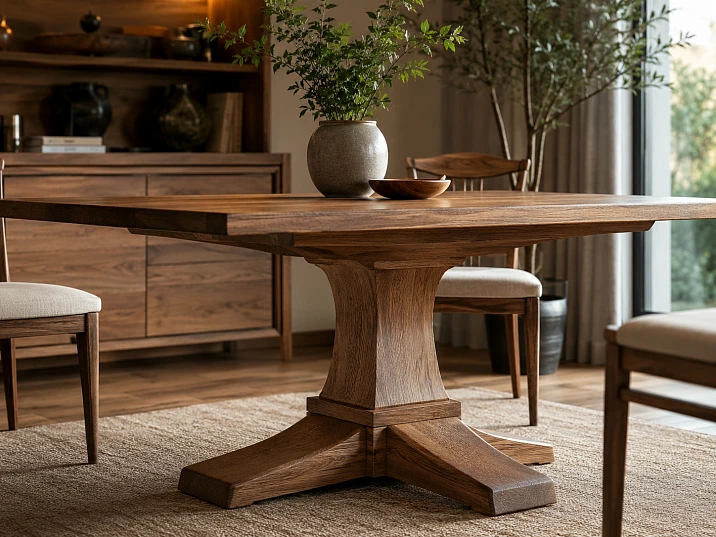
The underframe support seems like a simple detail only until the table starts wobbling, sagging under a heavy tabletop, or looking like it was assembled haphazardly. In reality, it is the lower part that is responsible for stability, safety, service life, and the overall appearance of the table. A beautiful tabletop can be ruined by a weak base, while a well-chosen underframe, on the contrary, turns an ordinary surface into a full-fledged interior piece.
If the task is already clear and you need to proceed with the selection, you can immediately
choose a support and underframe for the table choose a table base and table top. And if you have doubts about what exactly you need—individual supports, furniture legs, or a complete structure—it is worth first understanding the logic of selection. This will help you avoid buying a weak base, not make a mistake with the number of supports, and not assemble a table that looks beautiful only in the picture.
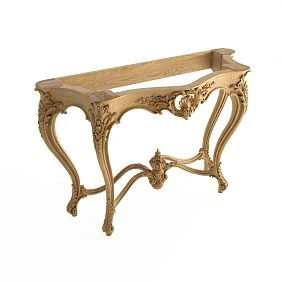


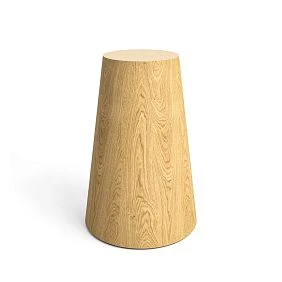
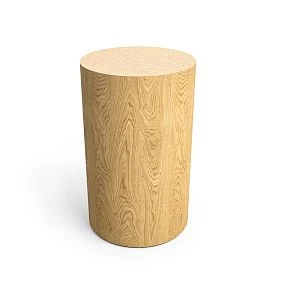
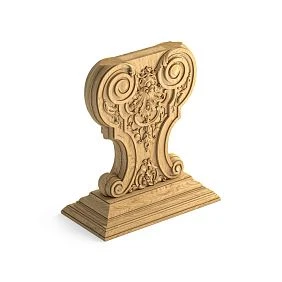
What is a table underframe support
A table underframe support is a load-bearing element that helps hold the tabletop and transfer the load to the floor. In a simple version, it can be a leg. In a more complex design—a central post, side support, shaped wooden part, part of a furniture frame, or an element of a ready-made underframe. The main thing here is not the name, but the function: the support must bear the weight, maintain stability, and not disrupt the geometry of the table.
When people say "table underframe support," they often mean not one specific part, but the entire lower structural part of the table. Therefore, similar formulations appear nearby: support for underframe, table supports underframe, underframe table supports, legs supports underframe for table. All these queries are related to one task: choosing a base on which you can safely place the tabletop.
The mistake often starts with terms. A buyer sees a beautiful furniture leg and thinks it will automatically fit any tabletop. But a decorative leg and a full-fledged support for a tabletop are not always the same thing. A leg can be part of a lightweight table, facade furniture, or a decorative structure, while an underframe must work as a load-bearing system.
This is especially important for a wooden table. A wooden tabletop can be visually warm, dense, and expressive in texture. But the heavier the top part, the higher the demands on the bottom. A weak or too narrow base will lead to wobbling, warping, uneven load on the fasteners, and an unpleasant feeling of unreliability.
A properly chosen support solves several problems at once. It holds the tabletop, sets the table height, affects seating comfort, supports the furniture style, and helps connect the table with the rest of the interior. Therefore, a good base is not just "where to screw the top," but a full-fledged part of the structure.




How a support differs from an underframe
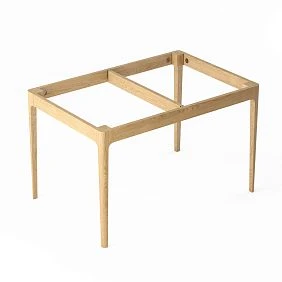
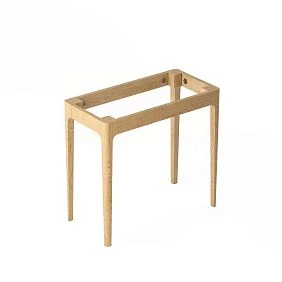
Support and underframe are related but not equal to each other. A support is a separate load-bearing element. An underframe is a broader concept: a ready-made base for a tabletop, which can include several supports, crossbars, aprons, a frame, mounting plates, and decorative details.
To put it simply, a support is responsible for a point or area of support, while an underframe is responsible for the entire structure under the tabletop. Sometimes a buyer only needs individual legs. Sometimes it is better to immediately choose a ready-made the base for a tablebecause it is already assembled as a well-thought-out system.
| Criterion | Support | Underframe |
|---|---|---|
| Role | Separate load-bearing element | Ready-made base for tabletop |
| Composition | Leg, stand, side or center support | Support, crossbar, and fastening system |
| Main risk | Incorrect quantity or loose fit | Inappropriate size for the tabletop |
| When convenient | For lightweight and custom solutions | For a stable table with clear geometry |
| What to check | Height, shape, fastening, load capacity | Size, base, style, compatibility |
This difference is especially important when purchasing. If a person is looking for an underframe or table supports, they may expect a ready-made base, but actually be looking at individual parts. And vice versa: a buyer is looking for legs, although their tabletop needs not a pair of decorative elements, but a rigid underframe.
For a dining, kitchen, or work table, a ready-made base is often the better choice. It is easier to select because the entire structure is perceived as a single foundation. For a small decorative table, a side table, or a lightweight tabletop, individual supports may work if they are properly calculated and installed.
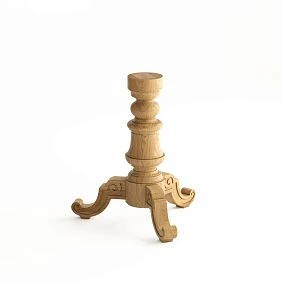
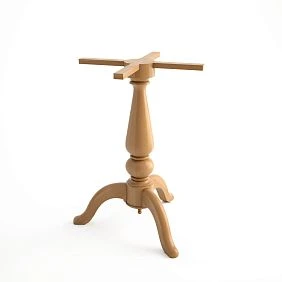
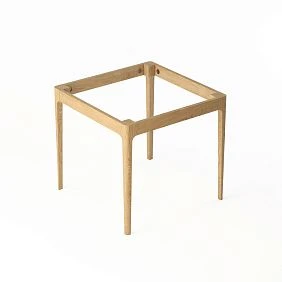
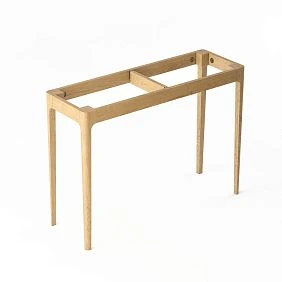
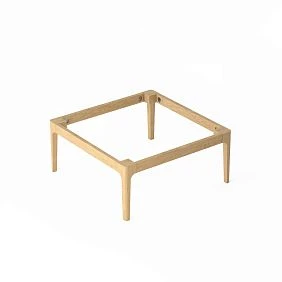
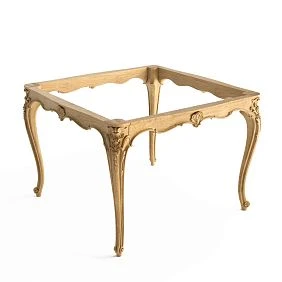
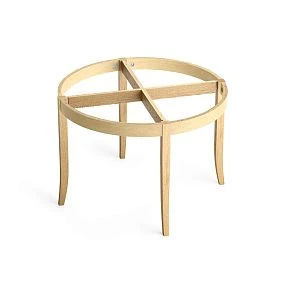
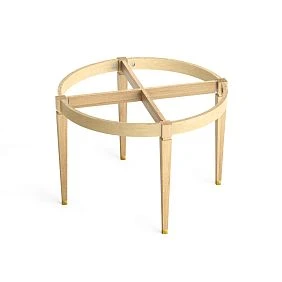
Our factory also produces:
Why stability starts not with appearance
Appearance matters, especially if the table is in a living room, dining room, office, restaurant, or other prominent area. But stability cannot be subordinated solely to design. A support that is too thin under a massive tabletop may look elegant in a photo, but in real use, it will quickly show its weaknesses.
A table experiences not only vertical load. People lean on it with their hands, move dishes, place heavy objects, and sometimes accidentally bump into it from the side. If the base is narrow, tall, or poorly connected to the top, lateral wobbling occurs. This is especially noticeable on long rectangular tabletops and round tables with a large overhang.
Stability depends on the weight of the tabletop, size, shape, table height, attachment area, width of the lower base, and usage scenario. For a small interior table, the requirements are one thing. For a kitchen or dining table, they are different. For a commercial space where furniture is used frequently and intensively, the requirements are even higher.
A good design does not argue with the tabletop. It supports its scale, holds the weight, and does not create the feeling that the top part lives separately from the base. That is why, when choosing, you should look not only at the shape of the leg or decorative silhouette but also at how the support works as part of the entire table.
Get Consultation
Key parameters to check before choosing
Before buying table supports, underframes, or furniture legs, you need to gather initial data. Without it, the choice becomes guesswork. Even a beautiful part may not fit in terms of height, fit, scale, or load.
| Parameter | Why it's important | What to Check |
|---|---|---|
| Tabletop size | The support base depends on it | Length, width, diameter, edge overhang |
| Tabletop weight | The heavier the top, the stiffer the base needs to be | Material, thickness, approximate weight |
| Table height | Affects seating comfort | Final height including the tabletop |
| Base shape | Determines stability | Base width, symmetry, support points |
| Mounting | Transfers load to the base | Platform, attachment method, compatibility |
| Purpose | Different tables work differently | Kitchen, dining room, living room, cafe, study |
This table shows why you cannot choose a base separately from the tabletop. The base must match the top in size, weight, and usage. If the tabletop is already purchased, first evaluate its parameters. If the table is built from scratch, it is better to select the tabletop and base together.
For the buyer, a practical route is: first determine the type of table, then understand the size and weight of the tabletop, after that choose individual legs or a ready-made structure. In the section furniture frames you can look not only at the appearance but also at the very principle of building the base for furniture.
What is better: underframe or furniture legs
The question 'what is better — underframe or furniture legs' has no single answer. It all depends on the task. Individual legs are good where the structure is simple, the load is clear, and the tabletop does not require a complex support system. A ready-made underframe is more convenient when stability, integrity, and less risk in selection are needed.
Furniture legs are often chosen for their decorative appeal. They can support the style of a chest of drawers, console, cabinet, small table, or light furniture. But when it comes to a large table, especially a dining or kitchen table, decorativeness is not enough. The base must withstand weight, not wobble, and not interfere with seating.
The underframe solves a broader task. It is perceived as a ready-made lower part of the table. Not only the supports are important, but also the mutual connection of elements. Such a structure distributes the load better, helps maintain geometry, and makes the table visually complete.
| Situation | Better to choose | Why |
|---|---|---|
| Small decorative table | Individual supports or legs | Lower load, simpler design |
| Dining table | Ready-made table base | Stability and comfortable seating needed |
| Heavy wooden tabletop | Rigid table base | Base, fastening, and weight distribution are important |
| Replacing old legs | Furniture supports | Can update the design without full replacement |
| Custom project | Depends on the calculation | Need size, weight, height, and style |
If a buyer chooses separate legs or a table base for a table, they should honestly answer the question: are they assembling a lightweight piece of furniture or a full-fledged table for daily use? In the first case, individual elements may be sufficient. In the second, it is safer to look towards a ready-made table base.
For a wooden tabletop, visual balance is also important. Thin random legs can make the table look 'top-heavy, bottom-weak'. A table base helps maintain proportion: the table looks assembled, not temporarily placed on random parts.
When separate supports are needed
Separate supports are not always appropriate, but in some tasks they are indeed convenient. They are chosen when you need to assemble a custom structure, replace old legs, design a small table, create a non-standard base, or maintain a specific decorative logic.
For example, a small side surface in the living room does not require the same base as a large dining table. A compact table can rest on a central post, a pair of side supports, or decorative furniture parts. In this case, it is important not to overload the structure and maintain ease of use.
Separate supports also help when the tabletop is non-standard. If the shape is complex, the size is unusual, or the project is made for a specific space, a ready-made table base may not match the task. Then the supports are selected by height, scale, attachment method, and style.
But the freedom of selection requires care. The more individuality, the higher the responsibility for the calculation. You need to understand how many supports will be needed, how they will be positioned, what the tabletop overhang will be, and whether wobbling will occur.
Individual decorative supports are especially noticeable in classic furniture. They can support the carved character of the table, connect it with other furniture, emphasize the mass, and make the piece more expressive. But even the most beautiful support must remain a structural part, not just a decoration.
If the task involves not a large table but a furniture part, you can refer to the section Solid Wood Itemswhere it makes sense to look for wooden elements for furniture and interiors. However, for a full table, you still need to check the load-bearing capacity and compatibility with the chosen tabletop.
When it's better to choose a ready-made underframe
A ready-made underframe should be considered first if the tabletop is heavy, the table will be used daily, and the buyer does not want to calculate each support point themselves. This is especially relevant for dining tables, kitchen areas, large work surfaces, and solid wood interior tables.
The main advantage of a ready-made underframe is its integrity. The buyer chooses not a set of individual legs, but a base that is already perceived as the lower part of the table. This reduces the risk of errors: it's easier to assess the height, base width, style, and compatibility with the tabletop.
A ready-made base also helps maintain a neat appearance. If separately purchased legs do not match the scale of the top, the table may look disjointed. An underframe, on the other hand, sets a clear architecture: the tabletop, base, and overall silhouette work together.
An underframe is especially important when the tabletop has a large overhang. The further the tabletop edge extends beyond the base, the higher the load on the fastening and the greater the risk of tipping or wobbling. A wide and properly positioned base reduces this problem.
Another important point is seating comfort. The base should support the table but not interfere with legs. Sometimes a buyer chooses overly massive side elements and then realizes that sitting at the table is uncomfortable. Therefore, a ready-made underframe should be evaluated not only from below but also from the perspective of the person who will use the table daily.
If you need a commercial and straightforward purchase route, it's better to immediately look for buy table support underframe as a ready-made category for selecting a base. In the product cards and section, the customer can check the current parameters before ordering.
How many supports are needed for a table
The number of supports depends not on the desire to "make it look nice," but on the shape, weight, and size of the tabletop. For a small table, a central support or compact base is sometimes sufficient. For a rectangular dining table, four support points, side supports, or a ready-made underframe are usually needed. For a round table, symmetry and center of gravity are especially important.
The most common mistake is thinking that four legs always solve the problem. This is not the case. If the tabletop is long and heavy, four weak supports without sufficient bracing may not provide the necessary rigidity. Conversely, a properly designed central base can be stable for a round table if the base is wide enough and matches the diameter of the tabletop.
For a rectangular tabletop, the corners and span are important. If the distance between supports is too large, the top may sag or feel weak. If the supports are placed too close to the center, the edges will have a large overhang. If they are placed too far out, sitting at the table may be uncomfortable.
For a round tabletop, balance is critical. The central support must be sufficiently massive and stable, and the lower base must be wide enough. Otherwise, the table may wobble when weight is applied to the edge. The larger the diameter, the more carefully you need to consider the ratio of the top part to the base.
A practical principle is this: the heavier and wider the tabletop, the larger the support area should be and the more rigid the structure should be. If the calculation is in doubt, it is better to choose a solid base rather than assembling a table from random elements.
How to tell if the underframe will support the tabletop
To understand whether the underframe will support the tabletop, you need to look at the entire system. You cannot evaluate just one part. Even a strong support can perform poorly if the fastening is weak, the base is narrow, the tabletop is too heavy, or the edge overhang is too large.
The first parameter is the tabletop material. A solid wood tabletop is usually perceived as heavier and more substantial than lightweight decorative options. The exact weight depends on the size, thickness, and material, so before ordering, you need to check the data in the product card or clarify it with a STAVROS manager.
The second parameter is dimensions. The length, width, or diameter of the tabletop affects load distribution. The larger the surface, the more important the support points. A large tabletop on a small base may look impressive in a photo, but in everyday use it will be less comfortable and stable.
The third parameter is overhang. This is the distance from the edge of the base to the edge of the tabletop. A small overhang is needed for comfortable seating and visual balance. Too large an overhang increases the load on the fastening and can cause wobbling.
The fourth parameter is height. The taller the structure, the more noticeable the lateral wobble. Bar and high tables require a particularly careful approach: the support for a bar-type underframe must match the height, weight, and usage scenario. For such solutions, a wide base and a rigid connection to the top are especially important.
The fifth parameter is the attachment area. The tabletop should not just rest on top but be securely connected to the base. If the fastening zone is small, the load is distributed less effectively. This can be critical for heavy tabletops and tables used daily.
And finally, the usage scenario must be considered. A table in the living room, where a vase and books are placed, lives in one mode. A kitchen table, where people eat every day, move dishes, lean on their hands, and sometimes use it as a work surface, receives much more load. For commercial spaces, the requirements are even higher.
If the tabletop has already been chosen, it is useful to additionally study the material about Countertop substructure. It helps to assess the connection between the top and the base before purchase.
How to choose a support for a wooden table
A wooden table requires consistency. The tabletop, base, texture, color of the future finish, and shape of the supports must work together. If the top is massive and expressive, the base should not look weak. If the table is small and light, an excessively heavy underframe can visually overwhelm the proportions.
The selection begins with scale. For a massive tabletop, it is better to choose a base with sufficient visual and structural strength. This does not mean that the supports must be rough or heavy. But they should look convincing and hold the shape of the table. A thin random leg under a thick wooden slab almost always creates dissonance.
The next step is style. For a classic interior, more expressive wooden shapes, decorative elements, soft lines, and carved character are suitable. For a calm modern space, a more restrained base is often chosen. For the kitchen and dining room, practicality is important; for the living room, expressiveness; for the study, solidity.
It is also important to consider the finish. If the table will be painted, varnished, stained, or matched to existing furniture, you need to check the material and possible finishing options in advance. Do not buy supports separately from the overall color scheme. Even the right shape can look out of place if the tone, texture, or finish does not match.
Another important point is height. The final height of the table is the sum of the base height and the tabletop thickness. If you do not account for the thickness of the top part, you may end up with a table that is uncomfortable to sit at. This is especially noticeable in dining and work areas.
For a premium wooden table, not only strength is important, but also the neatness of the entire composition. The base should support the tabletop, not conflict with it, and not look like a temporary solution. Therefore, it is useful for the buyer to look in advance wooden table base and compare which shapes best suit their task.
Selection for different customer scenarios
One buyer is assembling a new table from scratch. Another wants to replace weak legs. A third is selecting a base for an already purchased tabletop. A fourth is designing a commercial interior where the table must not only look beautiful but also withstand daily use. In each case, the logic of choice will be slightly different.
If the tabletop already exists
When the tabletop is already purchased, the entire task is governed by its parameters. You need to measure the length, width, thickness, estimate the weight, and understand where the attachment points will be. After that, you can choose the base. You cannot first buy beautiful supports and then try to adapt them to an unsuitable tabletop.
Special attention should be paid to the edge overhang. If the tabletop is large and the base is narrow, the table may look impressive but behave unstably. For a heavy wooden surface, it is better to choose a base with a margin of stability.
If the table is being assembled from scratch
When a customer is just planning a table, there is more freedom. You can immediately select a tabletop and base as a matching set. This is the best scenario because it's easier to coordinate height, style, proportions, and load.
In this case, you should first decide where the table will be placed: kitchen, dining room, living room, office, cafe, showroom. Then determine the approximate size, and only then choose supports or underframe. This order helps avoid random purchases.
If you need to update an old table
Sometimes the tabletop is fine, but the base is outdated, wobbly, or doesn't match the style. In this case, you can replace the lower part. But before buying, you need to check if the new support can hold the old tabletop, if the mounting matches, and if the top itself is not damaged.
If the old table was wobbly, you can't just buy similar legs. You need to understand the cause: weak supports, poor mounting, too much overhang, insufficient rigidity, or a worn-out tabletop. Otherwise, the new purchase will repeat the old problem.
If a table is needed for a cafe, restaurant, or salon
In a commercial space, tables are used more often and more roughly than at home. They are moved, different people sit at them, and items are constantly placed on them. Stability, durability, and seating comfort are especially important here.
For such a scenario, it's better to avoid overly risky solutions: a narrow base under a wide tabletop, weak decorative legs, or poorly thought-out mounting. The base should be designed not for occasional use, but for daily load.
If a small interior table is needed
For a side, coffee, or decorative table, the requirements are more relaxed, but proportions are still important. A too massive support can make a small item feel heavy. A too light one can give a feeling of instability.
If we're talking about a small format, it's useful to study a separate article about table baseso as not to transfer the rules of a large dining table to compact furniture.
Choosing by tabletop shape
The shape of the tabletop greatly influences the choice of support. Rectangular, round, oval, and square surfaces distribute load differently and are perceived differently in the interior.
A rectangular tabletop requires control over its length. If it is elongated, it is important not to leave too large a span without support. Supports should be positioned so that the table does not sag or wobble under load on the edge. For large rectangular tables, a ready-made underframe with clear geometry is often better suited.
A round tabletop requires symmetry. Here, the center of gravity is especially important. A central support can be convenient because it does not interfere with seating, but its base must match the diameter of the table. If the base is too narrow, the table will react uncertainly to lateral load.
A square tabletop is usually simpler to calculate, but maintaining balance is also important here. Supports should not be too close to the center, otherwise the corners become vulnerable. If the table is small, you can choose a compact base. If it is large, it is better to look at a more rigid structure.
An oval tabletop combines features of round and rectangular ones. It has an elongated axis, but softer edges. The base must support the length and not create a feeling that the edge is hanging without support. For such tables, it is especially important to assess the overhang in advance.
If the buyer is unsure, you can follow the principle: the more complex the shape and the larger the size, the less you should experiment with random legs. A ready-made underframe provides more predictability.
Choosing by height and purpose
The height of the table directly affects comfort. Incorrect support can make the table too high, too low, or uncomfortable to sit at. An error of even a few centimeters is sometimes noticeable, especially if the furniture is used daily.
For a dining table, it is important to consider the height of the chairs and the thickness of the tabletop. The base may look suitable on its own, but after installing a thick wooden tabletop, the final height becomes uncomfortable. Therefore, you should calculate not the height of the support itself, but the height of the finished table.
For a coffee table, the logic is different. It is usually lower, works next to a sofa, and does not require seating like a dining table. Here, proportions relative to the upholstered furniture are important. A base that is too high will compromise comfort, while one that is too low will make the table less practical.
For a bar table, height becomes a key parameter. A tall structure reacts more strongly to lateral load. Therefore, the support for a bar table must not only be the right size but also stable. A narrow base with a great height is a risky option.
For a desk, seating, legroom, and the absence of unnecessary obstacles under the tabletop are important. A too-massive underframe can get in the way, while a too-weak one can cause vibration and wobbling. Here, you need to find a balance between rigidity and comfort.
The purpose helps to eliminate unsuitable options. A decorative furniture support may be beautiful but not designed for an intensive-use dining table. A ready-made underframe may be reliable but too large for a small side table. Therefore, the choice always starts with the scenario.
Material and finish: why they are important for the support
The material of the base affects not only strength but also the visual character of the table. Wood is perceived as warm, natural, and interior-friendly. It pairs well with classic and premium solutions, supports the texture of the tabletop, and helps assemble the furniture as a cohesive piece rather than a set of random parts.
If a buyer chooses wooden elements, they need to look at several things: species, density, texture, finishing options, compatibility with the future tabletop and other decor. The exact options for material, finish, and dimensions should be checked in the product card or clarified with a STAVROS manager, because parameters may depend on the specific item.
Finish is especially important if the table needs to fit into an existing interior. The base can be painted, tinted, or matched to the tabletop, but this needs to be thought out in advance. You cannot first buy the supports, then the tabletop, and then try to 'match' their color without understanding the material.
A wooden base works well where not only a utilitarian table is important, but also a furniture image. In the dining room, it makes the table warmer. In the study, it adds solidity. In the living room, it helps connect the table with carved decor, frames, moldings, and other wooden elements.
But the material does not cancel structural calculation. Wood can look substantial, but stability still depends on shape, height, base, and fastening. Therefore, the material is chosen together with geometry, not instead of it.
How the base influences the style of the table
The base is almost as noticeable as the tabletop. Especially if the table stands in an open area: in the dining room, living room, hall, study, restaurant, or showroom. The lower part sets the character of the furniture. The same top on different bases can look classic, modern, massive, light, festive, or everyday.
In a classic interior, the base often becomes a decorative part. Expressive forms, wooden plasticity, carved character, and noble proportions are appropriate here. But classic does not tolerate randomness. If the supports are too thin, the table looks weak. If too massive, it looks heavy and uncomfortable.
In a modern interior, the base can be calmer. Here, clean form, neat geometry, and the absence of unnecessary visual fragmentation are important. But even a minimalist support must be strong enough for the chosen tabletop.
In a premium interior, the quality of selection is especially noticeable. An expensive tabletop on random legs looks unconvincing. A solid underframe helps create the feeling of a finished product. The table is perceived as furniture created for a purpose, not assembled from leftovers.
In commercial spaces, the style of the base also affects the client's impression. A table in a salon, cafe, or meeting room should look confident. A wobbly or visually weak structure immediately reduces the perception of interior quality.
Therefore, choosing a support is not only a technical issue. It is a way to set the character of the table. But a good result appears only where style is supported by construction.
What to buy together with the support or underframe
Buying a support rarely exists on its own. To make a table complete, you need to think about adjacent elements: the tabletop, furniture frame, solid wood products, decorative details, suitable selection articles, and related categories. It's not necessary to buy everything at once, but it's important to understand which elements are related to the task.
If the main goal is to assemble a stable table, the first thing to look at is table base supports and match it with the size of the tabletop. If the task is broader and the buyer is assembling a furniture structure, it's worth looking at furniture frames. If the material and wooden style are important, it's useful to go to the section Solid Wood Items.
For those choosing a base specifically for the top part of the table, there is a separate article about Countertop substructure. It helps evaluate the connection between the tabletop and the base. And if someone is confused by the terms, it's useful to compare table frame or underframe, to avoid buying the wrong type of base.
| What to add to the purchase | Why this is needed | When it is especially useful |
|---|---|---|
| Underframe | To get a complete base for the tabletop | For a dining, kitchen, and work table |
| Furniture frame | To assemble a structure wider than one support | For custom furniture and complex projects |
| Solid wood products | To maintain a unified wooden style | For classic and interior solutions |
| Article about frame and underframe | To avoid confusing the base type | Before the first purchase |
| Article about underframe for tabletop | To check compatibility with the top | If the tabletop is already selected |
This block helps avoid a common mistake: buying one beautiful part and only then thinking about how it will work as part of a table. It's much more reliable to immediately assemble a route: tabletop, base, mounting, height, style, finish, and adjacent elements.
How not to confuse a support, a leg, a frame, and an underframe
Confusion in names often leads to incorrect purchases. A person looks for a support, sees a leg, buys it, and then realizes that their tabletop needs a whole system. Or vice versa: a buyer looks at a ready-made underframe, although they need to replace one decorative furniture support.
A leg is a specific type of support. It can be straight, shaped, decorative, wooden, simple, or expressive. But a leg by itself does not always form a finished structure. It may require the correct quantity, mounting, crossbars, or additional rigidity.
A support is a broader concept. It is any element that bears the load. A support can be a leg, a post, a side part, a central structure, or part of an underframe. Therefore, the phrase "support for an underframe" often means a load-bearing element within a larger base.
A frame is a structure that
The simplest way to avoid mistakes is to describe the task not by name, but by result. Need to install a heavy tabletop? You need a stable base. Need to replace a broken leg? You need a suitable furniture support. Need to assemble a small table? Perhaps a compact underframe is enough. Need to understand the terms? First, it's worth reading the material table frame or underframe, and only then proceed to purchase.
Practical selection for specific situations
Need to install a heavy wooden tabletop
The main parameter is not the beauty of the support, but the stability of the entire system. You need to look at the width of the base, the mounting area, the location of support points, and the overhang of the edges. The heavier the tabletop, the more carefully you need to treat thin individual legs.
In such a situation, it's better to consider a ready-made underframe. It gives more confidence because it is perceived as a solid structure. Before ordering, you need to check the dimensions and clarify compatibility with a specific tabletop.
You need to assemble a small table
For a small table, you can choose a lighter solution. But it's important to consider the height and purpose. A coffee table next to the sofa should be comfortable in height. A side table should be stable because it is often bumped during movement.
If we are talking about compact furniture, it's useful to check out the article table base. It helps not to transfer the requirements of a large table to a small format.
You need to update old furniture
If the old tabletop is good, but the lower part is unsatisfactory, you can replace the base. But first, you need to check the condition of the tabletop, the attachment points, and the real cause of wobbling. If the problem was not just in the legs, a simple replacement may not help.
For an update, it's important to choose supports that match in height and style. The new lower part should look native, not random. This is especially noticeable with wooden furniture: different scales and different textures can conflict.
You need to design an interior table in a classic style
In a classic interior, the base should be expressive but not overloaded. Wooden forms that support the tabletop and do not conflict with it work well. It's important to maintain proportions: a large tabletop requires a worthy support, a small table requires a more delicate solution.
Here it is especially important to look not only at strength, but also at decorative consistency. The base should match other wooden elements, frames, moldings, furniture decor, and the overall style of the room.
You need to choose a base for a commercial space
For a cafe, restaurant, salon, or showroom, you need a structure with a margin of stability. In such places, furniture is used intensively, so a weak base will quickly become a problem. It's better not to choose overly risky shapes just for the picture.
It's more practical to look at ready-made bases, check the height, fit, leg comfort, and suitability for regular use. The table should be not only beautiful but also easy to use.
Mistakes when choosing a table base
Choosing only by photo
A photo shows the shape but doesn't explain the load. The base may look beautiful but not fit in height, scale, or attachment. Before buying, you need to check the actual parameters and understand which tabletop it will work with.
Not considering the weight of the tabletop
A heavy tabletop requires a more substantial base. If you choose too weak supports, the table may wobble, rock, or put stress on the fasteners. It is especially dangerous to ignore the weight when working with a massive wooden top.
Using too few supports
Sometimes a buyer wants to make the base visually lighter and reduces the number of support points. This can ruin stability. For a large table, not only the number but also the placement of supports is important.
Making the overhang too large
A tabletop overhang is needed for seating comfort, but it must be reasonable. If the edge extends too far beyond the base, the table becomes less stable. This is especially important for round and long rectangular tabletops.
Not checking the final height
The base may be suitable on its own, but together with the tabletop it can result in the wrong height. A thick wooden top adds centimeters that affect seating comfort.
Confusing a decorative leg with a load-bearing base
A beautiful leg does not always replace an underframe. If the tabletop is heavy or the table is large, it is better to look at the whole structure. Decoration should work together with strength, not instead of it.
Not considering the installation location
A table for a living room, kitchen, study, or cafe exists in different conditions. A base that is suitable for a decorative area may be weak for a daily dining table. The purpose always influences the choice.
Buying parts without overall styling
Even sturdy supports can look out of place if they do not match the style of the top. A wooden table is especially sensitive to scale, texture, and finish. It is better to plan the entire look in advance.
Do not check parameters in the card
Before ordering, you need to check the current dimensions, material, finish, configuration, and features of the product. If there is not enough information, it is worth clarifying it with a STAVROS manager. This is better than buying blindly.
Who a ready-made underframe is suitable for, and who should choose a different option
A ready-made underframe is suitable for those who want to assemble a stable table without complex independent calculations. This is a good choice for a dining area, kitchen, dining room, office, meeting room, cafe, or living room where the table is used regularly and should look complete.
This solution is especially appropriate if the tabletop is heavy, large, or already has an expressive character. The underframe helps to support it structurally and visually. The table does not look randomly assembled but is perceived as a solid piece of furniture.
A ready-made underframe is also suitable for buyers who do not want to separately calculate the number of legs, look for crossbars, think about rigidity, and risk compatibility. Section table leg support helps to choose the base in a more understandable logic: not a separate part for the sake of a part, but the lower part of the future table.
It is better to choose separate supports if the project is non-standard, the table is small, replacement of existing legs is required, or a decorative furniture part is needed. But in this case, you will have to more carefully calculate the load, height, and placement.
A ready-made underframe may be unnecessary if only one small part is needed for repair or decoration. It may also not be suitable if the project has a non-standard geometry and the ready-made base does not match the shape of the tabletop. In that case, it is better to consider individual selection and check compatibility before ordering.
How to buy a support and underframe on STAVROS
It's better to start a purchase not with the most beautiful photo, but with the task. You need to understand what kind of table is being assembled: dining, kitchen, coffee, side, work, bar, or interior. After that, determine the size and weight of the tabletop, desired height, style, and installation location.
Next, you can open the section where it's convenient choose a table base and table top. In the cards, you need to check the current parameters: dimensions, material, design features, finish options, compatibility with the future tabletop, and order conditions.
If the task is broader and the buyer is assembling a furniture base, it's worth additionally looking at furniture frames. This section helps evaluate not only individual supports but also the structural part of the furniture.
If a wooden style is important, you can go to Solid Wood Items and see which elements will help create a unified look. This is especially useful for interiors where the table should match other wooden details.
Before ordering, it's better to prepare the tabletop dimensions, a photo or description of the future table, desired height, and information about the installation location. If there are doubts about compatibility, it's worth clarifying the parameters with a STAVROS manager. This approach reduces the risk of error and helps buy not just a beautiful detail, but a suitable base.
FAQ: frequent questions about supports and under-tables
What is an under-table support?
The table base support is a load-bearing element that helps hold the tabletop and distribute the load. It can be a separate leg, a central post, a side support, or part of a finished table base.
How is a support different from a table base?
A support is a separate part that bears the load. A table base is a finished foundation for the tabletop, which may include supports, crossbars, a frame, and fastening elements.
What is better to choose: a table base or furniture legs?
For a light, small table, furniture legs may be suitable. For a heavy tabletop, dining table, or daily use, it is often better to choose a ready-made table base.
How many supports are needed for a table?
The number depends on the shape, size, and weight of the tabletop. For a small table, a compact base may suffice, while a large rectangular or heavy table requires a system of several supports or a solid table base.
How can you tell if the table base will support the tabletop?
You need to assess the weight of the tabletop, its size, edge overhang, base height, base width, attachment area, and usage scenario. The heavier the tabletop, the more important the rigidity of the structure.
Can a heavy wooden tabletop be placed on regular legs?
Sometimes it's possible, but only if the legs match in terms of load, quantity, fastening, and placement. For a heavy tabletop, it's safer to consider a ready-made underframe.
What support is needed for a round table?
For a round table, symmetry and center of gravity are important. A central support can be convenient, but the base must be wide enough so the table doesn't wobble when weight is applied to the edge.
What to check before buying a support?
Before buying, you need to check the height, material, size, fastening method, compatibility with the tabletop, support area, table purpose, and current data in the product card.
Can one support be used for a large table?
It depends on the design. For a large table, a single central support must have a sufficiently wide and stable base. If in doubt, it's better to choose a solid underframe.
How is a furniture leg different from a support?
A leg is one type of support. A support can be broader in meaning: central, side, decorative, reinforced, or part of an underframe.
What should I buy together with the base?
Usually, along with the underframe, the tabletop, fastening, furniture frame, wooden elements, and finish are considered. If the table is being built from scratch, it's better to look at the entire set at once rather than buying parts separately.
Where to choose a support and underframe for a table?
You can choose the base in the section the base for a table. Before ordering, you should check the dimensions, material, height, compatibility with the tabletop, and purchase conditions.
Conclusion
The table underframe support is not a secondary detail, but the foundation on which the stability, convenience, and appearance of the table depend. You cannot choose it only by shape or decorativeness. You need to consider the size and weight of the tabletop, height, edge overhang, attachment area, material, style, and installation location.
If you need a light decorative table, individual furniture supports may be suitable. If you are assembling a dining, kitchen, work, or interior table with a heavy tabletop, it is safer to look towards a ready-made underframe. It helps to create a solid structure, reduce the risk of errors, and make the table visually complete.
At STAVROS you can choose a table base and table top, check the parameters in the product cards and, if necessary, clarify compatibility with a manager. This approach helps to move from idea to purchase calmly: choose not a random leg, but a stable base that truly fits the future table.