Article Contents:
- Why furniture often looks cheap — and what legs have to do with it
- Legs as a style-defining detail
- What wooden legs bring: air, height, and completely different furniture
- When legs are most needed
- Legs for a dresser: the simplest upgrade without spending a ruble on new furniture
- How to choose legs for a dresser: shape, height, proportions
- Legs for a nightstand: how to make small furniture visually lighter
- Bedside table: details that make the bedroom look more expensive
- TV cabinet on wooden legs: the visual effect of low furniture
- Sofa legs: when replacing supports changes the entire silhouette of the room
- How to choose wooden legs for a sofa
- Unified look: legs of the sofa, armchairs, and coffee table
- Cabinet legs: when the cabinet shouldn't "lie" on the floor
- Wardrobe in a children's or teenager's room
- Carved, turned, round, cabriole: how the leg shape defines the style of the entire furniture
- Turned legs: timeless classics
- Carved legs: a decorative accent on the support
- Round legs: a calm and modern option
- Cabriole legs: elegance and history in one detail
- Shaped legs: when support is an art object
- Leg height: how 50, 100, 150, and 200 mm give completely different results
- Unpainted or coated: how to make the right choice
- Uncoated legs: freedom of finish
- Coated legs: ready-made solution
- Bed legs: why this is a special case
- Table legs: individual items and DIY projects
- Stool and chair legs
- Mistakes when choosing furniture legs: a brief debriefing
- How to assemble an upgrade: legs, handles, and decor as a system
- Where to buy wooden legs for furniture makeover
- FAQ: answers to the most popular questions about furniture legs
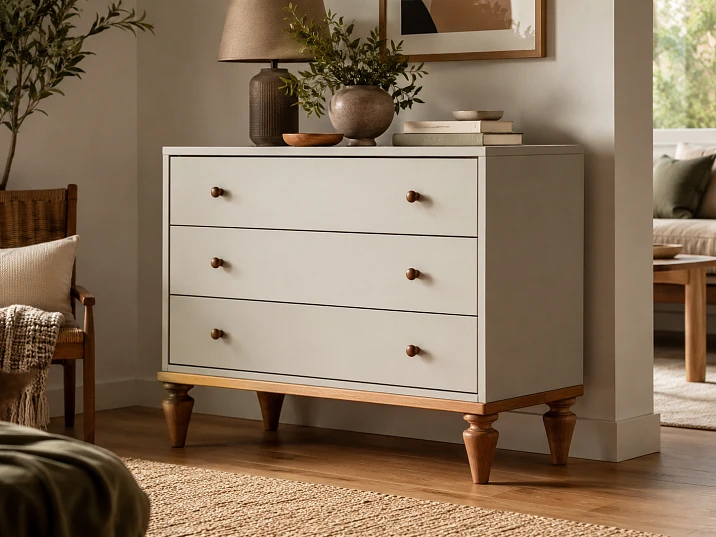
Stop. Before you throw away that dresser — hold on. Maybe it's fine. Maybe the problem isn't the body, the color, or the fronts. Maybe it's all about four small points of contact with the floor — the legs that no one notices until they make the furniture look cheap, heavy, and old.
wooden furniture legs — one of the most underestimated tools in the arsenal of anyone who wants to improve an interior without major renovations or big investments. This article is about why legs matter more than it seems, what shapes and heights are available, how to choose the right furniture legs for a dresser, cabinet, sofa, wardrobe, or table — and how a simple replacement of supports turns an ordinary item into something you want to keep forever.
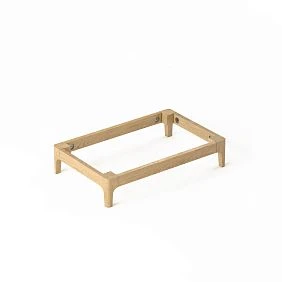
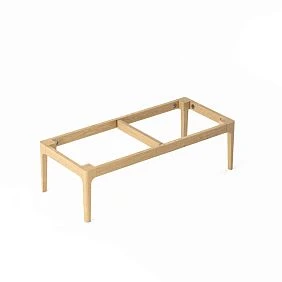
Why furniture often looks cheap — and what legs have to do with it
Have you noticed that some pieces of furniture in a store look expensive, while others seem temporary? The difference isn't always in the body material or the facade color. Very often, it's in the support. Literally.
Furniture on short, thick, plastic, or nondescript legs looks heavy. It seems stuck to the floor, has no air under the body, no space. The eye stumbles over it like a stone. Now imagine the same body, but raised on elegant turned wooden legs 150 mm high. The furniture immediately becomes different: light, spacious, 'furniture-like' in the best sense of the word.
This is not magic or a marketing trick — it's basic visual mechanics. The human eye perceives an object in relation to space. When there is air under the body, the object seems lighter, more noble, more expensive. When there isn't, the furniture presses on both the floor and the viewer.
That's why designer furniture almost always stands on legs. This is not a coincidence or a fashion statement. It's a deliberate decision: to lift the body, give it lightness, connect it with the space. And this decision is available to everyone — if you know which Furniture legs choose and how to use them correctly.




Legs as a detail that defines the style
Furniture has three levels of perception. The first is the general silhouette: shape, proportions, size. The second is the material and color: facades, coating, texture. The third is the details: handles, hinges, legs, fittings. It is the third level that often determines whether furniture is perceived as an object with character or as a nameless box.
Furniture wooden legs — a third-level detail that affects the first. It is important to understand: a properly chosen support changes the silhouette of the entire object. Not only because it adds height, but also because it sets the style — a turned leg speaks of one thing, a carved leg of another, a simple round leg of a third.
Our factory also produces:
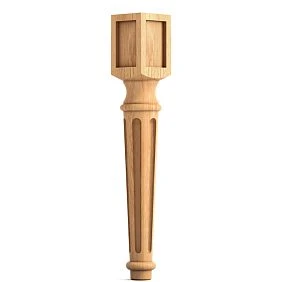
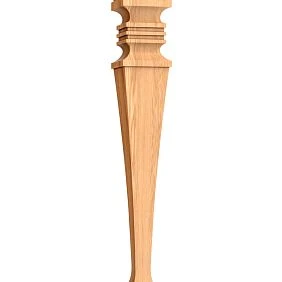
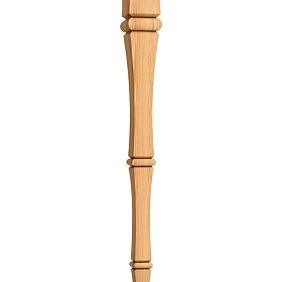
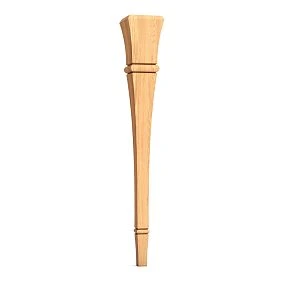
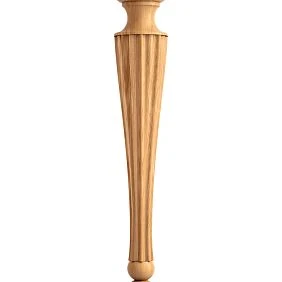
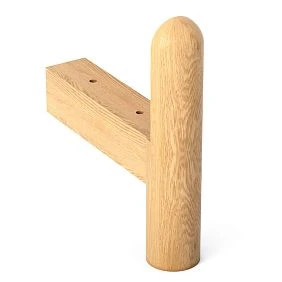
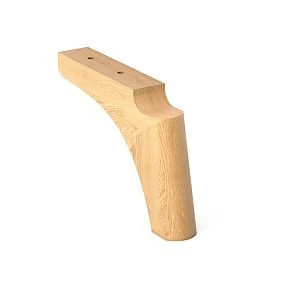
What wooden legs provide: air, height, and completely different furniture
Let's be specific. What exactly happens to furniture when you put it on good wooden legs?
Air appears under the body. This changes everything. The space under the furniture makes the object visually lighter, allows the eye to "breathe", simplifies cleaning, and visually expands the room. Low furniture lying on the floor "weighs down" — standing on legs "floats".
The proportions change. A chest of drawers 700 mm high on 150 mm legs is perceived as a different object — more slender, elongated, elegant. Not because it became different, but because its relationship to the space changed.
Warmth and naturalness are added. Wood is a living material. Wooden furniture legs bring warmth and naturalness to the interior even when everything else is painted MDF or melamine. This is the very technique designers use when they want to "revive" faceless cabinet furniture.
There is a feeling of a joinery product. An object on turned or carved wooden legs is subconsciously perceived as handmade, individual, with attention to detail. This feeling is difficult to explain rationally, but it works flawlessly.
Furniture begins to match other items. When a chest of drawers on wooden legs, a sofa on wooden legs, and a coffee table on wooden legs create a unified look. Wood becomes the connecting thread that unites different pieces into an interior system. This is the very technique for which designers select Furniture Handles и Carved furniture decor in one material and style.
Get Consultation
When legs are most needed
The answer is simple: when furniture looks heavy, stuck to the floor, faceless, or outdated — while its body is quite good. This is exactly the situation where replacing legs gives maximum effect with minimal cost.
Typical scenarios:
-
an old chest of drawers with a good body but short wooden or plastic legs;
-
a small sofa or corner sofa that "lies" on the floor without visible support;
-
a TV stand that looks like a flat box;
-
a bedside table you want to refresh without replacing;
-
a sideboard or display cabinet that needs to add some "furniture character";
-
mass-market furniture that needs to be elevated to designer level.
Dresser legs: the simplest upgrade without spending a single ruble on new furniture
A dresser is the perfect object for an upgrade with new legs. Why? Because its body is usually stable, has a standard bottom, and is easy to modify. At the same time, the visual effect of replacing the legs on a dresser is one of the most noticeable among all furniture items.
Imagine: an ordinary IKEA or locally produced dresser with a white or light gray body. It stands on short plastic supports. It looks neutral, a bit boring, not very expensive. Now we remove the old legs and install Legs for a dresser made of natural wood, 120–150 mm high, with a soft turned shape. At the same time, we change the handles to wooden or brass ones. Add a bit of style — and we have a completely different piece. The same body, the same drawers — but the furniture now looks like an author's piece.
That's the power of details. You don't need to throw away the dresser. You don't need to buy a new one. You need to change what defines its look — the supports and hardware.
How to choose legs for a dresser: shape, height, proportions
Several parameters are important for a dresser.
Height. A standard chest of drawers stands at about 800–900 mm including legs. If you add legs 100–150 mm high, the chest will rise to 900–1000 mm — a comfortable height for an adult when opening drawers. Legs that are too high can make the chest unstable, while legs that are too low won't provide the desired visual effect.
Shape. For a chest in a classic or neoclassical style, turned legs with a profiled pattern work well. For Scandinavian or modern country style, simple round or slightly tapered legs are suitable. For an accent chest in an eclectic style — Carved legs for furniture with an ornament.
Quantity. A standard chest of drawers is installed on four legs — at the corners. For wide chests (from 1200 mm), a fifth central leg is often needed to prevent the bottom from sagging.
Attachment. Most wooden furniture legs are attached using a standard threaded screw or plate. Before purchasing, it's important to ensure that the bottom of the chest allows for the chosen type of fastener.
Legs for a cabinet: how to make small furniture visually lighter
A cabinet is an item that often stands where compactness is needed: next to the bed, under the TV, in the hallway. And precisely because of its small size, a cabinet is especially sensitive to the choice of legs: a small body on the wrong supports looks caricatured.
Legs for chests should be proportional to the body — not too massive, not too thin. For small bedside tables, the optimal leg height is 80–120 mm: this is enough to add air under the body without creating a feeling of instability. For TV cabinets, which are typically wider and lower, legs can be slightly shorter — 60–100 mm.
Shape for cabinets: the most versatile options are turned legs with a light profile or simple tapered supports. They do not overload the small body and at the same time add the necessary design accent.
Bedside table: details that make the bedroom look more expensive
In the bedroom, it's the details that create a sense of thoughtfulness. A bedside table on neat wooden legs, with a wooden handle, combined with the wooden legs of the bed — that's already a system, already an image. It's important here that the legs of the table and the bed are made in the same style and from the same type of wood — then the items are perceived as a set, not as a random collection.
Legs for a bedside table made of natural oak or beech add warmth to the bedroom — especially if the textiles and decor are also done in natural, warm tones. This is that level of attention to detail that distinguishes a "living" interior from one assembled on the principle of "just so it stands."
TV cabinet on wooden legs: the visual effect of low furniture
A TV cabinet is one of the most advantageous objects for installing wooden legs. Such a cabinet is typically wide and low; without legs, it literally lies flat on the floor. Place it on wooden supports 100–120 mm high — and the cabinet acquires a horizontal lightness, becoming like items from expensive furniture collections in Scandinavian or Japanese style. A gap appears under the body, which in itself is a design solution.
Legs for a sofa: when replacing supports changes the entire silhouette of the room
The sofa is the largest item in the living room. And its proportions set the tone for the entire space. A sofa on low, short, or inconspicuous legs looks heavy, bulky, pressing down on the floor and the eye. A sofa on expressive wooden legs — light, spacious, noble.
Sofa legs — this is the element that manufacturers of upholstered furniture often skimp on. Standard sofa legs made of wood or plastic are often inexpressive: they just exist, not working for the image. Replacing them with turned, carved, or conical wooden supports means radically changing the impression of the entire sofa.
How to choose wooden legs for a sofa
The sofa is a heavy item. The load on each leg can range from 30 to 80 kg depending on the model and occupancy. This means that Wooden legs for sofas should not only be beautiful, but also strong enough. Solid hardwood — oak, beech, ash — provides the necessary load-bearing capacity with minimal cross-section.
Sofa leg height: standard — 100–180 mm. Legs that are too high on a sofa create a visual imbalance: the upholstered body requires a moderate support height. The optimal range for most sofas is 120–160 mm.
Sofa leg attachment is typically via an M8 or M10 threaded stud. This is a standard supported by most furniture manufacturers and allows legs to be replaced without modifying the body.
Shape for a sofa: turned legs with a soft profile — a classic for sofas in Scandinavian and classic styles. Tapered straight legs — for a minimalist modern look. Legs with a slight widening at the bottom — to add stability and volume.
Unified look: sofa, armchair, and coffee table legs
If you have a sofa, armchair, and coffee table in your living room, the legs on all pieces should be coordinated. This doesn't mean they have to be absolutely identical: slight differences in height or shape are acceptable. But the wood species, tone, and overall character of the shape should be uniform. Only then does the living room feel like a well-thought-out interior, not a showroom of different manufacturers.
Legs for coffee table made from the same solid wood as the sofa legs — a simple way to create a visual connection between pieces.
Cabinet legs: when the cabinet shouldn't "sit" on the floor
Small cabinets, sideboards, display cabinets, tall cabinets, and shelving units with doors are a special type of case furniture that benefits significantly more from legs than, for example, a built-in wardrobe. Precisely because such a piece stands alone, its silhouette is important: it should "stand", not "sit".
A sideboard cabinet or display case on wooden legs 100–150 mm high transforms from a heavy box into an object with an architectural image. This works especially well in classic and neoclassical interiors: a tall leg with a profile adds solemnity and nobility to the piece.
For a buffet or sideboard furniture legs with carved decor or a pronounced turned profile — this is a decorative accent that elevates the item to the level of "designer" furniture. This is the principle that the best furniture workshops follow: the body can be standard, but the details — handles, legs, moldings — are crafted with attention to character.
Wardrobe for a children's or teenager's room
In a children's or teenager's room, wooden legs under a small wardrobe serve another purpose — they simplify cleaning. The space under the body is easily reached by a vacuum cleaner, which is critically important in a room with an active occupant. Plus — safety: furniture on legs is less prone to tipping over with the correct ratio of body height to width.
Carved, turned, round, cabriole: how the shape of the leg defines the style of the entire furniture
The shape of the leg is the style. No exaggeration: it is by the shape of the support that one instantly reads which direction the piece of furniture belongs to.
Turned legs: timeless classics
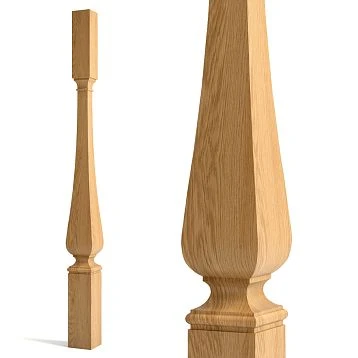
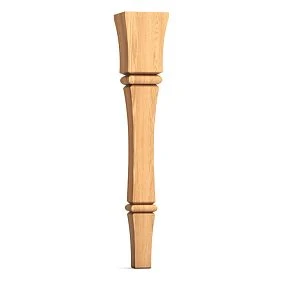
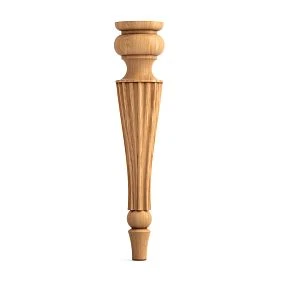
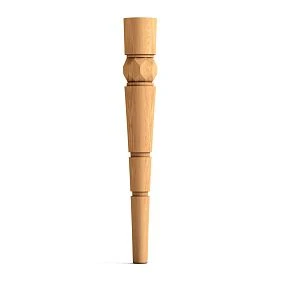
Turned Legs — this is lathe processing that creates a smooth profile with expansions and contractions along the length. These are the legs found on traditional dressers, beds, and tables in classic furniture. They are versatile: they work in classic, neoclassical, traditional country, and English styles. A turned leg made of oak or beech is a predictably beautiful, noble, and durable choice.
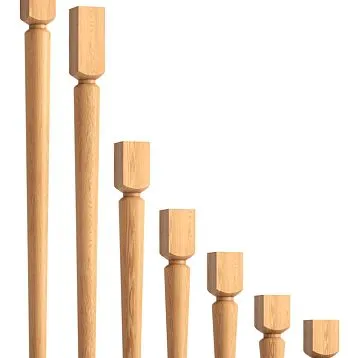
Height range: from 50 to 200 mm and more. Depending on the proportions, the leg body can be simple (one waist) or complex (several profile belts).
Carved legs: a decorative accent on the support
Carved legs for furniture — this is the most expressive option. An ornamental pattern applied to the leg's body makes it an independent small sculpture piece. Such legs are appropriate for accent items: consoles, chests of drawers, cabinet desks, exquisite sideboards. They speak of character and taste — and require that the other furniture details match this level. A carved leg under a cheap facade will look ridiculous; under a quality one, it will become a true calling card of the piece.
Round legs: a calm and modern option
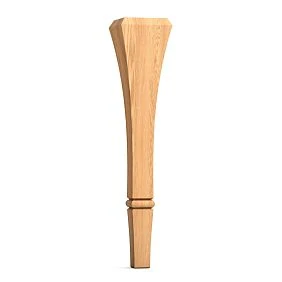
create a sense of smoothness and continuity. They do not cut space with sharp angles, nor do they create visual barriers. — this is most often a conical or cylindrical shape without a complex profile. Laconic, calm, they fit well into Scandinavian style, Japanese minimalism, Japandi. The absence of decoration is their advantage: such legs do not distract attention from the facades and the overall image of the furniture.
Round conical legs work especially well on sofas, low sideboards, and coffee tables: they add lightness to the piece without drawing attention to themselves.
Cabriole legs: elegance and history in one detail
A cabriole leg is a classic S-shaped form with a characteristic curve: first the support widens outward, then narrows toward the bottom and ends with a small expansion (paw). This form comes from the Baroque and Rococo arsenal, later adopted and refined by Classicism and Victorian-era furniture.
Today, cabriole legs are appropriate on upholstered armchairs and sofas in a classic style, on elegant consoles, on dressing tables, and on small decorative sideboards. This form requires context: the surrounding hardware, decor, and style must match.
Figural legs: when the support is an art object
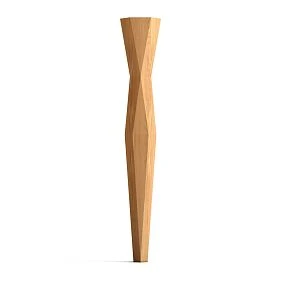
Figural legs is a collective term for non-standard shapes: twisted, with pronounced geometric facets, with an unusual silhouette. This is a choice for designer furniture, for bold interior statements, for pieces where the leg intentionally becomes the main accent. Such supports are produced individually or as part of design series and require a precise stylistic context.
Leg height: how 50, 100, 150, and 200 mm produce completely different results
The number on the label is not just a size. The leg height determines the type of visual effect. Let's break it down by gradations.
Up to 70 mm — a neat support. The item is slightly raised above the floor. There is almost no visual "air," but it becomes possible to clean underneath. For sofas and heavy items — a safe minimal option.
80–120 mm — basic height. Furniture is noticeably raised, with space underneath. This is a universal height for cabinets, dressers, and small wardrobes. The item begins to "stand" in the full sense of the word.
130–160 mm — designer height. It is in this range that furniture starts to look "lightweight" and expensive. A dresser on 150 mm legs creates a completely different image than the same dresser on 80 mm legs. Recommended for most furniture update tasks.
170–220 mm and above — accent height. Furniture acquires a pronounced vertical appearance. This works well for consoles, accent cabinets, and study items. Requires stability calculation: the higher the legs, the more important a wide base of the body.
Here is a practical summary table for choosing height:
| Leg height | Effect | Recommended items |
|---|---|---|
| Up to 70 mm | Minimal lift, no air | Sofas, heavy wardrobes |
| 80–120 mm | Easy lift, space appears | Cabinets, TV cabinets, small wardrobes |
| 130–160 mm | Pronounced designer effect | Chests of drawers, cabinets, bedside tables |
| 170–220 mm | Accent height, vertical look | Consoles, sideboards, accent pieces |
| From 250 mm | Extreme height | Tables, consoles, designer pieces |
Unpainted or coated: how to make the right choice
Wooden furniture legs in the STAVROS catalog are presented in two basic categories: uncoated and coated. Let's figure out which one to choose in which case.
Uncoated legs: freedom of finish
Furniture legs without coating — this is solid wood, ready for any finishing. Want to paint it white — paint it. Want to tint it to walnut, wenge, or natural oak — please. Want to preserve the natural color of the wood and just treat it with oil — that's also an option.
Choosing uncoated legs is especially important when you know exactly the finish you are preparing the furniture for. For example, you are painting the body of a dresser dark blue and want the legs to match the facade. Or you are updating a cabinet to a specific shade of oak that already exists in the interior. In such a case, uncoated legs give you precise control over the result.
This is also the right choice for workshops and furniture manufacturers who purchase legs for projects with custom finishing.
Coated legs: a ready-made solution
Furniture legs with coating — this is a finished product with factory processing: varnish, oil, tinting. Suitable for cases where customization is not needed: you want to install the legs and get the result immediately without additional painting work.
Well suited for:
-
replacing legs on existing furniture when the coating tone is already clear;
-
projects requiring quick installation without waiting for drying;
-
end consumers not planning to do their own finishing.
Important when choosing: ensure the coating tone matches or harmonizes with the color of the furniture on which the legs are placed.
Bed legs: why this is a special case
Wooden bed legs — a separate story. A bed experiences specific loads: not only the weight of the frame and the sleeping person, but also dynamic loads during use. Therefore, bed legs have increased strength requirements.
Key parameters for bed legs:
-
wood species with high hardness (oak, beech, ash);
-
sufficient cross-section — at least 40×40 mm or diameter from 40 mm;
-
reliable fastening — metal plate with bolted connection;
-
height compatibility with mattress size: the height of the bed with the mattress should be 550–600 mm.
Wooden legs for a bed made of solid beech are a reliable and aesthetic option. They withstand the necessary loads, fit well into the bedroom interior, and create that "warm" image that is especially important for a bedroom.
Table legs: individual items and DIY projects
The topic of tables is special. wooden table legs used both when replacing old supports on existing tables and when making tables from scratch — in so-called DIY projects or as part of small-scale furniture production.
For a DIY table, the main task is to correctly calculate the height of the legs. The standard height of a dining table is 740–760 mm, a coffee table is 400–450 mm, and a desk is 720–760 mm. Subtract the thickness of the tabletop from the desired height to get the required leg length.
For a dining table, the legs must be strong and stable enough: the load can reach 100–150 kg or more. Here, both the cross-section of the leg and the system of connecting the supports (additional stretchers or aprons) are important.
Legs for coffee table — a lighter option with an emphasis on aesthetics. Tapered, thin, with a minimalist profile — these are the supports that create the legendary "Scandinavian" look of a coffee table made of solid wood or plywood.
Legs for a stool and chair
Legs for stools and chairs are a separate engineering challenge: the supports must withstand the load when sitting down and standing up, i.e., short-term dynamic loads of up to 150–200 kg. At the same time, they must be thin enough not to visually weigh down a light object. Solid hardwood with the correct geometry is the only reliable choice.
Mistakes when choosing furniture legs: a brief debriefing
Practice shows: most mistakes are made not due to ignorance of the range, but due to underestimation of details. Here are the most common ones.
Legs that are too thin for a heavy body. A wooden leg with a diameter of 30 mm under a cabinet weighing 80 kg is a risk. You should always check the permissible load of a specific leg.
The attachment method is not checked. Different legs are attached differently: via threads, via a plate, via a screw. If the bottom of your item is not prepared for the required type of fastener, installation becomes a problem. Check in advance.
Height without considering stability. The higher the legs, the more important a wide base of the body is. A narrow, tall item on long legs without additional support points can be unstable. This is especially critical for tall cabinets and wardrobes.
Mixing styles in one item. Carved legs under an IKEA-minimalist facade is a conflict. Round conical legs under a baroque body is also not the best idea. Legs should speak the same stylistic language as the other furniture details.
Legs and handles from different 'stories'. If a chest of drawers has carved legs with ornamentation, and the handles are modern matte black metal, the item will give an impression of being unfinished. Hardware should be coordinated: legs, handles, hinges, overlays — it's all one ensemble. That's why it's worth looking at Furniture Handles and legs at the same time — as a single system.
Decorative legs where construction is needed. Some elegant legs are designed for a lightweight accent cabinet, not for a heavy chest of drawers. Reusing decorative supports under inappropriate load is a direct path to breakage.
Different leg heights in a set. If at least one leg in the set turns out to be slightly lower, the furniture will wobble. This is not only discomfort but also gradual loosening of the body. Always check the height of all legs before installation.
Forgot about the floor material. Hard wooden legs on laminate or parquet without protective pads will leave dents and scratches. Use felt or rubber pads on all supports — a simple solution that preserves both the floor and the legs.
How to assemble an upgrade: legs, handles, and decor as a system
Replacing legs works most effectively when it is part of a comprehensive update. Here is a typical scenario for a "designer upgrade" of an ordinary dresser:
-
Remove the old legs. Assess the condition of the body bottom, reinforce it with plywood if necessary.
-
Choose new wooden legs. The shape and height match the style we want to achieve. For example, turned legs made of solid beech 150 mm high.
-
Change the handles. For turned legs, it is logical to choose Wooden furniture handles from the same wood species or with the same character of shape.
-
Adding decor. Optionally — Carved furniture decor: an overlay socket on the side wall, molding around the perimeter of the facade — any element that emphasizes the new look.
-
We repaint or re-tint the body. This is optional but often the final touch that completes the look.
Result: the same dresser that stood in the room, but now it looks like a designer piece. That's the whole difference between buying new furniture and transforming what you already have.
All Solid Wood Items STAVROS products are made in a unified style, allowing you to select legs, handles, and decor from one catalog — and achieve a harmonious result without a long search.
Where to buy wooden legs for furniture renovation
If you decide to buy furniture legs to upgrade a dresser, nightstand, sofa, cabinet, or table — STAVROS offers one of the widest selections of wooden furniture legs in Russia.
The catalog features:
-
Furniture legs without coating — for self-finishing to suit any project;
-
Furniture legs with coating — ready-to-install products;
-
Carved legs for furniture — decorative supports with ornament;
-
Turned Legs — classic profile supports made of solid wood;
-
create a sense of smoothness and continuity. They do not cut space with sharp angles, nor do they create visual barriers. — minimalist conical and cylindrical shapes;
Shipment — from one item. Possible buy furniture legs in St. Petersburg with delivery across St. Petersburg and all of Russia. All products are made from properly dried solid oak and beech, undergo quality control, and meet furniture load requirements.
STAVROS is a Russian manufacturer of wooden products for furniture and interiors. Legs, handles, carved decor, moldings, cornices, house carving — all of this is produced at our own facility with adherence to wood drying and processing technology. Over 4000 items in the catalog, two quality levels — Standard and Prestige, a reliable ordering system, and a real warehouse.
STAVROS is not just a parts supplier. It is a manufacturer that understands: beautiful furniture is made up of details. And every detail matters.
FAQ: answers to the most popular questions about furniture legs
Can I replace the legs on an old dresser?
Yes, in most cases this is a simple operation. It is important to assess the condition of the cabinet bottom and the type of fastening. If the bottom can support installation, replacing the legs is the fastest way to update the dresser's appearance. Legs for a dresser made of natural wood radically change the silhouette and perception of the item.
Which legs to choose for a bedside table?
For a bedside table, wooden legs of medium height (80–120 mm) with a moderate profile are optimal. Round tapered — for Scandinavian and modern minimalism. Turned with a profile — for classic and neoclassical styles. It is important that the table legs match the style of the bed legs.
Are wooden legs suitable for a sofa?
Yes, provided the load is calculated correctly. Wooden legs for sofas made of hardwoods (oak, beech) can withstand the required loads. Standard attachment is via an M8/M10 threaded stud. Height — 120–160 mm for most models.
What is better: legs without coating or with coating?
It depends on the task. Uncoated legs are suitable when you need a custom finish for a specific project. Legs with Finish — when you need a ready-made product without additional work.
Which legs make furniture look more expensive?
Turned or carved wooden legs 130–160 mm high, coordinated in style with the handles and decor of the piece, work best. The type of wood matters: oak and beech with proper finishing look noble and expensive.
Can I buy furniture legs individually?
Yes. STAVROS ships items from a single piece. This means you can Buy legs for furniture in the required quantity — whether four pieces for one dresser or two hundred for furniture production.
What load is permissible on a wooden leg?
It depends on the cross-sectional size, wood species, and leg design. Standard turned oak legs with a diameter of 40–50 mm can withstand a load of 50–80 kg per support. Before installing under a heavy object, always check the permissible load with the manufacturer.
Are protective pads needed on the legs?
Mandatory for wooden floors, laminate, and parquet. Felt pads prevent scratches and reduce noise when moving furniture. Rubber pads ensure stability on smooth surfaces.