Article Contents:
- Four corners without molding — a standalone composition, not an "unfinished frame"
- Leave it completely empty
- Place only four NPU-202
- Assemble a full molding frame
- Make a frame and additionally add corner decor
- Total width of the smooth field
- Total height of the decorative field
- Distance from the intended corners to the outermost battens
- Top offset
- Bottom offset
- For 80 mm
- For 110 mm
- For 120 mm
- For 180 mm
- From a distance near the wall
- From the main viewing point
- In the color of the wall
- Contrast color
- In the color of the slats
- Raise the bottom border of the panel above the furniture
- Leave only the top decor
- Abandon NPU-202
- Mistake 1. Buy one NPU-202 for a test and decide based on it for four
- Mistake 2. Choose only between 80 and 180 mm
- Error 3. Ignoring the L parameter
- Error 4. Assuming that 120 mm is always better than 110 mm
- Error 5. Installing 180 mm just because the panel is large
- Error 6. Marking each corner separately
- Error 7. Adding molding after installing corners without new marking
- Error 8. Not checking the relief from the side
- Can NPU-202 be used on a panel that is not strictly rectangular?
- What to do if the left slat zone is wider than the right one?
- Can the NPU-202 be rotated in a different direction?
- Is it necessary to use the same distance from all four pads to the edges of the panel?
- What should I do if the upper NPU-202 units are clearly visible, but the lower ones are hidden by the sofa?
- Can NPU-202 be used around a painting without molding?
- What should I do if the panel is illuminated only from above?
- Can the four NPU-202 units be painted a different color than the wall?
- Is a spare fifth element needed?
- What should I do if one of the four points falls on an uneven wall?
- Can the upper corners be placed closer to each other than the lower ones?
- If 180 mm fits the width, should I take them right away?
- Can four NPU-202 be used without a central decorative molding?
- What to do if there is too much empty space between the corners?
- Is it necessary to align NPU-202 with the seams of the slat panels?
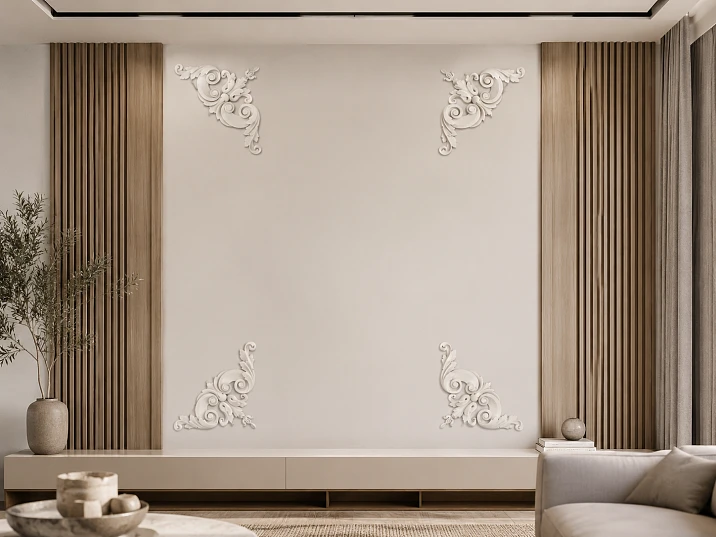
The smooth field between two zones of slat panels does not necessarily need to be framed with molding. If you want to preserve more free space and not build another rectangle inside an already saturated wall, you can leave the connecting lines completely empty and place only four identical corner carved overlays NPU-202 — one in each corner of the conditional panel.
This solution is fundamentally different from a molding frame.
In a frame, the eye reads a continuous contour:
top line → side line → bottom line → second side line.
When using only NPU-202, there is no continuous contour. The four corners merely mark the boundaries of the composition, and the space between them remains free.
Therefore, choosing the size is especially important. Too small overlays may get lost and look like four random decorative spots. Too large ones may visually "eat up" the smooth field and come so close to the slat panels that the meaning of the free insert disappears.
The NPU-202 has four sizes:
| NPU-202 | Material | Price per 1 pc. | Price for 4 pcs. |
|---|---|---|---|
| 80 × 80 × 7 mm | Polyurethane | 760 ₽ | 3 040 ₽ |
| 110 × 110 × 10 mm | Polyurethane | 1 090 ₽ | 4 360 ₽ |
| 120 × 120 × 11 mm | Polyurethane | 1 290 ₽ | 5 160 ₽ |
| 180 × 180 × 17 mm | Polyurethane | 2 280 ₽ | 9 120 ₽ |
The card also specifies an additional parameter L:
-
for 80 mm — 109 mm;
-
for 110 mm — 150 mm;
-
for 120 mm — 164 mm;
-
for 180 mm — 246 mm.
This parameter cannot be ignored in the final layout. Before installation, you need to open the drawing of the specific variant and check what exactly L measures and how the actual contour of the overlay is positioned relative to the corner.
Therefore, the correct order is:
panel size → four full-size templates → comparison of 80/110/120/180 mm → checking the drawing and L → four identical NPU-202 → installation compound → order.
After such a check, you can buy corner carved overlay NPU-202 immediately in the quantity of four pieces of the selected size.
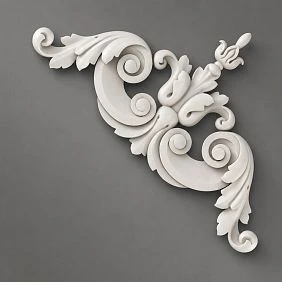
Four corners without molding are an independent composition, not an "unfinished frame"
The main question here is not even the size of the NPU-202.
First, you need to decide whether the very idea of corners without connecting lines is suitable.
There are four different ways to design a smooth field.




Completely leave it empty
The calmest option.
It is especially logical if slat panels themselves create a sufficiently strong texture.
Our factory also produces:
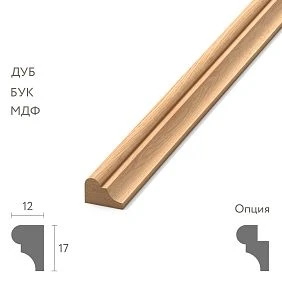
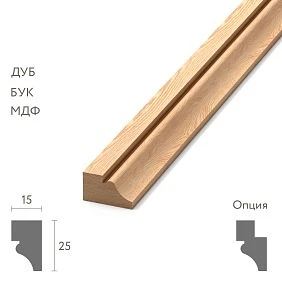
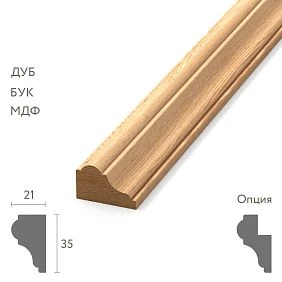
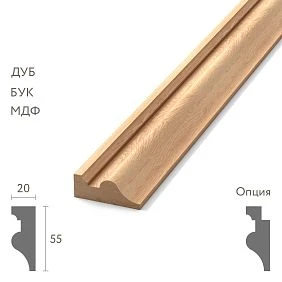
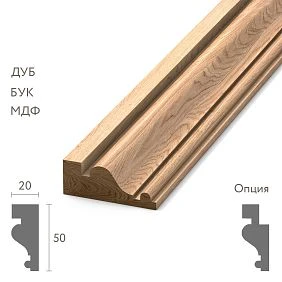
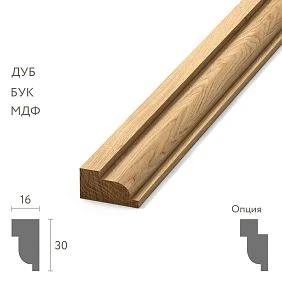
Place only four NPU-202
The corners are marked, but the side and horizontal boundaries remain open.
Get Consultation
Assemble a full molding frame
A continuous contour appears.
Make a frame and additionally add corner decor
This is the most saturated version.
The second option cannot be considered just a cheaper frame.
It works on a different principle.
The corner overlays create four visual points, between which the eye itself completes a rectangular area. It is the free space between them that is part of the composition.
Therefore, if after installation there is a desire to necessarily connect all four NPU-202 moldings, perhaps you originally needed a full frame.
What is NPU-202
NPU-202 is a carved decorative polyurethane overlay for decorating corners.
This is exactly a corner overlay.
There is no need to replace the term with words like "medallion," "rosette," "bracket," or simply "decor" when referring to a specific product.
Main card:
buy corner carved overlay NPU-202
A significant advantage for this task is having four scales of the same pattern.
This allows you to choose not a different ornament at each fitting, but to compare the same character of decor in different sizes.
As a result, the question becomes much more precise:
not "which corner is more beautiful," but "at what scale does this specific corner suit my panel."
Why you need to buy exactly four identical NPU-202
For a rectangular smooth panel, the basic scheme looks like this:
-
upper left corner;
-
upper right;
-
bottom left;
-
bottom right.
Total:
4 corner pads.
If one size is used, the composition remains cohesive.
For example:
4 × NPU-202 110 mm.
Do not assemble:
-
top 120 mm;
-
bottom 110 mm;
only because the lower part of the wall is partially covered by furniture.
This is a different composition that needs to be designed separately.
For the original problem, the logic is simple:
one model → one size → four identical parts.
Why trying on one NPU-202 is pointless
One overlay may seem small even at 180 mm in size.
But four identical elements create a completely different pattern.
Each one gets a symmetrical pair:
-
horizontally;
-
vertically;
-
diagonally.
Therefore, it's not just the total area of the decor that increases. A new geometry emerges.
If you apply only one 180-millimeter overlay, it may look moderate.
After adding three more panels, it may become visually much denser.
Therefore, for each size, you need to make a set of four templates.
In total, for a full comparison:
-
4 templates of 80 mm;
-
4 templates of 110 mm;
-
4 templates of 120 mm;
-
4 templates of 180 mm.
Yes, these are sixteen simple paper pieces.
But such a fitting costs incomparably less than buying an unsuitable set.
What to measure on a smooth panel before choosing a size
Don't start with the question "80 or 180 mm."
First, measure the installation location itself.
At least five dimensions are needed.
Total width of the smooth field
Measured between the actual boundaries of adjacent slat zones.
Total height of the decorative field
Not necessarily from floor to ceiling.
If there is a console, cabinet, or baseboard below, and a cornice above, the decorative panel can be shorter than the wall.
Distance from the intended corners to the outermost slats
Shows how freely the NPU-202 will coexist next to the textured zone.
Top offset
Needed separately, especially if there is ceiling decor.
Bottom offset
May differ due to furniture, baseboard, or outlets.
If a strictly symmetrical panel is planned, after measurements, check the diagonals of the outlined rectangle.
This helps ensure that the four corner points truly form a straight geometry, not repeating the slight curvature of adjacent slats.
Do not assign the NPU-202 size based only on the panel width
You can come up with a very simple but incorrect table:
-
up to 800 mm — 80 mm;
-
up to 1200 mm — 110 mm;
-
more — 180 mm.
There is no such standard.
The choice is influenced simultaneously by:
-
width;
-
height;
-
proportions of the rectangle;
-
distance to the slats;
-
furniture;
-
lighting;
-
color;
-
amount of free wall around.
Panels 900 × 2000 mm and 900 × 900 mm have the same width, but four identical corners will be perceived completely differently.
Therefore, the dimensions of NPU-202 are data for fitting, not a ready-made correspondence table.
NPU-202 80 × 80 × 7 mm: the most delicate option
Price:
760 ₽ per piece.
Set of four:
3 040 ₽.
This is the most compact size.
It is especially interesting if the task is not to create a large stucco panel, but to lightly mark the four corners.
Compared to the other options, it:
-
takes up less space;
-
has a lower relief — 7 mm;
-
is less similar to slat panels;
-
is cheaper as a set.
But the small size also creates a risk.
On a tall panel, the distances between corners can be so large that four NPU-202 units will no longer be perceived as a single system.
The reader will see four separate small details rather than a conventional frame.
This can only be verified with a full set of templates.
NPU-202 110 × 110 × 10 mm: noticeable increase without a sharp jump
Price:
1,090 RUB per piece.
Four:
4 360 ₽.
Compared to the 80-millimeter version, the first value increases by 30 mm.
Relief:
7 → 10 mm.
The corners begin to read more strongly at a distance.
At the same time, the cost of the set increases:
4 360 − 3 040 = 1 320 ₽.
This is already a separate commercial choice.
But it is still significantly below the large 180-millimeter variant in terms of budget.
It makes sense to compare 110 mm primarily with the adjacent 120-millimeter size, because the difference in external dimensions between them is minimal.
NPU-202 120 × 120 × 11 mm: is it worth paying an extra 800 ₽ for the set compared to 110 mm
Price of one:
1 290 ₽.
Four:
5 160 ₽.
Difference in external size between 110 and 120 mm:
10 mm.
Price of one:
200 ₽.
Price of four:
800 ₽.
So the commercial question here is very specific:
does the 10 mm increase provide a visual advantage that justifies the extra 800 ₽ for the entire composition?
The answer cannot be obtained from the product page.
You need to place two full mockups side by side:
4 × 110 mm
и
4 × 120 mm.
If the difference is barely noticeable from a normal viewing point, the more expensive option doesn't automatically become better.
If 110 mm look a bit weaker, while 120 mm fit the scale of the panel perfectly, the extra 800 ₽ makes clear sense.
This is exactly the kind of choice the article should help you make before purchasing.
NPU-202 180 × 180 × 17 mm: corners become an independent large decor element
Price of one:
2 280 ₽.
Set:
9 120 ₽.
This is a completely different scale.
Price difference compared to 120 mm:
9 120 − 5 160 = 3 960 ₽.
Almost four thousand rubles for a single set.
The relief increases:
11 → 17 mm.
Therefore, the 180-millimeter option should be evaluated not just as "slightly larger."
Four large carved corners can begin to define the character of the entire central part of the wall.
This scale is reasonable to check if:
-
the panel is indeed large;
-
there are large empty fields left between the corners;
-
the distance to the slats allows placing the decor freely;
-
the interior supports more active molding.
On a small field, large elements can take up disproportionately much space.
All four sizes in one comparison
| Parameter | 80 мм | 110 мм | 120 мм | 180 мм |
|---|---|---|---|---|
| Main dimension | 80 × 80 mm | 110 × 110 mm | 120 × 120 mm | 180 × 180 mm |
| Relief | 7 мм | 10 мм | 11 мм | 17 мм |
| L | 109 мм | 150 мм | 164 мм | 246 мм |
| Price per piece | 760 ₽ | 1 090 ₽ | 1 290 ₽ | 2 280 ₽ |
| Price for 4 pcs. | 3 040 ₽ | 4 360 ₽ | 5 160 ₽ | 9 120 ₽ |
| Character | Delicate | Medium | Mid+ | Large accent |
The last line is not a technical specification of the product, but a practical description of the scale for fitting.
The real choice should be made based on the wall.
Why parameter L is needed and why it cannot be invented
In the product card, an additional parameter L is specified for each size:
109 / 150 / 164 / 246 mm.
This is important information.
But if the drawing has not been reviewed, you cannot write on your own:
“L — diagonal.”
Or:
“L — length of the decorative beam.”
Without a diagram, this would be an assumption.
Therefore, when designing, proceed as follows:
-
select a preliminary size;
-
open its technical drawing;
-
find the designation L;
-
look at the direction in which it is measured;
-
only after that, transfer the exact outline onto the wall.
A paper square 180 × 180 mm is useful for an initial scale comparison, but the final layout must account for the actual shape of the product.
How much free space will remain between the two corners
Such a calculation can be used as a preliminary one if the actual dimension along the selected axis is known.
Suppose the working width of a conditional panel is W, and each corner overlay occupies a value A along the top edge.
Then the free section between the two corners is:
F = W − 2A.
For example, if according to the confirmed scheme the selected option indeed occupies 120 mm along the top horizontal line, and the panel has a width of 1000 mm:
1000 − 120 − 120 = 760 mm.
That is, between the left and right corners there will be 760 mm of free top space without molding.
For 180 mm with the same nominal width:
1000 − 180 − 180 = 640 mm.
The difference:
120 mm.
This is exactly what affects the feeling of an open frame.
But such a calculation should only be done after checking the orientation of the product and the drawing.
Why not only the width, but also the height of the panel matters
The four corners form a rectangular system.
Therefore, both axes need to be checked.
If the panel:
is narrow and very tall, the small corners may end up too far apart vertically.
if:
Almost square and compact, large 180-millimeter elements can come closer and occupy a significant part of the field.
Need to look at simultaneously:
-
horizontal distance between top corners;
-
horizontal between the lower ones;
-
vertical distance between the left ones;
-
vertical between the right ones.
Only then is it clear whether the four NPU-202 are perceived as one system.
How four corners work alongside the vertical rhythm of the slats
A slat wall has its own feature — a large number of parallel vertical lines.
A corner carved overlay, on the contrary, creates a more complex pattern.
It is advisable to leave a visual pause between them.
There is no universal norm:
20 mm, 40 mm, or 100 mm.
The distance depends on:
-
scale of NPU-202;
-
width of the smooth field;
-
depth of the slats;
-
color;
-
lighting.
Therefore, when making a mock-up, you must include the nearest slat panel in the frame.
If you photograph only a smooth rectangle in close-up, the solution will be incomplete.
How to check the indent from the first slat
Mark the intended extreme point of NPU-202.
Measure to the border of the first slat.
Then compare all four dimensions.
It may turn out like this:
-
80 mm leaves too much empty side space;
-
110 mm looks assembled;
-
120 mm is almost the same;
-
180 mm is too close to the rack rhythm.
Then the large variant is excluded not because "180 mm is generally too much," but due to the specific limitation of this wall.
This is the correct logic of choice.
How to place four NPU-202 symmetrically
First, you need to build the conditional rectangle itself.
Do not glue each corner separately "to a beautiful place."
Mark:
-
the top horizontal line;
-
the bottom;
-
left vertical;
-
right.
Even if there are no moldings on the wall, these four lines temporarily exist as a mounting grid.
They can be made:
-
with a thin pencil;
-
with a laser;
-
with painter's tape.
After that, the corner covers are installed at four identical points.
Thus, the absence of a real molding does not mean the absence of geometry.
On the contrary, hidden geometry must be especially precise, because a continuous line will not be able to visually connect slightly misaligned corners.
Check the diagonals of the conditional rectangle
After marking four points, measure the diagonals.
For a rectangle, they should match.
If one diagonal is noticeably longer than the other, the corner grid is skewed.
On a wall with vertical slats, this skew can be especially noticeable because there are already many straight reference lines nearby.
Do not compensate for incorrect geometry by rotating individual NPU-202 units.
First, fix the grid.
How to create a full-size mockup of four options
The initial mockup can be made from paper.
For 80 mm
Four pieces with an external dimension of about 80 × 80 mm.
For 110 mm
Four of 110 × 110 mm.
For 120 mm
Four of 120 × 120 mm.
For 180 mm
Four of 180 × 180 mm.
But the rectangular sheet shows only the occupied scale.
To better assess the actual shape, you can:
-
print the NPU-202 image;
-
scale it according to the confirmed dimension;
-
cut out the approximate outer contour.
After that, place all four templates simultaneously.
Photograph each option from the same point.
At what distance to view the result
From a close distance, a person examines the ornament.
From a normal room viewpoint, they see the composition.
These are different tasks.
Therefore, at least two checks are needed.
From a distance near the wall
For evaluation:
-
of the ornament size;
-
of the relief;
-
of the quality of the future joint with the surface.
From the main viewpoint
For example:
-
from the entrance;
-
from the sofa;
-
from the dining table.
It is here that it will become clear whether 80 mm is lost and whether 180 mm dominates.
Why 110 and 120 mm are especially important to compare in person
The difference is only 10 mm in the main dimension.
On the product card, it may seem almost insignificant.
But four corners increase the impact of the difference.
Therefore, you should not compare:
one 110 against one 120.
But:
a set of four 110 against a set of four 120.
Only after this can you decide whether the result justifies the difference of 800 ₽.
Do not connect NPU-202 with a molding "later" without a new project
The original scenario of the article is exactly four corners without connecting lines.
If after installation it seems that there is not enough connection between them, you should not automatically buy any molding and connect the points.
Adding a molding will change:
-
frame width;
-
inner field;
-
visual density;
-
joining requirements;
-
total cost.
In fact, this is already a different project.
It's better to first fully model the frame with painter's tape.
If it looks better, then it's worth going to the section buy polyurethane moldings and designing a full system.
When the absence of molding looks intentional
Four separate corners are especially convincing if:
-
there is enough free space between them;
-
all four are arranged strictly symmetrically;
-
the panel has clear proportions;
-
the slat panels themselves provide an outer frame for the entire area;
-
the color of the overlays is coordinated with the wall;
-
there are not too many other objects in the central field.
Then the eye easily reads a conditional rectangle without a physical line.
When a full frame is still better
A frame is worth comparing if:
-
the four corners look disjointed;
-
The panel is very large;
-
The composition lacks connection;
-
The interior is already built on molding geometry;
-
The edges of the smooth field look random.
In this case, the problem is not solved by increasing NPU-202 to 180 mm.
Perhaps a different type of composition is needed.
How color changes perceived size
The same 120-millimeter overlays can seem very different.
Matching the wall color
The contour is read mainly by shadows.
The size is perceived more calmly.
Contrast color
Even 80 mm can become noticeable.
In the color of the slats
The corners are visually connected to the adjacent texture.
This can reduce the feeling of a separate smooth panel.
Therefore, size and color are better chosen together.
If a mockup is made only with white paper on a dark wall, it can greatly exaggerate the visual activity of the future decor that is planned to be painted in the color of the surface.
Relief of 7, 10, 11, and 17 mm also changes the choice.
Not only the external size increases.
Relief:
-
80 mm — 7 mm;
-
110 mm — 10 mm;
-
120 mm — 11 mm;
-
180 mm — 17 mm.
The larger version will create a more pronounced shadow.
Therefore, it should be viewed:
-
in daytime side light;
-
in the evening;
-
under decorative lighting.
In frontal diffused light, the difference may seem smaller than in the real interior.
How to choose between four sizes without subjective "it seems to me"
Make a simple table after the layout.
| Criterion | 80 | 110 | 120 | 180 |
|---|---|---|---|---|
| Visible from the main point | Yes/No | Yes/No | Yes/No | Yes/No |
| Not too close to the rails | Yes/No | Yes/No | Yes/No | Yes/No |
| Does not overload the field | Yes/No | Yes/No | Yes/No | Yes/No |
| Matches the furniture | Yes/No | Yes/No | Yes/No | Yes/No |
| Fits the budget | Yes/No | Yes/No | Yes/No | Yes/No |
| I want to leave after the comparison | Yes/No | Yes/No | Yes/No | Yes/No |
If a variant fails several objective conditions, it can be excluded even before discussing taste.
Cost of four variants
| Size | 1 pc. | 4 pcs. |
|---|---|---|
| 80 мм | 760 ₽ | 3 040 ₽ |
| 110 мм | 1 090 ₽ | 4 360 ₽ |
| 120 мм | 1 290 ₽ | 5 160 ₽ |
| 180 мм | 2 280 ₽ | 9 120 ₽ |
The most important comparison by budget:
80 → 110 mm: +1,320 ₽ per set.
110 → 120 mm: +800 ₽.
120 → 180 mm: +3,960 ₽.
Therefore, increasing the size "just in case" is also economically irrational.
Can only the two top corners be used
You can make a separate composition with two overlays, but that is no longer a four-corner scheme of a conditional panel.
If there is tall furniture below and the lower part of the wall is completely covered, the two upper elements can have their own logic.
But you cannot automatically transfer the recommendations of this article about the set of four to there.
For the original task, exactly 4 identical NPU-202 units are purchased.
What to do if the lower corners are covered by a console
There are three options.
Raise the lower border of the panel above the furniture
Then all four NPU-202 units remain visible.
Leave only the upper decor
This results in a different composition.
Abandon the NPU-202
If the furniture actually covers half of the intended frame, the four corners may not be needed.
Don't buy the bottom two pieces just for a formal "set" if they won't be visible at all.
What to do if there's a TV in the center of the panel
The TV already forms a strong rectangle.
Four NPU-202 can:
-
gently support its shape;
-
or create a second competing rectangle.
Check the layout against the actual TV on the wall.
An especially large 180-millimeter option may come closer to the screen than it seems from a separate template.
If the panel has outlets and switches
First, mark out the electrical fixtures.
The corner composition should go around it without random intersections.
The problem more often arises not with the corners themselves, but with the visual axis:
for example, an outlet is just a few centimeters from the bottom NPU-202.
In such a case, you can:
-
change the size;
-
raise the bottom edge;
-
abandon the corner composition.
You cannot move electrical fittings in your imagination when trying on.
When 80 mm can be the best choice even on a large panel
A large field does not automatically require large molding.
80 mm may be the right choice if:
-
the task is very light decor;
-
the color is contrasting;
-
the slats are placed close together;
-
there is already a large object in the center;
-
the interior requires minimal ornamentation.
Large field size is only one parameter.
When 180 mm is justified
The large option makes sense if:
-
the smooth field is truly spacious;
-
the four corners do not fit close to each other;
-
a significant clear space remains between them;
-
there is not a large amount of other decor nearby;
-
the 17 mm relief is consistent with the overall plasticity of the wall.
The key criterion is not a "large wall", but the presence of free space after installing four pieces at once.
What to do if 110 and 120 mm look the same
Then there is no reason to choose the more expensive option just because of the size.
With the same visual result for you, the 110 mm set is cheaper by 800 ₽.
But if 120 mm is noticeably better readable from the main viewing point, the budget difference becomes justified.
When to choose a different article
Even four sizes do not guarantee that NPU-202 fits any wall.
Another option is worth considering if:
-
the pattern is too busy;
-
even 80 mm seems large;
-
180 mm still gets lost;
-
a different style is required;
-
an element of different geometry is needed.
In this case, you can open Buy decorative polyurethane overlays and compare other products.
When it is better to leave the panel empty altogether
Buying nothing is also the right decision.
An empty smooth area can be useful if:
-
slat panels are already expressive enough;
-
there is furniture or a TV in the center;
-
the lighting itself creates a pattern;
-
the interior is modern and minimalist;
-
any four patterns look redundant.
An empty wall should not automatically be considered unfinished.
If the layout without NPU-202 looks calmer and more cohesive, there is no need to add decor just because free space is provided.
What to add to the cart
If the article scenario is chosen, the basic cart is very simple:
4 × NPU-202 of the same size.
Card:
buy corner carved overlay NPU-202
If NPU-202 is not suitable:
Buy decorative polyurethane overlays
A wider section:
For other wall finishing options:
If the textured finish itself has not been chosen yet:
Buy slatted panels for wall finishing
For installation:
buy glue for installing moldings
The amount of mounting compound is determined by the actual surface, the selected size, and the installation technology.
Mistakes before ordering
Mistake 1. Buy one NPU-202 for a trial and decide based on it for four
One piece does not show the real density of the composition.
Solution: always four templates.
Error 2. Choosing only between 80 and 180 mm
Two very close intermediate options, 110 and 120 mm, are skipped.
Solution: compare all four.
Error 3. Ignoring parameter L
Size A × B does not describe the entire contour of the product.
Solution: open the drawing of the selected size before precise marking.
Error 4. Assuming that 120 mm is always better than 110 mm
The difference is only 10 mm, but the set costs 800 ₽ more.
Solution: compare two full mockups.
Error 5. Choosing 180 mm just because the panel is large
Large corners may come too close to the rails.
Solution: check remaining free fields.
Error 6. Mark each corner separately
The four elements stop forming precise geometry.
Solution: first build a conditional rectangle and check the diagonals.
Error 7. Add molding after installing corners without new marking
A new system of dimensions and joints appears.
Solution: first model the frame with tape.
Error 8. Not looking at the relief from the side
17 mm in the large variant can noticeably change perception.
Solution: check evening and side lighting.
Selection algorithm before purchase
-
Measure the width of the smooth field.
-
Measure the height.
-
Determine the actual four corner points.
-
Check the distance to the slat panels.
-
Mark out a conditional rectangle.
-
Check the diagonals.
-
Make 4 templates of 80 mm.
-
Make 4 templates of 110 mm.
-
Make 4 templates of 120 mm.
-
Make 4 templates 180 mm.
-
Photograph each set from one point.
-
Compare the free space between the corners.
-
Check the distance to the first rail.
-
Evaluate the composition with furniture and appliances.
-
Check parameter L against the drawing of the selected size.
-
Check the depth of the relief.
-
Choose one size.
-
Order four identical NPU-202.
-
Add a suitable mounting compound.
-
Do not add molding if the task is specifically an open composition of four corners.
Short decision table
| What the fitting showed | What to do |
|---|---|
| 80 mm are almost invisible | Compare 110 mm |
| 80 mm look sufficient | Do not increase size without reason |
| 110 and 120 are almost the same | Compare cost and appearance from the main point |
| 120 mm are clearly more readable | The 800 ₽ surcharge on the set has a clear result |
| 180 mm is too close to the rails | Return to a smaller size |
| 180 mm holds a large field well | Check the 17 mm relief and L |
| All options look disjointed | Consider a molding frame |
| All options overload the wall | Leave the panel empty |
| Need a different pattern | Go to the decorative overlays section |
FAQ
Can NPU-202 be used on a panel that is not strictly rectangular?
For the original layout, the four corners must form a clear geometry. If the field is trapezoidal or has a complex edge, a separate layout is required; the symmetry of a rectangle cannot be mechanically transferred.
What to do if the left rack zone is wider than the right?
Focus not only on the outer wall, but on the smooth panel itself. If its borders are asymmetrical, first decide which axis the composition should be built around.
Can the NPU-202 be rotated in a different direction?
Before rotating, compare the actual pattern with the product drawing. The corner piece has its own ornamental orientation, so a random rotation may disrupt the symmetry of the four elements.
Is it necessary to use the same distance from all four pieces to the edges of the panel?
For a symmetrical rectangular composition, this is the most understandable starting point. But if there are architectural constraints at the top or bottom, the position of the entire grid can be changed as a whole.
What to do if the upper NPU-202 pieces are clearly visible, but the lower ones are hidden by the sofa?
First, evaluate the composition with the actual furniture. If the two lower pieces are barely visible, the four-corner layout may not be optimal at all.
Can NPU-202 be used around a painting without molding?
This scenario can be considered if the four corners are at a sufficient distance from the painting frame and do not create a second, too tight contour. The mockup should be made together with the painting.
What to do if the panel is lit only from above?
The top and bottom trims may look different due to shadows, even though they are physically identical. Check the set under real lighting before painting.
Can four NPU-202 be painted a different color than the wall?
Yes, as a designer scenario this is possible, but the contrast noticeably increases the visual activity even of a small size. First make a color mockup.
Is a spare fifth element needed?
The base composition requires four pieces. An additional element makes sense only for a specific reason, not as a mandatory part of the calculation.
What to do if one of the four points falls on an uneven wall?
Unevenness cannot be compensated by rotating one trim. First, the base is checked and prepared, otherwise four identical corners will look different.
Can the top corners be placed closer to each other than the bottom ones?
Technically, such a composition can be devised, but it is no longer a rectangular panel. For the original task, the distances must be built according to one geometric system.
If 180 mm fit in width, should we take them right away?
No. Physical placement does not yet mean the correct scale. Compare the four large pieces with the 120-mm set from a normal viewing point.
Can we use four NPU-202 without a central decor?
Yes. That is the idea of the composition in question: four corners can independently define the field, requiring neither molding nor a central overlay.
What to do if there is too much empty space between the corners?
First, check a larger size. If even that does not tie the composition together, the problem may be solved not by increasing the overlays, but by switching to a molding frame.
Do we need to align NPU-202 with the seams of the slat panels?
Not necessarily. The four corners refer to the smooth panel. But the adjacent slats are a strong visual reference, so their rhythm must be taken into account in the overall layout.
Result: for a panel without molding, one size is chosen and four identical NPU-202 are ordered
If you want to decorate the smooth field between the slat panels, but a full molding frame seems too heavy, four corner carved overlays NPU-202 can provide a more open pattern.
There are four options:
80 × 80 × 7 mm — 3,040 ₽ for four pieces.
110 × 110 × 10 mm — 4,360 ₽.
120 × 120 × 11 mm — 5,160 ₽.
180 × 180 × 17 mm — 9,120 ₽.
You cannot choose based only on the size number.
Need to check:
panel width → height → four corner points → distance to the battens → four templates of each option → relief → parameter L from the drawing → cost of the set.
Pay special attention when comparing 110 and 120 mm. The difference in the main dimension is only 10 mm, while the 120 mm set costs 800 ₽ more.
The transition from 120 to 180 mm changes both the scale and the budget much more significantly: four large NPU-202 units cost 3,960 ₽ more.
If the mockup shows that four small parts get lost, go with the next size.
If large ones come too close to the rails, reduce.
If none of the four sets creates a convincing composition, there is no need to force NPU-202 to work in an unsuitable situation. You can move on to decorative polyurethane overlays, consider Moldings made of polyurethane or leave the smooth field free.
If one of the four layouts looks complete, the final basket is perfectly clear:
4 identical corner carved overlays NPU-202 of the selected size + suitable mounting compound.