






























Article Contents:
- Wooden furniture handle Atlas HL-071 400×28×45×320 mm: which SKU is needed for old holes
- Atlas HL-071 400 mm made of beech
- Oak handle Atlas HL-071 400 mm
- Why 400 mm ≠ 320 mm
- Why D=320 mm is the main parameter specifically when replacing
- 1. Center-to-center distance
- 2. Hole diameter
- 3. Condition of the enamel around the holes
- 4. Geometry of the old mounting plates
- 5. Facade thickness
- 6. What is inside
- Method using identical edges
- Verification by reverse measurement
- If the holes are damaged
- Why a tape measure is worse than a caliper or a precise ruler
- Why 560 mm is dangerous when replacing an old handle
- Why Atlas 801 and 1041 mm do not solve the problem
- What to do if visually you need Atlas 560/801/1041
- Distance from the mounting center to the end of the handle
- What might be in those 40 mm
- Step 1. Mark the old centers
- Step 2. Construct the total length of 400 mm
- Step 3. Check the edges
- Step 4. Check the two handles on paired facades
- Step 5. Check the opening
- What to Check
- Why these percentages are not a design standard
- Old holes already set the position
- What traces are found
- Why the new Atlas may not hide them
- How to check without guessing
- Why side lighting is especially useful
- Local facade repair
- Full facade repainting
- Another handle with a wider contact area
- Decorative backing plate
- What not to do
- Important limitation
- Beech: when it is more rational
- Oak: when it is needed specifically as a material
- Difference on one handle
- On eight handles
- Why this is important
- What cannot be assumed
- Base HL-071
- HL-071M
- When the base HL-071 is stronger
- When HL-071M is simpler
- Oak
- Oak
- If you first buy one control handle
- All eight at once — if
- First one — if
- Why one control handle is especially useful on painted furniture
- Why a photo is dangerous
- Why the name "400 mm" does not replace D
- You need to measure the facade thickness
- Check the length of the standard Atlas fasteners
- Why a too long screw is dangerous
- Why a too short one is dangerous
- What to do with old screws
- Possible signs
- The right way
- But you don't need to achieve a literal match
- What to measure
- Why this is especially important for vertical installation
- Checking opening
- What to check with the template
- If Atlas crosses the frame
- Example
- What to do
- What for
- Useful for a painter too
- A paper template 400×28 is insufficient
- Better one real Atlas
- Why this is a strong argument for a test purchase
- What not to do
- Sequence
- Handle in the color of the facade
- Contrast enamel
- Natural oak on painted facade
- What to Check
- For enamel
- For oil/tinting
- Why piece-by-piece finishing is worse
- Possible sorting
- Therefore, the test paint-out should include
- Control table
- Why this is more important than the average value
- What to do
- Error 23. Choosing only based on the tree photo
- Error 24. Buying eight at once with a large number of unknowns
- Template material
- Apply two axes
- Attach to the facade
- Then apply the outer dimension of 400 mm
- Why a template is better than a single roulette
- What to do
- For a tall wardrobe
- For the lower drawers
- But you don't need to put Atlas everywhere
- What to do
- Why Atlas remains a strong candidate
- Why such a line is stronger than "Atlas 400 oak 8 pcs."
- Single material
- Unified finish
- Same geometry
- Same perception
- What to check anyway
- Insert screws
- Do not overtighten
- Check frontally
- Check from the side
- Check for enamel marks
- Check grip
- For eight facades
- How to use this number
- Why this difference cannot be transferred to other sizes
- Why manager confirmation is still required
- What to Request
- Option 1. Buy one without reserving the rest
- Option 2. Agree with the seller on a set reservation
- Option 3. Get a physical sample from the furniture maker
- What to choose
- Then there are three honest scenarios
- What not to do
- Before the new installation
- What to Check
- Especially check
- Why this is useful
- For oak
- For facades of different widths
- On the mounting map
- Scenario 1. Old holes are 320 mm, but the metal handle was noticeably shorter
- Scenario 2. The old handle was longer than Atlas
- Scenario 3. On a pair of facades, the holes are 320 mm, but the installation height differs
- What to do
- Why this is needed
- Conclusion
- What not to do
- Check after the first installation
- Photo 1 — old metal bracket
- Photo 2 — Atlas template 400×28 mm on the same holes
- What to compare
- Why such a test is more useful than a catalog image
- If the template looks too large
- What size Atlas HL-071 has a center distance of 320 mm?
- What does D=320 mm mean?
- How do 400 mm differ from 320 mm?
- Can Atlas 400 be installed into old 320 mm holes?
- How to correctly measure old holes?
- Does Atlas 560 mm fit into 320 mm holes?
- What is the center distance for Atlas 801 and 1041 mm?
- Why does the longer Atlas have a smaller D?
- Is there an Atlas 400 made of oak?
- Is there an Atlas 400 made of beech?
- How much do eight beech Atlas 400 cost?
- How much do eight oak ones cost?
- Can Atlas be painted to match the facade color?
- Is there a ready-made Atlas with a coating?
- Will Atlas cover traces of an old metal handle?
- Do I need to buy one Atlas first?
- How many Atlas should I order for eight identical facades?
- How to check the thickness of the facade?
- Can I use old screws?
- What to do if the old holes are broken?
- What to do if Atlas 400 fits the holes but does not cover the enamel trace?
- Can Atlas 560 be installed with new holes and the old ones filled?
- Which wood species to choose for enamel?
- When to choose oak?
- Where to buy a pull handle?
- Where to order Atlas HL-071 400 mm?

After painting the facade, the hole is no longer a "dimension on the drawing," but an irreversible fact of the finish.
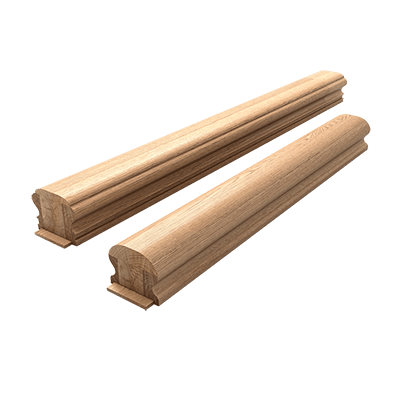
If the old metal bracket is removed and the distance between the centers of the two holes is indeed 320 mm, Atlas HL-071 has a specific version that should be checked first: 400×28×45 mm with D=320 mm. It is this one whose current card shows a center distance of 320 mm.
This is important because the Atlas size range is not arranged as one might easily assume from a photo. A longer handle does not necessarily retain the same mounting:
-
Atlas 240 mm — D=160 mm;
-
Atlas 400 mm — D=320 mm;
-
Atlas 560 mm — D=240 mm;
-
Atlas 801 mm — D=240 mm;
-
Atlas 1041 mm — D=240 mm.
That is, the Atlas is 560 mm longer than the 400-mm version by 160 mm, but its mounting points are not farther apart, but rather closer together: 240 mm instead of 320. If you order the 560 mm only because it looks better on a tall facade, the old holes will not match.
For already painted MDF, this is fundamental. New drilling means not only two additional holes. The old 320-mm points will have to be:
-
filled;
-
restored to a flat surface;
-
primed again;
-
repainted locally or completely;
-
matched for shade and gloss.
Therefore, the first filtering is not by wood species, color, or even the overall handle length. It is by the center-to-center distance D.
But matching D=320 mm does not yet guarantee a ready replacement. The Atlas has a total length A=400 mm. The old metal handle could be shorter, longer, have wider bases, or leave marks on the enamel underneath. The new wooden bracket may perfectly align with the screws in the holes and yet:
-
not cover the round imprint of the old base;
-
to bump into the facade profile;
-
to come too close to the top edge;
-
to conflict with the neighboring drawer;
-
to be uncomfortable to grip.
Therefore, before ordering the entire batch, you need to check four independent parameters:
D=320 mm — does the mounting hardware match;
A=400 mm — does the handle fit on the front side;
B=28 mm and C=45 mm — do the actual scale and offset fit;
the area under the old handle — does Atlas cover the traces of the previous metal hardware.
At the time of checking, Atlas HL-071 400×28×45×320 mm is available in the card in two wood species:
| Atlas HL-071 400 mm | Price per 1 pc. | Availability at the time of check |
|---|---|---|
| Beech | 2 690 ₽ | St. Petersburg — 45 pcs. |
| Oak | 3 210 ₽ | Moscow — 4 pcs., St. Petersburg — 62 pcs. |
If available, the card indicates shipment from the warehouse within three business days; for made-to-order items, the average production time is 5–10 days.
If you need ready-made fittings for an already drilled cabinet, the general catalog Furniture Handles is useful for comparison, but in this specific scenario, the main candidate remains Atlas HL-071 400 mm with D=320.

Wooden furniture handle Atlas HL-071 400×28×45×320 mm: which SKU is needed for old holes
In the card, the four letter sizes should be read separately.
| Parameter | Value for the required Atlas |
|---|---|
| A — total length | 400 мм |
| B | 28 мм |
| C — protrusion/depth per card | 45 мм |
| D — center-to-center distance | 320 мм |
The main mistake is reducing the line to "Atlas 400".
In an already drilled facade, the critical parameter is D=320. The total length of 400 mm is responsible for the external dimension and proportion, not for the distance between holes.
After checking the facade, you can order Atlas HL-071 400×28×45 mm specifically in the D=320 mm configuration.

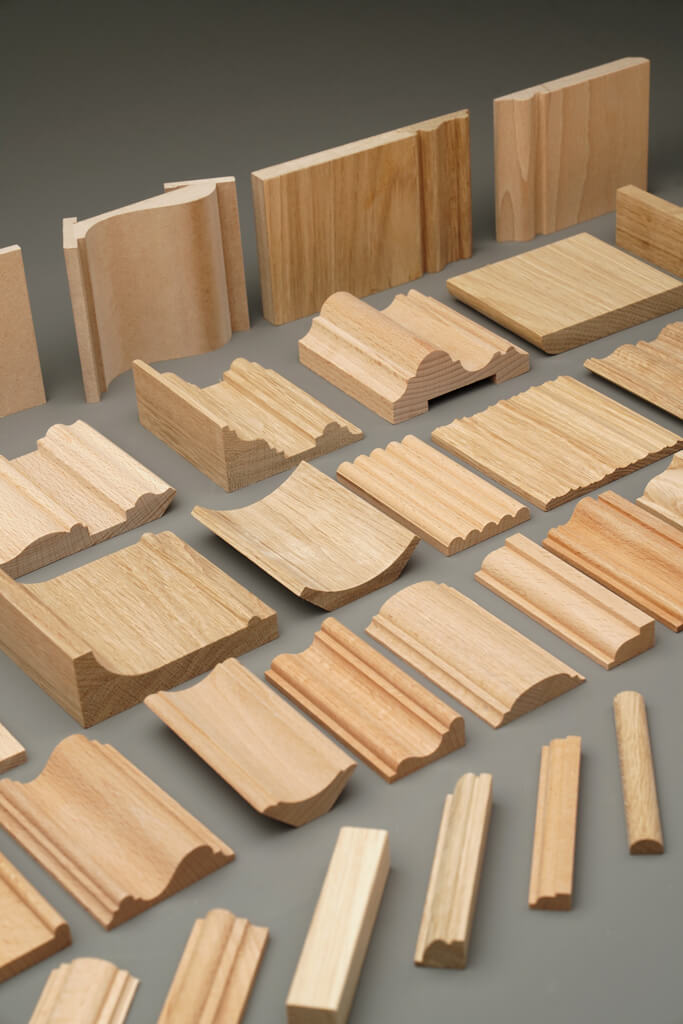

Atlas HL-071 400 mm in beech
The beech version costs 2,690 ₽ at the time of checking.
Beech is especially logical if the handle will receive an opaque finish:
-
in the color of the facade;
-
contrast enamel;
-
another opaque shade.
The Atlas card shows preparation options "for enamel" and "for tinting" depending on the material/configuration, so the correct row should be double-checked immediately before ordering.
Our factory also produces:




Atlas oak handle HL-071 400 mm
The oak version costs 3,210 ₽.
It is stronger if the wood texture should remain visible:
-
oil;
-
transparent finish;
-
tinting;
-
combination with oak baseboard, furniture, or doors.
But the word "oak" itself does not mean that the finished shade will match other oak in the room. The wood batch, tinting, oil, gloss level, and lighting all differ.
Get Consultation
Why 400 mm ≠ 320 mm
This needs to be recorded literally:
400 mm is the full length of the handle.
320 mm — the distance between the centers of the mounting holes.
If the old facade has 320 mm holes, measuring the new handle by its overall length is pointless.
Why D=320 mm is the key parameter specifically when replacing
When making a new facade, you can first choose the handle and then drill the furniture to fit it.
Here the order is reversed:
old holes → compatible D → check of the overall dimension → design.
This makes the article not a review of Atlas, but a guide to replacement without damaging the finished enamel.
Atlas HL-071 pull handle and ready-made 320 mm holes: what to measure after removing the old metal handle
Before buying Atlas, it is better to dismantle the old bracket and inspect the facade completely.
1. Center-to-center distance
It is not the outer edge of the holes or the full length of the old handle that is measured.
You need to get the distance:
center of the first hole → center of the second hole.
If the measurement gives 320 mm, Atlas 400/D320 becomes a candidate.
If it turns out to be 318, 322, or another value, you cannot automatically consider it "the same 320." First, you need to understand the measurement accuracy, hole diameter, and tolerances of the actual fasteners.
2. Hole diameter
Two fronts may have the same center-to-center distance but different holes.
Holes that are too large may have been enlarged by the previous fastening.
Holes that are too small may not match the new screw/fastening unit.
The article does not assign a universal diameter: it is determined by the actual Atlas hardware and the current front.
3. Condition of the enamel around the holes
After removing the metal handle, the following may be found:
-
chips;
-
pressed circles;
-
scuffs;
-
difference in gloss;
-
a lighter or darker area covered by the old base.
Match D does not eliminate these marks.
4. Geometry of the old mounting plates
The old bracket could touch the facade with two round legs with a diameter, for example, significantly larger than the contact area of Atlas.
A new wooden handle may reveal a mark.
5. Facade thickness
Needed for mounting.
You cannot assign a screw based only on the handle card without knowing the facade thickness and the construction of the inner side.
6. What is inside
Check:
-
hinges;
-
pull-out systems;
-
inner strips;
-
drawers;
-
mirror inserts;
-
reinforcements.
The screw must not conflict with the inner hardware.
Center distance 320 mm: how to measure holes if the handle has already been removed
Two holes have a diameter, so "by eye to the center" is easy to get wrong.
Method using equal edges
If the holes have the same diameter, the distance between the same outer or inner edges equals the center-to-center distance.
For example, measure:
-
left edge of the first hole → left edge of the second.
This is easier than finding the center of each.
Verification by reverse measurement
Also measure:
-
right edge of the first → right edge of the second.
The values should match.
If the holes are broken
The method becomes unreliable at the edges.
Then you need to restore the axes based on the actual geometry or use a mounting template.
Why a tape measure is worse than a caliper or a precise ruler
At 320 mm, an error of 1–2 mm already affects the fit.
For finished enamel, it's better to take an accurate measurement than to try to "tighten it with a screw" later.
Furniture handle bracket: why the product type also needs to be confirmed before replacement
Atlas HL-071 belongs to long surface-mounted handle brackets. In the profile category Furniture hinge handle products of this type are compared.
This is more useful than comparing Atlas with knobs only by appearance.
A handle-bracket fundamentally implies:
-
two mounting points;
-
a grip between the supports;
-
center-to-center distance;
-
a specific external dimension.
If the task is to use existing two points at 320 mm, the bracket category matches the real intent.
Why Atlas HL-071 560 mm does NOT automatically fit into 320 mm holes
This is the main counterintuitive fact of the size range.
The buyer sees the same Atlas model and assumes linear logic:
the longer the handle, the larger the center distance.
For Atlas HL-071, this is incorrect.
| Overall length A | B | C | Center distance D |
|---|---|---|---|
| 240 мм | 28 | 45 | 160 мм |
| 400 мм | 28 | 45 | 320 мм |
| 560 мм | 28 | 45 | 240 мм |
| 801 мм | 28 | 45 | 240 мм |
| 1041 мм | 28 | 45 | 240 мм |
That is, the 400-mm Atlas is unique in the current size range precisely in its combination of A400/D320.
Why 560 mm is dangerous when replacing an old handle
Suppose the facade is tall and visually asks for a longer bracket.
The old metal handle was installed in 320 mm holes.
The buyer chooses Atlas 560.
After delivery, it turns out:
D of the new handle = 240 mm.
To install it symmetrically, you need to drill new holes.
The difference between the old and new center distance:
320 − 240 = 80 mm.
If the handle center is preserved, the new holes will be approximately:
40 mm closer to the center on each side.
The old holes will remain visible or require repair.
On a painted facade, this is exactly the scenario the article should help avoid.
Why Atlas 801 and 1041 mm do not solve the problem
They also have D=240 mm.
Longer does not mean more compatible.
What to do if you visually need Atlas 560/801/1041
There are only honest options:
-
accept re-drilling and professional repair of old holes;
-
change the design/facade;
-
look for another handle with D=320 mm and suitable length;
-
keep Atlas 400 and check its proportion with a physical template.
You cannot write that a longer Atlas "will fit into the same 320" without a card that confirms this.
Atlas HL-071 400 mm on a finished facade: matching D does not yet mean compatibility
After checking the center distance, the second level begins.
The new handle has a total length of 400 mm.
The old mounting defines only two points. The external body of Atlas extends beyond them.
Distance from the center of the mounting to the end of the handle
With symmetric geometry, the total "overhang" relative to the two centers:
400 − 320 = 80 mm.
Nominally, this is approximately:
40 mm behind each mounting center.
This is not a substitute for the official drawing, but a useful geometric check.
What might be in these 40 mm
-
facade frame;
-
decorative milling;
-
edge;
-
mirror;
-
adjacent molding;
-
the joint line of two facades.
If the old holes are too close to the decorative border, Atlas D=320 will align with the fasteners, but its outer end will enter an undesirable zone.
Paper template Atlas 400×28 mm: how to check the facade without buying
The cheapest check is a rectangular template.
Front projection size:
400×28 mm.
It does not show the 45 mm depth and the exact three-dimensional shape of the handle, but it allows you to check the outer dimension.
Step 1. Mark the old centers
320 mm.
Step 2. Build the total length of 400 mm
The center of the template must coincide with the center of the pair of holes if the handle is symmetrical in mounting points according to the drawing.
Step 3. Check the edges
Does the template not cross:
-
adjacent facade;
-
the panel;
-
molding;
-
edge of the cabinet.
Step 4. Check two handles on paired facades
One handle can look good, but two Atlas handles side by side may be too large.
Step 5. Check opening
Especially if the facades are hinged and the handles are located near the central joint.
Atlas HL-071 400 mm on a 600 mm facade: what the proportion shows
There is no universal rule that Atlas 400 is "ideal" for a 600 mm facade.
But you can calculate the scale.
Ratio of handle length to facade width:
400 / 600 × 100 ≈ 66,7%.
The handle takes up about two-thirds of the width if placed horizontally.
Vertical comparison should already be made with the height of the facade.
What to check
-
doesn't Atlas overwhelm the facade itself;
-
is there enough free space at the edges;
-
doesn't it conflict with the handle of the adjacent door;
-
is a comfortable grip maintained.
Atlas on a 700 mm facade
400 / 700 × 100 ≈ 57,1%.
The handle is perceived more calmly relative to the width.
Atlas on a 900 mm facade
400 / 900 × 100 ≈ 44,4%.
On a large facade, Atlas may already look more compact than expected from the catalog photo.
Why these percentages are not a design norm
They are needed only for comparative scale.
The actual appearance depends on:
-
vertical/horizontal orientation;
-
cabinet height;
-
color;
-
number of handles;
-
Atlas pattern;
-
adjacent furniture.
Vertical Atlas HL-071: when the total length of 400 mm is more important than the width of the facade
On a tall cabinet, the handle is more often placed vertically.
Then you need to check:
-
distance from the upper end of the handle to the top edge;
-
from the lower end to the floor/lower zone;
-
the line of the adjacent handle;
-
the user's grip height.
The old holes already set the position
If the 320 mm holes are drilled, the handle cannot be arbitrarily moved up or down without re-drilling.
Therefore, the new Atlas dimension must be overlaid on the existing centers, not placed where it looks better.
Horizontal Atlas HL-071: what to check
On wide drawers or dresser fronts:
-
the edges of the handle;
-
adjacent routings;
-
proportion to width;
-
grip with two/one hand;
-
opening the adjacent drawer.
Old holes also fix the center.
Wooden handle-bracket and trace from an old metal handle: will Atlas cover the enamel damage
Match D=320 solves only the holes.
The old metal handle could leave its own "contact trace" around each mounting point.
What traces are found
-
round imprint of the base;
-
rectangular platform;
-
dented enamel;
-
rotation scratches;
-
tarnishing;
-
fresher color under the old handle;
-
chip around the hole.
Why a new Atlas may not hide them
The wooden bracket has its own contact geometry with the facade.
If the old support was wider, part of the imprint will remain exposed.
How to check without guessing
After removing the old handle:
-
clean the facade in a safe way;
-
do not polish/do not repair immediately;
-
make an exact Atlas template;
-
even better — attach one real Atlas;
-
examine the area around both holes under side light.
Why side light is especially useful
It shows:
-
dents;
-
gloss difference;
-
dented coating.
Frontally, a uniform facade may seem perfect.
If Atlas does not cover the trace of the old bracket
There are several options.
Local facade repair
Suitable if the painter can restore the enamel without a noticeable transition.
Full repainting of the facade
More expensive, but more reliable in color/gloss.
A different handle with a wider contact zone
Can cover the mark without repair.
Decorative backing
Only if it is designed and matches the furniture. You cannot invent a random washer that will worsen the fit.
What not to do
Do not buy eight Atlas units hoping that 'the wood will cover everything' if the first fitting does not confirm this.
Why one Atlas first can be more rational than eight
If the cabinet has 8 identical facades, a full order seems obvious.
But the uncertainty can be in:
-
traces of enamel;
-
diameter of holes;
-
grip;
-
dimensions;
-
finish.
One Atlas control sample allows you to check these risks.
Important limitation
Buying one first handle is a risk reduction strategy, not a mandatory rule.
If the furniture maker already has a sample or an identical cabinet has been tested, you can order the full set right away.
Furniture handle bracket: why the category helps to check alternatives before facade renovation
If Atlas doesn't cover old traces or 400 mm visually doesn't fit, it's useful to compare other options in the category furniture handle bracket.
At the same time, the filter should start with D=320 or another actual center distance of the old holes.
First, the fastening.
Then, the exterior design.
Oak Atlas HL-071 or beech furniture handle for enamel: what to order for a painted cabinet
When the center distance and outer dimensions are confirmed, the material becomes the next real choice.
Atlas 400/D320 is available in beech and oak.
Beech: when it's more rational
Beech costs 2,690 ₽ per handle at the time of checking.
It is especially logical if the handle is:
-
painted with opaque enamel;
-
made in the color of the facade;
-
made contrasting, but without visible wood texture.
If the natural pattern is completely covered, the extra cost for oak does not always provide visual value.
Oak: when it is needed specifically as a material
Oak costs 3,210 ₽.
It makes sense if:
-
the texture is left visible;
-
the handle should match the oak floor, baseboard, or furniture;
-
oil, transparent/translucent coating, or tinting is planned.
Difference on one handle
3 210 − 2 690 = 520 ₽.
On eight handles
520 × 8 = 4 160 ₽.
That is, the choice of wood species on a large cabinet already makes a noticeable difference in budget.
What does “Under enamel” and “Under tinting” mean in the Atlas card
In the Atlas specifications, re-lamination/preparation options are available depending on the material.
This cannot be reduced to the phrase:
“oak is always under tinting, beech is always under enamel.”
Before ordering a specific line, you need to open “All sizes and prices” and check the selected combination.
Why this is important
If the handles are transparent, the visual selection of wood is more important.
If it's under enamel, the color matching of the array doesn't play such a role.
What cannot be assumed
That any Atlas is already completely ready for finishing without technological preparation.
The finishing system is still determined by the chosen paint, oil, or varnish.
Unpainted Atlas HL-071 or furniture handle Atlas HL-071M with a ready-made coating
STAVROS has a separate version with a coating — Atlas HL-071M.
This is not the same product with a 'letter M for beauty,' but a separate ready-made configuration.
Base HL-071
Suitable if you need:
-
your own color;
-
individual enamel;
-
custom tinting;
-
oil;
-
binding to a non-standard facade.
In this case, it is useful buy unpainted furniture handles and run the entire set through one finishing cycle.
HL-071M
Has ready-made coatings.
For the current card HL-071M size 400×28×45×320 mm also exists, with several coating options.
For the ready-made 400-millimeter option, the current price is higher than the base HL-071.
If a factory finish is needed, you can buy furniture handles with coating and compare the finished Atlas HL-071M.
When the base HL-071 is stronger
If the facades are already painted in a non-standard color and you need to match it exactly.
For example:
-
NCS/RAL of a specific project;
-
complex gray-green;
-
warm beige;
-
color matching a furniture sample.
When HL-071M is simpler
If one of the ready-made colors already fits and there is no need to organize a painting cycle for eight handles.
Why the ready-made HL-071M should also have D=320 in the required version
You cannot switch to the coverage category and forget the original task.
For the 400 mm HL-071M version, the current card also shows D=320.
But you need to check specifically the exact line 400×28×45×320.
You cannot order HL-071M 560 mm just for the ready-made color and assume the old holes will remain compatible.
Eight Atlas HL-071 400 mm: how much does a set of beech and oak cost
For a cabinet with 8 identical fronts:
Beech
8 × 2 690 = 21 520 ₽.
Oak
8 × 3 210 = 25 680 ₽.
The difference:
4 160 ₽.
These amounts do not include:
-
finish;
-
fasteners;
-
delivery;
-
repair of traces from old hardware;
-
installation work.
If you first buy one control handle
Beech:
2,690 ₽ now + 7 × 2,690 after confirmation.
The bottom line for the product is still:
21,520 ₽, if the price hasn't changed.
Oak:
25 680 ₽.
What becomes additional is not the handles themselves, but possible separate delivery and time.
Buy wooden furniture handles for the entire cabinet at once, or first one Atlas HL-071
The strategy depends on the degree of uncertainty.
All eight at once — if
-
the holes are measured precisely;
-
Atlas has already been tried on;
-
the traces of the old staple are covered;
-
the finish is approved;
-
the fit is known;
-
identical facades are truly identical.
First one — if
-
facades are expensive and already fully painted;
-
the old handle left noticeable marks;
-
Atlas is used on this furniture for the first time;
-
the actual grip is unknown;
-
there is a risk of conflict with the frame.
Why one control handle is especially useful on painted furniture
It allows you to check four things at once without new drilling:
-
alignment of holes;
-
external dimensions;
-
overlap of marks;
-
ergonomics.
Buy furniture handles by center-to-center distance, not by photo
If you need Buy furniture handles For a finished facade, the correct filter sequence is:
center-to-center → number of mounting points → outer dimension → material → design → finish.
Not the other way around.
Why a photo is dangerous
Two handles can look almost identical and have different D.
The same Atlas in different lengths demonstrates this in practice.
Why the name "400 mm" does not replace D
400 is the total length.
320 is the mounting distance.
When replacing old hardware, the second is more important than the first.
Atlas HL-071 and fasteners: check the thickness of the painted furniture facade
Matching old holes does not mean that the old screws fit the new handle.
Need to measure the thickness of the facade
For example:
-
16 mm;
-
18 mm;
-
19 mm;
-
22 mm.
Do not use these numbers as a guess — measure actually.
Check the length of the standard Atlas fasteners
The card and completeness of the specific item must be verified before installation.
Why a too long screw is dangerous
It can:
-
hit the handle before normal tightening;
-
damage the internal thread;
-
create a gap.
Why too short is dangerous
Will not provide sufficient grip.
What to do with old screws
Do not automatically consider them compatible.
The old metal handle might have had a different thread depth.
Internal washers and heads: check what will change after replacement
On the inside of the facade, screws may pass near:
-
shelf;
-
the drawer;
-
a hinge;
-
the pull-out system.
When replacing fasteners, the position of the head must remain compatible.
If the old holes are damaged
Atlas D=320 may nominally match, but the handle will wobble.
Possible signs
-
oval hole;
-
MDF chip;
-
the screw noticeably moves;
-
the old handle was overtightened.
The right way
First, professionally restore the fastening assembly.
Do not tighten the Atlas harder, hoping to "press down" the damage.
Atlas wooden handle and wooden baseboard: is it worth repeating oak in the interior
If Atlas is made of oak, it can be tied to other wooden trim in the room.
For example, to buy wooden baseboard and leave both items in a natural/tinted finish system.
But you don't need to aim for a literal match
The oak of the handle and the oak of the baseboard may differ:
-
in pattern;
-
by batch;
-
by finish;
-
on lighting.
It's better to tie them together with a common finishing concept rather than expect an identical wood shade.
Atlas wooden handle 400 mm on paired facades: one handle may work, but two may conflict
On a double-door cabinet, checking just one handle is not enough.
Two Atlas 400 mm can end up close to each other at the central joint.
What to measure
-
distance between the inner ends of two handles;
-
distance to the edge of each door;
-
gap between fronts;
-
opening angle;
-
possible hand contact.
Why this is especially important for vertical installation
Two long wooden braces create a strong symmetrical pair.
If old metal handles were thinner, Atlas B=28 mm will visually enlarge the central area.
Check opening
Open:
-
only the left door;
-
only the right one;
-
both;
-
close with one hand.
The hand should not get between adjacent handles—it's uncomfortable.
Atlas HL-071 on a paneled front: matching holes doesn't mean a flush fit
Old holes may be on the flat part of the front, while the outer length of the new Atlas crosses the milled frame.
Then the edge of the handle will be above the plane transition.
What to check with the template
Not just the two mounting centers.
Lay out the full 400 mm dimension and mark the contact area of the handle with the front.
If the Atlas crosses the frame
Options are possible:
-
the handle still doesn't touch the frame thanks to the design;
-
a visual conflict occurs;
-
the handle physically presses against it;
-
Need a different SKU.
The decision is made by physical fitting or an official drawing, not a photograph.
Atlas on a mirrored facade or next to a mirror: check the 45 mm protrusion
C=45 mm — another parameter that is often ignored.
If Atlas is located next to:
-
mirror insert;
-
a frame;
-
wall;
-
an adjacent cabinet,
the protrusion determines a spatial conflict.
Example
The cabinet door opens toward the wall.
The old metal bracket protruded by 30 mm.
Atlas — 45 mm by parameter C.
The new handle increases the overall dimension by about 15 mm compared to the old one, if the geometry comparison is correct.
This may reduce the door opening angle.
What to do
Open the facade with a temporary volumetric template with a thickness/protrusion of 45 mm.
Why a painted facade should be photographed after removing the old handle
Photos help to see defects that the eye quickly stops noticing on site.
Measure:
-
frontally;
-
under side light;
-
close-up of each hole;
-
overall facade.
Purpose
If Atlas does not cover the trace later, you can compare the initial state and the result.
Useful for a painter too
He assesses in advance whether local repair is possible.
How to understand whether Atlas will cover a round trace from an old metal support
You need to know the actual contact area of the new handle.
Without a drawing or physical part, coverage cannot be promised.
A paper template 400×28 is insufficient
It shows the general body, but not the exact shape of the support zone.
Better one real Atlas
Apply to the holes without final tightening.
See what remains open.
Why this is a strong argument for a test purchase
It is precisely the traces of enamel that cannot be reliably assessed from an online card.
If the old handle was on decorative washers
After removal, very large circles may remain.
Atlas may not cover them.
What not to do
Do not place random metal washers under the wooden Atlas unless it is provided for by the project.
This changes:
-
distance of the handle from the facade;
-
load on the fasteners;
-
appearance.
If the trace of the old handle is larger than Atlas: repair before or after installation
Before installation.
Otherwise, around the wooden handle, you will have to touch up the facade in an inconvenient area.
Sequence
-
remove old hardware;
-
assess the facade;
-
try on Atlas;
-
identify open defects;
-
restore the coating;
-
let the finish fully dry/acquire properties;
-
install the new handle.
Can you simply cover the old mark with new paint without fully repainting the facade
Depends on:
-
color;
-
age of the coating;
-
the degree of gloss;
-
enamel technologies;
-
of the defect size.
On a matte complex color, local repair may be noticeable.
The article does not promise invisible restoration.
Wooden Atlas and facade enamel: paint the handle in the same color or leave the wood
There are three clear scenarios.
Handle in the color of the facade
Atlas becomes textured but visually calm.
Pros:
-
the wooden material is read by shape;
-
the hardware does not break up the cabinet.
Contrast enamel
For example:
-
black handle on a light facade;
-
white on colored.
Atlas becomes a graphic accent.
Natural oak on painted facade
Creates a warm material contrast.
What to check
Not only color, but also the scale of eight identical handles.
A single oak Atlas looks decorative.
Eight create a noticeable wooden system.
Unpainted Atlas across the entire cabinet: why finishing should be done as a set
If 8 handles are ordered, it is better to process them in one technological cycle.
For enamel
-
one primer;
-
one color;
-
one gloss;
-
same number of layers.
For oil/tinting
-
one product;
-
one application method;
-
same time;
-
comparison of all parts side by side.
Why piece-by-piece finishing is worse
Small shade differences repeat eight times on one piece of furniture.
If Atlas is left natural in oak: sort handles before finishing
Oak parts may differ in grain pattern.
For eight fronts, it is useful to lay out the entire set.
Possible sorting
-
calmer handles — on the central fronts;
-
more active ones — symmetrically on the edges.
This is a designer adjustment, not a manufacturer requirement.
If Atlas in beech is painted to match the front: check the gloss difference
Wood and MDF may accept the same enamel slightly differently due to surface preparation.
Therefore, the test paint-out should include
-
a sample of the facade;
-
Atlas or a sample of the handle.
Only after comparison can it be stated that the "handle matching the facade color" truly matches.
Atlas HL-071 handle and eight ready-made facades: compiling a hole list
Do not assume that all 8 facades are drilled identically.
If the furniture was made by hand or old handles were installed using a template with slight play, the holes may differ.
Control table
| Facade | Center distance | Hole diameter | Enamel condition | Atlas 400 tried on |
|---|---|---|---|---|
| №1 | ___ | ___ | ___ | Yes/No |
| №2 | ___ | ___ | ___ | Yes/No |
| №3 | ___ | ___ | ___ | Yes/No |
| №4 | ___ | ___ | ___ | Yes/No |
| №5 | ___ | ___ | ___ | Yes/No |
| №6 | ___ | ___ | ___ | Yes/No |
| №7 | ___ | ___ | ___ | Yes/No |
| №8 | ___ | ___ | ___ | Yes/No |
Why this is more important than the average value
Seven facades can have 320 mm, one is mistakenly drilled differently.
Ordering eight handles does not fix one defective facade.
If the holes are 320 mm, but one pair is offset by 2 mm relative to the center
Atlas will install, but visually it may not be aligned with the facade axis.
What to do
Do not re-drill automatically.
First understand:
-
is the offset noticeable;
-
was the old handle also offset;
-
does Atlas cover the trace.
On painted furniture, sometimes preservation
Error 23. Choose only by wood photo
When replacing on ready holes, fasteners are primary.
Error 24. Buy eight at once with many unknowns
One control handle could reduce risk cheaper.
Furniture handle bracket 320 mm: how to check mounting template without drilling
If the old handle is removed, you can make a rigid template with two 320 mm holes.
Template material
-
cardboard;
-
thin plastic;
-
plywood strip.
Apply two axes
Exactly 320 mm.
Attach to the facade
The template must fit onto the existing holes without bending or diagonal offset.
Then apply the outer dimension of 400 mm
So one check shows both D and A.
Why a template is better than a single tape measure
It simultaneously detects:
-
center-to-center error;
-
axis misalignment;
-
Offset of the entire pair of holes on the facade.
If the holes are drilled at an angle
On a thick facade, the entry hole may be positioned correctly, but the channel inside may run with a slight tilt.
An old metal handle could compensate for this with its design.
Atlas may be less tolerant.
What to do
During a test installation, the screws should enter freely, without lateral force.
If the screw has to be pulled to the side, the mounting assembly is corrected first.
If the old screws have decorative washers on the inside
Do not discard them until the new hardware has been checked.
But they cannot be used automatically either.
The washer can affect the length of the screw's working engagement.
How to check the grip of the Atlas HL-071 after a metal bracket
The wooden Atlas has a different profile and tactility.
Even with ideal hole geometry, the user should check:
-
does the hand pass through;
-
whether it is comfortable to pull a heavy door;
-
whether the shape presses on the fingers;
-
whether it can be opened with gloves on, if the cabinet is in the hallway.
For a tall cabinet
Check the grip for users of different heights.
For lower drawers
Whether the hand hits the adjacent facade.
Why a 45 mm protrusion can be a plus
A larger offset sometimes provides a more comfortable grip, especially on a heavy door.
But this is not a reason to consider Atlas suitable for any cabinet load. You need to evaluate the furniture itself and the fasteners.
Wooden furniture handles and material repetition in the interior
If Atlas has passed the technical check, you can already decide on the styling.
It's convenient through the common catalog Buy wooden furniture handles for other items:
-
dresser;
-
nightstands;
-
kitchens;
-
another cabinet.
But you don't need to install Atlas everywhere
The long bracket has a strong pattern.
On a small nightstand, a different handle may be more proportionate.
If the cabinet has 8 facades of different widths
Identical 320 mm holes do not guarantee that Atlas 400 looks equally good on all of them.
For example:
-
four wide doors;
-
four narrow drawers.
What to do
Check the 400 mm template on each type of facade.
Perhaps the old furniture design used one metal bracket across the entire set, but the wooden Atlas is visually larger.
Can Atlas 400 and Atlas 240 be mixed in one cabinet
By design — possibly, if the project is intentional.
By pre-drilled holes — only if different fronts have different center distances:
-
320 for Atlas 400;
-
160 for Atlas 240.
You cannot install Atlas 240 into old 320 without modification.
Can you mix Atlas 400 and 560
Their D differs:
-
320;
-
-
For already drilled furniture, these are two different mounting standards.
When another handle is better than Atlas HL-071
You don't need to buy Atlas if:
-
the existing center distance is not 320;
-
external 400 mm conflicts with the facade;
-
trace of the old handle is open;
-
new hardware is too deep;
-
mounting structure is incompatible;
-
Atlas style does not fit after a real fitting.
In this case, it is more correct to look for another model with the required D than to re-drill a good painted facade for a specific article.
How to choose an alternative if D=320 is confirmed
Filter:
-
two mounting points;
-
D=320;
-
suitable contact zone;
-
outer dimension;
-
material;
-
Coating.
Why Atlas remains a strong candidate
Because the current card directly confirms the 400/D320 configuration, rather than requiring compatibility to be assumed.
What to send to the STAVROS manager before ordering Atlas HL-071
Ready specification:
Atlas HL-071 / A400 × B28 × C45 / D320 mm / quantity ___ / material beech or oak / existing 320 mm holes checked center-to-center / hole diameter ___ / facade thickness ___ / orientation vertical or horizontal / old handle mark covered yes/no / finish ___ / need HL-071 or HL-071M.
Why this line is stronger than "Atlas 400 oak 8 pcs."
It captures the reason for choosing this specific version.
If the manager sees D320 and old holes, the risk of accidentally replacing the SKU with 560 mm is lower.
What to keep after ordering
-
screenshot/specification of the size;
-
D=320;
-
material;
-
quantity;
-
color/finish;
-
fastener data.
If the handle needs to be replaced years later, this information saves repeated measurements.
Control checklist before purchasing Atlas HL-071 400/D320
| Check | Result |
|---|---|
| Old handle removed | Yes/No |
| Center-to-center distance measured | ___ mm |
| Actual value = 320 mm | Yes/No |
| Hole diameters | ___ mm |
| Holes not drilled | Yes/No |
| Total length Atlas 400 mm fits | Yes/No |
| B=28 mm acceptable by scale | Yes/No |
| C=45 mm does not interfere with opening | Yes/No |
| Old handle mark is covered | Yes/No |
| Facade thickness | ___ mm |
| Fasteners checked | Yes/No |
| Internal fittings do not conflict | Yes/No |
| Material | Beech/oak |
| Version | HL-071 / HL-071M |
| Quantity | ___ |
| Finish | ___ |
If the line "actual value = 320 mm" is not confirmed, Atlas 400 should not be purchased based on a photo alone.
When it is more advantageous to order eight Atlas HL-071 handles as a single batch
After a trial fitting, there are arguments for a unified set.
Single material
All eight handles are from one selected wood species.
Unified finish
Especially with custom tinting.
Same geometry
One SKU A400/D320.
Consistent perception
On a large cabinet, the handles repeat rhythmically.
What to check anyway
Natural wood may differ in pattern.
A single batch does not mean absolute identity.
When the test Atlas is no longer needed
If the furniture workshop has a real Atlas 400/D320 and has physically tried it on the same facade.
Then buying one handle separately adds no value.
When one test handle is especially justified
-
facades are expensive;
-
enamel is complex;
-
old hardware left marks;
-
the cabinet is already installed;
-
return/rework is inconvenient;
-
eight handles noticeably affect the budget.
Final check of the facade with the real Atlas
Better to do without final installation.
Insert the screws
Only enough so that the handle takes the correct position.
Do not overtighten
The goal is a fitting.
Check frontally
The pen costs exactly.
Check from the side
C=45 does not conflict.
Check for enamel traces
Nothing extra is visible.
Check the grip
A real user opens the facade.
Atlas HL-071 or Atlas HL-071M 400/D320: how much does a finished coating cost on eight facades
When the fastening is already confirmed, a separate commercial fork appears: paint the base Atlas yourself or buy ready-made HL-071M.
The current HL-071M card confirms the same key dimension:
400×28×45×320 mm.
At the time of checking:
| Version 400/D320 | Beech | Oak |
|---|---|---|
| HL-071 without coating | 2 690 ₽ | 3 210 ₽ |
| HL-071M with coating | 4 300 ₽ | 4 820 ₽ |
| Difference per 1 pc. | 1 610 ₽ | 1 610 ₽ |
For eight facades
Base HL-071 made of beech:
8 × 2 690 = 21 520 ₽.
Finished HL-071M made of beech:
8 × 4 300 = 34 400 ₽.
The difference:
12 880 ₽.
For oak:
Base:
25 680 ₽;
finished HL-071M:
38 560 ₽;
The difference again:
12 880 ₽.
How to use this figure
Do not draw conclusions:
"HL-071M is more expensive, so it's not profitable."
You need to compare 12,880 ₽ with the actual costs of finishing eight pens yourself:
-
primer;
-
enamel/oil/varnish;
-
polishing;
-
work;
-
drying;
-
risk of color mismatch;
-
repainting.
If your own finishing costs less and you need a unique color, the base HL-071 is stronger.
If the factory-ready color suits you and the painting cycle is expensive or inconvenient, HL-071M may be more rational.
Why you can't transfer this difference to other sizes
Each length has its own prices.
The calculation of 1,610 ₽ refers specifically to the current 400/D320.
Current availability of Atlas 400/D320: will it be enough for a cabinet with eight fronts?
At the time of checking, the base HL-071 card shows:
-
beech 400/D320 — 45 pcs. in Saint Petersburg;
-
oak 400/D320 — 62 pcs. in Saint Petersburg and 4 pcs. in Moscow.
For eight identical fronts, the shown stock is nominally sufficient.
Why manager confirmation is still needed
The stock number on the website is not a reservation for a specific customer.
Part of the goods may be:
-
already ordered;
-
reserved;
-
move between warehouses.
What to request
Not:
“Is Atlas 400 available?”
But:
“Need 8 identical Atlas HL-071 400×28×45×320 mm from ___; confirm the available stock of one configuration.”
This eliminates the situation where the general name is in stock, but the required material is insufficient.
If one Atlas is purchased first, how not to lose the same batch for the remaining seven
The control strategy has a downside.
While one handle is being checked on the facade, the remaining stock may change.
Option 1. Buy one without reserving the rest
Minimal financial risk, but higher risk of availability changes.
Option 2. Agree with the seller on reserving the set
If such an option is available.
Option 3. Get a physical sample from the furniture maker
Then the product order doesn't need to be split.
What to choose
Depends on how critical these are:
-
deadline;
-
single batch;
-
availability;
-
separate delivery.
If Atlas 400 covers the holes but doesn't cover the old rectangular trace
This is a separate decision that cannot be masked by the center distance.
Suppose the old metal handle had wide rectangular bases.
After removal, a 35×50 mm outline is visible.
The new Atlas mounts precisely, but the wooden support area is smaller.
Then there are three honest scenarios.
Facade restoration.
If the coating can be restored.
Another handle.
If a larger support area is needed.
A deliberate decorative backing plate.
Only as a separate design element with fastening verification.
What not to do
Installing Atlas and hoping that under normal lighting the trace "won't be visible."
Under side lighting, it will often show up more strongly.
If the old holes are hidden under a thick layer of enamel after a previous repair
Sometimes the facade has already been repaired.
The screws go through the holes, but their edges are partially covered with paint.
Before a new installation
Do not enlarge the hole with a random drill through the finished enamel.
You need to carefully assess:
-
actual diameter;
-
edge condition;
-
compatibility of the fasteners.
Any intervention near the finished paint requires chip control.
If Atlas is installed horizontally on a drawer
In addition to D=320, it is important to check the load on the facade when pulling out.
The handle is long and creates a convenient lever.
What to check
-
fastening of the facade to the drawer;
-
rigidity of the front panel;
-
no play;
-
even tightening.
The article does not specify the tightening torque — it depends on the specific fastener and material.
If Atlas is installed vertically on a heavy cabinet door
The handle is pulled many times daily.
Hole compatibility — geometry only.
It is also necessary to ensure that the furniture door itself and the mounting area are designed for operation.
Especially check
If the old metal handle had:
-
metal bushings;
-
large washers;
-
reinforcement from the inside.
When replacing, you cannot accidentally remove a structural element.
After installing eight Atlas: control during the first days of operation
Wooden hardware should work without play.
After the first opening cycles, it is useful to check:
-
whether the fastening has loosened;
-
has mobility appeared;
-
does the handle not contact the adjacent facade;
-
are old marks not visible under different lighting.
Why this is useful
The problem is easier to fix before the screw has been working in a damaged hole for a long time.
How to mark eight Atlas handles for custom finishing
If handles are painted or toned by hand, they can be numbered:
A1–A8.
For oak
After sorting by pattern, each one returns to its place.
For facades of different widths
Marking prevents accidental swapping.
On the installation map
| Facade | Handle |
|---|---|
| F1 | A1 |
| F2 | A2 |
| F3 | A3 |
| F4 | A4 |
| F5 | A5 |
| F6 | A6 |
| F7 | A7 |
| F8 | A8 |
Final check before paying for the entire batch
The order is ready, if one line can be said without assumptions:
"On all eight facades, the actual center-to-center distance is 320 mm; Atlas 400/D320 physically fits, covers the trace of the old bracket, C=45 does not interfere with opening, the fastening is verified for a facade thickness of ___ mm."
If at least one part of this phrase remains an assumption, purchasing the entire batch is premature.
Three boundary scenarios where D=320 mm is confirmed, but Atlas 400 still requires a separate solution
Scenario 1. Old holes are 320 mm, but the metal handle was noticeably shorter
Suppose the old bracket had a total length of 350 mm with the same centers of 320.
The new Atlas is 400 mm.
Difference in total length:
400 − 350 = 50 mm.
With symmetrical placement, this is approximately:
25 mm of additional overhang on each end.
The mounting holes align perfectly, but the new handle may:
-
come closer to the edge;
-
cross the panel;
-
enter the adjacent decorative zone.
Therefore, when replacing an old handle, it is not enough to record only D. You also need to keep its outer dimension as a reference value.
Scenario 2. The old handle was longer than Atlas
For example, 450 mm with D=320.
Atlas 400 will be shorter by:
50 mm, approximately 25 mm from each end.
This can expose areas of enamel that were previously covered by the body of the old handle.
If the coating under the old hardware differs in color, the mark will become visible even if the holes match.
Scenario 3. On a pair of fronts, the holes are 320 mm, but the installation height differs.
One door is drilled 3–4 mm higher than the other.
The old thin metal handle might not have emphasized the difference.
Atlas 400 is larger and visually more noticeable.
After replacement, the two handles may clearly show the misalignment.
What to do
Do not automatically re-drill a painted front.
First take a general frontal photo or install two control Atlas handles and assess how visible the deviation is.
If it is critical, a separate solution for facade restoration will be required.
How to measure the center of the entire pair of holes and check symmetry on the facade
For vertical installation, it is useful to know not only D=320, but also the position of the midpoint between the two holes.
If the coordinates of the centers by height are:
Y1 and Y2,
the midpoint:
Ycenter = (Y1 + Y2) / 2.
With D=320:
from the midpoint to each hole is 160 mm.
Why this is needed
You can compare Ycenter:
-
with the center of the facade;
-
with the center of the adjacent door;
-
with the line of other handles.
This reveals a placement error that the center distance alone does not show.
If the handles are horizontal: the same logic applies along X
With two holes 320 mm apart:
the centers are located at:
160 mm to the left and right of the center of the pair.
This helps check whether the old markings are offset relative to the drawer.
Why the wooden Atlas more strongly highlights the error in the old markings
It has a large external dimension of 400 mm and a noticeable texture.
A thin metal bracket could visually dissolve.
After replacement, the line becomes more pronounced.
Conclusion
The new handle can not only replace the old one, but also make old drilling mistakes more noticeable.
What to do if one Atlas handle doesn't quite fit on 320 mm, while the other seven do
This is almost certainly a signal of a specific facade, not a reason to change the entire SKU.
Need to double-check:
-
the center distance of this particular facade;
-
the ovality of the holes;
-
their perpendicularity;
-
the presence of old repairs.
What not to do
Do not widen one hole sideways by a few millimeters without assessing the consequences for the enamel and mounting.
Why a batch of eight should not be installed "assembly-line style" without a first control door
Even after all measurements, it is better to start with one facade.
After the first installation, check
-
fit;
-
traces;
-
grip;
-
C=45;
-
the tightening;
-
the overall appearance.
If everything is confirmed, the remaining seven are mounted according to the same map.
This reduces the risk of repeating one mistake eight times.
Quick A/B test of Atlas on an already painted cabinet
If the only remaining doubt is about the 400 mm size, you can compare not Atlas with another model, but the old handle and the new wooden template on the same facade.
Photo 1 — old metal bracket
Remove the facade frontally before dismantling.
Photo 2 — Atlas template 400×28 mm on the same holes
Align the centers at 320 mm and take a second shot from the same point.
What to compare
-
how much more the Atlas occupies the facade;
-
whether it approaches the edge;
-
whether it covers the old contact area;
-
whether it visually becomes heavier than neighboring handles;
-
whether the symmetry of paired doors is maintained.
Why this test is more useful than a catalog image
The catalog photo does not show:
-
the height of your cabinet;
-
facade width;
-
enamel color;
-
the position of old holes.
The A/B frame shows the new handle in the real furniture geometry before finishing and installation.
If the template looks too large
Do not automatically switch to Atlas 560: it is longer but has D=240 mm.
You need to look for another handle with the required center distance of 320 mm and a smaller/different outer dimension, or accept hole repair as a separate project.
Final check before order verification
In the final request, next to the Atlas name, it is useful to write down two numbers at once: A400 / D320. This is simple protection against substituting one length for another within the same model line.
If the invoice, cart, or manager's confirmation shows only the text "Atlas HL-071 400 mm", additionally check the specification line and make sure that D is indeed 320 mm.
For this article, compatibility with old holes is proven not by the word Atlas or the 400 mm length, but by the specific combination of 400×28×45×320 mm.
Such control is especially useful for already painted facades, where the cost of a mistake is not only a new handle but also restoring the finished coating.
FAQ
What size does Atlas HL-071 have with a center distance of 320 mm?
The 400×28×45 mm version has D=320 mm.
What does D=320 mm mean?
This is the distance between the centers of the two mounting points of the handle.
How do 400 mm differ from 320 mm?
400 mm is the total length of Atlas. 320 mm is the center distance of the mounting.
Can I install Atlas 400 into old 320 mm holes?
It is the first candidate in terms of D geometry. Before ordering, you need to check the diameter and condition of the holes, the outer dimensions, the fasteners, and traces of old hardware.
How to correctly measure old holes?
Center of the first → center of the second. For identical holes, you can measure between identical edges.
Does the Atlas 560 mm fit into 320 mm holes?
No, automatically. The current Atlas 560 has a center distance D=240 mm.
What is the center distance of Atlas 801 and 1041 mm?
According to the current card, it is 240 mm.
Why does the longer Atlas have a smaller D?
This is a design feature of the size range. The outer length and center distance are independent parameters.
Is there an Atlas 400 made of oak?
Yes. At the time of checking, the price was 3,210 RUB.
Is there an Atlas 400 made of beech?
Yes. At the time of checking, it was 2,690 RUB.
How much do eight beech Atlas 400 units cost?
21,520 ₽ at the current price.
How much do eight oak ones cost?
25 680 ₽.
Can Atlas be painted in the color of the facade?
Base HL-071 is intended for subsequent finishing. Specific preparation and coating system should be checked against the card and paint technology.
Is there a ready-made Atlas with coating?
Yes, a separate version HL-071M.
Will Atlas cover traces of an old metal handle?
This cannot be guaranteed regarding the center distance. You need to remove the old handle and apply a real Atlas or an exact template of the contact area.
Do I need to buy one Atlas first?
Not necessarily, but it is a reasonable risk-reduction strategy for expensive painted facades.
How many Atlas handles should be ordered for eight identical facades?
Eight, if compatibility and the same mounting standard are verified on each facade.
How to check the thickness of the facade?
Measure the actual dimensions and select fasteners that match the real thickness and thread of the new handle.
Can old screws be used?
Only after checking their length, diameter, and compatibility with Atlas.
What to do if the old holes are damaged?
First, restore the mounting point. Do not try to compensate for the damage by over-tightening.
What to do if the Atlas 400 fits the holes but does not cover the enamel mark?
Repair the facade or choose a different handle with a suitable contact area.
Can the Atlas 560 be installed with new holes and the old ones filled in?
Technically, this is a separate repair scenario. If the goal is to avoid re-drilling, it does not match the purpose of the article.
Which wood species should I choose for enamel?
Often beech is economically more rational if the wood texture will not be visible.
When to choose oak?
When the wood texture is part of the design.
Where to buy a handle-bracket?
In the STAVROS handle-bracket category after filtering by the required center-to-center distance.
Where to order Atlas HL-071 400 mm?
In the Atlas HL-071 card, selecting the row A400/B28/C45/D320.
Final algorithm for replacing a metal bracket with Atlas without re-drilling
-
Remove the old handle.
-
Do not repair the enamel until fitting.
-
Measure the center-to-center distance.
-
Confirm 320 mm.
-
Measure the diameter of both holes.
-
Check that they are not broken.
-
Measure the thickness of the facade.
-
Inspect the inner side.
-
Check for traces of old hardware.
-
Make a template 400×28 mm.
-
Align it with the 320 mm holes.
-
Check the outer ends.
-
Check the adjacent facade.
-
Check the frame/panel.
-
Check C=45 mm in the open position.
-
Resolve beech or oak.
-
Resolve HL-071 or HL-071M.
-
If uncertain, obtain one control Atlas.
-
Try on without over-tightening.
-
Check overlap of old marks.
-
Check the grip.
-
Check the opening.
-
If there are eight fronts, verify the remaining holes.
-
Calculate the quantity.
-
Fix A400/D320 in the order.
-
Select fasteners.
-
Approve the finish.
-
Check the current price.
-
Check availability.
-
Order the kit.
-
Accept all handles before finishing.
-
Perform a single finishing cycle.
-
Install without new drilling.
-
Check the tightening and operation of the facades.
Conclusion
If there are two holes with a center distance of 320 mm on an already painted facade, in the current size range of Atlas HL-071, the first candidate is exactly the version:
400×28×45 mm / D=320 mm.
The main thing is not to confuse the external length and the mounting hardware.
400 mm is the full length.
320 mm is the distance between the centers of the holes.
The longer Atlas is not a direct replacement. For the 560 mm version, the card shows D=240 mm; the same D=240 is specified for 801 and 1041 mm. Installing them on the old 320 mm holes will require a different mounting scenario and, most likely, new holes.
But the D match is only the first filter. Before ordering the entire batch, you need to check that the total length of 400 mm fits on the facade, C=45 mm does not interfere with opening, the old metal bracket has not left marks wider than the new handle, and the existing holes have remained in good condition.
For eight facades at current prices, the Atlas 400 set costs:
-
beech — 21,520 ₽;
-
oak — 25,680 ₽.
If Atlas has not been tried on specific furniture before, one test handle may be more reasonable than immediately ordering eight: it shows the fit in the old holes, enamel coverage, dimensions, and grip. After a successful check, the remaining seven are ordered with the same configuration.
Beech is especially logical under opaque enamel. Oak is when the natural texture should remain visible. If custom finishing is not needed, it is worth comparing the ready-made Atlas HL-071M with a coating, but even for it, in this scenario, you need to select the specific 400/D320 line.
Correct replacement order:
old holes → D=320 → Atlas 400 → outer dimension → enamel traces → fasteners → material → finish → quantity.
After these checks, you can buy Atlas HL-071 400 mm specifically in the 400×28×45×320 mm configuration and replace the metal brackets without re-drilling the finished painted facade.