Article Contents:
- Why an interior door can be decorated with carved decor
- When you don't need to replace the entire door
- How a decorated door differs from a ready-made carved door
- Which STAVROS elements are used for door decor
- Carved overlays as central accents
- Wooden trim and moldings for frames
- Decor for moldings
- Decorative sets for symmetrical compositions
- Capitals and pilasters for doorway design
- One central composition
- Two vertical panels
- Frame of moldings around the perimeter
- Top accent above the panel
- Symmetry
- Narrow door leaf
- Standard door
- Tall door
- Double-leaf door
- Door without panels
- Beech for enamel
- Oak for tinting
- MDF and combined solutions
- White door with carved decor
- Toned door with emphasis on wood texture
- Need to decorate a plain smooth door
- Need to make the door look like a paneled one
- Need to design a door in a classic style
- Need to design a double door
- Need to make the door look more expensive visually
- Need to design a door in a hotel, restaurant, or salon
- Mistake 1. Buying an overlay without a diagram
- Mistake 2. Not considering the door size
- Mistake 3. Overloading the door with carving
- Mistake 4. Placing decor without connection to the opening
- Mistake 5. Not coordinating the finish
- Mistake 6. Ignoring the handle and fittings
- Mistake 7. Buying elements from different styles
- Mistake 8. Not checking the base material
- Mistake 9. Forgetting about the doorway
- Mistake 10. Not clarifying the current parameters
- Can you decorate a regular interior door with carved decor?
- What is better for door decoration: overlays or moldings?
- How to make a door look like a paneled one?
- What to buy for decorating a door in a classic style?
- How does door decor differ from a door portal?
- Can a door be decorated without replacing the panel?
- How not to overload a door with carved decor?
- How to choose molding for a door?
- Is carved decor suitable for a white door?
- Can decor be used on an MDF door?
- What is better: one large overlay or several small ones?
- Is it necessary to decorate the opening around the door?
- How to replicate the GRD-023 idea?
- What to check before ordering decor?
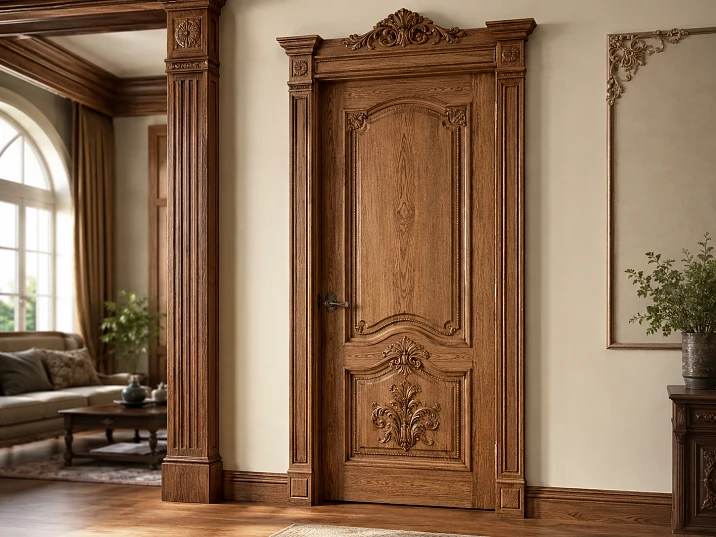
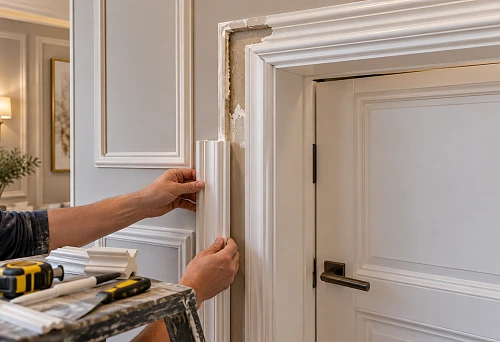
When a buyer searches for interior doors made of solid wood to buy, they often imagine not just a door leaf, but a complete interior composition: the door should match the walls, furniture, baseboard, architraves, floor, ceiling decor, and the overall style of the room. But it's not always necessary to replace the entire door. Sometimes a smooth or too simple leaf can be made more expressive with carved decor: overlays, moldings, wooden trim, corner elements, capitals, and pilasters around the opening.
This approach is especially useful for classic, neoclassical, art deco, modern interiors with wooden accents, and projects where the door should look more expensive, complex, and architectural. The interior door ceases to be just a partition between rooms. It becomes part of the wall, supports the furniture style, connects the baseboard with the architrave, repeats the motifs of panels, mirrors, portals, or ceiling decor.
The main task is not just to glue a beautiful detail onto the leaf. Door decor requires composition: where the frame will be, where the central accent is, how large the overlay should be, how to maintain symmetry, how to design the top, how to connect the leaf with the opening, when capitals and pilasters are needed, and when moldings and small carved elements are enough. A mistake in scale is immediately noticeable: the door can become overloaded, fragmented, or, conversely, the decor gets lost on a large surface.
At STAVROS, it's convenient to start not with guesses, but with ready-made ideas and real product groups. In the section carved decor for interior doors you can see examples of door designs, and then select overlays, moldings, trim, and elements for the opening. This route helps not to buy individual parts blindly, but to assemble a clear set: leaf, frame, central decor, corners, opening, finishing.
Why an interior door can be decorated with carved decor
An interior door occupies a large vertical area. In the interior, it is almost always visible: from the hallway, living room, bedroom, hall, study, kitchen-dining room. If the door is smooth, empty, or too simple next to classic furniture and wooden decor, it starts to conflict with the space. The leaf looks like a technical element, not part of the interior.
Carved decor solves this problem more gently than completely replacing the door. Overlay elements help add relief, create an imitation of a panel, highlight the center, emphasize the vertical, frame the edges, and connect the door with the trim and baseboard. With the right scheme, even a simple canvas becomes more complex and expressive.
This technique works especially well when the door is already installed but the interior is changing. For example, an apartment got classic walls, added moldings, baseboards, cornices, solid wood furniture, but the doors remained smooth. Completely replacing all the panels can be expensive and complicated. Decorating allows you to keep the base but change the appearance.
The second scenario is a new project. The designer or craftsman plans the doors in advance to match the room's style. Then carved overlays and wooden moldings are chosen not after the renovation, but together with the door panels, trims, baseboards, wall frames, and furniture. This is the best option because all elements are immediately selected by scale, material, and finish.
The third scenario is a commercial space. In a restaurant, hotel, salon, showroom, or executive office, the door can work as part of the atmosphere. A regular smooth door looks too ordinary. Carved elements make it more prestigious, helping to support a historical, classical, French, palace, or custom style.




When you don't need to completely replace the door
A complete door replacement is not always necessary. If the panel is straight, fits the size, opens normally, has no serious damage, and is satisfactory in construction, it can be considered as a base for decoration. Then the buyer does not replace the entire door group but enhances the appearance with overlay elements.
This approach is especially reasonable if the problem is purely visual. For example, the door is functionally good but too simple. Or the panel matches the color but looks empty. Or interior doors are already installed throughout the apartment, but you want to add a classic character only in the living room, bedroom, study, or hall.
Carved decor helps fill the visual emptiness. On a smooth panel, you can assemble a frame from moldings, add a central accent, emphasize the top part, or create symmetrical panels. The door becomes closer to a paneled one, even if it was originally smooth.
But there are cases where decor does not help. If the door is warped, closes poorly, does not hold fasteners, has an unstable coating, is heavily damaged, or the material is not suitable for mounting overlay parts, the technical issue must be addressed first. Decor should not mask structural defects that will reappear later.
Our factory also produces:
How a decorated door differs from a ready-made carved door
A finished carved door is initially designed as a single piece. Its panel, stiles, frame, relief, proportions, material, and finish are all thought out. A decorated door is assembled differently: an existing or new smooth door leaf is taken, and the decorative composition is created using applied elements.
Each approach has its own logic. A finished carved door is good when a completely new item is needed, designed and manufactured as a single piece. A decorated door is convenient when you need to update an existing door leaf, repeat interior motifs, add relief, or assemble a custom scheme without completely replacing the door.
A decorated door offers more flexibility. You can choose only moldings and create a calm frame. You can add carved overlays to the corners. You can assemble a complex central composition. You can decorate not only the door leaf but also the opening: add capitals, pilasters, a portal, and connect the door to the baseboard and wall.
The main thing is not to treat decor as random decoration. An interior door is constantly in sight; it is opened, closed, touched, and seen under different lighting. Therefore, details must be selected by size, material, style, and finishing method. A good decorative door looks as if it was designed from the start, not decorated at the last moment.
Get Consultation
What elements does STAVROS use for door decor
Different groups of products are used to decorate the door leaf and opening. They solve different tasks, and that is why it is better to assemble a set rather than buy one favorite detail.
Carved overlays as central accents
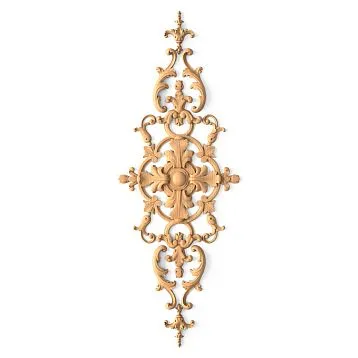
Carved overlays give the door its main decorative accent. They can be located in the center of the door leaf, at the top, in the corners of the frame, between moldings, or in an area where relief needs to be added. If the door seems flat, it is the overlays that help make it richer and deeper.
For the buyer, this is the most understandable way to update the door leaf. You can look Wooden door overlays and select elements to match the style: more strict, floral, classic, symmetrical, compact, or expressive. It is important not to take the first beautiful overlay. You need to understand where it will be placed, how much space will remain around it, and what will support it.
One large overlay without a frame can look accidental. Small overlays on a large panel can get lost. Two different overlays without a common axis can disrupt symmetry. Therefore, an overlay almost always works better together with molding, a frame, corner decor, or a central composition.
Wooden millwork and moldings for frames
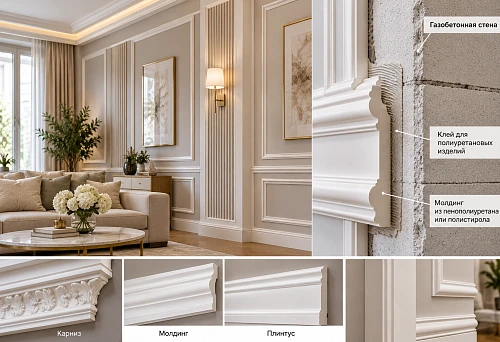
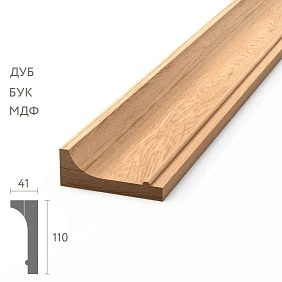
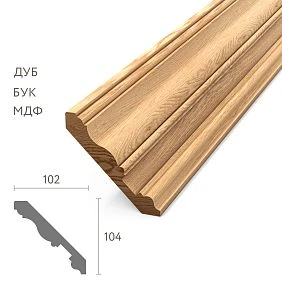
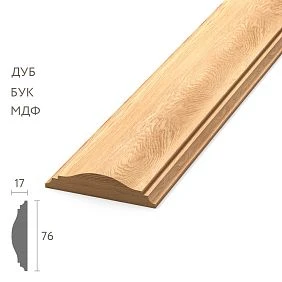
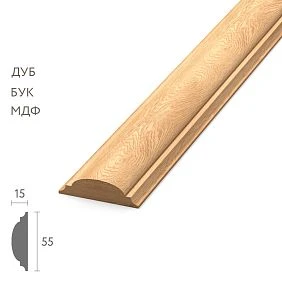
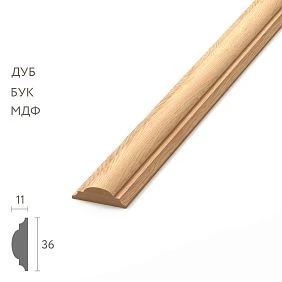
Molding and millwork create the geometry of the door. They turn a smooth panel into a more complex surface, form frames, imitate panels, and set verticals and horizontals. If the overlay is responsible for the relief accent, the molding is responsible for order.
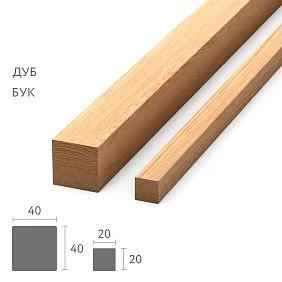
For a frame on the panel, you can use wooden millwork for a door frame. It helps to assemble rectangular, elongated, or symmetrical panels. Thanks to this, the door looks not just decorated, but architecturally constructed.
Molding is especially important for doors without panels. A flat panel gets structure: top frame, bottom frame, central zone, vertical lines. Even if there is little carved decor, the geometry itself already makes the door visually more expensive.
Decor for moldings
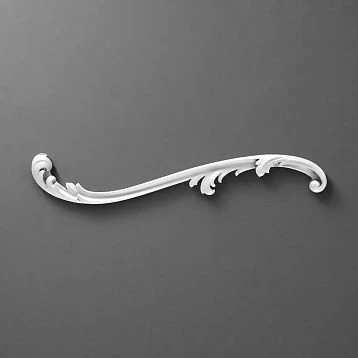
When a frame of moldings is already planned, the next question arises: how to design the corners, joints, and transitions. A simple rectangular frame can look neat, but sometimes it lacks completion. Then decor for moldings on the door panel.
Such elements are needed not only for beauty. They help to connect the moldings together, close corners, add symmetry, and make the composition resemble a well-thought-out paneled door. This is especially noticeable in classic and neoclassical styles, where random joints are poorly perceived.
If the door is tall or wide, corner decor helps maintain scale. If the door is narrow, on the contrary, you need to choose elements more carefully to avoid overloading the edges. It is important to remember: the decorative corner should support the frame, not draw attention to itself.
Decorative sets for symmetrical compositions
A decor set is convenient when the buyer needs not just one overlay, but a ready-made group of elements. In the example GRD-023, the set C.VRS-065 is used. This is a good reference for those who want to replicate a complex carved composition where the details already work together, rather than being selected randomly.
The set approach is especially useful for doors in a classic interior. Symmetry plays a big role here. If one side differs from the other, if the center is shifted, if the top and bottom are not coordinated, the door starts to look amateurish. The set reduces the risk of mismatch.
If the buyer wants to see a ready example, you can study Carved door decoration idea GRD-023. This idea uses elements from the STAVROS array: molding / casing / baseboard MLD-007.1, wooden baseboard / casing / heel PLT-007, and decor set C.VRS-065. Such an example helps to understand how individual details turn into a cohesive look.
Capitals and pilasters for doorway design
Sometimes decor only on the door leaf is not enough. If the door is in a formal area, hallway, living room, study, restaurant, or hotel, you want to design not only the leaf itself but also the space around it. Then capitals and pilasters come into play.
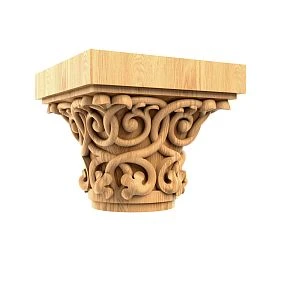
Capitals for a doorway help emphasize the upper part of the composition. They work as an architectural accent: connect vertical elements, support the portal, make the opening taller and more expressive.
Wooden pilasters for a portal They frame the side parts. They create the feeling of a portal, not an ordinary doorway. This technique is not suitable for every apartment, but in a large house, hall, representative area, or classic interior, it can completely change the impression of the door.
If the task already extends beyond the canvas, it is useful to look at Wooden portals STAVROS. The portal helps perceive the door as an architectural composition: the canvas, platbands, side parts, top, capitals, pilasters, and surrounding wall work together.
Table: which elements are needed for different tasks
| Buyer's task | What to use | What role does it play | What to pay attention to |
|---|---|---|---|
| Make a smooth door look like a paneled one | Moldings, wooden trim | Create frames and geometry of the canvas | Frame size, symmetry, margins from the edge |
| Add central accent | Carved overlays | Decorate the center or top of the door | Overlay scale relative to the door leaf |
| Shape the corners of the frame | Decor for moldings | Completes the frame, removes simplicity of joints | Compatibility with molding width |
| Repeat complex composition | Decorative set | Provides a ready group of coordinated elements | Check door dimensions and kit composition |
| Connect the door leaf to the opening | Casing, trim, baseboard | Makes the transition from door to wall neater | Thickness, profile, color, material |
| Make the door part of the portal | Capitals and pilasters | Frame the opening as an architectural zone | Ceiling height, opening width, room style |
| Design a grand entrance to the room | Portal, capitals, pilasters, carved decor | Makes the door a central element of the interior | Do not overload a small space |
This table shows that "decorating a door" is too broad a task. For one panel, a frame and a small overlay are enough. For another, a set of decor is needed. For a third, it's better to immediately think about a portal around the opening.
How to choose a door decor scheme
A decor scheme is the arrangement of elements on the panel. It is more important than the number of decorations. You can buy expensive carved details but place them so that the door becomes heavy and sloppy. You can take more subdued elements but build the composition correctly — and the door will look much more expensive.
One central composition
One central composition is suitable for a door where you need to create a strong accent. Usually, this is a vertical axis on which a large decorative element or a group of overlays is placed. This option works well in classic, baroque, rococo styles, formal areas, studies, living rooms, halls.
The advantage of this scheme is expressiveness. The disadvantage is a high risk of overload. If the central decor is too large, the door will look like a panel rather than a functional leaf. If it is too small, the accent will be lost. Therefore, a central composition requires precise offsets and good scaling.
Two vertical panels
Two vertical panels is a calmer scheme. The door is divided into an upper and lower part or into two elongated zones. Frames made of moldings create the feel of a paneled leaf. Small overlays can be added inside, or the frames can be left clean.
This scheme is suitable for standard interior doors where you want classic style without excessive carving. It looks good in neoclassicism, light interiors, bedrooms, hallways, studies. If the buyer is unsure where to start, a frame of moldings is often safer than a large carved center.
Frame of moldings around the perimeter
A perimeter frame helps make a flat door leaf structural. It is especially useful if the door has no panels. The molding defines the edge, makes the surface deeper, and connects the door with wall moldings, baseboards, and architraves.
But the frame cannot be placed too close to the edge. The door opens, and there is a frame, handle, hinges, lock, and casing around it. Space must be left so the decor does not interfere with operation or look cramped. Before purchasing trim, it is helpful to draw a diagram directly on a photo of the door or on paper with dimensions.
Upper accent above the panel
Sometimes a door already has panels or frames, but the top part looks empty. Then you can add a small top accent: a carved overlay, decorative element, corner pair, or ornamental motif. This technique works well on tall doors and in classic interiors.
The main thing is not to disrupt the balance. If the top is too active, the door will become "top-heavy." If the bottom remains completely empty, the composition may look unfinished. Therefore, the top decor is often supported by a bottom frame, molding, or a repeated motif elsewhere.
Symmetry
Symmetry is the foundation of a classic door. The right and left sides must be aligned. The center of the composition should coincide with the axis of the door leaf. Frames must have identical margins. Paired overlays should be placed at the same height.
In a modern interior, asymmetry is possible, but in door decor it requires experience. For most customer tasks, a symmetrical scheme is safer. It looks calmer, more expensive, and neater.
How to choose decor based on the size of the door leaf
The size of the leaf determines how much decor can be used. You cannot decorate a narrow door in a small apartment and a tall door in the hall of a private house the same way. The decor must match the scale.
Narrow leaf
On a narrow door, it is better to avoid overly wide moldings and large carved overlays. The decor should elongate the leaf, not make it narrower. Vertical frames, thin trim, a small central motif, and neat corners work well.
If you add a massive overlay to the center of a narrow door, it can visually flatten the panel. If you create too many frames, the surface becomes fragmented. For a narrow panel, lightness is important.
Standard door
A standard interior panel offers more freedom. Here you can assemble two vertical frames, add a top accent, use corner decor, and create panel imitations. The main thing is not to forget about the handle. The decor should consider its placement and not interfere with using the door.
For a standard door, a good scheme is: molding along the frame, decorative corners, a small carved overlay in the top or central area. If you want a richer look, you can refer to ready-made ideas from the section carved decor for interior doors.
High door
A high door requires a more complex vertical composition. If you leave decor only in the center, the top may look empty. If you decorate only the top, the bottom will remain weak. Therefore, for high panels, several zones are often used: a bottom frame, a central accent, a top panel.
A high panel handles carved decor well, but requires precision. The higher the door, the more noticeable errors in axis and symmetry. Before ordering parts, it's better to make a sketch with actual dimensions.
Double door
A double door is a separate task. Here, not only symmetry within each panel is important, but also symmetry between the leaves. If the decor on the two leaves doesn't match, the door will look untidy.
For a double door, mirror pairs of overlays, identical frames, a central axis between the leaves, and a unified top accent work well. Sometimes the composition can be arranged so that the two leaves together are perceived as one large decorative panel.
Door without panels
A flat door without panels is the most rewarding option for moldings. It's easy to create new geometry on it. But it's important to choose the right profile and indents. The molding should look like part of the door, not like a randomly glued-on strip.
For such a task, millwork and decor for moldings are especially useful. They help build a frame, add corners, and create a neat structure. If a carved overlay is added to the frame, the door acquires a more classic character.
Material and finish: how to choose for the door and interior
Door decor should match the material of the leaf and the future finish. Details cannot be chosen only by shape. The same element will look different on white enamel, dark tinting, natural oak, veneered surface, or painted MDF.
Beech for enamel
Beech is often chosen for painted elements. Its calm texture works well under enamel, and the carving looks neat and clean after painting. If the door will be white, milky, gray, graphite, or colored, beech can be a good base for overlays and moldings.
A white door with carved decor is especially popular in neoclassicism. It looks light, architectural, and does not overload the room. But white enamel requires careful preparation: all joints, edges, reliefs, and attachment points must be executed cleanly, otherwise defects will be noticeable.
Oak for tinting
Oak is chosen when you want to emphasize the wood texture. For solid oak doors or veneered doors, it's important that the overlay decor does not look foreign. If the door leaf shows the wood texture, the decorative elements should also support this logic.
The query "buy interior solid oak doors" is usually associated with a more prestigious interior. In such a situation, the decor must be especially precise. An oak door with carved overlays can look very expressive but requires coordination of shade, varnish, stain, patina, and adjacent wooden elements: baseboards, architraves, furniture, stairs, panels.
MDF and combined solutions
Not every door leaf is made of solid wood. MDF, veneer, composite structures, and painted doors are often used in interiors. This does not prevent the use of applied decor, but requires checking the surface and the method of fastening.
If an MDF door is to be painted together with the decor, it is important to select compatible materials and preparation. If the door is already covered with a finish film or varnish, you need to understand whether the elements can be securely attached and what the joint will look like.
No universal promise can be given here. Before purchasing decor, you need to check the material of the specific door and clarify installation with a master or STAVROS manager. Carved decor must hold securely and not interfere with operation.
White door with carved decor
A white door with carved decor is one of the most successful options for light classics. The relief on the white surface is visible due to light and shadow. Even without a contrasting color, the door becomes deeper. Moldings and overlays form an architectural pattern.
But a white door requires purity of composition. Any curvature, asymmetrical offset, or rough joint is noticeable. Therefore, it is better to calculate the scheme in advance, choose suitable trims, check dimensions, and not overload the leaf with small elements.
Toned door with an accent on wood texture
A toned door with carved decor looks more ceremonial. This option is suitable for offices, living rooms, halls, restaurants, hotels, homes with wood panels or classic furniture. The wood texture becomes part of the decor.
The main risk is mixing too many shades. If the floor, door, casing, baseboard, and furniture have different tones, the interior can become motley. It is better to choose one wood line or coordinate samples in advance.
Comparison table of door design schemes
| Scheme | Where best to use | What to buy | Pros | Risk of error |
|---|---|---|---|---|
| Only a frame made of moldings | Neoclassicism, smooth doors, calm interior | Trim, molding | The door becomes similar to a paneled one | A frame that is too thin will get lost |
| Frame + corner decor | Classic, bedroom, living room, hallway | Molding, decor for moldings | The composition looks complete | Corners can overload a narrow panel |
| Central carved overlay | Front door, study, hall | Carved overlay, frame | A strong accent appears | The accent may be too large |
| Decorative set | Complex classic project | Set, moldings, trim | Details are easier to coordinate with each other | Need to accurately check the size of the panel |
| Canvas decor + opening framing | Hall, living room, hotel, restaurant | Overlays, moldings, capitals, pilasters | The door becomes part of the architecture | It can be heavy in a small room |
| Portal around the door | Grand entrance area, high ceiling, large opening | Pilasters, capitals, portal | The opening looks prestigious | Requires space and a precise project |
What to buy together for door decoration
To make the door look complete, it's better to assemble a set right away. Buying a single overlay rarely solves the entire task. Usually, a combination of several elements is needed.
The first element is carved overlays. They provide the main accent. If the door is smooth, you can use one central overlay, a pair of symmetrical elements, or several pieces vertically. Suitable for this are Wooden door overlays, which should be chosen based on the size of the door leaf and the interior style.
The second element is molding or trim. Without a frame, overlays often look like separate decorations. Trim helps to assemble the composition, create an imitation of a panel, and set the geometry. Suitable for this task is wooden millwork for a door frame.
The third element is decor for moldings. It is needed if the frame should be not simple but more decorative. Corner and connecting pieces help make the composition complete. Useful here is decor for moldings on the door panel.
The fourth element is the opening design. If the door is in an important area, you can add Capitals for a doorway и Wooden pilasters for a portal. This is no longer just door leaf decor, but the design of an architectural frame around the door.
The fifth element is materials for installation and finishing. In the SEO scheme, there is no separate URL for these products, so no link is needed. But the buyer needs to think in advance about glue, fasteners, primer, enamel, varnish, stain, sanding, painting, and final treatment. The specific method depends on the door material, decor, and chosen finish.
Table: what to buy together
| What to add to the purchase | Why it's needed | Which scenario it suits | What to pay attention to |
|---|---|---|---|
| Carved overlays | Create the main decorative accent | Center of the door, top part, corners, symmetrical compositions | Overlay size relative to the panel |
| Molding / millwork | Forms the frame and geometry | Panel imitation, perimeter frame, vertical panels | Profile, width, joints, offsets |
| Decor for moldings | Completes corners and connections | Classic frame, neoclassical, complex pattern | Compatibility with the selected molding |
| Decorative set | Helps assemble a cohesive composition | Complex project, repeating the idea of GRD-023 | Composition, dimensions, placement on the panel |
| Capitals | Emphasize the top of the opening | Front door, hall, portal | Ceiling height and opening width |
| Pilasters | Frame the side parts of the opening | Door portal, arch, large passage | Dimensions, style, connection with baseboard |
| Finishing materials | Make the decor and door uniform in color | Enamel, varnish, stain, tinting | Compatibility of coating with material |
| Material and color samples | Help avoid shade errors | Oak, beech, tinting, white enamel | Check under actual room lighting |
How not to confuse similar products
| Product | What it is for | When to buy |
|---|---|---|
| Carved overlay | Emphasis on the door leaf | When you need to decorate the center, top, corners, or a specific area of the door |
| Molding / millwork | Door frame and geometry | When you need to create a panel imitation or structure a smooth surface |
| Decor for moldings | Corners, joints, frame completion | When a simple frame looks too plain |
| Decorative set | Ready group of elements | When a complex symmetrical composition is needed |
| Capital | Top architectural accent | When framing an opening, portal, or upper zone |
| Pilaster | Vertical framing of the opening | When the door should look like an architectural portal |
| Casing | Closing the joint between wall and frame | When basic opening trim is needed |
| Portal | Full opening design | When the door should become the central architectural element |
The main difference is the place of application. The overlay works on the door leaf. The molding builds a frame. The capital and pilaster already relate to the opening. The portal frames not the door itself, but the entire architectural zone around it. If you mix these tasks, you can buy beautiful elements but fail to assemble a coherent composition from them.
Practical selection for different situations
Need to decorate a plain smooth door
Start with a simple scheme: a frame of moldings and a small carved accent. A smooth leaf is easy to overload if you immediately buy large overlays. It's better to first set the geometry, then add relief.
For this task, linear elements, moldings, and corner decor are suitable. It's better to choose the overlay after the frame dimensions are clear. If the door is standard, you can make two vertical panels or one elongated central composition.
You need to make the door look like a paneled door
The paneled effect is created not by a single overlay, but by frames. Moldings form boundaries, provide relief, and visually divide the leaf. If you add corner decor, the frame becomes more classic.
Here it is especially important to maintain indents. The frame should not come too close to the edge of the door, handle, hinges, or lock. Before ordering, you need to draw a diagram with dimensions.
You need to design the door in a classic style
The classic style loves symmetry, verticality, and repetition of motifs. A suitable scheme: a frame, a central overlay, corner decor, possibly a top accent. If the door is in a formal area, you can supplement the opening with capitals and pilasters.
For inspiration, it's worth looking at Carved door decoration idea GRD-023This is an example where not individual random details are used, but a bundle of elements from an array.
Need to design a double door
A double door requires symmetry. The decor on each leaf must be identical or thoughtfully paired. If one leaf is decorated more heavily than the other, the entire group will look untidy.
It's better to use identical frames, paired overlays, and a common axis. If the leaves are narrow, avoid excessively wide moldings. If the leaves are tall, add a vertical division so the panel doesn't look empty.
Need to make the door look more expensive
A door looks more expensive not from the number of details, but from precise composition. The molding should be chosen by scale, the overlays by style, the finish by material, the opening by the overall architecture of the room. Sometimes a frame and neat enamel are enough. Sometimes a portal is needed.
If you want to enhance the impression, you don't have to add everything at once. Start with a frame, then add a carved accent, then decide if an opening is needed. This approach reduces the risk of overload.
Need to design a door in a hotel, restaurant, or salon
In a commercial interior, many people see the door, so it should be expressive and practical. The decor should not snag, obstruct passage, complicate cleaning, or get damaged quickly. It's better to plan the coating, placement height of elements, and intensity of use in advance.
For such tasks, more cohesive compositions work well: frames, decor sets, capitals, pilasters, portals. But it all depends on the scale of the room. A small office and a large hall require different solutions.
What not to make from scratch if there are ready-made STAVROS elements
If you want to decorate a door yourself or through a craftsman, you don't have to carve complex decor from scratch. Ready-made elements save time and reduce the risk of errors. The buyer doesn't need to independently design the ornament, carve the relief, select random blanks, or try to make identical paired parts by hand.
You can use ready-made overlays, moldings, trim, corner decor, capitals, and pilasters. Then the main work shifts to proper selection, marking, installation, and finishing. This is more rational than trying to create a carved pattern without professional equipment.
A ready-made element is also convenient because you can see it in advance in a catalog, check its purpose, match it with other parts, and incorporate it into the project. If a buyer wants to replicate an idea, they can look at ready-made solutions on the door page rather than assembling a composition entirely from scratch.
This approach is especially useful for carpentry workshops and designers. The craftsman can focus on the quality of fit, surface preparation, painting, and installation. The designer can show the client a real element rather than an abstract picture. The buyer gets a clearer path: idea → part selection → size verification → finishing → installation.
Installation, preparation, and finishing: what to consider in advance
Before installation, you need to understand the door material. One thing is a wooden panel for painting. Another is a veneered door. A third is painted MDF. A fourth is a door with a ready-made finish that cannot be damaged. Surface preparation, fastening method, and final finishing depend on this.
Marking is more important than speed. Decor on a door is always visible from the front. If the frame is slightly off, if the central overlay is shifted, if the corners don't match, the error will be noticeable every day. Therefore, first make a diagram, check the axes, measure distances, apply the elements, and look under different lighting.
It's better to plan the finishing in advance. If the door and decor will be painted together, you need to consider primer, enamel, sanding, joints, and finish. If the decor should differ in color, you need to understand where the boundary will be. Contrast can look beautiful, but it requires precision.
It's important to consider the handle, hinges, lock, and opening direction. The decor should not interfere with using the door. Overlays are not placed where the hand constantly touches the panel if it leads to rapid wear. The molding should not hinder closing or catch on the casing.
After installation, treat the door like decorative furniture. Do not wash the relief with aggressive agents, heavily wet the wood, or rub with abrasives. Care depends on the coating, so choose the finish not only for beauty but also for future use.
Mistakes when choosing door decor
Mistake 1. Buying an overlay without a diagram
One beautiful overlay does not automatically make a door beautiful. You need to understand where it will be placed, how it relates to the moldings, handle, door height, and overall axis. Without a diagram, the overlay often looks random.
Mistake 2. Not considering the door size
The decor should match the door leaf. Large elements on a narrow door overwhelm it. Too small elements on a tall door get lost. Before buying, you need to measure the height, width, handle position, and distances to the edges.
Mistake 3. Overloading the door with carving
Classic does not mean maximum ornament. Sometimes a frame and one accent are enough. If you add too many details, the door becomes heavy and will clash with the interior.
Mistake 4. Placing decor without connection to the opening
If the door leaf is richly decorated, but the casing and opening remain too simple, the composition may look unfinished. In formal areas, you need to think not only about the door but also about the opening.
Mistake 5. Not coordinating the finish
The decor made of wood, the door, baseboard, casing, and wall should match in color. If the overlays are painted differently than the door leaf, it can be a beautiful contrast or a random mistake. The difference should be intentional.
Error 6. Ignoring the handle and fittings
The handle is an important part of the door. If the decor is too close to the handle, using the door is inconvenient. If the handle style does not match the carved decor, the door looks disjointed.
Error 7. Buying elements from different styles
Floral patterns, strict geometry, baroque swirls, art deco, and minimalism may not combine well. It is better to choose elements from the same stylistic line or focus on ready-made ideas.
Error 8. Not checking the base material
Not every door is equally suitable for installing overlay decor. The surface must hold the elements, and the coating must allow preparation. If in doubt, check with a specialist before purchasing.
Error 9. Forgetting about the door frame
Sometimes a buyer decorates the door leaf but leaves old simple trim. As a result, the door looks elegant, but the frame looks random. For a classic interior, it is better to immediately consider moldings, capitals, pilasters, or a portal.
Error 10. Not clarifying current parameters
Before ordering, check product cards, dimensions, material, availability, price, kit composition, and compatibility. This is especially important for decor kits and complex projects based on the GRD-023 sample.
Who is a carved door decor suitable for
This approach suits owners of classic and neoclassical interiors, designers, carpentry workshops, door manufacturers, hotels, restaurants, salons, private homes, and projects where the door should be a noticeable part of the interior.
It is especially useful if the door is in a living room, hall, study, formal entryway, bedroom, or an area frequently seen by guests. In such places, a plain flat panel may look too simple, while carved decor helps elevate the entire wall.
Carved decor is also suitable for those who want to update existing doors without full replacement. If the panel is technically sound but does not match the new interior, overlay elements can provide the desired effect.
This approach is not suitable for temporary solutions, budget doors without finishing, minimalist interiors without decorative accents, metal entry doors without installation capability, or cases where the panel is damaged or unsuitable for mounting.
If the buyer wants a maximally simple smooth door without relief, overlays and moldings will be unnecessary. If a modern hidden door flush with the wall is needed, carved decor may also contradict the goal. It is important to honestly assess the interior style before purchase.
How to buy STAVROS elements for door decoration
Start with an idea. Open the section carved decor for interior doors and look at the available design schemes: central accents, frames, carved details, moldings, complex compositions. This will help you understand which door suits you best: calm neoclassical, more formal classic, decorative panel, or portal.
Then you can explore Carved door decoration idea GRD-023It shows how specific elements from the array are used: MLD-007.1, PLT-007, and the C.VRS-065 kit. Even if you don't replicate the composition exactly, this example helps to see the principle: the molding creates structure, the linear elements tie components together, and the decor kit adds relief.
After choosing an idea, you need to move on to product groups. For accents, look at Wooden door overlays. For frames — wooden millwork for a door frame. For corners and joints — decor for moldings on the door panel. For the opening — Capitals for a doorway и Wooden pilasters for a portal.
Before ordering, prepare the door dimensions, a photo of the door leaf, the width and height of the opening, the desired finish, the color of the walls, casing, and baseboard. If the door is already installed, take a straight photo of it without significant distortion. This makes it easier to select the scale of the decor and avoid mistakes.
If the project is complex, it's better not to select parts randomly. You can contact a STAVROS manager and clarify which elements are suitable for your layout, material, size, and finish. This is especially important for tall doors, double doors, and portals.
FAQ
Can an ordinary interior door be decorated with carved decor?
Yes, if the surface is suitable for attaching overlay elements and there is an opportunity to perform preparation, painting, or tinting. Before purchasing, you need to check the door material, the condition of the coating, and the future installation method.
What is better to use for door decor: overlays or moldings?
Overlays provide accent and relief, while moldings form a frame and geometry. Most often, they work better together: the molding creates structure, and the overlay decorates the center, top, or corners.
How to make a door look like a paneled one?
You need to assemble a frame from moldings or wooden trim, maintain equal indentations, and add corner decor if necessary. This gives a smooth surface a structure similar to a classic paneled door.
What to buy for decorating a door in a classic style?
The minimum set includes molding or trim, carved overlays, decor for moldings, and materials for installation and finishing. If not only the door leaf but also the opening is being decorated, additionally consider capitals and pilasters.
How does door decor differ from a door portal?
Door decor refers to the leaf itself: frames, overlays, central accents. The portal frames the space around the door: side parts, top, capitals, pilasters, architectural framing of the opening.
Can a door be decorated without replacing the leaf?
Yes, if the leaf is smooth, durable, and suitable for attaching decor. If the door is damaged, closes poorly, or the coating does not hold the installation, first resolve the technical issue.
How to avoid overloading a door with carved decor?
Start with a diagram. Define the frame, center, top, bottom, and indentations. Do not buy many different overlays at once. For a standard leaf, moldings, corner decor, and one accent are often sufficient.
How to choose a molding for a door?
Look at the width of the door leaf, the door style, the frame size, and the future finish. The molding should be noticeable but not too heavy. For a narrow door, it's better to choose a more delicate profile; for a tall door, a more expressive one can be used.
Is carved decor suitable for a white door?
Yes. White enamel highlights the relief well through light and shadow. However, a white door requires careful marking, clean joints, and high-quality surface preparation because mistakes will be noticeable.
Can decor be used on an MDF door?
Yes, if the surface is suitable for attachment and finishing. You need to consider the door's coating, future painting, glue, weight of the elements, and the craftsman's recommendations. There is no universal solution for all MDF doors.
What is better: one large overlay or several small ones?
It depends on the size of the door leaf and the style. For a front door, a large central accent might work. For calm neoclassicism, several more restrained elements in a frame are better. The main thing is to maintain symmetry and scale.
Is it necessary to decorate the opening around the door?
Not always. If the goal is just to update the door leaf, you can limit yourself to a frame and overlays. If the door is in a hallway, living room, or front area, it's better to connect the opening with the leaf through capitals, pilasters, or a portal.
How to replicate the GRD-023 idea
First, study the finished composition, then check your door dimensions and the list of used elements. The GRD-023 example includes MLD-007.1, PLT-007, and the C.VRS-065 kit. Before ordering, verify compatibility with your door leaf and finish.
What to check before ordering decor?
Check door dimensions, leaf material, handle location, hinges, opening direction, future finish, kit composition, element dimensions, and installation feasibility. For complex compositions, it's better to prepare photos and dimensions for consultation.
Result: how to transition from a simple door to an expressive composition
An interior door with carved decor is not just a decorated leaf. It's a way to connect the door with the interior, make it part of the wall, support classic furniture, baseboards, architraves, portals, moldings, and the overall room style. If everything is chosen correctly, the door looks not like an afterthought after renovation, but as intended from the start.
It's best to start with an idea and a diagram. First, look at door examples, then choose a format: frame, central accent, decor kit, opening design, or full portal. After that, select specific elements: overlays, linear moldings, molding decor, capitals, and pilasters.
STAVROS helps you assemble such a route using real product groups: from ready-made door design ideas to decorative overlays, wooden linear moldings, and architectural elements for the opening. This is more reliable than buying random parts separately. A good door starts not with the amount of carving, but with precise composition, correct scale, suitable material, and thoughtful finish.