




























Article Contents:
- Why in classic furniture a handle is no longer just hardware
- Handle shape as part of the facade image
- Scale: why handle size is more important than its shape
- Where is the line between hardware and decorative element
- When a handle becomes decor
- When handles alone are no longer enough
- When furniture has enough handles, and when decorative elements are already needed
- Scenario 1: Handles are enough
- Scenario 2: Decor needed because the facade is 'empty'
- Scenario 3: Both are needed
- Which furniture handles work best in classic furniture
- Knob handle
- Bracket handle
- Recessed handle
- Long Wooden Handles
- Cabinet handles in classic style: material makes all the difference
- Which decorative elements actually work on a facade, and which only overload it
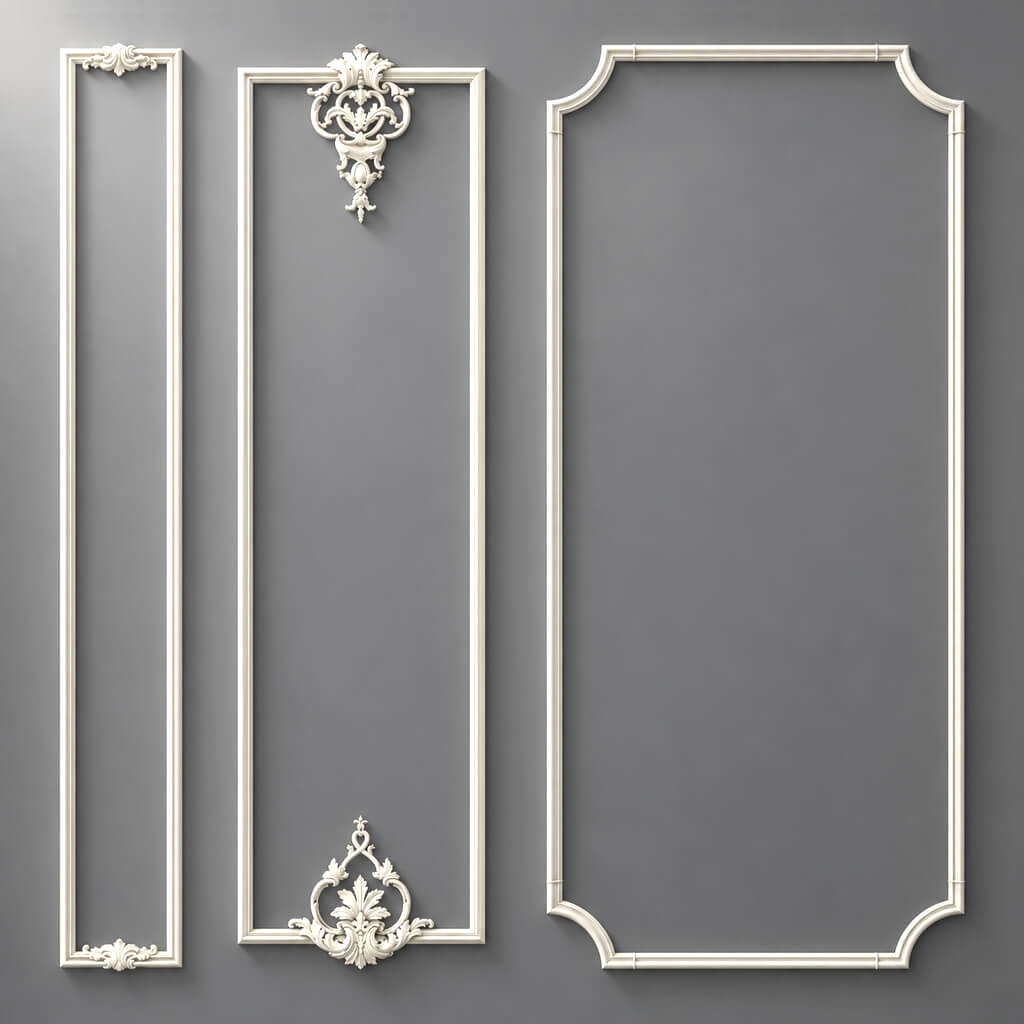
- Applied moldings and frame outlines
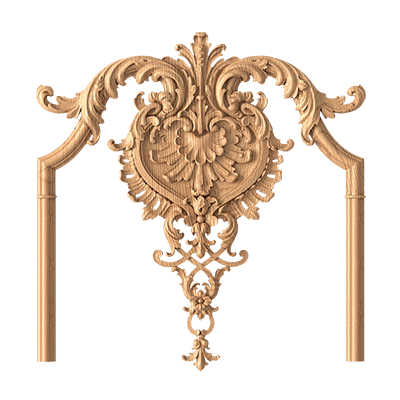
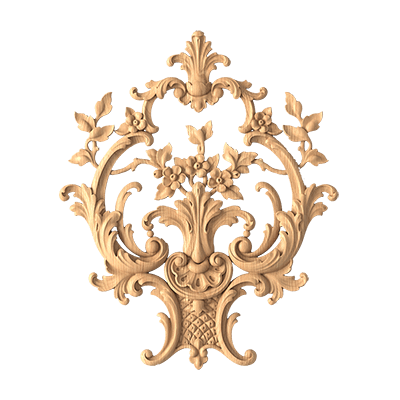
- Carved decor for furniture
- Applied decor: when it works
- How to assemble classic furniture without the feeling of cheap excess
- Seven mistakes that make classic furniture heavy
- Wooden handles and decorative elements: how to tie the facade into a unified solution
- A unified shade is the foundation of the system
- Rhythm of handles and rhythm of decor
- Wooden furniture decor: when naturalness is more important than imitation
- For which furniture items is this logic especially important
- Cabinet
- Commode
- Classical office furniture
- Classical living room furniture
- Chest of drawers and nightstand
- How to choose wooden handles for modern classic: three working schemes
- How to choose: a practical checklist before buying handles and decor
- FAQ: answers to the most frequently asked questions
- Conclusion
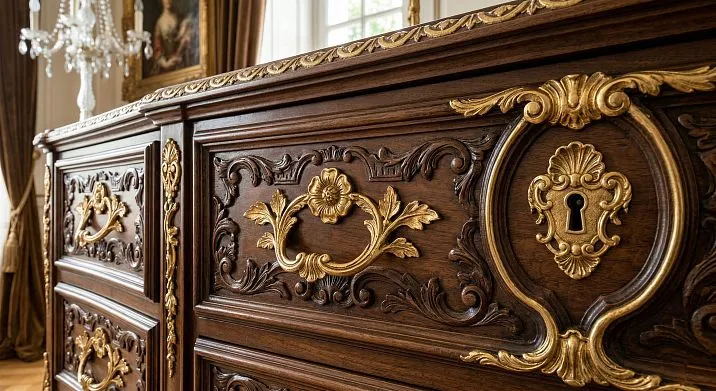
There is a question that is rarely asked out loud but constantly resolved in practice: when does a detail on a furniture facade work as hardware, and when does it become part of the image? It seems the answer is obvious - the handle opens the door, the molding decorates the facade. But in reality, everything is much more subtle.Furniture Handlesin a classic wardrobe have long ceased to be just a grip point. Anddecorative elementson the facade carry not only aesthetics but also an architectural function - they divide the plane, set the scale, organize the gaze. And it is precisely where hardware and decor begin to work in tandem,Classic Furnituretransforms from a collection of wooden objects into a cohesive interior statement.
This article is not a style guide or a catalog of handles. It's an analysis of the logic: why some furniture pieces look cohesive and expensive even without complex decoration, while others are overloaded with overlays and yet give an impression of cheapness. The difference almost always lies in understanding where each element's function ends and its role in the overall image begins.



Why in classic furniture a handle is no longer just hardware
Open any minimalist kitchen set from recent years—and you'll see that the handles there are either completely hidden (edge opening, push-to-open), or executed as a maximally neutral element: a thin rail, a beveled edge, a metal profile rail. Here, the handle is a utilitarian object. It should not attract attention. Its task is to provide a convenient grip and disappear from perception.
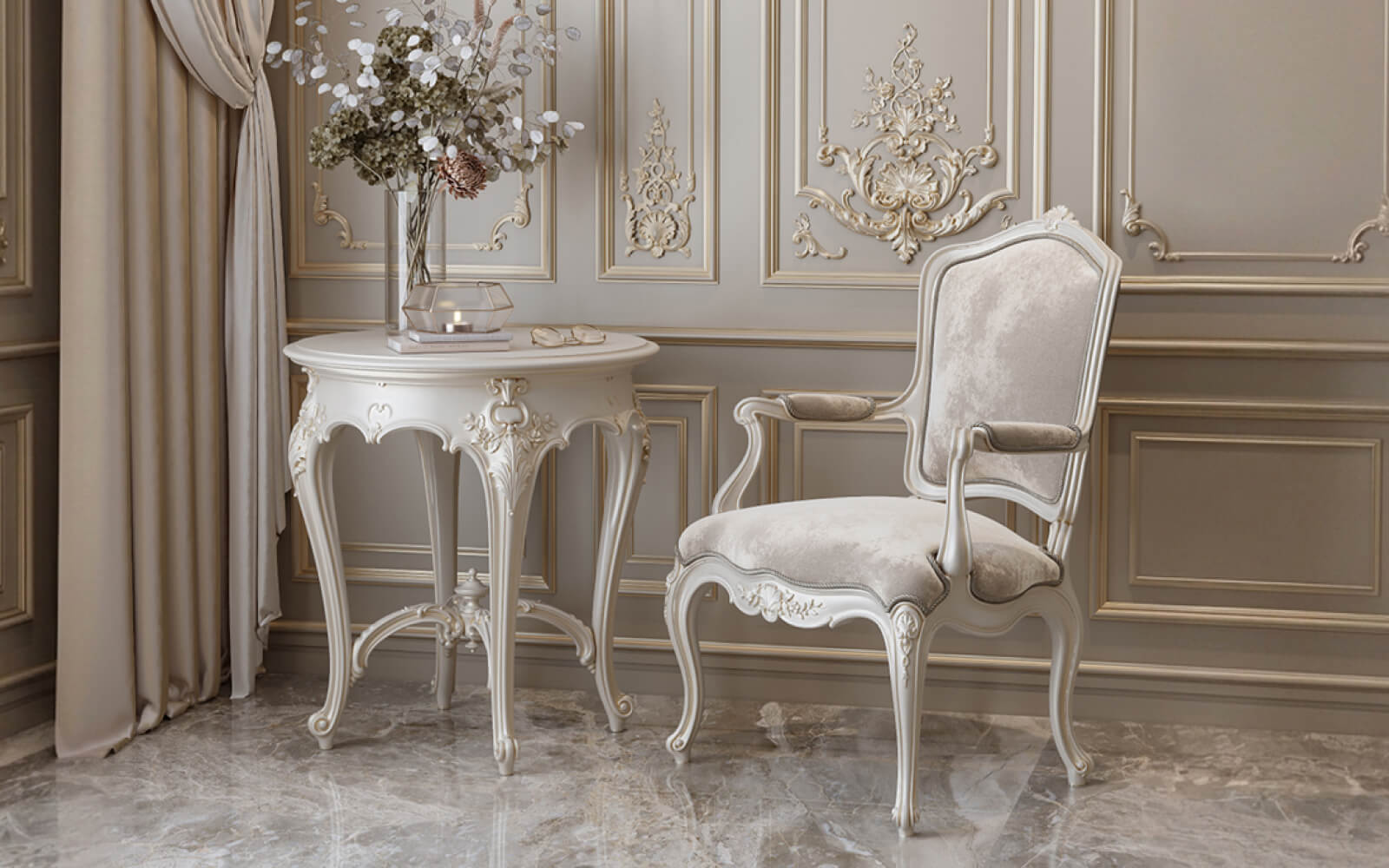
inclassic furniture in the interioreverything works fundamentally differently. The facade of a classic cabinet is no longer just a closed plane. It is an architectural object with proportions, relief, rhythm. And the handle on such a facade is not a spot in the right place, but a point that completes or emphasizes all this architecture.
Handle shape as part of the facade image
Imagine a wide classic chest of drawers with facades framed by molding. The facade is tall, with pronounced relief and a warm walnut tone. What kind of handle would suit it?
A thin stainless steel bracket at 96 mm—won't work. It will look like a randomly attached part from another item. A flat plastic button—is excluded from the conversation immediately.
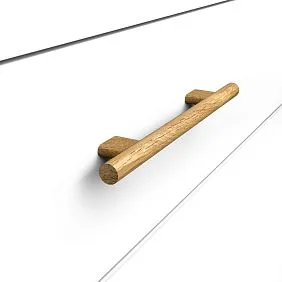
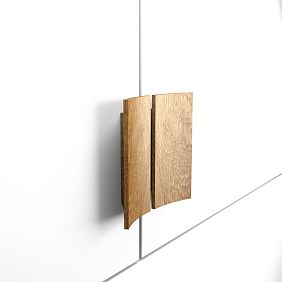
ButWooden handlewith a curved silhouette, matching the solid wood tone, with a rounded profile—and the facade comes to life. The handle begins to 'converse' with the relief, the color, the scale of the panel. It ceases to be just a grip point and becomes the finishing touch, without which the entire image is incomplete.
This is exactly what happens in classic furniture: handles for classic furniture perform a dual function—both utilitarian and visual simultaneously. And if this dual function is not well thought out, the result is almost always disappointing.
Our factory also produces:




Scale: Why the size of a handle is more important than its shape
Professional carpenters and designers know: the most common mistake when choosing handles is a mismatch in scale. A small knob on a wide, tall front looks lost. A long rail handle on a small nightstand appears bulky and absurd.
In classic furniture, scale is the primary selection criterion. The handle should be proportionate to the width of the front. An approximate proportion: the length of the handle (or the diameter of a knob) should be 1/4 to 1/3 of the front's width. On a 400 mm wide front—a handle of 96–128 mm. On a 600 mm wide front—a handle of 128–160 mm. On a tall front with moldings, you can work with two handles vertically or use long wooden furniture handles—this provides an additional vertical accent.
Get Consultation
Where is the boundary between hardware and a decorative element
This question may seem philosophical, but it has a very practical answer. Hardware is responsible for function: to open, close, lock, pull out. A decorative element is responsible for the image: to give shape, set scale, create rhythm, add depth. But in good furniture, especially classic furniture, the boundary between them is intentionally blurred.
Take a furniture handle-bracket with a voluminous cast holder, patinated to resemble old bronze. It opens a drawer—that's hardware. But with its relief, color, and plasticity, it adds character of the era to the front, a sense of weight and craftsmanship—that's already a decorative element. Exactly the same object, but working in two registers simultaneously.
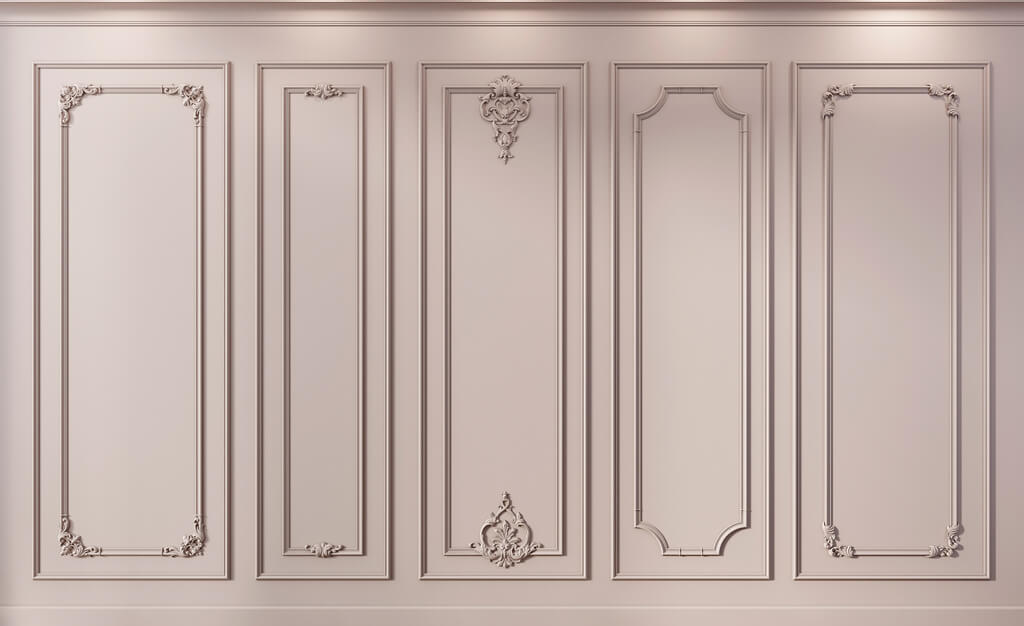
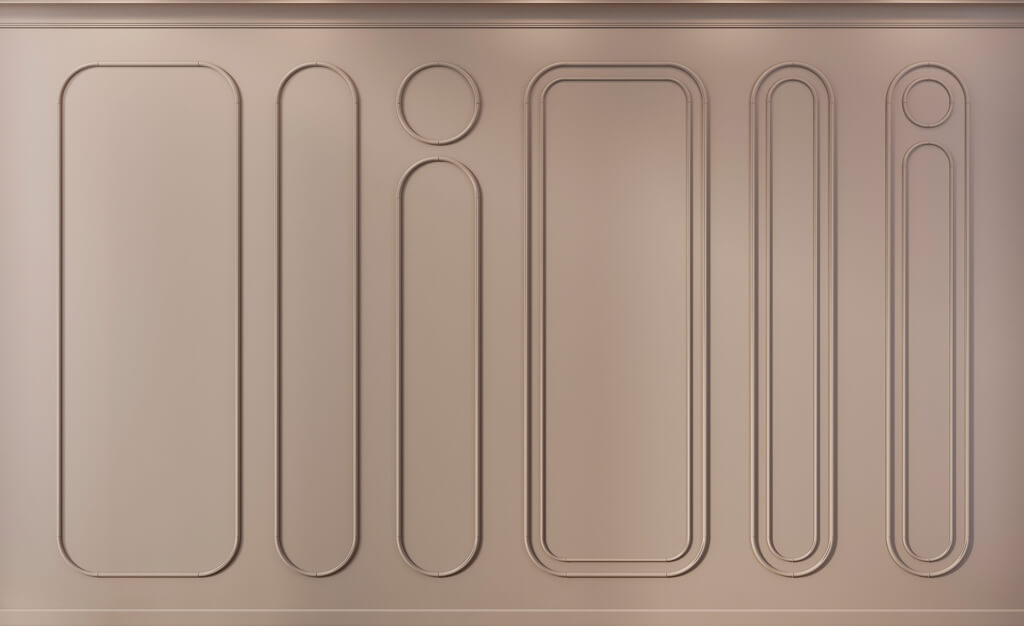
Or—a front overlay on a cabinet in the form of a frame outline with a milled profile. This is clearly decor: it doesn't open or close anything. But it structures the plane, makes it not flat but three-dimensional, adds rhythm and shadow. This is the work of an architect—only on the scale of a furniture front.
When a handle becomes decor
A handle ceases to be just hardware and starts working as furniture handles as a decorative element in several cases:
-
When its form is more complex than the function requires: cast ornamentation, carved base, voluminous silhouette — all this is already excessive for opening a drawer, but necessary for the image.
-
When the handle material is the same as the main material of the facade:Wooden Handleon an oak facade is perceived not as a separate element, but as a continuation of the solid wood.
-
When the handle is placed symmetrically relative to the decorative system of the facade — it is included in the overall composition and becomes part of it.
When handles alone are no longer enough
There is a type of facades where handles alone cannot cope with the task of creating an image. These are large smooth planes — tall sliding wardrobe doors, facades of a classic sideboard, side panels of a chest of drawers. Here, a handle physically cannot structure the space: it is too small for the scale of the facade.
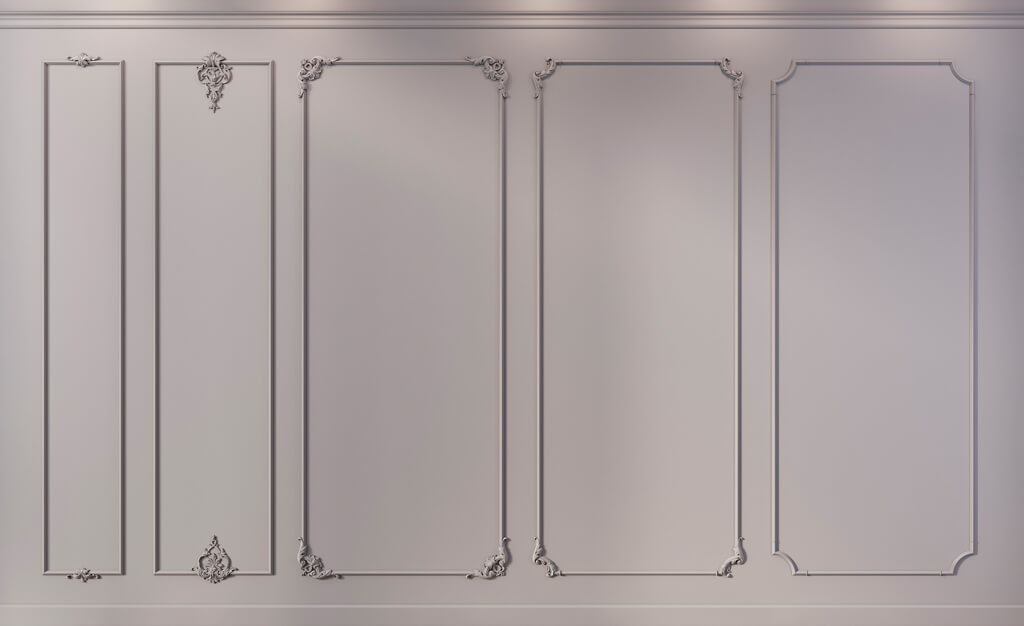
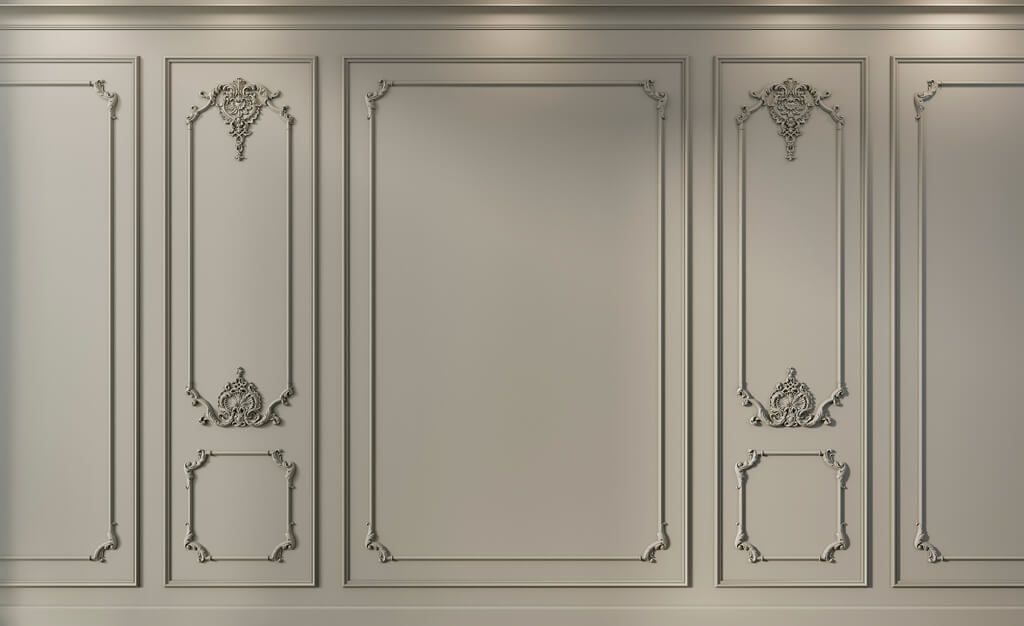
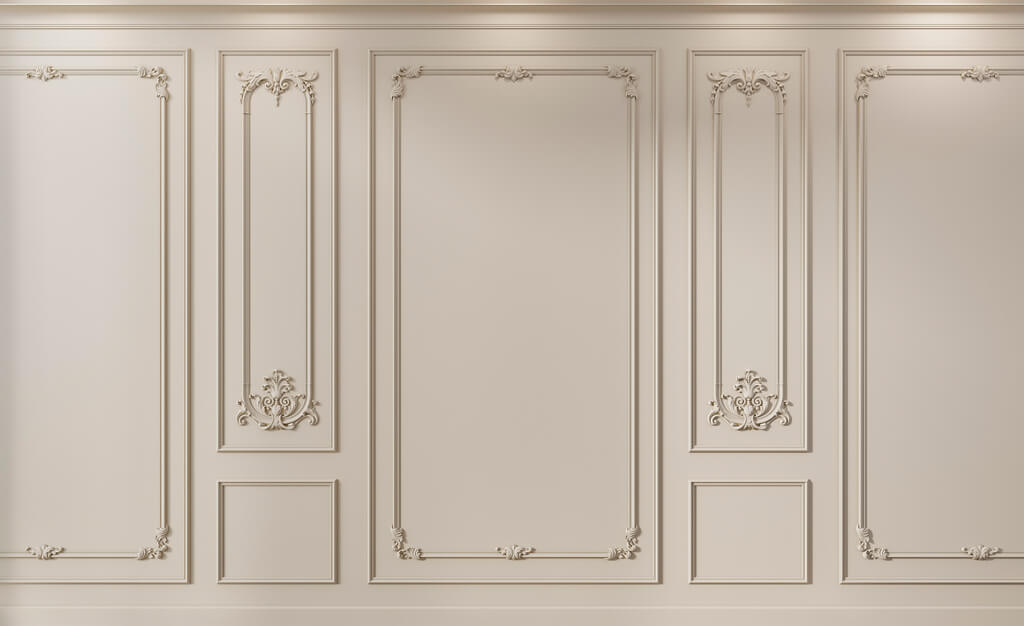
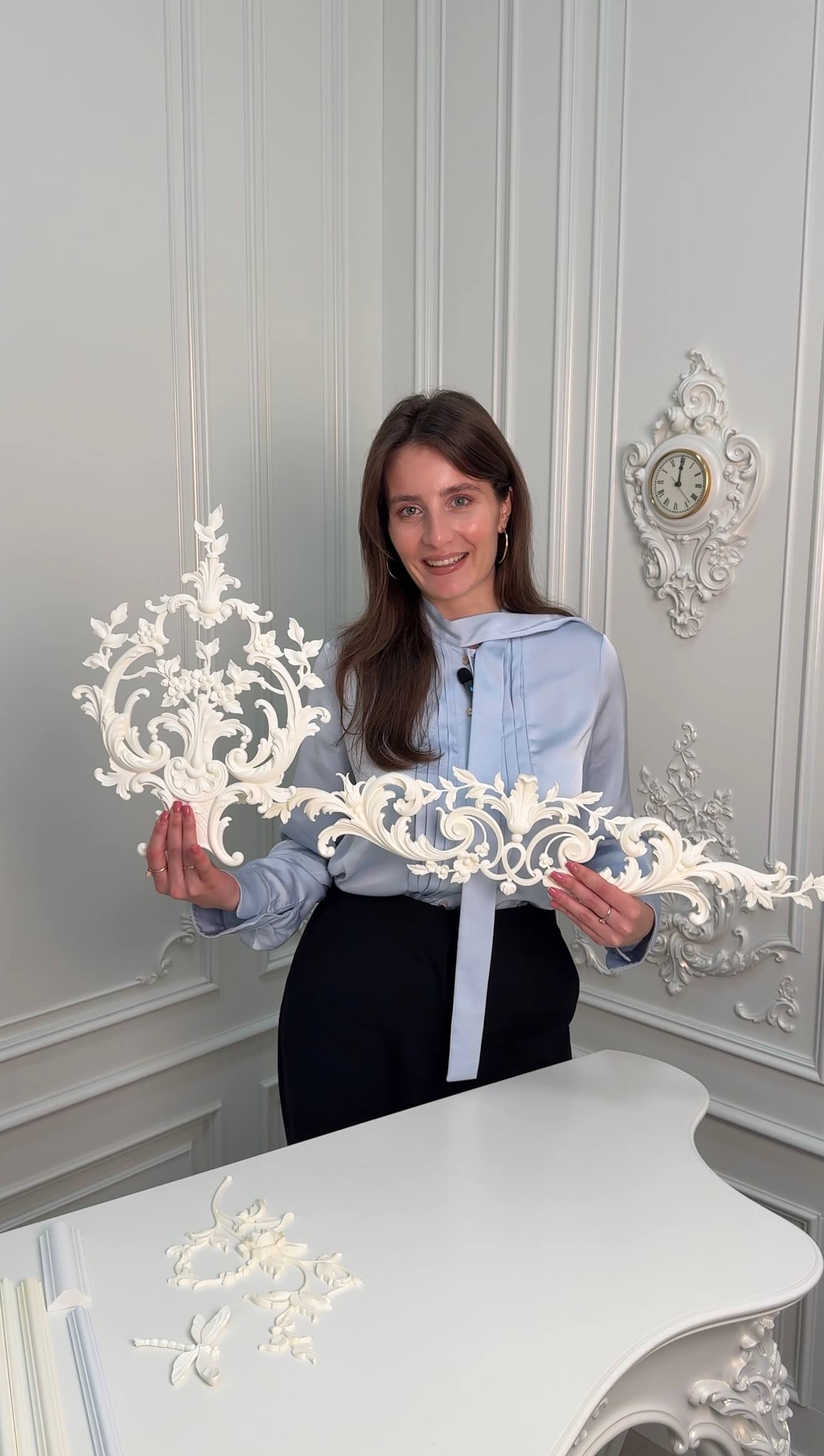
This is precisely wheredecorative elements for furnitureare needed: overlays, moldings, frame outlines, carved rosettes. They take on the architectural work — dividing the plane into fields, creating shadow and depth, giving the facade scaled expressiveness. After this, the handle falls into place — as a final detail of an already finished composition, not as the sole visual accent on an empty facade.
When furniture has enough handles, and when decorative elements are already needed
The answer to this question lies in the character of the facade. Let's examine three scenarios that most people encounter when choosing hardware and finishes for furniture.
Scenario 1: Handles are enough
A small front (up to 400 mm wide) already has milled relief or a frame profile, made of solid wood with a pronounced texture. In this case, the front's relief already creates visual work—and a properly chosen handle will complete the look without additional decor.
For example, a kitchen front with an oak solid wood frame profile and an uncoated wooden push-button handle is a complete, assembled look. Adding overlays heredecorative elementswould overload an already rich plane.
Scenario 2: Decor is needed because the front is 'empty'
The front is large, flat, without milling or relief. This is typical for furniture in modern classic or neoclassical styles: smooth painted fronts, MDF with tinted coating, veneered flat panels. Here, a single handle on a large front looks orphaned—and even the most beautiful wooden pull handle won't save it.
The solution is to add structure: an overlaydecor for furniturein the form of a frame molding, corner overlays, or a central cartouche. After this, the front gains body, volume, rhythm. And only then does the handle integrate organically into this ready architecture.
Scenario 3: Both are needed
This is a classic case piece with tall fronts, several drawers, and glazed sections. A classic buffet, a library bookcase, a study suite. Here, the front system requires full decorative work: moldings along the perimeter of the fronts, corner overlays, carved elements at key points—and on top of this architecture, handles that do not compete with the decor but support it.
Which furniture handles work best in classic furniture
Let's break down the types by their role in a classic interior. This is not a catalog review, but practical selection logic.
Knob Handle
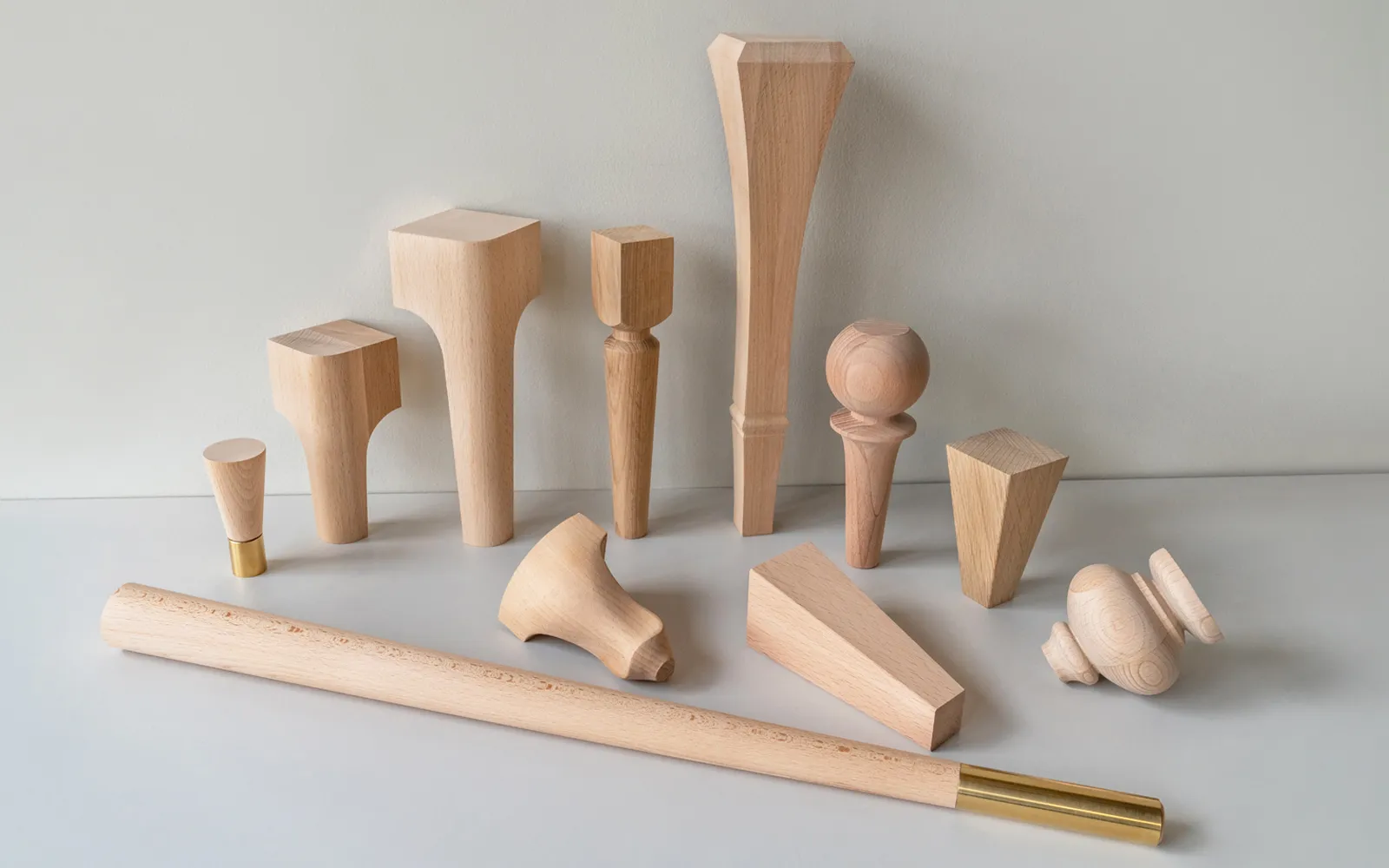
The most delicate option. A button occupies minimal space on the facade and works well where the facade is already rich in decor: moldings, relief, solid wood texture. A wooden button handle made of oak or beech is the ideal choice for small fronts and drawers where a grip point is needed without additional emphasis.
In classic furniture, a button works best on fronts up to 300 mm wide — cabinet doors, dresser drawers, small display cabinet sections.
Bracket handle
The bracket is a universal classic type. A wooden bracket handle with a curved arc and voluminous holders is one of the most organic options for a classic wardrobe, dresser, and writing desk. The bracket creates a horizontal line on the facade, which is especially valuable on wide drawers.
Important nuance: the shape of the bracket's arc should match the plasticity of the facade. On a facade with smooth, rounded moldings — a bracket with a curved, smooth arc. On a facade with strict geometry — a U-shaped bracket with straight angles.
Recessed handle
Recessed wooden handles are a rare but very refined technique in classic furniture. The handle does not protrude above the facade but is recessed into it: a groove is cut into the facade where the grip is placed. This creates a sense of monolithicness — the facade remains clean, the handle is hidden until it is needed.
Such a solution is logical for bedroom sets in modern classic style: here, restraint and the absence of unnecessary protruding elements are especially valued.
Long wooden handles
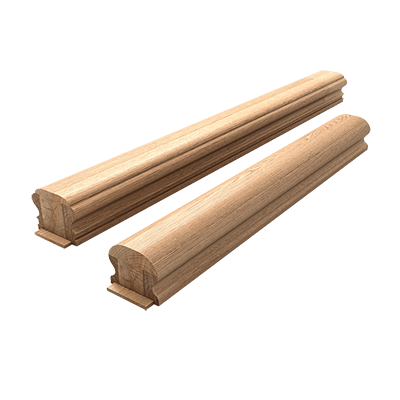
Long handles (from 160 to 320 mm and more) are accent tools. They set a horizontal rhythm on a tall cabinet, making it visually wider and more stable. Long wooden furniture handles matching the solid wood tone are an excellent solution for wardrobes and sideboards where multiple fronts need to be united into a single horizontal line.
When using long handles, it's important to maintain symmetry: if handles are at different heights or on different horizontal lines, the front 'falls apart.' A uniform horizontal level for handle placement across the entire section is a mandatory requirement.
Cabinet handles in classic style: material is everything
Metal handles with patina, bronze, or antique finishes are good for heavy classic and baroque interiors. But where furniture is made of solid wood or veneer with a pronounced wood grain,Wooden handleswooden handles win in terms of organicity: they don't create material contrast, support the unity of wood as the main material of the space, and in some cases work more restrained and nobly than any metal.
Which decorative elements truly work on a front, and which only overload it
This is the most pressing practical question. Decoration on furniture fronts is not a set of ornaments based on the principle 'more is richer.' It's a system where each element performs a specific task. Without this understanding,decor for furnitureit turns into chaos that tires the eye.
Applied moldings and frame outlines
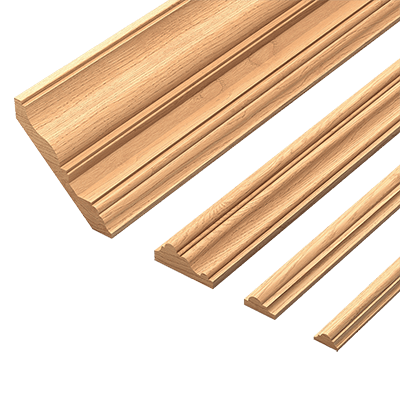
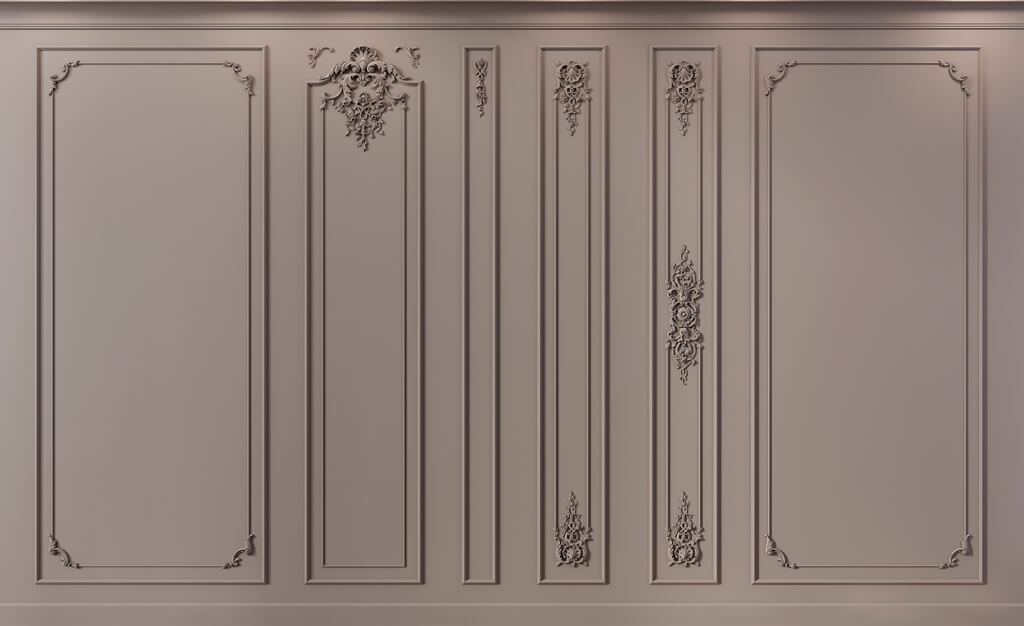
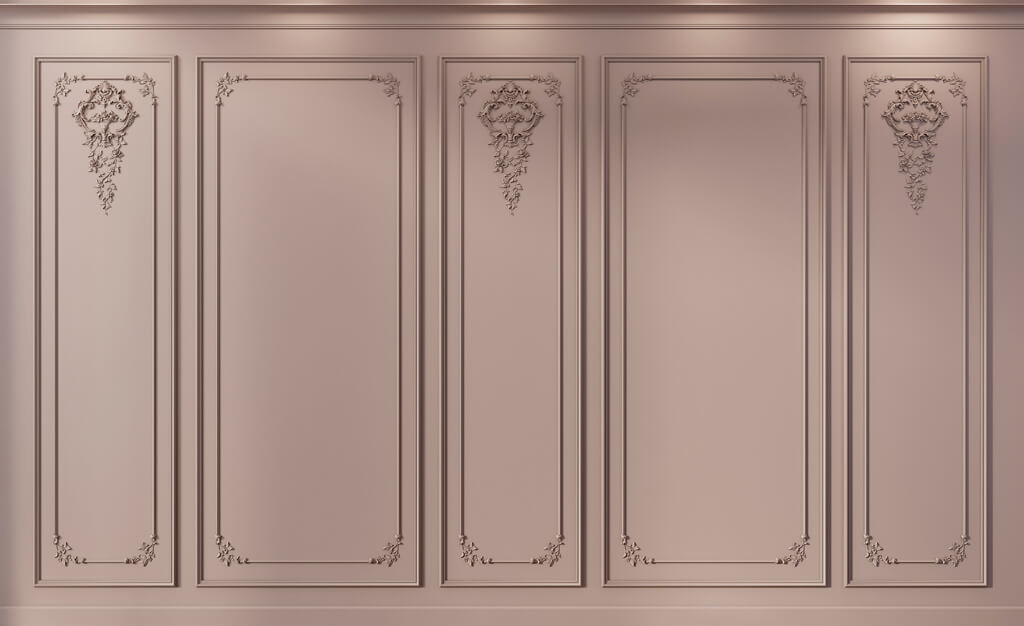
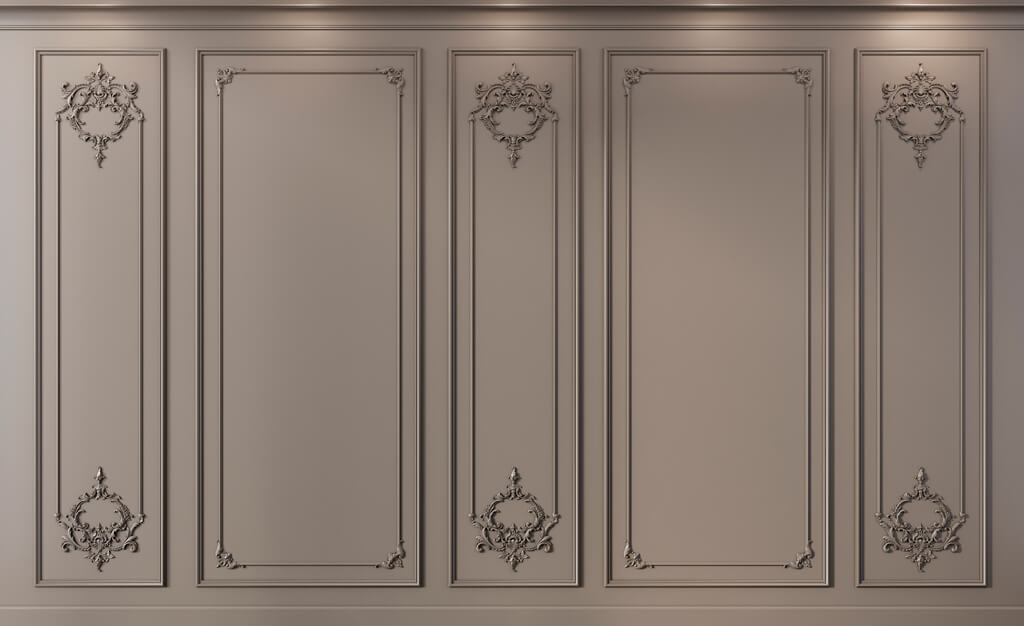
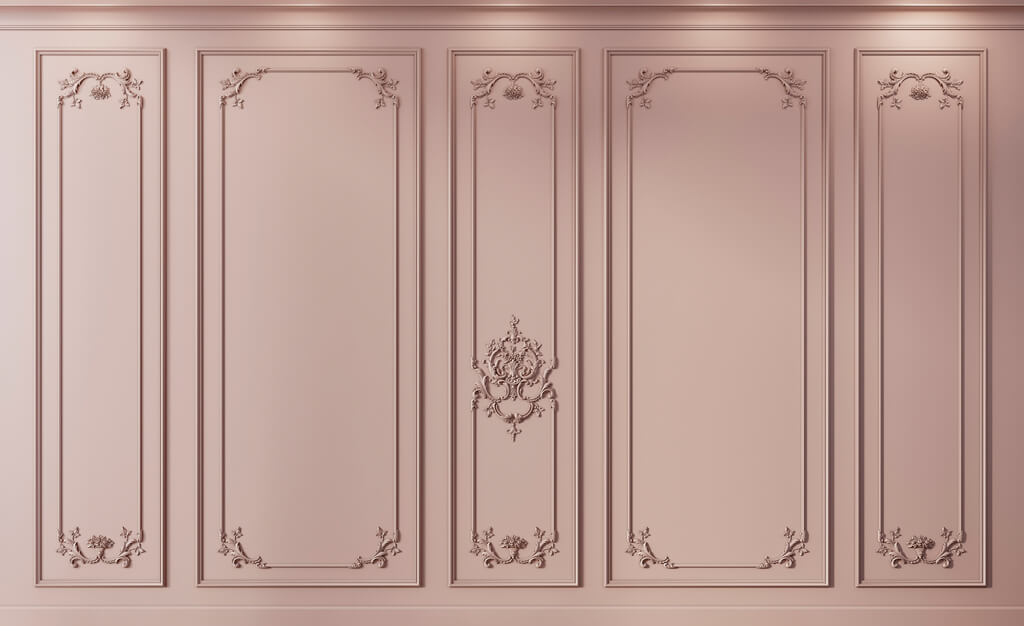
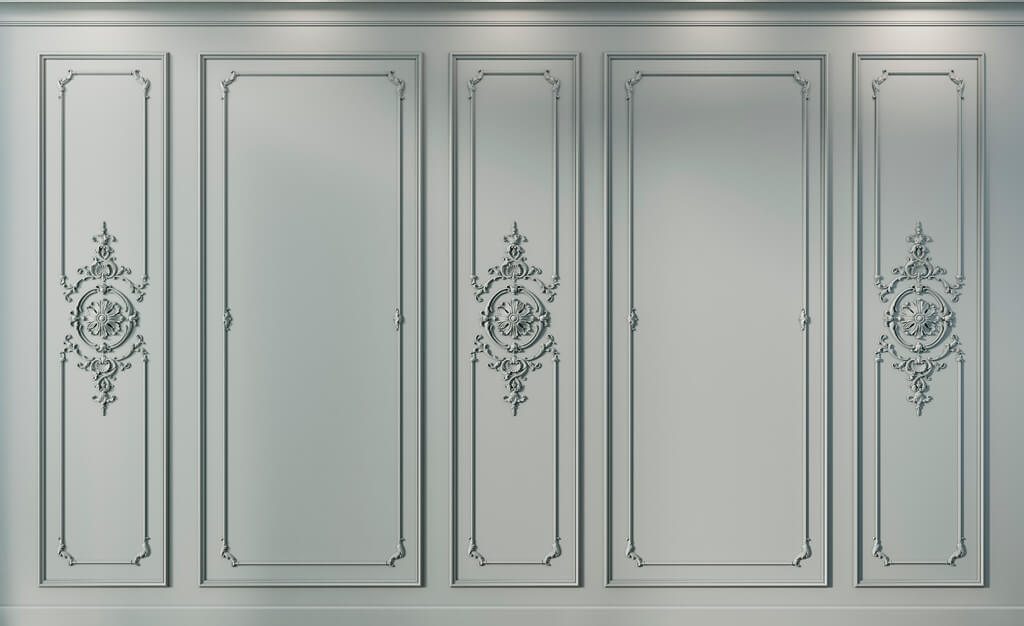
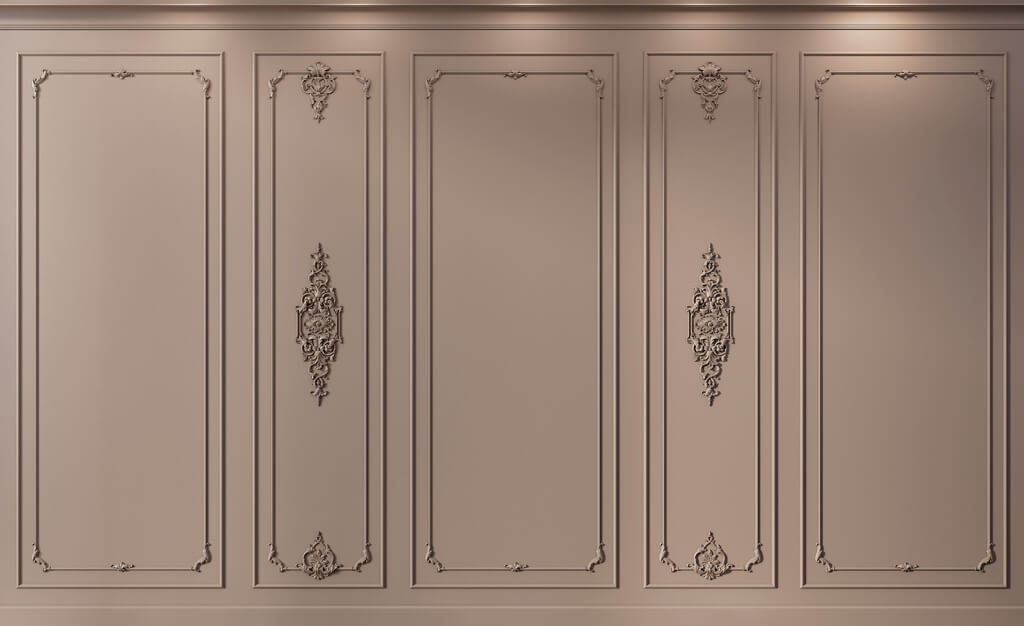
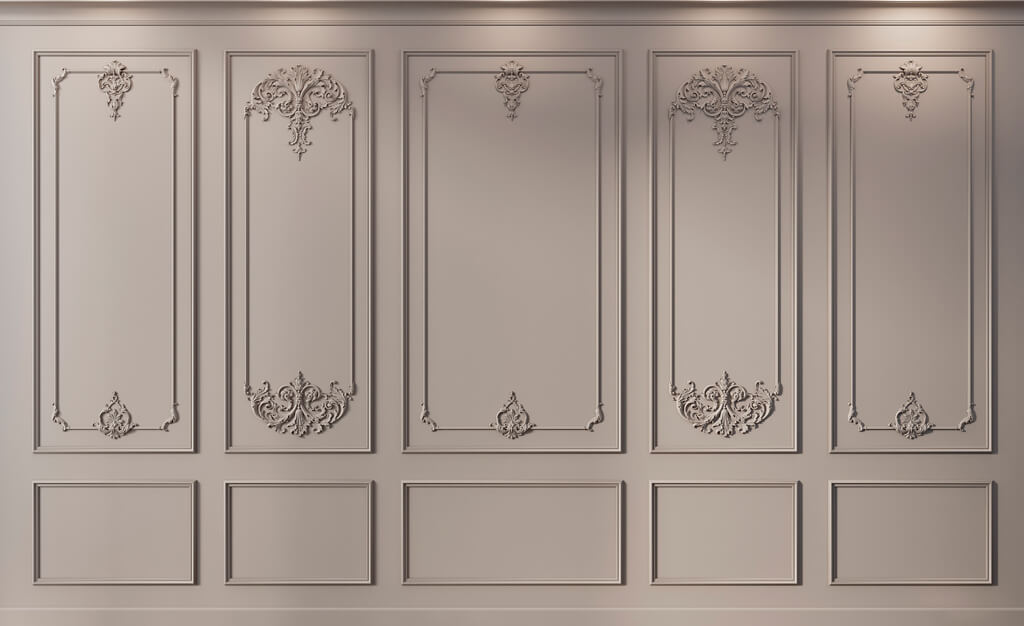
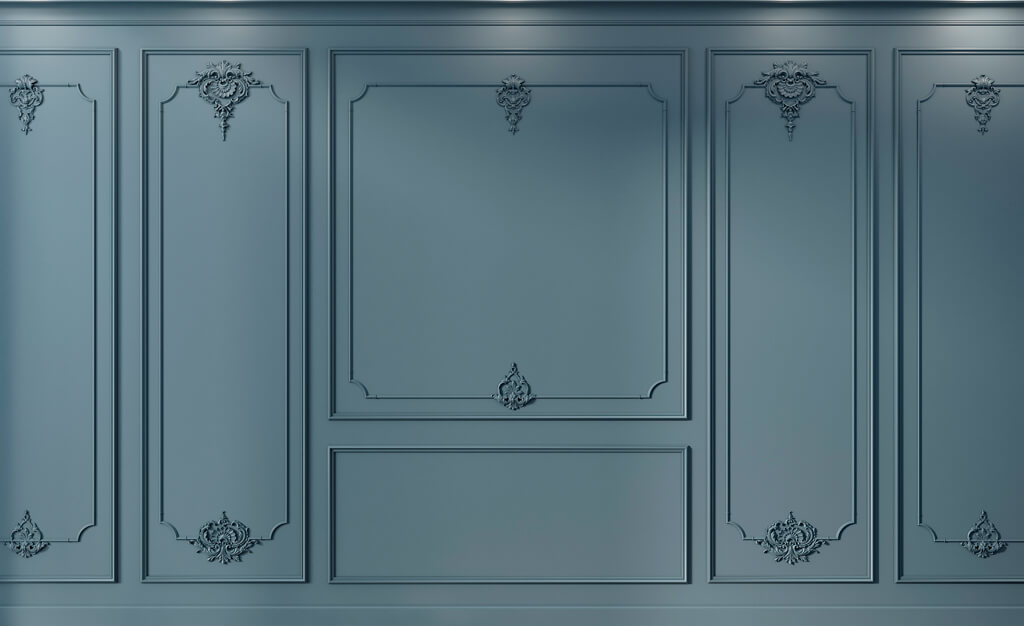
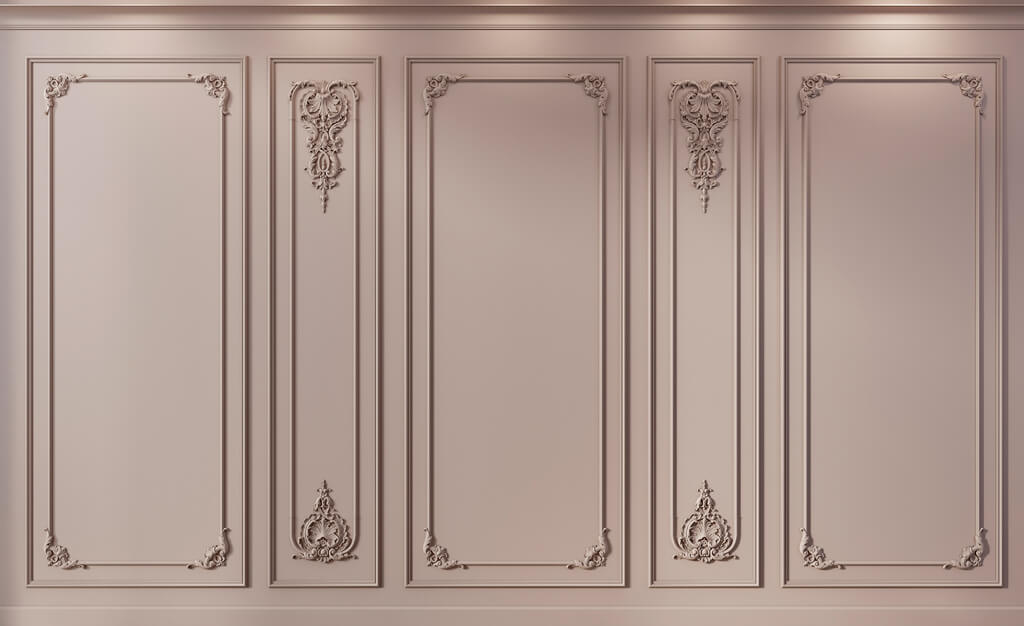
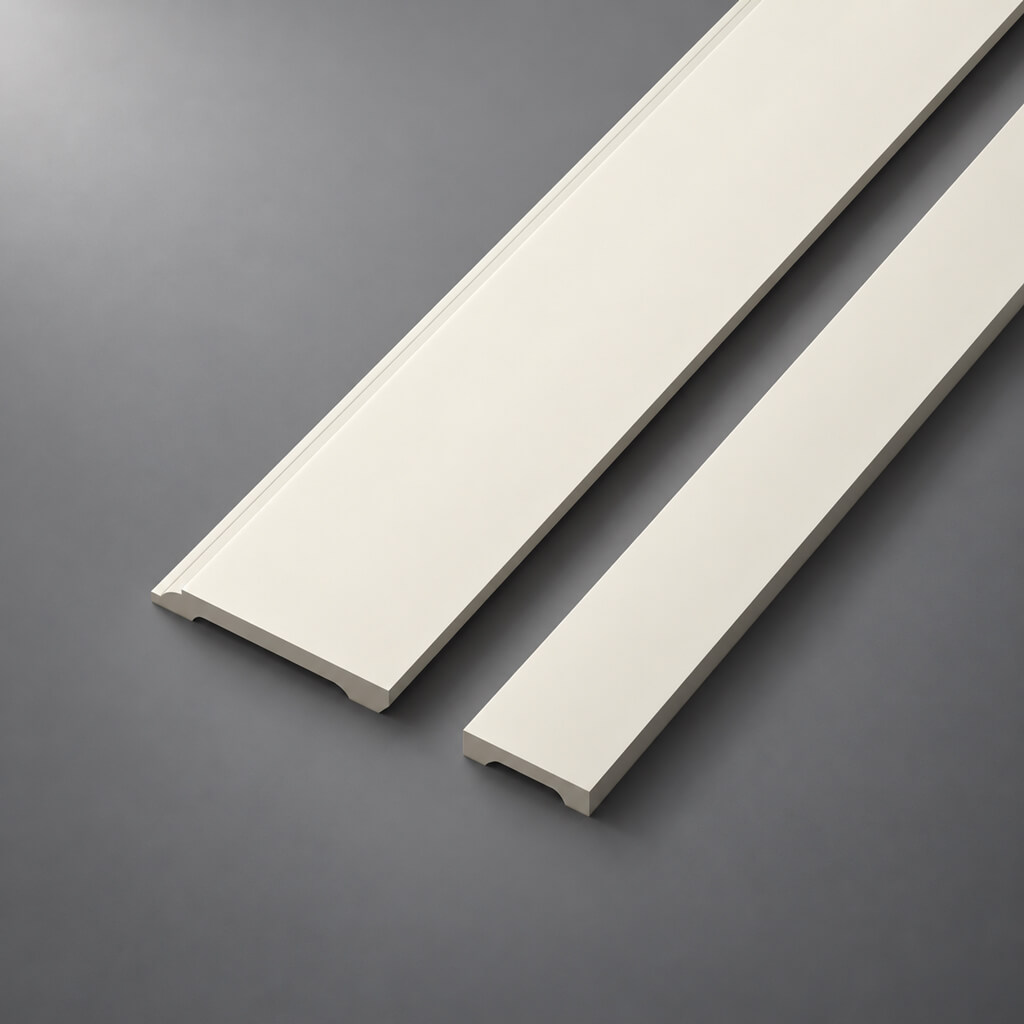
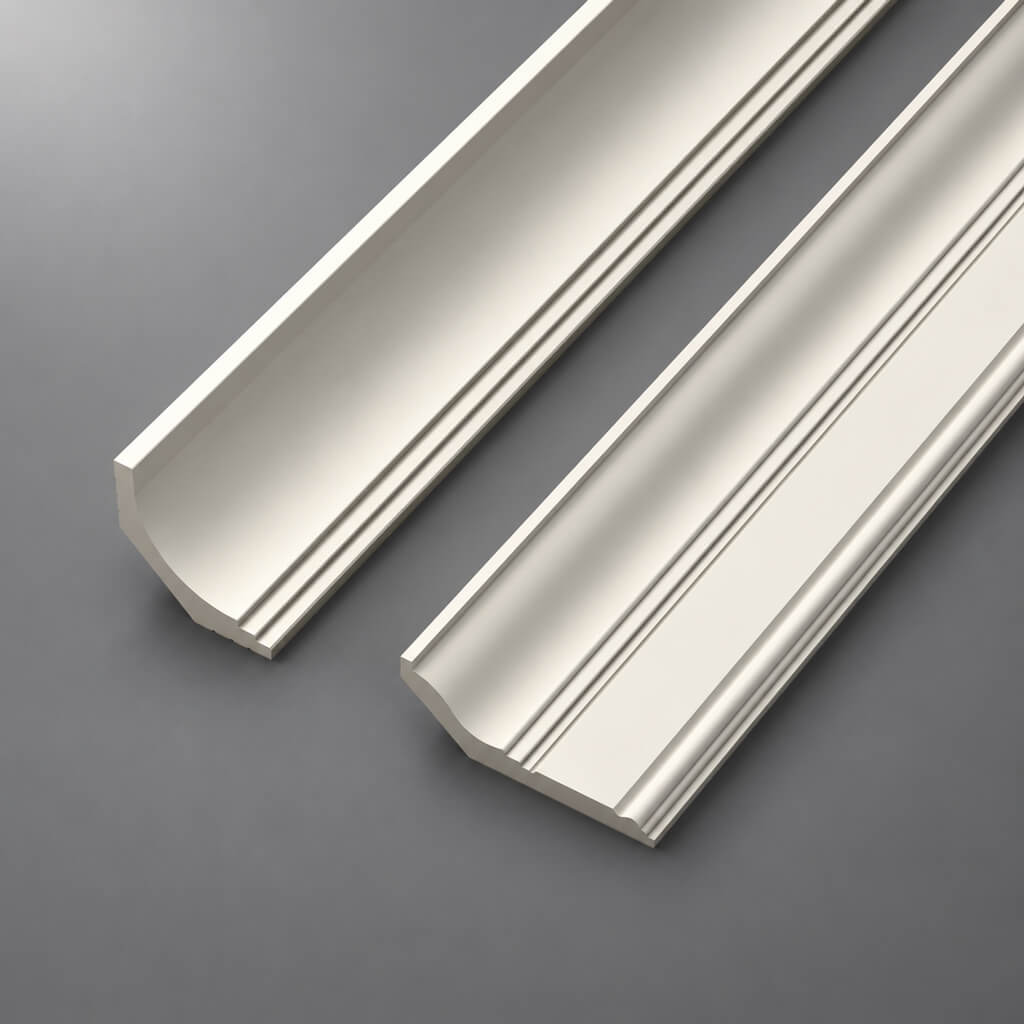
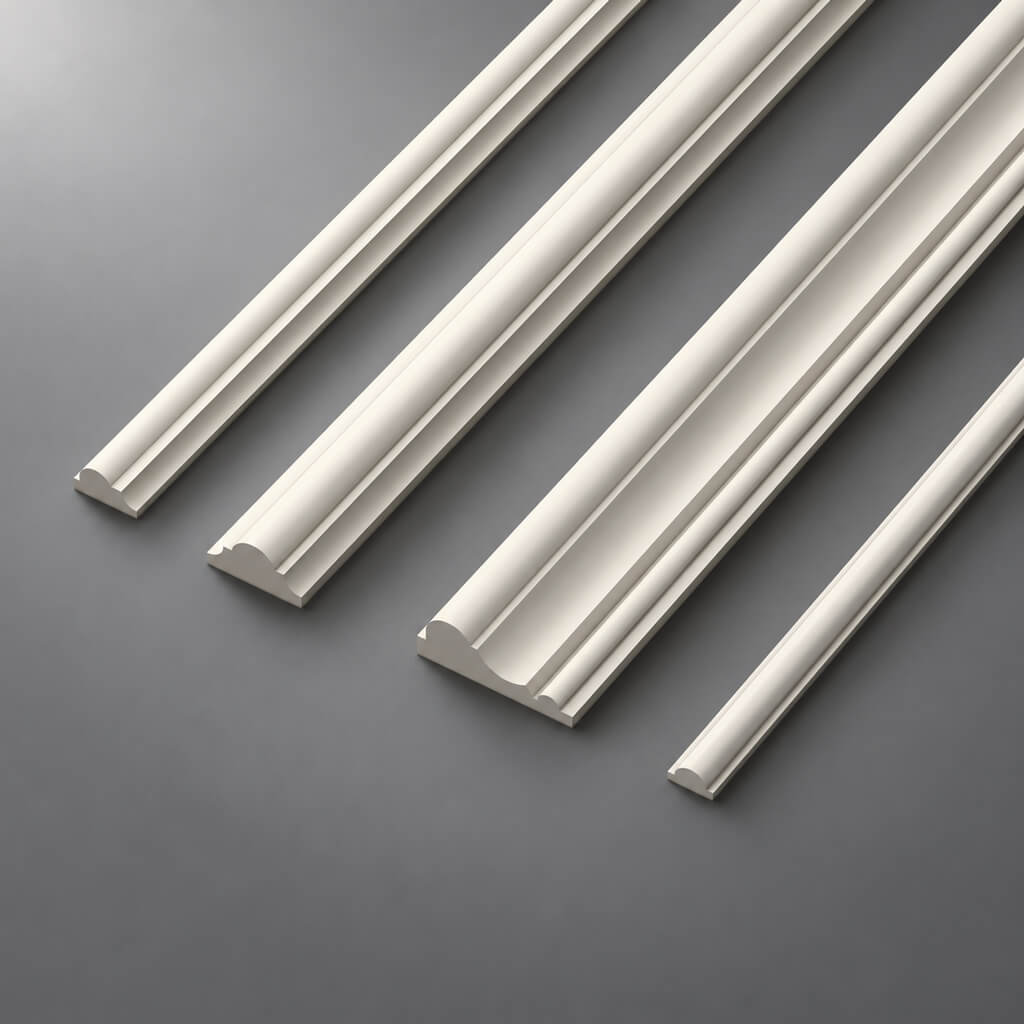
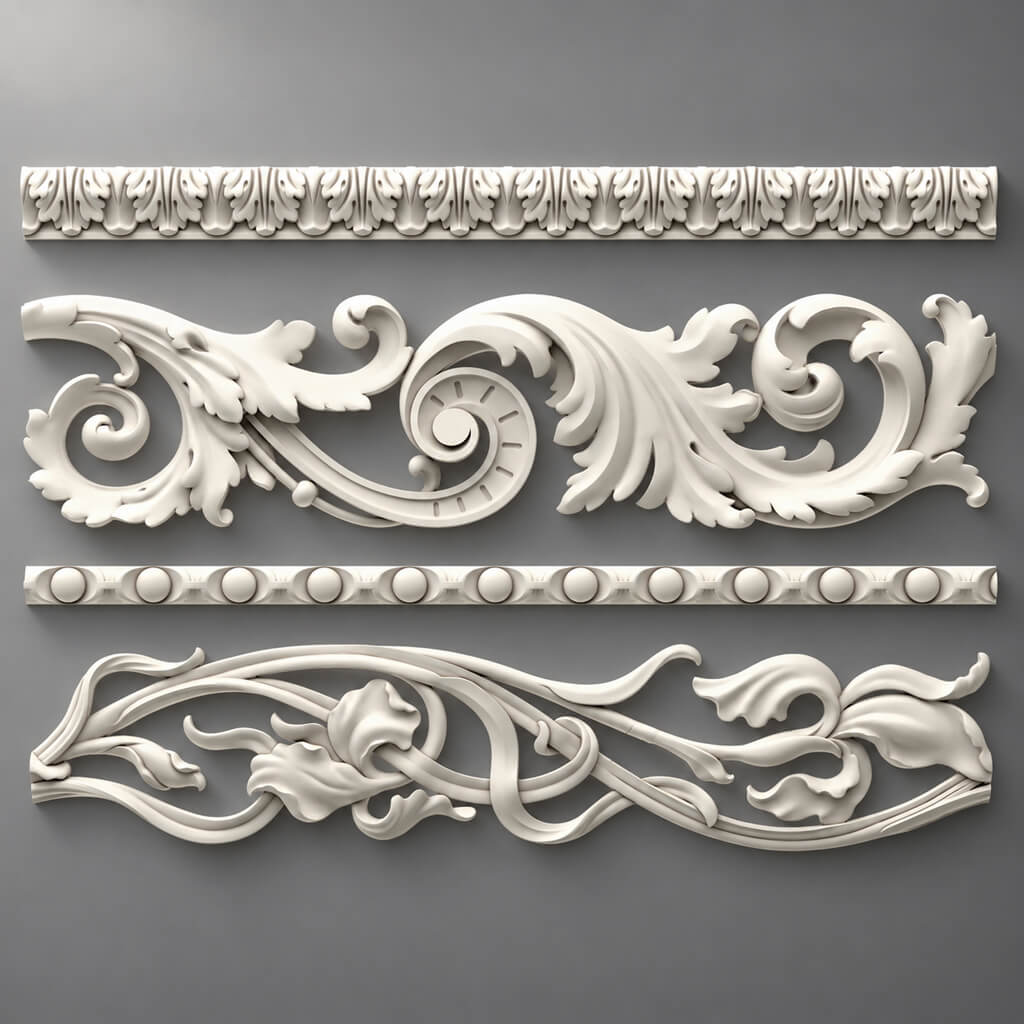
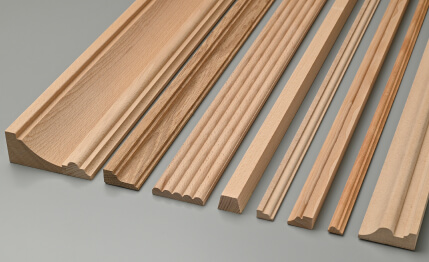
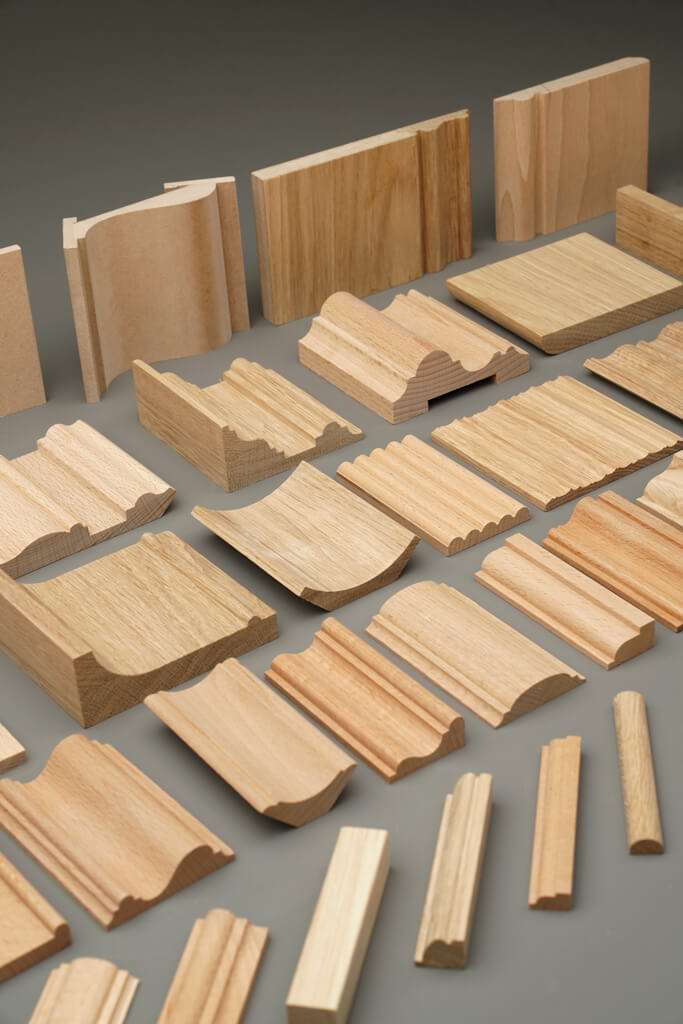
furniture moldingsare linear elements that create a frame on the front, define a field, and add relief. In classic furniture, molding works as an architectural element: it divides a large plane into scaled fields, creates shadow and depth, and gives the front a three-dimensionality that a flat panel lacks.
How to use molding correctly:
-
Along the perimeter of the facade panel — creates a frame that visually 'holds' the plane
-
As a separator between sections — helps organize a large facade into logical parts
-
In combination with a handle — molding is placed along the perimeter, the handle — in the center of the field or on the belt between fields
How not to use molding:
-
Layer upon layer: several moldings of different profiles on one facade without a system create visual noise
-
Moldings of disproportionate scale: a thick, heavy molding on a small facade 'eats up' the plane
You can view specific profiles on the pageFurniture moldingin the STAVROS catalog.
Carved decor for furniture
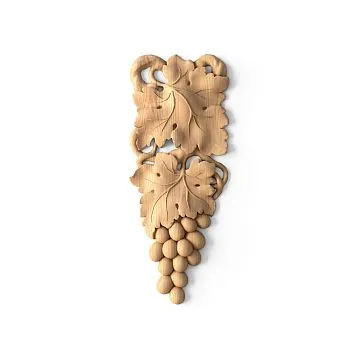
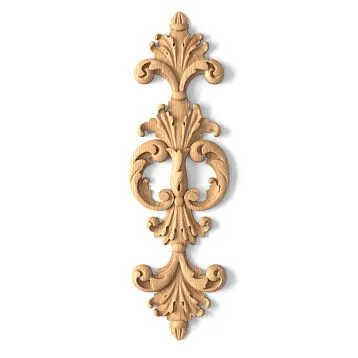
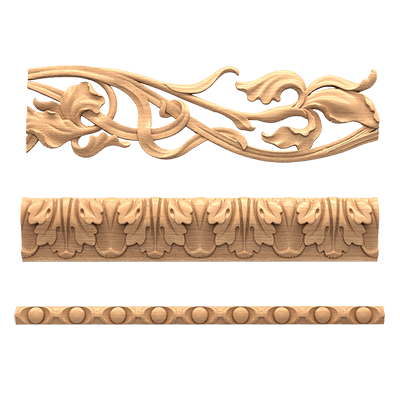
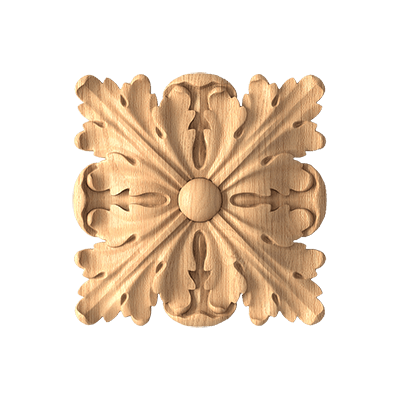
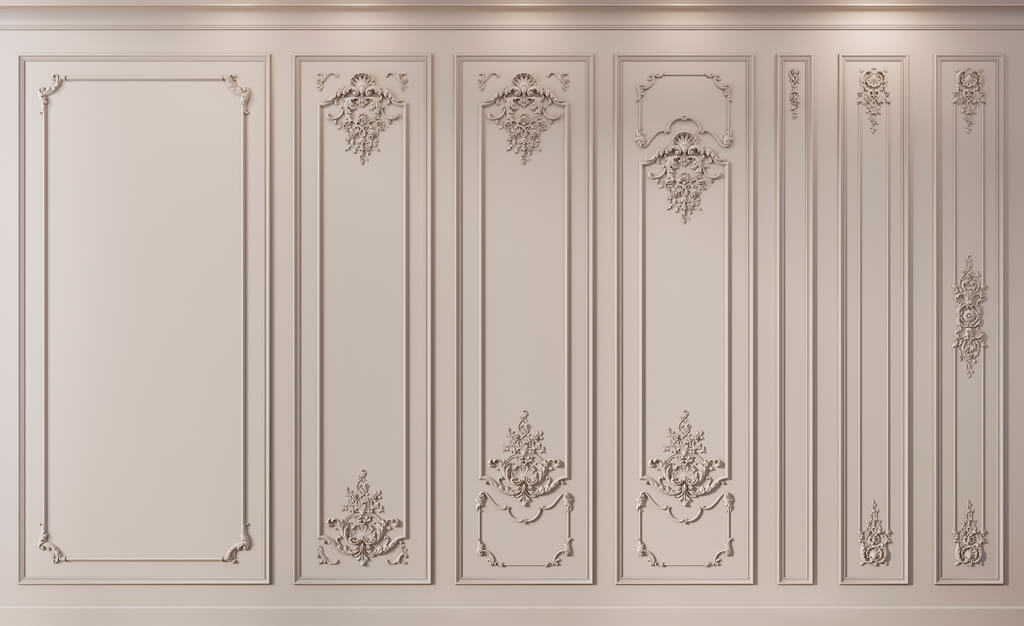
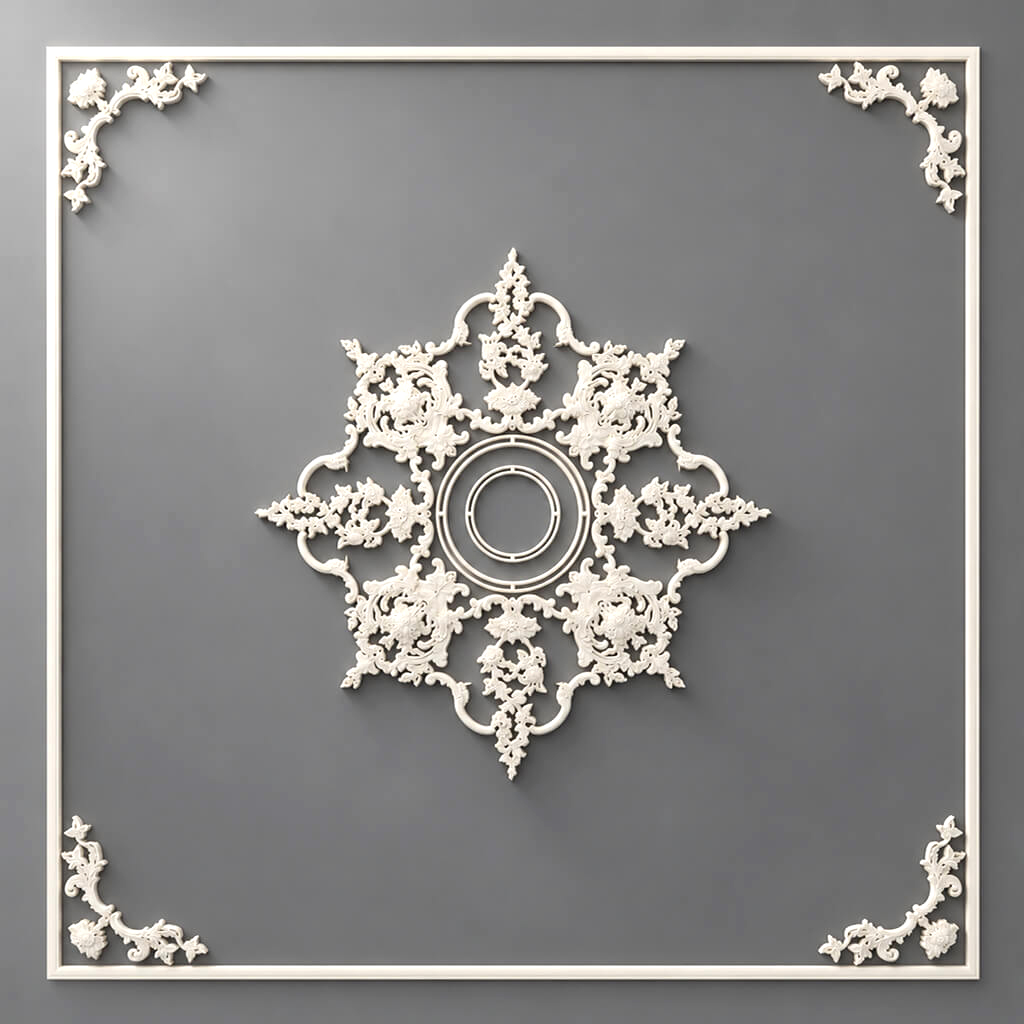
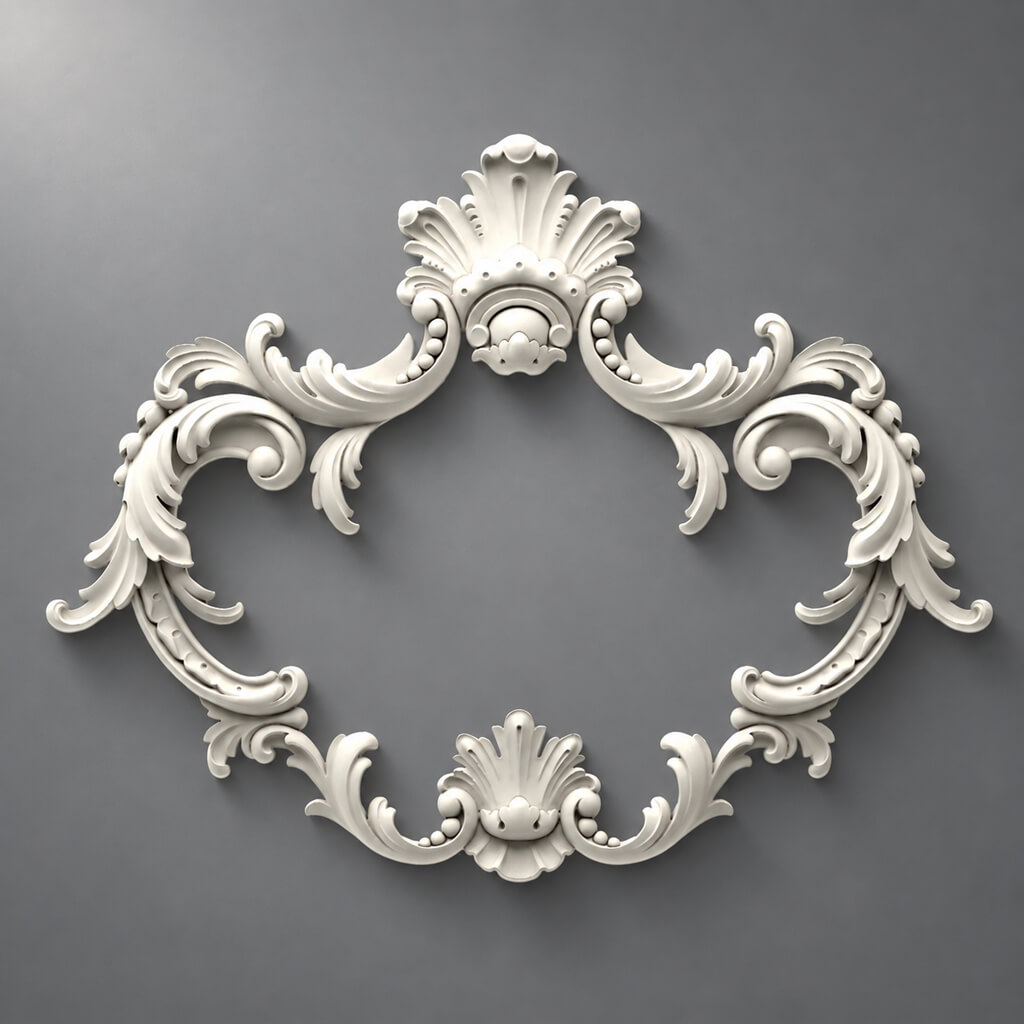
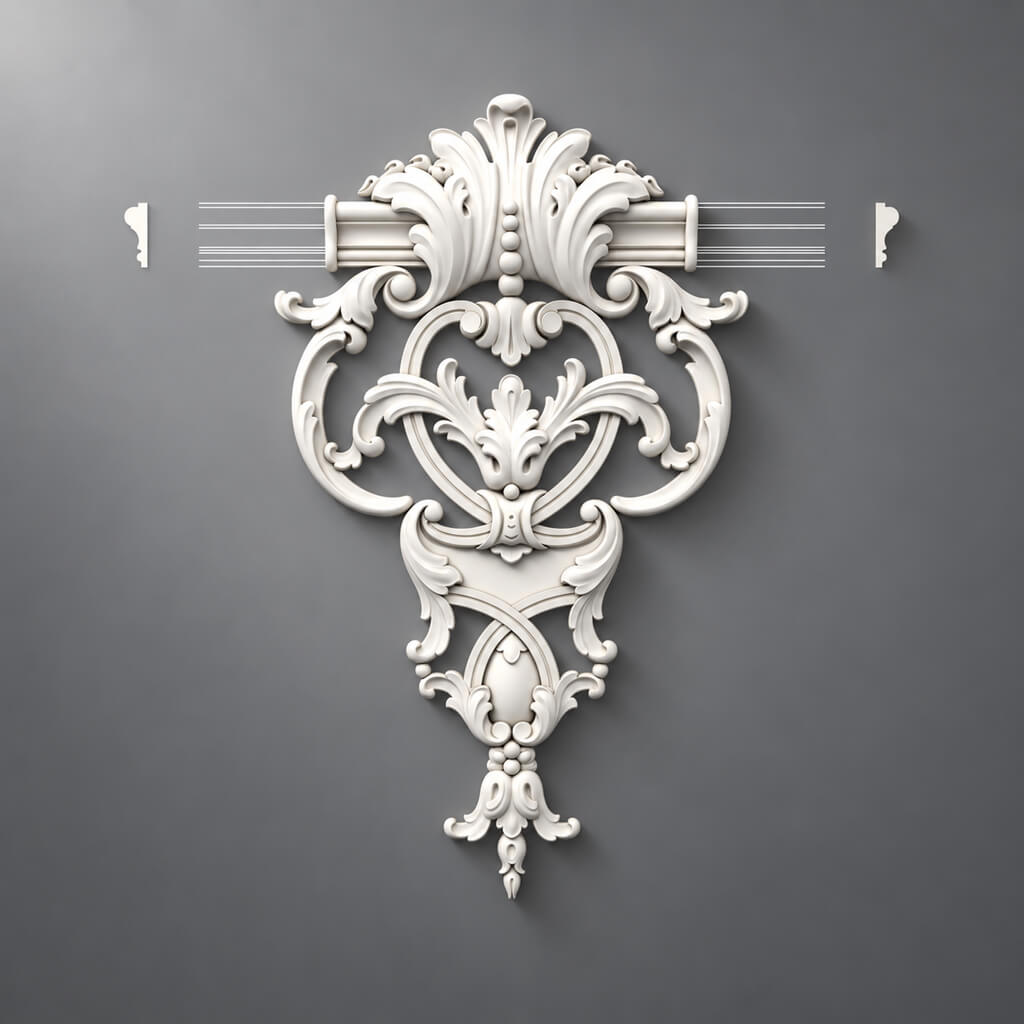
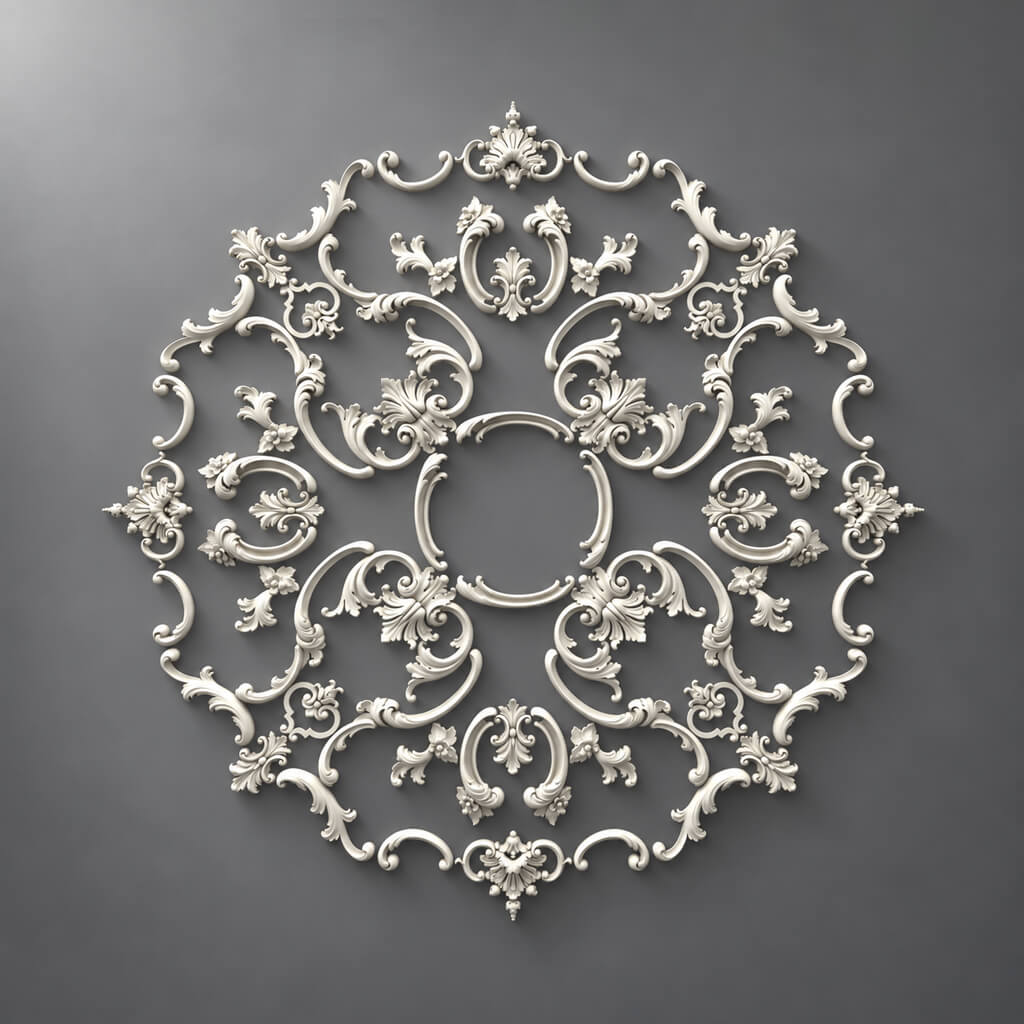
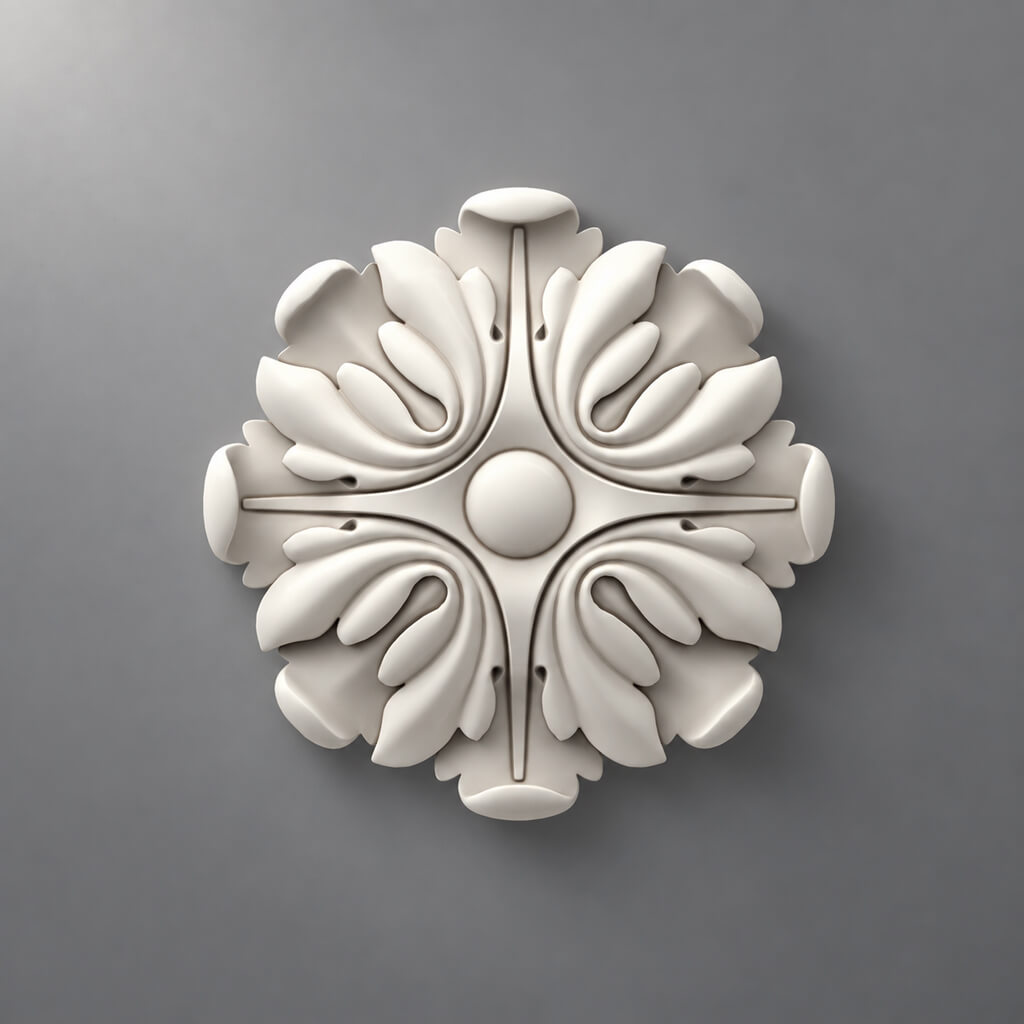
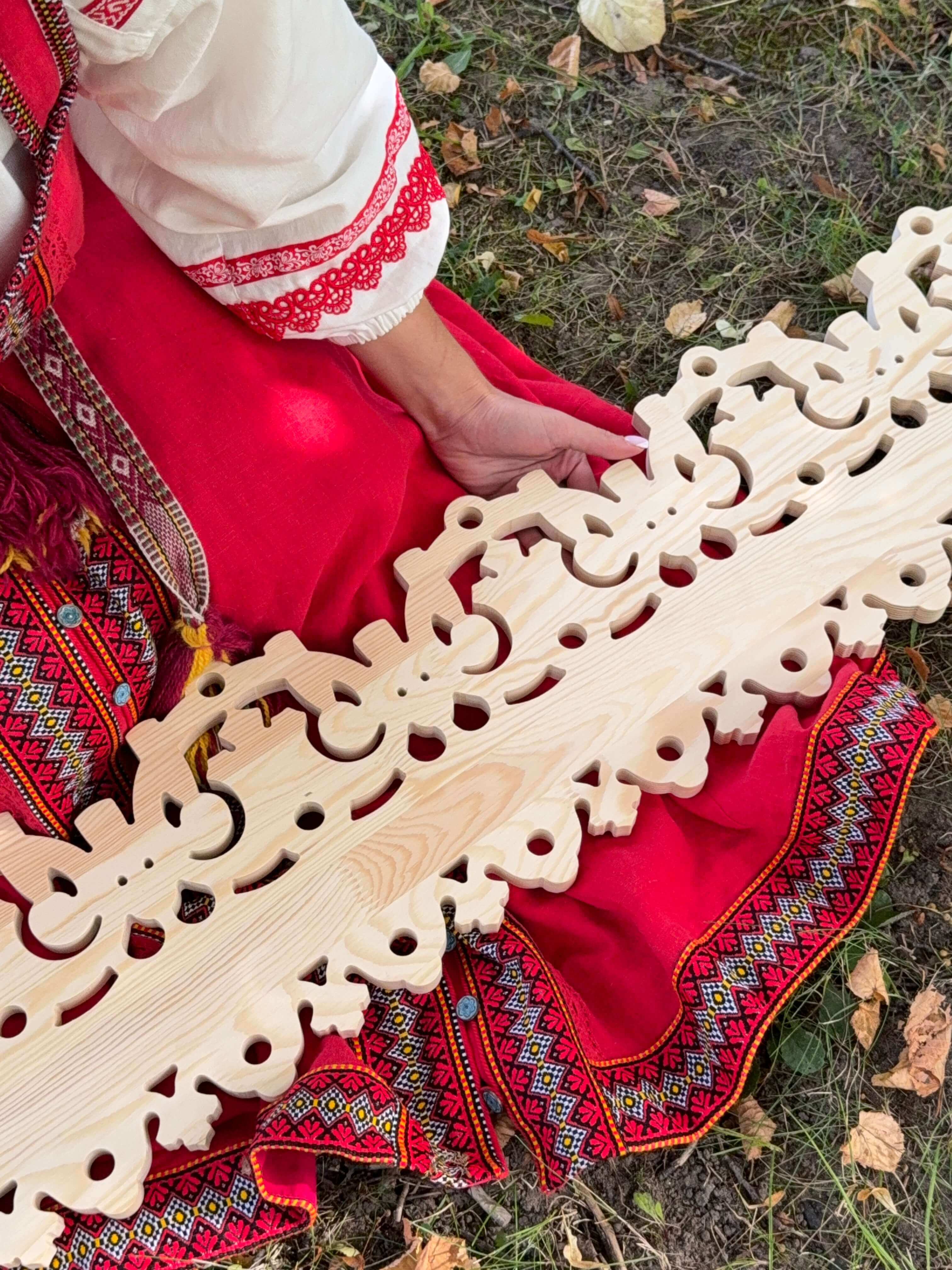
Carved furniture decor — rosettes, cartouches, corner overlays, shaped overlay elements — is the highest level of decorative work with a facade. Such elements do not just decorate: they create semantic and compositional accents.
A carved rosette in the center of a large facade panel is the 'anchor' around which the entire plane is organized. Corner overlays with floral ornamentation at the intersection of moldings are the enlivening of nodal points, without which the frame system would look dry and mechanical.
Carved wood decor is appropriate where furniture is made in developed classicism or neo-baroque. In modern classicism and neoclassicism, a more restrained option works better — geometric overlay elements without naturalistic ornamentation.
Overlay Decor: When It Works
Overlay decor for furniture are flat or three-dimensional elements that are attached to the facade without milling. This is the most accessible way to add decorative depth to a facade. Works well on MDF facades, on painted flat panels, on veneer with a neutral tone.
The condition for effectiveness is scale correspondence. The overlay must be proportionate to the facade field: occupy at least 1/5 and no more than 1/3 of the facade panel area. Small overlays get lost on a large facade. Large overlays overload a small facade.
How to Assemble Classic Furniture Without the Feeling of Cheap Excess
The most common interior mistake is overloaded classicism. When on one piece of furniture simultaneously work: ornate metal handles with ornamentation, three types of overlay decor, two types of molding with different profiles, carved corner elements, and a patinated finish — the result is almost always the same: a feeling of market abundance, not aristocratic restraint.
RealClassic Furniture is built not on the principle of 'more details — richer', but on the principle of hierarchy: there is a main element, there are supporting ones, there is a background.
Seven Mistakes That Make Classic Furniture Heavy
1. Overly active handles + overly active decor simultaneously
If the facade is already rich with relief, carved overlays, and moldings—the handle should be modest. If the handle is the main accent—the facade decor should be minimalist.
2. Different styles of hardware on one piece
Provence-style knobs and Empire-style brackets on the same cabinet—this is not eclecticism, it's inconsistency. All handles on one piece should be from the same stylistic and material group.
3. Decor unsupported by the facade geometry
A carved overlay rosette in the middle of an empty flat facade without a frame or molding—like a painting without a frame glued to a wall. Decor works only when the facade already has basic architecture—at least a simple frame molding.
4. Too small a handle on a massive facade
A small knob 25 mm in diameter on a cabinet door 2 meters high—this is visual absurdity. The scale of the handle should match the scale of the facade.
5. Too many overlays without logic
Overlays should be arranged systematically: corners, center, waist division. Random placement of several overlay elements without rhythm creates chaos.
6. Mixing classic, baroque, and modern geometry
Choose one direction and stick to it. A baroque cartouche with rocaille and a strict geometric molding are not partners.
7. Attempting to make furniture look 'rich' through the quantity of details
The richness of classic furniture lies in the quality of execution, precise scale, and material unity. Not in the quantity of overlays and handles.
Wooden handles and decorative elements: how to tie the facade into a unified solution
One of the most powerful techniques in working with classic furniture is using the same material for handles and decorative elements. When handles are made of solid oak and applied carved elements are from the same oak, the facade reads as a monolith, as an object made from a single piece of natural material.
A unified shade is the foundation of the system
Color unity of handles, moldings, and overlays is not about identity, but about harmony. A handle can be a tone darker or lighter than a decorative element, but they must belong to the same tonal family:
-
Light oak – handles made of oak with oil finish + light oak moldings
-
Dark walnut – handles of tinted walnut + overlays in the same tone
-
Patinated classic — handles with patina + decorative elements with similar treatment
Rhythm of handles and rhythm of decor
If moldings on the facade create a vertical rhythm — handles should maintain a horizontal line to create a grid, not chaos. If the decor is symmetrical — handles are placed strictly along the axis of symmetry. Breaking the axis with one element destroys the entire symmetrical system of the facade.
Wooden decor for furniture: when naturalness is more important than imitation
Wooden decor for solid wood furniture is not just an aesthetic choice, it's a long-term investment. MDF overlays with film coating start peeling at the edges after a few years. Solid wood overlays last for decades, are easily restored, and can be repainted or refinished along with the rest of the furniture.
For classic furniture that claims a long life in the interior — wooden decor is preferable to any imitations.
For which furniture items this logic is especially important
Understanding the connection between handles, decor, and facade architecture is especially critical for several types of furniture.
Wardrobe
Wardrobe — the largest facade object in most interiors. Tall wardrobe doors without decorative work turn into monolithic planes that 'hang' in space without scale or character. A molding frame on each door + a wooden bracket handle of appropriate scale — a minimal solution that turns a wardrobe from a box into a furniture piece.
Chest of drawers
Chest of drawers — an item with several drawers of different heights, and here the key challenge is the unity of horizontal rhythm. Handles should follow a single horizontal line on each drawer. Decorative elements, if present, should divide the facade vertically or at the corners, not competing with the horizontality of the handles.
A drawer pull in a classic style is most often a bail or a knob. The bail provides a horizontal line, the knob provides a point. The choice depends on the drawer width: up to 400 mm — a knob, from 400 mm — a bail.
Classic office furniture
Classical office furniture— library cabinets, writing desks with pedestals, filing chests of drawers — requires particular strictness. Here, the decor should be restrained, the handles — functional but not ascetic. Wooden handles without ornate decorations, moldings in a strict geometric profile, a minimum of applied decor — this is the classic office style, where status is expressed through the quality of the material, not through the quantity of decorative elements.
Classic living room furniture
In the living room, furniture works for show: display cabinets, vitrines, buffets, consoles. Here, the decorative load is justifiably higher. Carved applied elements, relief moldings, stained glass inserts with wooden muntins — all of this is appropriate. But even in the living room, the main law remains: a unified system, a unified tone, a unified style.
Chest of drawers and nightstand
A small item requires a precisely scaled solution. On a chest of drawers 600 mm high and 400 mm wide, large decor is a mistake. A small wooden knob handle, a minimal molding outline along the perimeter of the facade — and the chest of drawers looks complete and correct.
How to choose wooden handles formodern classic: three working schemes
Modern classic is one of the most popular styles in recent years. It combines geometric rigor and the warmth of natural materials, avoids baroque excess, but preserves classical proportions and architectural expressiveness of facades. How to choose handles and decor specifically for it?
Scheme 1: Light oak + simple molding + unfinished wooden handle
A maximally organic, calm solution. A solid wood facade with frame molding, wooden handles made from the same oak without additional tinting. Nothing extra — only material and form. Perfect for a bedroom set, library cabinet, living room in neutral tones.
Scheme 2: Painted MDF + applied molding + wooden handle with coating
A popular scheme for kitchens and living rooms in modern classic style. Painted facades (white, gray, greenish-olive, deep blue) — applied molding creates architecture on them. The handle is wooden with a coating matching the main tone of the facade or contrasting — in a dark tone on a light facade.
Scheme 3: Dark veneer + decorative overlays + minimalist bracket
For a study or living room in a rich, warm tone. Walnut or dark oak veneer, small applied corner elements in the same tone, a wooden bracket handle without decorative additions. Restrained elegance that speaks of quality in a whisper, not a shout.
How to choose: a practical checklist before buying handles and decor
Before buying wooden handles or buy furniture decor in the catalog, go through the following questions. This will save both money and rework time.
Handles:
-
What type of furniture — wardrobe, chest of drawers, cabinet, table?
-
What is the width of the front — this determines the length of the handle
-
What material is the front — solid wood, veneer, MDF, paint?
-
Do you need the handle as an accent or as a neutral element?
-
What style — strict classic, baroque, neoclassical, modern classic?
-
Do you need a handle with a finish (varnish, oil, tint) or without?
-
Is ergonomics important — how comfortable is the grip of the bracket or button in terms of height and width?
Decorative elements:
-
Do you need structure on the front — frame, field, accent?
-
What is the size of the facade — this determines the scale of the decor
-
Is there already a molding frame or milling — or is the facade flat?
-
What level of decorativeness is needed — strict minimum or developed classical ornamentation?
-
What material is the decor made of — does the solid wood match the material of the handles?
-
Will the decor be painted or tinted — important before installation
General principle before purchase:
Lay out the facade solution on paper — sketch the facade and arrange the elements. If the scheme looks overloaded — remove one element. The furniture should be readable at a glance: there is rhythm, there is an accent, there is no chaos.
FAQ: answers to the most frequently asked questions
How do furniture handles differ from decorative elements?
A handle is a functional element: it is needed to open a drawer or door. A decorative element is architectural: it is needed to structure the facade and add depth. In classical furniture, a handle often combines both roles — especially if it has an expressive shape and is made of natural material.
Is it possible to create classical furniture only with handles?
Theoretically, yes, if the facade already has relief (milling, frame profile, pronounced texture). But on a flat facade, a handle alone does not create a classic look — at least minimal moldings or a frame outline are needed.
When are furniture moldings needed?
Moldings are needed when the facade is large and flat, when visual division is required, when furniture should look architectural, not just like a 'box with handles.' A molding is a frame for the facade: without it, the facade exists but creates no image.
Which wooden handles are suitable for a classic wardrobe?
For a classic wardrobe, bracket handles with a curved arch and voluminous holders work best, wooden knob handles for small doors, and long handles for wide facades. Material — solid oak, beech, or walnut, depending on the tone of the wardrobe's main material.
How to avoid overloading the facade with decor?
The main rule is hierarchy. One main decorative element (molding frame or central overlay), one supporting element (corner elements or a belt), one handle. Anything beyond that is excess unless there is a specifically structured architectural logic.
What is better for classic furniture: a laconic handle or a carved one?
It depends on the style. In strict classicism and neoclassicism, a laconic handle is more appropriate: it does not compete with the facade's architecture. In developed classicism and baroque, a carved handle is organic and supports the overall decorative character.
Can wooden handles and overlay decor be combined?
Yes, and this is one of the best solutions: wooden handles and applied wooden decor made from the same material create a unified facade system. A single material eliminates conflict between elements and gives the furniture a sense of integrity.
Is this logic suitable for modern classic style?
This logic works best precisely for modern classic style. Modern classic is about restraint, precise proportions, and material unity. Wooden handles without excessive decor, simple frame molding, natural solid wood texture — this is the best image of modern classic today.
Conclusion
The boundary between hardware and decor in classic furniture is not a line, but a zone. Well-chosen furniture handles no longer function merely as grip points, but as part of the facade's plasticity. Skillfully chosen decorative elements don't overpower the handles, but create the right context for them. And classic furniture assembled from these elements according to a unified logic produces a completely different impression than a collection of items where each detail is 'on its own'.
The task is not to add more decor to the facade. The task is for each element to be in its place, at the correct scale, made from the correct material — and then the furniture looks cohesive, expensive, and lively simultaneously. It is precisely this result that distinguishes a well-thought-out interior from a chaotically assembled one.
The company STAVROS manufactures products from solid wood — oak, beech, and walnut — with a full production cycle: from raw material drying to finishing. The catalog includes wooden furniture handles of all types (knobs, pulls, long handles, inset models), applied and carved decor for furniture facades, moldings, cornices, baseboards, and a full range of millwork products. STAVROS is a manufacturer that understands that details decide everything. And makes them so that every detail is correct — in form, material, and proportion.