Article Contents:
- Wooden molding MLD-018 30×12 mm: what lengths can actually be ordered
- Beech MLD-018 30×12×1000 mm
- Oak MLD-018 30×12×1000 mm
- Beech MLD-018 30×12×2400 mm
- Oak MLD-018 30×12×2400 mm
- MDF molding MLD-018 30×12×2600 mm
- Why you can't write to the manager "we need 10.56 m"
- Short beech
- Long beech
- MDF
- Purchased footage
- Finished
- Nominal remainder
- Utilization factor of initial length
- Nominal remainder share
- Why this is useful for oak
- Short format
- Long
- Utilization factor
- Nominal remainder share
- Why this block is more important than total length
- Short scheme
- Long
- Difference
- The cost of one finished part is 880 mm
- What really determines the choice
- Commercial output
- What this means
- Short oak
- Long oak
- Main conclusion
- Option 1. Short decorative section on other furniture
- Option 2. Test swatches
- Option 3. Repair reserve
- Option 4. Next serial order
- When a remainder stops being "waste"
- Why separation matters
- Error
- Difference from 640 mm
- Short 1000 mm
- Long 2400 mm
- MDF 2600
- Why the article does not invent an exact saw kerf width
- Short format
- 2400 мм
- 2600 MDF
- What this shows
- Practical conclusion
- For MLD-018 880 mm, there is no such boundary problem
- Why such a large leftover does not automatically make MDF bad
- If the cabinets are for opaque enamel
- If a natural oak grain is needed
- MDF
- Oak
- Oak
- What not to do
- What to Check
- Why 30 mm is important to evaluate on furniture
- Serial risk
- How to check
- What counts as a conflict
- Why this affects the choice of 1000/2400 format only indirectly
- With short 1000 mm
- With long 2400 mm
- What to mark before cutting
- Why you cannot sort only by the color of raw wood
- The short format can save money
- The long one can save money
- What cannot be calculated without workshop data
- For the short scheme
- For the long one
- Why this is better than the phrase "the long one is more profitable"
- The series ends with these 12 cabinets
- No stock left
- Belts are made from natural wood
- Logistics for short parts is noticeably simpler
- The price is not worse, significantly
- Then the short format provides clear production discipline
- Another strong scenario
- When 640 mm is especially valuable
- Cannot
- But 840 mm can be very useful
- For example
- This completely changes the economics
- If there are no third parts
- If there are 600 mm
- Mockup 880×30×12
- Place on the cabinet
- Look at them together
- Example
- Conclusion
- If everyone gives one base
- If one differs
- Dry test
- Why the latter is important
- Crossing the seam of two movable facades with one continuous part is not allowed without a separate design solution
- If 880 mm are calculated by the total width of two drawers
- Then 12 parts turn into 24
- Therefore, the central condition of the article
- What to Check
- Why one sample matters more than a dozen photos
- Why this helps with leftovers
- But you cannot automatically change the article number
- Not necessarily
- Can be linked
- Why doesn't this directly affect 12/6
- Short planks
- Step 1. Is price most important?
- Step 2. Will 640 mm remnants be used?
- Step 3. Are cabinets paired?
- Step 4. Is there complex grain sorting?
- Step 5. Is 2400 logistics inconvenient?
- Conclusion
- If leftovers are not needed
- If needed
- If accounting simplicity is important
- If cabinets come in pairs
- If natural texture is mandatory
- If everything is under enamel
- If the client requires solid wood
- If the project is budget and serial
- Why
- There is no single universal sequence
- 640 is especially useful
- Standard
- After approval
- For oak
- Short beech/oak
- Long beech/oak
- MDF
- 880 mm taken from the project, but the cabinets are already assembled
- Profile 30×12 not verified
- Handles not installed yet
- The belt crosses two movable facades
- Material is chosen only based on waste
- Remnants of 640 mm 'might come in handy', but no purpose assigned
- The price of one plank is compared
- Error 1. Buy 10.56 m 'by linear meter'
- Mistake 2. Deciding that the short format is always cheaper
- Mistake 3. Deciding that the long one is always more cost-effective
- Mistake 4. Treating the 640 mm remainder as waste without checking the project
- Mistake 5. Treating the 640 mm remainder as full value without a purpose
- Mistake 6. Trying to get three 880 mm pieces from 2400
- Mistake 7. Trying to get three from MDF 2600
- Mistake 8. Reducing the finished length to 866 mm just to get a third piece from 2600
- Mistake 9. Comparing the price of a single rod
- Mistake 10. Comparing only the price per meter
- Mistake 11. Not checking 880 mm on finished cabinets
- Error 12. Check only one cabinet and immediately cut all 12 parts
- Error 13. Not making a 30×12 mm mockup
- Error 14. Check only the flat 30 mm strip
- Error 15. Order oak for covering enamel automatically
- Error 16. Choose MDF only by price when natural wood is required
- Error 17. Cut long oak before sorting the grain pattern
- Error 18. Not marking two parts from one board as a pair
- Error 19. Throw away all scraps immediately
- Error 20. Store all scraps "just in case"
- Error 21. Not accounting for the saw kerf
- Error 22. Count the sum of balances of a new solid length
- Error 23. Mix 1000 and 2400 in one batch without reason
- Error 24. Order long whips, then transport-cut them arbitrarily
- Error 25. Not check the entire project for short parts before declaring 640 mm waste
- What remains with the long format
- What is amplified with the short one
- Labeling
- Short 1000
- Long
- But
- Waste changes
- Quantity remains the same
- Conclusion
- Short
- Long
- Oak
- Why the result changed
- Oak
- Practical conclusion
- Short 1000
- Long 2400
- MDF 2600
- Why this formula is useful
- For odd N
- But they cannot be combined automatically
- What's better
- Short scheme
- Long
- But two remainders cannot be glued into one visible belt automatically
- Real repair reserve
- Beech price
- Oak
- What They Provide
- When it is reasonable
- Oak
- Oak
- Beech at current price
- Oak at current price
- Why this formula is more useful than a fixed recommendation
- What lengths are available for MLD-018?
- Is there an oak MLD-018 with a length of 1000 mm?
- Is there a beech MLD-018 with a length of 1000 mm?
- How many MLD-018 are needed for 12 parts of 880 mm each?
- Why are 12 short ones needed?
- Why are 6 long ones needed?
- Can you get three 880 mm pieces from 2400?
- Can you get three from MDF 2600 mm?
- How much is left from the short format?
- How much is left from 2400 mm?
- How much is left in total with 12 short ones?
- How much with six long ones?
- What is cheaper for beech?
- What is cheaper for oak?
- Does that mean long oak is better?
- What to choose if 640 mm remnants are not needed?
- What to choose if the 640 mm remnants are used in another order?
- Is there an MDF version of MLD-018?
- How many MDF strips are needed?
- How much do six MDF strips cost?
- What to choose for covering enamel?
- When to choose oak?
- Do I need to account for the saw kerf?
- Do I need to buy a spare?
- Can the 640 mm remnant be considered a repair reserve for the 880 mm belt?
- Can two remnants be glued into one belt?
- Why is the long format convenient for a mirror pair of cabinets?
- Do you need to sort oak before cutting?
- Where can I see real samples?
- What is the main conclusion about waste?
- Where can I order MLD-018?
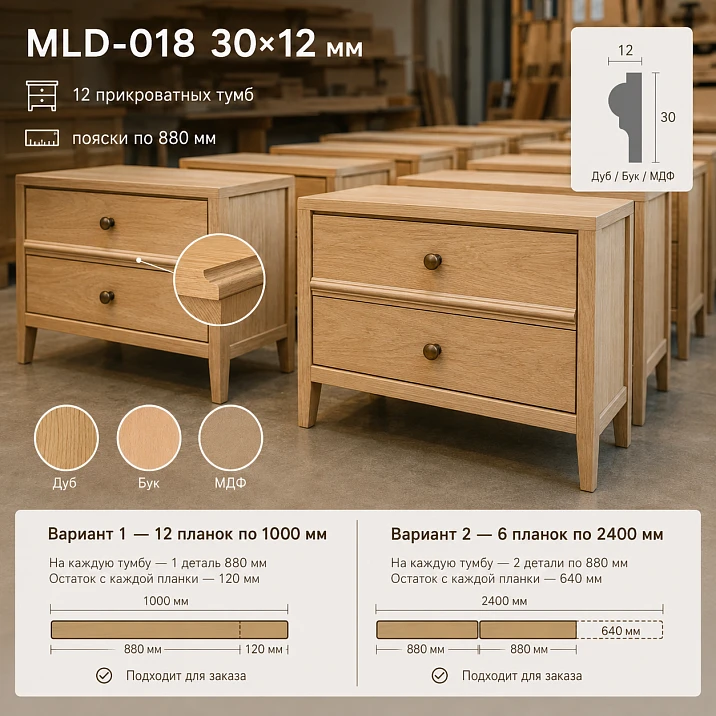
If choosing MLD-018 solely by waste percentage, the short 1000 mm format seems like an absolute winner. For each 880 mm part, only 120 mm remains, so 12 cabinets require 12 short strips and yield 1.44 m of nominal offcut.
But the order price breaks this simple logic.
For beech at the time of checking:
12 × 810 = 9,720 ₽ for the short 1000 mm format.
Long beech 2400 mm allows getting two 880 mm parts from one strip:
880 + 880 = 1760 mm.
For 12 cabinets, 6 strips are needed:
6 × 1610 = 9 660 ₽.
That is, the scheme with more offcut is currently about 60 ₽ cheaper.
For oak, the result is even more interesting:
short format:
12 × 1050 = 12 600 ₽;
long:
6 × 2100 = 12 600 ₽.
The batch price matches completely, although the short format buys 12 m of raw molding, while the long one buys 14.4 m.
Therefore, the main question of this article is not “where there are fewer offcuts.” It sounds different:
what is more valuable for a specific furniture workshop — minimal leftover, fewer long strips, the ability to use 640 mm pieces further, or a simpler “one plank per cabinet” scheme?
For 12 identical belts of 880 mm each, the net requirement is:
12 × 880 = 10,560 mm, or 10.56 m.
But you cannot buy exactly 10.56 m. MLD-018 is supplied in factory lengths, and these determine the actual order.
According to the current specification, the following are available:
| MLD-018 30×12 mm | Length | Price at the time of check |
|---|---|---|
| Beech | 1000 мм | 810 ₽ |
| Oak | 1000 мм | 1 050 ₽ |
| MDF | 2600 мм | 820 ₽ |
| Beech | 2400 мм | 1 610 ₽ |
| Oak | 2400 мм | 2 100 ₽ |
The short format of 1000 mm exists specifically for beech and oak; MDF comes in a length of 2600 mm.
If the project is still at the profile selection stage, it is useful to first Buy wooden molding after comparing models in the category. If MLD-018 is already approved, what is needed next is not a general selection, but a precise map of 12 parts and a comparison of three product scenarios.
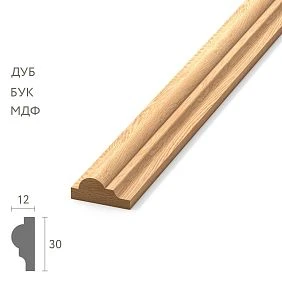
Wooden molding MLD-018 30×12 mm: what lengths can actually be ordered
MLD-018 has one profile 30×12 mm, but several combinations of material and length.
For purchasing, this is fundamental: length is not a secondary characteristic, but part of the production logic.




Beech MLD-018 30×12×1000 mm
The short beech strip costs 810 ₽ at the time of checking.
One finished part is needed from it:
1000 − 880 = 120 mm of nominal remainder.
The advantage of the format is the simplest accounting:
1 cabinet = 1 source plank = 1 strip 880 mm.
For a series of 12 items, there is no need to lay out two finished parts along one long whip and store large leftovers.
After confirming the final size, you can buy MLD-018 30×12×1000 mm specifically in the short format.
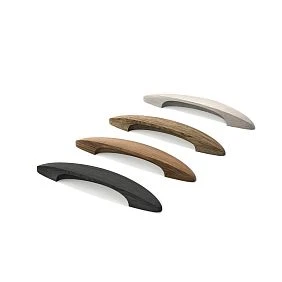
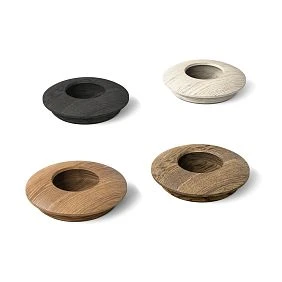
Our factory also produces:
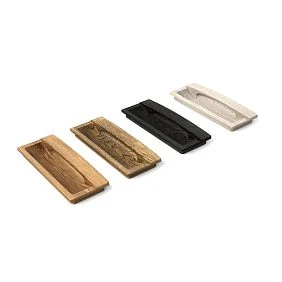
Oak MLD-018 30×12×1000 mm
The cutting is the same:
1 plank → 1 part 880 mm.
Remainder:
120 mm before accounting for final trimming and the saw cut.
Price — 1,050 ₽.
For 12 toggles, it comes to 12,600 ₽.
Oak makes sense if the natural wood grain should remain part of the furniture. If the belt is completely covered with opaque enamel and the texture is not visible, the workshop should honestly compare oak with beech and MDF, rather than paying for the species automatically.
Get Consultation
Beech MLD-018 30×12×2400 mm
The long format costs 1,610 ₽.
Two parts fit from it:
880 + 880 = 1760 mm.
The third one no longer fits:
880 × 3 = 2640 mm.
This is by:
2640 − 2400 = 240 mm
more than the factory length.
Therefore:
1 plank of 2400 = 2 belts of 880 mm.
For 12 pieces:
12 / 2 = 6 planks.
Oak MLD-018 30×12×2400 mm
Same cutting scheme:
6 planks for 12 parts.
Price per piece — 2,100 ₽.
Batch:
6 × 2 100 = 12 600 ₽.
This is where the short and long schemes for oak become equal in purchase cost.
MDF molding MLD-018 30×12×2600 mm
MDF — third independent scenario.
One plank:
2600 mm.
Two parts:
1760 mm.
Three:
2640 mm, that is, they don't fit by only 40 mm even before accounting for the cut.
Therefore, for 12 parts you also need:
6 MDF strips.
Price:
6 × 820 = 4 920 ₽.
At pure purchase cost, this is the cheapest confirmed option.
But MDF is not a substitute for natural oak or beech in terms of material. Its strong area is painted furniture, where natural wood texture is not needed.
Wooden molding for furniture 880 mm long: why we first count parts, not linear meters
Net length:
10.56 m.
This figure is useful as a check.
But it does not answer four practical questions:
-
how many factory strips will fit into the order;
-
how many finished parts will be produced from one rod;
-
what remainder will remain physically intact;
-
how much the batch itself will cost, not just one meter.
Linear molding is a discrete product.
Why you can't write to the manager "I need 10.56 m"
Because the seller does not cut the order into abstract 10.56 m if the product card offers ready-made 1000/2400/2600 mm.
You need to specify:
-
material;
-
SKU length;
-
the number of initial strips.
Short beech
12 × 1000.
Long beech
6 × 2400.
MDF (740–760 kg/m³, emission class E1/E0) provides ideal geometry, uniformity, and better base for enamel: high adhesion, smooth surface, absence of knots and cracks.
6 × 2600.
All three orders give 12 finished strips, but completely different logistics and leftovers.
MLD-018 1000 mm: how many short wooden moldings to order for 12 pieces of 880 mm
For the short format, the calculation is almost independent of cutting optimization.
One 1000 mm plank cannot yield two 880 mm pieces:
880 × 2 = 1760 mm.
Therefore:
12 pieces = 12 planks.
Purchased length
12 × 1000 = 12,000 mm.
Finish
10,560 mm.
Nominal remainder
The same can be obtained piece by piece:
12 × 120 = 1,440 mm.
Coefficient of utilization of initial length
Nominal share of remainder
10 560 / 12 000 × 100 = 88%.
This is a high utilization coefficient for serial cut-to-length products.
100 − 88 = 12%.
But a high utilization coefficient does not automatically mean a minimum price — the beech example has already shown the opposite.
The same can be obtained piece by piece:
What does "one short plank almost per one cabinet" mean in production
The short scheme has an organizational advantage.
The master can mark immediately:
-
T01;
-
T02;
-
...
-
T12.
Each source plank is tied to a specific cabinet.
This is especially convenient for natural wood.
Why this is useful for oak
You can pre-arrange 12 planks by grain and shade.
For example:
-
calmer ones — into one number;
-
more active ones — into another;
-
paired cabinets of a hotel room get a similar grain.
In the long format, one 2400-mm plank yields two parts at once. This can also be an advantage: two nightstands of the same number can be obtained from one strip, thereby tying them more closely by wood.
This is where an interesting production fork arises.
Two nightstands of the same number: a long plank can better ensure pairing
If 12 nightstands are 6 mirror pairs for 6 rooms, one long MLD-018 2400 mm can provide:
-
the belt of the left nightstand;
-
the belt of the right nightstand.
Both parts are cut from one original plank.
For natural oak or beech, this can be useful in terms of:
-
shade;
-
pattern;
-
reaction to staining.
Short format
For one pair, two different slats of 1000 mm are needed.
The craftsman must match them to each other.
Long
One slat provides both parts.
This does not guarantee an absolutely identical pattern along the entire length, but the source material is the same.
Thus, the long format gains value that is not visible in the waste calculation.
MLD-018 2400 mm: how to get two parts of 880 mm from one rod
Basic diagram:
880 + 880 = 1760 mm.
Nominal remainder:
2400 − 1760 = 640 mm.
On six slats:
6 × 640 = 3,840 mm.
Utilization factor
10 560 / 14 400 × 100 ≈ 73,3%.
This is a high utilization coefficient for serial cut-to-length products.
≈ 26,7%.
Let's compare with the short 12%.
The long layout yields more than twice the share of the remainder.
By absolute length:
3,840 / 1,440 ≈ 2.67 times.
That's why the short format looks more material-efficient.
But so far we've only compared geometry. Cost behaves differently.
Why three 880 mm parts from an MLD-018 2400 mm piece don't fit
Calculation:
880 × 3 = 2640 mm.
Available:
2400 mm.
Deficit:
240 mm.
It's too large to discuss kerf width or "tight nesting."
Three finished 880 mm parts from a single 2400 mm piece are impossible at the given length.
Why this block is more important than the total footage
It instantly explains the number of six slats:
one slat → maximum two pieces;
12 / 2 = 6.
Even if someone sees 10.56 m of clean material and tries to divide it by 2.4 m, the actual cutting layout is still determined by the number of finished pieces.
Beech molding MLD-018 1000 or 2400 mm: why the short format with less waste did not turn out cheaper
According to the current specification:
short beech:
810 ₽ per 1000 mm;
long:
1,610 ₽ per 2400 mm.
Short layout scheme
12 × 810 = 9 720 ₽.
Long
6 × 1 610 = 9 660 ₽.
Difference
9 720 − 9 660 = 60 ₽.
A long piece is cheaper by about 60 ₽, despite the fact that 2.4 m more material is purchased:
14.4 m versus 12 m.
Cost of one finished part 880 mm
short beech:
9,720 / 12 = 810 ₽ per belt.
long:
9 660 / 12 = 805 ₽.
The difference:
5 ₽ per cabinet.
This is a very small amount.
Therefore, for beech, price should not be the only criterion.
What really decides the choice
-
whether the workshop needs a simple system of “one rod per cabinet”;
-
Is it important that two pieces from one long rod are paired?
-
Will six remnants of about 640 mm be useful?
-
Is transporting 2400 mm convenient?
-
Is it necessary to store the remaining material?
-
Is there space for long molding in the workshop?
Commercial conclusion
Short beech saves material.
Long beech saves 60 ₽ at the current price.
In real production, the cost of a few minutes of sorting, storage, or a second delivery may exceed this difference.
Therefore, the decision should be made based on the workflow, not on the bare figure of 60 ₽.
Oak MLD-018 1000 or 2400 mm: why both schemes cost the same
Short oak:
12 × 1 050 = 12 600 ₽.
long:
6 × 2 100 = 12 600 ₽.
The difference:
0 ₽.
What does this mean
The purchase price stops selecting the format altogether.
Other parameters remain.
Short oak
Advantages:
-
only 1.44 m of nominal remainder;
-
one plank per cabinet;
-
separate labeling is simpler;
-
easier to move and store.
Disadvantages:
-
12 units instead of 6;
-
for a mirror pair of one number, two different source planks are needed;
-
More individual elements need to be accepted, labeled, and sorted.
Long oak
Advantages:
-
6 original whips instead of 12;
-
one whip can yield a pair of parts for two cabinets of the same number;
-
the 640 mm remainder is large enough for other tasks.
Disadvantages:
-
3.84 m of total remainder;
-
longer logistics;
-
it is necessary to decide what to do with six pieces of approximately 640 mm each.
Key takeaway
If the 640 mm oak remnants are not needed by anyone, the short format is more rational in terms of material consumption.
If they become a useful blank for other furniture or repairs, the long format may be stronger without any surcharge.
Buy wooden molding in short format, if the workshop does not need the 640 mm remnants
Short format is especially logical for a final small series.
For example:
-
12 cabinets are the last batch of the project;
-
there are no other products with MLD-018;
-
there is no separate storage system for offcuts in the warehouse;
-
future reorder is unlikely;
-
the finish is custom, and remnants are difficult to use in another order.
In such a situation, a 640 mm piece is indeed closer to waste than to an asset.
If the profile is approved, and the workshop is still comparing other wooden products of the same type, you can look Decorative wooden moldings in the category, but for MLD-018 the decision should already be based on the specific 880 mm map.
When a long MLD-018 2400 mm is more advantageous despite a larger remainder
A remainder of 640 mm is not automatically waste.
It becomes useful if its purpose is known before cutting.
Option 1. Short decorative section on other furniture
If in the same order there is:
-
console;
-
the headboard;
-
frame;
-
a small dresser,
640 mm can cover a real additional part.
Option 2. Test swatches
For oak and beech, a large remainder is convenient for:
-
oil;
-
mordants;
-
varnish;
-
enamels;
-
gloss comparisons.
Option 3. Repair reserve
One clean fragment from the same batch helps restore:
-
damaged belt;
-
local area;
-
color and texture.
Option 4. Next serial order
If the workshop regularly makes the same furniture, 640 mm remnants can be included in a new cutting plan.
When a remnant stops being "waste"
When it has:
-
room number;
-
length;
-
material;
-
the purpose;
-
storage location.
If it just lies in the corner without a project, it is still frozen material.
Why for 12 cabinets you cannot count all remnants as garbage in advance
Six long strips give about:
6 × 640 = 3,840 mm.
That is almost four meters of material, but not in one continuous length.
The workshop gets six separate blanks.
Why separateness matters
From 6×640 you cannot assemble one 880 strip without a joint.
But you can get:
-
six pieces up to 640 mm;
-
twelve pieces of shorter length;
-
samples;
-
repair blanks.
Error
Say:
"3.84 m remains, so this is enough for four more belts of 880 each."
Mathematically:
3 840 / 880 ≈ 4,36.
But physically, each remainder of 640 mm is shorter than 880.
The sum of lengths does not negate the discreteness of blanks.
This is the same principle that often breaks linear footage calculations.
The 120 mm remainder from the short MLD-018: when it is truly almost useless
12 short strips nominally give 12 fragments of 120 mm each.
They are useless for a full-size belt.
But even such pieces can be useful for:
-
color testing;
-
checking glue;
-
profile sample;
-
tool setup;
-
checking the fit with the adjacent part.
Difference from 640 mm
120 mm is a technological sample.
640 mm is a potential work blank.
That is why comparing leftovers only by percentage is incorrect.
Sawing and finish trimming: why the remainder of 120/640/840 mm is specified as nominal
All calculations above use the nominal length and a finished part of 880 mm without process losses.
Real sawing requires:
-
a clean first end;
-
the saw cut;
-
sometimes removal of a defective section;
-
final trimming.
Short 1000 mm
The 120 mm allowance is quite noticeable relative to a single part.
Even after normal trimming, one 880 mm part usually remains a logical scenario if the original length and quality are confirmed.
Long 2400 mm
After two pieces nominally 640 mm.
MDF 2600
After two — 840 mm.
Why the article does not invent an exact kerf width
It depends on:
-
machine;
-
blade;
-
workshop technology.
For purchasing, the principle matters, not a fictional universal number.
What changes if the finished piece turns out to be not 880 but 890 mm
12 pieces:
10,680 mm.
Short format
1000 − 890 = 110 mm.
Still one more piece from one plank.
Need 12.
2400 мм
2 × 890 = 1780 mm.
Remainder:
620 mm.
Three:
2670 > 2400.
Still 6 planks.
2600 MDF
2 × 890 = 1780.
Remainder:
820 mm.
Three:
2670 > 2600.
Also 6.
What this shows
A small change in the finished length does not change the quantity in this range, but it changes the leftovers.
And if the piece is 800 mm
Three parts:
3 × 800 = 2400 mm.
On paper, exactly three fit into the long array.
But the real cut makes the scheme extreme.
Practical conclusion
The sum of finished lengths, equal to the full length of the whip, does not yet prove the working cut.
A technological allowance is needed.
For MLD-018 880 mm, there is no such boundary problem.
3×880 already exceeds 2400 by 240 mm.
The scheme for two parts is unambiguous.
MDF molding MLD-018 2600 mm: third option for painted cabinets.
MDF has the lowest purchase cost.
6 strips:
4 920 ₽.
Finish material:
10,560 mm.
Purchased:
6 × 2600 = 15,600 mm.
Nominal remainder:
15,600 − 10,560 = 5,040 mm.
Why such a large remainder does not automatically make MDF bad
The batch price is almost twice lower than beech.
Let's compare with long beech:
9 660 − 4 920 = 4 740 ₽.
With oak:
12 600 − 4 920 = 7 680 ₽.
If cabinets are going under covering enamel
MDF can be rational:
-
natural texture is not needed;
-
color is unified by coating;
-
The price is significantly lower.
If you need a natural oak pattern
MDF is immediately ruled out, regardless of price.
MDF or wooden molding MLD-018: compare not only the purchase price
Three materials solve different tasks.
MDF (740–760 kg/m³, emission class E1/E0) provides ideal geometry, uniformity, and better base for enamel: high adhesion, smooth surface, absence of knots and cracks.
Stronger when:
-
covering enamel;
-
budget serial furniture;
-
need for a stable painted profile.
Beech
Intermediate option:
-
natural wood;
-
below the price of oak;
-
can be used under enamel or tinting in a suitable configuration.
Oak
Stronger when:
-
transparent/semi-transparent finish;
-
visible texture;
-
premium material logic.
What not to do
Compare only:
820 ₽ vs 1,050 ₽.
These are prices for different materials and different lengths.
MLD-018 with a width of 30 mm on a bedside table: check the proportion before ordering 12 sets
The series is already assembled, so one full-size mockup can be made.
Size:
880×30 mm.
Attach to the first nightstand.
What to check
-
height of the trim;
-
distance to the handle;
-
offsets from edges;
-
relation to the legs;
-
view on the paired nightstand;
-
overall scale in the room.
Why 30 mm is important to evaluate on furniture
In the catalog, the profile is shown large.
On a small bedside table, 30 mm can:
-
look like a neat line;
-
or become too massive a belt.
Serial risk
If you make a mistake on one plinth, the error will repeat 12 times.
Therefore, one mockup before ordering a batch is more valuable than a long discussion over the screen.
MLD-018 with a depth of 12 mm and a furniture handle: check the grip
The profile protrudes by 12 mm.
If the belt runs near the handle, the hand may catch on it.
How to check
Make a volumetric mockup 880×30×12 mm.
Install the handle in its standard position.
Several times:
-
open the drawer;
-
close;
-
pick up a pen with different fingers.
What counts as a conflict
If the user regularly:
-
touches the molding with knuckles;
-
catches the profile;
-
uses it as a support for fingers.
Why this affects the choice of the 1000/2400 format only indirectly
The profile dimensions are the same.
If MLD-018 is not ergonomically suitable, arguing about length is pointless — you need to change the position or the profile itself.
Oak MLD-018 on 12 cabinets: sort the wood before cutting, not after
For natural oak, the production task begins before the miter saw.
If you cut all 12 parts at once, the craftsman loses the ability to control:
-
shade;
-
by grain;
-
the placement of expressive sections;
-
the pairing of cabinets of the same number.
With short 1000 mm
Each plank almost corresponds to one finished belt.
You can lay out 12 pieces on the table and form 6 pairs.
For example:
-
T01-L + T01-R;
-
T02-L + T02-R;
-
and so on.
With long 2400 mm
One plank can itself become one pair.
From it are cut:
-
part A — 880;
-
part B — 880.
They have a closer origin from one initial blank.
This can be a strong argument for the long oak even with a larger remainder.
What to mark before cutting
-
whip number;
-
front side;
-
pattern direction;
-
pair number of cabinets;
-
future finish.
Why you cannot sort only by the color of raw wood
Toning and oil can change perception.
It is better to evaluate:
-
structure;
-
pronounced transitions;
-
knots in acceptable quality;
-
the direction of the fibers.
Beech MLD-018: why a difference of 60 ₽ should not decide the choice of length at all
For a batch of 12 cabinets, 60 ₽ is almost a negligible purchasing difference relative to the overall furniture project.
Therefore, the right question is:
which format is cheaper to produce, not just in the cart?
The short format can save
-
storage location;
-
time on labeling leftovers;
-
work on accounting;
-
risk of confusing two parts from the same whip.
The long one can save
-
number of source units;
-
operations during acceptance;
-
pairing by wood;
-
packaging inside the workshop;
-
future purchase of short parts if the 640 mm remainder is used.
What cannot be calculated without workshop data
Rubles for:
-
one minute of machine time;
-
one loading cycle;
-
square meter of warehouse;
-
disposal of scraps.
The article does not invent these values.
But it shows where exactly they enter the solution.
Production cost: a simple formula for comparing 1000 and 2400 mm
You can create your own workshop table.
C_total = C_material + C_cut + C_handling + C_storage − V_reuse
Where:
-
C_material — price of MLD-018;
-
C_cut — labor/machine;
-
C_handling — receiving and moving;
-
C_storage — storage of leftovers;
-
V_reuse — real value of reused leftovers.
For the short scheme
C_material is known:
-
beech 9,720;
-
oak 12,600.
V_reuse for 120-mm tails is usually small.
For the long one
C_material:
-
beech 9,660;
-
oak 12,600.
V_reuse can be significant if 640 mm actually goes to another order.
Why this is better than the phrase "longer is more profitable"
For one workshop, V_reuse=0.
For another, 640 mm is a full-fledged warehouse blank.
Their optimal order will be different.
MLD-018 1000 mm: when the minimal waste scheme truly wins
The short format is rational if several conditions are met simultaneously.
The series ends with these 12 cabinets
No next product with MLD-018 is planned.
There is no leftover stock
Storing six 640 mm fragments is inconvenient.
Belts are made from natural wood
Each cabinet is convenient to sort separately.
Logistics of short parts is noticeably simpler
1000 mm is easier:
-
to bring in;
-
to transport;
-
to store near the workplace.
Price is not worse significantly
For oak it equals the long scheme.
For beech the difference is only 60 ₽.
Then the short format provides clear production discipline
12 toggles → 12 strips → 12 parts.
MLD-018 2400 mm: when six long strips give a stronger production scheme
The long format should be chosen if the 640 mm remainder gets a function.
For example, the workshop knows in advance that the same project needs:
-
six short vertical inserts;
-
moldings on drawers;
-
test fragments;
-
repair elements.
Another strong scenario
12 toggles = 6 pairs.
One 2400-millimeter whip = 2 belts of one pair.
This simplifies visual selection of natural wood.
When 640 mm is especially valuable
If the next part size is smaller than this value.
For example, a project contains elements of 600 mm each.
From each remainder, one such part can be obtained if the cut and trimming allow.
Then the long scheme actually turns 'waste' into additional products.
Why for 12 cabinets the remainder cannot be assessed only in percentages
short format:
12% of the nominal remainder.
long:
26,7%.
MDF:
5 040 / 15 600 ×100 ≈ 32,3%.
At first glance rating:
-
short;
-
long array;
-
MDF.
By price:
-
MDF;
-
beech;
-
Oak.
By value of large remainder:
-
120 mm — low;
-
640 mm — medium/high;
-
840 mm — very high, because it is almost equal to the finished part 880, although still shorter.
That is, each metric has its own winner.
MDF remainder 840 mm: why it is especially deceptive
After two belts from 2600:
2600 − 1760 = 840 mm.
To a new full part, 880 is missing only:
40 mm.
This can be annoying: "almost a third part."
But 840 mm do not turn into 880.
Impossible
-
stretch the profile;
-
reduce all belts without approval;
-
glue a 40-millimeter extension into a visible line just to save money.
However, 840 mm can be very useful
For other furniture with parts:
-
800;
-
750;
-
600 mm.
If such a size exists in the project, the MDF offcut becomes an asset.
The overall project map is more important than the map of a single article.
If the workshop produces not just 12 cabinets but an entire hotel room, MLD-018 needs to be included in the overall nesting.
For example
The project additionally includes 6 parts of 600 mm each.
With a long book:
each 640 mm offcut after two strips can yield one 600 mm part.
Then from 6 long rods you get:
-
12 × 880;
-
6 × 600;
with a small offcut.
The short scheme would require a separate purchase for 600 mm.
This completely changes the economics.
Therefore, the phrase "the long one gives 3.84 m of waste" is only correct until the second set of parts appears.
How to create a cutting map MLD-018 for the entire workshop
The table might look like this:
| Stick | Length | Part 1 | Part 2 | Part 3 from the remainder | Final remainder |
|---|---|---|---|---|---|
| B1 | 2400 | 880 | 880 | ___ | ___ |
| B2 | 2400 | 880 | 880 | ___ | ___ |
| B3 | 2400 | 880 | 880 | ___ | ___ |
| B4 | 2400 | 880 | 880 | ___ | ___ |
| B5 | 2400 | 880 | 880 | ___ | ___ |
| B6 | 2400 | 880 | 880 | ___ | ___ |
If there are no third parts
The 640 mm remainder conditionally goes into reserve.
If there is 600 mm
The map is optimized anew.
This is already a real production purchase, not a decorative calculation by meters.
Wooden furniture molding: first check one cabinet at full scale
Before ordering 12/6 strips, one mockup must be approved by MLD-018 itself.
If the workshop is still comparing the profile with other options, wooden furniture molding you need to choose based on the finished facade.
Mockup 880×30×12
It shows immediately:
-
length;
-
width;
-
the overhang.
Place it on the cabinet
Not on the facade sample in the workshop, if the finished furniture already exists.
Look at them together
If the nightstands are paired, place two side by side in a real bedroom or create a front view mockup.
Position of the horizontal belt: why 880 mm needs to be checked against real bases
The finished length of 880 mm can be specified:
-
by the width of the facade;
-
between the stiles;
-
from edge to edge;
-
with offsets.
Before ordering, you need to write down what exactly the number means.
Example
The width of the nightstand is 920 mm.
The 880 mm belt leaves:
920 − 880 = 40 mm.
With symmetry:
20 mm from each edge.
This could be a design choice.
But if the actual cabinet turned out to be 916 mm:
36 mm remains, 18 mm each.
Conclusion
880 mm should be removed from the finished furniture if it is already assembled.
Why 12 identical cabinets still need to be measured selectively
Mass production may have small deviations.
There is no need to remeasure every part with a micrometer, but it is useful to check:
-
the first one;
-
a few from the middle;
-
the last one.
If everyone gives one base
880 is confirmed.
If one differs
You need to understand:
-
body error;
-
another facade;
-
real specification.
Do not cut 12 identical moldings until clarified.
Furniture handle and MLD-018: distance is checked not only by plane, but also by hand
The profile protrudes by 12 mm.
If the handle is above or below the belt, the user may pass fingers through this area when gripping.
Dry test
Place the mockup.
Open the bedside table:
-
with the right hand;
-
with the left;
-
from a sitting position on the bed.
Why the latter is important
The bedside table is often used not while standing.
The hand trajectory is different.
If the molding passes through the drawer line
MLD-018 can be:
-
on the actual facade;
-
on the stationary part;
-
cross multiple drawers.
Crossing the seam of two movable facades with one continuous piece is not possible without a separate structural solution
The molding must move together with the element it is installed on.
If 880 mm are calculated based on the total width of two drawers
Need to check whether the line should actually consist of two separate pieces.
Then the entire purchasing task changes.
When 880 mm ceases to be a single finished part
For example, a cabinet has:
-
two doors;
-
a central gap.
If the molding should not overlap the inter-facade seam, instead of 1×880, 2×another length arises.
Then 12 parts turn into 24
The cutting plan 1000/2400 needs to be recalculated from scratch.
Therefore, the central condition of the article
each cabinet indeed has one solid MLD-018 part 880 mm long.
Set of samples OMLD-005 before the serial order
If the material is not yet approved, it is useful order samples of wooden moldings.
The set allows you to compare real samples of oak, beech, and MDF next to furniture.
What to check
-
drawing;
-
color;
-
scale;
-
future enamel;
-
tinting;
-
combination with the handle.
Why one sample is more important than a dozen photos
The screen color does not show:
-
oak porosity;
-
beech density;
-
real MDF edge;
-
light in a specific room.
When samples are especially justified
-
12 switches go into one object;
-
the wrong material will be repeated many times;
-
the finish is expensive;
-
the client chooses between natural and painted options.
Wooden millwork as a single purchasing group
MLD-018 can be only one line of a larger order.
If the project simultaneously requires:
-
moldings;
-
baseboards;
-
cornices;
-
other profiles,
Beneficial buy wooden trim after compiling the overall length map.
Why this helps with remnants
640-millimeter pieces can find use specifically in adjacent furniture/interior work.
But you cannot automatically change the article number
Remnant MLD-018 is only suitable where this exact 30×12 profile is needed.
Wooden molding and wooden baseboard in a hotel room
If 12 cabinets are made for a hotel or apartment hotel, the material of the furniture belt can be coordinated with the lower architecture of the room.
For this, you can to buy wooden baseboard after selecting the species and finish.
It is not necessary
Make the baseboard and MLD-018 from the same wood species.
Can be linked
-
the color;
-
in tone;
-
matte finish;
-
repetition of natural wood.
Why doesn't this directly affect 12/6
Baseboard is a separate profile with a different length.
Its footage cannot be mixed with MLD-018 leftovers without actual article compatibility.
Transportation of MLD-018 1000 and 2400 mm: whip length affects production before cutting
From a packaging and carrying perspective, 1000 mm and 2400 mm are different objects.
Short planks
Simpler:
How to choose between 1000 and 2400 mm for oak: decision tree
Step 1. Is price the most important thing?
Both schemes cost the same.
So, let's move on.
Step 2. Will the 640 mm remnants be used?
If not — short 1000 are stronger in material.
If yes — long ones get the advantage.
Step 3. Do the cabinets come in pairs?
If yes, one long whip per pair is convenient for wood.
Step 4. Is there complex pattern sorting?
Long gives more freedom to choose sections.
Step 5. Is 2400 logistics inconvenient?
Then the short format is stronger.
Summary
Oak has no single winner.
The organization of production decides.
How to choose between 1000 and 2400 mm for beech
The price of the long one is only 60 ₽ lower.
Therefore, the decision tree is almost the same.
If leftovers are not needed
The short one may be more rational, despite the +60 ₽.
If needed
The long one wins.
If simplicity of accounting is important
The short one.
If the nightstands come in pairs
Long.
How to choose between wood and MDF
Here the price changes significantly.
If natural texture is mandatory
MDF is excluded.
If everything is under enamel
MDF must be compared.
If the client requires solid wood
Even the perfect MDF price does not change the requirement.
If the project is budget serial
MDF may be the main candidate.
Finish of natural MLD-018: why the length should be chosen before tinting
First:
-
select whips;
-
make cutting;
-
form pairs.
Then the finish.
Why
If you first tint long strips, after cutting fresh ends may appear that require separate treatment.
If you first cut, it is easier to work with ready-made 880-millimeter parts, but the number of elements in the painting area increases.
There is no single universal sequence
It depends on the technology.
Trial finish: the remaining 120 or 640 mm becomes a useful sample
After the first cut, real pieces of the same material appear.
You can test on them:
-
color;
-
oil;
-
enamel;
-
varnish.
640 is especially useful
It is large enough to see the pattern over a significant length.
Serial painting of 12 parts: why you need to approve a reference once
For 12 identical cabinets, color differences repeat visually.
Reference
One finished part of 880 mm.
After approval
The rest are processed using the same technology.
For oak
A small amount of natural variation will remain.
This is not necessarily a defect.
What to send to STAVROS manager to order MLD-018
The specification should be as short as possible, but unambiguous.
Short beech/oak
MLD-018 / 30×12×1000 mm / material beech or oak / 12 pcs. / 12 finished parts of 880 mm each / finish ___ / confirm current price and availability.
Long beech/oak
MLD-018 / 30×12×2400 mm / material beech or oak / 6 pcs. / cut 2×880 mm from each piece / nominal remainder about 640 mm before accounting for saw kerf / finish ___.
After checking, you can buy MLD-018 30×12×2400 mm already in the long configuration.
MDF (740–760 kg/m³, emission class E1/E0) provides ideal geometry, uniformity, and better base for enamel: high adhesion, smooth surface, absence of knots and cracks.
MLD-018 / 30×12×2600 mm / MDF / 6 pcs. / 2×880 mm from each / finish ___.
When not to buy MLD-018 yet
880 mm taken from the project, but the cabinets are already assembled
First, re-measure.
Profile 30×12 not verified
make a template.
Handles not installed yet
Possible depth conflict.
The belt crosses two movable facades
Need to recalculate the parts.
Material is selected only by waste
Price and operation may give a different answer.
Remnants of 640 mm "might come in handy", but there is no purpose
Do not consider them as value in advance.
The price of one plank is compared
The entire batch needs to be counted.
When order is already ready
-
12 cabinets actually require 12 solid parts of 880 mm each.
-
Profile 30×12 is verified.
-
Handles work.
-
Material is selected.
-
Length selected.
-
Remnants have status: waste/reserve/next order.
-
The total cost of the batch has been calculated.
-
Finish is agreed.
Errors when ordering MLD-018 for 12 cabinets of 880 mm
Error 1. Buy 10.56 m 'by length'
Why it occurs: the final consumption is known.
Consequence: factory lengths are not taken into account.
How to prevent: count rods as 1000/2400/2600.
Error 2. Assume that the short format is always cheaper
For beech, it's the opposite now:
9,720 ₽ versus 9,660 ₽.
Error 3. Assume that the long one is always more cost-effective
At the oak, both schemes cost the same.
Error 4. Considering the 640 mm remainder as waste without checking the project
It can become a working blank.
Error 5. Considering the 640 mm remainder as full value without a purpose
If there is no use for it, it is just warehouse stock.
Error 6. Trying to get three parts of 880 from 2400
2640 mm does not fit.
Error 7. Trying to get three from MDF 2600
2640 mm also does not fit, even before the cut.
Error 8. Reducing the finished length to 866 mm just for the third part from 2600
Product optimization should not change the approved furniture geometry.
Error 9. Comparing the price of one whip
810 ₽ looks cheaper than 1610 ₽, but for the series you need 12 versus 6.
Error 10. Comparing only the price per meter
A longer meter is cheaper, but more meters are purchased.
Error 11. Not checking 880 mm on finished cabinets
The series is already assembled — real dimensions are available.
Error 12. Checking only one cabinet and immediately cutting all 12 parts
If the batch has a different facade, the error scales.
Error 13. Not making a 30×12 mm mock-up
The profile may conflict with the handle.
Error 14. Check only the flat strip 30 mm
The 12 mm protrusion remains outside the ergonomic test.
Error 15. Order oak under covering enamel automatically
Need to explain why more expensive solid wood is needed if the texture will not be visible.
Error 16. Choose MDF only by price when natural wood is required
The material intent of the project is more important.
Error 17. Cut long oak before sorting the grain pattern
The pairing of nightstands becomes worse.
Error 18. Do not mark two parts from one board as a pair
The advantage of the long scheme is lost.
Error 19. Discard all remnants at once
The workshop loses test and repair material.
Error 20. Store all remnants "just in case"
The warehouse turns into a storage of unaccounted material.
Error 21. Not accounting for the saw kerf
Nominal 120/640/840 mm is not the net result.
Error 22. Counting the sum of remnants as a new solid length
6×640 is six pieces, not one 3840-millimeter rod.
Error 23. Mixing 1000 and 2400 in one batch without reason
Accounting and sorting become more complicated.
Error 24. Order long whips, and then transport-saw them arbitrarily
The production map changes.
Error 25. Not checking the entire project for short parts before declaring 640 mm as waste
You can lose real optimization.
Boundary scenario: 12 cabinets are not six pairs, but 12 different rooms
Then the advantage of "one long whip per pair" disappears.
What remains of the long format
-
fewer source units;
-
large leftovers;
-
a slightly lower price for beech.
What intensifies in the short one
-
simple attachment of one panel to one cabinet;
-
individual sorting.
Boundary scenario: the cabinets indeed come in six mirror pairs
Then the long format gets a new advantage.
One whip can be assigned to one room.
Marking
Room01-L/R
Room02-L/R
and so on.
After cutting, two parts remain a pair.
Boundary scenario: one cabinet requires 900 mm
If one of the 12 cabinets actually differs:
Short 1000
Still fits.
Remainder:
100 mm.
Long
Together with the regular 880:
900+880=1780 mm.
Two pieces still fit.
But
The pairing of lengths changes.
Need to update the map, not cut to the 880 template.
Edge case: two cabinets require 950 mm
Short 1000 still works.
Long ones:
950+950=1900.
They also work.
Waste changes
Short remainder 50 mm.
Long — 500 mm.
The quantity remains the same
This shows that the format is stable within a certain range.
Boundary scenario: part 1200 mm
Short format 1000 is already physically impossible.
Long 2400:
you can get one 1200, and two of 1200 give exactly 2400 without a cut — practically a limit scheme.
A new card will be required.
Conclusion
The article refers specifically to the finished length of 880 mm.
Boundary scenario: need 13 switches
Short
13 slats of 1000.
Long
Each rod yields 2 pieces.
For 13 pieces:
6 rods give 12.
Need a 7th.
Total:
7 slats of 2400 mm.
Beech
7×1610=11 270 ₽.
Short:
13×810=10 530 ₽.
Now the short one is cheaper by 740 ₽.
Why the result changed
The long scheme got an "incomplete" last whip.
This shows how much the decision depends on an even number of parts.
Boundary scenario: need 11 toggles
Short:
11×1000.
long:
ceil(11/2)=6 planks.
The last one will give only one needed part.
Beech
Short:
11×810=8 910 ₽.
long:
6×1610=9 660 ₽.
The short one is cheaper by 750 ₽.
Practical conclusion
The advantage of the long beech on 12 parts is the result of a specific multiplicity.
It cannot be applied to any series.
Quantity formula for N parts of 880 mm
Short 1000
N_short = N.
Long 2400
N_long = ceil(N/2).
Because one whip gives a maximum of two parts.
MDF 2600
At 880 mm — also:
N_MDF = ceil(N/2).
Three do not fit.
Why this formula is useful
You can quickly recalculate a series of 8, 10, 13, 25 cabinets.
Nominal remainder formula for short format
For one:
1000−880=120.
For N:
R_short = 120N mm.
For long with even N
Each whip after two parts leaves 640.
Number of whips N/2.
R_long = 640 × N/2 = 320N mm.
For N=12:
For odd N
The last whip will yield only one part and a large remainder.
Therefore the formula changes.
It is there that the long scheme sharply loses efficiency.
How to use this in mass production
Before purchasing, the workshop can group orders.
For example:
-
Project A — 7 parts;
-
Project B — 5 parts.
Together:
If the material and finish are the same, a combined order of long rods can become efficient again.
But combining cannot be done automatically
A match is required:
-
SKU;
-
material;
-
quality;
-
finish;
-
timelines.
When the short format of 1000 mm is especially valuable as a finished production unit
If the workshop operates on a "kit per cabinet" system.
For each cabinet, the following are assembled:
-
body;
-
handle;
-
legs;
-
Molding 1000→880.
One initial plank is immediately attached to the kit of a specific product.
This reduces inter-order mixing.
When the long format is especially valuable in flow production
If the machine is set for serial cutting of 880 mm.
Six rods pass through one operation.
Two parts are obtained from each.
Remnants are automatically labeled and sent to the warehouse.
What is better
Depends on the workshop system.
Wooden molding MLD-018 and repairability of serial furniture
After years, one belt may get damaged.
Short layout scheme
After production, there is almost no useful large residue.
Repair will require a new MLD-018.
Long
Residues of 640 mm also do not yield a new part 880.
That is, one residue is not enough.
But two residues cannot be automatically joined into one visible belt.
The seam will be noticeable and will alter the product.
Real repair reserve
If it is important, you need to keep a separate strip of the required length or order a spare belt of 880 mm in advance.
This is a separate line, not a by-product residue.
Should a thirteenth short strip be ordered as a spare?
Only if the business logic justifies it.
Price of beech
+810 ₽.
Oak
+1050 ₽.
What gives
Full original length of 1000 mm for the new part 880.
When it is reasonable
-
hotel;
-
serial numbers;
-
complex tinting;
-
expected long service life.
Reserve for long scheme
The seventh plank 2400 can yield two spare parts 880 mm.
Beech
+1610 ₽.
Oak
+2100 ₽.
If two repair parts are needed, this may be more rational than two short planks:
beech short 2×810=1620 ₽ — almost the same;
oak 2×1050=2100 ₽ — exactly the same.
Again, for oak the price matches.
Checklist before payment MLD-018
| Parameter | Value |
|---|---|
| Number of cabinets | 12 |
| Parts MLD-018 | 12 |
| Finished length of one | 880 мм |
| Profile | 30×12 mm |
| Total finish length | 10,560 mm |
| Short array | 12×1000 |
| Long array | 6×2400 |
| MDF | 6×2600 |
| Material | ___ |
| Remainders 640/840 mm have a purpose | Yes/No |
| Handle checked | Yes/No |
| Layout 30×12 checked | Yes/No |
| Finish | ___ |
| Reserve | ___ |
If the line "finish length of one" is not confirmed on the finished furniture, the order is not ready yet.
Final algorithm for choosing 1000 or 2400 mm
-
Measure the finished cabinets.
-
Confirm one solid piece 880 mm per each.
-
Check the 30×12 mm profile with a physical mockup.
-
Check the handle and grip.
-
Decide whether a natural texture is needed.
-
If not, compare MDF.
-
If solid wood is needed, choose beech or oak.
-
For 1000 mm, accept one slat per piece.
-
Obtain 12 slats.
-
Calculate 1.44 m of nominal remainder.
-
For 2400 mm, accept two pieces per rod.
-
Get 6 planks.
-
Calculate 3.84 m of nominal remainder.
-
Record where the 640-millimeter pieces will go.
-
If there is no destination, count them as waste.
-
If there is one, include it in the overall production map.
-
For beech, compare 9720 and 9660 ₽.
-
For oak, record the equality of 12,600 ₽.
-
For MDF, calculate 4,920 ₽.
-
Decide whether a repair reserve is needed.
-
Sort natural wood before cutting.
-
For paired cabinets, consider one long strip for the pair.
-
Perform a test cut.
-
Approve the finish.
-
Only after this, process the entire batch.
MLD-018 price threshold: how to understand which length will become cheaper after the next card update
Prices change. Therefore, it is more useful to save not only today's 9,720 and 9,660 ₽, but also the formula by which the choice can be updated in a minute.
Let us denote:
P1000 — price of one short plank;
P2400 — price of one long one.
For 12 parts:
short scheme:
C1000 = 12 × P1000;
long:
C2400 = 6 × P2400.
Long format is cheaper if:
6 × P2400 < 12 × P1000.
Divide both sides by 6:
P2400 < 2 × P1000.
This is the threshold.
Beech at current price
P1000 = 810 ₽.
Double the price of the short one:
2 × 810 = 1 620 ₽.
The long one costs:
1 610 ₽.
That is, it is below the threshold by only:
10 ₽ per 2400-millimeter whip, or 60 ₽ for the entire batch.
If the price of the long beech rises, for example, to 1,630 ₽ while the short one stays at 810 ₽, the short scheme will already become cheaper:
12×810 = 9 720 ₽;
6×1630 = 9 780 ₽.
The difference will flip.
Oak at current price
P1000 = 1 050 ₽.
Threshold:
2 × 1 050 = 2 100 ₽.
This is exactly how much a long oak costs right now.
Therefore, the two schemes give an exact equality.
If a 2400-millimeter oak becomes at least slightly cheaper than 2,100 ₽ with the short price unchanged, the long batch wins by basket. If more expensive — the short one.
Why this formula is more useful than a fixed recommendation
The article does not become outdated the moment the next price change occurs.
Before payment, the workshop opens the card, substitutes two new numbers, and gets the current purchasing fork.
At the same time, the issue of leftovers remains separate: even a cheaper basket may be less convenient in terms of logistics or storage.
How much the workshop actually "pays" for reducing the leftover
For beech, the short scheme reduces the nominal remainder:
3840 − 1440 = 2400 mm.
But it costs 60 ₽ more.
Conditionally, the workshop pays:
60 / 2.4 = 25 ₽ for each meter of reduced remainder.
This is not the market price of wood or the cost of disposal. This is only an analytical value for the specific current batch.
If storing 2.4 m of total additional remainder creates more than 60 ₽ of internal costs, the short format may already be economically more rational despite the more expensive basket.
For oak, reducing the same 2.4 m of remainder costs 0 ₽, because the batches are equal in price. Therefore, in the absence of use for the remainders, short oak is especially logical.
What to recalculate if the price changed before payment
Do not rewrite the entire map.
The lengths 880/1000/2400 remain the same, so the quantity is preserved:
-
12 short;
-
6 long.
Only the following need to be recalculated:
-
C1000;
-
C2400;
-
the difference;
-
the value/purpose of the remnants.
This way, the production calculation is separated from the variable price.
Final production record for the workshop
After selecting the length, save in the worksheet not only the quantity but also the purpose of the remnants. For example: 6×2400 beech → 12×880; remnants 6×640 — in reserve for short parts of the project. For a short scheme: 12×1000 oak → 12×880; leftovers 12×120 — finish tests. Such a record helps to understand a month later why a specific format was chosen and does not turn useful leftovers into unaccounted warehouse material.
FAQ
What lengths are available for MLD-018?
According to the current specification for the 30×12 mm profile, there is a beech/oak array of 1000 and 2400 mm, as well as MDF 2600 mm.
Is there an oak MLD-018 with a length of 1000 mm?
Yes. The price at the time of checking is 1,050 ₽ per plank.
Is there a beech MLD-018 1000 mm?
Yes. At the time of checking — 810 ₽.
How many MLD-018 are needed for 12 parts of 880 mm?
Short 1000 mm — 12 pieces. Long 2400 mm — 6. MDF 2600 mm — also 6.
Why do you need 12 short ones?
From one 1000 mm plank, you get only one finished piece of 880 mm.
Why do you need 6 long ones?
From one 2400 mm plank, you get two pieces of 880 mm.
Can you get three 880 mm pieces from 2400?
No. 3×880=2640 mm, which is 240 mm more than the original length.
Can you get three from MDF 2600 mm?
No. 2640 mm is 40 mm more than 2600, even before accounting for the cut.
How much is left from the short format?
Nominally 120 mm from each plank.
How much remains from 2400 mm?
Nominally 640 mm after two pieces.
How much total remains with 12 short ones?
1,440 mm.
How much with six long ones?
3,840 mm.
What is cheaper for beech?
At the time of checking, 6 long ones cost 9,660 ₽, and 12 short ones cost 9,720 ₽. Long ones are cheaper by 60 ₽.
What is cheaper for oak?
Both schemes give 12,600 ₽.
Does this mean that the long oak is better?
No. At equal price, the choice is determined by remnants, logistics, sorting, and future use of the material.
What to choose if 640 mm remnants are not needed?
The short 1000 mm format is especially logical: less waste and the price of oak is not higher.
What to choose if 640 mm remnants are used in another order?
The long format may be stronger because the remnant ceases to be waste.
Is MLD-018 available in MDF?
Yes. The 2600 mm format costs 820 ₽ at the time of checking.
How many MDF planks are needed?
six.
How much do six MDF planks cost?
4 920 ₽.
What should I choose for a covering enamel?
MDF is definitely worth comparing if natural texture is not needed. Beech can also be a rational solid option.
When to choose oak?
When visible oak texture is part of the design or is a direct project requirement.
Do I need to account for the saw kerf?
Yes. All remnants of 120/640/840 mm in the article are nominal.
Is it necessary to buy a spare?
Not automatically. For a hotel project, a repair reserve may be justified, but for a single home series — not always.
Can a 640 mm remnant be considered a repair reserve for an 880 mm belt?
No. It is shorter than the finished part. A separate piece of sufficient length is needed for a full replacement.
Can two remnants be glued together into one belt?
This would be a composite visible part with an additional joint. The basic scenario of the article assumes a solid 880 mm belt.
Why is the long format convenient for a mirrored pair of cabinets?
One 2400 mm piece can yield two 880 mm parts for the left and right cabinets of the same number.
Do you need to sort oak before cutting?
Yes, if the grain and tone matter. It's better to first distribute the logs among the stands, then cut.
Where can I see real samples?
In the OMLD-005 set, if the material is still being chosen between oak, beech, and MDF.
What is the main conclusion about waste?
Less waste does not automatically mean cheaper. At current prices, short beech is even slightly more expensive than long, and oak costs the same.
Where to order MLD-018?
In the specific product card after selecting the material, length, and quantity.
Conclusion
For 12 bedside tables with one solid MLD-018 part 880 mm long, the net requirement is:
12 × 880 = 10,560 mm.
But the purchase answer is determined not by this footage, but by the factory length.
If you choose beech or oak 1000 mm, one plank gives one piece. Needed:
12 planks.
12 m of material is purchased, the nominal remainder is 1.44 m.
If you choose solid wood 2400 mm, one plank gives two pieces:
880 + 880 = 1760 mm.
For 12 cabinets, needed:
6 planks.
14.4 m is purchased, the nominal total remainder is 3.84 m, which is about 2.67 times more than with the short scheme.
But the price does not mirror the waste.
For beech:
-
12×1000 = 9 720 ₽;
-
6×2400 = 9 660 ₽.
The long format is currently 60 ₽ cheaper.
For oak:
-
12×1000 = 12 600 ₽;
-
6×2400 = 12 600 ₽.
The cost is the same.
Therefore, the short format wins if the workshop needs minimal remnants, simple logistics, and one source plank per cabinet. The long format wins if six pieces of about 640 mm each are actually used further, or if it is convenient to get the left and right cabinet of one pair from a single plank.
MDF 2600 mm creates a third scenario: also 6 strips, current cost 4,920 ₽, but the remainder is even larger — about 5.04 m. For covering enamel, this is a serious economical option; if natural wood is required, it does not replace beech or oak.
Before ordering, it is necessary to confirm that 880 mm have been removed from already assembled nightstands, one horizontal line is indeed a solid piece, and the 30×12 mm profile does not interfere with the furniture handle.
After this, the choice becomes transparent:
short solid wood — minimum material; long solid wood — fewer strips and large useful remainders; MDF — minimum purchase price for painting.
If the production logic and material are already approved, you can order the wooden molding MLD-018 in the selected length and quantity, rather than buying "10.56 linear meters" without a cutting map.