Article Contents:
- What is included in wooden furniture fittings: a complete map of product groups
- Wooden furniture handles
- Furniture Legs and Supports
- Carved appliqués and decorative elements
- Moldings and trims for furniture
- Who needs wholesale furniture fittings
- Furniture manufacturers
- Carpentry Workshops
- Designers and assemblers
- Restorers
- Classic furniture manufacturers
- Wholesale wooden handles: technical parameters and selection practice
- Form and style
- Size and mounting diameter
- Finish
- Repeatability
- Wholesale furniture legs and supports: from shape to mounting
- Parameters for choosing furniture legs
- Legs for different types of furniture
- Load capacity
- Carved overlays and decor for furniture: how ornament works
- Types of decorative overlays
- Ornamental Motifs
- How to assemble a set of wooden fittings in one style
- Principle of Stylistic Unity
- Wood color: consistency or contrast
- What matters for wholesale purchase of wooden fittings: B2B breakdown
- Stable assortment
- Dimensional Compatibility
- Possibility of self-finishing
- Stock of batch
- Delivery times and packaging
- Mistakes when buying wooden furniture fittings wholesale
- What to buy for furniture production: a complete list
- How to buy wooden furniture fittings wholesale without mistakes: an algorithm
- About the Company STAVROS
- FAQ: Answers to Popular Questions
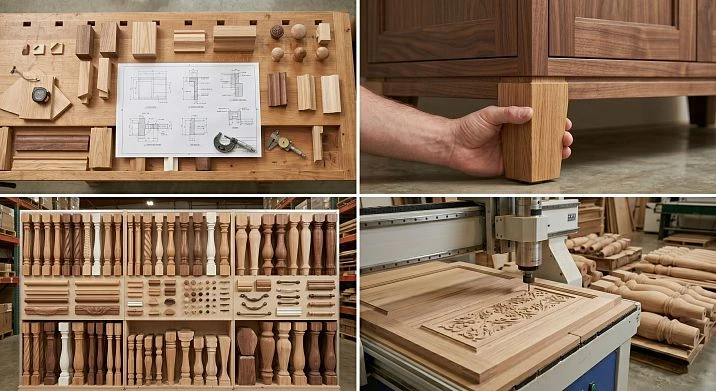
Furniture manufacturers, carpentry workshops, and designers working with wood sooner or later come to the same question: where to buy wooden furniture fittings wholesale so that the parts are consistent in quality, repeatable from batch to batch, and coordinated in style? This is not a question that can be solved by a one-time purchase of "a couple of handles."
Wholesale furniture fittings is a systematic purchase where not only the beauty of each detail matters, but also the logic of the entire series: Handles, Legs, carved appliqués, decor for facades, Pogonazh iz massiva — everything should work as a single set that can be reproduced in the next batch exactly the same as in the previous one.
This article provides a detailed professional analysis for those who purchase wooden furniture fittings not for a single cabinet, but for production, a project, or regular work with wood.
What is included in wooden furniture fittings: a complete map of product groups
Before talking about choice, you need to clearly understand what exactly is included in the concept of "wooden furniture fittings". This is not one category — it is several groups of products, each of which solves its own task.




Wooden furniture handles
Furniture Handles — the most visually noticeable group of fittings. They are installed on drawers, cabinet doors, kitchen fronts, chests of drawers, bedside tables — and they are the first to fall into the user's hands.
Types of wooden handles:
-
Knob handles — round overlay handles, a classic and modern option.
-
Bail handles — arched handles with two attachment points.
-
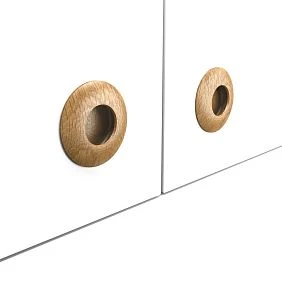
Inset handles — are installed flush with the facade, popular in modern and minimalist furniture.
-
Button handles — compact, with one attachment point.
-
Turned handles — with a profile and decorative relief, for classic facades.
Wooden handles are supplied in two coating options:
-
without a finish — for workshops and productions that paint or varnish the handles themselves to match the furniture.
-
with a finish — ready for installation, with lacquer or tinting.
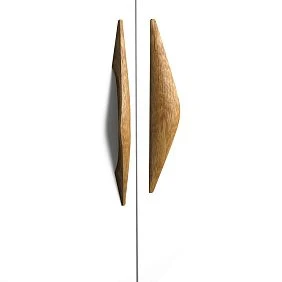
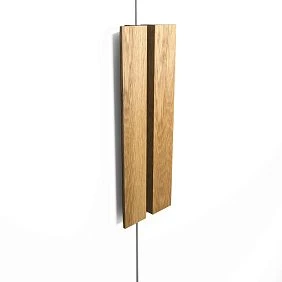
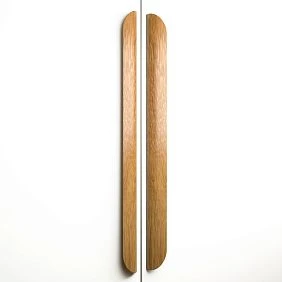
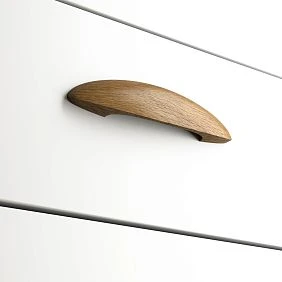
Our factory also produces:
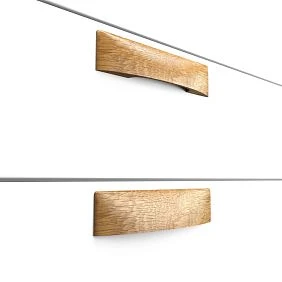
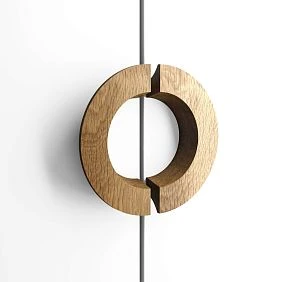
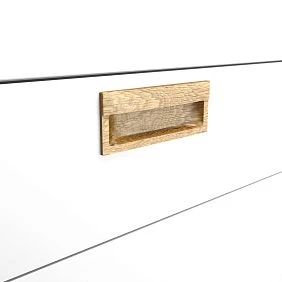
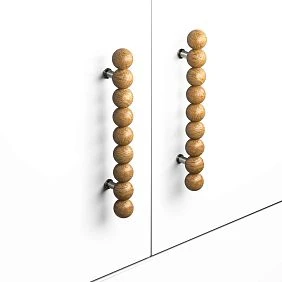
Furniture legs and supports
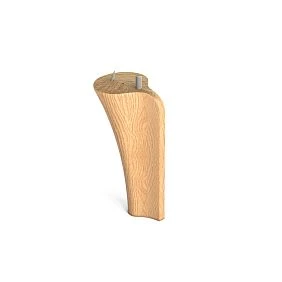
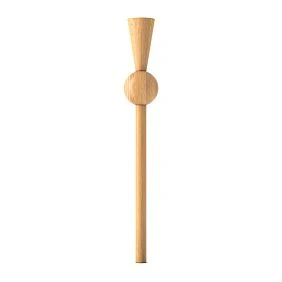
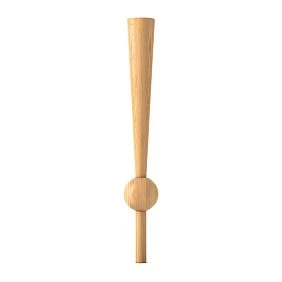
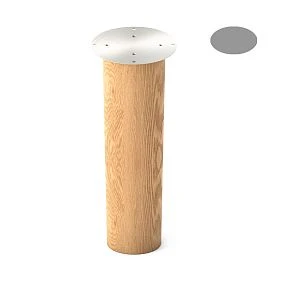
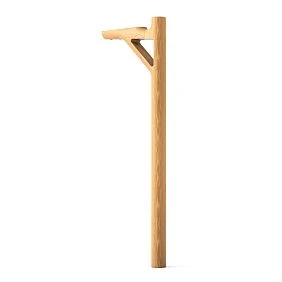
Solid wood furniture legs — the second most important group. They determine the character of furniture: light or substantial, classic or modern, tall or low.
-
Turned legs with profile — for classic and neoclassical pieces.
-
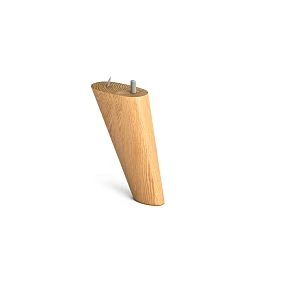
Tapered legs — for furniture in Scandinavian and modern style.
-
Legs with carving and decorative belts — for Baroque and opulent classic furniture.
-
Straight strict legs — for modern and neoclassical furniture.
-
Unpainted legs — for self-finishing.
Get Consultation
Carved overlays and decorative elements
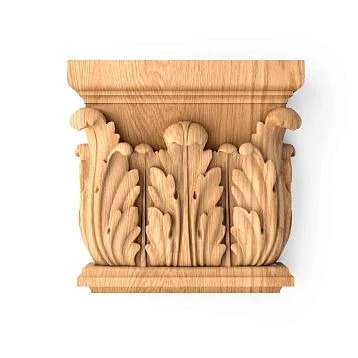
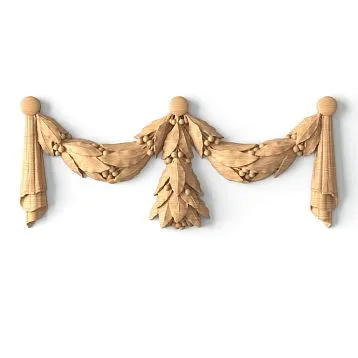
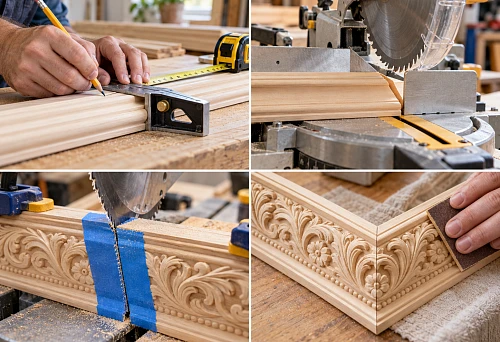
Carved decorative inserts for furniture — this is a decorative relief that is attached to the fronts of cabinets, dressers, drawers, tables. They add depth and stylistic expressiveness where otherwise there would be a flat, uniform front.
decor for furniture includes central overlays, corner elements, ornamental strips, and decorative rosettes — all work together as a system and must be chosen in a unified ornamental key.
Trim and moldings for furniture
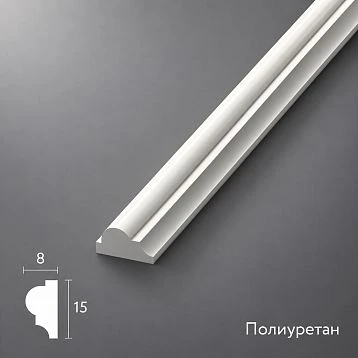
Pogonazh iz massiva — wooden profiles supplied in linear units. Used for:
-
framing facades and frame structures;
-
furniture bases;
-
decorative horizontal belts on cabinets;
-
cornices on the top of wardrobes and bookcases.
Who needs wholesale furniture fittings
The question "who needs wholesale" may seem rhetorical. But in practice, scenarios for wholesale purchasing of wooden fittings vary significantly.
Furniture manufacturers
For serial production of wardrobes, kitchens, chests of drawers, bedside tables, beds, consoles, and classic furniture, wholesale wooden fittings are a matter of cost, speed, and line quality. It is important for the manufacturer that the next batch of handles is identical to the previous one: the same size, the same mounting diameters, the same wood.
Wooden furniture handles wholesale for production — this is a stable consumable material. Interruptions in supply or replacing one model with a "similar" one break the line and create inconsistency in serial products.
Carpentry workshops
A workshop that works with custom orders purchases fittings differently: not in hundreds of pieces, but regularly. A wide range is important — to select suitable handles, legs, and decor for each project without searching through different suppliers.
uncoated wooden handles — the most in-demand item for workshops: the master selects the tint or varnish themselves, coordinating with the project's color.
Designers and specifiers
A designer managing several projects simultaneously needs a reliable supplier from whom they can get handles, legs, carved appliqués и Trim for several different objects.
For a designer, the systematic nature of the assortment is critical: can you select a handle, leg, and plate in one style from a single catalog? With STAVROS — yes.
Restorers
Restoring antique furniture requires parts that are no longer in production: turned legs of the required profile, plates with a specific ornament, handles for an old mounting. Custom production of wooden fittings is a separate scenario that distinguishes a serious supplier from a hardware store.
Classic furniture manufacturers
This is a separate category for which Decorative wooden overlays, carved legs и wooden handles with a profile — not optional decorations, but mandatory structural and style-forming elements. A manufacturer of classic furniture cannot use plastic handles: this instantly collapses the price perception of the product.
Wooden handles wholesale: technical parameters and selection practice
This is a block that manufacturers often skim through — and then face problems during installation. Let's systematically break down the parameters for choosing wooden handles.
Shape and style
The shape of the handle is the first and most obvious parameter. But it has a less obvious dimension: the shape must match the style of the furniture line.
Inset handles — for modern furniture and minimalist facades. The handle does not protrude above the surface, does not break the clean horizontal line.
Wooden bracket handles and knob handles — for classic and neoclassical pieces. They create volume, add relief and a visual focal point on the facade.
Turned handles with profiles — for Baroque, Russian style, and opulent classic furniture. Here, the handle itself is a decorative element.
Size and mounting diameter
The handle mounting — the hole through which the fastening bolt passes. Standard center distances for bracket handles: 32 mm, 64 mm, 96 mm, 128 mm. The manufacturer must know these parameters before purchasing — otherwise, the handle physically will not fit on the facade.
For a knob handle or button handle: one central hole, diameter 4–5 mm. The size of the handle itself (diameter, height, projection) must be proportionate to the facade: a small handle on a large facade gets lost, a large handle on a thin drawer looks heavy.
Finish
This is a fundamental choice for production.
handles without coating — supplied in a natural state, require finishing. Advantage: the manufacturer controls the color and type of coating, coordinating with the varnish or stain of the specific product. Disadvantage: an additional operation in production.
Handles with Finish — ready for installation. Save time in production. Good when the color of the fittings is stable from batch to batch and coordinated with a specific furniture series.
Repeatability
This is perhaps the most important parameter for wholesale purchases, which is not specified in the characteristics but is of great importance.
A furniture manufacturer who purchased 200 handles of one model should be able to buy another 100 three months later — exactly the same, without changes in size, profile, or fit. A supplier who says 'I can't do anything, the model is discontinued' is a risk for serial production.
Furniture legs and supports wholesale: from shape to fastening
Furniture legs are a load-bearing element that is also decorative. The height of the product, its visual appearance, and the load capacity of the structure depend on their choice.
Parameters for choosing furniture legs
| Parameter | What to check |
|---|---|
| Height | Matching the height of the product: chest of drawers, bed, sofa, bedside table |
| Diameter/cross-section | Proportionality to the weight and scale of the furniture |
| Shape | Classic turned, tapered, straight, carved |
| Mounting | Threaded pin, platform, bolted connection |
| Material | Wood species, moisture content, treatment |
| Finish | No coating, varnish, tinting |
Legs for different types of furniture
For chests of drawers and cabinets — turned or tapered legs 5–10 cm high. Higher legs lift the piece and make it visually lighter.
For sofas and armchairs — legs 8–15 cm high, with good load-bearing capacity. Shape — from strict straight to carved classic.
For beds — legs from 15 to 30 cm depending on the height of the base.
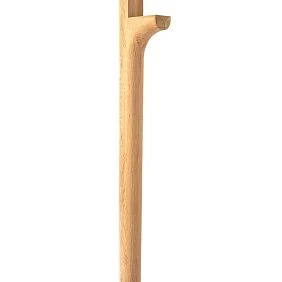
For consoles and tables — high supports 60–80 cm, often turned or with an expressive profile.
For kitchen cabinets — a plinth solution instead of legs, or low adjustable supports.
Load
The manufacturer must calculate the load on the legs. A product weighing 80 kg on four legs is 20 kg per leg under static load. Under dynamic load (e.g., opening heavy doors or a person sitting on the edge), the load increases by 2–3 times. Wooden furniture legs made of solid wood from oak or beech — the optimal choice for loaded products.
Carved overlays and decor for furniture: how ornament works
Overlays are details that turn good furniture into expensive furniture. A simple facade with a properly selected overlay is a different level of perception.
Types of decorative overlays
Central overlays — attached to the center of a drawer front, door, or panel. This is the main decorative accent. The size should be proportional to the facade: a 15 cm overlay on an 80 cm high facade gets lost; a 40 cm overlay on a 50 cm facade is overload.
Corner overlays — installed in the corners of the facade, creating a decorative "frame". They work well paired with a central element.
Ornamental strips — horizontal or vertical decorative strips made from ornamental molding. They divide facade zones, creating horizontal belts on the cabinet body.
Decorative rosettes — round or oval elements, used at intersections of molding frames or as standalone accents.
Ornamental motifs
decor for furniture is produced in different ornamental keys:
-
Floral (acanthus leaves, garlands, rosettes) — for classic and baroque furniture.
-
Geometric — for strict neoclassicism and modern classic.
-
Russian ornament — for furniture in folk and country style.
System rule: having chosen one ornamental motif for a furniture line, it must be adhered to in all items of the series. Floral overlays on a chest and geometric ones on a cabinet in the same room — a conflict.
How to assemble a set of wooden fittings in a single style
Here is a practical question every designer and every manufacturer asks: how to choose handles, legs, and decor so that the furniture looks like a system, not a set of parts?
Principle of stylistic unity
Start not with individual parts, but with the image: what style is the furniture line? Classic, neoclassical, baroque, country style, modern interior with wood? The answer to this question determines all other choices.
For classical style:
-
Handles: turned or brackets with a wooden profile, with a finish to match the furniture tone.
-
Legs: turned with a neck and disc, profiled.
-
Overlays: floral or classic ornament, central and corner.
-
Moldings: profiled, with a fillet and shelf.
For neoclassicism:
-
Handles: more restrained forms, minimal decor, possibly mortise.
-
Legs: tapered or with a simple turned profile without excessive decor.
-
Overlays: geometric or minimalist floral.
-
Molding: with a clean, expressive, but not overloaded profile.
For Baroque:
-
Handles: large, decorative, expressive pull handles.
-
Legs: with a rich profile, possibly cabriole (S-shaped curve).
-
Overlays: rich floral, large central elements.
-
Molding: with stucco ornament or a rich classical profile.
For a modern interior with wood:
-
Handles: mortise or minimalist rosettes.
-
Legs: tapered, straight, without ornament.
-
Overlays: minimal or absent.
-
Molding: simple straight profile.
Wood color: consistency or contrast
Wood fittings can match the furniture tone or be in a contrasting shade. A uniform tone creates a monolithic look, while contrast highlights details. For serial classic furniture, a uniform tone is used. For designer projects, contrast is possible but must be intentional.
What matters for wholesale purchase of wood fittings: B2B breakdown
Production procurement follows a different decision-making logic. Here, not only beauty and style matter, but also purely practical parameters.
Stability of assortment
A supplier who annually updates their product line and discontinues parts is inconvenient for serial manufacturers. STAVROS produces items of a stable assortment — parts available in the catalog are manufactured on an ongoing basis.
Dimensional compatibility
Handles, legs, overlays, and molding must be compatible with each other in scale. If a handle has a center distance of 96 mm and the drawer front is designed for 64 mm, the part will not fit. Before purchasing, the manufacturer must record all mounting dimensions.
Possibility of self-finishing
Uncoated wooden legs и handles without coating — standard for manufacturers who paint and varnish all parts in a single production line. This provides maximum flexibility in color matching.
Batch reserve
Furniture production always involves defects, trimming, and correcting installation errors. The minimum reserve when purchasing wooden fittings is 10% above the calculated quantity. For low-cost parts (handles, small overlays) — 15–20%.
Delivery times and packaging
Uncoated wooden parts require transportation without mechanical damage. Standard packaging includes individual or group wrapping that prevents parts from rubbing against each other.
Mistakes when buying wooden furniture fittings wholesale
Let's analyze mistakes not abstractly — but with practical consequences.
Buying parts only by photo, without dimensions. The handle in the photo looks "approximately right" — in reality, it turns out to be 15 mm longer than needed. In serial production, this means reworking templates or replacing the entire batch.
Not checking the center distance. The most common mistake when purchasing pull handles. Result — handles that physically cannot be mounted on already finished facades.
Do not consider the weight of the product when choosing legs. Solid wood furniture legs are designed for a specific load. A thin turned leg with a diameter of 30 mm under a massive oak chest weighing 120 kg — a risk of failure during use.
Mixing decorative motifs from different styles. Floral overlays on one facade and geometric ones on another in the same series — loss of product style identity.
Not checking batch repeatability. Before launching a series, you need to ensure that the supplier can guarantee the identity of the next delivery.
Buying handles, legs, and overlays from different suppliers. It seems logical — each has its own best items. In reality, the parts turn out to be inconsistent in wood color, scale, and style.
Not allocating a reserve. 10% reserve is the minimum for any batch. Zero reserve means that the first defect or installation error will stop the work.
Choosing legs without considering the height of the product. A 15 cm leg under a 35 cm cabinet — a disproportion that immediately catches the eye.
What to buy for furniture production: a complete list
-
wooden furniture handles — turned, staples, bits, buttons.
-
handles without coating — for self-finishing.
-
Handles with Finish — ready for installation.
-
Mortise wooden handles — for modern facades.
-
Solid wood furniture legs — turned, tapered, carved, straight.
-
Unpainted legs — for self-finishing.
-
Carved decorative inserts for furniture — central, corner, strip.
-
Furniture decor from carved wood — floral, geometric, classic.
-
Pogonazh iz massiva — profiles for facades, cornices, baseboards.
-
Solid Wood Items — complete catalog of wooden parts for furniture production.
How to buy wooden furniture fittings wholesale without mistakes: algorithm
1. Determine the type of furniture — cabinets, kitchens, dressers, nightstands, beds, consoles.
2. Choose a line style — classic, neoclassical, baroque, modern interior.
3. Select the main details: Handles, Legs — in a single style.
4. Add applique и Trim, if decorative facades are needed.
5. Check all dimensions — leg height, center-to-center distance of handles, overlay sizes.
6. Choose the coating: without a finish or ready-made.
7. Calculate the batch with a 10–15% margin.
8. Go to the catalog solid wood STAVROS products and assemble a set of wooden fittings for your project.
About the company STAVROS
Wholesale wooden furniture fittings have been STAVROS's specialization since 2002. Production in St. Petersburg: own turning workshop, milling equipment, finishing and quality control area. The catalog includes — Furniture Handles (turned, brackets, mortise, with and without coating), Wooden legs, carved appliqués, decor for furniture, Pogonazh iz massiva and the entire range of solid wood for furniture production and finishing.
STAVROS works with furniture manufacturers, joinery workshops, designers, and assemblers across Russia. Stable assortment, shipment from 1 piece, custom production — non-standard sizes, profiles, tints. Catalog for B2B clients — with technical parameters, dimensions, and coating options.
FAQ: Answers to popular questions
What is included in wooden furniture fittings?
Wooden handles, legs, supports, carved overlays, decorative elements, moldings, linear profiles, and profiles for furniture fronts — all these are categories of wooden furniture fittings.
Who benefits from buying furniture fittings wholesale?
Furniture manufacturers, joinery workshops, designers, assemblers, restorers, and anyone who regularly assembles furniture projects and needs a stable supplier of wooden components.
What is important to check before a wholesale purchase?
Dimensions of parts, mounting parameters, compatibility with facades, material and wood moisture, coating, batch repeatability, and the ability to purchase products with the same characteristics later.
Can I select handles, legs, and decor in the same style?
Yes, and this is the correct systematic approach. When handles, legs, overlays, and moldings are chosen in the same style and consistent wood color, the furniture is perceived as a professionally made product.
Which wooden fittings are suitable for classic furniture?
Turned carved legs, floral or geometric overlays, profiled handles, profiled moldings, and trims with an expressive but not overloaded cross-section.
What is the difference between handles with and without coating?
Handles without coating are finished by the manufacturer independently — varnish, stain, tinting. Handles with coating are ready for installation. The choice depends on the technology of the specific production.