Article Contents:
- What distinguishes Baroque furniture from just 'classic furniture'
- What pieces of furniture exist in the Baroque style
- Sofas and armchairs
- Commodes and cabinets
- Consoles
- Display Cases and Cabinets
- Beds
- Desks and dressing tables
- Mirrors in carved frames
- Baroque furniture for the living room: how to assemble an ensemble
- Start with the main piece
- Sofa + two armchairs: classic trio
- Console and mirror: wall composition
- Display case as an architectural accent
- Baroque furniture and stucco
- Baroque bedroom furniture: triumph and tranquility at once
- Bed with decorative headboard
- Nightstands
- The Dresser in the Bedroom
- Makeup table
- Light or dark baroque bedroom
- Baroque office furniture: solidity without excessive ornamentation
- Desk
- Bookcase
- Executive chair
- Details that create the Baroque style: a commercial analysis
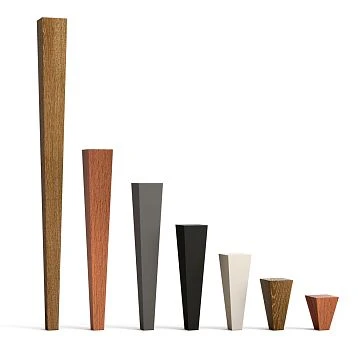
- Carved furniture legs
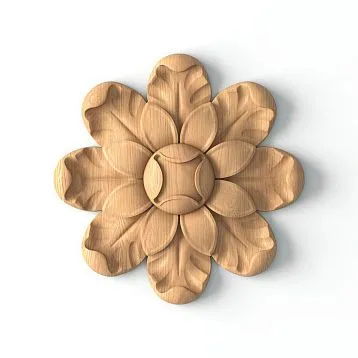
- Decorative overlays on facades
- Wooden Handles
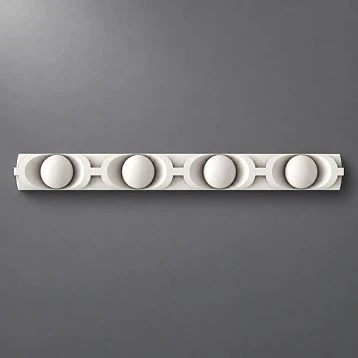
- Wooden moldings on facades
- Mirror and Picture Frames
- Wooden baseboard and moldings on walls
- How to choose the color and finish of Baroque furniture
- White Baroque furniture
- Dark Baroque furniture
- Patina
- Gilding
- Finish imitating natural wood
- How to combine Baroque furniture with other interior elements
- Baroque furniture and flooring
- Baroque furniture and curtains
- Baroque furniture and lighting
- Baroque furniture and wood products in the interior
- How not to overload a Baroque interior
- Do not place too many large items
- Do not mix different wood shades
- Repeat the pattern — do not collect different ones
- Leave air between items
- Coordinate the Baroque style throughout the room
- Baroque in a small space: a measured approach
- Mistakes when buying Baroque furniture
- Choosing 'Baroque' furniture without understanding the details
- Buying one piece without a system
- Not considering the room's scale
- Mixing Baroque with incompatible styles
- Choosing gilding 'everywhere'
- Frequently Asked Questions
- How is Baroque furniture different from classic furniture?
- Which room is Baroque furniture suitable for?
- How to choose Baroque furniture for a living room?
- Can Baroque furniture be used in a modern apartment?
- What is more important: the shape of the furniture or the decorative details?
- Where to buy Baroque-style furniture with carved decor?
- STAVROS: Baroque furniture and a complete decor system for a classic interior
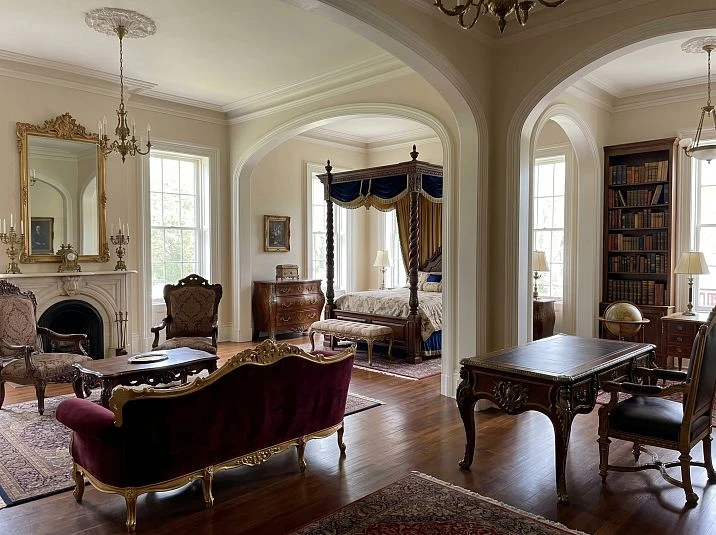
Baroque does not tolerate half-measures. It is a style of absolute assertion — architecture that presses on emotion, furniture that declares itself at first glance, details that do not allow you to pass by indifferently. When a room has a real Furniture in Baroque style — with carved legs, figured facades, decorative overlays, and precise gilding — the interior ceases to be just a room. It becomes a statement.
But this is where the main trap of Baroque lies: it is very easy to turn it from splendor into overload. To make a mistake with the scale of objects, mix mismatched details, choose "Baroque" furniture without understanding what exactly creates this style — and instead of a majestic interior, you will get a motley collection of random things.
This article is a practical guide to choosing Baroque furniture. Not a historical overview, not a theoretical treatise — specific answers to specific questions: what to choose, which details are important, how not to make a mistake.
What distinguishes Baroque furniture from just "classic furniture"
The question is legitimate — and often causes confusion. Classic furniture is a broad concept. Baroque is a specific register within this concept. The difference is fundamental.
Classic Furniture can be restrained: straight lines, moderate molding, neat profile. Baroque furniture is always rich. Here are the main markers by which you will unmistakably identify Baroque:
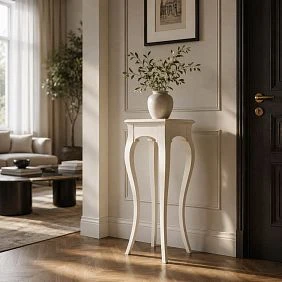
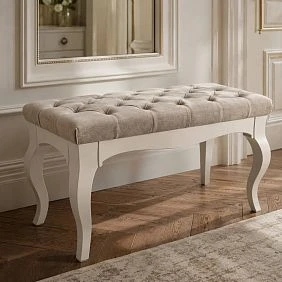
Curved lines. There are almost no straight lines in Baroque furniture. Everything flows, bends, and twists. Legs with a "knee," wavy cabinet cornices, convex commode fronts — this is the language of the Baroque.
Carved decor. Carving in the Baroque is not a detail, but a recurring theme. Decorative wooden inlays with plant and zoomorphic motifs — cartouches, scrolls, acanthus leaves, garlands — cover facades, cornices, and legs.
Massiveness and expressive silhouette. Baroque furniture does not hide. A tall cabinet with a figured cornice, a commode with a convex front, a sofa with a shaped back — each piece aspires to an architectural status.
Gilding and patina. Partial gilding of carved details is one of the strongest Baroque techniques. Gold emphasizes the relief of the carving, creates contrast with the main color, and "activates" shimmer.
Rich fabrics. Baroque upholstered furniture is covered with velvet, brocade, natural silk — dense, tactile, heavy materials in deep tones.




What pieces of furniture exist in the Baroque style
Before planning an interior, you need to understand the range of items that Baroque works with.
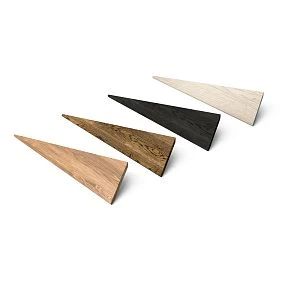
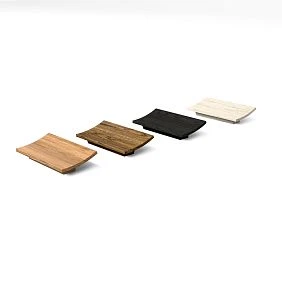
Our factory also produces:
Sofas and armchairs
A Baroque sofa is primarily an expressive backrest: high, shaped, with a carved top or gilded frame. Legs are turned or shaped with a curve. Upholstery is velvet, silk, jacquard in deep tones: burgundy, dark blue, emerald, wheat.
A baroque-style armchair is a smaller, more concentrated version of the same image: a high back, armrests with carved details, expressive legs. The baroque armchair is a "speaking" object, it deliberately occupies space.
Get Consultation
Chests of drawers and cabinets
A baroque chest of drawers is one of the most characteristic items of the style. It is easily recognized by its convex or "bombé"-shaped front: the surface is not flat, but convex. Decorative overlays with floral ornamentation, wooden furniture handles large in form, curved cabriole legs. The surface of the chest is a platform for decorative items: clocks, vases, candlesticks.
Consoles
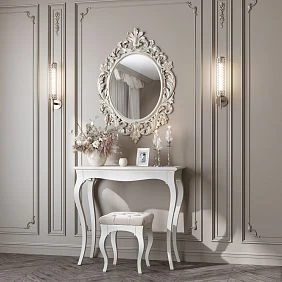
A baroque console is a wall-mounted table with a richly decorated base: pilasters, carved legs, gilded details. As a rule, a mirror is hung above the console wooden frame with lush ornamentation — this is a classic baroque duo.
Display cabinets and wardrobes
A baroque display cabinet is a large item with a figured cornice, carved overlays on the facades, and gilded details. The upper part is often glazed, the lower part is closed. Such a display cabinet becomes the main architectural element of the living room.
A baroque wardrobe is tall, with a multi-tiered silhouette: the lower volume is wider than the upper, the cornice is figured with carved accents. The feeling is like the facade of a palazzo.
Beds
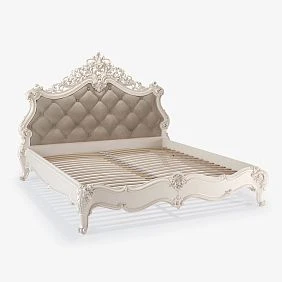
A baroque-style bed is recognized by its headboard: high, with a carved or upholstered top, with a wooden frame decorated with carving or gilding. For a baroque-style bedroom, the bed is the main item around which the entire interior is built.
Writing desks and dressing tables
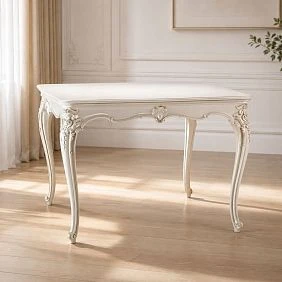
Baroque writing desk — a rich piece for the study: carved details on the supports, pull-out drawers with decorative handles, shaped legs. Baroque dressing table — an elegant piece for the bedroom with a mirror on a carved support.
Mirrors in carved frames
wooden mirror frames in the Baroque style — a standalone decorative item. Rich carved framing with ornamentation, gilding, large scale. A mirror above a console or above a fireplace — an archetype of Baroque interior.
Baroque furniture for the living room: how to assemble an ensemble
The living room is the main room of a Baroque interior. It is here that the style fully unfolds.
Start with the main piece
In a Baroque living room, there is one main piece around which the entire composition is built. Usually, this is a sofa or a display cabinet. The sofa occupies the central area, sets the scale and tone. The display cabinet forms the main wall.
Choose the main piece first. It will determine the scale of everything else: the size of the armchairs, the height of the console, the width of the frames on the walls.
Sofa + two armchairs: the classic trio
The classic Baroque group in the living room is a sofa and two armchairs. The armchairs should be from the same series as the sofa: identical legs, coordinated back shape, similar upholstery. If the sofa is burgundy velvet — the armchairs in the same velvet or in a coordinated jacquard.
There is space between objects. Baroque loves scale but dislikes crampedness. The distance between the sofa and armchairs is at least 60–80 cm. The feeling: objects breathe, each occupies its place.
Console and mirror: a wall composition
A console against the wall with a mirror carved frame above it is one of the most characteristic Baroque motifs. The mirror should be proportionate to the console: the width of the frame should be close to the width of the console. A mirror wider than the console is acceptable. A narrower one is not.
Showcase as an architectural accent
A Baroque-style showcase on the main wall of the living room creates a sense of "furniture architecture": it is not just a storage item, it is a visual focal point. Glass doors with thin wooden mullions. Inside, lighting that highlights the objects.
Baroque furniture and stucco
A Baroque-style living room with stucco on the ceiling is a classic image. Polyurethane moldings on the ceiling and moldings on the walls create an architectural context in which Baroque furniture looks organic. Without stucco, Baroque furniture in a modern room can look somewhat "lost."
Baroque furniture for the bedroom: grandeur and tranquility at once
A baroque-style bedroom is not just a room for sleeping. It is a space where rest takes on a ceremonial dimension.
Bed with decorative headboard
The bed is the absolute dominant feature of a baroque bedroom. A tall upholstered headboard in expensive fabric with a wooden frame and carved details. Or a wooden headboard with carving and applied decoration. In both cases, the bed must occupy its place confidently: a lowered ceiling and a small room are not suitable for such a bed.
Guideline: for a bedroom of 20 m² or more — a bed 160×200 or 180×200 with a high headboard. For smaller rooms — a more restrained version with moderate decoration.
Bedside tables
Nightstands should come in a pair — identical, symmetrically placed. In a baroque bedroom, they are coordinated with the bed: the same legs, the same wood tone, the same decorative handles.
The height of the nightstand should be level with the mattress or slightly lower. This is not only aesthetic but also convenient: a glass of water, a book, a phone — everything should be within reach.
Dresser in the Bedroom
A baroque chest of drawers in the bedroom is an item that exists separately from the bed but in dialogue with it. It stands opposite or to the side. On it — a mirror in a carved frame or a pair of decorative items.
Decorative Inserts on the drawer fronts create that very baroque relief that distinguishes the item from ordinary ones. Handles — large, with good relief, matching the gilding of other bedroom details.
Vanity table
A baroque vanity table is a little theater: a carved mirror frame, curved legs, delicate finishing. For a baroque bedroom, a vanity table is a mandatory element: it completes the space, adding an elegant decorative note to the functional part of the room.
Light or dark baroque bedroom
Baroque exists in two versions — dark and light. Dark: walnut, cherry, dark oak, dark fabrics, deep tones. Creates a feeling of night, mystery, weight. Light: white enamel with gilding, cream fabrics, light wood. Creates a feeling of palace elegance, lighter and more modern.
For small bedrooms — the light version. A dark baroque bedroom requires space and high ceilings, otherwise it feels oppressive.
Baroque furniture for the study: solidity without excessive decoration
Baroque in the study is a different baroque. A more restrained version is appropriate here: not palace splendor, but intellectual luxury. Dark wood, leather, restrained carving, rich bookcase frames — all this creates the image of a serious person with good taste.
Desk
The desk in a baroque-style study is large, with a sufficient work surface. Drawers with carved wooden handles, shaped legs. The table surface may be decorated with a leather insert — a classic "minister's desk" technique.
Bookcase
The bookcase in a baroque study is tall, with glazed upper doors and solid lower ones. The cornice is shaped, with carved ornamentation. Inside — open shelves for books, lighting. This is an item that claims to be the "main wall" of the study.
Executive chair
The office chair should be in the same style series as the desk: leather upholstery or dark velvet, wooden armrests with carved details, expressive legs. The "throne" chair is a baroque image of a leader.
Details that create the baroque style: a commercial breakdown
This is the key insight for a smart buyer. Baroque furniture is not just case goods. It's the details. And it's the correctly chosen details that turn "just furniture" into "baroque furniture."
Carved furniture legs
Furniture legs — the first thing people notice about baroque furniture. Baroque is characterized by:
-
Cabriole leg — with a pronounced "forward-backward" curve: the upper part curves outward, the lower part inward, ending in a "paw" or ball. One of the most recognizable baroque elements.
-
Turned leg with a rich profile — balusters, necks, knobs in a complex combination.
-
Carved leg with a decorative overlay on the upper part — acanthus leaf, scroll, mascaron.
Legs in baroque are never simple straight blocks. If you see a straight leg without a profile, it's not baroque.
Decorative overlays on facades
Carved furniture decor — central decorative element of Baroque facades. Overlays are installed:
-
In the center of the door or drawer — a central medallion or cartouche.
-
At the corners — corner ornamental elements.
-
Along the perimeter in the form of a garland or ribbon.
Overlays can match the main color of the furniture (relief works through shadow) or be gilded — then they create a strong decorative contrast.
Wooden handles
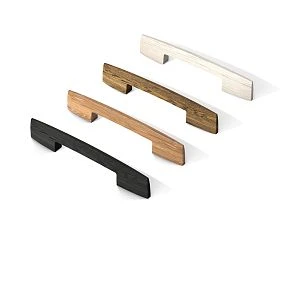
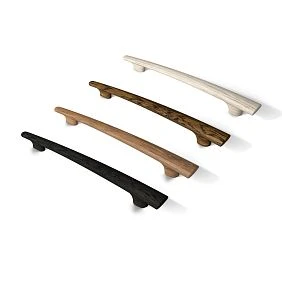
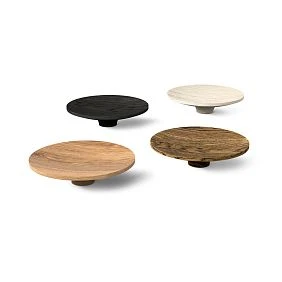
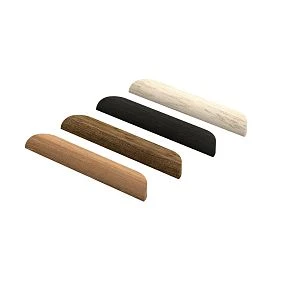
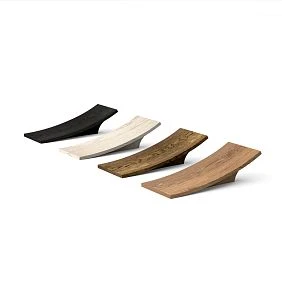
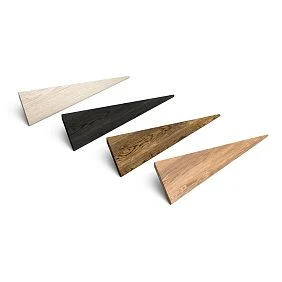
A handle in Baroque furniture is not a neutral detail. It is a decorative element that is visible, that is touched, that 'signs' the piece. wooden furniture handles with a richly turned profile, handles with carved ornamentation, handles with gilding — all of this works in a Baroque style.
Rule: the handle and the leg must be consistent in style. If the legs are turned in dark wood — handles in the same tone.
Wooden moldings on facades
Wooden moldings create geometric frames on furniture facades — 'fields' into which ornamental decor is inscribed. In Baroque, molding frames have a complex profile: multi-stepped, with a scotia, with a fillet. They do not just divide the facade — they create architectural richness.
Frames for mirrors and pictures
wooden frames — the most important decorative element of a Baroque interior. The frame of a mirror above a console, the frame of a painting above a fireplace, the frame of a wall panel — everywhere the Baroque frame with lush ornamentation is a full-fledged architectural statement.
Rule of proportion: the frame of a mirror or painting should be at least 60–80 mm wide in a Baroque interior. A thin frame looks inappropriate.
Wooden baseboard and wall moldings
Baroque furniture requires a Baroque interior context. Wooden baseboard with an expressive profile and wall moldings create an "architectural background" against which Baroque furniture looks organic. Without a profiled baseboard and wall moldings, rich Baroque furniture ends up in too simple a setting — and loses half its impact.
How to choose the color and finish of Baroque furniture
Color and finish in Baroque is a separate chapter.
White Baroque furniture
White enamel with gilded details — the "Versailles" version of Baroque. Light, elegant, palatial. Works well in bright interiors with high ceilings. Ideal for living rooms and bedrooms where airiness is important alongside richness of detail.
White Baroque furniture requires white moldings on the walls, white baseboards — and only gold details (handles, legs, frames) create a warm contrast.
Dark Baroque furniture
Dark walnut, cherry, mocha — "European" Baroque. Massive, heavy, solemn. For a study and a country house. Requires high ceilings and sufficient artificial lighting: dark furniture in a poorly lit room creates a feeling of oppression.
Patina
Patina — imitation of "age", tinting with dark shades in the recesses of the carving. Creates a feeling of antiquity, history, authenticity. Patination emphasizes the relief of the carving: the more complex the carving, the more effective the patina works.
Gilding
Partial gilding — not "gilding everywhere", but targeted gold accents: on carved overlays, handles, legs, in the ornament of frames. It is the targeting that makes gilding in Baroque elegant, not vulgar.
Guideline: gold occupies no more than 10–15% of the visible surface of the furniture. More — and the piece starts to "scream".
Natural wood finish
Not every Baroque requires enamel or gold. Natural wood under varnish — oak, walnut, cherry — with rich carving and openwork details creates an aristocratic image without excessive decorativeness. This is a choice for those who value the material, not just the ornament.
How to combine Baroque furniture with other interior elements
Baroque furniture and flooring
Parquet is an ideal partner for Baroque furniture. Oak parquet in a herringbone or panel pattern creates a warm, textured base on which Baroque furniture looks organic. Tile or solid-color laminate is a less expressive background.
A carpet in a Baroque living room is a must-have element. Pile carpet with an ornament, in tones coordinated with the furniture. The carpet brings the furniture group together into a single space.
Baroque furniture and curtains
For a Baroque interior, heavy drapes are chosen: dense fabrics with texture, floor-length, with a lambrequin or a simple cornice with lush folds. The color of the curtains is coordinated with the furniture upholstery — not an exact match, but within the same tonal family.
Baroque furniture and lighting
In a Baroque interior, lighting is multi-level. A chandelier is mandatory. Classic, with crystal pendants or decorative elements. Sconces on the walls. A floor lamp in the seating area. Dark furniture requires more intense lighting.
Baroque furniture and Wooden items in the interior
Baroque furniture lives best in an interior where wooden decor is present not only on the furniture but also in architectural details: moldings, baseboards, frames, door casings. This creates a unified material system — wood everywhere, relief everywhere, history everywhere.
How not to overload a Baroque-style interior
Here is the paradox of Baroque: this style lives on the edge where "a lot" turns into "too much." The ability to stay on this edge is the main skill when working with a Baroque interior.
Do not place too many large items
In a living room of 30 m², there cannot be six large Baroque items — a sofa, two armchairs, a display cabinet, a chest of drawers, and a console with a mirror. That is overload. Choose the main items: 2–3 large and 2–3 accent pieces. The rest is a neutral background.
Do not mix different wood shades
Dark walnut, red cherry, light oak — three different shades in one room create chaos. In a Baroque interior, all wooden surfaces are kept in one tone, possibly with slight variations.
Repeat the ornament — do not collect different ones
The ornament of a Baroque interior is a system of repetitions. Acanthus leaves on the legs of chairs — the same acanthus leaves on the mirror frame. The curl on the drawer handle — the same curl in the wall molding. System creates harmony, variety creates chaos.
Leave air between items
Baroque loves scale, but does not like crampedness. Each item should have space around it — at least 50–80 cm. Chaotically placed large furniture creates a feeling of a warehouse, not a palace.
Coordinate the Baroque style throughout the room
A Baroque sofa in a room with plastic windows, an IKEA dresser, and a chipboard wardrobe is not Baroque. It's one Baroque item in an alien environment. Style only works when all elements speak the same language — or at least don't contradict each other.
Baroque in a small space: a measured approach
What to do if you want Baroque but your apartment is modest in size? A measured approach works here too.
One or two accent Baroque pieces — a dresser in the living room, a bed in the bedroom, a console with a mirror in the hallway — create a strong decorative accent in a neutral interior. The rest of the furniture should be calm, in a coordinated color.
Complement the accent piece with details: frames, handles, profiled baseboards — all of this creates an "echo" of Baroque without fully immersing in the style.
Mistakes when buying Baroque-style furniture
Choosing "Baroque" furniture without understanding the details
A buyer sees "beautiful antique furniture" and calls it Baroque. But the furniture may be classic without Baroque features, or formally Baroque but with cheap finishing. Pay attention to details: legs, handles, overlays, quality of carving.
Buying one item without a system
One Baroque sofa in an empty room is just a sofa. Baroque works as a system. Plan your purchase as a set or in stages, but within a single concept.
Not accounting for the room's scale
A massive Baroque cabinet in a 12 m² room is a disaster. Baroque pieces are designed for space. Measure, plan, leave room for 'air'.
Mixing Baroque with incompatible styles
Baroque + high-tech. Baroque + loft. Baroque + Scandinavian minimalism. Each of these mixes can work as a design experiment, but requires a professional approach. Without it — chaos.
Choosing gilding 'everywhere'
Gilding is an accent, not a background. If every detail of every item is gilded — the interior looks garish. Choose partial gilding: carved overlays, handles, frames.
Frequently asked questions
How does Baroque furniture differ from classic furniture?
Baroque is rich, dynamic, decoratively overloaded in a good sense. Curved lines, abundance of carving, gilding, patina, cabriole legs. Classic furniture can be significantly more restrained.
Which room is Baroque furniture suitable for?
Best for a spacious living room, bedroom, study, hall, dining room. In small rooms — sparingly: one or two accent pieces.
How to choose Baroque furniture for the living room?
Start with the main piece: a sofa or a display cabinet. Coordinate armchairs, a console, and a mirror with it. Add details: frames, baseboards, moldings. Choose a carpet and curtains in coordinated tones.
Can Baroque furniture be used in a modern apartment?
Yes. Choose 1–2 accent pieces and support them with details: frames, handles, legs, profiled baseboards. The style is created by a system of details, not just large pieces.
What is more important: the shape of the furniture or the decorative details?
In Baroque, both are equally important. The shape sets the silhouette, details create richness. Furniture with proper legs, carved overlays, and handles is Baroque. Without details, it is just large furniture.
Where to buy Baroque-style furniture with carved decor?
At STAVROS, you can choose classic furniture and complement it with carved overlays, legs, handles, frames, and other wooden elements to create a full Baroque interior.
STAVROS: Baroque furniture and a complete decor system for a classic interior
STAVROS company — manufacturer and supplier classic furniture and wooden decor for the interior. The catalog includes furniture items in classical and baroque style, as well as a full range of decorative elements for creating a cohesive interior: Decorative wooden inlays, Furniture legs, Wooden handles, frames for mirrors and paintings, Wooden moldings, Solid wood skirting boards и Polyurethane Items to complement the interior with stucco molding.
The main advantage of STAVROS for those creating a baroque interior: the ability to select furniture and all decorative details from a single catalog. Legs, handles, overlays, frames — everything in a consistent style, from the same material, with the same level of craftsmanship. The baroque interior requires systematicity — STAVROS provides this systematicity.
Full range wooden products for furniture and interiors in baroque style, order placement and Contact us to confirm shipping to your destination. — on the STAVROS website.