Article Contents:
- Delicate center: what is a small ceiling rosette and why is it needed
- When a small rosette is the right solution
- How a small rosette fundamentally differs from a large one
- Bedroom: quiet perfection overhead
- Which rosette suits the bedroom depending on the style
- Hallway: first impression at first glance
- Kitchen: functionality and neatness
- Children's room: lightness and safety
- Corridor and dressing room: minimalism with character
- How to choose the diameter of a small rosette: a precise algorithm
- Step one: diameter of the chandelier or ceiling lamp
- Step two: ceiling height
- Step three: room area
- Step four: presence of other moldings
- Step five: style and character of the interior
- Which relief to choose for a small rosette: fine tuning
- Relief height: why it matters for a low ceiling
- Rosette for the bedroom: detailed analysis of three scenarios
- First scenario: small bedroom, ceiling 2.6 m, chandelier diameter 35 cm
- Second scenario: spacious bedroom, ceiling 2.8 m, chandelier diameter 50 cm
- Third scenario: children's room, ceiling 2.5 m, recessed light
- Where to buy a small polyurethane ceiling rosette: what matters when ordering
- What to buy together with a small ceiling rosette
- Basic mounting kit
- What to add if you want to create a ceiling composition
- Installing a small rosette: easier than it seems
- Surface Preparation
- Marking
- Applying adhesive
- Pressing and holding
- Perimeter sealing
- Painting
- Why polyurethane is the best material for a compact rosette
- A small rosette in the system: how to combine with other decor
- Checklist: what to check before ordering a small rosette
- Small rosettes: five styles, five solutions
- Frequently Asked Questions
- About the Company STAVROS
A delicate center: what is a small ceiling rosette and why is it needed
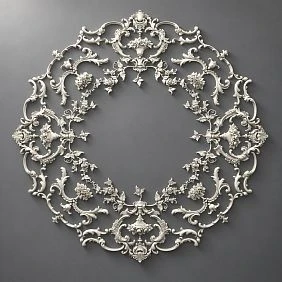
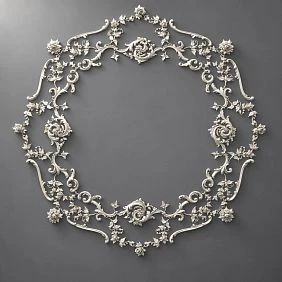
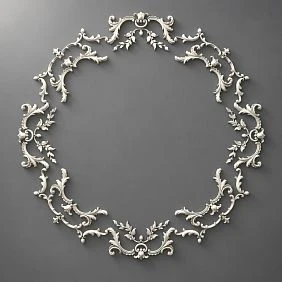
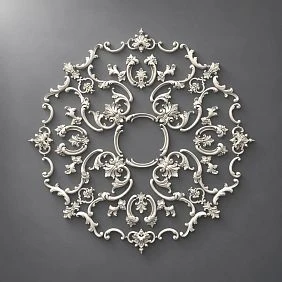
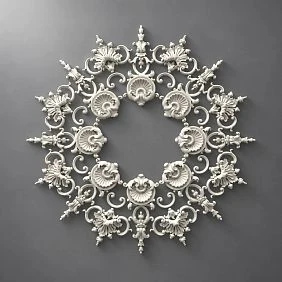
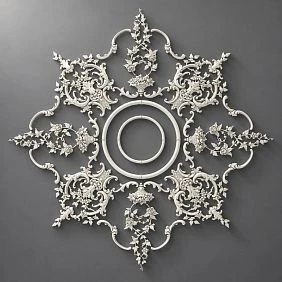
A small-diameter ceiling rosette is not a simplified version of 'normal' decor. It is an independent class of products with its own logic of use, its own requirements for relief and shape, and its own place in the interior hierarchy. Where a large rosette works as an architectural monument, a small one works as a precise detail—neat, restrained, finishing.
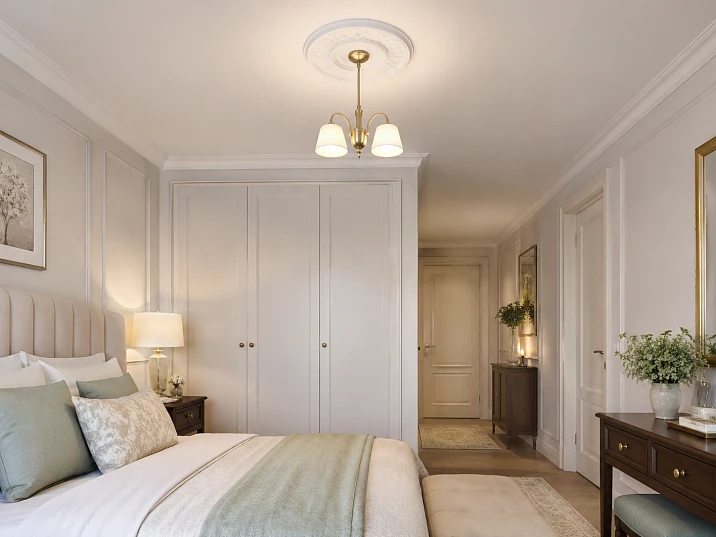
Imagine a bedroom of 14–16 m² with a ceiling height of 2.6 m. A small chandelier with a fabric shade, calm walls, soft textiles. The ceiling is white, clean. A large rosette with rich Baroque ornamentation in this space would look like a bull in a china shop—not because the stucco is bad, but because the scale is off. But a small ceiling rosette with a diameter of 180–220 mm and a soft leaf pattern is precise, light, and appropriate. It gives the ceiling completeness without claiming to be the main character.
It is precisely this effect—decorative completion without overload—that is the main function of small polyurethane ceiling rosettes. And that is why choosing a compact rosette is no less responsible a decision than choosing a large one.




When a small ceiling rosette is the right choice
The answer to this question is surprisingly specific. A small ceiling rosette is needed not where you don't want to spend on a large one, but where a large one would objectively be a mistake.
The ceiling is low — up to 2.7 m. The standard height of Russian apartments from the Soviet and post-Soviet era is 2.5–2.65 m. At this height, a large rosette with deep relief literally lowers the ceiling: it brings the decorative accent closer to eye level and creates a feeling of pressure from above. A rosette for a low ceiling always has a moderate diameter and low relief.
The room is small. A bedroom of 12–16 m², hallway of 5–8 m², kitchen of 9–12 m², children's room of 10–14 m² — in all these spaces, large stucco looks disproportionate. The scale of the decor should match the scale of the room.
The chandelier is compact. A light fixture with a diameter of 30–50 cm requires a rosette of a comparable size. If the rosette is significantly larger than the chandelier's diameter, it peeks out from under it, creating an awkward frame. A rosette for a small chandelier should be proportionate to it.
The interior is calm and minimalist. Scandinavian style, modern classic, minimalism with details, Provencal bedroom — in all these cases, excessive decor ruins the atmosphere. A small polyurethane rosette here is a delicate note, not a statement.
The light fixture is spot or recessed. For a spot light or a small lampshade on a single socket, a rosette with a diameter of 120–160 mm is a completely sufficient size. It covers the wiring area, adds a neat decorative frame, and requires nothing more.
There is no other stucco on the ceiling. If the walls and ceiling are designed in a minimalist style, the rosette remains the only decorative accent on the ceiling plane. In this role, a small rosette works delicately and elegantly.
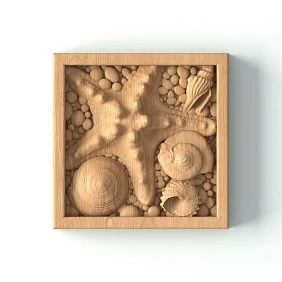
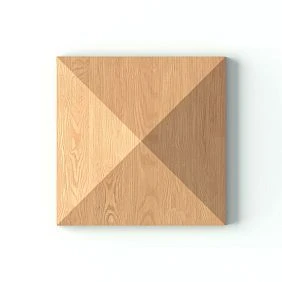
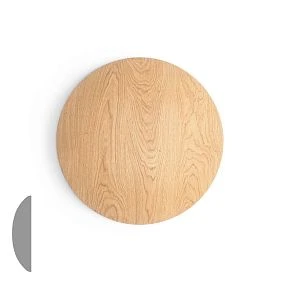
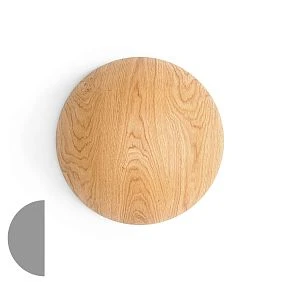
Our factory also produces:
How a small rosette fundamentally differs from a large one
This is not just a matter of size. The difference between a small and a large rosette is a difference in architectural role.
A large rosette works as the central accent of the ceiling: it creates hierarchy, draws the eye, and establishes the axis of the entire ceiling system. Without it, the ceiling in a spacious classical hall feels incomplete.
A small rosette works as a delicate frame: it completes the fixture's mounting point, gives it a decorative border, but does not claim to be an architectural center. Its task is to complement, not dominate.
| Rosette type | Diameter | Where it works best | Relief |
|---|---|---|---|
| Small | up to 250–300 mm | Bedroom, hallway, kitchen, children's room, low ceiling | Low or moderate |
| Medium | 300–450 mm | Study, small living room, dining room | Moderate |
| Large | from 450 mm | Hall, living room, high ceiling, large chandelier | Pronounced |
A buyer who chooses polyurethane rosettes for a bedroom or hallway should focus on the first line of this table — and not give in to the temptation to "take more, just to be sure."
Get Consultation
Bedroom: quiet perfection overhead
The bedroom is perhaps the most sensitive space in an apartment. Here a person relaxes, falls asleep, wakes up. The ceiling in the bedroom is the first thing they see in the morning, even before getting out of bed. That is why the ceiling decor in the bedroom should be calm, unobtrusive, quiet.
A ceiling rosette for a bedroom is compact, with a soft relief or smooth surface, always matching the ceiling color. No bright contrasts, no monumental ornaments. Diameter — 160–250 mm, depending on the size of the chandelier and ceiling height.
Which rosette suits a bedroom depending on the style
For a Scandinavian interior — minimal relief or smooth shape, white color, clear circular profile. No leaves, no curls. Just a geometrically precise frame.
For a Provencal bedroom — delicate leaf ornament, warm white color or a light cream tone possible. Diameter — not too small to create coziness, but not too large to avoid disturbing the atmosphere.
For modern classic — moderate acanthus motif, concentric bands, even background surface. The rosette should be noticeable but not loud.
For minimalism with details — a clean geometric shape, possibly a slight relief in the form of a ring or two concentric circles. No naturalistic ornaments.
For an art deco bedroom — a geometrically symmetrical shape, possibly a radial pattern, moderate diameter, clear contours.
A small ceiling rosette for a chandelier in the bedroom is almost always white, with moderate or low relief and a diameter only slightly larger than the chandelier base. The rosette should frame the light fixture, not compete with it.
Hallway: first impression at first glance
The hallway is a space where a person spends only a few seconds. But these seconds form the first impression of the apartment. The ceiling in the hallway is often low, the area is small, and the light fixture is compact. All this dictates one solution: the ceiling rosette for the hallway should be small, neat, and precise.
The diameter for the hallway is typically 150–200 mm. The relief is moderate: enough for the decor to be readable, but not so much that it takes over the entire ceiling area of a small space.
There is one nuance that is often overlooked: in the hallway, the ceiling light fixture is often small — a surface-mounted round shade, a single spot lamp, a compact pendant. For such a fixture, you need a small polyurethane rosette, not a medium one. A rosette with a diameter of 250–300 mm above a spot light in a 6 m² hallway is already too much.
A good choice for the hallway is — small polyurethane ceiling rosettes with a clear circular profile, possibly with one decorative band of leaf ornament. The minimum that gives maximum elegance.
Kitchen: functionality and neatness
Ceiling decor in the kitchen is often overlooked — and that's a mistake. Even in the kitchen, the ceiling is visible, and a ceiling light above the dining table or work area deserves neat framing.
For the kitchen, a ceiling light rosette is chosen with several specific requirements in mind:
-
Diameter — small, 150–220 mm: the kitchen is rarely a spacious room, and the decor should not overwhelm the space.
-
Relief — moderate or low: ease of cleaning is important in the kitchen, and deep relief is less practical here.
-
Shape — round, without angular details: a circle is universal and blends organically with any light fixture.
-
Material — polyurethane, which is not afraid of humidity and temperature changes: the kitchen is an aggressive environment for decor, and polyurethane is clearly better than plaster here.
A small-diameter ceiling rosette in the kitchen is an unobtrusive touch that makes the interior slightly more complete. Just "slightly" — no more and no less.
Children's room: lightness and safety
In a children's room, ceiling decor has special significance. A child spends a lot of time on the floor and in bed — the ceiling is constantly in their field of view. The decor should not intimidate with monumentality, should not seem heavy, and should not create a feeling of cramped space.
A small ceiling rosette in a children's room — 160–220 mm in diameter, with a soft, "friendly" pattern: smooth leaves, thin concentric rings, calm geometry. No "adult" baroque curls — children are sensitive to spatial sensations.
Another important argument in favor of polyurethane for a children's room: this material is lightweight and, in an emergency, does not pose a falling hazard. A polyurethane rosette weighs 100–300 g — it is not dangerous. Gypsum of a similar size weighs many times more.
Hallway and dressing room: minimum with character
The hallway is a transit zone. The dressing room is a workspace. In both cases, ceiling decor should be minimal but present. A small ceiling rosette for a light fixture in the hallway is exactly that minimum that creates the feeling "everything here is thought out."
For the hallway and dressing room — diameter 120–160 mm, smooth or nearly smooth surface, simple circular profile. White color to match the ceiling.
Important: in the hallway, multiple lighting points are often installed, not just one. Each point has its own rosette. And the logic here is the same: small, neat, in a unified system. If there are several rosettes in the hallway, they should be identical — one style, one size, one relief.
How to choose the diameter of a small rosette: a precise algorithm
The mistake with diameter is the most common. A person sees a rosette in a catalog, thinks "it will fit" — and orders it without checking the actual proportions. Then either the rosette is too small and gets lost, or too large and feels oppressive.
Choosing the diameter is not intuition. It is a sequence of several simple steps.
Step one: diameter of the chandelier or lampshade
Measure or check the specifications for the diameter of your light fixture. Rule: the ceiling rosette should be slightly wider than the base of the chandelier or equal to it. If the lampshade is small — 25–35 cm — a rosette with a diameter of 160–220 mm is sufficient. If the light fixture is 40–50 cm — the rosette diameter should be 220–300 mm.
The rosette should not be significantly wider than the chandelier — otherwise, there will be empty space between the edge of the rosette and the edge of the lampshade, which visually 'breaks' the composition.
Step two: ceiling height
This is the second most important factor. The lower the ceiling, the smaller the rosette should be.
-
Ceiling 2.5 m — diameter no more than 200 mm, minimal relief.
-
Ceiling 2.6–2.7 m — diameter 180–250 mm, low or moderate relief.
-
Ceiling 2.7–2.8 m — diameter up to 280–300 mm, slightly pronounced relief is acceptable.
For ceilings above 2.8 m, it makes sense to consider medium diameters — 300–400 mm. This is no longer a 'small' rosette, but not yet a 'large' one.
Step three: room area
A small room 'accepts' a smaller diameter. For a room of 10–14 m² — maximum 220–250 mm. For a room of 15–18 m² — 250–300 mm. For a room of 18–22 m² — 300–350 mm.
Step four: presence of other moldings
If the room has no cornice, no moldings, no other ceiling moldings — the rosette is the only decorative accent. In this case, it can be slightly more expressive than if it were part of a rich system.
If there is a cornice or moldings, the rosette should match them. A thin fillet cornice and a large, rich rosette are a mismatched pair. A simple cornice and a small, restrained rosette are harmony.
Step five: style and character of the interior
The last but not least factor. A calm interior requires a calm rosette — regardless of ceiling height and chandelier size. Even if the ceiling allows a larger diameter, the style may demand restraint.
Which relief to choose for a small rosette: fine tuning
The relief of a small rosette is a particularly sensitive parameter. In a large rosette, a rich ornament "dissolves" in scale. In a small one, every detail of the pattern is clearly visible. Therefore, choosing a relief for a compact rosette requires precision.
A smooth rosette — a strict round shape without ornament, possibly with one or two concentric rings. Ideal for minimalism, Scandinavian interior, modern classic. Looks clean and flawless.
A rosette with a thin belt — one decorative belt with a geometric or leaf motif along the rim. Moderate decorativeness, wide range of applications — from bedroom to kitchen.
Rosette with acanthus ornament — classic leaf pattern, moderate relief, concentric symmetry. Suitable for a neoclassical bedroom, study, or small living room. Not overly complex, but with character.
Rosette with geometric pattern — radial motifs, rectangular or diamond-shaped elements. For Art Deco, modern interiors with historical details.
Rosette with textured surface — imitation stone, textured background — a rare option, but possible in specific interiors.
Relief height: why it matters for low ceilings
The height of the rosette's relief elements is not only an aesthetic but also a visual parameter. A rosette with a relief of 20–25 mm on a 2.5 m ceiling creates noticeable volume that "brings" the ceiling closer to the eyes. For a low ceiling, the rosette's relief height should not exceed 10–12 mm — this provides decorativeness without visual "heaviness."
A rosette for a low ceiling is always a compromise between "decorative enough" and "not too voluminous." Polyurethane allows achieving this compromise more precisely than any other material: it permits thin walls and low relief profiles without loss of strength.
Rosette for the bedroom: detailed analysis of three scenarios
Let's consider three specific scenarios that occur most often.
Scenario one: small bedroom, 2.6 m ceiling, chandelier 35 cm in diameter
This is a typical city apartment. Bedroom 12–14 m², standard ceiling. The chandelier is compact, with a single shade or small pendants.
Optimal rosette: diameter 180–200 mm, low relief — soft leaf band or smooth shape with two rings. Color — white to match the ceiling. Result: a neat, finished ceiling center without a single extra element.
Scenario two: spacious bedroom, ceiling 2.8 m, chandelier diameter 50 cm
Here there is a bit more room to maneuver. The ceiling allows a diameter of up to 250–270 mm. Relief — moderate acanthus ornament or delicate geometric pattern. This is no longer 'small,' but still a very compact rosette — exactly to scale.
Scenario three: children's room, ceiling 2.5 m, recessed light
Here everything is simple: diameter 140–160 mm, smooth surface or the thinnest decorative band. No monumentality. The rosette covers the mounting point and creates a neat circle — that's all that's needed.
Where to buy a small polyurethane ceiling rosette: what is important when ordering
Before Buy a polyurethane ceiling rosette, you need to clarify several technical parameters.
Diameter in millimeters. Not 'small' or 'medium' — but a specific size. 160, 180, 200, 220, 250 mm. Rely on actual measurements, not the visual impression from a catalog photo.
Relief height. Check in the specifications: 8 mm, 12 mm, 15 mm. For a low ceiling — no more than 12 mm.
Presence of a hole for wiring. Most rosettes have a central hole for wiring. Check its diameter — it should match the diameter of the tube or wire of your light fixture.
Back surface shape. The back surface of the rosette must be flat — this ensures even contact with the ceiling. If you have a stretch or plasterboard ceiling, check installation feasibility.
Product weight. A small polyurethane rosette weighs 80–250 g — this is very light, making installation simple and safe.
To buy polyurethane rosettes of the required diameter with delivery, use the STAVROS catalog — here you will find products of various sizes, styles, and relief levels.
What to buy together with a small ceiling rosette
A rosette is not a "self-sufficient" object. It requires proper installation and final finishing. Before ordering, consider the complete set.
Basic installation kit
-
Glue for polyurethane stucco — a specialized compound that ensures reliable adhesion of polyurethane to the ceiling surface. It is applied to the back plane of the rosette before installation.
-
Acrylic sealant or putty — for sealing the gap around the rosette perimeter. Especially important for uneven ceilings.
-
Primer — before painting, the polyurethane surface is primed for even paint application.
-
Paint — water-based or acrylic in the ceiling color. The rosette is painted after installation and sealing, in a single color with the ceiling.
What to add when wanting to create a ceiling composition
A small rosette can be part of a more complex yet still delicate ceiling system. For a bedroom or hallway, this is not necessary — but if you want to do a little more:
-
A thin ceiling molding — one concentric contour around the area above the bed or dining table. Moldings made of polyurethane small profiles pair perfectly with a compact rosette.
-
A thin ceiling cornice — for a small bedroom or hallway, a narrow cove cornice with a simple profile is sufficient. Ceiling molding in the form of a perimeter cornice, even in a small room, significantly enhances the feeling of architectural completeness.
-
Decorative overlays — small decorative polyurethane elements can be placed on the ceiling as additional details — corner accents or intermediate motifs.
Task What to buy Style a small chandelier in the bedroom A small ceiling rosette with a diameter of 180–220 mm Do not overload a low ceiling of 2.5 m A socket with a relief no more than 10 mm, diameter up to 200 mm Neatly design the hallway A compact round socket 150–200 mm without overload Create a ceiling system in the bedroom Socket + thin cornice + molding contour Buy without mistakes Socket according to chandelier diameter, ceiling height, and style Get a complete installation kit Socket, glue, sealant, primer, paint
Installing a small socket: easier than it seems
A small polyurethane rosette is one of the easiest decorative elements to install. It is lightweight, precise, and requires no special tools.
The complete algorithm for installing molding is in the detailed guide on installing polyurethane molding. Here are the key points for a small rosette.
Surface preparation
The ceiling in the installation area must be clean, free of dust, grease, and peeling paint. If the ceiling is painted with oil paint, the surface should be lightly sanded to improve adhesion.
Marking
Find the exact center: the chandelier mounting point or light point. For a small rosette, marking accuracy is no less important than for a large one—a 5 mm offset is noticeable.
Applying adhesive
Apply glue to the back surface of the rosette—a thin, even layer around the perimeter and a few dots in the center. For a rosette with a diameter of 160–220 mm, this is sufficient. Excess glue at the edges should be removed immediately with a spatula before it sets.
Pressing and holding
Press the rosette against the ceiling for 2–3 minutes. A small rosette weighs little—it can be held by hand until it initially sets. After 20–30 minutes, the glue sets enough to remove the support.
Sealing the perimeter
Apply acrylic sealant or thin-layer putty along the edge of the rosette. After drying, carefully sand it. This step turns the "glued part" into a monolithic ceiling element.
Painting
Primer—two hours of drying—paint to match the ceiling color. Result: the rosette visually "grows" into the ceiling plane. If desired, the decorative band can be painted in a contrasting or gold color—this is a detail that makes the ceiling special.
Why polyurethane is the best material for a compact rosette
Choosing the material for a small rosette is especially important. Gypsum is heavy and brittle — for a small rosette mounted with adhesive, this is a risk. Polystyrene foam is lightweight but fragile, does not hold relief shape, and quickly yellows. Polyurethane is the optimal balance.
Low weight. A rosette with a diameter of 200 mm made of polyurethane weighs 100–150 g. This means adhesive is sufficient — no additional fasteners needed.
Precise relief. Polyurethane reproduces the finest details of the ornament with high accuracy. For a small rosette, where every detail of the pattern is clearly visible, this is especially important.
Moisture resistance. Polyurethane is not afraid of humidity — it can be used in kitchens, bathrooms (with a suitable surface), and other rooms with high humidity.
Ease of painting. The polyurethane surface has no pores — paint lays evenly, without uneven absorption. One coat of primer and one or two coats of paint are sufficient.
Durability. Polyurethane does not crack, crumble, or deform. A small rosette, once properly installed, will last as long as the ceiling itself.
That is why Buy a polyurethane ceiling rosette — this is not just a choice of material, it is a choice of a long-term result without technical issues.
A small rosette in the system: how to combine with other decor
A small rosette easily fits into any decorative system — precisely because it does not claim dominance.
Rosette + thin cornice. A classic combination for a bedroom or a small living room. A narrow fillet cornice around the perimeter — and a compact rosette in the center. Ceiling molding as part of such a system creates a sense of complete architecture even in a small space.
Rosette + molding contour. One rectangular or square contour made of thin of the polyurethane molding around the area above the bed — and a rosette in the center. This is a French decorative technique that works flawlessly.
Rosette without other elements. The most common option for a hallway, children's room, kitchen, and corridor. The rosette is the only decorative accent on the ceiling. This is absolutely normal and looks good with the right diameter selection.
Rosette + Decorative Inserts. Small corner ornamental elements at the ceiling corners combined with a central rosette — a delicate and elegant system for a classic-style bedroom.
All these combinations are available in the catalog polyurethane products STAVROS — where each element is selected within a unified stylistic system.
Checklist: what to check before ordering a small rosette
Before placing your order, go through this list. It will take 5 minutes and save you from disappointment.
-
Is the diameter of the chandelier or ceiling lamp fixed?
-
Is the ceiling height measured?
-
Is the room area estimated?
-
Is the interior style defined?
-
Is the presence of other stucco elements — cornices, moldings — checked?
-
Is the diameter of the rosette selected in millimeters?
-
Does the relief height match the ceiling height?
-
Is the presence of a hole for the wire clarified?
-
Are the installation materials — glue, sealant, primer, paint — included in the order?
If all questions have answers, you can place an order. If at least one remains open, it's worth clarifying before purchasing.
Small rosettes: five styles, five solutions
For clarity, five interior scenarios with specific recommendations.
1. Scandinavian bedroom. White walls, wooden floor, textiles in gray-beige tones. Rosette — 180 mm in diameter, smooth shape with one ring. White color to match the ceiling. Effect — purity and completeness without a single extra detail.
2. Provencal bedroom. Warm shades, linen, wrought iron chandelier. Rosette — 200–220 mm in diameter, soft leaf ornament, warm white color. Effect — cozy, slightly vintage accent.
3. Modern hallway. Light marble, mirror, recessed ceiling light. Rosette — 150–160 mm in diameter, smooth with a light geometric profile. White. Effect — a detail you notice on second glance — and remain satisfied.
4. Neutral-toned children's room. Wooden furniture, soft carpet, pendant light with fabric shade. Rosette — 170–200 mm in diameter, smooth ornament without sharp corners. White. Effect — warmth and coziness without overload.
5. Neoclassical kitchen. White facades, dark countertop, pendant over the island. Rosette — 200 mm in diameter, moderate acanthus motif. White to match the ceiling. Effect — classic in a small scale that works perfectly.
Frequently asked questions
When is it better to choose a small ceiling rosette?
It is better to choose a small rosette for a small room (up to 16–18 m²), low ceiling (up to 2.7 m), compact light fixture, or a calm interior where large stucco would look heavy and disproportionate. This is a conscious architectural choice, not a compromise.
Is a small ceiling rosette suitable for a bedroom?
Yes, and very often — better than a large one. A ceiling rosette for a bedroom with a diameter of 180–220 mm neatly frames the chandelier mounting point, does not overload the ceiling, and creates a sense of completeness. The bedroom is a space where subtlety of decor is an advantage.
What diameter of small rosette should I choose?
The diameter is chosen based on a combination of factors: chandelier size, ceiling height, and room area. For a ceiling of 2.5 m — up to 200 mm. For a ceiling of 2.6–2.7 m — 180–250 mm. For a room up to 14 m² — no more than 220–230 mm. For a compact light fixture with a diameter of 30–35 cm — a rosette of 160–200 mm.
What should I buy together with a small ceiling rosette?
Mandatory: glue for polyurethane stucco, acrylic sealant, primer, and paint matching the ceiling color. If you want to create more complex decor — a thin cornice around the perimeter, a molding contour, or small decorative overlays. All of this is available in the catalog. polyurethane products.
Can I install a small rosette myself?
Yes, this is one of the simplest types of decorative installation. A rosette with a diameter of 160–220 mm weighs 100–200 g, is mounted with glue without anchors, and is held by hand for a few minutes. A detailed algorithm is in the guide. installing polyurethane molding.
How to paint a small rosette?
After installation and sealing the perimeter — primer, then water-based or acrylic paint matching the ceiling color. The pore-free polyurethane surface ensures even paint application. For a decorative accent, the ornament band can be highlighted with gold, bronze, or mother-of-pearl.
Do I need a socket if the light fixture is recessed?
For a recessed spot light, a socket is usually not needed — there is no open mounting point. A socket is relevant for pendant, surface-mounted, and ceiling lights with a central mounting socket.
A small socket in the bathroom — is it possible?
Polyurethane is resistant to moisture. With a reliable base and proper mounting adhesive, a small socket can also be used in the bathroom — above a moisture-protected light fixture. A final coat of moisture-resistant paint is additionally recommended.
About the company STAVROS
STAVROS is a specialized supplier of decorative polyurethane products for residential and public interiors. The company offers a full range: small and large ceiling sockets, Moldings and cornices, Decorative Inserts, ceiling molding and the full range polyurethane products for creating a complete interior. All products are manufactured with precise relief reproduction, ready for painting, and available with Contact us to confirm shipping to your destination. In the STAVROS catalog, you will find a solution for any task — from a delicate small socket for a bedroom to a monumental ceiling composition for a grand hall.