Article Contents:
- How to Choose Stucco in an Online Store: Key Principles
- What's Included in the Stucco Catalog: A Guide to Sections
- Moldings
- Ceiling Cornices
- Recessed Outlets
- PU overlays
- Decor for moldings
- Other Catalog Elements
- How to Understand Which Stucco You Need
- Molding for Walls
- Ceiling molding
- Stucco for the TV Area
- Stucco for the Bedroom
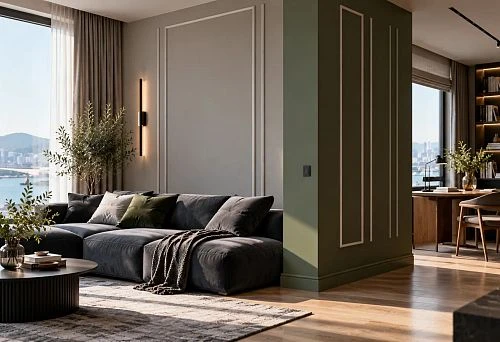
- Moldings for the Living Room
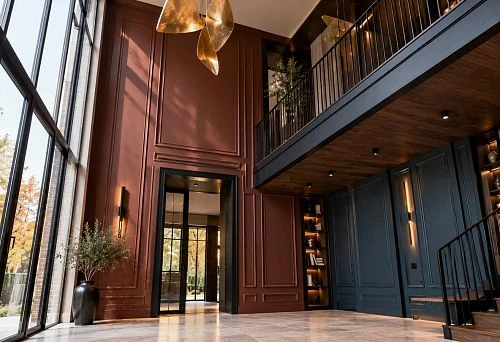
- Stucco for Commercial Interiors
- How to Choose Stucco by Photo in the Catalog
- What to look at besides photos
- How to choose molding by size: rules of proportions
- For ceilings of different heights
- For wall frames
- For rosettes
- Cutting allowance
- Material: why polyurethane is convenient for buying in an online store
- Which elements to buy for walls
- Molding frames
- Decor for moldings in corners
- Moldings
- Pilasters and Capitals
- Which elements to buy for the ceiling
- Ceiling Cornice
- Ceiling rosette
- Ceiling frames
- Cornice for hidden lighting
- How to choose molding according to interior style
- Classic Interior
- Neoclassicism
- Modern interior with stucco molding
- Art Deco
- Country house
- What to check before ordering from a stucco store
- Mistakes when buying stucco from a catalog
- What to buy with stucco: the right set
- How to buy stucco from a catalog without mistakes: an algorithm
- About the Company STAVROS
- FAQ: Answers to Popular Questions

Opening a stucco catalog — and feeling lost. This is familiar to almost everyone who decorates walls and ceilings for the first time. Moldings, cornices, rosettes, overlays, pilasters, capitals, decor for moldings — everything is beautiful, everything is desirable, but it's completely unclear what exactly is needed, in what quantity, what sizes, and how it will all look on a specific wall of a specific room.
A stucco store is not a 'come in and buy what you like'. It's a tool that needs to be used skillfully. A correctly chosen stucco element transforms a room. An incorrectly chosen one creates the feeling of theatrical props nailed to the wall without purpose.
This article provides a complete breakdown of how to navigate a stucco catalog, select elements by purpose, size, and style, avoid classic ordering mistakes, and assemble the right set for any interior.
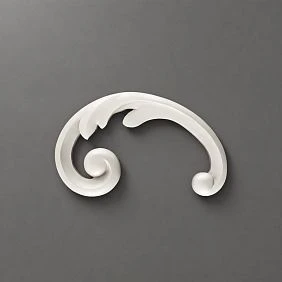
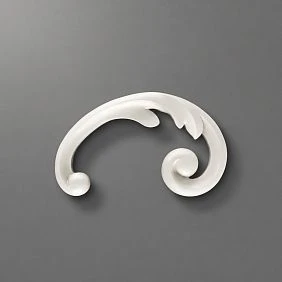
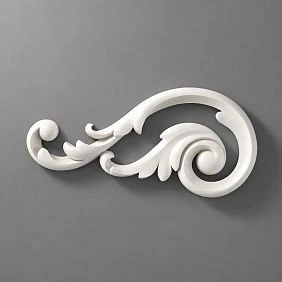
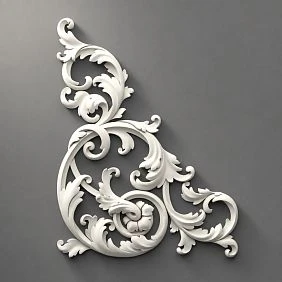
How to choose stucco molding in an online store: key principles
Before opening the catalog, you need to answer a few questions. They sound simple, but the answers determine whether you will find the right section on the first try or spend hours browsing unsuitable items.
Where will the stucco molding be? On the wall, on the ceiling, in an opening, at the head of the bed, around a chandelier, in the TV area, in the hallway, on the house facade?
What should it do? Create a frame, mark a zone, design the transition between wall and ceiling, accent the center of the ceiling, decorate a separate surface?
What is the interior style? Classic, neoclassical, modern with stucco elements, art deco, country house?
What are the dimensions? Ceiling height, wall width, niche size, chandelier dimensions.
Only after this does it make sense to open moldings catalog and look at specific items. Otherwise — beautiful photos that do not help make a choice.
The main principle of buying stucco molding: it is not bought as a separate 'beautiful detail.' Stucco molding is bought as a set for a specific task — for a wall, ceiling, zone, or room.




What is included in the stucco molding catalog: a guide to sections
A good Moldings shop structures the assortment by element types. Let's break down each one — not formally, but in essence: what it is and where it is used.
Our factory also produces:
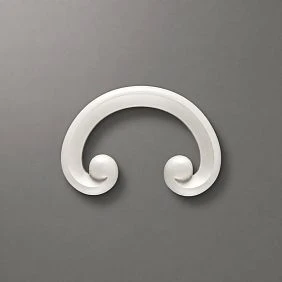
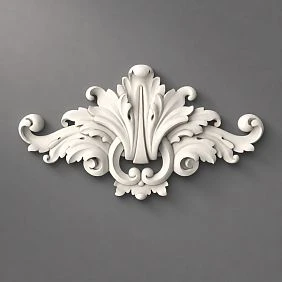
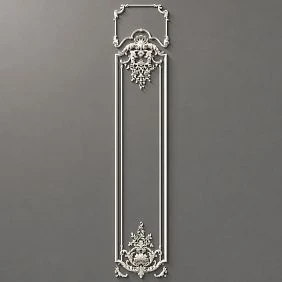
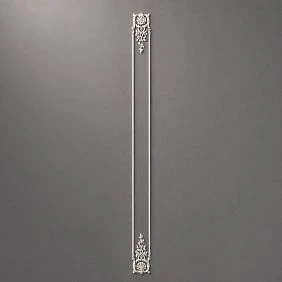
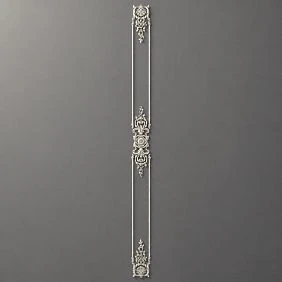
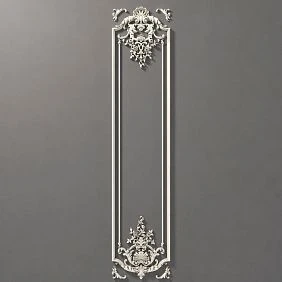
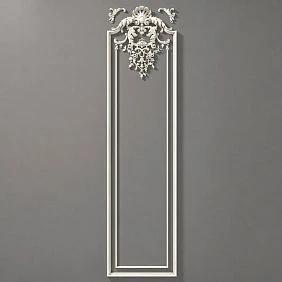
Moldings are linear profiles used to create framed compositions, zone walls, and frame openings. They come in various widths (from 20 to 150 mm) and relief complexity — from smooth to richly decorated.
Molding is the foundation of stucco decor. It is a profiled strip that is installed on a wall or ceiling and creates a line, frame, or accent band. Moldings made of polyurethane — the most sought-after type of stucco decor in modern interiors.
Molding is used:
-
as a frame element on the wall (wall panels, niches, accent rectangles);
-
as a transition line between the wall and ceiling;
-
as a horizontal band on the wall;
-
as framing for a door or window opening.
The key characteristic of molding is the width and height of the profile. A thin molding 2–3 cm wide is a laconic detail, almost an architectural line. A molding 8–10 cm wide with an expressive profile is a decorative band that becomes a noticeable element.
Get Consultation
Ceiling Cornices
A cornice is a decorative element of the transition between the wall and ceiling. In a classic interior, it is mandatory: without a cornice, the room 'loses' its top line and looks unfinished.
Polyurethane Crown Molding choose by several parameters:
-
width — how far the cornice protrudes from the corner;
-
height — how far it goes down the wall;
-
profile — complexity and nature of the cross-section;
-
presence of a shelf — for hidden lighting or open.
For ceilings 2.5–2.7 m high, cornices with a width of up to 10–12 cm are suitable. For ceilings 3 m and higher, more expressive profiles, 12–18 cm and larger.
Rosettes
Ceiling rosette — a decorative circular element installed in the center of the ceiling, usually under a chandelier. In a classic interior, the rosette is a mandatory element. In a modern one, it is an accent detail.
The size of the rosette should match the diameter of the chandelier: a rosette smaller than the chandelier looks disproportionate and random. A rosette 1.5–2 times larger than the base of the chandelier is the correct scale. For a chandelier with a diameter of 60 cm, a rosette with a diameter of 70–90 cm is suitable.
PU overlays
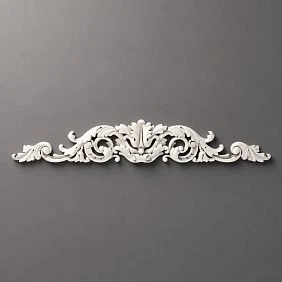
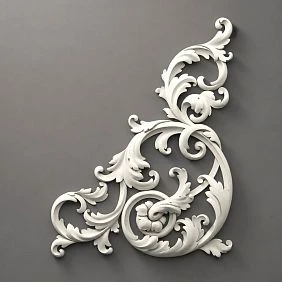
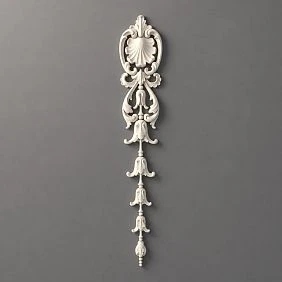
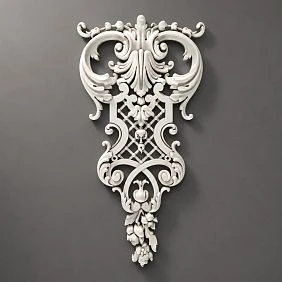
Polyurethane appliqués — three-dimensional decorative elements that are attached to the surfaces of walls and furniture. This is a separate category of stucco decor: they do not create a line (like molding) and do not mark the center (like a rosette), but are a point accent.
Overlays are:
-
corner pieces — for decorating corners of frames and panels;
-
central pieces — cartouches, rosettes, medallions;
-
decorative panels — for accent walls;
-
floral pieces — leaves, garlands, flowers;
-
geometric pieces — diamonds, squares, rectangles.
Decor for moldings
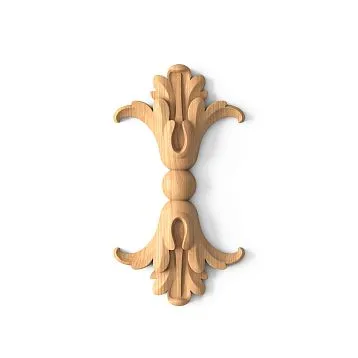
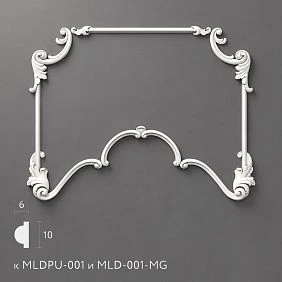
Decor for Molding — these are decorative inserts that complement the molding frame: corner rosettes at joints, central accents in the middle of horizontal strips, decorative "locks" above window and door openings.
It is thanks to molding decor that a simple molding frame turns into a full-fledged architectural panel. Without it — geometry. With it — an interior image.
Other catalog items
In addition to the main types, the stucco catalog usually includes:
-
Pilasters — vertical decorative columns imitating a pillar. They work well in hallways, living rooms, and on facades.
-
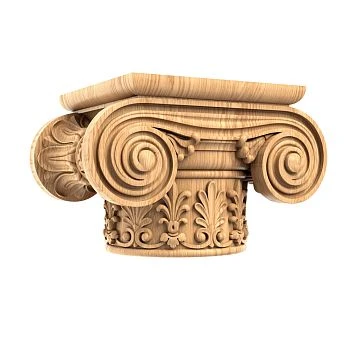
Capitals are the top of a pilaster, the most decorative and recognizable element of classical architecture.
-
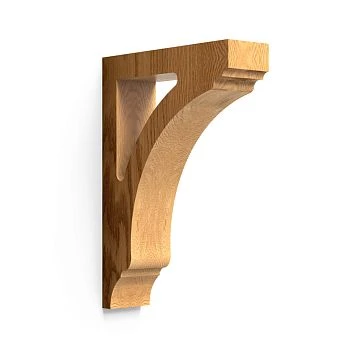
Brackets are decorative supports under cornices or shelves.
-
Ceiling elements — frames, central panels, decorative medallions.
How to understand which stucco molding you need
This is not a philosophical question — it's a practical one. And it's better to answer it before opening the catalog, otherwise the selection will drag on for hours without results.
Wall molding
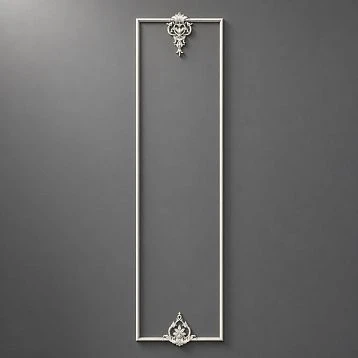
The most popular direction. Wall molding frames are decorative rectangles drawn with molding directly on the wall. They create the illusion of architectural finishing and turn an ordinary painted surface into something significant.
What you need:
-
Moldings made of polyurethane — the base of the frame;
-
Decor for Molding — corner elements, central accents;
-
PU overlays — additional decor inside the frame or between frames.
To work with the wall, you first need to draw a plan: how many frames, what size each one is, how they are positioned relative to each other, and whether there are switches, sockets, or niches that need to be worked around.
Ceiling molding
The ceiling is the most advantageous surface for decor. A cornice around the perimeter, a rosette in the center, and, if desired, frames on the ceiling — and the room changes beyond recognition.
What you need:
-
ceiling cornice from the catalog moldings from polyurethane;
-
a chandelier rosette of the required diameter;
-
if desired, ceiling frames made of molding.
The main mistake when working with the ceiling: choosing the cornice and rosette separately, without considering their compatibility in style and scale.
Molding for the TV area
The TV area is one of the most popular accent walls in the living room. Here, moldings create a frame around the TV or a decorative panel behind it.
Requirement: laconic moldings with a thin profile. Heavy Baroque stucco next to a modern TV panel is a mismatch.
Molding for the bedroom
In the bedroom, molding works subtly. An accent wall behind the headboard with a molding frame, a cornice around the ceiling perimeter, a small rosette under the chandelier — this is enough to create a classic or neoclassical atmosphere.
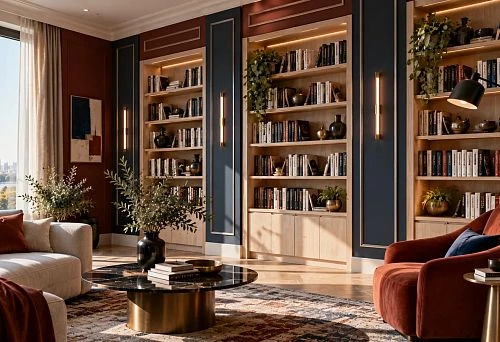
Stucco for the living room
The living room is the widest field for decor. Here, more expressive cornices, rosettes, accent walls with frames, and pilasters near doorways are appropriate.
Stucco for commercial interiors
A restaurant, beauty salon, showroom, hotel, office — here stucco works as a tool for creating atmosphere and brand identity. In commercial interiors, larger elements are often used: large cornices, expressive capitals, decorative panels.
How to choose stucco from a photo in the catalog
Open the page the stucco molding store and click on the picture you like — that's the first step. But the first step can become the last if you don't know what to look at next.
Photos in the catalog are always beautiful. Professional photography, proper lighting, perfect installation. But the photo doesn't give scale. A molding that is 3 cm wide and a molding that is 12 cm wide are completely different items with different application scenarios.
What to look at besides the photo
Profile width. This is the first number you need to check. It determines the scale of the element on the wall or ceiling.
Profile height. How much the element protrudes from the surface. A thin molding with a slight relief is a calm option. A deep expressive profile is more decorative.
Plank length. Moldings and cornices are sold in standard length planks — usually 2 m. This is important for calculating the quantity.
Material. Polyurethane moldings lighter and more practical than plaster, painted with water-based paint to match any interior color.
Element style. Not all moldings are compatible with any decor. A thin geometric molding is for a modern interior. A molding with floral relief is for classic style. Mixing should be done carefully.
How to choose stucco by size: rules of proportions
This is the most practical block. It should be read with a tape measure in hand.
For ceilings of different heights
| Ceiling Height | Recommended cornice width |
|---|---|
| Up to 2.5 m | 6–9 cm |
| 2.5–2.8 m | 8–12 cm |
| 2.8–3.2 m | 12–16 cm |
| Above 3.2 m | 16–22 cm and more |
A cornice 16 cm wide with a ceiling of 2.5 m will visually "lower" the ceiling and create a feeling of tightness. A cornice 6 cm wide with a ceiling of 3.5 m will get lost and fail to fulfill its architectural function.
For wall frames
The size of the molding frame is calculated based on the wall size and the number of frames. One approach: the wall is divided into equal sections, and a frame is built in each section with an indent of 10–15 cm from each edge. The second approach: frames are built arbitrarily, emphasizing the desired zones.
Molding width for the frame: thin moldings 2–4 cm create a concise graphic outline. Moldings 5–8 cm produce a more voluminous, decorative result.
For rosettes
Rosette diameter = chandelier base diameter × 1.5–2. If the chandelier has a 50 cm base, the rosette is 75–100 cm. A rosette is not needed for a recessed spotlight.
Margin for trimming
When ordering molding or cornice, always take a reserve of 10–15% of the calculated quantity. Corners, joints, trimming — all this reduces the final length of the working material.
Material: why polyurethane is convenient for purchasing in an online store
The question of material in the context of online shopping is practically important. Let's briefly break it down.
Gypsum is a traditional material for stucco. Heavy, fragile during transportation, difficult to install, requires professional work. In an online store, ordering gypsum stucco is difficult: the risk of damage during delivery is high.
Polyurethane moldings — a modern, practical choice for interior decor. Lightweight, not afraid of transportation, mounted with glue, cut with a regular hacksaw, painted in any color with water-based paint. That's why polyurethane stucco shops today is the standard for online orders.
Wood — wooden moldings, baseboards, and cornices made of solid wood — is a good option where the interior is already built around wooden furniture, natural wood flooring, or carved decor. Wooden elements create a warm, organic environment.
For standard tasks — apartment, house, modern or classic interior — Polyurethane molding and moldings are the most convenient choice when purchasing through a catalog.
Which elements to buy for walls
Working with walls is the most popular and visually noticeable scenario for using stucco. Let's consider what exactly is needed.
Molding frames
This is the basic decor for any wall. Simple or complex rectangles made of of the polyurethane molding, glued to the wall, are the most affordable way to create the feel of a classic interior. The color of the molding can match the wall color (tonal decor) or contrast with it.
Calculation: perimeter of each frame in linear meters × number of frames = total length of molding. Add 15% for corner cutting.
Decor for moldings in corners
Decor for Molding — corner rosettes and decorative inserts — are needed in every corner of the frame. They cover the joint of the planks and turn a technical node into a decorative one.
Calculation: 4 corner elements for each rectangular frame.
Appliances
PU overlays — additional point decor. Installed in the center of the horizontal molding, in the center of the frame, above a window or door. They enrich the surface without adding new geometric elements.
Pilasters and Capitals
For hallways, living rooms, and commercial interiors — vertical decorative columns near doorways. Create a sense of architectural depth and prestige.
Which elements to buy for the ceiling
Ceiling cornice
a polyurethane cornice around the perimeter of the ceiling — the strongest single investment in room decor. It closes the angle between the wall and ceiling, creates an architectural line, and makes the room feel 'finished'.
Calculation of cornice: room perimeter in linear meters + 15% allowance.
Ceiling rosette
A ceiling rosette for a chandelier is an essential element of classic and neoclassical interiors. It is installed in the center of the ceiling, hides the wire attachment point, and creates a decorative accent.
When choosing a rosette: check the diameter, style (matching the cornice), and relief height.
Ceiling frames
Molding frames can be made not only on walls but also on the ceiling. Rectangular or square sections on the ceiling, separated moldings, are a characteristic technique of classical architecture that works well in apartments with ceilings of 2.8 m and higher.
Cornice for hidden lighting
A special type of cornice with a shelf behind which an LED strip is hidden. The lighting provides warm diffused light around the perimeter of the ceiling and creates the effect of a voluminous, "breathing" space. For installation, it is important to clarify whether the profile has a niche of the required size for the strip.
How to choose molding according to interior style
This is not "what molding do you like," but "what molding is appropriate in your interior." The difference is significant.
Classic interior
Expressive cornices with a developed profile, rosettes with rich relief, wall frames made of molding with floral decor, Appliques with ornamentation, decor for moldings. Everything is symmetrical, everything is coordinated, everything in one decorative language.
Neoclassicism
A more restrained program: thin moldings, minimal relief, emphasis on geometry rather than ornament. The cornice is of a simple profile. The rosette is without excessive relief. Decor for Molding — corner inserts without ornament or with a minimal floral motif.
Modern interior with stucco molding
Here, stucco molding works as a geometric element, not as historical decor. Thin straight moldings, wall frames in the wall tone (tonal decor) — the stucco molding 'dissolves' into the surface. No rosettes, no expressive ornaments.
Art Deco
Geometric ornament, contrasting paint, strict rhythm. Moldings with a geometric profile, overlay medallions with clear geometry. This style greatly benefits from precise proportion calculation: Art Deco does not like randomness.
Country house
In a country house with high ceilings, natural materials, and expressive architecture, larger elements are appropriate. A large cornice, a big rosette, massive frames. A combination works well moldings from polyurethane with wooden moldings and solid wood baseboards.
What to check before ordering at the stucco molding store
A list to help avoid returning to the store for touch-ups.
-
Wall dimensions — width and height of each surface where stucco molding will be applied.
-
Ceiling height — to choose the correct scale of the cornice.
-
Profile width — the selected molding or cornice must match the wall size and ceiling height.
-
Number of frames — for wall frames: how many frames, what size each one is.
-
Frame perimeter — for calculating the length of molding.
-
Rosette size — diameter corresponding to the chandelier dimensions.
-
Cornice and molding compatibility — style and scale must match.
-
Presence of corners — each frame corner requires a corner piece. Decor for Molding.
-
Allowance — +15% of the calculated quantity.
-
Installation recommendations — read before ordering. molding installation guide.
Mistakes when buying stucco molding from a catalog
Let's be honest — here's where people most often lose money and time.
Choosing only by a beautiful photo. A photo doesn't give scale. A molding 3 cm wide and 12 cm wide can look the same on a product card — but on the wall they are completely different.
Not checking the profile width and height. The first number to look at is the cross-section dimensions. Without this, it's a blind purchase.
Buying elements from different styles. A classic-style cornice + a minimalist molding + baroque ornament overlays = chaos.
Taking too large decor for a small room. A cornice 18 cm wide with a ceiling of 2.4 m and a room area of 12 sq. m is a disaster.
Not calculating the quantity. Stopping in the middle of the wall is worse than having no decor at all.
Forgetting about corners and joints. Decor for Molding in corners — this is not an option, it's a necessity for the correct look of the frame.
Buying a rosette without considering the chandelier. A rosette that is too small for a large chandelier — disproportion that is immediately visible.
Not reading installation recommendations. Different elements have different installation requirements. A cornice on the wall and a rosette on the ceiling are different tasks. Read instructions for installing the molding before starting work.
Don't think about painting. Polyurethane stucco is sold white. If the interior is not white, painting is needed. Factor this into your plan.
Buying one element without a system. A rosette without a cornice, a molding without corner decor — details that don't come together as a look.
What to buy with stucco: the right set
-
Moldings made of polyurethane — the basis of wall panels, decorative belts, and ceiling decor.
-
PU cornices — from the same catalog polyurethane products — for designing the wall/ceiling transition.
-
PU overlays — corner, center, and decorative inserts.
-
Decor for Molding — corner rosettes, center accents.
-
Ceiling rosettes — from the catalog moldings to the required diameter.
-
Assembly adhesive — specialized for polyurethane products.
-
Putty — for sealing joints after installation.
-
Water-based paint — for painting moldings to match the interior color.
If the interior is built on a combination of moldings and natural materials, wooden elements should be added to the polyurethane moldings: solid wood baseboards and moldings — they create a richer, multi-layered look.
How to buy moldings from the catalog without mistakes: an algorithm
1. Choose the room: living room, bedroom, hallway, study, country house.
2. Define the zones: walls, ceiling, TV area, area behind the bed, doorway.
3. Define the task: create frames on walls / design the ceiling transition / install a rosette / highlight an accent area.
4. Determine the style: classic, neoclassical, modern, art deco.
5. Measure all surfaces: ceiling height, wall width and height, chandelier size.
6. Open moldings catalog and select a molding or cornice with a suitable profile width.
7. Add Decor for Molding — corner and center elements.
8. Select applique if necessary.
9. Calculate the quantity with a 15% margin.
10. Study installation recommendations and place your order.
About the company STAVROS
STAVROS — manufacturer and online store of stucco molding with a full range of polyurethane decorative stucco elements: Moldings and cornices, PU overlays, Decor for Molding and the full catalog polyurethane products for walls and ceilings. In-house production in Saint Petersburg since 2002 — milling workshop, strict quality control, shipment from 1 piece.
The STAVROS catalog features stucco models for classic and modern interiors: thin moldings for neoclassicism, expressive cornices for high ceilings, rosettes for classic living rooms, overlays and decor for creating accent walls. Each product card contains exact dimensions, photos, and installation recommendations. Contact us to confirm shipping to your destination.
FAQ: Answers to popular questions
How to choose stucco in the online store?
Determine where the stucco will be (wall, ceiling, area behind the bed), the interior style, and the room dimensions. Then select an element by profile width, style, and compatibility with other elements. Calculate the quantity with a 15% margin.
What is included in the stucco catalog?
Moldings, ceiling cornices, rosettes, overlays, decor for moldings, pilasters, capitals, brackets, decorative elements for walls and ceilings.
Can you choose stucco just by looking at photos?
The photo helps choose the style, but you must check the dimensions: width, profile height, and the element's scale relative to the wall and ceiling. Without dimensions, buying based on a photo is a risk of mismatch.
Which stucco molding is best for an apartment?
Polyurethane stucco molding is a practical choice for an apartment. Lightweight, easy to install, and paints well. Suitable for moldings, cornices, rosettes, and overlays.
What should you buy together with stucco molding?
Moldings, cornice, rosette, corner decor for moldings, and overlays. Additionally: mounting glue, putty, and paint. If the interior includes wood, use wooden moldings and solid wood baseboards.
How to calculate molding quantity?
Calculate the perimeter of each frame in linear meters, multiply by the number of frames, add 15% for corner cuts and waste. For the cornice: room perimeter + 15%.